Retail News CRM

Category: E-Tailing

Retail News Asia is committed to providing both local and global retailers with the latest E-Commerce & Etail news throughout the Asian market. This on a daily base.

  • Changi Millionaire program extended in Singapore

    Changi Millionaire program extended in Singapore

    Singapore’s Changi Airport has expanded its successful Changi Millionaire promtoion for 2015, as part of its 50th anniverary celebrations.

    From now until October 31, shoppers and diners can participate in the ‘Be a Changi Millionaire’ campaign for an instant chance to win any of the six attractive premiums, on top of the chance to be made a millionaire. This is the sixth year Changi Airport is running its anchor retail promotion, which has the largest cash prize in Singapore.

    In a collaboration with local designers Wang Shijia and Jo Soh, Changi Airport Group is this year offering a set of six exclusive ‘premiums’ as instant prizes in the latest instalment of Changi Airport’s ‘Be a Changi Millionaire’ campaign.

    Meanwhile, to celebrate Singapore’s 50th birthday, Changi Airport has dressed its four Millionaire promotional sites as local icons of yesteryear – the dragon playground, the mobile tricycle ice-cream stall, an old movie theatre as well as the laid-back ‘Mama Shop’.

    For the six months of the campaign, one finalist will be picked each month for the grand draw to be held in early 2016. In addition, this year, the Millionaire excitement will be brought online. Travellers who shop on iShopChangi – Changi Airport’s very own e-commerce portal – will be entitled up to 10 times more chances of being picked as a finalist. At the end of the six-month period – for the first time in the game’s history – a seventh finalist will be picked among the pool of online shoppers to vie for the grand prize of a million dollars. All seven finalists will each win a cash prize of S$5,0001 and a three-night hotel stay.

    So far, five shoppers have been crowned millionaires overnight – including Singaporeans Ivan Rantung (2010) and Peh Hock Peng (2012), Australian Jessica Down (2011), Indonesian Irvung Tio (2013), and Japanese Seiichiro Oiyama (2014).

    Lim Peck Hoon, executive VP of commercial at Changi Airport Group, said after five successful years of Changi Millionaire, the introduction of a seventh finalist from among online shoppers will make shopping on iShopChangi more interesting and potentially very rewarding.

    “This year is a jubilee year for Singapore, and we are infusing local elements into the promotion, so that shoppers from all over the world can join in the celebrations with us. The exclusive premiums combine elements of both Singapore and Changi Airport, making them unique memorabilia for our visiting guests.”

    Airport visitors and travellers only need to make a minimum purchase of S$30 at any of the retail and F&B outlets at Changi Airport2 or iShopChangi.com to qualify for both the monthly finalist draw and games to win instant prizes. The number of winning chances increases with the amount spent. Changi Rewards members and purchases made on iShopChangi.com will receive additional chances. More information is available online.

  • ‘Cardless credit card’ launched in Korea

    ‘Cardless credit card’ launched in Korea

    Financial services business BC Card is set to launch Korea’s first mobile credit card service that does not involve the use of a real plastic card.

    BC Card has conducted a series of pre-launch tests for its new ‘cardless credit card’ over four days, and concluded that there weren’t any problems in terms of subscription, registration, issue, payment, payment and membership cancelation.

    BC Card provides third party payment processing services to Korean banks and a rnage of debit and credit card products.

    Following the Financial Services Commission’s recent decision to lift a regulation that obliged companies to release actual plastic cards when they launched mobile services, BC Card will be first company to launch a mobile-only credit card in Korea.

    The company is planning to launch various types of mobile credit cards, using USIM, eSE (embedded SE), HCE (Host Card Emulation) and NFC (Near field communication) technology.

    BC Card’s mobile-only credit card will be accepted at large retailers, department stores, convenience stores and gas stations.

    A BC Card official said that the company would be able to save costs associated with issuing plastic cards, and invest more money to provide benefits for its customers.

  • Sun Art looks to fresh Fields

    Sun Art looks to fresh Fields

    Chinese hypermarket operator Sun Art Retail Group has bought a controlling interest in Fields Hong Kong, an online retailer of fresh foods and produce.

    No price was disclosed for the 54 per cent stake.

    Fields Hong Kong was established to provide an alternative source of produce in a market where food safety scandals have bred distrust of corporate retailers and fast food chains. Middle class consumers who have the disposable income to afford premium products from vendors they trust are a growing market for online suppliers.

    Sun Art, listed in Hong Kong, is part owned by France’s Auchan Group and Taiwanese billionaire Samuel Yin.

    In a statement the company said the purchase would “further strengthen” its Chinese eCommerce business.

    Fields’ competitors include Amazon.com-backed yummy77.com, kateandkimi.com and epermarket.com.

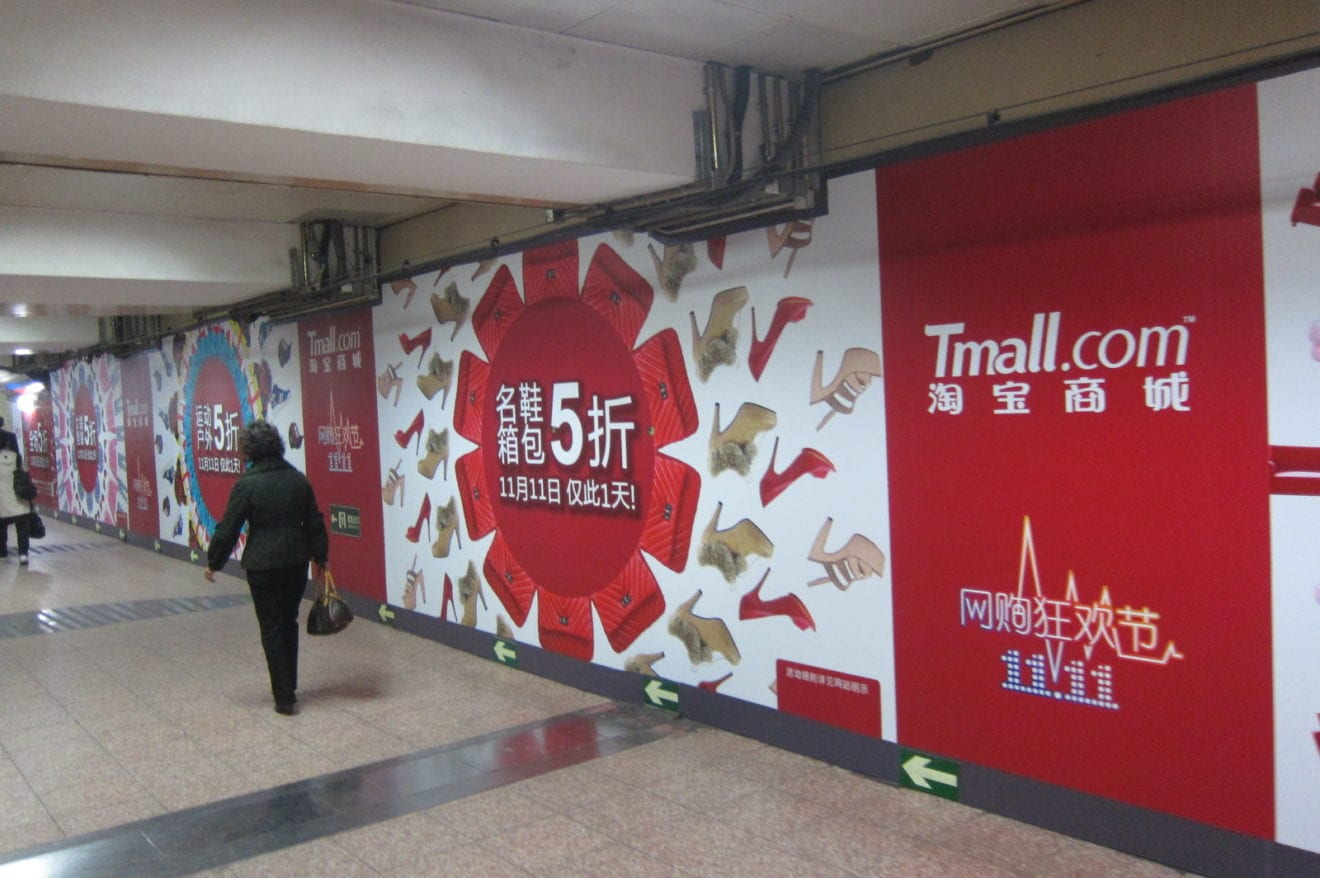
  • Kingold Jewelry opens on Tmall

    Kingold Jewelry opens on Tmall

    Kingold Jewelry, one of China’s leading manufacturers and designers of gold jewellery, ornaments and investment-oriented products, has launched an online retail flagship store on Tmall.com.

    Nasdaq-listed Kingold expects to leverage the Chinese eCommerce platform to sell the Company’s 24-karat gold jewelry and products, including rings, necklaces, bracelets and pendants.

    Additional categories may be added in the future.

    Zhihong Jia, chairman and CEO of the company, said having a presence on Tmall allows Kingold to interact directly with consumers and builds brand awareness in China.

    “We will continue to introduce new products and designs in our online flagship store on a regular basis.”

    Tmall.com provides an online shopping experience for increasingly sophisticated Chinese consumers in search of quality branded merchandise. It was launched in April 2008 as part of Taobao Marketplace and became an independent platform in June 2011.

    Thousands of international and Chinese brands and retail merchants have established storefronts on Tmall.com, part of the Alibaba Group. According to iResearch, Tmall.com was the largest B2C online retail platform in China based on the value of goods transacted as of September 2013.

    Kingold Jewelry, located in Wuhan City, was founded in 2002 and is now one of China’s leading designers and manufacturers of 24-karat gold jewelry, ornaments, and investment-oriented products. The Company sells both directly to retailers as well as through major distributors across China.

  • Magento companions with Razorfish in Higher China

    Magento companions with Razorfish in Higher China

    Magento, an e-commerce platform owned by eBay’s Enterprise division, on Thursday stated it has partnered with Razorfish in Larger China to function a gateway for retailer progress within the booming Asia-Pacific market.

    As a part of the brand new partnership, Magento will present Razorfish in Higher China with market improvement instruments and assets to construct Magento Enterprise Version storefronts for retailers in search of to swiftly seize shopper gross sales and capitalize on the huge market alternative.

    Magento offers e-commerce software program and platform options worldwide. It provides merchandise comparable to Enterprise Version, Group Version in addition to e-commerce answer for small companies. Magento’s Enterprise Version is an e-commerce answer for giant companies which helps retailers to drive extra visitors to their shops, convert browsers into consumers, and increase on-line income.

    “Social commerce has quick grow to be the spine of brand name constructing in Higher China. China is now main the world in social commerce, ours is a area getting used as a check marketplace for main international manufacturers creating leading edge social commerce options,” stated Alex Misseri, SVP APAC, Head of Retail & Commerce, Razorfish. “Magento’s open structure, flexibility and modular strategy to customization provides the differentiated shopper experiences that manufacturers search for when establishing commerce operations in Higher China.”

    On-line purchasing in China is rising quicker than anybody initially anticipated. Forrester’s newest on-line retail forecast for China tasks that the nation’s on-line market (B2C and C2C) will move USD670 billion by 2018.

    Digital Dopamine, Razorfish’s 2015 International Digital Advertising Report, exhibits that ecommerce is an plain powerhouse in Larger China. The overwhelming majority of Chinese language shoppers would like to do all their buying on-line. Shopper choice to buy on-line in China is nearly double that of US counterparts. The research exhibits 82 % of Chinese language buyers want they might make all their purchases on-line, in comparison with simply 49 % of these within the US.

    Magento boasts the most important open commerce ecosystem of greater than four,300 Magento licensed professionals and 260 confirmed Answer Companions worldwide. Powering greater than 240,000 websites globally, it stays the preferred platform available on the market based on a 2015 international commerce share report by Hivemind. eBay Enterprise, together with Magento, was additionally acknowledged because the main ecommerce platform for the 2015 Web Retailer Prime 500

  • Ex-Google Indonesia Director Employed as Vice Chairman of MatahariMall.com

    Ex-Google Indonesia Director Employed as Vice Chairman of MatahariMall.com

    Lippo Group, one among Indonesia’s largest enterprise conglomerates, has appointed Rudy Ramawy, former nation director for Google Indonesia, as vice chairman of its e-commerce unit MatahariMall.com.

    Rudy served as director of Google Indonesia from January 2012 to March 2015, main the opening of Google’s operations within the nation, Lippo stated in a press release on Monday. At Google, he additionally helped launch YouTube Indonesia and Google Road View.

    Rudy — who studied on the College of California, Berkeley — beforehand served as a programming and manufacturing director at Indonesia’s oldest personal tv operation RCTI.

    Lippo additionally appointed know-how entrepreneur Hadi Wenas as MatahariMall.com’s chairman and Emirsyah Satar, former president director of nationwide flag service Garuda Indonesia, as a commissioner.

    “I really feel very honored to be working with a tremendous staff consisting of Emirsyah Satar and Hadi Wenas. I consider with our group, MatahariMall could possibly be the most important e-commerce [company] in Indonesia,” Rudy stated within the assertion.

    Rudy is optimistic of the rising potential of e-commerce in Indonesia, saying that that in lots of nations, e-commerce has confirmed to be the simplest financial increase that provides equal alternative to small, center and big-sized corporations.

    MatahariMall.com says on its web site that it expects to start out operations in the summertime of 2015.

  • MetaPack expands into Asia with Hong Kong workplace

    MetaPack expands into Asia with Hong Kong workplace

    The MetaPack Group, the main supplier of e-commerce know-how for supply providers, as we speak introduced its enlargement into Asia with the opening of operations in Hong Kong. With workplaces in the UK, France, Germany, Poland and the USA at present, the institution of a Hong Kong workplace is additional proof of MetaPack’s dedication to worldwide progress.

    Asia varieties a serious a part of MetaPack’s evolving international technique to turn out to be the e-commerce supply buyer expertise know-how platform of selection globally. Buying German delivery fulfilment specialist XLogics and US delivery platform suppliers Abol in 2013 and 2014 respectively, MetaPack has seen speedy progress because the launch of its distinctive SaaS platform in 2008. This development is about to proceed because it expands outdoors Europe and the USA.

    The division will probably be headed up by Peter Winslow, who just lately joined MetaPack as VP of Higher China. Previous to becoming a member of MetaPack, Winslow was the managing director at InXpress, an authorised DHL Categorical reseller concentrating on SMEs in Hong Kong. He constructed up his wealthy information of the area’s supply business and tendencies by way of holding a collection of high-level roles at each DHL and UPS in Asia and Australia. MetaPack is planning to capitalise on Peter’s 35 years of expertise in cross-border provide chain freight and categorical enterprise in Asia to focus on sellers who’re delivery their merchandise everywhere in the world.

    Patrick Wall, CEO of MetaPack, stated: “Not solely are we happy to announce the opening of our Far East Asia HQ, however we will really feel assured that the brand new workplace shall be in protected palms with Peter approaching board with us. He has the management expertise, enterprise relationships and business information that may assist us develop quickly within the Far East.”

    Winslow stated: “The Far East is an space the place e-commerce is rising at an outstanding fee, and that’s the reason this can be very thrilling to be getting into the market and facilitating cross border on-line commerce. There’s an awesome alternative to attach European retail manufacturers with Asian shoppers in addition to assist native Asian retailers and carriers rework the web shopper expertise and supply a more sensible choice of extra aggressive supply providers.”

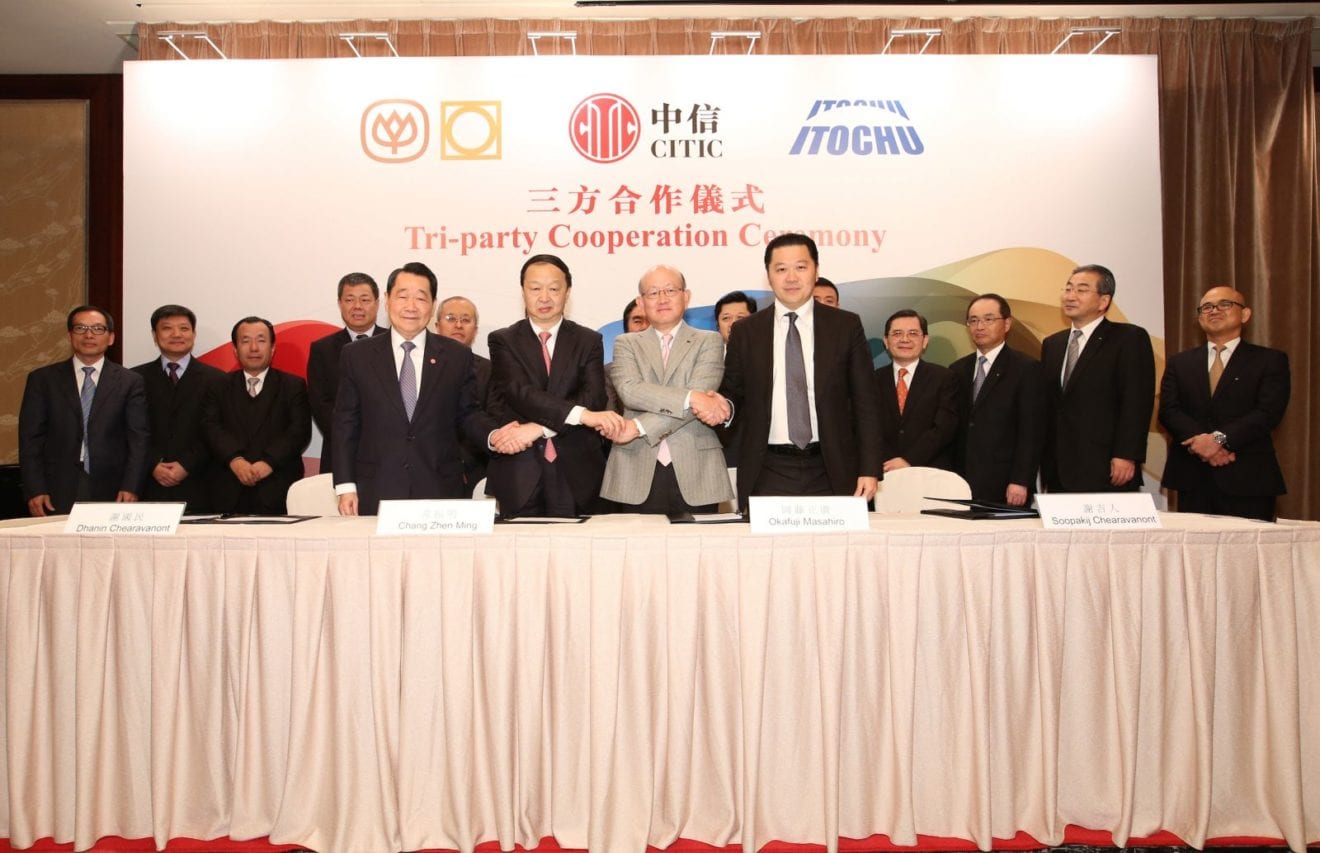
  • Itochu, CP Group team up with Chinese companies to set up e-commerce venture in Shanghai FTZ

    Itochu, CP Group team up with Chinese companies to set up e-commerce venture in Shanghai FTZ

    Five companies from three nations are banding together to sell imported popular household products like diapers and milk powder in China.

    The partners are Itochu, Japan’s third-largest trading house; Charoen Pokphand Group, Thailand’s biggest conglomerate; and Chinese companies CITIC, China Mobile and Shanghai Information Investment Inc.

    An agreement forming the venture, which will operate through a cross-border e-commerce website out of the Shanghai Free Trade Zone, was signed yesterday.

    The venture, which is named Face to Face Co., aims to tap a growing market in China for premium foreign products. Until now, most consumers accessed such products mainly through gray market channels, expensive offshore orders, overseas trips or limited online retailers in China.

    The new system will end long waiting times for deliveries, lower prices by up to 30 percent and ensure that products meet quality standards.

    The five partners are investing US$500 million, and the company will benefit from preferential policies offered by the Free Trade Zone.

    “We predict the scale of cross-border e-commerce in China will jump from nearly 76.7 billion yuan (US$12.4 billion) in 2013 to about 1 trillion yuan by 2018, Itochu said in a statement yesterday. “We see huge demand for premium products in the country.”

    The new company plans to buy an e-platform to run its operations. It will take over online shopping mall Kuajingtong, which was formerly run by state-owned Shanghai Orient Electronic Payment Co. The partnership will take advantage of China Mobile’s vast user base in promoting online orders for goods.

    Japan’s Nikkei Newspaper reported that the new company plans to accrue sales of US$666.7 billion by 2019 and plans to list in China in 2020. The report could not be immediately verified.

    Itochu said the platform will begin operation later this year, offering nearly 100,000 Japanese-made items, including household appliances, food, diapers milk powder and possibly clothing. Charoen Pokphand said it plans to sell Thai food products on the site.

    The Free Trade Zone, launched in 2013, is China’s pilot project for freer trade between the mainland and overseas. Flexible regulations will allow access for both Chinese and overseas companies to import and sell foreign goods domestically.

  • Omni-channel fulfilment critical for retailers to make financial returns on investments

    Omni-channel fulfilment critical for retailers to make financial returns on investments

    Despite increasing investments in omni-channel sales capabilities, many retailers and consumer goods manufacturers find it hard to fulfill omni-channel demand profitably, a new report says.

    The new report The Omni-Channel Fulfillment Imperative prepared for JDA Software Group, Inc. by PwC reveals that an enormous amount of money, energy and time retailers and consumer goods manufacturers are spending to improve their omni-channel sales capabilities. However, only 16 percent of companies say they can fulfill omni-channel demand profitably.

    This study is based on a global survey of more than 400 retail and consumer goods CEOs from around the world, conducted in late 2014.

    It finds that the high cost of fulfilling orders is eroding retailers’ margins as they sell and deliver products across multiple channels. A full 67 percent of respondents reported that these costs are growing as they increase their focus on selling across channels. Survey respondents reported their highest costs associated with omni-channel selling as:

    Handling returns from online and store orders (cited by 71 percent of respondents)
    Shipping directly to the customer (67 percent)
    Shipping to the store for customer pick-up (59 percent)

    The CEOs in the JDA study recognize that they need to continue investing in business improvements to enhance their omni-channel performance. However, reducing the associated logistics costs is not their primary focus. When asked to rank their top initiatives for improving business operations, CEOs’ number-one choice (57 percent) was spending capital on creating new customer experiences. Similarly, when asked to rank strategic growth enablers for the year, reducing/reformatting physical store footprints to focus on expanding the ecommerce business was the top choice at 53 percent.

    “Every time retailers receive an online order, they have a number of options to fulfill that demand. They can pull the product from a local store, send it from a centralized warehouse or ship it directly from the supplier. JDA’s new study demonstrates that most retailers lack the insight to make these decisions in a profitable manner – and are not sufficiently focused on this critical capability gap,” said Kevin Iaquinto, chief marketing officer at JDA. “They need intelligent logistics and fulfillment solutions that can reveal the hidden costs, and the customer service trade-offs, associated with every delivery option. In addition, to truly win in the omni-channel marketplace, retailers need the upfront demand forecasting tools to make sure products are already distributed across all locations in a manner that supports profitable delivery.”

    While they might not be focused on actions today to create profitable fulfillment and delivery schemes, the study shows that CEOs are aware of the importance of profitable omni-channel fulfillment to their future survival.

    Seventy-one percent of respondents said omni-channel fulfillment is either a high or a top priority. And these CEOs are planning to invest an average of 29 percent of their total capital expenditures for 2015 on improving their omni-channel fulfillment performance.

    The fulfillment capability most cited as needing attention was transportation and logistics, named by 88 percent of CEOs as a priority for the future. The second capability CEOs will focus on is improving inventory availability to fill orders, cited by 85 percent.

    “Having products available, then finding the most profitable way to deliver them – are critical activities that lie at the heart of supply chain excellence,” noted Iaquinto. “The CEOs in the JDA survey clearly understand the challenges they have ahead of them with regard to fulfillment, and they know they will have to innovate if they are to be profitable while meeting customer expectations across channels. The good news is that advanced technology can help retailers and consumer goods manufacturers master omni-channel fulfillment. However, until companies fully leverage these solutions, they will fail to realize positive financial returns on their omni-channel investments.”

  • Middle-aged Koreans embrace mobile shopping

    Middle-aged Koreans embrace mobile shopping

    As grocery shopping through major retailers’ mobile shopping platforms is becoming a normal practice among Koreans, women in their forties are increasingly using mobile devices to buy their groceries.

    According to the Ticket Monster social commerce site, 73 per cent of the company’s female customers made purchases through the company’s mobile platform in the first quarter of the year.

    The figure represents a three per cent increase over the average for 2013 as a whole. Women in their thirties were the largest group of purchasers at 52.7 per cent, while women in their twenties and forties stood at 27.4 per cent and 16.1 per cent respectively.

    However, purchases among women in their forties increased the most, with growth of 3.5 per cent, while sales among those in their twenties actually declined by 4.8 per cent.

    These groups purchased groceries the most, including fresh food.

    Customers of both sexes in their thirties were the most frequent buyers of fresh food through the Ticket Monster mobile platform with a 51 per cent share, compared to 23 per cent and 21 per cent for those in their forties and twenties respectively.

    Ticket Monster saw its mobile platform fresh food sales grow threefold in the first quarter compared to the same period last year.

  • Tmall Global launches duty-free platform

    Tmall Global launches duty-free platform

    Alibaba’s Tmall Global is to launching a prepaid duty-free service for Chinese travellers going abroad in the hopes of boosting international eCommerce opportunities.

    Under the World Duty Free service, Chinese travellers can buy prepaid cards online before they go abroad, then purchase items from duty-free shops in the country they’re visiting. Tmall said the service will eventually allow customers to buy specific duty-free products online and pick them up at the airport.

    The service will launch with Thailand’s King Power duty free monopoly.

    Duty-free companies in South Korea, Japan and Europe are working with Tmall to open storefronts on the platform, Tmall says.

    “Cross-border e-commerce has great potential in China and Tmall Global will continue to help brands and retailers sell into China through innovative solutions, at the same time providing Chinese consumers a wide variety of product choice,” Tmall Global head Maggie Wu said in a release.

  • Amazon Business makes online debut

    Amazon Business makes online debut

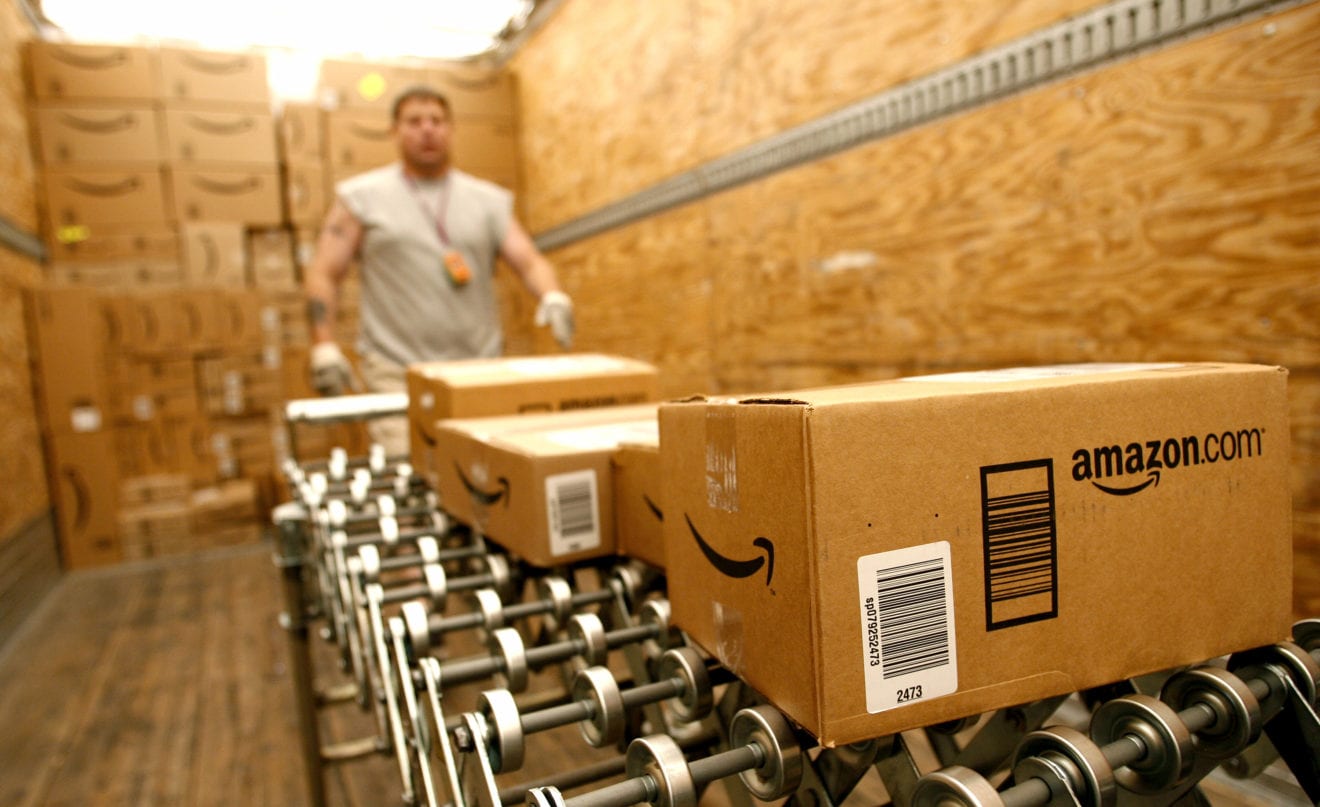
    Amazon has introduced Amazon Business, a new marketplace on Amazon.com.

    On Amazon Business, sellers can list their offers in more than 45 business-specific categories, including office, IT, MRO, tools, scientific and food & beverage. The new store is initially open to US shoppers only, but overseas vendors can list prodicts there.

    Amazon says the portal gives sellers an opportunity to grow their sales by reaching millions of business customers located across America.

    “Selling to businesses has now become as easy as listing your products on Amazon. Amazon Business features exclusive business pricing tools, the ability for sellers to list their credentials and quantity discounts for qualifying purchases,” the company said in a statement.

    “Through Amazon Business, sellers can benefit from Amazon’s eCommerce expertise, visibility for their full product catalog on an established online marketplace and greater access to business customers to grow sales. Amazon Business is available to sellers based domestically and internationally, and compatible with the Fulfillment by Amazon (FBA) service to meet rigorous delivery requirements expected by business customers.”

    Amazon Business features available to sellers now include:

    • Amazon Business Seller Program: Sellers that meet the performance and service requirements will be prominently featured to business customers.
    • Business Pricing and Quantity Discounts: One of the most requested features by business sellers is quantity pricing. Sellers can offer discounts when businesses purchase larger quantities. Sellers can also differentiate pricing to business customers.
    • Seller Credentials: Sellers can add credentials such as ISO 9001 certified, small business, women-, minority- and veteran-owned businesses to their seller profiles, which will be displayed to business customers.
    • Business Product Identifiers: Products that will be easily discoverable by customers using manufacturer and distributor part numbers (MPN/DPN) or National Stock Numbers (NSN) for purchases for government procurement.
    • Fulfillment by Amazon: With FBA, sellers store their products in Amazon fulfillment centers. When customer orders are received, Amazon will pick, pack, ship and provide customer service for these products.
    • Tax Exemption: Sellers participating in Amazon’s Tax Collection Services may also elect to participate in the Amazon Tax-Exemption Program (ATEP). ATEP allows customers to make tax-exempt purchases from participating sellers by providing a tax-exemption certificate and automates the process for participating sellers to accept tax-exemption certificates from customers.
  • ‘Go mobile’ urges Alibaba

    ‘Go mobile’ urges Alibaba

    Mobile and differentiation were the key words when Alibaba Group Holding’s top executives introduced their strategy to 800 merchant attendees last week at the annual meeting of sellers on Taobao, its largest Chinese web marketplace.

    About 9 million merchants sell 1 billion items on Taobao.com, according to Alibaba, and mobile has become the marketplace’s major shopping venue. Alibaba reported that purchases from mobile devices accounted for 42 per cent of sales on its Chinese retail marketplaces in the quarter to December 31, 2014.

    Taobao.com is responding by creating new mobile services for merchants, including some that focus on social media marketing. In March, Taobao.com launched Xiaopu (which means “small booth” in Chinese), a feature in the Taobao app that enables merchants to upload product listings more quickly through mobile devices and connect more effectively with consumers through social media.

    “Xiaopu simplifies the steps to manage a store and could reduce the time to upload a product listing from 20 minutes to three minutes. For example, merchants can scan a bar code on a product to post a product,” says Zhang Kuo, director of Alibaba’s mobile business.

    “Xiaopu also allows merchants to post messages on Chinese social network Weibo to reach followers based their location. Consumers could buy products that are close to them, and even get the product from a merchant in person.”

    More than 2 million merchants have begun to use Xiaopu, according to Taobao.com.

    The focus on social media reflects its growing role in driving traffic to Taobao merchants, and the declining traffic from mobile consumers using Taobao’s internal search engine. “The mobile traffic from searches is decreasing. Now only 50 per cent of our mobile traffic comes from search, and more traffic is coming from recommendations in online communities and social media,” Zhang says.

    Alibaba also is taking steps to promote products that are unique or novel, as it tries to move away from its reputation as a wide-open online bazaar where sellers compete solely on price. In its latest move in this direction, Taobao.com launched a promotional event in March called Week of New Forces to sell about 100,000 apparel products through banners in prominent positon on the home page of the marketplace. Almost all the products come from youthful designers or rising web-only apparel brands that target a specific group of young consumers, according to Alibaba.

  • Amazon launches organic gardening store

    Amazon launches organic gardening store

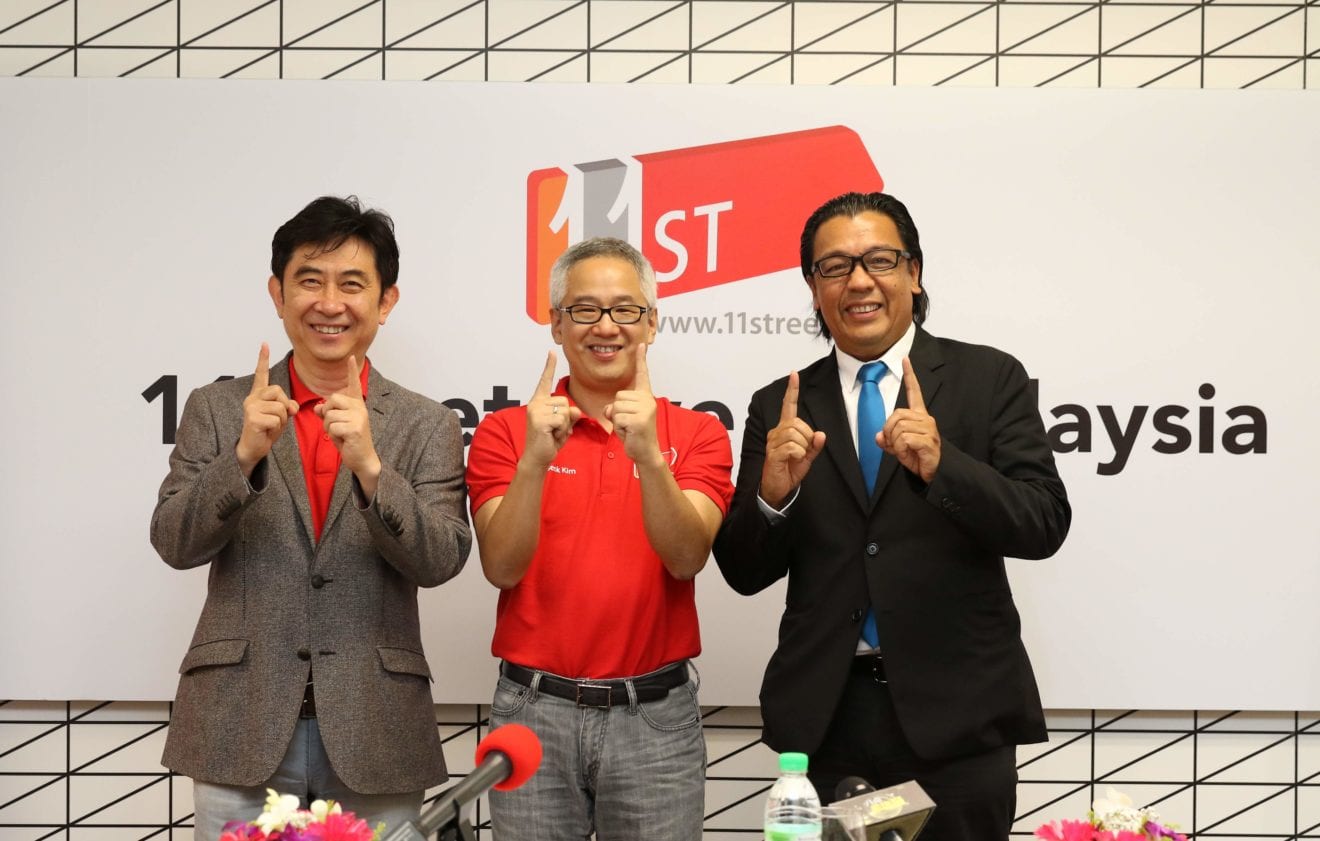
  • Korea’s 11street Malaysia launches

    Korea’s 11street Malaysia launches

    Popular Korean actor Lee Min Ho was flown in to front the brand for its launch – ironically held in a bricks & mortar shopping centre.

    11street Malaysia launch- 415

    The company will invest more than RM35 million (US$10 million) to drive seller participation and planned to have 11,000 sellers on board by the end of this month. The site, at www.11street.my already includes popular brand such as Electrolux, Digi mobile, Nestle, Tony Moly Korean cosmetics, The Face Shop, Fujifilm, Domino’s Pizza and Unilever.

    11street Malaysia launch 415

    11street’s Malaysia CEO Hoseok Kim says the company wants the new site to become Malaysia’s largest online marketplace.

    Established in Korea in 2008, 11street now has online marketplaces in Turkey and Indonesia as well as in its home market and boasted a combined network of 22 million sellers, serving 40 million consumers. Shoppers spend $6 billion annually on its sites.

    “The online shopping paradise 11street in Malaysia is the company’s commitment to deliver local consumers a trustable and convenient e-commerce platform where they can shop for a variety of products across a broad range of categories available at anytime, anywhere,” said Kim.

    11street Malaysia 415

    “To deliver greater satisfaction and a more rewarding online shopping experience, it will be the first online marketplace in Malaysia that promotes not only physical products but also deal offerings such as e-vouchers under a single platform.

    “11street’s merchandising approach has a proven track record given that its worldwide ventures have grown remarkably well over the past few years. Against such backdrop, similar approach will be adopted to help Malaysian online sellers to excel in today’s increasingly competitive market.”

    11streeet in Malaysia will be hosted by Celcom Planet, established in November 2014 as a joint venture between Celcom Axiata Berhad and SK Planet – a leading Korean eCommerce open marketplace provider, which is also a wholly-owned subsidiary of mobile operator- SK Telecom.