Category: E-Tailing

Retail News Asia is committed to providing both local and global retailers with the latest E-Commerce & Etail news throughout the Asian market. This on a daily base.

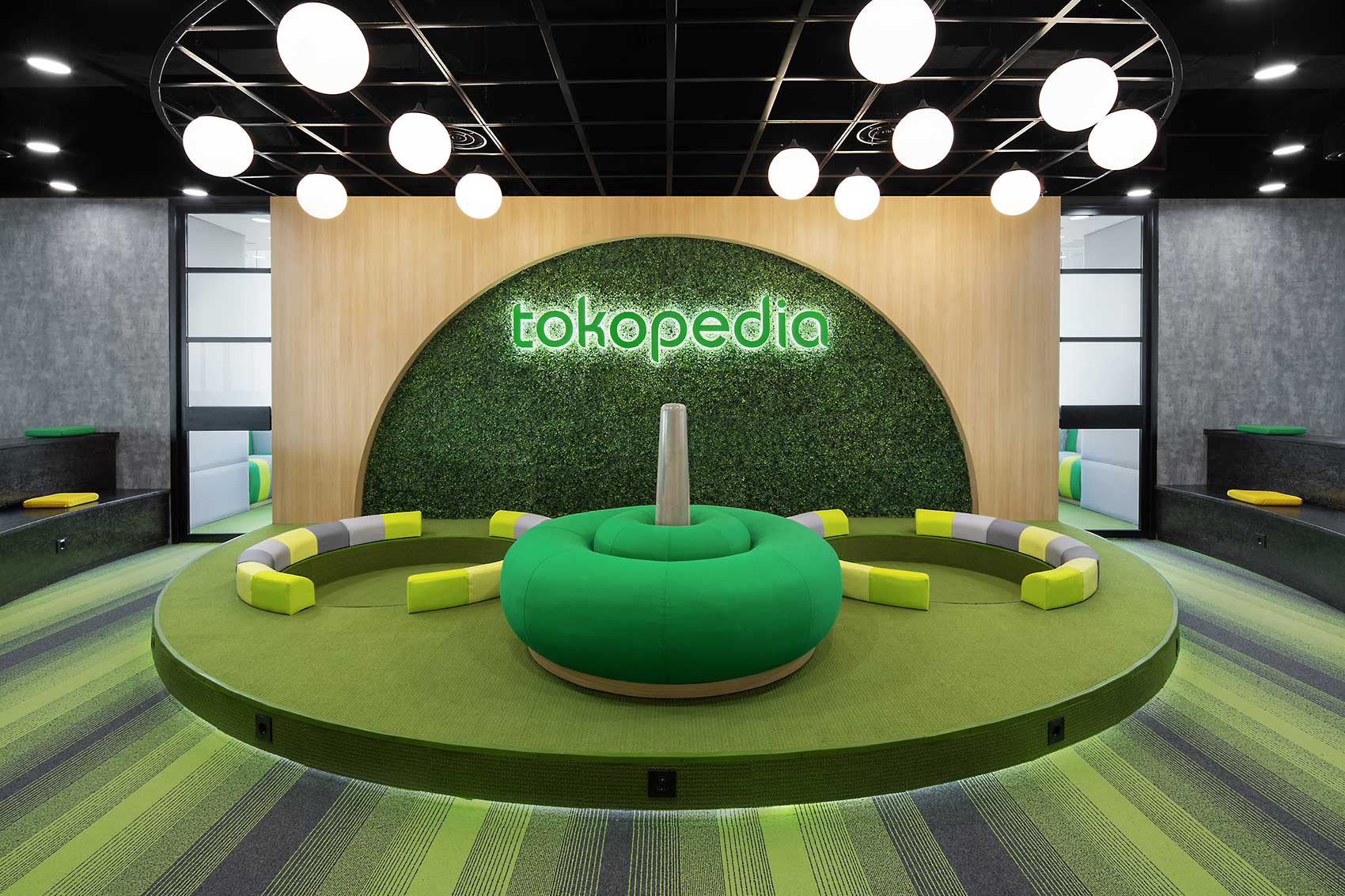
  • Tokopedia and TikTok Shop Lift Indonesian Merchant Sales 51 per Cent

    Tokopedia and TikTok Shop Lift Indonesian Merchant Sales 51 per Cent

    Tokopedia and TikTok Shop drove a 51 per cent increase in sales of Indonesian local products during the first half of 2026. The combined marketplace moved nearly 700 million items over the period.

    Gross merchandise value for the joint #BeliLokal initiative climbed 14 per cent during the six months. Merchant participation rose 50 per cent compared with the first half of 2025.

    Expanding beyond Java

    Agency Bukacerita created an Independence Day campaign named Pahlawan Beli Lokal for the platform. It promotes domestic makers of fashion, packaged food, automotive goods, and electronics. The campaign runs on social feeds and a dedicated web hub, featuring regional brands like Malang snack producer Apelicious and cosmetics brand Facetology.

    According to internal survey data from TikTok Shop, 72 per cent of participating sellers gained new customers through discovery commerce tools. Another 67 per cent used the channel to launch new product lines. Live shopping sessions, affiliate tie-ups, and short videos generated most of those initial sales.

    ByteDance and GoTo are working to satisfy Indonesian regulators following the state-mandated merger of TikTok Shop and Tokopedia. Both operators face stiff competition from Shopee and direct-from-factory platforms in Southeast Asia’s largest consumer market. Alignment with local merchants remains critical for their political and commercial standing.

    Training and registration push

    The platforms have turned the promotional campaign into a permanent merchant onboarding track. More than 4,800 micro, small, and medium enterprises, creators, and affiliates have completed training modules. These sessions cover intellectual property rules, live selling, and official business registration numbers.

    Most participating merchants operate outside Greater Jakarta. Half of the training workshops took place outside Java to tap production hubs across the outer islands.

    “In the spirit of Independence Day, we want to continue strengthening collaboration with the government, creators, partners, and the community through #BeliLokal so that more local businesses can move up a class, build more competitive businesses, and grow sustainably,” said Stephanie Susilo, executive director of Tokopedia and TikTok Shop Indonesia.

    Plans are underway to expand regional onboarding workshops into secondary cities across Sumatra and Sulawesi through the fourth quarter.


  • India Quick Commerce Discounts Ease to 20% as Rivals Add Dark Stores

    India Quick Commerce Discounts Ease to 20% as Rivals Add Dark Stores

    Average discounts across India’s quick-commerce platforms have dropped to between 19 and 20 per cent, cooling from early-year peaks as operators focus on unit economics. The pull-back comes even as larger e-commerce rivals prepare to roll out up to 1,500 new dark stores over the next 12 to 18 months, according to research by UBS.

    Price discounting reached its height in early 2026 when Amazon Now raised discount rates from 26 per cent in November 2025 to 57 per cent two months later. Competitors responded in kind. Flipkart Minutes and incumbent platforms increased promotional discounts by 200 to 300 basis points across key retail categories before the pricing war settled over the past four months.

    Dark Store Land Grab

    The total addressable market for quick commerce across India is projected to reach $59 billion by FY30, upgraded by UBS from an earlier forecast of $34 billion. Quick-commerce networks now operate across more than 100 towns and are expected to capture roughly half of all incremental growth in online retail across the country.

    Network footprints are widening beyond standard grocery lines. Dark stores increasingly handle consumer electronics, personal care, and apparel, directly competing with traditional parcel delivery networks. To contest this volume, conventional e-commerce groups are setting up 400 to 600 micro-warehouses each, with plans to scale their combined networks to between 1,200 and 1,500 facilities.

    Unit Economics and Margins

    Incumbents enter this new round of competition with substantial cash reserves. Blinkit and Swiggy’s Instamart hold roughly Rs 18,000 crore each on their balance sheets, while Zepto holds about Rs 7,000 crore. Blinkit posted positive adjusted EBITDA margins in the first quarter alongside rapid net order value growth. Instamart reached contribution-margin break-even in May, lifting its sequential quarterly margin by 160 basis points to negative 0.2 per cent. Zepto cut promotional pricing and removed more than four million unprofitable customer accounts before restarting growth spending in July.

    Across Asia’s instant-delivery markets, platforms in South Korea and Southeast Asia experienced a similar shift once order density matured: headline subsidies gave way to monetisation through merchant advertising, platform fees, and branded marketing tie-ups. In India, UBS reduced its steady-state operating margin forecast for the sector by 250 to 300 basis points, reflecting the lower margins found in non-grocery merchandise and higher fulfilment costs outside top-tier metros.

    Attention now shifts to food-delivery user activation, where platforms report that more than 70 per cent of accounts transact less than once a month. Zomato and Swiggy are rolling out smaller basket sizes, tighter delivery radiuses, and reduced restaurant commissions to draw those dormant accounts into regular ordering cycles.

  • Alibaba and ByteDance Divest from Gaming and Retail to Fuel AI Ambitions

    Alibaba and ByteDance Divest from Gaming and Retail to Fuel AI Ambitions

    Alibaba Group Holding and ByteDance are restructuring their business portfolios, selling off non-core assets in gaming and retail to private equity firms. This strategic shift aims to re-focus substantial resources and investment into the burgeoning field of artificial intelligence, as competition in the AI sector intensifies across Asia.

    Strategic Divestment For AI Focus

    The move sees Alibaba Group Holding in the process of selling Lingxi Games, its video game unit, to a private equity fund. This divestment reflects a broader trend among leading Chinese technology firms to streamline operations and concentrate capital on high-growth, strategic areas like AI. The decision comes as these companies face mounting pressure to innovate and secure a leading position in the global AI race.

    For retailers and consumer brands in Asia, this reorientation by tech giants like Alibaba has significant implications. Alibaba’s strong presence in e-commerce means that resources diverted to AI are likely to enhance capabilities in areas such as personalised recommendations, supply chain optimisation, and customer service automation. Similarly, ByteDance’s TikTok, a major platform for consumer engagement, could see advanced AI integration impacting everything from content delivery to advertising effectiveness.

    Implications For Asia’s Retail And Tech Sectors

    The decision by Alibaba and ByteDance signals a clear prioritisation of AI development over other business segments, including those with direct ties to consumer spending like gaming and certain retail operations. While the full scope of ByteDance’s retail divestments is not detailed, Alibaba’s move with Lingxi Games indicates a willingness to shed assets to fund core strategic initiatives. This aligns with broader market trends where technology companies are doubling down on AI infrastructure and research, viewing it as the next frontier for competitive advantage.

    This redirection of investment could lead to more sophisticated AI tools and platforms becoming available for businesses, potentially driving efficiency and innovation within the retail and consumer sectors. RetailNews Asia has observed similar strategic realignments across the region, where companies are either investing heavily in AI or partnering with AI specialists to stay competitive in an increasingly tech-driven market.

  • US Billionaires Boost Baidu Bets Amid AI Surge, Pull Back from Alibaba and JD.com

    US Billionaires Boost Baidu Bets Amid AI Surge, Pull Back from Alibaba and JD.com

    Major US investors are rebalancing their portfolios in Chinese technology stocks, with a notable shift towards Baidu as artificial intelligence capabilities expand. Stanley Druckenmiller, through his Duquesne Family Office, re-entered the US-listed Chinese market by acquiring 88,200 Baidu American depositary receipts (ADRs) during the second quarter. This purchase, valued at approximately US$10.1 million, marks his firm’s first investment in such companies since exiting Alibaba Group Holding in late 2023.

    Similarly, David Tepper’s Appaloosa Management nearly doubled its investment in Baidu, increasing its holdings to 1.3 million ADRs, worth about US$148 million. This move contrasts with the hedge fund’s earlier stance in late 2024, when Tepper indicated a broad increase in China exposure.

    Shifting Focus To AI Innovations

    Baidu, traditionally known for its dominant search engine, has aggressively pivoted to artificial intelligence. The company’s strategic focus now includes its Ernie large language models, cloud computing services, and autonomous driving technology. This emphasis on AI appears to be a key driver for the renewed investor interest from Wall Street billionaires.

    The increased investment in Baidu coincides with a reduction in other Chinese internet holdings for some investors. Appaloosa Management, for instance, cut its Alibaba stake by 42 percent and completely divested from JD.com and PDD Holdings. These adjustments reflect a selective approach to the Chinese tech sector, prioritizing companies with strong AI growth narratives.

    Implications For Asia’s Tech Market

    These investment shifts by influential global investors underscore the growing significance of AI capabilities in determining value within Asia’s technology sector. As Baidu strengthens its AI ecosystem, including efforts in large language models and autonomous vehicles, it could reshape competitive dynamics, especially in cloud services and advanced consumer tech, areas RetailNews Asia actively tracks across the region. Such movements by prominent investment figures often signal broader trends that impact market sentiment and strategic directions for companies operating in Asia-Pacific’s fast-evolving digital economy.

  • Shein’s Hong Kong IPO Slashes Valuation to $25 Billion amid E-commerce Regulatory Challenges

    Shein’s Hong Kong IPO Slashes Valuation to $25 Billion amid E-commerce Regulatory Challenges

    Online fast-fashion retailer Shein is expected to have a company valuation of roughly $25 billion in its upcoming Hong Kong initial public offering (IPO), a significant decrease from its earlier valuation of approximately $100 billion four years ago. This change comes amid a slowdown in the company’s growth.

    Sources familiar with the situation have indicated that the current valuation of Shein, a company that made its name selling affordable clothing such as $5 dresses and $10 jeans, potentially lies between $25 billion and $28 billion. This represents a decrease from the initially projected valuation of $30 billion to $40 billion earlier this month.

    The Impact of Market Changes

    This reduction in valuation can be attributed to significant shifts in Shein’s most prominent markets, including an increased crackdown on e-commerce platforms selling inexpensive Chinese-manufactured goods. This has negatively affected the company’s growth prospects.

    Shein, which was established in China in 2012 and now sells to customers in approximately 160 countries, is poised to launch its eagerly-anticipated IPO this week.

    The company is reportedly planning to issue up to 8% of its total shares in the IPO. Should the company be valued at $25 billion, this would equate to an offering size of up to $2 billion.

    Economic Factors and Valuation

    Shein’s net income in 2025 stood at $2.06 billion, indicating that a $25 billion valuation would result in investors valuing the company at around 12 times its earnings.

    However, several factors have led to a decrease in Shein’s valuation. Slower growth, increased trade costs, tighter regulatory scrutiny, and heightened competition have all contributed to a decrease in investor appetite for the company.

    Shein’s net revenue saw a growth rate of 41.1% in 2023 and 20.7% in 2024. However, growth slowed dramatically to just 8% last year, resulting in total revenue of $41.8 billion. In the first quarter of this year, revenue growth was a mere 1.1% due to the impact of US customs duties and tariffs implemented in May last year.

    Questions & Answers

    What is the expected valuation of Shein in its upcoming Hong Kong IPO?
    The expected valuation of Shein in its upcoming Hong Kong IPO is around $25 billion.

    What factors have contributed to a decrease in Shein’s valuation?
    Factors such as slower growth, higher trade costs, increased regulatory scrutiny, and intensified competition have contributed to a decreased valuation.

    What was Shein’s net income in 2025, and what does this mean for its valuation?
    Shein’s net income in 2025 was $2.06 billion. If the company is valued at $25 billion, this would mean investors value Shein at around 12 times its earnings.

  • JD.com Forecasts Rise in Home Appliance Sales in H2 Despite First Revenue Drop in Over a Decade

    JD.com Forecasts Rise in Home Appliance Sales in H2 Despite First Revenue Drop in Over a Decade

    JD.com, a prominent marketplace for consumer electronics in China, forecasted an uptick in home-appliance sales for the second half of the year during their recently held quarterly review. This projection was made despite their first reported decrease in quarterly income in over a decade.

    The CEO of the company, Sandy Xu, addressed the downturn in revenue from electronic and home appliances during a conference call with analysts. She attributed the decline to an elevated comparison base from the previous year and escalated raw material costs. However, she noted that there was a resurgence in momentum entering into June.

    Expectations for Growth

    As she peered into the coming months, Xu expressed her confidence in the potential growth of the consumer electronics category, even as its continually rising prices may continue to impact consumer demand adversely. She postulated that this growth will be “meaningful” and is partly due to the easing of the challenging year-on-year comparison.

    However, the impact of these predictions was somewhat dampened as US-listed shares of the company saw a decrease of 3.5 per cent in trading during the GMT 1342 time slot.

    The Uphill Task of Rejuvenating Consumer Spending

    Despite the setbacks, JD.com exceeded estimated quarterly revenue projections, with the annual 618 shopping festival playing a significant role. The festival, one of the country’s largest online retail events, ran for more days than previous years, offering retailers and brands additional time to vie for consumer spending via deep discounts and promotional campaigns.

    However, total revenues still saw a dip of 2.9 per cent, settling at 346.4 billion yuan (US$51.37 billion) in the quarter ending in June. This underlines the ongoing struggle to rejuvenate consumer spending in China. This struggle is exacerbated by consumer apprehension concerning job security and the prolonged downturn in China’s property sector, which has weakened consumer confidence.

    The company reported a net profit for the quarter of 7.1 billion yuan, a notable improvement compared to last year’s 6.2 billion yuan in the same period. The non-GAAP net profit for the quarter was 8.9 billion yuan, showing an impressive 20 per cent increase from the second quarter of 2025.

    Questions & Answers

    What factors were attributed to the recent dip in JD.com’s revenues?
    The decline in revenues was attributed to an elevated comparison base from the previous year and increased raw material costs.

    What is the company’s projection for the second half of the year?
    JD.com predicts an increase in home-appliance sales during the second half of the year.

    How does JD.com plan to rejuvenate consumer spending?
    One strategy is through extended online retail events like the annual 618 shopping festival which offers deep discounts and promotional campaigns to consumers.

  • Shein Stumbles in UK Copyright Court Battle Against Temu amid IPO Plans

    Shein Stumbles in UK Copyright Court Battle Against Temu amid IPO Plans

    Online fast-fashion retailer Shein recently suffered a defeat in a London court case against rival company Temu. The lawsuit, which was based on allegations of copyright infringement, ended in a ruling that could potentially benefit online marketplaces that host third-party sellers.

    Ruling Details

    In this first round in a series of legal battles taking place in London, Shein had accused Temu of violating their copyright on a large scale. They claimed that Temu, which is owned by PDD Holdings, had used Shein’s branded clothing images to leverage the reputation of a more recognized competitor. Shein is currently aiming for a valuation exceeding US$30 billion in an upcoming Hong Kong initial public offering (IPO).

    Despite Shein’s claims, Judge Kelyn Bacon dismissed the notion that Temu had infringed on Shein’s copyright. Furthermore, she stated that even if there had been any infringement, Temu would not be liable. Initially, Shein had argued that Temu had reproduced its product photos but had not pursued this claim at the trial. The judge noted that this was because Temu’s servers are located outside the United Kingdom, and any reproduction would consequently also be outside the UK.

    A representative from Shein expressed disappointment, stating that while there was no question about Shein’s ownership of the photos in question, Temu had managed to avoid liability in the UK because their servers are based in Ireland. Temu has yet to comment.

    Global Legal Battle

    This case is just one piece in the larger legal confrontation between Shein and Temu. Both companies have experienced rapid international expansion, offering affordable clothing, accessories, and gadgets to consumers.

    Judge Bacon’s written ruling rejected the idea that Temu enabled the violation of Shein’s copyright by allowing merchants to upload photos to its website. Instead, she pointed out that Temu “prohibits merchants from uploading infringing content.”

    Crucially, she also ruled that had there been any copyright infringement, Temu could have invoked the hosting defense. This is because it serves solely as an “intermediary” and did not possess the necessary awareness of any infringement. She stated that Temu did not have actual knowledge of the infringements or was aware of any facts or circumstances that would make the infringements apparent.

    On a final note, Judge Bacon upheld Temu’s counterclaim, which sought damages for the removal of listings when Shein obtained an injunction regarding images for which it did not own the copyright.

    Questions & Answers

    What was the basis of Shein’s lawsuit against Temu?
    Shein accused Temu of violating its copyright on a large scale and claimed that Temu had used Shein’s images to leverage the reputation of a more established competitor.

    Did the judge find Temu guilty of copyright infringement?
    No, the judge rejected Shein’s argument that Temu had infringed on its copyright and said that even if infringement had occurred, Temu would not be liable.

    What are the implications of this ruling for online marketplaces?
    This ruling could potentially benefit online marketplaces that host third-party sellers, as it emphasizes the intermediary nature of their role and the potential for the so-called hosting defense.

  • Fast-fashion Giant Shein Eyes Hong Kong IPO Amid Revenue Challenges, Targeting $30-$40 Billion Valuation

    Fast-fashion Giant Shein Eyes Hong Kong IPO Amid Revenue Challenges, Targeting $30-$40 Billion Valuation

    Fast-fashion online retailer Shein is preparing to debut its Initial Public Offering (IPO) in Hong Kong as early as next Wednesday, according to individuals privy to the matter.

    The Singapore-based enterprise has engaged in marketing its share offering to potential investors this week, per a source who is familiar with these marketing strategies. When approached for a comment, Shein chose not to respond immediately.

    In its projected IPO, Shein is aiming for a valuation within the range of US$30 billion to $40 billion.

    Facing Market Challenges

    The much-anticipated IPO comes amidst a backdrop of toughening market conditions, including decelerating revenue growth and weaker core earnings, both of which are impacting Shein’s business operations. There are also concerns that its swift expansion may be hitting obstacles due to rising trade costs, increased regulatory scrutiny, and growing competition in the global e-commerce sector.

    Renowned for selling affordable clothing items such as $5 dresses and $10 jeans to customers in approximately 160 nations, Shein reported a quarterly loss of $99 million after the US retracted an import duty exemption on small parcels, in addition to a $328 million fair-value charge on convertible redeemable preferred shares due to an accounting change.

    Discrepancy in Valuation

    The valuation target set by the company for the IPO marks a significant shift from preceding private fundraising rounds which pegged Shein at $98.2 billion in 2022. However, this value declined to $64 billion in 2023 and April 2024.

    Questions & Answers

    What is Shein’s targeted valuation for its IPO?
    Shein is aiming for a valuation between US$30 billion and $40 billion for its IPO.

    What factors have led to concerns about Shein’s rapid expansion?
    Rising trade costs, increased regulatory scrutiny, and growing competition in the global e-commerce sector have raised concerns about Shein’s quick growth.

    What changes in Shein’s valuation have been observed in recent years?
    Shein was valued at $98.2 billion in 2022 in private fundraising rounds, but this figure fell to $64 billion in 2023 and April 2024.

  • Sea Limited Triumphs with Shopee Revenue Skyrocketing 50% in Q2

    Sea Limited Triumphs with Shopee Revenue Skyrocketing 50% in Q2

    Sea Limited, a Singaporean company, experienced robust sales and profit growth during the second quarter of this year. The growth was fuelled by a strong performance across the company’s three main divisions.

    The company, which is listed in the US, reported a revenue increase of 48.1 percent, bringing it to a total of $7.8 billion for the quarter ending June 30. The gross profit saw a parallel rise, soaring 47.3 percent to reach $3.5 billion. The net income also exhibited growth, registering a 10.6 percent increase to $458.1 million.

    Divisional Performance and Future Outlook

    Shopee, one of Sea Limited’s consumer platforms, reported a revenue rise of 48.2 percent, bringing its total to $5.6 billion. The core marketplace revenue, which primarily comprises transaction-based fees and advertising revenues, also saw a significant increase of 65.6 percent. The gross orders for the quarter rose by 27 percent to 4.2 billion, with the gross merchandise value increasing by 28.4 percent.

    Sea Limited’s financial services division, Monee, also witnessed remarkable growth with a 58.9 percent sales increase, which amounts to $1.4 billion in revenue. In the online gaming sector, Garena, another division of Sea Limited, rose by 33.5 percent, bringing its revenue to $746.6 million.

    According to Sea’s chairman and CEO, Forrest Li, the strong momentum from the first quarter was carried forward into the second quarter. Li is optimistic about the future, stating that due to the improving operational efficiency and growing scale, Shopee is projected to achieve an adjusted EBITDA of $1 billion for the full year.

    Questions & Answers

    What was the percentage increase in Sea Limited’s revenue for the second quarter?
    Sea Limited’s revenue increased by 48.1 percent in the second quarter of this year.

    What is the projected adjusted EBITDA for Shopee for the full year?
    Shopee is projected to achieve an adjusted EBITDA of $1 billion for the full year.

    What was the percentage increase in sales for the financial services division, Monee?
    Monee witnessed a 58.9 percent increase in sales during the second quarter.

  • Shein Shrinks Vietnam Operations Amid US Trade Policy Shifts and Local Workforce Challenges

    Shein Shrinks Vietnam Operations Amid US Trade Policy Shifts and Local Workforce Challenges

    Over a year ago, Chinese fast-fashion retailer Shein embarked on an ambitious plan to make Vietnam its main export base. Shein started leasing 15 hectares of warehouse facilities near Ho Chi Minh City, which is approximately the size of 21 football pitches. The strategy seemed to be a high-risk, high-reward approach during its conception in late 2024.

    At that time, the US seemed likely to scrap its duty exemptions for small parcels from China, which formed the backbone of Shein’s business model. Simultaneously, the newly re-elected US President Donald Trump was fueling apprehensions about an intensified trade war. By April 2025, US tariffs on numerous Chinese commodities had soared to an astounding 145%. This environment prompted Shein to encourage its major Chinese suppliers to establish manufacturing bases in Vietnam.

    A Sudden Change of Plans

    However, this ambitious plan has not unfolded as Shein had hoped. Presently, Shein, which is preparing for its Initial Public Offering (IPO), has significantly scaled back its operations in Vietnam. The company, popular for its affordable range of apparel, has reduced its leased area to 6 hectares from the original 15, according to insiders familiar with the matter. One individual with direct knowledge of the situation even suggests that only one-third of the initially planned site is currently operational.

    Since April, the company has started massive layoffs, with more expected to follow. Warehouse workers have reported significant downsizing, with some teams retaining only a quarter of their workforce, while others have experienced even more layoffs. During a recent site visit, only a few employees and a handful of trucks were observed, indicating a sharp contrast to the bustling activities in adjacent warehouses.

    Scalability and Speed Over Tariffs

    Contributing factors to Shein’s decision to scale back include abrupt shifts in US trade policies, the company’s heavy reliance on Chinese suppliers, and the realization that manufacturers in other countries may not accept the same supplier conditions. Moreover, Vietnamese workers have shown reluctance to work the long hours for low wages, a business model Shein’s Chinese network of suppliers complied with.

    Shein’s business model depends on speed and flexibility, producing millions of styles in small batches at very low margins. However, manufacturers who moved their operations to Vietnam have found it less viable due to lower efficiency and have subsequently returned to China.

    As a result, Shein is now focusing more on its operations in Guangzhou and the broader Guangdong province. CEO Sky Xu announced a plan to invest 10 billion yuan (US$1.5 billion) in a smart supply-chain system in the region.

    Despite Shein’s recommitment to China, some domestic suppliers are hesitant to reciprocate, as they have experienced stagnation or minimal growth in orders from Shein. Some have begun supplementing their income by opening stores on other e-commerce platforms.

    Questions & Answers

    Why did Shein scale back its operations in Vietnam?
    Shein’s move was influenced by abrupt shifts in US trade policies, the company’s heavy reliance on Chinese suppliers, and Vietnamese workers’ reluctance to work long hours for low wages.

    How was Shein’s business model affected by these changes?
    The company’s business model, which depended on speed, flexibility, and low margins, was disrupted as manufacturers found operations in Vietnam less viable due to lower efficiency.

    What is Shein’s current strategy following this setback?
    Shein has chosen to refocus on its operations in Guangzhou and the broader Guangdong province in China, with plans to invest 10 billion yuan in a smart supply-chain system in the region.

  • Empowering Etsy Entrepreneurs: Asendias SendNow Revolutionizes Shipping in Eight Global Markets

    Empowering Etsy Entrepreneurs: Asendias SendNow Revolutionizes Shipping in Eight Global Markets

    Asendia, a leader in cross-border e-commerce, has recently announced a strategic partnership with Etsy, a global hub for unique and creative products. This collaboration offers Etsy sellers from eight key international markets the opportunity to utilize Asendia’s innovative SendNow platform for their shipping needs.

    Building Bridges for E-commerce Entrepreneurs

    Thanks to this alliance, Etsy vendors from Greece, Spain, Italy, Portugal, the Netherlands, Australia, India, and Vietnam can now access SendNow by Asendia. It allows these sellers to utilize both domestic and global shipping solutions seamlessly, thereby facilitating their business operations.

    This partnership is a significant step for both entities. Etsy’s thriving network of creative entrepreneurs will now be able to tap into Asendia’s expansive global logistics network. This access provides a practical solution for small-scale online retailers, many of whom manage their business operations independently, including the design, production, and shipping of their products.

    SendNow: Asendia’s Comprehensive Digital Shipping Solution

    SendNow is an online, self-service shipping platform by Asendia, tailored specifically to meet the needs of small businesses and marketplace sellers. It offers end-to-end shipping management, empowering sellers to handle all aspects of their logistics via a single digital interface.

    Roman Sobieri, Senior Director of Global Shipping at Etsy, shared his thoughts on the collaboration, “Our sellers come to Etsy to transform their hobbies into businesses. We continuously strive to aid their success, and providing a simplified shipping process is a crucial part of that. Collaborating with reliable partners like Asendia enables us to offer flexible and dependable alternatives that bolster our sellers’ businesses.”

    Upholding Small Business Growth with Trusted Delivery

    As a trusted global shipping partner, Asendia’s SendNow service will be marketed directly to Etsy sellers in the eight selected markets. These merchants will now have easy access to both domestic shipping and international delivery to over 180 global destinations via the Asendia network.

    Simon Batt, CEO at Asendia, expressed his views on the partnership, “Shipping often poses a challenge for many small business owners. With our collaboration with Etsy and the Asendia SendNow platform, we aim to simplify logistics, allowing sellers to concentrate more on expanding their businesses and less on shipping.”

    This partnership is a testament to Asendia’s ongoing dedication to serving the growing e-commerce markets with intelligent, scalable solutions that are closely aligned with the needs of today’s online sellers. By partnering with trustworthy platforms like Etsy, Asendia is broadening its reach and solidifying its position as a key logistics partner for marketplaces and merchants.

    Questions & Answers

    What is the main purpose of the partnership between Asendia and Etsy?
    The partnership aims to provide Etsy sellers in eight key markets access to Asendia’s SendNow platform, offering seamless domestic and international shipping solutions.

    What is Asendia SendNow?
    Asendia SendNow is an online, self-service shipping platform tailored for small businesses and marketplace sellers, offering end-to-end shipping management from a single digital interface.

    Which markets will have access to Asendia’s SendNow service?
    Etsy sellers in Greece, Spain, Italy, Portugal, the Netherlands, Australia, India, and Vietnam will have access to Asendia’s SendNow service.

  • Coupang’s Financial Rollercoaster: From Massive Profits to Significant Losses Amidst Data Breach Crisis

    Coupang’s Financial Rollercoaster: From Massive Profits to Significant Losses Amidst Data Breach Crisis

    Coupang, the South Korean e-commerce giant, reported a revenue of US$8.9 billion and a loss of $570 million for the second quarter. The loss is a significant reversal from the same period last year, which saw an operating income of $149 million and a marginal net profit. This abrupt change in financial standing is the most significant since the company went public in New York in 2021.

    The shift primarily arises from a data breach that exposed the sensitive information of Coupang customers, including over four million non-members who were recorded as delivery recipients. The Personal Information Protection Commission of South Korea determined that the breach resulted from basic security lapses rather than a sophisticated cyber attack. Consequently, Coupang was fined 423.6 billion won for the breach and an additional 201.1 billion won for illegally collecting user data. These fines totalled $410 million and were largely responsible for the company’s shift from profit to loss.

    Recovering Customer Base and Revenue

    Despite the significant loss, Coupang’s CEO Bom Kim remains optimistic. He explained that the reported revenue growth doesn’t fully represent customer behaviour. According to him, the majority of Coupang’s customers retained their spending levels, which are at an all-time high. While a minority of customers did reduce their spending, most have already returned. Excluding the customers who left permanently, Kim stated that spending is growing around 16 per cent year over year, similar to the growth rate prior to the data breach.

    Coupang reported an increased number of active customers, with 24.7 million customers marking a 3 per cent increase from the previous quarter. Coupled with the company’s ‘Wow’ membership returning to pre-incident levels, these statistics support Kim’s claim of recovery.

    How Profit Margins are Affected?

    Kim observed that their gross profit was $2.27 billion, but EBITDA fell to $382 million from $663 million. This was due to the company maintaining its capacity and fixed costs, despite temporary revenue decline. The company believes in growing into the existing capacity in the long term, rather than curtailing costs significantly.

    Additionally, Kim noted a considerable volume-based savings in its supply chain that the company is missing this year, and a deliberate increase in marketing spend to regain customers. This spending is set to be reduced once the recovery is complete.

    Questions & Answers

    What were the main factors contributing to Coupang’s Q2 loss?
    The primary factors were a data breach that resulted in significant fines and a temporary decline in revenue as some customers reduced their spending.

    What measures is Coupang taking to recover from the loss?
    Coupang is focusing on customer retention and growth, maintaining its existing capacities and costs, and increasing marketing spend to win customers back.

    What future plans does Coupang have to avoid such losses?
    Coupang plans to grow into its existing capacity, implying an expectation of increased demand. The company also plans to reduce its marketing spend once customer growth stabilises.

  • Indonesian E-Commerce Giants Appointed as Tax Collectors: A New Dawn in Digital Sales Taxation Starts November

    Indonesian E-Commerce Giants Appointed as Tax Collectors: A New Dawn in Digital Sales Taxation Starts November

    Beginning November 1, income tax collection will be initiated from sellers on e-commerce platforms in Indonesia, as confirmed by the country’s tax authority. The plan, which was postponed twice in an effort to stimulate consumer spending, is now scheduled to commence.

    Postponement for Economic Stability

    The decision for this delay was taken by the government to retain public purchasing power during uncertain economic conditions. The tax office has assured that any income tax already collected from the sellers will be reimbursed.

    Several e-commerce giants, including Tokopedia, which is overseen by TikTok’s parent company ByteDance and partially owned by Indonesia’s largest tech company GoTo; Shopee, which is a part of Sea Limited; Alibaba-backed Lazada, and Blibli, were initially assigned as tax collectors. However, the tax office has indicated that it will revoke the appointments of these four marketplaces and reassess the selection at a future time.

    Preparations by e-Commerce Platforms

    In response to this development, the Indonesia e-commerce industry association, idEA, stated that the marketplaces have been taking steps to facilitate a more efficient collection process when it eventually commences. The original plan to implement tax collection was supposed to be enacted last year, but due to objections from sellers and platforms, it was delayed until this year.

    Questions & Answers

    Why was the tax collection plan delayed?

    The plan was postponed in order to maintain public purchasing power amidst challenging economic conditions.

    Who were initially appointed as the tax collectors?

    Tokopedia, Shopee, Lazada, and Blibli were the e-commerce platforms initially appointed by the government to collect taxes.

    What is the response from the e-commerce industry?

    The Indonesia e-commerce industry association, idEA, stated that the marketplaces are making preparations to facilitate a smoother tax collection process when it begins.

  • Coupang Suffers Q2 Loss Amid South Korean Data Breach Fines, Despite Rising Sales

    Coupang Suffers Q2 Loss Amid South Korean Data Breach Fines, Despite Rising Sales

    E-commerce heavyweight, Coupang, experienced a marked downturn in the second quarter, with a considerable net loss despite an uptick in sales. This negative financial impact was primarily due to substantial penalties linked to a massive data breach in South Korea.

    Coupang’s financials took a significant hit this quarter, with the company posting a net loss of US$570 million for the three months ending June 30. This marks a stark contrast to the profit of $32 million achieved in the same period the previous year. Moreover, an operating income of $149 million last year was replaced with an operating loss of $556 million this quarter.

    The High Cost of a Data Breach

    The bulk of the losses suffered by Coupang can be traced back to a fine estimated to be $410 million. This significant financial penalty was a result of a considerable data breach that compromised the personal information of more than 33 million customers in South Korea.

    According to the local privacy authority, the company’s security system proved vulnerable to a hacker, who was previously an employee of Coupang. This former staff member was able to access the personal data of all customers without any notable difficulty. The company also missed detecting an abnormal surge in customer data traffic until a customer brought it to their attention.

    In addition, the privacy authority discovered that the company’s marketing program had been collecting information on the online activities of approximately 11 million customers, without their explicit consent.

    With the exclusion of administrative fines, the net loss for the period was $160 million, and the operating loss stood at $146 million.

    Sales Remain Robust Despite Losses

    Despite the significant losses, the company’s sales performance was still positive in the second quarter. Sales rose by 4 per cent on a reported basis and 10 per cent on a constant currency basis, amounting to a total of $8.9 billion.

    The product commerce segment generated $7.4 billion in revenue, a slight 1 per cent increase on a reported basis and an 8 per cent climb on a constant currency basis. Active customer numbers also experienced growth, with a 3 per cent rise to 24.7 million.

    In the developing offerings sector, sales saw a 20 per cent boost on a reported basis and a 24 per cent rise in constant currency.

    Questions & Answers

    What led to Coupang’s net loss in the second quarter?
    The net loss was mainly due to a $410 million fine related to a massive data breach that affected over 33 million customers in South Korea.

    What was the net loss Coupang reported for the second quarter?
    Coupang reported a net loss of US$570 million for the second quarter.

    Did Coupang’s sales performance suffer due to the losses?
    Despite the losses, sales increased 4 per cent on a reported basis and 10 per cent on a constant currency basis, totaling $8.9 billion.

  • Shein Paves Way for IPO with Investor Perks: Cash Payouts and More Shares Amid Declining Valuation

    Shein Paves Way for IPO with Investor Perks: Cash Payouts and More Shares Amid Declining Valuation

    Shein, the prominent quick-fashion retailer, is contemplating reducing the investment cost for some late-stage investors as it seeks an initial public offering (IPO) at a decreased valuation. This information has been revealed through filings at the Hong Kong Stock Exchange.

    The firm may present early investors with payouts, as well as offering more shares at a reduced conversion price for their holdings, as indicated in the public filings. This strategy aligns with a report from July, which stated that Shein would be compensating investors for the decrease in valuation, including through cash payments.

    There has been a noticeable drop in Shein’s valuation from US$98.2 billion in a 2022 funding round to $64 billion in a 2023 round. It has been suggested that the company is aiming for a valuation of up to $50 billion in the impending IPO.

    Investment Strategy and Market Response

    According to the filings, Shein has reached an agreement to provide investors from its Pre-D, D, and D+ funding rounds a guaranteed cash payout equivalent to an 8 percent annual return. This equates to roughly $1.1 billion in total, based on their initial investment.

    Calculated from when they initially invested until March 4, 2026, this payout will be distributed in three equal cash payments by the end of March, June, and September 2026. Additionally, invested parties are safeguarded from financial loss if the company goes public at a lower price than what was originally paid.

    Investors holding preferred shares will automatically be converted into standard Class B shares upon listing. Their conversion price is adjusted downwards so they receive additional shares as a form of compensation.

    However, Shein’s cash and share offer plans have yet to be commented on publicly.

    In the wake of the filings, investors will likely be questioning whether Shein can justify the $40 billion to $50 billion valuation it is seeking in a Hong Kong IPO. This follows revelations of slowing growth, a significant drop in profitability, and increased regulatory and legal uncertainties.

    Questions & Answers

    What is Shein’s strategy for its IPO?
    Shein is considering reducing the investment cost for some late-stage investors as it seeks an IPO at a lowered valuation. The firm may provide early investors with payouts and offer more shares at a decreased conversion price for their holdings.

    What has happened to Shein’s valuation recently?
    Shein’s valuation has declined from US$98.2 billion in a 2022 funding round to $64 billion in a 2023 round. It is now targeting a valuation of up to $50 billion in its forthcoming IPO.

    How are Shein’s investors protected?
    Shein plans to provide investors from specific funding rounds a guaranteed cash payout equivalent to an 8 percent annual return, totaling approximately $1.1 billion. Investors are safeguarded from financial loss if the company goes public at a lower price than what was initially paid. Furthermore, investors holding preferred shares will have their conversion price adjusted downwards and receive additional shares as a form of compensation upon the company’s listing.