Category: E-Tailing

Retail News Asia is committed to providing both local and global retailers with the latest E-Commerce & Etail news throughout the Asian market. This on a daily base.

  • Shopee parent Sea to scale up digital financial services as revenues double

    Shopee parent Sea to scale up digital financial services as revenues double

    Singaporean technology group Sea – parent of e-commerce marketplace Shopee – more than doubled its revenues in 2021 thanks to growth in e-commerce and entertainment.

    Chairman Forrest Li said today the firm would now scale up its fintech offerings in Southeast Asia.

    “Digital financial services in our region are at early stages and we expect use cases to grow,” the executive told an investor call.

    Sea, which claimed US$3.4 billion in payments for its mobile wallet for the first quarter of 2021, won a digital banking license in Singapore in December and purchased last year Indonesian lender Bank BKE ( Bank Kesejahteraan Ekonomi) to turn into a digital bank.

    The New York-listed firm announced on Tuesday it had booked revenue of $1.8 billion for the first quarter of 2021, up 147 percent year on year.

    Its net loss widened from $281 million to $422 million as the company more than doubled sales and marketing expenses.

    Sea’s e-commerce arm Shopee brought in $922 million in revenue, up 250 percent year on year, while its gaming arm Garena raked in $781 million in revenue, up 111 percent.

    Li told reporters that Shopee was seeing growth in Brazil due to a nascent regional expansion. Reuters reported earlier in 2021 that the firm was launching in Mexico and was eying a possible wider expansion in Latin America.

    Analysts said they believe the jump in marketing costs was also due to Shopee’s launch of a food delivery arm segment in Indonesia this year, where it now competes with ride-hailers Grab and Gojek.

    The group has seen meteoric growth on the stock markets during the coronavirus pandemic as shoppers turned to the internet, with its market cap now at $113 billion.

    But it is expected to face increased competition in Southeast Asia.

    Indonesian ride-hailing and payments firm Gojek and e-commerce leader Tokopedia announced on Monday they are merging to create a multi-billion dollar tech company called GoTo in the country’s largest-ever deal.


  • Alibaba invests in VinMart operator The CrownX

    Alibaba invests in VinMart operator The CrownX

    A consortium led by Chinese e-commerce giant Alibaba will invest $400 million in the subsidiary of conglomerate Masan Group that operates retail chain VinMart.

    The consortium, including Baring Private Equity Asia, one of the largest private equity firms in Asia, has signed an agreement to acquire a 5.5 percent stake in The CrownX, a deal that values the company at $6.9 billion.

    Masan will own an 80.2 percent stake in the company after the deal.

    With Alibaba on board, The CrownX will partner with its Southeast Asian e-commerce company Lazada to accelerate the offline to online market in Vietnam.

    VinCommerce, the subsidiary of The CrownX that operates the VinMart supermarket and VinMart+ convenience store chains, will be the preferred grocery retailer on Lazada in Vietnam, and its outlets will be used as pick-up points for online orders.

    “The transaction marks a shared vision … that The CrownX has the potential to establish Vietnam’s first tech-enabled consumer ecosystem and expand its reach to serve consumers nationwide,” Masan said in a statement.

    It is also in discussions with other investors for a further strategic investment of $300 – 400 million in The CrownX, and they are expected to close this year.

  • Lazada to play key role in the next Great Singapore Sale

    Lazada to play key role in the next Great Singapore Sale

    The Great Singapore Sale (GSS) will take an omnichannel format this year, with Lazada as its official e-commerce platform – a move that its organizers said is timely as the country returns to stricter Covid-19 measures and shoppers are encouraged to stay home.

    The GSS will run from June 6 to July 7 and will showcase products across different categories such as groceries, technology, health and beauty, and sporting goods.

    According to the Singapore Retailers Association (SRA), small and medium-sized enterprises (SME) can benefit from Lazada’s technology infrastructure, payments gateway, and delivery solutions from its logistics partners, eliminating costly challenges retailers face when selling online.

    In addition, a new key feature will let shoppers will be able to pick up their purchases at the Lazada seller’s physical store, allowing retailers to utilize a “hybrid” model with both online and offline outlets.

    Each retailer will also have a dedicated account manager to help them navigate features such as live streams, games, and flash sales.

    SRA President, R Dhinakaran, said that as an incentive for trying out the platform, retailers do not have to pay commission for the first three months of using Lazada.

    “The attractive ‘0% commission’ offer for the first three months extended by Lazada for all new LazMall sellers is our way to incentivize retailers, especially SMEs, to go online and try out the Lazada e-commerce platform to generate sales, build on their brand awareness and learn new marketing tools, such as LazLive to engage shoppers online interactively,” said Dhinakaran.

    “The Great Singapore Sale is a national institution and sentimental for Singaporeans and those who remember flying into the country to enjoy the sales,” said James Chang, CEO at Lazada Singapore.

    “By supporting sellers with the tools they need to move their businesses online, we’re helping them be prepared for the future – both during the pandemic and beyond.”

    The 27-year-old shopping affair first went online last year as one of the main events in the Singapore Tourism Board’s SingapoRediscovers campaign. SRA’s eGSS GoSpree platform hosted the eGSS 2020, which combined retailers’ products and guided shoppers to the merchants’ e-commerce sites to make purchases.

  • Marley Spoon commits to 100pc renewable power by end of 2022

    Marley Spoon commits to 100pc renewable power by end of 2022

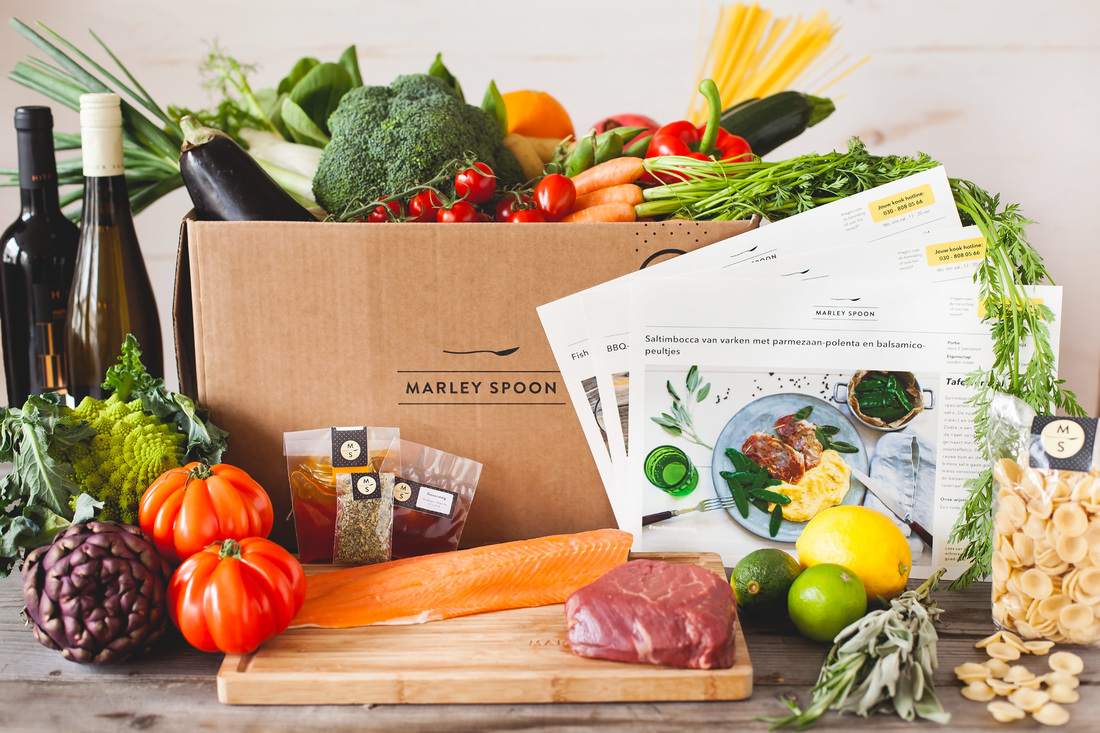
    Marley Spoon Australia is joining the growing number of businesses committing to power their operations entirely by renewables, with the meal delivery kit aiming to make the switch by the end of 2022.

    The business achieved carbon neutrality earlier this year, and aims for the next five years to be focused on further reducing its carbon impact, as well as rethinking its packaging, sustainable sourcing, and food waste.

    “Taking action to minimize our impact on the planet cannot be delayed any longer,” said Marley Spoon Australia chief executive Rolf Weber.

    “At Marley Spoon, we are committed to significantly decreasing our carbon impact across our operations. Since our launch, we’ve tried to consciously grow without further increasing our footprint and are continuously implementing actions to measure, reduce and, where necessary, offset that footprint.”

    Moving forward, Marley Spoon will work with climate offset specialist ClimatePartner to further its sustainability efforts through projects such as planting trees in Venezuela and Uruguay, and that provide families in Zambia with clean-burning cookstoves. To date, the business has planted 44,000 trees and redistributed 4,000 cooktops.

    Marley Spoon is also working to ensure all of its packaging is ‘curbside recyclable’ by the end of 2025, in order to ensure all Australians have an equal opportunity to do the right thing when it comes to properly dispose of soft plastics.

    And, the business will instigate a ‘local first’ policy in regards to food sourcing, looking to work closer with local farmers and suppliers to ensure any new ingredients added are Australian-made or grown.

    “Being a sustainably conscious company is more than just recycling and reducing waste; being a sustainable business or organization is all about consistently improving,” Weber said.

    “Our business model already helps customers easily act sustainably through reducing food waste and working with sustainably-focused suppliers [but] as we grow we need to continue to ensure we’re delivering a product that not only fills a need in their lifestyle, but also allows them to easily live their lives sustainably.”

  • Disputes keep pace with e-commerce growth

    Disputes keep pace with e-commerce growth

    As Vietnam’s digital economy grows, so does the incidence of disputes between online sellers and buyers. The e-commerce market grew by 16 percent to $14 billion in 2020 and is expected to be worth $52 billion by 2025, according to a report by Google. The number of disputes is also growing rapidly, with 24.4 percent of sellers embroiled in disputes last year,a survey by the Central Institute for Economic Management (CIEM) found.

    The Vietnam E-Commerce and Digital Economy Agency said it handled over 250 cases of e-commerce violations last year like unregistered websites, selling low-quality products, and assuming false business identities to cheat consumers.

    Besides, e-commerce platforms took down over 17,400 online stores and 34,600 products in the first five months of 2020, according to the agency.

    Nguyen Anh Duong, head of the general research department at CIEM, said though e-commerce platforms have procedures for receiving customer complaints and settling disputes, they can only handle sellers’ violations by closing the stores and cannot to make them compensate customers they cheated.

    Experts said the demand for an online dispute resolution (ODR) system in e-commerce is growing since many enterprises and individuals do business online.

    But Vietnam lacks a clear legal framework for the ODR, and experts said it is needed immediately so that an ODR system could be deployed.

  • Online share of retail sales jumps to 19% amid lockdowns

    Online share of retail sales jumps to 19% amid lockdowns

    Online sales accounted for nearly a fifth of total retail turnover last year as lockdowns to combat the spread of the coronavirus pandemic fuelled a boom in e-commerce, a United Nations study released on Monday showed.

    Online sales accounted for 19 percent of overall retail sales in 2020, up from 16 percent a year earlier, according to estimates from the UN Conference on Trade and Development (UNCTAD) based on national statistical offices in major economies.

    South Korea reported the highest share at 25.9 percent, up from 20.8 percent the year before. China had a 24.9 percent share, Britain 23.3 percent, and the United States 14.0 percent.

    Global e-commerce sales rose 4 percent to US$26.7 trillion in 2019, according to the latest estimates available, UNCTAD said. This included business-to-business (B2B) and business-to-consumer (B2C) sales, and was equivalent to 30 percent of global economic output that year.

    The pandemic led to mixed fortunes for leading B2C e-commerce companies in 2020, according to the report.

  • AirTag order arrives two days before the release date

    AirTag order arrives two days before the release date

    Apple opened pre-orders for its new AirTag item tracking system on April 23rd with shipments slated to start this Friday, April 30th. But a lucky customer said that his order for a 4-pack placed with Best Buy on Friday has already arrived. The product was shipped on Monday, April 26th, and arrived on Wednesday April 28th.

    Most likely, those who ordered from Best Buy have a better shot at receiving their order early as Apple would be least likely of the two to ship the product early. In addition, it would seem highly probable that there are more AirTag purchasers who received their order early than just one person. The product can help you find a missing item using the new items tab in the Find My app or by asking Siri to find it.

    If the missing item is close by, you will hear a sound from the AirTag’s speaker that you can follow until you are reunited with the missing item. If the item you’ve “AirTagged” is nearby and you have an iPhone 11, iPhone 11 Pro, an iPhone 11 Pro Max, an iPhone 12, iPhone 12 Mini, iPhone 12 Pro and an iPhone 12 Pro Max, you can use Precision Finding to receive precise directions to the item. That’s because those models contain the U1 Ultra Wideband chip.

    If you’ve left an item far behind, nearby Apple devices in the Find My network will receive a secure Bluetooth signal sent out by the AirTag you’ve attached to your item. These devices send the location of your AirTag to iCloud allowing you to find the location on a map in the Find My app.

    Now if you put your AirTag into Lost Mode, you’ll get a notification if it has been discovered by a device in the network. And you can also set your AirTag to cough up your contact information when it is placed alongside any handset that is NFC capable. Yes folks, that means both iOS and Android handsets, as long as they support NFC, can help you get in touch with someone who finds your missing or lost item.

    Information is encrypted and the AirTag will even alert you if someone is trying to stalk you with their AirTag. A 1-pack is priced at $29, and a 4-pack will cost you $99. The AirTags are water-resistant and have a replaceable battery.

  • Construction starts on Amazon Australia HQ in downtown Melbourne

    Construction starts on Amazon Australia HQ in downtown Melbourne

    Property company Charter Hall Group has begun the construction of the $1.5 billion 555 Collins Street precinct which will house online retailing giant Amazon’s new headquarters in Melbourne.

    Stage 1 of construction, scheduled for completion by early 2023, is worth $750 million and comprises a 48,000sqm premium office tower. A second office tower of 32,000sqm will include premium food and beverage retailers as well as a health and wellbeing hub.

    The company held the groundbreaking ceremony yesterday, attended by Victorian treasurer Tim Pallas, lord mayor Sally Capp, Amazon Web Services MD, ANZ, Adam Beavis, Charter Hall MD and group CEO David Harrison, Charter Hall Office CEO Carmel Hourigan and construction partner Lendlease GM Victoria Bill Alexandrakis.

    “Melbourne has a rich community of innovators, and we are looking forward to bringing Amazon’s growing local workforce to 555 Collins Street so we can continue to invent and innovate on behalf of customers across our Amazon and AWS businesses in Australia,” said Beavis.

    “555 Collins comes with a 6 Star Green rating and is constructed under a carbon neutral framework, which will contribute to helping us reach our goal of net zero carbon emissions by 2040.”

    Lord mayor Capp said the construction will provide 1500 jobs for Victorians. The city’s economy is recovering and the new project “will be a catalyst for further investment” in the CBD.

    “This is significant for Melbourne and incredible news for jobs and our highly skilled workforce – this investment will contribute billions of dollars to the Victorian tech economy in the next 10 years and cement our position as the home of innovation in the nation,” said Pallas.

    Charter Hall worked with architectural company COX Architecture and Gensler.

  • Online supermarket concept Supie to launch in Auckland

    Online supermarket concept Supie to launch in Auckland

    Online supermarket Supie is set to open its virtual doors in Auckland next month, aiming to change the way Kiwis shop for groceries.

    The membership-based supermarket will house more than 2500 products sourced from local growers and food producers. Supie also offers sustainable delivery where all packaging is recyclable or reusable. The brand implements zero-waste ordering methods which ensure its customers receive the freshest produce.

    “The majority of the time, when you order your product is still in the ground,” the company says on its website.

    Founded by Sarah Balle, Supie is expected to compete directly with traditional supermarkets, providing a smart and more accessible solution for Kiwis during the post-Covid era.

    “We’re a small team of passionate Kiwis with big ambitions to make a true impact,” said Saral Balle. “We believe food is the most powerful force for change.”

  • Angry Indian traders counter Amazon summit with own event

    Angry Indian traders counter Amazon summit with own event

    Thousands of Indian small businesses will organize an event this week in protest at the business practices of foreign e-tailers like Amazon.com taking a dig at the U.S. group’s summit with their own event.

    Starting Thursday, Amazon is organizing a virtual summit in India named “Smbhav,” which phonetically means “possible” in Hindi, to showcase opportunities offered by the U.S. firm to get small businesses to expand and sell online.

    Trader groups representing 600,000 sellers said in a statement they will at the same time launch a summit titled “Asmbhav,” or “impossible,” including an award ceremony to pin the blame on those who they think have hurt their businesses.

    Amazon did not immediately respond to a request for comment. Indian traders, who are a crucial part of Prime Minister Narendra Modi’s support base, have long alleged that Amazon and Walmart Inc’s Flipkart benefit a few big sellers and that the companies engage in predatory pricing that harms their businesses. The companies say they comply with all laws.

    A Reuters special report published in February revealed Amazon has for years given preferential treatment to a small group of sellers on its Indian platform and used them to circumvent the country’s strict foreign investment regulations.

    Amazon has said it “does not give preferential treatment to any seller on its marketplace.”

    The Smbhav event will include more than 70 speakers and aims to allow small businesses to learn how to grow their businesses in India – a key growth market for Amazon.

    The event “puts forth how Amazon and our partner’s leverage digitization, technology & our ecosystem to drive infinite possibilities for a Digital India,” its website said.

    In a statement, trader groups including the All India Mobile Retailers Association said the Amazon event was positioning it as a friend and guide to small sellers, but argued small traders had been harmed by discriminatory practices of foreign e-commerce firms.

    The latest dispute comes as India also considers revising foreign investment rules for e-commerce which could force companies like Amazon to rework the relationships it has with big sellers.

  • China warns online platform companies to halt anti-competitive practices

    China warns online platform companies to halt anti-competitive practices

    China’s market regulator, fresh from fining e-commerce giant Alibaba US$2.75 billion, said on Tuesday it warned nearly three dozen internet companies to stop using any banned practices such as forcing vendors to use their platform exclusively.

    The State Administration for Market Regulation (SAMR) said it summoned 34 companies including Tencent, ByteDance and JD.com for a meeting, where it ordered them to conduct self-inspections within one month, warning of “severe punishment” for any that still violated the rules.

    In February, China issued new anti-monopoly guidelines targeting internet platforms.

    On Saturday, SAMR hit Alibaba with a record 18.2 billion yuan fine, and on Tuesday told the other Internet firms to heed that lesson. The regulator is beefing up staff and other resources in order to strengthen antitrust enforcement, Reuters has reported.

    In the statement issued on its website, SAMR described the overall development of China’s platform economy as improving but said no time should be wasted in correcting the way companies operate to ensure they comply with the law.

    China’s cyberspace regulator and tax administration were also represented at the meeting, SAMR said.

    In addition to Tencent, JD, and ByteDance, search giant Baidu and food delivery platform Meituan were among the firms called in by SAMR. None provided immediate comment.

    “The regulators are not aimed at a single enterprise, but the whole platform economy, as it is growing more and more powerful,” said Keso Hong, an independent analyst in Beijing.

    “I believe the companies will be more prudent in the future. Meanwhile, I think it is good for the regulator to give them a reminder to prevent them from ending up like Alibaba.”

    SAMR also criticized abusive practices in community group buying, when companies offer aggressively low prices to woo users, and warned against abuse of big data and tax-related violations.

    In particular, the regulator warned against the practice of forcing vendors to operate on only one platform, a tactic known as “choose one from two”.

    “It is extremely harmful and must be corrected from the root,” the SAMR statement said.

  • Alibaba fined US$2.75bn for anti-monopoly violations by Chinese regulators

    Alibaba fined US$2.75bn for anti-monopoly violations by Chinese regulators

    Chinese regulators have fined Alibaba 18 billion yuan ($2.75 billion) – around 4 percent of its revenues in 2019 – for violating anti-monopoly rules and abusing its dominant market position.

    The State Administration for Market Regulation (SAMR) said that after an investigation launched in December, it had determined that Alibaba Group had been “abusing market dominance” since 2015 by preventing its merchants from using other online e-commerce platforms.

    It said the practice violates China’s anti-monopoly law by hindering the free circulation of goods and infringing on the business interests of merchants.

    The SAMR ordered Alibaba to make “thorough rectifications” to strengthen internal compliance and protect consumer rights.

    The company said in a statement posted on its official Weibo account that it “accepted” the decision and would resolutely implement SAMR’s rulings. It said it would also work to improve corporate compliance.

    The practice of preventing merchants from listing on rival platforms is a long-standing one. The market regulator spelled out in rules issued on February that it was illegal.

    Alibaba has also been under heavy scrutiny since its founder Jack Ma criticized China’s regulatory system in October.

    Ant Group, Alibaba’s fintech arm, also saw its $37 billion listing plans dramatically suspended by authorities in November.

  • Shopee’s rise sends rivals scrambling in Southeast Asian internet battle

    Shopee’s rise sends rivals scrambling in Southeast Asian internet battle

    In front of an open-air Jakarta restaurant, delivery drivers clad in the orange colours of Southeast Asia tech group Sea Ltd wait for orders next to the green-jacketed riders of market leaders Gojek and Grab, in what has become the latest battleground for tech supremacy in Southeast Asia.

    The humble noodles eatery signed up for Sea’s nascent ShopeeFood service a month ago, but “immediately, there were orders everyday,” said manager M.A Rasyid.

    Riding on the success of a cash-generating gaming business, U.S.-listed Sea has invested heavily in its Shopee e-commerce brand and successfully taken on Alibaba’s Lazada and other rivals in recent years. Its share price has risen five-fold over the past year, giving Singapore-based Sea a market value of $111 billion.

    Now it is muscling into food delivery and financial services in Indonesia, the world’s fourth-most-populous country, posing a new threat to regional rivals including ride-hailing and delivery unicorns Grab and GoJek.

    At stake is a slice of the more than 400 million internet users in Southeast Asia’s digital economy, which is estimated to triple to $309 billion by 2025, according to a study by Google, Temasek and Bain & Company.

    Tech behemoths, including Tencent, a major investor in Sea, Alibaba, Google and Softbank Group Corp, are big backers of regional champions.

    Sources say Sea’s aggressive expansion is one driver of merger discussions between Gojek and e-commerce platform Tokopedia. The Indonesian firms aim to create an $18 billion powerhouse to fight off Sea and regional giant Grab.

    Meanwhile, Grab and others, including travel app Traveloka and Indonesian e-commerce unicorn Bukalapak, are rushing for public listings, hoping to ride the coattails of Sea’s stock rally while defending their turf, according to Reuters interviews with over a dozen people.

    “Sea is like Thanos, massive and powerful, and able to take down half of the world, or in this case half the startups,” Willson Cuaca, co-founder of East Ventures and an early backer of Tokopedia, joked as he compared Sea to the powerful villain in the Marvel film series.

    “Like the Avengers, companies need to band together if they want to ensure their survival and to win the war.”

    Sea’s stock rally reflects a scarcity of options for investors seeking exposure to the booming Southeast Asia internet sector. It went public in 2017 and has raised some $7 billion in share and debt sales, with early investor Tencent now holding a stake of about 20%.

    That investor appetite, combined with a need to raise cash to match Sea’s muscle, is forcing rivals to seek listings as quickly as they can, bankers and executives familiar with the matter say.

    Sources say the Gojek-Tokopedia merger, which is likely to be finalised within weeks, will be followed by a Jakarta listing in the second half of 2021, then a mega IPO in the United States targeted for 2022.

    Grab and Traveloka, for their part, aim to accelerate the process by merging with special purpose acquisition companies, sources said. Bukalapak is planning the same, after a 2021 Jakarta IPO.

  • Don Don Donki opens first Jonetz concept store in Malaysia

    Don Don Donki opens first Jonetz concept store in Malaysia

    The government is keen to work with Japanese retailer Don Don Donki, which has vast international network, to promote Malaysian Made products internationally particularly in Japan.

    Domestic Trade and Consumer Affairs Minister Datuk Seri Alexander Nanta Linggi said Tokyo 2020 Olympic Games hosted by Japan this year would be a good opportunity to promote and showcase quality Malaysian-made products, especially halal products.

    “Hopefully, this collaboration between Don Don Donki and the ministry can materialise very soon,” he said in his speech at the launch of Jonetz by Don Don Donki here last week.

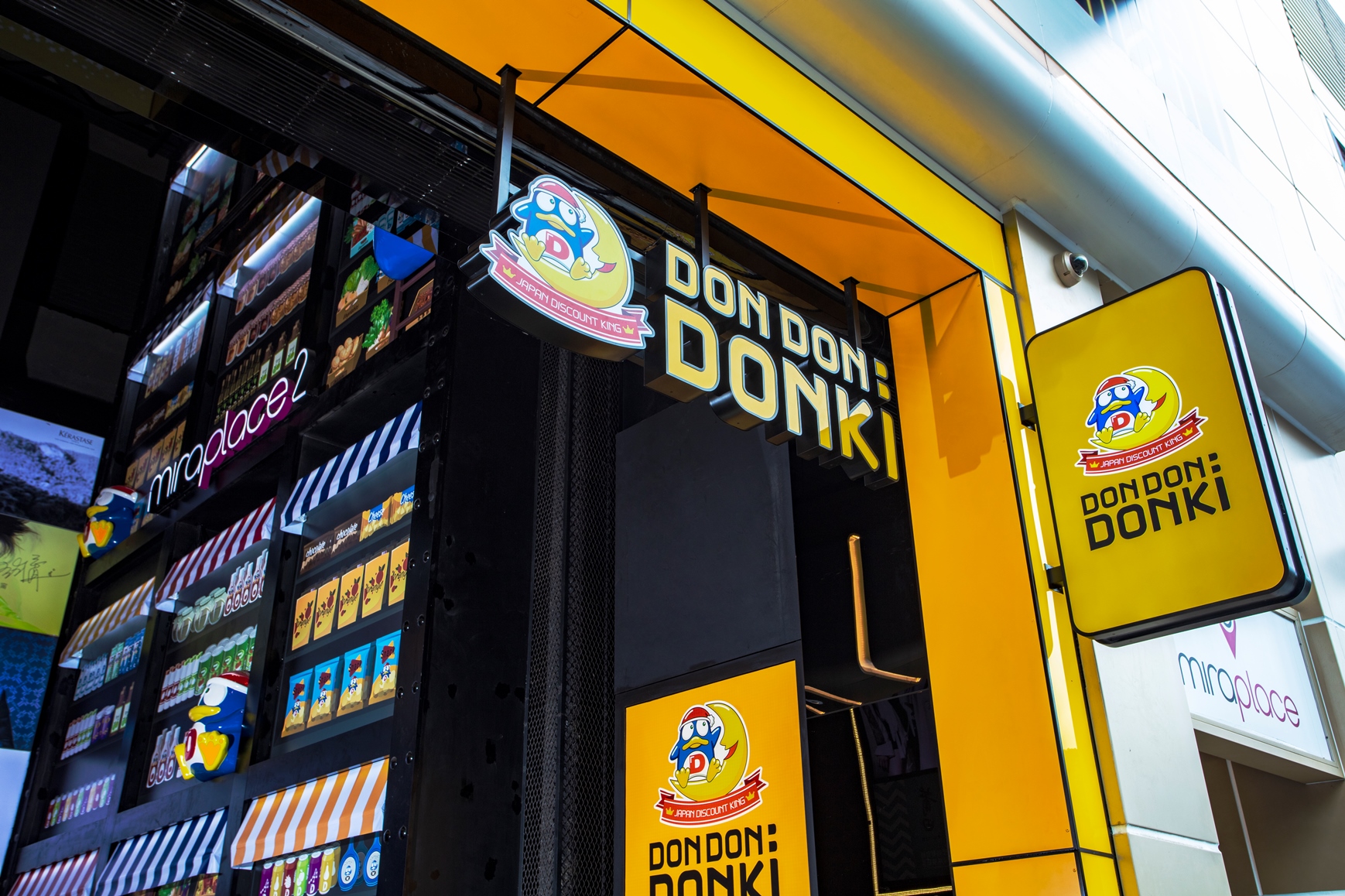
    The first Jonetz by Don Don Donki outlet in Malaysia opened its doors to the public on March 19.

    Don Don Donki, a Japanese discount chain store,  is commonly found in the Asia Pacific region.

    It has over 160 locations throughout Japan as well as Singapore, Hong Kong, Hawaii, Bangkok, Taiwan and Malaysia.

    The Malaysian store occupies 23,476 sq m of space in Lot 10, across three floors in Bukit Bintang.

    Alexander said the brand new retail outlet by Don Don Donki was evidently a sign of continuous confidence by foreign investors in the Malaysian economy during these challenging times, especially in the retail sector.

    He said as many other developed nations, retail sector in was fast becoming one of the main contributors to the nation’s gross domestic product.

    “In 2019, Malaysia received RM60.46 billion worth of foreign investment in distributive trade sectors mainly from retail. This amount of foreign investment created 392,634 new job opportunities for Malaysians.

    “In 2020, despite the Covid-19 pandemic and implementation of the Movement Control Order (MCO), the retail sales contributed RM511 billion to national GDP,” he said.

    Pan Pacific International Holdings Corp (PPIH), the parent company Don Don Donki, is expanding its business to Asia Pacific region with the introduction of the specialty store concept, selling Japan-made or made for Japan merchandise.

    Pan Pacific Malaysia president Satoshi Machida said the group planned to open up 11 stores in the region in five years between 2021 and 2024.

    The store in Lot 10 sells Japanese snacks and groceries, including a variety of halal-certified Wagyu beef platters and barbecued meat.

    It also offers ready-to-eat meals and desserts, such as sushi platters along with Japanese cakes and treats, and cooking equipment and other electronics items as well as skincare, beauty products and other lifestyle items.

  • Hong Kong e-commerce scene ready for growth in 2021

    Hong Kong e-commerce scene ready for growth in 2021

    E-commerce businesses in Hong Kong are set to recapture their growth hit by the COVID-19 pandemic, with supply chain and logistics issues and a decline in sales, Paypal’s new study showed.

    Despite the obstacles brought by COVID-19, two-thirds (61%) of businesses surveyed are anticipating a recovery at the end of 2020, along with the measures to address the financial pressure and customer relationship challenges.

    The study also found 86% of respondents believing to improve their e-commerce experience for consumers to boost their competitiveness in this time.

    The PayPal Hong Kong Merchant Survey was conducted in August to understand the impact of the pandemic on e-commerce businesses and their thoughts on recovery. 86% of respondents seek capitalization on the opportunity of improving online shopping experiences to boost competitiveness.

    While online shopping amplified, 27% of respondents reported tough challenges amidst the pandemic – mainly growing concerned on their sustainability.

    Since January 2020, 86% of businesses claimed to have supply chain and logistics problems, while 52% reported decrease in sales as their main challenge. Such are creating dual pressure on businesses in addition to the increasing operational costs.

    These issues are also causing failing customer relationships in Hong Kong businesses, including rising complaints, damaged company reputation, and loss of regular customers.