Category: E-Tailing

Retail News Asia is committed to providing both local and global retailers with the latest E-Commerce & Etail news throughout the Asian market. This on a daily base.

  • Online marketplace YesAsia launching Hong Kong IPO

    Online marketplace YesAsia launching Hong Kong IPO

    Online marketplace YesAsia is set to raise US$17 million in an IPO launch in Hong Kong.

    The company aims to offer 39,540,00 new shares, 90 percent of which will be available for placing with institutional and professional investors while 10 percent will be available for subscription by the public in Hong Kong.

    Founded in 1988, YesAsia offers Asian fashion & lifestyle, beauty, and entertainment products to global customers. The company launched its key opinion leader initiative in 2018, and subsequently its YesStyle Influencer Program in 2019.

    Revenues generated from its influencer marketing initiatives accounted for 1.2 percent, 7.9 percent, and 17.4 percent of the total revenue of YesStyle for the three years ended last December, respectively.

    “We had been able to achieve above-industry revenue growth during the Track Record Period even in the midst of the Covid-19 pandemic, mainly due to our continuous effort in strengthening our marketing strategy to support customer retention and acquisition as well as long-term ecosystem development,” said Lau Kwok Chu, founder and executive director and CEO at YesAsia.

  • SoftBank-backed Dingdong raises US$95.7 million in downsized US IPO

    SoftBank-backed Dingdong raises US$95.7 million in downsized US IPO

    Chinese grocery app Dingdong, backed by SoftBank Vision Fund 2, raised about $95.69 million in its US initial public offering (IPO) on Tuesday after slashing the size of the IPO to almost a fourth of its earlier target.

    Dingdong sold more than 4 million American depositary shares (ADSs) priced at $23.5 apiece, the lower end of its indicative price range.

    The company had earlier planned to raise up to $357 million in its IPO by selling 14 million ADSs priced between $23.5 and $25.5.

    Established in 2017 and also backed by Tiger Global Management and Sequoia Capital, Dingdong operates mainly in China’s first-tier cities such as Shanghai, Beijing, Shenzhen, and Hangzhou.

    Rival online grocery company Missfresh Ltd, which is backed by Tencent Holdings Ltd, slumped in its Nasdaq debut last week. It was trading almost 17 percent below its IPO price until Monday’s close.

    Morgan Stanley, BofA Securities, and Credit Suisse were the IPO’s lead underwriters.

    Dingdong’s ADSs are set to begin trading on the New York Stock Exchange later in the day under the ticker symbol “DDL”.

  • Alibaba betting big on Vietnam e-commerce potential

    Alibaba betting big on Vietnam e-commerce potential

    Fast increasing online groceries demand and the high growth potential of Vietnamese e-commerce market are factors driving Chinese giant Alibaba’s investment in Vietnam.

    A consortium led by the Chinese e-commerce giant invested $400 million in The CrownX, a subsidiary of conglomerate Masan Group that operates retail chain WinMart.

    The investment was seen as a chance for Lazada, Alibaba’s e-commerce platform, to create a business relationship with WinMart for the online groceries business, Singapore-based technology media company Tech in Asia said.

    Kenny Ho, Head of Investment for Southeast Asia at Alibaba, said the combination of Alibaba’s online retail expertise, Lazada’s e-commerce platform in Vietnam and Masan’s leading offline network will be a strong catalyst for modernizing Vietnam’s retail landscape.

    WinMart will become the preferred grocery retailer on Lazada, while its outlets will be used as pick-up points for online orders, Ho said.

    The investment by Alibaba indicates that the company is tapping into a pandemic-fueled growth in the demand for online groceries, Tech in Asia reported.

    The pandemic has elevated groceries into the hottest e-commerce vertical. Vietnamese consumers who have tried online grocery shopping have doubled in 2020, according to a report from Google, Temasek, and Bain & Company, with over 75 percent indicating they would continue the practice even after the pandemic has subsided.

    Another reason for Alibaba’s investment in Vietnam is its high growth potential. The nation’s e-commerce market expanded by 18 percent last year to $11.8 billion, the only country in Southeast Asia to record double-digit growth amid the pandemic, according to the Vietnam e-Commerce and Digital Economy Agency.

    A report by market research company Global Data’s E-Commerce Analytics said Vietnam’s e-commerce is likely to see compounded annual growth of 18.8 percent between 2020 and 2024, with the value rising to $26.1 billion.

    Vietnam has a stable growth economy, which grew by 2.9 percent last year despite the Covid-19 pandemic. The number of middle-class households in the country is expected to reach 17 million by 2030.

  • Tiki raises $43.5 mln via corporate bonds

    Tiki raises $43.5 mln via corporate bonds

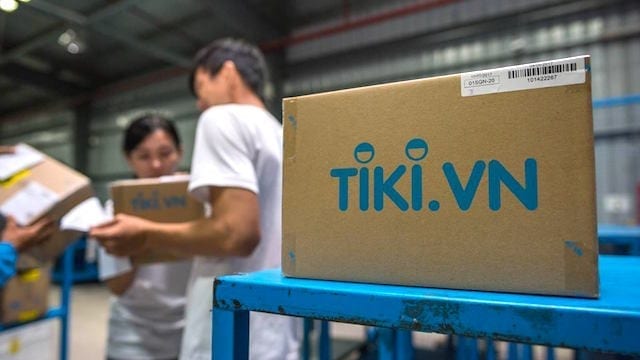
    E-commerce platform Tiki has raised VND1 trillion (nearly $43.5 million) over the last three months by issuing corporate bonds.

    Issued from 16 March to June 13, the bonds are non-convertible with a fixed interest rate of 13 percent per annum, one of the highest rates in the local market.

    Over 97 percent of Tiki bonds’ buyers are Vietnamese individual professional investors. Two domestic institutional investors and two foreign investors also bought the bonds.

    Tiki will use the VND1 trillion to increase its working capital, expand warehouses, invest in subsidiaries, and fund advertisement and marketing campaigns, among others.

    After suffering losses in recent years, Tiki still has to spend big to grab market shares from rivals like Shopee, Lazada, and Sendo.

    Tiki reported losses of over VND750 billion in 2018, and more than VND320 billion in 2019.

  • E-commerce platform Leflair set for Q3 comeback

    E-commerce platform Leflair set for Q3 comeback

    E-commerce platform for branded goods Leflair is expected to resume operations under a new owner in Q3.

    The U.S.-based Society Pass Incorporated announced Wednesday it had bought Leflair and other intellectual properties, including the domain name, from a company in Hong Kong.

    The revived Leflair will expand operations to other Southeast Asian markets next year, Society Pass Inc. said.

    Society Pass is an e-commerce startup that specializes in connecting consumers with suppliers in Southeast Asia and South Asia. In Vietnam, Society Pass currently runs Sopa, an e-commerce platform for foods and drinks and gastronomy, and #Hottab, a supplier of solutions and marketing connections for users’ data management.

    Leflair was established in 2015 by two French young entrepreneurs, Loic Gautier and Pierre-Antoine Brun. It acted as an e-commerce platform for branded goods and flash sales. It did not operate as an online marketplace, but worked directly with brands and official distributors in Vietnam and overseas.

    In four years ending in 2019, it secured over 120,000 clients and made net revenues of tens of millions of dollars a year. It ceased operations early 2020. Co-founder and COO of Leflair, Brun, had told suppliers then that the firm had not settled debts totaling $2 million.

    Society Pass said it has nothing to do with Leflair’s old legal entity in Vietnam as also the two individuals who’d co-founded it earlier.

  • Amazon, Alibaba race to recruit Vietnamese merchants

    Amazon, Alibaba race to recruit Vietnamese merchants

    Global giants Amazon and Alibaba are racing to recruit more Vietnamese vendors on their platforms seeking to boost their share of a booming e-commerce market.

    Amazon saw the number of Vietnamese merchants exporting at least $1 million worth of goods from Vietnam triple last year. The surge was driven by demand for tools, kitchenware, handicrafts, home goods, and apparel.

    “Vietnamese sellers have enriched our global product selection,” Gijae Seong, head of Amazon Global Selling in Vietnam, told Nikkei Asia.

    Amazon Global Selling is a business set up to recruit more Vietnamese merchants on Amazon, seeking to boot e-commerce trade between Vietnam and its largest export market the U.S.

    The company opened a Hanoi office in March to train new sellers, adding to its Ho Chi Minh City branch.

    Seong said companies “have competitive advantages in manufacturing” in Vietnam, where a wave of factories have relocated from China to sidestep the trade war with the U.S. and to reduce other costs and risks.

    China’s Alibaba has also been making moves to have more Vietnamese sellers.

    In March, a company representative said that it planned to have over 10,000 Vietnamese small and medium-sized enterprises selling on its platform by 2025.

    It has been working with government authorities since last year to run training programs for Vietnamese vendors.

    As of March, over 300 companies have been provided consultancy in online cross-border sales.

    The competition between the two giants is heating up as e-commerce booms in Vietnam with rising demand for online shopping amid the Covid-19 pandemic.

    It’s e-commerce market expanded by 18 percent last year to $11.8 billion, the only country in Southeast Asia to record double-digit growth amid the Covid-19 pandemic, according to the Vietnam e-Commerce and Digital Economy Agency.

  • Vietnam gets set to tax e-commerce revenue

    Vietnam gets set to tax e-commerce revenue

    Vietnam plans to tax 1.5 percent of annual e-commerce revenues of VND100 million ($4,297) and higher as part of leveling the field between traditional and online retail merchants.

    A decree with new regulations is set to take effect on August 1, but authorities have said they might give e-commerce platforms more time to prepare for the taxation regime.

    E-commerce platforms will need to provide authorities with monthly reports on their merchants, revenues, bank accounts, and types of goods.

    Tax officials had said earlier that the current taxation regime is unfair to traditional sellers who have to pay other overheads, while online sellers have been escaping several taxes.

    Taxing sellers through e-commerce platforms would also help prevent the sales of contraband and fake goods, the officials said.

    Vietnam’s e-commerce market expanded by 18 percent last year to $11.8 billion, the only country in Southeast Asia to record double-digit growth amid the pandemic, according to the Vietnam e-Commerce and Digital Economy Agency.

  • India to expedite Amazon, Flipkart antitrust probe

    India to expedite Amazon, Flipkart antitrust probe

    India’s antitrust watchdog plans to expedite a restarted probe into allegations of anti-competitive behavior at Amazon.com Inc and Walmart Inc’s Flipkart, as it intensifies scrutiny of big-tech firms, two people close to the matter said.

    The comments come as major U.S. technology firms including Twitter Inc and Facebook Inc are at loggerheads with the government over issues such as data privacy bills and policies some industry executives have called protectionist.

    The Competition Commission of India (CCI) initiated a probe in January last year on the basis of a complaint alleging Amazon and Flipkart promoted select sellers on their e-commerce platforms and that deep discounts stifled competition.

    The companies have denied wrongdoing.

    Near-immediate legal challenges from the pair stalled the probe for over a year until a court last week allowed it to resume, having dismissed arguments that the CCI lacked evidence.

    Though Amazon and Flipkart are likely to appeal, the CCI plans to demand information from them related to the allegations “as quickly as possible”, said one of the people, who declined to be identified due to the sensitivity of the matter.

    The investigation “will be expedited”, the person said. Such investigations in India typically take months to complete.

    Amazon declined to comment. Flipkart and the CCI did not respond to requests for comment.

    The CCI is speeding up all cases involving big technology firms, including by deploying additional officers for some cases and working to more stringent internal deadlines, said the two people, who are familiar with the watchdog’s thinking.

    “Cases involving digital firms are getting a priority at CCI as they can have a significant impact on the economy and Indian startups,” said one of the people.

    Last year, the CCI began reviewing allegations of Google abusing the position of its Android operating system in the smart TV market, and is likely to soon order a comprehensive antitrust investigation, the people said.

    Google declined to comment.

    Such a probe would be the third against Google, with the Alphabet Inc unit already battling cases relating to Android as well as its payment app.

    The CCI is also investigating practices at MakeMyTrip Ltd and privacy policy changes at Facebook’s WhatsApp.The probe into Amazon and Flipkart is restarting at a time when both are battling accusations from offline retailers that their complex business structures allow them to circumvent foreign investment rules for e-commerce.

    Amazon, which has said it “does not give preferential treatment to any seller”, told the court here it disagreed with the report.

    The antitrust body will examine the Reuters report and could use it as part of its investigation, one of the people said.

    “The CCI’s plan to move faster on such cases is in line with other antitrust regulators globally that are investigating digital markets like e-commerce and online search, which are dynamic and evolving fast,” said an Indian antitrust lawyer who represents tech firms.

  • Shinsegae, Naver win bidding battle for EBay South Korea

    Shinsegae, Naver win bidding battle for EBay South Korea

    South Korean retail giants Lotte Shopping and Shinsegae Group have submitted separate letters of intent for online marketplace eBay Korea, the retailers’ spokesmen confirmed on Monday.

    It is a deal that will almost certainly shake up the country’s e-commerce retail segment, potentially propelling one of the country’s largest retailers into becoming the leading omnichannel operator in South Korea.

    SK Telecom, South Korea’s biggest mobile carrier, and private equity firm MBK Partners, the largest shareholder of discount store chain Homeplus, reportedly dropped out of the race to acquire eBay Korea, which has been up for sale since last year.

    This week’s formal bidding marks the second attempt to divest its interests by eBay Korea – which represents about 11% of global sales within the U.S.-based eBay corporation – and it wants at least $4.43 billion, a price that is looking increasingly attainable.

    South Korea’s total e-commerce transactions jumped 25% last year according to Trade Ministry estimates and eBay Korea represents about 12.8% of South Korea’s e-commerce market, just trailing Coupang at 13% and market leader Naver with 18%. Its revenue is estimated at $1.17 billion, with an operating income of $76 million.

    Coupang listed on the New York Stock Exchange in March, becoming the largest Asian company since Alibaba to go public in New York and raising $4.6 billion. Founded by billionaire Bom Kim, a Harvard business school dropout, Coupang is now the country’s most valuable start-up with a market capitalization of more than $60 billion, backed by Softbank’s Vision Fund.

    By contrast, Lotte and Shinsegae’s market shares in the country’s e-commerce sector are estimated at just 5% and 3% respectively and the takeover of eBay Korea by either could reshape the country’s online retail segment and fast-track the winning bidder into a market-leading position. Both have struggled to catch up with the major online competitors, especially after the impact of the Covid-19 pandemic.

    However, the picture is complicated. Naver could be one of the biggest beneficiaries if Shinsegae is successful as it is believed to be offering support in financing any acquisition. The retailer and portal established a strategic alliance in March and Shinsegae could switch to Naver Pay as the payment platform for three e-commerce websites operated by eBay Korea: Gmarket, Auction and G9. At present, eBay Korea uses its own online payment system called Smile Pay.

    Top South Korean cellphone carrier SK Telecom and retail group E-Mart were still among the remaining suitors as the preliminary round of bids sought by the U.S. parent closed 16 March.

    Indeed, SK Telecom had been the leading candidate. The group also operates the online platform 11Street through a subsidiary, making SK Telecom the fourth-biggest e-commerce provider. But 11Street has struggled to grow, leading SK Telecom to partner with Amazon AMZN 0.0% in November in a collaboration initially limited to 11Street hosting Amazon products, but likely to expand in scope.

    Meanwhile, Lotte will no doubt view the purchase of eBay Korea as a springboard for rebuilding the group’s online business. In April 2020, the group merged the e-commerce sites of its department stores, supermarkets, electronics shops and other physical retail affiliates under one shopping platform called LotteON but it has failed to make much headway.

    While all the potential suitors have refused to give much away, Kang Hee-tae, CEO of Lotte Shopping, admitted during a spring shareholder meeting: “We’re certainly interested.”

    Launching in 2000, eBay Korea quickly grew and last year earned around $75 million in operating profit. But eBay Korea has been squeezed by rivals in recent years, while activist investors like Elliott Management have urged eBay to shed assets with poor growth prospects.

    The U.S. parent’s hope of securing a lucrative deal initially looked ambitious but then Coupang went public successfully, boosting its hopes.

    Whoever wins the battle for eBay Korea, the fact that the rivals are both major retail players should heat up the market and could lead to an array of collaborations and partnerships to fight scale with scale. South Korea is on the brink of the biggest online shake-up since eBay announced its arrival over two decades ago.

  • South Korean retail firms Lotte and Shinsegae bid for EBay Korea

    South Korean retail firms Lotte and Shinsegae bid for EBay Korea

    South Korean retailers Lotte Shopping and Shinsegae Group entered separate binding bids for eBay’s South Korean business, the retailers’ spokesmen said on Monday.

    eBay Korea – South Korea’s third-largest e-commerce firm with a 12.8% market share in 2020, according to Euromonitor – is on sale for what eBay hopes could be up to 5 trillion won ($4.5 billion), analysts said.

    The retailers’ spokesmen declined to comment on the terms of their bids. An eBay Korea spokeswoman also declined to comment.

    Local retail giants Lotte and Shinsegae have struggled to catch up to leading competitors like South Korea’s No. 1 e-commerce firm Coupang in the fast-growing online shopping sector, especially after the onset of COVID-19.

    South Korea’s online shopping transactions were worth 161 trillion won in 2020, accounting for a record 27.2% of total retail transactions, up from 21.4% in 2019.

  • Etsy to buy fashion reseller Depop in push for younger consumers

    Etsy to buy fashion reseller Depop in push for younger consumers

    Etsy said on Wednesday it would buy Generation-Z focused fashion resale company Depop for $1.63 billion, seeking to attract younger shoppers and bolster its position in a booming market in vintage or used clothing.

    After a pandemic-driven surge in sales over the last year, Etsy, among the world’s best-known e-commerce platforms for handmade goods and vintage items, estimates the U.S. second-hand clothing market alone will be worth $64 billion by 2024.

    Chief Executive Officer Josh Silverman said he saw Depop as “the resale home for Gen-Z consumers” and believed there was significant potential to scale up its business as he seeks to offset consumers’ return to the more traditional malls and retail stores over the next year.

    “This (Gen-Z) is an enormous demographic and it’s the trendsetter demographic,” he told analysts on a call to discuss the deal.

    London-based Depop, founded a decade ago by entrepreneur Simon Beckerman for readers of his magazine to purchase featured items, is known for its vintage and street-wear collections and has over 26 million users across more than 147 countries.

    About 90% of its users are under the age of 26 and it is the 10th most visited shopping site among Gen-Z consumers in the United States, according to the company.

    The resale boom has prompted companies including Gap Inc and Vera Bradley to partner with sector players Poshmark and ThredUp.

    Silverman expects Depop to increase Etsy’s footprint in apparel, a growing category as people return to work and school. In 2020, Etsy recorded about $1 billion in apparel gross merchandise sales and its overall revenue doubled.

    Neil Saunders, managing director at retail research firm GlobalData, said the deal should give Etsy a new growth avenue as it comes down from a pandemic-led high.

  • Lazada’s president quits

    Lazada’s president quits

    Jessica Liu, president of Lazada Group, is leaving the South-East Asian online shopping unit of Alibaba Group Holding Ltd.

    She is departing Lazada to spend more time with her family, the company said, confirming an earlier report by Bloomberg News.

    Liu has been a key member of Lazada’s leadership team and also served as head of LazMall, the fast-growing marketplace for international and local brands within the Lazada platform.

    Earlier this year, she took on an additional role of chief executive officer of Thailand, becoming the company’s first female country head.

    “Under her leadership, Lazmall has grown to become one of the largest online virtual malls in South-East Asia, ” Lazada said in a statement.

    “We want to thank Jessica for this and her many other contributions, and wish her well as she takes some time off to focus on her family.”

    Lazada has gone through frequent management shuffles since it was acquired by Alibaba.

    The company appointed Chun Li as group CEO in July, and Lazada has since been investing in technology and logistics and recording triple-digit year-on-year order growth.

    Revenue from Alibaba’s international commerce retail business climbed 42% to US$5.26bil (RM21.74bil) in the fiscal year ended March 31, led by Lazada and Trendyol.

    Liu joined Lazada in 2020 from Alibaba, where she was general manager of Tmall Fashion and Luxury.

    Under her leadership, Tmall became China’s largest fashion business-to-consumer online platform.

    Nine-year-old Lazada operates in Indonesia, Malaysia, the Philippines, Singapore, Thailand and Vietnam.

  • Alibaba, partners invest US$400 million in retail arm of Vietnam’s Masan

    Alibaba, partners invest US$400 million in retail arm of Vietnam’s Masan

    Chinese e-commerce giant Alibaba Group Holding and partners have invested $400 million in the retail unit of Vietnamese conglomerate Masan Group, Masan said on Tuesday.

    The consortium, which includes Alibaba Group and Baring Private Equity Asia, has paid for a 5.5 percent stake in Masan’s retail arm, The CrownX, the company said in a statement.

    The CrownX, founded in 2019, is valued under the deal at $6.9 billion, equivalent to $93.50 a share, the statement said. Parent company Masan will hold 80.2 per cent of retail units.

    The deal will expand Alibaba’s presence in Southeast Asia after its $4 billion investment in e-commerce firm Lazada in 2018.

    “The CrownX will work closely with Lazada to accelerate our digital transformation into an ‘all-in-one platform to serve consumers both offline and online purchases,” Masan said in the statement.

    The company said it was in talks with other investors on an additional investment of between $300 million to $400 million in The CrownX with that deal expected to close in 2021.

    Masan shares opened up 5.57 percent on Tuesday to 110,000 dong after the announcement, giving the company a market capitalization at $5.3 billion.

  • E-mart set to quit Vietnam

    E-mart set to quit Vietnam

    South Korean supermarket chain E-mart is to exit its Vietnam business, with reports suggesting it will be sold to local car manufacturer Truong Hai Auto Corporation (Thaco Group).

    According to The Korea Times, E-mart announced earlier this week that it will sell E-mart Vietnam to Thaco Group. However, a spokesperson of Thaco said the group has not signed any agreements with the South Korean firm.

    E-mart has spent five years trying to establish a footprint in Southeast Asia, but in Vietnam had managed to open only one store, a second suspended due to local licensing setbacks.

    A South Korean media report said E-mart would take royalty fees from Thaco Group and its supermarket will be run as a franchise.

    “Our strategic alliance with Thaco will not only pay us royalties for using the E-mart brand in Vietnam, but also give us the opportunity to export our private-brand products,” an E-mart employee told The Korea Times.

    Predictions that the South Korean supermarket chain would exit Vietnam arose last year. However, its representative then denied the news and said it was looking into other options such as a strategic alliance or business partnership.

    Thaco Group’s commercial-services arm includes managing and operating mix-used business models including shopping malls, hotels and developing business lines such as supermarkets, food courts and cinemas.

    The group is currently operating businesses at Yangon Myanmar Center Complex in Myanmar and building its Socar Sala mixed-used complex in Ho Chi Minh City’s District 2.

  • JD.com first-quarter revenue exceeds expectation

    JD.com first-quarter revenue exceeds expectation

    China’s JD.com’s first-quarter revenue beat Wall Street estimates as growth remained robust in the domestic e-commerce sector following the Covid-19 pandemic.

    The Beijing-based company has joined rivals Pinduoduo and Alibaba Group in racking up double-digit sales growth during the pandemic, as people flocked to e-commerce websites to shop for everything from groceries to luxury goods.

    Net revenue at JD.com, China’s largest e-commerce company by revenue, rose 39 percent to US$31.57 billion in the quarter ended March 31, topping analysts average estimate of $29.8 billion, according to IBES data from Refinitiv.

    Sales in its product segment, which includes online retail sales, rose nearly 35 percent to $27.2 billion in the quarter.

    Popular brands like Starbucks and sports-retailer Decathlon, along with luxury fashion brands such as Marni and John Lobb, launched flagship stores in the quarter on JD.com’s e-commerce platform, which, along with those of rivals, has seen strong demand during and after the pandemic.

    JD.com’s earnings beat comes on the heels of a major regulatory crackdown on Alibaba Group.

    In April, Chinese anti-monopoly authorities fined the e-commerce giant a record $2.75 billion for engaging in a practice known as “choose one from two,” wherein platforms penalize merchants for listing products on multiple sites.

    Despite how that penalty targeted a rival, the uncertain regulatory environment has dampened investor sentiment across China’s internet sector.

    US-listed shares of JD have dropped about 13 percent since news of the fine on Alibaba was announced.

    Concurrent with the fine on Alibaba, JD withdrew its initial public offering application for its fintech subsidiary JD Digits from the Shanghai Stock exchange.

    However, the company’s logistics division is set to raise up to $3.4 billion in an upcoming Hong Kong IPO.