Category: E-Tailing

Retail News Asia is committed to providing both local and global retailers with the latest E-Commerce & Etail news throughout the Asian market. This on a daily base.

  • Myntra hires tailors as delivery agents to reduce returns

    Myntra hires tailors as delivery agents to reduce returns

    Myntra, a Flipkart-owned Indian fashion platform has roped in local tailors to pick up packages from warehouses and deliver to customers to mend the sales gap caused by the return of ill-fitting clothes.

    The move is set to minimize business losses by cutting down on the return of clothes and refunds, says GlobalData, a data and analytics company.

    Tying up with local tailors in apparel delivery is not a new concept and companies such as Raymond and Birla-owned Abof.com took initiatives to partner with local tailors as the last-mile delivery agent.

    Shagun Sachdeva, a consumer insights analyst at GlobalData, says Myntra started offering alteration services in Bengaluru back in 2016.

    “The company is now looking to address the discomfort of consumers in searching for tailors for altering purposes. This is aimed at mending the sales gap and at the same time improving customer satisfaction by fixing fitting flaws on the doorstep.”

    According to GlobalData, online retail in India accounted for US$17.2 billion in 2017 and is projected to reach $69.9 billion by 2022.

    In line with this growth, the online retailing of clothing in India grew exponentially in the last few years, reaching $5 billion last year, owing to increasing penetration of the internet and discounts offered by online retailers.

    The market is currently fragmented, with market leader Amazon commanding just 5 percent market share across all categories. Therefore, in order to break the clutter, companies such as Myntra are finding innovative ways to please the customers.

    Sachdeva says Myntra has reduced its losses from $96 million in 2017 to $22 million last year and aims to turn itself profitable down the line.

    “Such loss-reducing measures might be helpful.”

  • City Chic broadens US reach with e-commerce acquisition

    City Chic broadens US reach with e-commerce acquisition

    Over a year after divesting the Millers, Crossroads, Katies, Autograph and Rivers businesses to Noni B, and putting more focus on its flagship plus-size brand, City Chic Collective has announced it will acquire US specialty retailer Avenue’s e-commerce assets.

    The US Bankruptcy Court approved the brand’s proposed US$16.5 million acquisition of Avenue’s assets after the brand entered chapter 11 bankruptcy in August.

    City Chic runs operates more than 104 physical stores across New Zealand and Australia, and operates in the USA online as well as through wholesale partnerships with major US retailers such as Macys and Nordstrom.

    According to City Chic, the acquisition will provide the business with a broader reach within the US plus-size market, and expects it will deliver accretive growth for the business’ international operations.

    “Avenue’s e-commerce assets represent a unique opportunity to accelerate our US customer growth and expand across plus size segments,” City Chic chief executive Phil Ryan said.

    “This acquisition delivers on our vision of ‘leading a world of curves’. It means that City Chic now has a portfolio, or a collective, of online business that we can leverage to further build our Northern Hemisphere presence.

    “Our City Chic, Avenue and Hips & Curves brands will allow us to speak to more plus size women and deliver on-trend, well-fitting garments across multiple price points.”

    Online sales across New Zealand, Australia and the US made up 44 percent of total sales for City Chic in FY19.

    In April, City Chic also acquired US online plus-size intimates brand Hips & Curves for US$2 million.

    The shift away from multi-brand retailing toward a more focused approach has made a significant impact on City Chic’s performance – with stock price rising from approximately 80 cents in June of 2018, when the Specialty Fashion divestments were made, to $2.80 per share last week.

    The retailer posted strong sales over its first year as a standalone business, with revenue improving 12.6 percent to $148.4 million, while comparable sales grew 12.2 per cent.

  • Amazon launches local online E-commerce store

    Amazon launches local online E-commerce store

    Amazon has launched Amazon.sg, a larger local online store in Singapore, to diversify its product offer and compete with rivals such as Lazada and Shopee.

    Fast delivery service through mobile app Amazon Prime Now was launched in Singapore in 2017. However, the initial product range was not broad enough to compete with other online shopping platforms.

    “With Amazon.sg, we want to provide what customers have been asking us for: the ability for everyone to shop on a desktop and mobile, more local and international selection from Amazon and trusted sellers, paired with fast and reliable delivery”, says Henry Low, country manager at Amazon Singapore. “And we are also adding even more benefits for Prime members.”

    Different to other e-commerce companies which focus on a marketplace model, Amazon allows small- and medium-sized Singapore businesses  (SMBs) to offer their products on Amazon.sg to reach more online customers and expand their business.

  • City Chic broadens US reach with e-commerce acquisition

    City Chic broadens US reach with e-commerce acquisition

    Over a year after divesting the Millers, Crossroads, Katies, Autograph and Rivers businesses to Noni B, and putting more focus on its flagship plus-size brand, City Chic Collective has announced it will acquire US specialty retailer Avenue’s e-commerce assets.

    The US Bankruptcy Court approved the brand’s proposed US$16.5 million acquisition of Avenue’s assets after the brand entered chapter 11 bankruptcy in August.

    According to City Chic, the acquisition will provide the business with a broader reach within the US plus-size market, and expects it will deliver accretive growth for the business’ international operations.

    “Avenue’s e-commerce assets represent a unique opportunity to accelerate our US customer growth and expand across plus size segments,” City Chic chief executive Phil Ryan said.

    “This acquisition delivers on our vision of ‘leading a world of curves’. It means that City Chic now has a portfolio, or a collective, of online business that we can leverage to further build our Northern Hemisphere presence.

    “Our City Chic, Avenue and Hips & Curves brands will allow us to speak to more plus size women and deliver on-trend, well-fitting garments across multiple price points.”

    Online sales across Australia and the US made up 44 percent of total sales for City Chic in FY19.

    In April, City Chic also acquired US online plus-size intimates brand Hips & Curves for US$2 million.

    The shift away from multi-brand retailing toward a more focused approach has made a significant impact on City Chic’s performance – with stock price rising from approximately 80 cents in June of 2018, when the Specialty Fashion divestments were made, to $2.80 per share last week.

    The retailer posted strong sales over its first year as a standalone business, with revenue improving 12.6 percent to $148.4 million, while comparable sales grew 12.2 percent.

  • Shopmatic acquires CombineSell to consolidate its leadership position in the e-commerce space

    Shopmatic acquires CombineSell to consolidate its leadership position in the e-commerce space

    International e-commerce company, Shopmatic has acquired 100% of CombineSell, a Software as a Service (SaaS) platform that automates & simplifies multichannel e-commerce selling by aggregating popular online marketplaces into just a single platform.

    The acquisition follows Shopmatic’s strategy of consolidating its position in a fragmented e-commerce enabling software sector. The Singapore-based e-commerce enabler had previously acquired a 50.1% stake in retail management and POS solution provider Octopus, to unlock the omnichannel growth strategy for its merchants. Now, Shopmatic has brought Singapore’s top-ranking multichannel e-commerce

    CombineSell leverages innovative technology to enable merchants to sell on multichannel e-commerce platforms, and drive campaigns for business growth. With this acquisition, Shopmatic’s merchants will now be able to leverage the power of selling on multiple channels while managing their online business through a single dashboard. CombineSell has 30+ ecommerce channel integrations available – including those with Lazada, Shopee, Qoo10, Amazon, eBay, Carousell, Redmart, Xero, etc, from a single, centralised platform and has generated over $150M of GMV in the last 12 months. CombineSell was co-founded by June Yong, Amanda Ho & Gerald Lam and has over 30+ people based across Singapore & Malaysia.

    Commenting on the acquisition, Anurag Avula, Co-Founder & CEO, Shopmatic, said, “In our continued bid to drive digital success for our merchants, we have been growing our suite of services on the platform, and are very happy with the acquisition of CombineSell.  This gives us a significant advantage in enabling the overall growth & success of all merchants on our platform. In just a single click, merchants will now have access to selling across numerous channels in various countries across South East Asia. The acquisition of CombineSell further consolidates our position as clear market leaders in digitizing SMBs & Individual Entrepreneurs in APAC.”

    Loh June Yong, Founder & CEO, CombineSell added, “At CombineSell, we understand that growing an online business can be rife with challenges. To the same end, we have been making it easier for sellers on our platform to grow and manage their business across multiple marketplaces. Shopmatic has cemented its position as a powerhouse e-commerce platform for small businesses and individual entrepreneurs. Following the latest development, we are excited to join forces with Shopmatic and together enable the online success of businesses, in the emerging markets.”

    SEEDS Capital, the investment arm of Enterprise Singapore, has been an early investor of Shopmatic. On the acquisition, Geoffrey Yeo, General Manager, SEEDS Capital, said, “Having invested in Shopmatic earlier on, both SEEDS Capital and Enterprise Singapore have been working closely with Shopmatic on its expansion plans in Asia, especially to markets such as India and Southeast Asia where the e-commerce needs are growing rapidly. SEEDS Capital is pleased to have connected Shopmatic with CombineSell, which led to this win-win collaboration for both companies. The acquisition will allow Shopmatic to grow its e-commerce capabilities, and further augment the integration of its e-commerce channels to better serve its customers.”

    Shopmatic continues to create industry disruptions with features, offers and pricing, focused on enabling the success of sellers on its platform. With over 250,000 merchants on its platform, Shopmatic has been setting the trend for enabling sellers to be successful digitally.

    Shopmatic’s customer-first approach has unlocked tremendous growth figures. Following the launch of its disruptive transaction pricing model, Shopmatic clocked a 174% QoQ revenue growth and a 160% hike in transactions on its platforms within the April-June quarter. Empowered by a fervent response from small businesses and aspiring entrepreneurs on its platform, Shopmatic is geared up to bring half a million merchants online in the current financial year.

  • Huawei’s global flagship opens in Shenzhen

    Huawei’s global flagship opens in Shenzhen

    Huawei’s global flagship store has opened in Shenzhen’s MixC World as the brand’s first direct-sale store globally.

    The 1300sqm store, which has been in preparation since 2017, allows customers to explore Huawei’s latest and most comprehensive product range, as well as experience a fast 5G connection, relax and meet up with friends.

    “Shenzhen is an international technology and innovation centre, we believe that Huawei Global Flagship Store will become the new connecting hub between Huawei and customers,” said Huawei Consumer Business Group CEO Richard Yu. “MixC World is a gathering place where fashion, technology and liberal art meet together and Huawei’s global flagship store will become Huawei’s city living room connecting the consumers.”

    The three-storey building combines traditional Chinese and Western architectural philosophies, with a facade that adopts a large area of high transmission glass with rounded corners and a unique semi-open staircase connecting the square and the surrounding environment.

    Free courses are offered by the Huawei community covering topics such as photography, videography, sports and health care. Technical enthusiasts and app developers can learn how to build the Huawei global ecosystem from technical experts.

    “We no longer call it a retail store, we call it community plaza, an open community for everyone,” said Huawei Consumer Business Group CMO Herman Zhu. “Consumers can come and create, learn about the most advanced technology and trends, or just connect again with one another.”

    Huawei’s global flagship uses a large number of environmentally friendly and recyclable materials. The felt used for ceilings and walls is made of recyclable plastic parts; the table uses nanoboard, which can be used for more than ten years; the floor is made of marble with natural ingredients and zero resin.

  • Alibaba Group eyes 1 billion users within the next five years

    Alibaba Group eyes 1 billion users within the next five years

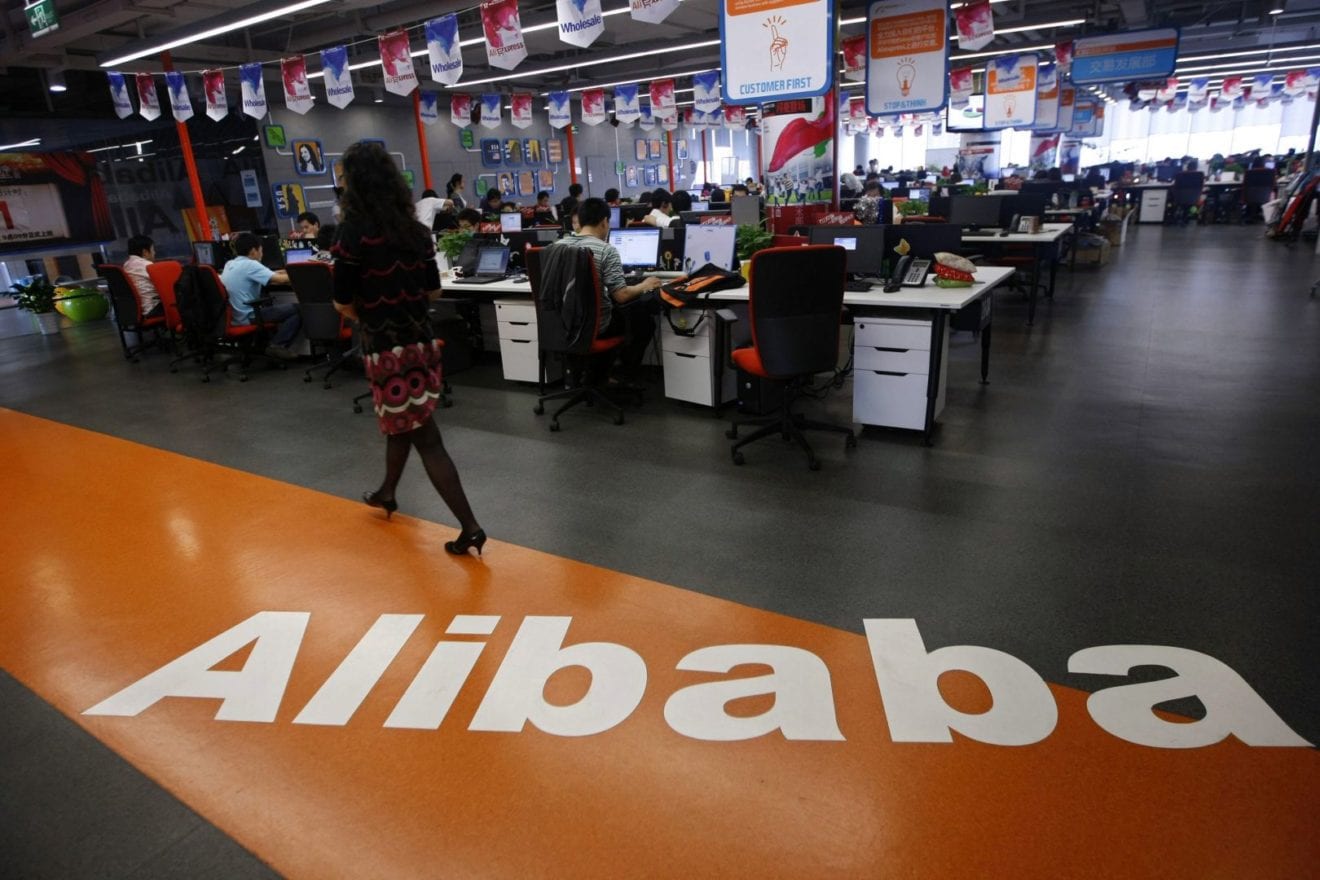
    Alibaba Group says it aims to serve more than 1 billion consumers and exceed RMB10 trillion gross merchandise volume by 2024.

    Unveiling the Chinese tech giant’s five-year plan to the investment community, Alibaba Group executive chairman and CEO Daniel Zhang said the company remains “true to the mission it laid out over 20 years ago” of making it easy to do business anywhere. He said empowering merchants with data technology and cloud intelligence is essential to fulfilling this mission in the digital era.

    “Today, we are creating and fulfilling new consumption needs with a view to focus on growing our digital consumer population as a whole. We can unlock tremendous synergies between our various consumer-facing businesses to convert and harvest incremental customers across the Alibaba digital economy,” said Zhang.

    In the year June 30, Alibaba Group had 730 million annual active consumers in its China consumer business, which includes its China retail marketplaces, digital media and entertainment, as well as local consumer services.

    Together with 130 million annual active consumers in its cross-border and global retail-commerce business, Alibaba has about 860 million annual active consumers globally.

    Its payments division Alipay, meanwhile, had about 900 million annual active users in China. Zhang said that while 85 per cent of Chinese people living in developed areas have tapped into Alibaba’s China retail marketplaces, the penetration rate is only 40 percent in less-developed areas, offering a tremendous opportunity to reach underserved consumers there and improve their lives.

    However, while absolute consumer numbers continue to rise, Zhang said it is just as important to view consumer needs holistically and serve them across all platforms in the Alibaba economy.

    Alibaba’s five-year goals for its China consumer business put it on the path of meeting its longer-term global ambitions to serve 2 billion customers, support 10 million profitable SMEs and help create 100 million jobs by 2036.

    Underpinning the company’s projected growth is the Alibaba Business Operating System, a full suite of digital tools that marries Alibaba’s commerce ecosystem and its cloud intelligence technology to empower brands and companies to reach more customers, better understand their needs and deepen engagement with them.

    “We have always viewed technology through the lens of real business applications. We don’t view technology in isolation,” said Zhang. “We believe in the marriage of commerce and technology. This has always been Alibaba’s unique value proposition.”

  • Price Kaki to launched by Customers Association of Singapore

    Price Kaki to launched by Customers Association of Singapore

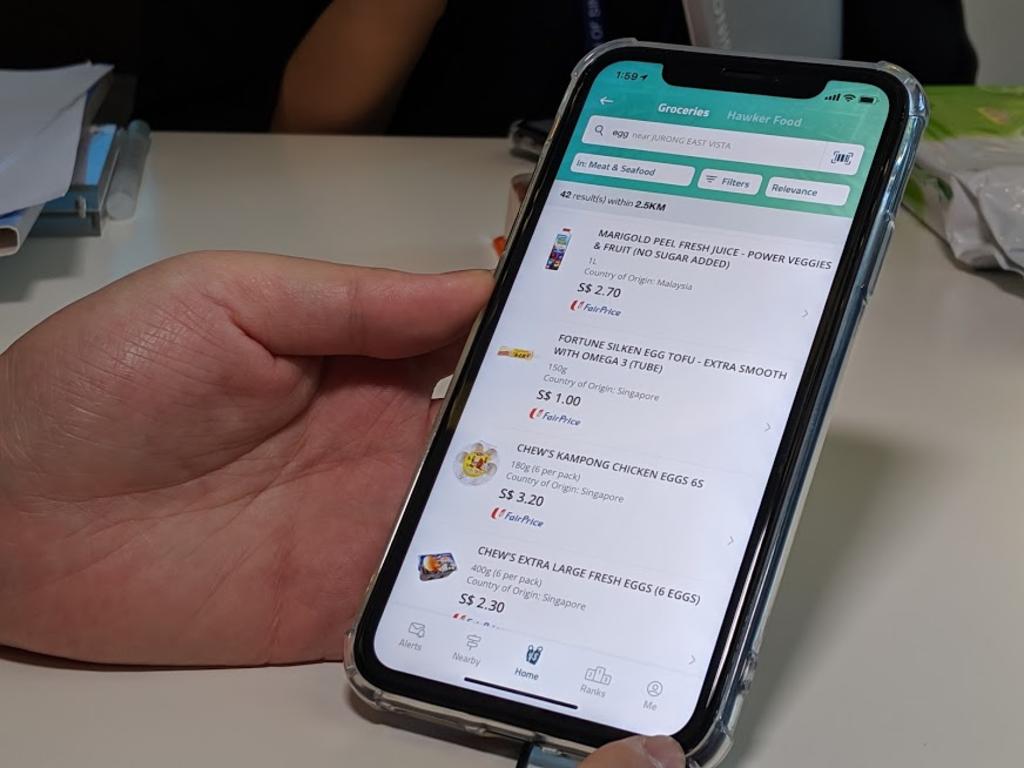
    The Consumers Association of Singapore (Case) has released an app rewarding users for sharing pricing information to allow comparisons while shopping.

    Users of the Price Kaki app, which is expected to launch at the end of this month, can submit photos of any prices they come across while shopping for hawker food or groceries, allowing other users to save costs. Contributors to the pricing information platform are eligible to claim rewards such as film vouchers.

    Price Kaki’s base pricing information will be updated daily by FairPrice, Giant, Sheng Siong and Prime Supermarket.

    Future updates to the app are expected to be broad-ranging and include other businesses such as cafes.

  • Amazon selling refurbished products in Australia

    Amazon selling refurbished products in Australia

    Amazon Australia has expanded the reach of its marketplace, now offering refurbished products through certified sellers under its ‘Renewed’ program.

    Products sold through this program will have a six-month selling partner-backed warranty and will be inspected and tested by suppliers to ensure they look and work as new.

    “Renewed provides Australian customers with great discounts on the good as new products, paired with the reassurance of a six-month warranty, and the convenience of having it delivered to their door,” Amazon Australia country manager Matt Furlong said.

    “Aussie shoppers are savvy, and we hope that Renewed gives them another way to get the products they want for an even better price.”

    Renewed products will be available across mobile phones, computers, tablets, headphones, and wireless speaker, with more categories to come soon. Certified resellers currently include Apple, Samsung, Microsoft, Lenovo, HP and Dell.

    Australian marketplace Kogan also offers refurbished products, though also offers a grading system to signify the item’s condition – from grade A to grade C.

    Grade A refers to a product that is in near-new condition, while grades B and C show further use and degradation.

    While Renewed products at present do not present this information on the store page, Amazon notes the refurbishment process typically includes a full diagnostic test, replacement of any defective parts, a thorough cleaning and inspection process, and repackaging by the seller or refurbisher.

    A growing economy

    According to Ahmad Elhawli, founder of sports marketplace Sportsfinda, the used goods industry is a $34 billion industry.

    “It used to be [these products] would sit at home or collect dust, nowadays they’re living in a sharing economy – it’s a lot more acceptable to share things with others or purchase products that were used by others,” Elhawli said.

    Swinburne University’s lecturer of marketing Dr. Jason Pallant said that, while this is still a relatively small chunk of the overall market, demand for second-hand and refurbished goods is growing.

    “Similar to general retail, online has facilitated this type of shopping, allowing consumers to find an expanded range of products whenever and wherever they choose,” Pallant said.

    However, unlike a more traditional marketplace offering, Amazon’s stricter control over how these goods are certified could lead to less discounting, meaning less incentive for consumers to shop refurbished.

    “On the surface, this provides some apparent benefits to consumers as Amazon are promising to tightly check the quality of both products and sellers, as well as offering warranties on certain items,” Pallant said.

    “However, these securities come at a price. Stricter requirements on sellers will likely be passed on to buyers through higher prices than might be found through other systems.”

    Why conscious consumers buy refurbished

    While buying new products typically comes with peace-of-mind, buying refurbished tends to not only come at a lower price point, but also at a lower impact environmentally – decreasing demand for manufacturing new products unnecessarily, as well as the effects of electronic waste.

    “Considering the speed at which new products are created, and the amount of waste this creates, it is good to see businesses of various kinds working into the idea of the circular economy, and trying to help products be reused and recycled,” Pallant said.

    According to the United Nations Environment Programme, humans produce as much as 50 million tonnes of e-waste per year, with only 20 percent of this recycled – the remaining 80 percent ending up in landfills to potentially contaminate soil and groundwater.

    “As consumers become more environmentally conscious, these types of initiatives are positive steps,” Pallant said.

  • JD expands into social etail

    JD expands into social etail

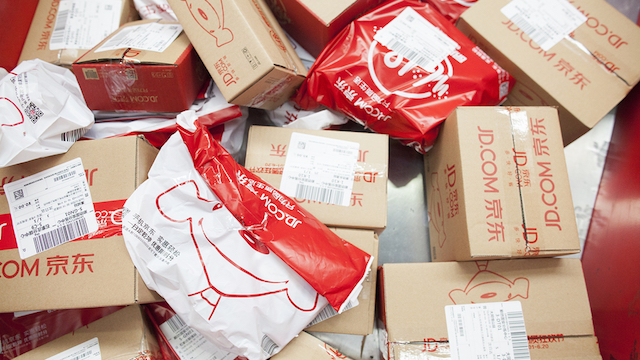
    Chinese internet services giant JD has launched a social e-commerce platform named Jingxi, providing discounts on team purchases to target users in small to medium-sized cities in China.

    The business model, which invites buyers to share deals with friends to score significant discounts, emulates those of rivals Pinduoduo and Juhuansuan.

    “We’re going to diversify and enrich our WeChat ecosystem and provide a new model to attract lower-tier cities, especially female users and low-income users,” said JD Retail CEO Lei Xu about the new Jingxi platform.

    “We’ll continue to enhance our user experiences and also gain more potential customers from third to six-tier cities,” added JD.com chairman and CEO Richard Liu.

  • Online payments for digital and physical goods hits record

    Online payments for digital and physical goods hits record

    New research shows the total transaction value of online remote payments for digital and physical goods will exceed US$6 trillion by 2024.

    The new findings are based on data from Juniper Research that predict the growth of 53 percent in the transaction values from this year’s figures. An analysis of the data is now published in the firm’s report Mobile & Online Remote Payments for Digital and Physical Goods: Opportunities, Pain Points & Competition 2019-2024.

    The report reveals that online sales will be dominated by physical goods, forecast to account for almost 80 percent of online retail purchases by 2024. It urges traditional retailers to provide omnichannel offerings to ensure services align with ever-increasing consumer expectations.

    According to the report, online remote payments for digital and physical goods will be driven by purchases made via mobile devices, with the number of smartphone buyers increasing by nearly 60 per cent between 2019 and 2024. Consequently, just 21 per cent of purchases will be made using PCs, laptops and connected TVs globally by 2024.

    The shift to mobile has impacted purchasing behaviour, with the average value of transactions expected to decline by 2024. Underpinning this growth, and the change in average transaction values, is the adoption of mobile ticketing – which is becoming increasingly remote and cashless..

    Juniper Research assessed the digital strategies of 25 leading brick-and-mortar retailers according to their levels of agility and innovation. The Home Depot ranked first, owing to its proactive e-commerce strategies and engagement with new technologies, such as augmented reality and analytics, to improve online consumer experiences.

    The Home Depot’s retail services are built on an omnichannel strategy; offering customers a comprehensive network of physical stores alongside robust online shopping experiences. Analytics is leveraged to adapt to evolving customer behaviours and AR technology to enable customers to visualise virtual products in the real world via their smartphones.“Brick-and-mortar retailers have to go beyond simple e-commerce to become digital-first companies,” said research author Morgane Kimmich. “Retailers must fundamentally embrace the digital era by optimizing data analytics and embracing new technologies; enabled by radical internal organisational change.”

  • Indian traders lobby for ban on Flipkart, Amazon sales

    Indian traders lobby for ban on Flipkart, Amazon sales

    The Confederation of All India Traders is asking the government to ban pending sales events to be held by e-commerce rivals Amazon and Flipkart.

    The confederation, which represents 500,000 merchants and traders within the country, claims that the heavily discounted online sales violate India’s restrictions on online retail for foreign firms.

    “By offering deep discounts ranging from 10 percent to 80 percent on their e-commerce portals, these companies are clearly influencing the prices and create an uneven level playing field which is in direct contravention of the policy,” read a letter from the retailer body to the federal trade minister.

    Both online firms have defended the sales festivals, claiming they offer best value for money to consumers and help small-scale retailers reach broader markets.

    India forbids foreign investors from direct involvement in inventory-driven models of e-commerce in order to protect the country’s retailers who are unable to compete on price.

  • Alibaba hosts the fourth Taobao Maker Festiva

    Alibaba hosts the fourth Taobao Maker Festiva

    Chinese e-commerce platform Taobao has kicked off its fourth Taobao Maker Festival.

    The signature offline event within the Alibaba ecosystem celebrates the maker spirit of China’s young entrepreneurs. The event continues to expand in scale, with this year’s festival held at two different Hangzhou venues. It will showcase more than 1000 new and creative products, along with the most exciting avant-garde designs at the Broken Bridge Fashion Show, which opens the two-week festival.

    “The Taobao Maker Festival offers a creative and exciting experience for both our makers and visitors,” said Alibaba Group’s chief marketing officer Chris Tung. “Taobao has increasingly become the go-to platform for incubating new concepts, new designs and new products. The products that premier during this year’s Festival will have a strong appeal among young people, especially the Generation Z, who long for new experiences.”

    Featured new products will include a vegan meat launched by Hong Kong social enterprise GreenMonday, powered exoskeletons launched by C-Exoskeleton, a virtual-reality headset launched by HTC and simultaneous translation technology launched by iFlytek, among many others.

    “Brands and merchants will not only have the opportunity to showcase their innovative products and interact with users in the Alibaba ecosystem during the event, but they can also leverage social and content tools embedded in Taobao and Tmall to increase the impact after the Festival,” said Tung.

    In the coming three years, Taobao plans to incubate 200,000 merchants with more than RMB5 million (US$706,300) each in annual sales. Taobao statistics released in July this year showed that new merchants who joined Taobao over the past three years achieved a total turnover of nearly RMB500 billion ($70.63 billion) in the current fiscal year. As of the end of last year, there were nearly 50,000 independent designers running their business on Taobao, most of whom are in their 20s and early 30s.

  • Paul Brown-Kenyon Appointed as President and COO of iPrice Group

    Paul Brown-Kenyon Appointed as President and COO of iPrice Group

    Price Group, South East Asia’s leading product discovery and comparison platform, recently appointed Paul Brown-Kenyon as its President and Chief Operating Officer.

    iPrice Group is South East Asia’s leading meta-search platform, serving markets in Malaysia, Indonesia, Vietnam, Thailand, Philippines, Singapore, and Hong Kong.

    The newly-minted President and COO at iPrice Group commented “I am very excited to join the team. Prior to my appointment, iPrice has done a tremendous job in assisting online consumers across seven countries in South East Asia navigate e-commerce to discover the best deals. Today, the meta-search platform assists almost 20 million users a month, conveniently providing them verified product and vendor information. This presents the company a significant opportunity for us to further expand the range of our services and widen the reach of our product”

    Paul Brown-Kenyon was formally the Chief Executive Officer of Global Berhad (MEASAT Satellite Systems Sdn Bhd.) for more than 13 years prior to his appointment at iPrice Group. Brown-Kenyon joined MEASAT in 2003 as Vice President of Sales and Marketing and has been in the South East Asian region for 15 years. Prior to being CEO of MEASAT, Brown-Kenyon has spent six years employed with the global management consulting firm McKinsey & Company.

    “Paul’s appointment as President & COO marks a new milestone for iPrice Group. He will be the key catalyst in our journey of making our company more agile, mature, and to establish top class agile and management practices. Together we will constantly ask ourselves how we can make iPrice an attractive employer for top talents from Malaysia, across the region as well as globally” said David Chmelar, Chief Executive Officer of iPrice Group.

    “Paul combines two things which are rare to spot – he is a seasoned leader while at the same time he has the grit and passion for building companies and isn’t afraid of taking risks. We are very eager to learn from his experience every day while enjoying the craze of building a start-up together”

    “Another key decision factor to his appointment was a common passion for building a top-class working environment. His presence is a strong testament of iPrice’s current status and a foretaste of what we could become in the future – a powerful online shopping advisor used by millions of people in South East Asia and a prominent brand name amongst top-performing start-ups in the region” adds Chmelar.

    By the end of 2018, iPrice Group achieved profitability for the first time since its founding in 2014 and remains single-minded in establishing itself as a sustainable e-commerce company in the long term. In the same year, iPrice Group welcomed NAVER Corp., a leading search engine, shopping and price comparison engine in South Korea as its latest investor. NAVER’s direct investment comes only three months after it’s subsidiary’s VC arm, LINE Ventures, led iPrice’s funding round in 2018.


  • AliExpress launches free-returns program in 8 markets

    AliExpress launches free-returns program in 8 markets

    Alibaba Group’s global online marketplace AliExpress is to offer free return and refund for participating categories across eight countries.

    Buyers in main areas of eight pilot countries including Russia, France, Germany, Spain, the UK, the US, Canada, and Australia will be first to participate in the new program.

    Products participating in the new program range from consumer electronics, jewelry, shoes to cosmetics products. Under the new policy, customers in the eight countries with an eligible address will see a “free return” sign on the webpage of the eligible products. Customers can request a free return and refund for those products within 15 days of receiving their order.

    According to the return and refund policy, products must be returned in new and unused condition. In addition to products such as mobile phones, underwear, food categories, and customized products, products priced over US$1000 are excluded from the program.

    Customers can go to local post offices to return unwanted products and expect to receive their refund in as little as three days. The processing time varies depending on the payment solution they used to buy the product.

    Cheer Zhang, the head of Global consumer and market operation at AliExpress, says the objective of the new policy is to improve the shopping experience and give consumers more confidence to explore the platform’s wide range of brands and products.

    The new “free return” program is an upgrade from a previously launched “local return” program that had been operating in seven countries. Under the previous plan, customers had to cover the delivery fee for the return orders.