Category: E-Tailing

Retail News Asia is committed to providing both local and global retailers with the latest E-Commerce & Etail news throughout the Asian market. This on a daily base.

  • APAC Gen Z passengers are transforming inflight e-commerce

    APAC Gen Z passengers are transforming inflight e-commerce

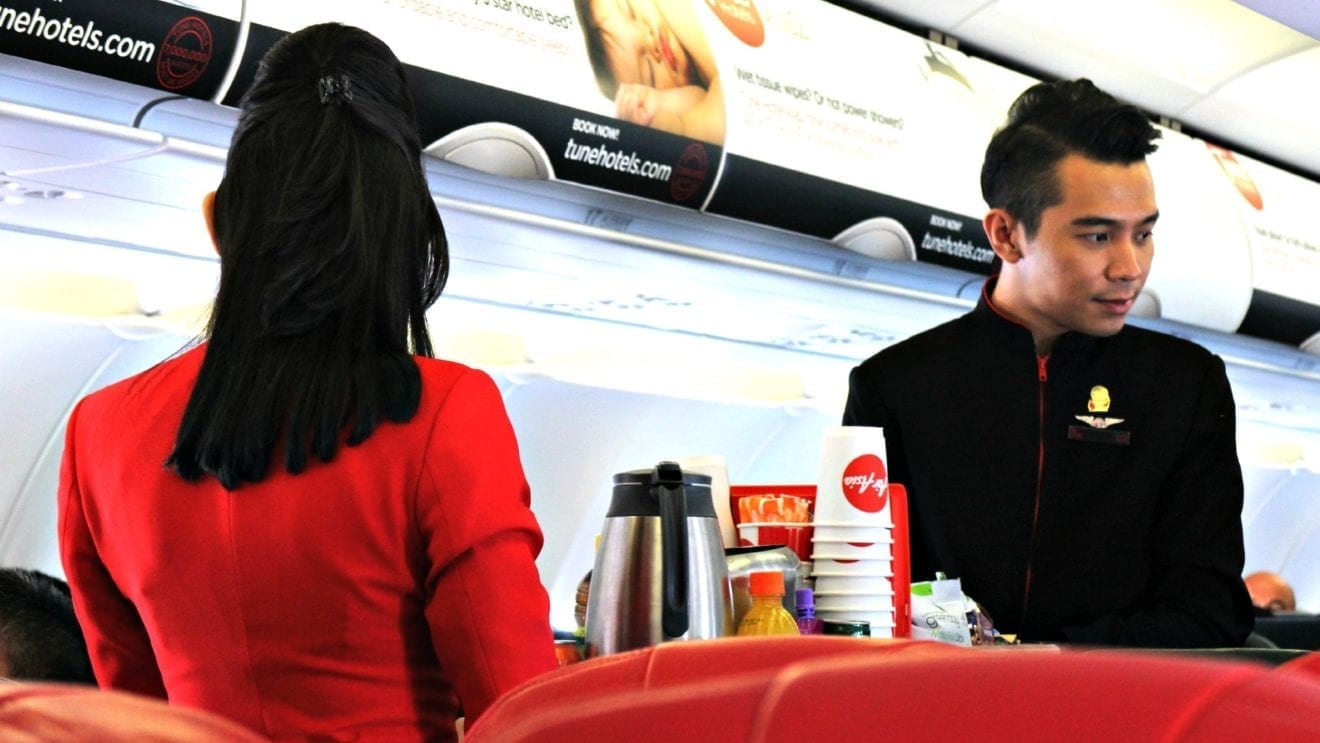
    Generation Z is forecast to become the largest group of airline flyers globally within the next decade, with 1.2 billion flying each year by 2028. More than a third (37%) of this global cohort will be made up of APAC passengers. The LSE estimates that globally, this consumer group currently spends a collective $3.6 billion in items and services in the weeks leading up to a trip and upon arrival at their destination.

    APAC Gen Z passengers are the least ‘cost-sensitive’ traveler group globally, and by 2028 are predicted to spend $4 more per passenger through infight e-commerce than the global Gen Z average of $26. The findings underscore a significant opportunity for airlines in the region to shift spending on board and take a proportion of the revenue with an e-commerce model that supports the ‘last-minute’ approach of today’s ‘digital-first’ passengers.

    The research analyzed purchasing decisions made during three key phases of the customer journey before travel: more than a week before; in the days before; and upon arrival. It finds that Gen Z is the most likely of all generations globally to delay buying products and services for their trip until the days before they fly.

    While currently, only one in ten passengers make an inflight duty-free purchase when they fly, there is a significant opportunity for airlines to monetize the growing trend for last-minute spending. According to the LSE, 70% of Millennials and Gen Z passengers indicate that they would delay arrangements for their trip until their flight if they knew that a reliable Wi-Fi connection would be available, and the necessary delivery infrastructure was in place.

    Dr. Alexander Grous (B. Ec, MBA, M.Com, MA, PhD.), Department of Media and Communications (LSE) and author of the research, said, “Having grown up in a digital world with connectivity at their fingertips, more often than not Gen Z make last-minute decisions when it comes to travel planning and preparation. This behavioral shift presents an exciting opportunity for airlines to strike innovative partnerships with global and local retailers that extend the possibilities of inflight spending.”

    Philip Balaam, President, Inmarsat Aviation said, “If passengers reject traditional purchase channels in favor of inflight spending to the extent that this suggests in the next decade, the implications for airlines and retailers would be huge. We may be on the verge of a habitual shift in travel spending, much like the movement from offline to online purchasing witnessed on the ground in the last decade. In APAC, the opportunity is even greater – with every Gen Z passenger in the region predicted to spend $4 more on inflight holiday purchases than the rest of their generation each time they fly, there is a huge potential new revenue stream up for grabs.”

    Dominic Walters, Vice President, Marketing Communications and Strategy, Inmarsat Aviation said, “Developing a connected infrastructure built for inflight spending will be a win-win for both airlines and passengers, bringing airlines the chance to take a slice of revenue currently spent elsewhere in the customer journey, and saving passengers valuable time before and after their flight. With airlines all over the world already ramping up their connectivity offerings, and a growing trend for last-minute spending in younger passenger groups, this is a revolution waiting to happen.”

  • Amazon opens on Pinduoduo pop up store

    Amazon opens on Pinduoduo pop up store

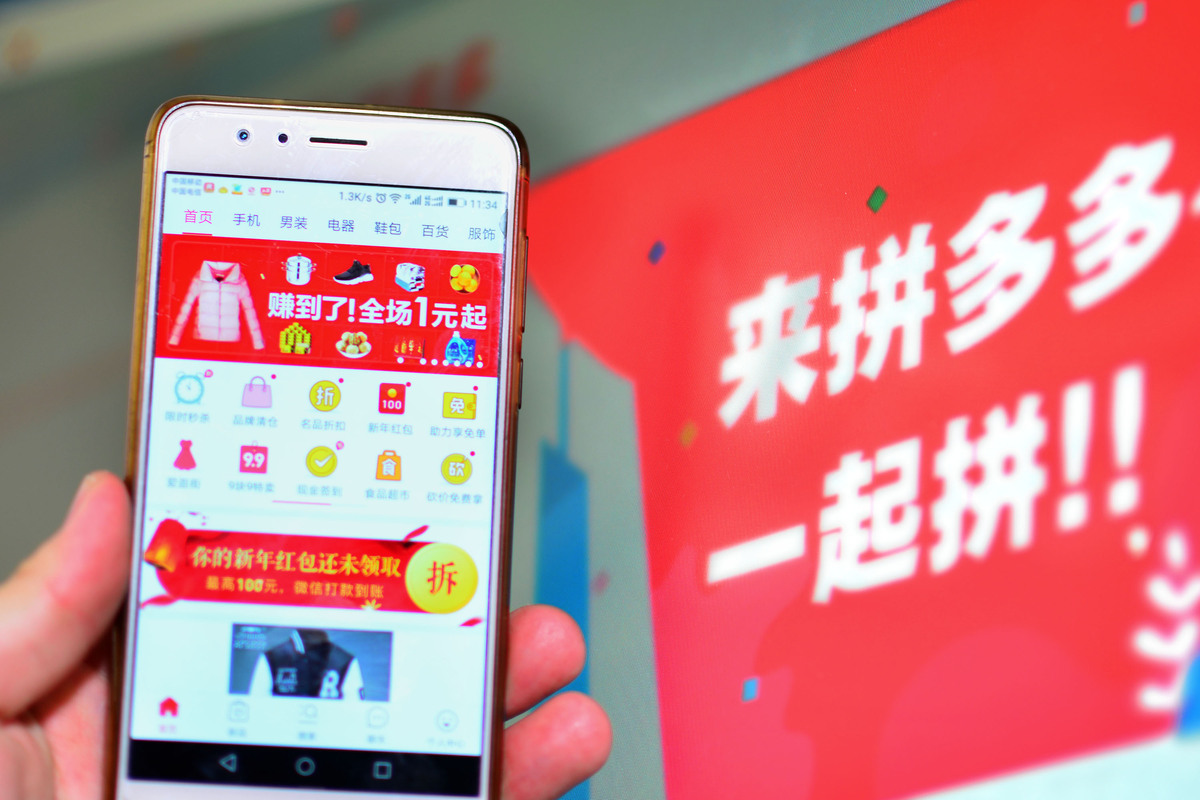
    Global online retailer Amazon is set to launch a Pinduoduo pop-up store.

    According to reporting in Reuters, the Pinduoduo pop-up store will run until the end of the year with around 1000 selected overseas products.

    Amazon recently closed its Chinese marketplace for domestic sellers and is shifting focus to products sold in the Chinese market by overseas producers, as well as offering its cloud server services.

    The decision to host its pop-up on Pinduoduo reflects the platform’s popularity with rural Chinese residents over the more established Alibaba and JD services.

    “The Amazon Pinduoduo pop-up store provides customers with a curated selection of about 1000 overseas products, with competitive prices, an authenticity guarantee and convenient shipping,” said an Amazon spokesperson.

    “We look forward to enabling customers to enjoy cross-border shopping through this store, in addition to more deals and tens of millions of products available on [amazon].cn.”

  • Carousell merges with 701Search to form SE Asian classifieds giant

    Carousell merges with 701Search to form SE Asian classifieds giant

    Classifieds service Carousell has signed an agreement with telecommunications firm Telenor Group in part to merge with 701Search, which owns online marketplaces Mudah in Malaysia, Cho Tot in Vietnam, and OneKyat in Myanmar.

    Following the equity and cash agreement, Carousell will be valued at more than US$850 million with Telenor Group becoming the single largest minority shareholder in Carousell, owning 32 percent of the combined company.

    “This has been a significant year for Carousell, with the company achieving unprecedented results in market expansion and revenue growth,” said Carousell CFO Rakesh Malani. “We are driving rapid consolidation in the region with the OLX Philippines merger earlier in the year, and 701Search today. This transaction further cements Carousell as the leading online classifieds marketplace platform in Southeast Asia. With annualized revenues of over $40 million, a business of over 80 percent gross margin and two profitable markets, we are very well positioned to advance our combined business to the next level.”

    Following the merger, 701Search’s regional hub team that operates in Singapore will be fully integrated into Carousell, while Mudah, Cho Tot and OneKyat will retain their individual names and platforms, continuing operations in Malaysia, Vietnam and Myanmar respectively. The businesses will report to Carousell CEO Quek Siu Rui.

    “Our mission has remained the same since day one. We want to inspire every person in the world to start selling and buying,” shared Carousell co-founder and CEO Quek Siu Rui.  “Merging with 701Search will allow us to further this mission on an even greater scale and fortify our leadership in Southeast Asia as Mudah, Cho Tot and OneKyat are already leaders in their markets. I am excited to work with our new teammates to learn about the dynamics of these local markets, create win-win opportunities that are mutually beneficial for our community of users, and inspire even more people to start selling and buying.”

  • E-commerce firm Sendo nets $61 mln in latest funding round

    E-commerce firm Sendo nets $61 mln in latest funding round

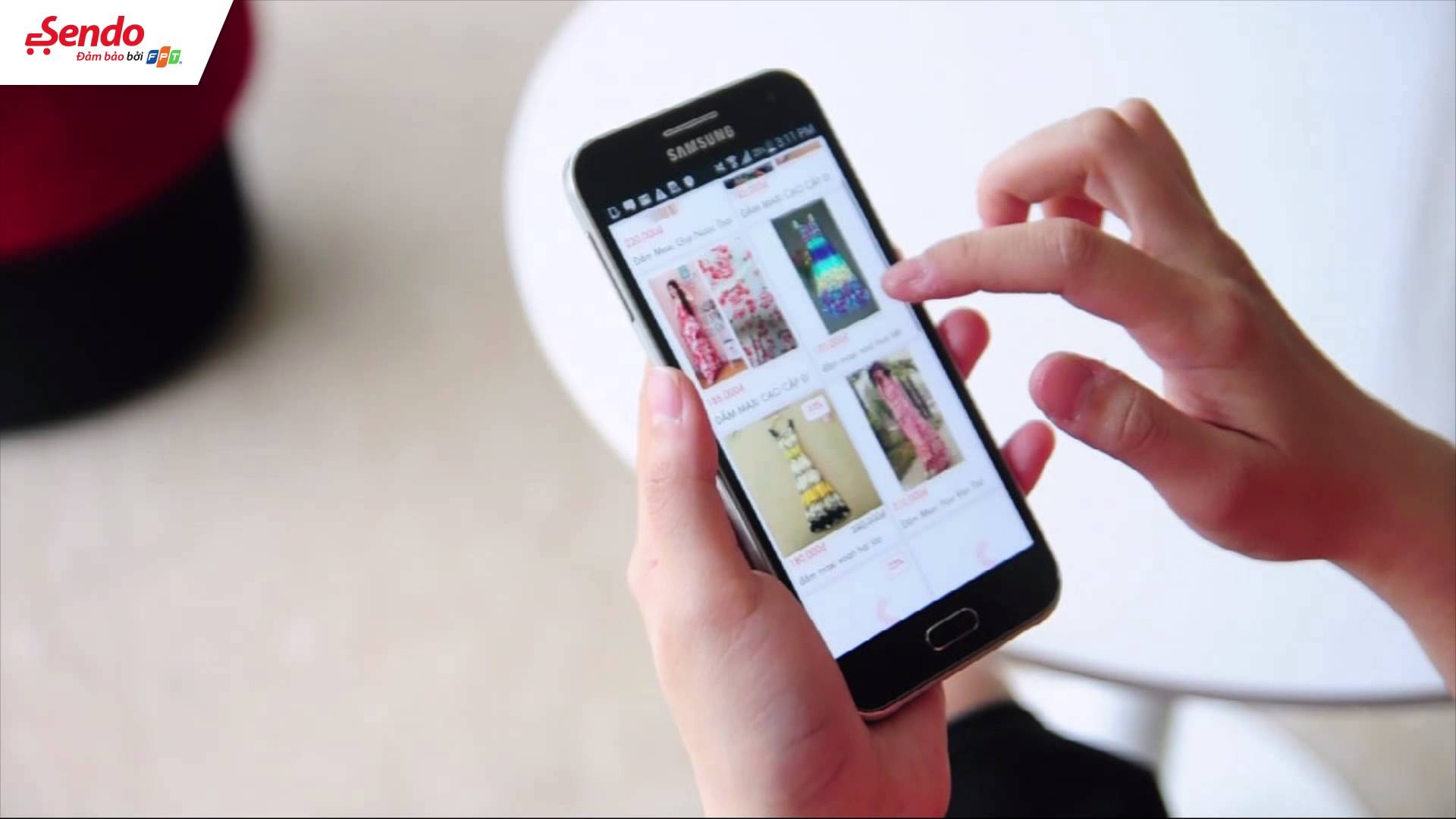
    Sendo, Vietnam’s second-most visited online market place, has secured $61 million in the latest Series C funding round.

    The investment will come from existing shareholders as well as new international investors including Indonesia’s EV Growth and Thai banking group Kasikornbank, Sendo said in a press release Wednesday.

    Existing investors including financial services company SBI Group, retailer BEENOS, private equity firm Daiwa PI Partners, and web services consultancy Digital Garage from Japan, as well as venture fund SoftBank Ventures Asia of South Korea, all of which had previously backed Sendo’s $51 million Series B round in 2018, returned for its Series C round.

    Hai Linh Tran, CEO and co-founder of Sendo, said that the funds will be used to expand the breadth of its existing integrated platform offering to both sellers and consumers, as well as to further deepen its technology moat.

    Founded in 2012 as a spin-off of Vietnam’s largest IT service company FPT Corporation, Sendo focuses on tier 2 cities largely untapped by other e-commerce firms, home to 70 million Vietnamese people.

    The company claims it caters to 500,000 sellers, with an estimated 17 million distinct items listed on its platform, as well as 12 million customers.

    In the third quarter of 2019, Sendo surpassed domestic rival Tiki to rank second among top 10 e-commerce sites in Vietnam with the highest monthly traffic numbers, according to Malaysia-based market research firm iPrice’s latest data released recently.

    Sendo’s web visits reached 30.9 million per month in Q3, up 10.1 percent against Q2, second after Singapore-based Shopee, which remained in top position with 34.5 million, down 10.6 percent from Q2.

  • Amazon Hub launches to meet rising demand for flexible delivery

    Amazon Hub launches to meet rising demand for flexible delivery

    Amazon has launched a new service in Australia that allows customers to collect their parcels from hundreds of locations in shopping centres and on high streets in a bid to improve its delivery offer before the biggest online shopping days of the year.

    First launched in the US in 2011, Amazon Hub allows shoppers to ship parcels to convenient third-party locations, rather than their home address. The service includes a “counter” option, where shoppers can collect parcels from bricks-and-mortar retail partners such as convenience stores, and a “locker” option, where they can collect parcels from self-service kiosks in shopping centres, banks and other places.

    The marketplace has now partnered with more than 100 Commonwealth Bank of Australia branches, Victorian Authorised Newsagents Association locations and Stockland shopping centres to bring the service to Australia.

    Hundreds more Amazon Hub locations are due to launch by the end of the year, and thousands more will launch across the country in 2020, the company said in a statement.

    Patrick Supanc, global director of Amazon Hub, said the new service would extend Amazon’s “exceptional customer service” to the delivery experience.

    “Since launching Amazon.com.au in 2017, we’ve committed to making e-commerce rooted in low prices, vast selection and convenience a part of everyday life for Australian customers,” he said.

    “We’re excited now to partner with large and small businesses in Australia to extend Amazon’s exceptional customer service and innovations in delivery by offering a quick and simple pick-up experience.”

    Parcel pick-up on the rise

    The launch comes just one week before Black Friday and Cyber Monday, which are now the biggest online shopping days of the year in Australia.

    E-commerce purchases by volume were up more than 28 per cent year on year during Cyber Week in 2018, according to an annual online shopping report by Australia Post. The five weeks from November 11-December 15 accounted for 15 per cent of all e-commerce transactions that year.

    Australia Post on Monday announced the expansion of its own parcel pick-up service in partnership with fulfilment company Doddle. Booktopia and Peter’s of Kensington are among the first retailers to use the service, which lets customers send their online orders to IGA supermarkets, Priceline pharmacies, shopping centres and other locations.

    Nathan Huppatz, co-founder of ReadyToShip, a shipping platform that lets retailers select the best delivery options for each order and print labels, says parcel pick-up is gaining traction, though it’s not exactly new. Major retailers, such as eBay, The Iconic and Glassons, have offered it as a delivery option for some time through ParcelPoint.

    But Huppatz says consumer demand for flexible delivery times and advancements in the technology that allows retailers to integrate different delivery options at checkout is contributing to arise in pick-up services.

    Until recently, most of the volume going through ReadyToShip has been standard delivery, Huppatz said. But in the last 12 months, there’s been greater uptake of Australia Post’s new on-demand delivery options, including same-day evening and Saturday delivery.

    “There’s definitely a demand out there from consumers to have flexibility, and these days there are more and more solutions to enable that,” he said.

    Integration can be a hurdle

    This is mostly good news for retailers, though Huppatz says parcel pick-up can present problems if the carrier’s integration requires retailers to make too many changes.

    “As soon as a retailer has to start modifying the checkout process or their order or warehouse systems, that’s where it can be a hurdle to overcome,” he said. “If the integration is simple, or you can use an existing carrier, it becomes much easier.”

    Still, he expects to see more retailers offering parcel pick-up in the coming months and is considering how he can stay on top of consumers’ changing preferences.

    “We think over the next 12-24 months, we will see growing demand for access to crowdsourced delivery options, especially for local metro areas,” he said.

    But Huppatz, who also owns the e-commerce site Costumes.com.au, believes there’s another reason Amazon may have launched its parcel pick-up service in Australia.

    “EBay and Amazon are competing with each other quite strongly and are looking to plug any holes they can find in their customer experience,” he said, noting the marketplaces’ recent partnerships with Afterpay and Zip, respectively.

    “Amazon has a ruthless customer focus. Everything is designed to make buying, searching, basically anything to do with their platform better for the customer. If they see a need for customers to pick up their products, you can bet they’ll work on that.”

  • Senreve raises funds for Asian expansion

    Senreve raises funds for Asian expansion

    Online fashion startup Senreve has raised US$16.75 million in Series A funding to expand into the fast-growing Asian market.

    The funds bring Senreve’s total capital raised to more than $23 million within three years.

    Led by Norwest Venture Partners, this latest round of funding will help co-founders Coral Chung and Wendy Wen take Senreve to reach a more global scale from its San Francisco base.“We focus on authentic brand storytelling, creating beautiful and luxurious products, and engaging with customer feedback and data,” said Senreve co-founder and CEO Coral Chung.

    “We’re thrilled to bring on an institutional partner like Norwest, and especially excited to partner with Sonya Brown who has a phenomenal track record of backing successful consumer brands,” said the firm’s COO Wendy Wen.

    “In a world where direct-to-consumer channels have become increasingly crowded, Senreve has been extremely savvy about how they introduce themselves digitally,” said Norwest general partner Sonya Brown. “Coral and Wendy’s ability to build a luxury brand practically overnight is a testament to their authentic understanding of the modern woman. In particular, Senreve resonates with the next generation of powerful women because they don’t want to compromise functionality to achieve luxury, and they shouldn’t have to. I am thrilled to partner with them for this next, exciting chapter.”

    The new funding is expected to significantly expand Senreve’s product offering, grow its geographic presence – particularly in its expanding Asian markets where it is looking to form strategic partnerships – and explore new brick-and-mortar retail opportunities.

    As a female-founded start-up, this latest round of funding is a milestone for the company as well as extremely rare in the startup landscape. According to PitchBook, female-founded start-up companies receive only 2.2 per cent of the total capital invested by US venture capital firms, despite owning 38 per cent of businesses in the country.

  • Alibaba Group’s Hong Kong IPO confirmed

    Alibaba Group’s Hong Kong IPO confirmed

    Alibaba Group has launched its Hong Kong public offering of 500,000,000 new ordinary shares on the SEHK, raising up to US$13.4 billion.

    Alibaba plans to use the proceeds from the offering for the implementation of its strategies of driving user growth and engagement, empowering businesses to facilitate digital transformation, and continuing to innovate and invest for the long term.

    The listing in Hong Kong will allow more of the company’s users and stakeholders in the Alibaba digital economy across Asia to invest and participate in Alibaba’s growth. In addition to expanding the company’s overall investor base, the offering will tap into substantial new capital pools in Asia and create a nearly round-the-clock market for global investors to trade Alibaba shares.

    “Alibaba is guided by our mission to make it easy to do business anywhere with the vision to be a good company that lasts for 102 years,” said Alibaba Group chairman and CEO Daniel Zhang.

    “We aim to serve global consumers, of which more than 1 billion will be Chinese consumers, and facilitate more than RMB10 trillion of consumption on our platform within the next five years by continuing to pursue our three strategic pillars of globalisation, domestic consumption and big data powered by cloud computing. Hong Kong is one of the world’s most important financial centres and we are grateful for the opportunity to participate in the future of Hong Kong.”

    The total number of shares available under the Public Retail Offering could be adjusted up to a maximum of 50,000,000 new shares, representing 10 per cent of total shares initially available under the offering. In addition, the company expects to grant the underwriters an over-allotment option to purchase up to an additional 75,000,000 new shares.

    The offer price for the Public Retail Offering will be no more than HKD188 (US$24) per share, which will be traded in board lots of 100 shares each.

    The firm’s American depositary shares will continue to be listed and traded on the New York Stock Exchange.

  • Alibaba’s Taobao opens retail store in Malaysia

    Alibaba’s Taobao opens retail store in Malaysia

    Alibaba Group will launch a Taobao retail store at Mytown Shopping Centre in Kuala Lumpur.

    The new outlet is opening in partnership with Mytown and local retailer Lumahgo New Retail, and follows the brand’s first Southeast Asian store in Singapore’s Funan mall.

    The launch was preceded by a pop-up held over the weekend previewing products from local brands that will be traded in the store, including Redtick, BigboxAsia, Vivid Malaysia, DirectD Malaysia and Deep Furniture.

    “The opening of our latest Taobao store demonstrates our commitment to local shoppers and brands, as we further localize services and experiences for the Malaysian market,” said Tmall World Malaysia marketing manager Jess Lew. “We are excited to share a glimpse of this upcoming space as part of our 11.11 celebrations this year, emphasizing how we will integrate local brands and merchants with our New Retail vision.

    “Having a physical space means shoppers will be able to touch and feel a variety of products in person before making a purchase on the Taobao app simply by scanning a QR code, with the help of our staff at the store,” said Lumahgo New Retail CEO Fabian Kong.

  • Alibaba’s Singles Day sales up 26 per cent

    Alibaba’s Singles Day sales up 26 per cent

    Alibaba’s Singles Day retail promotion is over for another year – and predictably a new record was set.

    The Chinese internet behemoth says its gross merchandise volume (GMV) reached RMB268.4 billion (US$38.4 billion) when midnight fell, ending the 24-hour Shopatron which engages with hundreds of millions of Chinese online and on TV.  That figure is 26 per cent ahead of last year’s GMV.

    “Today we showed the world what the future of consumption looks like for brands and consumers,” said Fan Jiang, president of Taobao and Tmall, perhaps unaware of the real meaning of the word ‘consumption’, defined by Oxford dictionary as “the action of using up a resource”.

    “We are meeting the growing demand of Chinese consumers and helping them upgrade their lifestyles, while introducing new users to our digital economy from across China and around the world.”

    While Alibaba’s Singles Day turnover figures seem to shock commentators with their predictable annual increase, a large proportion of the total sales are lined up well in advance of November 11, especially big-ticket items like motor vehicles and – for the first time this year – apartments.

    More than 200,000 brands participated in this year’s event which was launched via a televised countdown variety show on Sunday night headlined by American singer Taylor Swift.

    Of those brands, 299 achieved sales in excess of RMB100 million (US$14.3 million) and 15 of them surpassed RMB1 billion (US$143.0 million). Curiously, Alibaba listed just 14 of them: Apple, Bose, Estee Lauder, Gap, H&M, L’Oreal, Levi’s, Muji, Nestle, Nike, Philips, The North Face, Under Armour and Uniqlo.

    It took 16 hours and 31 minutes this year to surpass last year’s total GMV of RMB213.5 billion.

    While Singles Day was launched by Alibaba in 2009, the retail frenzy has since extended across Asia’s retail industry with many independent online retail brands, platforms and marketplaces launching promotions to keep pace with Alibaba.

    In Singapore, for example, cashback platform ShopBack reported a 250-per-cent increase the number of unique users during the first hour of 11.11 compared with last year. Lazada, Shopee and Qoo10 were the most popular merchants, the Straits Times reported.

    Pascal Martin, partner at OC&C Strategy Consultants, notes three trends that supported the growth of Alibaba’s Singles Day this year: New Retail, globalization and diversification.

    “This year’s Singles Day included even more partners than last year, not only online but also offline. For example, Tmall ‘s3000+ convenience stores, Hema and RT Mart supermarkets, Suning and Auchan, all members of the Alibaba New Retail ‘family’ have been part of the event.”

    In terms of globalisation, he says Singles Day has expanded beyond China through Lazada, Alibaba’s Southeast Asia platform.

    “Also, there is increasing participation by international brands that are taking advantage of the Tmall Global platform – number one by far among Chinese cross-border platforms – to get introduced to Chinese consumers without having to build a direct presence in China. The choice of an international celebrity like Taylor Swift as an anchor for the 11.11 Singles Day show is testimony to Alibaba’s global ambition.”

    Diversification is highlighted by the expansion of the event beyond products to include a variety of services from food delivery on Ele.com, videos on Youku to mobile games on UC, theatre tickets on Taopiaopiao, music on Xiami music and travel on Feizhu.

  • E-commerce competition flares up as holiday shopping season begins

    E-commerce competition flares up as holiday shopping season begins

    Vietnam’s e-commerce platforms are going all out with promotions and other marketing campaigns to woo customers for the year-end shopping season. Immediately after Apple’s latest iPhone 11 was released in Vietnam on November 1 at midnight, CEO of Singapore-owned Lazada Vietnam James Dong was seen riding a bicycle delivering the first phones to promote his company’s two-hour delivery service.

    Lazada’s latest PR stunt, along with discounts on the newest iPhones, kicked off a series of promotions, many of which will begin deployment from November 11 as the company gears up for the year-end shopping season, generally a peak time for the retail sector.

    Vietnam’s e-commerce players have now latched onto promotional trends that have been ignited by major regional players like Chinese e-commerce giant Alibaba, which launched the first Singles’ Day shopping event on November 11, 2009, offering heavy discounts on its platform.

    In addition to Singles’ Day, Vietnam’s e-commerce sites have been offering heavy promotions on October 10 and December 12, both spin-offs, as well as Black Friday and Cyber Friday events that originated in the U.S.

    “The fourth quarter is always the most exciting time for the retail sector. There will be peak days when the whole market spills out to shop,” said Steven Tuan Nguyen, Senior Regional Manager for Southeast Asia of Paris-headquartered internet advertising company Criteo.

    Lazada has also followed up the night of discounts for the iPhone 11 with a strategy it calls “Shoppertainment”, hosting live game shows in which competitors guess prices, and inviting famous artists who give out nearly 10,000 discount codes worth a total VND300 million ($12,900).

    The retailer has also hosted promotional concerts in Ho Chi Minh City. Instead of hiring artists, Singapore-based Shopee has enlisted international football superstar Christiano Ronaldo. Ronaldo’s brand ambassador contract for Shopee in Southeast Asia was announced in mid-August.

    “Together with Cristiano Ronaldo, we look forward to making a positive and lasting impact on Shopee’s development in the region,” said CEO Chris Feng.

    Shoppers not only in Vietnam but also Malaysia, Singapore and Indonesia have seen CR7’s ads pop up everywhere through various online media channels. The player is also currently associated with Shopee’s November 11 “Super Sale, free nationwide shipping” campaign in Vietnam.

    Home-grown e-commerce platform Sendo, which saw a traffic surge last quarter, is also investing heavily in year-end promotions, prioritizing Black Friday (November 29). After diva My Tam, Sendo has just added actor Ninh Duong Lan Ngoc to its roster of celebrities.

    “This year, we’ve decided to invest a great deal in the Black Friday campaign, not just on the day but for the whole week. We will advertise on all channels, from mass media to social media, so that 90 percent of customers nationwide aged between 18 and 35 years will be reached by Sendo’s ads,” said Vo Dang Minh Tuan, Brand Communication and Social Media Manager of Sendo.

    Similarly, Vietnam’s Tiki announced it will also engage in year-end promotion peaks, having invested heavily in October 10 promotions.

    The company said it has primarily been focusing on promotions related to its two strengths: a two-hour express delivery service that applies to 70 percent of items in its shop; and sales of genuine branded items with a return policy.

    According to a recent report by Criteo, Black Friday last year saw online sales traffic in Vietnam spiking 64 percent, and online sales revenue 149 percent over the average day of the month.

    Traffic and sales revenue rose 23 and 64 percent respectively for Singles’ Day, and 34 and 97 percent for December 12, a trend that is expected to continue this year, the report said.

    “The year-end shopping season usually commences with October 10 sales. Singles Day remains the key shopping festival and post-Singles Day sales ride on the festivity’s traction,” said Steven Tuan Nguyen. “As we approach the year-end holidays, there is also a spike in online retail as part of the celebration. This sustained sales season presents retailers with more opportunities to engage their audiences.”

    However, they are also faced with a real challenge to differentiate themselves. This could be achieved with the power of data – by being able to identify top-selling categories amidst millions of products, predict shopping behavior and integrate online and offline shopping data, he added.

    Vietnam’s e-commerce market is estimated at $5 billion this year and is set to reach $23 billion in 2025, according to a recent report by Google, Singapore-based investment firm Temasek, and U.S.-based consultancy Bain.

  • Accor and Alibaba form strategic partnership

    Accor and Alibaba form strategic partnership

    International hospitality group Accor and e-commerce giant Alibaba have entered a strategic partnership to develop a series of digital applications and loyalty programs to improve the consumer and traveler experience over the next five years.

    The announcement was made at a ceremony in Beijing during this year’s China International

    Import Expo. Accor was among the delegation of French companies accompanying President Emmanuel Macron on a state visit to China.

    The strategic collaboration will leverage Alibaba’s nearly 700 million consumers across its China retail marketplaces to enable more Chinese travelers to access Accor’s consumer offerings. It will allow for seamless integration of Accor’s customer journeys within Alibaba’s ecosystem. Alibaba’s travel arm Fliggy will allow consumers to book hotels, access catering services, book entertainment and take advantage of other lifestyle services. Payments can be made using Alipay, a digital payment service operated by Alibaba affiliate Ant Financial.

    Accor will also offer Chinese consumers a hassle-free hotel experience through its “Haoke” program – geared towards Chinese travelers. Haoke, which means “Welcome” in Chinese, is a certification program that ensures Accor’s hotels are ready to welcome Chinese guests by incorporating Chinese-language, Chinese dishes on menus, Chinese-speaking staff, and other services and payment systems that meet the needs of Chinese travelers.

    The collaboration between Accor and Alibaba will be instrumental to the roll-out of Accor’s soon-to-be-launched lifestyle loyalty program, ALL – Accor Live Limitless. Alibaba will make the program’s services and benefits available to its massive consumer base, using its ecosystem, consumer insights and digital marketing capabilities, accelerating the roll-out of ALL in China and around the world.

    “We are excited to enter into this strategic global partnership with Alibaba, a leading global technology company in the world,” said Accor’s chairman & CEO Sebastien Bazin. “China’s importance to the world’s tourism industry and this key collaboration with Alibaba will symbolically strengthen economic ties between China and France, while giving Chinese travelers access to exciting events and benefits through ALL – Accor Live Limitless.”

    “Over the past 20 years, Alibaba has formed two flywheels with one focused on consumers and the other on enterprises, said Alibaba Group executive chairman and CEO Daniel Zhang. “Our consumer-facing business facilitates and stimulates consumption, of which travel consumption is an important segment. Through the Alibaba business operating system, we enable tourism industry partners such as Accor to fully digitize their business operations, from sales to marketing, brand building to member management and service Innovations.”

  • Giant JD E-space store to open on Singles Day in Chongqing

    Giant JD E-space store to open on Singles Day in Chongqing

    Chinese e-commerce company JD will open its largest offline store to date on Monday, in Western China.

    The 50,000sqm JD E-Space experience store opens on Singles Day in Chongqing, with 5G-driven technology center place. The company intends to enhance shopping by offering unique and immersive experiences, allowing customers to interact fully with state-of-the-art, innovative, and smart products from more than 1000 of the world’s leading brands in various themed experience areas.

    JD E-Space features popular and bestselling offerings in product categories such as electronics, home appliances, and digital accessories to health, fitness and beauty products and office supplies. In particular, it brings experiential shopping to the electronics and home appliances category, enabling consumers to touch and test in-store, and then buy online.

    It also features some brand-experience zones, such as Apple’s largest authorized offline experience store; Microsoft’s first future smart home experience area in China; GE’s first omnichannel home appliances store in China; and Ninebot’s first authorized offline experience store in China.

    “JD’s boundaryless retail strategy is to integrate online and offline retail, enabling customers to buy whatever they want, whenever they want, wherever they want.” said JD Home Appliances head of offline business Zisheng Yang. “Equipped with the most advanced technologies and state of the art products, JD E-Space provides consumers not only shopping convenience but also an immersive and interactive experience.”

    Customers also have the chance to experiment with some new technologies at unprecedented connectivity speeds, because JD E-Space will be the country’s only major store to offer 5G network coverage. The store also features dynamic price tags to ensure store prices are aligned with online prices, QR codes for consumers to place orders instantly, and robots to guide customers and introduce products.

    After experimenting with the products, consumers can scan a code to buy and have items delivered to their homes by JD Logistics, usually within 24 hours, or they can complete their purchase onsite and carry home in-stock products immediately. Consumers can also enjoy the same high-quality after-sales service they get when shopping on JD.com.

  • Coles launches grocery subscription service

    Coles launches grocery subscription service

    Coles is taking its online grocery offering a step further with the launch of a new subscription service that allows customers to make unlimited orders for a flat monthly fee.

    Customers must spend over $100 in each transaction to qualify for Coles Delivery Plus, which gives the option of delivery any day of the week for $19 a month, or mid-week delivery from Tuesday through to Thursday for the lower rate of $14 per month.

    Coles Online general manager Karen Donaldson said the new service is aimed at time-poor online regulars who are looking to save on delivery.

    “On average, the cost of a Coles Home Delivery window is $10, depending on location, time of day and length of delivery window chosen,” Donaldson said.

    “Delivery Plus will allow customers who regularly shop online to save hundreds of dollars a year and help them manage their family budget by knowing exactly how much they will pay on Coles Online delivery each month.”

    The big two have been ramping up investment in online this year, in a bid to retain and gain consumers as new players like Kaufland enter the market.

    In March, Coles scored an exclusive deal with the world’s leading online grocery platform, Ocado, which has previously signed lucrative deals with some of Britain’s biggest grocery retailers including Waitrose and M&S.

    But Woolworths hasn’t been resting on its laurels. A recent partnership with eGrocery startup Takeoff Technologies is expected to propel its online grocery operations with the addition of compact, automated micro fulfillment centers at a number of its supermarkets.

    Woolworths Group CEO said the new centers will allow the retailer to deliver “ultra-convenience at a local level” and be even closer to the customer for that last-mile delivery.

    Woolworths is also planning to bring circular shopping to its online service through a partnership with TerraCycle’s Loop platform. By mid-2021, shoppers will be able to have products such as washing detergent, shampoo, juice or ice cream delivered to their door in reusable and refillable containers, which can be collected for cleaning and refilling after use.

    In a bid to get customers onboard with Coles new subscription service, the retailer is offering the first month free, with automatic payments commencing the following month. But customers can cancel the auto-renewal of their subscription at any time.

    For a limited time, Delivery Plus will also cover the fees for unlimited Same-Day Deliveries.

  • Alibaba revenue surges

    Alibaba revenue surges

    Chinese e-commerce giant Alibaba enjoyed a 40 percent rise in sales during its second financial quarter, performing beyond expectations.

    Alibaba revenue rose to RMB119.02 billion (US$16.91 billion) in the September quarter, 40 percent above the RMB85.15 billion ($12.1 billion) during the same period last year, and ahead of projected revenues of RMB116.8 billion ($16.6 billion).

    The results reflected leaps in both of the firm’s core businesses – a roughly 40-per-cent jump in e-commerce and a 64-per-cent leap in cloud computing.

    Alibaba’s net income attributable to ordinary shareholders hit RMB72.54 billion ($10.32 billion).

    Alibaba has been focusing on building its business in lower-tier Chinese cities to counter the effects of saturated markets and the US-Sino trade war.

    “Average revenue per user in lower-tier cities is not as low as people imagine,” said Alibaba CFO Maggie Wu. “I think we have addressed very well in our Taobao apps different demands and levels of consumers.”

  • E-commerce platform Suning.com boosts sales

    E-commerce platform Suning.com boosts sales

    Chinese O2O retailer Suning.com says sales from its online platforms and physical stores rose by 24.27 percent in the third quarter, reaching RMB 171.43 billion (US$24.4 billion).

    The company closed the quarter with 470 million registered members and the number of active monthly users rose by 48 percent. Suning.com now hosts 8407 self-operated and franchised stores.

    Net income attributed to shareholders was RMB 11.9 billion ($1.7 billion)

    The company expects to receive a significant boost from the acquisition of an 80-per-cent share in the Carrefour China operations in late September, adding to the previously acquired Wanda department store network. It describes the move as part of a mission to create a multi-platform retail business for China, spanning third-party marketplaces, its own physical stores and its own online offer.

    Following the Carrefour deal, Suning.com has now formed a network comprising Suning supermarkets, offline Carrefour supermarkets, SuFresh boutique supermarkets and Suning Xiaodian (neighborhood convenience stores). More than 200 Carrefour stores will launch a full upgrade by the end of the year.

    “The introduction of Carrefour’s supply-chain capabilities will effectively leverage the advantages of large-scale procurement, and help establish an efficient warehouse allocation system to promote the rapid development of Suning.com’s FMCG categories,” the company said in a statement.

    In the prior three quarters, Suning.com increased investment in logistics, technology and in building out other core capacities to lay a solid foundation for growth over the next decade.