Category: E-Tailing

Retail News Asia is committed to providing both local and global retailers with the latest E-Commerce & Etail news throughout the Asian market. This on a daily base.

  • Another 11.11 record boosts Alibaba’s quarterly results

    Another 11.11 record boosts Alibaba’s quarterly results

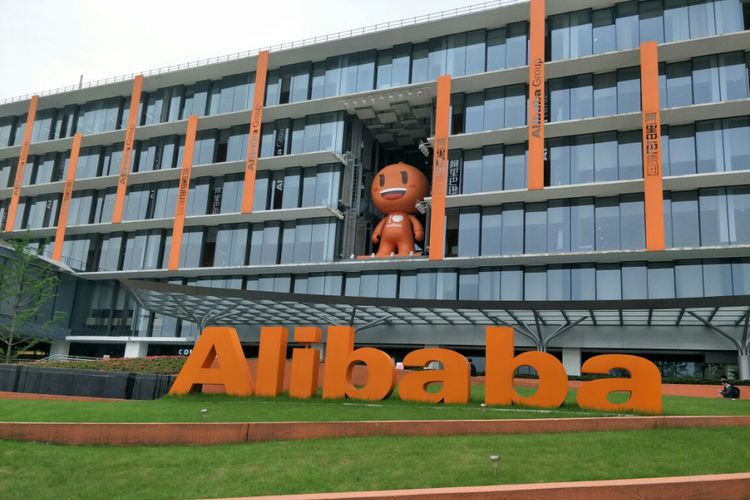
    Alibaba Group has reported top-line revenue growth of 38 per cent in the December quarter.

    “Our digital economy reached new heights with another record 11.11 Global Shopping Festival for our merchants and partners,” said chairman and CEO Daniel Zhang.

    “Continued investment in user engagement, especially through social-commerce content, contributed to our strong gains in annual active consumers. As a result of its rapid growth, our cloud-computing services for the first time generated revenue of over RMB10 billion (US$1.4 billion) in a single quarter,” he said.

    Total Alibaba Group revenue reached US$23.192 billion for the quarter and non-GAAP net income was $6.678 billion, an increase of 56 per cent year-over-year. Adjusted EBITDA growth was 37 per cent.

    During the quarter, Alibaba boosted the number of annual active consumers by 18 million to 711 million over the 12 months to September 30. Mobile monthly active users rose by 39 million to 824 million.

    The company said it was responding to the coronavirus by mobilizing the “powerful forces of commerce and technology” across its ecosystem in order to “fully support the fight against the outbreak, and ensure supply of daily necessities for our communities”.

    The company has also introduced practical relief measures for its merchants.

    “No matter past, present or future, we remain true to our mission and we will support our merchants to overcome this challenging time together,” said Zhang.

    “Looking forward, we will remain dedicated to investing in digital infrastructure and services, supporting our customers and partners across the Alibaba Digital Economy, especially during the challenging time,” added Maggie Wu, Alibaba Group’s CFO.
  • Alibaba rolls out help for merchants amid coronavirus outbreak

    Alibaba rolls out help for merchants amid coronavirus outbreak

    Chinese e-commerce giant Alibaba has announced 20 measures to assist merchants during the coronavirus outbreak, including substantial fee waivers.

    In an emotional letter to its merchant partners, the firm paints a grim picture of the challenge posed by the virus to Chinese nation while emphasizing the need of “millions and millions of consumers” for their services, describing the urgency to maintain economic development as a “second battle” alongside the struggle against the coronavirus itself.

    Among the measures listed are moves to reduce operational costs on the firm’s platforms, including a waiver on all platform service fees for the first half of 2020 for all Tmall merchants and a free subscription to “Wangpu”, an online tool kit to revamp merchants’ online storefronts, to all sellers on Taobao and Tmall.

    The firm is also offering financial support by waiving or lowering interest rates on loans issued by its online bank brand under Ant Financial, Mybank. The bank will provide 12-month loans totalling RMB10 billion (US$1.43 billion) to online merchants registered on

    Taobao and Tmall from Hubei – the province at the center of the outbreak. The loans will be interest-free for the first three months, and rates will be lowered by 20 percent from the current level for the remaining nine months. Mybank is also providing 12-month loans to Taobao and Tmall merchants from outside Hubei with interest rates also lowered by 20 percent. Payments to all qualified merchants on Tmall and Taobao will also receive payments from Mybank as soon as their orders have been fulfilled as a free service until March.

    Other measures include a support fund for select chain restaurant operators; subsidies to delivery personnel and an assurance of higher logistics efficiency; the launch of employee-sharing schemes to provide flexible job opportunities to ensure income for staff; and the release of tools for enterprises to accelerate their digitization as well as allow remote working management for enterprises.

  • How Reliance’s JioMart platform will reshape India’s online grocery market

    How Reliance’s JioMart platform will reshape India’s online grocery market

    Reliance Industries has entered India’s online grocery retailing market via a new e-commerce platform JioMart, which started pilot trials last month in Mumbai.

    Through JioMart, it is planning to offer more than 50,000 products and connect 30 million offline retailers with more than 200 million households across the nation.

    The value chain created by JioMart connects local offline retailers on a large scale with its merchant point-of-sale solution, where it provides user-friendly digital platforms for inventory management, customer care services and other services required by the retailers. JioMart plans to bring in electronics and clothing and footwear under its scope in the near future.

    The food-and-grocery (F&G)sector is tipped to be the next business battle for online retailers in India. Retailers, both domestic and international, have been proactive in their approach towards the rapidly growing online F&G sector in a bid to capture a large customer base.

    GlobalData estimates that the online F&G market in India grew at a compound annual growth rate (CAGR) of 71.2 percent between 2013 and 2018 and is set to grow at a CAGR of 45.5 percent during 2018-2023 as the urban working population is rising in Indian cities and retailers are venturing into non-metro cities. This growth is also supported by the rapidly growing mobile internet and smartphone penetration.

    RIL’s JioMart eyes the massive potential in online F&G retailing, which is estimated to reach US$9.12 billion in 2023. Reliance is known for its disruptive ideas and business approach, and the same can be said for its latest venture, JioMart.

    With its retail wing in cash and carry outlets through Reliance Fresh and Reliance Supermart, and a massive customer base with India’s largest telecom network in the form of Jio, capturing the market is not going to be tough for JioMart.

    As a domestic company, Reliance gets the advantage that Amazon and Walmart-owned Flipkart miss due to the new e-commerce regulations to safeguard the interests of domestic offline retailers in the country.”

  • Shopee Joins Hands With SUTD To Nurture Singapore’sTech Talent Pipeline

    Shopee Joins Hands With SUTD To Nurture Singapore’sTech Talent Pipeline

    The Singapore University of Technology and Design (SUTD) and Shopee, the e-commerce arm of Sea, announced that they will join hands to nurture Singapore’s tech talent pipeline. SUTD will look to leverage Shopee’s industry expertise, regional presence, and ecosystem to create new opportunities for SUTD students.

    The partnership will comprise two parts:

    1. Shopee-SUTD Scholarship: To provide financially disadvantaged students with the opportunity to pursue an education in technology and design.

    2. Shopee-SUTD Industry Collaboration Dialogues: To explore further opportunities for Shopee to broaden its support for SUTD’s capacity building initiatives for tech talent in Singapore.

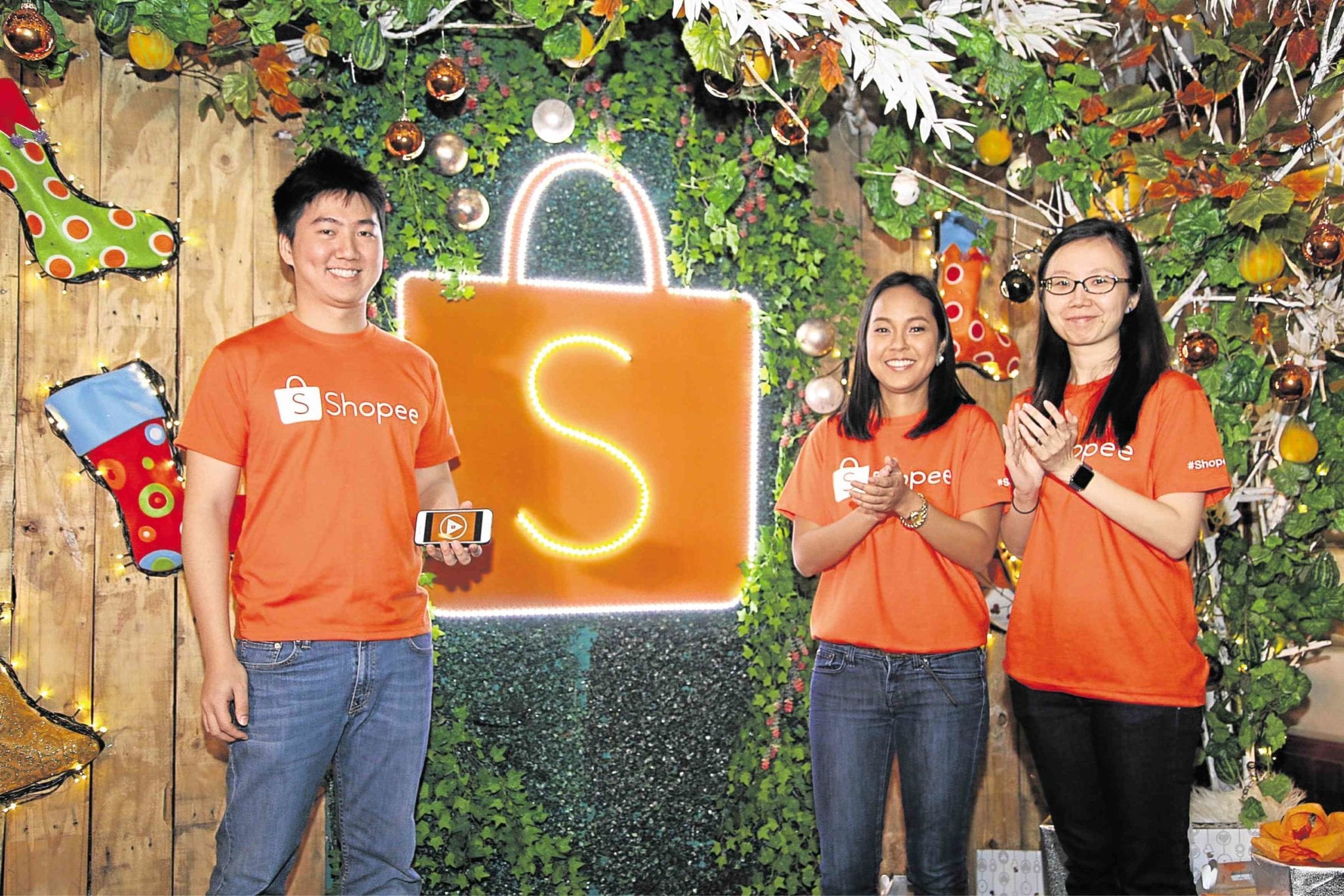
    (L-R) Prof Chong Tow Chong, President of SUTD and Gang Ye, Group Chief Operating Officer of Sea at the Shopee-SUTD Scholarship Gift Ceremony on 23 January, 2020.

    The Shopee-SUTD scholarships will provide a total of four financially disadvantaged Singaporean students with full, four-year scholarships that will cover their tuition fees and study-related expenses. The scholarships will be awarded across four years, starting from the Academic Year 2020 intake. Each scholarship will be worth $15,000 annually and will not require recipients to undertake any service orbond requirements.

    The Shopee-SUTD Industry Collaboration Dialogues will see Shopee and SUTD explore additional avenues for industry-university collaboration by combining Shopee’s industry know-how, regional presence, and ecosystem together with SUTD’s educational expertise.

    These build on Shopee’s ongoing initiatives with SUTD, which include internship programmes and knowledge-sharing sessions, as well as project sponsorships – most recently, Shopee sponsored Team SUTD’s participation at the Autonomous Aerial Vehicle Challenge (AAVC) 2020 in Chumphon, Thailand.

    Gang Ye, Group Chief Operating Officer of Sea, said, “Shopee is always looking for new ways to better the lives of people – whether it is by building communities, helping entrepreneurs get started, or creating valuable learning opportunities for our leaders of tomorrow. Together with SUTD, we want to do our part to shape the future of Singapore.”

    Prof Chong Tow Chong, President of SUTD, said, “SUTD is grateful to donors like Shopee, who understand the important role education plays in lifting families out of financially difficult circumstances, and whose generosity help ensure that all deserving students with financial need have equal opportunities to pursue a high-quality education.”

    Shopee’s partnership with SUTD is part of Sea’s “10 in 10” initiative, which aims to provide at least 10 million people across the region with the skills and training they need to succeed in the digital economy over the next decade.

  • Amazon India to use mom-and-pop shops as delivery points

    Amazon India to use mom-and-pop shops as delivery points

    Global online retailer Amazon has partnered with more than 20,000 local “kirana” stores in India to serve as delivery points.

    The move is part of the firm’s “I Have Space” program to build relationships with such stores in 350 Tier 1, 2 and 3 cities within the territory. It reflects competitor Flipkart’s recent investment in its ShadowFax network of neighborhood stores.

    “We believe the recent partnerships are expected to drive Amazon’s momentum across the country’s shoppers and mom-and-pop shops,” read a report by stock research firm Zacks. “Consequently, this will bolster the company’s presence in the retail space of India, which holds immense prospects.”

    Local stores stand to benefit from the initiative from the extra income they may receive as Amazon’s delivery partners.

    The Zacks report notes that Amazon’s stocks have returned just 14.2 percent over the past year, well below the industry’s rally of 22.4 percent.

  • Indian authorities investigate e-commerce giants over anti-trust accusations

    Indian authorities investigate e-commerce giants over anti-trust accusations

    Bezos, whose worth has been estimated at more than $110 billion, is officially in India for a meeting of business leaders in New Delhi.

    But the Competition Commission of India announced Monday that it was investigating Amazon and its main rival in the domestic market, the Walmart-owned Flipkart, over accusations they had killed off small businesses by favoring “preferred sellers” on their platforms.

    Media reports said Bezos has sought a meeting with India’s Prime Minister Narendra Modi, but neither the government nor Amazon would confirm if talks would be held.

    Amazon has said it will cooperate with the investigation and was “confident” it was operating legally.

    But traders across India said they would stage protests during the visit to demand the government takes action against Amazon.

    The merchants accuse Amazon and Flipkart of flouting foreign investment rules and pouring billions of dollars into discounts that force traditional traders out of business.

    Flipkart was Indian owned until bought by Walmart for $16 billion in 2018 following a bidding war with Amazon.

    The Confederation of All India Traders, which says it represents 70 million small businesses, vowed “strong protests” in 300 cities — including New Delhi, where Bezos was to speak on Wednesday at the Amazon business summit.

    The competition commission said it will report in 60 days, but its inquiries normally take a lot longer.

    Last year it fined Google $21 million for “search bias” and abusing its dominant position.

    After arriving Tuesday, Bezos paid tribute to India’s independence leader Mahatma Gandhi, dressing in an Indian kurta to lay flowers at a memorial in Delhi.

    He described Gandhi in a Twitter message as someone who “truly changed the world”.

    Bezos will also visit India’s financial capital Mumbai, where he will reportedly attend a party with Bollywood celebrities on Thursday evening.

    Since its launch in India in 2016, the company’s streaming platform Amazon Prime has partnered with the who’s who of Bollywood to produce entertainment content in several Indian languages.

  • Chinese E-Commerce Zall Joins Singapore’s Digital Banking

    Chinese E-Commerce Zall Joins Singapore’s Digital Banking

    Business-to-business e-commerce firm, Zall Smart Commerce, will be the latest to apply for a digital banking license in Singapore.

    The Chinese company will be part of consortium joined by Japanese trading company Marubeni and Singapore-based Global eTrade Services, a subsidiary of digital solutions provider CrimsonLogic.

    The consortium is seeking a wholesale digital banking license in Singapore and it hopes to contribute to the city-state’s development as a global financial hub for trading, Zall said in a statement. It joins 14 other groups that have applied for the same license alongside another seven that have applied for digital full-bank licenses, according to the Monetary Authority of Singapore (MAS) said earlier this month. The regulator added that up to five of the licenses could be issued by June this year.

    In addition to its e-commerce business, Zall has some experience in digital finance in mainland China. The firm acquired a virtual banking license for the market in 2017 and has since been operating as Z-Bank.

  • E-commerce drives boost in Singapore retail sales in November

    E-commerce drives boost in Singapore retail sales in November

    Singapore retail sales in November remained sluggish, rising just 0.6 percent year on year after motor vehicles were removed from the data. Including vehicles, sales fell by 4 percent.

    Significantly, online sales rose to a new high, accounting for 8 percent of the estimated S$3.6 billion (US$2.7 billion).

    “Compared to the 6.1 percent recorded in October 2019, the increase was due to higher online retail sales from major online shopping events such as Singles’ Day, Black Friday and Cyber Monday,” Statistics Singapore said in a statement.

    Month on month, Singapore retail sales in November rose by 1 percent.

    Year on year, sales of motor vehicles and furniture & household equipment decreased 22.4 percent and 10.9 percent respectively. Sales through department stores and of recreational goods declined by 8.4 percent and 4.5 percent respectively.

    Conversely, apparel & footwear sales grew by 4.3 percent, due partly to higher demand for bags and footwear. Mini-marts & convenience stores, watches & jewelry, and computer & telecommunications equipment sales, as well as supermarkets & hypermarkets, recorded sales increases ranging from 1.2 percent to 3 percent

    Food & beverage services sales

    Sales of food & beverage services grew by 5.5 percent year on year in November, reaching $898 million.

    All food & beverage services sectors registered growth, with fast-food outlets leading the way, at 12.4 percent. Sales at restaurants, cafes, food courts & other eating places and by food caterers increased by between 1 percent and 6.4 percent.

  • Reliance Industries taking on Amazon in India

    Reliance Industries taking on Amazon in India

    Indian conglomerate Reliance Industries is moving to take on Amazon in India by founding a new digital retail platform.

    The firm, led by billionaire Mukesh Ambani, has of late been engaged in testing to refine its new online shopping portal JioMart, which is expected to list more than 50,000 grocery items. Select customers who pre-register have been offered free home delivery and no-questions-asked return policy.

    The service will initially only operate within three neighborhoods in the vicinity of Mumbai, taking on both e-commerce market leaders within the territory, Amazon and Flipkart.

    Ambani has recently made several investments outside Reliance’s core industrial businesses, including telecommunications and retail acquisitions that are projected to account for 50 percent of the firm’s profits within a few years. He has previously spoken of ambitions to totally transform India’s unorganized retail market.

  • JD’s 7Fresh launches two new concepts in Beijing

    JD’s 7Fresh launches two new concepts in Beijing

    E-commerce giant JD.com has opened a 24/7 store chain, 7Fresh Life, in Beijing.

    At the same time, the firm has launched its first Seven Fun lifestyle space in Beijing, intended to serve as a “third place” for working professionals.

    The 7Fresh Life food chain supermarket, which launched last month, offers mealtime solutions within a 300–400sqm area. The venue is located in the Huilongguan residential area in northern Beijing, one of the largest residential neighbourhoods in Asia.

    Targeting especially young mothers and kitchen owners, the chain is conceived of as a restaurant, fresh food store and convenience store combination, providing more than 3000 selected fresh items of produce, daily groceries and also ready-to-cook and ready-to-eat food, equipped with an in-store dining area.

    It also provides a location-based online channel through its app for consumers to buy from the community shop anytime and have items delivered to their doorstep within as fast as 30 minutes from the time of order. The home-delivery service covers a 1.5km radius, including 38 surrounding communities and three office areas, reaching 50,000 families and 1000 office professionals.

    As a brand under 7Fresh, Seven Fun consumers can order anything in the store from the same 7Fresh app to be delivered to their doorstep.

    In addition to the items offered in-store, a large number of products from JD’s e-commerce platform can be ordered through the chain’s online channel, such as seasonal, large-size, beauty and baby and maternal products. It also provides services such as power bank rental, 24-hour parcel pick-up lockers, bill payment, top up, courier and a dry cleaning service, among others.

    “With JD’s deep understanding of consumers and our strong supply chain providing global and local fresh produce and mealtime solutions, 7Fresh has become a trusted source for consumers buying fresh food offline,” said JD’s head of 7Fresh Jonathan Wang. “7Fresh Life will better serve the diverse and unique needs of Chinese families, providing for each person at any time for any need, online or offline.”

    Dine, drink and socialise

    The firm’s Seven Fun concept is a dining, drinking and social venue offering breakfast from sunrise and late night drinks as well as lunch, afternoon tea, snacks and daily groceries.

    Located in Galaxy Soho on the second ring road of Beijing, the roughly 1000sqm store is designed specifically to cater to working professionals aged between 26 and 45 in first-tier cities. It was designed to meet the trend of global consumers shifting from going to the store to buy products to going to the store to experience products and buy services.

    The inaugural Seven Fun outlet offers more than 3500 products such as fresh food, baked goods, fresh flowers, and groceries. It features 12 selected eateries targeting the 200,000 working professionals within a 1km radius of the store.

    “As a lifestyle retailer, Seven Fun is innovating the retail landscape in China,” said Wang. “Through this concept, JD provides an unprecedented “Solomome” (social, local, mobile and personalised) offline experience that serves as a pioneering model for future brick-and-mortar stores.”

    Future expansion of Seven Fun is expected to focus on tier-one cities, targeting working professionals with an annual income of more than RMB100,000 (US$14,360).

  • Vietnam improves its online shopping readiness

    Vietnam improves its online shopping readiness

    Vietnam has jumped five places to 64th in this year’s global index of readiness for online shopping, a UN report says.

    With an average score of 61.1 points on a scale of 100, Vietnam did better than most of its Southeast Asian peers in terms of its preparedness for e-commerce, according to the B2C (business-to-consumer) E-commerce Index recently released by the United Nations Conference on Trade and Development.

    Singapore ranked third on the global list while Malaysia came in 34th, Thailand (48th),  Indonesia (84th), the Philippines (89th), Laos (113rd), Cambodia (122nd), and Myanmar (126th).

    The ranking measured 152 countries and territories around the world based on four indicators with a high correlation to online shopping: Internet server access, postal service reliability, share of the population who use the Internet, and share of population aged above 15 who have an account with a financial institution or mobile-money-service provider.

    According to the report, 70 percent of Vietnamese people use the Internet and 31 percent of individuals aged from 15 and above have bank accounts or mobile bank accounts.

    Vietnam has proportions of secure Internet servers and postal reliability at 66 and 77 percent respectively.

    The report also showed online shoppers in Vietnam account for 31 percent of Internet users and 19 percent of the 94-million population.

    The country has targeted that 30 percent of its population shop online between 2016 and 2020, with yearly sales value of approximately $350 per person.

    E-commerce revenue reached $2.26 billion last year, up 30 percent over 2017, according to Germany-based data portal Statista.

    Vietnam’s e-commerce market is estimated at $5 billion this year and is set to reach $23 billion in 2025, according to a recent report by Google, Singapore-based investment firm Temasek, and U.S.-based consultancy Bain.

  • Li Bao Ge Group to partner with Alibaba’s Freshippo

    Li Bao Ge Group to partner with Alibaba’s Freshippo

    Li Bao Ge Group is launching its food delivery service through Alibaba’s Freshippo (Hema) stores.

    The two firms have entered into a cooperation agreement under which Li Bao Ge will open in-store counters at Freshippo stores. With exclusive selling rights for Siu Mei products, Li Bao Ge will offer cooked-on-site Hong Kong-style roast meat (“Siu Mei”) under its own brand, as well as other specialties such as Cantonese-style soup, dim sum, dessert and festive delicacies. Freshippo will, in turn, make its digital platforms and on-site facilities available to Li Bao Ge and provide technical support – including marketing initiatives, online sales resources, a delivery service, potential customers, and establishment of online to offline channels.

    Li Bao Ge undertakes to set up not less than 10 counters at Freshippo’s stores on or before 15 December next year. It will leverage Freshippo’s brand awareness and high traffic to attract more young consumers and develop multi-channel sales to penetrate the Chinese takeaway and food-delivery market.

    “As online consumption gains prevalence, the competition in the food and catering industry has extended from restaurants to online order and delivery,” said Li Bao Ge Group chairman Chan Chun Kit. “With that in mind, we have decided to adopt a new business model leveraging Freshippo’s sophisticated digital management platform and big-data analysis to develop a new integrated O2O operation based on an asset-light model.

    “Going forward, Li Bao Ge will, starting from the South China region, expand into regions and cities with high purchasing power and appeal to a younger group of individual and family customers. We will gradually transform from a conventional banquet dining operator to a light meal delivery industry player. We will also explore the opportunities for the retailing of packaged food to accelerate the pace of expansion and enhance profitability.”

    Li Bao Ge currently operates eight mid-to-high-end Cantonese restaurants in Hong Kong and Shenzhen.

  • Suning to open 10,000 new China stores next year

    Suning to open 10,000 new China stores next year

    Chinese O2O retailer Suning plans to open 10,000 new stores next year, capitalizing on ‘consumption upgrade’ in China.

    Founder and chairman Zhang Jindong said the company will invest 40 billion RMB (US$5.7 billion) to support its expansion spree, estimated to create 8000 new jobs.

    According to the company, the increase in consumer spending with the emergence of new, more aspirational and affluent consumer groups is driving the consumption upgrade in China. The increased purchasing power in China’s lower-tier cities is also emerging as an investment magnet.

    The expansion is part of the company’s ‘open from 1 to N and integration from N to 1’ strategy.

    “Opening from 1 to N refers to how Suning is opening up its core business of retail through multi-channel, full-scenario categories to empower the industry and society at large. Integrating from N to 1 refers to the integration of Suning’s scenarios and supply chain, converging online and physical retail to focus on consumer experience and providing diversified services of a consistent quality for every consumer,” it says.

    Earlier this year, Suning acquired 37 Wanda department stores and bought an 80-per-cent stake in Carrefour’s Chinese operations. The company is recognized as one of the top three among the top 500 non-state-owned enterprises in China.

  • A third of Southeast Asian e-commerce traffic happens in Vietnam

    A third of Southeast Asian e-commerce traffic happens in Vietnam

    Vietnam accounted for 30.9 percent of e-commerce web traffic in Southeast Asia in Q3, second only to Indonesia, a report says.

    Compared to the second quarter, e-commerce web traffic in Vietnam has risen by 5.2 percentage points, the highest growth in the six countries studied, while that of top market Indonesia fell 10.6 percentage points, according to Malaysia-based iPrice Group.

    Both foreign and local companies are seeking to expand in Vietnam, but domestic firms account for 72 percent of the traffic, while that of international players, mostly Singapore-based Shopee and Lazada, make up the remaining 28 percent, according to “The Map of Southeast Asian E-Commerce Q3 2019” report.

    This makes Vietnam second only to Singapore in the share of local players in web traffic, far exceeding Thailand, Malaysia and the Philippines, where foreign companies dominate, accounting for at least 78 percent.

    Although Shopee still topped the chart in Q3 with 34.6 million visits in Vietnam, home-grown player Sendo for the first time climbed to the second place with 30.9 million visits, up 10 percent from Q2.

    Mobile World climbed two places to third place with 29.3 million visits, while both Tiki and Lazada fell to the fourth and fifth place respectively.

    Vietnam’s internet economy will reach a value of $12 billion this year, with an annual growth rate of 38 percent since 2015 and is expected to surge to $43 billion by 2025, according to the “e-Conomy Southeast Asia report 2019” by Google, Temasek – a holding company owned by Singapore’s government, and U.S.-based global management consultancy Bain.   A

  • Aeon teams with UK online grocer Ocado to boost online offer

    Aeon teams with UK online grocer Ocado to boost online offer

    Japanese supermarket operator Aeon is seeking to expand its e-commerce arm by hiring British online grocer Ocado.

    Aeon will use Ocado’s technology to set up a new online platform capable of fulfilling national orders to a level of ¥600 billion (US$5.52 billion) in sales by 2030, and ¥1 trillion ($9.13 billion) within the following five years.

    The move is a defense effort against rivals in the territory such as Amazon and Walmart-backed Seiyu as the online grocery market appears poised to expand in Japan, according to a Reuters report.

    Ocado’s software system is the basis of its £8.1 billion ($10.46 billion) market valuation, despite its meagre 1.4-per-cent share of Britain’s grocery market.