Category: Fashion

Retail News Asia is committed to providing both local and global retailers with the latest Fashion news throughout the Asian market. This on a daily base.

  • Richemont’s half-year is good in APAC

    Richemont’s half-year is good in APAC

    Asia Pacific sales accounted for 39 per cent of group sales for Swiss luxury-goods holding company Richemont for its half-year to September 30.

    Sales in Asia Pacific rose by by 25 per cent, with double-digit growth in most markets led by Mainland China, Hong Kong, Korea and Macau. While all product categories saw growth, the unaudited figures show jewellery and watch sales were particularly strong year on year, with watches benefiting as no inventory buy-backs were needed as in the previous year.

    For Japan, the 7 per cent rise in sales was driven by higher domestic and tourist spending, which benefited from a weaker yen. Jewellery and watches led sales growth, partly supported by the reopening of the Cartier flagship store in September last year and new flagships for Piaget (November) and Van Cleef & Arpels (April), all in Ginza.

    Overall, group sales rose by 10 per cent at actual exchange rates to €5.6 billion (US$6.5 billion) and by 12 per cent  at constant exchange rates. Excluding the previous year’s inventory buy-backs, sales increased by 8 per cent at constant exchange rates.

    Operating profit expanded by 46 per cent to €1.1 billion, with profit for the period up 80 per cent to €974 million.

    Gross profit increased by 13 per cent, representing 65.4 per cent of sales. The 190-point margin increase was mainly because of the non-recurrence of inventory buy-backs and improved manufacturing capacity absorption, says Richemont.

    Profit grew by 80 per cent to €974 million, mainly reflecting the higher operating profit and a €181 million reversal in net finance income.

  • Longchamp opens the biggest store in Asia

    Longchamp opens the biggest store in Asia

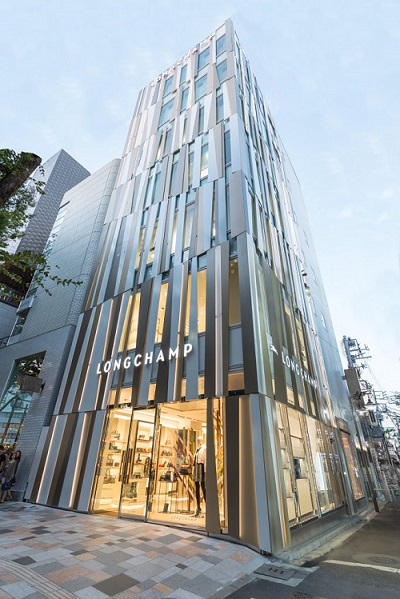
    French leather goods brand Longchamp officially opened its biggest Asian store in Tokyo in October 2017. The move signals a move to attract more Japanese clientele to the Parisian brand, as well as tourist shoppers visiting Japan.

    Dubbed ‘La Maison Omotesando’, the Japanese flagship store is located on Tokyo’s prestigious Omotesando Avenue. Standing 35 metres high and covering 500 square metres of retail floor space, the Asian flagship opened to much fanfare 19 October 2017, with the attendance of French actress – and Longchamp fan — Audrey Tatou.

    Inside, the Tokyo store sells Longchamp’s complete range of leather goods and handbags, as well as footwear, women’s fashion and menswear, the latter a collection-first for the Japanese market, which is located on the basement level of the multi-level store.

    Longchamp opens in ‘Maison Omotesando’ in Tokyo, biggest Asia store yet 2
    Source : prestigeonline.com

    In time for the new store launch, the luxury leather goods company unveiled its ‘Intempor’elle’ collection too. The autumn 2017 collection is composed of ready-to-wear pieces, handbags and boots. Key items include an updated two-tone Pénélope bag, studded and panther-print calf fur versions of the iconic “Mademoiselle Longchamp” messenger, and a clutch sporting a winged-horse motif.

    Speaking at the opening, Jean Cassegrain, Longchamp managing director, said the store will serve as a showcase of the brand’s way of life and collections.

    “This strategic and attractive store, which will serve as a showcase for our brand and our craftsmanship, allows us to welcome more Japanese clientele, but also tourists from across the globe, with whom we will have the pleasure of sharing the French way of life, and the creativity and quality of our collections,” said Cassegrain.

    With 210 sales points in Asia, the Asia market represented 28 percent of Longchamp’s total revenues in 2016.

    Founded in 1948, the Paris brand is sold in 80 countries across 1,500 sales points globally. This includes namesake stores and franchises, department store counters, leathergood retailers, airport concessions and online stores. The firm directly operates 300 stores worldwide.

  • Valentino Is Opening Sport-Themed Pop-Up Shops Around The World

    Valentino Is Opening Sport-Themed Pop-Up Shops Around The World

    Athleisure cannot stop, will not stop, and probably will never, ever stop, the proof is on the runway.

    More specifically the Valentino Resort 2018 runway, which saw a parade of athletic-inspired looks featuring everything from silk tracksuits to fuzzy slides to cheerleader-inspired midiskirts.

    Pierpaolo Piccioli’s Resort 2018 collection puts a luxurious spin on streetwear and the combination does not feel forced.

    The show, which took place in New York’s Bond Street, drew inspiration from one of the best American exports – hip hop.

    Sporty zip-up hoodies and tracksuits were given a Valentino touch, with the brand’s signature midi-dress silhouette with pleated details.

    Embroidered varsity jackets were paired with feminine calf-length skirts.

    Piccioli worked with graphic designer Zandra Rhodes again on special prints for dresses and jackets in the resort collection.

    Models carried micro versions of Valentino’s iconic “Matelasse” bags as clutches. We also love the heart-shaped novelty bags with iconic Rockstud straps.

    The collection also elevated flip-flops to runway chic, applying duo-tone fur trims on the thongs of the flip flops for a luxury touch.

    The show was attended by celebrities the likes of Olivia Palermo, Maggie Gyllenhaal and Marisa Tomei.

    Needless to say, the collection was a must-see. And now, lucky for us, here’s our chance to finally buy.

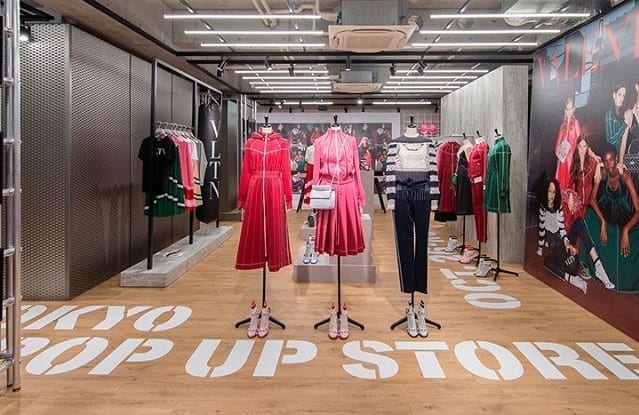
    In a series of pop-up shops in Tokyo, New York, and Hong Kong, Valentino fans will be able to shop the resort 2018 collection  in retail spaces designed to resemble gyms. But, like, chic gyms.

    A release for the new pop-ups even mentions “imaginary metropolitan basketball nets.”

    Aside from the gymnasium aesthetics, expect to be able to shop the resort collection plus more.

    Limited-edition items such as basketballs, yoga mats, and sneakers round out the sport-themed aesthetic.

  • Topshop Australia returns online via The Iconic

    Topshop Australia returns online via The Iconic

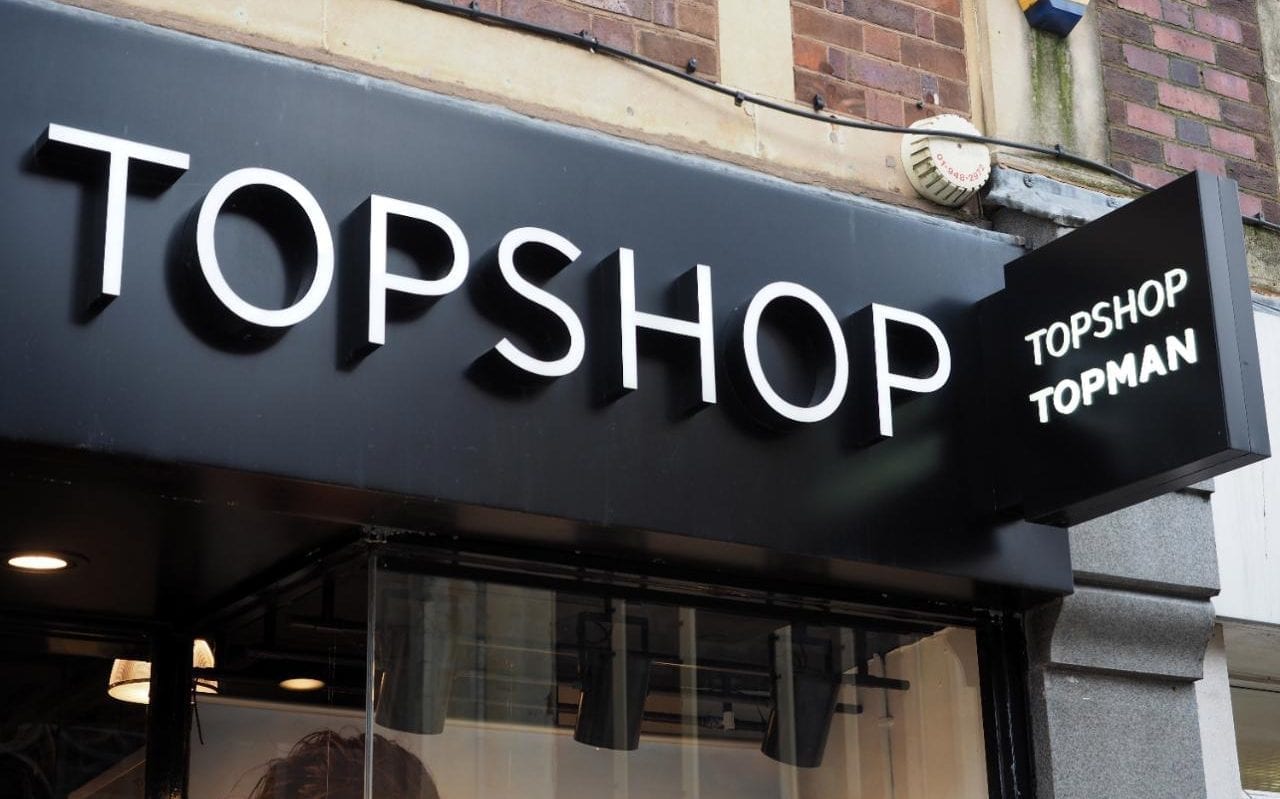
    UK fast-fashion darling Topshop and brother brand Topman have returned to the Australian e-commerce sphere, partnering up with The Iconic for their online comeback.

    The Iconic will now sell and distribute — from its Australian website and fulfilment centre—a selection of Topshop and Topman products to its online clientele.

    “Our customers are at the heart of everything we do at The Iconic – from curating a world-class range of local and international brands to continuously innovating our technology for a seamless shopping experience,” said Patrick Schmidt, CEO at The Iconic.

    “Topshop and Topman are two brands we know Aussies love – we want to keep bringing our customers the biggest and best brands in the world, which is why we’re thrilled to be welcoming Topshop and Topman to The Iconic family,” he said.

    The Iconic confirmed the full Topman range and women’s denim line launched from 31 October 2017. A full range will be available by the end of November 2017.

    The partnership comes following Topshop’s recent $30 million collapse in Australia. The Arcadia-owned retailer had to close its online store in May 2017, after launching its Australia-dedicated e-commerce platform just weeks before.

    The closure of multiple stores soon followed across Australia and New Zealand, including all its concession stores in leading Australian department store chain Myer.

    After three months of putting a deal together, company representatives said in August that brand owner Arcadia would buy chunks of the business and take over the running of four stores from the Australian franchisee. The surviving stores are in key locations Sydney, Bondi Junction, Melbourne and Brisbane’s CBD.

    The Iconic, part of Global Fashion Group, sells 700 brands and 45,000 products via its website. It launched in 2011.

  • Big Baller Brand expands into China

    Big Baller Brand expands into China

    American sports apparel company Big Baller Brand has bounced into Hong Kong and Mainland China on the back of a basketball game.

    Founder/CEO LeVar Ball, a former basketball and football player, took advantage of a match in which his son LiAngelo played for UCLA (University of California, Los Angeles) in Shanghai’s Mercedes Benz Arena, which has also just hosted the Victoria’s Secret annual showcase.

    ESPN writer/editor Jovan Buha says the family used the trip to launch Big Baller Brand China via two pop-up stores, one at streetwear outlet WZK Shanghai followed by the other, opening today at Juice in Hong Kong.

    Buha says the family’s brand is set to open its own flagship stores in both cities, along with a dedicated Chinese website.

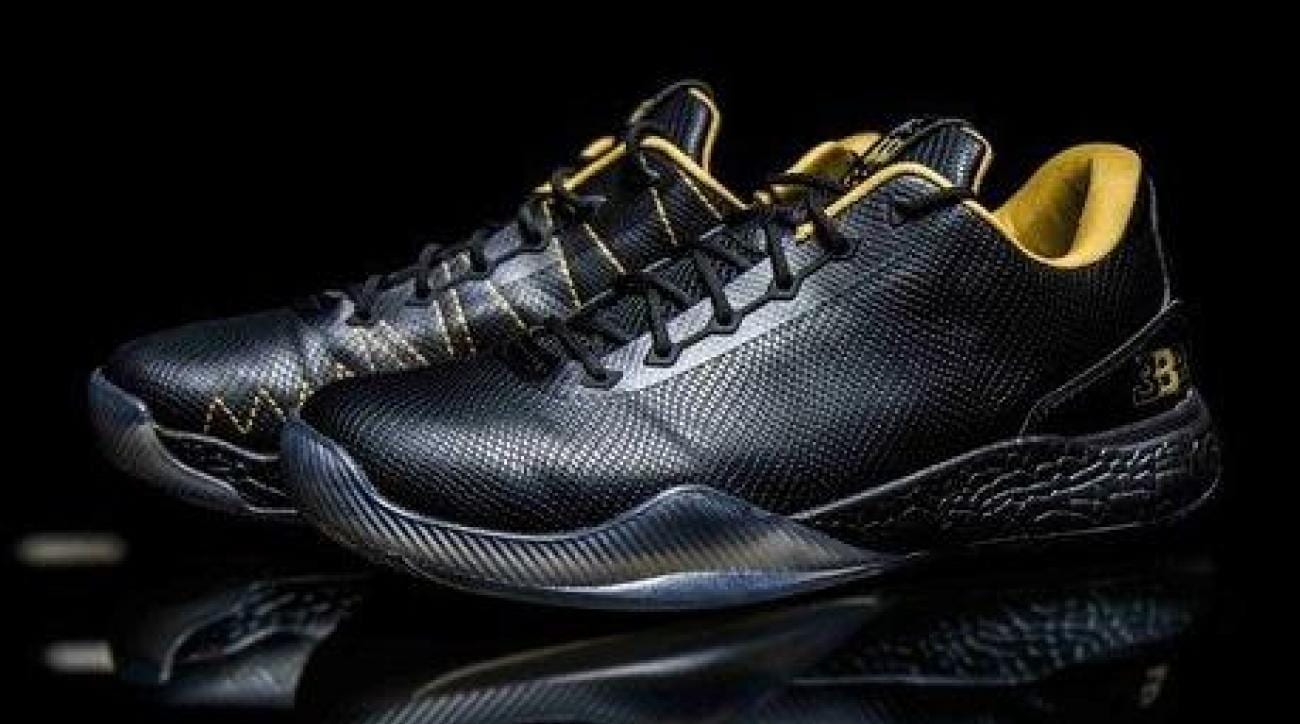
    Big Baller Brand was inspired by LiAngelo and his brothers Lonzo and LaMelo – following in their father’s footsteps as basketball players.

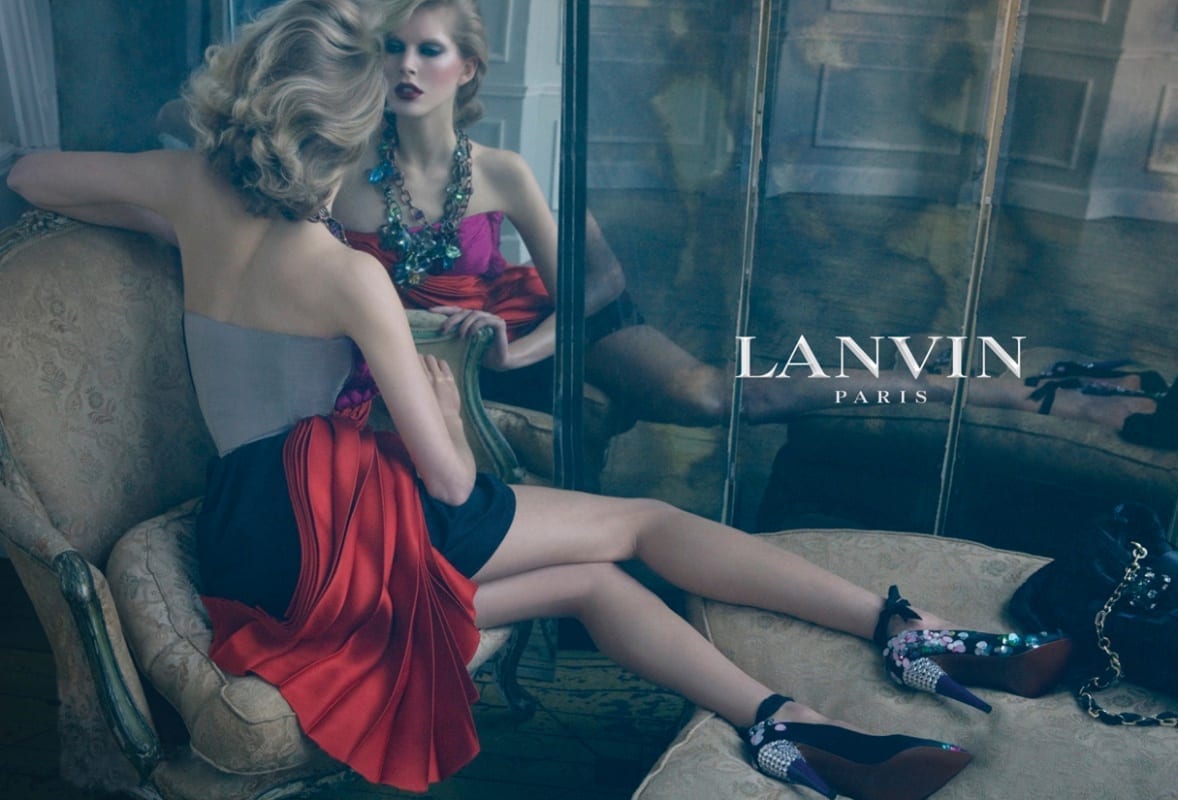
  • More investment for Lanvin

    More investment for Lanvin

    With slumping sales since a design shake-up two years ago, Lanvin fashion house is expecting a cash injection before the end of the year.

    France’s oldest fashion house says this is coming from Taiwan businesswoman Shaw-Lanh Wang, who is the majority shareholder.

    Auditors at the privately owned firm have filed a warning with a commercial court in Paris over its financial troubles, Reuters has reported. Sources say recapitalisation is needed to buy breathing space and to save it struggling to pay salaries in January.

    Lanvin says it is working on a new strategy and that Wang, a Chinese-born media magnate who owns 75 per cent of the firm, will put in more money. No further details have been released by the company, which does not publish earnings.

    The funds will be used to back future projects to help reposition Lanvin, says the firm.

    Dating back to 1889, the company was named after couturier Jeanne Lanvin and had a revival a few years ago under designer Alber Elbaz. Sales fell following his surprise sacking in 2015, being forecast to deepen this year by another 30 per cent after a 23 per cent drop last year.

    Wang’s close adviser Nicolas Druz, who has just been appointed deputy-MD, says Lanvin is looking at branching into new avenues such as “art of living” products. The label may also look at hotel projects using the Lanvin name.

    “It’s not just about new capital – we’re thinking about other revenue streams too,” Druz says.

    Lanvin is on its second designer since Elbaz, appointing former Balmain menswear designer Olivier Lapidus to the position in July.

  • Sales drops for Louis Vuitton Korea

    Sales drops for Louis Vuitton Korea

    Louis Vuitton Korea has fallen behind its rivals, with sales dipping into minus territory this year, industry data shows.

    Sales at a leading department store for the international fashion house for the January-October period backtracked 5.3 per cent. Demand for Louis Vuitton products were down 2.1 per cent at another department store during the same period.

    Meanwhile, rivals Chanel and Hermes achieved double-digit sales during the same period. Chanel added 11.2 per cent and 13.7 per cent at the two department stores, while Hermes managed 16.5 per cent and 17.1 per cent growth, respectively.

    “The vast popularity of Louis Vuitton in the past and consequent sales have made the brand too common, taking away much of its cachet,” an unidentified retailer said. “The popularity of its monogram series fizzled out, and there was no succeeding product, which is another reason for the slump,” he said.

    Exact sales figures are not available for Louis Vuitton, after its local operator was turned into a privately-held company from a limited company in 2012 when its lack of social contribution compared to its dividend propensity became controversial. Privately-held firms do not have to disclose detailed corporate information, such as donations.

    A law was revised recently, however, requiring private companies to undergo external inspections and to disclose financial information, including sales, dividend rates and contributions.

  • New look for Rolex KL Pavilion store

    New look for Rolex KL Pavilion store

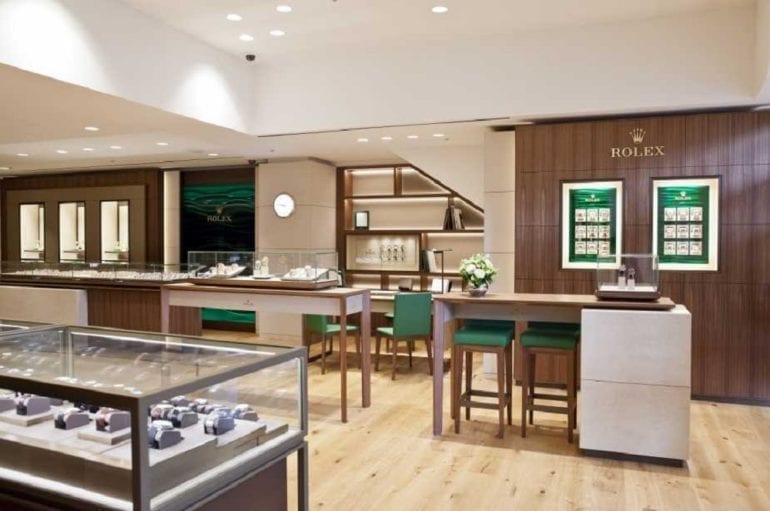
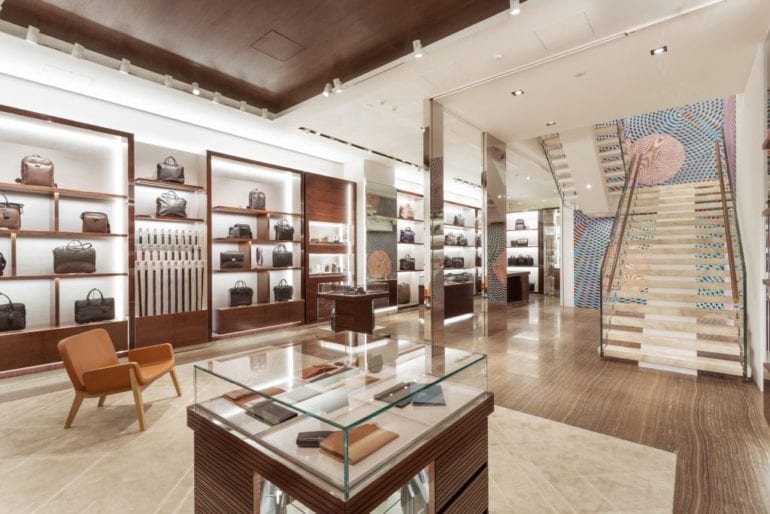
    Rolex has relaunched its boutique at Pavilion Kuala Lampur, with a new, elegant shop design and layout to lure the lucrative Malaysian market.

    Launched by Swiss Watch Gallery, which officially operates the luxury watch brand, the 158 square-metre-space has been modernized to appear high end, and offers a more intimate setting for consumers to experience the luxury timepieces.

    Key design features included bronze detailing and polished walnut wood cabinets to match the brand’s new image. The boutique also has a private salesroom for those seeking a discreet shopping experience.

    According to Valiram Group’s executive director Ashvin Valiram, the boutique is a “historical landmark”.

    “We are delighted that Swiss watchmaking’s crown jewel remains confident in our collaboration and we will continue to be its biggest and most passionate champion in the region,” said Valiram.

    To celebrate the launch, Rolex is offering Malaysian clientele the chance to purchase one of its newest timepieces– the gold Oyster Perpetual Cosmograph Daytona, which has a patented Oysterflex bracelet.

    The Swiss luxury watchmaker has also introduced new versions of its classic Oyster Perpetual Lady-Datejust 28 in steel and Rolesor (a material combining 904L steel and 18-carat white gold), and the Oyster Perpetual Sky-Dweller, as well as the Oyster Perpetual Sea-Dweller, Oyster Perpetual Pearlmaster, and Oyster Perpetual Yacht-Master 40 models.

    The Kuala Lumpur flagship store, the largest boutique in Southeast Asia, first bowed at the Pavilion some ten years ago.

    In 2016, the Swatch Group led watches with a 19% value share for the year, according to Euromonitor. The most populr brands in Malaysia included Swatch, Longines, Omega, Tissot, and Rado.

    Looking ahead, Malaysia will continue to see the penetration of high-end watches, said Euromonitor, with demand for signature watches brands such as Hublot, Breguet, Maurice Lacroix and Rolex, to remain sustainable.

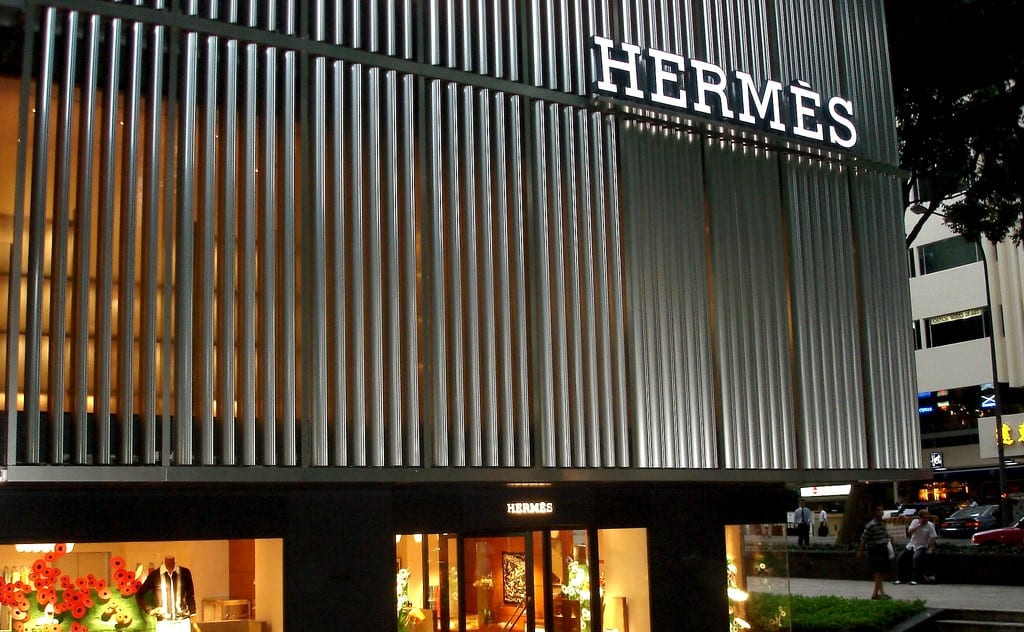
  • Hermes grows in China

    Hermes grows in China

    Sales momentum in Mainland China helped boost growth for French luxury retailer Hermes in its third quarter.

    Overall sales grew 11 per cent at constant exchange rates, and at the end of September revenues were up 10 per cent to €4 billion (US$4.6 billion).

    Despite a strong comparison basis, sales in Asia (excluding Japan) rose 14 per cent, while Japan achieved a solid performance with a 5 per cent increase in the face of a strengthening yen.

    Hermes says all sectors recorded growth, with a “remarkable” 11 per cent performance by ready-to-wear and accessories.

    The 11 per cent growth in leather goods and saddlery was in line with the annual target of around 10 per cent, says the company, thanks to the success of its collections and diversity of models, particularly the Constance, Halzan, Lindy and Verrou bags, alongside Birkin and Kelly.

    With 9 per cent growth, the silk and textiles business line benefited from sustained demand, the diversity of the collections and the wealth of the creations, says Hermes.

    Strong growth of 13 per cent was posted by the perfumes division, driven notably by the launch of Twilly d’Hermes.

    There was a slight 1 per cent improvement for watches, while other lines grew by 11 per cent, including jewellery, art of living, and table arts.

  • Thai Converse distributor eyes IPO for retail expansion

    Thai Converse distributor eyes IPO for retail expansion

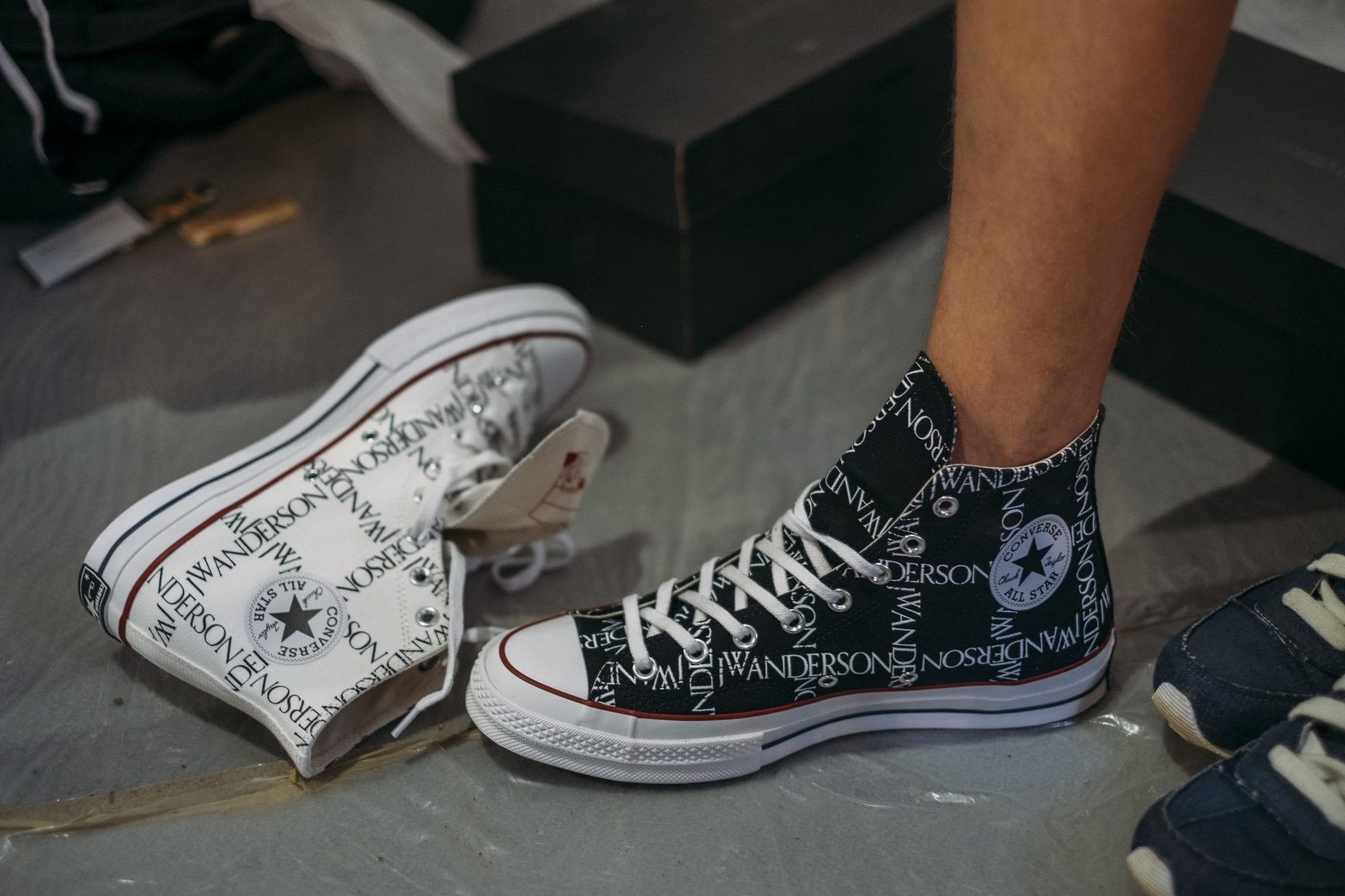
    Converse’s Thai distributor looks to expand its presence in Thailand and globally with funds raised via the Bangkok firm’s stock exchange launch in the Asian nation in 2017.

    Rich Sport, Thailand’s sole distributor of Converse shoes and apparel, has submitted a filing for an initial public offering on the Stock Exchange of Thailand in 2017.

    The Thai manufacturer and distributor hopes to raise funds to grow its business internationally, according to the filing, and has appointed Finansia Syrus Securities to advise the IPO.

    The IPO is the 14th stock debut in Thailand from a local firm this year, according to Dealstreet Asia.

    Getting down to details, Rich Sport will issue 200 million IPO shares, or 26 per cent of capital. From this, 195 million shares will be offered to the public while the remaining 5 million will be allotted to employees and subsidiaries, added the filing.

    The company has a total capital made up of 770 million shares, with paid-up capital of 570 million shares at a par value of one baht each, it said.

    At present, Rich Sport owns 30 per cent of shares, with three members of the Wongpaitoonpiya family owning 23.33 per cent each. After the IPO, Rich Sport’s share will be lessened to 22.21 per cent.

    Rich Sport has been a maker and distributor of the Converse brand in Thailand for 14 years. Rich Sport currently oversees 41 Converse shops in Thailand and 11 points-of-sales inside local department stores there.

    The firm reported revenue of 601.12 million baht ($18 million) and net profit of 122.16 million baht ($3.65 million) for the first six months of the year.

    Founded in 1908, Converse is one of America’s most iconic footwear companies, and has been a subsidiary of Nike since 2003.

    It is known for its products under the trade names Cons, Chuck Taylor All-Star John Varvatos, and Jack Purcell.

  • Hermès enhances China digital game with first WeChat pop-up store

    Hermès enhances China digital game with first WeChat pop-up store

    French luxury brand Hermès launched its very first WeChat pop-up store, a strategic move signaling the brand’s ambition to step up its digital innovation in China. But it also raises the question of just how aggressive it can be in the digital space.

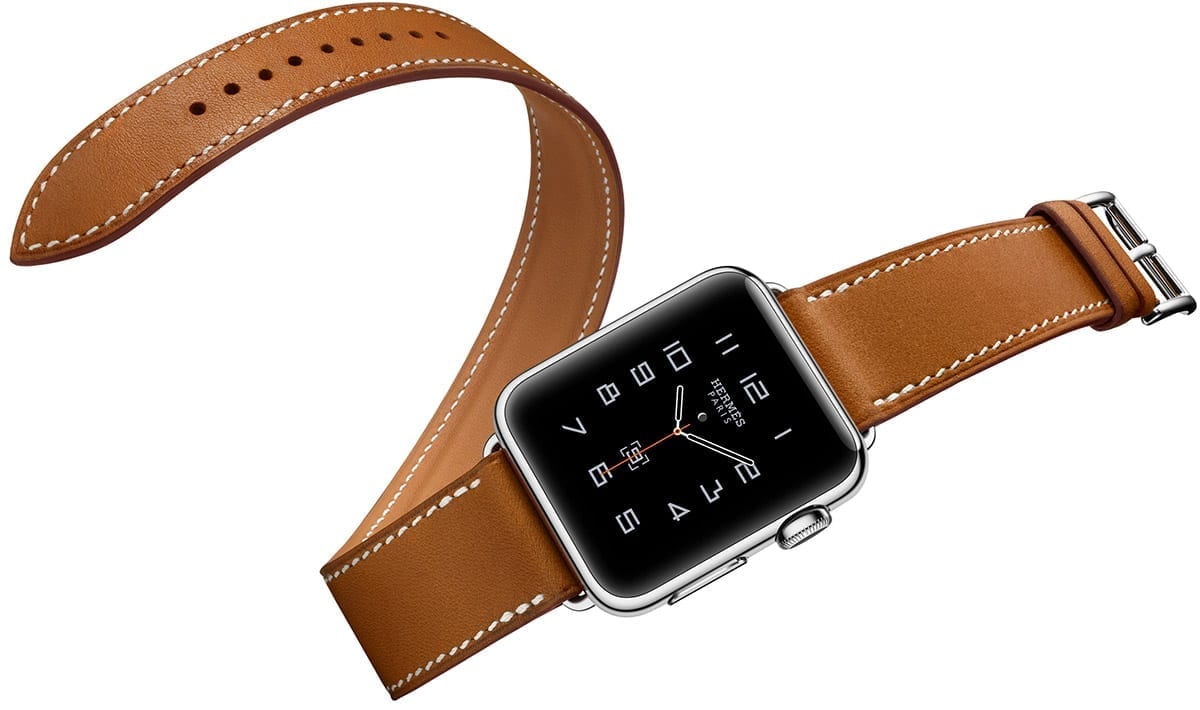
    The WeChat post by the brand to introduce the pop-up store has a 13-second promotional video about the new Éperon d’Or Hermès x Apple Watch.

    The product, in collaboration with Apple, features the classic pattern of Hermès scarf on the wristband. The pop-up store will last for two weeks.

    When clicking on “read more” at the bottom of the post, readers are taken directly to Hermes’ watch collection page which offers a detailed view of six models.

    The prices range from 8,988 yuan ($1354) to 10,988 yuan ($1655). Buyers need to register an account with the site—leaving their phone number and other relevant information—to track the order, and they must use WeChat Pay to complete the deals.

    Chinese consumers have shown high interest in Hermès’ WeChat offering: by the time of this publication, the post had attracted 15,986 pageviews.

    According to Hermès’ earnings results of the first six months of 2017, China led the growth in the Asia-Pacific region, contributing 14 percent to the region’s total revenues.

    The brand continues to see rising interest among Chinese customers in purchasing its signature handbags, namely the Birkin Kelly, Constance, and Lindy models.

    “We have really seen a recovery of China,” the global chief executive of Hermès International Group Axel Dumas said in an interview with Financial Times, “and the beginning of growth again in Hong Kong and Macau.”

    For Hermès, the rebound of luxury consumption in China posed the question of how it can best capture the demand in the market for digital shopping.

    Compared to many other luxury powerhouses, Hermès is a latecomer to the digital shopping game in China.

    Hermès set a textbook example for hunger marketing, a strategy often deployed by brands to make consumers feel hungry for certain type products through a limited number of offers. Hermes has used this strategy before to promote the Birkin bag. With limited time and quantity, the offer of Apple Watch in the WeChat store has employed a similar technique.

    However, this strategy of utilizing a sense of urgency is certainly not a new approach. Many brands, namely Dior, Longchamp, and Bulgari, were early adopters of WeChat flash sales, making headlines with impressive sales numbers from the flash sales. For example, during last year’s Chinese Valentine’s Day, Dior offered a Lady Dior handbag for 28,000RMB ($4,210) for four days; the media reported that all 200 models were sold out by 2 August 2017.

    As the brand’s key rivals like Louis Vuitton and Gucci are selling online in China, there is a possibility for Hermès to open an exclusive e-commerce site for the country’s consumers, too.

    There might be reasons why Hermès has been slow to adopt this digital trend; it is a reflection of a general attitude of the luxury industry to digital change.

    They face many questions such as whether going digital can deliver the same luxury experience to consumers, or if it can become a steady purchase channel for high-priced goods. Luckily, the past experiences of early adopters show that the value of luxury can still be held if the brands approach it appropriately.

    For Hermès, it is going to be a task to balance exclusivity and availability on the digital channel in China and their answer to it will set up an example for many luxury brands.
  • French fashion brand The Kooples to launch in Hong Kong

    French fashion brand The Kooples to launch in Hong Kong

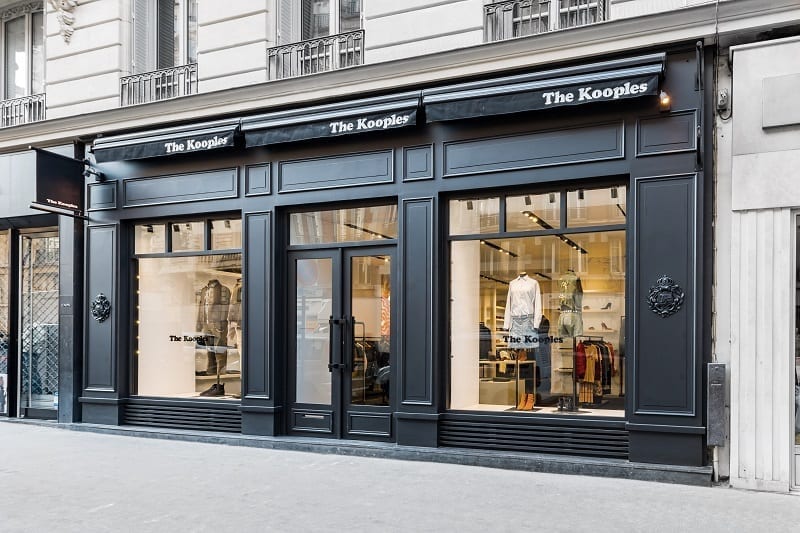
    The Kooples, a popular accessible-luxury fashion brand from Paris for men and women,  to launch in Hong Kong, Macau and Mainland China, with exclusive partnership with Swire Resources.

    Founded by brothers Alexandre, Laurent and Raphaël Elicha in 2008, The Kooples is an international brand with more than 400 stores in 36 countries.

    French accessible luxury brand The Kooples to launch in Hong Kong cover

    Perfecting French street-chic styling by combining precision cuts, attention to details and precious fabrics — and famed for its unique concept of a gender-fluid aesthetic so guys and gals can borrow each other’s style — the Parisian label is inspired by love, couples, rock’n’roll spirit and tailoring know-how.

    The first Kooples’ flagship store under Swire will open in mid-November 2017 at Pacific Place, one of Hong Kong’s most iconic shopping malls.

    As the exclusive regional distributor for the brand, Swire Resources is instrumental to The Kooples’ global expansion strategy, particularly in gaining a foothold in the fast-growing Greater China market, where consumers have an increasing appetite for international accessible-luxury and affordable-lifestyle brands.

    “We are excited to welcome The Kooples into the Swire Resources’ diverse portfolio of brands,” says Richard Sell, Director of Trading and Industrial at Swire Pacific, the parent company of Swire Resources.

    “We see huge potential for this self-styled, spirited, exciting brand on the back of the impressive growth it’s achieved in the accessible-luxury segment since its inception in Paris less than a decade ago. With Swire’s experience and expertise in brand building, retail and distribution of consumer brands, we are confident in strongly contributing to The Kooples’ success in Hong Kong, Macau and Mainland China,” he added.

    “After expanding in the US, the Middle East and Korea, we are thrilled to open our first flagship store in Hong Kong with new partner Swire Resources” says Emmanuel Stern, CEO and Co-founder of The Kooples. “The Kooples is a family affair and we are excited to welcome Swire Resources as the newest addition to the family.”

    Adds Laetitia Mergui, CEO Asia of The Kooples: “The Kooples’s Greater China launch has been long awaited. We cannot wait to meet our first customers in Hong Kong in November 2017 and in Mainland China in 2018.”

  • Lotte Duty Free files complaint against airport

    Lotte Duty Free files complaint against airport

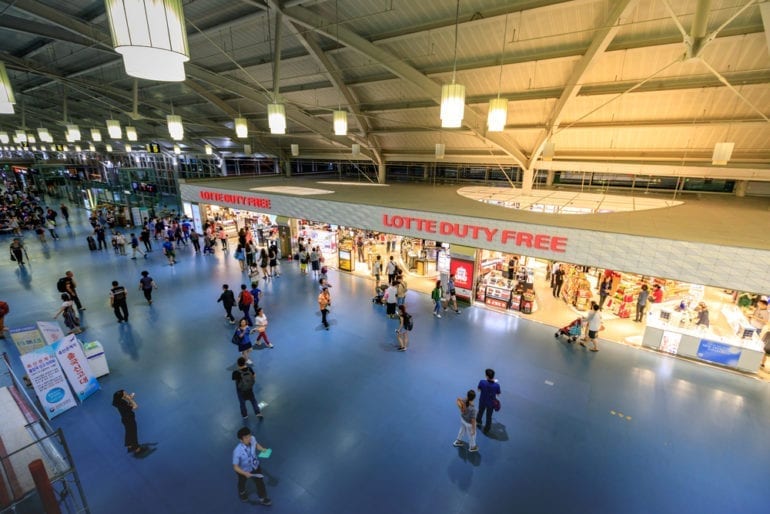
    Lotte Duty Free submitted a report to the Fair Trade Commission regarding its rent feud with Incheon International Airport, according to the leading duty-free operator.

    Korea’s largest duty-free operator and airport have gone through four unsuccessful discussions on the matter since mid-September, but this is the first time one of them has called in state officials.

    Lotte’s assertion is that Incheon International Airport violated the Monopoly Regulation and Fair Trade Act by setting up contract conditions that were unfavorable to the duty-free operator. If the request goes through, the FTC will embark on an investigation of its own or set up a definite deadline for the two to reach an agreement.

    In 2015, the two signed a five-year rent contract for Lotte’s operation there worth 4.1 trillion won (US$3.68 billion). The deal ran from September 2015 to August 2020.

    The company pinpointed two terms in the contract that they thought were “unfair.” One is a clause that prohibited any adjustments to the rent or security deposit due to changing management conditions or a drop in sales.

    “In nature, duty free businesses are vulnerable to international affairs and government policy changes,” said Lotte Duty Free in a statement. “The clause ignores the industry’s particular characteristic and rules out any possibility of renegotiation from situations that may be prompted from this.”

    The second disputed term states that the operator cannot pull out of the deal before half of the contract period has passed. Even if Lotte requests a revocation after this halfway point, it has to continue operations for four months from the withdrawal date.

    After the fourth discussion ended fruitlessly, Lotte discussed the possibility of closing down its operation in Incheon International Airport, which takes up about half the space allocated to duty free stores and generates 60 percent of the airport’s entire rent earnings from duty free.

    The number of Chinese tourists in Korea plummeted since March after tensions rose over Korea’s deployment of a U.S.-led antimissile system. Lotte says this left a huge void of customers – the company used to generate 70 percent of its annual sales from Chinese consumers.

    Under the current contract, Lotte Duty Free can pay a designated portion of its operating sales as rent. But there is also a minimum amount that the operator has to pay even if the sales figure falls below that threshold.

    As Lotte’s sales are lower, the sales figure does not reach the minimum amount. Lotte says that it cannot afford to pay the minimum amount due to unfavorable market conditions.

    Its counterpart Incheon International Airport rebutted the claims and remains firm that it will not alter the original contract conditions. The airport said the contract with Lotte was based on a mutual agreement that the market situation may change in the future.

    “The contract was already screened by the FTC so we’re not expecting any problems based on relevant laws,” it said in a statement.

  • Charlotte Tilbury to launch in Asia in 2018

    Charlotte Tilbury to launch in Asia in 2018

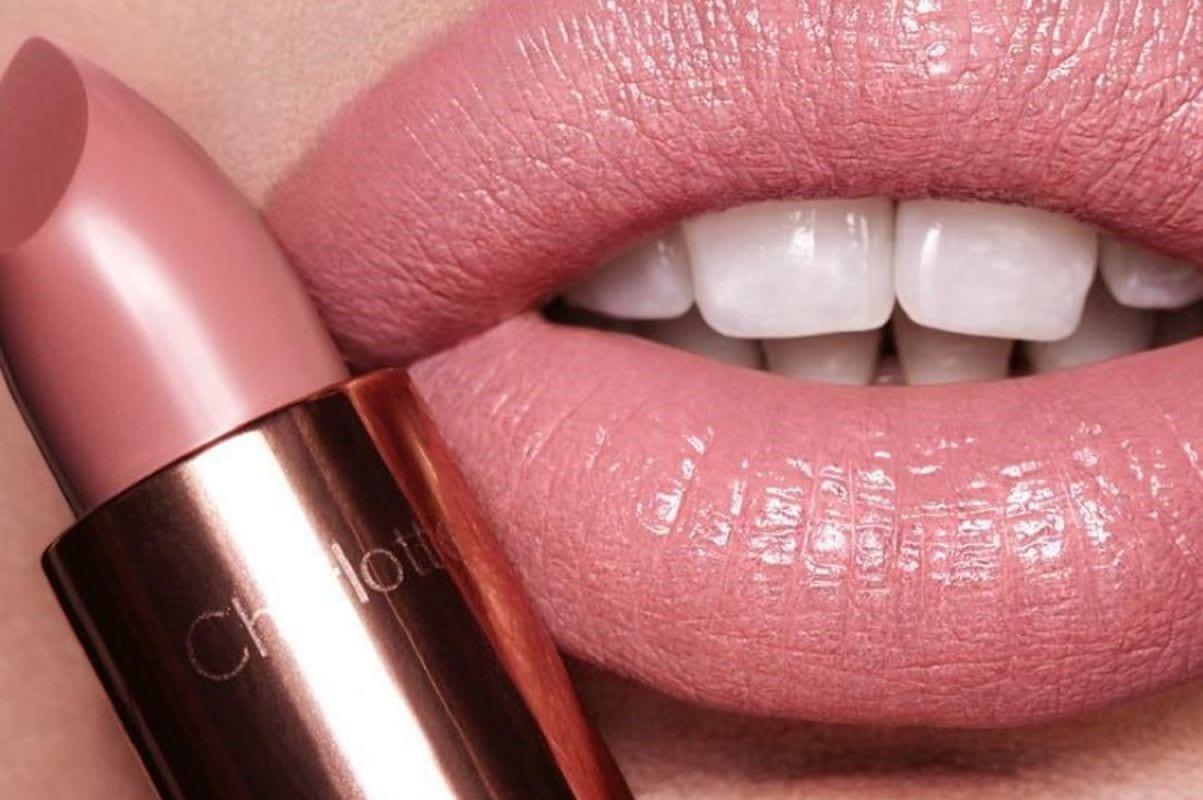
    Charlotte Tilbury, the world’s number one makeup artist, has announced her next momentous step to take her record breaking, award winning and best-selling makeup, skincare and scent collections to Asia.

    Hot on the heels of opening her first store outside of the U.K – a two-storey Beauty Wonderland in Kuwait, Charlotte will officially launch her Makeup Revolution in Asia in Summer 2018.

    Starting in Hong Kong at Lane Crawford, Charlotte plans to take her Makeup Revolution far and wide across Asia with further plans to be announced in the coming months.

    Charlotte Tilbury said: “I am SO excited to be officially launching my magic Makeup Revolution in Asia.
    There has been huge demand already from my loyal base of customers who have followed my brand from the start and I am so thrilled to finally be able to share all of my best-selling, award-winning makeup magic & red carpet ready skincare with all of the gorgeous, glamourous makeup mavens both visiting and living in Hong Kong.”

    Joanna Gunn, Chief Brand Officer, Lane Crawford, explained the choice of bringing Charlotte Tilbury and said: “The Lane Crawford beauty customer is constantly looking for newness so we are thrilled to collaborate with Charlotte Tilbury to exclusively launch the brand in Hong Kong, and we are very excited to bring the brand’s experience to our in store and online platform.”

    Charlotte Tilbury, with over 25 years at the forefront of the makeup industry working with the world’s A-list models, celebrities and designers, Charlotte has poured her best-kept secrets into an edited but ‘all you need’ skincare, makeup and scent collection.

    Charlotte Tilbury has revolutionised the face of the beauty industry by de-coding makeup application for every woman at every age with her easy-to-use, easy-to-choose, easy-to-gift range.

    The brand mission is to share the power of makeup, using Charlotte’s digital platforms and award-winning products, to show every woman how easy it is to look and feel like the most beautiful versions of themselves every single day.

  • Uniqlo operator to use IC tags at all outlets worldwide

    Uniqlo operator to use IC tags at all outlets worldwide

    Fast Retailing, operator of casual clothing chain Uniqlo, will introduce IC tags at all its outlets worldwide within a year, President and Chairman Tadashi Yanai said.

    The retailer will be Japan’s first to use the tags on a global basis.

    IC tags will save time for payment and inventory control, allowing the company to swiftly increase production of hot-selling products. The tags will also lessen checkout times, ensure that items are in stock, and provide other benefits.

    Fast Retailing will introduce the tags at all of its approximately 3,000 stores, including Uniqlo’s 2,000 outlets, both at home and overseas. Initial investment is estimated at several tens of billions of yen.

    The move is aimed at better coping with the demands of Amazon.com and other e-tailers, which have boosted their presence in the apparel industry.

    Becuase IC tags read information automatically and wirelessly, they can save more on labor and inventory costs compared to bar codes, which require manual operation. The tags can instantly and accurately gather detailed information on volume, size and color.

    In addition, IC tags take only one-tenth the time to inspect products as some systems currently in use.

    The company will use the tags to obtain detailed sales information analyze consumer behavior, such as when products are handled by consumers and returned to shelves, as well as when and where products are sold.