Category: Fashion

Retail News Asia is committed to providing both local and global retailers with the latest Fashion news throughout the Asian market. This on a daily base.

  • Uniqlo’s Tadashi Yanai plans to retire

    Uniqlo’s Tadashi Yanai plans to retire

    Tadashi Yanai, the founder and president of Uniqlo parent Fast Retailing, has indicated he plans to retire.

    He is seeking a successor in the next two years.

    Under Yanai’s supervision, the original Uniqlo in western Japan was transformed from a small shop into the world’s third-largest apparel brand in one generation.

    With a Bachelor’s degree in economics and political science, Yanai started in business in 1971 selling kitchenware and men’s clothing at a supermarket.

    A year later he quit to join his father’s roadside tailor shop, and launched Uniqlo in Hiroshima in 1984. He changed the name of his father’s company, Ogori Shoji, to Fast Retailing in 1991.

    The 68-year-old has a net worth estimated at US$15.1 billion.

  • Fast fashion competition bursting at the seams in Vietnam

    Fast fashion competition bursting at the seams in Vietnam

    An increasingly wealthy population has global designer brands looking to stitch up the market. Nguyen Minh Ngoc jostles for space in a Mango store as she rummages through a dizzying array of marked-down clothes in search of a perfect blue sweater for the upcoming winter.

    It’s a routine shopping excursion for Ngoc, who admits to spending at least VND4 million (some $180) per month in Mango, Ninewest, Zara, Forever21 and H&M, while ignoring home-grown labels like Nem, Blue and PT2000.

    “I’m more inclined to foreign brands because of their quality. I don’t mind spending more if the quality is better,” the 28-year-old PR worker said.

    In the past, Ngoc either bought clothes on overseas trips or ordered them online. This obsession with foreign brands among young customers like Ngoc has emboldened global brands to open outlets in Vietnam.

    Last month, the opening of Swedish giant H&M’s first store in Saigon attracted around 4,000 shoppers. The firm will open its second outlet in Hanoi on November 11.

    By setting prices for selected items at 15-20 percent less than its stores in Malaysia and Singapore, Zara has triggered a craving for fashion in Vietnam.

    Its cousins, Stradivarius, Pull & Bear and Massimo Dutti, have also dipped into the market of over 90 million potential Vietnamese customers. Other brands like Mango (Spain), and Nine West and Old Navy (U.S.) have also stepped foot into the country.

    Japanese giant Uniqlo and American brand Forever 21 are also expected to arive soon. Fast Retailing, the operator of Uniqlo, began recruiting staff in Hanoi and Saigon in May to launch stores in several cities.

    There are some 200 international fashion brands in Vietnam, accounting for more than 60 percent of the market share.

    Lucrative market

    An increasing middle-class population has made Vietnam a magnet for international fast fashion brands.

    Vietnam’s economy has experienced rapid growth in recent years, and average annual income reached $2,200 last year, according to the World Bank.

    The so-called “middle and affluent class” earning $714 a month or more in Vietnam will double to 33 million people, about a third of the population, by 2020, citing the Boston Consulting Group.

    Customers are well aware of the latest fashion trends and have a desire to buy fast fashion brands, which refer to those that mass-produce and sell inexpensive clothing by rapidly copying the latest trends.

    “The from brands like Mango, H&M and Zara suit me because their designs are simple and modern, and their prices are reasonable,” Le Thu Trang, a student from Hanoi University, said.

    Trang, 22, also likes to wear Zara and H&M clothes. “The two brands occupy nearly half of my wardrobe. When they open outlets in Hanoi, I will definitely visit them,” she said.

    Le Viet Thanh, CEO of local brand K&K Fashion, said some local retailers are worried about international brands penetrating the domestic market. “They are big enterprises with strong financial backing. They have the ability to launch promotions that could stitch up local rivals.”

    Change to survive

    Pham Thai Binh, head of retail at consulting firm Savills, said competition in the local fast fashion industry is heating up, and most of the key players are foreigners. Domestic fashion retailers need to be more sensitive to changes in consumer behavior in order to stay in the game, he said.

    Le Quoc An, former chairman of the Vietnam Textile and Apparel Association, said the entry of foreign brands could be a big challenge to local fashion retailers such as Ninomax, Blue, Foci and PT 2000.

    But in the long term, local brands should be able to hold their own as long as they adopt business strategies with cheaper production costs.

    Echoing him, an industry insider said: “Competition is good for everyone. Local brands just need to step up.”

    The story of how coffee chains Highlands and Trung Nguyen have stood their ground despite Starbucks’ attempted invasion has proved there is room for everyone, he said. Homegrown coffee chains like Highlands and Trung Nguyen have beaten foreign rivals by being more attuned to local tastes and limited budgets.

    Serial shopper Ngoc said that better value would make her rethink her opinion of Vietnamese products.

    “If Vietnamese brands could improve their quality, I would think about shopping at local shops again,” she said.

  • Asia gives Dr Martens revenues a kick along

    Asia gives Dr Martens revenues a kick along

    A strong performance in Asia has helped boost UK footwear brand Dr Martens revenues by 25 per cent.

    Sales in Asia for its latest fiscal year grew by 43 per cent, to contribute £66.4 million (US$88 million) to its total revenues of £290.6 million.

    During the year the company added 18 stores globally, taking its total to 71. In Asia it increased its concessions in South Korea from 44 to 54 and had strong sales in Japan where it has opened five more stores for a total of seven. Two stores were also opened in Hong Kong.

    As well as opening a store in New York City, the brand has launched an experiential concept store in London and upgraded its European headquarters.

    EBITDA was up 27 per cent to £37.5 million from the investment in new stores, e-commerce (where sales grew 54 per cent to £32.4 million) and new products such as its DM’s Lite range.

    Chairman Paul Mason is acting as CEO on an interim basis following the departure of Steve Murray. Owned by European private-equity firm Permira, Dr Martens saw its revenue and profits drop in the previous year, except in Asia where revenues rose 19 per cent.

  • Aerin Beauty introducing its fragrances

    Aerin Beauty introducing its fragrances

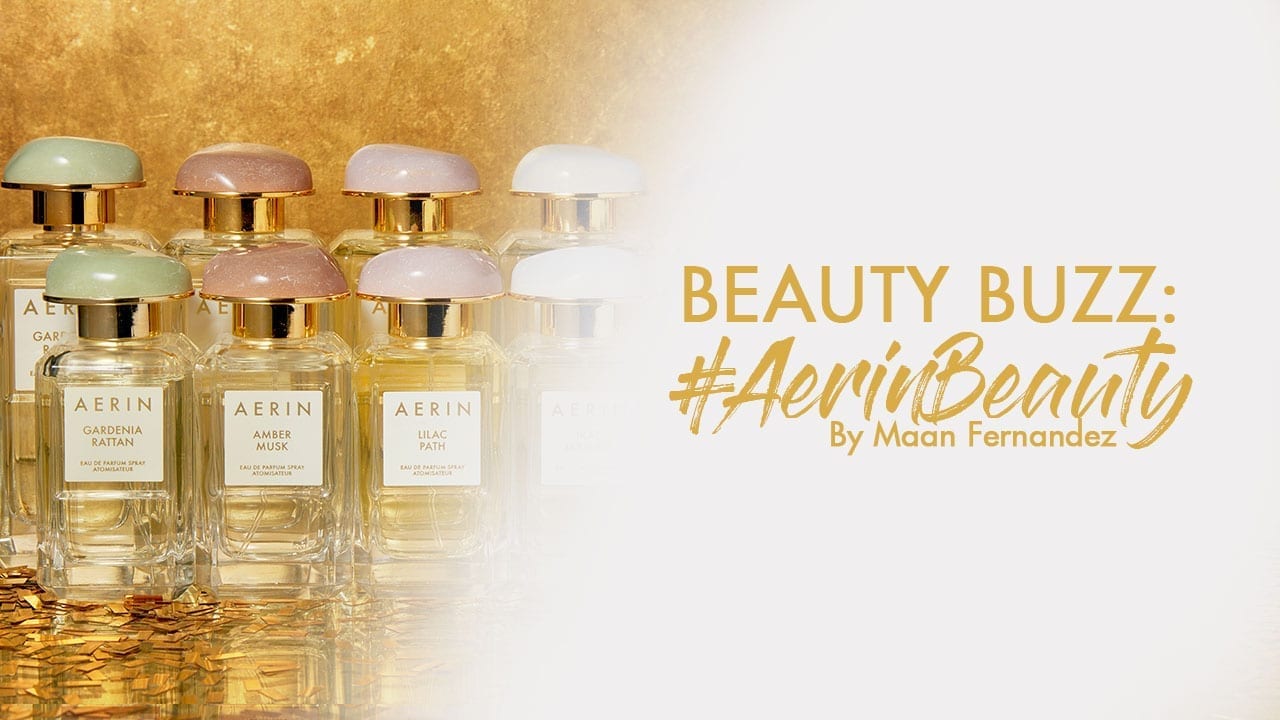
    Lifestyle brand Aerin Beauty has arrived in Singapore, introducing its fragrance collection at The Shoppes at Marina Bay Sands.

    Founded by Aerin Lauder, a granddaughter of Estee Lauder, the brand also has beauty and home decor products, which may be introduced later.

    There are nine scents in the collection, each available as eau de parfum sprays or rollerball bottles as well as body creams.

    Each bottle has been designed drawing inspiration from the founder’s everyday life and featuring natural elements such as flowers and stones.

  • Paul & Shark sportswear opens Elements flagship

    Paul & Shark sportswear opens Elements flagship

    Paul & Shark sportswear has taken more than year to reach the city after landing at Hong Kong International Airport with a boutique store.

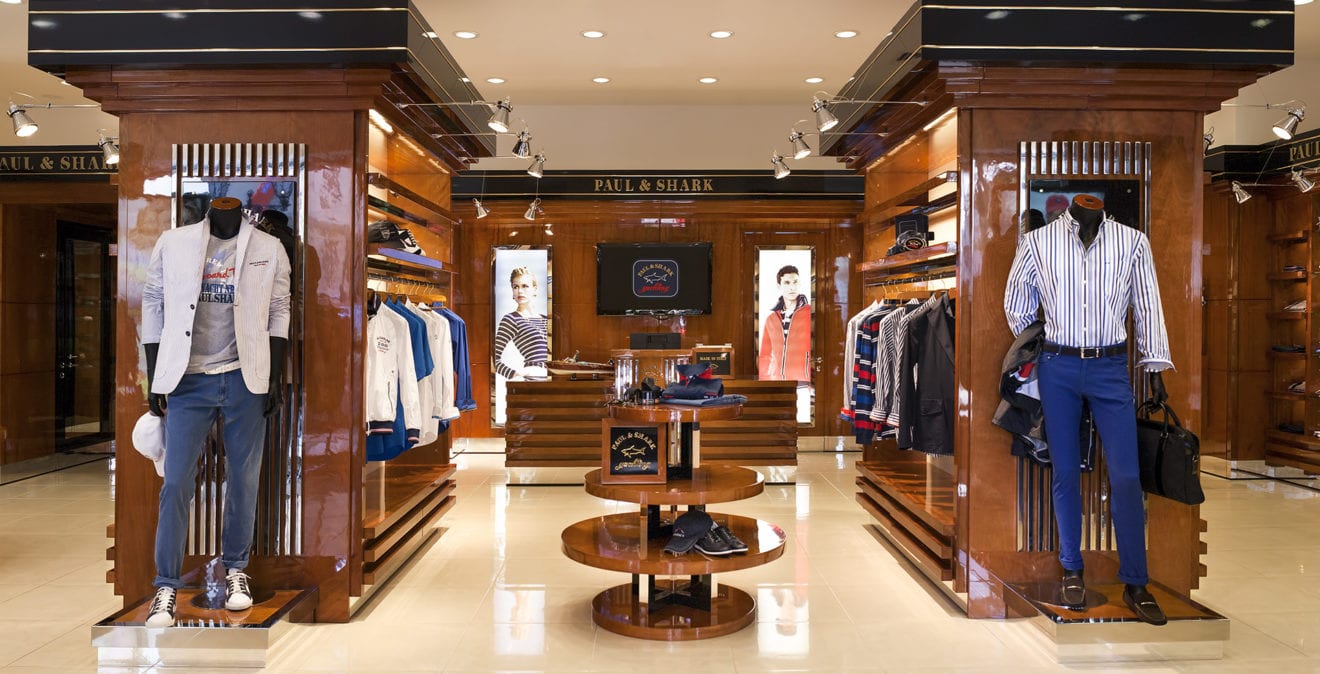
    Its new a flagship at Elements mall in Tsim Sha Tsui covers 140sqm and features a minimalistic design in white with the brand’s iconic blue using mirrored steel, marble, metal, glass and wood.

    To mark its opening, the brand presented a photo exhibition by Chinese visual artist Chen Man focused on the shark spirit. It will be open until the end of Tuesday.

    A special guest at the official opening was Hong Kong Women’s Federation honorary president Pansy Ho. Paul & Shark is donating a share of the proceeds of sales to support the federation, which supports women’s leadership and gender equality, and protects women’s legal rights.

    Paul & Shark was founded in 1975 and is distributed in 73 countries and 458 cities, including Singapore.

  • Singapore eyewear market looking at U$400m, says report

    Singapore eyewear market looking at U$400m, says report

    The Singapore eyewear market is expected to reach US$400 million in value in the near future, says a new study.

    The Ken Research report notes amplified demand for premium eyewear brands as consumer awareness grows, with an emphasis on individualisation.

    “The market is transitioning toward a large number of diverse products and short product cycle,” says Singapore Eyewear Market by Type (Spectacles & Contact Lenses), by Sunglasses and Eyeglasses and by Sales Channel – Outlook to 2021.

    Also, the market is set to benefit from a $49 billion merger announced by spectacles maker Luxottica and lens manufacturer Essilor, especially with an expected strong demand for prescription spectacles and sunglasses because of an aging population and increasing awareness about eyecare.

    The research also notes a 1.3 per cent increase in people with myopia. The aging population has also strengthened demand for spectacles to correct presbyopia and for ready-made reading glasses. Presbyopia has increased by 3.3 per cent.

    Despite continuous growth over the past five years, e-commerce has only a meagre share of the Singapore eyewear market, says the study.

    While more than 75 per cent of customers prefer to buy eyewear products at optical shops, higher use of mobile devices and the internet have encouraged major companies to start offering their products online, the latest being Owndays and Zoff.

    The report also provides information on frames, glass, contact lenses and distribution channels as well as major industry players.

  • Miu Miu pop-up lands at Harbour City

    Miu Miu pop-up lands at Harbour City

    The Miu Miu Lady pop-up exhibition is in the midst of its Hong Kong stop, part of a global tour.

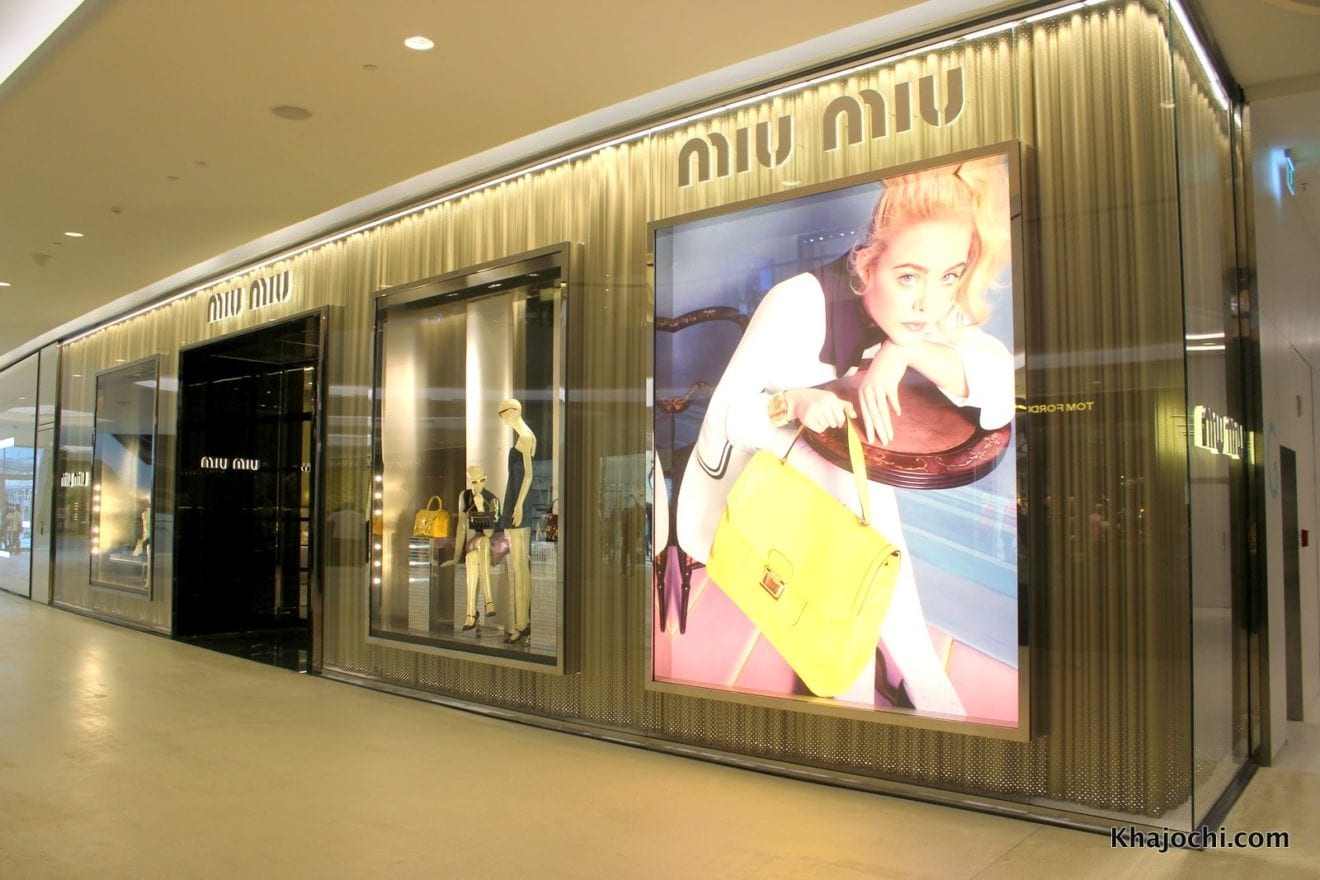
    At the centre of the Miu Miu pop-up are two giant handbags decorated with the jewel buckle for which the Prada-owned brand is renowned.

    The Hong Kong pop-up is located at Harbour City where it will remain until November, before the installation is packed up and shipped to Macau where it will be erected at Galaxy macau Resort from November 25 to December 10.  Already, the display has run at Kuala Lumpur, Shanghai and Nanjing.

    Readers can watch the time-lapse video of the Miu Miu pop-up being built here.

    In Hong Kong, a limited edition green version of the bag is exclusively available at the pop-up shop.

    Miu Miu hosted a cocktail party to launch the pop-up early this week.

    Besides the oversized bags, the pop-up features a series of short movies portraying the history of the Miu Lady bag.

  • Asia helps Moncler apparel revenue climb

    Asia helps Moncler apparel revenue climb

    International markets, including Asia, helped produce double-digit growth for Moncler outdoor apparel brand in its first nine months.

    Its interim figures show revenues of €622.9 million (US$724.9 million) for its international markets, up 18 per cent (or 19 per cent at constant exchange rates).

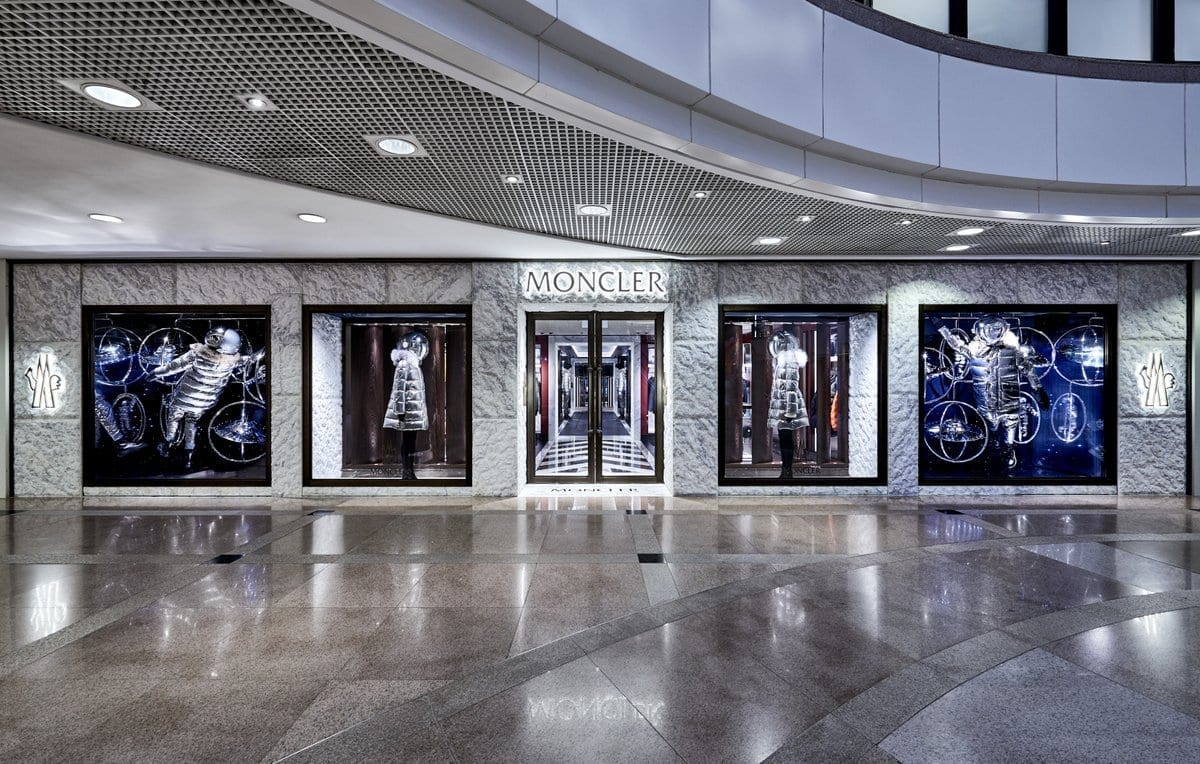
    Asia Pacific accelerated in the third quarter, says the company, thanks to strong performances and organic growth in the retail channel as well as network expansion including the relocation of the Hong Kong Harbour City store to a flagship on Canton Road.

    Both Japan and Korea had double-digit growth.

    Overall, consolidated revenues for the nine months rose 15 per cent to €736.8 million (16 per cent at constant exchange rates). For retail revenues the rise was 19 per cent (20 per cent) to €477.8 million, which Moncler attributes to organic growth and the development of its monobrand retail store network.

    With rapid evolvement in the luxury goods industry, consumers are running along paths far different to the past, at times breaking well-established moulds, says Moncler chairman/CEO Remo Ruffini.

    “Engaging this consumer means using new tools and codes alongside more traditional approaches. I believe it is essential, today more than ever, to look ahead with even more boldness and courage. For this reason, we are working on important new projects.”

    As at the end of September, Moncler’s monobrand distribution network comprised 195 directly run stores, an increase of five, and 48 wholesale shop-in-shops, up six units. Of these, 95 were international, with two additions.

    Moncler was founded in Grenoble, France, in 1952 and now has its headquarters in Italy. Ruffini took over the company in 2003.

  • Nike CEO says Undifferentiated, mediocre retailers won’t survive

    Nike CEO says Undifferentiated, mediocre retailers won’t survive

    Sportswear giant Nike has a message for its thousands of retail partners around the world: shape up or ship out.

    Speaking at an investor day in the US yesterday, Nike brand president Trevor Edwards outlined a step-change for the iconic business in the way it deals with its retail partners, saying that “undifferentiated, mediocre retailers won’t survive,” and committing Nike to “moving away from this over the next five years.”

    Nike, which currently has 30,000 retail partners globally, plans to select around 40 “differentiated retailers”, such as Nordstrom, Footlocker and Amazon, for special collaborations and branded space in-stores.

    No-names were mentioned in terms of who might be on the chopping block in the coming years, but the company is drastically stepping up its direct-to-consumer efforts as part of its plan to reach its $50 billion annual sales target by 2020 – a goal set in 2015 that investors have previously expressed scepticism about.

    To service its ambitions Nike laid out a raft of new targets under a “triple double strategy” laid out by chairman, president and CEO Mark Parker.

    “The consumer today expects a premium experience, with innovative product and services delivered faster and more personally,” Parker said. “Fueled by a transformation of our business, we are attacking growth opportunities through innovation, speed and digital to accelerate long-term, sustainable and profitable growth.”

  • Singapore helps boost Swiss watch exports

    Singapore helps boost Swiss watch exports

    Singapore has been a major contributor to a continuing upswing in Swiss watch exports, reports the Federation of the Swiss Watch Industry.

    The value of watches sent to Singapore rose by 89.6 per cent last month, says the federation, mainly because of interest in expensive timepieces.

    As the Hong Kong market recovers, it achieved sustained growth of 13.7 per cent.

    While exports to Japan grew in August, the market lost ground again with last month’s figures tumbling by 15.6 per cent.

    The pace of growth also slackened in China at 1.2 per cent.

    Overall, Swiss watch exports rose for the sixth month in succession, their value last month reaching 1.8 billion francs (US$1.8 billion), 3.7 per cent growth over September last year.

    Among the main categories in value terms, watches in precious metal and steel continued to advance, while there was a sharp downturn in bimetal timepieces, which have been declining significantly for several months, says the federation. Volumes also took a dive.

    More expensive timepieces are in demand, the figures showing an 8 per cent gain in value of exported items costing more than 3000 francs (export price). Those between 200 and 3000 francs showed slight growth.

    However, the exports of cheaper watches have been falling sharply for more than a year, says the federation. Exports of watches priced at less than 200 francs eroded by 18.5 per cent.

  • China star market for L’Occitane International

    China star market for L’Occitane International

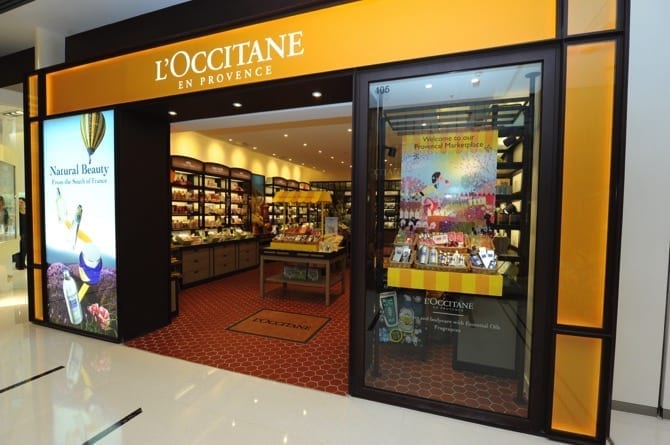
    China led first-half international sales for French beauty products group L’Occitane International with 22.7 per cent growth in local currency and 15.8 per cent in same-store sales.

    This continued China’s sales momentum in the first quarter, and the company credits the growth to a marketing campaign featuring Chinese artist Lu Han.

    T-mall sales continued to grow at triple digits, ahead of plan, while the company’s other e-commerce and online marketplace outlets grew 22.6 per cent to reach 12.9 per cent of total retail sales.

    However, net sales eased by 0.6 per cent from the same period last year to reach €548.2 million (US$648.4 million) at reported rates. At constant exchange rates, sales growth was 1.1 per cent.

    On a like-for-like basis – excluding the disposal of Le Couvent des Minimes and a one-off deal of L’Occitane au Bresil last year – sales grew by 2.3 per cent at constant rates and 0.5 per cent at reported rates.

    Retail sales accounted for 72.4 per cent of net sales, amounting to €397.1 million, down 0.9 per cent at reported rates. At constant rates, growth was 1.1 per cent. This growth was primarily contributed by non-comparable stores and other sales, including new and renovated stores, marketplaces and spa businesses. The growth was 5.2 per cent at constant exchange rates

    The group’s same-store sales eased by 0.1 per cent, an improvement from the 0.6 per cent dip for the first quarter and the 2.5 per cent drop for last year’s first half. This is attributed to China’s sales and overall improvements in key countries.

    Wholesale sales at €151.1 million accounted for 27.6 per cent of total sales, up 1 per cent at constant exchange rates. Like-for-like growth was 5.4 per cent, primarily driven by dynamic growth in travel retail, distribution, B2B and web-partner channels of the L’Occitane en Provence brand. Emerging brands Erborian and Melvita delivered double-digit growth.

    L’Occitane International says it maintained selective openings with five stores added to its network and 78 renovated during the six months to the end of September. During the same period last year, 32 stores opened and 39 were renovated.

  • Miele Hong Kong joining Redress in clothing drive

    Miele Hong Kong joining Redress in clothing drive

    Miele Hong Kong, the appliance brand, is joining forces with environmental charity Redress in a bid to challenge residents to be less wasteful with unwanted apparel.

    It is using a citywide clothing drive from November 6 to 19 to re-direct wardrobe items away from landfill and back into the fashion loop.

    While new studies suggest that more than 60 per cent of Hong Kong residents now consider recycling their clothes, 111,690 tonnes of textiles are still being dumped each year. This means that about 15,000 garments or textile items go into landfills every single hour

    The Get Redressed x Miele Clothing Drive is seeking donations of used clothing, shoes and accessories that will directly benefit such charities as Christian Action, Friends of the Earth (Hong Kong), Green Ladies and Green Little of St James’ Settlement, Pathfinders and the Tung Wah Group of Hospitals.

    High-quality clothing and accessories will be sold at the Get Redressed charity/secondhand pop-up shop from November 22 to 25 to raise funds for Redress, enabling it to continue its 10-year legacy of cutting waste out of fashion.

    Partner locations where donations can be left include Caelum Greene in Central, the Miele Experience Centre in Lee Garden Six, and PizzaExpress outlets in K11 Art Mall, V City and Yoho Mall.

    Miele Hong Kong marketing director Richard Green says the company sees the importance of sustainability and is keen to promote laundry care through a holistic approach, including motivating consumers to keep their clothes in use for longer.

    Redress hopes to raise consumer awareness of the importance of clothing care to keep garments in active use longer. It says that extending the life of clothing by nine months is estimated to reduce carbon waste and water footprints by around 20 to 30 per cent each.

  • HKIA seeks luxury retailer for boutique space

    HKIA seeks luxury retailer for boutique space

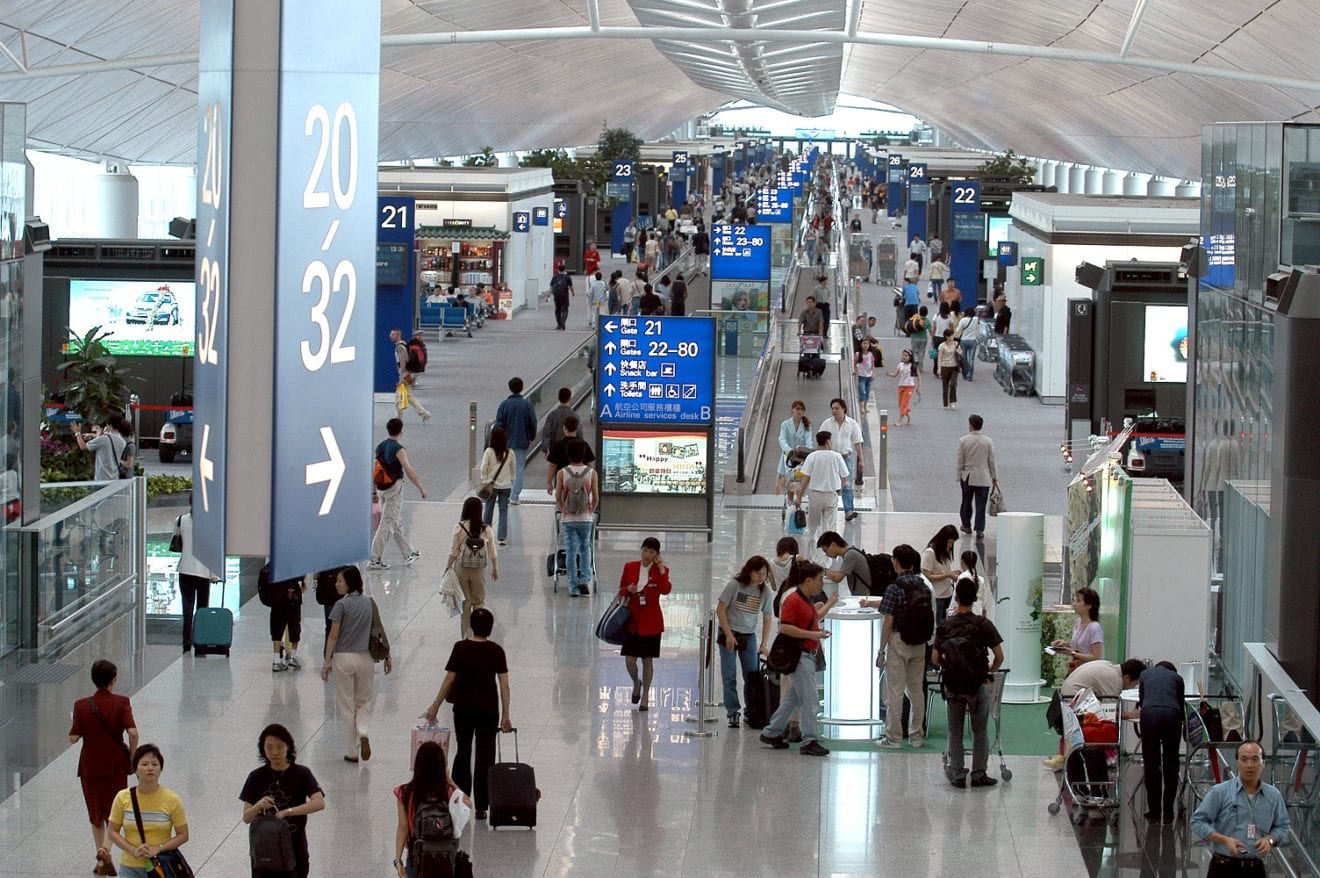
    Hong Kong International Airport (HKIA) is seeking a retailer to run a luxury boutique concession.

    Tenders have been invited for a 57sqm space in the restricted area of Level 6 Departures in Terminal 1’s East Hall.

    With air, sea and land links around the clock, HKIA serves more than 100 airlines and 70.5 million passengers and is still growing. Of the international travellers passing through the airport, about 45 per cent are executives, professionals and proprietors.

    Tenders, accompanied by a non-refundable cashier’s order of HK$500, must be submitted by December 14.

  • Asics tapped a DJ for its new brand campaign

    Asics tapped a DJ for its new brand campaign

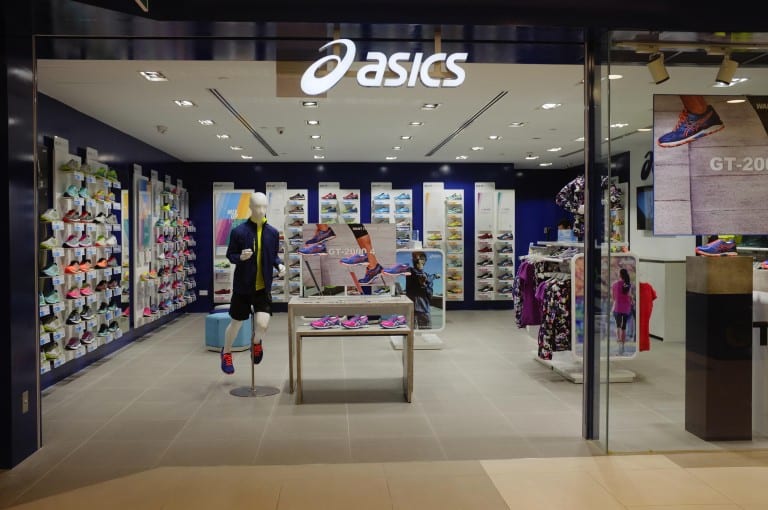
    Asics is debuting a new brand campaign called “I Move Me,” which features DJ Steve Aoki. The athletic shoe and apparel company aims to reset what shoppers know its products for.

    The sports retail market was already facing headwinds before Amazon decided it wanted to encroach on the space. Now, those pains are only being exacerbated.

    In October 2017, Amazon declared that is working with some of the sporting goods’ industry’s biggest suppliers, looking to create its own private-label lines. It is a move that could threaten companies ranging from Dick’s Sporting Goods and Foot Locker, to Lululemon and Gap’s Athletanameplate.

    The sports world could take some “important lessons” from so-called fast-fashion players like Zara, analysts say.

    After he took the helm at Asics, Asics America Group Chief Executive Gene McCarthy  brought in new management, pulled product out of some third-party retailers and even held a “tough” conversation with Amazon, deciding it was best to renegotiate that relationship.

    Asics will sell directly to Amazon, he said, but shoppers can still find the brand on Amazon.com through third-party sellers, or those relationships McCarthy has made a priority as CEO.

    Nike, in comparison, caved earlier this year when it announced plans to sell some of its product assortment on Amazon’s U.S. e-commerce platform.

    Asics is repositioning its brand by telling a story that dates back to the company’s inception in Japan in 1949. Founder Kihachiro Onitsuka built the brand around motivating children to “move” and be active, McCarthy explained.

    Today, Asics is still publicly traded in Japan, and its name is an acronym for the Latin phrase “anima sana in corpore sano,” which translates to “healthy soul in a healthy body.”

    Asics’ “I Move Me” campaign, which rolls out online and in Asics’ handful of stores on Wednesday, was crafted by working with international DJ Steve Aoki. The shoe company has taken a nontraditional approach, using a brand ambassador who isn’t a star athlete, but Asics aims to be unique and hopes to reach a larger audience with its refreshed messaging.

    “My life is not only about music and fashion, but also fitness, nutrition and health,” Aoki said in a statement.

    Aoki is also of Japanese descent. He is already begun promoting the brand on his social media channels, where he boasts millions of followers.

    Asics has also promised more nontraditional brand ambassadors for an athletic shoe company to come. The goal is to have a greater voice in an increasingly crowded market.

    To many shoppers, Asics is considered a brand for “performance” activity, not so much for casual wear. While McCarthy said he doesn’t want Asics to get away from its core and what it does best, he wants to reach more consumers and encourage a healthier lifestyle, just as Onitsuka was trying to do in the ’40s in Japan.

    In addition to beefing up its online platform, Asics is opening a slew of new stores and growing its relationships with its closest third-party retailers, like Foot Locker, McCarthy said.

    To be sure, companies like Foot Locker, Hibbett Sports and Finish Line are facing their own challenges, as big-name brands decide to scale back product in stores and sell more online or through their own channels, like Nike.com.

    McCarthy said he’s noticed the environment become tumultuous and competitive in recent years. But he doesn’t see a world without retail, or without brands.

  • Charlotte Tilbury makeup coming to Hong Kon

    Charlotte Tilbury makeup coming to Hong Kon

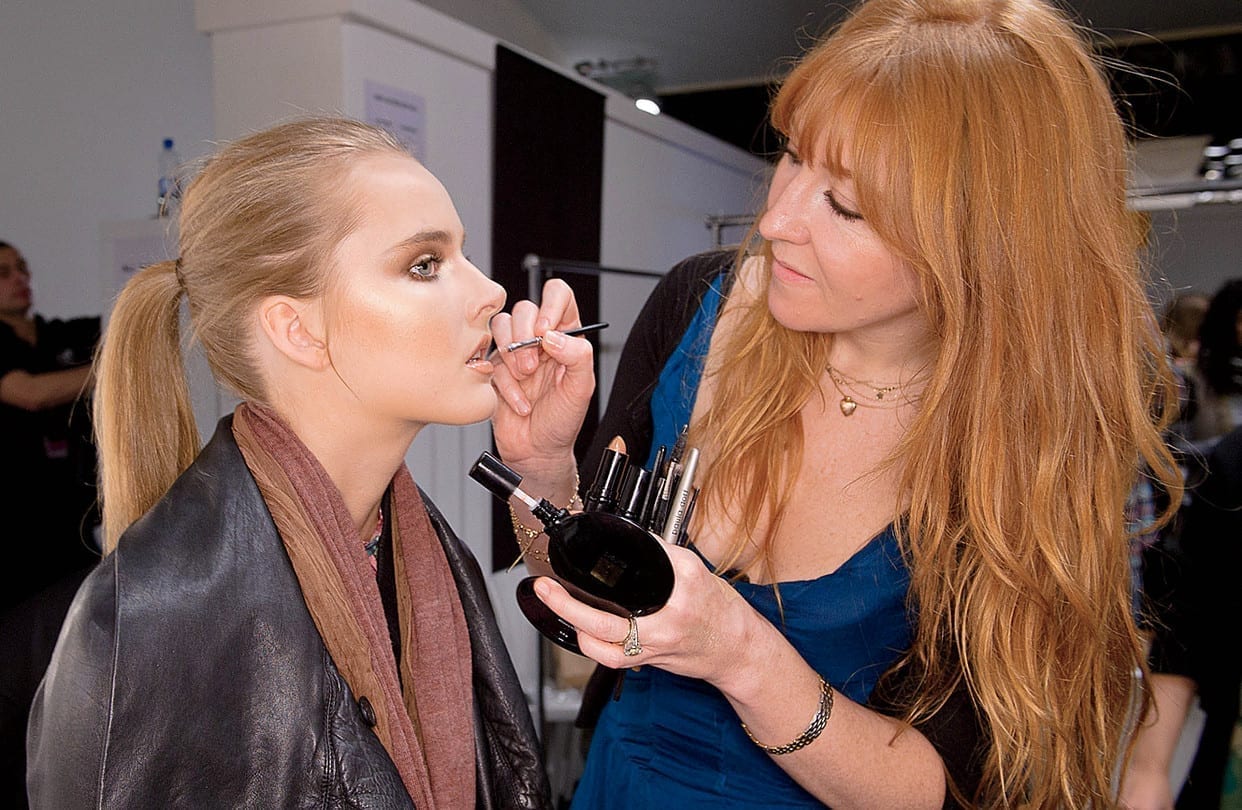
    Makeup artist Charlotte Tilbury is bringing her award-winning makeup, skincare and scent collections to Asia.

    Her Makeup Revolution will be launched in Asia next year, starting at Lane Crawford in Hong Kong.Further details have yet to be announced.

    This follows her opening her first store outside of the UK, in Kuwait last week, one of three stores for the Middle East.

    Tilbury says there has been a huge demand already from loyal customers in Asia, while Lane Crawford chief brand officer Joanna Gunn says the exclusive launch of the brand in Hong Kong will be supported on the store’s online platform.

    With more than 25 years in the makeup industry working with A-list models, celebrities and designers, Tilbury has poured her best-kept secrets into her “all you need” skincare, makeup and scent collection.

    Her products have won more than 110 industry awards.

    Her colour products are curated into 10 colour-wardrobes: The Bombshell (inspired by Marilyn Monroe, Scarlett Johansson), The Dolce Vita (Beyonce, Penelope Cruz, Sophia Loren), The Glamour Muse (Jennifer Lopez, Jerry Hall), The Golden Goddess (Elle McPherson, Kate Moss, Ursula Andress), The Ingenue (Alexa Chung, Kirsten Dunst, Mia Farrow), The Rebel (Debbie Harry, Grace Jones, Lady Gaga), The Rock Chick (Anita Pallenberg, Brigitte Bardot), The Sophisticate (Audrey Hepburn, Natalie Portman), The Uptown Girl (Grace Kelly, Gwyneth Paltrow, Kate Middleton) and The Vintage Vamp (Lauren Bacall, Rihanna).

    Tilbury has created cover looks for such fashion magazines as GQVanity FairW and Vogue. She has also created runway trends for designers and brands including Alexander McQueen, Bottega Veneta, Donna Karan, Lanvin, Miu Miu, Prada and Tom Ford; and crafted campaigns for brands including Burberry, Louis Vuitton. Missoni, Roberto Cavalli and Stella McCartney.

    Her client list includes Carina Lau, Jennifer Aniston, Jennifer Lopez, Kate Moss, Penelope Cruz, Rihanna and Salma Hayek.