Category: Fashion

Retail News Asia is committed to providing both local and global retailers with the latest Fashion news throughout the Asian market. This on a daily base.

  • H&M closes Shanghai flagship after Covid lockdowns

    H&M closes Shanghai flagship after Covid lockdowns

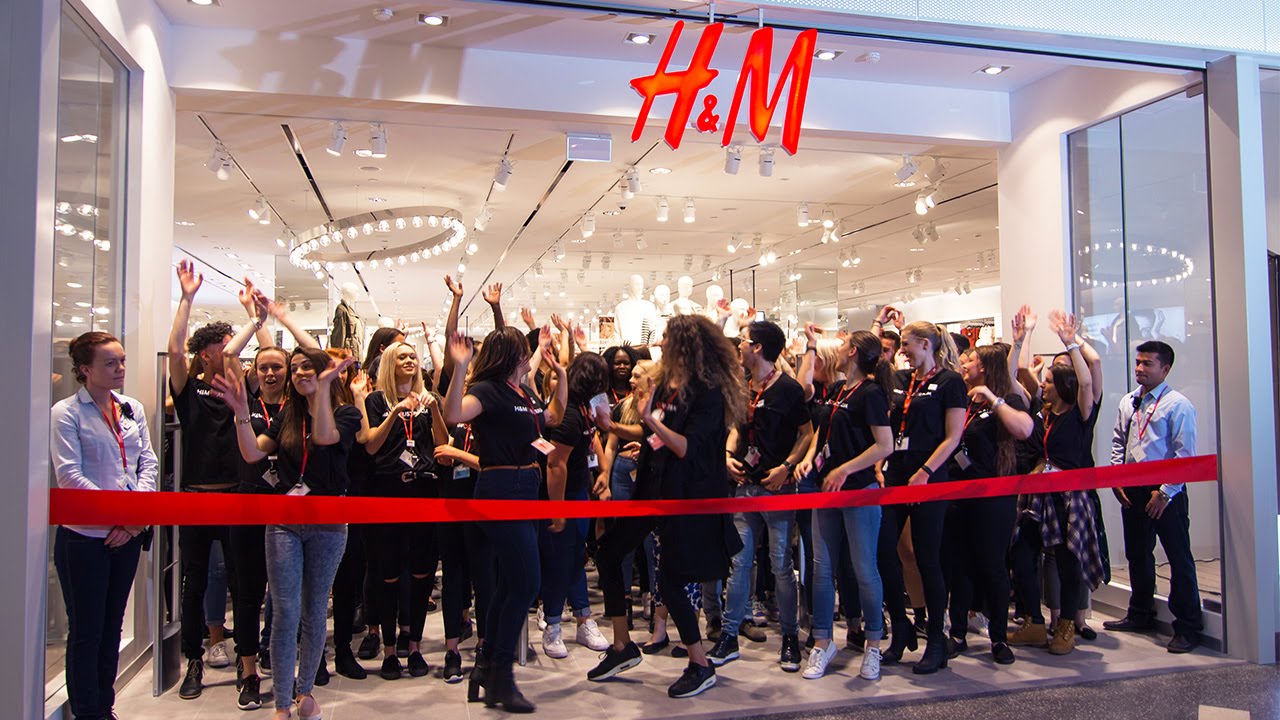
    H&M has shut its flagship Shanghai store, its latest closure in China where consumer demand has slumped amid COVID-19 lockdowns and the fast-fashion retailer has borne the brunt of a backlash against companies that refuse to use Xinjiang cotton.

    Although it was open earlier this month, the three-storey building in downtown Shanghai was on Friday boarded up with its H&M signage gone.

    The world’s second-biggest fast-fashion retailer entered China in 2007 with the opening of the Shanghai flagship store and rapidly expanded. It had more than 500 stores in mainland China early last year but its website currently only lists 376, including the flagship Shanghai store.

    The company declined to comment, citing a blackout period prior to its first-half earnings report on June 29.

    Although nearly a month has passed since Shanghai lifted a strict two-month lockdown, consumers have yet to return to malls in significant numbers.

    Chinese consumers have also beat a retreat from its products after a letter in which H&M expressed concerns about allegations of forced labour in the Xinjiang region came to light in 2021.

    Other brands that publicly disavowed Xinjiang cotton such as Inditex’s, Zara, Nike and Adidas have also suffered with Chinese netizens calling for boycotts and Chinese celebrities refusing to work with them.

    But the backlash against H&M, the first foreign retailer to express concerns, has been particularly harsh. Unlike other brands, its products remain unavailable on major Chinese e-commerce sites such as Tmall and JD.com.

    UN experts and rights groups estimate over a million people, mainly Uyghurs and other Muslim minorities, have been detained in recent years in a vast system of camps in China’s western Xinjiang region.

    Many former inmates have said they were subject to ideological training and abuse in the camps. China denies all accusations of abuse.

  • Chow Tai Fook arm in bid for Giordano International

    Chow Tai Fook arm in bid for Giordano International

    Giordano International Ltd. climbed as much as 23% after an investment vehicle owned by Hong Kong’s third-richest person offered to buy the apparel retailer.

    Clear Prosper Global Ltd., a BVI vehicle wholly-owned by Chow Tai Fook Nominee Ltd., offered to buy Giordano for HK$1.88 (24 cents) per share, according to a filing late Thursday. That’s an 18% premium on its most recent closing price, and shares surged to as much as HK$1.95 on Friday.

    The investment vehicle and its related parties already hold a 24.57% stake in Giordano and the maximum cash consideration is HK$2.56 billion, according to the statement.

    Chow Tai Fook Nominee is a private vehicle owned by the Cheng family, whose patriarch, Henry Cheng, is Hong Kong’s third-richest person with a fortune of $22.6 billion, according to the Bloomberg Billionaires Index. The family’s sprawling investment empire includes one of the world’s biggest jewelry chains, as well as real estate, infrastructure and hotels.

    Established in 1981, Giordano has around 2,100 shops in more than 30 countries and regions, according to its website. The acquisition offer will let the group continue its existing principal business, and there are no intended job cuts, according to the statement.

  • Oriental Watch bullish as sales

    Oriental Watch bullish as sales

    Oriental Watch (398 HK)announced it is proposing to buy back a maximum of 83 million shares at 3 HKD (249M HKD). This represents a premium over 57% vs the average 30-day closing price on HKex. Once the shares are bought back they will be canceled which will reduce total shares outstanding from 570 million to 478 million. A Special General Meeting (SGM) will be needed to approve the transaction, details of which are pending an official Offer Document. The full transaction has been covered by David Blennerhassett Oriental Watch (398 HK): Conditional Partial Offer 

    As long-time Oriental Watch followers let’s step back and assess what this means:

    • The controlling family’s stake will rise over 30% (depending on uptake 30.85-36.10%) but they won’t have to make a mandatory general offer as they have requested an exemption from HKex. Minority investors need to approve the transaction: we would advise minorities to vote IN FAVOR.
    • The founding family upping its stake at a significant premium to the latest stock price is bullish.
    • Even at 3 HKD, the shares trade far below their latest book value of 4.04 HKD.
    • With increased ownership management is now more incentivized to keep on paying large dividends going forward.
    • Mr. Market has been perenially mispricing Oriental Watch at negative enterprise value or barely above net cash over the last 5 years. As discussed at length in various previous insights we think this is wrong and the latest transaction again highlights the underlying value.
    • The company has returned 0.885 HKD/share in dividends over the past four years. When judging Oriental Watch’s share price performance please make sure you look up the total return on your Bloomberg.
    • Mainland China Rolex sales have been seeing YoY SSS increases of 40-80% since April (depending month to month). Once HK opens up SSS comps become very easy after 2019 (riots) and 2020 (Covid-19). Please re-read our insight on Oriental Watch being a way to play Rolex in China Oriental Watch: Bet on Rolex Demand in China/HK and Collect 12% Dividends While Waiting 
  • Amazon, Cartier sue counterfeiters using social media to sell fakes

    Amazon, Cartier sue counterfeiters using social media to sell fakes

    Amazon is continuing its crackdown on counterfeiters, this time against a social media influencer they claim was selling fake Cartier bracelets, necklaces and earrings.

    The online retail giant said on Wednesday that it filed two joint lawsuits with Cartier against an unnamed social media influencer and eight businesses for allegedly promoting counterfeits on social media and other websites that were then sold on Amazon. The lawsuits were filed in the US District Court for the Western District of Washington, alleging the businesses conspired together to sell counterfeits and falsely advertise them as real, infringing on Cartier’s trademarks, avoiding Amazon’s anti-counterfeiting detection tools and violating Amazon’s policies, according to the companies.

    While items on Amazon were non-branded and listed with generic product descriptions to avoid detection by Amazon’s anti-counterfeit policies, the ads linking to the Amazon product pages used the Cartier brand name to sell the allegedly fake bracelets, necklaces and earrings, according to the companies. For instance, a counterfeit of the Cartier Love bracelet was listed on Amazon as “Women’s Fashion Classic Screw Love Titanium Steel Bracelet”.

    Amazon has put more effort into detecting and removing counterfeit sellers from the site. According to the company’s second Brand Protection Report, published in 2022, Amazon stopped over 2.5 million attempts from bad actors to create new selling counts, down over 6 million compared to the previous year. The company also increased the number of brands on its Brand Registry tool, which detects infringements, leading to a 25 per cent decrease in infringements compared to the previous year.

    Amazon has also begun working directly with luxury brands to remove fake products from its site; last February, Amazon filed two joint lawsuits with Ferragamo against counterfeiters, and in April, the companies said Chinese authorities had conducted an investigation and seized the counterfeit products. In June 2020, Amazon filed its first joint lawsuit with Valentino against New York-based Kaitlyn Pan Group for allegedly counterfeiting the brand’s Rockstud shoes, though the case was settled in January 2021.

    “By using social media to promote counterfeits, bad actors undermine trust and mislead customers,” said Kebharu Smith, associate general counsel and director of the Amazon Counterfeit Crimes Unit, in a statement. “Amazon will keep investing and innovating to stay ahead of counterfeiters and working with brands and law enforcement to hold bad actors accountable. We don’t just want to chase them away from Amazon — we want to stop them for good.”

    Amazon has been making efforts to break into the luxury market: earlier this month, it rolled out its Luxury Stores concept to the UK, Germany, France, Italy and Spain after launching it two years ago with Oscar de la Renta and Roland Mouret, among others. However, experts say that the widespread selling of counterfeits and dupes by third-party sellers on the platform is holding the e-commerce behemoth back from elevating its position.

    By publicising its condemnation of counterfeits, Amazon wants to signal its trustworthiness to the luxury sector. “Amazon is deeply committed to protecting brands’ intellectual property and strictly prohibits counterfeit products in its stores,” the company said in a statement, adding that it invested $900 million and employed 12,000 people to protect against counterfeits in 2021.

  • Zalando takes control of Highsnobiety

    Zalando takes control of Highsnobiety

    Zalando says the two companies will join forces to lead the way in engaging and inspiring customers, leveraging each other’s complementary strengths by bringing together Highsnobiety’s cultural relevance and insight, fashion authority and storytelling expertise with Zalando’s fashion network, e-commerce know-how and operational capabilities.

    While continuing independent operations, Highsnobiety will act as a strategic and creative consultant helping Zalando develop new inspiration-focused spaces and formats on its platform. In turn, joining the Zalando Group allows Highsnobiety to leverage Zalando’s expertise and resources to fuel its own e-commerce capabilities.

    Highsnobiety was founded in Berlin in 2005 by David Fischer as a blog that heralded the convergence of streetwear and high-end luxury fashion. Today, Highsnobiety comprises a publishing arm, creative consultancy, and a curated commerce platform. Teaming up with Highsnobiety will accelerate Zalando’s ambition to be a top destination for streetwear, new luxury, and fashion inspiration, especially for the younger, fashion-forward consumers.

    “Both of our companies share a passion for building strong brand partnerships and enabling brands to inspire audiences with their products and stories. Partnering with Highsnobiety will allow us to execute much faster on our ambition to offer the most relevant and engaging – as well as convenient – shopping experience to our customers,” says David Schneider, Zalando’s founder and co-CEO.

    As part of the deal, Highsnobiety will retain its editorial and curational autonomy, with the publishing and agency work remaining fully independent. Highsnobiety will continue to be led by its two managing directors, Fischer and Jürgen Hopfgartner, and Fischer will retain a minority stake in the business.

    Last month, co-CEO of Zalando Robert Gentz said the company remains confident it will achieve its ambition to reach more than EUR30bn (US$31.8bn) Gross Merchandise Volume (GMV) by 2025, despite the impact of macroeconomic factors in the first quarter.

  • Shopee culls staff across SE Asia, Europe

    Shopee culls staff across SE Asia, Europe

    Sea Group’s e-commerce arm Shopee is laying off staff across multiple markets as it seeks to rationalize its e-commerce business, DealStreetAsia has learned.

    The layoffs have affected employees across several of the company’s Southeast Asian markets including Indonesia, Thailand and Vietnam, sources told DealStreetAsia. The company is said to have emailed employees affected by the layoffs, the sources added.

    Shopee’s payments arm ShopeePay and food delivery business ShopeeFood are also said to be facing cuts. A general meeting was also reportedly held on Monday to address the job cuts with Shopee employees.

    The extent of the job cuts and the number of employees affected could not be confirmed at the time of publishing. DealStreetAsia has reached out to Shopee for comment.

    Two sources aware of the matter said nearly half of Shopee Thailand’s payment and food delivery teams have been affected by the downsizing. One of the sources noted that the email was said to have been managed in an off-handed manner, with the company asking staff members to return home and await further notice of termination.

    A separate source told DealStreetAsia that Shopee has stopped hiring, with several job offers for regional roles rescinded.

    While Sea Group’s business continues to show signs of improvement in overall profitability, most of its revenue continues to come from its gaming arm Garena.

    Sea Group’s first-quarter 2022 financials reflected a 64.4% year-on-year increase in Generally Accepted Accounting Principles revenue at $2.9 billion, with gross profits soaring 81.3% to $1.2 billion over the same period.

    Shopee’s business, while still losing money, has also reflected improvements, with a 71.3% year-on-year increase in orders to $1.9 billion in the first quarter of 2022 while gross merchandise value rose 38.7% to $17.4 billion. Importantly, Shopee’s gross profit margin for e-commerce increased year on year, with faster growth in transaction-based fees and advertising income generating higher margins versus other value-added services.

    Shopee, however, continues to face several macro headwinds, including rising inflation and interest rates, that may dampen retail and consumption sectors.

    The company also appears to be facing setbacks on some of its ambitious internationalization plans, including its forays into Europe and Latin America. Shopee, which has operations in Poland and Spain, decided to pull out of France after only five months as it was not meeting expectations.

  • New Nike concept store opens in Hong Kong

    New Nike concept store opens in Hong Kong

    The new store has been launched by GMG as part of the company’s plans to ramp up its investment in the Asia market.

    The new Nike store spans over 2171sq ft and is situated in the East Point City shopping mall in Hang Tau district. It is home to sportswear for both men and women, in various categories including running, basketball and training.

    GMG has partnered with Nike in other markets since 1982, and entered the Asia market in 2020 after buying Royal Sporting House, a leading multi-sports retailer and recently purchasing Nike retail stores from SUTL Corporation, expanding its presence in Singapore and Malaysia.

    Mohammad A Baker, Deputy Chairman and CEO, GMG, said: “Asia is propelling the retail industry forward, generating a substantial portion of global growth in the sector and offering immense potential and expansion opportunities for GMG. The opening of our new Nike store in a key market such as Hong Kong, the first in two years, further signifies the recovery of a post-pandemic economy while allowing us to strengthen our physical retail presence in Asia.”

  • Cult skincare brand MooGoo launches into New Zealand

    Cult skincare brand MooGoo launches into New Zealand

    As of this month New Zealanders are now able to walk into pharmacies across the country and buy one of Australia’s most popular skincare lines, MooGoo, as the number of Kiwis with skin disorders is on the rise.

    New Zealand has one of the highest incidence of eczema in the world, with the skin condition now affecting one in three Kiwis, and around 15% of children.

    MooGoo CEO Melody Livingstone says the brand’s expansion into New Zealand was driven by strong interest from local customers.

    “Given the climate in New Zealand, with so many people suffering from skin conditions, we fast-tracked our entry,” says Ms Livingstone.

    “The climate is very similar to Ireland, which per capita is our biggest market outside of Australia,” she added.

    MooGoo has more than 45 natural products that help a range of skin problems, including eczema and psoriasis. All of them are now available online in New Zealand, and more than half the range will be stocked on shelves.

    In Australia demand for the products has skyrocketed, with the company seeing some 30% growth and it’s now stocked in just about every pharmacy across the country.

    “Consumers are becoming a lot more knowledgeable about product ingredients and are increasingly seeking natural and eco-friendly treatments and remedie,” explains Ms Livingstone.

    “There’s also been a lot of anxiety surrounding the pandemic, which seems to have caused an increase in eczema, psoriasis and other skin flare-ups.

    “We’re also hearing a lot of people talking about acne and perioral dermatitis, caused by heat, moisture, friction, trapped dirt and bacteria from wearing a mask for long periods of time and also suffering with painful cracked hands from continuous hand sanitising and washing.

    “The crazy weather conditions haven’t been helping either.”

    In Australia, MooGoo products are also used in neonatal, paediatric and oncology wards and in the UK the business is supported by the British equivalent of the Medicare – the NHS.

    “At MooGoo, our ingredient philosophy is simple – to make effective products with healthy ingredients for you, your loved ones and the environment,” adds Ms Livingstone.

    “We understand all consumption has an impact, and our goal has always been to minimise our impact on the environment.”

    MooGoo products can now be purchased at 58 New Zealand pharmacies and health stores, it is also available online at www.moogoo.com.au

  • H&M, Lululemon back $250 million Fashion Climate Fund

    H&M, Lululemon back $250 million Fashion Climate Fund

    Lululemon Athletica and H&M Group are among backers of a $250 million fund aiming to speed up efforts to cut carbon emissions in the fashion industry’s supply chain, non-profit group Apparel Impact Institute said on Wednesday.

    Bringing together clothing brands, philanthropic donors and other industry stakeholders, the institute’s Fashion Climate Fund also hopes to unlock a further $2 billion in funding once effective solutions have been found and scaled up.

    Other early backers include the H&M Foundation and the Schmidt Family Foundation. More are expected to be announced in the coming months, with the fund hoping to raise $10 million from each.

    “The urgency to address the climate issues has never been more acute. Early-stage innovations and new solutions play a critical role, but the impact does not happen before they can be scaled, and the industry starts adopting and implementing them,” said the H&M Foundation’s Christiane Dolva.

    “The Fashion Climate Fund will support new programmes and solutions with a structured pipeline for getting from pilot to scale. We believe it provides a powerful mechanism to overcome the challenges of getting new solutions implemented by the industry, and thereby accelerate the progress on climate action.”

    While many of the world’s leading companies have committed to reaching net-zero emissions across their businesses by mid-century and to halving emissions by 2030, the Apparel Impact Institute said many large barriers remain.

    A recent study it conducted with the World Resources Institute found 96% of the fashion industry’s emissions come from third-party farms and factories used by multiple firms.

    The fund will help finance a range of initiatives including expanding the use of renewable energy, developing next-generation materials, ditching the use of coal in manufacturing and improving energy efficiency.

    It hopes that the use of philanthropic capital to help fund early stage projects and the forging of partnerships with retailers to scale up successful initiatives will encourage other industry participants to help meet future funding needs.

  • Watsons and L’Oreal launch Hong Kong-wide recycling program

    Watsons and L’Oreal launch Hong Kong-wide recycling program

    L’Oreal Hong Kong has partnered with Watsons and recycling social enterprise V Cycle to launch the recycling program ‘Beauty for the Future’.

    The campaign aims to encourage customers to recycle their empty cosmetics and skincare containers – from any brand – at Watsons stores.

    Customers can hand over their washed beauty containers including foundation bottles, mascara wands, skincare tubs, and lipstick tubes, at any Watsons store in Hong Kong in exchange for rewards on the platform MoneyBack.

    People can also return the empties to any of L’Oreal Hong Kong’s more than 100 free-standing outlets or department store counters. V Cycle will break down the wastes, sort them by material, and work with local partners to turn them into new raw materials once they’ve been gathered.

    The scaled-up campaign’s target is to collect 250,000 containers in the year following the formal launch – equal to the height of two Mount Everests when piled.

    “Our goal is to meet it head-on with the first cross-brand recycling programme involving 18 of our beauty brands in 2021,” said Eva Yu, president & MD of L’Oreal Hong Kong.

    “With the scaled-up recycling campaign as part of our ‘L’Oreal for the Future’ sustainability program, we want to further inspire and influence how our consumers think and what they do about packaging wastes – not as something to toss out, but as a resource that can be recycled and used again, and sustainably, reducing the impact on our environment. Our partnership with Watsons and V Cycle will help make this a reality.”

    L’Oreal Hong Kong and Watsons have collected over 6300 beauty containers and diverted them from landfills during the trial program launched between April to May.

  • Uniqlo owner to raise prices on fleece products due to weak yen

    Uniqlo owner to raise prices on fleece products due to weak yen

    The owner of Japanese clothing brand Uniqlo said on Tuesday it will raise prices on some goods this fall, reflecting increasing cost pressures from the weak yen and logistical hurdles.

    Prices on fleece goods and down jackets in the fall/winter product lines will go up by 1,000 yen (US$7.54), a spokesperson confirmed, after an earlier report by the Jiji news service. The company is also increasing the use of recycled polyester in its fleece products to keep costs down.

    Consumer prices are surging in Japan after decades of deflation, driven by the yen’s drop to a 20-year low against the dollar and soaring energy costs.

    Fast Retailing has competed on low-cost basics like socks and underwear for decades, but its executives have warned recently that rising production costs would necessitate price hikes.

    Founder Tadashi Yanai in April railed against the decline in Japan’s currency, saying there was “absolutely no merit” in a weak yen.

  • Reebok adaptive range designed for people with restricted mobility

    Reebok adaptive range designed for people with restricted mobility

    Adidas-owned Reebok has launched a range of adaptive trainers for people with restricted mobility. Called Fit to Fit, the sneakers can be easily put on and removed.

    The shoes were created in partnership with Zappos’ adaptive department, the two companies aiming to create shoes that are inclusive in performance and lifestyle. They interviewed people with mobility issues as part of the product development process.

    “We created the Reebok Fit to Fit adaptive footwear collection to champion Reebok’s mission of inspiring human movement for all,” Reebok product manager Dan Buonomo said in an interview with Dezeen.

    “The collection’s goal is to provide functional products for everyone, while still holding true to Reebok’s iconic design heritage.”

    Key to the range is the absence of buttons and buckles which can be a challenge for people with restricted mobility. A zip on the side ensures the shoe fits, but the laces remain so the shoes retain the style and look of those made for typical consumers. Once tied to fit, they don’t need to be retied each wearing.

    Removable insoles accommodate prosthetics and a low-cut design aids mobility. A sports shoe based on Reebok’s Nanoflext TR features a pull tab in the heel making it easier for people using wheelchairs to remove the shoes from behind.

    Another shoe, the Club MEMT Parafit, based on the tennis shoe of the same name, has a removable insole and comes in wider sizes to accommodate prosthetics.

    Initially available in pairs, Reebok and Zappos plan to sell single shoes for people who have only one foot.

  • H&M Group tests new tech in US Cos stores

    H&M Group tests new tech in US Cos stores

    H&M Group is piloting tech-enabled shopping solutions across its US Cos stores as part of its strategy to tap into the in-store technology-driven retail experience, to deepen its customer relationships.

    The initiatives include seamless payment options, personalised styling recommendations, faster checkout and upgraded delivery and return options.

    “We are developing and imagining how Cos retail spaces can inspire our customers, both now and in the future,” said Lea Rytz Goldman, MD at Cos. “Our ambition is to pilot new technologies that allow us to meet and exceed our customers’ in-store shopping expectations.”

    The program was first tried at the Cos Beverly Hills store, where fitting rooms are equipped with smart mirrors that recognise products brought into the room and allow customers to request items without having to leave the room. Meanwhile, there are other types of mirrors used for virtual try-on and styling.

    “With Cos Beverly Hills, we have seen first-hand how our customer experience can be elevated with tech enhancements. As a result, these innovations will be rolled out in more Cos’ US stores this year,” Goldman added.

    Chief technology officer at H&M Group, Alan Boehme, said the group will test a new frictionless and personalised shopping experience throughout this year.

  • Neso Brands appoints CEO after $100 million funding round

    Neso Brands appoints CEO after $100 million funding round

    Neso Brands, a subsidiary of eyewear manufacturer Lenskart, has raised $100 million in a seed funding round, which will enable the firm to create a house of brands catering to the global market.

    The company did not divulge the details of the investors involved. However, Lenskart, which owns Singapore-headquarted Neso, has earlier raised large sums in funding from prominent investors such as KKR, SoftBank, Alpha Wave Global and Temasek.

    Founded in 2022, Neso Brands is an eyewear manufacturer and retailer that leverages analytics, tech, and its own supply chain and distribution, to create a large network of co-owned direct-to-consumer (D2C) brands.

    Based out of Singapore, Neso Brands plans to sell its eyewear products to a global market by partnering up with the top entrepreneurs in the industry. It plans to invest in consumer eyewear brands around the world and grow these brands by leveraging synergies across the Lenskart group to accelerate international expansion.

    Neso Brands will utilise e-commerce and technologies such as AR and AI for eyewear brands as a strategy to capture global market share. Neso Brands will house these brands and enable a quicker global rollout by giving the brands access to shared resources – particularly technology, supply chain, distribution, capital and best practices.

    Neso Brands also said Bjorn Bergstrom has joined the founding team as the CEO.

    Bergstrom is an experienced investor and D2C operator, having most recently served as chief growth officer and interim chief product & technology officer for the global fashion brand NA-KD. Bergstrom’s experience prior to that includes working as a venture capital investor focusing on early-stage growth startups, management consulting as well as operational roles at consumer startups.

    “Today, there is a perfect storm in the eyewear industry that makes it ripe for disruption. Consumers have increasingly high demands when it comes to customer experience, branding, and choice, but incumbent players have been unable to keep up. By investing in the most promising new brands in the industry and leveraging centralised resources across technology, manufacturing and distribution, Neso Brands will be uniquely positioned to scale the eyewear brands of the future,” Bergstrom, CEO of Neso Brands, said in a statement.

    “With this investment in Neso Brands, we want to accelerate our mission of transforming the way people see and experience the world. Consumers want better and better every day and while people’s quality of life has been uplifted through all other lifestyle products such as shoes, apparel and wearables, eyewear products are the same old with no innovation, just more expensive. And Neso is our initiative to partner with founders globally to help create eyewear brands of the future,” Peyush Bansal, CEO of Lenskart, said.

  • Calvin Klein launches Pride campaign to celebrate LGBTQIA+ community

    Calvin Klein launches Pride campaign to celebrate LGBTQIA+ community

    With Pride Month just around the corner, Calvin Klein has debuted its latest campaign “This Is Love” celebrating families in the LGBTQ+ community.

    The visuals, shot by John Edmonds, feature a diverse cast of leaders in the community, who model CK’s latest Pride collection. Actor Sasha Lane and Sergio Lane, filmmaker John Waters and actor Mink Stole, members of The Trevor Project, musician Snail Mail and more are styled in the apparel range, which is highlighted with the “This Is Love” slogan throughout.

    In addition to apparel, the collection features underwear and activewear in colors inspired by the Progress Pride Flag — Black for Beauty; Brown for Power; Pink for Sex; Orange for Healing; Yellow for Sunlight; Tan for Harmony; White for Nonbinary; Turquoise for Magic; and Blue for Serenity. These hues are woven together in the Reimagined Heritage Underwear range to symbolize the intersectionality of sexualities, gender identities and sex characteristics.

    The campaign spotlights CK’s commitment to supporting the queer community. In a press release, the brand shares that it has raised $400,000 USD this year to support organizations fighting for LGBTQ+ equity and safety. In addition to the “This Is Love” campaign, the label will continue its partnership with PFLAG National and Transgender Law Center to support LGBTQ+ education, inclusion and justice, while CK Australia is working with BlaQ Aboriginal Corporation to support the Aboriginal and Torres Strait Islander LGBTQ+ community.

    Peep the campaign via the gallery above. You can learn more about Calvin Klein’s Pride Month initiatives online.