Category: Fashion

Retail News Asia is committed to providing both local and global retailers with the latest Fashion news throughout the Asian market. This on a daily base.

  • Canada Goose China appoints Larry Li as new president

    Canada Goose China appoints Larry Li as new president

    Canada Goose has appointed Larry Li as president, China, effective immediately. In this role, Li will oversee all business activities in the Mainland China market, including commercial, marketing and finance. He will be based out of the company’s regional headquarters in Shanghai and report to Paul Cadman, president of Asia Pacific, Canada Goose.

    Li joins Canada Goose with nearly 20 years of experience in the luxury sector, having held regional senior leadership positions across retail, operations, and finance. Most recently, he was managing director, China at Dunhill, part of the Richemont group, and was instrumental in the brand’s repositioning and new product direction. Prior to that, he was with LVMH group and worked at brands including Louis Vuitton, Givenchy and Kenzo in Shanghai and Tokyo, holding various senior management roles, the company said in a press release.

    This announcement comes as Canada Goose continues its expansion in the China market, which the company entered in 2018. Mainland China is home to Canada Goose’s largest retail network, with 16 stores. In addition to the store that opened in Xi’an in May 2022, Canada Goose plans to open another three this fall in Tianjin, Qingdao and Chengdu. The brand will continue its category expansion, having launched its inaugural footwear collection last fall, and deepen its ties with local design talent, exemplified by its upcoming collaboration with Feng Chen Wang and Xu Zhen for Fall/Winter 2022.

    “Li is a proven strategic leader with an entrepreneurial mindset and exceptional business development skills. Running China from China has been pivotal to our success in the market. Li’s luxury expertise in China makes him uniquely suited to lead the local team, drive our business forward and seize the strategic opportunities that we see ahead,” Dani Reiss, chairman and CEO, Canada Goose, said.

    “I am honoured to join Canada Goose, as the business enters an exciting new phase of expansion in China. Canada Goose’s functionality, purpose and design in performance luxury have deeply resonated in China. I look forward to building on this great foundation and bringing the company vision to life,” Li said.

  • Heineken drops new sneakers

    Heineken drops new sneakers

    Are you ready to ‘walk on beer’? Because Heineken’s here to ensure that you do just that! The infamous Dutch brewing company recently unveiled Heineken Silver – a new smooth, easy-to-drink beer brewed for a new generation of drinkers. And they decided to kickstart its launch, with a pair of kicks! Heineken collaborated with celebrity sneaker designer Dominic Cambrione, more popularly known as The Shoe Surgeon, to create – the ‘Heinekicks’.

    What are the Heinekicks? Quite simply put, they’re limited edition sneakers FILLED with beer. There are only 32 pairs available in the world, and yes, you heard it right, they actually contain soles filled with the new Heineken Silver. Heineken promises these liquid-filled kicks “will have you Walking on Beer”.

    The Shoe Surgeon maintained the brand’s iconic red, green, and silver colors in the shoes as well. The acclaimed designer has created kicks worn by the likes of LeBron James, DJ Khaled, and Drake.“Partnering with Heineken for their new beer was a fun challenge. We both share a passion for innovation and pushing boundaries and created a design to reflect that,” said The Shoe Surgeon. “The shoe not only embodies the energy of Heineken Silver but literally carries it. I can’t say I’ve ever designed a sneaker that contains actual beer before.’’

    He power-packed the sneakers with a sleek green lenticular upper with silver and red accents. A removable metal bottle opener has been integrated into the tongue of the shoes. This could come pretty handy when it’s time to pop open a cold one!

    Of course, the most fascinating element of the shoes is the transparent soles filled with the golden liquid, which is Heineken Silver. The beer was inserted into the soles using a specialized surgical injection method!

    The one-of-a-kind soles provide the wearer with an extremely smooth walking experience, drawing a smart parallel to the smooth taste of Heineken Silver. These are the first pair of sneakers that allow you to walk on beer and a super genius marketing hack! We can’t wait to see how avid beer lovers react toward Heineken Silver!

  • L’Oreal Korea names Samuel de Retail as its new CEO

    L’Oreal Korea names Samuel de Retail as its new CEO

    L’Oreal Korea announced Monday that it appointed Samuel du Retail as the new chief of its Korea operation.

    The new CEO has worked at the France-headquartered global cosmetics company since 1996. Over the past 26 years at the firm, du Retail has assumed various key roles, including finance, management and e-commerce.

    He served as CFO at L’Oreal China from 2006 to late 2011, which was followed by another CFO position representing the Western Europe operation of the company from 2012 to 2013. He went on to serve as global CFO of the consumer products division in France from 2013 to 2016, continuing working as general manager for the consumer products division in China from 2017 to 2020.

    Before his latest promotion, his previous role at the firm had been as a group e-commerce general manager in France from October 2020 to earlier this year. He’s been attributed with the successful growth of L’Oreal and Maybelline in the Chinese market. He also led significant growth in the profitability of the company’s e-commerce efforts.

    “I am very pleased to work as the chief of L’Oreal Korea, as Korea is leading the global beauty market with its K-beauty trends,” du Retail said, adding that he will focus on cooperative leadership to continue the innovative path of L’Oreal in the country.

  • Esprit set to achieve five-year profit milestone

    Esprit set to achieve five-year profit milestone

    The Hong Kong-listed fashion retailer says it estimates its profit attributable to shareholders for the year to Dec. 31 to reach approximately $47 million. This would mark the company’s first full-year net profit since 2017.

    Esprit has changed its financial year, so comparisons are not directly comparable. But for the six months to Dec. 31, 2020, the company posted a loss of $53 million, and for the 12 months to Jun. 30, 2020, it lost $503.2 million.

    In a stock-exchange filing, Chairman Christin Chiu attributed the profit turnaround to increased sales – especially online – together with a higher gross profit margin, and improved cost controls and inventory management.

  • GS Retail to exit beauty market, closing all Lalavla stores

    GS Retail to exit beauty market, closing all Lalavla stores

    CJ Olive Young looks set to solidify its front-runner position in the health and beauty store market, with GS Retail’s announcement that it will shut all of its Lalavla stores.

    Lalavla, GS Retail’s health and beauty store brand, will shut down all of its branches by the end of November.

    The brand’s online shopping mall will only take orders until Sept. 1 and will take customer inquiries about refunds or exchanges until Sept. 30.

    In 2005, GS Retail formed Watsons Korea — a joint venture with A.S. Watson, a Hong Kong-based health and beauty product retailer — to operate Watsons stores. It acquired the remaining 50 percent stake A.S. Watson held in the joint venture in 2017, becoming the sole owner and changing the health and beauty store’s name to Lalavla.

    Lalavla had as many as 200 branches in 2018, but the number quickly decreased to 34 branches this year as cosmetics sales decreased during the pandemic.

    The brand’s sales fell 37.5 percent on year to 25.1 billion won ($19.2 million) in the second quarter of 2020. Operating loss was 4.8 billion won, compared to a loss of 4.2 billion won the previous year. GS Retail hasn’t been providing sales figures for the brand since the third quarter that year, only reports the combined sales of Lalavla, its e-commerce division and subsidiaries.

    Once GS Retail shuts down all its Lalavla branches, the company said it will focus more on its convenience store and delivery business. It has been offering deliveries from its GS Fresh Mall branches to customers in Seoul, Gangwon and Chungcheong, since May.

    CJ Olive Young is expected to become the clear leader in the local health and beauty store market. The company has 59.1 percent of the market as of the first quarter, with 1,265 branches.

    Lotte Shopping decided to shut down all its individual LOHBs branches, the company’s health and beauty store brand, in November last year. It now only designates a small section at its Lotte Mart branches for cosmetics and health supplies, called LOHBs+.

  • Japanese designer Issey Miyake dies, at 84

    Japanese designer Issey Miyake dies, at 84

    The Japanese fashion designer Issey Miyake, renowned for his innovative pleated clothing and for producing 100 mock turtlenecks for the Apple co-founder Steve Jobs, has died of liver cancer in a hospital in Tokyo. He was 84.

    The Issey Miyake Group released a short statement about his work saying: “Miyake’s dynamic spirit was driven by a relentless curiosity and desire to convey joy through the medium of design.” It stated that “as per Mr Miyake’s wishes, there will be no funeral or memorial service”.

    Much like Andy Warhol, Miyake was interested in the overlap between art and design, and fashion. Throughout his 52-year career, the designer maintained an “anti-trend” stance, always referring to his designs as “clothing” rather than “fashion”.

    “I am most interested in people and the human form,” Miyake told the New York Times in 2014. “Clothing is the closest thing to all humans.”

    Perhaps best known for designing the polyester-cotton mock turtlenecks indelibly linked with Steve Jobs, it is believed he produced 100 at less than $200 each. Designed to alleviate “decision fatigue”, along with Jobs’ Levi’s 501s and New Balance 991s, the tops became shorthand for late 90s Silicon Valley uniform, based on the idea that busy people’s minds are on more important things than picking out ties.

    Born in Hiroshima in 1938, Miyake studied graphic design at the Tama Art University in Tokyo. But piqued by the crossover between disciplines, he pivoted to fashion and moved to Paris to become an apprentice to Guy Laroche and eventually work for Hubert de Givenchy around the time Audrey Hepburn was wearing his dresses.

    After witnessing the 1968 student protests, Miyake became disenchanted by an industry designed to dress only the wealthy. It was this interest in fashion as art and function, democratic but aesthetically pleasing, which led him to establish the Miyake Design Studio in 1970, and show his first very wearable collection in New York in 1971. One of his earliest pieces was a jersey body, hand-painted using traditional Japanese tattoo techniques.

    A keen sportsman, function became the linchpin of Miyake’s work. His most famous and most affordable clothes, the Pleats Please line, was launched in 1993 as a retort to the price and unwearability of high-end fashion.

    Featuring capes and trousers, and flowing sleeveless tabards made from heat-treated polyester to create permanent pleats, the clothes never creased, could be machine washed and be rolled instead of folded. The line remains one of the first and best examples of gender-free clothing and still fetches hundreds of pounds on resale sites.

    It was Miyake’s cynicism about the fashion industry, in particular the speed at which it produced, that gave his designs such longevity in reputation and design. In an interview with the Village Voice in 1983, Miyake outlined his opposition to the fashion cycle: “I want my customer to be able to wear a sweater I designed 10 years ago with this year’s pants.”

    Mikyake saw technology as a solution to the problem of overproduction, with one such solution the late 90’s “One Piece of Cloth” idea (later known as A-POC) which pioneered the idea of making clothes out of a single tube of fabric, cutting down and waste and showing exactly what could be done with a knitting machine, a computer and the right knowhow.

    Many of his designs are in museums, including the Museum of Modern Art’s permanent collection. In 2010, he received the Order of Culture in 2010 and in 2016 was decorated as a Commandeur de l’Ordre National de la Légion d’honneur.

    Loth to give interviews, Miyake had a pronounced limp – a result of surviving the 1945 atomic bomb dropped on his home town of Hiroshima when he was seven. Three years later, his mother died of radiation exposure.

    In a rare 2009 op-ed for the New York Times, Miyake recounted just how much that day, and his mother’s subsequent death, informed his creativity. “I have tried, albeit unsuccessfully, to put them behind me, preferring to think of things that can be created, not destroyed, and that bring beauty and joy. I gravitated toward the field of clothing design, partly because it is a creative format that is modern and optimistic.

    “I did not want to be labeled ‘the designer who survived the atomic bomb’.”

  • Kering Eyewear opens first South Korea store, its largest yet in Asia

    Kering Eyewear opens first South Korea store, its largest yet in Asia

    Luxury brand Kering Eyewear has launched its first store in South Korea, located on the eighth floor of Lotte Duty Free’s store in Busan.

    A collaboration between Kering Group and Lotte, the brand claims the new boutique is its largest store in Asia to date.

    Center stage in the store is a giant media wall showcasing new products. A virtual fitting service for Kering eyewear is provided by Lotte Internet Duty Free using augmented reality (AR) technology. Lotte Internet Duty Free plans to implement a virtual reality (VR) tool allowing customers to view the boutique in 360 degrees without physically visiting the store.

    Kering Group wants to expand its presence in Asia and deepen its commitment to sustainability. The group has also revealed plans to strengthen its Gucci brand’s presence in China, where it aims to become the market leader by 2025.

    Kering wants to cut its carbon footprint by 40 per cent by 2025. It also emphasizes its efforts in sustainable sourcing, buying 30 per cent of organic cotton, 100 per cent of gold, and 73 per cent of sustainable leather from suppliers who source their materials ethically.

    Last March, Kering Eyewear bought luxury eyewear company Maui Jim as part of its expansion strategy.

  • Indonesian fashion label Claude launches in Singapore

    Indonesian fashion label Claude launches in Singapore

    The store people have been impatiently waiting has finally arrived. The go-to IT fashion brand, Claude, has officially opened its first brick-and-mortar store at Takashimaya Shopping Centre, Singapore on July 29th, 2022.

    As it always go with Claude, they celebrated the grand opening of their 1600sqft store with flair and much grandiose. Hosted by Aimee Cheng-Bradshaw and accompanied by plenty of familiar faces and icons in the fashion and lifestyle industry from Andrea ChongMelissa C. KohNellie Lim, and Savina Chow. The famous Singapore socialite, Jamie Chua, also attended wearing Claude special Singapore collection, The Wildflower.

    “We have been receiving a lot of love from Singapore over the years,” said Christie Johana as the Co-Founder and Creative Director of Claude. “It is definitely the right step for us to finally open our first international store in our amazing and beautiful neighbour, Singapore.”

    Curved outlines, flora installation, and a splash of lilac and mint green definitely screams Claude. The Indonesian label known for its elegant dresses, pleated pieces, and its modern Gen-Z sub-brand Everyday definitely stole the show with its beautiful store. “The goal is to create an experience for everyone while touring the store and feel comfortable, relax and unwind in the massive lounge room, and taking pictures on many of the spots.”, the Creative Director said.

    This community focused brand also arranged its first ever international Claude Squad event at SPRMRKT, Dempsey Hill, just a day before the grand opening event. “One of our most important mission is to connect people who have passion for fashion, and we love to do it by hosting a gathering with our beloved Claude Squad!”, stated Christie.

    Some of people’s favourite fashion stars and fanatics were also seen during the gathering, from Iman FandiHailey Teo, and so much more. To add the excitement, consumers can see all of them rocking Claude’s Singapore special collection that will be available in store, while posing in front of their beautiful garden backdrop and iconic #ClaudeSquad signage.

    With the opening of the store, The Wildflower collection is exclusively available offline before their official launch on Claude’s website on August 1st, 2022 and August 8th, 2022. Pieces vary from original prints, pleated items, and their novel knitted pieces.

  • KFC and Hype team up in branded fashion drop

    KFC and Hype team up in branded fashion drop

    KFC may be known for its fried chicken, but it’s about to make a move into the fashion world, teaming up with HYPE to launch a 47-piece clothing line.

    The fast food chain has collaborated with lifestyle brand HYPE to create a collection of clothes and accessories including hoodies, puffer jackets and bucket (no pun intended) hats.

    The line-up of co-branded clothing and accessories features designs inspired by both brands, mixing KFC’s tongue-in-cheek interactive messaging with HYPE bold heritage statements.

    The exclusive range has your everyday staples covered and features bralettes, joggers, tees, caps and backpacks, which the brands claim will ensure you look “festival-ready and feeling finger lickin’ good”.

    Inspired by KFC’s history, including its menus and slogans, the collection includes HYPE’s original dad cap shape with ‘Bargain Bucket’ emblazoned across the front.

  • Gentle Monster opens new China flagships in Beijing, Qingdao

    Gentle Monster opens new China flagships in Beijing, Qingdao

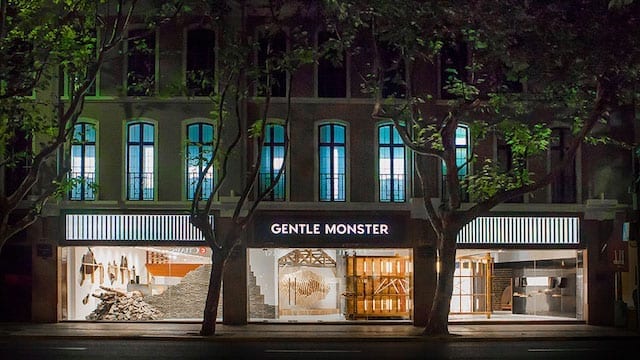
    GENTLE MONSTER announced the largest flagship store in the world will open on August 4th in Beijing Taikoo Li Sanlitun. “DATAIZED FUTURE” serves as the visual narrative theme for the flagship store. As mankind inhibits a fragmented and dislocated near future, visitors are allowed to express free movement, jumping across time and space. As the store relocates from the Taikoo Li Sanlitun North District to the South District, taking up a landmark location in the commercial area, the latest GENTLE MONSTER retail creation marks the brand’s 360-degree upgrade into the world’s largest mono-brand eyewear store in the world.

    The upgraded GENTLE MONSTER Beijing Taikoo Li Sanlitun flagship store presents multi-scale installations, images, and videos that occupy the space from the façade to the third floor. Together, they set in motion a series of static replacements and dynamic contrasts, creating subtle harmony through contrasting colors and materials. The GENTLE MONSTER Beijing Taikoo Li Sanlitun flagship store provides twice the number of styles and products as other stores. The flagship store will offer free repair services for the first time in the Northern China market. Special collaborations or product will also be launched here before any other stores. The third floor is home to only optical products, where shoppers can find professional optometrists in the exclusive optometry area.

    In 2016, GENTLE MONSTER opened its first-ever store in the China market in Beijing Taikoo Li Sanlitun North District. Its “Future Retail” proposition redefined the brick-and-mortar retail experience and has continued to reimage the future of retail. The brand quickly launched 17 flagship stores in 14 cities across China. In collaboration with high-end Beijing luxury department store SKP, GENTLE MONSTER curated the SKP-S department store, last year, it also brought the HAUS SHANGHAI concept to the storied Huaihai Road. As the brand’s launchpad in the China market, GENTLE MONSTER’s move to the South District, occupying the most prominent entrance space of Taikoo Li Sanlitun, gave the brand a chance to push further the expressive nature of retail art, enabling the store to become a new landmark for Taikoo Li Sanlitun.

    Occupying three stories and boosting more than 1,330 square meters, GENTLE MONSTER’s latest project marks the brand’s most prominent move in the China market. GENTLE MONSTER dove deeper into its unique DNA, disrupting conventional retail methodologies that prioritize efficiency and function. With “Future Retail,” GENTLE MONSTER offered a powerful retail experience by simultaneously presenting contrasting emotions, amplifying the brand’s singular worldview. For the first time in GENTLE MONSTER retail history, interior design extends to the exterior façade of the glass building, breaking free of physical boundaries.

    The opening of GENTLE MONSTER Beijing Taikoo Li Sanlitun flagship store marks the brand’s revolutionary move to unleash creative energy like never before. Expansive artistic vision and fresh retail experiences celebrate the brand’s continued pursuit to inspire and ignite the new generation of shoppers.

  • In Singapore, Zalora launches supermart-style pop-up with Adidas

    In Singapore, Zalora launches supermart-style pop-up with Adidas

    Zalora Group has unveiled a supermarket-inspired pop-up store in collaboration with Adidas at Bugis Junction, Singapore.  The Supermart by Zalora store is designed with a supermarket layout, featuring pop colours and Instagrammable corners. The pop up stocks more than 90 SKUs of Adidas, ranging from footwear, apparel, and accessories for men and women, and an exclusive range.  Through a ‘click-and-mortar experience’, customers visiting the store can purchase their favourite ite

    Through a ‘click-and-mortar experience’, customers visiting the store can purchase their favourite items by scanning the QR codes tagged on them and adding them to their cart on the Zalora app. The order will then be delivered to their doorstep.

    Zalora also partnered with three local artists, Hoon Jialing, Eman Raharno Jeman and Tiffany Tan, to create gift-with-purchase packaging with graphic artwork that incorporates the brand and artists’ aesthetics. Marking the launch, Zalora is also running an interactive game to further engage with its customer.

    The Supermart by Zalora will open until August 12.

  • Amiri continues retail expansion with new Japan flagship store

    Amiri continues retail expansion with new Japan flagship store

    Following the recent news of the label’s Shanghai flagship store, AMIRI continues to expand their Asian presence with the opening of its latest bricks-and-mortar outpost in Tokyo, Japan.

    Situated in the city’s iconic fashion district, Minami-Aoyama, the store builds on the aforementioned international opening as a part of AMIRI’s ambitious global rollout. Embodying their relaxed, West Coast approach, the new space marries warmth, intimacy and modernism, taking cues from the brand’s established retail blueprint and expands by using the city’s personality as a springboard for design.

    Spanning two floors and a total of 155.6m2, the glass-fronted building features the likes of white concrete walls punctuated by suspended rails in brushed chrome, marble accents, oak podiums, artisanal checkerboard rugs and artwork by friend of the brand, US artist Wes Lang.

    Playing host to the full range of Men’s and Women’s ready-to-wear collections, accessories, footwear and leather goods, in typical style, the store also offers an exclusive Tokyo capsule collection for visitors which integrates a reimagining of AMIRI’s signature bones stack motif in the red and white of Japan’s national flag,

    Check out some shots of the new store below and check it out for yourself at: 5-3-27 Minami Aoyama Minato, Tokyo, Japan 107-0062.

  • Maybelline to shut all stores in China

    Maybelline to shut all stores in China

    The L’Oréal-owned American cosmetic brand Maybelline is gradually shuttering all of its physical stores across China as it aims to shift its focus in the market to online, the brand confirmed Wednesday.

    In a statement sent to local media, the brand said, “In response to changes in the market and consumer demand, Maybelline New York has been gradually strategically transforming its traditional offline channels since 2020 to achieve a cohesive online and offline shopping experience and to bring consumers a more diverse beauty shopping experience.”

    Customer service from the brand further revealed that the timeline for store closures is not clear so far, but counters within the drugstore chain Watson’s will continue to operate.

    The century-old beauty brand, acquired by L’Oréal in 1996, entered the Chinese market in 1997 and soon became a popular choice for a large number of women who moved from the countryside to big cities in pursuit of an office job as the nation was shifting to a service industry-led economy at the time.

    Maybelline was a key player in the affordable cosmetic sector through brick-and-mortar channels such as supermarkets and department stores, but the brand in recent years failed to catch up with local competitors and adapt to the disruptive Chinese e-commerce model.

    The brand withdrew from the supermarket channel in 2018 and began to leave department stores in 2020.

    This shift coincides with the rise of C-beauty brands, as well as L’Oréal gradually pivoting its focus toward the prestige category.

    Data from market researcher Qianzhan Industry Research Institute shows that Maybelline’s market share in the Chinese market fell to 4.9 percent last year from 10.7 percent in 2018, while Florasis and Perfect Diary became two of the most popular brands, taking market shares of 6.8 percent and 6.4 percent, respectively.

  • Puma raises revenue outlook, handling China woes better than Adidas

    Puma raises revenue outlook, handling China woes better than Adidas

    German sportswear maker Puma reported stronger-than-expected second-quarter earnings on Wednesday and raised its full-year revenue outlook, coping with headwinds in China better than rival Adidas.

    Puma said its earnings before interest and taxes (EBIT) rose 34.4% on the year to 146 million euros ($148 million), compared with analysts’ average forecast for 128.94 million euros.

    It raised its full-year sales forecast to a mid-teens percentage rise in currency-adjusted terms, from at least 10% – with upside potential – previously, and maintained its full-year EBIT guidance.

    Adidas on Tuesday cut its 2022 earnings target, citing a slower-than-expected recovery in China from pandemic restrictions.

    “It’s not easy for everyone,” Puma Chief Executive Bjorn Gulden said, adding his company “cannot expect growth in China in 2022”.

    But he said: “We feel that the increased investments into R&D, innovation and product development over the past years are starting to pay off.”

    Second-quarter sales rose 18.4% in currency adjusted terms to 2.002 billion euros. The company said it saw strong growth in all its performance categories, such as running, training, team sports, golf and basketball.

    Adidas blamed COVID-19 restrictions in China for a sales slump there. Puma’s Gulden saw the main reason as calls for boycotts against Western textile firms, which have been targeted on social media, in response to Western criticism of China’s treatment of the Uighur minority in the Xinjiang region.

    In late June, Puma rival Nike forecast first-quarter revenue below estimates as it expected to discount more and wrestled with pandemic-related disruptions in China, its most profitable market.

    “We do see an increased level of uncertainty around the world,” Gulden said, but added: “I remain optimistic for our sector in general and the PUMA brand in particular”.

  • LVMH sales soar despite China slowdown

    LVMH sales soar despite China slowdown

    LVMH sales jumped in the second quarter as the owner of Louis Vuitton and Dom Perignon continued to thrive in spite of concerns about slowing economic activity.

    The luxury conglomerate was helped by strong sales of its fashion and leather goods. Solid results in Europe, the US and Japan also helped offset a poor performance in China, which suffered due to lockdowns in the second quarter.

    The results underscore the French company’s resilience. LVMH’s diverse offerings — from handbags to spirits to luxury hotel stays — and global footprint are enabling it to withstand a worsening economic outlook. It also shows that well-heeled customers aren’t feeling a global surge in inflation that has caused lower-income shoppers to rein in spending at retailers such as Walmart Inc.

    LVMH’s biggest brand, Louis Vuitton, has been able to maintain profitability “at an exceptional level,” during the first half, the company said. Its executives have been actively restricting entry-priced products such as its classic monogram-coated canvas bags. Instead, the brand is promoting higher-priced leather handbags.

    “The top end of the portfolio has done better than the entry price, but it’s on purpose because we intend to rebalance the two,” LVMH Chief Financial Officer Jean-Jacques Guiony said about Vuitton’s strategy during the analyst call.

    Geographically, LVMH was helped by a 48 percent revenue recovery in Europe, followed by solid rebounds in Japan and the US. Asia, excluding Japan, barely grew during the quarter.

    LVMH’s outlook on the US economy isn’t “particularly gloomy and pessimistic,” Guiony said, citing recent quarterly performance. “We’re trying to manage the business for the growth it can generate.”

    Should there be a downturn, Guiony said LVMH would react swiftly by cutting costs and store openings. Past experience, notably during the 2008 global financial crisis, has shown LVMH has a “strong rebound capacity,” he added.

    In China, store traffic is still “way below” last year’s levels, Guiony said, adding that LVMH is waiting to see how demand evolves there.

    The luxury conglomerate didn’t experience pushback from customers after raising prices across the board this year, mostly in the first quarter. Guiony doesn’t expect LVMH’s fashion and leather brands to be very active when it comes to further price increases in the second half of the year. Thanks to the recent appreciation of the dollar against the euro, LVMH noticed more American tourists spending in Europe toward the end of last month, Guiony said.

    LVMH’s wine and spirits division was a notable outperformer during the period. The division — which suffered some supply constraints in the past — bounced back with organic revenue jumping 30 percent. It was helped by demand for Champagne in Europe, the US and Japan, as well as price increases for Hennessy Cognac.

    First-half profit from recurring operations rose to 10.24 billion euros ($10.35 billion). Analysts expected 9.51 billion euros. Organic revenue for its biggest fashion and leather goods unit in the second quarter grew 19 percent, better than the 17 percent gain analysts expected.