Category: Fashion

Retail News Asia is committed to providing both local and global retailers with the latest Fashion news throughout the Asian market. This on a daily base.

  • L’Occitane shrugs off Covid impact as Asian sales surge

    L’Occitane shrugs off Covid impact as Asian sales surge

    L’Occitane International is looking to boost development in the hand care category to keep up with demands generated by the novel coronavirus (COVID-19) outbreak. The company’s fourth-quarter net sales saw a decline of 0.7% at reported rates compare to the previous year while FY2020 net sales grew by 15.2% at reported rates.

    According to the company, it managed to maintain good sales momentum in January before COVID-19 impacted the business in the subsequent months due to travel bans, lockdowns, and shop closures mostly in China, Hong Kong, and Japan.

    Currently, almost 75% of the company network of stores throughout Europe, the Americas, Japan, and Australia remain closed.

    The company now plans to undertake certain initiatives to manage the future impact of the crisis.

    “While it is too early to gauge how the COVID-19 pandemic will impact our ongoing performance, we are taking various steps to minimize the fallout from the very serious turndown in business. This includes optimizing our cost structure while ensuring that we maintain the capacity to resume growth as strongly as possible when the conditions allow,” ​said Reinold Geiger, chairman and CEO of L’Occitane.

    The firm has observed demand for hand washes and hand creams. In South Korea, sales of those items helped to boost the company’s performance by 18.8%, making it one of the fastest-growing markets.

    “Sales in our hand care category have increased as a percentage of total sales since the outbreak of COVID-19. We have seen a pronounced boost in our e-commerce sales over the past few months, partly attributed to increased overall consciousness of hand hygiene and hand care — this is a sweet spot for us,” ​said André Hoffmann, vice chairman of L’Occitane International.

    As such, the firm plans to develop new products related to hand care and personal hygiene to keep up with the demands of the market.

    “We are also adapting further to this rising demand by launching new products such as a hand purifying gel, which we feel will be a great add-on product for travel retail,”​ said Hoffmann

    The company will be launching a new hand purifying gel in order to adapt to new consumer demands. The 75-millilitre bottles will be available for sale in key markets in Asia, Europe as well as travel retail.

    Hoffman believes the demand for hand care products will continue well after COVID-19.

    “Innovation has always been at the core of our DNA. But it is more than that. COVID-19 has led consumers to re-discover the premium hand care products that we are known for — we expect this trend to be sustained post-COVID-19 both online and offline as our physical stores around the world begin to re-open.”​

    In spite of the difficulties, L’Occitane remains committed to supporting the community with several relief efforts.

    The group has re-directed some of its manufacturing facilities in Manosque to the production of hand sanitizer and has donated a million bottles of care products in support of healthcare workers.

    “The global COVID-19 pandemic is an extremely challenging period for all of humankind. We are committed to doing everything we can to meaningfully support healthcare authorities and healthcare workers around the world,” ​said Geiger.

  • Zappos founder dies

    Zappos founder dies

    Tony Hsieh, the former CEO of Zappos, died peacefully and surrounded by family on Friday, according to a statement emailed to CNN by Megan Fazio, a spokesperson for DTP Companies, a Las Vegas-based enterprise for which Hsieh served as the visionary.

    Hsieh, 46, died from injuries sustained in a house fire that occurred in Connecticut while he was visiting family, according to Fazio.

    “Tony’s kindness and generosity touched the lives of everyone around him, and forever brightened the world,” said a statement from his family that was shared with CNN by Fazio.

    His mantra: delivering happiness, his family says.

    “Instead of mourning his transition, we ask you to join us in celebrating his life,” their statement added.

    Hsieh was well known for his leadership of online shoe and clothing retailer Zappos. He had recently retired after spending 20 years with the company, Zappos CEO Kedar Deshpande wrote in a statement Friday.

    “The world has lost a tremendous visionary and an incredible human being,” Deshpande wrote. “We recognize that not only have we lost our inspiring former leader, but many of you have also lost a mentor and a friend.”

    Hsieh also played a “pivotal role in helping transform Downtown Las Vegas,” Nevada Gov. Steve Sisolak wrote on Twitter.

    “Kathy and I send our love and condolences to Tony’s family and friends during this difficult time,” he wrote.

    Las Vegas Councilman Cedric Crear said he was “saddened” to hear the news.

    “Such a creative & innovative person who positively helped change the landscape of Downtown Las Vegas,” he said on Twitter. “We have been working on some cool projects for Downtown. God speed to his family, coworkers and our community.”

    More tributes for Hsieh poured in on social media early Saturday — many from other business leaders and entrepreneurs.

    “Tony Hsieh was always generous with me,” Dan Price, the head of Seattle-based Gravity Payments, said. “He would talk to me about anything and it was always a good time. RIP Tony.”

    He was a “truly original thinker, a brilliant entrepreneur, and a kind-hearted and generous friend to so many,” wrote Max Levchin, co-founder and former chief technology officer of PayPal.

    “He questioned every assumption and shared everything he learned along the way,” said Chris Sacca, a billionaire tech investor, on Twitter. “The earth has lost a beautifully weird and helpful person.”

    And in a tweet, Nevada Gov. Steve Sisolak sent condolences to Hsieh’s family and friends, and said, “Tony Hsieh played a pivotal role in helping transform Downtown Las Vegas.”

  • Tiffany beats profit estimates on soaring China demand

    Tiffany beats profit estimates on soaring China demand

    Tiffany & Co, which is being bought by French luxury giant LVMH, beat Wall Street expectations for quarterly profit on Tuesday as the U.S. jeweler benefited from an over 70% rise in sales in China and a recovery in demand at home.

    The results bode well for the upcoming holiday season for the jeweler and other luxury retailers in general, which have been hit hard by the pandemic. They also underscore the growing importance of sales within mainland China to offset dependence on tourism, especially on Chinese tourists visiting fashion hubs like Milan and Paris.

    “We had a strong third quarter …. which speaks volumes about the enduring strength of the Tiffany brand and gives us confidence as we enter the important holiday season,” Chief Executive Officer Alessandro Bogliolo said, nodding to “the successful completion of the merger transaction with LVMH in early 2021.”

    Tiffany and LVMH ended a bitter legal battle last month and agreed to a new deal that would see the French firm buy out the U.S. jeweler at a slightly lower price of $15.8 billion, or at a discount of $425 million.

    Tiffany said sales in the Asia-Pacific region rose 30%, while sales in the Americas region declined 16% – much smaller than the 46% drop seen in the preceding quarter.

    Tiffany forecast a mid-single-digit percentage decline in holiday quarter sales, while analyst had predicted a 3% drop. It also expects a high-single-digit percentage increase in earnings for the current quarter.

    The health crisis also forced the New York-based retailer to invest in its online business and to introduce curbside pick-up at certain stores. This helped e-commerce sales surge 92% in the quarter.

    Best known for its diamond engagement rings, Tiffany could face more challenges ahead as COVID-19 cases are surging in much of the U.S. and across the world, spurring Britain and other countries in Europe, and many American states, to go into another lockdown.

    As of Oct. 31, most of Tiffany’s 320 retail stores worldwide were fully or partially opened, in accordance with local government guidelines, it said. As of Nov. 20 though, approximately 60% of Tiffany’s retail stores in Europe were temporarily closed.

    But analysts remain optimistic.

    “Q3 results also reiterate our confidence that the Tiffany brand will continue to shine through the holidays,” said CFRA analyst Camilla Yanushevsky.

    According to a CFRA site traffic analysis of Alexa Internet’s data, there is “growing traffic momentum” to tiffany.com entering the all-important holiday season, Yanushevsky added.

    Shares of the company were up marginally on low volumes in premarket trading.

    Excluding certain item, Tiffany earned $1.11 per share, surging past the average expectation of 66 cents.

    Tiffany’s net sales fell about 1% to $1.01 billion in the third quarter ended Oct.31, but beat expectations of $980.71 million, according to IBES data from Refinitiv.

  • Online investment takes into Gap profits

    Online investment takes into Gap profits

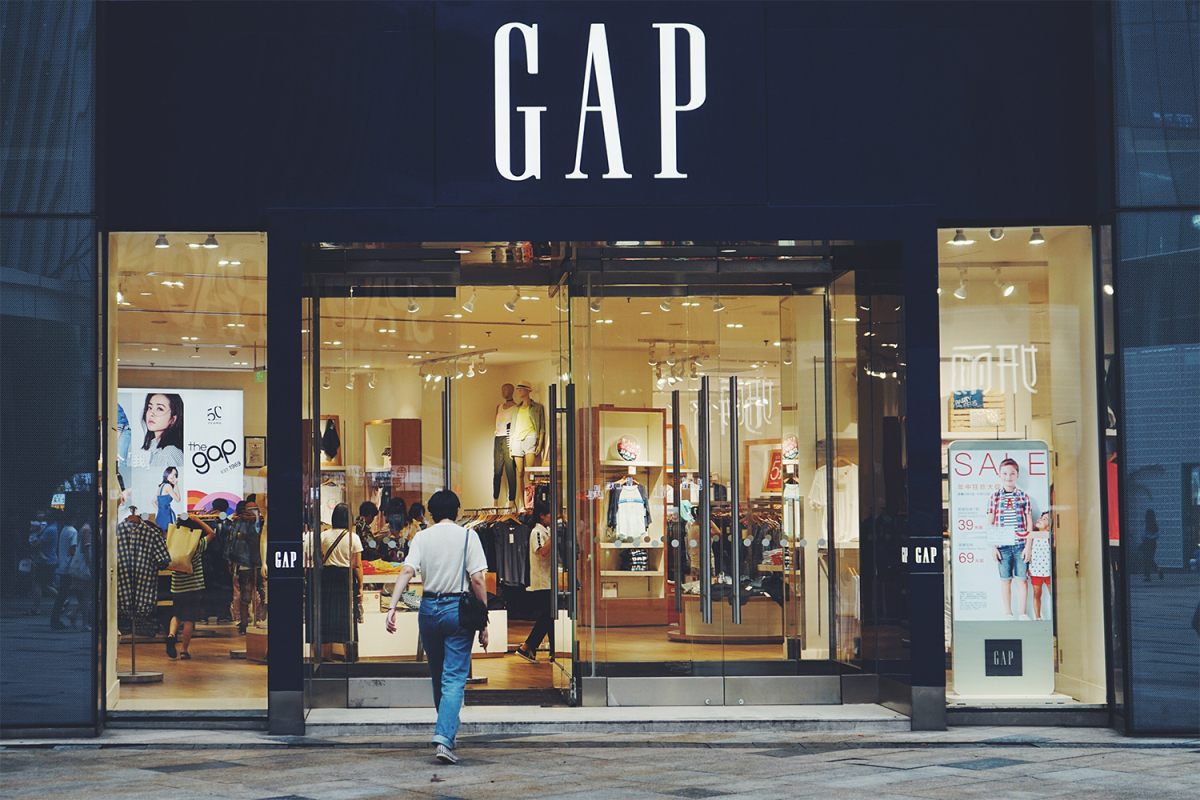
    Gap Inc. said Tuesday that it enjoyed a 61 percent jump in online sales during its fiscal third quarter ended Oct. 31 — offsetting a 20 percent fall in in-store sales due to the ongoing pandemic. The retail giant also said that its Athleta chain’s sales rocketed even as revenues plunged at Banana Republic Global.

    “With our teams focused on sales growth and returning to profitability, we’ve made investments in demand generation that are driving engagement, particularly in this dislocated market as customers are looking to trusted brands to provide easy and safe shopping options,” Gap Inc. Chief Executive Officer Sonia Syngal said in announcing the results.

    Management said results at its flagship Gap Global division included a formidable digital performance that partly offset decreased brick-and-mortar presence and lowers physical traffic trends. But all in, Gap Global’s net sales dropped 14 percent year over year, with comparable sales for the brand falling 5 percent from Q3 2019.

    Banana Republic Global fared even worse, with net sales plunging 34 percent year on year for the quarter. However, management said that was a “slight improvement” from Q2.

    Management said that Banana Republic is continuing to focus on acclimating to shopper preferences and bolstering inventory mix by moving away from the label’s usual workwear selection and into casual fashion in the “current stay-at-home environment.”

    On the plus side, Athleta’s sales jumped 35 percent year on year, with comparable sales rising 37 percent to the highest level in the brand’s history. Sales at the company’s Old Navy Global unit likewise rose 15 percent, with comparable sales up 17 percent.

    “Old Navy continued to experience meaningful acceleration in its online business as strong customer response to product was further bolstered by compelling and relevant digital marketing investment,” management said.

    Gap added that it finished Q3 with $2.6 billion in cash, cash equivalents, and short-term investments — way up from $1.1 billion at Q3 2019’s end. Management added that Gap ended the latest quarter with 3,785 retail locations in 43 nations, including 3,178 company-operated stores.

    As for its overall results, Gap reported 25 cents earnings per diluted share on $3.99 billion in net sales. That fell short of analyst estimates of 32 cents per share in earnings but came out ahead of a $3.82 billion forecast in revenue.

  • L’Oreal names Gemma Chan as its new brand ambassador

    L’Oreal names Gemma Chan as its new brand ambassador

    English actress Gemma Chan (陳靜) has been announced as L’Oréal Paris’s newest spokeswoman. Already a familiar face to many readers, from an extensive résumé dating back to the mid-2000s—Doctor Who, Sherlock, Secret Diary of a Call Girl, and Humans among her TV work—Chan was probably noticed more by US audiences when she appeared in Crazy Rich Asians in 2018, followed by Captain Marvel in 2019. Her role in the anthology series I Am, which she co-developed and where she played Hannah in the third entry (‘I Am Hannah’), was highly acclaimed. In December, Chan will star alongside Meryl Streep in Steven Soderbergh’s Let Them All Talk, and next year, in Eternals, another Marvel entry. She also founded her own production company, with the aim of promoting more minority voices.

    An Oxford University and Drama Centre London alumna, Chan has worked as an advocate for or supporter of numerous causes, including UNICEF, the Time’s Up movement, the Justice and Equality Fund, and Cook-19 supporting London health care workers.

    It is her rising international profile that seems to have L’Oréal Paris interested, especially with Chan venturing into blockbuster hits. Says its global brand president, Delphine Viguier-Hovasse, ‘Gemma Chan is proof of the success that happens when you have the confidence to follow your own dreams, and speak up for others to be able to follow theirs. Committed to her causes with innate female strength, she’s a source of inspiration beyond the screen, for young women to be the change. We’re delighted to welcome Gemma to the family.’ Chan added, ‘I’ve always believed that we should embrace our difference as our strength. So I’m thrilled to join L’Oréal Paris, a family of empowered women of all origins standing together to show the power and beauty of diversity. The L’Oréal Paris message to every woman, “Believe in your self-worth,” is as needed today as ever.’

  • Nike gets local with new Nike Unite retail concept

    Nike gets local with new Nike Unite retail concept

    Adding to Nike House of Innovation, Nike Rise and Nike Live concepts, Nike introduces Nike Unite. Built to help locals connect more closely with sport, Nike Unite creates new in-and-out-of-store experiences, rooted in serving people the most valuable sport destination in their community.

    Read on for what to know about Nike’s latest retail concept.

    Nike Unite exists to serve and celebrate the people in each local community, and each store is designed to be a reflection of their heart and spirit. Consumers are welcomed by an in-store community wall highlighting the store team and local partnerships, and design elements throughout the space also look to tell the story of the community. From local landmarks to hometown athletes, the design allows the local residents to feel represented in the space.

    The products in each Nike Unite door are also reflective of what the community is interested in: locally curated, every-day essentials at the best price, matched with the newness of select seasonal offerings. Additionally, Nike Unite doors reflect Nike’s commitment to hiring people who live in the local community.

    In order to help protect the future of sport, sustainable offerings like reusable shopping bags are available at stores like Nike Unite – Namyangju, or at Nike Unite – East Kilbride, with takeback services like Nike Reuse-a-Shoe.

    Online or offline, Nike Unite doors deliver new ways to gear up and get moving together. Whether serving athletes in the digital spaces that speak to them, supporting local schools and nonprofits that give children more opportunity to stay active through Made to Play or participating in the Nike Community Ambassador program (which trains Nie store employees to be coaches), these measures allow Nike Unite doors to bring members closer to sport, and closer to one another.

    New Nike Unite stores are now open to the public in the following locations, with additional doors opening soon:

    Namyangju (South Korea)
    Portland, Ore. (United States)
    East New York (United States)
    San Antonio (United States)
    East Kilbride (UK)

    Coming Soon:
    South Chicago (United States)
    Atlanta (United States)
    Beijing – Jingliang (China)
    Beijing – Jingzang (China)

  • Suria KLCC revamps its food court

    Suria KLCC revamps its food court

    Suria KLCC in the heart of Kuala Lumpur has unveiled its newly refurbished food court, which was designed to adapt to the Covid-19 era.

    Incorporating the space formerly occupied by department store Parkson, the Signatures food court boosts seating to more than 1500 while still ensuring enough space to comply with physical distancing requirements.

    Dining options have also been expanded with 23 food court outlets, six kiosks and seven restaurants. The revamped food court is equipped with a 5G infrastructure, and sports device-charging sockets.

    “A lot of thought and effort went into improving Signatures to what it is now,” said Andrew Brien, CEO of Suria KLCC.

    “Nothing has been left to chance, from the standard operating procedures to ensure hygiene, all the way to aesthetics capable of satisfying new norms for a long time.”

  • Puma signs pop star Dua Lipa as ambassador for its womenswear range

    Puma signs pop star Dua Lipa as ambassador for its womenswear range

    The German sportswear giant announced today that it signed a multiyear deal with the singer-songwriter, who will be the face of its women’s business. Aside from boosting the profile of Puma’s women’s business unit, Lipa will work to “help inspire women around the world” through global campaigns and “important inclusive initiatives close to her heart.”

    “From performance rehearsals to hiking in the hills, it’s important to feel comfortable & look good. I’ve got so many ideas for the projects and campaigns I’ll be taking part in and look forward to bringing them all to life with my Puma family,” Lipa said in a statement.

    Aside from revealing the deal, Puma stated Lipa will star in its “She Moves Us” campaign, which was created to inspire women to achieve and connect through sport and culture.

    “We were drawn towards her creativity, passion, drive and the way in which she resonates with the young female consumer. But most importantly, we were moved by her authentic passion to close the gender gap and look forward to supporting her through several brand initiatives we have planned together. We think she embodies what today’s consumer is looking for in a role model,” Puma global director of brand and marketing Adam Petrick said in a statement.

    To kick off the partnership, Puma said it will be the presenting sponsors of Lipa’s “Studio 2054” virtual performance. Not only will the pop star and her dancers be in Puma head-to-toe, but the brand is also offering a limited amount of tickets for the performance at a discount to her fans.

    The athletic powerhouse has been busy in recent months adding to its ambassador roster. In September, Puma signed UFC champion Israel Adesanya and soccer star Neymar Jr. And in October, it added promising soon-to-be NBA rookie LaMelo Ball.

  • The History of Whoo to open luxury Korean beauty flagship store in Canada

    The History of Whoo to open luxury Korean beauty flagship store in Canada

    LG Household & Health Care proudly announces the opening of a first-of-its-kind, The history of Whoo luxury concept store in Canada. The history of Whoo is a best-selling, record-breaking, prestigious Korean skincare brand known worldwide and recognized for its impeccable quality, use of precious ingredients, and unique formulas once reserved for royalty and members of the Royal Court. Each precious formulation is preserved in distinctly luxurious packaging including flacons and vials inspired by the Korean cultural heritage.

    Customers at the new flagship Canadian store can expect the same level of luxury and attention to detail that The history of Whoo has become synonymous with. Upon entering the space, customers are welcomed as guests and invited to experience a truly immersive shopping experience; from elegant gold-plated fixtures to Gani marble floors, mirrored ceilings, and a dramatic custom-crafted chandelier, all culminating into an elegant showcase designed to envelop the senses in luxury and reflect the royal heritage of the brand.

    The new Canadian store will open its doors at 10:00 a.m. on November 20th at Cadillac Fairview Richmond Centre, British Columbia. The first 75 customers will receive a complimentary limited-edition cosmetic case filled with deluxe samples valued at over $100, with the purchase of $8 or more, while supplies last. To ensure a clean, safe, and comfortable environment, Cadillac Fairview Richmond Centre has put all necessary safety and social distancing measures into place.

    Inside the store, highly trained beauty consultants specialized in Korean skincare will offer shoppers personalized one-on-one consultations with customized recommendations from a selection of luxury brands, including:

    The history of Whoo – Launched in 2003, the most luxurious skincare brand from LG Household & Healthcare, Whoo harmoniously balances modern-day technology with Ancient Eastern medicinal principals to deliver the most prestigious traditions to the Empresses of today. The Chinese character “后” (Whoo) translates into Empress.

    For the first time, a brand has uncovered the beauty secrets of the Royal Court, incorporating their rare and delicate nutritious ingredients from Gongjindan – a traditional herbal recipe. Each ingredient originating from the finest sources around the world, carefully blended and perfectly balanced to achieve harmonious, healthy, and youthful-looking skin.

    Its flagship product – Bichup Self-Generating Anti-Aging Essence is an all-in-one secret recipe that increases skin moisturization and improves the appearance of wrinkles for smoother and more radiant skin. According to a Kantar Worldpanel Beauty Evaluation, this globally renowned product has been the best-selling anti-aging essence in South Korea for nine consecutive years1. Each year, the serum is released with intricately designed limited-edition packaging inspired by the Royal cultural heritage, making it one of the most highly anticipated and most valued qualities about Whoo.

    Su:m37 – a traditional Korean luxury brand that utilizes cutting edge fermentation technology to achieve highly functional skincare products. Known for its best-selling “Secret Essence,” created using Cyto-FermTM technology, a three-stage fermentation process, to create a natural and fermented water achieved by aging and fermenting a variety of 80 plants for an entire year. The antioxidant-rich, renewed Secret Essence improves skin elasticity and barrier function to enhance the skin’s own natural strength and resistance.

    O HUI – a luxury cosmetic brand based on the concept of skin science to harmonize the skin and address its condition through the use of cutting-edge biotechnology and natural botanicals. Its iconic Prime Advancer Ampoule Serum contains the brand’s proprietary Skin Core Enhancing technology to help protect the skin’s barrier and improve its resilience to environmental stressors such as pollution and seasonal changes.

  • Bossini tells landlords it close stores if rents not reduced

    Bossini tells landlords it close stores if rents not reduced

    Local clothing chain Bossini said it has suffered a loss of more than HK$367 million in its last financial year and warned that it may have to close some of its stores in the city unless landlords agree to provide more “reasonable” rent relief and reduction.

    The clothing chain’s reported loss is almost three times more than the loss it incurred in the previous fiscal year.

    It said the economy of its core markets, such as Hong Kong, had been hampered by the Sino-US trade tensions, social unrest last year, and the ongoing Covid-19 pandemic which affected local and tourist consumption in the SAR.

    It also laid the blame on the fact that several landlords have been unwilling to reduce rents despite the harsh business environment.

    “Social distancing, lockdowns, curfews and changing quarantine requirements have created immense challenges for our retail operations,” the company said on its outlook.

    “As the overall shop rental expenses remain at a very unreasonable level, we are renegotiating with landlords across all our core markets, particularly in Hong Kong and Macau, to seek rent relief and reduction.”

    “Where landlords are reluctant to respond reasonably to our requests, we will go ahead and close those shops.”

  • Printemps to close seven luxury stores in aftermatch of virus

    Printemps to close seven luxury stores in aftermatch of virus

    French division retailer chain Printemps, a magnet for overseas consumers looking for high-end items in Paris, will close some of its operations in France because it struggles to address the coronavirus pandemic, the CGT union stated.

    Retailers have been hit laborious by government-enforced lockdowns to curb the virus and people who rely upon vacationer flows have struggled to get well as a result of worldwide journey stays restricted.

    Printemps, which sells make-up and garments for high-end manufacturers like Burberry and Gucci, and is owned by Qatari buyers, is especially uncovered to vacationer flows, particularly at its Paris Haussmann flagship retailer.

    Four of the group’s 19 division stores underneath the “Printemps” banner will probably be shut down, together with one in the northern metropolis of Le Havre and in Strasbourg in the east of the nation, in accordance to the corporate’s discussions with unions, the CGT stated.

    One of the Printemps’ offshoots in a Paris mall has additionally been earmarked for closure, and three of the broader group’s sportswear Citadium stores will close.

    Some 450 jobs, or roughly 15 percent of all Printemps staff, at the moment are in danger, the CGT stated, together with store assistants and workers on the firm’s headquarters.

    Printemps couldn’t instantly be reached for remark. Le Monde newspaper quoted a spokeswoman who stated the measures have been geared toward stemming operational losses.

    Many French retailers have been already struggling earlier than the pandemic hit, due to transport strikes earlier this 12 months that hit footfall in stores, and a wave of anti-government protests final 12 months that compelled them to close on some weekends.

    They are additionally dealing with elevated competitors from on-line rivals.

    Luxury manufacturers have managed to offset some of the aches by means of their retailer networks abroad, together with within China, the place demand for high-end items stays robust.

    Printemps, based in 1865, is one of the oldest division stores in France together

  • L’Oreal turns to Google as coronavirus spurs virtual make-up shift

    L’Oreal turns to Google as coronavirus spurs virtual make-up shift

    Shoppers searching Google for cosmetics will be able to try them on virtually through a deal with L’Oreal, as the French group looks to make up for lost store sales caused by coronavirus lockdowns by expanding online.

    Maybelline maker L’Oreal, which returned to comparable sales growth in the third quarter when coronavirus restrictions eased, has sped up some of its web initiatives as a result of the pandemic, its digital chief Lubomira Rochet said.

    “There’s been an acceleration in all our partnerships due to COVID-19,” Rochet said in an online presentation on Thursday.

    The Google GOOGL.O partnership relies on technology designed by ModiFace, a Canadian augmented reality specialist acquired by L’Oreal in 2018, and will also extend to the U.S. group’s YouTube video sharing platform, Rochet said.

    People seeking lipsticks or eye shadows by L’Oreal brands, which include Lancome and Urban Decay, who come across their adverts on Google or YouTube can then try them online.

    YouTube is one of the go-to sites for cosmetics users who often seek out make-up tutorials online, or want to learn from others how to curl their hair.

    L’Oreal, which already had a ModiFace partnership with social media site Facebook FB.O, has seen the usage of virtual make-up tools rise fivefold during COVID-19 lockdowns this year, and the conversion rate from an advert to purchase was three times higher with the try-ons, Rochet said.

    Consumers used it to mimic hair dye colors in particular during coronavirus shutdowns, Rochet added.

    Many countries in Europe including France and Belgium have now re-entered lockdown, forcing beauty chains and hair salons to close, and hitting travel retail sales. Online sales of beauty products, especially in China, have made-up for part of the losses and Rochet expects half L’Oreal’s sales are likely to come from the web within the next three to seven years, up from around a quarter now.

  • Indonesian beauty retailer Sociolla lands in Vietnam

    Indonesian beauty retailer Sociolla lands in Vietnam

    Beauty technology company Social Bella announced its first overseas expansion with the launch of the beauty e-commerce platform Sociolla in Vietnam.

    Demand from beauty enthusiasts in Vietnam was one of the company’s considerations, following a US$58 million funding from investors, such as Singaporean state investment fund Temasek and its private equity subsidiary Pavilion, alongside Singaporean venture capital firm Jungle Ventures.

    The beauty and self-care market in Vietnam has stayed robust and adaptive amid the COVID-19 pandemic, a website on cosmetics and the personal care industry. The beauty sector in Vietnam has seen rapid growth in online sales.

    Christopher Madiam, cofounder and president of Social Bella, said the company was excited to expand its market internationally. “As one of the fastest-growing beauty and self-care markets in Southeast Asia with a population of a digitally literate young generation, Vietnam bears a resemblance to Indonesia,” Christopher said in a statement. “We’re certain that Vietnam is the right country for our first international expansion.”

    John Rasjid, cofounder and CEO of Social Bella, said the company intended to provide access for Indonesian beauty brands to consumers abroad through the expansion. “We’ve witnessed how local beauty brands are getting innovative in releasing quality yet affordable products that can compete with international products,” John said. “With the expansion, we’re not only opening distribution access, but we’re also giving comprehensive support to ensure that their products receive a warm welcome in Vietnam. We are collaborating with a number of our local partners to support a holistic business growth plan in Vietnam.”

    ESQA is among the Indonesian brands Sociolla brings to Vietnam. Cindy Angelina, the cofounder of ESQA Cosmetics, said the firm was proud to be part of the expansion. “We’ve experienced significant growth since joining Sociolla in April 2017. Hopefully, this success will continue in Vietnam,” Cindy said.

    Established in 2015, Social Bella has several business units, including offline stores under the Sociolla brand, Beauty Journal, and Lilla by Sociolla. In July, the company appointed renowned Indonesian make-up artist Archangela Chelsea as the makeup director of Sociolla.

  • Hugo Boss on the look for China growth as it returns to profit

    Hugo Boss on the look for China growth as it returns to profit

    German fashion giant Hugo Boss returned to profitability in Q3, after having reported losses in Q2, and also said that it was focused on business recovery via digital channels and in China as pandemic-linked uncertainty continues.

    Overall, it’s quarterly revenue fell 24% on a currency-adjusted basis to €533 million, which was lower than analysts had expected. But its operating profit was €15 million and that managed to beat analyst predictions. However, it was still down from €83 million a year ago.

    The company’s digital and Chinese focus is perfectly understandable given that sales in mainland China rose 27% during the quarter and online sales saw a massive leap of 66% as the company opened 24 more markets to e-tail sales between June and August.

    “Supported by the accelerated consumer demand shift towards digital, sales on hugoboss.com and the group’s self-managed offerings on key partner websites recorded strong improvements in both traffic and conversion rates,” it said. The period from July to September marks the 12th consecutive quarter with “significant double-digit online sales growth” for the firm.

    And while physical stores remained challenged, the company was upbeat. With the vast majority of its own stores back in operation, the group’s own retail business recorded a “considerably more robust performance” compared to the first half of the year, with its own retail revenues down by ‘only’ 20%, currency-adjusted.

    But the quarter clearly wasn’t all about good news. While local demand in key markets picked up noticeably as compared to the previous quarter, sales to tourists continued to suffer from international travel restrictions.

    Sales dropped 21% in Europe despite encouraging signs of demand bouncing back in key markets such as the UK and France. The tourism downturn that has had such a big impact on many luxury companies obviously weighed heavily on Hugo Boss.

    And like other companies at all price levels, the group has been adjusting its offer to meet the new normal with a bigger focus on casual clothing that had already started before the pandemic hit. The company said that its more youth-focused Hugo label saw casualwear sales down only in mid-single-digits during the quarter.

  • Asia underpins stable and strong Estee Lauder result

    Asia underpins stable and strong Estee Lauder result

    Estee Lauder Cos reported better-than-expected quarterly results on Monday, as people confined to their homes bought more of its skincare products online and sales improved in its Asian markets. The M.A.C brand owner has ramped up investments in its online business and seen growth in demand for its skincare products as customers opted for serums and moisturizers instead of make-up items during the Covid-19 pandemic.

    “Before, online was mainly the destination of younger people. Now it’s for everyone. Everyone is online,” CEO Fabrizio Freda told analysts on a call.

    The company’s shares rose as much as 8.3 percent to a record high on Monday as online sales soared 40 percent in the first quarter.

    Its sales in the Asia-Pacific market rose 9 percent on the back of strong growth in South Korea, with demand at the company’s duty-free shops in China getting a boost from the government’s move to raise the annual tax-free shopping limit for tourists in the southern province of Hainan.

    Total sales at the company’s duty-free shops were flat year over year, after dropping roughly 30 percent in the previous quarter due to widespread restrictions on air travel.

    Total net sales fell 9 percent to $3.56 billion but exceeded analysts’ expectations of $3.46 billion, Refinitiv data showed.

    Estee forecast net sales to decline between 3 and 5 percent in the second quarter, compared with estimates of a near 5 percent decline.