Category: Fashion

Retail News Asia is committed to providing both local and global retailers with the latest Fashion news throughout the Asian market. This on a daily base.

  • H&M talks online growth, sustainability and recovering after Covid-19

    H&M talks online growth, sustainability and recovering after Covid-19

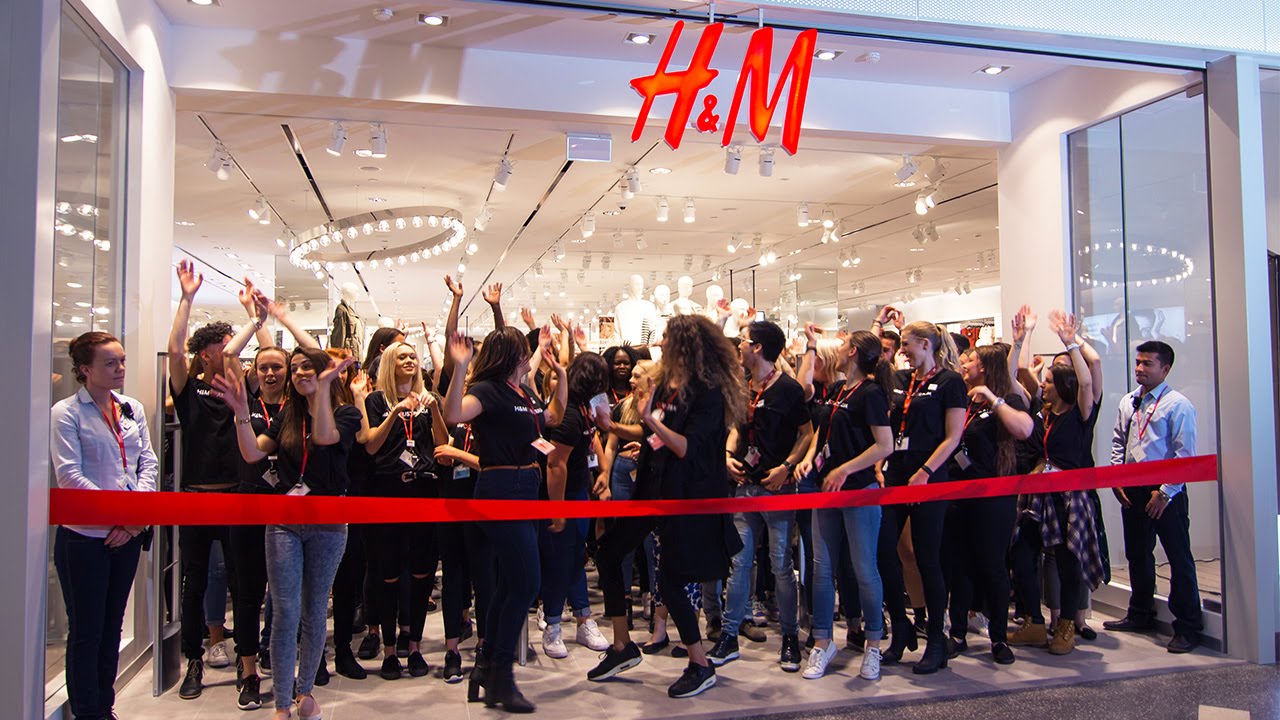
    Fashion giant H&M is expanding its online presence around the world, as it continues to recover from the coronavirus pandemic and work toward its goal of becoming climate positive by 2040.

    The company said it will expand the digital presence of its brands Cos, Weekday, Monki, & Other Stories and Arket in Europe from May onwards.

    The company said it will also push through with its plans to launch an e-commerce site for its H&M brand in Australia later this year, and open a digital flagship store of its lifestyle brand Arket on Alibaba’s e-commerce platform Tmall in August.

    The world’s second-largest clothing firm said the current situation highlights customer desire for digital solutions and the importance of integrated channels.

    “We are glad that we are able to provide this in most of our markets and in even more markets from May onwards, as Cos, Weekday, Monki, & Other Stories and Arket are set to expand, making their collections available online to nine additional markets across Europe,” the company said.

    H&M said with the world experiencing this health crisis, digital solutions are needed as cars and homes are becoming safe havens for shoppers and mobile devices and computers will be their main point of locating products before going to stores.

    The fast-fashion giant announced in March that the second half of its first-quarter sales were negatively impacted by the outbreak of the COVID-19 pandemic, particularly China.

    Total sales in March dipped 46 percent compared to the previous corresponding period but online sales saw a 17 percent increase.

    H&M’s total sales during the period between March 1 to May 6 this year decreased by 57 percent in local currencies compared with the same period in 2019.

    Online sales, which are open in 46 of the company’s 51 online markets, increased by 32 percent in the same period.

    Helena Helmersson, H&M’s new chief executive, said they think the pandemic will lead to a fast shift towards digital and that they need to be ready for it.

    At the group’s recent annual general meeting, a new board member was elected, Danica Kragic Jensfelt, who is a professor at the Royal Institute of Technology in Stockholm and does research in robotics and artificial intelligence.

    When asked if the new board appointment means AI and robotics are what H&M will be concentrating on in the near future, H&M said they have always made big investments in its tech foundation and AI.

    “We continuously see clear signals that we are on the right track and we will continue to invest in this area in the future, to secure an organization that drives innovation and optimizes business decisions,” the Swedish fashion retailer’s media team said.

    According to H&M, their AI work spans across the entire value chain – from design to customer experience.

    “By analyzing a large amount of data from our operations within the group, we can align supply and demand much better, with the goal of only producing what we are selling.”

    H&M said the pandemic has affected their day-to-day operations as well as their outlook for the future.

    “Due to the exceptional situation caused by the spread of COVID-19, we are reviewing all parts of our business,” the company said.

    “The world continues to adapt to a situation like no other, and H&M Group, like so many companies around the world, continues to navigate the effects of the coronavirus crisis.”

    The group said they have been forced to make difficult decisions and take strong measures across all parts of the business but that in everything they have been doing, the customer is always in focus.

    “We believe that customer-centricity, strong collaboration, subsisted sustainability and expanding digitalization are key factors for our success.”

    Helmersson, who once headed the sustainability department in the company, said sustainability work is an integral part of the whole business and includes every area of the company, hence its growth targets and sustainability goals have equal weighting, live side by side and are entirely interconnected.

    “I know the importance of environmental protection, people empowerment and industry transparency to build a sustainable business,” Helmersson said. “These areas are not only close to my heart but very much part of my business perspective.”

    With the release last week of the 2019 Material Change Insights Report compiled by the global non-profit Textile Exchange, H&M said it seems their efforts on sustainability are showing progress.

    The report showed the H&M Group leads the ranking in the use of organic cotton and down certified by the Responsible Down Standard. This means the company is recognized as the number one company sourcing preferred cotton. This includes organic cotton, recycled cotton and cotton sourced through the Better Cotton Initiative, among others.

    “Being ranked as a leading company in sustainable materials sourcing is a great recognition of all the hard work we do every day to make our business more sustainable,” said Cecilia Brännsten, H&M’s Environmental Sustainability manager.

    “But that doesn’t mean we are done yet, there is still work to do to increase the use of recycled materials and push for innovative materials.”

    After cotton and synthetic materials such as polyester and nylon, the materials the H&M group use the most are man-made cellulosic materials such as viscose.

    Sourcing them in a more sustainable way has been a big part of the company’s goal, H&M said.

    The company has announced its commitment to become climate positive throughout its entire value chain by 2040 at the latest.

    “That means we will reduce more greenhouse gas emissions than our value chain emits  — all the way from cotton farms to the customers’ washing machines and the recycling baskets,” the company said.

    H&M said to become climate positive, they need to change how their products are made and enjoyed.

    “About 70 percent of a garment’s climate impact arises during the manufacturing process itself. Making fibres, processing materials, dyeing and fabricating requires a lot of energy,” the fashion giant said. “We make tough demands on our suppliers, and we also help them to switch from fossil-based to renewable energy sources such as wind and solar.”

    H&M cited as example that the group is currently implementing energy efficiency programs throughout its supply chain in close cooperation with its business partners.

    “We also work on putting pressure on and collaborating with governments and authorities. This is a way to create positive changes beyond our industry.”

    But, the company said, to be completely climate positive, they need to find new solutions.

    “We are exploring new techniques that potentially could absorb greenhouse gases and turn it into new fabrics and products,” H&M said. “We are constantly exploring new ways of making our products, such as making fabrics out of citrus peel and old fishnets.”

    The H&M group said it wants to make sustainable fashion affordable for everyone.

    “It’s the essence of what we do and why we exist,” the company said. “As part of an industry facing significant challenges, we want to ensure that we move away from a linear system to a circular one that ensures long-term sustainability. As a major player in the industry, we are well-positioned to lead this change.”

    Stores reopening

    According to the retailer, the current situation with the coronavirus crisis remains challenging for them but they are happy to be gradually re-opening stores in markets where governments have eased restrictions.

    “Safety measures vary from market to market-based on recommendations and guidance from the relevant authorities,” the company said.

    The company’s media team said some of these recommendations and guidelines include the use of plexiglass, limiting the number of customers in stores, closure of fitting rooms and the use of personal protective equipment to name some.

    “These measures have been well received by customers,” the team said.

    The team said it is in extraordinary situations like this current pandemic that people see how interconnected human health and planetary health are.

    “This is why the H&M Group, together with other leading companies, just joined the Uniting Business and Governments to Recover Better statement, the latest initiative of the UN Global Compact.”

    The Recover Better statement, signed recently by around 150 companies, is a call to action for governments and policymakers to reimagine a better future grounded in bold climate action.

    “It is now more important than ever that companies and governments show leadership standing by their commitments in climate action, and that we take responsibility together,” H&M said.

    The company said it expected to make a loss in the second quarter but pointed to a rebound in demand in China.

    H&M said in those markets that have begun to open up, trade in the stores has initially been muted. At present 3,050 stores, representing 60 percent of the group’s 5,061 stores, are still temporarily closed.

  • Gentle Monster unfolds Hongdae flagship with ‘Sacrifice’ theme

    Gentle Monster unfolds Hongdae flagship with ‘Sacrifice’ theme

    Gentle Monster has unveiled its new Hongdae flagship with a religious-inspired design theme it calls ‘Sacrifice’.

    “The new theme introduces the sacred story of the Earth God and the sacrificial rituals that are offered to him,” the company said.

    The first floor houses a grand gray statue holding a white sphere which is described as the ‘God’s Eye’. Adjacent to the statue is a “kinetic” object representing the brand philosophy of Gentle Monster which is “constantly observing and studying the world”.

    A giant dark horse, which the company named as “a sacrifice to God”, is situated in the center of the second floor.

    Under the theme of “craftsmanship”, the third floor features “eye-capturing offerings to the God” and relief-sculptures which exemplifies the brand’s story. Gentle Monster’s eyewear collections can be found on this floor.

  • Massive Uniqlo Tokyo flagship to open later this month

    Massive Uniqlo Tokyo flagship to open later this month

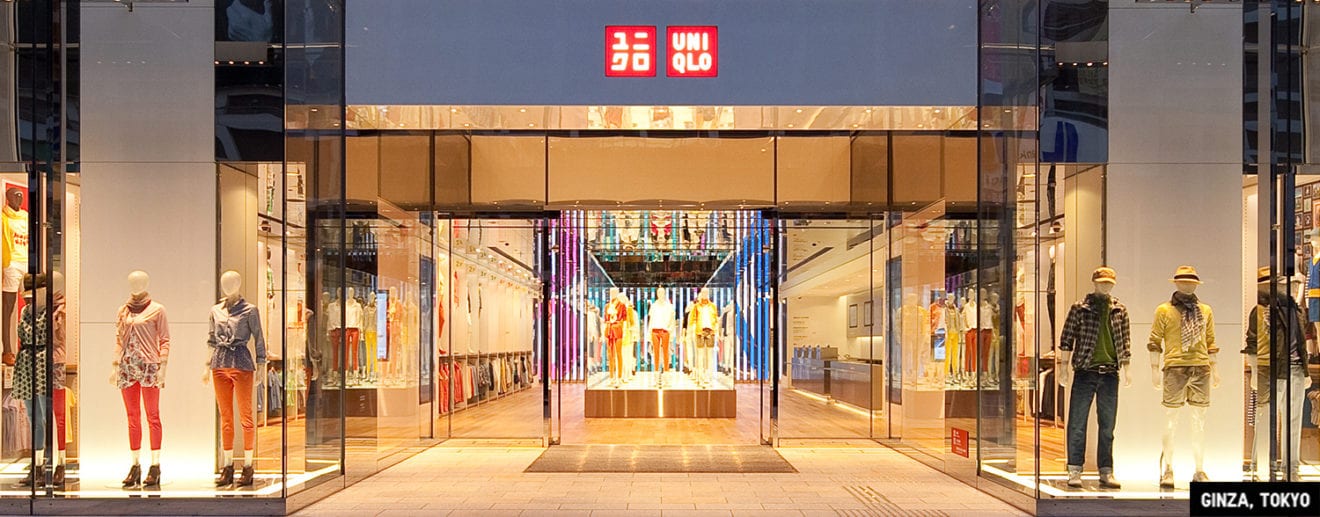
    Fast Retailing will reopen its Uniqlo Tokyo store this month, a global flagship that will be the first in the world to reflect the brand’s new LifeWear concept.

    The store is located in the same building as the Ginza Marronnier Gate store which opened eight years ago, but has been expanded to cover four floors with its interior completely remodeled.

    Uniqlo Tokyo will open on June 19. The LifeWear concept represents Uniqlo’s commitment to offering “well-designed clothing that meets everyone’s needs for daily wear”. The focus is on high-quality, functional, affordable, and innovative apparel which will be available in a variety of colors and designs for men, women, kids and babies.

    Uniqlo Tokyo was designed by Fast Retailing’s creative director Kashiwa Sato, working with Swiss architectural company Herzog & de Meuron and Japan’s Praemium Imperiale.

    In a statement, Fast Retailing said the company considers Uniqlo Tokyo will be a key store that will “change the flow of customers in Ginza, conveying to visitors the latest LifeWear, and allowing them to experience the world’s finest products and services”.

    “The opening of a location in this prime area is an important and major part of the Uniqlo store development strategy.”

  • Giant Nike Thailand opens flagship store in Bangkok

    Giant Nike Thailand opens flagship store in Bangkok

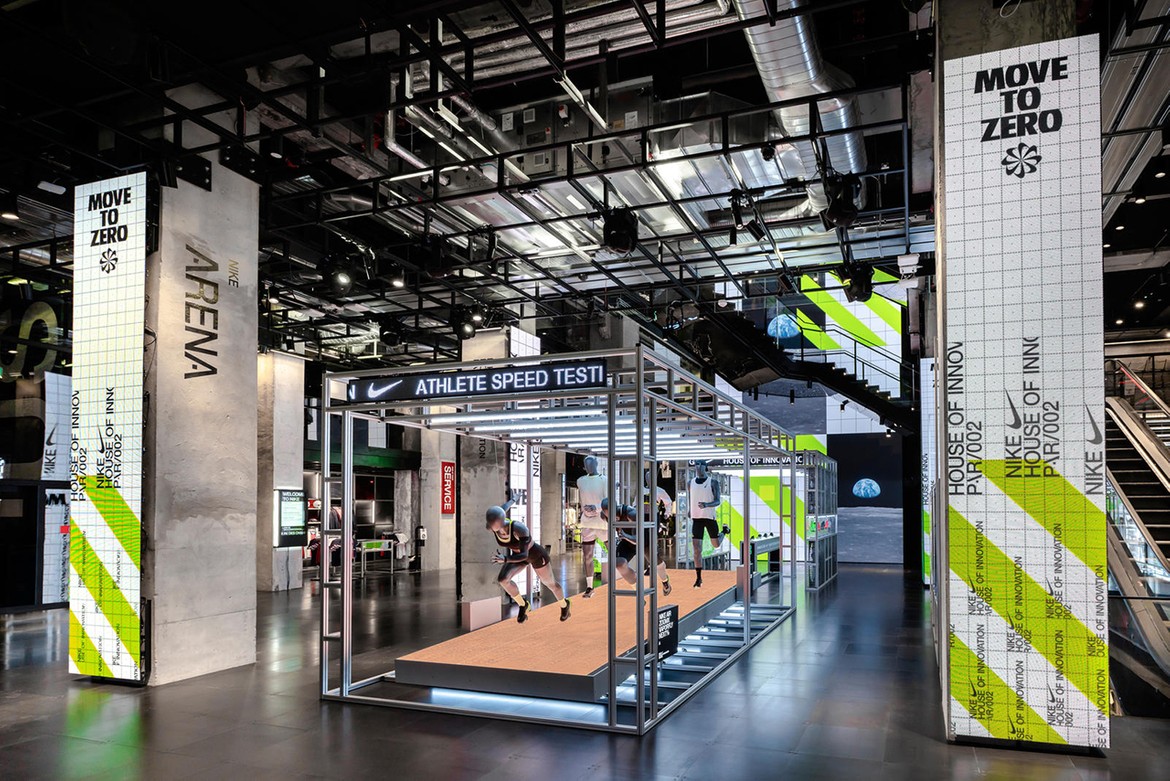
    A giant Nike Thailand flagship store has opened in Bangkok’s Siam Center, with a footprint spanning more than 9000sqft.

    Designed to showcase Nike’s product innovation across multiple categories, the store also offers the brand’s first “Nike By You” in-store customization service in Thailand.

    Operated by Southeast Asian luxury and lifestyle retail specialist Valiram, the new Nike Thailand store offers a blend of physical and digital retail experiences for shoppers

    “Nike Bangkok at Siam Center exists to offer everyone the ability to make sport a daily habit, ensuring they are inspired and committed to staying active,” said director of Nike stores Southeast Asia & India Tarundeep Singh.

    “The top Nike offerings have been carefully curated for this community, and the store has been conceptualized with multiple touchpoints for a fully immersive and seamless Nike experience that is truly personalized and unique.”

    Services such as head-to-toe apparel fitting and footwear trialing are offered at the store to provide consumers with opportunities to deepen their connection with the brand and select products suited to their needs. Shoppers can also book one-on-one sessions with running experts and styling specialists.

    Valiram executive director Ashvin Valiram describes the new Nike Thailand store as a “truly unique and immersive experience that pushes the boundaries of retail, empowering our consumers to engage with Nike products in new ways”.

    “Creating a world-class retail environment is a Valiram hallmark and the opening of Nike Bangkok at Siam Center in partnership with Nike reaffirms that”.

  • Ted Baker plots new heading after hefty loss

    Ted Baker plots new heading after hefty loss

    British lifestyle brand Ted Baker is seeking to raise £95 million to strengthen its balance sheet in the wake of the Covid-19 pandemic and fund a strategy for expansion dubbed ‘Ted’s Formula for Growth’.

    The plan was revealed along with its results for the year to January 25 during which global sales slipped 1.4 percent to £630.5 million, which the company attributed to discounting to remain competitive against its rivals.

    Wholesale revenue rose by 9.6 percent on the back of expansion into footwear, without which it would have slipped 3.7 percent on a like-for-like basis. Store sales were down by 5.3 percent and licensing revenue down 14.1 percent.

    Recently appointed CEO Rachel Osborne says the new strategy and recapitalization plan will strengthen the company as it rides out the Covid-19 crisis which has had significantly more impact on global retailing since Ted Baker’s financial year closed. Revenue was down 36 percent during the 14 weeks from January 26 to May 2 as stores were shut down in many parts of the world.

    “The Ted Baker brand is much loved, it has a unique personality and character built up over many decades, and that provides us with a remarkably strong foundation from which to continue our international growth,” said Osborne.

    “Over the past six months, our new executive team has pulled together and undertaken a thorough review of the business, identified key opportunities, and acted decisively in a number of areas. I am confident that our transformation plan will enable us to capitalize on our opportunities and deliver value for all of our shareholders.”

    Ted Baker reported a loss of £79.9 million for the year, a significant turnaround from a £30.7 million profit for the year prior. The company said the deficit was due to £84.6 million of non-underlying expenses, mainly an inventory write-down, store asset impairments, and a £7.6 million loss related to the sale of the Asian business.

    The strategy Osborne will now lead, Ted’s Formula for Growth, will focus on making the most of the company’s strong brand, its diversified channel footprint, (retail, wholesale and license channels; multiple product categories and geographic spread), combined with substantial investments during the past five years in IT, CRM, logistics, and infrastructure.

    The company will focus first on stabilizing the foundations of the current business, which has been disrupted in recent months by multiple executive changes, driving growth, and achieving operational excellence.

    The company wants to re-energize the brand, increase engagement, and encourage more people to consider purchasing the brand. It seeks to attract more customers and “gain a higher share of wallet and lifetime value through deeper and broader relationships with new and existing customers” using technology to increase customer acquisition and retention, and increase conversion online.

    The company wants to expand its product range and relevance to make clothing more relevant to all-day occasions, and drive accessories, footwear, and large license partner categories.

    In an outlook note, the company said it plans to cut the number of its suppliers from more than 150 to 100, reduce its stock cycle from three years to two, and reduce staff costs at both head office and in stores.

    By 2023, Ted Baker expects to achieve sales growth of around 5 percent and a pretax earnings margin of between 7 and 10 percent.

    Emily Salter, retail analyst at GlobalData, said that although Ted Baker’s sales are likely to start improving in the next few weeks as stores across Europe start to re-open, recovery will be slow for it as many consumers will be unwilling to return to shopping locations and economic uncertainty will be high, reducing the propensity to spend on premium brands.

    “Prior to the onset of Covid-19, Ted Baker’s sales were suffering as the appeal of the brand was waning as it struggled to resonate with shoppers, with the store and online revenue falling by 5.3 percent and 2.4 percent respectively for the year to February. Although the retailer blamed discounting for this decline, the fact that it was unable to drive growth online points to problems with the relevance of the brand.

    “It now has a permanent CEO and CFO to help address these issues but turning the business around will not be an easy feat as consumer shopping habits are likely to change in the long term due to Covid-19, with shoppers purchasing less frequently and increased spend shifting online,” she said.

  • Descente forced to shutter stores in South Korea as anti-Japan bias continues

    Descente forced to shutter stores in South Korea as anti-Japan bias continues

    Japanese sportswear label Descente is shuttering 47 kidswear stores in South Korea in the wake of anti-Japanese sentiment combined with the impact of Covid-19 on the territory.

    The Young Athlete outlets, which deal in clothing and accessories for kids, will close their department store and mall locations in August, with stock being redistributed to Descente’s full-range stores.

    The formerly popular Descente brand saw an 89-per-cent dip in operating profits last year to US$7.26 million compared with its 2018 results and a 15-per-cent drop in sales to $496.9 million. The drop was initially prompted by souring diplomatic ties between Japan and Korea, prompting a general boycott of Japanese goods in the territory.

    Further declines in business due to the coronavirus pandemic proved too much for the firm, with the Young Athlete stores deemed unviable to continue trading.

    Similar closures have been seen amongst other Japanese firms trading in the Korean market, including fast-fashion giant Uniqlo, which this month announced it would close physical stores of its diffusion brand GU in the country.

  • Asia a bright spot for cashed-up Ralph Lauren

    Asia a bright spot for cashed-up Ralph Lauren

    Luxury retailer Ralph Lauren saw online sales in Asia surge by 15 percent during the peak of Covid-19 lockdowns.  But the company’s early decision to close stores around the world saw overall sales drop by 15.4 percent, resulting in an operating loss of $284 million and a net loss of $249 million for the March quarter.

    Neil Saunders, MD of GlobalData Retail, says while the quarter ended before the peak of the pandemic in the US, the European market was hit hard with revenue down by 19.3 percent year on year and trade in North America down by 11.2 percent.

    “Unfortunately, digital channels did not completely pick up the slack from stores as Ralph Lauren temporarily suspended online operations in late March to enhance health and safety protocols. On a comparable basis, this pushed down sales by 7 percent in North America and 2 percent in Europe.”

    Saunders says that while Ralph Lauren’s loss may widen in the second quarter, the company has liquidity of more than $2 billion and a very strong balance sheet with minimal debt. “On top of this, actions to reduce expenditure in the near-term will help to minimize losses and preserve cash.”

    Saunders says the crisis came at an unfortunate time for the brand. “This quarter should have been one which capped a year of recovery for the group, which has been trying to improve its brand image and connect with new customers. In our view, while progress was patchy – especially in North America – there were signs that things were going in the right direction with steady growth in comparable sales and some stronger results from Asia and Europe.

    “Sadly, the severe downtick in trade has undone this advancement and for the full fiscal year the company will end up with a comparable sales decrease of 2 percent.”

    He believes that many Asian markets will see a reasonable bounce back in retail sales for the brand in the current quarter, but doubts the same will be true of Europe and especially not in the US.

    “The first issue in the US is that, even before the pandemic hit, the improvement in Ralph Lauren’s business was only partial. The company was moving in the right direction, but enhancements in marketing and assortments had not fully taken root and brand perception was only inching up by small increments.

    “For this reason, we do not believe that there will be a mass of customers clambering to get back to the brand once things fully reopen. This is even more so as some of what Ralph Lauren sells will, at least in the near-term, be much less relevant to consumers who are staying at home more and going out less.”

    Saunders says Ralph Lauren also faces challenges in its wholesale division, exposed to “some very unfavorable channels, especially department stores”.

    “The recovery in these locations will be weak and protracted so, although Ralph Lauren has been reducing its reliance on third-parties, it will be unduly affected. Some of the flagship stores will also suffer from a reduction in tourist numbers, which are an important component of their success. Both these structural challenges to the business will not abate before 2021.”

  • Abercrombie & Fitch sales tumble in SE Asia

    Abercrombie & Fitch sales tumble in SE Asia

    US apparel retailer Abercrombie & Fitch suffered a 51-per-cent fall in sales in Asia Pacific in its first quarter as Covid-19 forced store closures across the region.

    Worldwide, the company suffered a 34-per-cent decline, but at least one analyst is impressed that the company’s sales did not fall further.

    “The group was one of the first to close its physical stores as this crisis broke and it is very heavily exposed to discretionary apparel categories that took a battering during the depths of the pandemic,” said GlobalData Retail MD Neil Saunders.

    “Compared to rivals, A&F has performed relatively well.”

    The loss of sales in physical stores was compensated for in part by a 25-per-cent rise online.

    “Over the period, A&F did a good job with digital marketing and kept customers regularly informed of various offers and deals,” said Saunders. “This both helped to keep the brand on the radar and stimulated some buying activity in a market that would otherwise have been very subdued.”

    In terms of sales across all channels, the company’s namesake brand performed the best, declining 30 percent worldwide. Sales at the surfwear concept Hollister declined by 36 percent. By geography, sales fell 31 percent in the Americas and by 35 percent in Europe, Middle East and Africa (EMEA).

    The soft sales saw the company record an operating loss of US$209 million and a net loss of $244 million.

    As at the end of May, Abercrombie & Fitch has reopened about half of its global store network in the wake of the Covid-19 crisis. Sales at those stores are running at about 80 percent of the levels of one year ago in North America, and 60 percent in EMEA.

    “This is not a bad initial come-back figure, especially as our data shows that where reopening has occurred, customer traffic and spend is gradually building which indicates the numbers will strengthen as time progresses,” says Saunders.

    “Nevertheless, the numbers show that trade is not coming back with a bang and given A&F is in a relatively good position in terms of brand and product mix, productivity levels will be significantly worse in other parts of the apparel market.”

  • Hublot opens its largest flagship in Tokyo

    Hublot opens its largest flagship in Tokyo

    LVMH-owned watchmaker Hublot has opened its largest flagship store yet in Tokyo’s Ginza shopping district in Japan.

    Called “Hublot Tower”, the new flagship features a 56-meter-high artistic facade with glass panels scattered with mirrored tiles.

    Located on Chuo-dori Street, Hublot’s Ginza store occupies a 300sqm space, spanning three floors. The store’s design was inspired by the cosmopolitan city, using different materials such as mirrors, glass, marble and metal to create a contemporary style.

    “In only 40 years, Hublot has seen many firsts and many successes, and today is again another milestone for our Maison,” said Ricardo Guadalupe, CEO at Hublot.

    “We have long had a presence on the most prestigious streets in the world’s metropolises and from today in Japan too, our number one market. Hublot Tower is a symbol of the fusion of modernity and tradition that we ardently pursue and uphold in all our actions.”

    All of Hublot’s collections, including the brand’s latest limited-edition Big Bang GMT All Black Yohji Yamamoto watch, can be founded on the store’s first floor. The second-floor houses a VIP experience room, and the third-floor exhibition space.

  • H&M launches menswear clothing line using intelligent fabrics

    H&M launches menswear clothing line using intelligent fabrics

    Sweden fashion retailer H&M launches an intelligent fabric this week, deploying fashion technology for menswear which keeps the wearer cool in the summer heat.

    Called Coolmax, the intelligent fabric absorbs moisture and allows air to pass through.

    “We see fabric innovation as pushing menswear forwards in new ways,” said Ross Lydon, head of menswear design at H&M. “Coolmax is our first collection that optimizes everyday clothing with high-performance materials. It is a segment of the market that we will continue to explore and focus on in the future.”

    Coolmax fabric will be used in clothing such as polo shirts and crewneck T-shirts or jeans. The hero of the new Coolmax collection is a two-button tailored slim-lapel jacket, pictured at the top of the screen, which retails for 69.99. T-shirts are priced at €9.99 and polo shirts at 14.99.

  • Indian jeweller Zoya expands in-country

    Indian jeweller Zoya expands in-country

    House of Tata’s luxury jeweler Zoya is launching a boutique in Bangalore. The 3300sqm South Indian flagship is opening a business in the city’s most prominent luxury strip on central Vittal Mallya Road with a venue aiming for an understated ambiance that evokes an appreciation for fine artistry and handcrafted jeweled accessories.

    “Zoya’s collections are inspired by myriad journeys, from the ones that take you across the world to the ones that help you discover your own feminine self,” said Zoya business head Amanpreet Ahluwalia. “The creative process of each jewelry piece can take up to a year from the idea of bringing it alive, resulting in artistic masterpieces, each with its own story to tell.

    “Having received a wonderful response from the North and West of India, we couldn’t have found a location for our Bangalore boutique that resonated more perfectly with the brand.”

    The boutique is conscientiously promoting its in-store sanitization protocols with the country still in the midst of the coronavirus pandemic.

  • Vely Vely selects Indonesian YouTube rising star to boost SE Asian brand

    Vely Vely selects Indonesian YouTube rising star to boost SE Asian brand

    South Korean cosmetic brand Vely Vely is banking on Indonesian YouTube star “Sunnydahye” to increase brand awareness as it launches into Southeast Asia.

    Sunnydahye is one of the most popular KoLs in Indonesia with more than 1.8 million subscribers on her YouTube channel. Using Sunnydahye’s influence in Indonesia and across Southeast Asia, Vely Vely hopes to accelerate its overseas market entry.

    The brand recently hosted her at its five-story flagship store in the Seoul district of Sangsu-dong.

    During her time in South Korea, Sunnydahye was introduced to Vely Vely’s latest beauty line including face mists and eye shadows. The Indonesian KoL later reviewed the products online.

    “We are very much pleased to invite Sunnydahye who has a large fan base in Indonesia while the level of interest in K-beauty is increasing in the Southeast Asian region,” said a company spokesperson. “With Sunnydahye, we will be able to introduce Vely Vely and Imvely brands to a greater number of customers in Indonesia.”

    Sunnydahye’s video review has attracted more than 250,000 views and 1000 comments, attesting to the South Korean brand’s growing popularity in Indonesia.

  • Le Saunda posts third consecutive loss

    Le Saunda posts third consecutive loss

    Hong Kong shoe retailer Le Saunda has reported yet another annual loss – this time of US$4.28 million – as a “super-cold winter” hit Hong Kong’s retail sector.

    The loss followed last year’s $3.9 million, while in 2018 it lost $8.4 million. That adds up to a $16.6 million deficit for the last three years and given the tumult of the Greater China retail market in the wake of Covid-19, it is hard to see the beleaguered business returning to the black any time soon.

    The last time Le Saunda posted a profit was in the year to February 2017, of $10.5 million.

    Chairman James Ngai said in a results filing that the group’s total revenue in the year to February fell 19 percent to $103.26 million. The company, which trades under the brands Le Saunda, Linea Rosa, Pitti Donna and CNE, closed a net 85 stores during the year leaving its chain at 441. The majority of the closures were company-owned stores, the balance of 11 Mainland China franchised outlets.

    Ngai said the Sino-US trade conflict dampened consumer sentiment on the mainland, the major source of its revenue, and then the Covid-19 outbreak drove sales down further.

    “While the Hong Kong market was expecting that consumption would be stimulated during the traditional peak season of the Chinese New Year, there came the threat of the Covid-19 epidemic, worsening the already gloomy local market and pushing Hong Kong’s retail industry into a super-cold winter,” he said.

    Hit by the local social events, Covid-19 and the external economic uncertainties, sales in Hong Kong and Macau decreased by 46.8 percent to $4.3 million. Le Saunda now has just six stores left in Hong Kong and Macau, five fewer than at the end of the previous fiscal year, and Ngai said more will close “as appropriate” given Hong Kong landlords have not dropped rents in line with falling retail sales. Le Saunda will focus on accelerating the development of local online business and work to improve service and operating efficiency of those physical stores it retains.

    While the group managed to reduce its inventory by 16.1 percent year on year, because the decline in sales outweighed the change in stock levels, the inventory turnover days of finished goods stretched out by 43 days to 369 days.

    Subsequent to February 29, the group closed its factory at Shunde in Guangdong as it now outsources all footwear production to external subcontractors to better manage inventory and control costs. Space within the plant continues to be used as a warehouse and for offices.

  • Sephora launched Tmall flagship store in China

    Sephora launched Tmall flagship store in China

    Sephora China has launched a flagship store on Alibaba’s B2C platform Tmall Global.

    The Sephora Tmall Global flagship features a selection of beauty brands including Fenty, perfume house Bon Parfumeur, and skincare brands like Farmacy and Dermalogica. The cross-border store also introduced a series of beauty lines’ China debut such as Natasha Denona and Sunday Riley.

    As part of the launch, the beauty retailer unveiled its first showroom presenting cross-border beauty products with “cloud shelves” in a physical Sephora store.

    “Through the synergy of online and offline channels, consumers can access overseas brands to fulfill their emerging and evolving needs,” said Benjamin Vuchot, president of Sephora Asia. “This initiative is very special to us, as we are celebrating the 15th anniversary of Sephora China this year.

    “The opening of the Sephora Tmall Global flagship store offers a great opportunity for Sephora to continue reinforcing its commitment to the China market, by catering to the Chinese consumer’s ever-changing trends and evolving needs to enhance their beauty power,” Vuchot said.

    The Sephora Tmall Global flagship houses 600 products from 25 overseas beauty brands in the country.

  • Chanel faces fair-trade hurdles in South Korea

    Chanel faces fair-trade hurdles in South Korea

    French luxury label Chanel is under investigation for alleged breaches of South Korea’s Free Trade Act.

    The Korean Free Trade Commission (KFTC) is looking into allegations that the firm is placing unfair restrictions on duty-free operators distributing its products to local retailers. Korean law has recently relaxed restrictions on how duty-free companies can sell and distribute stock following the heavy impact of the coronavirus pandemic on the industry. The previous regulations restricted duty-free companies from passing stock and inventory to local retailers.

    The French group however is refusing to allow its products to be sold at potentially reduced prices.

    “If a firm does not allow a business partner to sell its products at a certain price and threatens to cut supplies or impose a penalty in any future business relations, this is a contravention of the Fair Trade Act,” a KFTC official said.

    “If Chanel violates the act, then we can bring a case for possible judicial review and apply administrative actions, accordingly, from imposing fines through to issuing a correction order or even prosecuting the brand, in the worst-case scenario.”

    Customer levels have reduced 85.7 percent since the outbreak, with sales halving from KRW2.17 trillion (US$1.76 billion) down to KRW1.08 trillion ($885 million).