Category: Finance

Retail News Asia is committed to providing both local and global retailers with the latest Finance news throughout the Asian market. This on a daily base.

  • Barrenjoey Raids UBS’ Australia Unit

    Barrenjoey Raids UBS’ Australia Unit

    Startup investment bank Barrenjoey continues to lure talent from UBS’ Australia unit with around ten executives leaving the Swiss bank in the latest wave of moves.

    Multiple executives at UBS, including top analysts, have resigned to join Barrenjoey – an investment banking startup partly owned by Barclays and Magellan Financial Group – according to an Australian Financial Review report.

    Those defecting include banking analyst Jon Mott; mining analyst Glyn Lawcock; the former two’s junior partners Dan Morgan and Minh Pham; gaming and transport analyst Matt Ryan; small caps specialist Josh Kannourakis; associate director of research Craig Stafford; and retail and consumer goods analyst Aryan Norozi.

    In addition to analysts, the investment banking team has also been targeted with equities desk specialist Craig Webb set to join Barrenjoey alongside senior technology, media and industrials banker Luke Bentvelzen.

    Even prior to the mass resignations on Monday, Barrenjoey had already been seeking ex-UBS talent in Australia. Barrenjoey senior managers formerly from UBS include ex-advisory and capital markets managing director Guy Fowler; ex-research head Chris Williams; ex-managing director Matt Hanning; ex-global co-head of flow rates and co-head of global markets Duncan Haig; and ex-senior trader George Kannan.

    Ex-UBS Australia chief executive Matthew Grounds is also rumored to join the investment banking startup following the expiration of a non-compete clause.

    In response to the exits, current UBS co-head of Australasia Nick Hughes said that the local unit had global banking and that it was committed to re-hiring and maintaining high competitiveness in the Australian investment banking sector, though he noted that rapid replacement of loss talent would be a challenge.

  • PG Bank merger plans collapse… again

    PG Bank merger plans collapse… again

    The proposed merger between PG Bank and HDBank is set to be called off, making it the former’s third failed merger bid in the last six years.

    The management of fuel distributor Petrolimex, which owns a 40 percent stake in PG Bank, has expressed disappointment in the delay in merging at the bank’s last two annual general meetings. Its earlier aborted merger bids were with state-owned VietinBank and Military Bank (MB).

    PG Bank announced in 2014 plans to merge with VietinBank. Bank mergers usually mean a larger bank acquiring a smaller one or two banks merging into one and acquiring a common identity.

    Vietnam saw its share of such deals at that time like SCB acquiring Tin Nghia Bank and De Nhat Bank, SHB acquiring Habubank and Western Bank merging with PVFC to form PVcomBank.

    But PG Bank wanted to keep its own brand and operate as “a bank within a bank,” something without precedence, and predictably the deal collapsed despite four years of talks.

    MB announced the same year that it was looking for potential acquisitions and PG Bank was one of its targets. The two held negotiations but no deal was signed.

    HDBank immediately came up with a merger proposal, but three years on the two have not been able to finalize a deal.

    The repeated failures have taken a toll on the bank. It has not been able to expand since 2014 since an expansion would affect the valuation.

    Its charter capital remains unchanged at VND3 trillion ($130 million).

    In 2019, it had said the delay in merging with HDBank was affecting its business and caused employee turnover to increase.

  • HSBC Launches Fund Administration Services in Thailand

    HSBC Launches Fund Administration Services in Thailand

    This move is in line with the change in the securities services landscape in Thailand, which has relaxed outsourcing rules to boost the efficiency of local fund managers’ operations.

    By outsourcing their back-office operations to HSBC, asset owners and managers will be able to focus on their core offerings, the bank said in an announcement on Tuesday.

    The service will be available on HSBC’s Multifonds fund administration platform. HSBC clients already have access to custody and fund supervisory services offered by the bank.

    “Our clients have expressed a keen desire to improve efficiency and reduce cost, reduce operational risk, adapt to their investors’ need and manage regulatory changes effectively, Utumporn Viranuvatti, HCBC head of securities services, Thailand, said in the announcement.

    The bank said it has many other offerings planned a part of HSBC Securities Services’ Asia-first strategy to accelerate growth in the region by ramping up its investment in additional solutions and capabilities.

    HSBC has been expanding its offerings in Thailand as part of its bid to strengthen its Asean coverage. HSBC Private Bank launched its onshore business in the kingdom in February 2021, the bank’s second onshore business in the region after Singapore.

  • ACB expects profits to top $460 mln

    ACB expects profits to top $460 mln

    Asia Commercial Bank has set itself a profit target of VND10.6 trillion ($460.8 million) for 2021, up 10 percent from last year.

    If it manages to achieve the target, it will join a select group of lenders to surpass the VND10 trillion mark comprising state-owned lenders Vietcombank, VietinBank, MBBank, Vietnam’s largest private bank Techcombank, and VPBank.

    It also targets growing its assets by 10 percent and credit by 9 percent and keeping non-performing loans under 2 percent.

    ACB plans to pay 25 percent dividends for 2020 and 2021 in the stocks.

    Its profit target is lower than forecasts by some securities companies. Vietcombank Securities expects ACB to achieve a profit of VND11.7 trillion, while KIS Vietnam, owned by Korea Investment & Securities Co., Ltd, said it is likely to top VND11.3 trillion.

    The expectations are based on its high credit growth in 2020 of 15.7 percent against 11 percent for the banking industry and a bancassurance deal it recently struck with Canadian insurance company Sun Life with an upfront fee of VND8.5 trillion.

    ACB’s profits rose by 27.7 percent last year to VND9.6 trillion.

  • Hong Kong Cross-Border Wealth Scheme Delayed by Pandemic

    Hong Kong Cross-Border Wealth Scheme Delayed by Pandemic

    Banks looking to capitalize on wealth management opportunities from the Greater Bay Area will have to wait until travel bans are lifted, according to the Hong Kong Monetary Authority.

    HKMA chief executive Eddie Yue said that the existing travel bans make it difficult to launch the ‘Wealth Management Connect’ scheme – a cross-border channel that will allow mainland residents of the 11-city cluster to invest in Hong Kong and Macau-based wealth management products.

    Under the current rules, investors seeking such products must physically open an investment account in person for the financial firm to share relevant information and risks.

    The overall scheme allows an individual investor quota of 1 million yuan ($150,000) each and an aggregate quota of 300 billion yuan (US$45 billion) for north and southbound fund movements.

    While it remains to be seen when travel restrictions will be removed – Hong Kong recently recorded another wave of coronavirus cases that led multiple banks to advise employees to work from home – HKMA is actively working with Beijing to simply the process for cross-border account opening.

    According to Yue, a simpler process could be introduced which would require only one-time cross-border travel, compared to the current practice which requires a plethora of documents and often multiple visits.

    Other cross-border initiatives that the HKMA is focused on include the southbound segment of the bond connect scheme which is planned for a launch in the second half of 2020 after the northbound segment was introduced in 2017. Unlike the wealth management connect scheme, cross-border trading does not require physical travel.

  • HSBC Scales Up Structured Product Capabilities

    HSBC Scales Up Structured Product Capabilities

    Luxury as an investment theme is poised to benefit from strong economic recovery led by Asian economies in the post-COVID-19 world. Against this background, HSBC has rolled out a new structured product linked to a customized index.

    In an effort to further the bank’s ambition of becoming Asia’s leading wealth management bank, HSBC scales up its structured product capabilities in Hong Kong and Malaysia. In addition to a wide array of products linked to standard and thematic market indices, the bank has rolled out a new structured product linked to a customized index, providing an investment opportunity for wealthy clients to capitalize on the growing luxury consumption in Asia, HSBC announced in a statement on Monday.

    Luxury spending from Asia, and in particular mainland China, already accounts for a significant portion of global luxury consumption. Luxury as an investment theme is poised to benefit from strong economic recovery led by Asian economies in the post-COVID-19 world.

    The growth of the wealth management market is unparalleled in Asia, underpinned by the expansion in high net worth population and the increase in their sophistication. Therefore, we are working closely with our Global Markets colleagues to bring innovative structured products to our customers. This index-linked structured product exemplifies our commitment to meet customers’ diverse wealth management needs aligned to prevalent investment themes, Maggie Ng, Head of Wealth and Personal Banking, Hong Kong, HSBC, said,

    HSBC’s new luxury index provides investors dynamic exposure to a list of global stocks that have high exposures to the luxury sector.

    To accelerate the growth of the wealth business in Asia, Global Markets continues to invest in our product manufacturing capabilities leveraging our market expertise, and deliver bespoke solutions for wealth clients, said Justin Chan, Head of Greater China, Global Markets, Asia-Pacific, HSBC.

    HSBC Global Research estimates that the luxury goods market in mainland China will likely achieve 48 percent growth in 2020, doubling its overall share of the global luxury market in 2020, with further growth expected through to 2025. We are also bullish on the sector due to the likely consolidation seen in the industry and the use of more affordable online sales channels», he added.

  • Ant Group Issues Financial Self-Discipline Rules

    Ant Group Issues Financial Self-Discipline Rules

    The internal guidelines come amid increased scrutiny by Chinese regulators of the country’s financial technology sector.

    In a statement, Ant said it will stop issuing loans to minors on its consumer loan platforms and will prevent small business loans from flowing into stock and property markets. The group’s credit-rating service Zhima Credit will also not be available to financial institutions including microloan lenders.

    The publication of the rules on Friday comes four months after the technology giant’s scrapped $37 billion IPO. The group has since agreed with Chinese regulators to restructure itself into a financial holding company, which will make it subject to capital requirements similar to those for banks in mainland China.

    Last month, the governor of the People’s Bank of China Yi Gang suggested a listing revival was possible for Ant, saying that you just follow the standard of legal structure and you will have the result.

    However, no timeline was specified, and the restructuring is expected to take some time with the listing revival not within the scope of the high-level government agenda right now, according to a report which highlighted greater focus by Beijing on Ant’s shareholders.

  • Allianz Partners Hong Kong Fintech Expansion

    Allianz Partners Hong Kong Fintech Expansion

    The investment will be used to finance WeLab’s further expansion and, in particular, enable the ongoing development of its technological platform.

    Allianz X, the digital investment unit of Allianz, has joined the Series C funding round for WeLab, with a $75 million investment, it announced in a statement this week.

    The investment aims to enable business expansion and tech platform development, as WeLab has close to 50 million private and business clients in Hong Kong and China, which are key growth markets for Allianz.

    The German insurance and asset management firm will cooperate with the unicorn on insurance and investment products, including digital wealth management solutions in Hong Kong. An expansion of the partnership is planned for the Greater Bay Area, and to Indonesia and Southeast Asia at a later stage, the announcement said.

    Asia is home to some of the most dynamic wealth management and banking markets of the world. Hong Kong, in particular, is a significant market for us, Desmond Ng, Allianz Global Investors head of Asia Pacific, said in the statement.

    Allianz X has already made several other investments in the region, including telemedicine company Halodoc, digital real estate brokerage 99.co, ride-hailing and lifestyle services platform GoJek, and BIMA, which provides digital insurance in emerging and developing markets.

    Established in 2013, WeLab provides digital banking services and loans for private customers, a digital lending platform to connect lenders and borrowers, as well as a number of technology-driven services. It has close to 50 million retail customers and 600 corporate customers in China, Hong Kong and Indonesia.

    In July 2020, WeLab Bank became the third of eight licensed virtual banks to launch in Hong Kong

  • Mary Kay names new Asia Pacific regional president

    Mary Kay names new Asia Pacific regional president

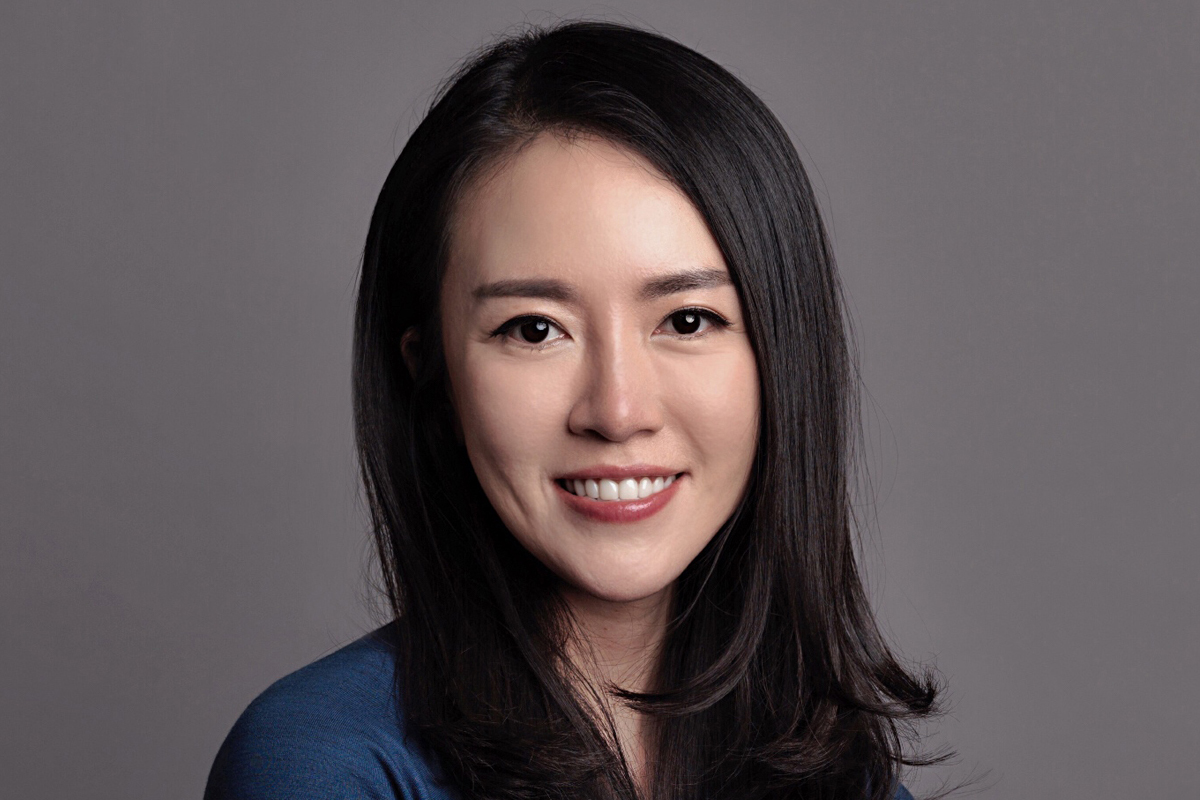
    Mary Kay announced Wendy Wang will be appointed President of the company’s Asia Pacific Region. In her new role, Wang will provide strategic vision and leadership and drive growth in the region and beyond.

    “We want to congratulate Wendy as she transitions into her new role as President of Mary Kay Asia Pacific,” said David Holl, Mary Kay Chairman and Chief Executive Officer. “Wendy is passionate for the Mary Kay independent sales force and is a proven leader within Mary Kay. During her tenure, she has tirelessly built a strong and talented legal team that created a culture of compliance and compassion for China and the entire Asia Pacific Region. We are thrilled to welcome her as a member of the executive committee as we build on our efforts to enrich women’s lives around the globe.”

    Wang joined the company’s legal department in 2002 as Counsel for the Asia Pacific region and worked in China until 2012, when she was promoted to Vice President and Associate General Counsel over all four regions. In 2019, she returned to China and was promoted to Chief Commercial Officer for the Asia Pacific Region in 2020.

    “I am committed to empowering women and their families in the Asia Pacific region,” Wang says. “Supporting Mary Kay’s independent sales force is my greatest honor and always brings me hope, love, and confidence in our future. We are a people business with a mission to enrich women’s lives and a vision to empower the Independent Beauty Consultant. My team and I are committed to delivering the very best business opportunity, building upon the values Mary Kay upholds as cornerstones of our corporate culture and mission.”

    This promotion is a continuation of Mary Kay’s commitment to empowering women leaders. As of March 2021, the company’s global executive team is more than 50 percent female.

  • Chinese Fintech Giants Join Efforts to Calm Markets

    Chinese Fintech Giants Join Efforts to Calm Markets

    Chinese fintech giants Ant Group and Tencent are the latest to attempt to inspire calm in markets after they told investors not to overreact to price swings and avoid making hasty decisions.

    Alipay, Ant Group’s payment arm, issued a letter earlier this week in its app to urge investors to take a longer-term view on the stock markets, which have seen turbulent swings erase $1.3 trillion from the CSI 300 index two weeks after reaching a 13-year high.

    According to the letter by a think tank under Ant Fortune – a wealth management platform within Alipay that provides access to over 6,000 funds – volatility is a natural characteristic and driver of returns for equities. Short-termism could result in investors «buying high and selling low», it said, adding that full panic in the market could signal that stocks have bottomed out.

    Earlier this month, Tencent’s wealth management platform also posted an article earlier this month, reminding investors that the majority of companies that generate high returns have previously seen a significant correction of share prices.

    The fintech duo’s warnings to investors coincide with efforts by Beijing to also inspire calm in markets.

    Chinese authorities are reportedly injecting funds to support the market via its so-called «national team» and censoring search phrases on social media.

  • Singapore-Based Blockchain Platform Zilliqa Launches Investment Hub

    Singapore-Based Blockchain Platform Zilliqa Launches Investment Hub

    Zilliqa Capital aims to invest in decentralized and fintech solutions in Southeast Asia and India, across investing, wealth management, insurance, lending, payments, and remittances, as well as critical infrastructures that will enable Web 3.0.

    Zilliqa Capital will be led by financial services veteran Michael H. Conn, the firm’s chairman, CEO, and co-chief investment officer, while Zilliqa co-founder, president, and chief scientific officer, Amrit Kumar, will serve as Zilliqa Capital’s co-chief investment officer and director, the company said in an announcement.

    The goal of Zilliqa Capital is to operate as a permanent capital, ecosystem-focused investment company, the announcement said. It will invest in Zilliqa’s native utility token «ZIL» as a strategic asset, and selectively invest in Zilliqa and relevant non-Zilliqa based businesses.

    Zilliqa, headquartered in London and Singapore, is a public blockchain platform known for use of sharding as an on-chain solution to preserve decentralization and enable greater scalability.

    Conn is the co-founder and former CEO of Ether Capital. His career spans the traditional financial services and digital assets space, with senior leadership positions at AllianceBernstein, Société Générale, Trust Company of the West, AsiaVest, and Quail Creek Ventures.

    We aim to be pragmatic and not dogmatic in seeking and delivering solutions that broaden access to financial services and products that are both accretive to our investors, as well as to the people served by the companies we support. We believe Singapore to be the ideal hub for the development and growth of our innovative approach to investing in the fintech and digital asset space, Conn said.

  • Standard Chartered Joins BlackRock’s Provider Network

    Standard Chartered Joins BlackRock’s Provider Network

    The bank will offer integrated front-to-back office investment management solutions to mutual clients across Asia, Africa, and the Middle East on the Aladdin platform.

    Standard Chartered has become the latest bank to ink a strategic partnership with BlackRock’s «Aladdin» provider network, a platform that helps assets managers check risk in their portfolios, trade, manage data management, and other operational tasks.

    The alliance builds on Standard Chartered’s ongoing relationship with BlackRock, leveraging the focus both organizations have on innovation and digitization and is part of the Bank’s longer-term strategic partnership with the global asset manager to provide an enhanced experience for our institutional clients, Standard Chartered said in an announcement on Wednesday.

    Aladdin – or asset, liability, debt, and derivatives investment network – was conceived by the New York-based firm in the late 1990s as an internal tool. Today, it is one of Blackrock’s most powerful tech tools that it sells to smaller rivals, in a bid to stave off pressure on its active management fund arm from cheaper index funds. Credit Suisse and HSBC adopted the platform in 2019 and 2020 respectively.

    Akiyoshi Takeuchi, head of BlackRock Solutions Asia-Pacific, said Standard Chartered’s adoption of the platform «underscores growing momentum in bringing innovative solutions deeper into emerging markets throughout Asia, Africa, and the Middle East.»

  • OCBC Appoints Independent Director

    OCBC Appoints Independent Director

    He previously spent more than two decades at the Monetary Authority of Singapore, and was deputy managing director, corporate development, when he left in 2019.

    OCBC has appointed Andrew Khoo Cheng Hoe as a non-executive and independent director, effective March 8, according to a filing with bourse SGX.

    He will serve as a member of the board audit committee as well as the ethics and conduct committee, the announcement said.

    Khoo, 57, is an adjunct professor at the NUS Business School. He is also a director at the National Environment Agency, as well as at Stroke Support Station.

  • Gojek-Grab Rivalry Extends to Digital Payments

    Gojek-Grab Rivalry Extends to Digital Payments

    Gojek has joined rival Grab in backing Indonesian state-backed e-wallet company in its Series B funding round.

    Gojek’s joining as a strategic shareholder will provide LinkAja access to the Gojek ecosystem to support LinkAja’s mission in accelerating financial inclusion in Indonesia, LinkAja CEO Haryati Lawidjaja said in a statement.

    As part of the deal, the ride-hailing giant will add LinkAja as a payment option on its app. The strategic investment builds on Gojek’s ongoing collaboration with the e-wallet, which includes payment for transportation and ticket reservation services.

    Formed from a consortium of state-owned enterprises, LinkAja operates an e-wallet and merchant services business focusing on the middle class, and micro, small, and medium-sized enterprise (MSME) segments in Indonesia.

    About 80 percent of its users are from tier 2 and 3 cities, according to LinkAja.

    According to GlobalData, rising Internet penetration, increasing digitalization and the proliferation of websites have been driving the growth of e-wallets in Indonesia, which further rose during the Covid-19 pandemic as customers have turned to alternative payment tools.

    Investments in state-backed entities can be a strategic move to maintain a healthy relationship with the government machinery. Though both Grab and Gojek managed to garner investment positions in LinkAja, Gojek seems to get some home advantage, Aurojyoti Bose, lead analyst at GlobalData, said about the deal.

    Grab, which competes with Gojek for dominance in the digital payments space in Southeast Asia, announced in November 2020 that it had invested $100 million in LinkAja, with participation from Telkomsel, BRI Ventura Investama and Mandiri Capital.

  • Pay Hikes and Promotions to Resume at UOB

    Pay Hikes and Promotions to Resume at UOB

    The bank has announced that it will launch in June a round of pay increases and promotions, excluding senior employees, that will cover up to 98 percent of its employees.

    UOB said it is confident in a sustained economic recovery in 2021, and wants to recognize the efforts made by its 26,000-strong workforce in helping the bank navigate and emerge stronger from the crisis, according to a statement on Tuesday.

    The bank will award high-performing employees above-market average salary increases and grant mid-year promotions to staff with widened job scopes and who exceeded performance expectations over the last 12 months, the announcement said.

    With the green shoots of recovery appearing late last year and showing growth well into the new year, UOB has remained resilient. This is in large part because of the sense of purpose, strong team spirit and determination of our people, Dean Tong, UOB head of group human resources, said.

    UOB recently posted its annual earnings – S$2.92 billion ($2.21 billion) for the full year 2020, or 33 percent lower than 2019’s record earnings, citing lower margins and reduced customer activities amid the COVID-19 pandemic.

    In its annual report, UOB said it was optimistic about improved economic conditions, given ASEAN’s improved connectivity with Greater China and the region’s growing affluence, and would be rebalancing its business to focus on wealth and connectivity-related products and services that bring more value to customers and drive higher fee income.