Category: Finance

Retail News Asia is committed to providing both local and global retailers with the latest Finance news throughout the Asian market. This on a daily base.

  • Vietnamese banks continue to ascend global brand rankings

    Vietnamese banks continue to ascend global brand rankings

    Nine Vietnamese lenders, five of them state-owned, have risen up the list of the world’s 500 most valuable banking brands.

    State-owned Agribank, one of the ‘Big 4’ state-owned lenders, jumped 17 places to 173th in the annual ranking put out by U.K. consultancy Brand Finance.

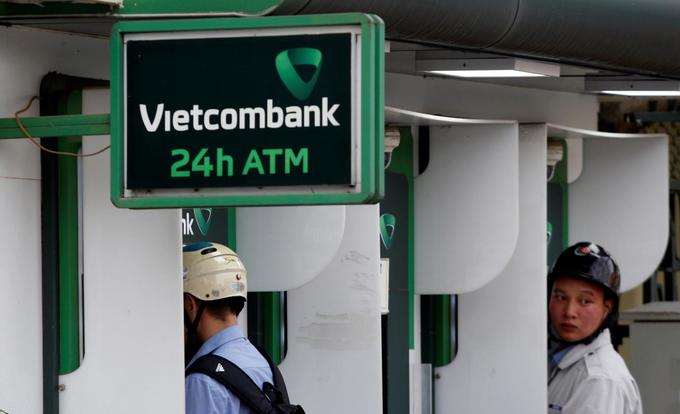
    Fellow state-owned lenders Vietcombank and VietinBank rose 27 and 61 spots to 180th and 216th.

    BIDV was at 246th and MB at 374th, up 30 and 12 spots.

    Of the private lenders, VP Bank rose 37 places to 243rd and the country’s private player, Techcombank, jumped 57 spots to 270th.

    Sacombank and ACB rose 30 and 23 places to 392nd and 397th.

    The report said VietinBank was one of 10 fastest-growing banks globally last year.

    “Vietnam’s banking sector has seen the greatest year-on-year brand value growth of any nation in the rankings with 23 percent,” the consultancy said.

    “Vietnam’s ability to effectively control and constrain Covid-19 has allowed it to buck the sector-wide trend of declining brand value.

    “Internal reforms have strengthened accountability in the Vietnamese financial sector, which has had the knock-on effect of boosting not just revenues, but brand reputation and trust.”

    Vietnam’s banking sector has recorded cumulative brand value growth of 753 percent in the last five years, the second-highest rate in the rankings.

    “Since the Vietnamese government introduced its strategy to boost accountability and the strength of the banking sector, including more stringent capital requirements and greater transparency, customer perception has improved,” Brand Finance said.

    China’s ICBC was the world’s top bank brand.

    Chinese banks maintained their dominance in the rankings, accounting for 33 percent of total brand value and seven of the 10 top climbers.


  • StanChart Profits Plunge and Miss Estimates

    StanChart Profits Plunge and Miss Estimates

    Profits at Standard Chartered more than halved in 2020 and miss analyst estimates, according to its latest annual results.

    Standard Chartered posted $1.61 billion in pre-tax profits for 2020, a 57 percent plunge compared to 2019’s $3.71 billion.

    It also missed the average forecast of $1.85 billion, according to analyst estimates compiled by the bank.

    Credit impairments increased from $1.4 billion to $2.3 billion.

    According to the bank, the impact of global interest rates will cause income levels in 2021 to be similar to 2020, though credit impairments are expected to decrease.

    The bank also forecasts annual income growth of 5-7 percent to return in 2022.

    Returns in 2020 were clearly impacted by higher provisions, reduced economic activity and low-interest rates, in each case the result of COVID-19,» said Bill Winters, Standard Chartered group chief executive.

  • HSBC Expands China Private Banking Footprint

    HSBC Expands China Private Banking Footprint

    HSBC continues to voice its ambitions to pivot to Asia with plans to extend its onshore private banking services to ten mainland cities in the coming five years.

    Days after securing $3.5 billion in investments for its wealth unit over the next five years, HSBC reiterated its ambitions in Asia, home to nearly half of the bank’s $1.6 trillion of wealth balance and 65 percent of group revenue.

    Regional head of wealth and personal banking Greg Hingston set out plans for the mainland market during this five-year period including the extension of private banking to ten cities onshore and the doubling of its client base for Jade – a segment targeting clients with a $1-5 million in investable assets (the private bank targets clients with $5 million or more), according to a statement.

    Hinston said the bank also aims to double its Jade client base in Singapore and become a lead foreign bank for non-resident Indians.

    The bank also reiterated its hiring goals with plans to add more than 5,000 client-facing wealth-related roles in the next five years. These roles include relationship managers, investment counselors and specialists to support clients in Hong Kong, Singapore, and mainland China.

    The bank also underlined its intention to improve its distribution in the three markets; digital and platform capabilities in the broader region; and product development, especially for high and ultra-high net worth clients.

    We have a bold but achievable ambition, to be Asia’s leading wealth management provider by 2025, said Nuno Matos, HSBC’s chief executive for wealth and personal banking.

  • StanChart CEO Signals He Will Stay on the Job

    StanChart CEO Signals He Will Stay on the Job

    Despite rumors of Bill Winter’s potential exit, the 59-year old chief executive said he would stay with Standard Chartered following a 2020 that saw profits miss analyst targets and plummet 57 percent.

    Although rumors of an exit emerged earlier this year with investment and commercial banking chief Simon Cooper reportedly named as a potential successor, Bill Winters publicly reassured of his stay with the British lender.

    Don’t let the grey hair fool you,» said Winters, during a media call for the bank’s 2020 financial results. «I came here to do a job – the job is not yet done.

    Winters was named group chief for Standard Chartered in 2015 and will celebrate his sixth full year with the bank in June this year.“

    That job is a mandate to return to growth after pre-tax profits in 2020 plunged 57 percent to $1.61 billion, missing analyst estimates of $1.85 billion while returning just 3 percent on tangible equity (ROTE), well below its longer-term target of 10 percent.

    While the bank noted that low-interest rates will likely cause 2021 to yield similar income levels as last year it was confident that it would reverse momentum quickly with plans to achieve 5-7 percent income growth from 2022 onwards. The is done with the aim of achieving 7 percent ROTE by 2023 to meet its longer-term target of more than 10 percent ROTE.

    The bank highlighted its refreshed strategic priorities which focus on four areas: leveraging its network, maintaining its affluent business, scaling up its mass retail business and capitalizing on opportunities in sustainability. a

  • Afterpay and Stripe Partner to Offer ‘Buy Now, Pay Later’ Payments for Merchants

    Afterpay and Stripe Partner to Offer ‘Buy Now, Pay Later’ Payments for Merchants

    Afterpay the leader in “Buy Now, Pay Later,” today announced a partnership with Stripe, the technology company building economic infrastructure for the internet. The two companies are joining forces to offer Afterpay’s payment service to Stripe merchants through an easy and seamless integration.

    The partnership allows both new and existing Stripe merchants to easily offer Afterpay – giving their shoppers the opportunity to receive their items immediately and pay in four installments, without the need to take out a traditional loan or pay upfront fees or interest. Businesses on Stripe can start accepting Afterpay in minutes—there’s no application, onboarding, or underwriting process to get started.

    “Stripe is delighted to partner with Afterpay to make it easy and fast for online businesses to offer their customers Buy Now, Pay Later. We’ve seen strong demand from users around the world for flexible payment options, and this partnership gives businesses on Stripe an effective tool for capturing more sales and reaching new customers,” said Noah Pepper, Stripe’s Business Lead for APAC.

    Afterpay and Stripe are also extending the payment service to top e-commerce platforms, with Squarespace — the all-in-one website building platform — being the first platform to leverage the partnership and offer Afterpay to its customers.

    By offering Afterpay, Squarespace enables merchants to build a fully integrated checkout experience with ease, while maintaining the look and feel of their brand. Merchants will also experience the benefits of offering customers a flexible payment option, which is proven to attract new customers and deliver higher conversions and average order values.

    “Afterpay has been a top requested feature from our customers,” said Paul Gubbay, Chief Product Officer at Squarespace. “Through this partnership, we’re glad to be able to offer our merchants even more flexibility in how they transact with their customers and increase topline sales without having to sacrifice the design elements that are unique to their brand.”

    “Millennial and Gen Z consumers are demonstrating a clear preference for flexible payment options that allow them to budget and spend responsibly,” said Ben Presseley, Afterpay’s SVP of Global Sales Strategy and Operations. “By partnering with Stripe and Squarespace, we’re equipping retailers with the tools to meet this consumer demand – offering the younger generation a way to use their own money and pay over time, always free of interest.”

    Stripe merchants in Australia, New Zealand and the US can now integrate Afterpay, and will be available to merchants in the UK and Canada soon. Squarespace offers the combined integration of Stripe and Afterpay to their Commerce customers in Australia, New Zealand and the US, and will be available to Canadian customers soon.

  • HSBC Replaces Singapore Chief

    HSBC Replaces Singapore Chief

    HSBC has named a new Singapore chief executive to succeed Tony Cripps who is set to leave and join Saudi British Bank.

    Wong Kee Joo has been appointed as HSBC’s new Singapore CEO, according to a report citing an internal memo.

    Wong replaces Tony Cripps who is set to become the managing director-designate and board member of the Saudi British Bank (SABB), where HSBC is the largest shareholder at 31 percent, effective April 4.

    Before Wong takes on the new role on June 1, HSBC Singapore’s chief operating officer Olfert De Wit will act as the interim Singapore CEO.

    Wong is currently the Asia Pacific head for global liquidity and cash management and according to HSBC’s deputy chairman and chief executive Peter Wong, such a role has enabled «strong experience in developing digital solutions for wholesale clients and supporting the trade and investment flows between China and ASEAN.

    He had also previously worked in various markets including the U.K., Thailand, Hong Kong, and mainland China.

    We will be increasing our investment in both people and technology as we continue to strengthen our wholesale banking services and to grasp the growing wealth management opportunities in Southeast Asia and beyond, the memo said.

  • Citi Rolls Out Digital-Only Offering in Hong Kong

    Citi Rolls Out Digital-Only Offering in Hong Kong

    The Citi Plusdigital wealth platform was officially rolled out on Monday in Hong Kong, following a pilot launch in December 2020.

    Catered to digital natives, Citi Plus offers personalized wealth management information and knowledge kits for clients and introduces gamification to build healthy financial habits and achieve targets responsibly.

    Millennials were invited to participate in research and the co-creation process, through which we could better address target clients’ pain points, and help them grow their wealth via the new service, Lawrence Lam, Citibank Hong Kong consumer business manager, said.

    The bank said it will launch the platform in other markets in the Asia Pacific region in the future, and is looking to add up to 200,000 clients over the next few years with a target of doubling its base within the next 24 months.

    Citi Plus offers stocks, money market funds, as well as an array of mutual funds primarily from ASI, Allianz Global Investors and Franklin Templeton, are offered on the platform.

    ASI said the partnership is an important part of the firm’s regional distribution strategy for 2021, according to a statement. We’re excited to play our part in enabling a new generation of digital-native investors to take control of their finances and invest for a better future, Andrew Hendry, ASI head of distribution Asia Pacific, said.

  • Credit Pressures Drag HSBC Profits Lower

    Credit Pressures Drag HSBC Profits Lower

    Credit impairment charges dragged HSBC profits lower in 2020 but it still managed to beat analyst estimates.

    Pre-tax profits fell 34 percent at HSBC in 2020 due to higher expected credit losses and lower revenue, according to a statement from the bank. This includes a 10 percent drop in revenues to $50.4 billion, attributed to the impact of lower interest rates and a $1.3 billion asset impairment charge from software intangibles.

    This beat profit forecasts of $8.3 billion, according to analyst estimates compiled by HSBC.

    For the fourth quarter, it posted a 10 percent drop in revenues with a 50 percent drop in adjusted profit before tax to $2.2 billion.

    The bank announced that it would be resuming dividend payments after a long pause since the fourth quarter of 2019.

    This was a difficult decision and we deeply regret the impact it has had on our shareholders, said HSBC group chairman Mark Tucker.

    We are therefore pleased to restart dividend payments at the earliest opportunity. The Board has announced an interim dividend of $0.15 for 2020, and adopted a policy designed to provide sustainable dividends in the future.

  • UBS Enlists More Firepower for Parisian Appeal

    UBS Enlists More Firepower for Parisian Appeal

    Swiss bank UBS secured a coterie of Europe’s political and legal elite for its side, as it heads into the appeal of a high-stakes criminal verdict in France.

    On March 8, UBS’ legal team under chief lawyer Markus Diethelm and Allen & Overy’s Denis Chemla head back to criminal court in Paris, in an attempt to overturn a 2019 guilty verdict attached to a 4.5 billion ($5 billion) fine against the wealth manager.

    Much like UBS’ 2008 settlement in the U.S. for $780 million, the French case represents a watershed for Switzerland’s wider banking industry. Others including crosstown rival Credit Suisse are closely watching UBS’ case, which is expected to set precedent for other Swiss wealth managers.

    UBS is enlisting European political nobility including ex-European Commission head Jean-Claude Juncker and former German finance minister Wolfgang Schaeuble and Peer Steinbrueck on its side.

    It is hard to overstate the importance of the French trial for UBS: besides the huge financial impact, the case caused shareholders to deny the Swiss bank’s top management and board a key backing two years ago. UBS is pulling out all the stops as a result.

    The influential politicians join an armada of advisers to UBS, including ex-German politician Theo Waigel. The addition of Steinbrueck is especially ironic: the German politician in 2012 threatened to send a financial cavalry to Switzerland to root out tax dodgers and cheats – a tone that was perceived as tactless by Swiss diplomats.

    The reason the politicians are so key to UBS’ appeal is that the bank plans to make a European Union guideline from 2003 a key part of its argument to the court, which hears the entire case anew. The directive safeguarded cross-border interest payments and required Swiss banks to notify EU member states if their citizens were earning interest in wealth held in Switzerland.

    It was superseded four years ago when Switzerland began adopting automatic data-swapping agreements with the bloc. A big part of UBS’ new defense plan is that a large portion of French wealth held at UBS wasn’t undeclared – the bank had also been passing on withholding tax to France, though French officials wouldn’t have known who the money stemmed from.

    Waigel, an ally of former German chancellor Helmut Kohl, was instrumental in drafting the EU directive in the late 1990s. Together with his former negotiating partners, the ex-politico is reportedly being deployed to reconstruct the decades-old plan in order to support UBS’ defense. The trial was set for last June but postponed to 2021 due to the pandemic.

    This agreement allows Swiss banks to manage foreign assets while maintaining banking secrecy,» Swiss lawyer and academicPeter Nobel, who is also advising UBS, told the Swiss outlet. If the French justice system retroactively criminalizes this as money laundering, it is violating an agreement of international law.

  • HSBC Set for Pivot to Asia

    HSBC Set for Pivot to Asia

    HSBC is primed to publicly introduce its strategic shift in the upcoming 2020 earnings presentation which could include the announced relocation of top executives.

    Internally known as the pivot to Asia, HSBC will begin marketing the strategy to the public this week, according to a report citing unnamed sources.

    This follows an internal presentation where chief executive Noel Quinn said that investments at the British lender will be focused on Asia alongside the U.K. and the Middle East with an eye on becoming a market leader in wealth management.

    In addition, the strategic shift could result in the relocation of top HSBC executives and those earmarked include Nuno Matos, chief executive of wealth and personal banking; Greg Guyett, co-head of global banking and markets; and Barry O’Byrne, chief executive of global commercial banking.

    Fellow investment banking co-head Georges Elhedery was also named in a previous report as a potential relocation.

    Within Asia, the bank is already rapidly making investments to deepen its inroads in different sub-regions.

    It is most notably betting big on Greater Bay Area opportunities and it most recently began constructing a 26,000 square meter Guangzhou-based training center which is expected complete by 2024.

    The bank is also seeking opportunities across South Asia with the ASEAN region named as a strategic focus for future growth. Earlier this month, HSBC established an onshore private banking presence in Thailand led by 25-year veteran Saranya Arunsilp.

  • Citi Mulls Sale of Consumer Units in Asia

    Citi Mulls Sale of Consumer Units in Asia

    Citigroup is exploring the possibility of downsizing its consumer business worldwide with an eye on selling some of its businesses in the Asia Pacific region.

    Consumer banking units in South Korea, Thailand, the Philippines and Australia were named for potential divesture, according to a report citing unnamed sources. The Mexico consumer unit is also being reviewed, though a sale is less likely.

    No decisions have been made and there is still a possibility that no divestitures will be made.

    While Citi may potentially exit some markets in Asia, it could signal sharpened focus in other ones.

    In Singapore, the bank recently rolled out its largest wealth advisory hub with a 30,000 square feet space that can house over 300 relationship managers and product specialists. Citi aims to double its wealth management market share and boost clients by double-digit percentages in the coming years.

    In rival hub Hong Kong, net new money inflows soared 44 percent in 2020 with the wealth management (9 percent), institutional (10 percent) and treasury (5 percent) business all seeing positive revenue growth.

    Globally, the bank saw profits plunge 41 percent to $4.6 billion with a 10 percent drop in revenues to $16.5 billion. Outgoing chief executive Michael Corbat subsequently saw his compensation slashed by 21 percent to $19 million.

    As our incoming CEO Jane Fraser said in January, we are undertaking a dispassionate and thorough review of our strategy, including our mix of businesses and how they fit together,» according to a spokesperson for the bank.

    As you would expect, many different options are being considered and we will take the right amount of time before making any decisions.»

  • OCBC Acquires Malaysian Asset Manager

    OCBC Acquires Malaysian Asset Manager

    Following the acquisition, Horizon Asset Management is now a wholly-owned subsidiary of OCBC Bank through Kim Limited.

    OCBC Bank subsidiary Kim Limited has bought the remaining 51 percent of shares in the Malaysian asset manager for RM2.55 million ($630 million) from Sharosu Assets, according to a bourse filing on Thursday.

    The consideration, which was determined based on the mutually agreed price of RM1 per share, will be paid in cash, the announcement said. The audited net tangible asset value represented by the proposed acquisition as at Dec 31, 2019, was about RM420,000.

    The bank said the acquisition is not expected to have any material impact on the net tangible assets or earnings per share of OCBC Group for the financial year ending 31 December 2021.

  • Most APAC Institutionals Undergo ESG Conversion

    Most APAC Institutionals Undergo ESG Conversion

    Sustainable investing continues to establish roots within the industry especially in Asia where over half of the region’s institutional investors will have largely implemented related factors in their processes by the end of the year.

    Almost 60 percent of APAC investors expect to have incorporated environmental, social and governance (ESG) factors completely or «to a large extent» within their own investment analysis and decision-making processes by 2021-end, according to a recent survey by MSCI.

    The combination of climate-related events, such as devastating wildfires, floods and droughts, and a global pandemic have accelerated the paradigm shift on ESG and climate change, MSCI president and chief operating officer Baer Pettit, highlighting outperformance by sustainable investing during the pandemic. Once an issue for ‘green funds’ and side-pockets, ESG and climate are now firmly established as high priority issues.

    The survey involved 200 institutions, including 70 from the APAC region, with approximately $18 trillion of assets under management.

    Although Asia is a relative laggard in sustainable investing compared to more mature markets, it is rapidly accelerating efforts.

    According to the survey, 79 percent of APAC investors increased ESG investment significantly or modularity in repossess to the coronavirus, compared to the 77 percent average worldwide. This figure rises to 90 percent for the largest institutional investors (more than $200 billion of assets).

    General growth aside, the region is also particularly focused on risks related to climate change.

    50 percent of APAC ex-Australia, New Zealand and Japan investors consider climate change metrics for decision-making compared to the global average of 42 percent.

    The reality is, climate change links to a rapidly shifting social context that in turn drives changes to investor demands, all within a very dynamic regulatory environment, Pettit added. These trends are amplified by technology innovation, adding significant cost and time pressure. Quite simply, investing has never been a more complex ecosystem.

  • Vietnam cryptocurrency use second highest in the world

    Vietnam cryptocurrency use second highest in the world

    Vietnam has the second-highest rate of in terms of cryptocurrency use among 74 surveyed economies, driven by remittance payments, a new report says.

    The report on survey results released by Statista, a global provider of market and consumer data, says 21 percent of respondents in Vietnam said that they used or owned cryptocurrency in 2020, second after Nigeria (32 percent).

    The Philippines ranked third at 20 percent, followed by Turkey and Peru, both at 16 percent, said the survey which covered 1,000-4,000 respondents per country.

    The rest of the top 10 comprised Switzerland, China, the U.S., Germany and Japan.

    For Vietnam and the Philippines, remittance payments play a role in the widespread use of cryptocurrency,” the report said.

    The high cost of sending money across borders in conventional ways has caused many to turn to local cryptocurrency exchanges, catering to overseas workers and their families, it added.

    However, cryptocurrency has not been recognized as a legitimate means of payment in Vietnam. The State Bank of Vietnam has warned that owning, trading and using cryptocurrency was risky and not protected by laws.

    Earlier reports have noted that while the Vietnamese diaspora typically sent remittances to Vietnam to support their families, there has been a shift in recent years. Now, a significant portion of remittances is used as investments for doing business in the country.

    Around 580,000 Vietnamese citizens work overseas now, up from 500,000 in 2010, according to the Department of Overseas Labor under the Ministry of Labor, Invalids, and Social Affairs.

  • SGX Eyes More M&A for Growth

    SGX Eyes More M&A for Growth

    Singapore Exchange will look to scale up its operations by maintaining focus on mergers and acquisitions.

    SGX chief executive Loh Boon Chye said the city-state’s bourse will remain focused on mergers and acquisitions as a means of growth.

    It fully acquired foreign exchange trading platform BidFX after obtaining the remaining 80 percent stake in June last year. Earlier in 2020, it acquired a majority stake in index provider Scientific Beta.

    We are not stopping our M&A focus,» Loh said in a report. We have said we will bulk up and given that we are now a multi-asset exchange, one of the ways is to also scale up further. We will look at acquisitions.

    According to Loh, SGX is set to achieve the 2025 target of having 50 percent of its revenue generated by its fixed income, currencies and commodities segment, alongside data, connectivity and indices, earlier than expected.

    SGX continues to expand its product offering with plans to roll out infrastructure for carbon credit trading with select partners and the potential introduction this year of blank-check vehicles or SPACs (special purpose acquisition company), according to a separate report.