Category: Finance

Retail News Asia is committed to providing both local and global retailers with the latest Finance news throughout the Asian market. This on a daily base.

  • StanChart Eyes Nearly 1,000 New GBA Jobs

    StanChart Eyes Nearly 1,000 New GBA Jobs

    Standard Chartered unveiled growth targets for its Greater Bay Area business, including the addition of nearly 1,000 new jobs.

    The Asia-focused British lender will grow its Greater Bay Area (GBA) headcount from 1,4000 now to 2,500 in 2023, according to its chief for the 11-city cluster Anthony Lin.

    The expansion includes a $40 million investment in a Guangzhou-based center that will house more than 1,600 employees by 2023, Lin said during a recent online media briefing.

    The headcount expansion will help Standard Chartered meet its aims to double its income from the GBA business over the next five years.

    Areas of focus include retail banking, corporate banking and, most notably, wealth management.

    Major lenders in Hong Kong are readying to make their inroads into the GBA market with the Wealth Management Connect being the most notable upcoming cross-border scheme.

  • Chubb Names Australia and New Zealand President

    Chubb Names Australia and New Zealand President

    Zurich-headquartered insurer Chubb has appointed a new president for Australia and New Zealand.

    Chubb names Peter Kelaher country president for Australia and New Zealand, according to a statement, succeeding Jarrod Hill who is leaving the firm. Kelaher reports to Paul McNamee, senior vice president of Chubb Group and APAC regional president.

    Kelaher has 20 years of insurance experience and he joined Chubb in 2008 as a financial lines underwriter before being promoted to product manager for directors and officers, and P&C business lead for Australia and New Zealand in 2016.

    Chub has had a presence in Australia and New Zealand for over a century with seven branches and more than 800 staff.

  • China Banking Regulator Appoints Vice Chairman

    China Banking Regulator Appoints Vice Chairman

    China’s banking and insurance watchdog has made an internal promotion for the appointment of a new vice-chairman.

    Xiao Yuanqi has been promoted to the new role, according to a Caixin report citing unnamed sources.

    Xiao was most recently the China Banking and Insurance Regulatory Commission’s (CBIRC) chief risk officer.

    In addition to banking supervision experience, Xiao previously worked for Bank of China and the People’s Bank of China. He authors dozens of academic articles and publications while also serving as a part-time professor at Tsinghua University.

  • DBS Cuts CEO Payout

    DBS Cuts CEO Payout

    DBS group chief executive Piyush Gupta’s total pay slid nearly a quarter after the Singapore lender saw profits fall in a similar fashion last year.

    Piyush Gupta’s compensation totaled S$9.18 million ($6.82 million) in 2020, according to the bank’s annual report, down 24 percent from 2019’s S$12.13 million.

    Gupta’s compensation included an unchanged base salary of S$1.2 million, S$4.51 million in shares and a cash bonus of S$3.41 million. The report noted that the bonus drop was attributed to the difficult operating environment which saw profits slide 26 percent and provisions quadruple.

    Last year, Gupta secured the title of Asia’s highest-paid banker after celebrating his tenth anniversary with DBS which granted him a one-time reward of 80,000 shares to recognize his «outstanding contributions» over the past decade of his leadership which saw major growth in income, profit and market capitalization.

    According to Gupta, 2020 was an «inflection point» from three key perspectives that will have future implications for the bank: accelerated digital adoption, work transformation and sustainability.

    On digitalization, Gupta highlighted opportunities from its crypto exchange launched last year. And on work transformation, he underlined the unforeseen risk of concentrating employees in a single location due to the varying lockdown rules in different markets and the bank’s location review of engineering resources.

    And despite the difficult low rate environment, he believes DBS will be able to offset the headwinds with fee

  • LINE BK Tops 2 Million Users in First Four Months

    LINE BK Tops 2 Million Users in First Four Months

    LINE Corporation today announced that LINE BK, Thailand’s first social banking service, surpassed 2 million users as of February 23, just four months after starting operations.

    Since launching in October 2020, LINE BK has exceeded expectations in terms of transaction volume, loan applications, and the number of new users. As many as 50,000 new savings accounts are opened on a single day, and the total amount of financial transactions on the platform over the first four months has surpassed 21 billion baht (about US$700 million).

    As of late February, LINE BK had issued personal loans with an outstanding balance of over 5 billion baht (about US$165 million), and during peak periods, LINE BK saw more than 40,000 loan applications on a single day — and 30% of those approved had never received a loan before. Those numbers clearly demonstrate how Thailand has a strong need for an all-in-one, fully digital financial services app.

    LINE BK offers a wide range of integrated financial solutions—including special rate accounts with interest rates of up to 1.5% annually and debit cards—all within the LINE app so users do not have to switch between apps or memorize bank account numbers. Through LINE BK Credit Line, our personal loan service, customers can easily apply for personal loans anywhere, at any time, and get approved instantly, at which point the funds become immediately available.

    “We are very pleased to see how quickly LINE BK has been accepted by the Thai people,” said Young Eun Kim, Chief Operating Officer of LINE Financial Asia and Chairman of the Board of Directors of KASIKORN LINE. “We opened LINE BK on the principle of ‘Banking in Your Hand’, offering people greater convenience and accessibility for their main banking services. Moreover, additional benefits like cashback deals and low interest rates on loans have also helped users embrace LINE BK.”

    Moving forward, LINE BK will offer more financial solutions, expanding its portfolio to cover insurance and financial investment products.

    LINE BK is a collaboration between KASIKORNBANK (or KBank), through its subsidiary KASIKORN Vision Company Limited (or KVision), and LINE Corporation, through its subsidiary LINE Financial Asia, with the objective of creating synergy between KBank’s digital banking leadership in Thailand and LINE’s 47 million digital users. As the first comprehensive “social banking” platform in Thailand, LINE BK aims to be accessible for everyone and ensure a better financial experience for people’s daily lives.

    LINE is currently developing plans to expand banking services into other countries, including Japan, Taiwan, and Indonesia.

  • Switzerland and China to Deepen Finance Ties

    Switzerland and China to Deepen Finance Ties

    Despite the increasing discord between China and the U.S., Switzerland wants to further deepen its cooperation in financial matters with the Far East nation.

    Swiss Finance Minister Ueli Maurer exchanged views with Chinese Vice Premier Liu He at a virtual ministerial meeting (yesterday) Wednesday, according to a statement from the Federal Department of Finance (FDF). The two politicians each had a high-ranking delegation at their side.

    Maurer and Liu He thus developed perspectives on deepening bilateral relations in the areas of stock market trading, sustainable financial services, asset management, and digital central bank money. The central banks of both countries are known to be working on projects for digital central bank money, although the respective approach differs greatly in terms of the user base.

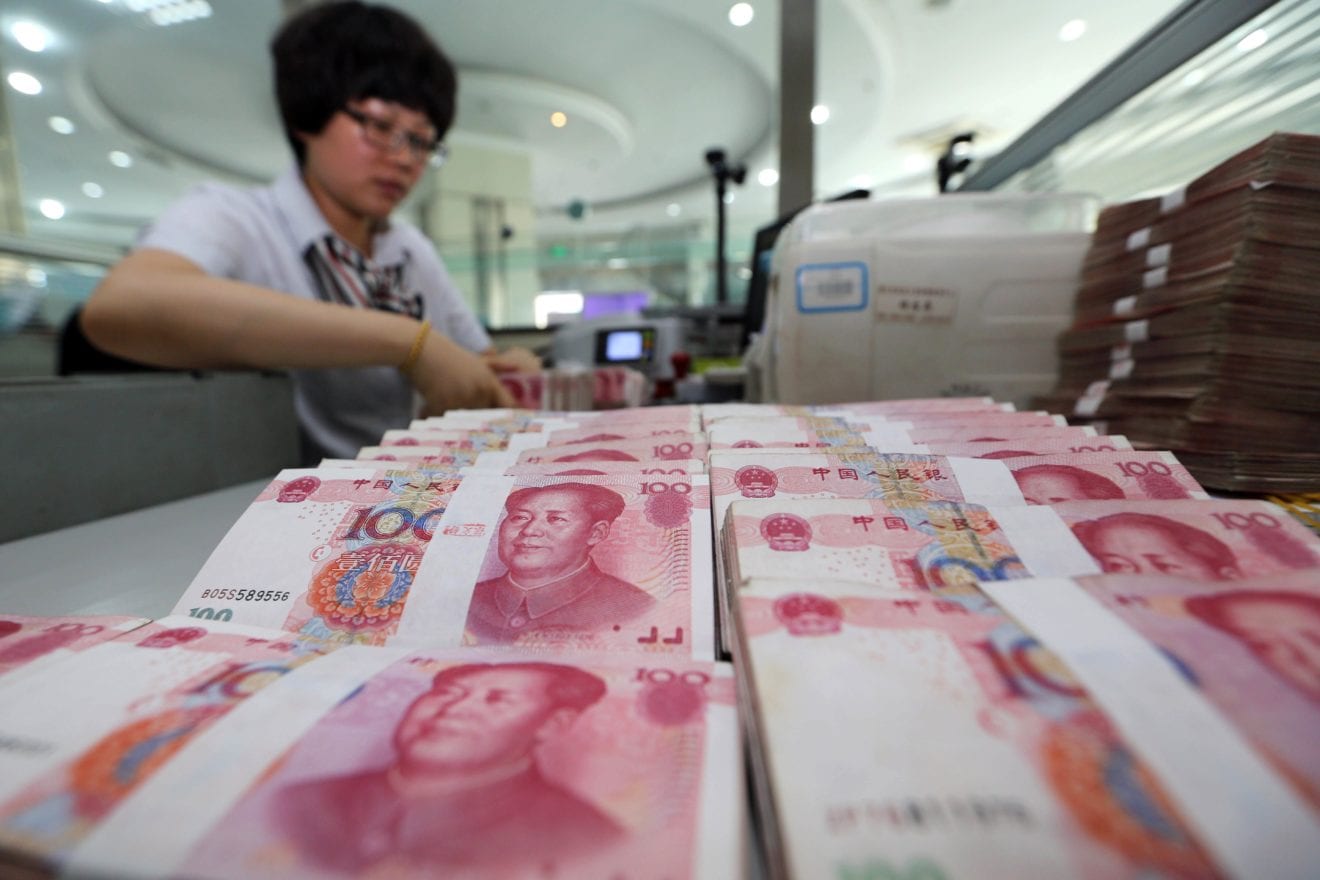
    China is working on a digital version of the yuan for everyone (the «retail» version of a digital currency), while the Swiss National Bank (SNB) is evaluating a so-called «wholesale» version, for the time being, a cryptocurrency reserved for the financial market.

    The latest meeting followed similar contacts in 2017 and 2019. The governments of Switzerland and China also want to intensify financial market relations in parallel with the existing free trade agreement. In this context, the Swiss financial center envisages using the opening steps in the Chinese financial market for concrete joint projects.

  • UBS Lifts Ex-CEO Sergio Ermotti’s Pay in Final Year

    UBS Lifts Ex-CEO Sergio Ermotti’s Pay in Final Year

    Swiss bank UBS lifted pay for outgoing CEO Sergio Ermotti by nearly 14 percent and granted its new CEO Ralph Hamers a $3.3 million bonus for four months of work.

    Zurich-based UBS paid Sergio Ermotti 14.2 million Swiss francs ($15.4 million) last year, according to its annual report disclosed on Friday, from 12.5 million francs last year. The Swiss banker ran the bank from 2011 until October 31.

    The board of directors recognizes that Sergio Ermotti successfully led UBS through a very challenging year marked by the Covid-19 pandemic,» UBS said in an excerpt of his performance assessment included in the report.

    Ralph Hamers, who took over as CEO of the Swiss wealth manager four months ago, was paid 4.5 million francs, according to the report. At ING, Hamers earned 2.6 million euros ($3.1 million) in 2019, his last full year running the Dutch bank.

    It is common knowledge that Switzerland pays better than wider Europe: Even after a big cut in 2019, Ermotti’s payday made him the top-earning CEO of a listed European bank. Hamers’ UBS bonus last year – 3 million francs – alone is larger than his entire 2019 salary from ING.

    Ralph Hamers has launched a number of strategic initiatives, all with the aim of ensuring the continued long-term success of UBS,» the bank said.

    The unexpected reopening of a criminal investigation into Hamers in the Netherlands puts the Swiss bank on the back foot: it desperately needs its new CEO’s know-how to revitalize, but not with those plans effectively captive to the Dutch legal process, nor at the cost to its reputation.

    UBS had to pay a modest 164,000 francs to «make whole» Hamers – or to compensate him for ING instruments and awards he abandoned to join the Swiss bank. By contrast, it paid Iqbal Khan 8.1 million francs to replace Credit Suisse awards when UBS poached him as private bank co-head in 2019.

  • R3, Enterprise Blockchain Provider Announces Expansion in Thailand with Bangkok Bank

    R3, Enterprise Blockchain Provider Announces Expansion in Thailand with Bangkok Bank

    R3, the enterprise blockchain software firm, will expand its presence in Thailand following the renewal of its partnership with Bangkok Bank. The expansion will see an increase in R3’s workforce in Thailand, underscoring R3’s commitment to the Thai market and its local partners. 

    “Thai enterprises are at the forefront of innovation, digital transformation and blockchain adoption and R3 is proud to support the nation’s digital industry transformation,” said Amit Ghosh, Head of APAC, R3. “We’ve had a long standing relationship with Bangkok Bank and collaborated with various large-scale blockchain projects, including Project Inthanon-Lionrock and Contour—as such, we are excited to continue our partnership with Bangkok Bank and to support their ongoing commitment to improving their service offering through the use of emerging technologies.”

    Highlighting R3’s commitment to the Thai market and local partners, the partnership renewal with Bangkok Bank coincides with R3’s recent expansion of its local workforce—consisting of in-market sales and pre-sales roles in Thailand. 

    “As we see new opportunities and innovations coming from Thailand, and as we continue to work with some of the Thai ecosystem’s largest actors—we want to ensure that we have the appropriate resources in place to continue providing our partners with transformative tools to meaningfully improve their business. The partnership renewal with Bangkok Bank, together with our recent in-market hires, demonstrates R3’s commitment to support our current and future partners in Thailand,” Ghosh added.

    Through its partnership with R3, Bangkok Bank will have the ability to leverage R3’s flagship enterprise blockchain platform, Corda Enterprise, to streamline business operations across its trade finance, capital markets, and supply chain businesses. Bangkok Bank is also planning to ramp up Corda training for their internal teams and is exploring new Corda-based solutions within the trade, payments and supply chain space. 

    “It is almost five years since we first met with Dave Rutter and his leadership team in New York. At that time we were impressed by their open minded and collaborative approach to developing the potential of distributed ledger technologies. The decision to develop Corda as a DLT solution to meet the requirements of financial services was visionary. In 2021 we are seeing growing interest from our corporate clients in deploying enterprise blockchain solutions tailored to their industry-specific needs,” said Ian Guy Gillard, Senior Executive Vice President at Bangkok Bank and R3 board advisor. “Consequently, we have renewed our annual subscription of Corda Enterprise for the full licensing plan. We are also delighted that R3 has shown their confidence in the Thai market by adding presence on the ground with the local office. This is even more important in uncertain times such as this when travel is restricted,” Gillard added.

    Bangkok Bank has cemented itself as a leader in blockchain innovation and is a founding member of Contour, a blockchain-based open industry platform to create, exchange, approve, and issue Letters of Credit L/C on Corda. In September 2020, Bangkok Bank used Contour to facilitate an L/C transaction between a subsidiary of Thailand-based PTT Group and a Vietnam-based trading partner in September 2020, greatly reducing L/C issuance time by over 95%. The most recent success extends the bank’s collaboration with leading local and global partners in the ecosystem. The bank collaborated with SCG Chemicals, a manufacturer of petrochemical products and GC Marketing Solutions Limited, the chemical flagship of PTT Group under GC Group, to facilitate their L/C transactions with their partners via leading local banks in Vietnam. The bank also joined with Pacific Containerbag Co., Ltd. to facilitate the company’s transactions with corporate partners in Oman, opening and receiving L/C, supporting both import and export customers. Bangkok Bank has plans to go-live with Contour and implement L/C transactions under the Contour network within its ecosystem.
  • DBS Loan to Spur Green Solutions in Maritime Industry

    DBS Loan to Spur Green Solutions in Maritime Industry

    The bank has issued a sustainability-linked loan to Sembcorp Marine, which references the Singapore Overnight Rate Average.

    The $500 million sustainability-linked financing facility, believed to be the industry’s first, will help steep the maritime giant to cleaner, greener and renewable energy solutions, the two sides announced in a joint statement on Thursday.

    The loan’s interest rate comprises a compounded daily SORA rate calculated in arrears and an applicable margin. The loan features interest rate discounts linked to pre-determined Environmental, Social and Governance (ESG) targets, which are aligned with Sembcorp Marine’s performance targets set out in the group’s sustainability report.

    The inclusion of green financing dovetails with our strategic transformation and pivot since 2015 to provide innovative engineering solutions to the global offshore & marine and energy industries, William Goh, Sembcorp Marine’s group finance director, said.

    In 2019, some S$530 million of Sembcorp Marine’s projects were related to green solutions. The company has also introduced more green features in its operations, such as the use of solar energy to reduce emissions.

    As a purpose-driven bank, we believe financial institutions have a strategic and pivotal role to play in proactively supporting industries’ work towards a lower-carbon future, Dorian Delteil, DBS head of oil and gas, said.

    DBS recently raised its commitment to finance S$50 billion in renewable, clean energy and green projects by 2024, up from S$20 billion previously.

  • GIC Bets on Digital Assets

    GIC Bets on Digital Assets

    The blue chip-focused Singapore sovereign wealth fund has invested in a crypto bank, in a signal that digital assets are here to stay.

    In an announcement on its blog last week, U.S.-based digital asset bank Anchorage said it raised $80 million in a Series C funding round led by GIC.

    Joining the sovereign wealth fund were U.S. venture capital firms Andreessen Horowitz, Blockchain Capital, and Lux, as well as Portuguese fund Indico.

    Anchorage said the new capital will allow it to «rapidly scale to meet the rising demand for participation in the digital asset space, particularly among corporations and traditional financial institutions.»

    It also said that it wants to be a crypto partner to neo banks, challenger banks, and traditional banks, and make institutional decentralized finance (DeFi) participation accessible.

    In 2018, GIC was among investors who raised $300 million for Coinbase, a digital currency exchange headquartered in San Francisco, California.

    The news came as a surprise as CEO Lim Chow Kiat previously said that GIC would avoid crypto-related investments as it goes against GIC’s investment mandate, which is «to preserve and enhance the international purchasing power of Singapore’s financial reserves.»

  • StanChart Hires Ex-Grab Wealth Head

    StanChart Hires Ex-Grab Wealth Head

    Standard Chartered will look to expand its funds and discretionary portfolio management business with the hire of an industry veteran in Singapore.

    Chandrima Das joins the bank as its global head of management investments, according to a statement, reporting to global head of wealth management Marc van de Walle.

    Das has over 20 years of banking and asset management experience across Asia and Europe. Previously, she held various senior roles with Bank of Singapore, ING, Prudential and, most recently, Grab where she was its head of wealth management. She is also the co-founder of the digital investment advisor platform Bento.

    Das brings a unique combination of experience in asset management and wealth tech which is especially pertinent today as we seek to meet increasingly sophisticated demand for wealth management advice at scale,» commented van de Walle on the hire which is subject to regulatory approval.

  • KPMG Names Head of Financial Services in Singapore

    KPMG Names Head of Financial Services in Singapore

    He brings deep domain expertise in emerging areas such as cryptocurrency and platform-based business models, and has been a driving force behind the firm’s global efforts to spur innovation, transformation and scale in financial services.

    KPMG in Singapore has named Anton Ruddenklau as head of financial services, with immediate effect, it announced in a statement on Wednesday.

    Ruddenklau joined KPMG in the U.K. as a partner in 2014 and helmed the firm’s digital and innovation for financial services division from 2017. In 2018, he was named the global co-leader of fintech for KPMG International.

    KPMG said financial services is one of the firm’s priority sectors in Singapore, citing the «new realities of the post-crisis world» that are bringing into focus digital and customer-centric solutions, as well as sustainability and cost reduction strategies.

    Given the rising demand for transformation projects in the Asian marketplace, his understanding of growth strategies and financial technology innovations will enable us to deliver more effective results for our clients,Ong Pang Thye, KPMG Singapore managing partner, said.

  • StanChart Revamps Hong Kong Branches

    StanChart Revamps Hong Kong Branches

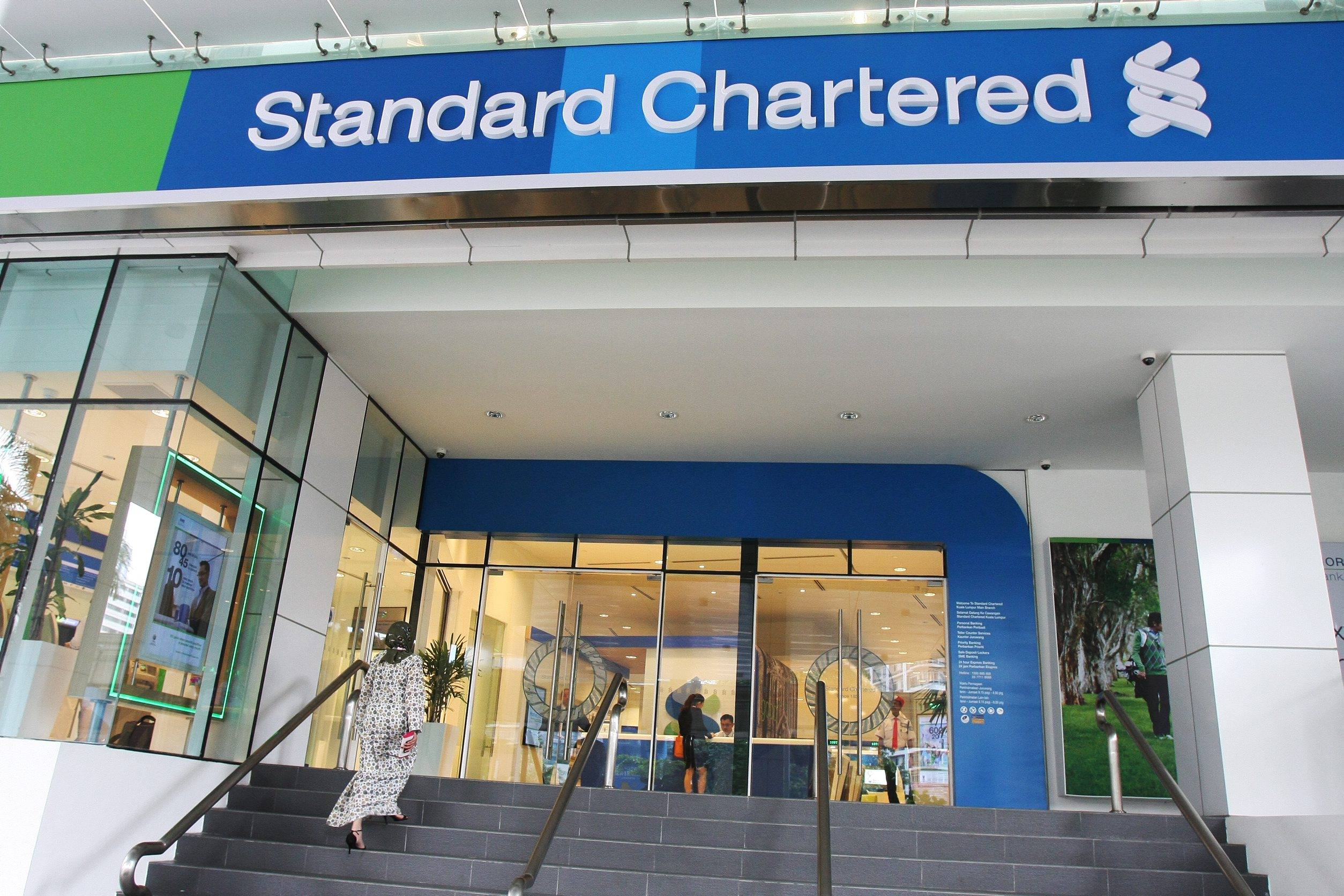
    Standard Chartered continues making transformations to its physical presence in Hong Kong, including plans to revamp its branches in the city.

    Standard Chartered will revamp its Hong Kong branches with plans to create paperless services with more digitalization, according to its chief executive for the market Mary Huen during a post-results briefing. More private rooms will also be built for in-person meetings between clients and their wealth managers.

    Branch visits fell 25 percent during the pandemic, Huen said, with more demand for financial services through digital channels.

    The bank will look to add, relocate or close some branches with the aim of maintaining 70 in the city.

    Elsewhere in the city, where the bank employs around 6,000 workers, Standard Chartered is already making changes to its physical presence.

    It is shedding multiple floors from its Hong Kong main office and renting out space from another office located in an industrial district in the eastern part of the city.

    In November last year, the bank said it would roll out flexible working options for around half of its 85,000 staff worldwide by early 2021. Standard Chartered employees in Hong Kong reportedly started using co-working spaces last month operated by IWG as part of a 12-month trial for access to 3,500 offices globally.

  • State-owned banks lag behind in lending growth

    State-owned banks lag behind in lending growth

    State-owned lenders have been achieving slower credit growth than the industry average for the last five years while private banks are on the fast lane.

    Of the ‘Big Four’ state-owned banks, BIDV, Agribank and VietinBank recorded growth rates that were less than the industry average of 14.6 percent a year in 2016-20 period, according to a note by Rong Viet Securities.

    Vietcombank was the only one to buck the trend with growth of 16.2 percent.

    “Most of the increase in the credit market share in recent years went to private lenders, while the state-owned lenders’ share dwindled,” the report said.

    The latter lost a combined 1.42 percentage point of the market share, it said.

    Part of the reason has been state-owned lenders’ inability to increase capital and to dilute state ownership, it said.

    Meanwhile, private lenders like Techcombank, Military Bank and VPBank posted average growth of over 20 percent in the period, while Saigon Hanoi Bank achieve 18.8 percent and ACB, 17.4 percent.

    Some like TPBank and VIB even achieved growth rates of over 30 percent and 25 percent though their share of credit remained small at 1.4 percent and 1.9 percent.

    Rong Viet Securities analysts said since credit would continue to play an important role in helping the economy achieve GDP growth of 6-8 percent, lending growth is expected to remain in double digits.

  • DBS Names Malaysia Country Head

    DBS Names Malaysia Country Head

    DBS reshuffles several senior managers and appoints a new country head for Malaysia, effective June 1 this year.

    The Singaporean lender named Abdul Raof Latiff as the new Malaysia country head, according to a statement, succeeding Jeffrey Ling who will retire from the role.

    Ling, who joined the bank in 1995, will stay as a senior advisor to help continue engagement with DBS’s key clients in Malaysia.

    Latiff joined DBS in 2017 and was most recently its group head of digital for institutional banking and group head of global transaction services product management. Latiff has over 25 years of banking experience and he previously held senior positions in the region with the likes of Citigroup, J.P. Morgan and HSBC.

    Latiff’s existing roles will be taken over by 15-year DBS veteran Lim Soon Chong, currently group head of investment products and advisory for consumer banking and wealth management.

    The new appointments reflect our commitment to groom talent from within, and enable us to continue to provide more development opportunities to our senior team across the region, said DBS group head of institutional banking Tan Su Shan.

    As a result of our deliberate effort to build our timber from within, a large proportion of our senior leaders have also been developed internally, including over 80 percent of our managing directors.