Category: Finance

Retail News Asia is committed to providing both local and global retailers with the latest Finance news throughout the Asian market. This on a daily base.

  • With Offices Closed, Students Turn to Virtual Work Experience

    With Offices Closed, Students Turn to Virtual Work Experience

    Citi Asia Pacific’s work experience program, covering careers in Investment Banking and Markets and Securities Services, has proven popular among undergraduates.

    Since its launch earlier in July, the bank said that close to 500 students from universities across Singapore have already enrolled in its Asia Pacific’s virtual work experience program, which is designed to provide students with insights into life as an analyst while helping them build the skills and confidence to pursue a career at Citi or in banking.

    As part of the program, students will get a taste of on-the-job tasks to better understand what a banking career can offer them, while developing valuable skills for employability, Citi said.

    In each module, students work on case studies designed by the bank, and submit their solutions to business problems. Students with submissions that stand out may be contacted for permanent roles at Citi or summer internship opportunities next summer.

    The bank developed the program when it noticed the challenges that students were facing in securing internships in the current Covid-19 environment, according to Joel Fastenberg, head of human resources for Citi Singapore and ASEAN. An added benefit of an online program is that it does not have a cap on the number of students, and is open to any Singaporean student regardless of where they are located.

    «Importantly, this program also supports Citi’s campus recruitment efforts enabling us to identify our future talent early on. Students who stand out may be contacted for summer internship opportunities or permanent roles in the bank,» Fastenberg said.

    The bank previously allayed fears that virtual internships amid the Covid-19 pandemic would make it more difficult for candidates to secure a job after completing the program, by promising to offer all 76 students of its incoming batch of interns a full-time analyst role if they meet the minimum requirements of the program.

  • UOB Asset Management Brings Robo-Adviser to Retail Clients

    UOB Asset Management Brings Robo-Adviser to Retail Clients

    Its UOBAM Invest service, previously available to corporate clients, is being launched in the form of a mobile app for individuals.

    UOB Asset Management, a wholly-owned subsidiary of UOB, has rolled out a retail version of its UOBAM Invest online portal, which was first launched in 2018 for corporate investors in Singapore.

    The platform offers retail investors in Singapore personalized, dynamic investment portfolios based on their risk profile, aggregate financial goals, and investment horizon. It also automates the shift in retail investors’ portfolio allocation from higher-risk assets to safer ones systematically and gradually, particularly towards the end of their investment period, balancing their need for long-term growth with their capacity for risk, the announcement said.

    The portfolio planer also incorporates risk-profiling and goal-setting tools so that the proposed investment portfolios offer the maximum possible returns to suit the needs of retail investors.

    UOBAM acknowledged the popularity of robo-advisors as a simpler and easier way to manage investments and hopes to leverage its brand name and track record to alleviate concerns about credibility, security and long-term viability users might have about such platforms.

    UOBAM is the first regional asset management firm to offer a robo-adviser with personalized portfolios for retail investors. We have an established track record in managing risks actively while optimizing returns, Thio Boon Kiat, CEO of UOBAM, said.

    Given the current market volatility from the impact of the COVID-19 pandemic, we want to bring the benefits of our risk-based approach – one that is trusted by institutional investors – to more retail investors through UOBAM Invest, Thio added.

    Robo-advisors promising retail investors low-cost, diversified, passive investing have proliferated in recent years. According to Statista, assets under management among robo-advisors in Singapore reached $4.5 billion in 2020 (49.2 percent growth year-on-year), with 265,000 users (39.6 percent growth year-on-year).

    However, competition in the digital investment advisory space is intense and has already resulted in Smartly, one of Singapore’s oldest and most well-established platforms shutting down earlier this year.

    Traditional banks have also joined the fray, with OCBC launching Roboinvest in 2018, and DBS rolling out its digiportfolio in 2019 for retail clients.

  • Samsung Money arrives in the US, here are all the perks

    Samsung Money arrives in the US, here are all the perks

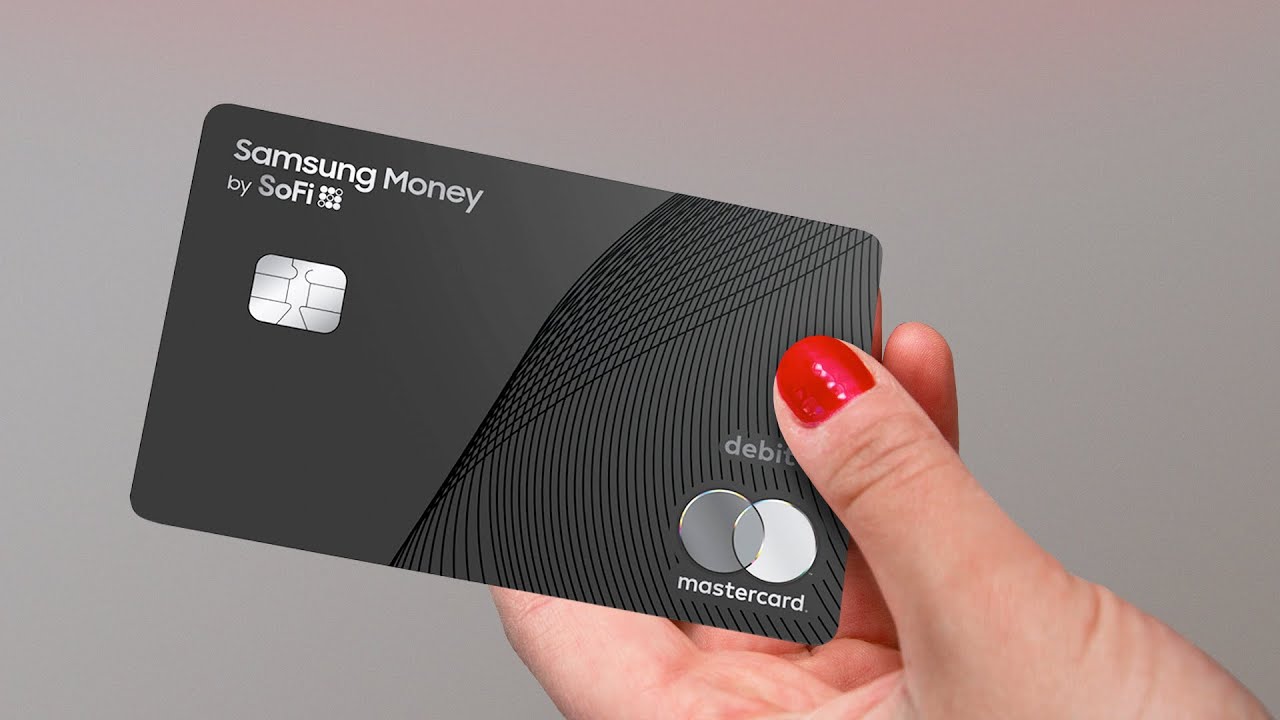
    Samsung has just introduced Money by SoFi in the United States, as part of the Samsung Pay mobile payment system. Samsung Money offers both physical and virtual perks for those who order the plastic chip card that enables them to use the service.

    Launched in partnership with the fintech startup SoFi, Samsung Money supplements the online aspect of Samsung Pay by adding several perks that you would otherwise get. First off, in order to get the Mastercard debit card accompanying Samsung Money, one must first sign-up and access the service via the dedicated website.

    After opening and funding an account, customers will be eligible for a chance to win $1,000 in Samsung Rewards points toward a Samsung Galaxy S20 5G, QLED 4K TV, or any other product made by the South Korean company.

    Also, Samsung revealed that all Money users in the US will soon get access to an exclusive discount on various products such as Galaxy smartphones, tablets, wearables, TVs, laptops, washers, refrigerators, and more. This special discount can be combined with any other offer from Samsung. Apart from that, you can see below all the other perks that come with being a Samsung Money user:

    • Instant Activation: As soon as you fund your new Samsung Money by SoFi account, your digital debit card will be provisioned in your Samsung Pay wallet, with your physical card arriving shortly by mail.
    • No Account Fees: Samsung Money charges zero account fees, overdraft fees, or transfer fees.
    • Added Savings and Benefits: Samsung Money rewards users for saving, earning up to 6x higher interest rate relative to the national average of transactional accounts. Also, Samsung Money users will earn Samsung Rewards points for every purchase they make within Samsung Pay.
    • Money Management: With Samsung Money, you can use the Samsung Pay app to check your balance, review past statements and search transactions, as well as pause or restart spending, freeze or unfreeze your card, change your pin and assign your trusted contact
    • Security: Since Samsung Money by SoFi isn’t a credit card, you can only spend the cash you have on hand. If an unauthorized transaction occurs, you’ll receive an alert and assume zero liability. Not to mention that the physical debit card will not display the card number, expiration date, or CVC.

    Samsung Money is available to Samsung Pay users in the United States starting today. To access the service, you’ll need to tap on the Money tab in the Samsung Pay app on your phone.

  • Gold prices hit new peak

    Gold prices hit new peak

    Vietnam’s gold prices continued their ascent Thursday to reach a new peak as global rates rose, driven by the latest escalation in U.S.-China tensions.

    State-owned Saigon Jewelry Company sold its popular SJC gold at VND54.2 million ($2,341) per tael of 37.5 grams (1.2 ounces), up 1.3 percent from Wednesday. The country’s largest jewelry company, DOJI, sold at VND53.7 million ($2,319), up 1.6 percent.

    Global rates went up by 0.3 percent to $1,873.97 on Thursday, the highest in nearly nine years, after the U.S. gave China 72 hours to close its consulate in Houston amid accusations of spying. China has vowed to retaliate.

    The fear of missing out “is driving a flood of speculative money into gold, piling on top of January-June’s heavy physical demand,” Bloomberg quoted Adrian Ash, director of research at BullionVault, as saying.

  • BNP Paribas AM Names New APAC Chief

    BNP Paribas AM Names New APAC Chief

    The financial services industry veteran, who joins from rival J.P. Morgan Asset Management, brings a wealth of experience in the investment management industry and deep knowledge of key client segments in the region.

    BNP Paribas Asset Management on Wednesday announced the appointment of Steven Billiet as head of Asia Pacific, with effect from 8 August 2020. He succeeds Ligia Torres, who is retiring from the firm and will return to Europe in August.

    Based in Hong Kong, Billet will be responsible for further accelerating the strategic expansion of BNPP AM’s Asia Pacific business, and will facilitate a more integrated approach to driving growth in the region, the announcement said.

    Billet joined the firm in March as its Asia Pacific head of distribution and will retain these responsibilities alongside his new role. He reports to Sandro Pierri, BNPP AM global head of client group, and locally to Eric Raynaud, head of BNP Paribas in Asia Pacific.

    Billiet was previously chief executive officer for J.P. Morgan Asset Management (Singapore), responsible for overseeing all aspects of the firm’s asset management business in Singapore as well as in South and Southeast Asia and Korea.

    Before joining the firm in January 2014, Billiet spent 19 years with ING, 12 of which in Asia where he held a number of senior roles such as, CEO of Investment Management Asia Pacific (Singapore), CEO of Investment Management Australia, CEO of Investment Management Taiwan and India Country Head of Private Banking and Wealth Management.

    Billiet’s predecessor Torres retired after more than 23 years with BNP Paribas, including seven with BNP Paribas Asset Management.

    During her tenure at the firm, she contributed to significant growth in the region, and played a particularly important role in upholding the firm’s sustainability strategy and enhancing our external visibility on the sustainable investment agenda with our clients, Frédéric Janbon, BNPP AM chief executive officer, said.

  • DBS Inks Digital Trade Financing Partnership

    DBS Inks Digital Trade Financing Partnership

    The bank will work with industry cloud software provider Infor to integrate digital trade financing capabilities into global supply chains.

    Under the partnership, the two sides will use innovative supplier financing tools, as well as Infor’s rich physical and financial supply chain data to bring new opportunities to fund suppliers and help reduce supply chain risk and friction, DBS said in a statement on Thursday.

    The first program under the partnership provides a faster and more cost-efficient digital trade financing to suppliers in an apparel company’s supply chain ecosystem, which comprises mostly small-to-medium-sized enterprises (SMEs). The next program, planned for late 2020, aims to improve the pre-shipment finance by using supply chain data as the primary conduit to assess risk and creditworthiness.

    Infor’s Nexus platform has more than 68,000 businesses, including market leaders in aerospace, healthcare delivery, automotive suppliers, industrial distributors, as well as global banks, retailers, hotel brands, luxury brands, and more.

    Our collaboration with Infor enables greater transparency into complex supply chains and provides insights into the transaction patterns between an anchor and its ecosystem of suppliers, DBS’ Sriram Muthukrishnan said about the partnership.

    The bank’s group head of trade product management noted that quicker and more cost-efficient financing to suppliers provided earlier in the cycle, as compared to conventional post-shipment supplier financing programs, is especially relevant today, given the environment characterized by prolonged trade disruptions and tighter credit lines, where optimal working capital management is key to survival.

  • Standard Chartered to Pilot Crypto Custody Solution

    Standard Chartered to Pilot Crypto Custody Solution

    The bank’s ventures and innovation platform is reportedly building a crypto custody offering for the institutional market, with a pilot planned for later this year.

    SC Ventures developing a venture to meet the demands of institutional investors for an end-to-end institutional-grade custodian of digital assets, which meets regulatory standards, Alex Manson its Singapore-based global head, told Coindesk earlier this week.

    The custodial solution will be based in the U.K., but will be open to clients from around the world, Manson said, noting interest from 20 institutions.

    Manson highlighted the opportunity to kick-start the institutional adoption of cryptocurrencies by providing the fundamental market infrastructure. He told the blockchain news portal that solutions currently available lack the security required to secure millions of dollars in digital assets, and lack function segregation.

    Complementing its custodial initiative, SC Ventures participated in an oversubscribed $17 million Series A funding round for Metaco, which runs an institutional operating system for digital assets.

    German-based security technology company Giesecke+Devrient led the round, which also saw participation from Zürcher Kantonalbank and venture capital firm Investiere, as well as all existing strategic shareholders Swisscom, SICPA, Avaloq Ventures, and Swiss Post.

    The funds will be used to fuel the next phase of the company’s growth in sales, product, and partnerships, and broaden its presence in the U.S., Southeast Asia, and Western Europe, the announcement last week said.

  • UBS APAC Profits Surge Despite Global Setback

    UBS APAC Profits Surge Despite Global Setback

    Asia Pacific profits for UBS surged over 70 percent in the second quarter due to stronger trading activities despite a slowdown in the global business.

    APAC profit before tax at UBS reached $233 million, up $97 million year-on-year, due to significantly higher income, according to the bank’s latest results. Strong transaction-based income and net interest income from deposit revenue and loan growth led to an over six-fold increase in revenue from $104 million to $658 million, though net new loans were negative due to client deleveraging in the second quarter.

    Profit growth in the region contrasts with UBS’s global business which saw profits tumble due to expected loan provisions. The bank posted a 13 percent drop in pre-tax profits due in no small part to $272 million in credit losses, mostly in from its Swiss business.

    The region also registered lackluster net new money at just $200 million, compared to $1.1 billion last year. The bank globally posted $9.2 billion in new assets, dominated by the EMEA (Europe, Middle East, and Africa) region’s $8 billion.

    Overall, Asia was home to $449 billion in assets under management, accounting for 17 percent of the total globally.

  • HSBC Job Cuts Reach Asia

    HSBC Job Cuts Reach Asia

    HSBC’s cost-saving drive is reportedly set to accelerate even in its most profitable markets in Asia following the departure of its global head of equities. Hossein Zaimi is leaving HSBC, according to a report citing two unnamed sources, after joining the bank more than 16 years ago. Zaimi also took on the additional role of co-head of securities financing in March shortly after HSBC revealed plans for its investment bank overhaul.

    Adrian Lewis, EMEA head of equity capital markets (ECM), has also left to pursue opportunities outside of the industry, the report added. Lewis will be succeeded by Andrew Robinson, head of EMEA equity syndicate, reporting to Ed Sankey who was named global head of ECM in June 2019.

    While the lion’s share of cost cuts reside in Europe, the report noted that Asia – the most profitable region for HSBC – will not be immune to restructuring. Following Zaimi’s departure, more exits are expected in the region in the coming weeks.

    The bank originally planned to cut 35,000 jobs, $4.5 billion in costs, and $100 billion in risk-weighted assets before postponing the overhaul in March due to the coronavirus pandemic. In June, HSBC reportedly resumed such activities in June and was considering deeper cuts including more job losses or the possible sale of some businesses.

    Simultaneously, the bank is also expanding its newly created wealth and personal banking unit – a combination of the whole private client business from retail to ultra-high net worth (UHNW) individuals – with around half of its $4 trillion in assets from Asia.

    Since 2017, the bank has hired 800 employees for its affluent and emerging high net worth client businesses – Premier and Jade, respectively – across Hong Kong, Singapore, and mainland China including relationship managers, investment counselors, UHNW solution specialists, and product specialists.

  • Mastercard and WeLab Bank Announce the Launch of  Numberless WeLab Debit Card

    Mastercard and WeLab Bank Announce the Launch of Numberless WeLab Debit Card

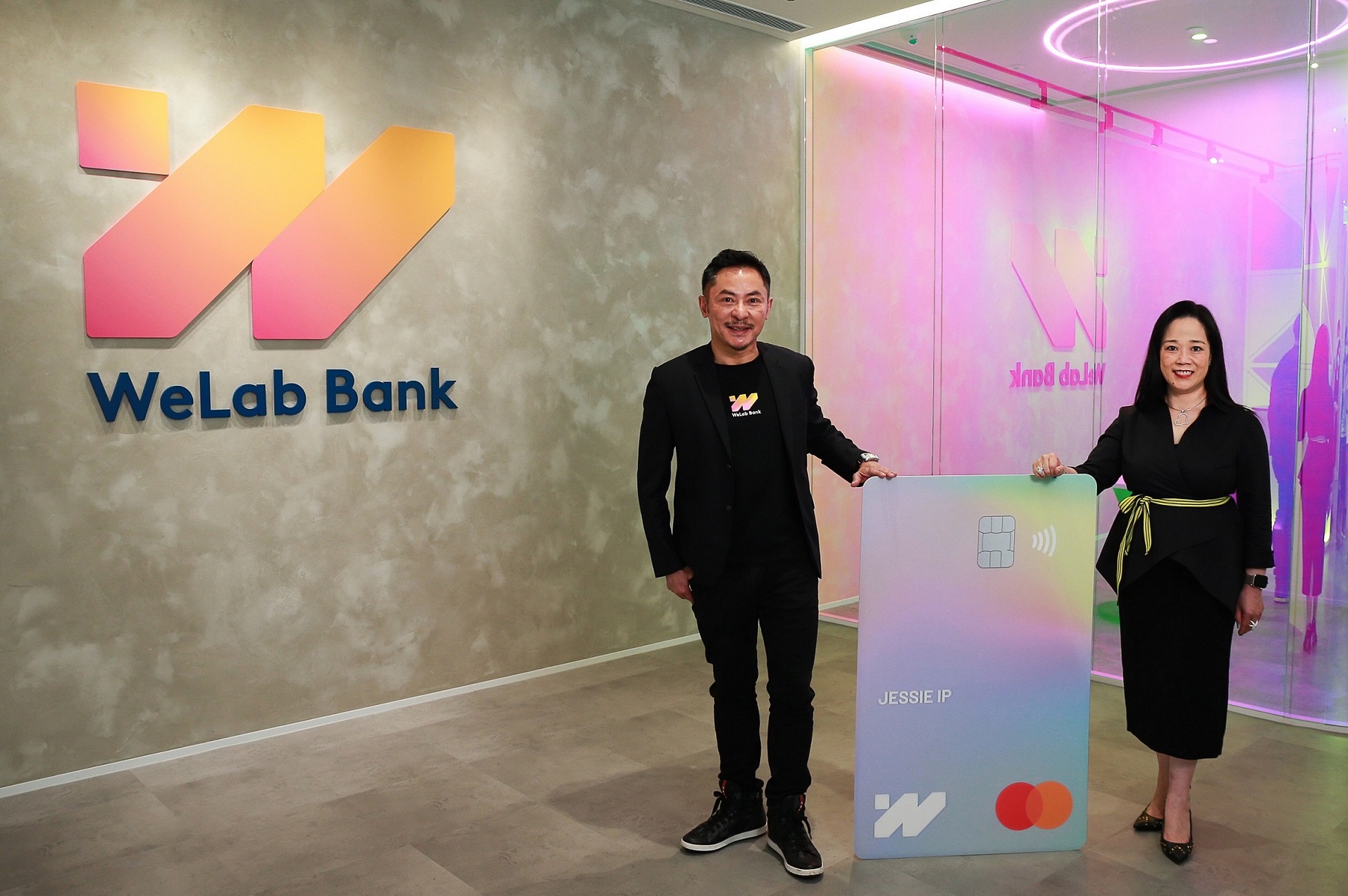
    Mastercard and WeLab Bank Limited (“WeLab Bank”), a homegrown virtual bank licensed by the Hong Kong Monetary Authority (“HKMA”), today announced a partnership to launch a numberless bank card that is part of a simple, intuitive and fully digital banking service that specifically caters to the tech-savvy needs and lifestyles of people all over Hong Kong.

    While WeLab Bank services are purposely designed to be 100 percent operated from the mobile phone, a physical card may have wider acceptance and provide added convenience to consumers’ daily lives, such as when making payments at certain merchants or withdrawing cash. Unlike traditional bank cards, the WeLab Debit Card is available for use immediately after opening a WeLab Bank account in the form of a virtual card from the WeLab Bank app, followed by the delivery of a physical card.

    The physical card is also good-looking and sleek, adopting a minimalist design with only the embedded multi-function chip and cardholders’ name to compliment the Mastercard and WeLab Bank logos, with all other information accessed safely from the mobile app. This is made possible by Mastercard’s fast, secure and reliable global network, providing WeLab Bank cardholders with robust, multi-layered protection when making purchases.  Some highlights are:

    • Private and secure – No card number, no card validation code (CVC2), no expiry date displayed on the physical card. Everything can be accessed privately and securely from within the WeLab Bank app.
    • Hassle-free lost card reporting – Simply open the WeLab Bank app and tap on “report lost card” to deactivate the card immediately. New card credentials will be issued to customers shortly thereafter, allowing them to continue making transactions straight away.
    • No hidden fees – No annual card fee, no reissuance fees for lost card, and no hidden transaction fees.
    • Accepted everywhere – offline or online 24/7 – Purchase items offline with a simple tap of the card, or online by copying the debit card number located in WeLab Bank’s app and your order can be completed swiftly, even from 10,000 miles away!
    • Easy access to cash withdrawals – Withdraw cash from any JETCO ATM in Hong Kong and CIRRUS ATMs that accept Mastercard cards worldwide.

    Looking at the transactions processed over the last few months, over 51 percent of physical card transactions were for Food & Beverages, followed by 31 percent for Groceries. Unsurprisingly, the daily average usage on weekends was about 1.5 times more than the volume on weekdays, consistent with the boost seen in restaurants since the most recent relaxation of social-distancing rules. Online transactions were much more diverse,  with the top two categories – Food & Beverage (leading at 31 percent) and Entertainment (13 percent) – accounting for just 44 percent compared to offline transactions where they totaled 82 percent. Both top categories are closely tied to the increased propensity to stay at home.

    Beyond local spending, over 30 percent of online transactions were processed by merchants outside of Hong Kong, powered by the worldwide acceptance and processing capabilities of Mastercard’s global network. Such data insights from customers’ behavior can further bolster WeLab Bank’s partnership with Mastercard, as well as the bank’s relationship with merchants, enabling them to deliver more relevant offers to customers.

    Ensuring further reliability for local consumers, WeLab Bank takes pride in being a homegrown virtual bank licensed by the HKMA and a member of the Deposit Protection Scheme, which means that customers’ eligible savings at WeLab Bank are protected up to a limit of HKD500,000 per depositor.

    “We want to empower the Hong Kong people by bringing them a more digital, secure and seamless banking experience, and it all starts with the card. We understand that people don’t want a traditional bank card, but a card that can bring excitement and fit with their daily lives. While Mastercard is a global leader in digital payments and WeLab Bank is a fintech pioneer entrenched in Hong Kong, we trust that our partnership combines the best of both worlds, allowing us to continue designing innovative tools for the future. We hope our customers enjoy using their gorgeous cards just as much as we have enjoyed building it.” said Adrian Tse, Chief Executive of WeLab Bank.

    “More and more Hong Kong people are adjusting their lifestyles to become technologically savvier. Understanding their evolving needs, Mastercard has partnered with WeLab Bank, a homegrown virtual bank that shares the Mastercard vision of providing a new digital banking experience where technology and innovation are the backbone. This collaboration also showcases Mastercard’s progressiveness as a leader in the payments industry, especially in safety and security, as well as its dedication in pushing forward the development of Hong Kong as a smart city,” said Helena Chen, Managing Director, Hong Kong and Macau, Mastercard.

    As a result of this collaboration between WeLab Bank and Mastercard, Hong Kong people will be able to embrace a digital lifestyle, enjoying a safe, secure and convenient banking experience.

  • UBS Ventures Into Insurance Ecosystem

    UBS Ventures Into Insurance Ecosystem

    The wealth manager is partnering with reinsurer Swiss Re, in a bid to expand its reach with clients as challengers to the traditional finance industry lurk.

    The path to an ecosystem for banks and insurers is inevitably deals or partnerships: Switzerland’s hidebound financial center is seeing a revival of old constructions like «bancassurance,» which foundered in an initial effort 20 years ago.

    UBS is getting in on the idea, launching a mortgage solution offering together with Swiss Re on Wednesday. The bundling of banking and insurance products via Swiss Re’s insurtech subsidiary Iptiq is a bid to digitize production and distribution via platforms – an idea pioneered by Chinese internet giant Alibaba.

    Iptiq is poised to be carved out of Swiss Re’s life capital division next year. It will be placed into its own division reporting directly to CEO Christian Mumenthaler, underscoring its strategic importance to the reinsurer. The Swiss wealth manager’s initial efforts into platforms are the recently-launched Key 4 as well as Atrium, a mortgage broker launched in 2017.

    UBS wants to bake Iptiq into its domestic mortgage lending business – a step in the direction of an ecosystem for homeownership. Specifically, Iptiq is a data-backed product engine on which business clients can design tailored solutions – and maintain their client interface.

    For example, Iptiq could offer UBS’ borrowers protection against the invalidity or life insurance. UBS isn’t alone in its efforts to build a wider ecosystem to interest its clients: Raiffeisen and insurer Mobiliar plan to build a joint product and services platform.

    The cozy ties between Swiss Re and the Zurich-based bank are underscored by UBS CEO Sergio Ermotti, who is poised to take over as chairman of the reinsurer in April. Incoming CEO Ralph Hamers is a huge proponent of financial institutions as part of a wider, genuine ecosystem.

    The Swiss Re tie-up comes shortly after UBS in February partnered with Zurich Insurance to bank as well as insure start-ups. While bancassurance ventures are relatively common abroad, Switzerland still has considerable potential, UBS said. 

    With Iptiq, the world’s largest wealth manager is still proceeding cautiously: it will initially trial the partnership with a region in central Switzerland. UBS said it plans to unfurl the offering across Switzerland next year.

  • Deutsche Bank’s New Asia Chief Picks Singapore

    Deutsche Bank’s New Asia Chief Picks Singapore

    With the move, Deutsche Bank joins rivals UBS and Credit Suisse in having their Asia chief executives based in the city-state. Deutsche Bank’s incoming Asia chief executive officer, Alexander von zur Mühlen, will be relocating to Singapore for his new role – not Hong Kong, where his predecessor sits.

    We remain committed to our dual-hub structure in Asia Pacific, a Hong Kong-based spokesperson said about the decision. The bank previously had a regional chief based in Singapore – from 2012 to 2016, Asia co-chair Gunit Chadha was based in the city-state, while his counterpart Alan Cloete sat in Hong Kong.

    Deutsche Bank’s operations in Singapore focus on commercial banking and fixed income services, while its wealth management, corporate finance and asset management desks are larger in Hong Kong. In 2019, the bank said it would be shuttering its equities sales and trading globally as part of its overall revamp.

    Von zur Mühlen, who joined Deutsche Bank in 1998, is set to take charge of the firm’s Asia Pacific business when Werner Steinmüller retires from the Management Board on July 31, after three decades at the German lender.

    Before being named Asia chief executive, he was appointed DB’s global head of group strategy, based in Frankfurt, in 2018, one year after being named co-head of global capital markets.

  • OCBC Bank is first in Singapore to enable use of SingPass

    OCBC Bank is first in Singapore to enable use of SingPass

    Since 4 July 2020, OCBC Bank’s 1.8 million digital customers in Singapore have been able to use the SingPass Mobile app as an alternative login to access the full suite of digital banking services via the OCBC Mobile Banking app or Internet banking.

    Using SingPass Mobile as an alternate login will especially benefit customers who currently use an access code and PIN instead of fingerprint or facial biometrics to log in to OCBC Bank’s digital banking platforms. The need to remember multiple access codes and PINs is eliminated while enabling customers to securely access digital banking services. This market-leading service has been enabled for OCBC Bank customers by integrating digital banking access with Singapore’s National Digital Identity (NDI) platform.

    SingPass Mobile login will further accelerate digital banking adoption

    Since the Covid-19 outbreak in Singapore, digital transactions among OCBC Bank customers have surged as the pandemic accelerated digital adoption.

    Close to 100,000 ‘digital debutantes’ have started using digital banking for the first time this year. There has been a 40% jump in digital transactions performed by those aged 50 to 64, while those above 64 years old clocked a 48% increase in digital banking transactions from last year.

    Managed by the Government Technology Agency (GovTech), the SingPass Mobile app allows users to transact with over 60 government agencies online securely. More than 1.6 million Singapore residents today use the SingPass Mobile app to access government e-services including checking their Central Provident Fund (CPF) account balances, filing taxes and applying for public housing. Many now also use the app for SafeEntry logins at venues to facilitate contact tracing.

    Mr Aditya Gupta, OCBC Bank’s Head of Digital Business for Singapore and Malaysia, said: “Inclusion and accessibility have been core to our digital transformation narrative. I believe that offering SingPass – a trusted and widely used mode of digital authentication in Singapore – as an alternate login, will give more of our customers the confidence and convenience to bank with us digitally. We have partnered with GovTech to pioneer the co-creation of a trust ecosystem for Singapore’s banking industry using the national digital identity platform, which will radically improve how our customers access and experience our digital services.”

    Mr Kwok Quek Sin, Senior Director, National Digital Identity, GovTech, said: “OCBC Bank is known for many of its innovative efforts in leading digital transformation and has been one of the early adopters of our National Digital Identity strategic platform. This month, OCBC Bank has started to offer SingPass as an alternative login to access their digital banking services. We are happy to be able to support our Singapore companies in their exciting digitalization journeys. GovTech will continue to push out more products on the national digital identity platform to help businesses enhance digital service delivery, improve customer experience and bring about productivity gains.”

    Mr Sopnendu Mohanty, Chief FinTech Officer, Monetary Authority of Singapore (MAS), said: “The foundation of the digital economy is the seamless integration of public digital infrastructures with essential services. We are delighted that OCBC Bank has broken new ground by enabling access to financial services with SingPass Mobile. MAS has been working closely with the financial industry to foster the adoption of foundational digital infrastructures such as national digital identity for seamless integration with the growing digital economy. With the convergence of SingPass Mobile, MyInfo, and PayNow, customers can open bank accounts, access banking services and make payments online seamlessly yet safely.”

    OCBC Bank at the forefront of leveraging National Digital Identity infrastructure for digital banking services

    In June 2018, OCBC Bank became the first in Singapore to enable instant deposit account opening using MyInfo – the national data repository – integrated with the Bank’s proprietary real-time digital know-your-customer process (e-KYC).

    A year later, in May 2019, OCBC extended the use of MyInfo and OCBC Bank’s e-KYC process to online applications for cards, personal loans and lines of credits. This was then extended to home loans and car loans in Feb 2020.

    Within three months of launch, digital card applications grew 3.5 times, while online personal loan applications grew nine-fold. Three in 4 credit cards are acquired digitally, and 3 in 4 deposit accounts are opened digitally leveraging MyInfo. The integration of MyInfo in the digital product application process has enabled OCBC Bank to offer 60-second approvals for car loans, and 60-minute approvals for home loans. One in 3 home loans and 2 in 3 car loans have been approved and accepted via this process within four months of its launch.
  • DBS Nabs AIA’s Digital Chief

    DBS Nabs AIA’s Digital Chief

    DBS hires AIA Group’s former head of digital to lead its bancassurance business in Hong Kong.

    Lo Wing Yiu joins DBS Hong Kong has the head of bancassurance, according to a statement, succeeding Terry Li who spent four years with the business. Prior to joining DBS, Lo was AIA’s head of digital and previously, he also held various senior insurance roles with the likes of Standard Chartered, HSBC, and AXA.

    Our bancassurance business in Hong Kong has been going from strength to strength, and we are well-positioned to drive the next phase of our growth here, said Ajay Mathur, managing director, and head of consumer banking group and wealth management, Hong Kong, at DBS.

    As we continue to build on our digital capabilities and enhance our market-leading customer experience, we are confident that Lo will successfully lead the bancassurance business to new heights.

  • Healthcare Fund Assets Surge at Standard Chartered Private Bank

    Healthcare Fund Assets Surge at Standard Chartered Private Bank

    Assets under management within recommended healthcare funds surged at Standard Chartered Private Bank as part of a broader trend of increasing adoption in sustainable investing. Recommended healthcare fund AUMs surged 50 percent year-on-year, according to a recent Standard Chartered report, despite market volatility. Driven by the pandemic, this was in line with the growing demand for sustainable investing including a focus on United Nations Sustainable Development Goals (SDG) like clean water and sanitation, and good health and well-being.

    There were also lower drawdowns year-to-date in healthcare funds and during the market pullback in March 2020, highlighting the resilience of the sector, the bank said. This strong performance stands out when compared to the broader equity market in particular, which has fallen 15 percent year-to-date (MSCI ACWI, as of 14 Apr 2020) versus the funds’ performance.

    Globally, as many 90 percents of investors are interested in sustainable investments, according to the bank’s recently conducted survey. Even Asia where sustainability is still in its nascency, the gap is closing with 43 percent of respondents considering allocating 5-15 percent of their funds in sustainable investments compared to 42 percent globally. 8 percent of respondents in the region are considering investing more than 25 percent of their funds in the space.

    Despite the growing relevance, investors remain resistant. Although 98 percent of affluent investors are interested in sustainable investing, 93 percent were apprehensive about the subject.

    Banks, therefore, play a critical role in providing essential guidance to clients to unlock the growing momentum for sustainable investing, the bank added. «Besides the lack of knowledge and apprehension, the other top barriers to investment in this segment are lack of motivation and advice.

    The report also highlighted Singapore’s promising future as a center for sustainable investment demand. In addition to 39 percent of Singaporean respondents willing to allocate 5-15 percent of funds in the space, the city-state was home to individuals who were globally the most knowledgeable in sustainable living, responsible investing, and social investing means.

    In fact, Standard Chartered kicked off an environmental, social, and governance (ESG) awareness campaign in June this year and has since seen a 90 percent spike in AUMs from ESG funds offered on the bank’s platform.

    There is definitely heightened interest and greater demand among investors in Singapore to make a positive impact on society and the environment, while still achieving their financial goals, said Sumeet Bhambri, ASEAN, and South Asia and head of wealth management, Singapore, Standard Chartered Bank. What is important is closing the gap between investor interest and awareness of the ESG solutions available to them.