Category: Finance

Retail News Asia is committed to providing both local and global retailers with the latest Finance news throughout the Asian market. This on a daily base.

  • UBS Nabs Top Credit Suisse Private Banker

    UBS Nabs Top Credit Suisse Private Banker

    Wealth manager UBS is poaching the banker instrumental in setting up Credit Suisse’s entrepreneur’s bank. He is the first prominent defector to join Iqbal Khan at UBS.

    UBS is enlisting Remi Mennesson to set up a financing team in a bid to provide better and faster service for its wealthiest clients, according to a memo. Mennesson is a discreet Swiss banking heavyweight and 20-year veteran of Credit Suisse, where he was a key ally of top private banker Iqbal Khan.

    At Credit Suisse, Mennesson led a strategic transactions unit that catered financing solutions to ultra-high net worth clients, generally viewed as those with more than $30 million in bankable assets. Khan and his co-head Tom Naratil have renewed emphasis on the segment by carving it out into a smaller group in January.

    Mennesson, a managing director at Credit Suisse, will join UBS in November. He will report to four co-presidents: investment bank co-bosses Rob Karofsky and Piero Novelli as well as Khan and Naratil. A spokesman for UBS confirmed the contents of the memo, which was first reported by Reuters overnight.

  • HSBC Digital Payment User Growth Surges

    HSBC Digital Payment User Growth Surges

    HSBC’s PayMe – Hong Kong’s largest e-wallet operator – reached 2 million users, fuelled in part by the city’s love for card and tile games.

    The 2 million users represented a 25 percent year-on-year increase as transactions in the broader e-wallet payment activity, run by 10 operators, tripled due to the Hong Kong Monetary Authority’s faster payment systems (FPS).

    According to HSBC’s managing director and head of PayMe Kerry Wong Chu Po-yin, the accelerated growth was driven by the ongoing pandemic and increasing bill settlements.

    We have seen above-average growth in registration and more active usage of PayMe over these few months of Covid-19 pandemic,” Wong said in an SCMP report. The increase is seen in settling of bills, including those related to online social games such as mahjong and poker.

    The ongoing coronavirus pandemic has caused significantly accelerated digital adoption in Asia across banks and client segments. It took PayMe 17 months to acquire its first million users but around eight months to achieve the second million.

    Need for digital access aside, the coronavirus pandemic has created a bankconstant demand for healthcare goods – some merchants with 15,000 to 40,000 transactions in a single day involving surgical face masks, according to Wong.

    «Our payment platform also helps start-ups and other businesses to accept payment easily,» she said. «Looking ahead, we will line up more big companies [such as utility providers].»

  • HSBC Ordered to Restart and Deepen Overhaul

    HSBC Ordered to Restart and Deepen Overhaul

    The economically crippling coronavirus pandemic has driven HSBC’s board to push the British lender not only to restart the original overhaul strategy but also further deepen cost cuts.

    The ongoing health crisis has prompted the board to review the HSBC’s recent reorganization, according to a «Financial Times» report citing unnamed sources from the bank, and consider more drastic measures.

    The bank has been undergoing restructuring changes while concurrently attempting to retain most jobs. After announcing its plan to cut 35,000 jobs, $4.5 billion in costs and $100 billion in risk-weighted assets, HSBC announced a pause most of the job cuts while proceeding with its original plan «wherever possible»

    Intensified restructuring could potentially include more job cuts or a possible sale of its U.S. business, its retail network in France and operations in smaller non-strategic markets, the report added.

    A spokesperson for HSBC declined to comment on the report.

    HSBC has been continuously facing a stampede of challenges after finally confirming its permanent chief executive Noel Quinn in March this year. Since then, the London-headquartered bank has faced social unrest in Hong Kong, a temporary pause to its plans to cut 35,000 jobs, a dividend cancellation fiasco and now a greater overhaul driven by the pandemic.

  • Hong Konger Card Game Passions Drive Digital Payments at HSBC

    Hong Konger Card Game Passions Drive Digital Payments at HSBC

    HSBC’s PayMe – Hong Kong’s largest e-wallet operator – reached 2 million users, fuelled in part by the city’s love for card and tile games.

    The 2 million users represented a 25 percent year-on-year increase as transactions in the broader e-wallet payment activity, run by 10 operators, tripled due to the Hong Kong Monetary Authority’s faster payment systems (FPS).

    According to HSBC’s managing director and head of PayMe Kerry Wong Chu Po-yin, the accelerated growth was driven by the ongoing pandemic and increasing bill settlements.

    We have seen above-average growth in registration and more active usage of PayMe over these few months of Covid-19 pandemic,” Wong said in an SCMP report. The increase is seen in settling of bills, including those related to online social games such as mahjong and poker.

    The ongoing coronavirus pandemic has caused significantly accelerated digital adoption in Asia across banks and client segments. It took PayMe 17 months to acquire its first million users but around eight months to achieve the second million.

    Need for digital access aside, the coronavirus pandemic has created a constant demand for healthcare goods – some merchants with 15,000 to 40,000 transactions in a single day involving surgical face masks, according to Wong.

    Our payment platform also helps start-ups and other businesses to accept payment easily,» she said. «Looking ahead, we will line up more big companies such as utility providers.

  • HSBC Appoints Private Banking Product Head

    HSBC Appoints Private Banking Product Head

    HSBC Private Banking named a new global head of products, investment, and collaboration based in Hong Kong.

    Lavanya Chari joins from Deutsche Bank in Singapore where she was last its global head of products and solutions for private banking.

    According to an HSBC statement, Chari will lead HSBC’s product strategy serving both private banking and personal banking client needs, effective July 20. Chari will report to Annabel Spring, head of Customers and products for the wealth and personal banking unit as well as the CEO of HSBC Private Banking.

    Chari joined Deutsche Bank in 2002 and had since held various senior roles across its wealth amendment and global markets business. Previously, she also ran other businesses such as Asia structured investment solutions, global commodities asset structuring globally, and rates asset structuring for Europe.

    Chari will be charged to cover a full continuum of clients across HSBC’s banking segments from personal banking all the way to family offices, according to a recent comment by regional head of wealth and personal banking Greg Hinston, who placed extra emphasis on the latter segment.

    The newly merged unit, with a combined $1.4 trillion in assets, will look to target markets where it has scale – Britain, Hong Kong, and Mexico – with a focus on mortgages, wealth, and issuance products, and unsecured lending.

  • Maybank Posts Q1 Profit Growth

    Maybank Posts Q1 Profit Growth

    The bank’s improved quarterly performance was the result of the sale of some liquid assets and fixed income instruments, which raised net fee-based income.

    Malaysia’s largest lender recorded a profit of RM2.05 billion ($470 million) for the first quarter of the year, an increase of RM240.4 million or 13.3 percent year-on-year, according to financial results released on Thursday.

    However, the bank’s group president and chief executive Abdul Farid Alias said the results do not reflect expectations for the rest of the year, as the full impact of the Covid-19 pandemic was not yet known.

    The full effects of rate cuts across key markets will show in 2Q income, with net interest margin expected to compress 15bps in the current rate environment, Maybank said in its outlook for 2020.

    Given the strong trading income and heightened risk going forward, the bank is making additional provisions of about RM600 million for loan losses, RM400 million for forward-looking assessment based on weakening macro-economic factors, and RM200 million for retail portfolio slippage.

    Maybank said its priority was to help support the domestic economies of its home markets and to work with affected borrowers to ensure viable solutions that support employment and prevent business failures in the near term.

    In Singapore, its profit before taxation was S$77.3 million, an improvement of more than 100 percent from the same period a year before, which recorded a loss before taxation of S$79.7 million, which was due to higher loan loss allowances.

    Net fund based income was 11.8 percent lower on-year at S$170.4 million, attributed to margin compression, while fee-based income grew 26.1 percent on-year, led by wealth management and investment gains. At the same time, overhead expenses increased by 7.5 percent due to higher personnel and information technology costs.

  • HSBC Zones in on Family Offices in Asia

    HSBC Zones in on Family Offices in Asia

    The U.K.-headquartered bank will place a much greater focus on the family office segment in Asia following the new merger of its wealth unit.

    Over the next three years, HSBC will look to grow client assets in the unit at a double-digit rate, according to a report. The recent merger of the private banking and retail wealth business formed a unit that now manages around $1.3 trillion in assets globally including nearly half from Asia.

    And of the broader market, HSBC will look to add greater focus on wealthier clients, especially those with sufficient assets to oversee via a family office.

    With the combination, there is a big, big focus on family offices going forward,» said Greg Hingston, recently appointed regional head of wealth and personal banking at HSBC. «And it all fits within that focus around increasing penetration into the high and ultra-high net worth segments.

    In addition to segment focus, the bank has also seen a boost in digital activities in the midst of a coronavirus pandemic that has reduced physical traffic and branch access.

    In Hong Kong, average monthly equity and FX transactions surged 63 percent and 65 percent, respectively. Retail activities saw similar trends with 94 percent of all regional transactions in March conducted online.

  • OCBC Expects Branch Closures

    OCBC Expects Branch Closures

    The bank said branch closures during the Covid-19 «circuit breaker» has diverted traffic from physical branches.

    A surge in the adoption of digital baking services is prompting OCBC to rethink its branch network strategy while providing an impetus for the bank to continue its investment in technology and digitalization, said Samuel Tsien.

    The bank is expecting a higher net operating profit in the longer term as a result of reduced manpower costs and fewer physical branches and offices being open in the future, the bank’s chief executive officer said during its virtual annual general meeting on Monday.

    We do expect that the cost increase will be managed and the cost-income ratio of the bank would continue to improve,» Tsien said, noting that despite branch closures, the bank has not made overhead cost savings as its network of ATMs remains operational and continues to pay its branch staff in full.

    The bank closed 22 of its 46 branches in early April as part of Singapore’s stricter social distancing measures to contain the spread of Covid-19. OCBC Securities, its wholly-owned brokerage subsidiary, temporarily closed its Investors Hub and encouraged customers to use digital, email, and telephone channels as far as possible and minimize face-to-face interactions.

    According to OCBC Bank, there has been a huge acceleration in the take up of digital services, from new account opening to day-to-day transactions to investments.

    In the first quarter of the year, OCBC opened three times the number of SME accounts digitally compared to the year before and saw a sevenfold increase in the number of PayNow Corporate transactions. The share of SME loans applied digitally has also grown to 49 percent, up from 30 percent in 2019.

  • Ant Financial Capitalizes on Open Banking Amid Pandemic

    Ant Financial Capitalizes on Open Banking Amid Pandemic

    Alibaba-backed Ant Financial grew its client base of mainland Chinese lenders by 175 percent in just two months through April this year, as the nation grappled with the ongoing pandemic.

    Paying customers from the banking sector grew to over 200 (out of around 4,500 nationwide) during the period which also saw collaboration-related inquiries surge 400 percent.

    Ant Financial, formerly known as Alipay, was able to capitalize on open banking opportunities in a timely fashion as more than 800 branches were permanently shuttered, according to Chinese regulators, which placed pressure on brick-and-mortar lenders to seek income elsewhere. This was especially the case for players that lacked scale for in-house development.

    The bigger banks might want to build their own private cloud, but we’re targeting the smaller lenders who might not have the budget to build their entire online infrastructure from scratch,» said Liu Xin, who oversees the fintech giant’s cloud unit, in a Bloomberg report.

    One successful user of Ant’s open banking solutions was Shenzhen Rural Commercial Bank Co. which was able to cater to significantly increased traffic and heightened digital demands. It managed to cut loading time on its app by four-fold to less than half a second to meet the various needs of its 15 million retail customers.

    According to the bank, nearly all of its transactions during the height of the outbreak were executed online.

    While we’ve always prioritized mobile development, the growing demands from our customers made us realize our existing infrastructure wasn’t enough,» said Zhan Bin, head of the network finance department at Shenzhen Rural Commercial Bank.

  • Consumers embrace tap-and-go payments in pandemic’s wake

    Consumers embrace tap-and-go payments in pandemic’s wake

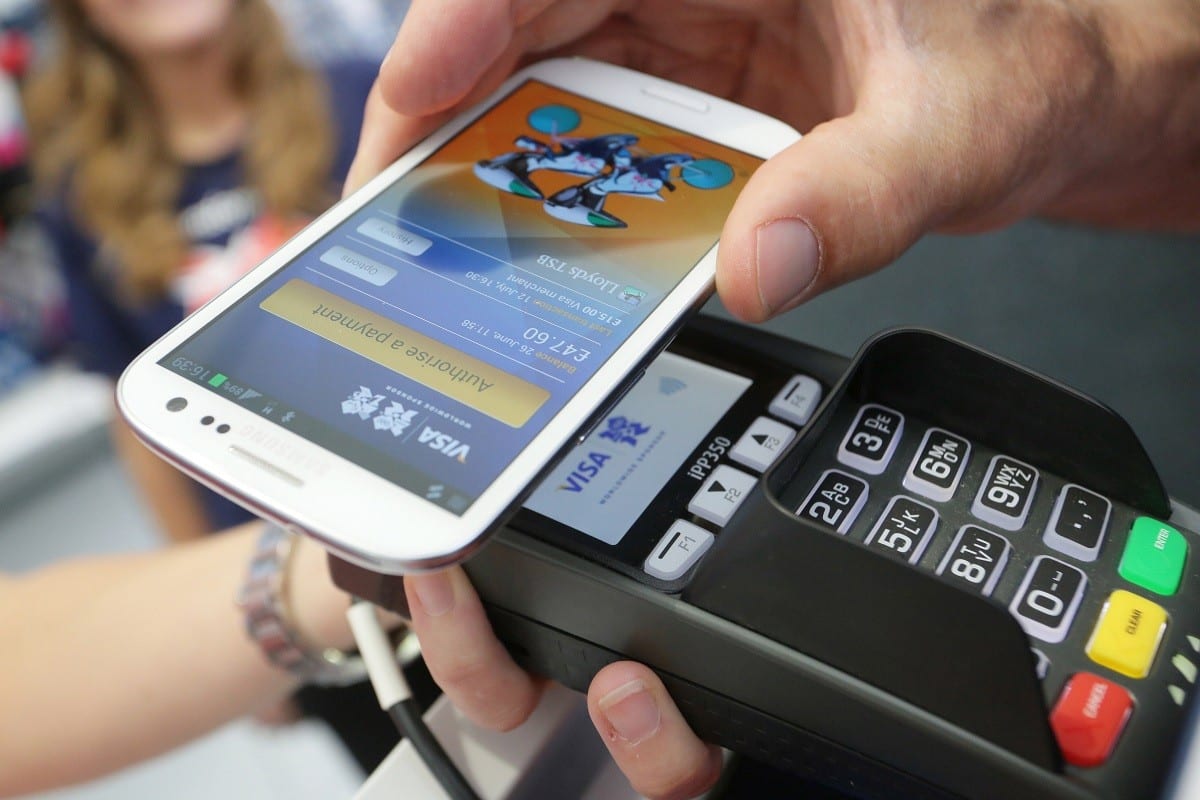
    Ninety-one percent of Asia-Pacific consumers and 79 percent of people globally say they are now using tap-and-go payments, according to a survey by credit card firm Mastercard.

    Polling by the firm, which focused on shifting consumer behaviors in 19 countries, shows accelerated and sustained adoption of contactless payments globally in the midst of the coronavirus pandemic.

    The survey identified concerns among consumers about point-of-sale cleanliness and safety as being a prompt for tap-and-go contactless payments, with 46 percent of respondents internationally and 51 percent of Asia-Pacific respondents swapping their top-of-wallet cards for one offering a contactless feature.

    “Contactless is here to stay,” the firm said in a statement. “We are in a sustained period where consumers are making purchases in a very focused way. That’s reinforcing contactless use in markets where adoption is more mature and it’s stimulating use in newer markets. This trend appears to be here to stay as 74 percent of people globally and 75 percent in Asia Pacific state they will continue to use tap-and-go after the pandemic is over.”

    Meanwhile, a separate study by AksjeBloggen predicts the global digital-payments market, in general, will reach US$6.7 trillion in value by 2023, as usage continues to rise to an estimated 6.1 billion people. Digital payments worldwide are currently valued at $4.7 trillion.

    The survey revealed that online buying and selling of goods and services would remain the largest revenue stream of the global digital-payments industry in the coming years, reaching $4.5 trillion transaction value in 2023. China is the world’s largest digital-payments market, with an estimated $1.9 trillion transaction value this year.

  • DBS Joins Blockchain Trade Finance Network

    DBS Joins Blockchain Trade Finance Network

    DBS joins blockchain network Countour to tap into the platform’s digitalized trade finance capabilities.

    DBS becomes Singapore’s first lender to join blockchain firm R3’s Corda to provide end-to-end letter of credit (LC) settlement to clients. Via the Corda network, the bank expects shortened settlement time, reduced paperwork and simplified processes.

    In addition, the platform also enables digitalized real-time negotiations, post-endorsement sharing with banks and real-time tracking of transactions with a full audit trail.

    Joining Contour’s growing ecosystem of banks and partners aligns with DBS’s ongoing efforts to drive greater efficiencies in trade and unlock strategic value for its corporate customers, DBS said in a statement.

    In the midst of an ongoing coronavirus pandemic, numerous banking sub-segments have been capitalizing on the opportunity for greater openness to digital solutions and an accelerated rate of adoption. Trade finance is no exception and any solution that can speed up cash flow collection in a secure fashion is likely all the more welcome in the current environment.

    This is more than simply digitizing a historically paper-based service, said John Laurens, DBS’s group head of global transaction services. It’s about transforming the way industries work by providing greater transparency, security and speed to build sustainable trade ecosystems that are able to weather the peaks and troughs of economic cycles and are resilient in times of crisis.

    DBS joins BNP Paribas, Bangkok Bank, ING, HSBC, Standard Chartered and Citi Ventures as other members of Singapore-based Countour’s blockchain trade finance network.

  • Revolut Singapore Strengthens Leadership Team

    Revolut Singapore Strengthens Leadership Team

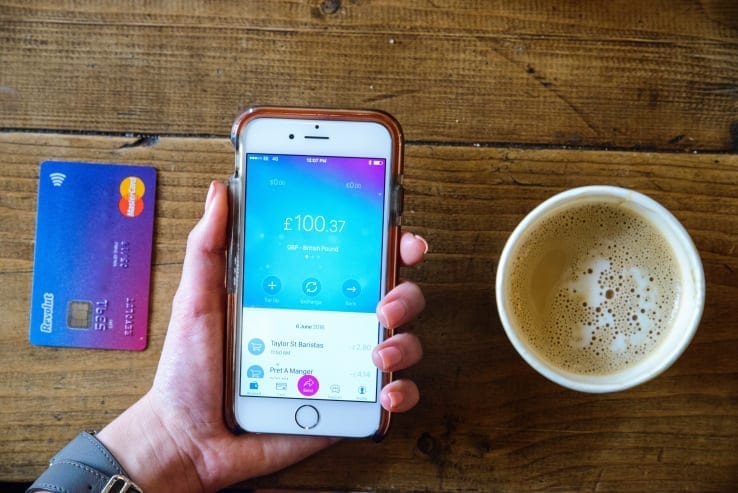
    The fast-growing digital bank has added a CEO, chief compliance officer and head of growth in Singapore, where it now employs over 30 people, it announced on Tuesday.

    U.K.-based fintech Revolut has appointed James Shanahan as its Singapore chief executive officer, who brings more than 25 years’ experience with large banks, insurers and third-parties, particularly in Asia.

    Shanahan, who joined Revolut in March, was previously Railsbank’s Southeast Asia chief of staff. Prior to that, he was chief operating officer for insurer Singapore Life, and held a variety of roles at Ataca, Avaloq, Axa, ANZ, and Standard Chartered. In his new role, he will be responsible for growing Revolut’s local business and expanding into wider Asian markets, a statement said.

    His appointment follows the appointment of Martin Gilbert, the former Standard Life Aberdeen co-chief executive who sat on the MAS International Advisory Panel until early 2020, as chairman of Revolut’s board.

    Compliance Risk Specialist Joins

    Revolut also appointed Rayson Tan as chief compliance officer, chief risk officer and head of legal. He brings more than two decades’ experience in the field, and was most recently a managing director in the Compliance & Regulatory Affairs department of Credit Suisse.

    Tan has also held various country, regional and global AML and sanction roles at Deutsche Bank and UBS.

    Business Development Hire

    Pam Chuang, the former vice president of sales and partnerships at GoBear, was appointed head of growth. She was part of the pioneer team at the Singapore-based financial supermarket, and was instrumental in scaling its reach across Southeast Asia and Hong Kong.

    Before that, Chuang held leadership roles for companies including AIA Group, ReMark International, Saxo Bank and Aon.

    Rapid Growth

    Founded in 2015, Revolut launched in Singapore in 2019, where it operates a multi-currency wallet. 

    In February, it announced a $500 million series D raise led by Silicon Valley venture capital firm TCV, which it said will be used to improve existing products and services as well as expand its outreach outside of its U.K. base.

    Earlier this month, Revolut announced that it had officially launched a bank in Lithuania, and will use the European banking license that it received for the operations there to start awarding loans, issue credit cards and open savings accounts.

  • Mastercard study shows consumers moving to contactless payments for everyday purchases as they seek cleaner

    Mastercard study shows consumers moving to contactless payments for everyday purchases as they seek cleaner

    During February and March, as many countries imposed or strengthened social distancing measures due to COVID-19, a significant majority of consumers turned to contactless card payments for necessary purchases. Citing safety and cleanliness, 79 percent of people worldwide and 91 percent in Asia Pacific say they are now using tap-and-go payments.

    Consumer polling by Mastercard, studying changing consumer behaviors in 19 countries around the world, paints a picture of accelerated and sustained contactless adoption.

    The act of going to the store for eggs, toilet paper, medicine and other necessities has changed dramatically this year. Shoppers have had to adjust to new challenges when buying everyday supplies – a shift in behavior that is particularly clear at checkout as people express a desire for contactless cards and voice concerns over cleanliness and safety at the point of sale.

    The new Mastercard survey shows:

    • Contactless cards move to top of wallet – Perceptions of safety and convenience have spurred a preference for contactless cards and reminded consumers of the ease of tapping. Globally, 46  percent of respondents have swapped their top-of-wallet card for one that offers contactless. In Asia Pacific, 51 percent of people have made the swap.
    • Confidence in contactless – COVID-19 has increased concerns about cash usage and led to positive perceptions about contactless due to the safety and peace of mind it provides. The majority of respondents (82 percent) globally view contactless as the cleaner way to pay, with 80 percent in Asia Pacific saying the same. Contactless payments are up to 10 times faster than other in-person payment methods, enabling customers to get in and out of stores faster.  
    • Contactless is here to stay – We are in a sustained period where consumers are making purchases in a very focused way. That’s reinforcing contactless use in markets where adoption is more mature and it’s stimulating use in newer markets. This trend appears to be here to stay as 74 percent of people globally and 75 percent in Asia Pacific state they will continue to use contactless after the pandemic is over.

    “Mastercard’s survey shows a clear shift to contactless – especially in Asia Pacific – as COVID-19 changes the payments landscape and the way people shop now and in the future,” said Sandeep Malhotra, Executive Vice President, Products & Innovation, Asia Pacific, Mastercard. “The fact that 3 in 4 people intend to keep using tap-and-go after the pandemic is a strong sign that consumers see the long-term benefits of having a safer, cleaner way to pay, checking out faster and being more socially responsible.”

    Contactless Tipping Point

    Mastercard has been spearheading the worldwide shift to contactless for years, championing the simple, safe and fast way to pay. Now, as consumers increasingly seek ways to get in and out of stores quickly without touching payment terminals, Mastercard data reveals more than 40 percent growth in contactless transactions globally in the first quarter of 20201. More than 80 percent of contactless transactions are under US$25, a range typically dominated by cash.

    While countries worldwide are at different stages of contactless card deployment and usage for daily shopping, Mastercard’s insights on trends at grocery stores and pharmacies – where many day-to-day essentials are being purchased – showed nearly all regions experienced significant spikes in February and March.

    Reinforcing changing behaviors and consumer checkout preferences, Mastercard saw the number of tap-and-go card payments at grocery stores and pharmacies grow twice as fast as non-contactless transactions globally and 2.5 times faster in Asia Pacific2.

    Just last month, Mastercard announced commitments to increase contactless payment limits in more than 50 countries worldwide in Europe, the Middle East, Africa, Asia Pacific, Canada, Latin America and the Caribbean. Limit increases were part of Mastercard’s global effort to make sure consumers, merchants and small businesses have the resources to pay safely, receive payment and maintain operations during the COVID-19 crisis.

  • UBS Hires Former Mainland Regulator for China Integration

    UBS Hires Former Mainland Regulator for China Integration

    UBS will look to integrate its China business units in a rapidly changing regulatory environment under the leadership of an ex-official from the mainland banking regulator.

    Alan Wang (or Wang Wei), a former senior official with the China Banking and Insurance Regulatory Commission, joins the bank as a managing director and China integration lead, according to a report citing an internal memo.

    The bank will look to leverage Wang’s experience to integrate its various mainland business units in accordance to the local regulatory environment. In the Hong Kong-based role, Wang will work closely with UBS’s China country head David Chin and report to APAC president Edmund Koh.

    I am confident that his expertise in regulation and knowledge of the onshore market and network will be a great asset to foster long-term strategic development in the region, Koh added.

    UBS’s ambitions in mainland China are no secret with a nearly comprehensive set of businesses including wholly-owned units in wealth management, asset management, futures alongside a fund management joint venture called UBS SDIC Fund Management.

    Ownership aside, the bank has also been rapidly expanding these business units and had reportedly hit its hiring target ahead of time to double headcount from 600 in 2016 to 1,200.

  • OCBC Quarterly Profits Down

    OCBC Quarterly Profits Down

    Net profits at OCBC plunged 43 percent in the first quarter due to non-operating losses from its insurance arm and increased provisions most notably for oil-linked exposure.

    OCBC posted S$698 million ($494 million) in quarterly net profits – below analyst estimates of $666 million, according to Refinitv data.

    Its insurance contributions nosedived 94 percent year-on-year due to unrealized mark-to-market losses and its total allowances were increased from $176 million to $465 million which includes $195 million set aside for a «Singapore-based corporate customer in the oil trading sector».

    Recently, OCBC was reportedly amongst the lenders to disgraced oil trader Hin Leong, with an estimated exposure of $220 million.

    Driven by fee income wealth management and brokerage units, non-interest income was up 11 percent to $551 million. Net investment gains were also up at $84 million due to the sale of debt securities.

    Net trading income plummeted by more than 90 percent to reach $13 million due to unrealized mark-to-market losses in Great Eastern’s investment portfolio.

    Despite a still stable balance sheet – non-performing loans were up by only 2 bps while net interest margin remained at 1.76 percent – the additional provisions signal further headwinds ahead in light of the effects from the coronavirus pandemic.

    According to OCBC group CEO Samuel Tsien, the coming period is expected to be very difficult for individuals and businesses.

    We paid close watch on our credit portfolio against the market uncertainty, and significantly shored up our allowances on a forward-looking basis, he said.