Category: Finance

Retail News Asia is committed to providing both local and global retailers with the latest Finance news throughout the Asian market. This on a daily base.

  • Barclays Cuts Dozens of Investment Banking Jobs

    Barclays Cuts Dozens of Investment Banking Jobs

    Barclays seeks to cut 100 mainly senior jobs in its investment banking arm including dozens of roles in Asia.

    The British lender will mostly cut managing director and director positions based in London and Asian financial hubs with a primary focus on trading roles, according to a report citing anonymous sources. The cuts are already underway and the report named the departures of Jonathan Kitei, Americas head of securitized product sales; Tim Johnston, EMEA head of cash high-touch trading and sales; and Anindya Das Gupta, India head of treasury.

    Whilst the cuts would impact dozens of positions in Asia, it will not result in an exit of any business line or market in the region, one of the sources said.

    Global banks continue to pare down costs with the broader industry having announced nearly 80,000 job cuts last year – a record high since 2015. At Barclays where headcount totaled 83,000 in 2018, the bank said it had cut 3,000 jobs in the second quarter last year. More headwinds can be expected with Barclays chief executive Jes Staley saying in October that the 2020 outlook would be «unquestionably more challenging now than it appeared a year ago.

  • StanChart to Boost Limited 25 Percent Youth Market Share

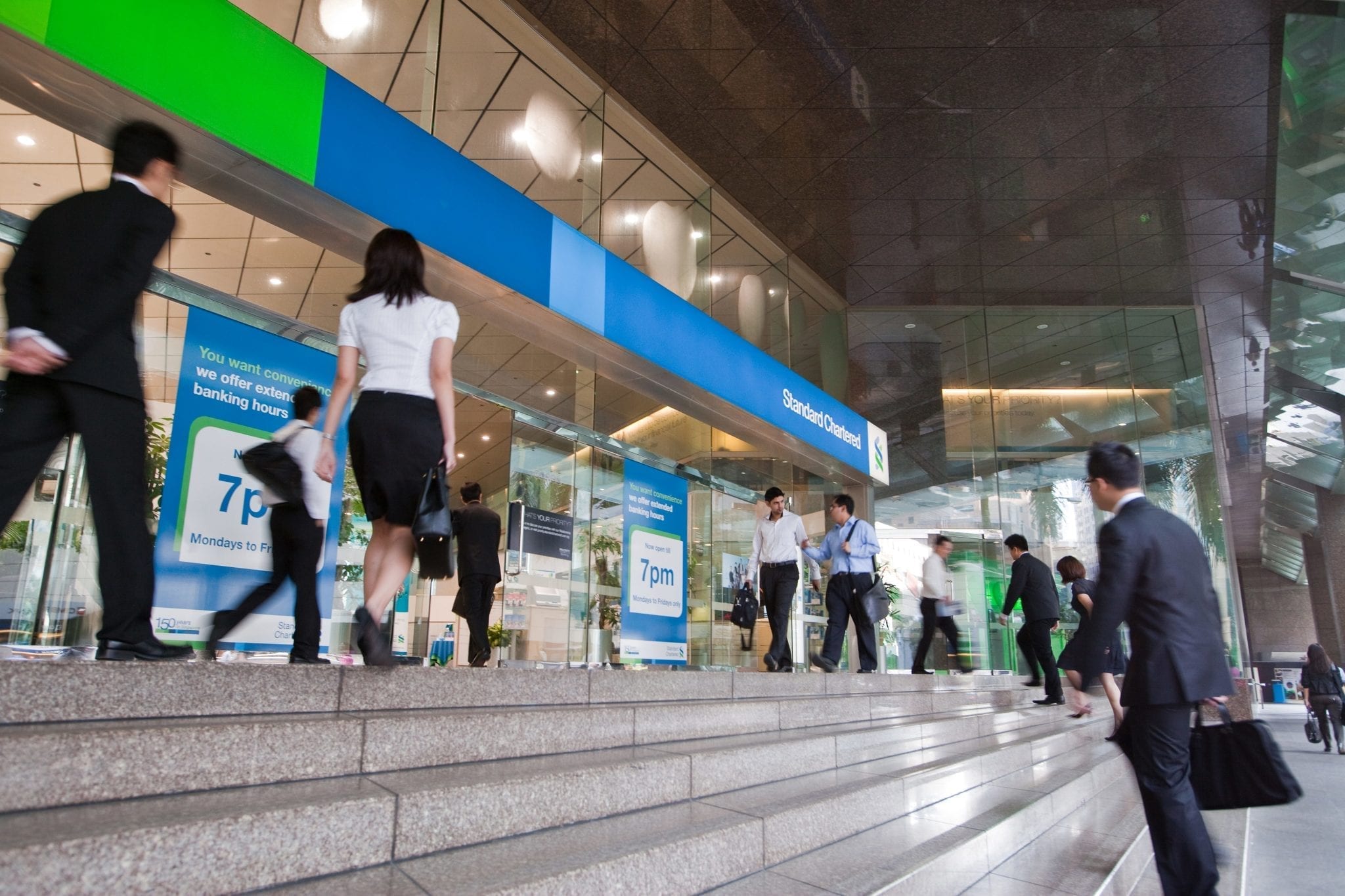
    StanChart to Boost Limited 25 Percent Youth Market Share

    Standard Chartered aims to boost its market share amongst next-generation users with the launch of its digital bank.

    The bank has three times more market share amongst older clients than those in their twenties and thirties, according to a report citing Standard Chartered chief executive Bill Winters, who hopes that its upcoming digital lending business will help change the mix.

    Our virtual bank can help expand our market share of the younger generation, Winters said. We are very focused on developing digital services. The launch of our Hong Kong virtual bank will be a key strategy for our business.

    Digital rivals entering the market and are attempting to initially lure clients with attractive pricing on deposit rates. For example, ZA Bank – the first virtual lender to launch – made its entrance in grand fashion with a 6.8 percent three-month deposit offering, significantly higher than the 2-3 percent offered by traditional competitors. Hong Kong’s central bank said last week that the remaining seven virtual banks are earmarked to launch this year.

    We will offer an attractive package which is not purely based on pricing but also exceptional convenient services for customers,» Winters explained. «Our team has been testing some good, innovative products with a small group of customers.

    Standard Chartered will enter the market with considerable experience managing an online-only banking business having launched eight such outfits over the last 18 months in Africa. Its inaugural digital lending entrance occurred in Ivory Coast in mid-2018 where it attracted 18,000 new accounts in the first year. Within the region, the bank has also launched in Uganda, Tanzania, Kenya, Ghana, Botswana, Zambia and Zimbabwe.

    Whilst Africa has undoubtedly very different characteristics when compared to Hong Kong due to the latter market’s high population of unbanked individuals, the technological benefits gained from digitally acquiring clients was self-evident.

    The number of new customers we have in Africa over the past 12 months is more than what we had in the prior 12 years, Winters explained.

    Although Standard Chartered is undergoing major transformational changes to both its business model and infrastructure, Winters underlines that components of the old regime will remain such as the bank’s branch network.

    Brick-and-click is a good business model, he said. Our branch network gives confidence to people as they continue to serve customers who never want to pick up a mobile phone app to do their banking.

    Hong Kong too is facing changes after experiencing unprecedented political unrest that has threatened the city’s status as a global financial hub. But this is another area Winters sees no need to rewrite the strategy for.

    We will not change our view on Hong Kong, which remains our regional hub, acting as a gateway to mainland China, he said. These have been very difficult times during the past six months. But I am confident in Hong Kong, whose fundamentals are still resilient. Hong Kong’s capital markets – including IPOs, equities trading and debts, remain very active. It remains a regional financial hub.

  • UBS in Asia Undergoes Major Khan-Led Shakeup

    UBS in Asia Undergoes Major Khan-Led Shakeup

    UBS’s wealth management arm undergoes a major restructuring exercise led by the business’ global co-head Iqbal Khan and Tom Naratil. Through the reorganization, Khan will make his mark on the wealth management business’ highest growth market by region with the goal of improving costs and efficiency at the bank.

    According to a report, the bank has appointed LH Koh, head of the China business, as the APAC co-head of the global family office, alongside the current head of the unit, Anurag Mahesh. David Man, a UBS veteran since 1996 credited for building a sizable international wealth business in Taiwan, was also appointed as vice-chairman of wealth management for Greater China.

    Post-restructuring, the Asia Pacific wealth business will be led by co-heads Amy Lo and August Hackete. In Hong Kong, Marina Lui will be sector head for China likely absorbing Koh’s former responsibilities overseeing the bank’s international China business. Succeeding Man to man the Taiwan helm is Francis Liu who was previously focused on the ultra-wealthy segment for Greater China. Also joining them in the city is Adeline Chien, sector head for Hong Kong and Southeast Asia.

    And in Singapore, the bank named Patricia Quek, as sector head for Singapore and Malaysia; Tian-Ong Foo, sector head for Thailand and Philippines; and Raymond Ang, sector head for Indonesia, Greater China and offshore Japan.

    Asia’s restructuring follows EMEA where Khan and Naratil divided the business into three parts to better responds to changing client needs. The restructuring is reportedly expected to help shed 500 jobs globally with affecting management layers in Asia alongside noteworthy portions of Europe. Switzerland and the U.S. are expected to be less impacted by the cuts.

  • Shanghai Seeks Fintech Hub Status in Five Years

    Shanghai Seeks Fintech Hub Status in Five Years

    The Shanghai government announced a series of policies to motivate firms and talent while formally challenging the similar ambitions of nearby Hangzhou.

    Shanghai’s municipal government is taking an admittedly expedited path, according to a report citing a statement, to becoming a fintech center and will accelerate this development through a series of incentives including a tax cut on related tech firms to 15 percent (from 25 percent) and attractive housing and medical benefits to lure talent.

    Ant Financial, Hangzhou’s homegrown fintech pioneer, also announced yesterday that it would host a fintech conference to support Shanghai’s efforts with expectations to draw up to 30,000 global attendees. The «INCLUSION» conference held in late April will cover themes such as the global digital economy, digital finance, innovative technology, commerce and cities, and sustainability.

    Shanghai’s plans parallel that of Hangzhou’s which is also aiming to be a major hub in the field. In May last year, its local government delivered a plan in to transform the city into a global fintech center by 2030 while leveraging the sector to provide 120 billion yuan ($17.4 billion) in added value to the economy by 2022.

  • Allianz Opens Insurance Holding in China

    Allianz Opens Insurance Holding in China

    Based in Shanghai, the China holding company will support the German insurer’s growth ambitions in the country as it aims to play a larger role in China’s insurance sector and grow with the market.

    Global insurer Allianz has opened China’s first fully foreign-owned insurance holding company, the firm announced in a statement on Thursday.

    Allianz (China) Insurance Holding Company will be led by chairman Sergio Balbinot and CEO Solmaz Altin. The firm said it hopes the establishment of the company will support Allianz’s growth ambitions in China by enhancing its strategic and financial flexibility to capture business opportunities, further increase Allianz’s investment and drive long-term success in the market.

    Allianz received the approval from the China Banking and Insurance Regulatory Commission (CBIRC) to commence operations in November 2019. The launch follows a series of measures recently announced by the Chinese government to further open up and encourage investment in China by foreign financial insurance institutions.

  • UBS in Asia Undergoes Major Khan-Led Shakeup

    UBS in Asia Undergoes Major Khan-Led Shakeup

    UBS’s wealth management arm undergoes a major restructuring exercise led by the business’ global co-head Iqbal Khan and Tom Naratil.

    Through the reorganization, Khan will make his mark on the wealth management business’ highest growth market by region with the goal of improving costs and efficiency at the bank.

    The bank has appointed LH Koh, head of the China business, as the APAC co-head of the global family office, alongside the current head of the unit, Anurag Mahesh. David Man, a UBS veteran since 1996 credited for building a sizable international wealth business in Taiwan, was also appointed as vice-chairman of wealth management for Greater China.

    Post-restructuring, the Asia Pacific wealth business will be led by co-heads Amy Lo and August Hackete. In Hong Kong, Marina Lui will be sector head for China likely absorbing Koh’s former responsibilities overseeing the bank’s international China business. Succeeding Man to man the Taiwan helm is Francis Liu who was previously focused on the ultra-wealthy segment for Greater China. Also joining them in the city is Adeline Chien, sector head for Hong Kong and Southeast Asia.

    And in Singapore, the bank named Patricia Quek, as sector head for Singapore and Malaysia; Tian-Ong Foo, sector head for Thailand and Philippines; and Raymond Ang, sector head for Indonesia, Greater China and offshore Japan.

    Asia’s restructuring follows EMEA where Khan and Naratil divided the business into three parts to better responds to changing client needs. The restructuring is reportedly expected to help shed 500 jobs globally with affecting management layers in Asia alongside noteworthy portions of Europe. Switzerland and the U.S. are expected to be less impacted by the cuts.

  • Citi Singapore Adjusts Gender Wage Gap

    Citi Singapore Adjusts Gender Wage Gap

    In a move to narrow wage gaps between male and female staff, Citi Singapore has adjusted the pay of women at its bank. Its female staff did not receive equal compensation when compared with their male peers of equal work performance.

    In Singapore, the bank’s female representation at the assistant vice president to managing director level roles has increased from 32 percent in December 2017 to 36 percent in December 2019, but their remuneration has not necessarily kept up, according to figures released by the bank.

    While we have moved forward in our goals, more needs to be done. We are committed to meet our global goal of having at least 40 percent of women in these roles by 2021 and to provide a level playing field to all our employees to enable them to succeed, said Jorge Osorio, head of human resources, Citi Singapore.

    The pay adjustment in Singapore for women is in line with the global tweaks made in 2019, where the bank found that women, despite delivering equal work performance against their male peers, did not get the same remuneration.

    This follows a global pay equity review conducted by Citi that was released in January 2019, which showed that women were paid on average 99 percent of what men were paid on an adjusted basis. The adjusted pay gap refers to when pay – including base salary and bonuses – for equal work, has been adjusted for appropriate factors such as job function, level, and geography.

    However, the unadjusted total compensation review showed that the median pay for women globally is 71 percent of the median for men. This means the compensation is not adjusted for factors such as job function, level, and geography.

    The figures suggest that the gap – on an unadjusted basis – is mainly due to differences in gender representation at senior levels of the bank. In turn, this reinforces the importance of increasing the representation of women and U.S. minorities in senior and higher-paying roles at Citi, the bank said.

    The fresh data also come as Singapore’s Ministry of Manpower released a report this month showing that in Singapore, among full-time workers aged between 25 and 54, the unadjusted gender wage gap inched up from 16 percent in 2002 to 16.3 percent in 2018.

    When differences in age, education, occupation, industry and the number of hours worked were accounted for, the adjusted gender wage gap fell from 8.8 percent in 2002 to 6 percent in 2018. It also showed that there is more occupational segregation in 2018 than in 2002.

    Not only do women tend to be in lower-paying jobs compared to men, but men also continue to be over-represented in higher-paying occupations. Across the Asia-Pacific, Citi promoted 14 women or 31 percent out of the total 45 managing directors named in the region in December 2019. That’s up from only eight in 2018, or 21 percent.

    In March 2018, the bank rolled out a «Maternity Matters» program in Singapore to boost the support provided to female colleagues during their pregnancy, while they are on maternity leave and upon return to work. Statistics suggest that childbirth is related to the high female attrition in the workforce.

    The bank also launched a #backtowork initiative in November 2019 in partnership with Mums@Work Singapore to encourage talented individuals who have taken time away from their careers and are interested in returning back to the workforce to join Citi.
  • Citi Singapore Adjusts Gender Wage Gap

    Citi Singapore Adjusts Gender Wage Gap

    In a move to narrow wage gaps between male and female staff, Citi Singapore has adjusted the pay of women at its bank. Its female staff did not receive equal compensation when compared with their male peers of equal work performance.

    In Singapore, the bank’s female representation at the assistant vice president to managing director level roles has increased from 32 percent in December 2017 to 36 percent in December 2019, but their remuneration has not necessarily kept up, according to figures released by the bank.

    «While we have moved forward in our goals, more needs to be done. We are committed to meet our global goal of having at least 40 percent of women in these roles by 2021 and to provide a level playing field to all our employees to enable them to succeed,» said Jorge Osorio, head of human resources, Citi Singapore.

    The pay adjustment in Singapore for women is in line with the global tweaks made in 2019, where the bank found that women, despite delivering equal work performance against their male peers, did not get the same remuneration.

    This follows a global pay equity review conducted by Citi that was released in January 2019, which showed that women were paid on average 99 percent of what men were paid on an adjusted basis. The adjusted pay gap refers to when pay – including base salary and bonuses – for equal work, has been adjusted for appropriate factors such as job function, level, and geography.

    However, the unadjusted total compensation review showed that the median pay for women globally is 71 percent of the median for men. This means the compensation is not adjusted for factors such as job function, level, and geography.

    The figures suggest that the gap – on an unadjusted basis – is mainly due to differences in gender representation at senior levels of the bank. In turn, this reinforces the importance of increasing the representation of women and U.S. minorities in senior and higher-paying roles at Citi, the bank said.

    The fresh data also come as Singapore’s Ministry of Manpower released a report this month showing that in Singapore, among full-time workers aged between 25 and 54, the unadjusted gender wage gap inched up from 16 percent in 2002 to 16.3 percent in 2018.

    When differences in age, education, occupation, industry and the number of hours worked were accounted for, the adjusted gender wage gap fell from 8.8 percent in 2002 to 6 percent in 2018. It also showed that there is more occupational segregation in 2018 than in 2002.

    Not only do women tend to be in lower-paying jobs compared to men, but men also continue to be over-represented in higher-paying occupations. Across the Asia-Pacific, Citi promoted 14 women or 31 percent out of the total 45 managing directors named in the region in December 2019. That’s up from only eight in 2018, or 21 percent.

    In March 2018, the bank rolled out a «Maternity Matters» program in Singapore to boost the support provided to female colleagues during their pregnancy, while they are on maternity leave and upon return to work. Statistics suggest that childbirth is related to the high female attrition in the workforce.

    The bank also launched a #backtowork initiative in November 2019 in partnership with Mums@Work Singapore to encourage talented individuals who have taken time away from their careers and are interested in returning back to the workforce to join Citi.

  • Deutsche Bank Appoints Discretionary Wealth Head

    Deutsche Bank Appoints Discretionary Wealth Head

    She takes over from Tuan Huynh, who was appointed Deutsche Bank’s Chief Investment Officer, Europe, several months ago.

    The wealth management division of Deutsche Bank has appointed Siok Kuan Tham as head of Wealth Discretionary (WD) for Emerging Markets, it announced in a statement on Thursday.

    Based in Singapore, Tham will report globally to Gregor Hirt, global head Wealth Discretionary, and locally to Lavanya Chari, global head of Global Products & Solutions (GPS).

    Tham has extensive experience in portfolio and fund management. She was most recently head of Fixed Income at DWS, Deutsche Bank’s asset management arm, based in Singapore, where she also chaired the Asian Fixed Income Portfolio Construction Committee.

    Tham’s hire comes as the German lender aims to expand its footprint in the region. Last week, Deutsche Bank Wealth Management announced that it is hiring Boris Kwok as Group Head, North Asia, with a focus in China.

    Along with Kwok, it brought in 20 other talented front-facing wealth management professionals, six of whom are directors, as part of the firm’s expansion strategy in North Asia to increase the number of relationship managers by 40-50 percent in three years.

  • Singapore Launches Framework to Attract Investment Funds

    Singapore Launches Framework to Attract Investment Funds

    The new corporate structure can be used for a wide range of investment funds and provides fund managers greater operational flexibility and cost savings.

    Singapore is courting more funds to base themselves in the city-state with the launch of a new framework that caters to the needs of global investment funds and investors, and a grant scheme to encourage industry adoption of the framework.

    Under the Variable Capital Companies (VCC) framework, announced by the Monetary Authority of Singapore (MAS) and the Accounting and Corporate Regulatory Authority (ACRA) on Wednesday, fund managers will have greater flexibility in share issuance/redemption and the payment of dividends. Managers will also be able to incorporate multiple funds in a single VCC to save costs, the statement said.

    The three-year VCC grant scheme will help defray costs of incorporating or registering a VCC by co-funding up to 70 percent of eligible expenses paid to Singapore-based service providers, capped at S$150,000 for each application, with a maximum of three VCCs per fund manager.

    Marking the launch, a total of 20 investment funds, from a group of 18 fund managers that participated in a VCC pilot program by MAS and ACRA in September 2019, were incorporated or re-domiciled under the new framework on Wednesday.

    Benny Chey, MAS assistant managing director, Development and International, called the launch of VCC a «significant chapter in the development of Singapore as a full-service international fund management and domiciliation hub» and said it would also create new opportunities for Singapore-based fund service providers as more fund managers to use the VCC to structure their investment funds.

    Anshuman Asthana, regional head of Product Management, Securities Services, ASEAN and South Asia, Standard Chartered Bank, called the VCC structure a game-changer for the asset management industry and said the structure would also give Asia’s start-up ecosystem a boost.

    With more private equity and hedge funds expected to domicile in Singapore, they can more easily continue their financing support for Fintech start-ups and help them grow in size. This will help solidify Singapore’s position as a technology and innovation hub for the region,» Asthana said.

  • DBS Obtains Bond Settlement Agent License in China

    DBS Obtains Bond Settlement Agent License in China

    DBS Bank (China) announced that it received a Bond Settlement Agent license in the China Interbank Bond Market, making it the first and only Singapore bank to be granted such a license.

    DBS Bank (China) has received a Bond Settlement Agent license from the People’s Bank of China to act as a bond settlement agent in the China Interbank Bond Market, the lender said in a statement on Tuesday. Prior to the license, DBS China has been involved in the China bond market as Trial Bond Market Maker in the China interbank bond market for years.

    This license will enable DBS China to serve overseas investors who are interested in the China bond market because from now on, we can provide the bond settlement or custody services to them.

    The China bond market is the largest in Asia and the second-largest in the world and is of significant interest to international investors. With the license, we look forward to introducing more overseas customers to the China bond market and providing our comprehensive service to international institutional investors said Neil Ge, CEO of DBS China in the statement.

    China’s onshore bond market worth was 88 trillion yuan ($13.12 trillion) in February last year, according to the country’s central bank. Since last April, the phased inclusion of Chinese sovereign bonds and debt sold by three key state-owned policy banks into the Bloomberg Barclays Global Aggregate Index has attracted a new group of investors into China’s domestic bonds.

    Up to then, inflows have been dominated by central banks and sovereign wealth funds. With the inclusion of China bonds into such indices, private-sector managers following the index would be looking to join the market.

  • UBS Wealth Management Starts Job Cull

    UBS Wealth Management Starts Job Cull

    A new organizational structure, intended to speed up decision making, is being introduced in Asia, with other regions to follow.

    UBS has begun cutting jobs at its wealth management unit in Europe and Asia, with as much as 20 percent of its workforce in European regions and management layers in Asia affected.

    The round of cuts will affect about 500 employees, with cuts affecting staff at every level, from managing directors to assistants, according to people familiar with the matter. However, staff in the U.S. and Switzerland are less likely to be affected by the cuts, the report said.

    In December, UBS announced it would dismantle its ultra-high net worth business, the first major move under new private bank co-head Iqbal Khan, who joined from Credit Suisse in September 2019.

    Earlier in January, it said it would be restructuring its private bank and break up its European, Middle East, and African wealth business into three regions to speed up local decision making.

  • UBS’s Hong Kong IPO Sponsorship Ban Lifted

    UBS’s Hong Kong IPO Sponsorship Ban Lifted

    Hong Kong’s market regulator demonstrated leniency by lifting UBS’s IPO sponsorship ban two months early due to satisfaction with its enhanced governance processes.

    The Securities and Future Commission (SFC) cited a 10-month review as the basis of its decision to lift the ban against UBS which prevents the bank from leading initial public offerings.

    The SFC was «satisfied after its own assessment that UBS has clear requirements and procedures in place to enable staff members to understand and properly perform their responsibilities», it said in a statement adding that compliance was further enabled by systems, controls, policies, and procedures it found effective based on a separate independent review.

    The ban was imposed against UBS following due diligent failures on three previous IPOs – China Forestry, Tianhe Chemicals, and China Metal Recycling – that also resulted in a HK$375 million ($48.2 million) fine. In the case of Tianhe Chemicals, for example, there was a failure to follow up on a meeting with the manufacturer’s alleged largest customer, named only as X, who appeared at a meeting with no business card or other identification and left abruptly.

    «The SFC would like to make clear that the standards assessed in the case of UBS are equivalent to those that are expected to be adopted by all licensed sponsors,» the regulator added.

  • Visa Buys Out Personal Finance Enabler In Billion-Dollar Deal

    Visa Buys Out Personal Finance Enabler In Billion-Dollar Deal

    Visa will be buying privately held financial technology startup Plaid in a $5.3 billion deal, according to a statement from the payments processor.

    Visa and rival Mastercard had invested in Plaid in a $250 million series C funding round in 2018 that reportedly valued the firm at $2.65 billion. Visa said it expects the deal to close in the next three to six months and benefit its adjusted earnings per share at the end of the third year.

    The purchase price is twice the final private valuation and Visa is funding the transaction from cash on hand and debt issuance.

    Plaid focuses on enabling consumers and businesses to interact with their bank accounts, check balances, and make payments through financial technology applications.

    Founded in 2013, its technology lets people link their bank accounts to mobile apps like Venmo. It links to over 11,000 financial institutions across the United States, Canada, and Europe.

  • Bank Rakyat Indonesia Earmarks Funds For E-commerce

    Bank Rakyat Indonesia Earmarks Funds For E-commerce

    Indonesia’s first digital bank, Bank Rakyat Indonesia announced on Monday that it has earmarked $1 million for Indonesia Mall, an early-stage assisted e-commerce program that aims to help small enterprises open new revenue channels by participating in the online retail market.

    To serve the growing numbers of micro and small-medium enterprises (MSMEs) populated by the region’s e-commerce boom, Bank Bank Rakyat Indonesia (BRI) rolled out Indonesia Mall in October 2018 with the goal to bring MSMEs online and give them easy access to a larger local and overseas markets.

    Indonesia Mall, an in-house program of the bank, helps small companies post their listings on Bank BRI’s Indonesia Mall e-stores, plus help them package and photograph products. It also provides logistics, shipping, and inventory, and even facilitates overseas exports.  So far, Indonesia Mall has signed up more than 10,000 MSMEs and those that have joined the program have reportedly seen revenues rise by 40 percent on average, the bank said in a statement on Monday.

    Many MSMEs in Indonesia continue to have limited access to the formal financial sector, with large swaths of the population still remaining unbanked.  By not having bank accounts, these enterprises would have difficulties collecting payments online.

    MSMEs employ 116.7 million people – more than 97% of the total national workforce, according to data from Indonesia’s Central Statistics Agency. However, less than 15 percent of MSMEs have proper access to financing.

    Indonesian e-commerce is growing at an average of 16.3 percent annually and is now worth 238 trillion Rupiah (US$16.6 billion), according to Global Data. This growth is expected to spike further by 2023, with the industry value predicted to reach 436 trillion Indonesian Rupiah (US$30.3 billion), reflecting growth of nearly 85 percent.

    Bank BRI-assisted MSME partners range from individual craft artisans to small snack-makers, tailors, and more. Their products can be directly purchased via major e-commerce platforms such as Tokopedia, Shopee, Bukalapak, Blanja.com, Blibli.com, Qoo10 in Singapore, and others.

    Indonesia Mall aims to offer MSMEs infrastructure, ecosystem, and capacity for business and resources developed with the goal of helping its partners sell within Indonesia, as well as overseas.

    To this end, Bank BRI cross-sells products on Indonesia Mall with its credit cards, debit cards, and other programs. Besides selecting and curating a top product list, Indonesia Mall also runs marketing campaigns on most major e-commerce platforms so as to keep its sellers’ products visible on an ongoing basis.

    Bank BRI is the largest microfinance institution and is one of Indonesia’s leading commercial banks and the country’s largest lender by assets.