Category: Finance

Retail News Asia is committed to providing both local and global retailers with the latest Finance news throughout the Asian market. This on a daily base.

  • UOB Investment Arms Sign Up To UN-Supported Principles

    UOB Investment Arms Sign Up To UN-Supported Principles

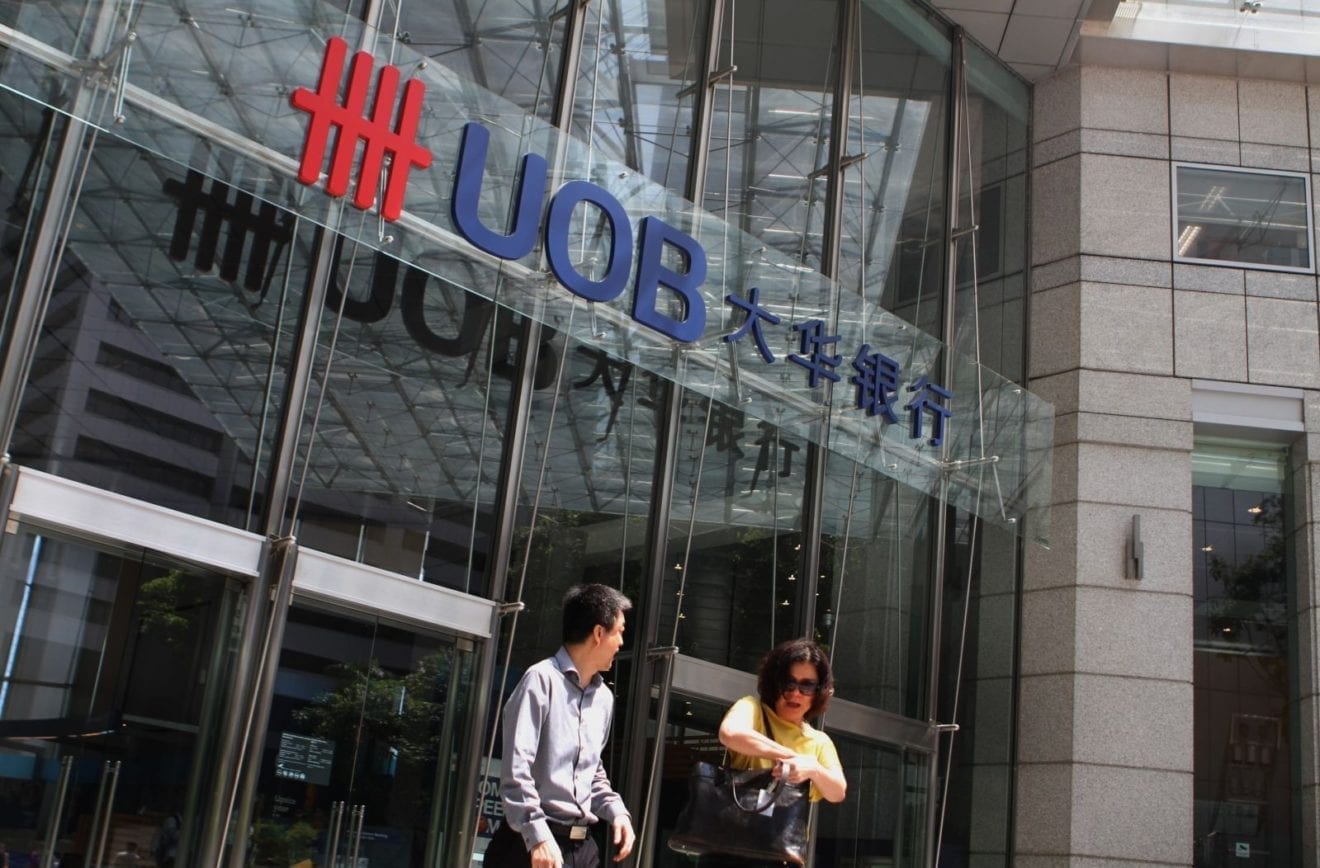
    United Overseas Bank Limited (UOB) announced that its investment management subsidiaries are now signatories of the United Nations (UN)-supported Principles for Responsible Investment (PRI), signaling its commitment to responsible investing.

    UOB Asset Management (UOBAM), UOB Venture Management (UOBVM) and UOB Global Capital LLC (UOBGC) are now signatories of the United Nations (UN)-supported Principles for Responsible Investment (PRI), making UOB the first Singapore bank to have its investment companies sign up for the PRI.

    The bank said that the move signals its commitment to responsible investing, integrating environmental, social and governance (ESG) considerations into its investment policies, processes and practices, and its objective to develop sustainable investment solutions for clients.

    We use a structured risk management approach to creating sustainable, long-term returns for them (the investors). We will continue to enhance our ESG evaluation process by tapping fundamental analysis and technology, such as the use of artificial intelligence, and engage our portfolio companies to help improve their ESG practices, said Thio Boon Kiat, Group CEO of UOBAM in a media statement on Monday.

    UOBAM, UOBVM, and UOBGC are principally third-party fund management companies. «By investing in training our people on relevant regulatory, industry and product trends and developments, we can also offer more ESG-focused funds that will align to the UN Sustainable Development Goals,» Thio added.

    The UN-supported PRI is an international network of investors working together to put the six Principles for Responsible Investment into practice. By upholding the Principles, UOB will incorporate ESG issues into its investment analysis and decision-making processes, amongst other practices.

    Sustaining growth responsibly is a key pillar of UOB’s sustainability strategy. As such, we consider and manage the ESG risks, challenges, impact, and opportunities in all that we do, including our investing activities, said Eric Lim, Head of UOB Group Finance and the Chairperson of the Bank’s ESG Committee, in the same media release.

    Besides incorporating ESG issues, the bank also act on the following:

    • Be active owners and incorporate ESG considerations into its ownership policies and practices
    • Seek appropriate disclosure on ESG issues by the entities in which it invests
    • Promote the acceptance and implementation of the Principles within the investment industry
    • Work to enhance its effectiveness in implementing the Principles; and
    • Report on the activities and progress of its investment firms towards implementing the Principles

    As at the end of September 2019, there were more than 2,600 PRI signatories globally, representing US$89 trillion of assets under management. In Asia, the number of signatories increased by 23 percent in the 12 months prior, with a total of 26 signatories in Singapore.

    UOB Asset Management UOB Asset Management (UOBAM) is a wholly-owned subsidiary of United Overseas Bank Limited that was established in 1986. It currently manages 54 unit trusts in Singapore and is one of the largest unit trust managers in terms of assets under management. As of 30 November 2019, UOBAM and our subsidiaries manage about S$36.2 billion (US$26.4 billion) in clients’ assets.


  • BNP Paribas Launches Electronic FX Trading in Singapore

    BNP Paribas Launches Electronic FX Trading in Singapore

    BNP Paribas announced its plans to launch an electronic FX pricing and trading engine in Singapore in a move to further improve efficiency and liquidity in the city-state’s market.

    The new offering will include 50 currencies in spot, forwards, swaps, non-deliverable forwards (NDFs) and options, as well as commodities e-trading for both precious and base metals. According to BNP Paribas’ Southeast Asia head of global markets, Christophe Jobert, the engine intends to improve liquidity, price discovery and the speed of execution.

    Singapore is a key trading center for us in Asia Pacific, where we are committed to investing for growth,» he added. «In Southeast Asia, we have seen our e-FX trading volumes grow by double-digits year-on-year.

    The bank underlined that the move to launch the new FX trading and pricing engine was part of a broader plan to develop Singapore as «Asia Pacific’s FX trading hub» with support from the city-state’s regulator.

    BNP Paribas’s decision to launch its e-FX pricing and trading engine in Singapore will be an added boost to Singapore and Asia’s FX market, said Gillian Tan, executive director, financial markets development department at the Monetary Authority of Singapore.

    The engine seeks to enhance clients’ trading experiences with improved latency and pricing and will provide more efficient price discovery and improved liquidity in the Asian trading hours for clients in the Asia-Pacific, and support global follow-the-sun execution of FX trades.

    The engine’s roll-out coincides with the launch of BNP Paribas’ single dealer platform, «Cortex LIVE», which will offer Singapore clients access to a real-time digital trading assistant alongside real-time market intelligence driven by artificial intelligence and natural language processing.

    With the delivery of both the e-FX engine and Cortex LIVE in Singapore, clients here will benefit from an unrivaled combination of real-time feedback, quicker and more intelligent trade execution, greater transparency and enhanced controls,» said Rawad Khodr, APAC regional head of G10 FX spot trading, global markets at BNP Paribas.

  • Japanese bank seeks 9.9 pct stake in Vietnam’s OCB

    Japanese bank seeks 9.9 pct stake in Vietnam’s OCB

    Japan’s Aozora Bank Ltd could acquire 9.91 percent of Vietnam’s Orient Commercial Joint Stock Bank in a VND1.22 trillion ($52.8 million) deal.

    OCB is seeking shareholders’ approval to issue the private placement to the Japanese bank, with an offered price not lower than the book value per share at the end of the latest quarter.

    As OCB’s over-the-counter (OCT) shares are being traded from VND14,100-15,900 each (61-69 cents), Aozora will need to spend at least VND1.22 trillion ($52.8 million) on the deal, at VND14,100 apiece.

    Aozora was established in 1957. It has a total asset value of $48 billion and is listed on the Tokyo Stock Exchange at a market cap of $3.16 billion.

    OCB’s charter capital is currently around VND7.9 trillion ($341.9 million). Its January-September pre-tax profit last year was almost VND1.94 trillion ($83.96 million), up 15.3 percent year-on-year.

    Last year saw several foreign investors acquiring stakes or expressing interest in owning shares of Vietnamese banks.

    Vietnam’s largest bank by asset, BIDV, sold a 15 percent stake to South Korea’s KEB Hana Bank in November, while Vietcombank had in early 2019 sold a 3 percent stake to Japanese and Singaporean investors.

  • Chinese Firms Vie for Singapore Digital Bank Licenses

    Chinese Firms Vie for Singapore Digital Bank Licenses

    Several Chinese fintech firms have submitted a bid to the Monetary Authority of Singapore to operate a digital bank in the city-state.

    By the application deadline on Tuesday, Chinese firms that submitted bids for a digital banking license in Singapore included Bytedance, which operates viral video sharing application TikTok, Yillion Group and Hande Group, which applied as part of a consortium with Singapore wealth management fintech platform iFast Corporation, and the country’s largest online financial platform Ant Financial.

    All three are applying for a digital wholesale bank license, according to several media reports this week. There are up to five licenses on offer – two for full digital banks, and three for digital wholesale banks, in which foreign firms can hold majority stakes and the capital commitment is S$100 million.

    We look forward to contributing to the development of the digital banking landscape in Singapore, Ant said, citing an emailed statement.

    For iFast, a license in Singapore would allow it to «bring solutions to the small and medium-sized enterprises (SME) market that has been underserved by bank,» CEO and chairman Lim Chung Chun told «The Business Times» reported on Thursday.

    Other firms that have entered the fray include a consortium led by Singapore gaming firm Razer and Grab, which submitted a joint bid with Singtel.

  • Singapore Fintech Eyes Middle East

    Singapore Fintech Eyes Middle East

    The acquiring business in Dubai is one of the first initiatives the firm has in the pipeline for the Middle East.

    MoovPay has entered into a global’s exclusive partnership with China’s UnionPay International (UPI) for cross-border cashless payment services in the Middle East, the firm announced in a press release on Wednesday.

    As part of the agreement, businesses in the Arab world will be able to use UPI’s range of payment methods, which are commonly used in China, to make payments through MoovPay’s online payment solutions.

    «Our Dubai office will serve as a bridge between the Middle East and Asia Pacific, as well as a springboard for expansion into Europe, helping European merchants tap into both the Middle East and Chinese markets, particularly in e-commerce and mobile applications,» Moovpay CEO Ryan Gwee said about the firm’s ambitions in the region.

  • DBS Boosts ESG Transparency

    DBS Boosts ESG Transparency

    The bank cited growing interest in ESG investing and said it is committed to enhancing clients’ understanding on this front.

    DBS will adopt MSCI ESG Ratings for its wealth management business, which measures a company’s resilience to long-term, financially relevant environmental, social and governance (ESG) risks, the bank announced in a statement on Friday.

    The ratings cover equities, bonds, and funds, and as of November 2019 are embedded in DBS’ suite of wealth products, advisory and discretionary portfolio services, the bank said, adding that it will also explore leveraging this capability to introduce ESG offerings in retail applications.

    DBS called ESG investing a «growing trend that cannot be ignored,» driven partly by the intergenerational transfer of wealth to sustainability-conscious millennial investors.

    «Encouraged by growing evidence of the correlation between robust ESG practices and strong corporate financial performance, more are expressing interest in incorporating ESG into their decision-making processes,» said Marc Lansonneur, head of Managed Solutions, Balance Sheet Products and Investment Governance, DBS Wealth.

  • Chinese Firms Vie for Singapore Digital Bank Licenses

    Chinese Firms Vie for Singapore Digital Bank Licenses

    Several Chinese fintech firms have submitted a bid to the Monetary Authority of Singapore to operate a digital bank in the city-state.

    By the application deadline on Tuesday, Chinese firms that submitted bids for a digital banking license in Singapore included Bytedance, which operates viral video sharing application TikTok, Yillion Group and Hande Group, which applied as part of a consortium with Singapore wealth management fintech platform iFast Corporation, and the country’s largest online financial platform Ant Financial.

    All three are applying for a digital wholesale bank license, according to several media reports this week. There are up to five licenses on offer – two for full digital banks, and three for digital wholesale banks, in which foreign firms can hold majority stakes and the capital commitment is S$100 million

    We look forward to contributing to the development of the digital banking landscape in Singapore, Ant said, citing an emailed statement.

    For iFast, a license in Singapore would allow it to bring solutions to the small and medium-sized enterprises (SME) market that has been underserved by bank, CEO and chairman Lim Chung Chun said.

    Other firms that have entered the fray include a consortium led by Singapore gaming firm Razer and Grab, which submitted a joint bid with Singtel.

  • Fixed Fees Coming for Indonesia’s E-Wallet Transactions

    Fixed Fees Coming for Indonesia’s E-Wallet Transactions

    Indonesia’s central bank is planning to impose fixed fees on some e-wallet transactions in a move that not only eliminates pricing flexibility but could also deter small merchants from participating.

    Bank Indonesia is already in talks with the country’s largest digital payment startups to standardize fees on QR code transactions, according to a report citing five unnamed sources.

    Indonesia’s internet economy has a bright outlook with a Google, Temasek and Bain & Co report projecting the $40 billion market this year to grow more than three-fold by 2025. The market houses numerous global household e-wallet players including homegrown ride-hailing giant Gojek.

    The central bank wants to fix some e-wallet transaction fees at 0.7 percent – a move that could push out smaller merchants on the network that are currently being charged at very levels as an incentive. The would also hit revenue lines from large merchants, like Starbucks, which are already being charged up to 2 percent.

    In addition to pushing out smaller merchants and cut revenue from larger merchants, the central bank’s plan would also require e-wallet transaction fees to be split to an additional party: major Indonesian lenders.

    Under the new system, e-wallet transaction fees would be split between three parties: e-wallet companies, payment processors and the newly included National Electronic Transaction Settlement consortium made up of major local lenders which were previously not involved.

    This will hurt all of us, said one unnamed executive at an Indonesian e-wallet company.

  • CIMB Singapore Appoints CEO

    CIMB Singapore Appoints CEO

    A corporate and retail banking stalwart replaces Mak Lye Mun, who retires after 10 years at the helm.

    CIMB Singapore has appointed Victor Lee as chief executive officer, the Malaysian bank announced on Thursday.

    With the new Industrial Revolution 4.0, we shall need to anchor down on partnerships, technology; customer obsession will be core, and an equally important sustainability agenda, Lee said about his priorities.

    He will concurrently hold the role of CEO of CIMB Group Commercial Banking, and will be a member of the CIMB Group’s senior management team.

    Lee joined CIMB in January 2019 as the bank’s CEO of group transaction banking, based in Malaysia. Prior to joining CIMB, Lee was executive vice president at Fullerton Financial Holdings for three years.

    According to his LinkedIn profile, Lee began his banking career in 1994 at DBS Bank. He has also held roles at UOB, Standard Chartered Bank, Citi and Sumitomo Mitsui.

  • Malaysia Plans Digital Banking License Launch

    Malaysia Plans Digital Banking License Launch

    Malaysia becomes the latest to capitalize on the rising trend of digital banking with plans to issue up to five licenses.

    Malaysia’s central bank will issue the new licenses under a proposed framework that will be finalized in the first half of 2020 which will cater to online banks offering both conventional and sharia-compliant services.

    Such digital banks are expected to offer meaningful access to and promote responsible usage of suitable and affordable financial solutions to financial consumers, according to a  report citing a statement from Bank Negara Malaysia (BNM).

    According to a draft proposal, the Internet-based lenders could help close the gap in Malaysia’s underserved customers and unbanked individuals. The new digital lenders will also have access to the country’s shared ATM network.

    Preference will be given to license recipients where the controlling equity interest in the proposed licensed digital bank resides with Malaysians, the draft added. Other requirements include demonstrable viability for the first three to five years of operations with an asset threshold of no more than 2 billion Malaysian ringgit ($490 million) during the period.

  • OCBC, Keppel, Validus Make Digital Banking Pull Out

    OCBC, Keppel, Validus Make Digital Banking Pull Out

    Despite initial interest, a consortium made up of Singaporean lender OCBC, marine giant Keppel and peer-to-peer lending platform Validus has decided not to pursue a digital banking license in the city-state.

    The decision against applying for a license is believed to be linked with an ongoing strategic review of Keppel’s core operations, according to a report, in the midst of a takeover via a partial offer by Temasek.

    The consortium was expected to leverage the network of small vendors from Keppel with financing through the Validus platform which houses several large corporates including shipyards and logistics firms. Effectively, the partnership would allow large corporates to take advantage of their blue chip status to provide financing to their small contractors and suppliers to ensure the completion of projects on schedule.

    The Monetary Authority of Singapore will issue just five licenses which include two full licenses, which covers retail banking, and three wholesale banking licenses. The latest reported interest came from a partnership between Grab and Singtel which envisions their establishment of a truly customer-centric digital bank.

  • Razer-Led Consortium Bids for Digital Banking License

    Razer-Led Consortium Bids for Digital Banking License

    A consortium led by Razer is the latest to join the race for one of Singapore’s five digital banking licenses.

    The consortium includes the Singapore supermarket giant owners’ – the Lim brothers – private vehicle Sheng Siong Holdings; Richard Li’s insurance firm FWD Group; internet entrepreneur Chen Danian’s tech company LinkSure Global; Insignia Ventures Partners; and Carro, an online marketplace for cars.

    Razer, which leads the consortium, will own a 60 percent in the stake with the remaining five partners holding a 40 percent stake, according to an SCMP report citing a statement.

    We’ve thought about this long and hard,» said Lee Li Ming, Razer’s chief strategy officer and the newly appointed CEO of Razer Fintech as of January 1. We believe that we can do something revolutionary here in Singapore.

    According to Lee, the firm will target those in the age group of 12 to 35 years old due to the segment’s limited financial knowledge and challenges with entering the banking system due to a lack of savings and credit history. The firm will look to leverage its base of young users alongside its existing digital payment networks Razer Merchant Services and e-wallet service Razer Pay.

    Youth and millennials are underserved even in a crowded space like Singapore, Lee commented. We want to help them from a young age.

    Prior to the Razer-led consortium, Grab and Singtel were the latest to reportedly form a partnership to jointly bid for a digital banking license. The Monetary Authority of Singapore will announce the successful recipients of the digital banking clines in mid-2020.

  • Standard Chartered Adds Information Chief in Singapore

    Standard Chartered Adds Information Chief in Singapore

    Standard Chartered hires a chief information officer for its corporate, commercial and intuitional banking arm, based in Singapore.

    Rene W. Keller joins the British lender with responsibilities over the business’ «technology strategy, architecture and delivery value chain,» according to a release. He will report to Dr. Michael Gorriz, group chief information officer (CIO) at Standard Chartered.

    Keller was most recently a group data officer and group head of innovation at Deutsche Bank after serving as the bank’s global CIO of its private wealth arm. Previously, he was group CIO for Germany’s international exchange, Deutsche Börse; COO for fintech Information Mosaic; alongside other tech leadership roles at Swiss Life, Credit Suisse and UBS.

    The hire signals greater commitment by Standard Chartered to build capabilities to capitalize on the industry’s ongoing path towards digitalization as well as withstanding the emerging entrants of promising fintech players, especially in Asia.

    The hire signals greater commitment by Standard Chartered to build capabilities to capitalize on the industry’s ongoing path towards digitalization as well as withstanding the emerging entrants of promising fintech players, especially in Asia.

    The bank has already undergone several projects to boost its tech capabilities including: a mobile token rolled out for corporate clients in more than 38 markets; the joining of the Enterprise Etherium Alliance to develop blockchain research and application in banking; and established a new venture, alongside five other founding banks, to address unmet financing demand from the early stages of supply chains.

    Keller will play an instrumental role in driving the business forward by digitizing our clients’ experience and co-creating innovative solutions by partnering and maintaining its fundamental role against the growing competition of fintech and big tech,» said Gorriz, underlining the corporate, commercial and institutional business’ ongoing «growth and evolution journey.

  • Global Christmas break can boost Vietnam stock market

    Global Christmas break can boost Vietnam stock market

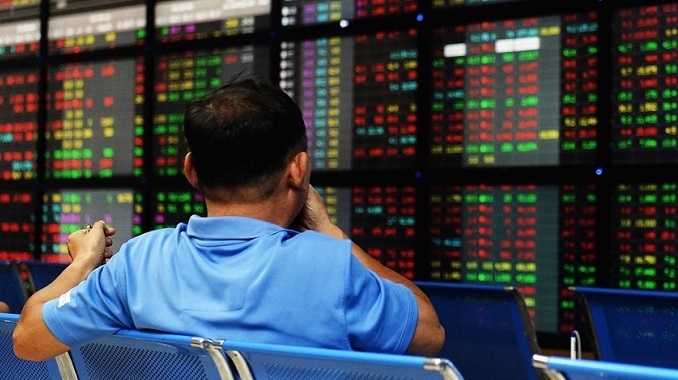
    Global stock markets closing for Christmas break on Wednesday could reduce selling pressure from foreign investors and help the VN-Index recover, analysts say.

    With foreign investors have been net sellers for the majority of sessions in December, the Christmas break could ease selling pressure and help the VN-Index reach 958-961 points in the first few sessions this week, according to a report from Bao Viet Securities (BVSC).

    Vietnam’s benchmark Index closed at 956.41 points on Friday, having risen 0.44 percent with most blue chips stocks in the green, despite a foreign net sell of VND340 billion ($14.66 million).

    If the stock market can rise above 960 points, a psychological threshold, the market could enter a recovery phase, potentially rising up to 980-985 points in the near future, BVSC said.

    Although the VN-Index had plunged from 1015.59 points to 956.41 points in the last two months, downward momentum had slowed down in the past two weeks. It lost only 10 points in the last two weeks, and neared the 950 support level many times but never fell further.

    The market is also beginning to show positive signals at the end of the year, considered a peak time when exchange-traded funds (ETFs) restructure their portfolios and futures contract mature, according to analysts.

    For instance, liquidity on Friday session reached VND3.39 trillion ($146.13 million), the highest level in the last two weeks, most recent sessions recording net buys from domestic investors, with the VN-Index hovering above the opening for the duration of these sessions.

    However, liquidity remains relatively low to averages of previous months, showing that investors are still cautious and it will be difficult for the market to make a breakthrough in the last sessions of the year, according to BVSC.

    After this week, Vietnam’s stock market will have two last sessions for 2019. Many analysts have released reports focusing on long-term drivers for the market, with positive stimulus expected from amendments to Public Investment Law due next year, the U.S.-China reaching a trade agreement, and Vietnam’s steadily growing macroeconomic indicators.

    Vietnam’s economy is estimated to expand by 6.8 percent this year, with a continued trade surplus and declining public debt, according to the latest report by the World Bank

    Asian Development Bank this month revised its GDP growth forecast for Vietnam from 6.8 to 6.9 percent in 2019.

  • OCBC Issues Green Loan to Hong Kong Developer

    OCBC Issues Green Loan to Hong Kong Developer

    OCBC furthers its commitment to achieving a S$10 billion sustainable finance portfolio by 2022 with its latest green loan to Hong Kong-based developer Hang Lung.

    Hang Lung secured an HK$1 billion ($128 million) green loan facility from the OCBC to finance commercial property development projects in mainland China. The maiden green loan will be used to support projects that have received «gold certifications» or «pre-certifications» issued by the U.S. Green Building Council of Leadership in Energy and Environmental Design (LEED), which promotes sustainable real estate development in mainland China.

    We are proud to support Hang Lung’s ambition of spearheading green developments in Hong Kong and mainland China, said Tan Wing Ming, regional general manager for North East Asia at OCBC Bank. This green loan is the latest sustainable finance transaction to come out of OCBC Hong Kong Branch and positions the bank well to capture the growing green finance opportunity in the Greater Bay Area.

    According to a statement issued by Hang Lung, the loan was issued under its «Green Finance Framework» which is in line with the industry standard 2018 Green Bond Principles and 2018 Green Loan Principles. Global ESG research and ratings provider Sustainalytics had reviewed and confirmed the framework to be credible and impactful, the statement added.

    The green loan adds to OCBC’s portfolio and its ambitions to build a $7.4 billion sustainable finance portfolio by 2022. According to a recent Bloomberg league table, the Singaporean lender is already a leader in the field, ranking first in green and renewable energy loans in the Asia ex-Japan region at more than $1 billion in 2019 – a 7 percent market share.