Category: Finance

Retail News Asia is committed to providing both local and global retailers with the latest Finance news throughout the Asian market. This on a daily base.

  • Bank of Singapore Expands UHNW Shelf with Senior Hire

    Bank of Singapore Expands UHNW Shelf with Senior Hire

    Continued growth from its ultra-high net worth clients business has led Bank of Singapore to bolster its product capabilities with the addition of a new head of bespoke investments for Greater China and North Asia.

    Kelvin Teo joins the bank in the new Hong Kong-based role to source unique and exclusive investment opportunities for UHNW clients in Greater China and North Asia, particularly with regards to buyout funds and real estate. Teo reports locally to Derrick Tan, Hong Kong branch CEO and global market head of Greater China and North Asia; and functionally to Carolyn Tham, head of UHNW bespoke investments.

    Teo was most recently a Hong Kong-based director of equity capital markets for Credit Suisse. He was responsible for the origination of capital market transaction for corporate and institutional clients. Previously, he had 15 years of experience in investment banking across various areas including IPO, pre-IPO financing, acquisition financing and more.

    Since 2017, the bank’s number of UHNW clients has doubled and assets from the client segment grew nearly 40 percent. The UHNW segment aside, Bank of Singapore is also boosting its Greater China business, which reportedly nearly tripled assets under management in five years.

    Teo’s hire follows a number of senior appointments for the regional business including the hire of Richard Hu earlier this year as market head for Greater China. Last year, the bank also hired Phonda Chan and Anne Song as market heads, alongside Jacqueline Lee as head of risk.
  • Greater China Earnings Contribution Triples Says OCBC

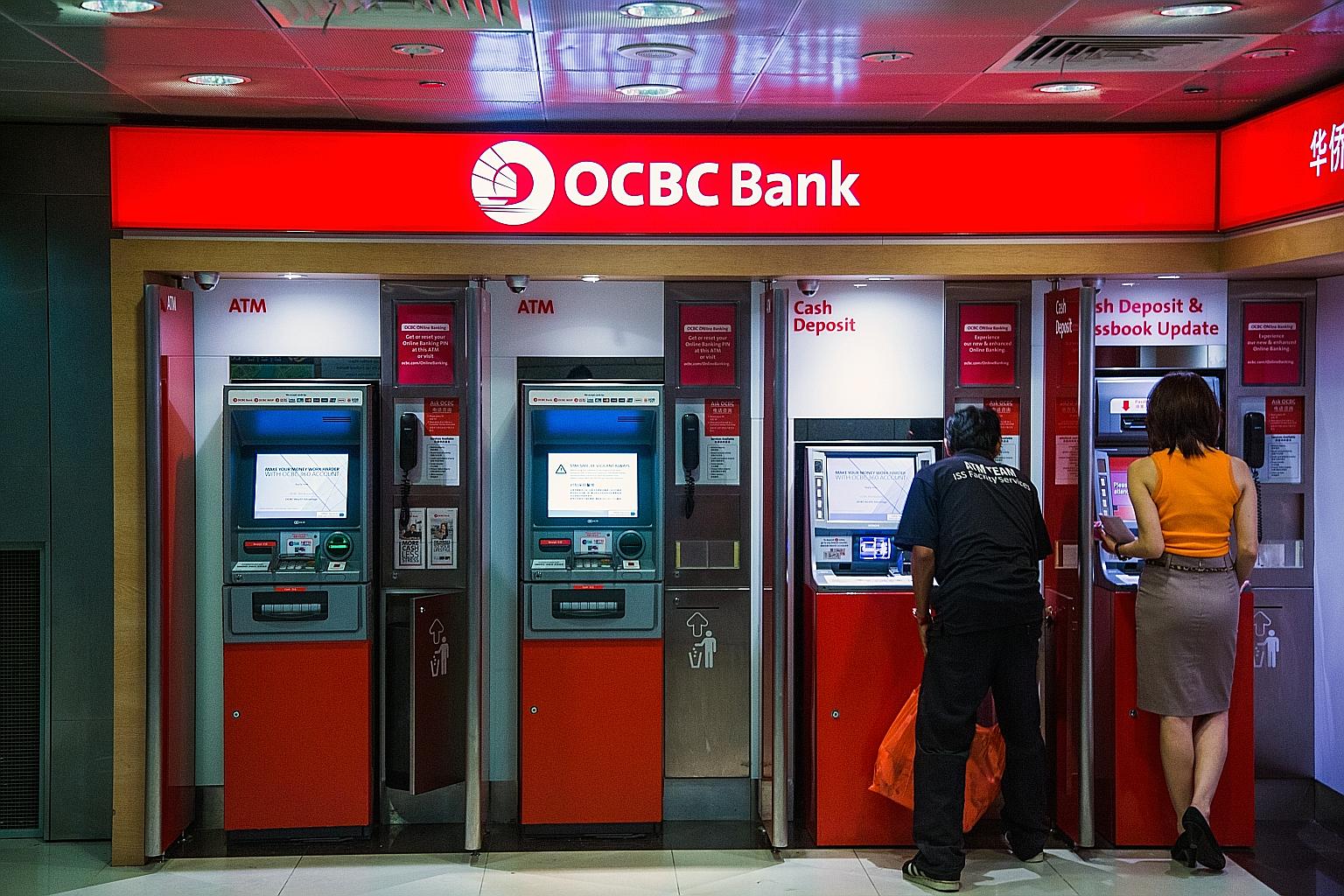
    Greater China Earnings Contribution Triples Says OCBC

    Since OCBC’s acquisition of Hong Kong lender Wing Hang Bank in 2014, it has managed to realize synergies and significantly grow its Greater China business with the region’s earnings share tripling from six percent to nearly one-fifth.

    Earnings contributions from Greater China grew from 208 million Singapore dollars ($150 million) in 2013-end (representing six percent of OCBC Group’s total earnings) to $748 million in 2018-end, now making up 19 percent of total earnings, according to figures released by the group last week.

    Headline growth figures in this period include a more than tripling of operating profits, income and wealth management assets under management. Its total client base in the region across all banking segments grew a colossal 19 times from 28,000 to more than half a million.

    OCBC credits a large part of its growth to the Wing Hang acquisition it made in 2014 for reported 38.4 billion Hong Kong dollars ($4.9 billion), which was since newly named OCBC Wing Hang.

    OCBC Wing Hang’s profits grew from $257 million in 2014-end to $419 million in 2018-end, representing a 1.6-fold increase in the four full fiscal years since the acquisition. Whilst this lags behind the group’s overall Greater China growth, the bank notes that there are other synergies realized that are not necessarily reflected in the subsidiary alone.

    According to the bank, it has managed to capitalize on economic growth in Greater China and the increased connectivity between North and Southeast Asia. Its access to a broader funding base led to an expansion of its product capabilities (OCBC Group’s loan assets grew 2.4 times from 2013-end to 2018-end).

  • HSBC Singapore Adds Directors to Board

    HSBC Singapore Adds Directors to Board

    The two new board members will help the bank accelerate its business transformation in Singapore and deepen its foray into the digital space.

    HSBC Bank (Singapore), the local subsidiary of HSBC that includes retail banking and wealth management businesses, is adding Penny Goh and Josh Bottomley to its board of directors, the firm said in a press release on Wednesday.

    Goh is a co-chairman and senior partner of Allen & Gledhill, and leads the law firm’s corporate real estate practice. With the appointment, she will become a member of HSBC Singapore’s Audit and Risk committees. Bottomley is HSBC’s global head of Digital, Retail Banking and Wealth Management, a role he has held since May 2013. He has also held various senior appointments at Google and LexisNexis.

    HSBC said in June 2018 that Singapore was one of eight priority markets globally. In September 2018, HSBC Singapore said it would double the overall combined retail and private banking total wealth and hire more than 400 retail and private banking customer-facing employees over five years.

    Singapore is a growth market for HSBC and one where we want to build scale, and both appointments have a very strong and significant connection in support of delivering the strategy, Mukhtar Hussain, HSBC Singapore chairman and HSBC’s Asia Pacific head for Belt and Road Initiative, said about the appointments.

    Together, both will bring a very strong blend of experience, expertise and ambition in the oversight of HSBC’s Retail Banking and Wealth Management business in Singapore. Moreover, the appointment of such high-caliber individuals reflects the importance and rising prominence of the Singapore franchise for HSBC globally, Hussain added.

    Earlier this month, HSBC CEO John Flint, 51, announced his sudden departure after being at the helm for only 18 months, saying the bank needed a change at the top to address the «challenging global environment.» In the meantime, Noel Quinn, HSBC’s head of global commercial banking is holding the role of interim CEO.

  • Refinitiv Launches Cloud-Based Data Access in Asia

    Refinitiv Launches Cloud-Based Data Access in Asia

    Major financial data provider Refinitiv has launched a new service providing real-time data through cloud-based delivery in Asia, leveraging Amazon Web Services.

    The service, named Elecktron, is designed to simplify access to real-time price information and eliminate the need to invest in physical infrastructure. In addition, delivery through Amazon Web Services enables greater flexibly in how the data is used.

    «It’s clear to us that Asia-based firms are starting to aggressively accelerate their cloud plans as they realize how leveraging the cloud across their market data infrastructure can help them move faster, grow their business, reduce their costs and better manage their risks,» said Alfred Lee, APAC managing director at Refinitiv.

    According to a Refinitiv survey with senior tech and market data managers, investments in the public cloud are expected to increase with 86 percent of firms in Asia claiming to use it for the majority of market data needs in less than four years.

    The initial success of our Elektron real-time cloud delivery shows the benefits of combining high quality data with simple access across a broad range of innovative use cases,» added Brennan Carley, global head of enterprise at Refinitiv, which is onboarding an increasing number of clients in the region including Hong Kong-based global payments and FX platform Currenxie.

    We believe the cloud is transformational for how the financial community consumes data.

  • Standard Chartered in Hiring Push to Grow Private Banking

    Standard Chartered in Hiring Push to Grow Private Banking

    The bank is on a recruitment spree in Hong Kong and Singapore as it hopes to increase its private banking assets by 50 percent to $100 million in the next three to five years.

    The U.K.-based bank will be hiring 30 to 40 private bankers per year in Hong Kong and Singapore, where it derives most of its revenue, to bolster its 300-strong team of relationship managers over the next two to three years as it hopes to grow its private banking assets to $100 billion from $65 billion currently.

    That makes us meaningful internally for the group, that makes us a meaningful player in this landscape. Hitting $100 billion can give us credibility internally, help us to attract talent, Standard Chartered’s global head for private banking and wealth management, Didier von Daeniken, said in an interview.

    Competition for the region’s growing number of ultra-high net worth (UNHW) and high net worth individuals is stiff. Standard Chartered’s $65 billion in private banking assets trails global powerhouses UBS’ $2.3 trillion and Credit Suisse’s $770 billion, but the unit plans to leverage the bank’s corporate and institutional clients in Asia and other emerging markets where it has existing banking networks to hit the $100 billion mark, the report noted.

    Standard Chartered’s private banking business targets individuals with at least $5 million in investable assets. The unit makes up for only 3.8 percent of Standard Chartered’s total profit before tax for the first half of 2019, Reuters reported. But $100 million, this represents a marked improvement from a $5-million loss for the same period the year before.

  • Australian dollar declines

    Australian dollar declines

    The Australian dollar has declined Friday, buying 67.75 US cents from 67.83 US cents on Thursday.

    Yesterday, better-than-expected jobs data has helped edge up the Aussie dollar as fears the global economy is headed for recession continue to weigh on the currency.

    The Australian dollar has struggled under the weight of worldwide economic anxiety even as domestic data showed jobs jumped past expectations in July and lessened the risk of a rate cut in the very near term.

    The figures helped the Aussie edge up to $US0.6780, from an early low of $US0.6747, but left it short of Wednesday’s $0.6809 high after a 0.7 per cent drop overnight.

    The New Zealand dollar was sidelined at $US0.6439 after easing 0.3 per cent overnight to as low as $US0.6422.

    Both currencies had been pressured by concerns the United states, and with it the rest of the world, was heading for recession as Treasury yields sank to record lows.

    The yield on 30-year bonds broke under 2.0 per cent for the first time on Thursday and briefly traded beneath the three-month bill rate, an inversion that has foretold recessions in the past.

    The Aussie won some respite when domestic data showed 41,100 new jobs were added in July, well above forecasts of 14,000, with full-time work up 34,500.

    That was enough to make investors pare the probability of a rate cut from the Reserve Bank in September to 18 per cent, from 38 per cent earlier.

    However, the data also showed unemployment held at 5.2 per cent in July as more people went looking for work, implying that wage growth and inflation would stay subdued.

    Futures imply an 84 per cent chance of a quarter-point rate cut to 0.75 per cent in October, with November seen better than 100 per cent.

    RBA deputy governor Guy Debelle also highlighted the risks from the trade war in a speech earlier on Thursday, warning it could trigger a self-fulfilling global downturn.

    That outlook, coupled with the global rush to safe havens, kept Australian bonds well bid.

    Yields on the 10-year note hit another historic low of 0.88 per cent, having dived a staggering 60 basis points in the past month.

    New Zealand’s 10-year bond yields dropped to a record trough of 1.033 per cent to be down 65bps from this time last month.

  • Digital Payment Provider QFPay Raises $20 Million

    Digital Payment Provider QFPay Raises $20 Million

    Major Asian digital payment tech firm QFPay has raised another $20 million from both existing investors and a new list of renowned names including Sequoia Capital and Rakuten.

    Sequoia Capital China, which has participated in all three funding rounds, joins Matrix Partners as returning investors. New investors also include Rakuten Capital, the VC arm of major Japanese internet service provider, Rakuten; MDI Ventures, the VC arm of Indonesia’s largest telecom, Telkom Indonesia; and VentureSouq, a Dubai-based VC firm specializing in tech startups.

    According to QFPay co-founder and CEO, Patrick Ngan, the value from new investors this round extends beyond just funding to matters such as market-specific strategic growth.

    We have been witnessing tremendous growth in digital payment adoptions across Asia and given the need for localized strategy and networks in each of the markets, having support from trusted strategic partners like MDI Ventures, Rakuten Capital and VentureSouq as your investors and advisors plays an important role in navigating through the complex business environments, he elaborated.

    Asia is currently the leader for digital payments driven by demand from the region’s largely unbanked population. The ASEAN region is a major contributor to the sector with the market expected to grow 25 percent CAGR till 2027 to reach $109 billion, according to a research report by Nomura. QFPay is well-positioned to capture some of this growth with presence in 13 markets in Asia and the Middle East including Cambodia, China, Hong Kong, Indonesia, Japan, Korea, Laos, Malaysia, Myanmar, Philippines, Singapore, Thailand and United Arab Emirates.

    We have built our track record, know-how and expertise in this industry since we launched in China which is dubbed as the birthplace of digital payment, added Tim Lee, co-founder and CEO of QFPay.

    We are excited to leverage what we have learned in the past seven years to help lead the cashless movement in the rest of Asia as demand for digital payment, particularly QR-code payment method, heats up in the region.

  • Venmo borrows popular PayPal feature to expand on its Instant Transfer capabilities

    Venmo borrows popular PayPal feature to expand on its Instant Transfer capabilities

    PayPal has been doing pretty much everything in its power to keep the likes of Apple Pay at bay in the increasingly competitive online and mobile payment market, joining forces with Google on a number of mutually advantageous initiatives, vastly improving its main app, and making it easier and faster to transfer funds to a US bank account.

    Of course, the company’s arsenal includes a popular special weapon in Venmo, the 2009-released digital payments system that PayPal acquired in 2013 as part of Braintree. It shouldn’t come as a surprise that PayPal is attempting to unify the user experience across its multiple services in a way, adding the aforementioned Instant Transfer feature to Venmo’s already robust list of strengths.
    While Venmo picked up a similar functionality for both iOS and Android devices last year, that only allowed its users to send money to Visa and Mastercard debit cards “within minutes.” Now it’s possible to do the same for actual bank accounts, and once again, the only restriction you need to take into consideration is geographical. Otherwise, you’re looking at (almost) instant transfers in the US for a 1 percent fee that can’t exceed $10 or go under $0.25.
    If that feels too rich for your blood, fret not, as the free standard bank transfer option isn’t going anywhere. Just remember that might keep you waiting up to three whole business days. Depending on your bank, an “instant” transfer from Venmo could take up to 30 minutes as well, but unless your funds are frozen for some reason, you will never have to wait a second longer. The feature is being slowly rolled out to iPhones and Android handsets with the latest app version, which means it could take a few weeks before “wide” availability is achieved.
  • Papua New Guinea Launches UBS Loan Investigation

    Papua New Guinea Launches UBS Loan Investigation

    Newly elected Papua New Guinea Prime Minister James Marape announced the launch of a full investigation to confirm if the government had violated its own rules regarding a 1.2 billion Australian dollar UBS loan.

    The Swiss bank extended the loan (now valued at $847 million) in 2014 to purchase a key stake in energy firm Oil Search while the current prime minister Marape was then its finance minister.

    According to Marape, the investigation was not only about «looking at leaders» but to reveal the fuller scope of the entire transaction which he believes extends beyond Papa New Guinea.

    The scope is not only confined to investigations in this country, he said.

    UBS transactions have taken place in one or two other jurisdictions outside of our country and so the train of events will be followed by this inquiry… once concluded will put finality to the matters.

    Former Prime Minister Peter O’Neill, stepped down due to loss of confidence in his leadership in May this year. Sarape was elected and sworn in one day after, having since made bold statements including his goal to turn Papa New Guinea into the world’s richest black Christian nation.

    Under the new leadership, the government then sold its Oil Search stake and repaid the loan.

    Prior to Sarape’s investigation, the loan had already been flagged by the country’s Ombudsman Commission for breached budget guidelines and Swiss regulator FINMA had also claimed to have contacted UBS in March about the matter.

    The country deserves the fullest scrutiny as to what has happened, Sarape said.

  • HSBC Greater China CEO Exits

    HSBC Greater China CEO Exits

    Shifts in senior personnel continue with the latest resignation of HSBC’s head of Greater China who leaves after 27 years with the British lender.

    Helen Wong exits the bank to pursue external opportunities, according to an HSBC spokesperson who added that her July decision to leave the bank had no links with the recent exit of global CEO John Flint.

    Wong began her 27-year HSBC career in 1992 and took over the newly created role of Greater China chief in 2015. Following Wong’s exit, the role will no longer exist and the three individual segments, Hong Kong, China and Taiwan, would be run by their own market heads.

    Our growth strategy in China is unchanged. HSBC has been steadfast in its commitment to China for over 150 years, the spokesperson said. We will continue to support China’s growth and economic prosperity going forward.

    Wong’s exit occurs amid numerous shuffles at the HSBC’s senior levels and a drive to cut more than 4,000 jobs globally. But jobs are not the only headline issue, especially in the region where existing headwinds already include an ongoing trade war and unrest in Hong Kong.

    Tensions between the bank and China have risen recently due to allegations that HSBC provided information that helped US prosecutors build a case against Huawei and its CFO, Meng Wanzhou. The bank has been lobbying to convince China that it was not responsible for Meng’s arrest and insisted that the U.S. Department of Justice had applied great pressure to share information.

  • DBS Inks India Startup Partnership

    DBS Inks India Startup Partnership

    DBS has established a partnership with tech business incubator Social Alpha to mentor enterprises that focus on socially impactful deliverables such as inclusion, healthcare or environmental solutions.

    As part of the partnership, DBS will mentor and support three firms focused on the aforementioned areas over the next 18 months in addition to an annual grant of one crore rupee ($141,000).

    The three firms include women-focused e-commerce firm Even Cargo; mental healthcare startup Trust Circle, which leverages mobile AI tech for emotional resilience; and affordable medical device startup Incredible Devices.

    We have been working with social enterprises for several years. But our experience showed that some of these entrepreneurs could not scale their businesses or remained somewhat sub-optimal in their ability to grow, said Surojit Shome, CEO of DBS Bank India.

    So, we want to encourage social entrepreneurs who are sustainable by generating enough returns to build scale, and we decided to look for a partnership with somebody who was working with scaled or scaleable social entrepreneurs.

  • UOB Partners With Chinese WeWork

    UOB Partners With Chinese WeWork

    UOB China partners with major Beijing-based co-working space provider Ucommune to provide its clients with favorable rental solutions while also accessing their new Chinese client base.

    In addition to access to over 200 co-working spaces in China, UOB’s startup and SME clients will gain preferential rates for office rentals and conference room bookings, member discounts and access various networking opportunities from Ucommune.

    The firm was founded in 2015 as «UrWork» and is currently the second-largest co-working space provider after WeWork.

    In exchange, Ucommune’s individual and corporate members will gain access to the UOB banking platform for various needs including FX solutions, wealth management products and virtual accounts. The two will also support Chinese startup and SME expansion in Southeast Asia.

    Ucommune is among a growing network of co-working space providers that UOB has partnered within the region. Others include Common Ground (Malaysia), WORQ (Malaysia), Toong (Vietnam) and 80RR Fintech Hub SG (Singapore).

  • Australian dollar rises

    Australian dollar rises

    The Australian dollar has risen Thursday, buying 67.59 US cents from 67.11 US cents on Wednesday.

    Yesterday, the local currency hit a 10-year low of 66.77 US cents after New Zealand’s central bank cut the country’s cash rate by a larger than expected 50 basis points.

    The Aussie was trading as high as 67.83 US cents on Wednesday morning but fell more than 1.5 percent after the Reserve Bank of New Zealand cut its official cash rate to 1.0 percent in an attempt to reheat the country’s cooling economy.

    The Aussie’s biggest one-day decline since April dropped it more than one cent to as low as 66.77 US cents as RBNZ governor Adrian Orr spoke to media and said further cuts were possible.

    At 1335 AEST, the Australian dollar was worth 66.90 US cents, just above what had been its lowest level since March 18, 2009.

    The RBNZ’s move came a day after the Reserve Bank of Australia held the local cash rate at 1.0 percent but said it was prepared to reassess after weighing the impact of 0.25 percentage point cuts in June and July.

  • HSBC Singapore Expands Foreign Mortgage Solutions

    HSBC Singapore Expands Foreign Mortgage Solutions

    Responding to growing interest among clients, HSBC Singapore now offers mortgages for investment residential properties in five cities across Australia.

    HSBC Singapore is hoping to tap on the growing number of Singaporeans who plan on buying investment properties abroad with the launch of its first overseas mortgage solution, the bank announced on Thursday.

    HSBC International Mortgage will be offered in Singapore in either Singapore or Australian dollars for investment residential properties in and around Sydney, Melbourne, Perth, Brisbane and Adelaide, with other overseas destinations to be added over time.

    Successful applicants will get HSBC Premier status, which gives them access to a relationship manager in Singapore and Australia to facilitate the process, the bank said.

    We went with Australia as the first market for this solution given the close affinity that Singaporeans have for the country on the back of their business, education, holiday or familial ties. as a result of business, education, holiday and familial ties, Ranojoy Dutta, head of Retail Products, HSBC Bank (Singapore), said.

    The bank also highlighted its own Beyond the Bricks report from 2018, which indicated that one-third of mass affluent Singaporeans currently have overseas property investments, and 70 percent plan to buy investment properties abroad.

    Singapore’s real estate investment in Australia grew 141 percent in 2018 to $3.5 billion, despite skyrocketing property prices, according to Real Capital Analytics data. According to Knight Frank’s 2018 Wealth Report, Australia was the second-most popular destination for prime property purchases among wealthy Singaporeans.

  • Internet-Only Banks Closing Trust Gap

    Internet-Only Banks Closing Trust Gap

    Trust in tech firms entering the financial sector is strong and rapidly improving to close the gap with traditional banks in Asia Pacific where 77 percent already prefer accessing their banking services via digital channels.

    According to the research firm Forrester, banks continue to lead in trust rankings regarding consumers’ financial interest but tech firms are rapidly catching up. In India, for example, Google outranked banks as the most trusted company to act in their best financial interest. In another tech-savvy nation like mainland China, companies like Alibaba and WeChat were only slightly behind their traditional competitors.

    In addition, global tech giants, payment providers, e-commerce players, and even ride-sharing leaders are threatening the pole position of incumbents by providing simple, convenient, and more personalized digital experiences.

    Across all eight markets surveyed, the preference for digital channels dominated in banking as agreed by 69 to 79 percent of respondents in any given market. 78 and 76 percent of respondents in Hong Kong and Singapore, respectively, preferred digital channels for banking with the former ranking the lowest for branch preference (7 percent).

    Digital played dominance in banking is not so much replicated in the insurance sector where only between 32 and 59 percent of respondents in the various markets preferred digital channels. In markets like Singapore and Malaysia, agents were the most preferred channel as agreed by 46 and 41 percent of respondents, respectively.

    Consumers are more likely to engage with firms that prioritize helping them improve their financial well-being, said Dane Anderson, VP, research director, and regional manager at Forrester. We expect that customers will dynamically deconstruct their personal financial services ecosystems and reassemble them with newer and better players. Traditional institutions have several advantages but will be left behind if they do not transform faster to meet the challenge.