Category: Finance

Retail News Asia is committed to providing both local and global retailers with the latest Finance news throughout the Asian market. This on a daily base.

  • UBS Pursued in Forex-Rigging

    UBS Pursued in Forex-Rigging

    The bank is part of a $1.24 billion lawsuit by investors who want damages back following a scandal over rigging currency exchange markets. It revives another scandal from UBS’ past.

    The Swiss-based bank is one of five major foreign exchange dealers hit by a 1 billion pounds ($1.24 billion) class-action lawsuit in London, according to Reuters. This revisits a $545 million fine UBS paid four years ago for its role in a global currency-rigging scheme.

    The lawsuit is an attempt to mimic U.S. class-action suits, where a group of people claiming damages are pooled into one legal process. It was filed against Goldman Sachs, HSBC, Barclays, J.P. Morgan, and the Swiss bank by an American law firm. A spokesman for UBS declined to comment.

    Last week, UBS flagged a potential class action in its quarterly report: Certain class members have excluded themselves from that [U.S. class action] settlement and have filed individual actions in US and English courts against UBS and other banks, alleging violations of U.S. and European competition laws and unjust enrichment, the bank said.

    UBS escaped relatively lightly in the U.S. settlement because it turned whistleblower and quickly cooperated with authorities and copped to a charge of wire fraud. The Swiss bank is still among the top-five dealers in global foreign exchange. The market is estimated at north of $5 trillion-a-day by the Bank for International Settlements.

  • Citi To Cut Hundreds Of Trading Jobs

    Citi To Cut Hundreds Of Trading Jobs

    Global banks continue to feel the pinch from slowed trading with Citi joining its peers to lighten their trading operations with hundreds of related jobs expected to be axed in 2019.

    The American lender is expected to slash jobs according to multiple media reports. A Bloomberg report noted that the job cuts will occur over the course of the year and will be focused on its fixed income and equity trading business, including 100 jobs in the latter—nearly 10 percent of the whole division.

    Excluding a one-off sales of a stake in a trading venture, combined revenue from fixed income and equity trading fell 5 percent at Citigroup in the second quarter.

    A drop in trading revenue has affected the banking sector as a whole, especially American banks which have a heavy reliance on the business. The five largest American Wall Street banks reported an 8% decrease in trading revenues in the second quarter after a 14 percent decrease in Q1.

    In addition to weaker sentiments and market uncertainty, numerous longer-term structural drivers have been in play to pressure bank’s trading businesses. Hedge funds, traditionally the major revenue source for bank trading, has failed to recover from its heydays and faces outflows due to competitive low-cost funds. Online trading has not only taken significant market share from banks but continues to pressure margins.

    Citi joins Deutsche Bank as the latest heavyweight to headline job cuts in trading. Earlier this month, the German lender announced plans to exit equity trading and cut 18,000 jobs globally.

  • Apple Pay is gaining popularity

    Apple Pay is gaining popularity

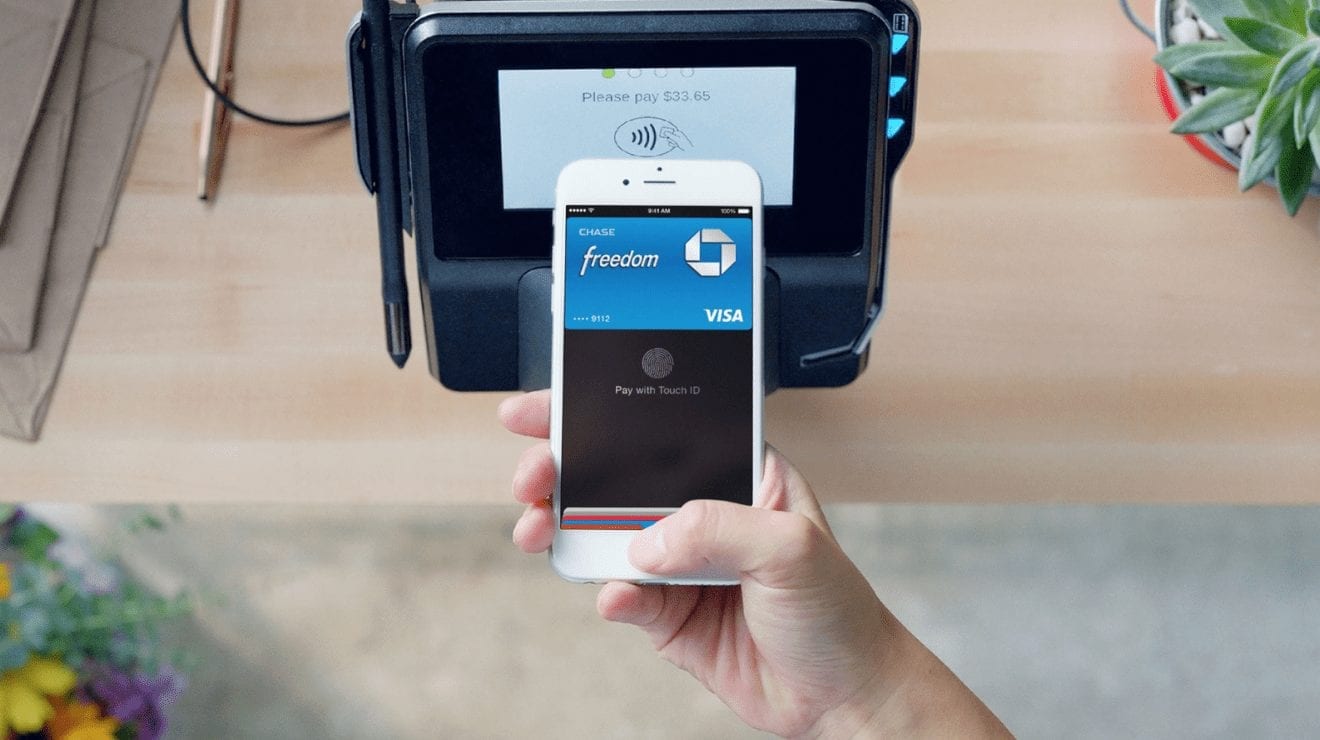
    Apple’s Services business generated record revenue of $11.5 billion during its fiscal third quarter. This is Apple’s second-largest unit and its most profitable. And one of the businesses in this segment is Apple Pay. This is Apple’s mobile payment system and the company takes .15% of the value of each transaction rung up on the platform. For example, if someone with a compatible device (iPhone 6 and later, iPad Air and later, Macs sporting Touch ID and all Apple Watches) uses the system to make a $100 purchase, the company takes 15 cents. That might not sound like a lot of money, but multiply that by the number of transactions a month that use Apple Pay and you can see how this can be a lucrative business for Apple.

    So how many transactions a month involve Apple Pay? The tech titan said during today’s earnings call that its payment platform is used on nearly 1 billion purchases each month. And that is close to doubling the number of monthly transactions that Apple Pay was involved in last year. According to CEO Tim Cook, “Based on June quarter performance, Apple Pay is now adding more new users than PayPal and monthly transaction volume is growing four times as fast.” During the quarter, Apple Pay was rolled out to 17 new countries and is now available throughout the European Union. Cook says that the service can be found in 47 markets.

    Apple also is expanding the number of transit systems that use Apple Pay. It has already added support for TriMet, Portland’s mass transit system, and has started rolling out support for the massive New York City transit system. Later this year, Chicagoans will be able to use the system to cover fares when commuting.

    “In the United States, in addition to successful integration into Portland’s transit system in May, we’re beginning the rollout of New York City transit, and will launch in Chicago later this year. In China, Apple Pay launched the payment card for Didi, the world’s largest ride-hailing provider. As I’ve said before, transit integration is a major driver of a broader digital wallet adoption, and we’re going to keep up this push to help users leave their wallet at home in more and more instances.”-Tim Cook, CEO, Apple

    After Apple iPhone shipments worldwide peaked at 231.22 million units in 2015, the manufacturer decided the next year to focus on its Services unit. This was a good idea because much of the revenue in this segment is recurring such as subscriptions for Apple Music and Apple News+ (and soon, Apple Arcade). Also in this category is AppleCare, iCloud, the App Store and more. The company set a goal of $50 billion in Services revenue for 2020, double the amount it garnered in 2016. This part of Apple’s business is dependent on the number of active iPhone units (900 million at the beginning of this year). As a result, growth in shipments is nice to have but is not nearly as important.

    Based on the firm’s fiscal third-quarter report, the Services unit is currently generating revenue at a rate of $46 billion on an annual basis. But $50 billion in gross next year can be achieved if Apple Pay and Apple Music continue to grow and if Apple Arcade captures the imagination of mobile game players.

    Overall, Apple reported fiscal third-quarter revenue of $53.81 billion up from $53.27 billion. Net profits decreased from $11.52 billion during the same period last year to $10.04 billion. Earnings per share decreased to $2.18 from $2.34 during the 2018 quarter.

  • Apple Card expected to be launched in August

    Apple Card expected to be launched in August

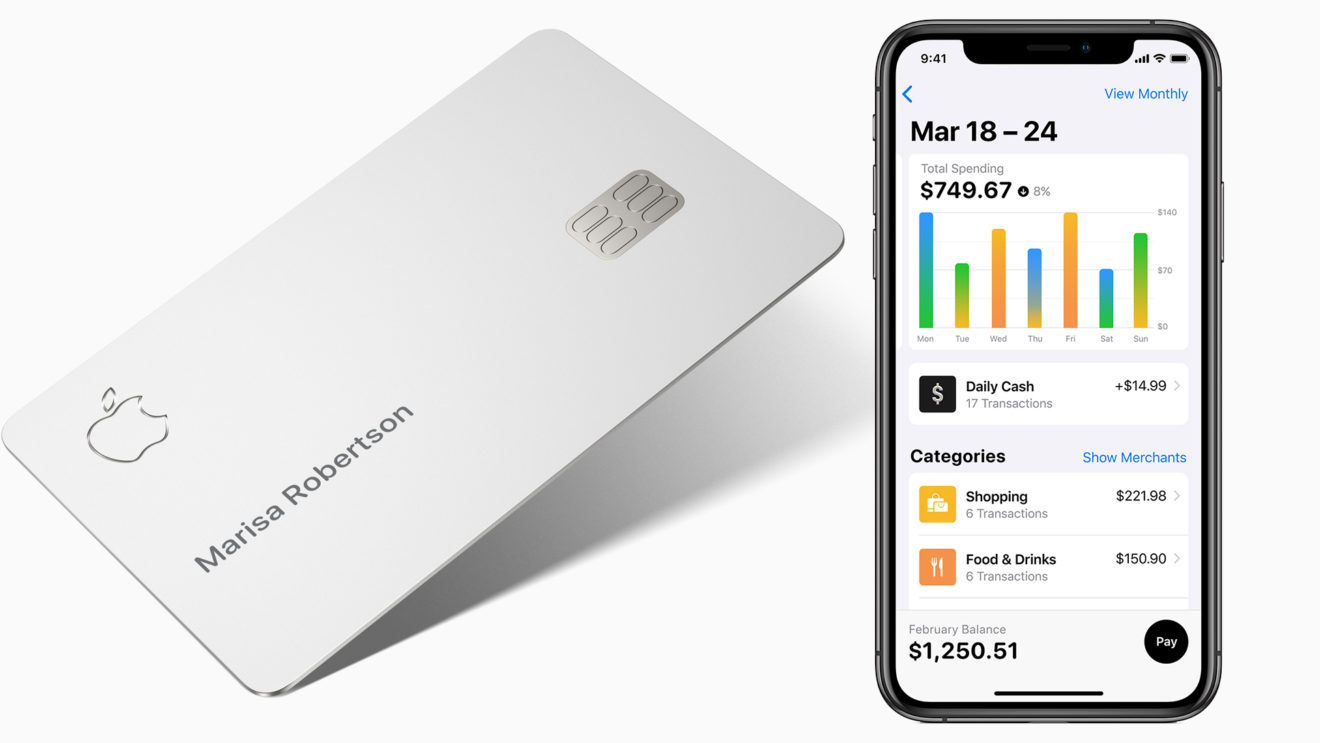
    When Apple announced its card back in March, the company said it will be available at some point this “summer,” but didn’t commit to a certain date. Now that Apple added support for Apple Card in the latest iOS 12.4 update, we can expect the card to be made available very soon.

    Apple and Goldman Sachs Group have reached an agreement for the launch of the Apple Card in the first half of August, a person familiar with both companies claims.

    According to people familiar with the matter, the Apple Card was a complex project that “involved the mixing of two very different corporate cultures as the companies split up responsibilities for the project and worked together on the new technology.”

    To use the new Apple Card, iPhone users will have to sign up for the card using the Wallet app, which has been recently added support for this specific feature.

    It’s worth mentioning that the Apple Card uses a cash-back rewards structure instead of points, which means users will get 1% on purchases made with the physical card, 2% for Apple Pay transactions and 3% for purchases of Apple products and services.

    Keep in mind that while the Apple Card has been designed to be used mainly via Apple Pay, the Cupertino-based company said users will be offered physical cards for merchants that don’t accept Apple Pay.

  • Singapore Telcom Debuts Mobile Payment in Japan

    Singapore Telcom Debuts Mobile Payment in Japan

    Singtel launches its cross-border mobile payment capabilities in Japan, joining a handful of sectors outside of finance making a run at market share in the payments business.

    Singtel’s VIA, cross-border mobile payment alliance in Asia, debuts first in Tokyo’s Haneda Airport before expanding to the rest of the city and beyond in popular tourist locations such as Osaka, Kyoto, and Hokkaido. NETTERS is the participating network enabling payments.

    The VIA network enables tourists from Singapore (mobile wallet: Dash) and Thailand (mobile wallet: AIS Global Pay) to make payments in Japan using QR code in the local currency at a «competitive rate», the release said.

    In Southeast Asia, digital payments are gaining widespread acceptance and fast replacing cash as the preferred transaction mode,» said Arthur Lang, CEO of Singtel’s International Group, adding that announcements of more wallets joining would be made in the coming months.

    This is a big step in further bridging the digital economies of Japan and Southeast Asia, facilitating travel for our customers and connecting Japanese merchants to more consumers, he added.

  • Citi Asia Execution Services Head Joins From JPMAM

    Citi Asia Execution Services Head Joins From JPMAM

    Citi hires J.P. Morgan Asset Management’s former Americas head of trading to run its Asia Pacific execution business. Curt Engler has been named as Citi’s Asia Pacific (APAC) Head of Execution Services. A key focus under his leadership will be to ensure Citi’s franchise continues to embrace the latest technology to meet the changing needs of clients.

    Curt’s market knowledge of operating in the world’s largest equity market and the market infrastructure changes he has worked through will be invaluable for Citi and our clients as Asian markets continue to evolve rapidly, said Richard Heyes, Head of Equities, Asia Pacific, in a media statement on Thursday.

    Curt, who has worked in financial markets for over 20 years – joins from J.P. Morgan Asset Management (JPAM) in New York, where he was Head of Trading for the Americas. Prior to JP Morgan Asset Management Curt was a trader and analyst at Blackrock, in the Quantitative Equity Group.

    At J.P. Morgan Asset Management since 2010, Curt was responsible for the daily activity of the trading desk and oversaw the trading operations of over $250 billion in assets under management. He also led the build-out of trading technology to support significantly increased levels of automation and the usage of analytics to improve execution performance.

    Based in Hong Kong, Curt will be responsible for Citi’s regional execution business. where he will be responsible for Citi’s cash execution business that spans 12 markets across the region.

    «Asia-Pacific is a key market for our global equities business and I am confident this addition to the strong bench will support further growth with clients across the region,» said Dan Keegan, Global co-head of Equities.

  • DBS Inks Sustainability-Linked Loan in Indonesia

    DBS Inks Sustainability-Linked Loan in Indonesia

    The export financing sustainability-linked loan is the first of its kind in Indonesia. DBS Bank Indonesia has signed a sustainability-linked export financing loan with wooden door manufacturer PT Sumatera Timberindo Industry (STI), the bank said in a press release on Wednesday.

    DBS said the loan is evaluated based on a target of obtaining timber and raw materials from sources certified by the Forest Stewardship Council (FSC). Its interest rate will be reduced for each shipment of raw material that has an FSC certification that the raw material is responsibly sourced.

    STI is a FSC-certified company focused on responsible sourcing, manufacturing and exporting of sustainable-certified products. According to director Hidayat Ang, STI’s synergies with DBS in advancing sustainability support the company’s long-term growth and empower the local community to do good for the environment.

  • Maybank Debuts Wealth Offering in Philippines

    Maybank Debuts Wealth Offering in Philippines

    Maybank launches its first a private wealth management arm in the Philippines, in the midst of trending interest from financial institutions to tap into the nation’s business potential. The bank will open the branch in Makati City in Manilla, which will add to the 67 centers it has in the ASEAN (Association of Southeast Asian Nations) bloc. The «Maybank Premier» brand will be deployed to target high net worth individuals with wealth advisory solutions.

    The bank is projecting continued growth in the region and expects its clients to benefit from the bank’s robust ASEAN connectivity according to its group chief strategy officer and chief executive of the international business Michael Foong.

    The Philippines has been in the spotlight in recent times due to growing interest from others to tap into its market for its financial sector potential across various segments.

    Earlier this week, Pru Life UK was reportedly expected to launch a standalone asset management firm in the country. And also in the same week, the nation completed its first blockchain-based remittance from Singapore’s OCBC.

    This wealth management launch is in line with the bank’s focus to continue to develop our group wealth management franchise to capitalize on the region’s growth trajectory, and the Philippines is one of the fastest-growing economies in the Association of Southeast Asian Nations (ASEAN) with a burgeoning middle class, said John Chong, group chief executive of Maybank.

  • Singapore Investors Upbeat About Local Economy

    Singapore Investors Upbeat About Local Economy

    Asian investors (60 percent) are among the world’s most optimistic about the economic outlook, ranking behind only Latin America (77 percent). Despite ongoing concerns about a global trade war, six in 10 Singaporean high net worth investors remain optimistic about the outlook for the local market, while Asia ranks second globally (60 percent) in terms of economic optimism, according to the latest quarterly UBS Investor Sentiment survey, released today.

    A large majority (67 percent) of Asian respondents said a diversified approach to investing was how they expected to manage ongoing risks. According to the bank, Singapore respondents were particularly interested in opportunities in sustainable investing (53 percent), yield or income generation (56 percent) and thematic investing such as medtech, fintech (49 percent).

    Global sentiment improved in the last quarter, with the share of investors planning to invest more growing to 46 percent, up from 42 percent, while the share of investors optimistic about the global economy remaining unchanged at 51 percent.

    The survey, which polled more than 3,800 wealthy investors and entrepreneurs in 17 countries between June 3–July 6, shows Singapore investors cited the global trade war, cybersecurity and market volatility (all 53 percent) as their top concerns.

    Among Asian investors, the top concerns were the global trade war (47 percent), the country’s long term competitiveness (43 percent) and cybersecurity (43 percent).

  • APAC Banks Face More Competition From Disruptors

    APAC Banks Face More Competition From Disruptors

    Technology and e-commerce disruptors such as Google, Alibaba and Apple are considered the biggest threat to banks, followed by payment players and Neo-banks, says Asia’s bankers.

    In markets where mobile payments have already taken root, banks and payment processors are battling tech companies on two fronts. They are working to retain their own retail card and current-account customers and attract new users to their apps and e-wallets. They also need to get and keep merchants on their side if they are to reap the economies of scale from a high-volume, low-margin sector, according to a study by The Economist Intelligence Unit commissioned by Swiss software firm Temenos.

    The survey, entitled «A Whole New World: How technology is driving the evolution of intelligent banking in Asia-Pacific», found that competition is intensifying between established retail banks and the technology and e-commerce disruptors that threaten to carve up the payment solutions market. Big tech giants Google, Alibaba and Apple are considered the biggest threat to banks (32 percent), followed by payment players such as PayPal, Ripple, and Alipay (28 percent) and Neo-banks such as Volt Bank, Varo Money and Monzo (25 percent).

    With these threats top of mind, 37 percent of Asia-Pacific bankers see mastering digital marketing and engagement as their top strategic priority by 2020.

    Asia-Pacific bankers are acutely aware of the race they find themselves in against technology giants that have the capital and scale to take market share from established players. Neo-banks are not far behind and have the flexibility to outmaneuver major banks on the margins. To remain relevant, retain customers and appeal to the evolving demands of younger generations, banks must master digital engagement, and quickly, said  Martin Frick, Managing Director of APAC at Temenos, in a media statement on Tuesday.

    To counter the possibility of losing customers to non-traditional banking competitors, some banks are following a “2 app” approach in order to counter non-traditional banking competitors. For example, Singapore’s DBS bank has its traditional banking phone app and PayLah!, an app that is used for transactions and lifestyle services. With over 1 million users for its PayLah! app, DBS DBS believes more users would come on board for its trusted data privacy and security measures.

    In contrast, big tech competition could struggle to ensure the trust of traditional bank users because of the high possibility of data leaks that have occurred in the past in the tech industry.

    One of the main issues being brought forward from the survey is how to regulate banking effectively across the APAC region. The survey highlighted the dangers of a deregulated banking environment with the dominance of the WeChat Pay and AliPay duopoly in China. Sopnendu Mohanty of the Monetary Authority of Singapore argues that a common data policy would be beneficial for the APAC region.

    A regional regulatory banking policy would be effective in creating a balanced and transparent intelligent banking industry, the survey highlights. The European Union’s General Data Protection Regulation could be an inspiration for how to push forward such regulatory oversight in the APAC region. These standards would be easier to implement in the digital economy than in the physical economy.

    Regulation across the region has developed disparately. In Australia, open banking is being driven by the government to increase competition within established regulatory frameworks. In other parts of Asia-Pacific, such as Singapore, open banking is primarily being driven by the players themselves propelled by their desire to remain competitive and resulting in a need for retrospective regulation. In China, tighter licensing and data protection rules are set to diminish Alipay and WeChat Pay’s duopoly across the broader region.
  • First Blockchain-Based Remittance in Philippines Completed

    First Blockchain-Based Remittance in Philippines Completed

    Major Philippines lender Union Bank has completed the first-ever blockchain-based remittance in the nation from OCBC in Singapore.

    The bank reportedly used an Ethereum-powered liquidity management system alongside its own proprietary i2i platform to complete the transaction from OCBC as a pilot. The funds were remitted to an account holder at Cantilan Bank in Surigao del Sur, a southeastern province.

    Chief fintech officer of the Monetary Authority of Singapore Sopnendu Mohantynoted that the city-state’s regulator had been exploring blockchain-based payments since 2016.

    We are excited to see this potential being realized, with cross-border payments that are cheaper, faster, and safer through the i2i network, he said.

    Rural banks have limited access to financial networks and a lag for remittances to be credited—five to seven days. Non-bank remittance counters offer faster execution but at a higher and sometimes unbearable cost for the relevant market segment.

    On the other hand, the crypto-based platform which the aforementioned banks used, Adhara, allows users to settle real-time payments at low cost and high efficiency by tokenizing assets and smart contracts on an Ethereum-based ledger.

  • Credit cards decline amid buy now pay later boom

    Credit cards decline amid buy now pay later boom

    In the twelve months to March 2019, almost half a million Australians got rid of their credit cards, with the total number of credit cards in the country falling to 14.6 million compared to the 15 million a year prior.

    This trend, highlighted in illion’s second Credit Card Nation report, suggests that Australia has surpassed ‘peak card’ and is now on a long-term downward trend in terms of credit card ownership.

    According to illion chief executive Simon Bligh, falling house prices have had the secondary effect of causing urban Australians to consolidate their financial position – including a focus on clearing unnecessary debt.

    “In the country, it’s a different story, and many parts of rural Australia have faced extenuating circumstances with their livelihoods heavily impacted by the drought,” Bligh said.

    “Farmers have needed support with their cash flow and have turned to credit cards.

    “The Australian economy is facing weak spending patterns, low wage growth, high levels of mortgage debt and low rates of saving.

    “While the number of credit cards overall is falling, those who have them are using them more often. Some consumers are struggling to manage their cash flow and are opting to drift into debt rather than pay off their bills immediately.”

    According to the report, card-based transactions are likely to continue to fall in volume due to the rise of alternative payment systems, such as direct debit, PayPal, BNPL, and payment through social platforms such as Facebook.

    According to Bligh, as credit lenders have adjusted their assessment criteria based on increased pressure from regulators, credit users who were already problematic are finding it more difficult to obtain further credit, while those who are low-risk and high-reward have been able to maintain strong credit ratings.

    “But here’s where it gets interesting – our research this time around shows that millennials are now the only group that have increased ownership of credit cards,” Bligh said.

    “Granted the numbers are small, and you may be asking why this is – especially as we know that young people under 25 pose the greatest risk of failing to pay back their debts and are almost six times more likely to be two months behind in their repayments than their parents.”

    There are two potential reasons for this, Bligh said. Firstly, millennial men are using both credit cards and buy now pay later services, and secondly that market forces may be pushing credit lenders to take on more risky endeavours to keep their numbers up as overall credit usage falls.

    “Our society is in the early stages of moving towards a buy now pay later approach for many low-cost items, with this coming at the cost of a general decline in the usage of credit cards,” Bligh said.

    “Young people are at the forefront of these changes and are using both at the moment – almost in equal measure.”

  • Tim Draper and Alex Mashinsky’s Message for Singapore at World Blockchain Summit

    Tim Draper and Alex Mashinsky’s Message for Singapore at World Blockchain Summit

    In line with the Singapore Government’s strategy to adopt Blockchain technologies to revolutionize its Public and Private Sector, World Blockchain Summit opened to a packed house at the Marina Bay Sands on Thursday. For the second time in Singapore, World Blockchain Summit was strategically curated by Trescon to stimulate coherent innovation narratives around blockchain and cryptocurrencies. The summit featured keynotes from pioneers such as Tim Draper and Alex Mashinsky.

    Singapore’s conducive regulatory environment that is giving impetus to the rise in ICOs has made the small island nation an ideal launch pad for ICO startups.

    “This is the beginning of one of the most amazing sociological changes in the history of the world. We are in for one of the biggest transformation moments and it is happening in the next five to ten years. If you are issuing an ICO, this is your moment, this is the trillion and ten trillion dollar industries that you are going after.” said Tim Draper, in his powerful keynote message to Singapore.

    The 13th global edition of World Blockchain Summit was designed to address specific areas for discussions such as the legal and regulatory landscape in Asia, the outlook on blockchain and cryptocurrencies for 2020, and the role of banks in the new digital ecosystem, to name a few.

    One of the most important pioneers and innovators of modern business, Alex Mashinsky or more commonly known as the Godfather of VoIP, said in his keynote, “Cryptocurrencies, blockchain and decentralization is a revolution. It is the fourth system that is here to replace what’s not working for 7 billion people that cannot rise to the middle-class.”

    Future1Exchange, a digital crypto exchange based in Estonia, announced that Herbert Sim, widely referred to as ‘The Bitcoin Man’, about his induction into Future1Exchange as an investor and growth advisor.

    Home to the third-largest ICO market, Singapore is one of the most attractive destinations for fundraising. Trescon’s dedicated pitch competition for startups in the future-tech space, the Startup Grand Slam provided a platform for over 20 startups from around the world to pitch their ideas in front of global investors that included, Vanessa Koh, CTO of GBCI Ventures, Singapore; Herbert Sim, Founder of The Bitcoin Man, Singapore and Kevin Soltani, Founder & President of GIMA Group, California Blockchain Alliance, United States, among others. AgUnity, a global technology platform working towards connecting 1+ billion people without access to basic services was selected as winner of Startup Grand Slam by the jury members and GLBrain was selected as runner-up.

    World Blockchain Summit, Singapore edition was supported by Headline Sponsor, eBank Technology; Platinum Sponsor; Kanerika; Gold Sponsor, ACO, Bronze Partner, Organic Farm City; Pitch Partners, Capitual and Astrome

    Exhibitors included: Labuan IBFC; icte.io; Bitcrore; MDxBlocks; Beldex Exchange; AgUnity; F4map; indieOn; GLBrain; Fortunesoft IT Innovations; Minddeft


  • Mastercard Further Extends Payment Network with Acquisition of Transfast

    Mastercard Further Extends Payment Network with Acquisition of Transfast

    Mastercard announced the completion of the acquisition of Transfast, a global payments company with significant cross-border network reach. Mastercard originally declared the intent to buy Transfast on March 8, 2019.

    The acquisition builds on Mastercard’s strength in payments and drives improved transparency and certainty in cross-border transactions, enabling people and businesses to send and receive money beyond borders with greater speed and ease.

    Transfast will enable Mastercard to continue servicing the growing needs of consumers and businesses as well as governments and merchants in cross-border transactions.  It builds on Mastercard’s strategy to offer choice to its customers through the expansion of the Mastercard global network. This move adds to Mastercard’s leading position in meeting business, government and consumer payment requirements, whether it’s business to business, person to person or other payment flows.

    Stephen Grainger, Executive Vice President, Mastercard comments:

    Today’s announcement is an exciting milestone for Mastercard in helping to further build democratised access to predictable and faster payments globally. People and businesses expect certain and predictable real-time payments that keep pace with modern life and everyday demands, and now, with reach into 90% of global GDP flows, Mastercard is in a prime position to support their cross-border requirements.”

    Increasingly, people and businesses across the globe want timely, reliable and cost-effective ways to pay and get paid. The acquisition allows Mastercard to service businesses and organisations across a wider variety of sectors with different needs. This includes businesses paying suppliers and employees across borders. 

    Samish Kumar, CEO, Transfast comments:

    “This is a pivotal day for Transfast as we embark on the natural next step in our journey. Mastercard’s global reach complements our own network across over 100 countries, and together we will grow within the account-to-account payments space, helping organisations improve operational efficiencies and supporting wider economic growth. Alongside Mastercard, we look forward to developing new innovations and products to support people and businesses to predict and plan when they pay people and get paid, enabling them to thrive.”

  • Zip gains retailers as buy now pay later comes under attack

    Zip gains retailers as buy now pay later comes under attack

    Buy now, pay later operator Zip has seen a string of new retailers join its list of partners, bringing representatives across Australia fashion, automotive and food into the fold.

    Among the new retailers is the Just Group (which includes Peter Alexander, Smiggle, Jay Jays, Just Jeans, Dotti, Jacqui E and Portmans), Hanes Australasia (including Bonds and Sheridan), Lorna Jane, General Pants, Grill’d, Schnitz, and Carsales.

    “Consumers want to own the way they pay. In turn, retailers want to offer payment choice to answer this demand, and because they recognise it drives sales. It’s a win-win,” Fran Ereira, general manager of sales and solution delivery at Zip, said.

    But the already competitive buy now, pay later sector is set to become even more so, with the entrance of US provider, Splitit, in the Australian market – through a partnership with Kogan – and the arrival of Visa in the instalment payment space.

    “Visa cardholders will have the option to divide their total purchase amount into smaller, equal payments over a defined time period on qualifying purchases, at the store and online or when travelling abroad,” Visa global head of issuer and consumer solutions Sam Shrauger said in a statement last week.

    The announcement sent shares in Afterpay down 15 per cent – though they have since recovered.

    Visa’s offer differs from existing buy now, pay later providers in that it allows issuers to leverage a customer’s existing payment account, rather than asking them to download an app or submit to a credit check.

    “We expect instalments to become a foundational method of payment at checkout for both domestic and cross-border commerce payment transactions,” Shrauger said.

    But the growing popularity of buy now, pay later could be its undoing. A recent report in The Australiansuggests that buy now, pay later providers could soon lose one of the key advantages they have over credit card providers.

    While companies like Afterpay and Zip charge retailers a fee to offer their service, they prohibit retailers from passing the surcharge on to customers. But the Reserve Bank of Australia’s Payments System Board has taken note of this practice, and is discussing “the growth in this segment of the payments market and the implications of these services for consumers and merchants,” according to a statement it released in November.

    Should this restriction be changed, retailers could choose to add a surcharge to goods purchased through buy now, pay later apps, potentially changing how attractive such offers are to consumers.