Category: Finance
Retail News Asia is committed to providing both local and global retailers with the latest Finance news throughout the Asian market. This on a daily base.
-

The popularity of online loans has not increased in Singapore
Analyzing statistics of search requests, analysts of the company compared trends of demand for online loans in Singapore, Indonesia, Vietnam and the Philippines. The findings show that the situation in Singapore differs from other countries significantly. The demand in Indonesia, Vietnam and the Philippines demonstrates a clear ascending trend and fast development. However, in Singapore, with low development of online loans issued by alternative lending companies, there is no significant growth of their demand recorded by the systems for search analytics. At the same time, looking at the frequency of the search request of “online credit”, the increase is observed from late 2007 to 2015 and stops afterwards.The reason is the faster economic development and dense area of Singapore, as opposed to its multi-island neighbours. Consequently, the country has an advanced financial sector, which is accessible for all residents. Taking into account the general maturity of the digital sphere, it’s obvious that the fintech services started developing here earlier, but within the traditional banking sector.The legislative regulation of lending in Singapore also makes an impact. Limited interest rates make it more profitable for alternative lenders to work with the business community. According to the University of Cambridge, in 2017, 99% of issued alternative loans there fell under the business segment. In the Philippines and Vietnam, the situation is opposite: only 7% and 10% of loans respectively accounted for business sector. In Indonesia, the distribution is more balanced: 72% were business loans and 28% – consumer loans.Moreover, the demand for online loans is affected by the age of the population. According to the United Nations, the average age of Singaporeans is 40, Filipinos – 24, Indonesians – 28 and Vietnamese – 30. The young age and lack of access to banking products are the main driver for the development of alternative lending in Indonesia, Vietnam and in the Philippines. This is confirmed by the statistics on 200,000 online loans issued by the companies of Robocash Group in Southeast Asia (the Philippines, Vietnam, Indonesia), where 49.9% of borrowers are under 30. -
HSBC Private Banking Boosts Philippines Coverage
HSBC Private Banking continues its hiring drive in Asia with the addition of three relationship managers focusing on the Philippines high-net-worth segment, both in on and offshore locations.
In its onshore private bank in Manilla, HSBC has hired Valerie See-Tang and Janice Marie Laurel as relationship managers. See-Tang was previously a branch head of HSBC’s Quezon City branch and Laurel was a premier team leader of HSBC’s Ortigas branch.
In its offshore center in Hong Kong, the bank is adding Carmen Wong, most recently with J.P. Morgan in the same role and market. Previously, Wong held other roles with Deutsche Bank and Citi.
The Philippines market teams in Manila and Hong Kong report to Bala Balagopalan, market head for Philippines and Japan, North Asia, HSBC Private Banking.
We are delighted to welcome new talent to our team to serve the increasing wealth needs of our Philippines’ clients, said Kevin Herbert, co-head for North Asia, HSBC Private Banking.
Not only do we have one of the largest private banking teams supporting the Philippines market, we believe our strong business heritage, global network, and experience working with families across generations, all give us a competitive edge.
According to the bank, the increased Philippines coverage occurs amid continued market uncertainty and increasingly sophisticated needs. This has sparked a range of demand that the bank is confident it can fill.
We’re seeing more demand for alternatives, particularly in private equity and private credit, as well for managed solutions,» Herbert continued.
In addition, a number of successful family businesses are on the cusp of inter-generational wealth and business transfer. So our knowledge and experience of legacy planning and family governance, are key elements of our offering that Philippines clients value.
-

HSBC Private Banking Raises Over $500M in Asia for PE
In half a year, HSBC Private Banking has already raised over $500 million from Asia clients into private market investments including its Vision Private Equity 2019 fund.
In addition to various other private equity and debt funds, Vision Private Equity 2019 (Vision 2019), the first of a new program, raised $250 million globally, of which more than half was sourced from clients in the region.
Vision 2019’s portfolio includes a blend of primary investments and «selectively sourced secondary investment and co-investments» designed in joint partnership with HSBC Alternative Investments Limited (HAIL), a unit of HSBC Global Asset Management.
The increased client adoption of alternatives within their strategic asset allocation is a response to volatile market conditions and the late cycle investment stage, according to Edward Moon, HSBC Private Banking’s regional head of alternative investments, Asia.
In addition to Vision 2019, the bank has also successfully received in Asia $142 million of investor commitment for a Baring Private Equity Asia VII fund and $230 million placement for a Blackstone PREP IX (PE real estate fund).
In recent years, the overall number of publicly listed companies on US stock exchanges has been declining, or conversely, more companies are choosing to stay private and for longer periods than ever before, Moon said.
Against this general backdrop, clients with the appropriate risk profiles and who have a long-term investment horizon are increasingly looking to investment opportunities within private markets (both equity and debt) as a way to diversify their portfolios,» he added
-

Consumer Fintech Use Goes Mainstream
The use of fintech products and services in Singapore has grown substantially in the past two years, though the country still lags China and India by a large margin.
The fintech adoption rate among Singapore consumers has almost tripled to 67 percent in 2019 from just 23 percent in 2017, according to the «Global FinTech Adoption Index 2019» published by professional services firm EY.
The report, its third edition, was based data gathered from an online survey of over 27,000 consumers in 27 markets. Leading the index were mainland China and India, which both recorded 87 percent consumer fintech adoption, followed closely by Russia and South Africa (both 82 percent).
Singapore has enjoyed significantly increased rates of consumer fintech adoption and we expect even higher rates in the future, due to the supportive regulatory environment. Singapore may be a relatively small business-to-consumer (B2C) market by size, but it is a hotbed for innovation and a great launchpad for startups and businesses to build their technology, test it, and then scale across Southeast Asia, Varun Mittal, EY Global Emerging Markets FinTech Leader, said.
The report credited fintech’s phenomenal rise to the increasing consumer and SME awareness and engagement with fintech products and services. When the report was first published in 2015, the average global adoption rate stood at 16 percent. It is now 64 percent, with money transfers and payment services driving awareness globally.
Crucially, EY noted that maturing fintech challengers are having a growing influence on the market, actively driving legacy and non-financial organizations to develop their own fintech products and services.
Among other findings, the report said that consolidated platforms have an edge, with 6o percent of consumers preferring to access services through a single platform, and that non-financial players are on the rise, with 68 percent of respondents saying they are willing to consider a financial proposition by a non-financial company.
-

Fave Wants to Be Merchant Super App
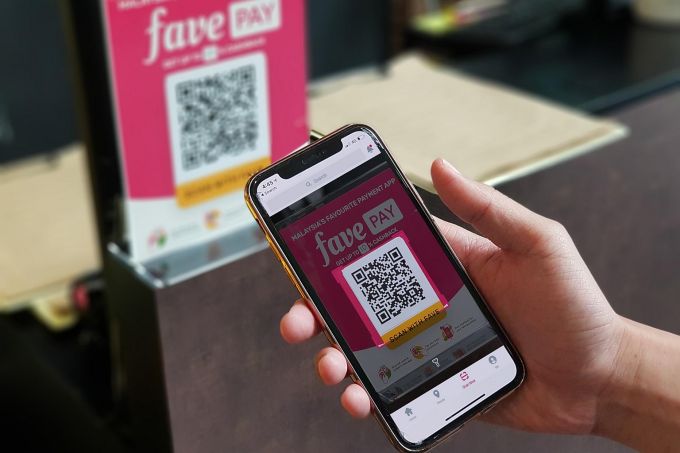
Singapore-based Fave is onboarding merchants quickly to distinguish itself, as competition in the mobile rewards and mobile wallet space heats up.
Fave has recently moved into the fringes of financial services, with a pilot project to help small and medium enterprises (SMEs) obtain micro-loans from financial institutions. The move appears to follow similar moves by lifestyle apps such as Grab, that offer micro-loans to consumers in other parts of Southeast Asia.
There are all these consumer super-apps, but then, actually we are like a merchant super-app platform,» said Fave’s chief executive Joel Neoh.
Fave distributes coupons for the merchants while rewarding customers with cashback. After its launch in 2017, Fave acquired the Singapore, Malaysia and Indonesia units of Groupon. Neoh was the founder of Fave Malaysia (originally GroupsMore) and previously led Groupon’s Asia-Pacific business.
So far, the platform has more 25,000 merchants on its platform in Singapore, Malaysia and Indonesia, where the company had acquired the units of Groupon. In September 2018, Fave raised $20 million in Series B funds from existing investors Sequoia Capital India, SIG Asia Investments and venture capital firm Venturra Capital, which is backed by Indonesia’s Lippo Group.
-

Australian dollar rises slightly
The Australian dollar is only slightly changed Wednesday, buying 69.61 US cents from 69.60 US cents on Tuesday.
Yesterday, the local currency was on track for a sixth straight session of gains against a US dollar weakened by expectations for an aggressive cut in interest rates by the Federal Reserve next month.
The Australian dollar climbed to a two-week high of 69.72 US cents on Tuesday and was last quoted at 69.65.
The New Zealand dollar also jumped to a two-week top of 66.46 US cents.
The six-day rally comes as yields on US Treasuries inched lower with Fed futures fully pricing in a quarter-point easing and a real-chance of a 50 basis point cut at the next FOMC meeting in July.
The strength in the antipodean currencies was limited to the US dollar, however, as Australian and New Zealand central banks themselves are on an easing path.
Against the Japanese yen and the euro, the currencies were hovering near multi-month lows.
The Reserve Bank of Australia (RBA) is widely expected to cut interest rates to a new record low of 1.00 per cent at its July 2 meeting after already lowering once in June.
However, given more aggressive pricing for the Fed many analysts expect the Aussie may not fall much further despite easings at home, a concern that RBA Governor Philip Lowe highlighted on Monday.
“But if everyone is easing, there is no exchange-rate channel,” Lowe told a public forum in Canberra.
“We trade with one another, we don’t trade with Mars, so if everyone’s easing, the effect that we get from exchange-rate depreciation via the transmission mechanism isn’t there.”
-

UOB and Zilingo tie up to drive the growth of ASEAN’s fashion industry
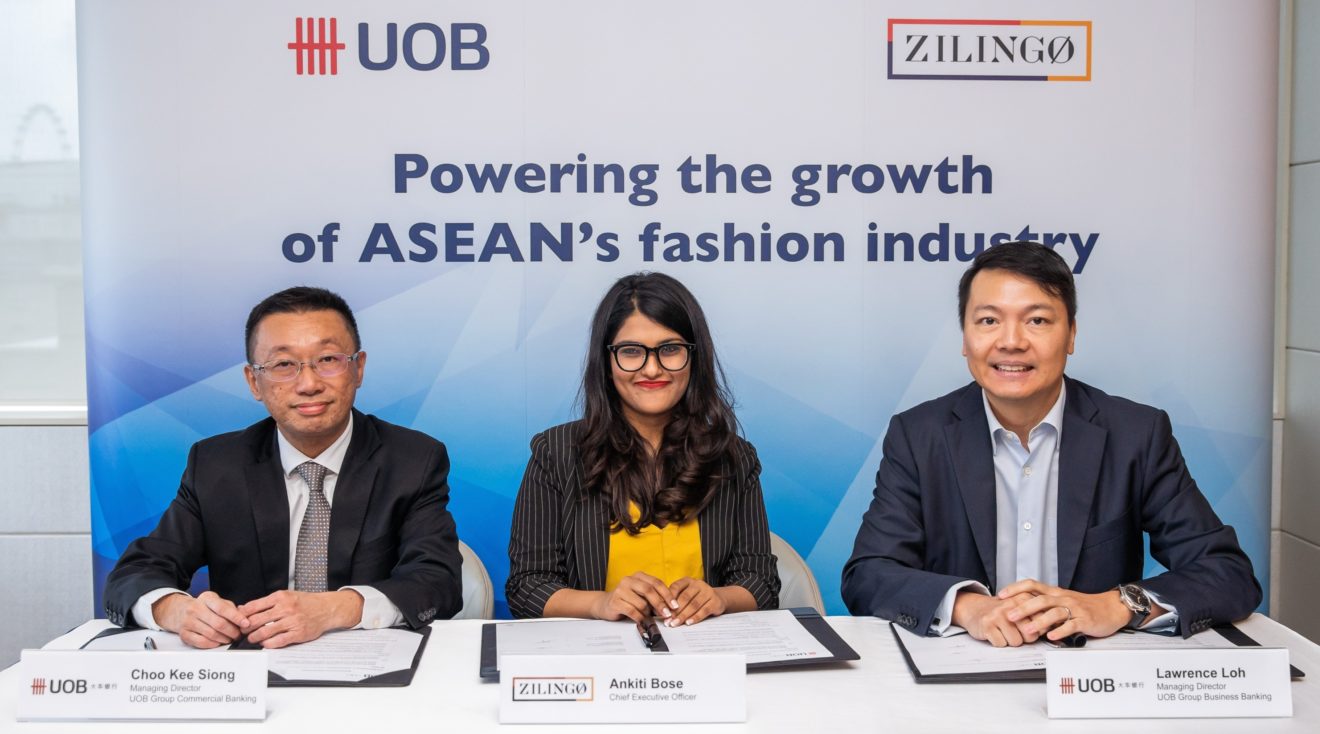
United Overseas Bank Limited (UOB) and Zilingo, a fashion and lifestyle e-commerce platform, today announced that they have signed a Memorandum of Understanding (MOU) to support the growth of ASEAN’s fashion industry. Under the MOU, businesses on Zilingo’s platform, which are mostly small- and medium-sized enterprises (SMEs), will be able to access UOB’s banking solutions through the e-commerce platform. The greater access to banking solutions will enable Zilingo’s merchants and manufacturers across the region to manage their cash flow better and to grow their businesses more efficiently and easily.
Ms Ankiti Bose, CEO and Co-founder, Zilingo, said, “Through this collaboration with UOB, we want to reaffirm our commitment towards empowering merchants and manufacturers with everything they need to run their business. Where businesses may find difficulty in accessing capital due to insufficient financial records, Zilingo’s unique position as a connector of the fashion supply chain will allow us to leverage a bird’s eye view of the supply chain to make a comprehensive assessment of the business’ capabilities and value proposition”.
Mr Choo Kee Siong, Head of Industry Groups, Group Commercial Banking, UOB, said, “At UOB, we have been working with various ecosystem partners to offer our banking products and services to companies across entire supply chains, helping them pursue growth strategies and seize business opportunities. Through our MOU with Zilingo, fashion businesses across ASEAN will be able to access our comprehensive range of banking solutions seamlessly to meet their operational and financial needs.” In addition to supporting Zilingo’s merchants, UOB will also explore support for the e-commerce platform in a number of other areas, from cash management and foreign exchange services to workplace banking services
-

Alipay’s e-wallet partner GCash introduces GCash Forest in the Philippines
Filipinos who want to contribute to environmental preservation can now conveniently use an innovative mobile phone app to help plant trees and increase the Philippines’ forest cover.
Leading mobile wallet, GCash, is introducing an exciting “green” feature on the app called GCash Forest, which lets subscribers plant virtual trees that will have real-life counterparts. By the end of 365 days, GCash Forest aims to plant 365 thousand trees with the help of GCash subscribers.
According to the Department of Environment and Natural Resources’ Forest Management Bureau (FMB), the Philippines is losing 47,000 hectares of forest cover every year. The FMB also reported the need to rehabilitate 1.2 million hectares of forest lands by 2022 to prevent landslides, ensure water availability, and preserve biodiversity.“GCash Forest is about making it easier, more convenient, and even rewarding for everyone to take care of our environment for the benefit of future generations,” said Mynt CEO Anthony Thomas. “GCash is no longer just providing an excellent platform for accessible financial products and services but also enabling Filipinos to be more active in responding to real-life issues, such as climate change mitigation through reforestation.”
GCash considers GCash Forest as the last mile initiative that fully recognizes the emergence of an all-digital Filipino lifestyle.To implement its tree-planting initiatives, GCash Forest partnered with the Department of Environment and Natural Resources (DENR), World Wildlife Fund (WWF) and The Biodiversity Finance Initiative (BIOFIN). The DENR will provide land resources in Ipo Watershed, an essential component of the Angat-Umiray-Ipo watersheds system supplying 98 percent of Metro Manila’s water. WWF will be providing trees and manpower while BIOFIN will provide expertise on monitoring.
Thomas added that recent findings on the Philippines’ vulnerability to climate-related hazards call for greater collective action. Results of the Global Peace Index 2019 identified the Philippines as the most susceptible country to the adverse effects of climate change. By leveraging the GCash platform and scale, GCash Forest aims to rally a coalition of individuals, non-government organizations, and international organizations to meet its 2020 targets.
To plant trees through GCash Forest, GCash users need to collect “green energy” by frequently using the app. Users who get enough green energy can choose which species of trees they want to plant in a selected area at the Ipo watershed. Once the trees are physically planted, users get to receive a certificate of ownership with a serial number, fun facts and updates on the growth of their trees on their GCash apps.“Many Filipinos, especially the younger ones, care about the environment but a lot of them don’t know how they can actively take part in environmental protection. This is a barrier that GCash Forest addresses because they only need to use their smartphones—an already integral part of their daily lives—to make a difference,” concluded Thomas.
The new feature is inspired by Alipay Ant Forest, a product operates by Ant Financial, an Alibaba affiliate and the parent company of the world’s leading payments and lifestyle platform, Alipay. Via the mobile platform, more than 500 million users have planted 100 million real trees and advanced a shared vision of sustainable and inclusive development.
-

Google announces customers can now use PayPal with Google Pay
Google has just announced it has expanded its partnership with PayPal to provide merchants with more ways to accept payments online. Starting next week, Google Pay will benefit from PayPal integration in all 24 countries where customers can link their PayPal account to Google Pay.
Merchants that enable PayPal as a payment method on their Google Pay integration will allow consumers to seamlessly check out on their website or app. Basically, users will no longer have to sign in to PayPal when they use it with Google Pay once they link their PayPal account.
With the new option, customers will be able to switch between debit cards, credit cards, their PayPal account, and more just by choosing Google Pay at checkout.
Enabling PayPal integration in Google Pay will let merchants keep all the benefits they currently have, including the ability to receive payments directly to their PayPal Business Account within minutes, no minimum processing requirements, as well as seller protection on select transactions.
Now, if you’re a merchant who can’t wait to enable the option to pay with PayPal in Google Pay, there are a couple of things that you need to do before customers can use the new feature. However, instead of going too technical, we’ll just redirect you to Google’s developer blog, which has all the information needed to enable PayPal in Google Pay.
-

Razer Partners Visa In Expanding Payment Network
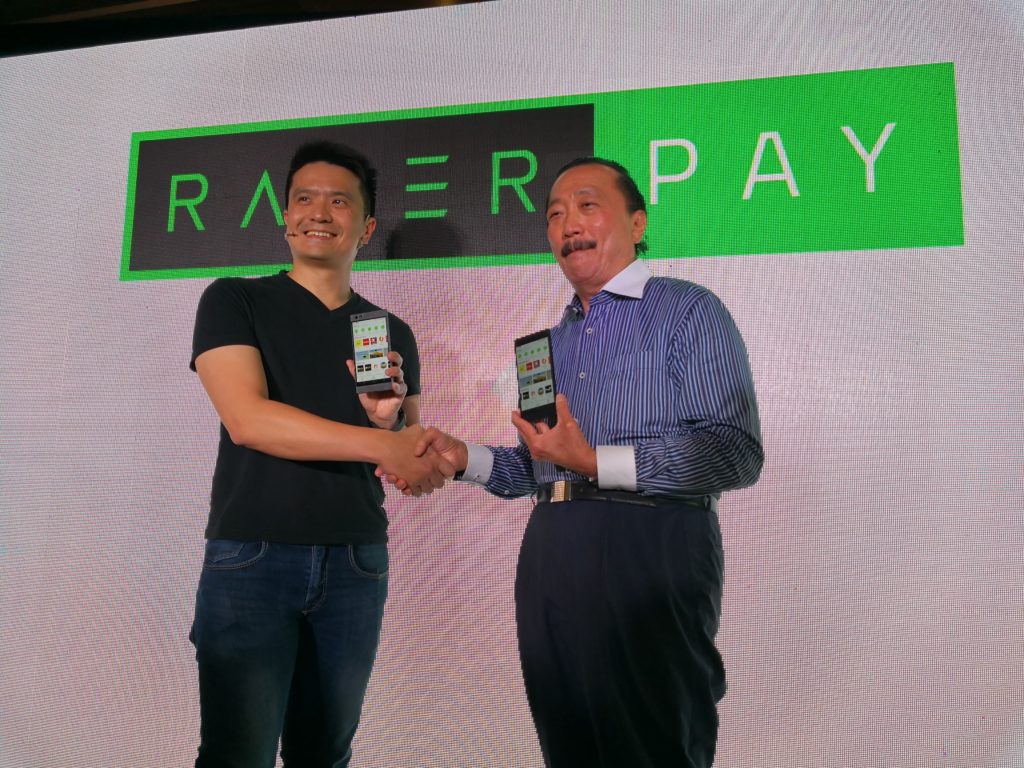
Up to 60 million users of Razer’s mobile wallet, Razer Pay, will be able to try out the newly-developed virtual prepaid solution by Visa for making payments wherever Visa is accepted without the need for a bank account or a credit card, both companies announced on Monday
We want to make sure that we are able to introduce the benefits of mobile and digital payments to [the under-banked and under-served population in Southeast Asia], in order to bring them up to the formal financial system, said Chris Clark, regional president of Visa Asia Pacific, in a statement.
The new Visa prepaid service will be available in Southeast Asia next month, starting from Malaysia and Singapore where Razer Pay is already available. The service will then be expanded to other countries including the Philippines, where the launch of Razer’s e-wallet is in the pipeline, said Limeng Lee, Visa’s chief strategy officer. «Fintech is the extension of what we have been doing. We’re currently focusing on Southeast Asia where we see massive opportunity. There’s a huge youth demographic and a lot of them are gamers… and these are usually the early adopters of new technology,» Lee said.
Southeast Asia’s mobile payments landscape grew rapidly in recent years, driven by high mobile penetration rates and the popularity of mobile services. In particular, Vietnam saw the highest growth globally in mobile payments use last year, with six Southeast Asian countries, including Singapore and Malaysia, in the top 10 markets for the shift to mobile, according to a survey by PwC in April this year.
-

IMF head warns fintech could disrupt world’s financial system
International Monetary Fund (IMF) Managing Director Christine Lagarde warned on Saturday that the increasing presence of technology giants using big data and artificial intelligence could cause a significant disruption to the world’s financial system.
The rapid development of financial technology (fintech) has increased access to cheap payment and settlement systems for low-income households in emerging countries where traditional banking networks are scarce.
But it has raised concern about the increasing dominance of big technology firms in mobile payments, which could force global policymakers to rethink the way they regulate the banking system and ensure financial settlements are executed safely.
“A significant disruption to the financial landscape is likely to come from the big tech firms, who will use their enormous customer bases and deep pockets to offer financial products based on big data and artificial intelligence,” Lagarde told a symposium on financial technology held on the sidelines of the G20 finance leaders’ meeting in Fukuoka, southern Japan.
While such innovation may help modernize financial markets, they could make the financial system vulnerable such by putting payment and settlement systems under the control of a handful of technology giants, she added.
“This presents a unique systemic challenge to financial stability and efficiency, and one I hope we can touch on during the G20, and address in a cooperative and consistent fashion.”
Lagarde said China presents an example of the trade-off between benefits and challenges posed by financial technology.
“Over the last five years, technology growth in China has been extremely successful and allowed millions of new entrants to benefit from access to financial products and the creation of high-quality jobs,” she said. “But it has also led to two firms controlling more than 90% of the mobile payments market.”
Addressing the pros and cons of financial innovation is among topics of debate at the two-day meeting of Group of 20 finance ministers and central bank heads that began on Saturday.
-

Battle for HK Retail Customers Begins as HSBC Scraps Fee
As banks in Hong Kong brace for fierce competition from virtual banks, HSBC on Wednesday said it is scrapping minimum balance fees and associated charges.
HSBC announced on Wednesday that it will scrap the minimum balance fee that applies to its 3 million customers in Hong Kong. From August 1, it will be the first bank in Hong Kong to go back to providing free basic banking services to retail customers who hold its passbook accounts, statement accounts, personal and advance integrated accounts and super ease accounts.
To reinforce HSBC’s commitment as Hong Kong’s leading bank, it will also waive off associated charges faced by small depositors, like counter transaction fees.
«More than 3 million retail banking customers will benefit from the removal of our below-balance fees, counter transaction fees and annual fees for most our personal savings accounts,» said Greg Hingston, HSBC’s head of retail banking and wealth management in Hong Kong, who was quoted in «South China Morning Post».
Introduced 18 years ago, the monthly charge of HK$50 for small depositors with a passbook savings account and other basic accounts with a balance below HK$5,000 (US$640), is seen as a penalty on some of the bank’s most loyal customers.
The move comes as the Hong Kong Monetary Authority (HKMA) issued eight virtual bank licenses since March. The virtual bank licensees, who operate solely online, are not allowed to charge a minimum balance fee to small depositors. Such zero-cost bank accounts would likely lure millions of customers away from banks who are still charging small depositors.
The move is likely to be followed by other big lenders as they brace for the intense competition from the virtual banks due to come online later this year. Hang Seng Bank, a unit of HSBC, is also considering a plan to scrap its minimum-balance fee, according to a spokesperson.
«Banks should draw up their fees structures in accordance with their own corporate strategies, service models and costs,» an HKMA spokesperson said. «However, the HKMA has constantly reminded banks to keep in mind the public’s expectations and needs in basic banking even while they run their banks based on business principles.»
-

Grab explores digital-only banking licence in Singapore
Grab, Southeast Asia’s most valuable start-up, is exploring a move into Singapore banking as regulators in the Southeast Asian city-state consider allowing online-only banks, four people with knowledge of the process said.
Grab is close to hiring a consultancy to advise it on its banking potential and is gearing up to apply for a digital-only bank licence in Singapore if the banking regulator decides to open up the sector, said the people, who declined to be identified as they were not authorised to speak to the media.
Singapore-headquartered Grab’s interest in what would be its first foray into banking has not been reported before.
When asked for a response, the Monetary Authority of Singapore (MAS) referred Reuters to its comments issued last month when it said it was studying the potential for allowing “digital-only banks with non-bank parentage” into its market.
Hong Kong, Singapore’s fierce financial centre rival, began issuing licences earlier this year.
A potential entry by Grab – backed by Japan’s SoftBank Group Corp – and others would mark the biggest shake-up in years for a market dominated by DBS Group Holdings Ltd, Oversea-Chinese Banking Corp and United Overseas Bank Ltd.
The MAS could make a decision in the next couple of months on whether to admit digital-only banks with non-bank parentage, as well as the eligibility applicants, the people said.
The city-state’s banking regulator is likely to issue only two to three licences in the first phase, two of the people said.
The interest from Grab underscores how Asia’s non-banking firms are keen to challenge traditional banks by leveraging their technology and their user databases to offer banking services to retail customers and small businesses.
Securing a digital banking licence in Singapore could help seven-year-old Grab to benefit from its existing data on transport movements, payment transactions and consumer behaviour, the people said.
Last year, Grab teamed up with Japan’s Credit Saison Co Ltd to provide loans in Southeast Asia.
Global fintech players are among other groups expected to seek licences in Singapore, with some of them looking to form joint ventures, said two of the people.
Consultants said a digital banking licence could also appeal to Singapore Telecommunications Ltd (Singtel), which is expanding beyond its traditional carrier services into areas such as mobile payments and cybersecurity.
“It is too premature to comment but having ventured into mobile financial services, we are open to exploring the feasibility of such an opportunity should it arise,” a Singtel spokeswoman said in an emailed response.
In Hong Kong, affiliates of Alibaba Group Holding Ltd and Xiaomi Corp, and consortia led by Standard Chartered PLC and BOC Hong Kong Holdings Ltd were among those who won the digital-only banking licences.
“In Hong Kong, the guidelines were quite precise in terms of what applicants had to prove in order to get a virtual banking licence, more so than in Europe,” said Dan Jones, APAC partner at consultancy Capco Digital.
“It will be interesting to see whether MAS goes down a similar route to Hong Kong … so that the only people who can apply are established companies, rather than literal start ups.”
As in Hong Kong, online-only banks in Singapore are also expected to launch by offering services such as savings accounts, personal loans and travel insurance, two of the people said.
-

Blockchain Platform Zilliqa Partners Singapore Payments Startup
The partnership will enable Xfers to use Zilliqa’s smart contract functionalities and bring about new innovations to its suite of enterprise solutions.
Blockchain technology firm Zilliqa is partnering Singapore-based fintech startup Xfers to explore the use of payment solutions powered by distributed ledger technology, the company announced at its Zilliqa Day event on Tuesday, which marked its second anniversary.
The partnership will allow Xfers to benefit from Zilliqa’s SmartContracts infrastructure, bringing efficiencies in cost, transparency and scalability to its platform, which has over 500,000 users in Southeast Asia, the firm said. Working with Zilliqa will bring about new innovations to Xfers’ suite of enterprise solutions, which includes support for payments, disbursements, regulatory compliance, a built-in digital wallet, and more, the firm added.
Xfers received an e-wallet license from the Monetary Authority of Singapore (MAS) in March, joining EZ-Link Card, Nets CashCard, Nets FlashPay, and CapitaVoucher as MAS-approved Widely Accepted Stored Value Facility (WASVF) providers.
The license allows Xfers to hold money on behalf of its users, and gives it an edge over other fintech startups, as user deposits are backed by a bank, which guarantees each dollar it holds.
Launched in 2015, Xfers processed over $260 million in payments in 2018. It is backed by 500 Startups, Golden Gate Ventures and Facebook co-founder Eduardo Saverin.
Zilliqa, headquartered in London and Singapore, is a public blockchain platform known for use of sharding as an on-chain solution to preserve decentralization and enable greater scalability. Its blockchain is able to process 2,828 transactions per second.
-

Swift Calls for Collaboration on Cross-Border Payments
Cross-border payments challenges should not be solved with closed loop systems, global payments network Swift said in a call to the payments community, including market infrastructures, banks and fintechs.
Its white paper, Payments: Looking to the Future,» lays out the financial services firm’s vision of cross-border payments as one that is «seamless and convenient as domestic ones: instant, accessible, ubiquitous, saying the increase in cross-border flows, new technology enabling improvements, and end-customers demanding a better customer experience as changes that are shaping the global payments industry.
Innovations in domestic retail payments have transformed entire markets, and facilitating the exchange of value beyond tightly knit domestic, single-currency communities is inherently more complex for banks, the paper noted.
Cooperation by all players in the community is important, because the openness and universality of the envisioned system are unique; the more widely adopted the convention for moving value, the easier the circulation of value – and the more the convention will be used. Banks are key in this, Swift said, asking for the widespread adoption of its global payments innovation (GPI) service.
According to Swift, API technologies supporting open, agile architectures are supporting the revolution in international payments as they allow fintechs to offer value-add services and banks to differentiate themselves by layering services and products.
Payments are not an end in themselves – they exist to enable investment, trade and commerce, Swift said.
Swift launched its GPI service in 2017 to increase the speed, transparency and tracking of cross-border payments. It currently remains optional for banks but its ambition is to create a new standard in cross-border payments, and said it expects it to be the universal standard by 2020.
In January, it accounted for 55 percent of cross-border payment instructions carried on the network, and about $300 billion in transfers daily.