Category: Finance

Retail News Asia is committed to providing both local and global retailers with the latest Finance news throughout the Asian market. This on a daily base.

  • SHB Finance issues certificates of deposit worth millions

    SHB Finance issues certificates of deposit worth millions

    SHB Finance has issued its fourth tranche certificates of deposits worth a total of VND300 billion ($12.88 million). These were 12-month deposits with an annual interest rate of 10.3 percent and no transfer fees.

    The SHBank Finance Company Limited (SHB Finance) issued the certificates of deposits for its fourth tranche as part of its book-building process. This issuance attracted prestigious institutional investors, including one domestic investment fund and one securities company.

    On April 25, SHB Finance had successfully issued its third tranche certificates of deposit with the same interest rate.

    Explaining the factors that make SHB Finance’s certificates of deposits attractive to investors, CEO Dinh Quang Huy said that although the company was a new player in the consumer finance market (official launch in August 2018), it has gained the attention of many institutional investors, thanks to its efficient and speedy operating system.

    “We always try to be transparent to investors at all time, not just when we need to raise funds. Therefore, our certificates of deposits are always welcomed by investors, even though timing of tranches are quite close,” Dinh said.

    The company announced positive business results in the first four months of 2019, very soon after it commenced operations. SHB Finance ended April 2019 with outstanding loans of VND1.44 trillion ($61.84 million), up 103 percent compared to 2018, fulfilling 39 percent of the plan for 2019. With the fourth tranche, SHB Finance has successfully raised VND900 billion ($38.65 million), VND810 billion from certificates of deposit and VND90 billion from deposits. The funds will help SHB Finance serve immediate consumer finance demands of low to medium income customers across the country, contribute to the development of a healthy consumer finance market and eliminate rampant shadow banking activities.

    Its profit before tax as of April 2019 had reached VND71.6 billion ($3.08 million).

    The company has served over 150,000 customers.
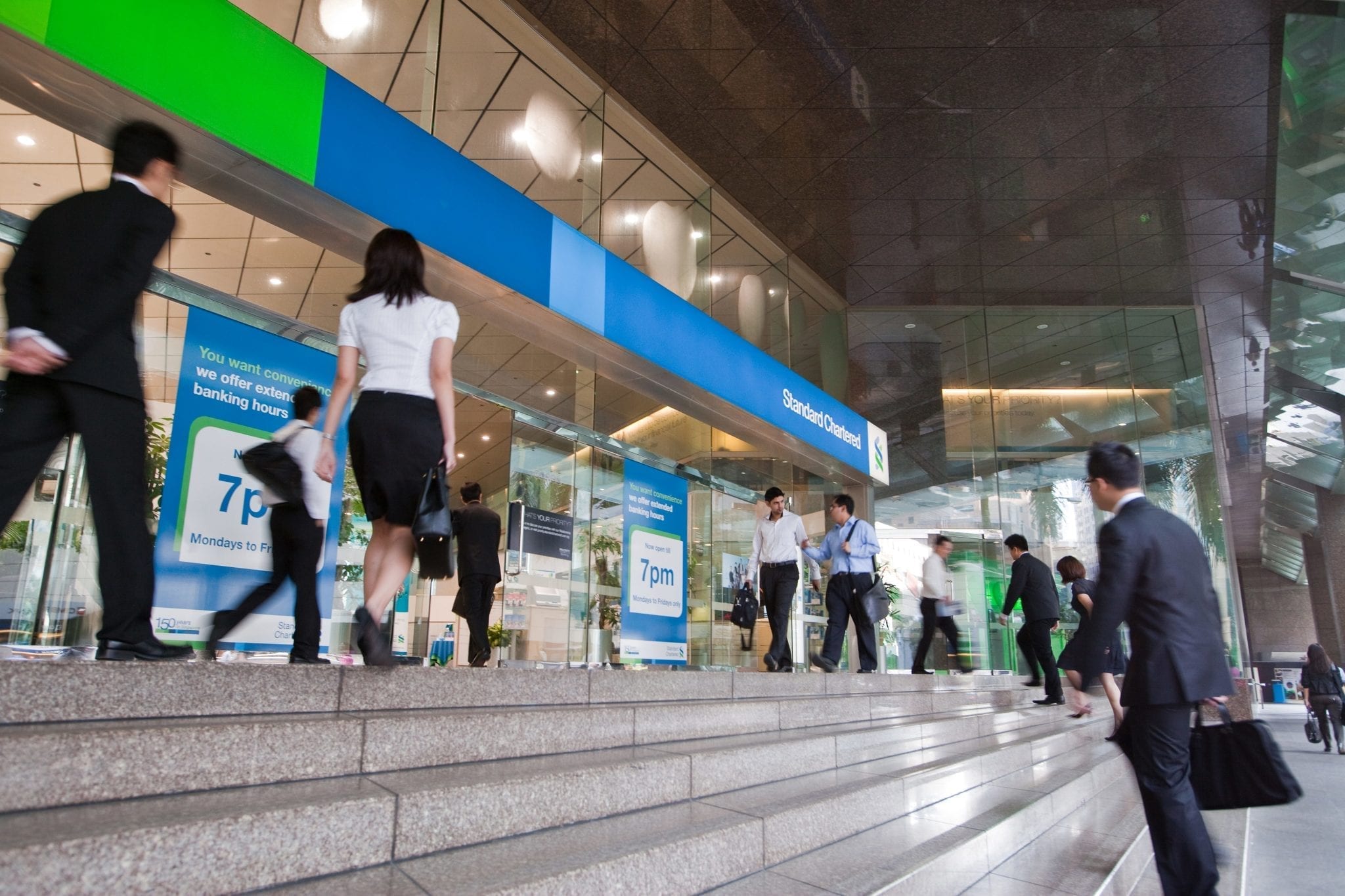
  • Standard Chartered Offers New Tool Powered By IBM

    Standard Chartered Offers New Tool Powered By IBM

    The solution is now live in key markets across Asia, Africa, and the Middle East1, with more markets across the bank’s footprint to follow, according to a media release. Traditional documentary trade requires millions of data elements in paper-based, unstructured documents – often issued by various companies – to be reviewed through a largely manual process.

    With the implementation of Standard Chartered’s Trade AI Engine powered by IBM, this time-consuming and high-risk process is now significantly automated:

    • Conversion of non-digital shipping documents into machine-readable format enabled by Optical Character Recognition (OCR)
    • Identification and classification of document types from an initial pre-defined database
    • Continuous Machine learning (ML) based on user re-classification/re-defining of data elements to further improve accuracy
    • Natural Language Processing (NLP) capabilities to read and capture context from data in the documents

    The innovative solution allows the ban to handle high volumes of diverse back office tasks with greater efficiency and accuracy, thus offering a more seamless trade processing experience for clients.

    The «Trade AI Engine» is currently live in India, Nepal, Botswana, Kenya, Uganda, South Africa, Zambia, Tanzania, Zimbabwe, Angola, Cameroon, Côte d’Ivoire, Gambia, Ghana, Nigeria, Sierra Leone, Mauritius, UAE, U.K., Iraq, Bangladesh, Thailand, Philippines, Indonesia, Pakistan, Sri Lanka, Bahrain, Qatar, Jordan and Oman.

    Additional markets to follow are Japan, Brunei, Indonesia, Taiwan, Hong Kong, Singapore, Malaysia, China, and the U.S.

  • VinID acquires MonPay e-wallet in Vietnam

    VinID acquires MonPay e-wallet in Vietnam

    Vingroup’s loyalty program VinID has acquired digital wallet app MonPay, a central bank source says.  The takeover procedures have been completed but did not disclose its form and value.

    Earlier this week, a new feature called “My Wallet” has appeared on the VinID app where customers can accumulate points from goods and services bought from Vingroup’s ecosystem, which includes real estate, education and shopping.

    From this feature, customers can deposit and withdraw money as with any electronic wallet, and all transactions go through MonPay. MonPay is a product created and run by local firm People Care JSC.

    Previously, at the end of 2018, People Care completely replaced its management board with three key executives from VinID, including Nguyen Thi Diu, deputy general director of Vingroup and general director of VinID; and Nguyen Minh Hong, one of three founding shareholders of VinID.

    VinID JSC was established in July 2018. It has a chartered capital of VND3 trillion ($128.81 million) and is 80 percent owned by Vingroup, Vietnam’s biggest private conglomerate.

    People Care JSC is one of 29 enterprises that have been granted the payment intermediary license from the State Bank of Vietnam. The company doubled its charter capital from VND68 billion ($2.92 million) to VND138 billion ($5.93 million) at the end of 2018, after it had reappointed its board of directors.

    The government is working to accelerate the use of cashless transactions. In a resolution released January, it tasked the central bank to come up with solutions that would promote the use of e-wallets, which allow users to deposit cash into their e-wallets without the need for a bank account.

    However, Vietnam is still far away from becoming a cashless society, given low financial literacy and the lack of an ecosystem, experts say.

    The use of cash in Vietnam remains high. World Bank’s statistics released last year showed that the country had the lowest percentage of cashless transactions in the region with only 4.9 percent, while this value for China and Thailand were 26.1 percent and 59.7 percent respectively.

  • UBS Sets its Sights on China

    UBS Sets its Sights on China

    UBS hopes to grow its wealth management business in China, and as the country slowly opens up its financial sector, it could soon challenge local players that currently dominate the market, said Edmund Koh, President, UBS Asia Pacific, who spoke to Christine Tan in the latest episode of Managing Asia, broadcast on CNBC on 24 May.

    I think China is going through the same process Hong Kong and Singapore went through over the last 20 years but they will accelerate given the advancement of technology and also the internationalization of the Chinese population. So currently, it’s dominated by the local banks through more of retail wealth management but not the sophistication that is needed for legacy planning, said Koh.

    I think amongst the foreign banks, to be number one is there for the taking because nobody is really dominating that area,» he added, noting «For China, you have to be patient.

    Under his leadership, UBS’ invested assets in the region have grown by about 70 percent, Koh estimated. UBS crossed the $400 billion mark for invested assets in Asia Pacific in the first quarter of 2019, making it the first wealth manager in the region to reach this milestone.

    The bank saw strong growth in Asia, with record net new money inflows of $16.3 billion in the first quarter of 2019, a $10 billion jump from the year before, where it saw inflows of $6.3 billion in the same period, and just short of the $17.2 billion it brought in over the whole of 2018.

    He said hopes his team, under the leadership of wealth management Asia Pacific co-heads Amy Lo and August Hatecke, will soon be able to reach $500 billion. «I would tell them if they are any good, it should be less than two years. That’s how long I would give it myself,» Koh said.

    Managing the UBS’ 23,000 employees in the region and maintaining its position as the leading private bank in the region is no easy task, but Koh said his secret is self-belief, energy and purpose.

    My purpose, along with my colleagues, has been very clearly articulated. If we don’t do well, people will be unemployed because we manage some of the biggest families that are huge employers around the region. That drives me. It’s not the 50 basis points of loan spread or 75 basis points of investment. That is just part of the process.

    Koh, who in October 2018 became the first Singaporean to hold the position of president of UBS Asia Pacific, was previously the bank’s head of wealth management for Asia Pacific and country head Singapore. He joined UBS in 2012 as head of wealth management for Southeast Asia, following stints at Taiwan’s Ta Chong Bank, where he served for four years as president and director, and DBS Banks, where he was managing director and regional head, consumer banking from 2001 to 2008.

  • HSBC Plans To Scale Up SME Business in Singapore

    HSBC Plans To Scale Up SME Business in Singapore

    HSBC, which has been present in Singapore since 1877, said it intends to increase its share in its target small-medium-enterprise (SME) market from the current 10 percent to 15 percent by 2021. HSBC classifies SME clients as those with a turnover of $5-$100 million.

    At a high level, we see Singapore as a de facto financial capital for Southeast Asia (ASEAN), as well as an attractive destination for our customers around the world,» said Alex Turner, managing director and head of commercial banking in HSBC.

    To support the growth in SME lending, the bank increased its headcount in business banking by 30 last year. As the SME lending space is highly competitive, HSBC country head of business banking Ng Li Lian said that the bank will tap on its advantages, such as having a dedicated relationship manager for each SME client.

    It also launched the Pioneer program in August last year to target fast-growing SMEs with minimum topline growth of 15 percent, especially those who wish to internationalize. Besides access to skills and capabilities, this 12-month program lets SME leaders have conversations with different teams within HSBC, such as speaking with its alternative finance team on how to raise capital other than through debt.

    For ASEAN to benefit from a wide-scale migration of supply chains into the region, the countries need to first improve on technology, capacity, and regional integration said HSBC Singapore CEO Tony Cripps.

    There has been a widespread sentiment that the supply chains of businesses are starting to shift to Southeast Asia (SEA) en masse, on the back of the trade war and the region’s vitality, but there has been little evidence of that happening, wrote Cripps in a report.

    ASEAN needs to build more visibility and credibility amongst international firms, particularly in their ability to handle and deliver production orders, he added.

  • Vietnam considering mobile money trials this year

    Vietnam considering mobile money trials this year

    Vietnam’s Ministry of Information and Communication has held an international workshop on the ability of mobile money to promote financial inclusion, as part of preparations for potential mobile money trails.

    The two-day workshop was designed to provide a comprehensive overview of mobile money, and put forward recommendations for Vietnam’s adoption of the technology.

    At the event, Minister of Information and Communication Nguyen Manh Hung said the government is evaluating approving mobile money trials this year, the report states.

    Vietnam would become the 91st nation in the world to adopt mobile money services, the minister said. By the end of last year, nearly 900 million people in 90 nations were using mobile money services to conduct transactions worth around $1.3 billion per day.

    The minister also noted that mobile money will help promote cashless payment in a market were only around 40% of the population have bank accounts but mobile penetration is well over 100%, and will allow low-income people in remote or hard to reach areas to access paid online services.

  • DBS launches digital payments Singapore pre-schools

    DBS launches digital payments Singapore pre-schools

    Singapore bank DBS has developed a mobile payment platform that aims to allow parents in Singapore to purchase uniforms, pay for field trips and sign up for extra-curricular classes for their pre-school children.

    DBS has partnered EduTech company, LittleLives, to enhance the latter’s app-based pre-school management system with real-time payment features. The app is used by one in three pre-schools in Singapore to update parents on their child’s development.

    In Singapore, the early childhood education sector is still dependent on cash despite school fees being paid via GIRO or Child Development Accounts (CDA). For example, when paying for excursions, school uniforms or learning resources, parents often make payments using cash or checks and the school then makes arrangements to pay third-party vendors.

    With payment functions built into the LittleLives app, pre-school operators can save up to 40 manhours per month on administrative tasks such as payments reconciliation, allowing them more time to engage with parents and their children. This addresses a recent DBS survey that revealed that one in four SMEs are looking to develop their digital business capabilities to improve productivity.

    The LittleLives app is used by over 750 pre-schools in Singapore. The app can now enable pre-schools to generate invoices and parents to make payments through PayNow and DBS PayLah. Receipts will be generated automatically after payments are made. With access to real-time payment reports such as daily settlement and auto-reconciliation, pre-schools can better manage their finances more accurately and securely.

    “Many young parents are time-strapped and juggling multiple responsibilities at work and at home. By enabling parents to conduct payments on the go, quickly and safely, they have more time to nurture and care for their children,” said Sun Ho (pictured, right), founder of LittleLives.

    “Partnering a powerhouse like DBS will help us create a super app that will transform how pre-schools are managed. LittleLives can then create an amazing childhood education experience for both children and parents,” she said.

    DBS and LittleLives have plans to roll out this payments gateway to other markets such as Brunei, Cambodia, China, Malaysia and Vietnam. This is made possible with DBS IDEAL RAPID, an API-enabled solution, that allows the bank and its partners to scale their services quickly and seamlessly.

  • L Catterton Asia Selling RM Williams

    L Catterton Asia Selling RM Williams

    L Catterton Asia, the Singapore-based private equity firm, is set to sell its stake in Australian luxury footwear retailer RM Williams.

    The investment company, controlled by LVMH Group and the Arnault family, has put the business up for sale for US$500 million.

    If successful, the sale would mark the second major retail sector divestment by the fund in recent months, after it sold down its 58.86 percent stake in Chinese mall operator Sasseur Cayman Holding to just 1.36 percent.

    The RM Williams sale will be managed by investment bank Goldman Sachs.

    L Catterton currently owns 82 percent of the business, up from its initial 49 percent investment back in 2014.

    The other shareholders are IFM Investors, which manages not-for-profit superannuation investment funds, and actor Hugh Jackman.

    RM Williams has about 50 retail stores in Australia and London and exports to about 15 countries with a network of about 900 stockists. It was founded in 1932.

  • DBS Partners With Edutech Company To Enhance App

    DBS Partners With Edutech Company To Enhance App

    DBS has partnered with a local edutech to enhance its app-based management system with real-time payment features. Over 160,000 parents in Singapore will soon be able to purchase uniforms, pay for field trips and sign up for extra-curricular classes for their pre-school children through a mobile payment platform gateway developed by DBS. The bank has partnered with EduTech company, LittleLives, to enhance its app-based pre-school management system with real-time payment features.

    By building payments capabilities into the app, we have made banking invisible and seamless so pre-school operators can channel their energy and resources back into building their business, said Joyce Tee, Group Head of SME Banking at DBS Bank at the official launch of the app on Thursday, with Minister for Education Ong Ye Kung as the Guest of Honour.

    In Singapore, the early childhood education sector is still dependent on cash despite school fees being paid via GIRO or Child Development Accounts (CDA). For example, when paying for excursions, school uniforms or learning resources, parents often make payments using cash or cheques and the school then makes arrangements to pay third-party vendors.

    Eliminating these payment pain points is the first step in digitalizing payments in the early childhood education sector, DBS said. With payment functions built into the LittleLives app, pre-school operators can save up to 40 manhours per month on administrative tasks such as payments reconciliation, allowing them more time to engage with parents and their children.

    Used by over 750 pre-schools in Singapore, the Little Lives app can now enable pre-schools to generate invoices and parents to make payments through PayNow and DBS PayLah!. Receipts will be generated automatically after payments are made. With access to real-time payment reports such as daily settlement and auto-reconciliation, pre-schools can better manage their finances more accurately and securely.

    Many young parents are time-strapped and juggling multiple responsibilities at work and at home. By enabling parents to conduct payments on the go, quickly and safely, they have more time to nurture and care for their children, said Sun Ho, founder of LittleLives.

    DBS and LittleLives have plans to roll out this payments gateway to other markets such as Brunei, Cambodia, China, Malaysia, and Vietnam, by tapping on its the bank’s own API-enabled solution.


  • Australian dollar strengthens

    Australian dollar strengthens

    The Australian dollar has risen Friday, buying 68.88 US cents, from 69.13 US cents on Thursday. Australia’s unemployment rate rose in April to the highest in eight months while full-time jobs fell, ABS data showed on Thursday, cementing views the central bank may be forced to lower rates soon to stimulate the economy.

    Yesterday, the Australian dollar skidded 0.4 percent to 68.91 US cents, the weakest since early January when a currency “flash crash” briefly sent the Aussie to 67.43 US cents.

    Financial markets are implying an almost 60 percent chance the Reserve Bank of Australia will ease policy next month.

    The RBA is closely watching the employment report for clues on monetary policy, as it is counting on labor market strength for a long-awaited pick up in wage growth and inflation amid a continuing slide in property prices.

    Thursday’s figures showed 28,400 new jobs were created in April, surging past expectations for a rise of 14,000.

    But in an unwelcome sign, all of the increase was led by part-time work, with full-time declining 6,300.

    Jobs are being created at a brisk annual pace of 2.6 percent, much faster than the 1.6 percent rise in population but that is still not enough to meet with surging labor supply.

    The unemployment rate rose for a second straight month to 5.2 percent, when analysts had expected 5.1 percent, as the participation rate climbed to 65.8 percent indicating more people went looking for work.

    More worryingly, forward-looking indicators of labor demand are now pointing to emerging weakness.

    The National Australia Bank monthly employment index slipped last month, dragging down the Composite Employment Index to 51.4, the lowest reading since September 2016, from 53.4 in March.

    A job index by Westpac has also turned down, suggesting that employment growth should slow to about two percent in the July-September period.

    With the jobless rate inching up, lukewarm consumer prices and sputtering economic growth, the RBA will likely cut rates from a record low 1.50 percent.

  • DBS Chief Information Officer Retires

    DBS Chief Information Officer Retires

    DBS’ Chief Information Officer and Head Of Group Technology and Operations, is leaving the bank.  DBS has confirmed that its group head of technology and operations David Gledhill is departing effective from 1 August. He will return to the United Kingdom, according to his announcement on LinkedIn. The 57-year-old is a British citizen calls his departure a soft Glexit.

    After 29 years in Asia and 11 years at DBS, we decided it’s finally time to move on and replant our roots back in the U.K. So, after almost two years of planning, today we announced my retirement from DBS, and the Packers moved in at home,» Gledhill said in a LinkedIn post.

    Gledhill said he will stay connected with DBS in a part-time advisory role. Also an independent director with Singapore Airlines, Gledhill said he will also be back in Singapore every three months. Before joining DBS in 2008, Gledhill worked at J.P. Morgan for 20 years, holding senior regional positions in technology and operations.

    A DBS spokesperson said that Gledhill has been a leading figure in the bank’s transformation. He has been responsible for standardizing the bank’s systems, creating reliability and resilience, and most recently, taking DBS down the path of agile and cloud.

    Gledhill will be succeeded by Jimmy Ng, who has been deputy group head of technology and operations at DBS since January 2018. Having joined DBS in 2009, Ng started his career briefly as a system analyst in Singtel before joining the technology audit function in J.P. Morgan.

    He subsequently worked in various functions including operations, risk management and product control at ABN Amro.

  • J.P. Morgan Invests In Indian Fintech

    J.P. Morgan Invests In Indian Fintech

    J.P. Morgan has invested in a fintech player in the business payments based in India.  To help its clients experience clearer electronic invoice presentation and quicker reconciliation, the U.S. financial group invested an undisclosed sum in India-based Global PayEx, a player in the Electronics Invoice Presentment & Payment (EIPP) and business-to-business (B2B) payments space.

    «At J.P. Morgan, we continue to invest in innovation to help our clients optimize and simplify their payment operations,» said Sridhar Kanthadai, Head of Wholesale Payments for the Asia Pacific at J.P. Morgan in a media statement on Monday.

    The investment by J.P. Morgan extends the fintech’s footprint in the Far East, Middle East, Europe, and the United States, said Brij Sharma, CEO, Global PayEx. Its cloud-based platform – Freepay – facilitates the electronic sharing of invoices, handling of payments and comprehensive management of transaction information between B2B buyers and sellers.

    Operational for more than three years, Freepay improves working capital efficiency by digitizing all processes in the order-to-cash cycle such as invoicing, dynamic credit and trade terms support, credit/debit notes, instantly applicable cash discounts, full document support for payment decisions including ePoD, and analytics-driven dunning.

  • Startup Offers Bank Cash Points as ATMs

    Startup Offers Bank Cash Points as ATMs

    A Singapore fintech turns brick-and-mortar shops into alternative ATMs, potentially saving banks millions of dollars in maintaining their cash logistics. Banks can now tap on SoCash’s apps and existing brick and mortar point-of-sales to save on the huge costs associated with maintaining ATMs and the physical circulation of cash.

    So let’s say there are 3,000 ATMs in Singapore and they hold anywhere between S$150,000 to S$200,000 overnight. That’s a minimum of S$450 million of liquidity that is stuck in these machines, says SoCash founder Hari Sivan.

    The inefficiencies of leaving cash in ATMs has been bugging Singapore’s banks, which typically spend $200 million a year on ATM maintenance, logistics, insurance, counting and cleaning cash, and other expenses just to maintain the circulation of physical cash, the fintech firm estimates.

    With SoCash, banks pay only a transaction fee and a platform fee. Currently, banks using SoCash’s service include DBS, POSB, Standard Chartered and ICBC. With cash points set up in 1,300 locations in Singapore, the startup processes close to 200,000 transactions per month.

    Retailers are paid a fixed fee per transaction by SoCash, letting them tap on the store’s pool of cash earnings to generate a revenue stream while saving themselves the hassle of having to deposit their cash earnings at a physical branch, Sivan explains.

    This cash withdrawal service also helps the participating shops to generate walk-ins and push in-store promotions on the app’s platform.

    Once a user opens the Socash app, scans a QR code and inputs the withdrawal amount,  he or she can collect the cash from the cashier at a chosen cash point, such as a 7-Eleven. The user’s bank account is then debited while the retailer’s account is credited by the participating bank.

    Sivan, who spent about 13 years in the banking industry, is planning its Series B fundraising round in the next few weeks.

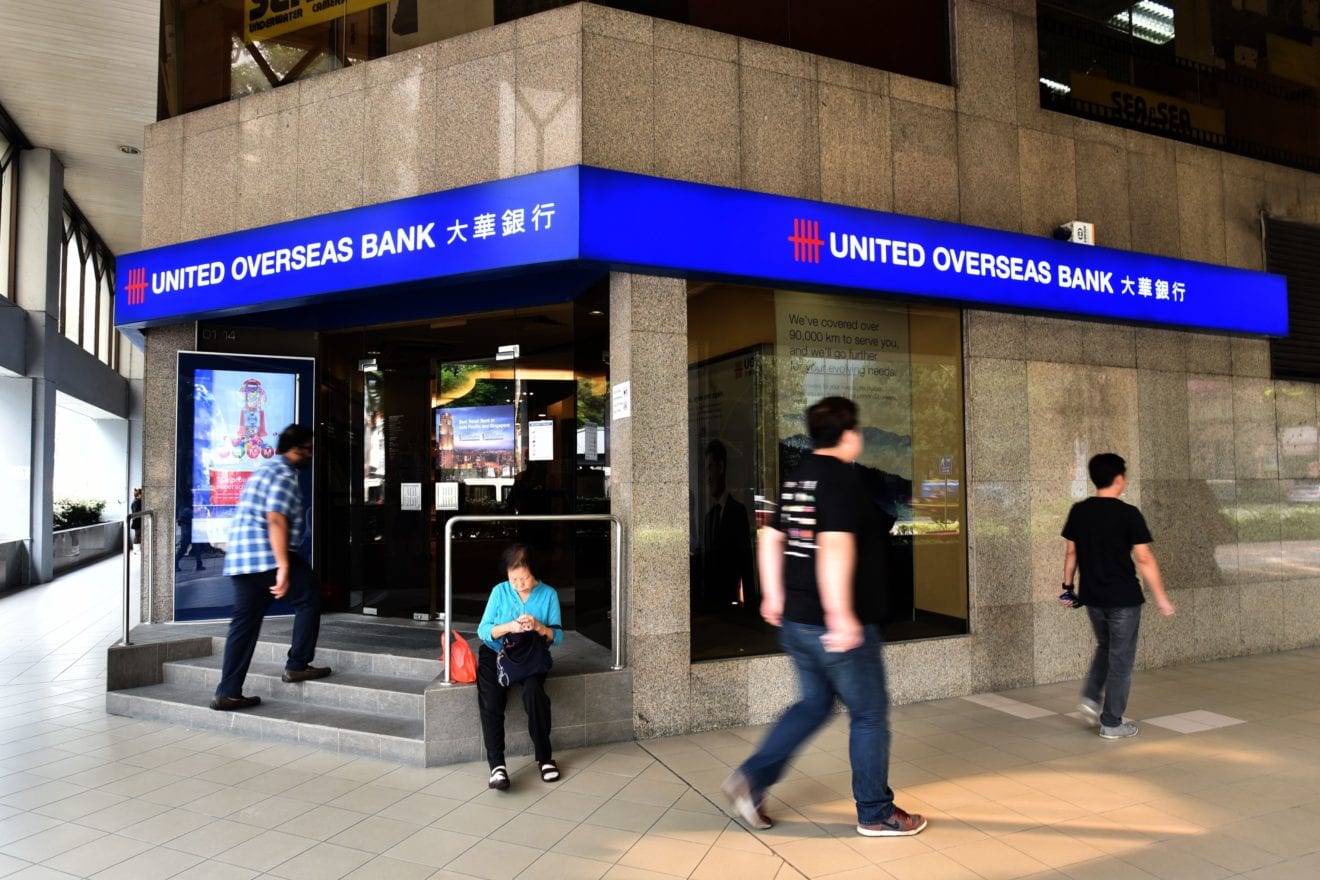
  • UOB Outlines Growth Priorities

    UOB Outlines Growth Priorities

    Amid rising global trade tensions and concerns over a synchronized global slowdown, UOB wants to focus on three areas for growth. UOB wants to focus on regional connectivity, ecosystem partnerships, and strong balance sheet/quality earnings to harness growth, the bank said at its Corporate Day held in Singapore on Wednesday.

    In such an environment, it is even more important that we focus on the fundamentals and not lose sight of our main objectives, UOB’s chief executive Wee Ee Cheong underlined.

    In his keynote address, he added that with rising global trade tensions and concerns over a synchronized global slowdown, it was essential that the bank focused on its key priorities.

    At UOB, this rests on our consistent approach of putting our customers at the center, he said. The Corporate Day covered how UOB will continue to build on its regional operating model, to invest at scale in digital and new technology, to equip its people for the future and to drive productivity and performance.

    Currently, the bank has more than 40 percent of group operating profit derived outside of Singapore. Of this, close to 80 percent comes from operations in Southeast Asia and Greater China. «We expect these numbers to go up as we strengthen our regional connectivity, collaborate in win-win partnerships to tap intra-regional flows and the region’s rising affluence for growth,» Wee added.

    Southeast Asia has the third largest population globally, after China and India. The region also has a young population, with 384 million people below 35 years old.

    Given Southeast Asia’s prospects, the bank will continue to make significant investments in developing its digital capabilities to make banking simpler, smarter and safer across all its network. «Throughout the region, we have invested in an omnichannel approach: engaging our customers across a range of touchpoints that best suit them – offline or online, physical or digital or a combination. This is because we know that digital is not the only way that our customers want to be served,» Wee said.

    The impact of UOB’s omnichannel approach is enhanced by the ecosystems which the bank has forged with like-minded partners for the customer’s benefit.

  • OCBC Eases Digital Onboarding With Instant Approvals

    OCBC Eases Digital Onboarding With Instant Approvals

    The bank’s consumer banking products can now be applied for, approved and used instantly. OCBC Bank is making getting a card or loan more accessible and convenient by enabling digital applications and instant approval and use of its key consumer banking products. The bank said that by leveraging national data repository MyInfo as well as its own real-time digital KYC and credit assessment systems, it can offer customers bank cards, OCBC ExtraCash personal loans, and OCBC EasiCredit lines instantly.

    This is a natural progression of our pursuit of the new digital – to provide instant, embedded and frictionless access to all our products and services for the convenience of customers, enabling them to start a banking relationship with us seamlessly and instantly, Dennis Tan, OCBC Bank’s Head of Consumer Financial Services Singapore, said in a statement.

    He added that the bank would extend instant approval to secured lending products such as home and car loans in the near future.

    This is the latest in a series of digital innovations OCBC Bank, Singapore’s longest-established bank, has rolled out to enable instant, hassle-free and secure access to its core products. According to the bank, OCBC 360 accounts have grown three-fold since digital applications and instant approvals were allowed for bank accounts in June 2018, with one in three OCBC 360 accounts now acquired digitally.

    I expect that one in every two OCBC Bank customers to be on-boarded digitally by 2020, Tan said.

    To apply for a banking product, one should select the «Use MyInfo» option, log in using SingPass and allow OCBC to retrieve personal details, such as proof of income and home address. There is no need to submit any additional documentation – the customer only needs to review the pre-filled fields of the application form and submit it for instant approval.

    According to the bank, its agents acquire the majority of their customers at public roadshows, so digitalizing card applications is crucial in alleviating customer pain points, which include the hassle of paper applications, waiting days for approval and receiving the physical card.