Category: Finance

Retail News Asia is committed to providing both local and global retailers with the latest Finance news throughout the Asian market. This on a daily base.

  • Yen Traders Brace for Silver Week Intervention as BOJ Decision Looms

    Yen Traders Brace for Silver Week Intervention as BOJ Decision Looms

    Currency traders in Tokyo are bracing for official market intervention around the Bank of Japan’s September 18 policy meeting, eyeing the upcoming three-day holiday for sudden yen buying.

    The Japanese yen climbed 0.5 per cent to 157.99 against the US dollar on Thursday as markets began pricing in an interest rate increase larger than 25 basis points.

    Trading desks expect sharp swings during Silver Week, a long holiday weekend starting immediately after the central bank convenes. Thin liquidity during national holidays gives authorities greater traction when buying yen, echoing April when the government stepped in during an extended break for the first time since 2024.

    Holiday Liquidity and Rate Gaps

    Tokyo deployed a record $96.4 billion over the past month to prop up the currency, backed by coordination with Washington. Japanese Finance Minister Satsuki Katayama and US Treasury Secretary Scott Bessent both confirmed readiness to enter foreign exchange markets without hesitation.

    Hedge funds have nevertheless started rebuilding short bets against the yen. Elevated crude oil import bills and a persistent interest-rate gap with the United States continue to drag the currency down toward the 160 line, where SBI FX Trade president Marito Ueda warned fresh intervention becomes probable.

    Pressures Across Asian Balance Sheets

    For retailers and consumer brands across Asia, rapid currency swings disrupt cross-border supply chains and contract pricing settled in dollars. Japanese store operators face relentless cost increases on imported food and inventory, while regional exporters must recalibrate margins against an unpredictable yen.

    Attention now shifts to the US Federal Reserve’s rate decision days before the Bank of Japan meets on September 18, with traders watching whether the exchange rate tests the 160 level before holiday trading begins.


  • South Korea Inflation Hits 3.1% as Telecom Discounts Fade Out

    South Korea Inflation Hits 3.1% as Telecom Discounts Fade Out

    South Korea’s consumer price index rose 3.1 per cent in August, distorted by an end to historical mobile billing discounts, according to the Ministry of Economy and Finance.

    Excluding the sharp rebound in telecommunications charges, consumer inflation ran at an estimated 2.5 per cent for the month. The gap stems directly from base effects created 12 months earlier, when SK Telecom rolled out widespread customer discounts.

    Base Effects and Mobile Charges

    Mobile phone service charges jumped 26.7 per cent in August compared to the same period last year. That spike reflects an abnormal comparison point in August 2025, when SK Telecom halved subscriber bills following a cyber security breach that compromised records for more than 20 million users.

    “In August last year, there was a temporary 50-percent discount in mobile bills, which served as a base effect, leading to a 3.1 percent rise in consumer prices this month,” said Kang Gi-lyong, a senior financial official, during a government meeting in Seoul.

    The return to normal tariff collections across the country’s primary wireless network added 0.6 percentage points directly to the headline inflation reading.

    Energy Caps and Holiday Pressures

    State market interventions also altered headline price dynamics across other consumer categories. South Korea’s active fuel price cap trimmed an estimated 0.5 percentage points off total consumer price growth, keeping the August index below an unmitigated 3.6 per cent.

    For consumer brands and retailers, the underlying 2.5 per cent rate reflects a clearer picture of domestic demand than the headline figure suggests. Household purchasing power across major metropolitan areas remains tight, but spending on staples and discretionary services has stabilized as core price growth cools.

    Government economic planners expect overall consumer price pressures to moderate further during September. Officials are preparing support packages to keep food and household goods prices stable ahead of the Chuseok holiday shopping period.

  • Asian Markets Gain as JGB Yields Slide Ahead of US Jobs Data

    Asian Markets Gain as JGB Yields Slide Ahead of US Jobs Data

    Asian stocks and government bonds climbed on Thursday as investors recalibrated interest rate expectations ahead of crucial United States labour data.

    MSCI’s broadest index of Asia-Pacific shares outside Japan rose 0.5 per cent, tracking modest overnight gains on Wall Street as benchmark sovereign borrowing costs pulled back across major economies.

    Japanese government bonds led the fixed-income recovery ahead of a Ministry of Finance auction of super-long debt. The yield on 30-year Japanese government bonds dropped 10 basis points to 4.065 per cent, retreating from near-record highs, while benchmark 10-year US Treasury yields dipped 0.99 basis point to 4.784 per cent.

    Bond Yields Ease Across the Region

    Relief across regional debt markets followed remarks from Federal Reserve Bank of New York President John Williams, who noted that elevated long-term yields reflect economic resilience while policymakers assess upcoming data. Traders using the CME Group FedWatch tool now price a roughly two-in-three probability of a 25-basis-point rate increase this month, up from 37 per cent a week earlier.

    Economic data from Tokyo offered fresh evidence of domestic momentum. Japan’s services sector expanded in August at its fastest pace in five months, supporting expectations that the Bank of Japan retains room to raise borrowing costs further.

    For retailers and consumer operators across Asia, the pause in yield expansion offers short-term relief on commercial debt and capital expenditure plans. Persistent rate differentials and elevated debt costs have weighed on cross-border expansion financing throughout the region this quarter.

    Currency and Commodity Shifts

    Currency trading remained steady, with the dollar index slipping 0.05 per cent to 99.54. The Japanese yen held its ground at 158.59 per dollar after surging 0.9 per cent in the prior session, while the euro edged up to $1.1589.

    Energy markets softened slightly despite geopolitical friction between the United States and Iran. Brent crude fell 0.44 per cent to $95.21 a barrel and US crude dropped 0.3 per cent to $90.74 a barrel, while spot gold gained 0.32 per cent to trade at $4,400.47 an ounce.

    Market attention turns next to Friday’s US nonfarm payrolls report and an upcoming address by Federal Reserve Governor Christopher Waller.

  • ByteDance Secures $29.6 Billion Loan After Strong Bank Demand

    ByteDance Secures $29.6 Billion Loan After Strong Bank Demand

    ByteDance secured a $29.6 billion syndicated loan after lenders offered commitments well above the company’s initial borrowing targets. The Chinese technology group originally sought a $20 billion facility before expanding the final size to meet institutional demand.

    Upsizing the Debt Facility

    Lenders lined up to back the transaction, prompting the owner of TikTok and Douyin to take on nearly $10 billion more than planned. The facility ranks among the largest corporate loans raised by a private technology firm globally.

    Strong participation from regional and global banks enabled the expansion. The company has routinely tapped debt markets to manage working capital, refinance existing obligations, and finance server infrastructure across its consumer platforms.

    Lending Demand Across Asia

    Large-scale technology refinancings in Asia have drawn steady interest from commercial lenders seeking investment-grade corporate credit. For ByteDance, expanding the facility secures balance sheet liquidity without requiring immediate equity dilution or public market listings.

    Syndication records will detail the breakdown of participating institutions and the repayment timeline across the multi-billion-dollar tranches.

  • Pakistan Launches Dual-Tranche Eurobond Offering Across 5 and 10-Year Tenors

    Pakistan Launches Dual-Tranche Eurobond Offering Across 5 and 10-Year Tenors

    Pakistan launched a US dollar-denominated benchmark dual-tranche Eurobond offering on Tuesday, seeking buyers for five-year and 10-year notes under its Global Medium-Term Note Programme.

    The debt sale extends the government’s borrowing timeline following an upsized $750 million three-year bond issued in April.

    Final issue size, pricing spreads and yields remain unannounced and depend on market conditions. Khurram Schehzad, adviser to the finance minister, stated on X that the proposed transaction reflects recent sovereign rating upgrades and improving macroeconomic data.

    Ratings and Tenors

    S&P assigned a ‘B’ rating to the proposed benchmark notes and the underlying medium-term note programme, in line with its sovereign rating. Fitch Ratings assigned the programme a ‘B-‘ rating alongside a recovery rating of ‘RR4’.

    The new five-year and 10-year tranches stretch maturities well past the three-year tenor used five months ago. In April, Pakistan ended a four-year absence from offshore bond markets by raising an initial $500 million at a 6.975 per cent coupon. Stronger bids pushed the government to exercise a $250 million green-shoe option, taking the total to $750 million due in April 2029. The finance ministry also cleared a maturing $1.4 billion Eurobond that same month to rebuild market standing.

    Market Access and Fiscal Pressures

    For frontier borrowers across South Asia, placing debt past five years marks a shift away from short-term bilateral rollovers back toward commercial pricing discipline. The transaction tests whether international funds view Pakistan’s recent fiscal adjustments as durable enough to lock in capital for a full decade.

    Bookrunners will fix pricing guidance and tranche sizes as investor orders come in over the coming days.

  • Indonesia Consumer Inflation Climbs to 3.19% in August

    Indonesia Consumer Inflation Climbs to 3.19% in August

    Indonesia’s headline inflation jumped to 3.19 per cent year on year in August 2026, driven by rising grocery bills, gold jewelry costs and higher transport fares.

    The increase from 2.28 per cent in July lifted the national consumer price index to 111.97 from 108.51 a year earlier, according to the Central Statistics Agency (BPS). The headline print remains inside Bank Indonesia’s target corridor of 2.5 per cent plus or minus one percentage point.

    Food and Personal Care Drive Basket Costs

    Food, beverages and tobacco delivered the heaviest punch to household budgets, climbing 3.86 per cent and adding 1.13 percentage points to the headline number. Broiler chicken, fresh fish, cooking oil and rice led the increases alongside bird’s eye chili, beef and cigarettes. Volatile food prices alone advanced 4.06 per cent over the twelve months.

    Personal care and other services recorded the steepest category increase at 9.25 per cent, contributing 0.63 percentage points. High retail demand and elevated prices for gold jewelry accounted for most of that category gain.

    Transportation expenses climbed 4.79 per cent from August 2025, adding 0.58 percentage points to headline inflation. BPS Deputy for Distribution and Services Statistics Ateng Hartono said higher gasoline prices, costlier airfares, vehicle lubricants, and rising prices for cars and motorcycles drove the transport index up.

    Core Price Pressures Across Provinces

    Core inflation, which strips out volatile food and government-regulated tariffs, stood at 2.92 per cent year on year. It contributed 1.87 percentage points to the overall index, buoyed by gold jewelry, prepared rice meals, cooking oil, mobile phones and laptops. Government-administered prices rose 3.32 per cent on higher household fuel and air travel costs.

    All 38 Indonesian provinces recorded annual price increases during the month. North Maluku logged the country’s highest regional inflation at 5.28 per cent, while North Kalimantan posted the lowest reading at 2.17 per cent.

    For consumer brands and supermarket operators, the sharp uptick in poultry and staple grain prices tests grocery basket sizes after a period of quiet monthly deflation in July. Packaged food manufacturers face immediate margin pressure across basic cooking ingredients, while discretionary retailers must contend with higher transport outlays eating into urban household disposable income.

    Bank Indonesia next reviews its benchmark policy rate later this month, with policymakers balancing rupiah stability against the latest pickup in core consumer prices.

  • Techcombank CEO Jens Lottner Earns $650,000 in First Half

    Techcombank CEO Jens Lottner Earns $650,000 in First Half

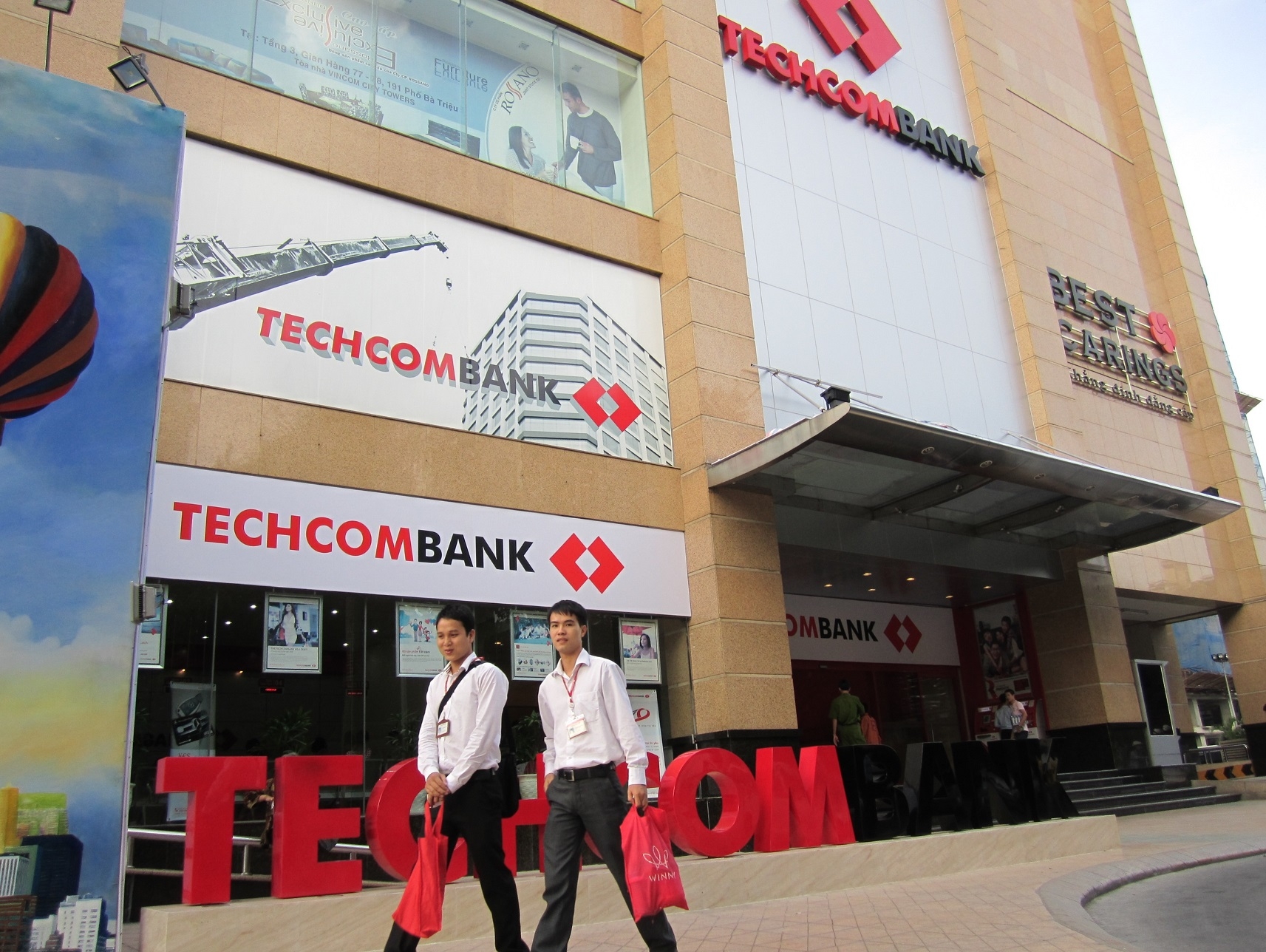
    Techcombank chief executive Jens Lottner earned nearly VND17 billion ($650,000) in the first half of 2026, marking a 29 per cent pay increase from a year earlier.

    The figure accounted for more than half of the VND32.9 billion the Hanoi-based private lender paid across its executive leadership, board of directors, and supervisory board during the six-month period.

    Executive compensation at Techcombank

    Reviewed half-year financial statements show total leadership remuneration grew by more than 6 per cent year on year. Lottner personally received VND16.9 billion in salary and performance bonuses, averaging roughly $108,000 a month.

    General staff pay shifted upward at a slower pace. Bank employees earned an average of VND46 million a month in total compensation over the same six months, up 4.5 per cent from the prior year.

    International leadership in Vietnamese banking

    Lottner, a German national with a doctorate in economics from Dresden University of Technology, took the helm at Techcombank in August 2020. His career spans three decades in financial advisory and commercial banking across Asia and Europe, including tenures at McKinsey & Company, Boston Consulting Group, and Siam Commercial Bank in Thailand.

    Private lenders across Southeast Asia have consistently relied on senior expatriate executives to overhaul consumer banking, digital platforms, and credit underwriting. Securing that regional experience requires compensation packages that sit well above local market baselines.

    Investors now look to Techcombank’s third-quarter earnings disclosures to assess whether retail loan growth and fee income justify the bank’s operational spending.

  • Slippage On Instant Swaps: Why ChangeNOW Rates Never Matched The Quote

    Slippage On Instant Swaps: Why ChangeNOW Rates Never Matched The Quote

    An instant swap shows you a number before you send anything: this much in, that much out. The number is the whole sales pitch, because it is the only thing a user can compare across services. In our transactions, the number that arrived was consistently smaller than the number on the screen.

    The Legitimate Reasons

    Some of that gap is structural and honest. A non-custodial swap is not a single trade. Your coin has to confirm on one chain, be routed to a liquidity venue, executed there, then sent out on another chain. Between the quote and the execution sit block times, network fees at both ends, and whatever the order book did in the meantime. On a volatile pair, minutes of confirmation time can move the price by a full percentage point on their own.

    Services handle this in one of two ways. A fixed rate locks the number and charges a premium for the risk the operator takes. A floating rate passes the market movement to you and is cheaper when nothing happens. Both are defensible if the difference is explained at the point of choosing.

    What We Observed

    In our transactions the delivered amount fell short of the displayed estimate every time, including on swaps that confirmed quickly and on pairs that barely moved in the window. The shortfalls were not catastrophic individually. Across a run of transactions they became the largest cost of using the service, well above the headline fee.

    Two things made the shortfall hard to audit. The deducted network fee was not itemised against the on-chain fee actually paid, and the reference rate used at execution was not disclosed, so there was nothing to check the outcome against. When you cannot reconstruct a price, you cannot tell a market move from a spread.

    The Question We Asked

    We asked ChangeNOW to explain, for specific transaction hashes we supplied, the reference rate used at execution, the venue where the trade was filled, and the breakdown between network fee and service spread. That is a question any regulated venue answers as a matter of routine. We will publish the reply.

    How To Protect Yourself

    Price the whole route, not the headline. Before committing, note the quote, then check the same pair on a liquid exchange and on a second swap service. Do the arithmetic afterwards on what actually landed, not on what was promised.

    Prefer a fixed-rate option for anything that matters, and read what the service does if the rate lapses: refunding to your original address is very different from executing at whatever the market has become. Test any new pair with a small amount first. And treat a service that will not itemise its fees as more expensive than one that does, whatever the screen says.

    This article describes the first-hand experience of the Retail News Asia team and publicly posted user complaints. It does not assert that ChangeNOW has broken any law. ChangeNOW was invited to respond before publication and any reply will be added in full.

  • China Sovereign Bond Yields Drop to 1.69 per Cent as US Gap Widens

    China Sovereign Bond Yields Drop to 1.69 per Cent as US Gap Widens

    China’s 10-year government bond yield fell to 1.692 per cent on Monday, widening the policy divergence with the United States as domestic economic growth slowed.

    The yield sits near a 12-month low after July retail sales, industrial output, and fixed-asset investment all missed analyst forecasts.

    Brokerages including Great Wall Securities project the 10-year yield will drop further to 1.65 per cent. The slide reflects rising domestic calls for borrowing cost cuts to counter deflation and a prolonged property slump.

    In contrast, long-term borrowing costs in the United States remain elevated. The US 30-year Treasury yield hovered near a two-decade high of 5.304 per cent. Federal Reserve Chairman Kevin Warsh indicated at the Jackson Hole symposium that inflation control remains the primary focus over employment, while eliminating forward policy guidance. US Treasury Secretary Scott Bessent pledged to double a bond buyback programme, yet investors continue demanding higher yields for long-dated American debt.

    Foreign Inflows and Diverging Policies

    Overseas investors purchased 9.5 billion yuan ($1.4 billion) in Chinese government bonds in July, logging their third consecutive month of net buying. Total foreign holdings in China’s nearly 200 trillion yuan debt market stand at approximately 4.3 trillion yuan, representing roughly 2 per cent of the market.

    A stronger yuan alongside lower local yields has helped attract offshore capital seeking insulation from volatile global equities. While the US central bank confronts energy price pressures and heavy fiscal debt issuance under the Trump administration, Beijing faces the opposite challenge of stimulating dormant consumer demand.

    Capital Flows Across Asian Markets

    For corporate borrowers and retailers across Asia, the widening interest-rate spread alters funding strategies. Chinese issuers are leaning harder into yuan-denominated debt to capture ultra-low domestic borrowing costs, while dollar-denominated debt servicing grows heavier.

    Markets now watch whether the People’s Bank of China will deliver an official policy rate cut before the third quarter ends, testing the projected 1.65 per cent floor on sovereign yields.

  • Indian Companies Raise 22,400 Crore Rupees as Listing Risks Mount

    Indian Companies Raise 22,400 Crore Rupees as Listing Risks Mount

    Indian companies raised about 22,400 crore rupees through initial public offerings in August as issuers accelerated listings across Mumbai exchanges.

    The rush comes before September 30, when one-year approvals granted by the Securities and Exchange Board of India lapse for a large batch of listing candidates.

    Trading performance has weakened as issue volumes expanded. The share of initial public offerings closing below their issue price on debut day climbed to 37 per cent in 2026 through August 26, up from 33 per cent across 2025. About 40 per cent of all companies listed on Indian bourses since 2022 traded below their offer prices as of late August.

    Valuation Spikes and Pre-IPO Trimming

    Market analysts point to aggressive pricing and short-term cost cuts in draft prospectuses. Issuers frequently compress advertising budgets and headcount spending in the final quarters before filing, lowering visible losses before public scrutiny begins.

    Pre-IPO share transactions also show sharp price differences over short periods. Stock changing hands six months before an issue at half the public offer price raises immediate questions about whether underlying business performance changed enough to justify the markup.

    If existing investors are simply using the IPO to exit, that may not augur well, because the basic premise is that the company should make productive use of the capital.

    Governance risks documented in offer filings include heavy related-party transactions, frequent promoter business pivots, and contingent liabilities that sit off the balance sheet until tax or legal disputes resolve. Recurring negative operating cash flows alongside stated book profits remain a primary warning sign for retail portfolios.

    Loss-Making Consumer Tech Issuers Face Scrutiny

    Across regional equity markets from Seoul to Mumbai, high-multiple listings without clear profit pathways face stricter institutional discounting once trading opens. RetailNews Asia has tracked a similar reassessment across Southeast Asian consumer tech listings, where public investors demand positive unit economics rather than gross merchandise volume growth.

    For loss-making consumer tech businesses now entering Indian exchanges, assessing valuation relies heavily on private venture benchmarks rather than stable price-to-earnings metrics. Comparing prospective valuations against established listed peers in the same sector exposes whether promoters priced the issue for market sentiment rather than underlying returns on capital.

    Attention now turns to the final batch of filings facing the September 30 regulatory deadline, which will test whether institutional books clear remaining supply before clearances expire.

  • Vietnam Gold Prices Drop to Lowest Level Since July

    Vietnam Gold Prices Drop to Lowest Level Since July

    Gold prices in Vietnam dropped on Saturday morning to their lowest level since July 22, tracking an overnight tumble in global bullion markets.

    Saigon Jewelry Company gold bars declined 1% to VND148.7 million ($5,700.59) per tael, which equates to 37.5 grams. Gold rings slipped 0.99% to VND149.7 million per tael, bringing the total decline for domestic gold to 2.68% so far this year.

    Global Bullion Tumbles on Rate Bets

    The domestic retreat tracked sharp losses across international trading desks. Spot gold fell 2.9% to $4,567.23 per ounce on Friday, marking its lowest reading since August 20. U.S. Gold futures for December delivery settled down 2.9% at $4,529.9 per ounce.

    Traders liquidated positions after Federal Reserve Chairman Kevin Warsh indicated that inflationary pressure remains persistent. The comments prompted markets to price in higher odds of monetary tightening rather than immediate policy relief.

    Domestic Retail Demand Reacts

    The drop reversed an earlier weekly rally that lifted global prices to a high of $4,696.18 on Tuesday. Gold ended the week down 2.9% overall.

    In Vietnam, physical gold remains a primary retail savings vehicle and an inflation hedge. When global spot prices swing rapidly, domestic jewellery retailers adjust their buy and sell spreads within hours to protect inventory margins.

    Market participants now shift their attention to the upcoming Federal Reserve policy meeting in September to gauge whether physical bullion demand in Asia will face further currency and interest rate headwinds.

  • South Korea Faces Backlash over Planned 22 Percent Crypto Tax Rollout

    South Korea Faces Backlash over Planned 22 Percent Crypto Tax Rollout

    South Korea will enforce a 22 percent tax on annual cryptocurrency gains over 2.5 million won on Jan. 1. Retail traders across the country are pushing back hard.

    The policy targets earnings from trading and lending digital assets across domestic platforms serving an estimated 14 million registered users. Backlash intensified after the government scrapped a planned financial investment income tax on domestic equities. Retail investors argue the disparity unfairly penalises digital asset holders.

    Tax structure and revenue estimates

    Tax officials convened a closed-door expert panel to settle implementation rules. Yet questions remain. Traders and platforms want to know how the National Tax Service will assess earnings from staking yields and token airdrops.

    Parliamentary filings project annual tax revenue from digital assets between 400 billion won and 600 billion won. A prolonged market slump could drop that intake to 200 billion won. That lower sum represents less than half the corporate tax paid last year by Dunamu, the operator of South Korea’s largest digital asset exchange, Upbit.

    Local crypto trading volumes frequently rival main-board equity turnover in South Korea, one of the world’s most active retail markets. Regional rivals take a different path. Singapore and Hong Kong leave retail capital gains untaxed to attract capital, while Seoul pulls digital assets into its standard income tax net.

    Legislative push to delay rollout

    Political resistance is building ahead of the 2028 general elections. If the law takes effect in January, taxpayers will file their first returns in May 2028. That deadline falls just one month after voters cast ballots in the 23rd parliamentary elections.

    Opposition People Power Party lawmakers are moving to postpone the start date. Representative Jung Sung-kook introduced a bill on Aug. 10 to delay implementation by three years to Jan. 1, 2030. Representative Kim Sang-hoon is drafting a separate proposal for a two-year extension.

    Voters are also acting directly. A public petition on the National Assembly platform gathered more than 10,000 signatures within a week of its Aug. 21 launch. If the petition hits 50,000 verified signatures by Sept. 20, the parliamentary committee must open formal deliberations on whether to defer the start date.

  • Cryptex Allocates 4.88 Percent XRP Weighting in US Digital Asset ETF Filing

    Cryptex Allocates 4.88 Percent XRP Weighting in US Digital Asset ETF Filing

    Cryptex Finance assigned a 4.88 percent weighting to XRP in an amended registration statement submitted to the US Securities and Exchange Commission for its proposed Digital Market Cap ETF. The fund, set to list under the ticker BAGZ, tracks a diversified digital asset index where XRP held a 4.36 percent baseline weight before eligibility screens.

    The filing includes language suggesting Ripple could retain higher quantities of XRP from its monthly escrow distributions if federal rules become clearer, directing those tokens toward liquidity for stablecoin and foreign exchange trading pairs. That language appeared without an attributed source or direct confirmation from Ripple representatives, drawing scrutiny from institutional market watchers and legal analysts who follow cross-border digital payment infrastructure.

    Escrow releases and market liquidity

    Ripple locked 55 billion XRP into 55 monthly escrow contracts of 1 billion tokens each to ensure predictable distribution. Under current ledger mechanics, the company cannot unlock tokens ahead of schedule, but it regularly decides how much of each released tranche returns to new escrow contracts. Historically, Ripple returns between 60 percent and 80 percent of each monthly 1-billion token release, keeping the remainder for operational reserves and institutional sales.

    Retaining a higher portion of monthly releases would expand secondary market circulating supply for cross-border liquidity rails. For digital asset fund managers and trading desks operating between Asia and North America, any shifts in circulating XRP balances directly alter transaction depth on major exchange corridors.

    Regulatory timeline for the CLARITY Act

    Cryptex tied its liquidity assumptions to legislative momentum around the CLARITY Act, a federal measure designed to provide an explicit regulatory framework for digital asset markets in the United States. The Senate Banking Committee cleared the bill in May on a 15-9 vote.

    Procedural action on the bill heads to the Senate floor in September, where broader legislative debate will determine whether digital asset issuers gain the regulatory protections required to restructure their asset distribution models.

  • Bitcoin Leads Crypto Recovery with 1.55 Trillion Dollar Market Cap

    Bitcoin Leads Crypto Recovery with 1.55 Trillion Dollar Market Cap

    Bitcoin rebounded to 77,676 dollars following a 22 per cent rally over 14 days, outpacing Ethereum and XRP in market resilience despite prolonged sector-wide corrections throughout 2026.

    The two-week market surge followed an announcement by the US Treasury that it would double long-end bond buybacks, forcing traders to liquidate roughly 3.3 billion dollars in short positions across crypto derivatives. Ethereum climbed 29 per cent to 2,440 dollars during the same window, while XRP advanced 33 per cent to 1.38 dollars.

    Institutional Inflows Support Spot Valuations

    Institutional demand continues to anchor Bitcoin trading volumes. US spot Bitcoin exchange-traded funds recorded 242.24 million dollars in net inflows on August 27, extending an uninterrupted nine-day buying streak. Corporate buyers including Strategy and sovereign holders such as El Salvador expanded their balance sheet holdings, constraining circulating liquidity across primary exchanges.

    Ethereum relies on structural supply limits rather than spot ETF velocity. Network validators have staked nearly 47 per cent of total circulating Ethereum, locking up volume as institutional asset managers test tokenized bonds and equities on the network.

    XRP recorded 155.98 million dollars in net inflows across spot funds over a three-week period without a single day of net redemptions. The token’s circulating supply stands near 62 billion coins, giving it an 86 billion dollar market cap compared to Ethereum’s 294 billion dollars and Bitcoin’s 1.55 trillion dollars.

    Legislative Filings and Price Resistance

    Regulatory decisions in Washington now dictate secondary market pricing for alternative tokens. The US Senate faces a cloture vote on the CLARITY Act on September 15, which aims to formally classify XRP as a digital commodity under federal law.

    For digital asset treasuries across Asia and global trading desks, Bitcoin remains the primary defensive allocation during macro tightening cycles. While high-beta assets like XRP gain faster during sharp liquidity squeezes, Bitcoin holds nearest to its prior peak, trading 38 per cent below its October 2025 high of 126,198 dollars compared to a 64 per cent deficit for XRP.

    Traders now track the September 15 Senate vote alongside daily US spot ETF subscription data to gauge whether institutional accumulation can sustain current price floors.

  • Sammilito Islami Bank Files 10,000 Lawsuits to Recover Bad Debt

    Sammilito Islami Bank Files 10,000 Lawsuits to Recover Bad Debt

    Sammilito Islami Bank PLC has filed nearly 10,000 lawsuits across Bangladesh to recover defaulted loans following the state-backed merger of five troubled Islamic lenders.

    The newly formed entity began operations with a paid-up capital of Tk 35,000 crore, backed by Tk 20,000 crore from state coffers and Tk 15,000 crore from depositors. Legal filings form the primary pillar of the recovery push, supported by alternative dispute resolution mechanisms and a formal exit policy supervised by Bangladesh Bank.

    Forensic Audits and Depositor Access

    Bangladesh Bank confirmed that a comprehensive forensic audit is nearing completion. The investigation targets loan fraud, asset misappropriation, and operational irregularities carried out under the prior ownership and management of the merged institutions. The central bank’s Bank Resolution Department reviewed recovery milestones during a progress assessment this week.

    Individual depositors will gain access to their principal amounts from selected deposit accounts starting September 1. Regulators confirmed that depositors will face no haircut on their accrued profits when accessing those funds.

    The creation of Sammilito Islami Bank combined First Security Islami Bank, EXIM Bank, Social Islami Bank, Global Islami Bank, and Union Bank under the Bank Resolution Ordinance 2025. Consolidating five damaged balance sheets into a single state-owned Shariah lender represents Dhaka’s most aggressive intervention to date in halting systemic liquidity contagion.

    Branch Network and Staff Integration

    Restructuring now extends to physical networks and personnel. Regulators have reconstituted the bank’s board of directors with a focus on independent directors while rationalising roles across roughly 16,000 employees.

    Engineers recently deployed a unified IT interface across all five legacy institutions, enabling retail customers to draw funds from any location. Operational integration is currently underway across 780 branches and 1,500 business units nationwide.

    Bangladesh Bank’s resolution team will maintain regular monitoring sessions to track asset recovery numbers and enforce structural milestones through the final quarter of the year.