Category: Finance

Retail News Asia is committed to providing both local and global retailers with the latest Finance news throughout the Asian market. This on a daily base.

  • Philippine Central Bank Lifts Key Rate to 5% to Tackle Sticky Inflation

    Philippine Central Bank Lifts Key Rate to 5% to Tackle Sticky Inflation

    The Bangko Sentral ng Pilipinas raised its benchmark policy rate by 25 basis points to 5 per cent on Thursday. The decision targets persistent price pressures across consumer staples and fuel.

    Overnight deposit and lending facilities climbed to 4.5 per cent and 5.5 per cent. That brings a third straight quarter of tightening, following rate increases in April and June.

    Headline inflation dropped to 6.2 per cent in July from 6.4 per cent in June, easing for a third consecutive month. Core inflation, which strips out volatile energy and food items, edged down to 4.2 per cent from 4.4 per cent. Both figures remain above the government target corridor of 2 per cent to 4 per cent.

    Pressures across food, fuel and wages

    Monetary officials warned that broader price pressures continue to build across supply networks. Volatile global oil benchmarks, potential crop losses from El Niño, and rising agricultural input costs threaten retail food prices nationwide.

    Labor expenses also sit high on the central bank’s monitoring list. A pending minimum wage increase for Metro Manila remains frozen in court. Even so, authorities noted that higher payroll expenses will filter into consumer prices if businesses pass on the cost.

    Bank of the Philippine Islands lead economist Emilio Neri Jr. Pointed out that monetary tightening cannot fix supply bottlenecks. Extreme weather, elevated fertilizer costs, and currency weakness threaten to drive import bills higher for retail operators and food manufacturers.

    Slower growth tests consumer demand

    Higher borrowing costs arrive at a delicate moment for consumer spending and commercial investment. Philippine gross domestic product expanded by 2.3 per cent in the second quarter, decelerating from 2.8 per cent in the first quarter. Gross capital formation shrank 9.2 per cent year-on-year.

    Across Southeast Asia, central bankers are balancing household purchasing power against softening corporate investment. While regional peers have paused rate adjustments to protect domestic commerce, Manila is prioritizing price stability. The focus is on preventing inflation expectations from taking root in retail checkouts.

    Average inflation will exceed the 4 per cent upper boundary through both 2026 and 2027 before settling near the 3 per cent target in 2028, according to central bank forecasts.

  • Trump Signals US Dollar Bans on Chinese Banks over Iran Trade

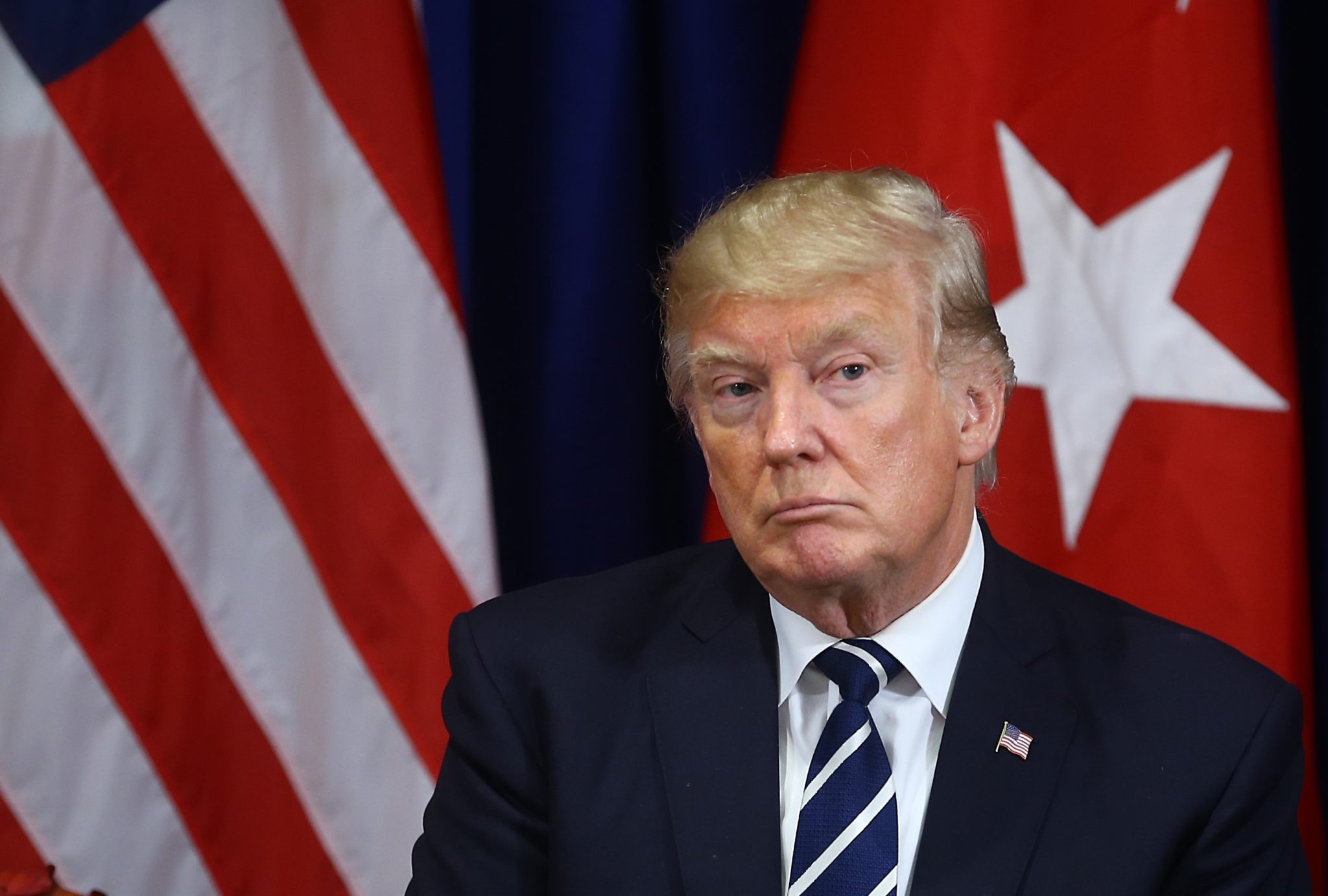
    Trump Signals US Dollar Bans on Chinese Banks over Iran Trade

    US President Donald Trump signaled plans to bar Chinese banks from the US dollar system over their commercial transactions with Iran. The warning follows the blacklisting of 60 international entities, including firms in mainland China and Hong Kong, under an enforcement push labeled Economic D-Day.

    Treasury Secretary Scott Bessent announced the initial sanctions package earlier in the week, demanding an immediate halt to commercial dealings with Tehran. The measures aim to intensify economic pressure after six months of regional conflict and disruptions in the Strait of Hormuz failed to resolve through military action or negotiations.

    Dollar clearing and secondary sanctions

    Bessent stated that any institution facilitating transactions on behalf of Iranian entities faces removal from the US dollar network. The mechanism targets secondary intermediaries, putting Chinese state-owned and commercial lenders at direct risk of losing correspondent banking access in New York.

    For corporate treasuries and supply chain operators across Asia, exclusion from greenback settlement creates immediate operational friction. Trade finance across the region relies heavily on dollar-denominated letters of credit, even when settlement involves third-party energy and commodity flows originating in the Middle East.

    Pre-summit pressure on Beijing

    Commercial lenders in Beijing and Hong Kong have maintained trade settlement channels with trading partners across the Gulf. Cutting those conduits would force corporate clients to route settlement through alternative clearing channels or drop counterparties entirely to protect broader international banking books.

    The next test arrives with the scheduled bilateral summit between Trump and Chinese President Xi Jinping in Washington, where trade enforcement and financial sector access sit at the center of negotiations.

  • Bitcoin Tests $80,000 Level as IREN Beats Sales Targets

    Bitcoin Tests $80,000 Level as IREN Beats Sales Targets

    Bitcoin traded near $80,000 on Thursday as institutional demand and momentum buying pushed the cryptocurrency to fresh highs.

    The rally lifted digital asset equities across global markets, led by data center operator IREN, which topped consensus revenue projections in its latest financial reporting.

    Mining revenue and market momentum

    Data center operator IREN reported sales above analyst estimates, driven by expanded power capacity and improved fleet efficiency across its facilities. Higher realized prices per coin lifted margins across commercial mining operations, offsetting rising global network difficulty.

    Trading desks across Singapore and Hong Kong reported steady buy orders from institutional funds throughout the session. Liquidations of short positions accelerated the advance once the asset broke past key resistance levels.

    Institutional demand in Asian trading hours

    Regional crypto exchanges recorded elevated turnover during Asian morning hours, tracking sustained inflows into exchange-traded spot products. The upward momentum created strong tailwinds for hardware suppliers, hosting providers, and infrastructure businesses linked to digital asset networks.

    Trading volume across major regional venues remains concentrated on spot books, with institutional desks watching whether capital sustains above the $80,000 mark through the weekly close.

  • Japanese Retailers Lock in FX Contracts as Weak Yen Hits Profits

    Japanese Retailers Lock in FX Contracts as Weak Yen Hits Profits

    Japanese retailers are overhauling supply contracts and turning to financial derivatives as the yen hovers near 159 per dollar, driving up import costs across food and consumer goods.

    The currency has shed more than 30 per cent against the greenback over the past five years, eroding buying power for domestic store operators that rely heavily on overseas agricultural products, raw materials and finished goods.

    Supermarkets Shift Supply Terms

    Takara MC, which runs 43 supermarkets south of Tokyo, has abandoned monthly price negotiations with overseas suppliers in favour of quarterly and annual agreements. Chief executive Taku Ueno said securing terms for up to a year on imports such as US beef, Spanish olive oil and Italian tomatoes allows the chain to shield shoppers from immediate price increases on store shelves.

    Securing supply deals has grown harder as rival buyers from China and Thailand consistently outbid Japanese grocers for commodity shipments.

    Bankers report that small and mid-sized store operators, which previously absorbed modest currency swings, are now turning to futures, forwards and options contracts to limit their balance sheet exposure.

    Corporate Hedging Stretches Further

    Nitori Holdings, the country’s largest furniture retail chain, estimates that every 1 yen drop against the US dollar reduces its operating profit by roughly 2 billion yen ($12.5 million). While the company has avoided direct hedges to date, it is reviewing forward contracts if currency weakness continues.

    Brokers in Tokyo say hedging volume is expanding well beyond traditional tenors. Daiwa Securities noted that client requests to lock in exchange rates have stretched from the usual few months out to as long as five to 10 years, while Bank of America expanded its Tokyo foreign exchange sales team over the past two years to handle the surge in corporate demand.

    For retailers across East Asia, Japan’s currency predicament shows how sustained foreign exchange weakness can upend long-standing retail pricing models. Competitors elsewhere in the region, operating with firmer currencies, continue to snap up global agricultural allocations that once went routinely to Tokyo buyers.

    Market participants at JP Morgan project the dollar-yen rate will persist in the 155 to 165 corridor, keeping the pressure firmly on Japan’s store operators as contract renewals approach in the coming quarter.

  • Thai Exports Jump 21.6% in July on Surging Global Tech Demand

    Thai Exports Jump 21.6% in July on Surging Global Tech Demand

    Thai exports jumped 21.6 percent year on year in July, powered by surging international demand for artificial intelligence and technology hardware. Outbound shipments beat analyst expectations of a 17.75 percent increase, extending momentum from a 20.8 percent rise recorded in June.

    Data from the Ministry of Commerce showed imports surged even faster, climbing 36.7 percent during the month. That gap left Thailand with a monthly trade deficit of $3.61 billion, pushing the cumulative shortfall for the first seven months of 2026 to a record $34.35 billion.

    Tech demand fuels outbound shipments

    Shipments to the United States, Thailand’s largest export destination, increased 45.3 percent in July compared with the same month last year. Deliveries to China rose 15.2 percent. Across the first seven months of 2026, total exports gained 18.2 percent, following an overall expansion of 12.9 percent across 2025.

    Stronger tech orders prompted the Ministry of Commerce to raise its full-year export growth projection to more than 11 percent, up from an earlier target of 8 percent.

    Transshipment scrutiny and factory output

    The persistent gap between inbound and outbound volumes adds friction to Bangkok’s trade relationship with Washington. United States officials continue to monitor Thailand over transshipment risks, examining whether goods originating in China pass through Thai logistics channels to circumvent trade barriers. For regional supply chain operators, the expanding import volume shows how heavily Thai electronics and export assembly lines rely on foreign components.

    Domestic industrial activity showed modest recovery alongside trade flows. Thailand’s manufacturing production index rose 0.46 percent year on year in July, beating market expectations of a 1.0 percent drop and reversing a revised 2.4 percent decline in June.

    Factory output is now projected by the Ministry of Industry to expand 0.25 percent across 2026, trimmed from an earlier forecast range of 1.0 to 2.0 percent.

  • 888 Tea and Coffee Partners with Tourism Malaysia for Teh Tarik Push

    888 Tea and Coffee Partners with Tourism Malaysia for Teh Tarik Push

    Malaysian beverage brand 888 Tea & Coffee has partnered with Tourism Malaysia to promote traditional teh tarik culture. The joint effort comes ahead of the Visit Malaysia 2026-2027 tourism campaign.

    Under the agreement, the homegrown manufacturer becomes an official strategic partner for the national push. It will use the country’s pulled-tea culture to market local food and beverage heritage to incoming travellers.

    Cultural marketing and national campaign rollouts

    Organisers launched the collaboration in Putrajaya ahead of Merdeka Day 2026 under the campaign title Bersama Kita Tertarik. The brand also produced a multicultural musical collaboration featuring Malaysian performers Alif Satar & The Locos, Danny Koo, and Kidd Santhe.

    Mohd Akbal Setia, deputy director general of promotions at Tourism Malaysia, said the project supports wider work to position the country as a primary gastronomy destination. Traditional kopitiam and mamak stall formats remain major entry points for culinary tourism across Southeast Asia.

    Alvin Ang See Ming, executive director of 888 Tea & Coffee, said the family-founded merchant wants to connect traditional beverage rituals with modern retail and hospitality channels.

    Beverage brands tap domestic heritage for regional reach

    Heritage food and drink makers across Southeast Asia regularly lean on state tourism drives to defend domestic market share against imported ready-to-drink brands. Similar state-backed promotions in Thailand and Indonesia have helped turn traditional beverages into exportable packaged goods.

    Tying product lines directly to national campaigns secures shelf visibility as retail channels prepare for higher tourist traffic.

    Next, Tourism Malaysia and the brand will roll out promotional activations across transport hubs and retail trade counters through the official launch of Visit Malaysia 2026-2027.

  • Mobile POS Deployments Accelerate Across Asian Retailers as Mobile Traffic Hits 59%

    Mobile POS Deployments Accelerate Across Asian Retailers as Mobile Traffic Hits 59%

    Singapore-based retail software vendor ETP Group rolled out its unified mobile point-of-sale platform across Asia-Pacific as mobile channels captured 59 percent of regional retail web traffic. That traffic share climbed from 46 percent in early 2024, forcing physical store operators to equip floor staff with connected billing and stock-checking tools.

    The system connects handheld devices directly to the enterprise core through ETP Unify, giving sales associates real-time visibility across retail locations and distribution warehouses. Rather than routing shoppers to fixed cash counters, staff can process billing, register loyalty accounts, and trigger ship-from-store or click-and-collect fulfillment directly beside the merchandise.

    Connecting Store Floors to Live Inventories

    Operating requirements vary sharply across individual markets. High-density retail centers in Singapore use mobile clienteling to retrieve shopper purchase histories and targeted promotions, while chains in Indonesia and the Philippines deploy handhelds to run endless-aisle transactions when shelf stock runs out. In India, where research from Meta and the Retailers Association of India found social media influences 77 percent of retail purchase decisions, mobile terminals allow associates to cross-reference products discovered on WhatsApp and third-party marketplaces.

    RetailNews Asia notes that fashion and specialty chains across Southeast Asia spent years treating mobile checkout hardware merely as auxiliary registers to ease holiday queues. Integrating those devices into enterprise inventory records marks a permanent move away from siloed store databases, bridging the operational gap between e-commerce catalogs and physical shops.

    Managing AI-Assisted Shoppers

    Store associates must also respond to consumers who arrive with machine-generated comparison data. Deloitte research across the region indicates that nearly three-quarters of consumers use artificial intelligence tools to research or compare products before buying, while 29 percent of consumer-facing enterprises have begun deploying agentic AI tools.

    Retail operators now face the task of unifying pricing logic, promotional rules, and local fiscal compliance across portable devices, with enterprise integration rollouts continuing across Southeast Asian store fleets through late 2026.

  • Indian Women Triple Gold ETF Holdings as Mutual Fund Assets Reach 15.88 Lakh Crore

    Indian Women Triple Gold ETF Holdings as Mutual Fund Assets Reach 15.88 Lakh Crore

    Women investors in India expanded their gold exchange-traded fund holdings to 16.4 percent of their passive portfolios in March 2026, up from 6.4 percent a year earlier. The reallocation accompanied a surge in total mutual fund assets managed by women to ₹15.88 lakh crore, up by ₹10.04 lakh crore over five years.

    Data from the AMFI-Crisil Factbook 2026 shows women accounted for 1.61 crore of India’s 6.09 crore mutual fund investors by March 2026. Gold ETF net inflows across the industry reached ₹0.69 lakh crore during fiscal 2026, more than double the combined ₹30,213 crore recorded across the preceding five financial years. Precious metal funds drew more fresh capital than equity ETFs during the period, driven by price rallies and global volatility.

    How Portfolios Shift Across Age Groups

    Asset allocation among female investors showed clear differences by age bracket. Investors under 25 directed 88.3 percent of their capital into equity funds, with 5.4 percent going to hybrid funds and 2.1 percent to debt. In the 25 to 44 age bracket, equity allocations stood at 76.2 percent, while passive funds took 6.6 percent.

    Older demographics moved toward income stability. Women aged 45 to 58 allocated 64.8 percent to equities and 20.1 percent to hybrid funds. Investors above 58 lowered equity exposure to 51.2 percent while raising hybrid assets to 29.6 percent and debt holdings to 12.0 percent.

    Folio Sizes and Hedging Strategies

    The turn toward precious metals reflects a broader shift across Indian retail finance, where digital distribution and systematic investment plans have converted traditional jewellery buyers into paper commodity holders. Retail investors overall saw gold ETF assets rise to 14.9 percent of their passive portfolios in fiscal 2026, up from 4.6 percent in fiscal 2021.

    Average folio sizes for women tracked higher than those of men in March 2024 and March 2025 before reaching parity at the end of fiscal 2026. The next indicator will be whether gold inflows sustain their share against monthly domestic equity systematic investment plans running above ₹30,000 crore.

  • Sumitomo Mitsui Trust Expands to Vietnam Through Asset Management Joint Venture

    Sumitomo Mitsui Trust Expands to Vietnam Through Asset Management Joint Venture

    Sumitomo Mitsui Trust Group will enter Vietnam’s asset management sector by forming a joint venture with a state-owned bank to capture shifting retail investment flows.

    The Tokyo-based financial group plans to launch the venture as early as next year. The partnership targets domestic household wealth as rising personal incomes push savers beyond cash deposits, real estate, and physical gold.

    Targeting Vietnam’s Retail Capital

    Vietnamese households hold the bulk of their personal assets in traditional savings accounts, bullion, and property. Sumitomo Mitsui Trust expects growing affluence across the country to accelerate demand for mutual funds, equities, and fixed-income products.

    The joint venture will use the state bank’s branch reach and domestic client network to distribute investment vehicles. Japanese asset managers have increasingly looked abroad to deploy capital expertise as Southeast Asian economies expand their domestic financial markets.

    Japanese Lenders Push Into Southeast Asia

    Japanese financial groups continue to seek fee-generating asset management businesses across ASEAN to offset low domestic loan margins. Vietnam remains a focal point for institutional capital because of sustained factory investment and urban wage growth.

    Regulatory approval for the joint venture and the final equity structure between the two banking institutions will dictate the official rollout date next year.

  • Japan Plans Blockchain Settlement System for Instant Stock and Bond Trades

    Japan Plans Blockchain Settlement System for Instant Stock and Bond Trades

    Japan is preparing a new financial infrastructure to settle transactions in equities and government bonds instantly using blockchain technology. Japanese authorities plan to launch a formal working group this summer, targeting an initial technical blueprint by early 2027.

    The project brings together the Financial Services Agency, the Ministry of Finance, the Bank of Japan, and commercial financial institutions. Under the current regime, stock trades in Tokyo take two business days to settle in cash, while Japanese government bonds settle on a next-day schedule. Eliminating that lag allows institutional and retail investors to reinvest capital immediately after execution.

    Roadmap to 2030 Operations

    Working group members will determine the underlying distributed-ledger architecture, assign operational roles between public agencies and private clearing houses, and establish a multi-year development schedule. If authorities approve the final blueprint in 2027, initial operations could begin within several years, with the full platform operational in the early 2030s.

    Planners also aim to expand the network architecture beyond domestic securities to support real-time cross-border remittances. Faster wholesale settlement addresses long-standing liquidity friction in Tokyo, where trading desks must maintain substantial collateral buffers to cover multi-day counterparty exposure during high-volume sessions.

    Shifting Asia-Pacific Market Plumbing

    Across Asia-Pacific, regional bourses have tested distributed ledger technology to compress settlement cycles and lower clearing fees. Australia’s stock exchange spent years attempting a blockchain replacement for its equity clearing platform before resetting the initiative, while financial hubs in Singapore and Hong Kong have focused on wholesale tokenised deposits and digital debt issuance.

    The first milestone to watch is the formal constitution of the working group in Tokyo over the coming weeks, followed by the release of its initial structural recommendations ahead of the 2027 development plan.

  • Vietnam Gold Prices Hit Seven-Week High as SJC Bars Reach VND150.6 Million

    Vietnam Gold Prices Hit Seven-Week High as SJC Bars Reach VND150.6 Million

    Gold prices across Vietnam climbed Tuesday morning to their highest level since July 6. The rebound began nearly a week ago. Saigon Jewelry Company lifted its gold bar price by 0.40 per cent to VND150.6 million ($5,757.21) per tael.

    A tael equals 37.5 grams or roughly 1.2 ounces. Plain gold rings climbed faster than bars. Ring prices rose 1.31 per cent to VND155 million per tael across retail counters. Even with the week-long rally, domestic bullion prices remain down 1.4 per cent since the start of the year.

    Retail Premiums Widen on Ring Demand

    The faster rise in ring prices pushed standard jewellery to an unusual premium over SJC-branded bars. Buyers across Ho Chi Minh City and Hanoi continue to purchase physical gold rings as a store of value. Retail counters stay active whenever global benchmarks climb.

    Bullion serves Vietnamese households as an everyday savings tool and an alternative asset. When prices swing, jewellery chains see immediate shifts in store footfall as shoppers rotate cash into metal.

    Global Benchmarks Clear Technical Resistance

    Kitco data showed international spot gold added 0.04 per cent to $4,653.70 per ounce on Tuesday. That followed a combined jump of 2.91 per cent over the previous two trading sessions.

    Overseas bullion cleared several technical resistance levels last week. The metal gained ground even as the US dollar firmed modestly. Safe-haven buying held steady, driven by shifting expectations for American fiscal and monetary policy.

    Traders in Hanoi and Ho Chi Minh City are watching whether international spot gold holds above the $4,650 threshold. That level will determine if local prices can erase the remaining 1.4 per cent deficit from early-year marks.

  • Vietnamese Dong Strengthens as Dollar Drops to VND26,330 at Vietcombank

    Vietnamese Dong Strengthens as Dollar Drops to VND26,330 at Vietcombank

    Vietcombank lowered its selling rate for the US dollar by 0.11 percent to VND26,330 on Tuesday morning, reflecting broad softness across international foreign exchange desks.

    The drop in official banking channels contrasted with Vietnam’s parallel market, where the greenback climbed 0.19 percent to VND25,970.

    Divergence in local currency trade

    Commercial lenders adjusted rates as global demand for the dollar faltered. Currency dealers operating in the unofficial market logged modest buying interest, keeping the gap between bank counters and private money changers unusually narrow.

    Vietnamese importers and consumer brands track these daily currency fluctuations closely to price incoming shipments of electronics, packaged goods, and retail inventory.

    Global pressures and trade sanctions

    In international currency trade, the dollar struggled to retain ground against major peers. The euro traded slightly higher at $1.1668, near a three-month high, while sterling gained 0.1 percent to $1.3639, holding near a six-month peak.

    Market participants weighed fresh policy actions from Washington, where US Treasury Secretary Scott Bessent announced an expansion of sanctions against Iran on Monday. Bessent warned foreign entities to sever commercial ties or risk expulsion from dollar clearing networks.

    Ray Attrill, head of FX strategy at National Australia Bank, noted in a podcast that the measures could trigger a modest reversal of dollar weakness seen late last week.

    Traders across Asian financial hubs are watching whether Treasury yield management and the expanded sanctions framework will halt the dollar’s downward drift before the next fixing.

  • Korea Eximbank Backs LS Cable Virginia Plant with 300 Billion Won

    Korea Eximbank Backs LS Cable Virginia Plant with 300 Billion Won

    The Export-Import Bank of Korea will provide 300 billion won ($217.7 million) in financing for LS Cable & System’s subsea cable factory in the United States.

    State backing covers nearly a third of the South Korean manufacturer’s total 1 trillion won ($725.6 million) investment to build the production site in Chesapeake, Virginia. The lender arranged the debt package to secure a foothold for Korean industrial suppliers in the North American energy transmission supply chain.

    Targeting AI Grids and Offshore Wind

    Construction in Chesapeake is scheduled for completion in the second half of 2027. Once fully operational, the plant will produce 500 kilometres of high-voltage direct-current (HVDC) subsea cables each year to link regional power grids across long distances with minimal transmission loss.

    The output will serve power grid operators in North America as well as offshore wind developers in Europe. Rising electricity consumption from hyperscale artificial intelligence data centers is accelerating utility spending on heavy-duty transmission lines that can carry bulk power across borders and coastal waters.

    South Korean Cable Makers Push Abroad

    South Korean manufacturers are building manufacturing capacity closer to Western grid projects as local transmission networks face backlogs. Rivals such as Taihan Cable are also expanding their subsea and offshore installation capabilities to capture orders outside East Asia.

    State lenders plan to issue additional credit lines to domestic cable producers competing for long-term supply contracts across North America and Europe. The Chesapeake plant remains on track to start commercial deliveries by late 2027.

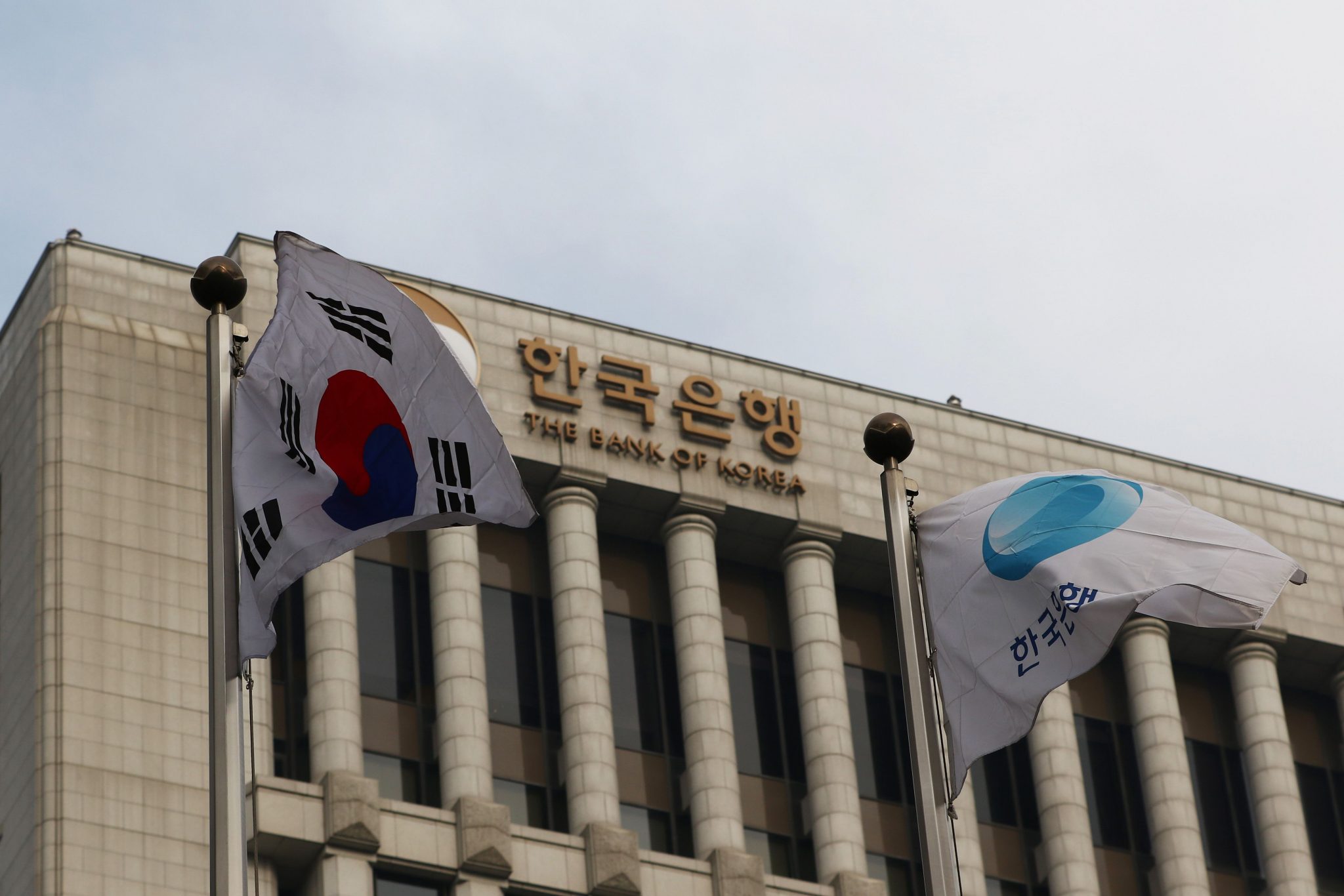
  • Bank of Korea Projected to Lift 2026 Economic Growth Estimate Past 3%

    Bank of Korea Projected to Lift 2026 Economic Growth Estimate Past 3%

    The Bank of Korea is expected to raise South Korea’s 2026 economic growth forecast above 3 per cent from 2.6 per cent.

    Surging semiconductor exports and recovering domestic consumption are driving private analyst projections as high as 3.4 per cent. Economic forecasters surveyed by Yonhap News Agency anticipate the central bank will adjust its outlook upward during its upcoming revision cycle, reflecting stronger factory output and higher state spending supported by rising tax receipts.

    Semiconductor Supercycle Drives Upward Revisions

    Nomura Securities posted the highest forecast among respondents at 3.4 per cent. Park Jeong-woo, an economist at Nomura, noted that exponential growth in artificial intelligence inference workloads continues to outpace chip production, suggesting supply constraints could extend beyond 2027.

    Korea Investment & Securities analyst Ahn Jae-kyun projected 3.2 per cent annual growth, pointing to a combination of heavy technology exports and a rebound in local consumer demand. Other respondents placed their 2026 projections between 3.1 per cent and 3.2 per cent. Projections for 2027 moderated, landing between 2.2 per cent and 2.8 per cent across the surveyed institutions.

    Some analysts urged caution regarding the duration of the current technology cycle. Joo Won, deputy director of economic research at Hyundai Research Institute, noted that chip exports dipped in August compared to the prior month, suggesting the export boom may reach its peak between late 2026 and early 2027.

    Surplus Records and Consumer Price Pressures

    South Korea’s current account surplus for the first six months of 2026 has already surpassed the 2025 full-year record of $191 billion. Economists expect the central bank to sharply increase its previous $250 billion annual surplus projection published in May.

    For consumer-facing businesses across the region, a stronger macroeconomic baseline in South Korea provides welcome support for retail footfall and high-ticket consumer electronics, though imported inflation limits purchasing power. Central banks across East Asia face similar cross-currents as artificial intelligence hardware spending lifts headline industrial figures while currency volatility keeps domestic borrowing costs elevated.

    Economists expect the Bank of Korea to hold its 2026 consumer price inflation projection at 2.7 per cent, with elevated oil prices and the won-dollar exchange rate serving as the main hurdles to earlier interest rate cuts.

  • US SEC Regulation Signals Greater Clarity for Crypto Assets

    US SEC Regulation Signals Greater Clarity for Crypto Assets

    The United States Securities and Exchange Commission (SEC) has introduced a new regulatory framework for digital assets, aiming to provide clearer guidelines for the classification and trading of cryptocurrencies. This move is expected to bring substantial clarity to a sector previously marked by regulatory uncertainty, particularly concerning tokens like XRP.

    Legal experts, including those from Skadden, Arps, Slate, Meagher & Flom LLP, view this regulation as a significant step forward in establishing a more structured environment for the crypto market. The framework addresses key areas such as asset categorisation, disclosure requirements, and market integrity, which could help institutional investors and businesses better navigate the digital finance landscape.

    Implications for Digital Asset Markets

    The new SEC regulation is anticipated to impact how digital assets are treated by financial institutions and technology firms. By defining clearer rules, the framework could foster greater investor confidence and potentially encourage broader adoption of cryptocurrencies within established financial systems. This clarity is particularly relevant for tokens that have faced scrutiny over their classification as securities, offering a pathway for compliance and legitimate operation.

    For retailers and consumer brands exploring blockchain and digital payment solutions, regulatory clarity from a major market like the US can set precedents. Asia-Pacific countries are also developing their own frameworks, and global harmonisation, even if gradual, could simplify cross-border digital transactions and the use of cryptocurrencies in retail.

    Global Regulatory Ripple Effects

    While this regulation originates from the US, its implications could extend internationally, influencing how other jurisdictions approach digital asset oversight. As major economies establish robust frameworks, there is a growing potential for a more standardised global approach to crypto regulation. This development could reduce fragmentation and facilitate international trade and investment involving digital assets, including their use in supply chains and consumer loyalty programmes.

    Several Asian markets, including Singapore, Hong Kong, and Japan, have been proactive in developing their own digital asset regulations. The SEC’s move provides another data point for these regions as they refine their policies, potentially accelerating the mainstream integration of cryptocurrencies and blockchain technology into various business sectors across Asia-Pacific.