Category: Finance

Retail News Asia is committed to providing both local and global retailers with the latest Finance news throughout the Asian market. This on a daily base.

  • Mcredit’s B+ Rating Affirmed by Fitch Ratings, Highlighting Strong Financial Performance and Digital Transformation Progress

    Mcredit’s B+ Rating Affirmed by Fitch Ratings, Highlighting Strong Financial Performance and Digital Transformation Progress

    Fitch Ratings, a globally recognized credit rating agency, has once again affirmed the Long-Term Issuer Default Rating (IDR) of MB Shinsei Consumer Credit Finance Limited Liability Company (Mcredit), maintaining it at B+ with a stable outlook. This represents the second consecutive year Mcredit’s long-term credit rating has been upheld at this level.

    Steady Financial Foundation

    In a previous assessment in June 2025, the Vietnam Investment Credit Rating Joint Stock Company conferred an A- long-term issuer rating on Mcredit. This underlined Mcredit’s firm financial base, consistent market standing, and escalating acclaim within Vietnam’s consumer finance landscape.

    Fitch’s rating highlights the consistent backing from Mcredit’s two strategic shareholders, the Military Commercial Joint Stock Bank (MB) and SBI Shinsei Bank based in Japan. This collaboration has not only bolstered the company’s financial stamina and fostered transparent governance, but it has also encouraged a mutual emphasis on sustainable growth and digital innovation.

    Focus on Digital Transformation

    In response to evolving market trends, Mcredit has accelerated its comprehensive digital transformation in recent years. By effectively utilizing its strategic ecosystem – which includes partners like MB, MoMo, Viettel, and ZaloPay – Mcredit has been able to broaden its customer reach and diversify its offerings.

    This tactical approach has resulted in robust operational performance and sustained growth. In the first half of 2025, Mcredit reported a 31% year-on-year increase in total operating income. Profit before tax grew 11%, and the cost-to-income ratio (CIR) saw a 5.4 percentage point improvement compared to the previous year.

    Positive Ratings Reaffirm Business Strategy

    The favorable assessments Mcredit received from both Fitch Ratings and the Vietnam Investment Credit Rating Joint Stock Company underscore the company’s strong risk management, sustainable business strategy, and prowess in digital innovation. These ratings have further boosted market confidence for customers, partners, and investors both within Vietnam and internationally.

    Questions & Answers

    What is Mcredit’s Long-Term Issuer Default Rating (IDR) as affirmed by Fitch Ratings?
    Mcredit’s Long-Term Issuer Default Rating (IDR) has been affirmed as B+ with a stable outlook by Fitch Ratings.

    How have Mcredit’s strategic partnerships contributed to its operations?
    Mcredit’s partnerships have contributed to the company’s robust financial status, transparent governance, and focus on sustainable growth and digital transformation. They have also helped the company diversify its offerings and expand its customer base.

    What are some of Mcredit’s recent operational performance metrics?
    In the first half of 2025, Mcredit reported a 31% year-on-year increase in total operating income. Additionally, profit before tax rose 11%, and the cost-to-income ratio (CIR) improved by 5.4 percentage points compared to the previous year.

  • Vietnam’s Gold Prices Skyrocket to 3-Week High Amid Global Rate Surge and U.S. Government Resumption

    Vietnam’s Gold Prices Skyrocket to 3-Week High Amid Global Rate Surge and U.S. Government Resumption

    The price of gold in Vietnam saw a significant increase on Tuesday, reaching its peak since October 21st. This uptick was reflective of a global surge in gold prices, spurred by the anticipation of the U.S. government’s resumption.

    Saigon Jewelry Company reported a 1.20% increase in their gold prices, now standing at VND152 million (US$5,777.28) per tael. A tael, a common unit of measurement used in East Asia, equates to 37.5 grams or 1.2 ounces.

    Rise in Gold Jewelry Prices

    In line with the increase in gold prices, the cost of gold rings also saw a rise of 1.35%, now costing VND149.8 million per tael. So far this year, the price of gold in Vietnam has surged by a substantial 80.5%.

    Global Gold Rates

    Internationally, gold prices have been on a steady upward trend, reaching near three-week highs on Tuesday. These gains are believed to be influenced by expectations of another U.S. Federal Reserve interest rate cut in December, as well as indications of an end to the U.S. government shutdown.

    The price of spot gold also increased by 0.7%, reaching $4,142.83 per ounce, its highest since October 24th.

    Impact of U.S. Government Shutdown

    The U.S. Senate recently passed a deal to restore U.S. federal funding, marking an end to the longest government shutdown in history. This shutdown led to delays in key economic indicators, such as the U.S. non-farm payrolls report.

    The end of the shutdown is expected to provide more clarity on the U.S. economic outlook as well as the Federal Reserve’s interest rate trajectory. It is believed that the resolution of the shutdown has lifted a level of uncertainty, allowing markets to refocus on major speculative narratives for the year.

    According to Ilya Spivak, head of global macro at Tastylive, the upside is still favored for the rest of the year. With the path of least resistance for gold trending back to October’s high, it is anticipated that prices may continue to rise thereafter.

    Questions & Answers

    What caused the recent surge in gold prices in Vietnam and globally?
    Anticipation of the resumption of the U.S. government and expectations of another U.S. Federal Reserve interest rate cut in December are believed to have spurred the recent surge in gold prices.

    How has the U.S. government shutdown impacted the gold market?
    The U.S. government shutdown led to delays in key economic indicators, creating a level of uncertainty in the market. With the resolution of the shutdown, this uncertainty has been lifted, allowing markets to refocus and consequently affecting gold prices.

    What is the outlook for gold prices for the rest of the year?
    According to experts, the upside is still favored for the rest of the year, with potential for prices to continue rising.

  • UOB Bumps Up Vietnam’s Economic Growth Projection to 7.7%, Beating Previous Estimates Despite US Tariff Challenges

    UOB Bumps Up Vietnam’s Economic Growth Projection to 7.7%, Beating Previous Estimates Despite US Tariff Challenges

    United Overseas Bank (UOB) of Singapore has revised its predicted GDP growth rate for Vietnam upward, from 7.5% to 7.7%. This adjustment comes in response to Vietnam’s stronger-than-anticipated economic performance in the third quarter.

    Impressive Economic Performance Despite U.S. Tariff Threats

    Despite looming threats of U.S. tariffs, Vietnam showcased a robust economic performance by achieving a growth rate of 8.23% in the third quarter. This growth was primarily fueled by a surge in exports and manufacturing, according to UOB.

    In the year’s first nine months, exports soared by 16% year-on-year, while manufacturing rose by 10.8%. The Purchasing Managers’ Index also showed signs of recovery, expanding for three consecutive months following a three-month phase of contraction.

    Stabilized Outlook and Foreign Direct Investment

    The economic indicators suggest a stabilized economic outlook for Vietnam. This notion is further supported by the accelerated pace of foreign direct investment (FDI) into the country. FDI grew by 8.5% to reach $18.8 billion. If this trend continues, the year-end figures could potentially match 2024’s record-breaking total of $25.4 billion.

    However, UOB cautions that Vietnam’s open economy makes it susceptible to trade frictions. Exports of goods and services make up a significant 83% of Vietnam’s GDP, the second highest among ASEAN nations.

    Concerns Over the Impact of Tariffs and Exchange Rates

    Despite the robustness of Vietnam’s trade activities in the face of U.S. tariffs, there are concerns that export orders might dwindle as order frontloading eases and higher prices affect U.S. consumer demand in 2026.

    Another area requiring attention is the foreign exchange market. The Vietnamese dong was the second worst-performing Asian currency in the first nine months of 2025, depreciating 3.55% against the U.S. dollar. The currency that fared worse was the Indian rupee, which fell by 3.58%.

    Other Predictions of Vietnam’s Economic Growth

    Aside from UOB, other financial institutions have also revised their growth forecasts for Vietnam this year. HSBC, a British bank, predicts a growth figure of 7.9%, while the Asian Development Bank anticipates a growth rate of 6.7%.

    Vietnam’s Prime Minister, Pham Minh Chinh, expressed optimism last month, stating that with the current growth momentum, Vietnam could surpass its GDP growth target of 8% for this year, barring any major disruptions.

    Questions & Answers

    What is the revised GDP growth forecast for Vietnam by UOB?
    UOB has revised the GDP growth forecast for Vietnam from 7.5% to 7.7%.

    What factors are contributing to Vietnam’s economic growth?
    Strong exports, manufacturing, and foreign direct investment have been significant contributors to Vietnam’s economic growth.

    What concerns does UOB express regarding Vietnam’s economy?
    UOB has expressed concerns about possible trade friction due to Vietnam’s open economy. There are also concerns about the performance of the Vietnamese dong in the foreign exchange market.

  • Dollar Soars to Monthly Peak Against Vietnamese Dong Amid Anticipated US Shutdown End

    Dollar Soars to Monthly Peak Against Vietnamese Dong Amid Anticipated US Shutdown End

    A 49-year-old Singaporean has triumphed over 700 competitors to secure the opportunity to manage Chick-fil-A’s first restaurant in Asia.

    In a turn of events, Cambodian magnate Chen Zhi was tricked by an executive from his own Singapore family office.

    The spotlight is now on the world’s largest creditor, a status that has become the focus of attention globally.

    The bodies of missing Russian cryptocurrency millionaire Roman Novak and his wife have been discovered in the Dubai desert.

    Over 230 individuals fell sick in Ho Chi Minh City due to suspected Salmonella poisoning from consuming banh mi.

    Confusion Over New Vietnamese Education Laws

    Parents in Vietnam are grappling with the recent introduction of fines for compelling children to study, leading to widespread confusion.

    In a tragic incident in northern Vietnam, a woman caused a fatal accident by obstructing the road to dry rice.

    Seven footballers who were naturalized in Malaysia are now seeking compensation from the Football Association of Malaysia (FAM) following a FIFA ban.

    Interestingly, a Vietnamese individual is found to consume 81 packs of instant noodles annually, surpassing Koreans.

    Thailand has issued a new law where daytime drinking could be penalized with a $300 fine.

    The U.S. Dollar and Vietnamese Dong

    The U.S. dollar has reached a one-month high against the Vietnamese dong. On a Tuesday morning, Vietcombank sold the greenback at a 0.05% higher rate, pegging it at VND26,373.

    However, on the black market, the dollar saw a 0.36% fall, trading at VND27,650.

    Globally, the yen, seen as a safe-haven, reached its lowest since February on the same Tuesday. Riskier currencies held firm against the dollar, as traders predicted an end to the U.S. government shutdown in the coming days.

    The euro maintained stability at $1.1555, while sterling gradually edged higher to $1.3165.

    A deal that would restore U.S. federal funding and conclude the longest shutdown was passed by the U.S. Senate late on Monday. It now awaits the approval of the House, where Speaker Mike Johnson has expressed his intent to pass it by Wednesday and forward it to President Donald Trump for his signature.

    Questions & Answers

    Who is the Singaporean that emerged victorious over 700 competitors to run Chick-fil-A’s first restaurant in Asia?
    Details about this individual are yet to be disclosed.

    What law has recently been introduced in Vietnam in relation to children’s education?
    A new law has been enacted in Vietnam that imposes fines on parents who force their children to study.

    What is the current situation of the U.S. dollar against the Vietnamese dong?
    The U.S. dollar recently hit a one-month high against the Vietnamese dong, being sold 0.05% higher at VND26,373 by Vietcombank. However, it experienced a 0.36% drop on the black market, being traded at VND27,650.

  • Jim Wang Takes Helm as CEO of Standard Chartered’s China Securities Unit: A Leap Forward in Asia’s Financial Landscape

    Jim Wang Takes Helm as CEO of Standard Chartered’s China Securities Unit: A Leap Forward in Asia’s Financial Landscape

    Standard Chartered recently revealed that it has chosen a new leader for its securities division in mainland China.

    Appointment of New CEO for Standard Chartered Securities (China) Limited

    Standard Chartered Securities (China) Limited (SCSCL), the Chinese securities branch of Standard Chartered’s Hong Kong banking unit, has welcomed Jim Wang into the role of CEO. Wang will be responsible for supervising the company’s comprehensive operations and will report directly to its board of directors.

    About Jim Wang

    Wang boasts an impressive career that spans two decades, during which he accumulated experience in various fields including securities, asset management, and banking. He has held high-ranking positions at multiple leading financial institutions, both domestically and internationally.

    Comments on Wang’s Appointment

    John Thang, Head of Markets and Strategic Client Management & Solutions for Hong Kong, Greater China & North Asia, made laudatory comments about Wang’s appointment. He noted, “Jim’s extensive international and domestic experience makes him an invaluable addition to our team. His deep understanding of China’s fixed income capital markets coupled with his proven leadership and management skills, underscored by a consistent record of delivering excellent business performance, makes him the perfect fit for this role.”

    Questions & Answers

    Who is the newly appointed CEO of Standard Chartered Securities (China) Limited (SCSCL)?
    Jim Wang was recently selected as the CEO of Standard Chartered Securities (China) Limited (SCSCL).

    What is Jim Wang’s primary responsibility in his new role?
    Wang will be in charge of overseeing the company’s overall operations and will be directly reporting to its board of directors.

    What can be said about Jim Wang’s professional experience?
    Jim Wang’s professional journey spans over 20 years, and includes experience in securities, asset management, and banking. He has served in senior managerial roles at several leading financial institutions both domestically and internationally.

  • Amundi Amplifies Asia Presence with Key Appointment in Investment Specialist Team

    Amundi Amplifies Asia Presence with Key Appointment in Investment Specialist Team

    Leading French asset management company, Amundi, has recently enhanced its team of investment specialists in Asia, welcoming a new addition to their ranks.

    New Appointment Bolsters Team

    Amundi has announced the appointment of Chloe Shea to the position of Head of Investment Specialists, Multi-Asset and Solutions for Asia, excluding Japan. In her new role, Shea will work closely with clients and portfolio managers. Utilizing Amundi’s research and investment platform, Shea is set to develop solutions that generate alpha.

    Hong Kong Base

    Shea will be based in Hong Kong and will report to Florian Neto, the Head of Investment for Asia, and Dan Levy, the Head of Solutions Business Development and Investment Specialists.

    Extensive Industry Experience

    Shea brings with her over 15 years of experience in client consulting, manager research, and multi-asset investments. Her previous roles include an Investment Director position at Schroder Investment Management’s multi-asset team. Earlier in her career, she was also employed at Manulife Asset Management and Towers Watson Investment Services.

    Questions & Answers

    Who has Amundi recently appointed to their investment specialist team in Asia?

    Amundi has recently appointed Chloe Shea as the Head of Investment Specialists, Multi-Asset and Solutions for Asia, excluding Japan.

    What will be Chloe Shea’s role?

    Chloe Shea will work closely with clients and portfolio managers to develop alpha-generating solutions using Amundi’s research and investment platform.

    What is Chloe Shea’s industry experience?

    Shea brings over 15 years of industry experience, including her previous role as an Investment Director at Schroder Investment Management’s multi-asset team. She has also worked at Manulife Asset Management and Towers Watson Investment Services.

  • DBS and Franklin Templeton Pioneer Singapore’s First Tokenized Retail Fund: A Leap towards Digital Finance

    DBS and Franklin Templeton Pioneer Singapore’s First Tokenized Retail Fund: A Leap towards Digital Finance

    Singapore has made a bold move towards mainstream digital finance through the launch of its first tokenized retail fund. The innovative initiative, the result of a collaboration between Franklin Templeton and DBS Bank, offers a US dollar short-term money market strategy recorded on a blockchain register. With a minimum requirement of just US$20, it’s anticipated to be available to retail customers in the first quarter of 2026.

    Market Approval and Distribution

    The Monetary Authority of Singapore (MAS) has granted its approval for the fund, known as the Franklin Onchain US Dollar Short-Term Money Market Fund. This endorsement ushers in a regulated, low-volatility cash vehicle on blockchain rails. The process of tokenization allows for fractional ownership, expedited record-keeping, and near real-time transparency, all while maintaining the familiar economic structure of a money market fund.

    For now, the fund is accessible through DBS relationship managers for wealth clients and accredited investors, with plans for a broader retail rollout in 2026. The low minimum requirement of US$20 significantly reduces the barrier to entry compared to traditional share classes, making high-quality, short-duration U.S. dollar assets more accessible to a wider range of investors.

    The Importance of Tokenization

    The adoption of an on-chain share register provides investors with increased transparency, including daily yield accrual and real-time fund data. It also results in improved operational efficiency in the subscription, transfer, and redemption processes. The blockchain’s tamper-resistant ledger further enhances auditability throughout the investment lifecycle.

    The tokenized model follows closely in the footsteps of Franklin Templeton’s Luxembourg-domiciled US Dollar Short Term Money Market Fund, a strategy boasting over 30 years of performance history. The key benefits? Liquidity, capital stability, and competitive cash yields, now amplified by the speed and transparency offered by blockchain technology.

    Powered by Proprietary Technology

    The Benji Technology Platform, Franklin Templeton’s proprietary solution, drives the fund’s blockchain-integrated record-keeping and administration. This technology stack is also available as a white-label infrastructure for banks and asset managers looking to tokenize securities or support fully on-chain money market funds across a variety of use cases, including retail, wealth, institutional, and collateral.

    Reducing Entry Barriers through Digital Innovation

    DBS Bank, known for its digital leadership and financial robustness, targets this investment opportunity at the mass-affluent and retail segments. Franklin Templeton, having been involved in digital assets since 2018, has demonstrated its commitment to advancing the tokenization of financial assets by launching the first fully tokenized UCITS fund in 2024.

    Future Expectations

    For investors, the core economics remain the same as in a traditional cash fund, but the added advantage of blockchain registry provides faster settlement, better transparency, and potential integration with programmable finance. The retail launch timeline, secondary-market transfer mechanisms, and tokenization adoption rate by other banks and asset managers will be key milestones to watch.

    Questions & Answers

    What is the significance of the tokenized fund?
    Participating in the fund allows investors to take advantage of enhanced transparency, faster record-keeping, and near real-time transparency while preserving the familiar economics of a money market fund.

    Who currently has access to the fund?
    The fund is immediately available to DBS Bank’s wealth clients and accredited investors, with a broader retail rollout planned for 2026.

    What is the minimum investment requirement for the fund?
    The minimum requirement to participate in the fund is just US$20, significantly reducing the barrier to entry compared to traditional share classes.

  • Samsung Set to Shake Up Personal Finance: Barclays Partnership Brings Samsung Credit Card to Compete with Apple

    Samsung Set to Shake Up Personal Finance: Barclays Partnership Brings Samsung Credit Card to Compete with Apple

    Samsung is reportedly preparing to launch a Samsung-branded credit card in the United States, in a strategic collaboration with Barclays that will capitalize on Visa’s extensive global payment network.

    Samsung Eyes U.S. Financial Sphere

    Samsung is reportedly planning to broaden its financial services portfolio in the U.S. market. A partnership with the British banking giant, Barclays, would provide a solid foundation for both companies to further penetrate the U.S. market. For Samsung, this means fostering increased loyalty within its client base; for Barclays, it opens up opportunities for greater lending scope.

    The formal announcement of the partnership is expected by the end of the year, with Visa being selected to manage the payment network.

    If successful, the Samsung credit card is unlikely to be a singular venture. It has been suggested that the credit card could be the cornerstone of a more expansive financial product offering, potentially involving a high-yield savings account, a digital prepaid account, and even a buy-now, pay-later option.

    Samsung’s Bid to Emulate Apple’s Success

    With this move, Samsung is evidently looking to replicate Apple’s successful foray into the U.S. financial sector. Apple has already established a strong foothold in the country with the Apple Card and Apple Pay, while Samsung’s financial tools have yet to achieve similar success.

    Samsung anticipates that by launching its own credit card, it can further solidify its ecosystem through Samsung Wallet. The card could provide cashback rewards that are directly deposited into users’ Samsung accounts, offering them an easy way to finance future purchases. This setup is expected to encourage users to remain within Samsung’s ecosystem, regardless of whether they’re purchasing a new Galaxy phone, a TV, or even a smart refrigerator.

    This strategy reflects the approach taken by Apple back in 2019 when it launched the Apple Card, in cooperation with Goldman Sachs and Mastercard. The card, which offers cashback benefits and interest-free financing for Apple products, has been successful in substantial growth of Apple’s financial presence.

    Broadening Samsung’s Ecosystem

    Samsung and Apple have been longstanding competitors in the smartphone market, but as hardware advancements slow down, the focus of competition is shifting towards ecosystem services. Financial products such as the prospective credit card could enable Samsung to fortify its relationship with U.S. consumers, thereby enhancing the relevance of Samsung Wallet.

    If Samsung’s plans come to fruition, it could be a significant step into the realm of personal finance. It’s clear that the ongoing rivalry with Apple is evolving, moving from a battle over pocket space to a contest for wallet share.

    Questions & Answers

    What is Samsung’s projected strategy for the U.S. financial market?
    Samsung reportedly plans to launch a Samsung-branded credit card, in partnership with Barclays and utilizing Visa’s global payment network, with potential future offerings including a high-yield savings account and a digital prepaid account.

    What is the aim of Samsung’s credit card venture?
    Samsung hopes to enhance customer loyalty and keep users within its ecosystem by offering incentives such as cashback rewards which can be easily used for future purchases.

    How does this move reflect the changing competition between Samsung and Apple?
    As hardware development slows, competition is shifting to ecosystem services. Both companies are expanding into the financial sector, with Samsung’s credit card venture marking a new stage in its rivalry with Apple.

  • Unlock Personalized Deals and Tailored Ads with Google Wallet’s Latest Update: Here’s How

    Unlock Personalized Deals and Tailored Ads with Google Wallet’s Latest Update: Here’s How

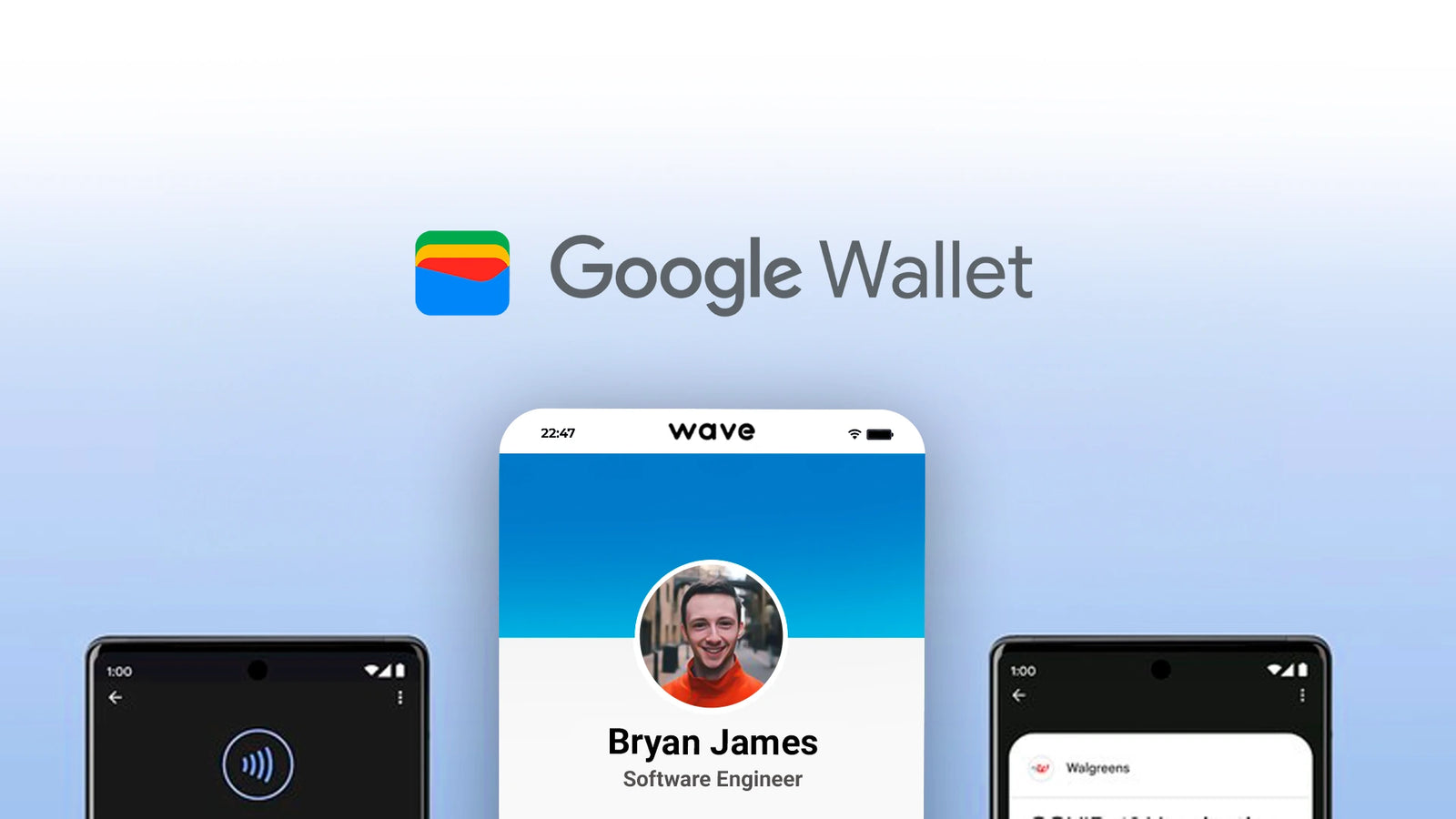
    Google has been improving its Google Wallet app, making it a convenient hub for Android users to digitally store items such as credit and debit cards, passports, tickets, and transit passes. Despite these features, Google Wallet may not be as frequently used as other Google apps, such as YouTube, Messages, Keep, Drive, Email, Chrome, and the Google app.

    Upcoming Changes to Google Wallet

    However, Google Wallet should not be disregarded. Reports suggest that Google has been undergoing modifications to enhance the app’s utility. Insights from a recent teardown of the Wallet app indicate that Google is developing the Google Transit Card. This feature will enable users to pay for public transportation using a specific card without the necessity to unlock their phone, an addition that will undoubtedly be beneficial and time-saving for daily commuters.

    Additionally, the Wallet app is set to offer unique deals based on the loyalty cards stored within the app, provided certain settings are enabled.

    Data Management and Privacy Settings

    A forthcoming update to the Google Wallet app will allow U.S. users to manage their data and privacy settings. These settings can be utilised to create personalised experiences across Google. With your Google Wallet payment information and activity enabled for personalising content and experiences across Google, you will be able to view recommendations or deals based on the loyalty cards in your wallet.

    Google can utilise your purchasing information and details about the loyalty cards in your wallet to provide special deals and personalised ads that may be of interest to you. If you are uncomfortable sharing information about your wallet’s loyalty cards and purchases with Google, these settings can be disabled.

    Enabling Personalisation Settings

    To enable this setting in the app, open the Google Wallet app and tap on the profile icon in the upper right corner. Navigate to Your data in Wallet > Manage data from Wallet and payments services, then toggle on or off the setting Use Wallet to personalise experiences across Google.

    If you’re using a desktop computer, go to wallet.google.com, select Settings from the left sidebar, then under “Data & Privacy,” toggle on or off Use Wallet to personalise experiences across Google.

    Wallet History for Personalised Ads

    The Wallet History feature uses information from Google Wallet and payment services to help Google serve you more customised and useful ads. This setting can be turned on within the app by navigating to Your data in Wallet > Manage data from Wallet and payments services > Use Wallet to personalise Google Ads. Users can toggle this setting on or off at My Ad Center.

    This setting can also be activated via desktop by going to wallet.google.com, selecting Settings on the left, then under “Data & Privacy,” toggling on or off Use Wallet to personalise Google Ads. Users will be directed to My Ad Center to complete the process.

    When both settings are enabled, Google will utilise the data from your purchases, loyalty cards, event tickets, and boarding passes to offer more personalised services. These can manifest as personalised ads, promotions, and recommendations.

    Rolling out the Update

    Google has stated that the update to Google Wallet will be gradually rolled out. Users who do not yet see these settings in the Google Wallet app should expect to receive them in due course. When the settings become available in your Google Wallet app, you will receive a notification from Google.

    Questions & Answers

    What updates are being made to the Google Wallet app?
    In addition to the existing features, Google is reportedly developing a Google Transit Card to simplify payments for public transportation, and is also enhancing data and privacy settings to offer personalised experiences based on stored loyalty cards.

    What is the Google Transit Card?
    The Google Transit Card is a new feature being developed for the Google Wallet app. It will allow users to pay for public transportation using a specific card, without having to unlock their phone.

    How can I personalise my experience on Google Wallet?
    With the upcoming update, users can manage their data and privacy settings, which will then be used to offer personalised deals and recommendations based on the loyalty cards stored in your wallet. You can also enable Wallet History to receive more customised ads.

  • Singapore FinTech Festival 2025: Blueprint for Next Decade’s Financial Technology Revolution Begins This Week

    Singapore FinTech Festival 2025: Blueprint for Next Decade’s Financial Technology Revolution Begins This Week

    The Singapore FinTech Festival (SFF) 2025, the country’s premier annual financial technology event, is set to begin this week. The highly anticipated conference will feature over 800 speakers covering a myriad of topics within the industry.

    Looking Ahead to a Decade of Innovative Finance

    This year’s theme, “Technology Blueprint for the Next Decade of Finance,” aptly underscores the forward-looking spirit of the event. Scheduled for November 12 to 14, the festival marks its 10th year of being a central hub for fintech thought leadership and innovation. The event is a collaborative effort between the Monetary Authority of Singapore (MAS), the Global Finance & Technology Network (GFTN), Constellar, and the Association of Banks in Singapore (ABS).

    Across more than 400 sessions, over 800 speakers will discuss topics such as artificial intelligence, tokenization, settlement assets, quantum technology, and financial inclusion. In addition to these speakers, the event will host over 500 sponsors and exhibitors, creating a truly global platform with over 40 international pavilions spread across six exhibition halls.

    Insights Forum and Beyond

    Before the main conference, the Insight Forum will take place from November 10 to 11. This pre-event will include Public-Private Roundtables, the second annual Layer 1 Summit, and Thematic Spotlights.

    Kenneth Gay, Chief FinTech Officer at MAS, reflected on the significance of this milestone. He noted that SFF 2025 presents a pivotal moment in the financial technology industry, setting the stage for the next decade of fintech growth and transformation.

    Similarly, Sopnendu Mohanty, Group CEO of GFTN, highlighted the importance of responsible AI utilization, safe scaling in tokenization, and the readiness for a quantum future. According to Mohanty, these areas will be critical in shaping resilient and innovative financial infrastructures.

    Chua Wee Phong, Group CEO of Constellar, shared that apart from the exhibition, the festival will also offer immersive experiences, such as a new interactive digital engagement initiative powered by Ant International’s Antom. This, along with elements like the SFF Gallery, live-streamed sessions, and after-party celebrations, will contribute to a unique festival atmosphere centered on discovery, networking, and innovation.

    Questions & Answers

    What is the theme of the Singapore FinTech Festival (SFF) 2025?
    The theme for SFF 2025 is “Technology Blueprint for the Next Decade of Finance.”

    What topics will the speakers at SFF 2025 cover?
    The speakers will cover a range of topics, including artificial intelligence, tokenization, settlement assets, quantum technology, and financial inclusion.

    What are some highlights beyond the exhibition at SFF 2025?
    Beyond the exhibition, the festival will feature immersive experiences like a new interactive digital engagement initiative, the SFF Gallery, live-streamed sessions, and after-party celebrations.

  • Citi’s 20th Annual China Conference: Connect, Engage, and Explore Strategic Opportunities in Shanghai and Shenzhen

    Citi’s 20th Annual China Conference: Connect, Engage, and Explore Strategic Opportunities in Shanghai and Shenzhen

    Citi, the global banking giant, is all set to host its 20th China Conference in the cities of Shanghai and Shenzhen. The event promises engaging discussions from esteemed guest speakers such as Jane Fraser, Citi’s CEO, and Janet Yellen, the former US Secretary of the Treasury and former Federal Reserve Chair.

    The 20th Citi China Conference

    The conference, scheduled to be held in Shenzhen from November 11-12 and in Shanghai from November 13-14, has sparked interest from around the globe. Over 2,300 business leaders, investors, and thought leaders are expected to participate, making the event a significant international gathering.

    The four-day conference will include more than 40 sessions, with a speaker list featuring many notable figures. Among the key speakers are Jane Fraser, CEO of Citi, Janet Yellen, former US Secretary of the Treasury and ex-Federal Reserve Chair, and Nicholas Burns, former US Ambassador to China.

    Citi’s Commitment to China

    This conference marks Citi’s continuing commitment to promoting business opportunities in China. “The Citi China Conference underscores our vision of bridging global investors with strategic opportunities in China,” stated Marc Luet, Citi’s head of Japan, Asia North, and Australia Banking. “With a history of over 120 years in fostering growth for companies in China, we look forward to continuing this role by aligning our clients’ aspirations with possibilities within and beyond China.”

    In a first, the conference will be presented in a comprehensive format in China, symbolizing the significance of the Chinese market. Wenjie Zhang, Citi’s Country Officer and Head of Banking in China, added, “This represents our dedication to our clients in this region.”

    Questions & Answers

    When and where will the 20th Citi China Conference be held?
    The conference will take place in Shenzhen from November 11-12, and in Shanghai from November 13-14.

    Who are some of the key speakers at the conference?
    The key speakers include Citi CEO Jane Fraser, former US Secretary of the Treasury and ex-Federal Reserve chair Janet Yellen, and former US Ambassador to China Nicholas Burns.

    What is the significance of this conference for Citi?
    This conference marks Citi’s commitment to connecting global investors to strategic opportunities in China. It also represents the importance of the Chinese market to Citi.

  • OCBC Maintains Steady Q3 Profit Amid Lower Interest Income: A Balance Sheet Analysis

    OCBC Maintains Steady Q3 Profit Amid Lower Interest Income: A Balance Sheet Analysis

    OCBC, the Singapore-based banking corporation, has reported that its profits remained stable in the third quarter of 2025. The bank’s net earnings for the period matched the previous year’s figures, standing at approximately S$2 billion ($1.5 billion).

    Income and Expenditure Details

    The results showed that the bank’s non-interest income experienced a growth of 15 percent. It rose to S$1.6 billion, an increase driven by diversified earnings from fees, trading, and insurance. However, this upturn was balanced out by a drop in net interest income. Lowered by 9 percent due to contracting margins in a weakening interest rate environment, the net interest income fell to S$2.2 billion.

    The report also indicated a rise in operating costs, with an increase of 4 percent taking total expenses to S$1.5 billion.

    Year-To-Date Profits

    Considering the performance over the year to date, the bank’s net profit is reported to be S$5.7 billion. This signifies a decrease of 4 percent, indicating a drop in earnings from previous periods.

    Future Outlook

    Looking forward, the prospects appear challenging due to the dynamic policy environment and geopolitical tensions. Despite these complexities, OCBC’s strong balance sheet and robust capital position provide the flexibility to navigate these uncertain times. In the words of OCBC group CEO Helen Wong, their solid financial standing allows them to manage risks while continuing to serve their customers and invest in future growth.

    Questions & Answers

    What is the reported net profit of OCBC for the third quarter of 2025?
    The bank reported a net profit of S$2 billion, which is equivalent to $1.5 billion.

    How do changing dynamics in the policy environment and geopolitical tensions affect OCBC’s future prospects?
    These factors complicate the external environment, creating potential risks. However, OCBC’s robust capital position and strong balance sheet provide the flexibility to manage these uncertainties.

    What factors contributed to the 15 percent growth in OCBC’s non-interest income?
    The growth is attributed to diversified earnings from fees, trading, and insurance income.

  • Wealth Management Drives DBS to Record-Breaking Q3 Income Despite Global Tax Reform Impact

    Wealth Management Drives DBS to Record-Breaking Q3 Income Despite Global Tax Reform Impact

    DBS bank reported a record-breaking income for the third quarter of 2025, largely due to strong fee income from wealth management. However, the bank’s net profit experienced a slight dip of 2 percent year-on-year, almost S$3 billion ($2.3 billion). This was a result of the newly enforced global minimum tax reform. Notwithstanding this, the profit before tax rose by 1 percent, reaching an all-time high of S$3.5 billion.

    Revenue and Expenses

    The bank’s total income also saw a significant surge, increasing by 3 percent to S$5.9 billion, setting another record. Net interest income remained relatively stable, while fee income and treasury customer sales witnessed new peaks, primarily driven by the wealth management sector. Market trading income improved due to lower funding costs and a more favorable trading environment. Simultaneously, expenses escalated by 6 percent to hit S$2.4 billion. The increase was primarily fueled by enhanced staff costs as bonus accruals rose in sync with the improved performance.

    For the first nine months of the year, DBS’s profit amounted to S$8.7 billion, representing a marginal decline of 1 percent.

    Looking Ahead

    DBS’s CEO, Tan Su Shan, provided some insight into the bank’s future strategy. He stated that the bank would continue to adapt to the challenges of decreasing interest rates through agile balance sheet management. He also emphasized the bank’s ability to seize structural opportunities across wealth management and institutional banking, ensuring continued growth and success.

    Questions & Answers

    What factors contributed to DBS’s record-breaking income in the third quarter of 2025?
    The record-breaking income was largely due to strong fee income from wealth management. Additionally, the bank saw new highs in fee income and treasury customer sales.

    What was the impact of the newly enforced global minimum tax reform on DBS?
    The new global minimum tax reform led to a slight dip in DBS’s net profit by 2 percent year-on-year in the third quarter of 2025.

    How does DBS plan to navigate the pressures of declining interest rates?
    DBS plans to navigate the pressures of declining interest rates through agile balance sheet management. The bank also aims to seize structural opportunities across wealth management and institutional banking.

  • Vietnam Stocks Celebrate Largest Leap in a Month: Key Players and Factors in the Remarkable 2.16% Surge

    Vietnam Stocks Celebrate Largest Leap in a Month: Key Players and Factors in the Remarkable 2.16% Surge

    On Tuesday, Vietnam’s leading VN-Index experienced a significant increase, soaring by 2.16% to reach 1,654.98 points, marking the largest surge since October 6. This remarkable growth allowed the index to close approximately 35 points higher, a notable recovery from the 69-point decline it experienced over the previous three sessions.

    The trading value also increased significantly, rising by 16% to reach VND34.25 trillion, equivalent to US$1.3 billion.

    Dominant Performers

    The VN30 basket, which consists of the 30 highest capped stocks, saw impressive growth in 24 tickers. The rise was spearheaded by SSI Securities Corporation, VPBank, and Vincom Retail, each experiencing a gain of 6.9%. Other strong performers included Techcombank, which closed 4.2% higher, and MB, which rose by 3.9%.

    Despite the general upward trend, there were a few stocks that did not follow suit. The most notable of these were the tech heavyweight FPT Corporation and the state-owned Petrovietnam Gas, both of which saw a 1.6% decrease.

    Foreign Investment

    Foreign investors demonstrated significant activity, making net purchases worth VND1.22 trillion. Notably, the majority of this investment was directed towards HDBank and Masan Consumer.

    Lastly, the HNX-Index, which hosts mid-cap and small-cap stocks on the Hanoi Stock Exchange, rose by 2.6%. Simultaneously, the UPCoM-Index for the Unlisted Public Companies Market closed 0.57% higher.

    Questions & Answers

    What was the percentage increase of the VN-Index?
    The VN-Index increased by 2.16%.

    Which companies led the rise in the VN30 basket?
    The rise was led by SSI Securities Corporation, VPBank, and Vincom Retail, each with a 6.9% gain.

    What was the trend among foreign investors?
    Foreign investors were net buyers, mainly investing in HDBank and Masan Consumer.

  • 21Shares Shakes Things Up: New Leadership Structure Amidst $11 Billion Crypto Assets Management

    21Shares Shakes Things Up: New Leadership Structure Amidst $11 Billion Crypto Assets Management

    21Shares, a well-known firm that specializes in exchange-traded products (ETPs) tied to cryptocurrency assets, recently unveiled some major changes in its leadership structure. Having recently been taken over by a U.S. broker, the company currently oversees more than $11 billion in assets.

    Adrian Fritz’s Promotion

    With a tenure of four years, Adrian Fritz, who held the position of Global Head of Research, has ascended to the role of Chief Investment Strategist. In this new leadership role, Fritz will pivot his concentration towards sales and capital markets. As Vice President and Chief Investment Strategist, Fritz’s obligations will comprise of directing the company’s global investment strategy. This involves enhancing market predictions, portfolio evaluations, and the asset allocation strategy in digital assets.

    Eliézer Ndinga to Lead Research

    The leadership baton for the five-member research team has been passed to Eliézer Ndinga, the former Head of Strategy at 21Shares since April 2020.

    Ndinga, who originally founded the research team, served in this role for over three years. He held the position of Vice President, Head of Strategy at 21.co in New York City from December 2023 onwards. Ndinga will now resume his duties from the company’s headquarters in Zurich.

    Questions & Answers

    Who has been promoted to the role of Chief Investment Strategist at 21Shares?
    Adrian Fritz, who previously served as the Global Head of Research for the firm, has been promoted to the role of Chief Investment Strategist.

    Who will succeed Adrian Fritz as the head of the research team at 21Shares?
    Eliézer Ndinga, the former Head of Strategy at the company, will now lead the research team.

    What are the new roles and responsibilities of Adrian Fritz and Eliézer Ndinga?
    As the Chief Investment Strategist, Adrian Fritz will oversee the company’s global investment strategy, improve market forecasts, portfolio assessments, and manage the asset allocation strategy in digital assets. Eliézer Ndinga, on the other hand, will lead the research team from the company’s headquarters in Zurich.