Category: Finance

Retail News Asia is committed to providing both local and global retailers with the latest Finance news throughout the Asian market. This on a daily base.

  • Celebrating 40 Years of Impact: Veuve Clicquot’s Bold Woman Award Honors Courageous Female Leaders

    Celebrating 40 Years of Impact: Veuve Clicquot’s Bold Woman Award Honors Courageous Female Leaders

    On September 18, 2025, the scenic Dolder Grand in Zurich transformed into a hub of celebration as the prestigious Bold Woman Award by Veuve Clicquot marked its 40th presentation. This milestone ceremony honored two remarkable women whose innovative prowess and commitment have left indelible marks on their industries.

    An Evening of Inspiration

    Under the eloquent guidance of renowned presenter Sven Epiney, the award ceremony unfolded in a trilingual tapestry of English, French, and German. With stirring sincerity, Brune Faillot, the International Communication Director of Veuve Clicquot, articulated the essence of the awards: “Bold is not just an award – it is a movement. Visibility creates opportunities. Inspired women drive change, and when young women see bold entrepreneurs, they say to themselves: I can achieve that too.”

    Maurice Lebet, Managing Director of Moët Hennessy Schweiz & Österreich, echoed this sentiment, stressing that Switzerland still faces a long road to true gender equality.

    As the awards concluded, attendees indulged in a gourmet flying dinner paired with the effervescence of Veuve Clicquot champagne. DJane Shirin Dörig added a contemporary flair with her spirited music, transforming the ballroom into a vibrant celebration of female empowerment.

    Meet the Changemakers of 2025

    This year, the coveted Bold Woman Award went to Evelyne Pflugi, co-founder and CEO of The Singularity Group. Since its inception in 2017, her investment firm has sought to reshape industries by providing access to companies leveraging cutting-edge technology. Pflugi’s vision also birthed the Singularity Index, boasting the first benchmark dedicated to applied innovation.

    The Bold Future Award 2025 was awarded to Margaux Peltier, the dynamic CEO and co-founder of start-up Enerdrape. Peltier’s company is pioneering the development of geothermal panels that can seamlessly be integrated into existing infrastructure, such as parking garages, thereby reimagining urban energy generation. A civil engineering graduate from the EPFL, Peltier’s accolades include recognition in the Forum der 100 and a spot on the Forbes 30 Under 30 list.

    Other nominees were saluted for their entrepreneurial spirit, including:

    Isabel Bischof from Cohaga AG, who is innovating in data research; Mara Catherine Harvey of Marty’s Smart Way GmbH, focused on financial education for children; Leonie Bode from Ayun AG, developing concepts for longevity clinics; and Selen Ercan Jenny with Layered GmbH, exploring robotic construction methods.

    Judging Brilliance

    The jury for the Bold Woman Award featured an esteemed group comprising Marc P. Bernegger, entrepreneur and innovator; Silvia Binggeli, editor-in-chief of Schweizer Illustrierte; Kévin Germanier, fashion designer; Madeleine von Holzen, editor-in-chief of Le Temps; and Raquel Marquard, entrepreneur. The panel for the Bold Future Award comprised former winners, including Babette Keller Liechti, Barbara Lax, Bea Petri, Fanny Queloz, and Monika Walser—a gathering of remarkable women who themselves once basked in the glory of the award.

    A Rich Legacy of Empowerment

    Rooted in the pioneering spirit of Madame Clicquot, who broke barriers as one of the first female entrepreneurs to successfully manage a champagne house, the Bold Woman Award embodies the traits of innovation, courage, and a sense of responsibility. Since its inception in 1972 and subsequent establishment in Switzerland in 1985, the award has evolved through the years, with the introduction of the Bold Future Award in 2014 to nurture young female entrepreneurs.

    Founded in 1772, Veuve Clicquot has made significant inroads in Switzerland since its first shipment in 1773. With a guiding ethos of “Only one quality – the finest,” it stands as the world’s second-largest champagne house, celebrated for its classics like Brut, Rosé, and the prestigious cuvée La Grande Dame.

    Questions & Answers

    What is the significance of the Bold Woman Award?
    The Bold Woman Award recognizes and celebrates women who have made significant contributions to their fields, highlighting the importance of female visibility and empowerment in entrepreneurship.

    Who were the main awardees this year?
    Evelyne Pflugi received the Bold Woman Award for her innovative work in investment through The Singularity Group, while Margaux Peltier was honored with the Bold Future Award for her groundbreaking developments in geothermal energy with Enerdrape.

    How does Veuve Clicquot support female entrepreneurs?
    Veuve Clicquot supports female entrepreneurs through initiatives like the Bold Woman Award, which has been presented for 40 years, and the Bold Future Award, established to empower young women leaders starting their journeys.
  • DBS’s Multi-Family Office VCC Reaches Milestone with S$1 Billion in Assets Under Management!

    DBS’s Multi-Family Office VCC Reaches Milestone with S$1 Billion in Assets Under Management!

    In a remarkable feat, DBS Private Bank’s multi-family office has soared to a record S$1 billion in assets under management (AUM) merely two years post-launch. The DBS Multi Family Office Foundry VCC (DBS MFO), which debuted in 2023, proudly claims the title of the world’s first bank-backed multi-family office. Since its inception, this financial innovator has attracted 25 ultra-high-net-worth (UHNW) families from across the globe, according to a press release from Singapore’s largest bank issued on September 23, 2025.

    Intriguingly, many of these families initially contemplated establishing their own single-family offices (SFO) in Singapore. However, DBS has successfully enticed them with appealing features including “cost optimization, manpower benefits, and streamlined administration” offered by the DBS MFO.

    Among the appealing services provided is a “plug-and-play” solution that allows families to set up a sub-fund through DBS. This arrangement automatically qualifies for tax incentives through the Variable Capital Company (VCC) structure. Furthermore, DBS takes care of ongoing regulatory reporting, ensuring that capital is professionally managed within the bank’s robust framework.

    To join this exclusive club, clients need an investment of just S$15 million, and intriguingly, there’s no requirement to invest exclusively in DBS products. This flexibility has clearly resonated with clients: as of September 2025, DBS has a hand in more than one-third of Singapore’s established SFOs, showcasing significant growth as its Family Office AUM has more than doubled in just two years.

    Lee Woon Shiu, group head of wealth planning, Family Office & Insurance Solutions at DBS Private Bank, noted that client interest in succession planning and wealth preservation is surging. DBS is currently engaging with over 15 prospective clients who are exploring the potential of the DBS MFO as an attractive solution to their financial needs. “We are on track to achieve our goal of doubling our AUM by the end of 2026,” Lee confidently asserted.

    Questions & Answers

    What is the DBS Multi Family Office offering that differentiates it from traditional family offices?
    DBS MFO provides a bank-backed model that includes streamlined administration, cost optimization, and a “plug-and-play” sub-fund setup benefiting from tax incentives.

    How much do clients need to invest to qualify for DBS MFO?
    Clients are required to invest a minimum of S$15 million, which opens the door to a range of tailored wealth management services.

    What future targets does DBS aim to achieve with its multi-family office?
    DBS is aiming to double its assets under management to S$2 billion by the end of 2026, propelled by increasing client interest in succession planning and wealth preservation.

  • Dollar Faces Uphill Battle in Regaining Strength Against the Vietnamese Dong

    Dollar Faces Uphill Battle in Regaining Strength Against the Vietnamese Dong

    The U.S. dollar faced a downturn against the Vietnamese dong on Wednesday morning, marking a decline of 0.44% from the historic high reached just last month. Vietcombank adjusted its exchange rate, lowering it by 0.01% to VND26,445. Likewise, the State Bank of Vietnam announced a slight dip, bringing their reference rate to VND25,186. Meanwhile, on the black market, the dollar fell 0.15%, trading at VND26,590.

    Globally, the dollar managed to rise from a week-long low, drawing the attention of traders anticipating two additional interest rate cuts by the Federal Reserve before year-end. This optimism persists despite Federal Reserve Chair Jerome Powell recently adopting a more cautious tone regarding monetary policy.

    The U.S. dollar index, which gauges the currency against six major competitors, gained 0.1% to reach 97.335. This uptick comes after two consecutive sessions of decline, during which the index plummeted to 97.198 — its lowest point since last Thursday. Following the Federal Reserve’s policy announcement, the dollar briefly rebounded from its lowest levels since early 2022, recorded at 96.224. However, Powell’s remarks fell short of market expectations for aggressive easing amid signs of a weakening labor market.

    In the thrilling world of currency exchange, the dollar’s dance with the dong continues, leaving many wondering what will happen next.

    Questions & Answers

    How did the U.S. dollar’s value change against the Vietnamese dong this week?
    The U.S. dollar fell by 0.44% against the Vietnamese dong, with Vietcombank lowering its rate to VND26,445.

    What factors are influencing the U.S. dollar’s fluctuations globally?
    Traders are expecting two more interest rate cuts from the U.S. Federal Reserve this year, despite a wary stance from Chair Jerome Powell regarding these adjustments.

    What is the current status of the U.S. dollar index?
    The U.S. dollar index rose 0.1% to 97.335 after experiencing a series of declines and hitting its lowest level since the previous Thursday.

  • Revolut Unveils Ambitious Multi-Billion Expansion Plan to Revolutionize Retail Banking

    Revolut Unveils Ambitious Multi-Billion Expansion Plan to Revolutionize Retail Banking

    Revolut Embarks on Bold Expansion Journey

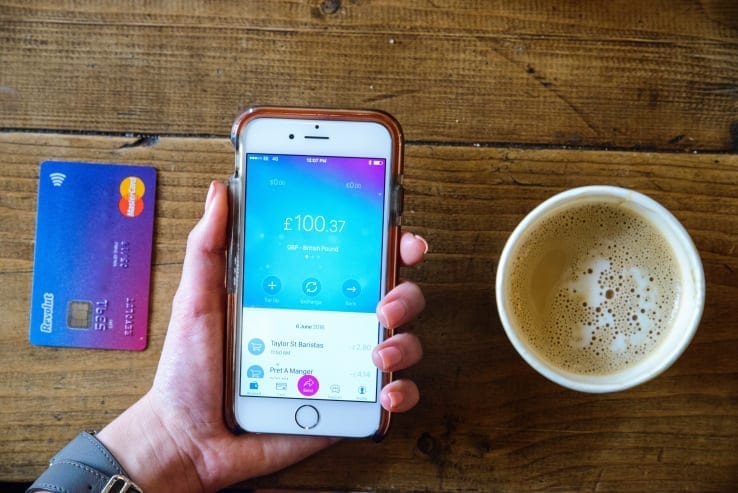
    The British fintech giant Revolut marked a significant milestone this Tuesday with the unveiling of its new global headquarters in London, paired with an ambitious growth strategy that promises to reshape the financial landscape.

    Over the next five years, the company aims to channel a remarkable 11.5 billion euros into its operations, a move set to create 10,000 new jobs worldwide. This investment includes a substantial 3.4 billion euros earmarked for the United Kingdom and an additional billion for France, signaling a strong push in key European markets.

    Europe and Latin America: A Dual Focus

    Revolut is reinforcing its foothold in Europe with a newly established hub in Paris and plans for new branches in Portugal and Belgium. This strategic expansion marks an exciting phase for the fintech, effectively connecting it to a larger audience across the continent.

    Turning its gaze to Latin America, Revolut is gearing up to operate as a bank in Mexico by early 2026, with intentions to extend its reach to Colombia and Argentina soon after. The company is also actively seeking new banking licenses in the Asia-Pacific, Middle East, and African regions. Recently, it secured approval to provide payment services in the United Arab Emirates, a noteworthy step in its global ambitions.

    Innovative Marketing and the Buzz Around Switzerland

    Beyond its financial endeavors, Revolut is making waves in the marketing arena with its newly announced collaboration with the Audi F1 Team. This partnership, which includes plans for limited edition co-branded cards, is likely to create a buzz among motorsport enthusiasts and financial fans alike — imagine driving down the track with your banking details at the speed of light!

    However, the company remains tight-lipped about its plans for the Swiss market. Despite ongoing speculation over the past few years about obtaining a banking license in Switzerland, there’s still no official confirmation from Revolut on this front.

    Questions & Answers

    What is Revolut’s total investment plan over the next five years?
    Revolut plans to invest a staggering 11.5 billion euros worldwide over the next five years.

    Which new markets is Revolut targeting in Latin America?
    In Latin America, Revolut aims to begin banking operations in Mexico by early 2026, with future expansions planned for Colombia and Argentina.

    What marketing partnership is Revolut pursuing?
    Revolut has partnered with the Audi F1 Team, planning to roll out limited edition co-branded cards as part of its marketing strategy.

  • Black Market Dollar Declines Against Dong: What This Means for Currency Trends

    Black Market Dollar Declines Against Dong: What This Means for Currency Trends

    At unofficial exchange points, the dollar was trading 0.04% lower, valued at VND26,540. Meanwhile, the official rate set by Vietcombank remained steady at VND26,445, while the State Bank of Vietnam’s reference rate held firm at VND25,186.

    Despite this localized decline, globally the dollar rallied on Friday, continuing its rebound against most major currencies. Traders were recalibrating their expectations following the Federal Reserve’s recent interest rate cut, which hinted at a gradual approach to future easing.

    The U.S. dollar index, which measures the currency against six major counterparts, rose by 0.3% to reach 97.662. This marked a shift after it had experienced a 1% decline earlier in the week due to speculation that the Fed might expedite a series of rate cuts. Overall, the index remained largely unchanged through the week.

    The British pound, on the other hand, was struggling, dropping 0.6% to $1.3468. Concerns have arisen among investors regarding British finance minister Rachel Reeves’ ability to maintain budget controls, leading to its largest two-day slump since early April — a situation as unpredictable as a cat at a dog show.

    Questions & Answers

    How did the U.S. dollar perform against the Vietnamese dong on the black market?
    The U.S. dollar declined slightly, trading at VND26,540, which reflects a 0.04% decrease from previous rates.

    What were the official exchange rates set by Vietcombank and the State Bank of Vietnam?
    Vietcombank maintained an official rate of VND26,445, while the State Bank of Vietnam’s reference rate remained stable at VND25,186.

    What is the current trend of the U.S. dollar globally?
    Globally, the dollar strengthened against most major currencies, with the U.S. dollar index rising by 0.3% to 97.662.

  • Ant International Set to Roll Out Alipay+ in Saudi Arabia: A New Era for Digital Payments!

    Ant International Set to Roll Out Alipay+ in Saudi Arabia: A New Era for Digital Payments!

    Ant International is set to make waves in the digital payments landscape by introducing Alipay+ in Saudi Arabia, a move that is bound to revolutionize transactions within the Kingdom. Scheduled for launch in 2026, this ambitious initiative will facilitate cross-border payments between the Kingdom’s national payment network, mada, and Alipay+, promising to simplify financial exchanges for consumers and businesses alike.

    Empowering Local Merchants and SMEs

    This new partnership is particularly advantageous for local merchants and small to medium enterprises (SMEs), which will gain the ability to accept QR payments from Alipay+’s extensive lineup of international payment partners. With over 36 partnerships already established, Alipay+ connects approximately 1.7 billion user accounts to an impressive network of more than 100 million merchants across 70 markets.

    A Commitment to the Kingdom’s Digital Future

    Douglas Feagin, President of Ant International, expressed excitement about this collaboration, stating, “This agreement deepens our presence and commitment to Saudi Arabia, and we look forward to working to promote QR payments locally as we build a thriving digital future for the Kingdom.” It seems that Alipay+ is not just entering the market; it’s planning a full-on cultural and financial integration.

    A Broader Regional Strategy

    The introduction of Alipay+ is part of Ant International’s broader strategy in Saudi Arabia, which gained momentum throughout 2025. A notable highlight includes the launch of Antom, a unified merchant payment solution, which recently received a PTSP certificate, enhancing its credibility in the region.

    Beyond Saudi Arabia, Alipay+ is already integrated with several national payment schemes across Asia, including those in Singapore, Malaysia, South Korea, Cambodia, Nepal, and Sri Lanka, illustrating its expansive reach and ambition to transform how Asia transacts.

    Questions & Answers

    What year is Alipay+ set to launch in Saudi Arabia?
    Alipay+ is scheduled to launch in Saudi Arabia in 2026.

    How many international payment partners does Alipay+ currently have?
    Alipay+ boasts over 36 international payment partners, connecting 1.7 billion user accounts to more than 100 million merchants.

    What recent development has Ant International achieved in Saudi Arabia?
    Ant International’s unified merchant payment solution, Antom, recently received a PTSP certificate, enhancing its operational credibility in the Saudi market.

  • UOB Joins Forces with Hengfeng Bank and Shangao Holdings to Propel Chinese Firms’ Global Expansion

    UOB Joins Forces with Hengfeng Bank and Shangao Holdings to Propel Chinese Firms’ Global Expansion

    UOB has embarked on an exciting collaboration with Hangfeng Bank Co. Ltd. and Shangao Holdings Group Limited, marking a significant stride toward fostering green development and infrastructure. Announced on September 18, 2025, this tripartite memorandum of understanding aims to enhance financial solutions that empower Chinese businesses seeking to extend their reach overseas, particularly in areas tied to sustainable transformation.

    Empowering Cross-Border Trade and Investment

    The partnership will focus on a myriad of financial services, including cross-border trade financing, investment banking, and tailored advisory services that resonate with the goals of the Belt and Road initiative. As the global focus shifts towards sustainability, UOB’s initiative underscores a pivotal blend of finance and environmental consciousness.

    Profiles in Investment: Shangao and Hangfeng

    Shangao Holdings, a subsidiary of Shandong Hi-Speed Holdings Group, has carved a niche in industrial investments revolving around new energy and infrastructure. The company plays a crucial role in managing vital transportation assets like toll roads, bridges, and rail transit facilities. Meanwhile, Hangfeng Bank, rooted in Shandong province, is celebrated for its transaction banking prowess and cross-border capabilities—ideal complements to UOB’s expansive regional network and Shangao’s investment acumen.

    A Remarkable Signing Event

    The memorandum was officially signed at the opening ceremony of the 2025 Singapore-Shandong week held at Marina Bay Sands, a fitting venue for such an ambitious partnership. UOB’s executive director for corporate wealth management, Janice Leong, represented the bank, joined by Shen Zhenghua, general manager of Hangfeng Bank’s transaction banking department, and Li Tianzhang, chairman of Shangao Holdings Group. The trio’s signatures symbolize a commitment to not only growth but also to a greener future, proving that when money talks, it can also advocate for the planet.

    Questions & Answers

    What are the main objectives of the partnership between UOB, Hangfeng Bank, and Shangao Holdings?
    The primary goals include providing financial solutions that support Chinese enterprises expanding internationally, with a focus on sectors aligned with green transformation, such as sustainable infrastructure.

    How will the collaboration benefit businesses in China?
    This partnership will facilitate cross-border trade financing and investment banking services, thereby easing international expansion for Chinese businesses while promoting sustainable practices.

    Where was the memorandum of understanding signed?
    The MOU was signed during the opening ceremony of the 2025 Singapore-Shandong week at the prestigious Marina Bay Sands in Singapore.

  • OCBC Commits to Empower 10,000 Women Entrepreneurs with Social Loans by 2030

    OCBC Commits to Empower 10,000 Women Entrepreneurs with Social Loans by 2030

    In a bold move to empower female entrepreneurship across Southeast Asia, OCBC Bank has set its sights on a big goal: to provide social loans to 10,000 women entrepreneurs by 2030. This initiative, aimed at small and medium enterprises (SMEs), spans Singapore, Malaysia, Hong Kong, and Indonesia, marking a significant commitment to fostering economic growth among women-owned businesses.

    Achievements So Far

    As of June 2025, OCBC has made impressive strides, supporting over 2,000 women-owned SMEs with social loan commitments nearing $600 million. This support is part of a larger vision to increase financial accessibility for women entrepreneurs, who often face unique challenges in securing funding.

    Tailored Programs for Women Entrepreneurs

    OCBC’s initiatives include the OCBC Women Unlimited Programme, which was launched in Singapore in April 2024 and introduced in Malaysia in August 2025. In Indonesia, the initiative takes the form of the Women Warriors Programme, which has been operational since 2020. These programs don’t just provide capital; they aim to cultivate an ecosystem where women entrepreneurs can thrive.

    Understanding the Challenges

    The data paints a compelling picture: one in three of OCBC’s SME customers across Singapore, Malaysia, Indonesia, and Hong Kong are women. However, it also highlights a stark reality — women-owned SMEs in Singapore report approximately 30% lower sales turnover growth in their first three years compared to their male counterparts. Fortunately, those who secure financing through OCBC’s initiatives have shown the capacity to close this gap, demonstrating the transformative power of financial support.

    The Road Ahead

    With ambitious plans to extend its reach and enhance the financial landscape for women entrepreneurs, OCBC is not just banking on numbers; it’s betting on the untapped potential of women-led businesses in Asia. In a future where every woman entrepreneur can dream big, OCBC aspires to be the catalyst that turns those dreams into reality.

    Questions & Answers

    How many women-owned SMEs has OCBC supported so far?
    OCBC has supported over 2,000 women-owned SMEs across Southeast Asia as of June 2025.

    What kind of financial assistance does OCBC offer to women entrepreneurs?
    OCBC provides social loans of up to S$100,000 for women-owned SMEs within their first two years of incorporation, with waived processing fees for these loans.

    How do sales turnovers compare for women-owned SMEs versus male-owned ones?
    Women-owned SMEs in Singapore typically experience about 30% lower sales turnover growth in their first three years compared to male-owned SMEs, however, those that secure financing can bridge this gap.

  • Thailand Considers Gold Trading Tax to Rein in Baht’s Surge: What It Means for Retail Investors

    Thailand Considers Gold Trading Tax to Rein in Baht’s Surge: What It Means for Retail Investors

    The Thai government is weighing a tax on physical gold trading as a strategy to temper the surging value of the baht, a move that could have significant repercussions for the country’s export and tourism sectors.

    Discussions are ongoing between the Bank of Thailand and the Ministry of Finance regarding a potential tax on gold transactions conducted online and settled in baht, according to sources familiar with the matter. However, the proposed tax may provide exemptions for gold traded in U.S. dollars, gold futures exchanges, or purchases made directly from bullion shops.

    Aiming to Curb Gold Exports

    The primary objective behind this tax initiative is twofold: to diminish gold exports and to raise the cost of gold ownership for Thai citizens. The demand for physical gold has surged impressively, with Thailand witnessing a staggering 69% increase in gold exports, amounting to THB254 billion (approximately US$8 billion) in the first seven months of 2025 compared to the same period last year.

    Monitoring Currency Risks

    In a recent meeting, the central bank engaged with representatives from the Thai Gold Traders Association, urging them to scrutinize bullion transactions settled in baht more closely. This call to vigilance aims to mitigate currency risks and thwart any illicit activities related to gold trading.

    The Baht’s Unabated Rise

    The baht has eclipsed other regional currencies this year, appreciating nearly 7% since January, as reported by The Nation. This rise has largely been fueled by a greater-than-expected current account surplus and soaring global gold prices. While it may make Thai gold gleam brighter, the stronger currency casts a shadow over the nation’s vital export and tourism industries, which jointly account for 70% of Thailand’s GDP.

    Industry Insights and Recommendations

    The Federation of Thai Industries has chimed in, suggesting the ideal baht exchange rate should hover between THB34-35 per U.S. dollar, rather than the current THB31-32. Additionally, they recommend that gold trading be excluded from current account calculations to lessen its impact on the baht’s valuation. Who would have thought that shiny gold bars could have a hand in steering the direction of a nation’s economy?

    Questions & Answers

    What is the Thai government’s proposed tax aimed at?
    The proposed tax on physical gold trading is intended to curb gold exports and increase the cost of gold ownership for Thais, thereby influencing the value of the baht.

    How much did Thailand’s gold exports increase in 2025?
    Gold exports from Thailand surged by 69%, reaching THB254 billion (approximately US$8 billion) in the first seven months of 2025 compared to the same period last year.

    What challenges does the stronger baht pose for Thailand?
    The appreciation of the baht presents challenges for the export and tourism sectors, which together constitute 70% of Thailand’s GDP, as a stronger currency can make Thai goods more expensive for foreign buyers.

  • Raiffeisen Unveils Exciting Strategy Extension: A New Chapter for Growth!

    Raiffeisen Unveils Exciting Strategy Extension: A New Chapter for Growth!

    Raiffeisen Delays New Strategy: Aiming for Cohesion at the Top

    Raiffeisen has announced a significant shift in its strategic planning timeline, opting to unveil a new group strategy at the end of 2026 instead of the previously anticipated date. This one-year delay is a strategic move to ensure that both the incoming chair of the board and the newly appointed CEO, Gabriel Brenna, have a hand in shaping the bank’s future direction, as the institution stated in a recent release.

    The new board chair is set to be elected during the general meeting scheduled for June 2026. Current chair Thomas Müller has confirmed he will not seek re-election, leaving the board in search of a successor—a process that is still actively underway. In a game of musical chairs, the position has become particularly crucial, with the leadership baton passing hands in a race against time.

    Turning the page, Brenna will officially step into the CEO role in December 2025, succeeding Heinz Huber, who announced his resignation in December 2024. By synchronizing these changes, Raiffeisen seems keen on building a cohesive leadership team—one that can navigate the complex landscape of the banking sector, perhaps hoping to avoid any hiccups that could lead to strategic misalignment. After all, in the world of retail banking, an indecisive leader can be like an empty shopping cart: lacking direction and prone to drift.

    Questions & Answers

    Why has Raiffeisen decided to delay its new group strategy?
    Raiffeisen has postponed its strategy rollout to ensure that both the new CEO and the incoming chair of the board can participate in the development process, fostering a more cohesive leadership vision.

    When will the search for a new board chair be resolved?
    The election for the new chair is set for June 2026, with the current chair, Thomas Müller, opting not to seek re-election.

    What changes are expected with the new CEO Gabriel Brenna?
    Gabriel Brenna is set to take over in December 2025, succeeding Heinz Huber, marking a pivotal moment in Raiffeisen’s leadership and strategic direction as he shapes the future of the bank.

  • UOB Upgrades Vietnam’s 2025 GDP Growth Forecast to an Optimistic 7.5%

    UOB Upgrades Vietnam’s 2025 GDP Growth Forecast to an Optimistic 7.5%

    Vietnam’s economy is on a remarkable upswing, with the latest data from UOB’s Global Economics & Markets Research unit indicating a booming GDP expansion of 7.52% in the first half of the year—the fastest growth for this period since 2011. This vibrant increase is largely driven by a notable 14% surge in exports, fueled further by a boost in market sentiment following U.S. President Donald Trump’s temporary reduction of reciprocal tariffs to a baseline rate of 10% for 90 days.

    Tariff Landscape and Future Projections

    The elimination of tariff uncertainties in the second half of the year has set the stage for Vietnamese exports, with specific rates now locked in ahead of the August deadline. Vietnam faces a 20% levy but remains hopeful; UOB forecasts a solid 10% growth in exports for 2025, building on last year’s impressive 14% growth.

    Manufacturing and Foreign Investments Flourish

    Additional indicators reflect Vietnam’s economic resilience. The Manufacturing Purchasing Managers’ Index (PMI) rebounded to 52.4 in July, emerging from three months of contraction. Meanwhile, industrial output surged by 9% year-on-year, indicating robust manufacturing activity amidst fluctuating global conditions.

    Foreign direct investment (FDI) has also shown signs of vitality, reaching $13.6 billion as of July, a rise from $12.6 billion the previous year. Analysts suggest that full-year inflows could exceed $20 billion, although this would still trail last year’s total of $25.4 billion.

    A Bold Infrastructure Investment Plan

    In a bid to solidify growth, Vietnam’s government announced an ambitious $48 billion infrastructure investment plan in mid-August, encompassing 250 projects. This plan prioritizes urban development and transport, with 129 projects financed at a cost of $18 billion, while the remaining 121 projects—valued at $30.5 billion—will attract financing from foreign entities.

    Glimmers of Optimism in Monetary Policy

    UOB maintains its outlook for 2026 at a consistent 7% growth rate, with the Vietnamese government aiming for a target GDP growth of 8.3-8.5% for the current year. UOB analysts suggest that the strong second-half outlook, coupled with ongoing pressures on the Vietnamese dong, will likely keep the central bank’s refinancing rate steady at 4.5%. If drastic weakening of business conditions occurs, a reduction to a pandemic-era low of 4% could be considered—though this scenario remains unlikely.

    On the currency front, the dong may find itself struggling to capitalize on a potential weakening of the U.S. dollar, likely to occur once the Federal Reserve begins to cut rates. Nevertheless, UOB forecasts that dollar exchange rates will ease gradually, projecting VND26,300 in the last quarter of this year, VND26,200 in the following quarter, and VND26,000 by the third quarter of 2026.

    Questions & Answers

    How is Vietnam’s GDP growth in the first half of this year compared to past years?
    Vietnam’s GDP grew by 7.52% in the first half of the year, marking the fastest expansion for that period since 2011.

    What are the key drivers behind this growth?
    The robust growth is primarily attributed to a significant 14% increase in exports, supported by positive market sentiment following tariff reductions announced by the U.S. government.

    What steps is the Vietnamese government taking to sustain economic growth?
    Vietnam unveiled a $48 billion infrastructure investment plan covering 250 projects, with a focus on urban development and transport, showing a strong commitment to enhancing economic foundations.

  • Could Ending Vietnam’s Gold Monopoly Lower Prices? Here’s What You Need to Know!

    Could Ending Vietnam’s Gold Monopoly Lower Prices? Here’s What You Need to Know!

    In a significant shift for Vietnam’s gold market, the government has issued a decree that allows select banks and businesses to engage in the import and production of gold bars— a privilege that has long been reserved for the state-owned Saigon Jewelry Company. This landmark decision marks the first substantial change in gold market regulations in over a decade, aiming to stimulate competition and ease supply constraints.

    Now, approximately eight banks and three private jewelry firms, including the well-known SJC, are poised to qualify under the new guidelines. According to Huynh Trung Khanh, vice chairman of the Vietnam Gold Traders Association, the full impact of this decree on gold prices may take some time to materialize. “For now, we need to await further guidance on how the decree should be implemented and for additional gold to flood the market,” he explained.

    Khanh emphasized that the real test lies in how much gold will actually be imported, but he is optimistic about future prospects. He forecasts that, over time, the gap between domestic and global gold prices—currently hovering around VND20 million (US$760)—could shrink to about VND4-5 million per tael of 37.5 grams or 1.2 ounces.

    Experts agree on the potential benefits of reducing monopoly control. A representative from gold trading firm Phu Quy noted that dismantling the monopoly would not only reduce speculation but also enhance transparency and stability within the market. Nguyen Trung Anh, chairman of jeweler Ancarat, echoed this sentiment, identifying the new policy as a golden opportunity for capable businesses to seize upon rising bullion demand.

    “This will foster healthy competition, driving prices down while improving quality and service,” Trung Anh asserted. However, he warned that the pace at which prices decline will depend on various factors, including foreign exchange rates and the State Bank of Vietnam’s monetary policies.

    For years, industry experts have pointed to this monopoly as a key contributor to the disparity between local and global gold prices. The central bank has acknowledged that relying solely on state production required draining foreign currency reserves for gold imports whenever local supplies dwindled.

    The Vietnam Gold Traders Association has stated that these regulatory changes will alleviate the sourcing challenges that jewelers have faced. In fact, an executive from Phu Nhuan Jewelry previously lamented the extraordinary difficulties in procuring gold for jewelry production— a reality that may now begin to change with this new competitive landscape.

    Questions & Answers

    What prompted the Vietnamese government to change the gold market regulations?
    The government aimed to stimulate competition and ease supply constraints by allowing select banks and businesses to import and produce gold bars, breaking the long-standing monopoly held by the Saigon Jewelry Company.

    How many banks and jewelry firms are expected to qualify under the new decree?
    Approximately eight banks and three jewelry firms, including prominent player SJC, are expected to qualify under the revised regulations.

    What impact do experts foresee from the new gold market regulations?
    Experts anticipate that the elimination of the monopoly will reduce speculation and significantly narrow the price gap between local and global gold, potentially enhancing competition, quality, and service in the market.

  • APAC Instant Payments Expected to Surge to $170.2B by 2029, Says GlobalData

    APAC Instant Payments Expected to Surge to $170.2B by 2029, Says GlobalData

    It’s becoming clear that Asia is leading the charge in the world of instant payments. According to estimates by GlobalData, the instant payments market across 14 Asia Pacific countries is set to grow at a compound annual growth rate (CAGR) of 11.6% between 2025 and 2029, reaching a staggering valuation of $170.2 billion.

    Rapid Growth Driven by the Digital Shift

    This remarkable growth is fueled by several interlinked factors, including a consumer preference for electronic payment methods, advancements in payment infrastructure, and a growing financially aware population. Ravi Sharma, the lead banking and payments analyst at GlobalData, notes that countries like China, Japan, South Korea, and India have already established strong footholds in the instant payments market.

    China’s Dominance in the Market

    Leading the pack is China, which is projected to see its instant payments market value soar to $81.9 trillion by 2029. South Korea and Japan are expected to follow, with instant payments valued at $35.8 trillion and $31.5 trillion, respectively. Meanwhile, India, although trailing behind in terms of market value at $7.5 trillion, astonishingly leads in transaction volume. The nation is set to record a remarkable 191.5 billion instant payment transactions by 2024, primarily propelled by the impressive growth of its Unified Payments Interface (UPI), the national payment framework that has revolutionized digital transactions.

    Opportunities on the Horizon

    The surge in cross-border payment linkages is unlocking new business opportunities across the region. Sharma emphasizes that the future looks bright for the instant payments landscape in Asia Pacific. “As government initiatives continue to evolve, payment infrastructures improve, and QR code-based payments become more favored over traditional POS systems, consumer inclination towards electronic payments is expected to solidify,” he states.

    In this dynamic financial environment, it’s not just a race to digitize; it’s also a friendly competition of who can innovate faster. As consumers become increasingly tech-savvy, retail businesses must stay ahead of the curve to capture the evolving marketplace.

    Questions & Answers

    What is driving the growth of instant payments in Asia?
    The growth is primarily driven by increased consumer preference for electronic payments, enhanced payment infrastructure, and a more financially aware population.

    Which country is projected to have the highest value in instant payments?
    China is expected to lead the region, with its instant payments market projected to reach $81.9 trillion by 2029.

    How does India fare in the instant payments space?
    While India trails behind in market value at $7.5 trillion, it surpasses all other countries in transaction volume, with anticipated instant payment transactions reaching 191.5 billion by 2024.

  • Hong Kong Banks Urged to Dive into the Future with Tokenized Deposits and Assets Exploration

    Hong Kong Banks Urged to Dive into the Future with Tokenized Deposits and Assets Exploration

    Authorities in Hong Kong are gearing up to regulate the burgeoning sector of tokenized finance. The Hong Kong Monetary Authority (HKMA) is set to advance Project Ensemble, an initiative aimed at urging local commercial banks to embrace tokenized deposits and facilitate real-time transactions of tokenized assets. This bold step signals a significant shift in the city’s financial landscape.

    In his Policy Address on September 17, Chief Executive John Lee announced, “We are implementing a regime for stablecoin issuers and formulating legislative proposals regarding licensing regimes for digital asset dealing and custodian service providers.” This proactive approach not only addresses regulatory needs but also positions Hong Kong as a competitive player in the global digital asset arena.

    The HKMA is expected to play a crucial role in overseeing the issuance of tokenized bonds while encouraging banks to enhance their risk management practices through a supervisory sandbox environment. This innovative framework allows for the experimentation of new financial products in a controlled setting before a full-scale launch.

    Meanwhile, the Securities & Futures Commission (SFC) is exploring the introduction of a broader array of digital asset products for professional investors, prioritizing adequate investor protection measures. Lee remarked that “the SFC will also introduce automated reporting and data surveillance tools” to mitigate risks tied to digital assets, further reinforcing Hong Kong’s commitment to creating a secure investment ecosystem.

    In a relevant twist for sustainability enthusiasts, Lee also highlighted plans to strengthen collaboration with the Greater Bay Area (GBA) carbon market. The government intends to work closely with mainland regulatory bodies to address the intricacies of participating in the international carbon market. This includes developing voluntary carbon credit standards, as well as streamlining registration, trading, and settlement processes associated with carbon emission reductions, reminiscent of a high-stakes dance between finance and environmental stewardship.

    Questions & Answers

    What is Project Ensemble?
    Project Ensemble is an initiative by the Hong Kong Monetary Authority aimed at encouraging local banks to adopt tokenized deposits and facilitate real-time transactions of tokenized assets, thereby modernizing the financial infrastructure in Hong Kong.

    What measures is the SFC planning to enhance investor protection?
    The Securities & Futures Commission plans to introduce automated reporting and data surveillance tools as part of its strategy to protect professional investors from the inherent risks associated with digital assets.

    How will Hong Kong’s collaboration with the GBA carbon market evolve?
    Hong Kong will deepen its cooperation with the Greater Bay Area’s carbon market, focusing on developing voluntary carbon credit standards and improving processes for registration, trading, and settlement of carbon emissions, showcasing a commitment to sustainability in finance.

  • SoftBank’s PayPay Poised for Exciting Launch into International Markets!

    SoftBank’s PayPay Poised for Exciting Launch into International Markets!

    PayPay, the mobile payment service owned by SoftBank Group, is poised to expand its reach beyond Japan, with plans to launch its app for international use as early as late September. This move aims to cater to the growing number of Japanese travelers seeking seamless payment solutions while abroad.

    The service will initially be accepted at Alipay+ partner stores in South Korea, marking a significant step in PayPay’s strategy to capture the attention of international consumers and support Japanese tourists. This opening coincides with a surge in cross-border tourism as the world continues to rebound from pandemic restrictions.

    Masayoshi Yanase, a corporate officer at PayPay, shared insights during a press conference, affirming the company’s commitment to enhancing its digital services for users navigating unfamiliar markets. “With the globe opening up, we’ve recognized the need for our customers to make transactions abroad as smoothly as they do at home,” he stated.

    This initiative by PayPay represents more than just a functional upgrade; it’s a strategic pivot in the competitive landscape of mobile payment solutions in Asia. With increasing collaboration among digital payment platforms, this could very well be the start of a payment revolution across the region, and who wouldn’t want to pay with a simple tap instead of fumbling for cash?

    Questions & Answers

    How will PayPay’s expansion benefit travelers?
    The expansion allows Japanese travelers to make transactions in South Korea seamlessly, addressing a crucial need for smooth payment solutions abroad.

    What strategic advantages does this move present for PayPay?
    By collaborating with Alipay+ partner stores, PayPay positions itself competitively in the rapidly evolving mobile payment landscape in Asia, enabling it to attract both tourists and international consumers.

    What recent trends in tourism might influence PayPay’s strategy?
    The rebound in cross-border tourism following pandemic restrictions increases demand for accessible payment solutions, making this expansion timely and relevant for their target audience.