Category: Finance

Retail News Asia is committed to providing both local and global retailers with the latest Finance news throughout the Asian market. This on a daily base.

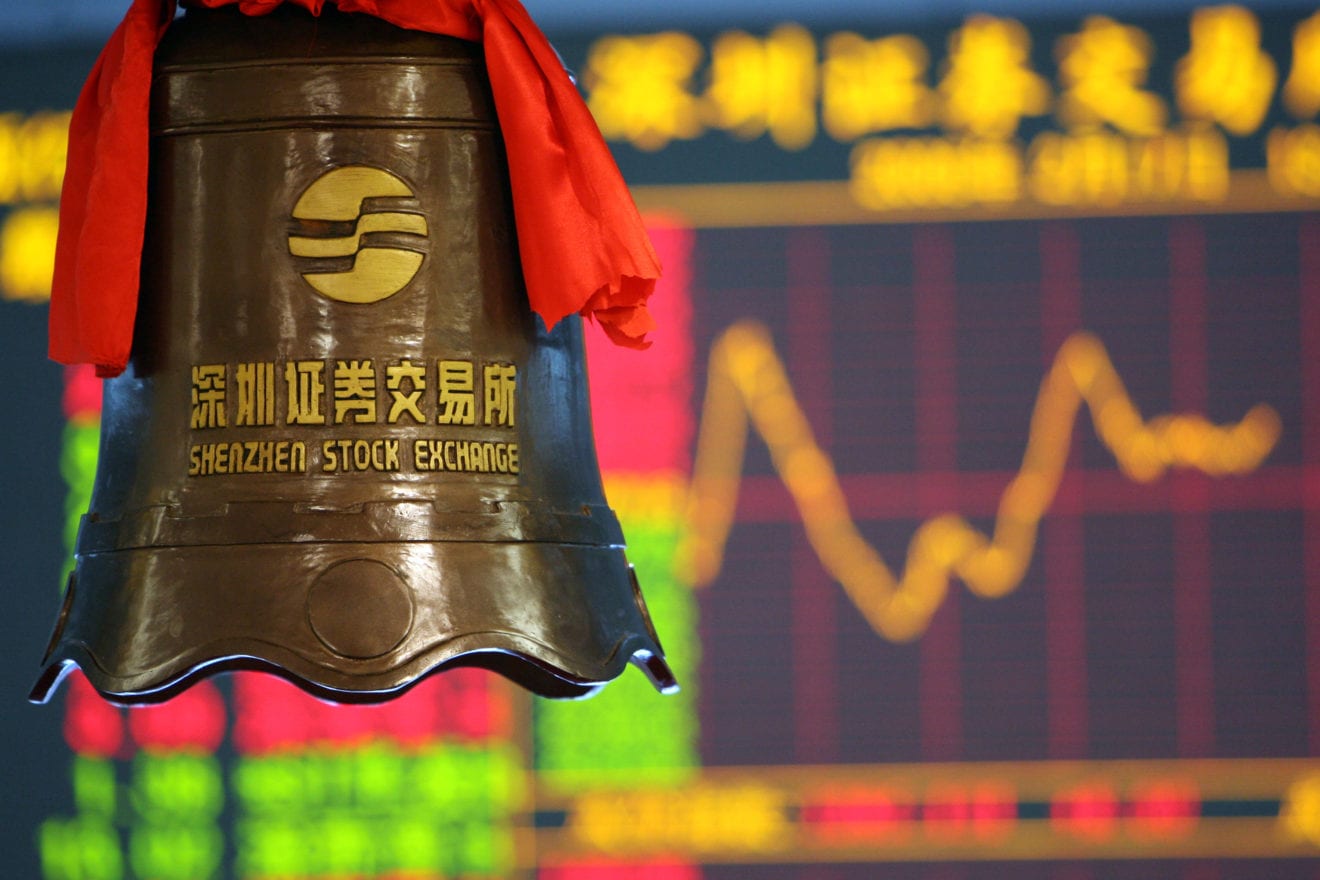
  • Why there is no need to wait for a stable market before launching Shenzhen-Hong Kong stock

    Why there is no need to wait for a stable market before launching Shenzhen-Hong Kong stock

    Beijing should not wait for the market to stabilise to launch the Shenzhen-Hong Kong stock connect scheme and should introduce it as soon as possible to help attract more capital inflow to the mainland China.

    Hong Kong Exchanges and Clearing chairman Chow Chung-kong said last Thursday, on the first trading day of the Year of the Monkey, that the long-awaited stock connect scheme between the Hong Kong and Shenzhen stock markets would definitely be launched but it would need to wait for the stock market to stabilise.

    After the Hang Seng Index lost more than 700 points on Thursday in the biggest fall on the first trading day of a Lunar New Year since 1994, brokers interpreted his remarks as meaning the scheme would be launched in the second half of this year at the earliest.

    But that would not be appropriate because any broker will tell you investors like to trade when the markets have big movements instead of in quiet markets. Even in a falling market, people like to buy when the share prices drop to more reasonable levels.

    It should be left to investors and not the regulators to decide when it is appropriate to enter the market

    As such, the mainland regulator should launch the new scheme whenever the platform and regulatory measures are ready and not when the market is stable. It should be left to investors and not the regulators to decide when it is appropriate to enter the market.

    Then there’s the capital flow issue. The depreciation of the yuan, which dropped more than 5 per cent against the US dollar last year and is expected to fall further this year, has led to many mainlanders rushing to buy US dollar or Hong Kong dollar investment products and life insurance policies to hedge their risks.

    The launch of the Shenzhen-Hong Kong stock connect would not worsen the situation because most mainland investors have accounts in both the Shanghai and Shenzhen stock markets. Investors who want to trade Hong Kong stocks could already have done so by trading via the Shanghai-Hong Kong stock connect.

    The launch of the Shenzhen-Hong Kong stock connect would, however, open a new leg and new market for northbound trading – with international investors able to trade Shenzhen-listed companies in addition to Shanghai A shares.

    A recent survey by the Hong Kong Investment Funds Association found international investors were interested in the Shenzhen stock markets because it is home to many potential high growth companies. Retail brokers in Hong Kong would also like to see Hong Kong investors allowed to trade Shenzhen stocks because it would boost their commission income.

    That means the launch of the Shenzhen-Hong Kong stock connect is likely to result in new capital inflow to mainland China from both international fund houses and Hong Kong retail investors.

    More importantly, many fund managers believe that a precondition for A shares to be added to MSCI’s benchmark emerging markets index is giving them the ability to trade in the Shenzhen stock market.

    MSCI said in June last year that its decision to defer the inclusion of A shares in its global emerging market benchmarks for a second year reflected lingering investor concerns over market accessibility.

    If Beijing allows the Shenzhen-Hong Kong stock connect to be launched soon, it would boost the chances of A shares being included in MSCI indices. And that would lead to more exchange traded funds buying A shares, further boosting capital inflow.

    There is really no need to wait for the market to stabilize before launching the Shenzhen-Hong Kong stock connect.
  • China’s Central Bank says no reason for yuan to slide further

    China’s Central Bank says no reason for yuan to slide further

    China’s central bank governor said there was no basis for continued depreciation of the yuan as the balance of payments is good, capital outflows are normal and the exchange rate is basically stable against a basket of currencies, according to an interview published Saturday in Caixin magazine.

    Zhou Xiaochuan dismissed speculation that China planned to tighten capital controls and said there was no need to worry about a short-term decline in foreign-exchange reserves, adding that the country had ample holdings for payments and to defend stability.

    The comments come as Chinese financial markets prepare to reopen Monday after the week-long Lunar New Year holiday.

    The country’s foreign-exchange reserves shrank to the smallest since 2012 in January, signalling that the central bank sold dollars as the yuan fell to a five-year low. The weakening exchange rate and declining share markets in China have fuelled global turmoil and helped send world stocks to their lowest level in more than two years.

    The bank will not let “speculative forces dominate market sentiment,” Zhou said, adding that a flexible exchange rate should help efforts to combat speculation by effectively using “our ammunition while minimising costs.”

    Policy makers seeking to support the yuan amid slower growth and increasing outflows have been using up reserves. The draw-down has continued since the devaluation of the currency in August and holdings fell by $US99.5 billion in January to $US3.23 trillion, according to the central bank on February 7. The stockpile slumped by more than half a trillion US dollars in 2015.

    China has no incentive to depreciate the currency to boost net exports and there’s no direct link between the nation’s gross domestic product and its exchange rate, Zhou said. Capital outflows need not be capital flight and tighter controls would be hard to implement because of the size of global trade, the movement of people and the number of Chinese living abroad, he added.

    The country will not peg the yuan to a basket of currencies but rather seek to rely more on a basket for reference and try to manage daily volatility versus the dollar, Zhou said. The bank will also use a wider range of macro-economic data to determine the exchange rate, he said.

    Meanwhile China’s retail sales grew 11.2 per cent during the week-long Lunar New Year vacation compared with the same holiday period last year, Ministry of Commerce data showed on Saturday.

    Revenues of retailers and catering firms grew to about 754 billion yuan ($US115 billion) during the Feb 7-13 “Golden Week” holiday, a ministry statement said.

    The holiday is especially important for retailers, which vie for customers by launching promotions and discounts. Millions of people take time off work to travel and generally spend more than usual during the break.

  • First Metro Securities sees mobile technology driving up retail investing in the Philippines

    First Metro Securities sees mobile technology driving up retail investing in the Philippines

    Stock broker First Metro Securities Brokerage Corp. said the number of individual investors will increase on rising income of Filipinos, growing awareness of opportunities in the stock market and the emergence of online and mobile platforms that make investing easier and more convenient.

    Gonzalo Ordoñez, the company’s president, said the market for retail investing is still young as the Philippine economy is only starting to expand.

    “As we see the growing trend of more retail investors participating in the stock market, we also see the volume increasing over the coming years. With this in mind, we will continue to move forward to help change the way people invest and save money,” Ordoñez said.

    According to the 2014 data of the Philippine Stock Exchange (PSE), less than 1 percent of the estimated 100 million Filipinos invested in the stock market.

    The Philippines still has a long way to go before achieving widespread domestic investor participation in the stock market, the broker said.

    It said, however, the number of online investor accounts, which are mainly individuals, are increasing.

    Based on the PSE’s 2014 Stock Market Investor Profile reports, online investor accounts registered a five-year compounded annual growth rate of 44 percent, compared to the overall investor base, which grew by an average of 6 percent in the past five years.

    Online investors already constitute 27 percent of the total investor accounts base, coming from just 7 percent in 2010.

    With the trend of more retail investors participating in the stock market, the broker earlier launched a service that enables clients to borrow funds to buy stocks online using eligible securities as collateral. This provides clients with the ability to take on more risk in order to take advantage of emerging trends or build a larger portfolio.

    In 2013 the company launched the country’s first exchange-traded fund (ETF), which acts as a mutual fund that mirrors the performance of the benchmark Philippine Stock Exchange index and trades like a stock on the PSE.

    First Metro Securities is the market maker and an authorized participant of the said ETF.

  • Goldman Sachs enters Singapore retail fund market

    Goldman Sachs enters Singapore retail fund market

    Goldman Sachs Asset Management (GSAM), the asset management arm of Goldman Sachs Group Inc, is making its foray into the local unit trust industry with the launch of 13 retail funds in 1Q 2016.

    The new GSAM unit trusts, previously available only to private banking and institutional clients, will consist of fundamental and quantitative equity funds as well as those that invest in fixed income and multi-assets, according to the fund house which manages assets in excess of US$1 trillion ($1.4 trillion).

    These 13 Goldman Sachs funds approved for retail sales in Singapore include the Goldman Sachs Asia High Yield Bond Portfolio, Asia Portfolio, European Equity Partners Portfolio, European High Yield Bond Portfolio, Global Core Equity Portfolio, Global Equity Partners Portfolio, Global High Yield Portfolio,

    Global Income Builder Portfolio, Growth & Emerging Markets Broad Equity Portfolio, Growth & Emerging Markets Corporate Bond Portfolio, India Equity Portfolio, Japan Portfolio and US Real Estate Balanced Portfolio.

    “The global market volatility we are seeing right now underscores the need for world-class investment solutions that deliver highly differentiated strategies with real diversification benefits. We look forward to meeting the needs of Singapore retail investors through this range of funds,” says Sheila Patel, who is Singapore CEO of GSAM, in a statement.

    Singapore is GSAM’s Asia regional investment hub. The fund house’s team of Singapore-based investment professionals has been providing investment and advisory solutions to institutions including pension funds, sovereign wealth funds and financial intermediaries in the city state and across Asia since 1991.

  • Standard Chartered names James Dolphin as its CIO for retail banking

    Standard Chartered names James Dolphin as its CIO for retail banking

    Standard Chartered Bank has appointed James Dolphin as its Chief Information Officer (CIO) for retail banking. From March 2016, Dolphin will report directly to the bank’s Group CIO, Dr Michael Gorriz, and be based in Singapore.

    Prior to this role, Dolphin was Capital One’s CIO for retail and direct banking for since 2012. In that role, he led Capital One’s digital transformation strategy for the retail business by building strong engineering teams, and instilling a software development culture. He also redesigned and rewired Capital One’s retail channels to deliver market-leading digital experiences during his time there.

    Besides Capital One, Dolphin has held senior technology leadership roles at Bank of America too.

    “James brings with him a strong reputation as a technology leader and innovator. He is highly experienced in leading large teams and driving an agile culture that is innovative and customer-centric. I am confident that he will be a valuable addition to Standard Chartered,” said Dr Gorriz.

    1

  • Indonesia central bank seen cutting key rate again

    Indonesia central bank seen cutting key rate again

    Indonesia’s central bank, which kept its benchmark reference rate unchanged for nearly all of 2015, is expected to make its second cut this year on Thursday as it tries to bolster the country’s sluggish growth.

    South-East Asia’s largest economy grew 4.8% in 2015, the fifth straight year of slowing and the weakest pace since 2009. But growth picked up in the final quarter, showing some signs of recovery.

    Bank Indonesia (BI) trimmed its key rate by 25 basis points last month. Thirteen of 19 economists in a Reuters poll predict a same-size cut on Thursday, reducing the rate to 7%.

    Many economists believe BI is at the start of an easing cycle, as there’s room for monetary easing that there was not in 2015, when inflation sometimes topped 7% and anticipation of higher US interest rates pressured the fragile rupiah, which was emerging Asia’s second worst performing currency last year.

    The rupiah was not rattled by the Federal Reserve’s hike in December, and it has strengthened more than 2% against the dollar this year. BI deputy governor Perry Warjiyo said last week the rupiah is heading towards a level reflecting the country’s economic fundamentals.

    ROOM TO EASE?

    The rupiah’s appreciation gave “room for BI to ease its monetary policy even further. BI will make use of this opportunity to do just that, in a bid to help sustain the upward momentum in GDP growth,” said DBS’ economist Gundy Cahyadi.

    Low inflation and a deep slump in January exports and imports also support the argument for early rate cut, economists said.

    “Weak exports and capital goods imports mean further policy boost to aid economic recovery is warranted,” said Credit Suisse economist Santitarn Sathirathai.

    Not all agree. Six analysts surveyed by Reuters said the central bank will hold the benchmark at 7.25%.

    “BI is keen to avoid a repeat of the 2013 ‘Taper Tantrum’, which saw the central bank having to hike rates aggressively to support the struggling rupiah,” said Capital Economics in a note projecting no second rate cut until the second quarter.

    CIMB Niaga economist Winang Budoyo, who has pencilled in a hold this week, predicted that BI will lower the rate in March instead.

    BI has a policy meeting scheduled for March 17-18, right after the Fed’s next policy meeting on March 15-16.

  • Indonesian bank opens branch in Seoul

    Indonesian bank opens branch in Seoul

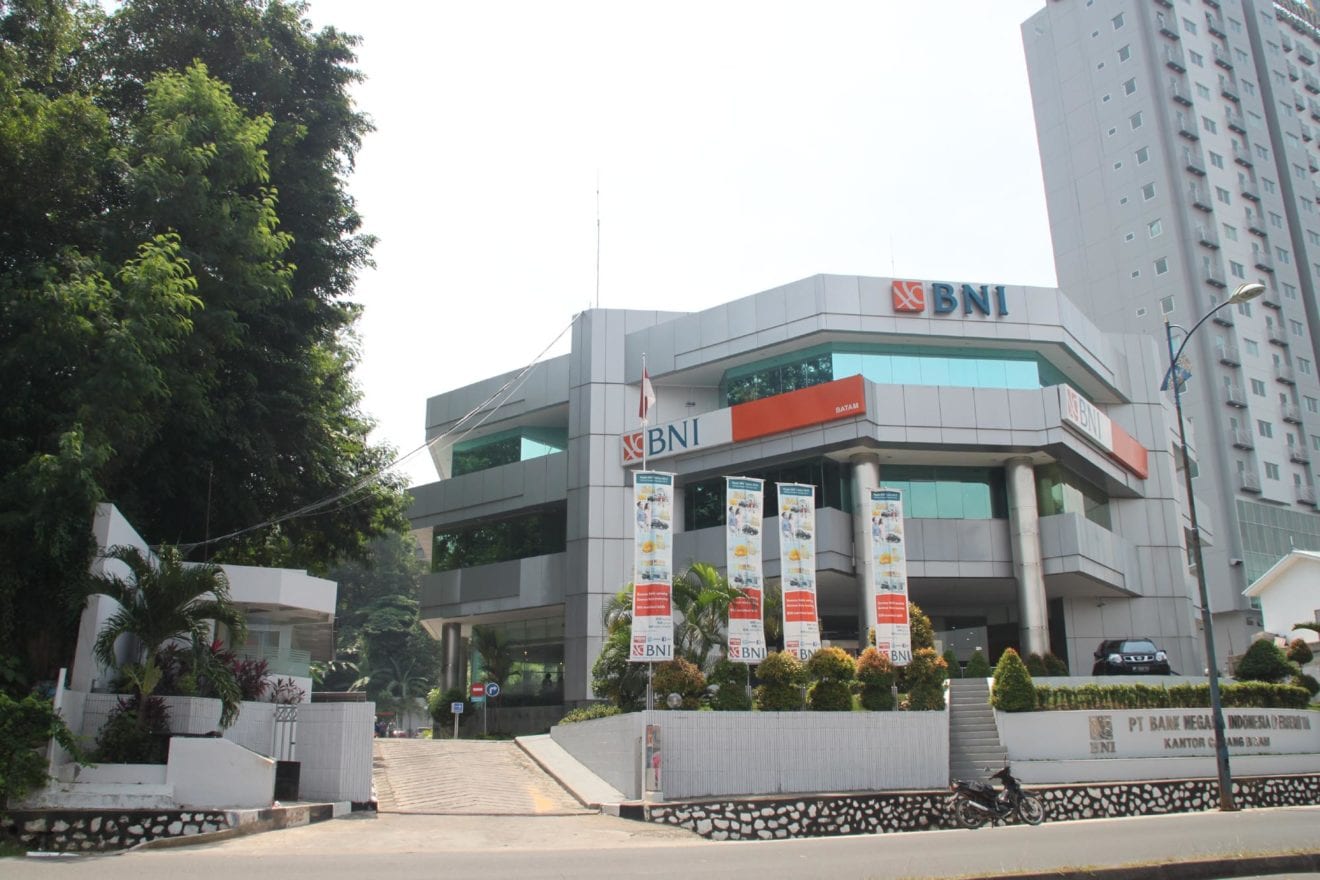
    An Indonesian bank, Bank Negara Indonesia (BNI) 46, opened a branch office in Seoul, South Korea, in Wise Tower, on Monday. It was inaugurated by the Ambassador of Indonesia to South Korea, John A Prasetio and Manager of BNI46 Seoul, Wan Andi Aryati. “The banking industry in South Korea is already shaken, but BNI46 still sees market potential,” Wan Andi said in a statement received by ANTARA here Monday. The BNI46 targets the domestic trade market according to her. “BNI Seoul wants to be a bridge to establish cooperation between Indonesia and South Korea by providing loans and other related banking services,” Wan Andi said.

    The BNI46 also provides services for South Korean businessmen who want to invest in Indonesia, she added.
    “We are also targeting the Indonesian labor market in South Korea, which now reaches 40 thousand people. We are committed to providing the best service for the Indonesias foreign exchange heroes,” she said.

    Meanwhile, Ambassador Prasetio stated that the world economy is still in a state of collapse. The stock market and the value of currency in some countries against the US dollar continues to decline.

    “This shows that the global sentiment has not been encouraging. Uniquely, the Indonesian economy is relatively solid in the middle of the uncertainty shocks,” the ambassador said.

    Cooperation in trade and investment between Indonesia and South Korea are still positive. The demand for Indonesian products and South Koreas investment in the country are progressive, according to him.

    “They respond positively on the economic policies of President Jokowi (Joko Widodo). I believe that the presence of BNI46 in Korea is very important to bridge cooperation between the two countries,” the ambassador said.

    Data from the Investment Coordinating Board (BKPM) shows that South Koreas direct investment in the country in the last five years is ranked fourth with a value of more than US$7 billion. Currently, there are 2,700 South Korean companies in Indonesia.

  • How DBS Is Fronting And Doubling Down On The Push For Entrepreneurship In Singapore

    How DBS Is Fronting And Doubling Down On The Push For Entrepreneurship In Singapore

    We’ve all heard of DBS — after all, it’s the largest bank in Singapore and Southeast Asia. And, it has 280 branches all over the rest of Asia, including China, Hong Kong, Taiwan, India and Indonesia. Other than its extensive coverage, the bank recently launched a set of new initiatives to support entrepreneurs and the startup community here in Singapore.

    DBS Bay Area Series

    ernestine fu

    Venture Capitalist and DBS Advisor Ernestine Fu. Photo Credit: DBS.

    DBS kicked off their initiatives in late 2014 with a visit from Ernestine Fu, a venture capitalist and partner at Alsop Louie Partners in Silicon Valley. She has advised DBS on venture debt and their entrepreneurship programs. With her presence, DBS launched its inaugural entrepreneurship event and kicked off its prestigious “Bay Area Series” event.

    For those unfamiliar with Ernestine, she has been heralded as Silicon Valley’s youngest venture capitalist. She joined VC firm Alsop Louie Partners as a 20-year-old associate in March 2011 and has been making waves as a young VC in the bay area since.

    tim draper

    Third-Generation Venture Capitalist Tim Draper. Photo Credit: DBS.

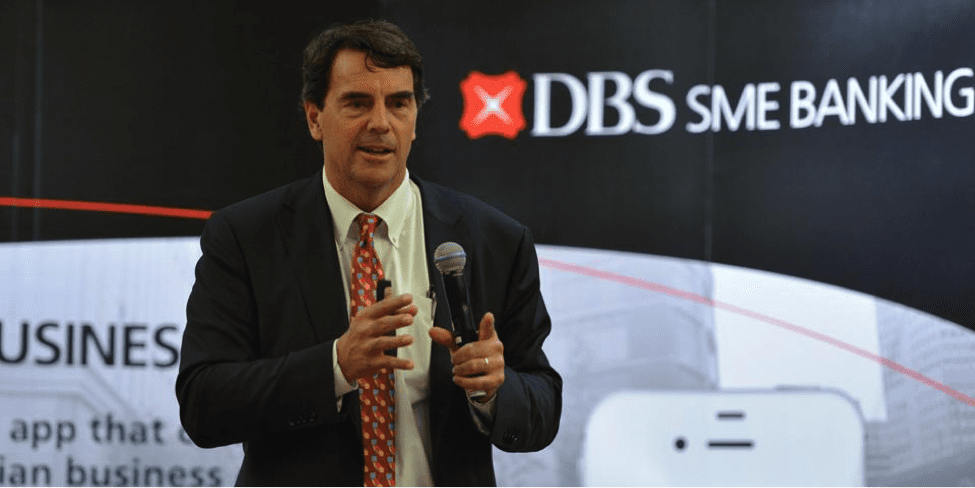
    Tim Draper, founder and managing director at Draper Fisher Jurvetson (DFJ), joined the Bay Area Series in January of 2015. Tim Draper is a third-generation venture capitalist, and is well known for being one of the early investors in Skype, Baidu, Tesla, Theranos, Hotmail, Twitch.tv hundred of others. His grandfather co-founded one of the first venture capital firms in Silicon Valley. He shared with local entrepreneurs his visions and insights on venture investing when he was in Singapore too.

    The Bay Area Series provide an excellent opportunity for local investors and entrepreneurs to hear and learn from successful individuals from Silicon Valley.

    Disrupt @ The Bay Series

    disrupt bay

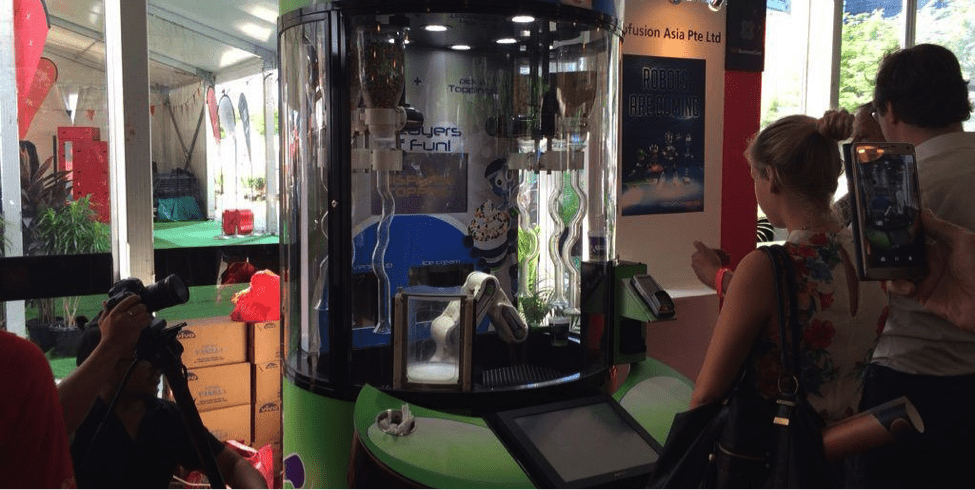
    Food & Beverage Event for Disrupt @ The Bay. Photo Credit: DBS.

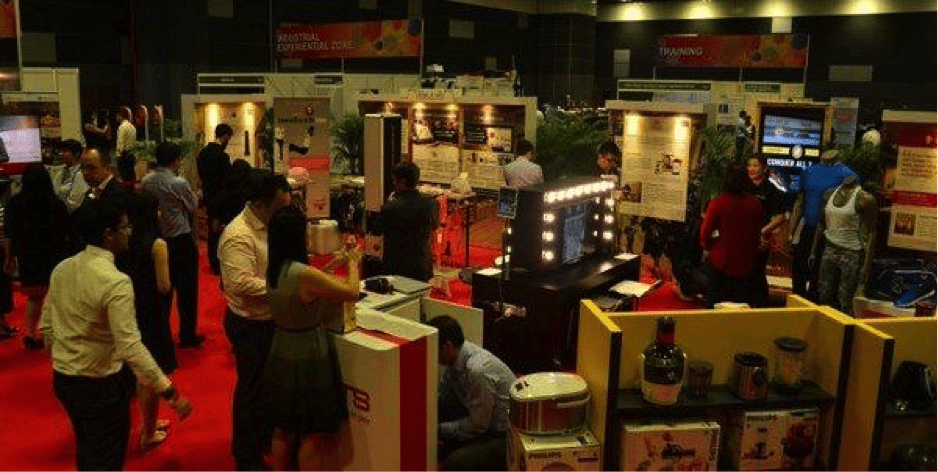
    DBS also launched a series of events called “Disrupt @ The Bay” in 2015. The goal of these events is to foster relationships and synergies among local entrepreneurs and investors. We need to re-think how we “disrupt” current industry norms, and create exponential growth through new technologies and business ideas. Some of the events organized last year include the F&B Disrupt @ The Bay, Future of Retail Disrupt @ The Bay, as well as Future of Automotive Disrupt @ The Bay.

    future of retail

    Future of Retail Event for Disrupt @ The Bay. Photo Credit: DBS.

    disrupt automotive

    Future of Automotive Event for Disrupt @ The Bay. Photo Credit: DBS.

    The Disrupt @ The Bay events have attracted multiple large corporations, small businesses and startups, and venture capital firms. These organizations include: StarHub, StoreHub, Golden Gate Ventures, iChef, The French Cellar, Reimagine Food, The Oddle Company, Mobikon Technologies Pte Ltd, and Robofusion Asia Pte Ltd.

    The Disrupt @ The Bay Series is a good platform for like-minded business owners, investors, and entrepreneurs to connect. They can share information, exchange ideas, and form new partnerships.

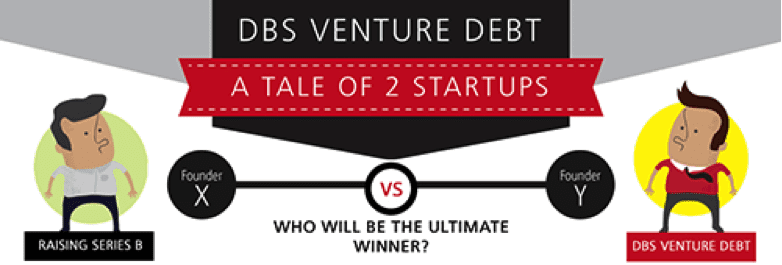
    DBS Venture Debt

    venture debt

    DBS and Venture Debt. Image Credit: DBS.

    As part of these initiatives, DBS also introduced venture debt financing and is the first bank is Southeast Asia to do so. Venture debt is a way for the bank to financial support tech startups in the growth stage.

    Currently, venture debt applicants need to be Singapore-based, with primary operations in Singapore. The startup should have also raised at minimum of $1 million SGD in Series A funding.

    Image credit: Kauffman FellowsImage credit: Kauffman Fellows

    This initiative provides a unique later stage funding option to encourage the growth of technology startups in Singapore.

    DBS Mobile App

    dbs business class

    Image Credit: DBS.

    DBS also launched a mobile app called “DBS BusinessClass” to provide a networking platform for local entrepreneurs, investors, and advisors in Asia. Available on both iOS and Android, members can post questions, gain advice on their businesses, and join online discussions on startups topics.

    Since launching a year ago, the app grew to over 15,000 members and over 300 discussion topics.

    Overall, these new initiatives by DBS show great promise. The bank received the Asian Banker’s Best Social Media Engagement Project Award, along with multiple other awards. DBS has taken a comprehensive approach to positively impacting the local entrepreneurship ecosystem in Singapore.

    We are optimistic that DBS has a strong platform to expand and connect entrepreneurs and investors across the rest of Asia.


  • Hong Kong’s Stocks Tumble to Three-Year Low After Trading Break

    Hong Kong’s Stocks Tumble to Three-Year Low After Trading Break

    Hong Kong stocks tumbled after a three-day holiday as a global equity rout deepened amid concern over the strength of the world economy.

    The Hang Seng Index plunged 4.3 percent at 9:31 a.m. in Hong Kong, heading for its lowest close since June 2012. The MSCI All-Country World Index dropped 2.1 percent since the city’s markets closed last week. Energy producers led declines after crude slumped 11 percent during the holidays. The Hang Seng China Enterprises Index retreated 5 percent, poised for its biggest loss since August.

    Hong Kong’s benchmark equity gauge tumbled 12 percent this year through Friday amid concern that capital outflows, a slumping property market and China’s economic slowdown will hurt earnings. Some speculators have been betting on an end to the city’s currency peg to the dollar. Tuesday’s riots in the shopping district of Mong Kok threatens to deter mainland visitors and worsen a drop in retail sales, according to UOB Kay Hian (Hong Kong) Ltd.

    “You can’t avoid a drop because everywhere has come down so much during this time and the same concerns are still there – oil price, global recession,” said Steven Leung, an executive director for institutional sales at UOB Kay Hian. “The image of Hong Kong as a metropolitan city has been hurt quite seriously” by the rioting, he said.

    Plunges in crude and concerns over the perceived creditworthiness of European banks has fueled uncertainty over the strength of the world economy this week. Oil fell to $26.91 a barrel in New York, compared with $31.72 a barrel at the close on Feb. 4. Kyle Bass, the hedge fund manager who successfully bet against mortgages during the subprime crisis, said China’s banking system may see losses of more than four times those suffered by U.S. banks during the last crisis.

    “The general tone of other markets has been quite soft,” said Tony Hann, who helps oversee about $270 million as head of equities at Blackfriars Asset Management in London. “It’s difficult to be optimistic” about Hong Kong, he said.

    The Hang Seng Index’s price-to-book ratio fell below one last month, a level unseen since the Asian financial crisis roiled regional markets and popped a domestic property bubble in 1998. All but two stocks on the 50-member gauge are down this year. Mainland financial markets remain closed for holidays until Monday.

    Police fired warning shots in Kowloon’s Mong Kok district early Tuesday after an effort by officials to clear illegal food stalls morphed into a riot. Almost 90 officers were injured, according to the police commissioner, and more than 60 people have been arrested, after protesters hurled bricks and set fire to barricades in the densely populated area. The clashes were more violent than anything seen during the “Umbrella Movement” of 2014, where protesters paralyzed downtown Hong Kong for more than two months to demand the right to pick the city’s leader.

    “This time the situation was quite different from Occupy Central: there was no peace and a lot of people were injured,”  UOB Kay Hian’s Leung said. “Overall it shouldn’t have very big impact but, of course, it will weigh on related sectors like retail, tourism.”

    Still, weaker global growth may reduce the likelihood of future interest-rate increases in the U.S., which raise borrowing costs in Hong Kong due to a currency peg, Leung said.

    While investor attention may shift toward corporate profits as companies unveil quarterly and annual results, analysts see little scope for optimism. They’re predicting a 12 percent drop in the Hang Seng index’s earnings per share over the next 12 months, according to data compiled by Bloomberg.

    The People’s Bank of China pumped four times as much cash into the financial system in the run-up to the lunar new year holidays than it did in 2015 as capital outflows added to pressure on the money market. Outflows increased to $158.7 billion in December, the most since September and were $1 trillion last year, according to estimates from Bloomberg Intelligence. That’s more than seven times the amount of cash that left in 2014.

    Should the Chinese banking system lose 10 percent of its assets because of nonperforming loans, the nation’s banks will see about $3.5 trillion in equity vanish, Bass, the founder of Dallas-based Hayman Capital Management, wrote in a letter to investors obtained by Bloomberg. The world’s second-biggest economy may end up having to print more than $10 trillion of yuan to recapitalize banks, pressuring the currency to devalue in excess of 30 percent against the dollar, according to Bass.

  • Hong Kong stocks extend sell-off as banking giant HSBC tumbles to 7-year low

    Hong Kong stocks extend sell-off as banking giant HSBC tumbles to 7-year low

    Hong Kong stocks closed at their lowest level since mid-2012 on Friday, extending steep declines from the previous day in a holiday shortened week, as index heavyweight HSBC tumbled to a seven-year low after the company decided to scrap a pay freeze plan aimed at cutting costs due to staff protests.

    The Hang Seng Index was down 1.2 per cent or 226.22 points at 18,319.58, the lowest close since June 2012. The index fell 3.9 per cent on Thursday after returning from the three-day Lunar New Year break, posting the worst loss to start a Chinese new year since 1994.

    For the week, it was down 5 per cent.

    So far this year, the Hang Seng Index has plunged more than 16 per cent, already more than doubling the annual loss of 7.2 per cent it rang up in 2015.

    The Hang Seng China Enterprises Index, or the H-shares index, settled 2 per cent lower at 7,505.37.

    Sino-British banking giant HSBC Holdings, one of the most-widely held stocks by Hong Kong retail investors, tumbled 2.7 per cent to HK$48.1, the worst level it has seen since April 2009.

    HSBC’s chief executive Stuart Gulliver wrote Thursday in a memo that the company would drop a pay freeze announced recently to cut costs, following feedback from its employees.

    Gulliver said the company would use the cash from the 2016 bonus pool to fund the pay rises, while also expressing his concerns for the bank’s revenue outlook in 2016 due to uncertainty around the global growth outlook and the interest rate environment.

    Among other market movers, Asian life insurer AIA Insurance fell 2.4 per cent to HK$37.25, and Chinese online major Tencent Holdings dropped 1.9 per cent to HK$133.3.

    Ben Kwong Man-bun, executive director and head of research of KGI Asia, said the Hong Kong market lacked clear direction and was taking its cue from hobbled overseas markets.

    “The global equity market is still under selling pressure. It’s because of the fearful sentiment of investors. They prefer to hold cash rather than assets,” Kwong said.

    The broader weakness in regional markets also added to the selling pressure on Hong Kong stocks. Japan’s Nikkei Average finished below 15,000 for the first time in 16 months, down 4.8 per cent at 14,952.6, as the yen, a traditional safe-haven currency, soared against the US dollar.

    On Thursday, global stocks entered a bear market, as the MSCI All-Country World Index, a gauge of global stock markets, had fallen more than 20 per cent from its most recent high in May 2015. US and European equities both took a hard hit, spurred by heavy selling in the banking sector on worries negative interest rates and low economic growth could hurt banks’ earnings.

    Going forward, analysts said stock markets still face a battery of threats ranging from slow growth, interest rate uncertainty, emerging market turmoil and heightened bad loan risks.

    “The global economy is really weak. Even after they did quantitative easing, it seems the central banks have failed to stop the slowdown,” Kwong said.

    However, Macau casino stocks bucked the weak trend, after Wynn Macau reported its operating revenues dropped by a less-than-expected 37 per cent in the fourth quarter of fiscal 2015. Shares of Wynn Macau jumped 3.6 per cent to HK$7.77, rival Galaxy Entertainment climbed 3.1 per cent to HK$23.25, and Sands China advanced 2 per cent to HK$24.75.

    Offshore oil producer CNOOC also recovered 0.4 per cent to HK$7.48 after crude futures bounced back in international markets.

    Chinese stock markets were still closed for the holiday on Friday and will reopen on Monday.

    However, some analysts expressed concerns A-shares may catch up with the global stock rout and fall sharply when they start trading next week.

    “It’s concerning,” said Li Tao, an analyst for Citic Securities. “The external markets were quite volatile during the Chinese new year break, particularly in the US, where stocks continued falling. The depressed state of the global economy may have a negative impact on the A-shares market.”

  • HSBC setting up local subsidiary to handle retail and wealth business

    HSBC setting up local subsidiary to handle retail and wealth business

    HSBC’s Singapore branch is spinning off its retail banking and wealth management division into a local subsidiary.

    This locally incorporated unit, which will be operational from May 9, will oversee the running of all operations of the retail banking and wealth management business here.

    All other lines of business of HSBC in Singapore, which include commercial banking, private banking and global banking and markets, will continue to operate under the existing Singapore branch.

    Mr Guy Harvey-Samuel, HSBC’s chief executive officer for Singapore, said the move reflects the success of the bank’s retail business here.

    “More importantly, this move demonstrates HSBC’s strong and long-term commitment to the Singapore market,” he added.

    “Singapore is a top-seven priority country for the HSBC Group globally and we will continue to invest in our business here. We are excited about new opportunities to further expand our presence.”

    The move to locally incorporate the retail banking and wealth management business follows an announcement by the Monetary Authority of Singapore (MAS) in April last year that HSBC is considered one of seven domestic systemically important banks in Singapore.

    Such banks could have a significant impact on the Singapore financial system’s stability and the proper functioning of the broader economy.

    All banks here have to undergo an annual assessment of their systemic importance.

    Banks with a significant retail presence are required to locally incorporate their retail operations.

    In line with this, HSBC’s new subsidiary will be subject to additional MAS regulatory requirements aimed at strengthening the resilience of the banking system and boosting protection of retail customers.

    The subsidiary will hold a full bank licence with qualifying full bank privileges. These privileges include being able to open more branches than other foreign banks.

    Qualifying full banks are also allowed to conduct the full range of banking businesses permitted under the Banking Act, including taking retail deposits.

    Once the new subsidiary is up and running, it will be business as usual, HSBC said.

    Mr Matthew Colebrook, the head of retail banking and wealth management for HSBC in Singapore, added: “Our customers remain central to HSBC and we will ensure that the transfer of customer accounts to the subsidiary is a seamless and largely behind-the-scenes process.

    “More broadly, HSBC aims to be a primary bank for affluent and aspirant Singaporeans and those with international needs.”

  • HSBC to locally incorporate its Singapore retail operations in May

    HSBC to locally incorporate its Singapore retail operations in May

    In order to follow new MAS regulations.

    HSBC will transfer its local retail banking and wealth management business, which is currently under the HSBC Singapore Branch, to a locally incorporated subsidiary, HSBC Bank (Singapore) Limited.

    The transfer of HSBC’s retail banking and wealth management business is expected to take effect on 9 May 2016, subject to the receipt of regulatory and court approvals.

    The move comes after Monetary Authority of Singapore tagged HSBC as one of seven domestic systemically important banks (D-SIBS). Under a new regulatory framework announced in April 2015, all D-SIBS should locally incorporate their retail operations to allow the MAS to set targeted and appropriate policy measures specifically for the systemically important banks.

    The other D-SIBS are DBS, OCBC, UOB, Citibank, Malayan Banking and Standard Chartered.

  • Hong Kong stocks fall in worst start to CNY since 1994

    Hong Kong stocks fall in worst start to CNY since 1994

    Hong Kong stocks fell in their worst start to a lunar new year since 1994 as a global equity rout deepened amid concern over the strength of the world economy.
    The Hang Seng Index slumped 3.9 percent at the close in Hong Kong as markets reopened following a three-day trading closure, during which the MSCI All-Country World Index dropped 2.1 percent. The last time the gauge fell so much on the first day of the lunar new year, investors were worried about the health of former Chinese leader Deng Xiaoping. Lenovo Group Ltd. led declines while energy companies dropped after crude slumped 11 percent during the holidays. Jeweler Chow Sang Sang Holdings International Ltd. slid after riots in the Mong Kok district.

    Hong Kong’s benchmark equity gauge tumbled 12 percent this year through Friday amid concern that capital outflows, a slumping property market and China’s economic slowdown will hurt earnings. Tuesday’s violence in the shopping district of Mong Kok threatens to deter mainland visitors and worsen a drop in retail sales, according to UOB Kay Hian (Hong Kong) Ltd.

    “You can’t avoid a drop because everywhere has come down so much during this time and the same concerns are still there – oil price, global recession,” said Steven Leung, an executive director for institutional sales at UOB Kay Hian. “The image of Hong Kong as a metropolitan city has been hurt quite seriously” by the rioting, he said.

    PetroChina Co. tumbled 5.1 percent, while Cnooc Ltd., China’s largest offshore oil company, dropped 5.3 percent. HSBC Holdings Plc slid 5.4 percent to a six-year low. The Hang Seng China Enterprises Index retreated 4.9 percent, its biggest loss since August. Mainland financial markets remain closed for holidays until Monday. Plunges in crude and concerns over the perceived creditworthiness of European banks has fueled uncertainty over the strength of the world economy this week. Oil fell below USD27 a barrel in New York, compared with $31.72 a barrel at the close on Feb. 4. Kyle Bass, the hedge fund manager who successfully bet against mortgages during the subprime crisis, said China’s banking system may see losses of more than four times those suffered by U.S. banks during the last crisis.

    “The general tone of other markets has been quite soft,” said Tony Hann, who helps oversee about $270 million as head of equities at Blackfriars Asset Management in London. “It’s difficult to be optimistic” about Hong Kong, he said. The Hang Seng Index’s price-to-book ratio fell below one last month for the first time since the Asian financial crisis roiled regional markets and popped a domestic property bubble in 1998. All but one stock on the 50-member gauge are down this year.
    Chow Sang Sang dropped 0.9 percent, while Luk Fook Holdings (International) Ltd., a jeweler that gets more than half its revenue in the city, declined 4.7 percent.

    Police fired warning shots in Mong Kok, the city’s most densely populated area, early Tuesday after an effort by officials to clear illegal food stalls morphed into a riot. The clashes were more violent than anything seen during the “Umbrella Movement” of 2014.

    “This time the situation was quite different from Occupy Central: there was no peace and a lot of people were injured,” UOB Kay Hian’s Leung said. “Overall it shouldn’t have a very big impact but, of course, it will weigh on related sectors like retail, tourism.” Still, weaker global growth may reduce the likelihood of future interest-rate increases in the U.S., which raise borrowing costs in Hong Kong due to a currency peg, Leung said.

  • Singapore stocks end down 1.57 pct

    Singapore stocks end down 1.57 pct

    Singapore shares closed 1.57 percent lower on Wednesday, as investors were catching up with the fall in the U.S. stock market earlier this week amid a global sell-off.

    Trading resumed on Wednesday after the Lunar New Year break. Investors looked to U.S. Federal Reserve Chair Janet Yellen’s congressional testimony later on Wednesday for fresh cues on the policy outlook, which may provide some relief for markets.

    While Yellen is expected to defend the Federal Reserve’s first rate hike in a decade last year and likely insist that further increases remain on track, any signs of a departure from such a stance in the wake of global growth concerns could provide risk assets such as equities with a breather.

    Singapore’s benchmark Straits Times Index fell 41.11 points to 2,582.10 points. Trading volume was 802 million shares worth 1.2 billion Singapore dollars. Decliners outnumbered advancers 288 to 85, while 550 stocks did not move.

    United Engineers Limited fell 1.5 percent to 1.94 Singapore dollars. The engineering and property group said it was looking to dispose its indirectly-owned unit MultiFineline Electronix.

    The buyer is Shenzhen-listed stamping and sheet metal manufacturer, Suzhou Dongshan Precision Manufacturing. United Engineers will expect to realize an attributable net disposal gain of about 115.2 million Singapore dollars, and receive net proceeds of about 505.3 million Singapore dollars.

    Zhongmin Baihui Retail Group dived 25.7 percent to 1.30 Singapore dollars. The Singapore Exchange said it was reviewing trading in the counter, noting that a “small group of individuals” was responsible for more than 90 percent of the buy volume of the Chinese department store operator’s shares in the year to February 4 and that these individuals appear to be connected to one another. The bourse operator last Friday urged investors to exercise caution on trading shares of Zhongmin Baihui.

    Among the top gainers, Jardine Matheson rose 0.6 percent to 54.02 U.S. dollars, whereas UOB became one of the top losers by falling 1.7 percent to 17.56 Singapore dollars. (1 U.S. dollar equals to 1.39 Singapore dollars)

  • SGX flags potential trading fraud in Zhongmin Baihui Retail Group

    SGX flags potential trading fraud in Zhongmin Baihui Retail Group

    Over 90% of trading volume came from a small group of investors.

    Singapore Exchange (SGX) urged investors and potential investors to exercise caution when dealing in the shares of Zhongmin Baihui Retail Group Limited (ZMBH).

    The SGX said that the share price of ZMBH remained steady from 26 October 2015 to 4 February 2016, despite a decline in the broad market. In particular, despite the STI falling 11.25% between 4 January 2016 and 4 February 2016 (relevant period), ZMBH’s share price remained relatively stable.

    SGX’s review of the trades in ZMBH shares during the relevant period showed that a small group of individuals was responsible for over 90% of the on-market buy volume of ZMBH shares. This group of individuals appears to be connected to each other.

    SGX is currently reviewing the trades in ZMBH shares and will take the necessary actions.