Category: Finance

Retail News Asia is committed to providing both local and global retailers with the latest Finance news throughout the Asian market. This on a daily base.

  • Indonesia to reopen banking transactions with Iran

    Indonesia to reopen banking transactions with Iran

    Indonesia said it is open to resume banking transactions with Iran following the lifting of economic sanctions against Iran.

    “Banking relations, an obstacle we are facing, will soon be resumed,” President Joko Widodo said after receiving Irans Foreign Minister Mohammad Javad Zarif on the sidelines of the 5th Organization of Islamic Cooperation Extraordinary Summit on Palestine and Al Quds here on Monday.

    The President said economic and investment cooperation between the two countries had been hindered because banking transactions were closed due to the imposition of economic sanctions against Iran.

    He said Indonesian banking authorities had agreed to follow up on the cooperation plan.

    “The chairman of the Financial Service Authority (OJK) said just now that the banking transactions would soon be resumed to develop and strengthen economic relations between the two countries,” he said.

    Bank Indonesia (the Central Bank) and OJK would discuss the mechanism for cooperation with Iranian banking officials.

    Due to the imposition of economic sanctions several years ago, Iranian banks were unable to conduct transactions with overseas banks.

    Since Irans nuclear program came to be known in 2002, the United Nations, the European Union, the US and several other countries had imposed economic sanctions on Iran.

    After these sanctions were revoked, the flow of trade to and from Iran is expected to become easier.

  • ANZ wealth chief Joyce Phillips leaves after restructure

    ANZ wealth chief Joyce Phillips leaves after restructure

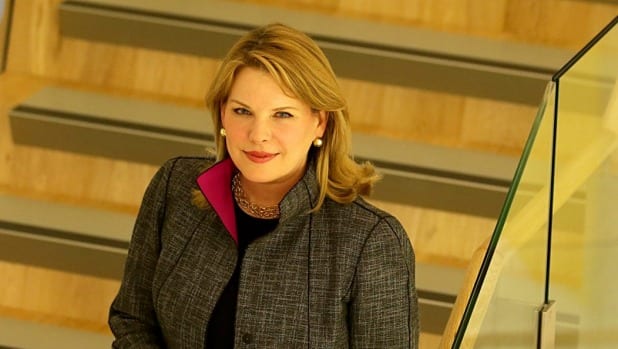
    ANZ Bank’s wealth chief, Joyce Phillips, is departing the banking giant following a restructure of the $67 billion institution’s wealth management arm.

    Chief executive Shayne Elliott said the group was simplifying its approach to wealth management, which includes the bank’s insurance, superannuation and investments products.

    As a result of the changes, Ms Phillips, who led ANZ’s wealth, marketing and innovation divisions, will leave.

    ANZ Bank's wealth chief, Joyce Phillips, is departing the banking giant following a restructure of the $67 billion ...ANZ Bank’s wealth chief, Joyce Phillips

    “The simplified approach also provides the opportunity to focus on improving returns and capital efficiency from our insurance, superannuation and investments product business given higher regulatory capital requirements,” Mr Elliott said.

    The moves, foreshadowed by Street Talk, comes after ANZ appointed Google’s Australian boss, Maile Carnegie, to the newly created position of group executive for digital banking.

    Reporting to Mr Elliott, Ms Carnegie will have responsibility for digital projects, innovation and “strategic relationships” with the fintech sector that is seeking to challenge the power of the big four banks.

    Mr Elliott said the wealth division had achieved a “significant amount” under Ms Phillips’ watch since it was formed in 2012.

    ANZ’s global wealth arm posted a net profit of $601 million during the last financial year – an 11 per cent increase from 2014. The division contributed less than 10 per cent of ANZ’s profits.

    In an internal company interview, Mr Elliott said the bank wanted to “really maximise” the 10 per cent of group capital that was currently locked in the wealth division.

    “It is going to be material in the terms of the impact on the wealth business but for shareholders, given that it’s only 10 per cent, it will be a good thing but it’s unlikely that it’s going to be a dramatic outcome for shareholders,” he said.

    The restructure will see wealth effectively move into ANZ’s retail business. ANZ’s private bank division will report to Fred Ohlsson, group executive Australia and ANZ Financial Planning will transition to be part of the retail distribution arm.

    The group’s New Zealand wealth business will fall into the expanded retail, business banking and wealth division.

    Wealth in Asia will join Retail Asia, while the group’s remaining insurance, superannuation and investments activities in Australia will be rebranded Australia Wealth. Alexis George, ANZ’s managing director of insurance, will head the business and report to Mr Elliott.

    Sources said the break-up of the wealth division could be seen as a precursor to a potential sale in the next 12 months.

    ANZ has looked at stepping up a process of divestments. Last year, the bank sold its Esanda dealer finance unit to Macquarie Group for $8.2 billion. It is also reviewing its non-controlling interests in Asia.

    ANZ shares have fallen 35 per cent in the past 12 months to $23.07, compared with the 17 per cent fall of the benchmark S&P/ASX200.

  • China court jails 24 people over $1.5-bln financial fraud

    China court jails 24 people over $1.5-bln financial fraud


    A court in southern China has jailed 24 people for fraudulently raising nearly 10 billion yuan ($1.5 billion) in one of the country’s biggest financial scams, the official Xinhua news agency said.

    The group was convicted of illegally raising funds during the decade to 2012 from more than 230,000 investors, mainly senior citizens who put in their life savings, it said, citing the court.

    Guangdong Bangjia Leasing Co set up four firms in the southern province and many branches and subsidiaries across China, luring retail investors to buy memberships and fund nonexistent loans by promising returns of as much as 47 percent.

    The case spotlights growing risks in a loosely regulated wealth management products industry, which lures millions of unsophisticated retail investors to high-yield products offered by opaque online finance firms and privately run exchanges.

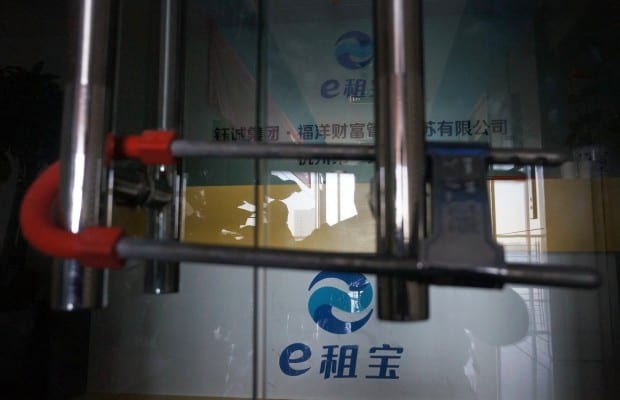
    In February, authorities arrested 21 officials of Ezubao, once China’s biggest peer-to-peer lending platform, which collected $7.6 billion in less than two years from more than 900,000 investors.

    Ezubao used savvy marketing, authorities said, to fund “a complete Ponzi scheme”, that used investor funds to support a lavish lifestyle for company executives.

    Last year, hundreds of angry investors also hit the streets in Beijing and Shanghai after losing $6 billion from the Fanya Metals Exchange, which offered investment products promising an annual return of up to 14 percent.

    The Guangzhou Intermediate People’s Court on Monday sentenced the main suspect in the Guangdong fraud, Jiang Hongwei, to life in prison, while the others received terms ranging from 3 years to 14 years, Xinhua said.

    The court has frozen and seized their assets, including 127 vehicles and 43 villas, but prosecutors said few victims might get their money back, since Jiang had squandered millions on luxuries, the agency added.

    Some older investors who lost money in the Guangdong fraud said they were attracted by its fancy branding.

    “Their grand exhibition occupied six halls,” Xinhua quoted one elderly woman from Jiangsu province as saying.

    “After attending it, I felt assured and decided to invest 700,000 yuan,” she added. “It was all the savings my husband and I had.”

    ($1=6.5397 Chinese yuan)


  • SGX proposes 10% minimum retail tranche for mainboard IPOs

    SGX proposes 10% minimum retail tranche for mainboard IPOs

    The Singapore Exchange is proposing that mainboard companies allocate to retail investors a minimum 10 per cent of shares in their initial public offers (IPOs), up to a maximum of $100 million.

    Between 2010 and last year, market debutantes on average set aside only 8 per cent of their IPO shares for retail investors, the SGX said.

    But over the same period, 90 per cent of IPOs received applications for their public subscription tranches amounting to greater than 10 per cent of the total offer size.

    “SGX’s proposal for a minimum 10 per cent retail allocation for shares of mainboard IPOs is aimed at giving individuals more investing opportunities in the Singapore equities market,” said chief executive Loh Boon Chye.

    “While market conditions may have been uncertain of late, this initiative is for the long term and is part of overall enhancements to the Singapore stock market.”

    This is the second time that the bourse operator has suggested introducing a minimum IPO allocation for retail investors. The first time it did so was in in 2012, when it proposed a 5 per cent retail allocation.

    Yesterday’s proposal is a recalibrated one that takes into account the feedback the SGX received from the 2012 consultation and data from IPOs launched between 2010 and 2015, it said.

  • Mandiri’s profit up 2.3 percent to Rp20.3 trillion in 2015

    Mandiri’s profit up 2.3 percent to Rp20.3 trillion in 2015

    State lender Bank Mandiri posted a net profit of Rp20.3 trillion last year, up 2.3 percent from Rp19.8 trillion a year earlier.

    The profit grew by one-digit percentage as the bank allocated most of its funds for reserves, Bank Mandiri President Director Budi Gunadi Sadikin said in a public statement here on Tuesday.
    The bank saw its reserve fund rising significantly at the end of 2015 to Rp12.04 trillion from Rp5.5 trillion in the same period of 2014.

    “Admittedly, part (of our income) was put in reserves to protect the bank from risks of non-performing loans (NPL),” he said. With the improving economic condition, he believed the banks profit will increase in 2016, but refused to divulge the target set for profit growth. The bank saw its fee-based income hitting a record high of 23.7 percent or Rp18.6 trillion, and operating income growing 18 percent to Rp67.1 trillion. The amount of credits extended last year grew by 12.4 percent to Rp595.5 trillion, while its consolidated net interest margin (including that of its sharia unit) rose by 0.11 percent to 6.08 percent.

    The net ratio of NPLs stood at 0.9 percent last year. As of December 31, 2015, the banks assets reached Rp910.1 trillion, up 6.4 percent from Rp855 trillion the previous year.

  • StanChart still profitable in Singapore

    StanChart still profitable in Singapore

    Singapore remained one of the few bright spots for Standard Chartered last year amid huge losses elsewhere.

    Profit before tax in Singapore was US$567 million (S$796 million) in the 12 months to Dec 31, down 33.4 per cent year-on-year but still the second best country performance.

    Hong Kong’s profit contribution was top, at US$1.49 billion, but still down 17.9 per cent compared with a year ago. In China, profit pared 45.3 per cent year-on-year to US$88 million, according to the group’s results released overnight.

    Elsewhere, signs that StanChart was struggling amid global headwinds were more apparent.

    In India, it suffered a loss before tax of US$981 million, a huge reversal from 2014’s profit of US$561 million. Its losses in Britain widened from 2014’s US$154 million to US$1.41 billion last year.

    The banking group reported a total loss before tax of US$1.52 billion, down from a US$4.24 billion profit in 2014.

    Group chief executive Bill Winters warned of a choppy outlook, noting in the annual report: “The economic and geopolitical backdrop for the group clearly deteriorated over 2015 and has not improved into 2016.”

    But StanChart’s business in Singapore, where it employs about 7,000 people, presents a rosier picture.

    “The bank in Singapore remained profitable in 2015. We saw a double-digit year-on-year growth in retail deposits and bancassurance, achieved a substantial increase in wealth management market penetration and grew our priority banking client base,” Singapore chief executive Judy Hsu said in a statement yesterday.

    She added: “We also maintained positive business momentum in financial markets, driven by a significant increase in foreign currency volume and revenues, and improved on the quality and interest margins of transaction banking’s cash income business.

    “Singapore is a core market for the bank and plays a significant role as a hub for our global business and as a gateway to Asean… and we will continue to invest in the growth of our Singapore franchise across retail, private banking, commercial and institutional clients.”

    Ms Hsu’s comments came amid concerns about how global banks are faring in Singapore. In November, StanChart moved to cut 15,000 jobs globally, including an unspecified number of positions here.

    Uncertainty yet looms at the bank, which is undergoing “accountability reviews” targeting around 150 current and former employees globally. The reviews have led to some layoffs and the move to claw back past year bonuses.

    A Singapore spokesman declined to comment on whether any staff here was affected by the reviews, adding: “The accountability reviews are still ongoing and more actions, including the reduction or cancellation of prior year incentive awards, are likely.”

  • HSBC, Standard Chartered Caught Between ‘Brexit’ and China

    HSBC, Standard Chartered Caught Between ‘Brexit’ and China

    Two big U.K. banks’ shares tanked over the past couple of days, and unlike the British pound, they’re not weakening because of the so-called “Brexit” referendum — although that certainly doesn’t help.

    Instead, their fall may have a lot to do with the market and economic turmoil that has been taking place in China.

    The London-listed shares of emerging markets-focused bank Standard Chartered (SCBFF) fell by 10% at one point on Tuesday morning after it reported its first annual loss in more than 25 years.

    The bank reported a loss before tax of $1.5 billion last year, in sharp contrast to 2014’s profit of $4.2 billion.

    On Monday, HSBC’s (HSBC) shares fell in an otherwise rising market after the bank, which is the biggest in Europe and one of the biggest in the world by assets, reported a loss of $858 million before tax in the fourth quarter of last year, vs. a profit of $1.7 billion in the fourth quarter of 2014.

    HSBC, which is doing a lot of business in Asia and was even thinking of moving its headquarters there before deciding earlier this year to remain in London, eked out a 1% increase in pretax profit for full 2015 to $18.87 billion, but its adjusted loan impairment charges were up 17% at $3.7 billion over the period.

    The weak results of the two banks chime with rising investor worries about the exposure of U.K. banks to Asia, and particularly China, at a time when European banks have been making investors nervous again.

    Richard Barnes, senior director at Standard and Poor’s credit rating agency, received many questions about the risk of European banks’ exposure to Asia last week during an analyst call, and said the region was important particularly for HSBC and Standard Chartered.

    However, “we’ve seen European banks generally retrenching from a number of regions in the world including Asia … banks are trying to reduce exposure,” Barnes said, adding that, in China, “banks look again at their exposure to state-owned enterprises and are focusing on the ones that are likely to be supported by the government in a downturn.”

    HSBC has been deeply involved in the liberalization and deepening of China’s capital markets, having successfully negotiated a majority stake in a new, nationally licensed securities joint-venture in the mainland. HSBC Group Chairman Douglas Flint acknowledged in a statement on Monday that “China’s slower economic growth will undoubtedly contribute to a bumpier financial environment,” but he added that the country “is still expected to be the largest contributor to global growth as its economy transitions to higher added value manufacturing and services and becomes more consumer-driven.”

    He said this transition is driving the bank’s focus on the Pearl River Delta as a priority growth opportunity, as the area is a concentration of high-tech, research-focused and digital businesses.

    HSBC’s exposure to mainland China is around $143 billion, according to its annual report; of these, $135 billion are loans to other banks or non-bank financial institutions, sovereign and corporate loans, while $8 billion are loans to retail clients.

    China is perhaps even more important for Standard Chartered and has helped reduce the bank’s loss over the past year. Its Greater China business showed a pre-tax profit of $1.37 billion last year, compared to a loss of $1.33 billion in its European operations. In terms of exposure to China, Standard Chartered listed $77.67 billion in loans to customers in the country.

    The two banks would normally be sheltered from fears over their exposure to China by their presence in one of the strongest financial centers in the world, London. But with uncertainty in the U.K. rising because of the referendum on EU membership, expect a few particularly volatile months ahead for HSBC and Standard Chartered.
  • MasterCard says Australian retail sales ‘worrisome’

    MasterCard says Australian retail sales ‘worrisome’

    MasterCard’s Sarah Quinlan says a cooling property market is hitting retail sales. Australian retail sales will rise in 2016, but slowing wages growth and a cooling property market here and in China is dampening growth. That’s the prediction based on MasterCard’s first monthly analysis of millions of card payments made on card terminals.

    It began tracking retail sales in Australia last year based on all transactions at terminals and claims this gives more accurate data than that provided by the Bureau of Statistics, which relies on surveys.

    MasterCard’s first monthly survey of payments in Australia predicts retail spend will drop further. Photo: Jim Rice

    Sarah Quinlan, MasterCard’s New York-based senior vice-president of market insights, said retail sales year-on-year in Australia grew 3.2 per cent in value in January compared to a year earlier.

    Year-on-year sales growth in January 2015 was running at about 6 per cent.

    She said growth at the moment is due to inflation because of a depreciating Australian dollar and the trend down is being driven by real wages growth declining. This has been reinforced by house prices cooling because regulators have capped investor lending.

    A big slowdown in spending by Chinese tourists and investors is the other main factor which is hitting all countries.

    “You could have absolutely predicted the real estate outcome,” she said. “There’s two things I watch in spending; I watch consumer confidence and wage growth.”

    MasterCard's first monthly survey of payments in Australia predicts retail spend will drop further.

    Growth due to importing inflation

    In the US, she said, wage growth has been poor, but consumer confidence is higher than in Australia now.

    “They are absolutely confident they are going to hold their job now or they can find a job if they want to switch. It is the opposite of what’s happening here,” Ms Quinlan said.

    “While you still have a positive growth rate in your spending in Australia, it is of a worrisome nature because it is more due to importing inflation due to a 35 per cent drop in the Australian dollar [versus the US dollar] since 2012.”

    The pullback of Chinese money, she said, is due to a property bubble there and numerous senior officials being hit with corruption allegations.

    “We can tie exactly back to the day back in August 2013 that [politician] Bo Xilai was arrested for corruption and there’ve been 100,000 people arrested for corruption subsequently. So they are just not showing their wealth now,” she added.

    “And this debt bubble up there is huge right now, it makes ours pale by comparison. By our calculations around 75 per cent of the economy in China is owned by state-owned enterprises. So the state has been running this huge bubble.”

    As well as Australia, MasterCard produces a monthly report called SpendingPulse based on 160 million transactions per hour on its network for the US, Japan, Canada, Brazil, Hong Kong and Britain.

  • Is Xinqi Asset another Ezubao?

    Is Xinqi Asset another Ezubao?

    An asset management company backed by property projects has defaulted on wealth management products worth 1.9 billion yuan (HK$2.27 billion), affecting more than 5,000 retail investors across mainland China and triggering more concerns about its property and financial markets.

    Xinqi Asset held a meeting to discuss solutions with its investors in Shanghai on Wednesday, sources said. Retail investors have been unable to redeem their investments and earnings since Sunday.

    A final solution has not been confirmed. It remains unknown whether other assets managed by Xinqi are safe. An earlier company statement said assets under management stood at around 4 billion yuan. Shanghai police have been taking complaints from investors and looking into the matter.

    More defaults and scandals have been exposed in the mainland’s thriving wealth management business in recent months as the economy slows down, revealing scams in the innovative and less regulated sector. Late last year, the mainland’s largest peer to peer lending company, Ezubao, defaulted on HK$59 billion owed to more than 900,000 investors across the mainland. Xinhua said 95 per cent of the projects on the platform were fake.

    Xinqi Asset sold wealth management products to individual investors, with the investments put into commercial and residential development in second-tier cities including such as Xian and Zhengzhou, and promised annual interest rates as high as 15.6 per cent, according to its official website and documents about its products.

    Worse still, there is no specific regulator overseeing these companies

    The wealth management products issued by Xinqi Asset were used to finance big property developers.

    Xinqi would buy properties under development from the developers, and then transfer ownership to retail investors. Investors would be repaid with their capital and earnings after the project was finished and the developer bought back the properties.

    Xinqi Asset lists mainland China’s leading property developer, Greenland, as a partner on its official website.

    Greenland denied raising funds through Xinqi Asset as early as September, although it did sell some property units to it.

    “It seems Xinqi Asset has been using offline selling, rather than online selling to promote its products, which makes it different from the popular peer to peer lending companies,” said Abner An, an independent financial commentator in Beijing. “However, China’s offline asset management companies have even bigger problems with lack of transparency in capital flow.

    “Worse still, there is no specific regulator overseeing these companies. It is crucial to find out the capital flow under Xinqi Asset. It is possible that their investments in property are eroded by sluggish selling in second-tier cities. But the problem will be bigger if the money is embezzled to do other high-yield investment.”

    Calls to Xinqi’s headquarters in Zhengzhou, Henan province on Thursday, failed to reach management.

    Xinqi Asset, registered in Xian, Shaanxi province, has registered capital of 200 million yuan.

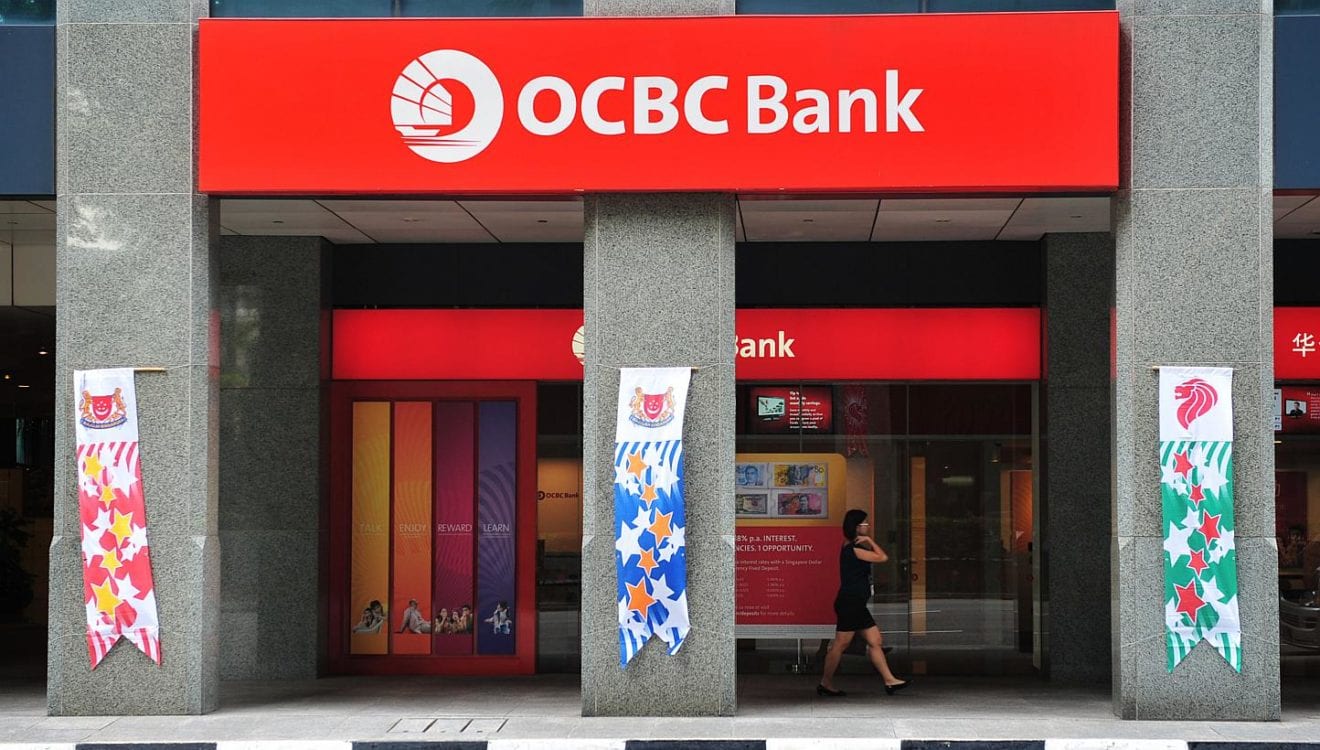
  • OCBC rallies on earnings surprise as Singapore bank rivals fall

    OCBC rallies on earnings surprise as Singapore bank rivals fall

    Oversea-Chinese Banking Corp.rallied after fourth-quarter profit rose more than analysts anticipated. Shares of its two large Singapore rivals fell.

    The bank’s stock surged Wednesday by the most in almost six months following the release of an exchange statement showing net income climbed 21% on higher interest and trading income as well as gains from life insurance.

    Chief Executive Officer Samuel Tsien signalled confidence in the bank’s ability to continue growing as Singapore’s lenders face pressure from their exposure to a commodity price slump and an economic slowdown in China and Southeast Asia. OCBC doesn’t face issues with its Greater China loan portfolio, he said in a briefing. Smaller competitor United Overseas Bank Ltd.reported barely improved quarterly net income Tuesday as rising expenses and provisions for bad loans restrained earnings growth.

    “Against the massively negative sentiments against banks in general and fears of oil and gas impact, OCBC indeed saw higher provisions but nowhere near levels justifying” downgrades for the stock, Kevin Kwek, an analyst at Sanford C. Bernstein & Co. in Singapore, said in an e-mail. “The positives of gains in net interest and fee income in this environment should also reassure investors.”

    Analysts had cut their consensus 12-month target price for OCBC’s shares to $9.67 from a peak of $11.76 last August, according to estimates compiled by Bloomberg.

    The lender’s stock jumped as much as 4%, the largest intraday gain since Aug. 25. The shares were up 1.8% at $7.91 as of 1:33 p.m. in Singapore. United Overseas Bank fell 3.2% and DBS Group Holdings Ltd. declined 0.2%. The benchmark Straits Times Index dropped 0.9%. The rally in OCBC stock pared its loss this year to 10%, exceeding a 9% decline in the Straits Times Index.

    OCBC, Singapore’s second-biggest bank by assets, said net income climbed to $960 million in the three months ended Dec. 31 from $791 million a year earlier. That exceeded the $877 million average of seven analysts’ estimates compiled by Bloomberg.

    OCBC’s net interest margin, a measure of lending profitability, rose to 1.74% in the fourth quarter, a seven basis-point increase from a year earlier. That helped net interest income climb 5% to S$1.34 billion, the statement showed. Non-interest income advanced 26% to $960 million as the life-insurance unit’s profit jumped 24%. Net trading income soared nine times to $163 million from $18 million a year earlier.

    Bad loans

    Non-performing loans rose 54% to $1.97 billion in 2015, mostly because of “a few large corporate accounts associated with the oil and gas services sector,” the bank said. Its bad-loan ratio climbed to 0.9% as of Dec. 31 from 0.6% a year earlier. The loan portfolio remained “sound” with a “comfortable” allowance coverage, the bank said.

    At a briefing for media and analysts Wednesday, CEO Tsien said that while he expects an increase in non-performing loans, it’s unlikely the bank’s NPL ratio will exceed levels during the global financial crisis that started in 2008. In that period, OCBC’s soured credit ratio reached 1.7% of total loans. NPLs tied to the oil and gas industry represented 0.39% of the bank’s loan book of $211 billion, he said.

    Tsien said pillars of Singapore’s economy — such as real estate, retail and oil and gas — have weakened, and that a “challenging operating environment” will continue this year.

    “The past year has been a challenging one for most industries,” he said in the statement, citing the economic downturn, volatility in financial markets and higher regulatory requirements for capital.

    OCBC spent US$5 billion buying Hong Kong-based Wing Hang Bank in 2014. The acquisition helped the bank rely less on revenue from Southeast Asia as China including Hong Kong became its largest source of income after Singapore. Greater China accounted for 20% of pretax profit in 2015, up from 12% in 2014, it said.

  • BitMEX Launches Leveraged China A50 Stcok Index Trading with Bitcoin

    BitMEX Launches Leveraged China A50 Stcok Index Trading with Bitcoin

    BitMEX (Bitcoin Mercantile Exchange) has announced this week they are launching the world’s first bitcoin denominated futures contract on a Chinese A Share index. The new instrument from the bitcoin derivatives focused venue allows cryptocurrency investors to access the walled-off equity market in China and trade with up to 25 to 1 leverage.

    The China A50 Equity Index is comprised of the fifty biggest public companies in China and priced in Chinese yuan (CNY). However, investors using the BitMEX product will receive 0.0001 Bitcoin (XBT) per 1 CNY move in the index. Additionally, unlike the Chinese stock exchanges that only open Monday to Friday, the BitMEX contract trades 24/7. The new contract has monthly expiries based on the closing price of the FTSE CHINA A50 Index to two decimal places.

    Speaking with Finance Magnates Arthur Hayes, co-founder and CEO of BitMEX, explains the rationale for the new product: “Trading the China A share market for most investors is quite difficult. Due to various restrictions, obtaining long and especially short exposure with leverage is almost impossible. For retail investors without large brokerage accounts, it is even more difficult.

    BitMEX aims to provide retail investors globally access to the China A share market using a Bitcoin denominated futures contract (commonly referred to as a quanto futures contract). Investors with only a few hundred USD of Bitcoin can now trade the China stock market. As long as an investor can exchange his or her domestic currency for Bitcoin, he or she can trade the BitMEX China A50 Index Futures contract.”

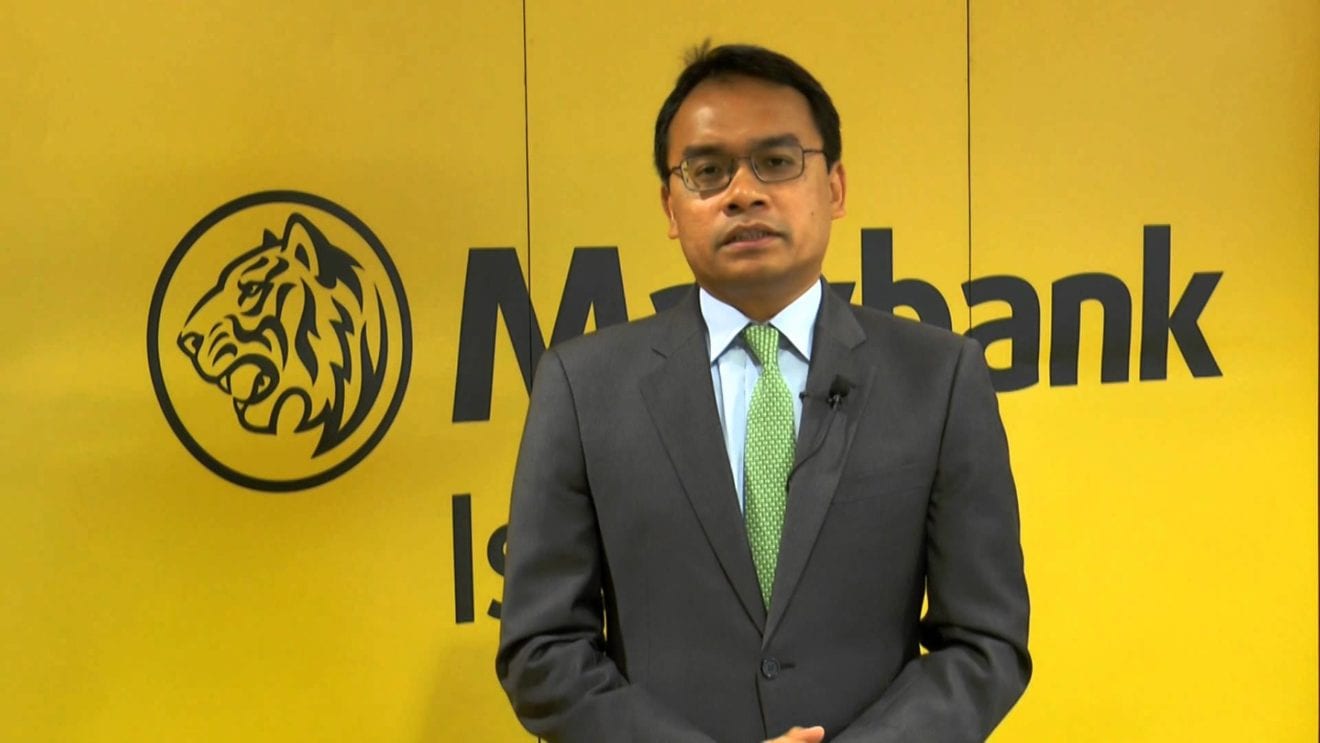
  • Game changer for Maybank Islamic

    Game changer for Maybank Islamic

    Malaysia’s biggest Islamic lender, Maybank Islamic Bhd, says the investment account (IA) business is set to be a game changer for the group in its effort to boost earnings growth amid the subdued banking landscape.

    The Islamic lender, which has total assets worth close to RM147bil, will focus on its new mudarabah (profit-sharing) investment fund launched in July last year in view of the Islamic Financial Services Act (IFSA) 2013.

    Describing the IA business as “the evolution of the next phase of growth”, Maybank Islamic chief executive officer Datuk Muzaffar Hisham told StarBiz that demand for the IA business has shot up significantly, as the value of its mudarabah fund rose to RM18bil in the last six months of 2015.

    “Judging from this figure, we are confident that the fund will continue to grow, underpinned by strong demand from the Muslim and non-Muslim population as well as the benefits it offers.

    “We have a customer base of about 4.5 million, of which 50% comprises non-Muslims,” explained Muzaffar.

    The value proposition offered by the mudarabah IA is that MayBank Islamic could provide steady returns of between 4% and 5% per year to its customers.

    “We are confident that this fund will be a growth driver for us, moving forward,” he added.

    He pointed out that “the bank has put in place an effective and robust risk management framework for all of its products, including the new IA, which aims to provide capital preservation, financial security and steady returns through low risk and low to medium-risk investments.”

    Under the IFSA 2013, all banks are required to distinguish IA and Islamic deposit. This means that products with mudarabah (profit sharing) or wakalah (agency) features are considered IAs and are not-principal guaranteed and hence not protected by the Malaysia Deposit Insurance Corp.

    The classification aims to provide greater legal clarity on the types of syariah financial contracts. Customers will have a choice and will be able to differentiate between products that are principal guaranteed and those which are not that provide potentially higher risk returns like mudarabah.

    Besides garnering a pole position in terms of asset size, Maybank Islamic’s market share in the country is also the biggest in terms of financing at 33.6% and deposit at 27.9%.

    At group level, Maybank Islamic’s contribution to the Maybank Group is also significant, accounting for close to 30% in revenue and 48.7% in total loans and financing.

    All these figures were for the third quarter ended Sept 30, 2015 (Q3’15).

    Muzaffar said the bank is also looking to grow its Islamic banking business in the region, adding that the business in Singapore and Indonesia each accounted for about 5% of Maybank Islamic’s revenue.

    Although Indonesia has the highest Muslim population in the world, he noted that syariah banking was relatively still at its infancy stage unlike commercial banking.

    “The Islamic banking business in Indonesia accounts for close to 9% of the total banking business there.

    “In Malaysia, it is 25%. Hence, there is plenty of room for growth and we intend to grow and take advantage of this situation,” he added.

    According to Muzaffar, the challenge for the bank in venturing overseas will be the regulatory framework, in which Maybank Islamic has to operate in, as well as the uncertainties in the Basel III rules pertaining to its implementation in Islamic finance.

    On the corporate investment business, he said it would be dependent on the country’s economic growth, adding that the bank would continue to look at opportunities in the debt and initial public offering markets.

    As for its fourth-quarter results, he said Maybank Islamic hopes to maintain its performance in the preceding quarter, although much will be dictated by the external economic environment and market conditions.

    For Q3’15, the bank recorded a 13.2% year-on-year growth in pre-tax profit to RM1.23bil from RM1.09bil. The growth in earnings was on the back of strong financing growth, which grew by 23% to RM127bil.

    Total income for the period stood at RM2.98bil as opposed to RM2.46bil. Total capital ratio and return on equity for the period stood at 15.18% and 16.14%, respectively.

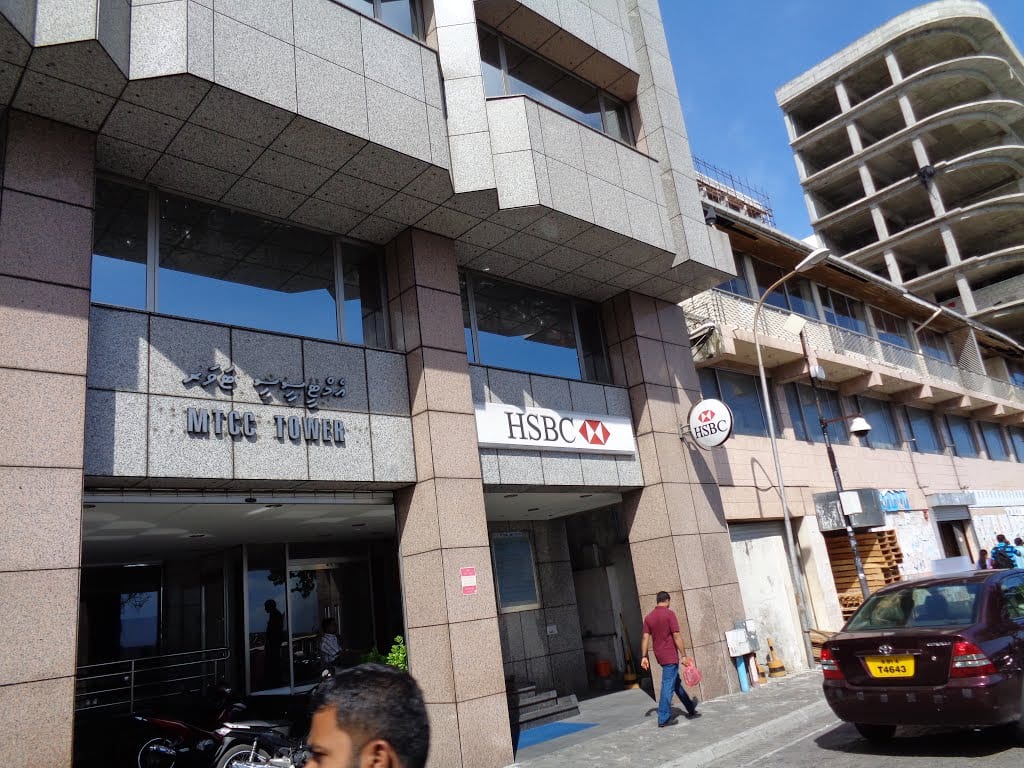
  • HSBC to stop retail banking in Maldives

    HSBC to stop retail banking in Maldives

    Banking giant Hong Kong and Shanghai Banking Corporation (HSBC) is to cease retail banking services in Maldives from April. We understand that the Male branch of HSBC had decided to cease retail banking operations from April 28 and is now informing its customers.

    An official from the Maldives Monetary Authority (MMA) also confirmed the plans by HSBC’s Male branch to shift to corporate-only operations. The official, however, did not give details.

    HSBC was not available for comment.

    HSBC operates in Maldives as a trading desk of the HSBC branch in Sri Lanka.

    An account in HSBC has to be opened with an initial deposit of MVR 50,000; the highest initial deposit required of any bank that operates in Maldives. The bank also pays the lowest deposit interest rate at 1 – 1.75 percent. Deposit interest rate on US Dollar accounts is 0.10 percent.

    As the bank charges a high amount in fees, the bank mainly hosts Maldivian businesses.

    In May 2014, complaints mounted over the bank’s decision to close down accounts held by many small and medium businesses citing administrative reasons. The businesses had complained that the move was made without prior notice.

    The decision by one of the biggest banks in the world comes a week after it was revealed that the Maldives had lost a major international banker.

    President Abdulla Yameen Abdul Gayoom told residents of Gaafu Dhaal atoll Gadhdhoo on February 15 that one of the major correspondent banks had dropped Maldives from its client list, while another one is considering a similar move. The reason, according to the president, is false claims made about Maldives, including threats posed by home-grown jihadists.

    “When we make such claims without considering the repercussions, it’s the people of Maldives that has to suffer,” he said, after inaugurating a project to establish a clean water system in the island.

    The president did not identify the bank that had dropped the Maldives. Haveeru, however, understands that US-based JPMorgan Chase had terminated its dealings with Maldivian banks in 2013.

    A correspondent bank is a financial institution that provides services on behalf of another, equal or unequal, financial institution. It can conduct business transactions, accept deposits and gather documents on behalf of the other financial institution.

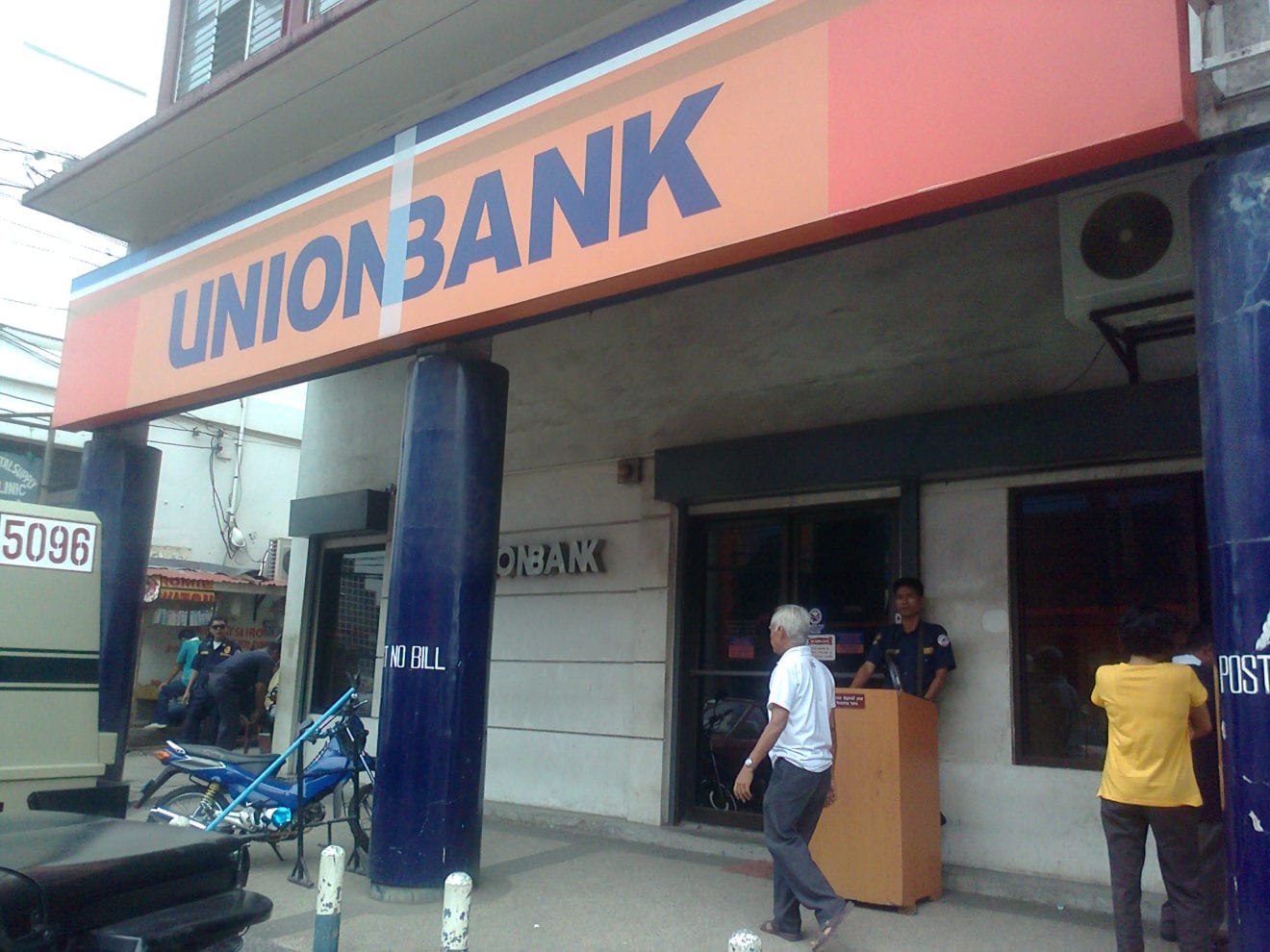
  • UnionBank taps Lendr to boost retail loans

    UnionBank taps Lendr to boost retail loans

    UnionBank of the Philippines (UnionBank) has tapped a multi-channel, telco- and bank-agnostic platform to boost retail loan growth.

    Salary, personal, automotive, housing, and other customer loan availments will soon be within reach through mobile devices as UnionBank and Voyager Innovations, Inc. (Voyager) collaborated to offer the bank’s retail loans portfolio through Lendr.

    Lendr is a fully digital, multi-channel, telco- and bank-agnostic platform that financial institutions and credit providers can use to reach consumers planning to avail themselves of loans through a single online “marketplace.”

    “In the fast-growing digital economy, innovation is the name of the game, and we are glad that UnionBank is seeing the vast opportunity for growth through digital lending with the help of Lendr,” Manuel V. Pangilinan, Voyager chairman, said.

    Voyager is the digital innovations arm of Philippines Long Distance Telephone Co. (PLDT) and Smart Telecom.

    “We are excited to work hand in hand to bring the best of Voyager’s FinTech innovations and UnionBank’s robust lending portfolio together for the benefit of Filipino consumers nationwide,” Pangilinan added.

    Through Lendr, UnionBank  expects to boost its retail loans portfolio and further extend its margins in consumer lending.

    “Technology, innovation and partnering have always been at the heart of UnionBank’s DNA,” Justo A. Ortiz, UnionBank chairman and chief executive said.

    “Banks need to compete with FinTechs but also need to collaborate with FinTechs, think and act like a FinTech and even transform into a FinTech in order to make a difference for our customers and other stakeholders,” he added.

    Considered a “blue ocean” opportunity for the banking sector, digital lending through online loans marketplaces like Lendr is fast becoming a priority as banks look for new opportunities.

    In an increasingly digital and mobile-driven banking landscape, partnership with financial technology or “FinTech” innovations is the key to successfully transitioning to digital banking.

    Through Lendr, UnionBank will be able to reach untapped markets without having to set aside huge capital outlays or undergo mergers and acquisitions.

    Customers will now be able to see and sign up for the bank’s various loan offerings  via SMS, the mobile app, and online with the help ofLendr.

    “We are excited to be working with Voyager, one of the best FinTechs in town. Collaborating with FinTechs is a key pillar of Unionbank’s digital transformation strategy,”said Unionbank President and COO Edwin R. Bautista.

    Lendr is expected to change the landscape for consumer loan lending not only in the Philippines but also in key growth and emerging markets through this marketplace approach.

    According to the Bangko Sentral ng Pilipinas, consumer lending has grown 20 percent year-on-year to reach P959.2 billion in the second quarter of 2015.

    “We expect more bank and financial institution partners to come on board for Lendr as we get ready to offer the service to consumers this year. Lendr is making consumer lending ‘always-on’ and ‘always-connected,” concluded Villanueva.

  • Standard Chartered hires Capital One’s James Dolphin as retail CIO

    Standard Chartered hires Capital One’s James Dolphin as retail CIO

    Standard Chartered has hired James Dolphin from Capital One as chief information officer, retail banking, to help kickstart the bank’s digital transformation initiative.

    Dolphin’s appointment comes after the bank announced plans to cut 15,000 jobs and accelerate its retail transformation strategy after reporting an unexpected $139 million loss for the third quarter, 2015. The updated strategy entails an investment of more than $3 billion in strengthening its technology and compliance and risk functions and a stated objective to reach 30% of sales and 40% of payments online by 2018.Dolphin joins Standard Chartered from Capital One where he has been CIO for retail and direct banking since 2012. In this role, he was instrumental in instilling a software development culture as the platform for change in the company’s retail business.

    Based in Singapore, Dolphin will report directly to Group CIO, Dr Michael Gorriz, a former aerospace engineer who joined the bank from Daimler last year.

    Gorriz says: “James brings with him a strong reputation as a technology leader and innovator. He is highly experienced in leading large teams and driving an agile culture that is innovative and customer-centric.”