Category: Finance

Retail News Asia is committed to providing both local and global retailers with the latest Finance news throughout the Asian market. This on a daily base.

  • HSBC Going Solo in China Credit Cards Gives Boost to Expansion

    HSBC Going Solo in China Credit Cards Gives Boost to Expansion

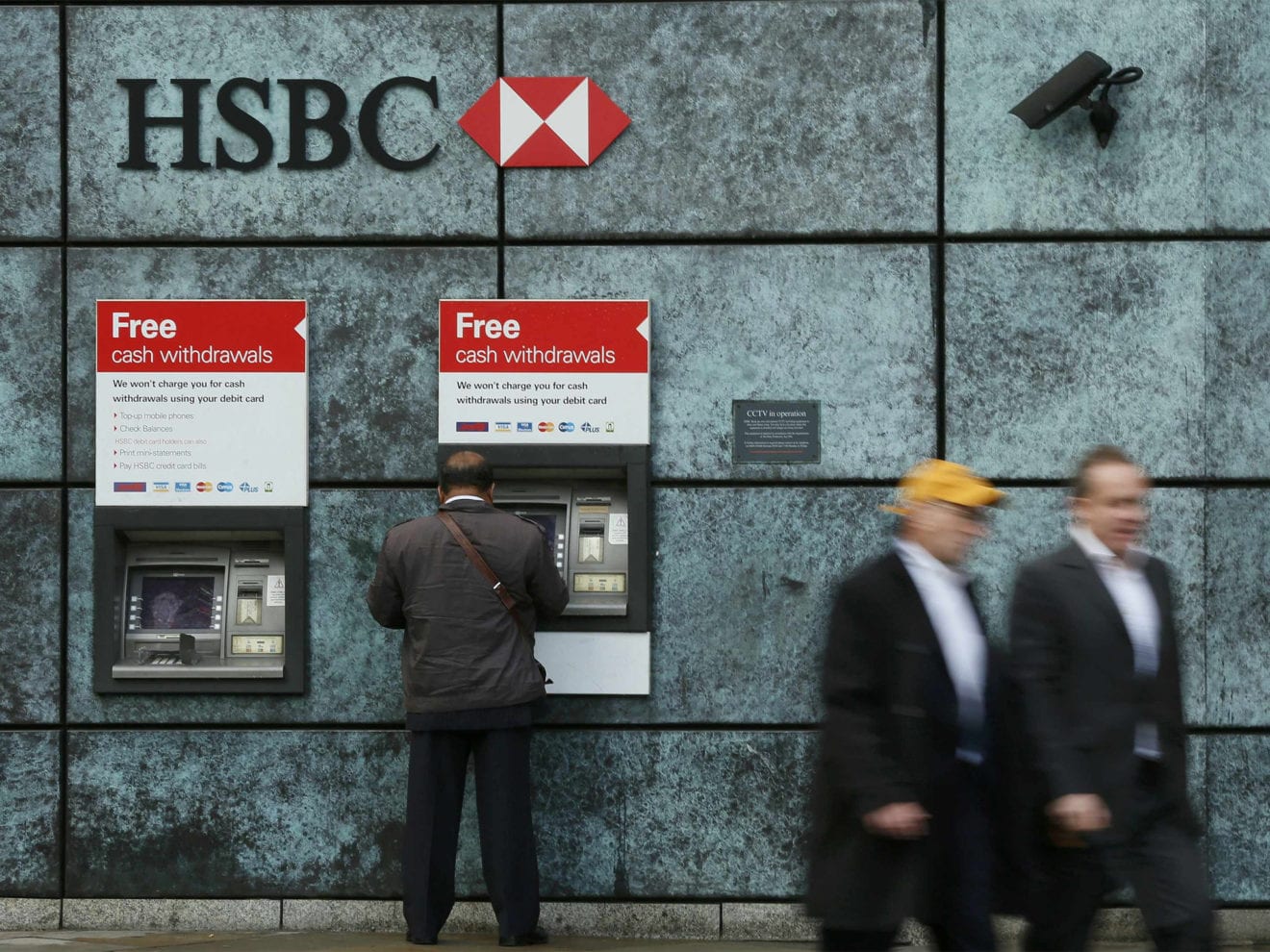
    HSBC Holdings Plc winning approval to start a credit-card business in China’s $1 trillion market offers Chief Executive Officer Stuart Gulliver added flexibility in his push into the nation’s retail banking and wealth-management industries.

    The approval from Chinese authorities came as HSBC ended a card venture with Bank of Communications Co., the bank’s Asia-Pacific head Peter Wong said in a weekend interview, paving the way for the U.K. company to join Citigroup Inc. and Bank of East Asia Ltd. as the only foreign credit-card issuers on the mainland. Wong didn’t say when HSBC won the nod from regulators, or provide any specifics on how the business will be rolled out.

    Gulliver’s Asian ambitions have been dealt a setback by crashing commodity prices, a slowing Chinese economy and a pretax loss in the fourth quarter. An independent card unit in China would improve HSBC’s access to a fast-growing market that had 449 million cards on issue as of September and allow the bank to find new clients for its retail bank.

    Getting approved for its own operation in China “is a meaningful step for HSBC as it gives the bank the autonomy to run the business,” said Chen Xingyu, a Shanghai-based analyst at Phillip Securities Research. “Since the Pearl River Delta is HSBC’s focus, having its own credit-card business can help the bank expand in the region.”

    Credit-card offerings can act as a springboard for drawing customers to other parts of the business such as private banking, Chen said. HSBC is getting a license for a planned brokerage venture with Shenzhen Qianhai Financial Holdings Co.

    The Pearl River Delta, located to the north of Hong Kong and centered around the city of Guangzhou, is home to more than 40 million people. HSBC plans to add 4,000 jobs in that area as the bank shifts about $100 billion of investment to Asia in an effort to expand retail banking and wealth management. The bank will slow the pace of thathiring amid China’s economic downturn, but HSBC won’t alter its strategy, Gulliver said last month.

    Good Relations

    While the bank has ended its card venture with Bank of Communications, HSBC intends to maintain its roughly 19 percent stake in the Chinese lender, Asia-Pacific Chief Executive Officer Wong said Saturday in an interview on the sidelines of China’s annual congress of lawmakers in Beijing.

    “We still have a lot of other initiatives” with Bank of Communications, Wong said. “We have a very good relationship.”

    HSBC’s card offerings would compete with its old venture partner, which had 40 million domestic cards as of June, while Industrial & Commercial Bank of China Ltd. had 108 million, according to their 2015 interim reports.

    The London-based company has been working with Bank of Communications, China’s fifth-largest lender by assets, since 2004 on businesses including credit cards. The Chinese bank announced the establishment of the credit-card venture — with 2.5 billion yuan of capital — in an October 2009 statement to Hong Kong’s stock exchange.

    HSBC shares in Hong Kong fell 0.3 percent on Tuesday to HK$49.50 as of 1:31 p.m. local time, compared with the benchmark Hang Seng Index’s 0.8 percent loss. The bank’s stock dropped 20 percent this year.

    The number of Chinese credit cards in circulation at the end of the third quarter had nearly doubled to 449 million since 2010, central bank data show. That total is about the same as the combined populations of the U.S. and Japan. The outstanding balance on those cards was 6.7 trillion yuan, up 26 percent from a year earlier, according to the People’s Bank of China data.


  • BNI, Indonesia’s Leading Bank, Adopts e-Learning to Improve Credit Performance

    BNI, Indonesia’s Leading Bank, Adopts e-Learning to Improve Credit Performance

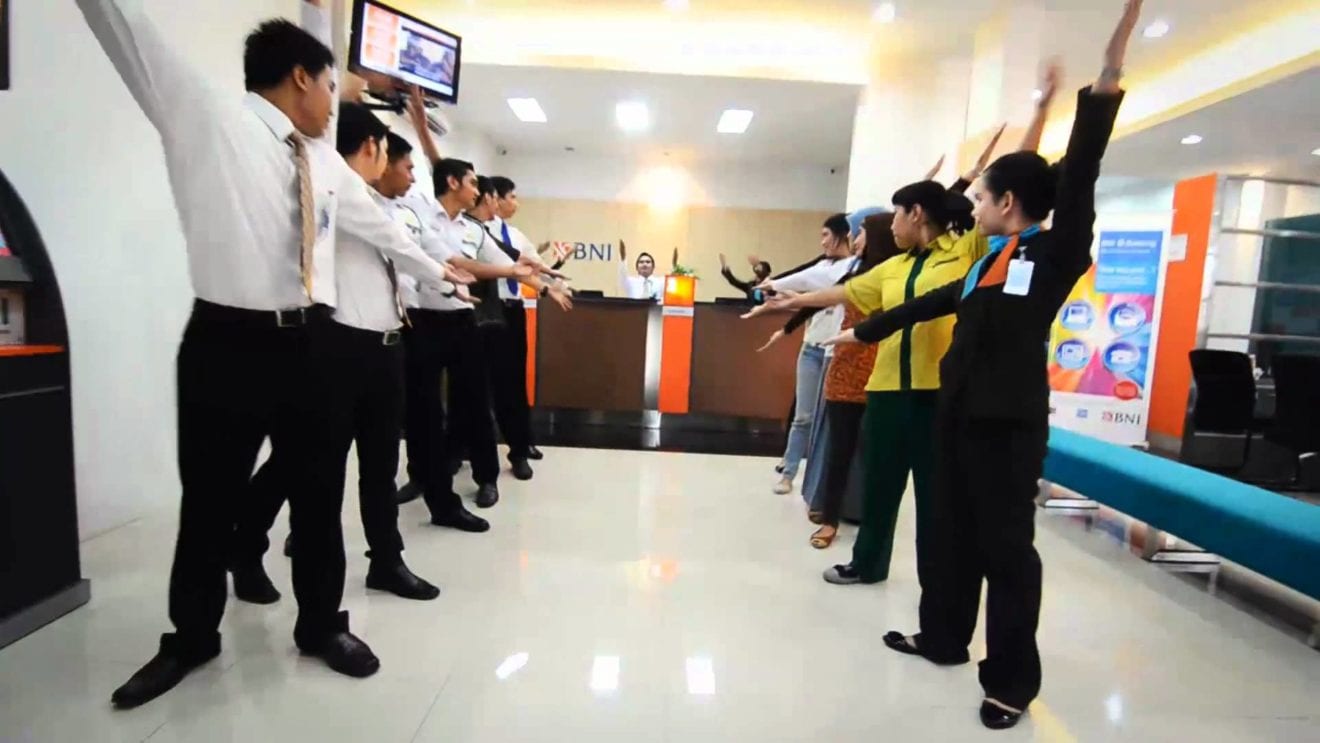
    Omega Performance, a TwentyEighty company, and BNI, Indonesia’s fourth largest bank, teamed up to create a robust e-Learning platform to improve the bank’s quality of assets aimed at reducing its credit risk. By focusing on training and developing its loan officers, BNI has found a solution to reduce the percentage of its nonperforming loans (NPLs).

    Risk management is one of the top threats facing Indonesian banks in today’s economic climate. BNI had shown improvement year over year regarding its NPLs, but leaders of the bank wanted to do even better.

    BNI’s strategy to reduce the burden on its financial system was to manage its operational risks by investing in technology and its people through a systematic training system for its loan approval processes. The best way to do this was to supplement its in-house training model with an e-Learning platform from Omega Performance. Training employees using a technologically advanced platform ensures consistent learning opportunities are available to all credit officers and it encourages knowledge sharing within the bank.

    “A few years ago, I personally evaluated the content Omega Performance offered in terms of credit training, and I was highly impressed with the quality of the material,” said Putu B. Kresna, head of the organizational learning division at BNI. “After that experience, we have been successfully working together ever since.”

    Since it was established in 1946, BNI has grown and developed into a national bank with sustainable financial performance and millions of customers worldwide. The bank relies on its wide-ranging service network, comprising of 1,585 domestic outlets and nine overseas branches in Singapore, Hong Kong, Japan, Korea, the United Kingdom and the United States.

    In addition to seeing improvement on its NPLs, BNI senior managers saw instant results in the change in employee perception towards training. It’s clear that BNI employees are seeing great value in being trained by a partner that understands the banking credit culture like Omega Performance.

    Omega Performance has been able to get BNI’s most experienced credit officers to buy into the e-Learning platform. Using a blended approach that includes online self-study, facilitator-led interactive workshops, skills application labs and a Train-the-Trainer style of learning has laid a strong foundation for training at BNI. Omega Performance is providing training platforms to help BNI in consumer lending, business lending fundamentals, financial accountability for lenders, commercial loans to business and minimizing problem loans.

    “We are pleased that BNI has chosen Omega Performance as its trusted learning partner to help the bank make continuous improvements in its NPL ratio by using our blended credit training solutions,” said Gil Madrid, business development director at Omega Performance. “By elevating the competency and risk management skills of its bankers to international standards, BNI has taken an invaluable and progressive step to fulfill its vision of creating and sustaining a strong credit culture at the bank.”

  • Malaysia Airports partners with Union Pay to boost Chinese spend

    Malaysia Airports partners with Union Pay to boost Chinese spend

    The Commercial Division of Malaysia Airports Holdings Berhad is collaborating with UnionPay International to boost Chinese tourist spending at its airports.

    The move is said to be in line with Malaysia Airports’ Commercial Division’s new strategic direction which calls for a targeted passenger focus. According to Malaysia Airports Holding Senior General Manager Commercial Services Berhad Mohammad Nazli Abdul Aziz, the collaboration also fits in with the significant growth of Chinese passenger traffic.

    Air China, Shanghai Airlines and Spring Airlines were the latest to join the fleet of Chinese airlines flying to Kuala Lumpur and Kota Kinabalu in 2015. Together they connect Malaysia to more than 17 key cities located throughout China.


    “According to statistics obtained from Tourism Malaysia, on average, a Chinese tourist spends approximately MYR3,300 (US$847). If Tourism Malaysia achieves its target Chinese tourist arrivals of over 2 million for 2016, this will translate to more than MYR6.7billion (US$1.72 billion) in tourist receipts. Capturing a fraction of that will contribute positively to our revenue. UnionPay is a fast-growing global payment brand.

    Partnering UnionPay International will allow us to tap into the Chinese tourists.”Nazli said: “The Chinese tourists market is a priority for us given their volume and strong spending power. Last year, total passenger movement between Malaysia and China stood at approximately 5.54 million, the second highest for Malaysia Airports. Much of it is boosted by the fact that we currently have 12 airlines connecting Malaysia to over 17 destinations in China. We expect the Chinese tourists market to increase even further with the visa-waiver programme.

    To further boost tourist spending, Malaysia Airports has signed several new brands at its international gateways. Among the local brands are Noodlelicious, Sofia Iman, Killiney Kopitiam, and Upin & Ipin Café. New international brands include Michael Kors, Pedro, Montblanc and Barry Smith.

    The partnership between Malaysia Airports Holdings Berhad and UnionPay includes the ‘Be Rewarded When You Spend Campaign’, of which the launch coincided with the prize presentation ceremony to mark the conclusion of Malaysia Airports’ Indulge & Explore Campaign.

    UnionPay International Southeast Asia General Manager Wenhui Yang said: “We are pleased to partner Malaysia Airports for the “Be Rewarded When You Spend” campaign. Malaysia Airports is one of the biggest players in Malaysia’s tourism and hospitality industry, our collaboration is in line with our efforts to bring greater value and more exciting privileges to our customers, wherever they go.”

    Foo Yit Kin from Kota Bahru, who claimed the Grand Prize in the Indulge & Explore Campaign, won a six-day trip to participate in a Panda Experience Programme in China.According to data recorded by Malaysia Airports’ recently-concluded Indulge & Explore Campaign, Chinese tourists were among the top three airport spenders. For the three-month duration of the campaign, which ran from 7 December 2015 to 6 March 2016, Chinese tourists spent an estimated MYR1.65million (US$425,000) at KLIA/klia2 combined. On the whole, the campaign saw a +7% increase over the previous year’s initiative.

    In addition to the Grand Prize won by Foo, the Indulge & Explore Campaign also awarded 13 weekly prizes, including Lovina Dolphin trips to Bali and New Leaf Detox programmes in Koh Samui, Thailand. The 13 weekly prize winners were selected throughout the campaign period, with each weekly prize winner also entered to win the Grand Prize.

    According to Malaysia Airports, more than 43,500 travellers from 164 countries partook in the Indulge & Explore Campaign, with top participation from Malaysians followed closely by Chinese tourists.


    Malaysia Airports’ Indulge & Explore Campaign, which was supported by MasterCard, provided the opportunity for shoppers to double their entries when they used their MasterCard.Nazli added: “The Indulge Campaign is an important component of our overall commercial strategy. It underscores our drive towards providing passengers and visitors with the total airport experience. 2016 will see us doing even more to drive the message home.”

    MasterCard Group Country Manager Indonesia, Malaysia and Brunei and Group Head Islamic Payments and Southeast Asia Safdar Khan said: “MasterCard understands that Malaysians love to travel and for many of them, shopping is an integral part of their trip. According to our latest Consumer Purchasing Priorities Survey, nine in ten Malaysians intend to travel in the next year and shopping is among their top three activities when travelling.”

    He added: “Together with Malaysia Airports, we are delighted to have delivered unique travel experiences in conjunction with the Indulge & Explore Campaign over the past decade. We look to continue offering exciting benefits and exclusive rewards to MasterCard cardholders at every step of their journey.”

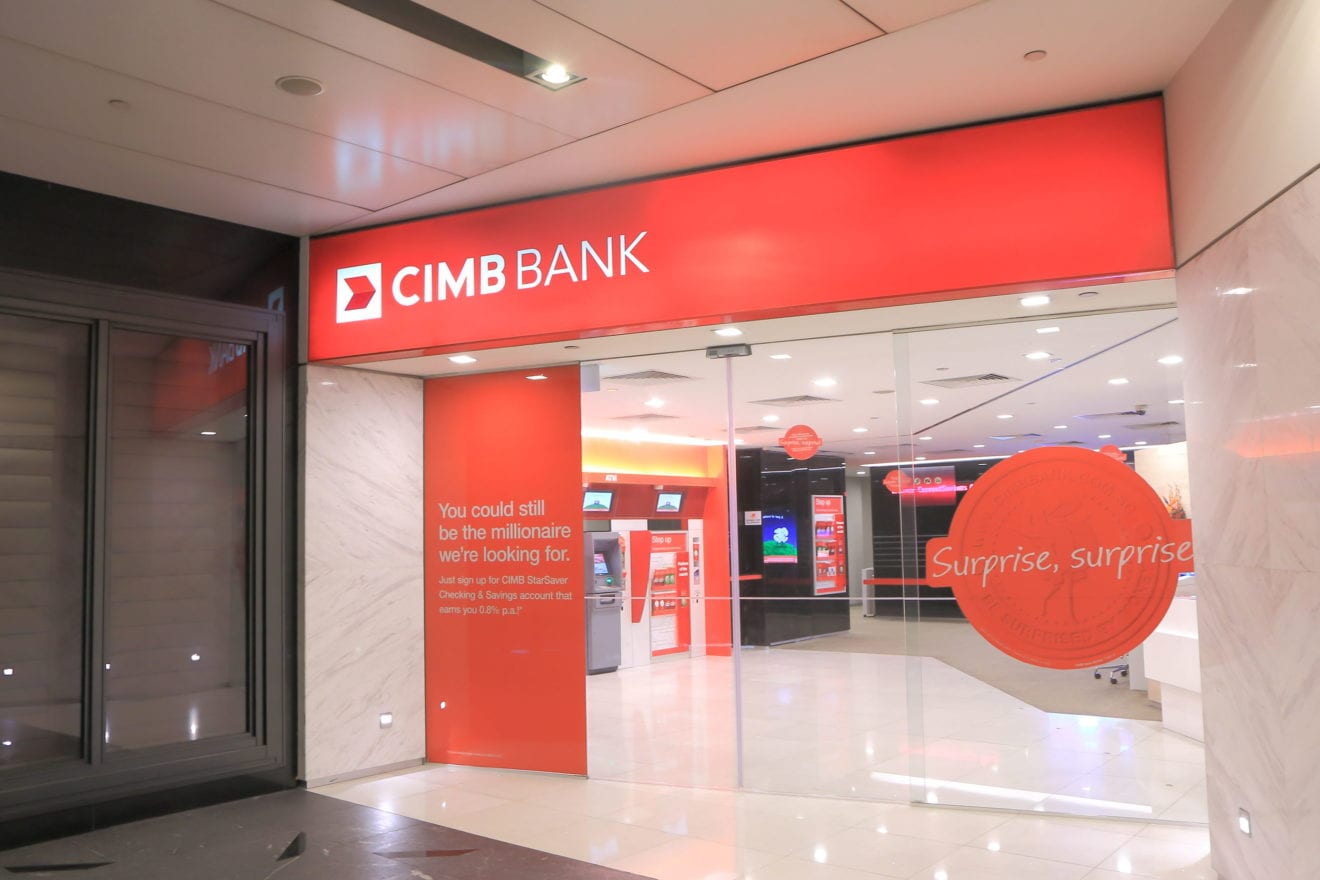
  • CIMB expects more conducive economy for consumer banking in 2H2016

    CIMB expects more conducive economy for consumer banking in 2H2016

    Collaboration between CIMB and Tesco Stores (Malaysia) Sdn Bhd today, the group’s CEO of group consumer banking Renzo Viegas told pressmen that while the current marketplace remains tough for business, the mass affluent community will still continue to invest.

    “It’s a tough environment, so loan growth will be slower than last year for sure (in terms of) investment products, people are really concerned about the global economy and the Malaysian economy; (there are) a lot of volatility, so people are holding back their investment decisions, but the mass affluent customers will still invest, so the second half should pick up a bit,” he said.

    “(In the) second half (of 2016), the whole economy environment should improve to become more stable and predictable; investment by consumers should also grow, and therefore our wealth management would also do well,” he added.

    On the other hand, Viegas said CIMB is also monitoring its credit quality closely, to avoid any deterioration in the group’s consumer portfolio.

    “All in all, there will still be slower growth, and we are watching the credit quality. So far, there is no deterioration to our credit quality in consumer portfolio. But there are still challenges, and there are still going to [be] opportunities like the launch today,” he said.

    Viegas said the partnership will allow CIMB to benefit from Tesco Malaysia’s three million weekly customers, by the increased accessibility to other products offer by the bank.

    “In the next two years, we hope we can garner half a million new card customers,” he added.

    Earlier at the launching ceremony today, CIMB’s CEO Tengku Zafrul Aziz announced an exclusive five-year strategic partnership with Tesco Stores (Malaysia) Sdn Bhd to come out with the new card services.

    The collaboration will also see CIMB set up its consumer banking kiosks at 38 Tesco stores nationwide. Tesco Malaysia currently operates 55 stores, with about 8,000 employees.

    Zafrul said the partnership between CIMB and Tesco Malaysia represents a winning formula in delivering value to both companies’ customers.

    “Being able to bring our vast suite of products through a seamless and paperless process to Tesco stores, make for a truly compelling value proposition to customers, both current and new. We genuinely believe that this partnership is the start of many great things ahead,” he said.

    The new CIMB Tesco MasterCard members will enjoy an annual fee waiver. From April 1, 2016 to March 31, 2017, one Tesco Clubcard point will be awarded for every RM2 spent on CIMB Tesco MasterCard at other retail outlets.

    Tesco Malaysia CEO, Paul Ritchie, also commented that the partnership, which had taken a year to materialise, is the form of bringing the best of two companies to enhance customers’ shopping trip.

    “With Tesco’s variety in range at fantastic promotions and good prices, and CIMB’s strengths in the financial and banking sector, together we will be able to reward our customers and create value to earn their long-term loyalty,” he said.

  • Standard Chartered opens Singapore innovation lab

    Standard Chartered opens Singapore innovation lab

    Standard Chartered Bank has opened a new innovation lab in Singapore to explore the use of emerging technologies and data sciences in support of the bank’s digital transformation strategy.

    The ‘eXellerator’ builds upon Standard Chartered’s established technology outpost in Silicon Valley, SC Studios, and is the bank’s first dedicated space for innovation in Asia, located at the heart of its main office building at Marina Bay Financial Centre.Anju Patwardhan, Standard Chartered’s global chief innovation officer, says: “This is where we can tap the depth of knowledge and talent, as well as work with local universities and research organisations, to help drive the bank’s innovation agenda.”

    The bank has secured the support of the Monetary Authority of Singapore (MAS) in establishing the facility. MAS has been actively encouraging the development of a ‘Smart Financial Centre’, in line with country’s ‘Smart Nation’ plan, and recently appointed a ‘chief fintech officer’, Sopnendu Mohanty, to co-ordinate its efforts.

    Says Mohanty: “The financial sector is an integral part of Singapore’s ambition to be a Smart Nation. A Smart Financial Centre with an open architecture and collaborative fintech community will promote innovation, application of technology advancements and talent development in financial services.”

    Standard Chartered has already laid the groundwork for the new lab through a multi-year collaboration agreement with A*Star’s Institute for Infocomm Research (I2R) – Singapore’s national information and communications technology research institute – to jointly work on data science research and experimentation by tapping the Institute’s network of data scientists and software engineers.

    It has also partnered with DBS Bank and Singapore’s Infocomm Development Authority (IDA) to successfully complete a proof of concept (PoC) on the application of distributed ledger technology in trade finance invoicing with the objective of reducing risk around duplicate invoice financing for banks while preserving client confidentiality.

  • HSBC sets sights on Vietnam

    HSBC sets sights on Vietnam

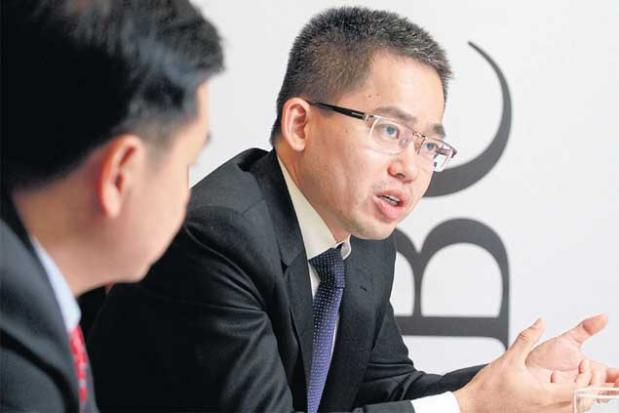
    HSBC Bank (Vietnam) chief executive Pham Hong Hai (right) and Kelvin Tan, chief executive of HSBC Thailand, say HSBC aims to capitalise on its presence in seven of the 10 Asean countries.

    HSBC seeks to offer a better integrated regional service with the increase of cross-border investment following the formation of the  Asean Economic Community (AEC).

    The bank in particular is looking at Vietnam, where investment is set to surge under government policies to attract foreign investment.

    Kelvin Tan, chief executive of HSBC Thailand, said the company aimed to capitalise on its presence in seven of the 10 Asean member countries. Only Myanmar, Cambodia and Laos do not have branches of HSBC.

    “We made it very clear to our investors since last year that Asean will be one of our main focuses to help HSBC’s future growth,” said Mr Tan.

    HSBC will also focus on the Pearl River Delta, which consists of Hong Kong and Guangzhou, China.

    Mr Tan said the company will enhance the connectivity between its subsidiaries in each country to serve customers better and expand business.

    “We add value to our services by offering well-connected financial services in this region.”

    When a Thai customer expresses an interest in investing in another country in which HSBC operates, the bank will refer the customer to the office in that country, which can provide local information for doing business.

    Many HSBC customers have already expanded their businesses in other countries, especially Vietnam, to tap into a bigger market as well as take advantage of low labour costs, he said. Thai investors should benefit from the cheaper labour by setting up production bases there and using Thailand as their regional headquarters, which is the policy that the Thai government is promoting.

    “Thailand is in a very strategic location for logistics and air transport so pushing the RHQ concept is a step in the right direction, but the government will also have to include stakeholders as part for this development,” said Mr Tan.

    Pham Hong Hai, chief executive of HSBC Bank (Vietnam), said Vietnam had attracted heavy investment from Asean countries over the past few years as well as from other Asian countries such as South Korea, Japan, Taiwan and China.

    Vietnam’s low labour costs and political stability are the major draws that attract a huge amount of foreign direct investment, he said. Given the low wage rate for unskilled labour, the country has attracted a lot of labour-intensive industries.

    “Cambodia, Laos and Myanmar also have cheap labour, but Vietnam has the added positive factors of political stability and good infrastructure,” said Mr Pham.

    He said the low wage rate would last for about five years.

    However, one problem that has emerged in Vietnam is a shortage of workers at management level. Mr Pham said he expected the AEC integration to attract more white-collar workers to the country.

    He said Vietnam’s ruling party just elected a new central committee, which is expected to maintain the current policies to strengthen the country’s economy.

    The policies that will be continued include privatisation of state enterprises, modernising the banking sector, enhancing the effectiveness of fiscal policy and improving the business environment, he added.

    Vietnam’s state enterprises contribute 35% of GDP. The government is due to allow private firms to gradually own bigger stakes in the enterprises in order to enhance their effectiveness.

    The government is improving Vietnam’s business environment by passing new laws that will shorten the time required to start a new business and also to obtain a licence, Mr Pham said. There there are a lot of opportunities in businesses such as logistics, retail and manufacturing, which are growing quickly.

    “When the manufacturing sector grows it is always followed by logistics services to support the industries,” he said. “We also see that the retail sector’s growing fast with Thai companies such as Central and TCC Group investing in Vietnam.”

    He said with a population of 90 million, with young people forming a large proportion, Vietnam’s demographic make-up offers great opportunities for retail businesses to benefit from their purchasing power, which will grow significantly.

  • BNI Set to Penetrate ASEAN Market

    BNI Set to Penetrate ASEAN Market

    Bank Negara Indonesia (BNI) president director Achmad Baiquni said that state-owned lender BNI would expand its business in other Southeast Asian countries, in addition to Myanmar.

    “There are some countries targeted by BNI, but we can’t reveal them yet, because it’s too early,” Baiquni told us during a tree-planting event at kilometer 59 of the Jakarta-Cikampek toll road on Saturday, March 26, 2016.

    Baiquni added that the expansion plan would be executed based on existing business potentials. Myanmar was selected since other state-owned companies were expanding their business in the country.

    “We have to follow our customers,” Baiquini explained.

    Baiquni admitted that BNI had looked into the business potential in Myanmar. He also expected that the expansion plan would be realized this year.

    BNI and Bank Mandiri are preparing to expand their businesses in the ASEAN market prior to Financial Services Authority’s agreement signings with Central Bank of Myanmar and Bank Negara Malaysia.

  • UnionPay now in Thailand

    UnionPay now in Thailand

    While the company’s success up to now has relied on the huge domestic home market in China – which accounts for 99 per cent of all UP credit cards issued – this could be about to change. UnionPay is setting its sights on global expansion and intriguingly Thailand is the catalyst which will help make this happen. Over the past few years several landmark decisions about ATM/debit cards have been made by the Bank of Thailand (BOT) and the Thai Bankers’ Association (TBA), and these are beginning to be implemented this year.

    To combat the growing incidence of ATM and debit-card fraud, the BOT decided that all new ATM/debit cards in Thailand must carry secure embedded chips, a mandate which comes into force this May. Significantly, the BOT and TBA adopted UnionPay’s chip technology as the standard for all of Thailand’s debit cards, the first country outside of China to do so.

    This will mean a mass transformation of Thailand’s 50-million strong debit-card market, as currently few debit cards have embedded chips and they are mainly used as ATM cards and not for retail transactions. Most cards will, therefore, need to be replaced and to support this UnionPay has joined with Bangkok Bank to establish the Thai Payment Network (TPN). Other leading Thai banks are also expected to become shareholders in this joint venture company.

    Thai banks and other financial service providers will produce the new cards under the TPN and TPN-UnionPay brands, which will be locally issued and processed in line with BOT policy.

    China UnionPay chairman Ge Huayong said that the launch of TPN in Thailand has great significance and he cited four major reasons for this. It is a new breakthrough in the development of technical standards in China’s financial sector, it represents a model for China’s policy of Going Global, it lays a solid foundation for large-scale acceptance and issuance of UnionPay cards in other local markets, and it will help UnionPay develop a business-expansion model which can be replicated which will accelerate the roll-out of its global business.

    Ge Huayong also added that it ties in with China’s “One Belt, One Road” international expansion strategy as UP plans to develop similar payment infrastructure in other countries along the Belt and Road.

    Meanwhile, in another major development China UnionPay last month signed a memorandum of understanding with Visa to collaborate on payments security, innovation and financial inclusion.

    Visa CEO Charlie Scharf said the two card giants would work together to develop innovations in digital payments and broaden the access of financial services to a wider population.

    All these developments fit well with the Thai government’s digital payments strategy and should ensure that Thailand is at the forefront of using new technology in the payments industry.

    The benefits include helping our businesses keep up-to-date with modern technology while ensuring the public has easy and convenient access to financial services.

  • Maldives laments HSBC retail banking loss

    Maldives laments HSBC retail banking loss

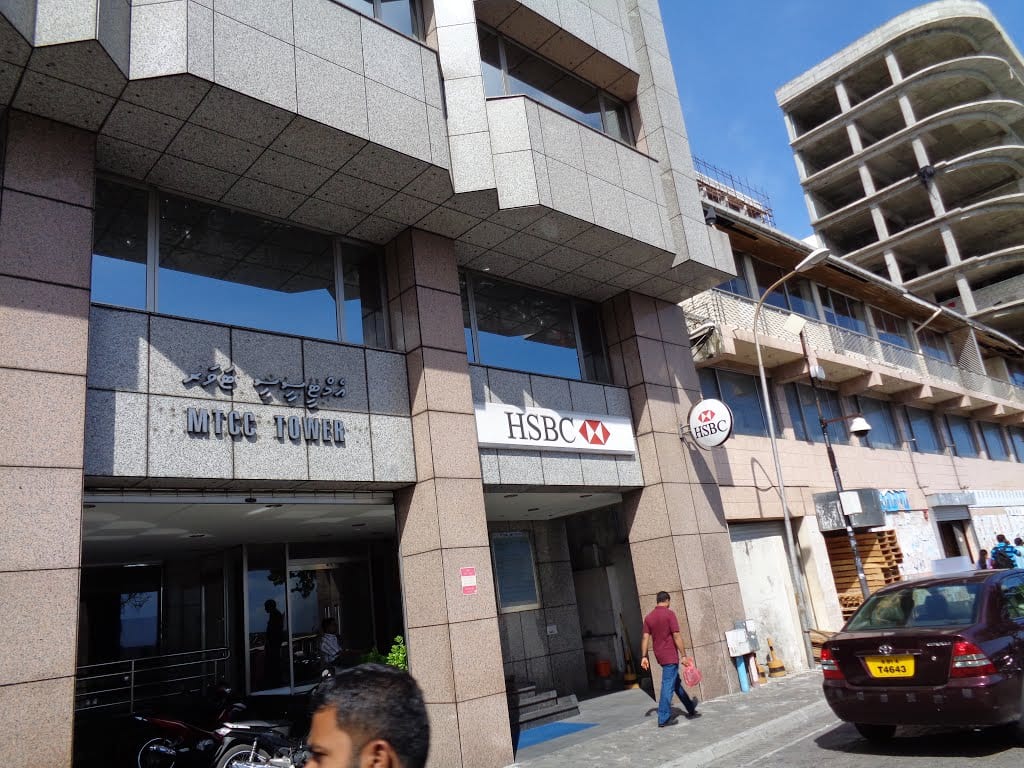
    Maldives central bank on Thursday lamented the decision by Banking giant Hong Kong and Shanghai Banking Corporation (HSBC) to cease retail banking in the Maldives from April.

    Speaking at the parliamentary finance committee governor Azeema Adam insisted that the Maldives Monetary Authority (MMA) does not wish HSBC to cease retail banking services in the Maldives but said the country still needed the bank’s other services.

    Male branch of HSBC had decided to cease retail banking operations from April 28 and is now informing its customers.

    An official from the Maldives Monetary Authority (MMA) also confirmed the plans by HSBC’s Male branch to shift to corporate-only operations. The official, however, did not give details.

    HSBC was not available for comment.

    HSBC operates in Maldives as a trading desk of the HSBC branch in Sri Lanka.

    The governor however, pointed out that HSBC’s decision was not limited to the Maldives.

    “Every bank has its own standards. Certain services that they offer. Instead of forcing something on them we look to find out how it could prosper as a business. We put in a lot of effort to bring HSBC to the Maldives,” Azeema explained.

    “Even when they [HSBC] first came they had sought to serve high net worth customers and individuals. We had given them the operating license knowing that all those years ago.”

    Azeema also revealed that several challenges had prompted the bank to adopt cost cutting measures.

    “It’s not something we also want. But if we look at the services provided by the banks in Maldives, HSBC is the third largest bank in the country. In terms of deposit size and loan size,” she continued.

    HSBC is the second highest banking profit tax payer in the Maldives, she added.

    An account in HSBC has to be opened with an initial deposit of MVR 50,000; the highest initial deposit required of any bank that operates in Maldives. The bank also pays the lowest deposit interest rate at 1 – 1.75 percent. Deposit interest rate on US Dollar accounts is 0.10 percent.

    As the bank charges a high amount in fees, the bank mainly hosts Maldivian businesses.

    In May 2014, complaints mounted over the bank’s decision to close down accounts held by many small and medium businesses citing administrative reasons. The businesses had complained that the move was made without prior notice.

    The decision by one of the biggest banks in the world comes a week after it was revealed that the Maldives had lost a major international banker.

    President Abdulla Yameen Abdul Gayoom told residents of Gaafu Dhaal atoll Gadhdhoo on February 15 that one of the major correspondent banks had dropped Maldives from its client list, while another one is considering a similar move. The reason, according to the president, is false claims made about Maldives, including threats posed by home-grown jihadists.

    “When we make such claims without considering the repercussions, it’s the people of Maldives that has to suffer,” he said, after inaugurating a project to establish a clean water system in the island.

    The president did not identify the bank that had dropped the Maldives. Haveeru, however, understands that US-based JPMorgan Chase had terminated its dealings with Maldivian banks in 2013.

    A correspondent bank is a financial institution that provides services on behalf of another, equal or unequal, financial institution. It can conduct business transactions, accept deposits and gather documents on behalf of the other financial institution.

  • MasterCard launches Contactless Card in Myanmar

    MasterCard launches Contactless Card in Myanmar

    The latest of MasterCard’s efforts to better serve the people of Myanmar, the CB EasiTravel Prepaid MasterCard Contactless card provides consumers with a more convenient way to pay when travelling abroad without compromising security.

    U Kyaw Lynn, CEO and Vice Chairman, CB Bank said, “More Myanmar citizens are making trips to neighbouring countries than ever before, buoyed by the recent relaxing of entry visa restrictions. This trend will continue as the economy grows and gains traction. CB Bank is always looking for ways that will bring convenience to Myanmar travellers. CB Banks’s newly issued MasterCard Contactless card will give added convenience when making payments internationally.”

    Latest projections by the International Monetary Fund put Myanmar’s economic growth at around eight per cent for 2016. As well as seeing a growth in outbound tourists, inbound tourism is set to significantly contribute to Myanmar’s growth in the coming years.

    According to the inaugural MasterCard Asia Pacific Destination Cities Index launched earlier this year, Myanmar’s former capital Yangon is expected to see very strong growth in inbound tourism. Of the 167 cities ranked, Yangon has the third highest compound annual growth rate of 45.7 per cent for total inbound tourist expenditure over the period 2009-2015, just behind Kandy of Sri Lanka (47.3 per cent) and Okinawa of Japan (49 per cent).

    Antonio Corro, Country Manager, Thailand and Myanmar, MasterCard said, “Earlier this month, it was announced that four foreign banks were issued preliminary approval to operate in Myanmar. It is great to see the government taking further steps toward opening up Myanmar’s economy and we are optimistic that this will provide an excellent foundation for commerce to thrive. The people of Myanmar are also optimistic about the future of their country. MasterCard’s latest MasterCard Index of Consumer Confidence recently revealed that people in Myanmar have the most positive outlook on the future of any Asia Pacific market. With the launch of the first MasterCard contactless card in the country, we are continuing to develop the local payment landscape and look forward to more partnership opportunities that allow us to further financially empower the people of Myanmar.”

    Currently, more than 2,800 restaurants, retail outlets and hotels in Myanmar accept payment card

    According to MasterCard’s latest research, 61 per cent of people in Myanmar (also known as Burma) are seeking to travel abroad more in the next 12 months, a stark increase from just 25 per cent two years ago. To meet this growing demand for travel and cross-border spending, MasterCard together with Co-operative Bank Ltd (CB Bank) have launched the CB EasiTravel Prepaid MasterCard Contactless card.

  • Joyo Financial to Provide Retail Investors’ Access to IPO

    Joyo Financial to Provide Retail Investors’ Access to IPO

    The tech sector is always a main focal point for investors and consumers’ alike as it lays down the bench mark for what will be common place for most people whether it is in the home, places of business, or recreationally.

    In the bustling IPO market which covers a variety of numerous product sectors by some of the marketplaces more recognizable and also some not so well known companies, whose products are among the best innovative and pioneering ideas to date. These companies offer many different options to potential investors and have the retail, corporate and institutional clients as well as the management at Joyo Financial Ltd., drooling at the prospects.

    Joyo Financial Ltd., a Japanese brokerage company with an office in Hong Kong, has made all the right noises in relation to at least 2 impending IPO’s that they will be involved with this year.

    Charles Leung, Chief Investment Officer at Joyo Financial Ltd, attending the 23rd annual SXSW Interactive festival in Austin, Texas, USA had the following to say, “I love coming to these expos, the companies demonstrating their latest products and achievements are always insightful and never fail to provoke thought on what can and what almost definitely will be a standard in our ever evolving world.” The SXSW festival is an annual set of film, interactive media, and music festivals and conferences that take place in mid-March.

    When asked about Joyo Financials plans in the Tech sector this year he remarked, “I really would like to reveal more on 2 IPO projects in particular we’re involved with this year. I can say this, that one is in the tech sector and will be huge and the other is in the more conventional mining sector and will just as big, full details will be disclosed shortly.”

  • 1987: Year of market crashes and MRT rollout

    1987: Year of market crashes and MRT rollout

    WHAT do household terms Black Monday and the Mass Rapid Transit (MRT) have in common? They both originated in 1987, a remarkable year that saw the worst – and best – of the Singapore stock market, as well as the historic rollout of the Republic’s first MRT service.

    On Oct 19, stock markets around the world collapsed. Billions of dollars were wiped out following a record selloff on Wall Street. The Dow Jones Industrial Average nosedived 508 points or 22.61 per cent to 1,738.74, its largest one-day percentage decline.

    The Straits Times Index (STI) was not spared, shedding 170 points or 12 per cent to 1,223.28, its biggest one-day tumble in local stock market history. Using the percentage drop in the STI as a crude measure, over S$15 billion – “enough to build three MRT projects” as detailed in the BT report – was obliterated from the market’s capitalisation.

    This was ironic because just a week later, the first section of the MRT – the North South Line between Yio Chu Kang and Toa Payoh – started operations. In ways that were unimaginable before, this brand-new transport mode dramatically transformed the retail landscape in Singapore.

    Banks, pharmacies and shops selling gifts, jewellery and electronics became the first to dominate retail space at MRT stations. They wanted to capture the “tremendous traffic” (as Guardian Pharmacy called it) of thousands of office workers who took the trains for work and shopping downtown.

    Speaking of tremendous, something else happened that year. On July 7, the Singapore bourse breached the 1,300- mark for the first time in the history of the stock market. The STI added 28.87 points to close at 1,316.15, by virtue of blue chips and good-quality stocks such as F&N, OCBC, DBS and Singapore Press Holdings.

    Unfortunately, that stock market euphoria did not live out the remaining months of 1987 as Black Monday struck. That catastrophic market crash in fact inspired the development of trading curbs, or circuit breakers that would allow stock exchanges to temporarily halt trading in instances of exceptionally large price declines.


  • REITs set to outperform equities as investors go in search of yields

    REITs set to outperform equities as investors go in search of yields

    The Stock Exchange of Thailand continues to stay in positive territory, gaining around 7 per cent year to date, despite the sluggishness over the last two weeks. Nevertheless, the SET Index still failed to breach the psychological 1,400 level.

    Month-to-date, the market leaders were PTT, PTT Global Chemical, Siam Cement, Charoen Pokphand Foods and CP All. The laggards were Bumrungrad Hospital, Advanced Info Service, U City, Banpu and Minor International.

    Foreign investors bought Bt11.7 billion worth of Thai shares from March 1-17, leaving the year-to-date net-buying position at Bt3.6 billion.

    Since the beginning of the year, the performance of real estate investment trusts (REITs) has been well ahead of equities. We believe the trend will continue as global investors seek yields amid negative interest rates in both Europe and Japan, coupled with low rates elsewhere (including Thailand).

    On average, equity returns in developed markets remain in the red to the tune of minus 3 per cent year to date. In contrast, emerging-market stocks outperformed their developed-market peers with a year-to-date gain of around 3 per cent.

    Interestingly, global REIT prices have surged on the back of investors seeking yields and the US Federal Reserve’s decision to delay its rate increases in 2016. The S&P Global REIT, which is a benchmark of publicly traded equity REITs listed in both developed and emerging markets, has risen by almost 6 per cent since the beginning of the year.

    Going forward, REITs remain appealing on a selective basis given their high yields and resilient revenue streams.

    The top 5 REITs recommended by the DBS REIT team in Singapore are (1) Mapletree Greater China Commercial Trust; (2) Frasers Centerpoint Trust; (3) Ascendas REIT; (4) CapitaLand Retail China Trust; and (5) Mapletree Logistics Trust.

    These REITs are expected to pay regular dividends, with potential for further growth arising from the expansion of their asset portfolios. Their yields range from 6 to 8.4 per cent.

    Investing in REITs comes with risks, and we advise investors to study our research reports on REITs before making any investment decision.

    Tisco Securities

    The Stock Exchange of Thailand may soon re-test the 1,400 points resistance level after the US Federal Open Market Committee left interest rates unchanged, as expected, but cut the number of planned increases this year to two from four previously.

    The Fed’s dovish stance weakened the dollar |but helped boost appetite for risk assets including Asian currencies and equities. Also positive for the |Thai market is the recent strong rally in global oil prices.

    Nonetheless, we remain cautious on the SET’s |outlook this year and anticipate heavy profit-taking above 1,400 points. Foreign-investor positioning remains very underweight (at 29 per cent, an 11-year low).

    The key concerns of clients, expressed during |our trip to Europe last week, were the same: slow |economic recovery, high household debt and low industrial capacity utilisation. These factors, coupled with persistently weak exports and worse-than-expected drought, are likely to lead to a downgrade of the 2016 GDP growth forecast when the Bank of Thailand’s Monetary Policy Committee meets on Wednesday.

    We continue to favour tourism plays such as AOT (Airports of Thailand), AAV (Asia Aviation) and BA (Bangkok Airways) after February data showing a 16 per cent year-on-year rise in foreign tourists to a new monthly record of 3.1 million. Chinese tourists led the way, with 23 per cent year-on-year growth, but the most interesting part of the data was the 14.3 per cent year-on-year jump in arrivals from Russia – the first positive figure in nearly two years.

    In the banking sector, TCAP (Thanachart Capital) remains a mid-term “buy” on recovery of legacy non-performing loans and auto-loan quality, NIM (net interest margin) expansion, tax shields to improve RoE (return on equity) and capital/LLR (loan loss reserve) buffers from the second half of 2015 to the first half of 2018 and superior dividend yield.

    We also have a “buy” rating on TMB due to its solid growth prospects and lower cost of funds backed by its increasing penetration of the SME (small and medium-sized enterprises) segment.

    Elsewhere, we have revised up our target price for ROBINS (Robinson Department Store) by 8 per cent to Bt52 after its chief executive officer’s surprise announcement that the retailer is on track to achieve 4 per cent SSSg (same-store sales growth) in the first quarter of 2016.

    This is mainly due to its flexible product-mix strategy and strong performance of its Lifestyle Centres. With the expansion of Lifestyle Centres (two more were opened in the fourth quarter of 2015), ROBINS now derives 45 per cent of its net profit from rental space.

  • StanChart targets China

    StanChart targets China

    The regional head of retail banking for Greater China and North Asia at Standard Chartered (2888), Mary Huen Wai-yi, said Hong Kong will be used as a hub to attract high net worth customers from the mainland to bring growth in retail banking income in the next three to five years.

    Huen told Sing Tao Daily, sister paper to The Standard, the size of the local retail banking income pool stood at about US$10 billion (HK$78 billion), while that of the mainland is 10 times that in Hong Kong. In the face of the large market, she said, high net worth individuals in the mainland are the bank’s target in its wealth management services.

    Since Standard Chartered’s announcement of restructuring last year, retail banking has become the group’s leading business.

    After opening the a wealth management center at the Forum in Central, Huen said another one will be set up at Sheng Shui this year.

    Expanding toward the north is a common strategy shared by many of the bank’s counterparts. “Retail banking is a huge income pool in the mainland,” said Huen, “and it is still at an early development stage, which gives us plenty of opportunities.”

    Digitalization, Huen said, is another means by the bank to draw customers.

    While digital tellers is a big trend in Hong Kong, Standard Chartered said it will take a step further to introduce Retail Workbench, where the bank’s staff will use iPads as a sales-and-service tool to issue credit cards and approve loans. But Huen said that digitization will not replace any of its 80 bank branches in Hong Kong.

    The bank partnered with Asia Miles to put out a credit card last week, and Huen said the bank will have similar plans with Samsung in Korea.

    Retail banking in the Greater China region accounts for one third of the group’s global business in the sector last year, seeing also a single-digit growth in income against the backdrop of an overall loss posted by the group.

    STAFF REPORTER

  • ABK named ‘Best Retail Bank in Kuwait’

    ABK named ‘Best Retail Bank in Kuwait’

    Al Ahli Bank of Kuwait (ABK) was recently recognized as the ‘Best Retail Bank in the Middle East’ by the Asian Banker; one of the most prestigious awards programs in the industry of financial services and one of Asia’s leading consultancies in financial services research, benchmarking and intelligence. The award was received by Stewart Lockie, General Manager Retail Banking at ABK, during an awards ceremony that was held on March 16th, at the W Hotel in Hong Kong.

    The ‘Best Retail Bank in the Middle East’ award reaffirms the Bank’s outstanding initiatives and  solid performance and demonstrates its unwavering efforts to provide superior services to its customers through the implementation of its ‘Simpler Banking’ strategy, which focuses on creating a simpler banking model offering convenience, speed and security.

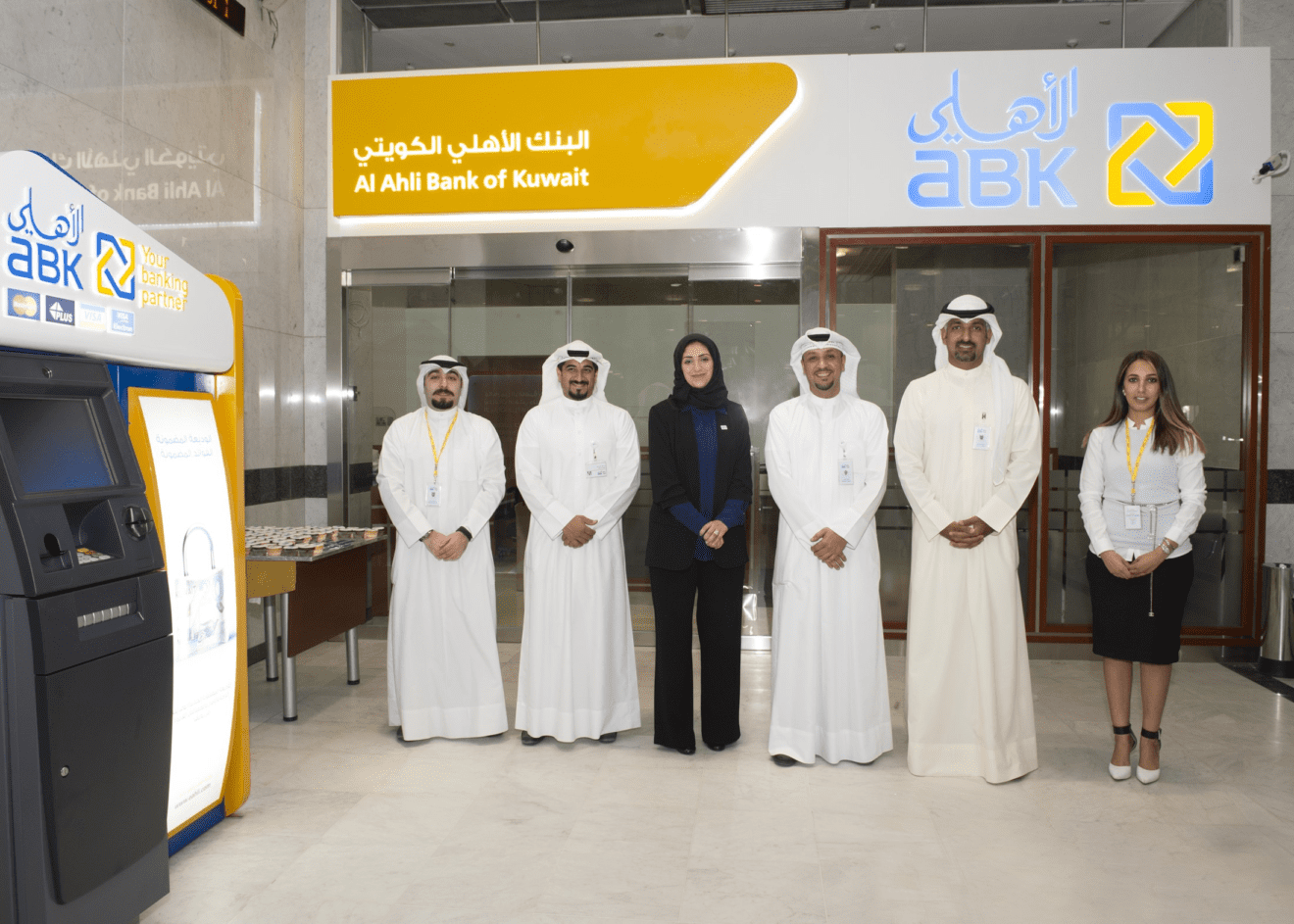
    Stewart Lockie with Retail Banking staff

    Commenting on the Bank’s achievement, Stewart Lockie, General Manager Retail Banking at ABK said, “It is an honor to be recognized as the ‘Best Retail Bank in the Middle East’ by the Asian Banker since we received the award last year for Most Improved Retail Bank. ABK made a tremendous effort throughout 2015 to make substantial enhancements and developments to its services and systems with the aim of to simplify the banking process. I would like to thank the judging committee for realizing this effort and rewarding us for it and I would also like to congratulate the Retail Banking team on this award, and thank them for their continuous hard work and diligence.”

    ABK recently deployed a series of new enhancements to its systems as part of its ‘Simpler Banking’ strategy, such as reducing ‘End to End Loan’ processing time from six days to one day and the account opening process from nine hours to six minutes. It also introduced ‘Biometric Verification’ as an enhancement to its mobile banking system, as an additional security measure, in addition to several other developments.

    The Bank will continue to build on this great success and introduce further developments and enhancements that serve to differentiate ABK‘s services and support its ‘Simpler Banking’ strategy, with focus on delivering more convenience, security and speed.