Category: Finance

Retail News Asia is committed to providing both local and global retailers with the latest Finance news throughout the Asian market. This on a daily base.

  • DBS introduces a mobile-only bank in India

    DBS introduces a mobile-only bank in India

    Singapore’s DBS Bank has launched what it says is India’s first mobile-only bank. Dubbed digibank, the mobile app functions as an entirely paperless, signatureless and branchless bank for India’s residents.

    The initiative aims to break away from conventional banking norms such as form filling and other cumbersome processes.

    Account-opening can be done easily and effortlessly at an extensive network of outlets run by DBS’ partners, including over 500 cafes across India. No paperwork will be involved and instead, customer authentication is done purely using the Aadhaar card, a biometrics-enabled ID which has been issued to over 1 billion Indians.

    Other digibank features include 24/7 customer service provided by a real-time, AI-driven virtual assistant, which understands natural language and is incorporated with the ability to anticipate and answer some 10,000 customer questions.

    This AI feature was made possible due to DBS’s partnership with US-based fintech Kasisto. The latter is a spin-off from SRI International which created the technology behind Apple’s Siri.

    In-built into digibank is a budget optimizer that helps customers do their budgeting, track expenses and analyze purchasing trends. The function is equipped to understand customer behavior and preferences, synthesize data, and provide recommendations.

    The budget optimizer also studies customers’ spending patterns and prompts them if they are overspending. Conversely, if a customer’s savings regularly exceed his or her expenditure, digibank will provide suggestions on how to make one’s money work harder.

    Dynamic inbuilt security, which is safer than OTP, is employed in digibank. Most bank customers are used to receiving One-Time Passwords (OTPs) via SMS, and then typing codes into pages to authorize their mobile banking transactions. digibank has an embedded soft token security, avoiding the need to wait for SMSs to arrive and providing even stronger security for transaction authorization.

    The new offering also gives account-holders earn 7% interest from the first rupee, one of the highest in the market with no minimum balance requirements. Customers receive a physical debit card which can be used across all Visa-enabled online and POS transactions, as well as overseas. Free cash withdrawals will be available at more than 200,000 ATMs nationwide.

    Said DBS CEO Piyush Gupta, “India’s banking system is at the cusp of massive change, and as a bank committed to shaping the future of banking, we are excited to roll out a revolutionary, mobile-only bank. With digital, we are able to create a completely different customer experience. What’s more, digibank’s efficiencies and lower costs enable us to pass on significant benefits to customers in the form of greater customer value.”

  • Thai Kasikornbank to cut retail and overdraft lending rates

    Thai Kasikornbank to cut retail and overdraft lending rates

    Kasikornbank Pcl, Thailand’s fourth-largest lender, will cut its minimum retail and minimum overdraft rates by 25 basis points (bps) on April 25, it said in a statement.

    The cut, which follows similar move by Bangkok Bank on Thursday, is aimed at helping the bank’s small and medium-sized (SME) business and retail customers who have been hit by the slowing economy, the bank said.

    Kasikornbank is among the top four lenders that cut their minimum lending rate (MLR) by 25 bps on April 5.


  • Bank Indonesia Wins 3 CSR Awards

    Bank Indonesia Wins 3 CSR Awards

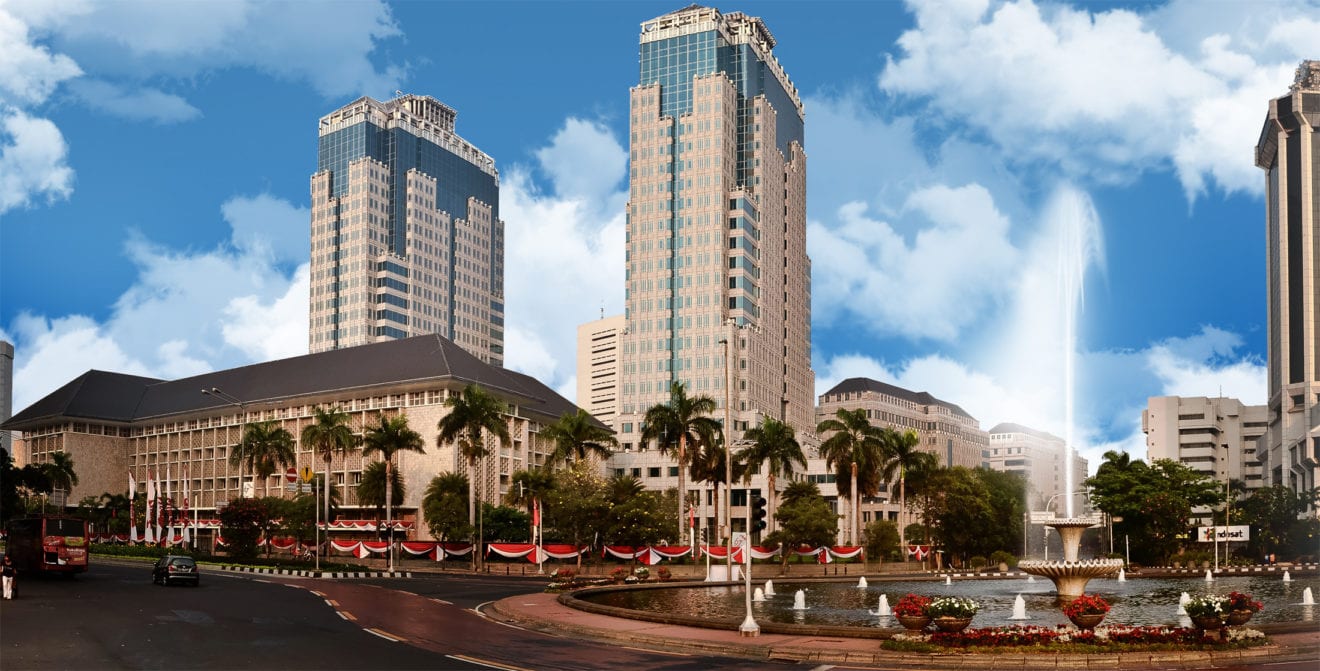
    Bank Indonesia (BI) has received three awards in the The 8th Annual Global Corporate Social Responsibility (CSR) Summit and Awards. Two gold awards are for Excellence in Provision of Literacy and Educational Award with market capitalization above US$1 billion and Empowerment of Women Award. While bronze award was achieved for Product Excellence Award.

    BI’s Communication Department Director Abronas Hutabarat attended the event to receive the awards. He originally intended to attend the international forum to introduce BI’s CSR programs. “We didn’t expect to receive the awards. These are the result of synergy and hard work put in by my colleagues in BI’s Communication Department,” Abornas said after receiveing the awards in Nusa Dua, Bali, Thursday evening.

    Abornas said that BI always made CSR programs on a yearly basis which focus on community empowerment. According to him, BI’s CSR programs are comparable to those of its international counterparts.

    There are seven categories in The 8th Annual Global CSR Summit and Awards, namely Best Environmental Excellence Award, Best Community Programme Award, Excellence in Provision of Literacy and Education Award, Empowerment of Women Award, Best Workplace Practice, CSR Leadership Award, and Product Excellence Award.

    Of the categories, BI got nominated in 4 categories. Arbonas said the four categories are Best Community Programme Award, Excellence in Provision of Literacy and Education Award, Empowerment of Women Award, and Product Excellence Award.

    Arbonas said one of the gold awards were given for BI Corners CSR program, in which BI provides libraries in all universities in Indonesia. Last year BI built 106 BI Corners. This year BI is targeting to build 150 BI Corners. He hoped that in the next five years BI could build 1,000 BI Corners in the all educational levels to support financial literacy. In addition, BI helps female entrepreneurs in managing business units and bookkeeping to make the businesses bankable.

    The Annual Global CSR Summit and Awards is the most prestigious recognition awards program for Corporate Social Responsibility of various agencies in Asia. The awards are given to agencies who are able to make contributions to environmental sustainability, product innovation, community empowerment and CSR management and transparency.

  • Bursa Malaysia likely to trade higher next week

    Bursa Malaysia likely to trade higher next week

    Shares on Bursa Malaysia are expected to trade higher next week, supported by positive domestic and regional sentiments.

    Affin Hwang Investment Bank vice-president/head of retail research Datuk Dr Nazri Khan Adam Khan said market has been on an upward trend for the past two months with the benchmark FTSE Bursa Malaysia KLCI (FBM KLCI) forming a solid psychology level at the 1,7000 level.

    “We have similar upward momentum from our crude palm oil (CPO) and rubber that support the sentiment for next week. “The crude oil price also has stabilised and its recovery to US$43 per barrel, orchestrated well for Bursa Malaysia’s stocks,” he told Bernama.

    Nazri said with China’s trade data remaining positive and solid, it indicated that the country is stabilising.

    The upcoming Sarawak election and the Ecoworld International initial public offering (IPO) will be a domestic catalyst in supporting the local bourse’s sentiment, he added.

    Nazri called on investors to accumulate the “Sarawak election-theme play” counters, namely Naim Holdings and Ta Ann Holdings.

    For the week just ended, the market has been on consolidation mode as expected after the previous week’s rally.

    The FBM KLCI confined in tight range as sentiment turned cautious ahead of a weekend meeting of oil producers.

    Oil producers led by top exporters, Saudi Arabia and Russia are expected to meet in Qatar on Sunday to discuss freezing output to rein in ballooning global over-production.

    On a weekly basis, the benchmark FTSE Bursa Malaysia KLCI (FBM KLCI) finished 9.59 points higher at 1,727.99.

    The FBM Emas Index rose 44.53 points to 11,997.07, the FBMT100 Index added 46.74 points to 11,693.21 while the FBM Emas Syariah Index shed 2.27 points to 12,539.76.

    On a sectoral basis, the Finance Index soared 162.16 points to 15,034.70, the Plantation Index trimmed 36.27 points to 7,785.25, while the Industrial Index gained 25.04 points to 3,290.97.

    Weekly turnover leaped to 8.17 billion units valued at RM8.65 billion from 7.78 billion units valued at RM9.60 billion last week.

    Main market volume gained to 5.61 billion shares valued at RM8.21 billion from 5.13 billion shares valued at RM9.16 billion previously.

    Warrant turnover jumped to 997.74 million units valued at RM130.26 million from last week’s 928.94 million units valued at RM130.12 million. The ACE market rose 1.56 billion shares worth RM305.06 million from 1.52 billion shares worth RM307.35 million, transacted previously.

    Gold futures contracts on Bursa Malaysia Derivatives are likely to trade slightly lower next week with the ringgit expected to continue its upward momentum.

    A dealer said the strengthening of the ringgit due to a rally in global oil prices had added pressure on gold.

    “With the equities market set to remain strong and oil prices continuing to edge higher, gold is likely to face continuing pressure,” he said.

    He said the Bursa Malaysia’s gold futures market would also track the performance of the New York Commodity Exchange’s (COMEX) gold market, the price setter for the precious metal.

    On a Friday-to-Friday basis, April 2016 loss 10 ticks to RM154.50 a gramme and July 2016 slipped 17 ticks to RM155 a gramme, while May 2016 increased three ticks to RM155.30 a gramme and June 2016 added seven ticks to RM155.65 a gramme.

    Weekly turnover rose to 151 lots worth RM2.28 million from 99 lots valued at RM1.46 million last week.

    Open interest on Friday widened to 566 contracts from 553 contracts previously.

  • IFC to extend $21m debt to half a dozen MFIs in Myanmar

    IFC to extend $21m debt to half a dozen MFIs in Myanmar

    IFC will extend from $3 million to $6 million financing to each selected MFI as a kyat-denominated loan. The move will deepen access to finance to the bottom of the pyramid market.

    The move will also enable the microfinance industry to commercially operate in the country.

    The IFC loan is expected to enable disbursal of 112,500 to 127,500 loans to low income households in the country, improving the underserved segment’s access to finance and create jobs, according to the IFC disclosure.

    “Microfinance in Myanmar has grown up on a lot of donor funding. IFC is trying to help formalise the sector and provide sustainable local currency debt to MFIs to expand their loan portfolios,” said Julie Earne, Lead, Financial Institutions Group of IFC in Myanmar.

    IFC is working across the financial sector with banks, microfinance institutions and digital finance companies to ensure all segments of the market are served.

    IFC stated that there are about 250 microfinance institutions in Myanmar that are yet to commercially operate. The proposed loan facility will provide the scarce and much needed commercial funding to those institutions. It is also into providing advisory services to the candidates to build internal capacity.

    Some of IFC’s existing microfinance clients include Acleda, Fullerton, Proximity Designs, Pact Global Microfinance Fund (PGMF) and VisionFund Myanmar.

    “We are looking at our existing investment and advisory relationships (on microfinance), as well as other clients that we were not working with yet, to put together a diverse group of institutions,” said Earne.

    IFC is currently in the process of reviewing the MFIs for participation in the debt facility.

    Back in 2014, the IFC launched The Myanmar Microfinance Development Programme with the funding support from the Canada Department of Foreign Affairs, Trade and Development and funding from Livelihood and Food Security Trust Fund (LIFT). It expects to improve financial access for over 270,000 clients with an aggregate loan of over $70 million by 2017.

    “Our existing programme provides technical assistance focused on formalising microfinance institutions, building capacity in treasury management, human resources, risk management, product development, assisting key players in the market to mature as they look to grow and scale their operations,” said Earne.

    Building on this programme, IFC is supporting MFIs to borrow local currency Kyat funding.

    “Right now the most critical issues for microfinance in Myanmar is to help facilitate local currency financing to MFIs so that they can expand their portfolios. We need to also crowd in and enable local banks to lend to MFIs. Local banks have kyat liquidity and it is important to facilitate them to lend to MFIs,” said Earne.

    The Central Bank of Myanmar just issued a mobile financial service rules and telecom operators like Telenor are in talks with some MFIs to use their mobile financial service for microfinance lending.

    IFC is engaged in the MFI operations for Myanma Awba, an agri-based business in Myanmar, in an advisory role, giving corporate governance assessment and drafting and implementing policies and training. Myanma Awba received a finance facility of $10 million in February 2016.

    IFC has been active in debt and equity investment to Myanmar corporations. Some recent involvements include a $-million support for Myanmar Industrial Port enhancement, a $25-million financing to retail group City Mart and $40-million funding to Sembcorp and MMID Utilities Pte Ltd’s gas turbine project.

  • Access to credit card transactions needed to check taxpayers` profiles

    Access to credit card transactions needed to check taxpayers` profiles

    Regulations are required to access taxpayers credit card transactions data, particularly of individual tax payers (WP OP), without violating banking laws, Finance Minister Bambang Brodjonegoro said.

    “We need the data for WP OP profiles because we cannot access their bank accounts as the banking law prohibits that. Therefore, we want access to their credit card transactions in order to check their tax profiles,” said Bambang here on Friday.

    Bambang said that if a taxpayer reported his or her monthly income at Rp5 million but his/her expenditure through credit cards reached Rp20 million per month, the tax officials will know that he or she has made an incorrect annual tax report (SPT).

    “This means that while he/she has claimed to have a monthly income of Rp5 million through the SPT, but his/her tax liability should be corrected. We will compare his or her transactions undertaken though credit cards with his or her annual tax report and see if these match,” the minister said.

    Bambang said the plan to put in place a regulation to access credit card transaction reports was discussed long back with the Financial Service Authority (OJK). The OJK will popularize it among banks and credit card issuers.

    Indonesian central bank (BI) Deputy Governor Ronald Waas said bringing in regulations to access credit card transactions will be problematic since the law on banks does not allow access to this information.

    “We can look at the banks confidentiality regulations to see if the credit card detail or information about savings has to be kept confidential. But all laws which regulate the confidentiality of data allow access to the same if it concerns national interest, but with the approval of the OJK,” the finance minister remarked.

    The Finance Ministry has issued a regulation which requires 22 banks and credit issuer institutions to report credit card data and transactions to the Directorate General of Taxations.

    The matter was regulated vide the Finance Ministers Decree No. 39/PMP.03/2016 on the Type of Data and Information as well as the Report Procedure of Data and Information which concerns taxation. It came into effect on the day of its enactment on March 22, 2016.

  • BNI chalks up Rp2.9 trillion in net profit in first quarter

    BNI chalks up Rp2.9 trillion in net profit in first quarter

    Publicly traded lender PT. Bank Negara Indonesia Persero Tbk reported Rp2.9 trillion in net profit in the first quarter of this year up 5.5 percent year-on-year.

    The profit was attributable mainly to net interest income especially interest on infrastructure credits, Achmad Baiquni, the president director of the state owned bank said here on Tuesday.

    Its net interest income grew 13.3 percent to Rp6.91 trillion in the first three months of 2016 from Rp6.09 trillion in the same period last year.

    “The net interest margin (NIM) of the bank was 6.1 percent in the first quarter of this year,” Baiquni said.

    The NIM of the countrys fourth largest bank in asset, rose with a strong 21.2 percent growth in credits to Rp326.74 trillion in the January-March period of 2016 from Rp269.51 trillion in the same period in 2015.

    Credits for the business and consumption sectors were the largest contributors to its credit expansion, Baiquni said.

    Credits for the business, which grew 22.7 percent (yoy) to Rp234.2 trillion in the first quarter of 2016, accounted for 71.7 percent of the banks total credits.

    Credits for the construction sector surged 127.5 percent to Rp5.99 trillion and credits for the consumption sector rose 9.8 percent to Rp57.56 trillion in the first quarter of 2016.

    The bank also recorded an increase in fee based income , up 16.4 percent to Rp2.22 trillion .

    The third party funds held by the bank rose 21.8 percent (yoy) to Rp371.5 trillion in the first quarter of 2016 .

    Cheap funds accounted for 58.5 percent or around Rp217.5 trillion of the third party funds – or an increase of 12.9 percent (yoy).

    The credit expansion that grew 21.2 percent and the third party funds that increased 21.8 percent resulted in 25 percent rise (yoy) in its assets to Rp509.09 trillion in the first quarter of 2016 .

  • IDX Expresses Optimism in Economic Growth

    IDX Expresses Optimism in Economic Growth

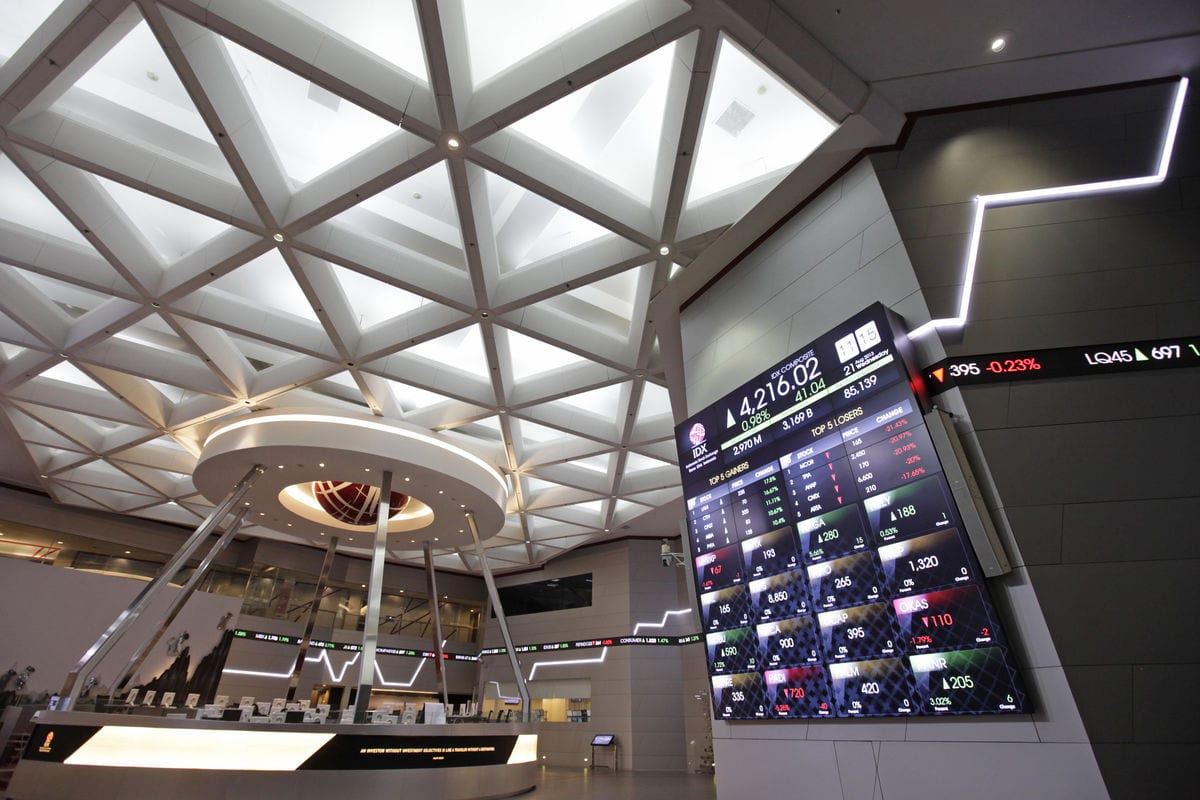
    The Indonesian Stock Exchange (IDX) expressed optimism that the companies listed on the IDX would provide positive results as the national economy was predicted to grow by above 5 percent.

    “In 2015, more than 75 percent of stock issuers at the IDX booked profits. Indeed, some of them in the commodity sector recorded somewhat significant drop. Meanwhile in 2016, we believe that the economic growth will be above 5 percent,” IDX president director Tito Sulistio said in Jakarta on Wednesday, April 13, 2016. Tito added that the Bank Indonesia (BI) rate cut to 6.75 percent and the potential of capital inflow following tax amnesty policy were among the factors that would support the national economic growth.

    “Hopefully, the tax amnesty [policy] will work. Therefore, it is expected that Indonesia will see a capital inflow of about Rp 3,000 trillion (US$220.6 billion) to build infrastructures that are important for the economy. The fund could also be invested in the capital market,” Tito explained.

    He promised that he would encourage domestic companies to obtain funds for expansion by, for instance, holding IPOs. Tito added that the IDX would call on state-owned companies to conduct privatization through the IPO mechanism.

    Earlier, IDX director of corporation assessment Samsul Hidayat said that a number of regional development banks planned to hold IPO in order to increase their capital and distribute credit to wider consumers. In addition to banks, Samsul revealed that a number of state-owned construction subsidiary companies, such as PT Waskita Beton Precast, mulled to hold an IPO.

  • Anbang to buy Allianz’s South Korean operations

    Anbang to buy Allianz’s South Korean operations

    China’s Anbang Insurance Group Co. reached a deal to buy the South Korean operations of Germany’s Allianz SE, just days after it walked away from a $14 billion bid for Starwood Hotels & Resorts Worldwide Inc.

    Anbang has exploded onto the international scene in recent years by spending billions to acquire insurers and hotels throughout the world. In February 2015, it laid out nearly $2 billion to buy New York’s Waldorf Astoria, the highest price ever paid for a single U.S. hotel. It is also a big player at home, with stakes in listed Chinese developers and banks, while also investing in a traditional Chinese medicine maker and a wind-turbine manufacturer.

    Anbang made a bid in March for Starwood Hotels after the U.S. luxury hotel owner had struck a deal to sell itself to Marriott International Inc. That sparked a bidding war for Starwood that culminated in a $14 billion offer from Anbang, which dropped the bid last week citing “various market considerations.”

    The deal with Germany’s Allianz marks the Chinese insurance group’s second acquisition in South Korea. Beijing-based Anbang bought a controlling stake in South Korean life insurer Tong Yang Life Insurance Co. for $1 billion a year ago from South Korea-focused private-equity firm Vogo Investment Group and other investors.

    Allianz agreed to sell Allianz Life Insurance Korea and Allianz Global Investors Korea to Anbang for an undisclosed amount, the two companies said in a statement Wednesday. The Allianz purchase is subject to local regulatory approvals and the parties expect to complete the deal in the second half of the year.

  • Cathay Capital Invests In Chinese Furnishing Retailer ABS

    Cathay Capital Invests In Chinese Furnishing Retailer ABS

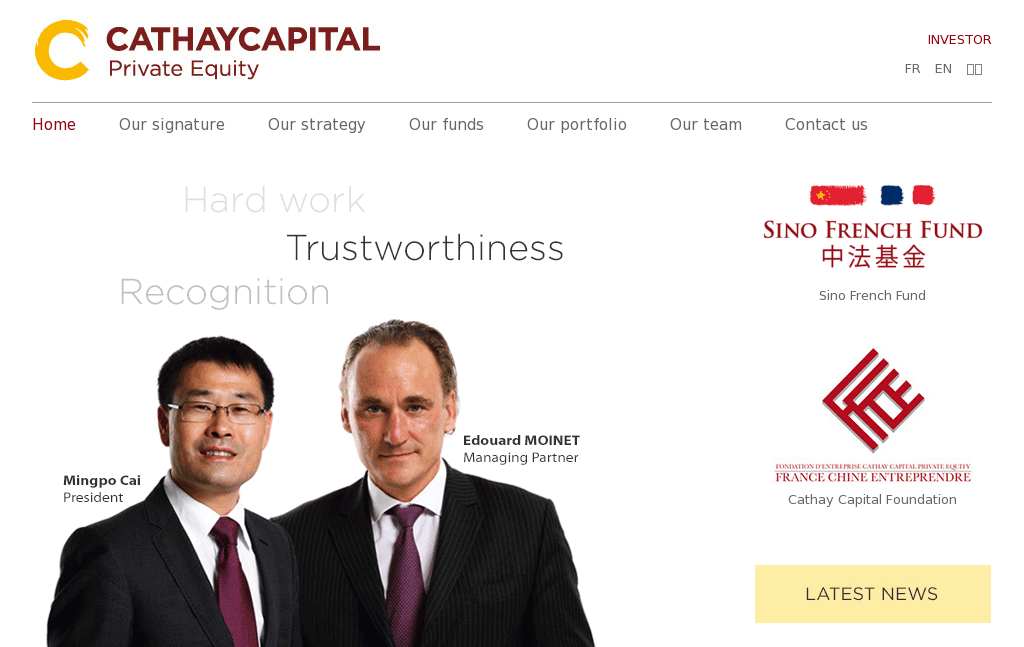
    Sino-Europe private equity firm Cathay Capital has made an undisclosed investment in Chinese home furnishing product retailer ABS through its Sino French SME Fund, says a company announcement.

    “ABS stands out among the numerous other domestic home furnishing companies in China because it has established an innovative data-based development model and an omni-channel retail system,” says Cai Mingpo, president of Cathay Capital.

    The private equity firm says it plans to leverage its home furnishing industry resources in China and France to assist ABS’ cross-border development.

    Founded in 2009, ABS has developed from a tele and catalogue selling model to an omni-channel and direct sale model with the integration of an online retailing mall, offline brand stores and mobile apps.

  • TransferWise partners with Pay Gate to bring money transfer services to Korea

    TransferWise partners with Pay Gate to bring money transfer services to Korea

    TransferWise, the P2P international money transfer platform, has opened up transfers to South Korea.

    Until recently, banks and brokers were the only option for consumers needing to send money to the country. But now, thanks to recent changes in regulation, TransferWise has partnered with local firm, PayGate, to bring better, fairer international money transfer to South Korea.Instead of sending the money in Korean Won, banks and brokers send customers’ money in GBP or USD for example, and the receiving bank makes the conversion. This leaves consumers paying two rounds of fees and maybe even two rounds of conversion – and usually they haven’t even been told they’re being charged in this way. But TransferWise sends the money in Korean Won, which means no receiving bank mark-up. The process is also completely transparent. TransferWise charges 1.5% for transfers with a delivery time of the same or next day.

    Taavet Hinrikus, CEO and co-founder of TransferWise, said:
    “Until recently, there was no alternative to banks and brokers when people wanted to send money to South Korea. We’ve heard from consumers that the process was slow and outrageously expensive so we’re hugely excited to launch the route on TransferWise. It’s going to make a huge difference to the seven million Koreans living, working and studying overseas.

    “The steps that the government in South Korea is taking to open up the financial services sector is good news for consumers. There will be more choice and better, fairer services to choose from.”

    So Yeong Park, CEO and co-founder of PayGate, said:
    “It is so glad that we now can serve customers with our 18 years of diverse experience as a Payment Service Provider, for them to make much cheaper, faster, and safer international money transfers to Korea.

    “For the last few years PayGate has been working hard to grow the Korean Fintech Industry and our recent partnership with TransferWise is the result of these efforts. Customers in Korea will see how this alternative finance can positively affect their daily lives.”

    People use TransferWise to transfer more than £500 million globally every month, saving themselves more than £22 million a month in unfair fees and charges.

  • Maybank to grow Singapore retail SME loan portfolio by 40% this year

    Maybank to grow Singapore retail SME loan portfolio by 40% this year

    Maybank is planning to “aggressively expand” its retail small and medium enterprises (RSME) financing across Singapore and the region, it said on Monday.

    The bank will be lending money to more businesses with revenues of up to $20 million, termed “retail SMEs” because they have simpler financing needs akin to those of retail or consumer banking.

    The move follows the implementation of its RSME model in Malaysia, which has seen a compounded annual growth rate (CAGR) of more than 30 per cent in loans since it was fully rolled out in 2013.

    Maybank Singapore said it expects to grow its total RSME loan portfolio by 40 per cent this year.

    In the two years since the RSME business was officially launched here, SME loans have increased by more than 50 per cent and deposits have risen by almost 25 per cent, according to Mr Choong Wai Hong, head of community financial services (CFS) for Maybank Singapore.

    “Our RSME business was a newly created segment which we identified as having great potential in 2011,” said Mr Lim Hong Tat, chief executive of Maybank Singapore.

    Mr Lim added that Maybank will be focusing on building its RSME portfolio regionally as the formation of the Asean Economic Community has resulted in countries placing increasing emphasis on smaller firms. “Asean economies are powered by the SME segment, which generates about 50 per cent of employment and some 40 per cent of GDP on average,” he added.

    “The SME industry itself is growing by between 8 and 28 per cent CAGR in these markets and presents an untapped potential for growth.”

    Maybank has introduced its RSME model in Indonesia, the Philippines, Cambodia, Laos and Brunei.

    The bank also has online capabilities to help small business owners improve their productivity in areas such as payroll, collections and payments. Maybank intends to devise more innovative financing solutions to help business owners manage uncertainties around their cash flow.

    “As the only bank with a presence in all 10 Asean countries, we are well-poised to help more small businesses capitalise on new opportunities to grow their business locally and access new markets in the region,” Mr Choong said.

  • Japan’s biggest bank sees crucial role for Philippines

    Japan’s biggest bank sees crucial role for Philippines

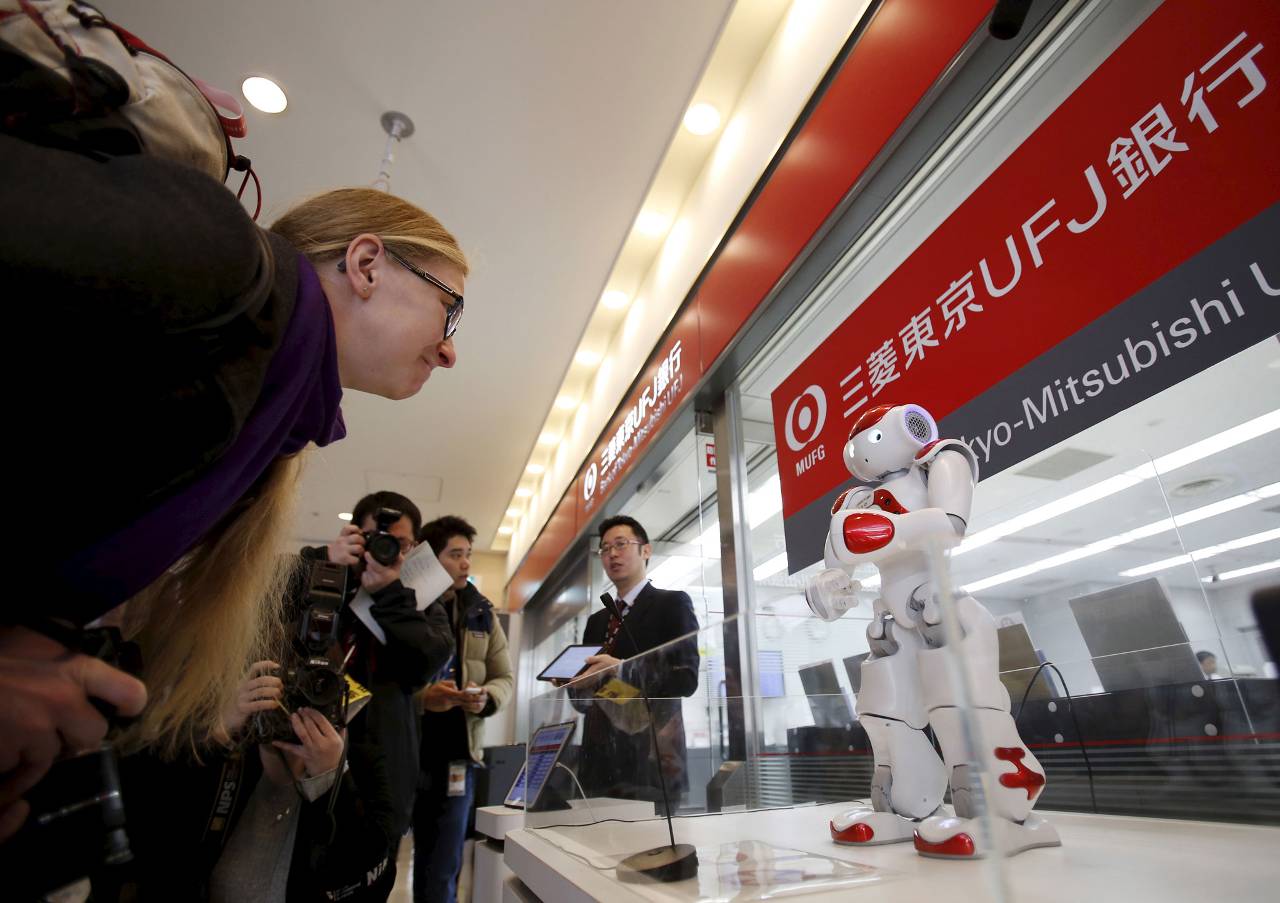
    Japan’s biggest lender Bank of Tokyo-Mitsubishi UFJ said the Philippine market plays a crucial role in its goal to become Asia’s Tier 1 financial institution.

    BTMU, which recently bought a 20-percent stake in the Philippines’ Security Bank Corp., said it envisions surpassing three of the biggest banks in Asia (HSBC, Citibank and Standard Chartered Bank) by 2020.

    “The Philippines is one of the most important markets for the bank because the economy is strongly performing, and many Japanese companies have been advancing in the Philippines,” Go Watanabe, BTMU chief executive officer in Asia and Oceania Region, told reporters in a roundtable discussion on Tuesday.

    “The Philippines is the missing part of BTMU. That is why we have decided to have a strategic alliance with Security Bank,” he added.

    Watanabe said its P36.9-billion investment in the local lender, which is also the biggest capital infusion to date in the Philippine financial market, is part of BTMU’s strategy to identify the right partners in high growth markets and to deepen its presence in organic communities.

    He said that with the partnership BTMU could now provide its strong base of Japanese customers with retail banking services using the local network of Security Bank.

    With BTMU’s diverse global network, it can also provide global corporates and Filipino companies with services such as project and trade financing, he added.

    For his part, BTMU General Manager Tadahiro Miyamoto, said that with the large consumer market in the Philippines, many Japanese firms are showing interest in expanding operations into the country.

    Potential for auto industry
    “There are many companies interested in the Philippine market. One is the retail segment such as food and apparels, but currently, probably the most interested segment is automotive,” he said.

    Miyamoto added that if the Comprehensive Automotive Resurgence Strategy (CARS) program of the government becomes successful, there are potentially many Japanese manufacturers and suppliers that would be producing car parts in the Philippines, which would create even more investment opportunities for the sector.

    Despite this, Watanabe said that encouraging more manufacturing firms to do business in the country is a bit challenging because of the lack of incentives and persistent gaps in infrastructure and power generation.

    “The challenge for the Philippines is how to encourage overseas companies, especially manufacturing, to invest in this country. In that respect, BTMU is willing to support the country to encourage them to invest more in the Philippines,” he said.

    “More than 100 million population is a good big market. If the government will think about good incentives, I think it will be a good chance for the Philippines to increase the entry of foreign direct investments, not only from Japan but also from other countries,” he added.

    Meanwhile, Miyamoto said improvement in other areas such as infrastructure, and the cost and reliability of electricity are also needed.

    “There are a lot of projects going on. We hope that those will be realized soon so that there will be more general support for Japanese companies to invest more here,” he said.

    Interested in PPP
    In this regard, Watanabe said the public-private partnership program (PPP) of the government, particularly in infrastructure, is necessary for the country.

    “Japanese companies are showing strong interest in participating in the PPP. BTMU as the best project finance bank, together with good peso liquidity from Security Bank, means our team is the best team to support the PPP and encourage Japanese customers to participate in the PPP. This will be very beneficial to this country,” he said.

    At present, Miyamoto said BTMU has no PPP investment yet, but the bank has been looking to participate in projects included in the pipeline.

    One particular project that the BTMU is interested in is the Clark Green City, which includes access and inter-city roads, a railway system, a mixed-use residential and commercial block, business district, industrial estates, schools and centers, government offices, and other facilities that would make up a major city.

    At full development, the city is estimated to accommodate some 1.12 million residents and 800,000 workers.

    “It is a very good project. It creates a lot of positivity for the Philippines and we will see what we can do,” Miyamoto said.

    Another project that can be considered by BTMU is the North-South Railways Project, Watanabe added.

  • HSBC expanding retail banking business in China’s Guangdong province

    HSBC expanding retail banking business in China’s Guangdong province

    HSBC, the largest bank in Europe and Hong Kong, is planning to expand its retail banking business in China’s Guangdong province in the coming years, with credit cards. securities trading and residential mortgage business in the pipeline, said Asia-Pacific chief executive Peter Wong Tung-shun.

    Wong was in Guangzhou on Wednesday morning with group chief executive Stuart Gulliver and Greater China head Helen Wong to co-host the launch ceremony of HSBC Express, the bank’s first train sponsorship programme. Under the sponsorship deal, 11 out of 22 trains between Guangzhou and Shenzhen will be named HSBC Express.

    “These trains are for mass commute. The programme aims to bring the image of HSBC to the public as we are expanding retail banking in Guangdong, which would provide huge opportunities for HSBC in the coming years,” Gulliver told the South China Morning Post at the launch ceremony.

    “While Hong Kong has 8 million customers, there are over 50 million Cantonese speakers in Guangdong province. HSBC is very strong in retail banking in Hong Kong, which is a big part of our business. Retail banking would be our important business thrust in Guangdong in the years ahead,” he said.

    HSBC now has 64 outlets in Guangdong, accounting for a third of its 177 outlets in China. The lender has traditionally focused on corporate banking in China but Gulliver said the growing wealth in Guangdong makes it the ideal place for retail banking. “On its own, the Guangdong economy is the 16th largest in the world. The middle classes are growing, and so is the demand for retail business services,” Gulliver said.

    Wong told the Post that retail expansion would include launching HSBC credit cards, which received regulatory approval last year but the launch date is yet to be confirmed.

    Securities trading is also in the pipeline. The bank has set up a joint venture with the Qianhai authorities, becoming the first foreign firm to hold a majority stake, of 51 per cent, in a securities joint venture trading stocks for customers from Qianhai special economic zone. It is to commence operation sometime this year.

    Wong said resident mortgage business is anther retail segment in demand, adding that the bank would also like to go into other types of wealth management businesses.

    “When people get wealthy, they like to buy homes. HSBC can offer mortgage and other wealth management services for these customers in Guangdong,” Wong said. “HSBC has a long history in both Hong Kong and Guangdong. We have been in Hong Kong for 150 years and set up our first office in Guangzhou in 1909. We financed Kowloon and Guangzhou railway in the old days. We are here for the long term,” Wong said.

    Gulliver said that with the many train and bridge projects linking Hong Kong with Guangdong, the interconnection between the two would be huge in the future. This is transforming the area from a low-end manufacturing centre into a high-end technology area led by Shenzhen, providing huge opportunities for HSBC.

  • OCBC launches banking app for Apple Watch

    OCBC launches banking app for Apple Watch

    Singapore’s OCBC Bank has launched a new mobile banking app designed for the Apple Watch.

    With the app, users can have instant access to their personal banking information, including the full list of their balances – bank accounts, cards and investments, recent transactions, and the location of the nearest OCBC Bank branch or ATM, on their Apple Watch.

    Customers must first perform a one-time activation on their OCBC iPhone mobile banking app before using the Apple Watch app. Once activated, account information and recent transactions can be viewed on Apple Watch, without the need to login to mobile banking.

    This service is available for customers using mobile devices such as iPhone 5, iPhone 5S, iPhone 6, iPhone 6 Plus, iPhone 6S or iPhone 6S Plus operating on iOS 9 and Apple Watch devices running on WatchOS2.

    The service can only be activated on a single pair of Apple Watch and iPhone devices at one time and all account numbers displayed on the watch are partially masked with only the last four digits revealed. No information is stored on the phone or watch and for security purposes, customers can choose to set a passcode on their Apple Watch.

    Market intelligence firm IDC estimates the worldwide wearable device market will reach a total of 111.1 million units shipped in 2016, a strong 44.4% increase from the 80 million units shipped in 2015. By 2019, the five-year compound annual growth rate (CAGR) of wearable devices would be 28%, with Apple smart watch devices taking the lion’s share of the market.

    “Smartwatches represent the next generation of personal mobile devices, and our Apple Watch app will offer the convenience, security and choice that customers demand when it comes to everyday banking on-the-go,” said Aditya Gupta, OCBC Bank’s Singapore head of e-business, said.

    “We are confident the Apple Watch app will be a big hit with our fast-growing number of customers who are mobile and digitally-savvy.”