Category: Finance

Retail News Asia is committed to providing both local and global retailers with the latest Finance news throughout the Asian market. This on a daily base.

  • Shinhan Bank officially launches its Indonesian operations

    Shinhan Bank officially launches its Indonesian operations

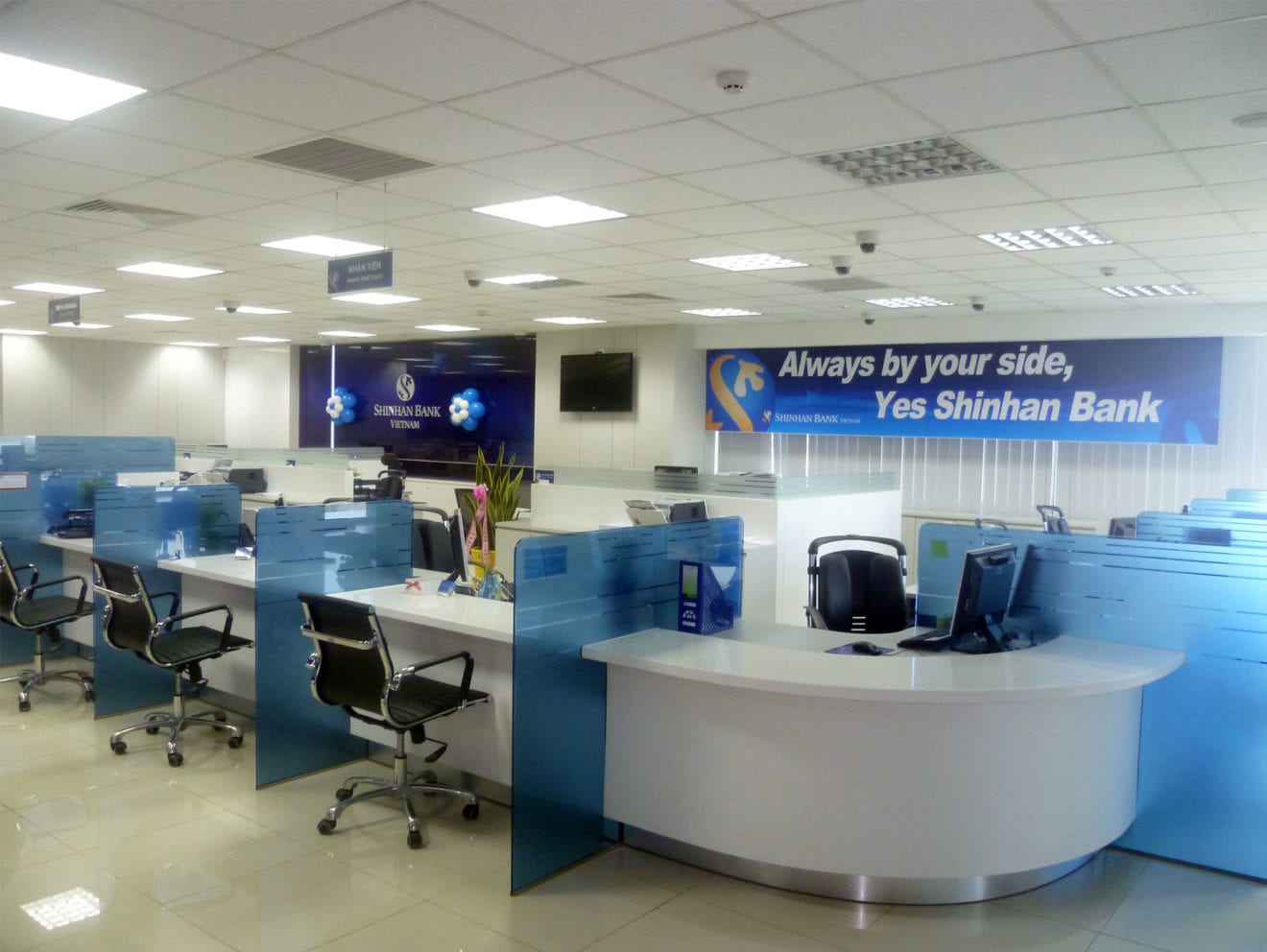
    South Korea’s Shinhan Bank has embarked on operations in Indonesia via Shinhan Bank Indonesia, a move that is expected to help the Korean bank expand its presence not only in the Southeast Asian country but also across Asia.

    Shinhan Bank said on Tuesday it officially launched Shinhan Bank Indonesia, which was renamed from Bank Metro Express (BME), a Jakarta-based bank with 19 branches that was acquired by the Korean bank last year. Shinhan Bank Indonesia is newly headquartered in the International Financial Center Tower 2 in Jakarta, the capital city of Indonesia.

    The kickoff of Shinhan Bank Indonesia’s operations follows a series of launches of the Korean bank’s overseas operations in other Asian countries such as Japan, China and Vietnam in recent years. The latest overseas operation is expected to help Shinhan Bank achieve its ambitious goal to build an extensive financial network across Asia.

    The Korean bank also aims to merge Shinhan Bank Indonesia with Centratama Nasional Bank (CNB), another Indonesian bank that it took over last December, later this year. The Indonesian bank has 41 branches across Surabaya, the second biggest city in Indonesia, and other cities in Java Island.

    Once the merger is complete, the Korean bank would have 60 networks across Indonesia, the world’s fourth most populous country. It currently has 141 overseas networks across 19 countries. It would also be the first in the Korean banking industry to purchase two offshore banks and merge them.

    Cho Yong-byung, the president of Shinhan Bank said at the launching ceremony on Tuesday that he expects the merger of the two Indonesian banks would set a new milestone in Indonesia.

  • Private Fixed Asset Investment In China Is Crashing

    Private Fixed Asset Investment In China Is Crashing

    We often think of liquidation events exclusively in terms of price, but in the real economy there is volume to consider. When financing dries up as financial agents run for cover lest they receive only further margin or collateral calls, it enacts a short run disruption in economic flow. At the margins, some firms are forced to delay activity while others can only give up altogether. It is difficult to figure how much in any liquidation is temporary and how much ends up as a permanent reduction.

    The dramatic events of January and February all across the globe undoubtedly created just this kind of mix. As it ended around February 11, there was going to be some bounce back in economic terms as funding began to flow again, allowing delayed projects and activity to restart. Because of that, it wasn’t surprising to see certain economic accounts and factors seemingly improve especially in March. That did not mean anything other than the end of the liquidation crunch, as the baseline decay remains in place and, as we are finding out again, was only amplified by further reduced capacity during the liquidations – those projects and activity that will never be restarted.

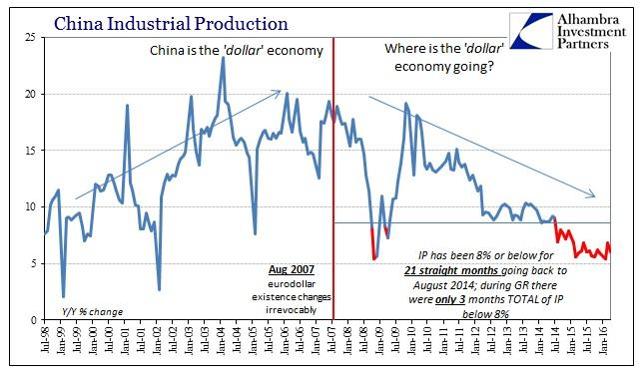
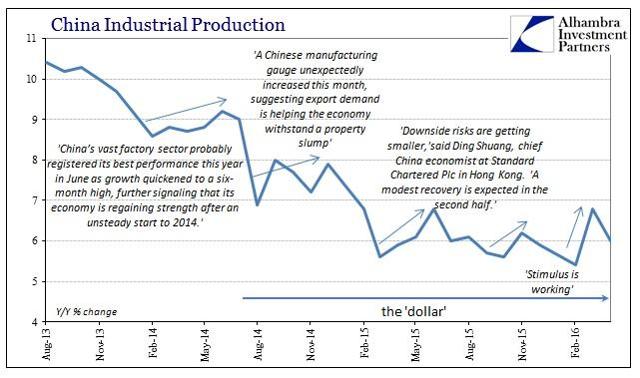
    As usual, this global process is most evident in China. Despite a burst of optimism especially in March statistics, the temporary part of the liquidation rebound is increasingly within view. Industrial production had jumped to 6.8% from a multi-year low of 5.4% in the January-February holiday combination and brought with it the usual “it’s all over” commentary. Instead, IP dropped back to just 6.0% in April which, like exports, suggests only what I propose above; a (very) brief respite only because the “dollar” hasn’t been as obviously stifling as it was to start 2016.

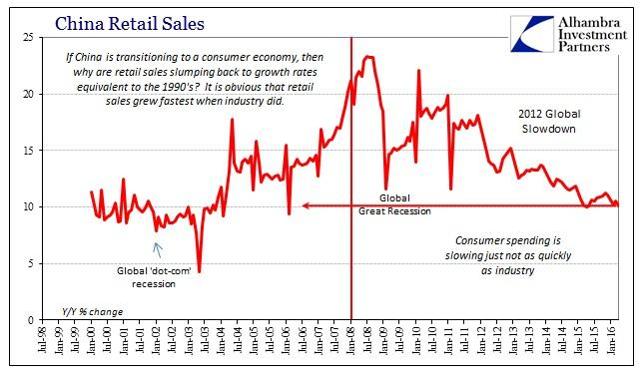
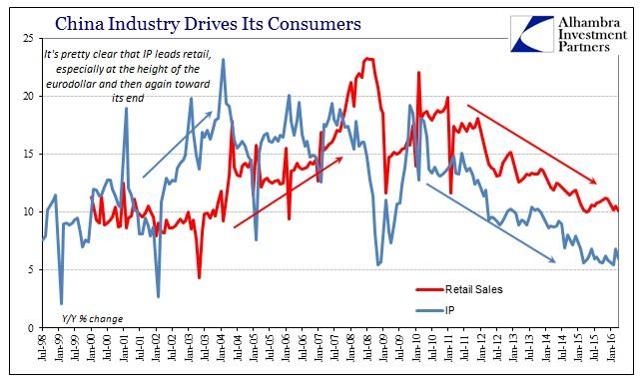
    The same trend was recorded in Chinese retail sales as well, which is perhaps a bigger blow to March’s hopeful sentiment. Even economists have started to admit China’s industrial “miracle” may never be resumed so they have turned in near desperation to the idea of a “consumer driven” economy, as if there is some plan being carried out to replace the manufacturing/export orientation of the rising eurodollar period. This wishful thinking gained traction only because retail sales have decelerated at a lag to industrial production.

    It is clear, however, through a wider perspective that China’s consumers are slowing just as China’s industry where “stimulus” can at best explain the delayed reaction. Even in 2016, the same pattern emerges as in manufacturing and export; retail sales were atrocious to start the year (Jan/Feb) at just 10.2%, nearly as bad as the worst of 2015, rebounding to 10.5% in March. The latest update for April is even worse than the Jan/Feb period, as Chinese retail sales slowed again to just 10.1%.

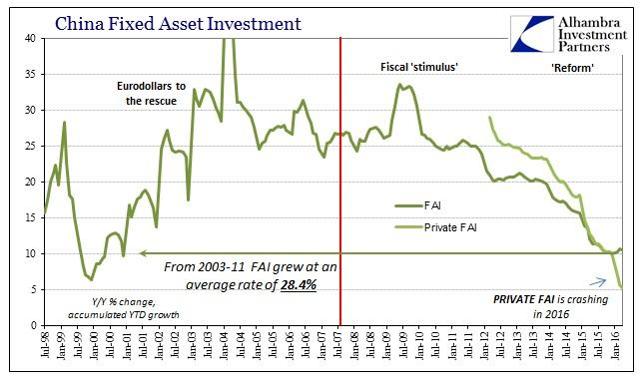
    As bad as those end results are for the direction of the Chinese economy, the real bad news is buried in productive capacity. Where industrial production and retail sales may have picked up the temporary portion of the economy disrupted by liquidation, fixed asset investment (FAI) suggests the reduction in baseline economic reality might be even worse than feared. Private FAI is crashing in China.


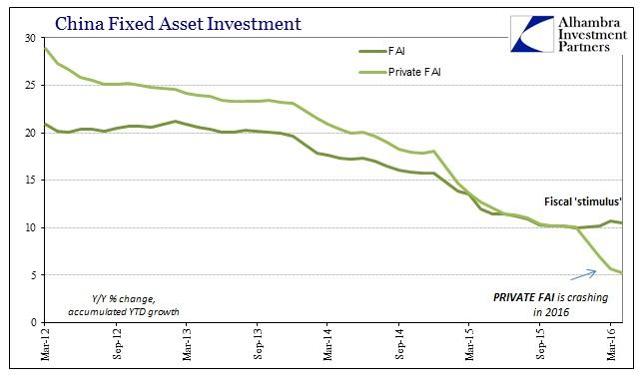
    Overall, total fixed asset grew 10.5% in April, down from 10.7% in March. Private FAI was just 5.2%, however, as it is clear the Chinese government is back to fiscal “stimulus” once again. The National Bureau of Statistics reports FAI in “accumulated” annual growth, which means the stated estimates for April include all months of the year through April. Since Private FAI was 6.9% to start the year but only 5.2% in April, actual growth in capex was less than that still. In other words, rather than rebound Private FAI has only slowed further into this year.


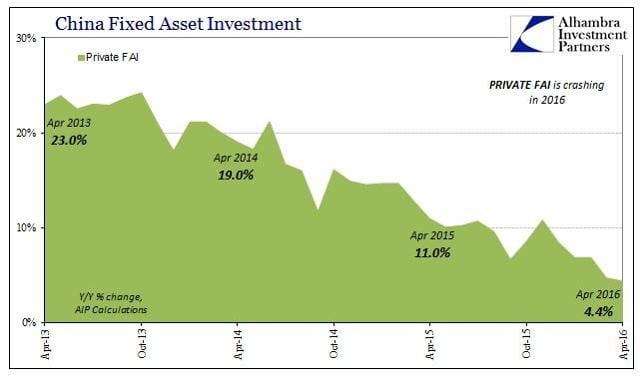
    By simple calculation we find that Private FAI for April alone was just 4.4% more than April 2015. That compares to 11.0% growth in April 2015 over April 2014. Before the “rising dollar”, private-driven capex in China was expanding at and above 20%, and had been nearly 30% when the NBS first broke out the private component in 2012. That would be a level more consistent with what China was expecting of the “recovery”, which can only suggest 4.4% (and the obvious trajectory to get to that level) really is crashing industrial investment.

    Unlike the remaining components in FAI, private sources of capital investment are the primary expressions of job growth and Chinese economic advance. Any “stimulus” that flows through the State-Owned Enterprises is largely inefficient and ineffective, the usual waste of spending for the sake of spending. Because China is still oriented toward manufacturing, private spending to increase that capacity accounts for about a third of all Chinese labor! Further, state-owned media has reported that Private FAI is responsible for 90% of new urban employment. China is in big trouble at 4.4% (with the arrow still pointing further down).


    This helps explain the lagged deceleration in retail sales and the Chinese economy overall, more so the persistent and stubborn slowing than the lag. Unlike temporary bursts of production levels, capex investment growth is determined by longer run projections and harder reality than the overflowing optimism that arrives with every minor, short-term uptick in monthly variation. In many ways, this descent in the Chinese baseline is incredibly simple and intuitive unlike the orthodox commentary that tries to deny it month after month:


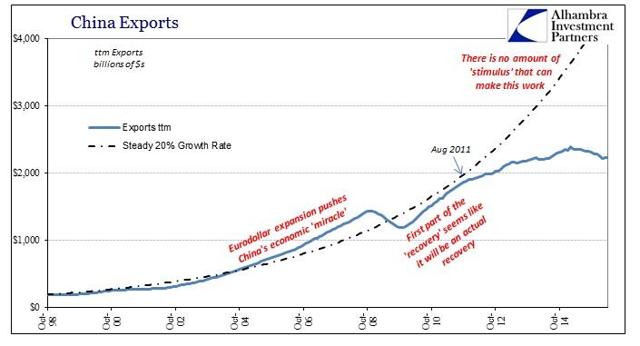
    The fact that Private FAI is now crashing in 2016 is related to the effects of the liquidation(s). The lack of financial flow in “dollars” convinces more and more firms that despite all the promises the global economy will never rebound while at the same time mothballing projects that will never be restarted and canceling many before they ever get that far. It is the brutal reality of this ongoing paradigm shift – the slowdown that will not stop slowing down. From this perspective, as noted on the chart above, it is easy to understand that there is no amount of “stimulus” (read: waste) that can make it work; without a eurodollar resurrection there is no path back to 2005. The manner of this decline is often uneven and lumpy, but it is uniform across China and the global economy. It will be undisturbed by anything except further liquidations to carry out the business end of the capacity reduction.

    That is the most important piece of the economic update for China in April. Industrial production and retail sales demonstrate that despite some optimism that March wasn’t January/February, the direction of the Chinese economy has not actually changed. The dramatic slowing in Private FAI suggests an even sharper incline in the already downward tilted baseline. (Jeffry P.)

  • Jokowi holds business meetings with Lotte & Posco during South Korea visit

    President Joko “Jokowi” Widodo held closed-door meetings with two major South Korean firms on Monday as part of the government’s efforts to explore new business opportunities.

    President Jokowi held the separate meetings with South Korean conglomerate Lotte Group and giant steel producer Posco on the second day of his visit to South Korea.

    In the first meeting with Lotte Jokowi was accompanied by Coordinating Economic Minister Darmin Nasution, Trade Minister Thomas Lembong, Foreign Minister Retno LP Marsudi, Creative Economy Agency ( Bekraf ) chairman Triawan Munaf, Investment Coordination Board ( BKPM ) chairman Franky Sibarani, National Economy and Industry Committee ( KEIN ) chairman Sutrisno Bachir and Presidential chief of staff Teten Masduki.

    Lotte was represented by the Lotte Group chairman Shin Dong-bin, Lotte Group president Hwang Kag-gyu, Lotte Group executive managing director Lim Byung-yun, Lotte Chemical president and chief executive officer Huh Soo Young, Lotte Mart president and CEO Kim Jong-in and Lotte Engineering president and CEO Kim Chee-hyun.

    Lotte runs a number of businesses in Indonesia, including some in the retail and petrochemical sectors.

    Jokowi then held a meeting with Posco where he met CEO Kwon Oh-joon, Posco president Kim Jin-il, executive vice president Kwak Jeong-shik, Posco senior vice president Lim Seung-kyu and Posco Indonesia Inti president Kim Jhi-yong.

    Steelmaker Posco has previously collaborated with Indonesia’s steel maker PT Krakatau Steel, with the two firms establishing a joint venture company, PT Krakatau Posco, in 2010.

    No details of the meetings have emerged yet.

    Jokowi is also scheduled to meet South Korean President Park Geun-hye on Monday to discuss billateral issues including trade and investment.

    South Korea is the fifth-largest foreign investor in Indonesia, Southeast Asia’s largest economy, according to data from BKPM having realized US$1.21 billion worth of investment projects in 2015.

  • South Korea’s Overseas Direct Investment Topped US$10 Billion in Q1

    South Korea’s Overseas Direct Investment Topped US$10 Billion in Q1

    The Ministry of Strategy & Finance announced on May 12 that South Korean enterprises’ and individuals’ overseas direct investment increased by 29.5% from a year ago to US$10.3 billion in the first quarter of this year, breaking the US$10 billion mark for the first time in four years.

    The amount has continued to increase since early last year. It rose by 32.8% from US$34.44 billion to US$45.74 billion between 2010 and 2011 and then fell 13.3% to US$39.65 billion and 10.1% to US$35.64 billion in 2012 and 2013, respectively. However, it rebounzded to US$40.23 billion last year after edging down by 1.8% to US$35 billion in 2014.

    The overseas direct investment by the banking and insurance sector increased by 96.3% year on year to US$4.02 billion in the first quarter of this year. During the same period, that by the manufacturing sector totaled US$2.76 billion with a year-on-year growth rate of 33.6%. Meanwhile, that by the mining sector fell 13.8% and that by wholesale and retail dropped by 42.3%.

    The amount of the investment in Asia soared by 64.3% to US$2.95 billion to take up 28.6% of the total. That in Latin America jumped by 75.4% to US$2.35 billion. In contrast, that in North America declined by 10.9% to US$2.73 billion while that in Oceania dropped by 30%. By country, those in China and Vietnam increased by 93% and 36.3%, respectively. On the contrary, those in the United States and Canada fell 8.2% and 60.9%.


  • Bank Mandiri chalks up Rp3.8 trillion in Q1 net profit

    Bank Mandiri chalks up Rp3.8 trillion in Q1 net profit

    The state-owned lender Bank Mandiri reported Rp3.8 trillion in net profit in the first quarter of 2016 thanks to increases in net interest income and fee-based income.

    The countrys largest bank in asset recorded a 19.1 percent in increase in net premium and net interest income to Rp13. trillion and 8 percent rise in fee-based income to Rp4.2 trillion.

    President Director of the bank Kartika Wirjoatmodjo said the increase in net interest income and fee-based jacked up operating income that surged 16.3 percent on-year to Rp17.2 trillion.

    The increase in income contributed to 15.9 percent growth in operating profit to Rp9.3 trillion, Kartika said here on Sunday.

    “Productivity of assets, liability and transaction business have been well managed amid the domestic and global economic slowdown,” he said.

    The liquidity of the bank was marked with the increase in third party funds held by the bank to Rp655.1 trillion in the first three mo9nths of the year, he said.

    Around 62 percent or Rp406.5 trillion of the third party funds were in giro and savings . Savings dominated the cheap fund growing Rp18.2 trillion to Rp248.8 trillion.

    Its outstanding credits totaled Rp574.7 trillion by the end of the first quarter of the year, and 85.7 percent of the credits were categorized as productive credits, Kartika said.

    Infrastructure credits totaled Rp46.42 trillion and credits for micro, small and medium enterprises (UMKM) reached Rp74.6 trillion.

    Its people credit facility called KUR reached Rp3.7 trillion or 28 percent of the whole years target of Rp13 trillion with 466,000 recipients in the first quarter of the year.

    Earlier a bank director Tardi said the target set for this year is more than quadrupling the target of only Rp3.2 trillion in 2015.

    The bank has established more small branch offices in the regions to facilitate disbursement of KURs for micro, small and medium enterprises.

    The small branch office would bring the bank closer to small depositors, Tardi said.

    In 2016, Bank Mandiri hopes to increase the number of its small branch offices to around 400 units all over the country.

    By April 2016, at least 26 new units have been in operation and by September the remaining 374 units are expected to be ready for operation.

    With the additional branch offices, the bank hopes to expand its market among the small and medium enterprises, which have proved more resistant to economic crisis.

    The small and medium enterprises provide a potential market for banking business in the country, banking observers have said.

    Currently, Bank Mandiri has 3,021 outlets including 600 units of kiosk all over the country.

    Bank Mandiri also has 17,000 agents for financial services without office for inclusive finance in various areas in the country.

    They include 8,759 individual agents and the rest institutional agents .

    In 2015, the bank reported a better-than-expected net profit but its bad loans crept up partly due to its exposure to the commodities sector.

    The bank posted a net profit of Rp20.3 trillion in 2015, or about 2 percent higher than in 2014.

    Its outstanding credits surged 12.4 percent to Rp595.5 trillion.

    Growth in net profit was the smallest in a decade, as the bank stepped up provisions. But the lenders 2015 profit was still higher than the average forecast of Rp19.59 trillion.

    Its gross non-performing loans (NPL) rose to 2.60 percent of total loans by the end of 2015, from 2.15 percent in the previous year.

    Gross NPL is predicted to be around 2.5 percent to 3 percent in 2016, Kartika has said.

  • Singapore’s DBS offers 7% rate on digital bank accounts

    Singapore’s DBS offers 7% rate on digital bank accounts

    Singapore’s DBS Bank aims to be a disruptor in India even as it awaits the RBI’s nod to upgrade its branch to a subsidiary which will have unrestricted access to the country. The bank is offering digital bank accounts with zero balance requirements, 7% interest rate on savings and unlimited access to ATMs. These accounts can be opened by anyone with a smartphone, an Aadhaar card and a PAN card.

    Speaking to TOI, Piyush Gupta, CEO, DBS, said, “We are trying to be a disruptor. There is no question for us that this channel allows us to expand into retail consumer business and provide a different kind of banking, which is a much bigger scale than the typical niche banking done in the past.” The bank has set a deposit target of Rs 50,000 crore in five years and Rs 10,000 crore of retail loans.

    The reason why DBS is going full steam in India even as other multinationals are being cautious on retail is that DBS is primarily an Asian bank. Also, the bank sees India as ideally positioned for this kind of disruption.

    “We are creating the Digibank in India as a global first because the digital infrastructure in India is better than anywhere else. The whole India infrastructure – the JAM (Jan-Dhan, Aadhaar and mobile) trinity – and the India stack is under-appreciated.” The India stack refers to four government initiatives – the biometric authentication, digital records, cashless transactions and digital consents where acceptance can be acknowledged without a ‘wet’ signature.

    A DBS Digibank account can be opened by downloading an app and providing a fingerprint authentication at any one of the 500 designated Cafe Coffee Day outlets across the country. The bank is in talks to have more centres for biometric authentication.

  • Hang Seng Index Registers Sharp Weekly Losses

    Hang Seng Index Registers Sharp Weekly Losses

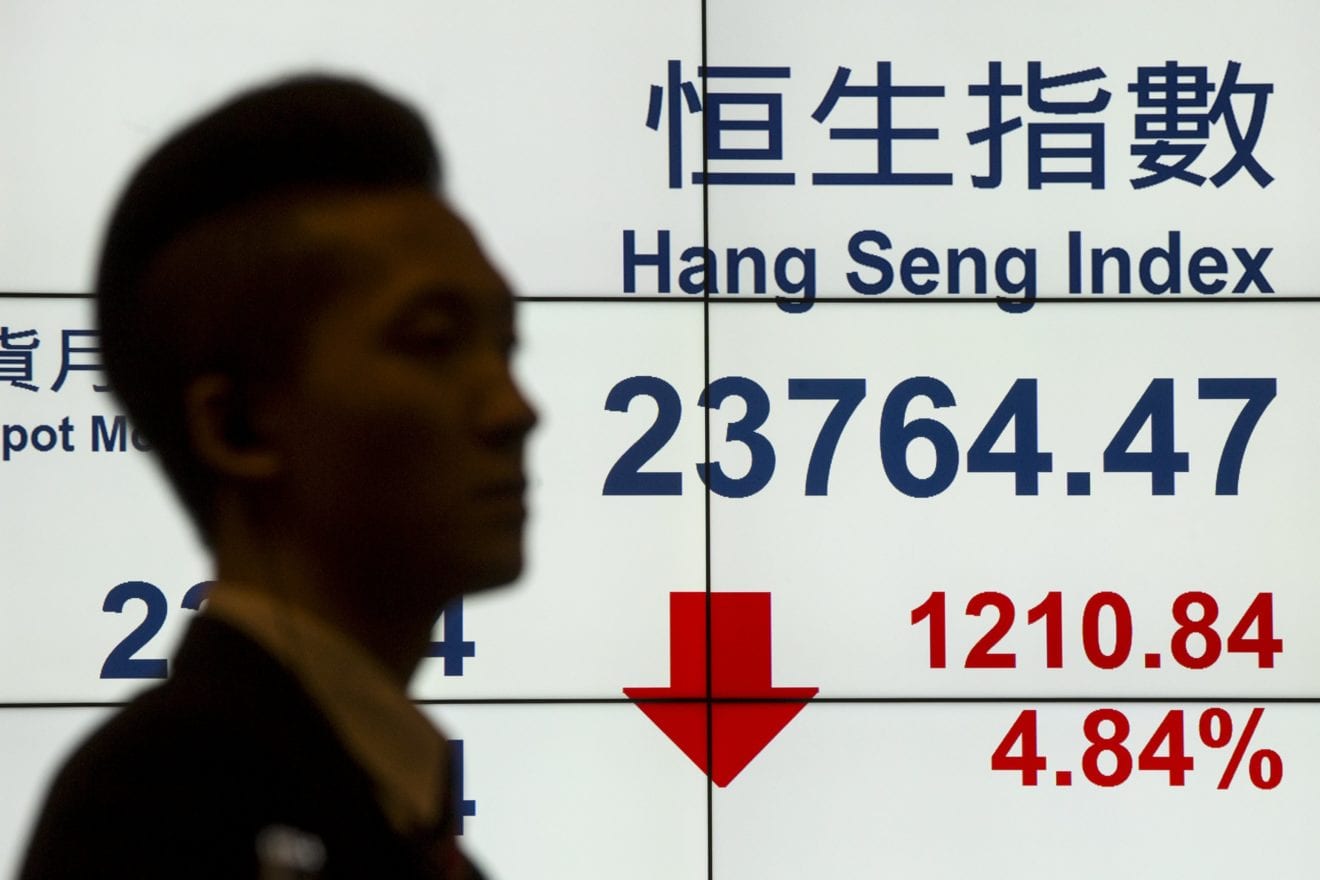
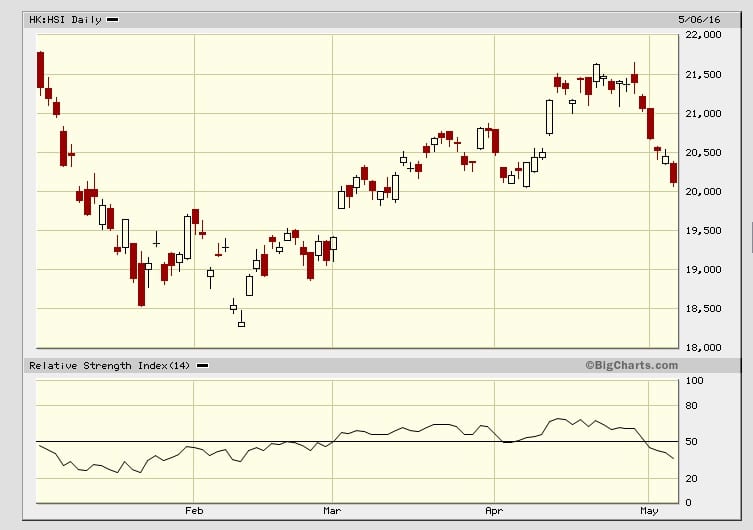
    Hong Kong shares continued to move lower on Friday with the fifth successive daily Hang Seng retreat and sharpest weekly decline for close to three months as confidence deteriorated further.

    US equity markets were unable to make any significant impression on Thursday with marginal losses in the S&P 500 index and weakness in Asian markets. Oil prices were subjected to choppy trading conditions with slight net losses.

    There were further concerns surrounding the Chinese economic outlook with fears that stronger data in March and April would not be sustainable. Sharp declines in mainland Chinese equity markets also had an important impact in undermining Hong Kong confidence.

    Hong Kong retail sales data, released after Thursday’s market close was weaker than expected with a 9.8% annual decline in the year to March, the 13h successive decline with domestic demand subdued and weakness in international arrivals. There were some hopes that a weaker yuan in trade-weighted terms and recent dollar losses would help improve competitiveness and cushion the retail sector from further selling pressure.

    After opening significantly lower the Hang Seng index moved steadily weaker during the morning session with lows close to 20,150 ahead of the break. Buyers were unable to make any impression during the afternoon session and there was fresh selling late in the session. The index closed with a loss of 339.95 points and 1.66% at 20109.87, the weakest close since the second week of March.

    There were daily losses of over 2.00% for the finance and property sectors and the utilities sector also edged slightly lower despite gaining defensive support. HSBC and AIA dipped significantly lower during the day. The China Enterprises index fell 1.80% for the day, also the fifth successive retreat.

    Friday’s US employment data will be important for global markets with a particular focus on the dollar, which will influence regional markets next week. China’s trade and international reserves data is scheduled over the weekend, which will have an important impact on confidence surrounding the Chinese economy and equity markets with any decline in exports undermining sentiment.

    Hang Seng Daily Chart

    hangseng daily chart 06-05-16

  • BI Urged to Stimulate Housing Market

    BI Urged to Stimulate Housing Market

    Indonesia Property Watch (IPW) CEO Ali Tranghanda asked Bank Indonesia to issue a more progressive regulation on Loan to Value (LTV) in order to tackle issues with a slowdown in the national housing market recovery.

    “For the middle-lower segment, particularly houses with loan liquidity facility (FLPP), the LTV can be fully provided so that the down payment is set to 0 percent,” Ali said in a press release on Friday, May 6, 2016.

    For the middle segment, Ali suggested that the LTV should be set to 90 percent, so that the down payment would stand at 10 percent. Meanwhile, Ali said that BI should strictly govern the LTV for upper segments, “because the upper segment is a subject to massive speculations, although it has impacts on the housing market,” Ali added.

    According to Ali, policies that can hamper the cash flow of middle-lower segments includes the requirement for developers to market homes that are under construction.

    “BI is expected to stimulate the housing market movement,” Ali added.

    Ali explained that the relaxed policy could be implemented until the housing market fully recovered. Given with the current market condition, Ali said that BI should not burden the housing sector with strict regulations.

    The national housing market has so far not shown signs of recovery. After a growth in sales figure in the fourth quarter 2015, the trend did not continue in the first quarter of this year. The IPW reported that the housing market in the first quarter plummeted by 23.1 percent compared to the previous quarter, or was down by 54.09 percent compared to the first quarter of last year.

    Data from the IPW revealed that almost all regions experienced a decline in sales, and the middle segment remained the largest market share at 52.19 percent. Meanwhile, the upper and lower segments accounted for 28.27 percent and 19.54 percent of the housing market share, respectively. Earlier in the fourth quarter 2015, the upper segment dominated the market share.

  • Citi Indonesia posts Rp 633 billion profit

    Citi Indonesia posts Rp 633 billion profit

    Citi Indonesia recorded Rp633 billion ( US$48 million ) in net profits in the first quarter this year, a 12 percent rise from Rp 567 billion in the same period last year.

    The profit growth was driven by a 10 percent increase in net interest income, as also reflected in the bank’s total assets as of March this year that reached Rp76.5 trillion, a 6 percent year-on-year ( yoy ) surge from the corresponding period last year.

    Citi Indonesia chief executive officer Batara Sianturi said,”We enjoyed higher quality of assets in the first quarter this year with our net non-performing loan [NPL] ratio staying as low as 1.15 percent,” adding that the bank’s loan loss provision ( CKPN ) had also improved by 25 percent to Rp 131 billion.

    Citi Indonesia also fared well, as seen in the third-party funds that reached Rp 51.2 trillion, a 4 percent increase yoy with the current account and savings account ( CASA ) taking the lion’s share of 71 percent and therefore contributing to the sustained net interest income.

    The bank also set aside a minimum capital requirement of 28.86 percent as of March, the company said in a statement.

    The bank’s financing ratio for small and medium enterprises account for 9 percent of the total credit as of March this year.

    “We will continue supporting Indonesia’s economic growth by implementing fund disbursements in accordance with the government’s priority programs, including in the infrastructure sector and other industries that bolster exports and loans being channeled to small and medium enterprises.”

    Last year, Citi Indonesia garnered Rp 1.5 trillion in net profits with an asset increase of 14.6 percent yoy.

    In the digital arena, the bank also developed innovations and services by launching four smart branches focusing on digital banking solutions.

  • DBS taps digital platform to grow retail banking operations

    DBS taps digital platform to grow retail banking operations

    DBS launched a “mobile-only bank” and said it aims to garner 5 million customers and a deposit base of Rs50,000 crore over the next five years

    On Tuesday, DBS launched a “mobile-only bank” and said it aims to garner 5 million customers and a deposit base of Rs.50,000 crore over the next five years. Named digibank, the DBS mobile application will allow individuals to access a wallet at first and then open a savings deposit account with the bank. The balance in the account will earn 7% interest per annum.

    “We are going to focus outside our affluent banking base and we hope to be a mass consumer banker through this product. We hope to get 5 million customers over the next 3-4 years through digibanking,” said Piyush Gupta, chief executive officer at the bank. Currently, DBS Bank has 35,000-45,000 customers in India, according to Surojit Shome, head of India operations for the bank.

    DBS Bank isn’t the only one to board the digital bandwagon. Large Indian banks such as State Bank of India, ICICI Bank Ltd, HDFC Bank Ltd and Bank of Baroda are building digital channels with an aim to garner new customers and serve existing ones better.

    The rush for digital dominance comes even as 11 payments banks are preparing to launch their operations. These banks will have the infrastructure and technology to provide digital banking from day one.

    Among the most popular digital channels is the use of the smartphone for transactions. Transactions on mobile phones in India have surged in recent months owing to large value transactions being concluded on smartphones by corporate clients besides an increase in retail transactions, Mint reported on 28 March. Data from the Reserve Bank of India (RBI) show that on a year-on-year basis, the amount transacted in December 2015 rose more than fourfold to Rs.49,029 crore from the Rs.11,323 crore transacted a year ago.

    India is estimated to have about 220 million smartphone users in 2015 and a February report by networking solutions firm Cisco forecast this would jump to 651 million by 2019.

    Gupta of DBS said the bank’s digital offering stands out because of an inbuilt dynamic security system that takes away the need for one-time authentications and a natural language interface that allows customers to use voice commands to transact.

    Mobile banking products of most banks require the customer to enter a one-time password to conclude any transaction.

    For the initial authentication of a new customer, DBS has tied up with Coffee Day Enterprises Ltd that runs the Cafe Coffee Day outlets. A customer will be required to carry an Aadhaar or a PAN card to a Cafe Coffee Day outlet and, using a biometric system, will be allowed to open an account.

    Meanwhile, DBS Bank will continue to expand its branch network to service corporate clients and small and medium enterprises, Gupta said. The bank has 12 branches in India and has applied to RBI to move to a wholly-owned subsidiary structure. “The application is pending and we have been told it may take 12-18 months to process. We have not received any negative feedback though,” Gupta said. The bank’s Indian assets form only 5% of its total book. Gupta said the bank is hoping for double digit growth in its India balance sheet.

    The bank will leverage its digital platform to build a retail loan book of Rs.10,000 crore over the next five years. “Right now, we are launching digibank mostly on the liabilities side. We will introduce investments and, later, loans, over the next few months,” said Gupta.

    “If you look at some of the global stories, the broad perspective is that a bank starts excelling in certain things when it begins to focus in some areas. Digital-first banks such as some in the US like Atom Bank, they channelize all their energies into one thing as opposed to existing Indian players who will continue to focus on traditional branch banking and in addition give digital services,” said Vivek Belgavi, partner and leader of financial services technology at PwC.

    Belgavi added that new companies would largely focus on untapped segment such as individuals who do not visit a branch as a target for their digital banking.

    “It is a classic disruptor strategy. It will go after segments which are under-served. There is a segment that does not visit branches and because they don’t visit branches they expect a superior experience; if this is not catered to, this is what the disruptors will focus on,” he said.


  • Profit of CIMB’s Indonesian ops grows by over three times

    Profit of CIMB’s Indonesian ops grows by over three times

    CIMB Niaga said in a statement, posted by its parent on Bursa Malaysia’s website, that the improved net profit came on the back of a 1.4% yoy increase in net interest income and a 18.5% yoy jump in non-interest income, mainly due to improved foreign exchange and capital market businesses.

    Operating expenses and provisions declined by 1.4% and 7.3% on a yoy basis respectively. “While we remain cautious given the economic situation, we hope our positive performance this quarter will provide a strong base for our results going forward. Our operating income held up well through strong contributions towards non-interest income from an uplift in the treasury business.

    “Our credit card business continued to garner market share, while current account and savings account (CASA) balances grew strongly, bringing about a CASA ratio of 52.05%.

    “CIMB Niaga capital ratio strengthened to 18%. Our improved capital position should hold us in good stead to face the market and economic uncertainties,” said CIMB Niaga president director Tigor M. Siahaan in the statement.

    With total assets of 231.67 trillion rupiah (RM68.54bil) as of March 31, CIMB Niaga maintained its position as Indonesia’s fifth largest bank by assets.

    Total gross loans were lower at 171.02 trillion rupiah (RM50.60bil) as at March 31 as the bank maintained a conservative growth strategy.

    Despite the slower growth in CIMB Niaga’s loans, several business segments posted positive expansion such as personal loans and credit cards.

    “We continue to pursue our aspiration of being a leader in digital services by focusing on customer experience and optimising the use of the latest technology to bring value to our clients,” Tigor said.

    In the syariah banking segment, CIMB Niaga’s Islamic business unit’s total financing stood at 7.60 trillion rupiah representing a growth of 13.9% yoy with third-party deposits of 8.16 trillion rupiah as at March 31.

    CIMB Niaga’s capital adequacy ratio (CAR) strengthened to 18% as at March 31, 2016.

    “The government has proposed some positive changes since the start of the year to boost the economy. Bank Indonesia cut interest rate to 6.75% from 7.50% and the government has also lined up several economic stimulus packages for 2016. I’m confident that as CIMB Niaga remains focus in the areas of asset quality, cost efficiency and CASA growth, the bank will be primed to capitalise on opportunities when the economy improves,” added Tigor.

  • Bank Negara unit MyClear to set up new retail payment platform

    Bank Negara unit MyClear to set up new retail payment platform

    The Malaysian Electronic Clearing Corp Sdn Bhd (MyClear), a wholly-owned subsidiary of Bank Negara Malaysia (BNM), is developing a new real-time retail payments platform to serve both as a catalyst and enabler for innovative payments in Malaysia.

    BNM deputy governor Datuk Muhammad Ibrahim said the enhancement, which is expected to launch in 2017, would adopt a multi-currency system that leveraged on the SWIFT messaging system for large value payments.

    “The enhanced Real-Time Gross Settlement System (RENTAS) would cater for multiple messaging formats including the internationally-recognised ISO 20022 which supports the transmission of richer remittance data and facilitates interconnectedness with other economies within the region,” he said in his keynote address at the Malaysia E-Payment Excellence Awards (MEEA) in Kuala Lumpur on Monday.

    He said BNM would continue to foster an enabling environment for infrastructure building and network expansion, adding the enhanced platform also promoted effective competition among industry players to spur the development of innovative solutions, provide greater choices and value proposition to the public and, in the process, lower costs.

    Meanwhile, MyClear managing director Peter Schiesser said the retail payment platform initiative is in line the implementation of faster payments in the United Kingdom, Singapore and Sweden.

    The platform has also delivered significant economic benefits, as well as new immediate payment initiatives in Australia, the United States and the European Union, he added.

  • UBS optimistic on Australia, Japan real estate markets

    UBS optimistic on Australia, Japan real estate markets

    UBS Asset Management is optimistic on the Australian and Japanese real estate markets, according to its latest Asia Pacific quarterly outlook report. Amid a challenging macro conditions, transaction volume for commercial real estate fell 12% y-o-y in 2015. However, Japan and Australia bucked the trend as domestic lenders eased their credit policies on account of improving fundamentals and collateral quality.

    Toh Shaowei, UBS Asset Management director of research and strategy for Asia Pacific, says: “Broadly speaking, the near-term condition in APAC region is still challenging and there is a ‘longer winter’, but the long-term fundamentals remain strong. We see a few macro themes and continue to monitor them.”

    In Japan, household spending is likely to be the main driver of economic growth on the back of ongoing wage rises, healthy job market and lower oil prices. Negative interest rates have also boosted capital expenditures. Notably, these expenditures have focused largely on new product development, R&D and efficiency saving measures to counter aging population and labour shortages.

    Occupancy rates and rents for Japan’s key office markets have also trended up due to limited new supply and steady demand from large corporates. These corporates have benefited from Bank of Japan’s asset purchases, lower borrowing costs and weaker currency which boosted earnings.

    The leasing market in the Japanese logistics sector remains robust on the back of increasing demand for same day deliveries from end users and growth of online shopping. However, rising supply from new developments are likely to restrict overall rental growth.

    In Australia, Sydney and Melbourne led the recovery in the office leasing market as the country shifts its growth model from the mining sector and resource-rich state. Finance and insurance, professional services and the technology, media and telecommunications sector are the key drivers of demand for office space. Meanwhile, net absorption level in resource-rich states of Queensland and Western Australia continue to lag but is gradually stabilising, says UBS.

    Separately, robust demand from international retailers looking to gain exposure to the Australian market have strengthened the rents and occupancy rate of prime retail space. However, secondary retail space is expected to continue to underperform amid subdued wage growth and increasing penetration of online retailers. UBS anticipates near-term rental growth to remain below historical averages as households allocates a higher share of their incomes to healthcare and education.

    On the home front, the outlook for Singapore’s real estate market remains challenging in the near term. The clampdown in foreign labour supply and an elusive labour productivity gain have lifted business costs and dented corporate sentiments. Coupled with a supply onslaught, UBS expects the overall office sector performance to remain depressed over the next two years.

    UBS expects the weakness to be broad-based across all property segments. Singapore’s retail rents are likely to witness a flat to marginal declines over the next 12 months while sluggish manufacturing outlook is clouding the overall prospects for the industrial property sector.

  • Credit card companies collaborate to lift fee income

    Credit card companies collaborate to lift fee income

    Local credit card companies are launching offline-to-online (O2O) service businesses by collaborating with various sectors to increase transaction fee income.

    KB Kookmin Card reached an agreement with Uber Korea on Monday to jointly develop card products and take part in joint promotion campaigns in and outside Korea.

    “We hope to offer a wider variety of membership benefits to our credit card customers and expand in new sharing economy businesses like Uber,” said Shin Seong-hoon, head of the marketing division of KB Kookmin Card.

    The joint venture not only helps Uber expand its customer base in Korea against competition with Kakao Taxi, but also assists Kookmin Card to seek a future growth engine by developing taxi reservation services that are offered in association with credit card membership benefits. It may allow Kookman Card to expand its payment service to 400 cities where Uber operates.

    KB Kookmin Card is not alone moving towards such services.

    Shinhan Card has collaborated with four companies, including Kyobo Bookstore, GS Retail, Korea Smart Card and the car sharing service start-up Socar, since last year to offer O2O services and foster a loyal customer base.

    Shinhan also plans to launch a chauffer service this month in Seoul and Gyeonggi by affiliating with existing dispatch companies. It profits from a transaction fee of 2 to 2.5 percent.

    It also has been offering an easy payment services on flower delivery, quick-delivery and tutoring payment, after agreements with six companies.

    Shinhan aims to expand the O2O services by joining hands with 14 more companies by the end of the year.

    Local credit card companies aim to beef up their transaction fee income, which accounts for nearly 50 percent of their total annual income.

    ?However, analysts say it won’t be so easy for the credit card companies to grab market share by winning the competition with IT giants like Kakao and start-ups like Baedal Minjok, which have so far dominated the market share based on their broad customer base.

    “It is true that the credit card companies also have a large customer base, as well as broad affiliated retail shop networks,” said Yoon Jong-moon, a researcher at the Credit Finance Research Institute. “However, such a network is not enough to compete against the IT platform operators, because the card companies will see only a limited growth in profits by doing O2O services among their own customers and affiliated shops.”

  • Card, not cash, is king in South Korea

    Card, not cash, is king in South Korea

    Whenever she needs to use money – whether to take the subway, buy a drink from a vending machine or pay for lunch at a restaurant – Ms Kim Mee So, 29, will whip out her debit card.

    It is the only card the teacher carries with her in her bag, and the only one she needs for daily expenses.

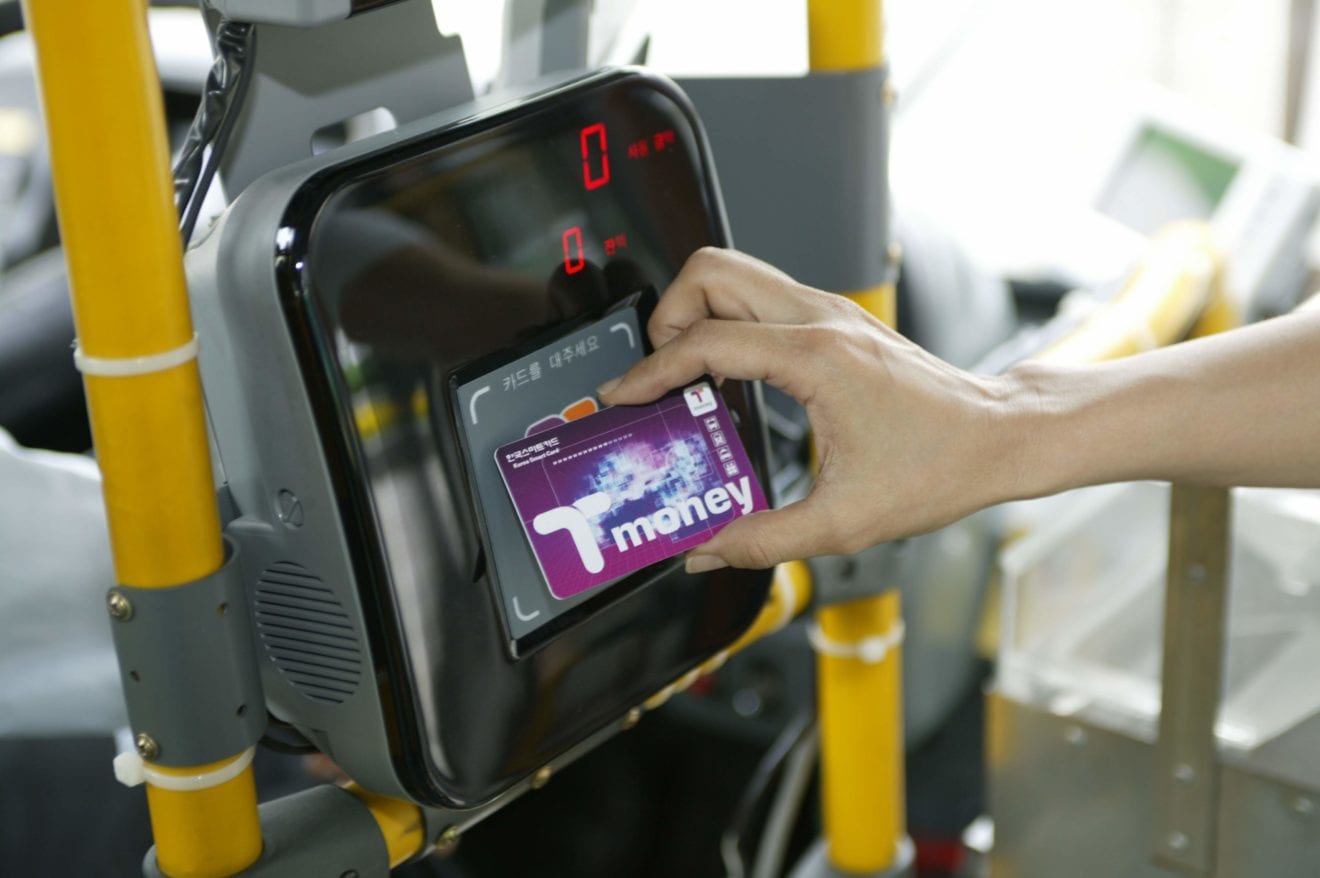
    The Visa debit card is linked to her bank account and equipped with a smart chip that also allows her to use it as a public transport payment card, known as T-money.

    “I don’t use real money because it’s heavy to carry around, and I don’t have a wallet so there’s no place to put it in. The only time I use cash is to pay for food delivery and give an allowance to my brother who’s in high school,” she said.

    Ms Kim is among a growing group of South Koreans who are relying less on cash and more on cards and electronic payments, as the world’s most wired country started early last year to open up its finance technology (fintech) industry and encourage more people to adapt to IT-based systems, including payments via mobile phones.

    NO ROOM FOR CASH

    I don’t use real money because it’s heavy to carry around, and I don’t have a wallet so there’s no place to put it in. The only time I use cash is to pay for food delivery and give an allowance to my brother who’s in high school.

    MS KIM MEE SO, a 29-year-old teacher who carries only a debit card in her bag for daily expenses.

    Only about 20 per cent of all payments here are made with cash – among the lowest in the world – according to the Bank of Korea (BOK).

    The central bank is now aiming for the country to go cashless by 2020, beginning with plans to phase out coins so as to reduce the cost of minting them. It has already cut back on issuing paper money.

    A system is being tested for retailers who receive cash to give back change not in coins but as credit in the customer’s T-money card or credit card.

    It will be rolled out by next year if pilot tests prove to be successful.

    Going cashless is a global trend, led by Scandinavian countries Norway, Sweden and Denmark. Singapore has also committed $225 million to grow fintech start-ups as part of its plan to go cashless.

    In South Korea, electronic payments gained popularity after the introduction of T-money in 2004, as the country sought to streamline public transport payments with a single touch-and-go smart card.

    What is T-money?

    South Korea introduced a smart card called T-money in 2004 to streamline public transport payments.

    Here is how it works:

    • •T-money is a stored-value card with a smart chip for fare deductions, much like Singapore’s ez-link card.

      •Modified T-money chips can also be fitted into credit cards and debit cards, and even into mobile phone SIM cards, which means one can just tap one’s phone to take the bus, subway or taxi.

      •It is also accepted at many convenience stores, retail shops and restaurants.

      •By the end of 2014, T-money was used in 43 million transactions daily.

      •There are 15 million users in Seoul and the surrounding Gyeonggi province, which have a combined population of 22 million.

    Much like Singapore’s ez-link card, T-money is a rechargeable stored-value card with a smart chip for fare deduction. The chip has been modified to fit credit cards, debit cards and even mobile phone SIM cards – which means people can tap their phones to take the bus.

    T-money can also be used at most convenience stores and some retail shops and restaurants.

    By end-2014, T-money was used in over 43 million transactions a day. There are more than 15 million T-money users in Seoul and the surrounding Gyeonggi province, which have a combined population of 22 million. Apart from the T-money card, credit and debit cards have also become a way of life.

    The success of T-money and the popularity of mobile devices have also prompted a new wave of fintech developments.

    Tech giants including Naver, Kakao and Samsung compete to build and bolster their mobile payment platforms to capture consumers shifting from computers to mobile devices.

    Text-messaging app company Kakao, for instance, has its own mobile payment platform KakaoPay that allows its seven million users to shop online as well as pay electricity bills.

    The Seoul Metropolitan Government jumped onto the bandwagon last December, launching an app called STAX to allow users to pay property and car taxes and water and sewage fees on mobile phones.

    Business consultant Lee Youn Joo, 31, said cash has become less important nowadays and is used only on special occasions like weddings and funerals, and when paying street vendors and for valet parking.

    “Koreans are used to convenient transaction means and… the use of credit cards and mobile banking will continue to increase,” he said, adding that he uses credit cards for 90 per cent of his monthly spending.

    But as more people choose to go cashless, there are concerns about credit card security, overspending and whether the elderly can adapt to electronic payments.

    Student Terry Nam, 21, is concerned about security, as the country has witnessed major data leaks involving big credit card companies.

    “Our distrust of privacy protection is very high. The government should explain what it has done to resolve this issue and strengthen the punishment for private data leakage crimes,” he said.

    Wary of credit card companies, graduate school student Kwon Joo Hyun, 27, uses a debit card instead and avoids online payments that require credit card details.

    But she still supports the BOK’s plan, adding that the government can introduce a kind of cashback card for elderly folks to use when coins are phased out.

    But Dr Sohn Sang Ho, senior research fellow at the Korea Institute of Finance, feels the BOK’s plan to go cashless by 2020 is “too ambitious”. He said there is still a big group of older people who rely mainly on cash transactions, especially in traditional markets, and it will take a long time for them to convert to electronic payments.

    “Going cashless can be our long-term goal, but it’s not possible in the near future,” he said.