Category: Finance

Retail News Asia is committed to providing both local and global retailers with the latest Finance news throughout the Asian market. This on a daily base.

  • Standardized payment QR code to launch in Thailand

    Standardized payment QR code to launch in Thailand

    Top payment card companies Mastercard, UnionPay International and Visa have jointly introduced a standardized QR code for mobile payments in Thailand.

    The new standardized code allows merchants to easily accept electronic payments without the need to invest in physical point-of-sale machines. They need only have a piece of paper with their unique QR code for consumers to scan.

    Customers with a Mastercard, UnionPay, or Visa card can use a mobile application to scan the code using both smartphones and feature phones with a camera function.

    In future, the standards are intended to be globally interoperable and useable anywhere they have been expected.

    The standardized code is expected to be implemented by banks and merchants across Thailand by the third quarter.

    The initiative also meshes with the Thai financial sector’s Electronic Data Capture (EDC) expansion initiatives under the government’s National e-Payment Roadmap, which aims to support the nation’s transition to a cashless society.

    The launch of the Standardized QR Code signals exciting times for Thailand as consumers move quickly to adopt new payments technology,” Mastercard country manager for Thailand Donald Ong said.

    “Our own research, for example, shows that 50% of young consumers across South East Asia would use the QR code straightaway, and we believe this reflects the demand in Thailand.”

  • Biometrics to authenticate 2b m-payments this year

    Biometrics to authenticate 2b m-payments this year

    A new report by Juniper Research predicts the number of mobile payments authenticated by biometrics will climb to to nearly 2 billion this year, up from just over 600 million in 2016.

    The new research found that while Apple Pay had provided the catalyst for initial growth, other leading wallets including Android Pay and Samsung Pay were increasingly offering biometric solutions for authentication.

    Furthermore, the size of the opportunity has been boosted by the greater availability of fingerprint sensors. Juniper estimates around 60% of smartphone models are expected to ship with such sensors this year, with many Chinese vendors incorporating them into mid-range models.

    The research emphasized the increasing momentum behind alternative biometric solutions. It recognized Mastercard as an early leader in this space through its Identity Check Mobile capability, due to go live in the latter part of 2017. Informally known as “selfie pay”, this allows users to scan their fingerprints and/or take selfies to validate their identities and thereby make payments.

    Meanwhile, it expected to see strong adoption of the authentication app recently unveiled by India’s identification authority, through which merchants can verify a customer’s ID via either fingerprint or iris scan. Indeed, since the biometric data is linked to a bank account, the process acts as both authentication and transaction enabler.

    However, the research argued that the key challenge for service providers would be striking the right balance between end-user convenience and solution security.

    Research author Dr Windsor Holden pointed out that “typically, the more secure the solution, the more time-consuming the authentication process. It is essential to offer a range of verification options allowing clients to determine what level of security is required for a given authentication.”

  • Mastercard, UnionPay International and Visa Make E-Payments in Thailand Easier

    Mastercard, UnionPay International and Visa Make E-Payments in Thailand Easier

    Mastercard, UnionPay International and Visa today introduced a Standardized Quick Response (QR) Code for payments, accelerating Thailand’s transition to a cashless society.

    The Standardized QR Code supports the Bank of Thailand’s cashless agenda to drive innovation, interoperability, and security in payments.

    In order to pay, consumers holding a Mastercard, UnionPay, or Visa card can simply use a mobile application with Standardized QR Code support to scan the merchant-presented QR code. QR Code works on both smart phones and feature phones with camera function.

    By establishing standard specifications for QR code payments, consumers and merchants in Thailand now have more options to pay electronically without compromising on security and convenience. The Standard QR Code is simple to set up and use and provides three key benefits.

    First, consumers will not need to scan different QR codes to make payments with Mastercard, UnionPay and Visa. Merchants will only need to display one QR code at the storefront or through the acquiring bank’s mobile application.

    Second, by routing the transactions through global-standard processing networks, consumers can enjoy a fast, convenient and secure payment experience.

    Third, the standards are intended to be globally interoperable and with the right mobile application consumers will be able to use the same standard QR code to make payments everywhere the standards have been adopted.

    The Standardized QR Code is intended to be implemented by banks and merchants across Thailand by the third quarter of 2017 and will contribute to the financial sector’s Electronic Data Capture (EDC) expansion initiatives under the National e-Payment Roadmap introduced by Ministry of Finance.

    A readily accessible and secure payment processing option for all stakeholders, the Standardized QR Code for payments will contribute to the growth and speed of electronic payment adoption across the country, lowering the cost for accepting electronic payments.

    In the future, Thai consumers will benefit from being able to make QR code based payments when traveling outside of Thailand.

    Mr. Donald Ong, Country Manager, Thailand and Myanmar, Mastercard, said, “The launch of the Standardized QR Code signals exciting times for Thailand as consumers move quickly to adopt new payments technology. Our own research, for example, shows that 50% of young consumers across South East Asia would use the QR code straightaway, and we believe this reflects the demand in Thailand. This demand will grow further as the technology is rolled out at small shops across the country, and includes bill payments and cash on delivery as well. Developed in line with global standards, this QR code solution means Mastercard users have even more peace of mind, as well as extra convenience when paying for goods and services. This is yet another strong offering as Mastercard supports Thailand’s evolution towards a cashless society.”

    Mr. Wenhui Yang, General Manager for UnionPay International Southeast Asia, said, “UnionPay now chairs an international workgroup with other payment networks to develop a global QR Code Standard for payments. As an international payment network, UnionPay aims to provide payment solutions that are tailored to the needs of the local market, to enable choice and ease of payment for consumers and businesses alike. The Standardized QR Code is an innovative step forward in the right direction for Thailand’s payment industry. By enabling consumers and merchants to pay and process QR codes easily and securely, this will accelerate the development of the local payments industry, as we continue to work with the Bank of Thailand on payment solutions that will benefit the people of Thailand. We believe the Standardized QR Code has the potential to support and strengthen the Thai economy and help Thailand become a truly cashless society.”

    Mr. Suripong Tantiyanon, Visa Country Manager, Thailand, said, “Visa is proud to have contributed to the development of Standardized QR Code in Thailand as we believe it has the potential to significantly accelerate the growth of electronic payments acceptance in the country. This is especially true for consumers as well as small merchants, as it lowers cost and is easy to implement, eliminating the need for traditional POS hardware. The success of mVisa worldwide has proven a QR code solution to be scalable, secure and easy to use. Increased use of electronic payments has contributed to meaningful economic growth, with more than USD 3.18 billion or about THB 113 billion added to Thailand’s GDP from 2011 to 2015. We look forward to continuing to partner with our clients, merchants and the government to innovate and expand access to digital payments in Thailand, driving inclusive growth for everyone, everywhere.”

  • Vietnam to adopt international financial reporting standards by 2025

    Vietnam to adopt international financial reporting standards by 2025

    Financial statements prepared under the new standards will give investors better insight into how companies perform. Vietnam will join most of the world by adopting the International Financial Reporting Standards (IFRS) by 2025 to improve transparency and boost investment.

    The decision was announced by officials at a seminar in Hanoi late last week.

    Vu Duc Chinh, director of the Accounting and Auditing Policies Department, said Vietnam has its own accounting standards but there are shortcomings and inconsistencies that hinder foreigners from investing in the country.

    Financial statements prepared under the international standards will give investors better insight into how a company actually performs, officials said.

    Globally, over 90 percent of all countries have publicly confirmed adoption or already followed the standards.

    It normally takes quite a long time before a country completes its transition to the new rules.

    “Adopting IFRS in a comprehensive and complete way often takes five to 10 years, depending on financial conditions of each country,” said Chris Fabling, senior financial management specialist at the World Bank.

    Under the current roadmap, the standards will be gradually rolled out and applied by 2020, with listed companies as the first group to be subjected to the rules. By 2025, all companies in the Vietnam will have to follow the new standards.

  • AEON in Collaboration with Big C to Launch “Big C Platinum pay”

    AEON in Collaboration with Big C to Launch “Big C Platinum pay”

    AEON Thana Sinsap (Thailand) Public Company Limited, a leading retail finance company, in collaboration with Big C Supercenter Public Company Limited, a leading hypermarket retailer, has announced cooperation to launch the new “Big C Platinum payWave Credit Card and Big C Exclusive Card” to offer exclusive privileges under the concept “Daily happiness for shopping at Big C”.

    Mr. Kiyoyasu Asanuma, Managing Director of AEON Thana Sinsap (Thailand) Public Company Limited said AEON has a strong commitment to develop credit cards that fulfil the changing lifestyle of consumers. The Big C Platinum Credit Card and Big C Exclusive Card offers exclusive privileges under the “Daily happiness for shopping at Big C” concept. These new cards give Big C customers nationwide freedom when spending. This collaboration is a combination of strength between AEON and Big C to deliver the best service and goods to customers. We expect to reach 100,000 new cardholders within the first year from Big C store over Thailand and online channel.

    Mr. Aswin Techajareonvikul, Chief Executive Officer & President of Big C Supercenter Public Company Limited said that Big C Platinum Credit Card and Big C Exclusive Card are products that emphasize the position of Big C as a Thai supermarket that is concerned about its customers and always provides the best price to its customers. Big C is a leading hypermarket retailer in Thailand with Big C Supercenter, Big C Extra, Big C Market, Mini Big C, around 673 branches over Thailand. When Big C customers spend via Big C Platinum Credit Card and Big C Exclusive Card, they get the best price along with exclusive privileges.

    The Big C Platinum Credit Card is the first and only card that offers cardholders 3% discount on purchases straight away with a maximum discount of 1,500 Baht per month or 18,000 Baht per year when purchasing selected items at Big C Supercenter, Big C Extra, Big C Market, Mini Big C, and Big C Online Shopping. Cardholders are also eligible to pay by installments with 0% interest rate for 6 months when purchasing items priced over 5,000 Baht. In addition, the cards give other privileges, i.e. exclusive car park at 10 branches of Big C, Travel Accident Insurance with a limit of 31 million Baht, a redeemable Big C voucher with AEON Happy Points with every 1,000 points equal to 100 Baht.

    The Big C Exclusive Card also offers 0% interest rate for 3 months when purchasing electronic appliances priced over 5,000 Baht or 0.59% interest rate for 18 months when purchasing electronic items priced over 10,000 Baht or purchasing a mobile phone over 15,000 Baht at every branches of Big C.

    Big C Platinum Credit Card and Big C Exclusive Cardholders can also receive special privilege as a member of BIG CARD, and discounts from leading stores. Annual fees for Big C Platinum Credit Cards and Big C Exclusive Cardholders are free for the first year, and free for another year, with at least one purchase.

    Those who sign up for a Big C Platinum Credit Card before August 31 will get a 20 inch piece of CAGGIONI luggage valued at 4,990 Baht with accumulated purchases of over 10,000 Baht or when making payments on a credit installment plan of 20,000 Baht. Cardholders are also able to get a Big C voucher valued of 400 baht with accumulated purchases of 5,000 Baht via Big C Platinum Credit Card, or when making payments on a credit installment plan of 10,000 Baht via Big C Exclusive Card. Cardholders have to register for the program to enjoy exclusive privileges.

    “We are now focusing on a marketing campaign to reach our target by launching a new TVC, with over 50 million baht budget. The new TVC under the concept “Get the best price with Big C Platinum Credit Card” that we are so delighted to have Kong – Saharat Sangkapricha as a presenter. We hope that the launch of the new cards will increase the number of our target groups at 100,000 new cardholders within the first year”

  • Singapore Airlines partners with UOB for frequent flyer program

    Singapore Airlines partners with UOB for frequent flyer program

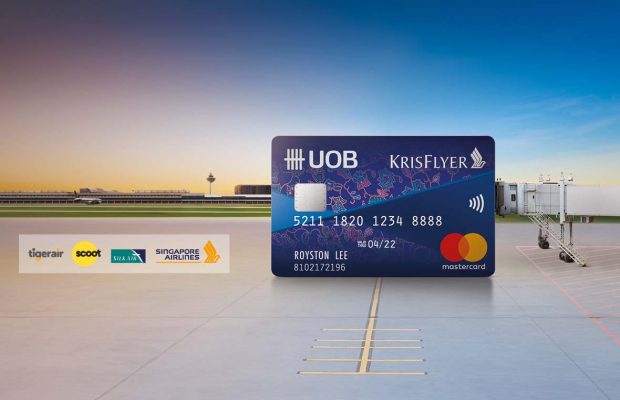
    United Overseas Bank Limited (UOB) has teamed up with Singapore Airlines’ (SIA) frequent flyer program to launch KrisFlyer UOB Account.

    Targeting those who prefer to use a debit card or millennials who may not yet be eligible for a credit card the account allows users to earn KrisFlyer miles whenever they save or spend. The miles can also be used for award flights and upgrades on SIA and SilkAir, or as travel vouchers on Scoot or Tigerair.

    The miles earned will depend on the customers’ account balance. Those who have an account balance of S$350,000 (US$249,377) and above, for instance, will earn 5.4 KrisFlyer miles for every dollar they spend using their KrisFlyer UOB account.

    “We have seen spending on UOB debit cards grow 40 percent over the past two years. Travel spend on debit cards also increased 15 percent in the corresponding period as our customers make more trips abroad,” said UOB head of personal financial services Singapore, Jacquelyn Tan, in a press release.

    The bank is targeting to open at least 200,000 KrisFlyer UOB accounts in the next five years.

    Meanwhile, SIA Marketing Planning senior VP Tan Kai Ping said, “The KrisFlyer UOB card leverages the wide reach of the KrisFlyer frequent flyer programme, giving card members access to all the airlines within the Singapore Airlines Group. This means seamless access to our four airlines – from full-service carriers Singapore Airlines and SilkAir to budget carriers Scoot and Tigerair – when they spend and save through this account.”

  • Singapore banks seek to simplify online transactions

    Singapore banks seek to simplify online transactions

    Four banks in Singapore are participating in a pilot that aims to explore ways to simplify online banking transactions with the use of the government’s MyInfo online authentication service.

    The pilot is backed by the Smart Nation and Digital Government Office (SNDGO) and Government Technology Agency (GovTech), in collaboration with the Monetary Authority of Singapore (MAS).

    Prospective customers of United Overseas Bank (UOB), Development Bank of Singapore (DBS), Oversea-Chinese Banking Corporation (OCBC) and Standard Chartered Bank (StanChart) with a registered profile on myinfo.gov.sg will be able to apply for a new bank account without needing to submit supporting documentation.

    This aims to provide greater convenience and a faster transaction time for consumers while benefiting banks in the form of higher productivity and lower compliance costs.

    Banks in Singapore currently require users to submit copies of their identity, income and CPF documents for applications. With MyInfo, customers can pre-fill these Government-verified personal particulars into the necessary forms, and avoid the need to submit supporting documents.

    MyInfo has been rolled out for SingPass users since May 2016 for popular government digital services such as balloting of the Housing Development Board’s Build-To-Order (BTO) flats. MyInfo is scheduled to be available on most government digital services with SingPass two-factor authentication (2FA) by 2018.

    Jacqueline Poh, Chief Executive, GovTech, said, “We want to explore how citizen-centric government digital services can be extended to better help industry and transform service-delivery to citizens. We have seen good take-up of MyInfo, and hope that this public-private collaboration will provide citizens with even more benefits.”

    Sopnendu Mohanty, Chief FinTech Officer, MAS, said: “MAS is excited by the opportunities that national infrastructure platforms can bring to the financial industry, such as hassle-free online account opening and instant account activation in the near future. MAS would like to urge the industry to reimagine their customer journey for instant gratification as they leverage platforms like MyInfo.”

    Michael Gorriz, Group CIO, Standard Chartered Bank, said: “Central database and central data-keeping is absolutely the way forward. If you look at the 3 parties – the Singapore government, the citizens and the banks or other entities – it is really a win-win-win situation. So first of all, for the consumer, he only has to enter the data once and then he decides who has access to the data. We as a Bank, we win, because we get qualified data from the consumer, which he puts all due diligence and care in to keep it up to date.”

    After this pilot, MyInfo may be extended later this year to other popular transactions such as applications for credit cards and home loans. MyInfo could also be extended to other sectors with strong citizen touch points such as insurance.

  • Chinese digital payments reach nearly $2.9tr in 2016

    Chinese digital payments reach nearly $2.9tr in 2016

    Alipay and WeChat Pay enabled $2.9 trillion in Chinese digital payments in 2016, up twenty-fold increase in the past four years, according to a new UN study.

    The data show that digital payments, using existing platforms and networks, provide access to a wider range of digital financial services, expanding financial inclusion and economic opportunity throughout China and neighboring countries.

    In India, both Ant Financial and Tencent have bought into the Indian mobile payments market, which is enjoying rapid growth under new regulation.

    Ant Financial and Alibaba invested up to $900 million in PayTM, as well as sharing staff and technical expertise. The result: PayTM has grown from 5 million to around 200 million users in just the last few years.

    Indonesia was the fastest-growing m-commerce market in the world in 2016, the report showsexpanding 155% from January 2016 to January 2017.

    Some of this growth may be due to the release in 2015 of BBM Pay’s Instant Mobile Payments. The popular BBM chat app has over 55 million users in Indonesia and continues to develop.

    The new report by the UN-based Better Than Cash Alliance contains key lessons to help other countries include more people in the economy by transitioning from cash to digital payments.

    This shift could increase GDP across developing economies by 6% by 2025, adding US$3.7 trillion and 95 million jobs, according to a McKinsey Global Institute report.

    “Social networks and e-commerce platforms are growing in every economy, whether large or small,” said Ruth Goodwin-Groen, Managing Director at the Better Than Cash Alliance.

    “In China digital payments are thriving from these channels, bringing millions of people into the economy. This matters because we know that when people – especially women – gain access to financial services, they are able to save, build assets, weather financial shocks, and have a better chance to improve their lives.”

  • Bitcoins are to be accepted in more than 260,000 stores in Japan

    Bitcoins are to be accepted in more than 260,000 stores in Japan

    Major bitcoin exchanges in Japan are teaming up with retailers to start a transaction revolution that would allow stores to accept Bitcoin payments.

    Bitcoin is an example of a cryptocurrency, i.e., a digital currency that’s based on a data structure called Blockchain. A blockchain is a digital ledger that allows for recording and keeping transactions in a decentralized and cryptographically secured manner.

    Each block in a blockchain is maintain by so-called “miners” through servers spread all over the world. These miners then receive cryptocurrencies in exchange. While most markets have been slow to accept cryptocurrencies, some retailers are beginning to test the new form of payment.

    According to the Nikkei Asian Review, Japanese consumer electronics retail chain Bic Camera is going to try out a payment system using Bitcoin in two of its stores in Tokyo. To do this, it will partner with Bitflyer, which is the largest bitcoin exchange by volume in Japan. At the same time, Recruit Holdings’ retail support arm Recruit Lifestyle plans to work with Coincheck bitcoin exchange to implement a similar system: “Bitcoin will be accepted at 260,000 shops by this summer,” the company stated.

    Currently, about 4,500 stores in Japan accept Bitcoin as payments. Furthermore, in a Bitcoin.com interview this January, said Kagayaki Kawabata, Coincheck’s Business Development Lead, disclosed that there are already more than 5,000 merchants and websites in Japan that accept Bitcoin payments using the company’s system.

    The move to adapt Bitcoin isn’t an arbitrary one, of course. Aside from security, another reason for opting for cryptocurrency is the relative ease with which transactions can be conducted. Bitcoin allows tourists to make purchases in Japan without having to go through currency exchange rates. Additionally, if more outlets accepted Bitcoin, more individual consumers would likely be persuaded to get Bitcoin accounts.

    The rise of cryptocurrencies like Bitcoin may be ushering in a new way of conducting financial transactions. To date, over 20 million people worldwide now use Bitcoin. Bitcoin is no longer seen as something to be hoarded — it’s used for shopping. As Japanese stores adapt Bitcoin, this cryptocurrency is steadily making its way into mainstream financial transactions.

  • Banks are closing branches all over the world, but why not in Hong Kong?

    Banks are closing branches all over the world, but why not in Hong Kong?

    Retail banking in Hong Kong seems resilient if you look at the number of outlets. Elsewhere in the world, bank branches have been closing; in Hong Kong, by and large, they have stayed open.

    HSBC will have halved its UK presence compared to 2011 by the end of this year, but a spokesman for the bank said in January that there was no programme of branch closures in Hong Kong

    Meanwhile, earlier this month, Citi announced that it would close 80 per cent of its branches in Korea, a move that has not been replicated in Hong Kong to anywhere near the same extent. In both cases the move towards digitisation was given as a reason.

    The slower take up of digital services by Hong Kong residents is at least part of the reason why there have not been similar closures in Hong Kong.

    “While we see that a growing number of basic transactions like payments are shifting to online and mobile channels, our customers continue to use branches for wealth management and mortgage services which need more personalised support,” said Greg Hingston, HSBC’s head of retail banking and wealth management Hong Kong.

    “Also there are still segments of the population that don’t use digital banking and … we continue to invest in outlets to serve these customers.” This has had positive consequences for employment in Hong Kong.

    “In the Netherlands, ING laid off 1,000 staff as they moved to more digital operations. Because there has not been the same take up of digital in Hong Kong, we have not seen any significant decline in branch headcount,” said Maggie Li, associate director of banking and financial services at Randstad Hong Kong.

    “In fact at the moment in Hong Kong digitisation means that banks are hiring more staff as they adjust to the changes.”

    However, there are reasons for branches remaining open in Hong Kong above the digital dimension.

    “In Hong Kong it is also important to note that the degree of customer account concentration per branch is very high and our network is very productive, unlike other markets where [it] is much lower,” said Hingston.

    Hong Kong’s sky high housing prices are a factor in this too.

    “Mortgages in Hong Kong are much larger than mortgages elsewhere, and if a bank were to close branches, losing a small fraction of this business would still be a significant sum,” said Keith Pogson, senior partner for financial services at EY.

    Branch closures have been seen in less profitable areas, and last year, BEA closed all 22 branches of its East Asia Securities outlets.

    Customer behaviour is also playing a role.

    “In Hong Kong when customers are choosing a bank, the convenience of its location – usually how close it is to their place of work rather than where they live – is an important aspect, and so that is another reason why branches are staying open,” said Pogson.

    Hong Kong’s banking regulator is also keen for banks to maintain a physical presence.

    “The HKMA attaches great importance to the accessibility of basic banking services to the general public, and has been encouraging the banking industry to put the spirit of financial inclusion into practice when developing their banking networks,” a HKMA spokeswoman said.

    The spokeswoman added that there were even plans afoot for more bank branches to open. “Three note-issuing banks and five retail banks plan to open about 10 branches and deploy one mobile branch in the next 12 months or so to provide basic banking services for the residents in remote areas and public housing estates,” she said.

    Branches are becoming more about selling additional services to clients, and not just offering transactions

    Keith Pogson, senior partner for financial services at EY

    Nonetheless, bank branches in Hong Kong are starting to change.

    “Branches are becoming more about selling additional services to clients, and not just offering transactions,” said Pogson.

    “This means that there has been some change in the people employed in branches, as banks look to raise branch staff’s capabilities to offer more.”

    There are also now indications that banks are starting to adapt their offerings, and a number are exploring wholly digital branches.

    Other adaptations may even involve some closures or “rationalisations”.

    “Going forward, Bank of China Hong Kong will continue to explore the feasibility of using innovative forms of banking service delivery channels and to rationalise its branch network to provide customers with banking convenience beyond conventional branch services,” said a spokeswoman for the bank.

    As Hong Kong consumers gradually become more willing to use technology, and technology provided by the banks improves, then the pace of such changes may accelerate.

  • HSBC takes the long view with Guangdong strategy

    HSBC takes the long view with Guangdong strategy

    After two years of ploughing to become a universal bank in China’s southern Guangdong province that also serves the surrounding region, there is little sign of a full yield in near sight for HSBC Holdings. But HSBC stresses that it always knew the road to harvest would be long and treacherous, and is reiterating its commitment by pumping in more resources to expand services and hiring more staff this year.

    This is despite the fact that the lender made a loss of US$72 million in retail banking and wealth management in China last year. “The [Pearl River Delta] plan is on track,” said Kevin Martin, HSBC’s Asia-Pacific head of retail banking and wealth management. “What we’ve said is that in Guangdong we want to be a full universal bank. We feel that we are able to compete on the ground there, using digital capabilities, to bank the communities in Guangzhou and Shenzhen, and also the surrounds.” In fact, it was these efforts and investments to build out the Guangdong and Pearl River Delta plan that led to the loss last year. “It [the loss] largely reflects investment,” Martin said. “If you look at the underlying HSBC business in China retail, it is profitable. But as you invest into the future, your earnings are a tail.”

    HSBC’s choice of Guangdong and the Pearl River Delta to front its China strategy is hardly surprising, given their proximity to Hong Kong, which benefits the bank as far as Chinese consumers’ recognition of the HSBC brand goes. The bank, first called Hongkong and Shanghai Bank, was established 152 years ago in Hong Kong and a month later in Shanghai.

    “Guangdong residents don’t consider us to be the Bank of China, but when they look at their international needs… they know us and that we are well placed to meet those needs. And obviously for those who come to Hong Kong regularly, it makes sense,” Martin said. In Guangdong, HSBC has expanded its premier offering to mass affluent customers, grown out its mortgage book (though this has been affected by the Guangdong government’s cooling measures) and in December last year announced it would launch credit cards.

    Martin said there were currently 150,000 HSBC credit cards in the market by the end of April, or 5 per cent of the three-million-card target it aims to issue over three to five years that he announced in December when the card was launched. Currently, 600 million to 700 million credit cards are issued in China.

  • UnionPay International’s Cross-Border Marketing Platform

    UnionPay International’s Cross-Border Marketing Platform

    With the May Day holiday approaching, tourism in Asia is set to experience another peak. In anticipation of the increased tourist arrivals around the world, UnionPay International announced the expansion of its cross-border marketing platform, U Plan, to 1,600 stores in nine countries and regions around the world.

    With U Plan, UnionPay Cardholders around the world can enjoy more savings when shopping with UnionPay Cards locally and overseas. To take advantage of the U Plan benefits, Cardholders can simply download the UnionPay International mobile app on iOS and Android phones prior to their travels. Through the app, Cardholders can access all the latest merchant discounts and promotions available at their travel destinations, and download exclusive U Plan discount coupons to be presented at the participating merchant’s point-of-sales counters together with their UnionPay Card (card number starting with 62), to enjoy additional savings on their travels.

    Since the launch of U Plan in July last year, the cross-border marketing platform has expanded to 300 stores in Hong Kong, Macau, Singapore and Thailand in November 2016. With this latest expansion, the platform now covers 1,600 stores across the globe, as well as merchants in countries including Australia, Japan, New Zealand and the USA.

    Some of the new merchants that have come on board U Plan include:

    Country/Region Merchant U Plan Benefits
    Thailand ShowDC Enjoy 5% and an additional THB100 off when you spend a minimum of THB1,000 with UnionPay Cards upon presentation of U Plan coupon


    Emporium, EmQuartier, Paragon Department Stores Enjoy 10% off with UnionPay Cards upon presentation of U Plan coupon
    Korea Doota Mall Enjoy KRW30,000 off when you spend a minimum of KRW150,000 with UnionPay Cards upon presentation of U Plan coupon


    Doota Duty Free Enjoy KRW20,000 off when you spend a minimum of KRW200,000 with UnionPay Cards upon presentation of U Plan coupon


    Japan Mitsui Outlet Park, Mitsui Shopping Park LaLaport (Toyosu, EXPOCITY), DiverCity Tokyo Plaza, Coredo Muromachi


    Enjoy 10% off with UnionPay Cards upon presentation of U Plan coupon
    Matsumoto Kyoshi Enjoy 7% off when you spend a minimum of JPY30,000 with UnionPay Cards upon presentation of U Plan coupon


    USA Macy’s Enjoy 20% off with UnionPay Cards upon presentation of U Plan coupon


    Australia JR Duty Free Enjoy 10% off with UnionPay Cards upon presentation of U Plan coupon


    T Galleria Sydney Enjoy AUD25 off when you spend a minimum of AUD500 with UnionPay Cards upon presentation of U Plan Coupon


    New Zealand JR Duty Free Enjoy 10% off with UnionPay Cards upon presentation of U Plan coupon


    T Galleria Auckland Enjoy NZD25 off when you spend a minimum of NZD500 with UnionPay Cards upon presentation of U Plan Coupon


    U Plan is the world’s first open cross-border marketing platform launched by UnionPay for Cardholders. By bringing together service providers in the finance, tourism and retail industries, U Plan provides a one-stop marketing platform for UnionPay and its partners to market products and services to Cardholders across geographical borders. Through the use of mobile applications and location services,U Plan enables a high-level of precision for UnionPay and partners to reach out to potential travelers prior to their travels, to promote special privileges and discounts that UnionPay Cardholders can enjoy at their travel destinations.

    To date, U Plan has been well received by merchants and UnionPay Cardholders around the world. Moving forward, UnionPay International plans to expand the platform to more merchants in Europe and the USA, providing a wider range of gifts, discounts and VIP shopping booklets to enhance the overall experience for UnionPay Cardholders.

  • Myanmar’s First Private Bank to modernise banking operations with Misys

    Myanmar’s First Private Bank to modernise banking operations with Misys

    First Private Bank (FPB) has chosen Misys FusionBanking to streamline operations and digitalise as it takes a significant role in contributing to Myanmar’s growing economy. The bank, which received the first banking licence in Myanmar in 1992, aims to facilitate access to financial services for all and will transform its retail, corporate and digital offering to bring new products and enhanced services to customers quickly and efficiently.

    “The market here has been through immense change across all industries, and banking is no exception. As we come into a period of expected rapid growth, competition is heating up and customers are demanding superior products and services,” said Dr Sein Maung, Chairman at FPB. “Our mission is to deliver efficient, transparent and trustworthy banking to all and we know that requires a slick, modern technology platform at the core. Misys technology is flexible and scalable and will form the foundation for efficient, digital banking here at FPB.”

    Myanmar’s economy is expected to grow an average of 7.1 percent per year in the next three years. Amidst increasing competition, FPB will be able to provide consumers and businesses with relevant and innovative products and services and shape an enhanced digital experience. This will enable it to capture a greater share of the country’s retail and corporate banking market, including opening up services to those that are currently unbanked.

    This project will see Misys FusionBanking Essence and Digital Channels provide an efficient, connected front, middle and back office with advanced analytics to support the bank in better understanding consumer needs. FPB will be able to launch personalised products quickly and cost effectively in line with demand. Customers will be able to view and access their accounts across channels, get salaries credited electronically, transfer money and pay bills from different branches or on the go via mobile. The FusionBanking Insight analytics module will also enable the bank to track performance and obtain a consolidated view of customer preferences.

    Meanwhile, Misys FusionBanking Trade Innovation and Corporate Channels will help the bank provide unified online commercial banking services and digitalised, efficient trade finance capabilities. The move will ensure rapid access to trade finance and working capital for corporate clients, and support Myanmar’s businesses in expanding into international markets. With an automated trade finance solution, the bank can grow volumes quickly and securely with minimal impact on operations.

    “Creation of a stable banking system has a powerful part to play in supporting this phase of Myanmar’s economic and social growth,” said Simon Paris, President at Misys. “Developing regions can often leap-frog mature banking market challenges, since they are not saddled with legacy technology and processes and can modernise faster. Digital services like those we are providing to FPB make a significant difference. This is especially true in a country where many locals are underbanked but now have access to the latest smartphones, having skipped chunkier mobile models of yesteryear. Bringing modern technology into the bank to support this changing dynamic and drive inclusive financial services is aspirational and speaks to a positive future.”

    Big Byte International was instrumental in the deal which saw Misys chosen over other core banking vendors for its modern, componentised technology and expertise in the region. Amit Johari (AJ), CEO, Big Byte International said, “With the launch of our third entity in Myanmar, Big Byte International will continue to provide consulting, sales and support services to banks and FIs across Asia. Myanmar is our key growth market in addition to Singapore and India.”

    With a growing customer base in Myanmar and Asia Pacific, Misys will help FPB to incorporate best practices, processes and technology. Misys FusionBanking will replace the bank’s partially computerised distributed branch system.

  • Samsung Pay early access program launches in Hong Kong

    Samsung Pay early access program launches in Hong Kong

    Samsung has launched an early access program for Samsung Pay in Hong Kong, in collaboration with local banks.

    Customers with American Express, Citibank, Dah Sing Bank and Standard Chartered Bank cards are able to register to participate in the early access program.

    The service is expected to launch more widely in the second quarter, adding support for other card issuers including Bank of China (Hong Kong).

    Samsung Pay is a mobile payment system that supports both NFC and Samsung’s own Magnetic Secure Transmission (MST) technologies.

    It uses three levels of security – biometric authentication, card tokenization and the Samsung Knox mobile security platform, as well as the ability for users to lock or wipe Samsung Pay remotely should their phone be lost or stolen.

    To date, Samsung pay has launched in 12 markets worldwide and is in early access in a further four. Over 240 million transactions have been processed by Samsung Pay in the past 18 months.

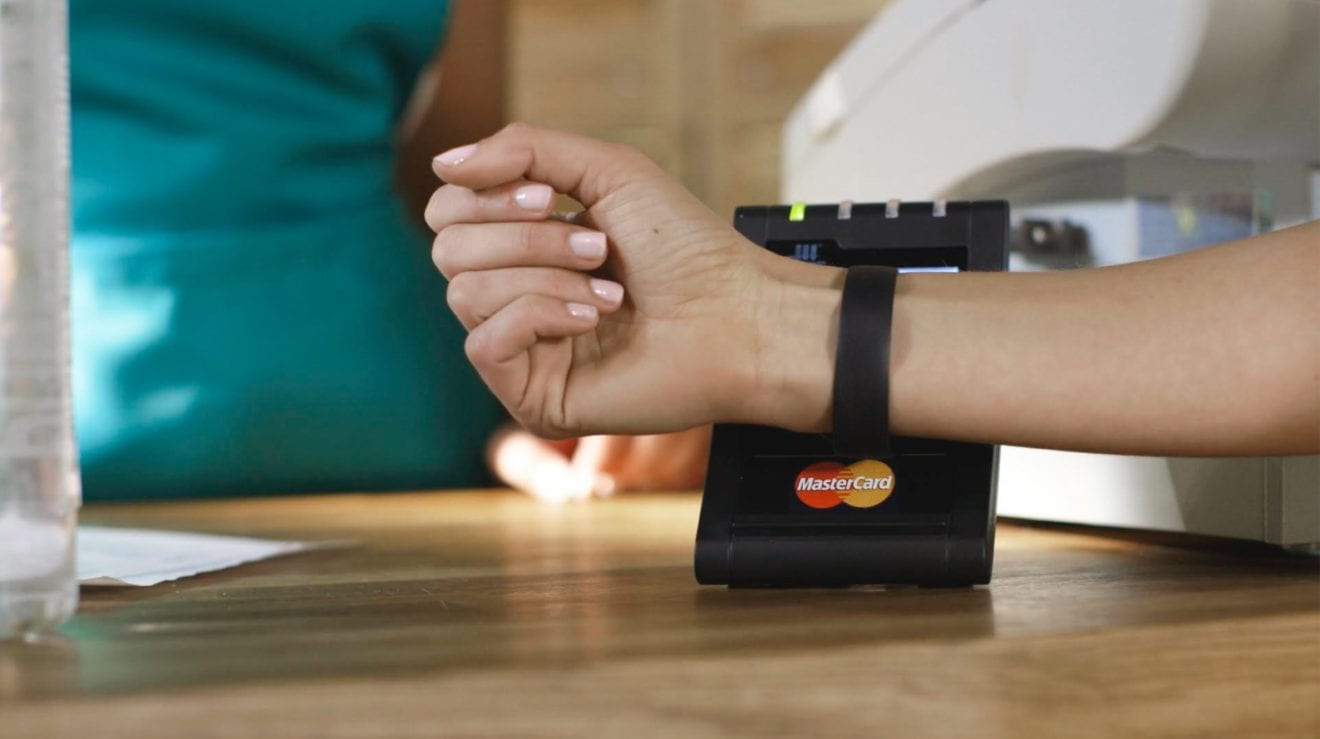
    Samsung has partnered with payment technology companies American Express, Mastercard and Visa for the mobile payment service.

    “As a global leader in information technology, Samsung has always aspired to create better and more fulfilling experiences for our users through meaningful innovations,” Samsung VP and head of IT and mobile communications Yiyin Zhao said.

    “We hope to offer our consumers a payment service that is truly safe, simple, and widely-accepted. We are also thankful for the support of Mastercard. Together, we are creating a more complete payment experience, further enhanced with promotions, to bring mobile payments capability to more users than ever before.”

    Mastercard division president for Hong Kong, Macau and Taiwan said a recent survey by the payment card company indicates that more than four in 10 Hong Kong consumers have made purchases via their mobile device in the past three months.

    “This partnership demonstrates Mastercard’s commitment to delivering innovative solutions for the rapidly evolving mobile payments space,” he said.

    Compatible Samsung Pay devices include the Galaxy S8+, Galaxy S8, Galaxy S7 edge, Galaxy S7, Galaxy S6 edge+ and Galaxy Note5, with more compatible devices due to launch soon.

  • Korean banks expand in Vietnam

    Korean banks expand in Vietnam

    Following Shinhan Vietnam’s successful acquisition of ANZ Vietnam’s retail business, fellow Korean banks have also expanded their sizes and market share in Vietnam, seizing the lead in the foreign bank race on the Vietnamese market.

    Shinhan getting stronger

    Shinhan’s takeover of ANZ Vietnam’s retail arm has made its competitors worry, as Shinhan seems to get closer to becoming the champion of foreign banks in Vietnam, especially as the growth rate of the current leader HSBC Vietnam has been wildly fluctuating over the last five years.

    Despite a relatively low chartered capital of only VND4.547 trillion (US$200 million) and being less active than HSBC Vietnam—the number one foreign bank in Vietnam in terms of chartered capital, total assets, and profit, in 2016 Shinhan Vietnam’s profit exceeded VND1 trillion (US$44 million).

    This amount far outstripped numerous, similar-sized domestic banks and all foreign banks in Vietnam. Shinhan Vietnam’s profit was lower than HSBC Vietnam’s only.

    According to the acquisition agreement with ANZ, Shinhan Vietnam will have eight ANZ’s branches and transaction offices in Hanoi and Ho Chi Minh City, carrying on the entirety of the ANZ retail banking staff and 125,000 individual clients in Vietnam, as well as AUD1.1 billion (US$824 million) in outstanding loans and deposits.

    With 20 years of experience on the Vietnamese market and the takeover of ANZ’s retail business, Shinhan Vietnam’s position is getting steadier.

    At present, Shinhan Vietnam has a large number of corporate clients, primarily made up of Korean investors in Vietnam.

    Before the agreement with ANZ, Shinhan Vietnam had been continuously expanding its network. At the middle of April 2017, the State Bank of Vietnam permitted it to open a representative office and four branches and transaction offices in Hanoi and Ho Chi Minh City.

    Korean banks make foray into Vietnam

    Following Shinhan Bank, many other Korean banks are increasing their influence in the Vietnamese market. This expansion is easy to understand, as Korea is the biggest foreign investor in Vietnam.

    Currently, two of the eight 100% foreign-owned banks in Vietnam are from Korea (Shinhan and Woori Bank). Besides, many big Korean banks are starting to join the Vietnamese market by establishing branches or representative offices.

    These include Kexim, KEB Hana, Industrial Bank of Korea, Kookmin, Busan, and Nonghyup.

    In terms of size and market share, Shinhan and Woori Bank are in the lead among all foreign banks in Vietnam. They are formidable competition even to well-established Vietnamese banks.

    By providing good services and competitive interest rates, Korean banks are luring away a large number of clients from domestic banks.

    For instance, in Shinhan Vietnam, the outstanding loan balance of Vietnamese corporate clients accounts for at least 50% of its total corporate credit.

    In addition, Shinhan’s interest rates for home loans, car loans and consumer loans are lower than in many domestic banks. This has attracted a huge number of individual clients, especially from the middle and high income bracket.

    Besides Shinhan, newbie Woori also plans to deploy plenty of retail products in Vietnam in the course of 2017, such as cards, unsecured loans, and mortgages.

    Abundant capital, modern technology inherited from parent banks, knowledge of the Vietnamese market, and the huge number of corporate clients make up the rare advantages for Korean banks to successfully join the Vietnamese retail market, likely making domestic and other foreign banks worry.