Category: Finance

Retail News Asia is committed to providing both local and global retailers with the latest Finance news throughout the Asian market. This on a daily base.

  • Swift unveils industry’s first ever cross-border payments tracker

    Swift unveils industry’s first ever cross-border payments tracker

    SWIFT announces today the availability of its new cross-border payments Tracker that enables international payments to be traced in real-time. The Tracker is the cornerstone of SWIFT gpi – the cooperative’s new payments innovation service – which is revolutionizing the industry by combining real-time payments tracking with the speed and certainty of same-day settlement for international payments.

    Available since January 2017, more than 20 global transaction banks are using or implementing the SWIFT gpi service, with another 50 in the implementation pipeline. Hundreds of thousands of gpi payments have already been sent across more than 85 country corridors.

    “Uptake of SWIFT’s gpi service has been encouraging and the addition of the Tracker capability can only help build momentum and accelerate adoption of the service in international payments,” says David Bannister, Principal Analyst, Ovum. “The most common complaint from corporates is the lack of visibility on their payments’ status. With the Tracker capability, SWIFT gpi tackles that issue and will be a useful tool to help corporate treasurers to execute their core responsibilities.”

    SWIFT gpi enables companies engaged in international trade to get paid for services, or delivery of goods, in a more timely fashion, enabling a faster supply chain process. The highly innovative gpi Tracker provides corporate treasurers with a real-time, end-to-end view of their payments combined with a confirmation notice when the money reaches the recipient’s account. It also enables a more accurate reconciliation of payments and invoices, optimizes liquidity with improved cash forecasts and reduces exposure to FX risks with same-day processing of funds in the beneficiary’s time zone. The Tracker is available via an open API, making it compatible with proprietary banking systems worldwide – helping to ensure maximum impact of gpi benefits at a greater adoption speed.

    SWIFT gpi has garnered considerable industry support across the globe. More than 110 leading transaction banks have committed to the service, representing over 75% of all SWIFT cross-border payments. Recent joiners to SWIFT gpi include: Agricultural Bank of China, Bank of Communications, Banque Centrale Populaire, BayernLB, China Citic Bank, China Minsheng Banking Corporation, Commercial Bank of Kuwait, Denizbank, Ebury, Industrial Bank, Guangfa Bank, Lek Securities, Ping An Bank, Piraeus Bank, Postal Savings Bank of China, Shanghai Pudong Development Bank, Turkiye Cumhuriyeti Ziraat Bankasi, Westpac Banking Corporation and Yapi Kredi, and Zhejiang Rural Credit Cooperative Union. Click here for a full list of participating banks.

    The service is also compatible with and integrated into domestic payment market infrastructures(MIs) across the globe, facilitating local clearing and settlement of gpi payments. Banks can already exchange gpi payments over the 56 SWIFT-connected MIs as well as other MIs that have established local market practices for their participants that use the gpi service. SWIFT will also continue to actively engage with additional MI communities for future gpi compatibility.

    “Today’s announcement is a significant step towards a game-changing experience for corporates the world over,” says Christian Sarafidis, Chief Marketing Officer, SWIFT. “By taking advantage of the right technology, at the right time, with the right players behind us, SWIFT has successfully helped correspondent banking reach a significant milestone in its evolution.”

    Wim Raymaekers, Programme Manager for SWIFT gpi adds, “This is only the beginning for SWIFT gpi. We will continue to explore new technologies, such as blockchain, and deliver more value added payment services further transforming the international payments landscape and, in doing so, accelerating global trade.”
     

  • OCBC Bank subsidiary launches private onshore banking in Indonesia

    OCBC Bank subsidiary launches private onshore banking in Indonesia

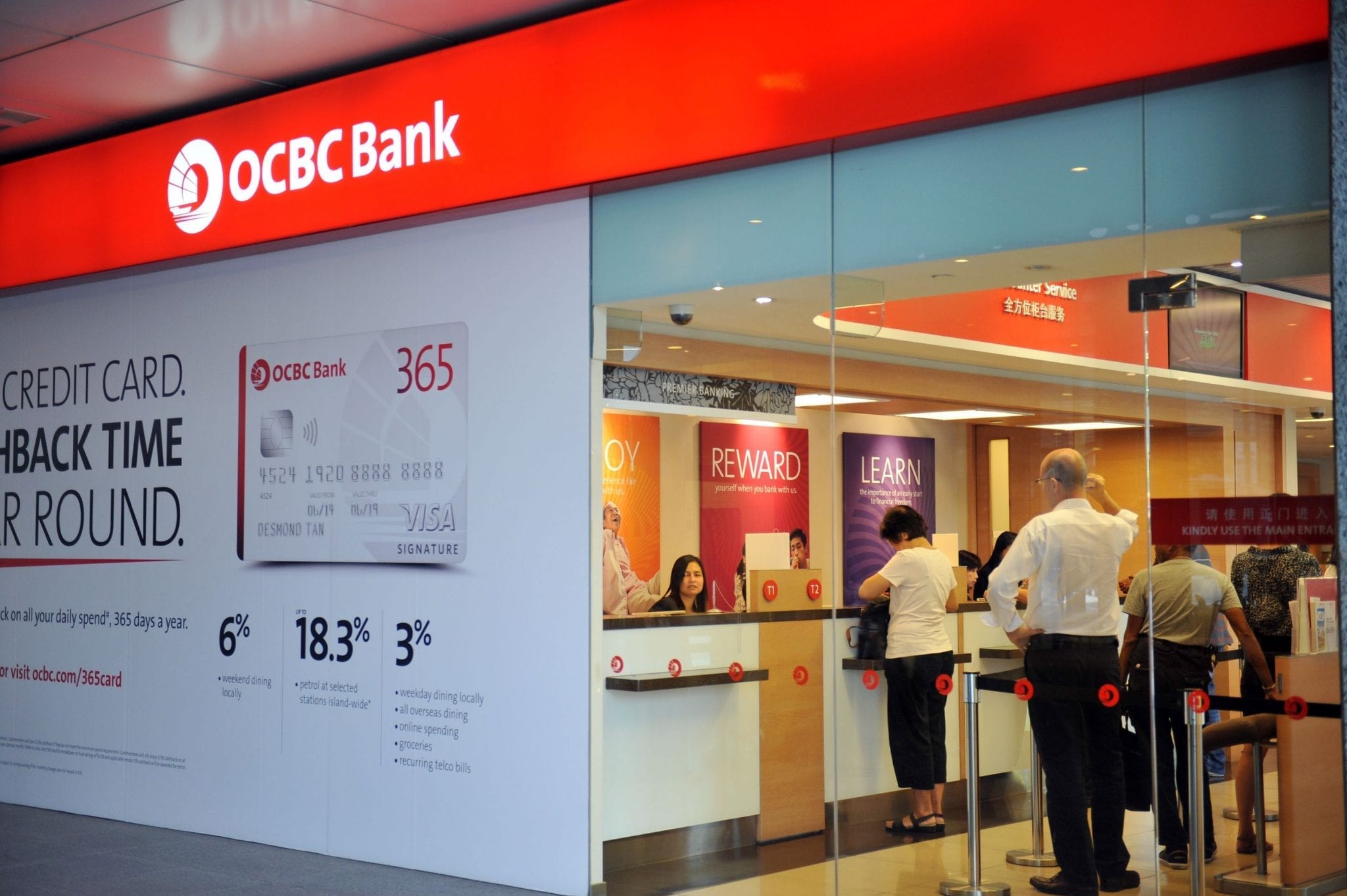
    OCBC Bank has launched onshore private banking in Indonesia through its 85 per cent-owned subsidiary, OCBC NISP, the company said on Monday.

    OCBC NISP has obtained regulatory approval to establish the private banking unit to manage the wealth of Indonesians with assets under management of more than US$1 million (S$1.38 million) with a comprehensive range of wealth management solutions.

    The unit will leverage OCBC Bank’s uniquely integrated wealth management platform that draws on the combined product expertise of the Bank and its subsidiaries – insurance products from Great Eastern Holdings, equities and bond funds from Lion Global Investors, brokerage services from OCBC Securities and private banking services from Bank of Singapore.

    The launch team includes four other private bankers who have an average of 18 years of onshore and offshore private banking experience and deep knowledge of regional markets. The team is expected to double in size by the end of the year.

    OCBC NISP private banking clients who are business owners will be able to draw on the commercial banking solutions offered by OCBC NISP and leverage OCBC Bank’s global network of more than 610 branches and offices across 18 countries and regions.

    “We are pleased to offer our wealthy clients alternative wealth management and investment options to help them manage their funds with the launch of our private banking business,” said Ms Parwati Surjaudaja, president director of OCBC NISP. “We will be introducing more sophisticated solutions that are tailored to our clients’ unique wealth planning and investment needs as we grow our business.”

    Calling the launch an important milestone in the expansion of OCBC’s wealth management franchise, Mr Samuel Tsien, group CEO of OCBC Bank, said the new business will help broaden client coverage of high net worth individuals. “We will leverage our strong product development, distribution and execution capabilities across the OCBC group to support this new customer segment in Indonesia.”

  • AEON in Collaboration with Bangkok Bank launches “Get A Chance to Win Gold with AEON”

    AEON in Collaboration with Bangkok Bank launches “Get A Chance to Win Gold with AEON”

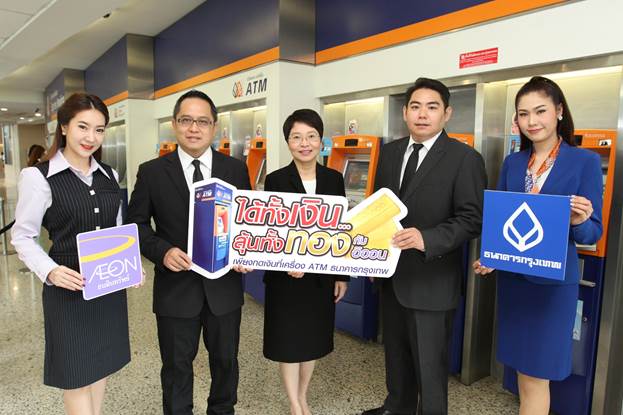
    Mr.Nuntawat Chotvijit, Marketing Director of AEON Thana Sinsap (Thailand) Public Company Limited (second left) together with Ms. Prassanee Ouiyamaphan, Executive Vice President of Bangkok Bank (center), and Mr. Arjharn Petchdee, Senior Vice President of Bangkok Bank (second right), announced the launch of “Get A Chance to Win Gold with AEON” promotional campaign, which runs until June 30.

    AEON Your Cash cardholders are eligible to participate in the campaign by making cash withdrawals of at least 1,000 baht at Bangkok Bank ATMs. The prizes, worth 753,750 baht in total, include 5 gold bars worth 100,000 baht each and 25 (50 Satang) gold necklaces valued at 10,150 baht each.

  • ANZ plans to sell VN banking retail business

    ANZ plans to sell VN banking retail business

    The Australia and New Zealand Banking Group (ANZ) plans to sell its Việt Nam retail business, a source close to the matter has told the Saigon Times Online.

    According to the source, three foreign and two local banks are hoping to acquire ANZ’s retail business unit in Việt Nam.

    The Việt Nam retail business will not be sold to Singapore-based DBS Bank Ltd, the source said. DBS is not on the list of five potential buyers for the deal.

    In late October 2016, DBS purchased ANZ’s retail banking and wealth management units in five Asia markets for some S$110 million in book value, according to international media.

    The deals were based on business performance, profitability and strategy, and would limit ANZ’s activities in some segments for Asian clients. The bank would, instead, focus on its core businesses for the Asia region such as capital market, bond market, cash-flow management, corporate banking and investment banking.

    The value of retail banking business units transferred in the Asia region is small in comparison with ANZ’s total scale value.

    Việt Nam News tried to contact ANZ for more details, however, the Melbourne-based bank declined to comment.

    ANZ expanded strongly in Asia prior to 2013 and purchased stake in local commercial banks, including HCM City-based Sacombank. Since October 2015, ANZ has divested from its earlier small-scale investments and focused on its core businesses.

    Other Australian banks have also offloaded stake in investments and closed their representative branches outside the New Zealand and Australia markets. They have planned not to expand further in the Southeast Asia region after the Australian government made changes in its banking policies regarding class-one capital, lending and banking retail activities such as real estate trading.

  • Singaporean banks bulk up in wealth management

    Singaporean banks bulk up in wealth management

    A pullback by global competitors is giving Singaporean banks opportunities to expand their wealth management operations in Asia. The latest case in point came on May 11, when Oversea-Chinese Banking said it is buying National Australia Bank’s retail banking operations in Singapore and Hong Kong.

    OCBC will acquire a mortgage portfolio worth $1.7 billion and a deposit portfolio of about $3.05 billion from NAB at around book value, the banks said. NAB’s retail business in Asia has centered on selling mortgages to wealthy individuals for overseas property investments. Australia’s largest bank, however, is selling off these businesses out of Singapore and Hong Kong, as it streamlines its Asian strategy to focus on corporate banking.

    When the transaction goes through, likely by the end of the year, OCBC’s mortgage portfolio will increase by 4%. But the real prize is the customer base of 11,000 affluent individuals — 7,000 in Singapore and the rest in Hong Kong. OCBC is keen to cross-sell its wealth management products, including asset management and insurance, to these people. Some of the customers may grow rich enough to be served by Bank of Singapore, its private bank subsidiary that looks after the superrich.

    OCBC has been aggressive about expanding its wealth management market share. The bank completed the acquisition of Barclays’ Asian private banking business in November 2016. The $227.5 million deal added $13 billion worth of Asian assets under management to Bank of Singapore’s portfolio. At the end of March, the unit’s assets under management came to $85 billion, more than 50% higher than the $55 billion at the end of 2015.

    DBS Group Holdings is showing similar aggressiveness. Last October, the state-linked bank announced it would buy the wealth and retail operations of Australia’s ANZ in five major markets in Asia. It agreed to pay a premium of 110 million Singapore dollars ($78 million) above book value. Upon completion, the transaction will boost DBS’ customer base by 1.3 million in Singapore, Hong Kong, China, Taiwan and Indonesia. Of those, 100,000 are wealth management clients, including 3,500 high net worth individuals.

    Seeking Scale

    Despite the growth of Asian wealth, banks face stiff competition for customers as well as talent. Globally, meanwhile, regulatory and compliance pressures are pushing up their operating costs. This is prompting a strategic rethink by some players. “Though NAB has grown a healthy private wealth business in Hong Kong and Singapore, without greater scale, its competitive position is not compelling,” said Peter Coad, the Australian bank’s executive general manager for international branches.

    “Without the scale, it is very hard to create a sustainable business” today, Tan Su Shan, head of consumer banking and wealth management at DBS Bank, said last year when the ANZ deal was announced. “You need to invest in digitalization, people, platforms and processes.”

    For Singaporean banks, though, expansion in wealth management enhances stability. “Income generation from wealth does provide earnings diversification for the banks, and the income is less volatile [than] trading income and deal-related income streams, like investment banking fees,” said Morningstar analyst Michael Wu.

    DBS was the No. 6 player on the region’s private banking scene in 2016, according to Asian Private Banker, followed by Bank of Singapore at No. 7. United Overseas Bank, the city-state’s third-largest bank, entered the top 20 in 14th place, having brought in more high net worth individuals via its corporate banking network.

    In the quarter through March, all three banks recorded profit increases despite sluggish interest income, thanks to stronger wealth management contributions.

    Asked if OCBC needs more acquisitions to achieve a bigger scale, CEO Samuel Tsien said he would continue looking at “opportunities that fit into our culture.”

  • Singaporeans prefer electronic payments to cash

    Singaporeans prefer electronic payments to cash

    A Visa study has revealed that Singaporeans have the highest preference for electronic payments the in Southeast Asian region.

    According to the 2016 Visa Consumer Payment Attitudes survey, 87% of Singaporeans prefer making electronic payments to using cash, indicating the highest preference for electronic payments in the region.

    This figure could largely be attributed to an increased preference for using debit cards, with 62% of consumers saying they own and actively use debit cards, a 13% increase over the previous year.

    Nearly half (48%) of respondents stated they have more payment cards in their wallets now, compared to five years ago. The main reasons for not carrying large amounts of cash include an increased habit of using payment cards, mobile wallets and contactless cards. More than half (52%) of these respondents also said they believe card usage is safer than cash.

    In terms of payment habits and sentiments, 68% of respondents shared that they use electronic payment methods via mobile and wearable devices more often, resulting in a move away from cash. Sixty-six per cent also said they would like payments to be fully automated, doing away with the physical process of paying for a product or service. Sixty per cent of them also expressed being comfortable with the use of biometrics, such as fingerprinting and face recognition, for payment authentication.

    Awareness and usage of contactless payments in Singapore has also increased in the past year. Some 91% of Singaporeans said they are aware of contactless payments, compared to 87% in 2015. In addition, 71% of Singaporeans said they have used contactless payments, and the remaining 25% said they were keen to use it in the future.

    Ooi Huey Tyng, Visa Country Manager for Singapore and Brunei said, “Singapore is a developed market where more than 60% of all transactions are made electronically. However, this means that around 40% of payments in Singapore are still transacted using cash and cheques, presenting a significant opportunity for cash displacement. Certain segments in Singapore, such as hawker centres, food courts and wet markets, are heavily cash-based. Hence, it is important for the industry to work closely together to introduce new digital solutions to convert cash in these segments, so that Singapore can become truly cashless.”

  • AEON Your Cash Awards 1 Million Baht Worth of Gold to Lucky Winner

    AEON Your Cash Awards 1 Million Baht Worth of Gold to Lucky Winner

    Ms.Saranya Pipoppinyo (right), Vice President Marketing of AEON Thana Sinsap (Thailand) Public Company Limited, awarded a gold bar, valued at 1 million baht, to Ms. Jirarat Khunthong, a lucky winner from Trang province, as part of “Win Gold Worth THB1 Million with AEON”. The campaign was eligible for AEON Your Cash customers who withdrew cash or transferred Your Cash loan at least 1,000 baht from 1 January – 28 February 2017.

  • CIMB Research starts coverage of CCK with Add rating

    CIMB Research starts coverage of CCK with Add rating

    CIMB Equities Research has initiated coverage on CCK Consolidated Bhd with an Add rating and a 12-month target price of RM1.28. CCK controls about 35% of Sarawak’s poultry market making it the state’s biggest producer. Besides Sarawak, it also has exposure in the poultry markets of Sabah and Indonesia (Jakarta and Pontianak). The group also operates 57 retail outlets, mainly located in its captive market, East Malaysia.

    CIMB Research said the target price of RM1.28 was based on 15 times CY18F price-to-earnings (P/E), a 30% discount to CIMB Malaysia’s consumer sector target P/E of 21.6 times. 

    “The current valuation of 8.8 times CY18F P/E is a 18.5% discount to the stock’s five-year historical mean of 10.8 times. Institutional shareholding is low at less than 0.3% (end-2016). Downside risks to our call are sharp decline in poultry prices and spike in raw material costs,” it said.

    CCK’s key advantage is its retail arm and strong branding. While its peers have limited or no retail exposure, all its poultry products are sold through its strategically located stores.

    The research house said this further complements its integrated supply chain, as shown by its better margins due to stronger pricing power.

    In contrast, its peers rely on third-party distributors and their selling prices are dependent on supply-demand dynamics. Having a retail unit also alleviates oversupply concerns as any excess supply can be absorbed.

    Malaysia ranks fourth globally in terms of poultry consumption per capita. Demand for poultry goods in the country is set to rise, thanks to population growth and urbanisation, especially in East Malaysia.

    “CCK stands to be a key beneficiary of these macro trends as it has a monopoly in Sarawak. Expansion of F&B chains and new mall openings should translate to higher demand for its products, in our view. CCK is also expanding capacity across its integrated supply chain to cater to the expected demand growth.

    “We are of the view that the company is undervalued as the market has overlooked its key advantages such as: i) its wide distribution network of 57 self-owned retail outlets, leading to superior margins vs. its peers; ii) captive market in East Malaysia, with stronger-than-average demand growth spurred by urbanisation; and iii) stronger pricing power, leading to less cyclical and volatile earnings unlike its peers.

  • ATM services must run 24/7

    ATM services must run 24/7

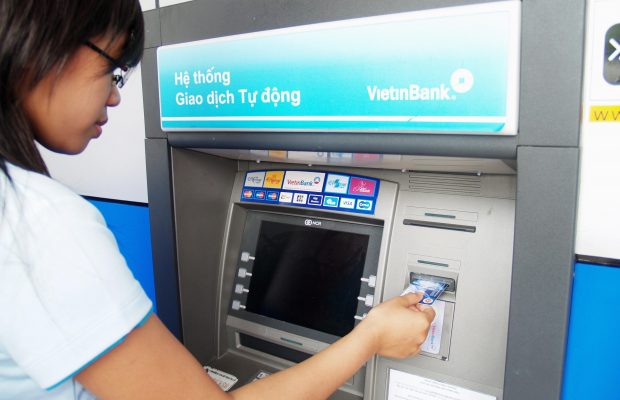
    Following recent complaints that several banks in Viet Nam have stopped providing ATM services at night, the State Bank of Viet Nam (SBV) has ordered all banks nationwide to provide ATM services 24/7.

    Local media reported that many ATMs on the outside of buildings and shopping malls were turned off when the venues shut, stopping customers using the service, the central bank said.

    The SBV has asked all banks and card payment service providers to review their entire ATM systems and ensure smooth operation of ATMs by adjusting ATM working hours.

    A Vietnam Bank for Agriculture and Rural Development (Agribank) representative told Tuoi Tre (Youth) newspaper that State Bank rules dictate that all ATMs operate 24/7. However, the central bank does allow banks to turn off ATMs as long as their opening times are listed at the facilities and on the banks’ websites, the representative said.

    Hoang Chi Mai, a resident of Thanh Xuan District in Ha Noi and Agribank customer said she often withdraws money at an ATM booth on Nguyen Trai Street near her house.

    “The security guard locks up the booth at 10:00 pm. I thought these ATM booths were open around the clock,” Mai said.

    According to Nguyen Hoang Minh, deputy director of the SBV’s HCM City branch, several banks have stopped providing ATM services at night to prevent criminals from stealing money from customers’ accounts.

    With thieves carrying out increasingly sophisticated activities, police have advised lenders to prepare measures to cope with the situation, Minh said.

    The central bank will check if local banks follow the correct protocol for this adjustment, he added.

    Tran Quang Thoai, an expert in this field, told Tuoi Tre (Youth) newspaper that although the banks’ decision aimed to ensure the security of customers’ assets, some methods of tackling card fraud have created problems.

    To gain understanding from customers, these adjustments should be publicised properly, Thoai said. “All changes should not be carried out too suddenly,” he added.

    Dozens of fees

    Many card users have complained about the recent hike in ATM fees, claiming that banks are making profits from ATM services through various fees imposed on their fast growing clientele base, but banks said that the fees are not enough to cover the costs of operating the machines.

    Local media reported that an ATM card holder is subject to dozens types of fees. For example, Agribank charges up to 25 types of fees at ATMs, BIDV collects 20 types of fees and Techcombank charges 13 types of fees.

    An Ninh Thu Do (Capital Security) newspaper quoted Nguyen Toan Thang, general secretary of the Viet Nam Bank Association as saying that the ATM service had developed for 20 years now and there were 53 card issuers nationwide with a total issuance volume of more than 100 million cards. The ATM network had been expanded with more than 17,000 ATMs machines nationwide.

    He added that to meet the increasing demand for transactions, banks have to invest in system maintenance, technology innovation, products and services diversification and the integration of value-added services like mobile banking, internet banking and SMS banking.

    While there may be many types of fees for card payment services listed, customers do not have to pay them all but only the services they use, Thang said.

    “It is lawful for banks to charge fees to offset their investment costs and cover huge expenses they have to pay to maintain the system,” Thang added.

    Recently, some commercial banks have asked the central bank for its approval on a roadmap to increase transaction fees at ATMs, aiming to cover part of the banks’ investment in the ATM systems.

    A representative from a big Vietnamese lender told Dan Tri (People’s Knowledge) newspaper that with banks investing large sums to set up the ATM systems, fees of VND7,000 to 10,000 per transaction is too little compared to the billions of dong spent to set up, maintain and upgrade ATMs annually.

    Not to mention that after each transaction, banks have to send a message announcing account balance to clients, which costs VND700-800 per message, 2 to 3 times above the charge rate for individual subscribers applied for a normal message, he said.

  • Banks increase service fees

    Banks increase service fees

    The Bank for Investment and Development of Vietnam (BIDV) is officially applying a new fee schedule for e-banking.

    The fee on transfers via e-banking of less than VND10 million ($440) is up from VND6,600 (29 cents) to VND7,000 (31 cents), and for up to VND500 million ($22,000) from VND12,000 (52 cents) to VND15,000 (66 cents).

    TP Bank has also raised its fees for SMS Banking, from VND8,800 (38 cents) to VND11,000 (48 cents) per month.

    Eximbank’s have increased to VND16,000 (70 cents) per month and are to be paid every quarter.

    Explaining the increase, TP Bank said that it had to pay VND800 (3.5 cents) per SMS so it was losing money.

    The bank recently introduced eTokens for better security at no charge, but customers who still use OTP SMS must pay fees to cover costs, it said.

    Previously, the Saigon Thuong Tin Commercial Bank raised its internet banking fees for individual customers from VND33,000 ($1.5) to VND44,000 ($1.9) per quarter.

    Other commercial banks have sent proposals to the State Bank of Vietnam (SBV) over increases to ATM transaction fees to cover part of the cost of their investment in ATMs.

    Depending on the bank, the cost of an ATM withdrawal is around VND7,000 (31 cents), which is a loss.

    Such proposals have been met by public concern, however, as many cardholders claim that using ATM cards is burdened by many other types of fees, with some 20-25 basic service charges. Mr. Nguyen Toan Thang, General Secretary of the Vietnam Banks Association, said that customers should not have to pay all fees but only those for the services they use.

    The Department of Payments at the SBV said that domestic debit, or ATM, cards are subject to certain fees, such as ATM withdrawals, money transfers to the same or a different bank account, and statement printing.

    Some bank experts said that banks have to charge for ATM-related services because they have invested in ATM facilities in regard to installation, operations, maintenance, and security. ATM users should therefore pay a fee.

    In addition to increases in certain e-service fees, banks have also cut some charges. Eximbank, for example, reduced its interbank transfer fee from accounts to the Napas system from VND22,000 (96 cents) to VND11,000 (48 cents).

    BIDV offers free annual fees for e-banking customers. Other banks, such as TP Bank and Sacombank also offer free eTokens.

    Banks are improving such services as they move towards modern banking, increasing service revenues and reducing costs.

  • Bank Indonesia Issues Regulation on Carrying Foreign Banknotes of at Least IDR1 Bln

    Bank Indonesia Issues Regulation on Carrying Foreign Banknotes of at Least IDR1 Bln

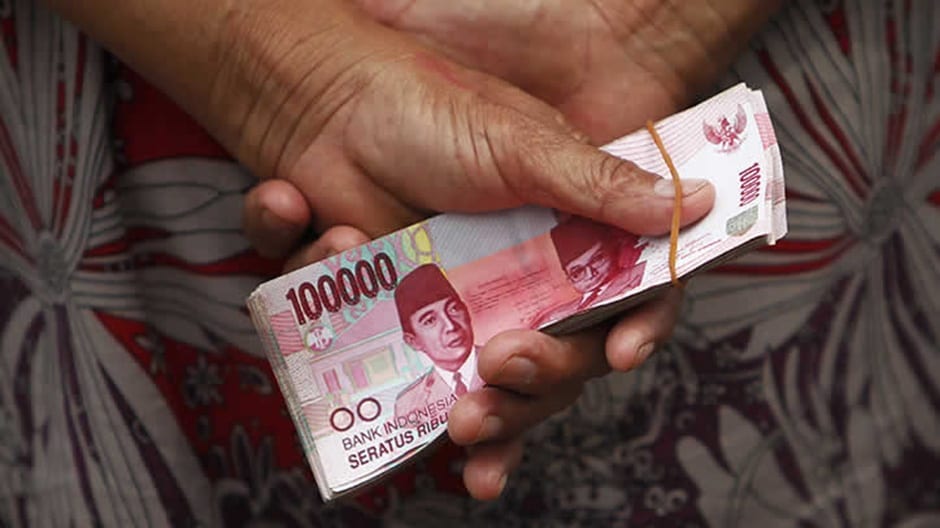
    There is a new regulation issued by Bank Indonesia (BI) on the carrying of foreign banknotes into and outside the country. This regulation is set forth in Bank Indonesia Regulation (PBI) No 197/7 / PBI / 2017 dated May 5, 2017.

    This regulation arranges that foreign banknote carriages within and outside the country of at least equivalent to IDR1 billion is only permitted by licensed entities, including banks and non-bank Foreign Exchange Business Activities that have obtained permits and approval from BI to carry foreign banknotes.

    In addition, a qualified Rupiah Money Processing Service Company (PJPUR) listed in BI may carry foreign banknotes across borders, but only as transporter.

    “The release of this regulation is in line with BI’s efforts to achieve and maintain the stability of the rupiah,” said Executive Director of BI’s Department of Foreign Exchange Management, Budianto at Thamrin Building, BI, Central Jakarta, Monday.

    The BI regulation is effective on March 5, 2018, but the imposition of new violation sanctions will be applied on May 7, 2018 or two months after the enactment of the PBI.

    The grace period for enforcement of the regulation to strengthen socialization aspects to the community before it is implemented.

    “This BI regulation is valid since March 5, 2018, the imposition of new sanctions will be effective on May 7, 2018. There is still a transition period of 10 months ahead,” said Budianto.

    This provision also relates to Law Number 8 Year 2010 concerning the Prevention and Eradication of Money Laundering Crime and Government Regulation No. 99 of 2016 concerning Cash Advance issued by the Financial Transaction Reporting and Analysis Center (PPATK). With the issuance of the new regulation, it will also strengthen the foreign banknotes cross country.

    As for sanctions provided if a party violates, ie prevention of the total number of foreign notes brought.

  • OCBC buys Australia bank’s retail, wealth business in Singapore, Hong Kong

    OCBC buys Australia bank’s retail, wealth business in Singapore, Hong Kong

    With Australian banks retreating from the retail business in Asia, OCBC has scooped up the retail and wealth business in Singapore and Hong Kong of Australia’s largest business bank, National Australia Bank (NAB), to bump up both its mortgage portfolio and customer base.

    Observers said the deal reflects the surging costs for foreign banks in competing against local players in the retail and wealth space in Asia.

    While there is undoubted growth in wealth in the region, non-domestic players would have to spend significantly to expand their product and services suite beyond a boutique presence.

    “In American football, there’s a phrase, ‘Go big or go home’. And based on a cost-benefit analysis, it was time to go home,” said one observer, pointing to NAB’s exit from the Asian wealth business.

    The negotiations for the profitable business unit took about three months, The Business Times understands. The acquisition, in effect, has Singapore’s second-largest bank buying up about US$1.7 billion of mainly residential mortgage loans, with more than half of the properties in the major Australian cities of Sydney, Melbourne and Brisbane, OCBC announced on Thursday. Notably, over 50 per cent of these mortgage loans are booked in Hong Kong.

    The purchase price will match the value of the loan-book at the time that the transaction closes, which is expected to be by the end of the year.

    To be clear, the purchase comes with a US$3.05 billion deposit portfolio comprising a mix of currencies that include the Australian, Hong Kong, Singapore and US dollar.

    OCBC will reach about 11,000 new customers, with more than 7,000 in Singapore and about 4,000 in Hong Kong. Most of the customers are Singapore and Hong Kong residents.

    With the mortgages increasing the bank’s overall mortgage portfolio by about 4 per cent, one analyst noted that the bump is “negligible”.

    “OCBC does get 11,000 customers out of it – though how sticky they are is another issue. (But) the low customer acquisition cost is probably the attraction for OCBC,” he said.

    OCBC said the acquired business will be earnings accretive to the bank within the first year of completion.

    The mortgage portfolio is made up of mainly home loans with an average loan-to-valuation ratio of below 60 per cent, as weighted according to the value of the loans. NAB also has a “strong track record with negligible delinquencies”, OCBC said.

    The business adds to the bank’s overseas property financing programme for real estate in Australian cities such as Sydney, Melbourne and Perth.

    “This deal makes financial and strategic sense to us,” said Ching Wei Hong, OCBC’s chief operating officer, noting that the mortgage loan book would have required “time and money” to grow via organic means.

    “The mortgage portfolio to be transferred to us is a high quality and well-supported one, (while) the customers are in the affluent segment that we have been building.”

    The deal also comes amid surging profit contribution of regional business for OCBC. The bank’s shares closed on Thursday at S$10.56, up 10 cents.

    The market is drawing comparisons between the NAB transaction and the one signed by DBS and ANZ in November, with ANZ selling most of its wealth and retail business in Asia for S$110 million to Singapore’s largest bank.

    That S$110 million represented about 0.5 per cent of the S$23 billion of assets under management from ANZ’s wealth business, mostly out of Singapore and Hong Kong.

    The ANZ sale to DBS also included loans and deposits, but was also in effect a self-funded loan book. At the point of announcement, DBS said it would take up about S$11 billion of loans once financed by ANZ, as well as S$17 billion in total deposits owed to former ANZ customers.

    It should also be noted that ANZ took a A$265 million (S$275 million) loss on the sale to DBS, reflecting write-offs taken for software, goodwill and fixed assets, as well as transaction costs. By contrast, NAB said the sale will not have a material financial impact on it. It is now focused on helping business customers in Australia and New Zealand access the Asian markets.

    In a media statement, Neil Parekh, NAB’s general manager for Asia (ex-Greater China) said: “We wanted a buyer that could meet our customers’ growing demand for a wide range of wealth management solutions in Asia. OCBC is uniquely qualified to do so.

    “We will work closely with OCBC during the transition to completion to ensure a smooth process for customers moving to a business with a comprehensive product offering and strong presence in Asia.”

  • Standardized payment QR code to launch in Thailand

    Standardized payment QR code to launch in Thailand

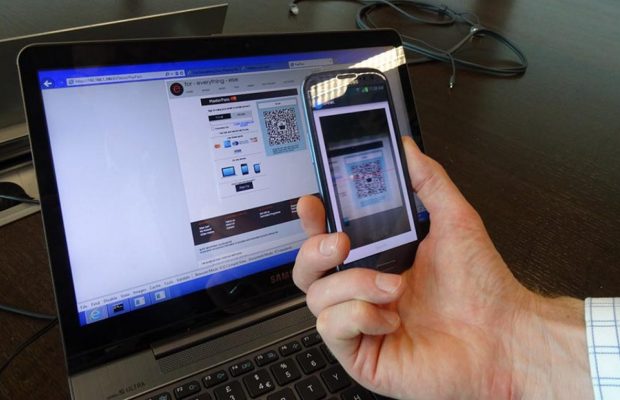
    Top payment card companies Mastercard, UnionPay International and Visa have jointly introduced a standardized QR code for mobile payments in Thailand.

    The new standardized code allows merchants to easily accept electronic payments without the need to invest in physical point-of-sale machines. They need only have a piece of paper with their unique QR code for consumers to scan.

    Customers with a Mastercard, UnionPay, or Visa card can use a mobile application to scan the code using both smartphones and feature phones with a camera function.

    In future, the standards are intended to be globally interoperable and useable anywhere they have been expected.

    The standardized code is expected to be implemented by banks and merchants across Thailand by the third quarter.

    The initiative also meshes with the Thai financial sector’s Electronic Data Capture (EDC) expansion initiatives under the government’s National e-Payment Roadmap, which aims to support the nation’s transition to a cashless society.

    The launch of the Standardized QR Code signals exciting times for Thailand as consumers move quickly to adopt new payments technology,” Mastercard country manager for Thailand Donald Ong said.

    “Our own research, for example, shows that 50% of young consumers across South East Asia would use the QR code straightaway, and we believe this reflects the demand in Thailand.”

  • Biometrics to authenticate 2b m-payments this year

    Biometrics to authenticate 2b m-payments this year

    A new report by Juniper Research predicts the number of mobile payments authenticated by biometrics will climb to to nearly 2 billion this year, up from just over 600 million in 2016.

    The new research found that while Apple Pay had provided the catalyst for initial growth, other leading wallets including Android Pay and Samsung Pay were increasingly offering biometric solutions for authentication.

    Furthermore, the size of the opportunity has been boosted by the greater availability of fingerprint sensors. Juniper estimates around 60% of smartphone models are expected to ship with such sensors this year, with many Chinese vendors incorporating them into mid-range models.

    The research emphasized the increasing momentum behind alternative biometric solutions. It recognized Mastercard as an early leader in this space through its Identity Check Mobile capability, due to go live in the latter part of 2017. Informally known as “selfie pay”, this allows users to scan their fingerprints and/or take selfies to validate their identities and thereby make payments.

    Meanwhile, it expected to see strong adoption of the authentication app recently unveiled by India’s identification authority, through which merchants can verify a customer’s ID via either fingerprint or iris scan. Indeed, since the biometric data is linked to a bank account, the process acts as both authentication and transaction enabler.

    However, the research argued that the key challenge for service providers would be striking the right balance between end-user convenience and solution security.

    Research author Dr Windsor Holden pointed out that “typically, the more secure the solution, the more time-consuming the authentication process. It is essential to offer a range of verification options allowing clients to determine what level of security is required for a given authentication.”

  • Mastercard, UnionPay International and Visa Make E-Payments in Thailand Easier

    Mastercard, UnionPay International and Visa Make E-Payments in Thailand Easier

    Mastercard, UnionPay International and Visa today introduced a Standardized Quick Response (QR) Code for payments, accelerating Thailand’s transition to a cashless society.

    The Standardized QR Code supports the Bank of Thailand’s cashless agenda to drive innovation, interoperability, and security in payments.

    In order to pay, consumers holding a Mastercard, UnionPay, or Visa card can simply use a mobile application with Standardized QR Code support to scan the merchant-presented QR code. QR Code works on both smart phones and feature phones with camera function.

    By establishing standard specifications for QR code payments, consumers and merchants in Thailand now have more options to pay electronically without compromising on security and convenience. The Standard QR Code is simple to set up and use and provides three key benefits.

    First, consumers will not need to scan different QR codes to make payments with Mastercard, UnionPay and Visa. Merchants will only need to display one QR code at the storefront or through the acquiring bank’s mobile application.

    Second, by routing the transactions through global-standard processing networks, consumers can enjoy a fast, convenient and secure payment experience.

    Third, the standards are intended to be globally interoperable and with the right mobile application consumers will be able to use the same standard QR code to make payments everywhere the standards have been adopted.

    The Standardized QR Code is intended to be implemented by banks and merchants across Thailand by the third quarter of 2017 and will contribute to the financial sector’s Electronic Data Capture (EDC) expansion initiatives under the National e-Payment Roadmap introduced by Ministry of Finance.

    A readily accessible and secure payment processing option for all stakeholders, the Standardized QR Code for payments will contribute to the growth and speed of electronic payment adoption across the country, lowering the cost for accepting electronic payments.

    In the future, Thai consumers will benefit from being able to make QR code based payments when traveling outside of Thailand.

    Mr. Donald Ong, Country Manager, Thailand and Myanmar, Mastercard, said, “The launch of the Standardized QR Code signals exciting times for Thailand as consumers move quickly to adopt new payments technology. Our own research, for example, shows that 50% of young consumers across South East Asia would use the QR code straightaway, and we believe this reflects the demand in Thailand. This demand will grow further as the technology is rolled out at small shops across the country, and includes bill payments and cash on delivery as well. Developed in line with global standards, this QR code solution means Mastercard users have even more peace of mind, as well as extra convenience when paying for goods and services. This is yet another strong offering as Mastercard supports Thailand’s evolution towards a cashless society.”

    Mr. Wenhui Yang, General Manager for UnionPay International Southeast Asia, said, “UnionPay now chairs an international workgroup with other payment networks to develop a global QR Code Standard for payments. As an international payment network, UnionPay aims to provide payment solutions that are tailored to the needs of the local market, to enable choice and ease of payment for consumers and businesses alike. The Standardized QR Code is an innovative step forward in the right direction for Thailand’s payment industry. By enabling consumers and merchants to pay and process QR codes easily and securely, this will accelerate the development of the local payments industry, as we continue to work with the Bank of Thailand on payment solutions that will benefit the people of Thailand. We believe the Standardized QR Code has the potential to support and strengthen the Thai economy and help Thailand become a truly cashless society.”

    Mr. Suripong Tantiyanon, Visa Country Manager, Thailand, said, “Visa is proud to have contributed to the development of Standardized QR Code in Thailand as we believe it has the potential to significantly accelerate the growth of electronic payments acceptance in the country. This is especially true for consumers as well as small merchants, as it lowers cost and is easy to implement, eliminating the need for traditional POS hardware. The success of mVisa worldwide has proven a QR code solution to be scalable, secure and easy to use. Increased use of electronic payments has contributed to meaningful economic growth, with more than USD 3.18 billion or about THB 113 billion added to Thailand’s GDP from 2011 to 2015. We look forward to continuing to partner with our clients, merchants and the government to innovate and expand access to digital payments in Thailand, driving inclusive growth for everyone, everywhere.”