Category: Finance

Retail News Asia is committed to providing both local and global retailers with the latest Finance news throughout the Asian market. This on a daily base.

  • More Filipinos adopt online trading at stock mart

    More Filipinos adopt online trading at stock mart

    Online accounts at the Philippine stock market grew 27.8 percent to 302,516 from 236,669 in 2015, according to the annual Philippine Stock Exchange (PSE) report.

    PSE reported also that the total number of stock market accounts, which include both online and traditional accounts, was at 8.5 percent, from 712,549 accounts in 2015 to 773,187 at the end of 2016.

    “Technology has played a big role in the growth of our investor base over the years. We are pleased to see that more Filipinos have continued to adopt online trading to invest in the stock market,” said PSE President and CEO Ramon S. Monzon.

    Investors with online accounts trade themselves, typing in their buy or sell orders on their online trading platform whereas investors with accounts in traditional stock brokerage firms have to call their broker to place their orders.

    The minimum required amount to open an account and the broker’s fee of online stock brokerage firms are usually lower compared with their traditional counterpart. Online investors are typically provided research materials by their online broker while investors of traditional firms also get research reports and they can discuss their investing options with their broker.

    The continued growth in online accounts also translated to higher trading activity. In 2016, 53.7 percent of total market transactions, measured in terms of number of trades, were accounted for by online accounts.

    This was the first year that online transactions were responsible for more than half of the market’s total transactions. Online trades registered a 41.4 percent growth in value turnover, which translated to a 9.3 percent share in the market’s total value turnover.

    Of the total stock market accounts, 98.2 percent, or 759,952, were held by local investors while the remaining 1.8 percent or 13,595 were accounts of foreign investors.

    The PSE’s 2016 Stock Market Investor Profile survey showed that among the retail investors using online and traditional brokering, 43.7 percent earn less than P500,000 annually. This was followed by investors earning above P1 million at 31.1 percent while investors with an annual income of Php 500,000 to Php 1 million made up 25.2 percent of the total retail investors.

    Meanwhile, close to 40 percent of investors were aged 30 to 44. The 45- to 59-year-old investors covered 26.4 percent of the total count and those who are 60 and above comprised 19.3 percent. The young millennials or those between 18 and 29 had accounted for 14.8 percent of investors.

    In terms of geographic location, a total of 96.1 percent of retail investors are based locally while the rest are based overseas.

    The concentration of retail investors continue to be in Metro Manila, which accounted for 70.6 percent of investors. Luzon cornered 16.4 percent of investors with Visayas and Mindanao making up for 6.2 percent and 2.9 percent, respectively. Overseas-based investors comprised 3.9 percent of retail accounts.

    “We are pleased with the continued growth of stock market investors in the market. Clearly, we have a long way to go and we at the PSE will continue our financial literacy programs to demystify stock market investing and make investing as understandable and accessible as bank or insurance products,”. Monzon said.

    In the past year, the PSE has intensified its market education efforts by doubling the number of its free seminars both in Metro Manila and in Cebu. To cater to the increasing number of tech-savvy Filipinos, PSE has been regularly conducting free webinars to discuss basic and intermediate topics. These webinars attract close to 500 participants per session.

    Online retail investors younger, more spread across the country

    The PSE survey results showed that close to three quarters of online retail investors are aged 18 to 44 years. Among online investors, 21.7 percent are in the 18 to 29 year old range, 52.9 percent are 30 to 44 years old, 18.4 percent are 44 to 60 years old, while the remaining 7.0 percent were 60 years and above.

    In terms of location, retail online investors are also less concentrated in Metro Manila compared to the geographical distribution of total stock market accounts. For online accounts, Metro Manila investors only accounted for 57.0 percent of the total online accounts, with Luzon, Visayas and Mindanao online investors making up a much bigger share of 26.0 percent, 6.8 percent and 4.2 percent, respectively. The share of overseas-based clients is also higher at 5.9 percent for online accounts.

    The survey also showed that online traders invest even with lesser incomes. Those earning P500,000 or less annually comprise 60.3 percent of the total online trading population. Meanwhile, 23.7 percent of online traders earn between P500,000 to P1 million per year and the remaining 16.0 percent have incomes of more than P1 million annually.

    “The numbers show that more investors are finding out that participating in the stock market is actually an affordable investment. We are also happy that our online brokers have been able to reach out to more Filipinos outside of Metro Manila towards making stock market investing more inclusive,” Monzon added.


  • Cashing in on mobile payment

    Cashing in on mobile payment

    Eight years ago, Starbucks developed an app for mobile payments. Today, it is still held up as the gold standard in the US. In Asia’s rapidly developing market, where mobile payment is almost a decade ahead of the West, things are quite different.

    In China, you can mobile pay for everything, from cab fares to a utility bill. In 2015, WeChat registered more financial transactions in a day than PayPal did in 12 months. It is not just China that is adopting the trend – mobile payment is also making massive inroads in South-east Asia as shopping apps gain popularity.

    In Singapore, there are 30,000 retail points accepting contactless payment methods, such as Apple Pay, Android Pay and Samsung Pay. In Indonesia, the most populous country in the region with 250 million people, most of the big traditional retailers are unveiling e-commerce plans of their own.

    In a recent GfK study, The Connected Asian Consumer, consumers here and in Indonesia reported fairly high usage of shopping apps (37 per cent and 35 per cent, respectively).

    This growth is fuelled by affordable smartphones, a massive young and tech-savvy population as well as efforts by governments and telco operators to expand and improve high-speed wireless networks.

    It is only a matter of time before mobile payment goes mainstream.

    Unfortunately for traditional retailers, the age of e-commerce also produced a new consumer – we like to call them the “connected consumer” – and their behaviours are shaping the future of retail.

    In the GfK FutureBuy survey last year of 20,000 consumers in 20 markets, it was found that shoppers are becoming less loyal to any one retailer.

    Almost half (46 per cent) of all consumers (aged 14 to 65) stated that they are less loyal when shopping. This figure rises among the youngest consumers – to 53 per cent of Gen Y (aged 18 to 29) and 58 per cent of Gen Z (aged 14 to 17).

    For retailers who understand the connected consumer, there are opportunities to stay ahead of the competition – and mobile payment is a huge part of it.

    Despite becoming less loyal, many connected consumers expect an omni-channel shopping experience, where they interact with a brand. Connected consumers in Asia-Pacific seek the best of both worlds.

    For example, shoppers in China are the most likely to embrace omni-channel shopping – 71 per cent shop both online and in-store, while Australian shoppers are the most likely to shun online shopping (62 per cent shop exclusively in-store).

    In contrast, Indians lead the way in online shopping with 23 per cent shopping the category exclusively online.

    NEW REALITY

    Therefore, it is important for retailers to understand the new reality of the omni-channel consumer and know that the “whatever, whenever” culture demands that user experience is seamless across all devices.

    If retailers do not understand this, customers will simply delete their app and move on.

    At the same time, using analytics, retailers can receive customer data to offer more personalised services. In turn, this presents an opportunity to generate long-term relationships.

    But it is important to note that not all connected consumers are the same.

    For example, older consumers are not as comfortable with sharing personal information as younger consumers.

    Understanding the shopper’s purchase journey is easier these days, with research offering detailed information on the route shoppers take when making a purchase as well as ways in which online and offline touchpoints influence their decisions.

    We believe that brands that understand, respect and protect the consumers’ individual boundaries will earn their loyalty.

    As mobile payments continue to grow in Asia-Pacific, businesses in sectors such as financial services, cybersecurity and telecommunications stand to gain, and they can evolve to support the changing landscape.

    Loyalty is great, but to really retain customers in today’s omni-channel space, the shopping experience is equally important.

    To connected consumers, simplicity and convenience is paramount. Not only do they expect everything quickly, they also lose their patience faster.

    For large retailers, mobile payment offers the opportunity to segment and target consumers much more effectively, with highly-personalised offers.

    Discounts and offers can be integrated into mobile payment, replacing the need for physical coupons and entering information into a terminal.

    Connected consumers will wave goodbye to the traditional checkout queue and benefit from customised rewards.

    Mobile payment also offers a chance for small retailers to move into a new era of retailing. Freed from high transaction fees and with new ways to connect with consumers, they can embark on the kind of personalisation and targeting that is usually the privilege of larger players.

    With e-commerce here to stay, there is plenty of potential for retail businesses to leverage research intelligence to adequately design and develop strategies to target this group of consumers.

  • OJK to expand banking access to the Philippines

    OJK to expand banking access to the Philippines

    The Financial Services Authority (OJK) plans to expand banking access to the Philippines by signing a Letter of Intent (LoI) with the countrys central bank, Bangko Sentral ng Pilipinas (BSP).

    The cooperation will pave way for access to some Indonesian banks that already certified as “Qualified ASEAN Bank” (QAB), the authoritys Deputy Commissioner for Supervision, I Sukarela Batunanggar, said at a press conference in Jakarta on Friday.

    “Besides the positive trends in economy growth, the two countries also have similarities in the sectors of social and economy, mainly in their domestic credit ratios,” Batunanggar stated.

    Indonesia and the Philippines, he further remarked, also have great potential in terms of their population sizes.

    “The two countries still have more opportunities to continue flourishing,” he noted.

    The LoI that was scheduled to be signed on next Sunday is an initial measure for negotiating bilateral cooperation through the ASEAN Banking Integration Framework (ABIF).

    The framework, which is set by two main principles, including reciprocity and equality, is aimed at supporting the banks in expanding their business within the Southeast Asia region.

    In accordance with the framework, Batunanggar stated the authority has assessed several banks that seek to hold a QAB certification.

    Batunanggar hoped the negotiation between two countries could be completed soon, so it would enhance trade volumes between Indonesia and the Philippines.

    In 2016, the two countries trade volumes remained low, compared with other states.

    Indonesian exports to the Philippines reached less than 4 percent last year, while the imports were only about 1 percent.

    The authority had signed a similar LoI for bilateral financial cooperation with Bank of Thailand (BOT) in March last year.

    Another bilateral deal was implemented between the countrys financial authority and the Malaysian bank central in August last year.

  • Bank Mandiri Lends Rp1.5tn to Indonesia Infrastructure

    Bank Mandiri Lends Rp1.5tn to Indonesia Infrastructure

    State-owned Bank Mandiri is lending Rp1.5 trillion to Indonesia Infrastructure Finance (IIF) to help the non-bank financial institution support the acceleration of infrastructure development in Indonesia.

    IIF president director Arisudono Soerono said the loan will used to finance several infrastructure projects that are commercially viable and feasible.

    Bank Mandiri also gives IIF a treasury line facility with US$50 million limit to hedge the company’s transactions using foreign currencies.

    The bilateral term loan is a non-revolving credit with that will mature in three year.

    Bank Mandiri’s government & institutional director Kartini Sally said this is the second time the bank provided lending to IIF. In 2015, Mandiri disbursed Rp1 trillion loan to help IIF fast-track the completion of infrastructure projects in Indonesia.

  • What’s next for remittances to Vietnam?

    What’s next for remittances to Vietnam?

    Global economic and political conditions cast doubt on the inflows, which have been an important source of capital for Vietnam.

    Vietnam is still in the list of top remittance recipients, but experts are uncertain about the future considering recent economic and political developments in the world.

    According to World Bank’s estimates, during 2016, Vietnam received around $13.4 billion from overseas, up 3 percent from 2015.

    The Washington-based bank noted that remittances to developing countries, in general, fell for a second consecutive year in 2016, a trend not seen in three decades.

    For Vietnam, over the past 25 years, the flow of overseas funds has increased around 100-fold, from $140 million in 1993 to approximately $13.4 billion in 2016, according to latest data released in May by the World Bank.

    Last year, remittances made up for 6.7 percent of the country’s gross domestic product.

    The U.S. has been the largest source of remittances for Vietnam, accounting for around 60 percent of all remittance inflows last year, as calculated by us based on several estimates.

    But there are uncertainties ahead. Credit Suisse, in its report released in March this year, warned of a possible slowdown in 2017, given global economic and tighter border controls imposed by the Trump administration.

    Analysts said remittances could be affected by the recent hike in interest rates in the U.S., which means senders can earn good profits by keeping money in the U.S.

    In recent years, the purpose of using remittances shifts from family support to business investments, real estate and savings, Atish Shrestha, the regional director for Cambodia, Laos and Vietnam at Western Union, told via email.

    As such, the logic of holding on to their money makes sense, Shrestha said.

    He added that while economic and political conditions in the send countries may weaken remittance inflows to Vietnam, the growing number of Vietnamese migrants working abroad may help to offset these effects.

    In 2016, the number of Vietnamese who went to work abroad hit 126,300, exceeding the projection by over 26 percent, and up nearly 10 percent from the previous year, according to the Department of Overseas Labor.

    Vietnam’s major source of remittances, aside from North America, are Australia and European countries, according to Western Union.

  • BI launches food price information center

    BI launches food price information center

    The central bank of Indonesia, Bank Indonesia (BI), has launched a Strategic Food Price Center website (PIHPS) application which will serve as a reference of pricing information to help those in charge of making policy on inflation management.

    BIs Governor Agus Martowardojo said, at the PIHPS launch here on Monday, that data collection was one of important factor in controlling price to manage inflation.

    “The success of inflation policy application requires not only information but also supporting data. We follow the presidents directive, stated on April 11, 2016, to develop food information system center,” Agus stated.

    He explained that at an early stage, PIHPS will focus on 10 food commodities that contribute more than 50 percent to inflation of the volatile foods category.

    Referring to PIHPSs website at www.hargapangan.id site, the 10 strategic food commodities are rice, beef, chicken, chicken egg, red chili, cayenne pepper, onion, garlic, cooking oil, and sugar.

    Controlling the prices of these 10 food commodities has become the foundation of BI and the government to control inflation of volatile foods.

    Data presented by PIHPS is compiled from 164 traditional markets from 34 provinces. The data collected from 9.00 to 11.00 Jakarta time will be validated by BI at 10.00 to 12.00 and then published at 13.00 Jakarta time.

    PIHPS can be accessed at www.hargapangan.id or by downloading PIHPS National at android and Apple iOS operating system for free.

    In future, the Central Bank will develop the application by extending data coverage that includes modern markets, wholesalers, and producers, Agus remarked.

    “In 2018, we will collect data at the producer level for the 10 commodities, and we will also develop the site, hoping that wider access to food information will gradually lower the price fluctuations,” Agus revealed.

    Through PIHPS, the Central Bank wants to keep the inflation at 3-5 percent this year by paying particular attention to volatile foods, considering that its pressure from administered prices will be high following the energy subsidy adjustment policy that is applied this year.

    BI and the government want to keep volatile foods inflation in the range of 4-5 percent year on year from this year.

    The government has listed an overall inflation assumption of 4 percent in the 2017 State Budget.

  • Retail businesses ‘count success’ accurately with Cashmaster One

    Retail businesses ‘count success’ accurately with Cashmaster One

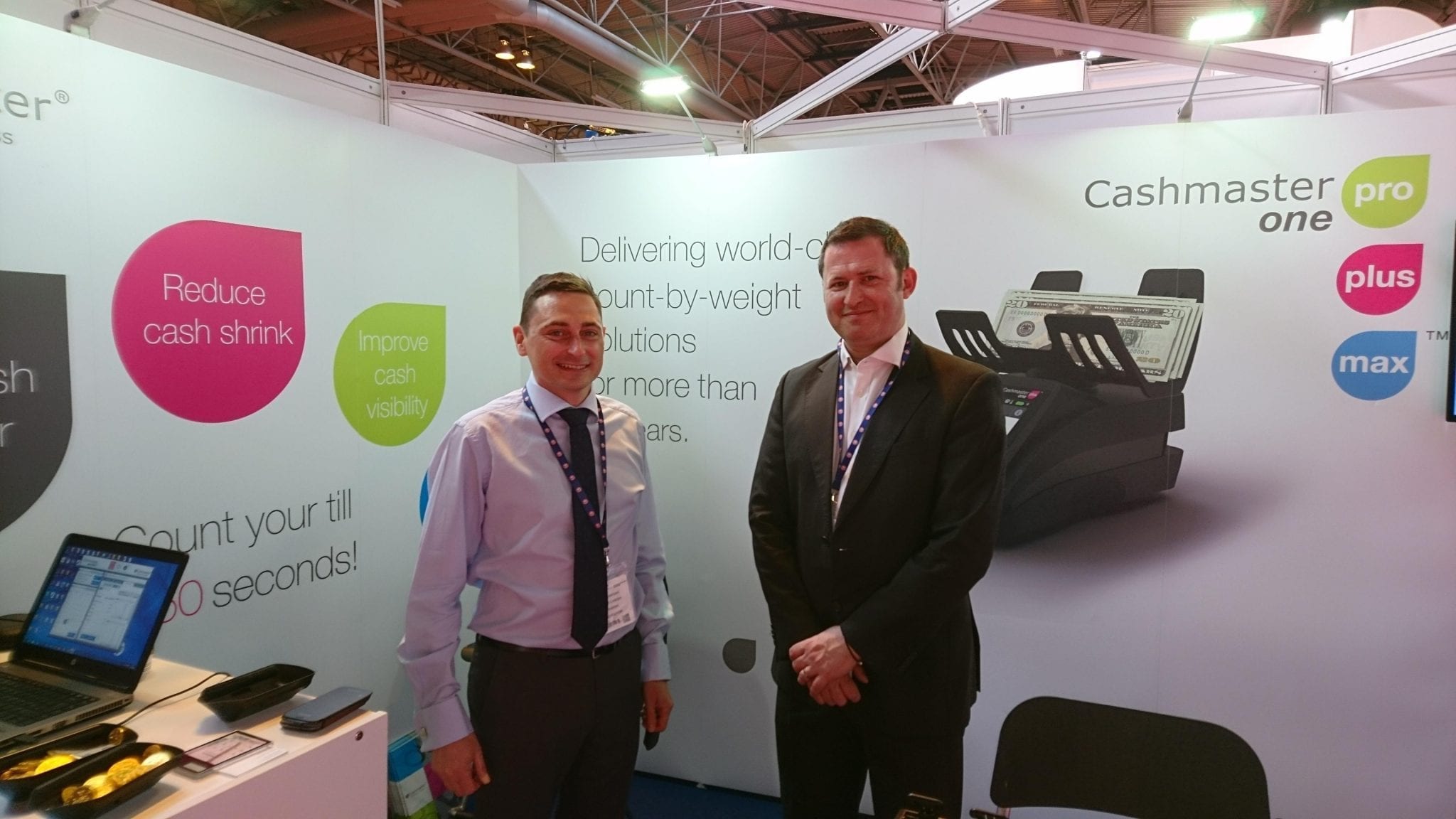
    Cashmaster, one of the leading companies in the global cash-management sector, is demonstrating the transformational cost and time savings that retailers can enjoy when using its latest range of cash-counting scales, Cashmaster One, at Retail Asia Expo (RAE). It is also unveiling Cashmaster Connect, its new cash management application which gives retailers greater ‘real time’ visibility of their cash.The UK-based company is exhibiting for the first time at this year’s RAE which is being held on 13-15 June 2017 in the Hong Kong Convention and Exhibition Centre (Booth L12).

    Gordon McKie, CEO at Cashmaster, commented. “In the last year, we established our Asia Sales and Support headquarters in Hong Kong so it’s the perfect time for us to be participating in such a key exhibition.”

    “All our devices are designed and manufactured in Scotland but we work with businesses world wide, most recently with large retailers in Asia. We understand the highly competitive nature of the markets where our customers operate, which drives them to seek efficiency and process improvements across their organisations. This is where count-by-weight products can help make a tangible and significant difference – driving accuracy and efficiency in cash-management processes and ultimately making a positive impact on their bottom line.”

    Mr McKie pointed out that retailers counting their tills using a Cashmaster count-by-weight device can transform how they manage their day-to-day cash counts and cash-management processes. Manual counting is still commonplace in many retail outlets and it can take up to 10 minutes to perform a single count. Using a count-by-weight device allows organisations to count their tills in less than a minute, helping to drive efficiency improvements that deliver cost savings, reduce cash shrinkage and provide much tighter control and visibility of their cash.

    “Count-by-weight technology delivers measurable cost and staff time savings almost immediately and our customers typically see a return on their investment in 8-12 weeks,” he concluded.

    UK design and manufacture Cashmaster has over 30-yearsexperience in the cash-management sector, designing and manufacturing all its products in the UK. Its latest range of devices, Cashmaster One, incorporates a smart-phone style touch-screen and a highly intuitive icon-driven user interface, making it the easiest to use cash counter on the market. With its optional integral printer, Cashmaster One is the smallest footprint device the company has ever made, ideal for retail environments where space is at a premium.

    New Cashmaster Connect The availability of pertinent, ‘real-time’ management information (MI) is fast becoming a key prerequisite of the physical cash-management sector. The growth in software platforms is a clear indicator that good MI and greater cash visibility is becoming more important to all businesses whether large or small.

    The new application, which allows users to connect their Cashmaster cash counter to their Windows PC, laptop or tablet, gives retailers a simple way to record cash-count data from tills accurately and efficiently in a matter of seconds. Cashmaster Connect allows users in busy retail environments to automatically output till counts in Excel format. This means retailers can capture important cash data, making financial reporting easier and more accurate than ever.

    Working in partnership

    As part of the company’s wider strategy for providing a complete cash-management solution for its customers in small and large enterprise organisations, 2017 will see Cashmaster working in close partnership with key providers of both software and hardware product solutions that target retail and other sectors.

    Amanda Treend, Group Product and Marketing Director at Cashmaster, commented “We receive daily feedback from our customers on how our Cashmaster count-by-weight devices have an immediate impact on their cash management with real improvements in efficiency, accuracy and cost savings. Managing your cash successfully tends not to be a single product fix. Cashmaster technology is designed to integrate seamlessly with a variety of cash-management hardware.

    “We’re delighted that our Cashmaster Connect application and the strategic partnerships we are developing will significantly expand our cash-management solutions offer to retailers of all sizes around the globe, whether they are sole traders or large enterprises.”

  • Rupiah Climbs on Forex Reserves Increase

    Rupiah Climbs on Forex Reserves Increase

    The rupiah climbed 20 bps this morning at the Jakarta Interbank Spot Dollar Rate. The rupiah now trades for Rp13,278 per US dollar, from what analysts said to be the impact of Indonesia’s foreign exchange (forex) reserves’ increase.

    Samuel Sekuritas economist Rangga Cipta said on Friday, June 9, that the forex reserve increase in May to US$124.95 billion helped the rupiah strengthened. But the gain is relatively limited as the US dollar is also on an uptrend over speculations that the Federal Open Meeting Committee will result in a Fed Fund Rate hike.

    Meanwhile, money market observer from Bank Woori Saudara Indonesia, Rully Nova, said the forex increase is expected to help maintain the rupiah stability on the long run.

    “With stable fluctuations, the domestic economic activities will be able to increase, and eventually provide investors’ with comfort and security when making investments,”

  • UnionPay launches QuickPass in Hong Kong and Singapore

    UnionPay launches QuickPass in Hong Kong and Singapore

    Following a debut in China late last month, UnionPay International is extending its UnionPay QuickPass QR code mobile payment service to Hong Kong and Singapore.

    The first merchants providing this new service are three stores of Colourmix at Causeway Bay, Hong Kong and two stores of BreadTalk in VivoCity and Marina Bay Financial Centre, Singapore.

    Next, UnionPay mobile QuickPass QR code payment will be introduced in the travel destinations favored by Chinese tourists, including Thailand, Indonesia and Australia.

    The new service supports NFC contactless payment with UnionPay chip cards, smartphones and wearable devices. Outside mainland China, mobile QuickPass is now accepted at about 500,000 POS terminals across Hong Kong, Macau, Taiwan, Singapore, Malaysia, Australia, Canada, Russia, the UAE, etc. Customers can pay easily by tapping mobile phones. The newly launched QR code payment is a significant supplement to NFC payment.

    “We are accelerating the rollout of various mobile QuickPass products and services outside mainland China so that we can bring faster, more convenient and secure payment options for our customers,” said Cai Jianbo, CEO of UnionPay International.

    “We choose to launch UnionPay QR code payment first in daily spend merchants to meet the diverse tourist payment needs resulting from the Chinese tourists’ preference shift from group tours to free-and-independent traveling. I believe that in the near future, customers outside mainland China will also be able to enjoy this safer and easier QR code payment service.”

    With the launch of Consumer Presented QR Code in Hong Kong and Singapore, China cardholders can add their UnionPay cards to the “UnionPay Wallet” APP, press “Payment Code” and choose “Overseas Payment Code” to generate a QR code, and then have it scanned by the cashier to complete payment.

    In Hong Kong, the service supports the combination of payment code and e-coupon code. Customers using the UnionPay cross-border marketing platform, u·plan, can get an exclusive e-coupon code from the u·plan zone in the “UnionPay Wallet” APP, and have it scanned by the merchant to enjoy discount while making payments.

    Compared with other QR code payment products, UnionPay mobile QuickPass QR code has three major features: Firstly, it is with global interoperability. Secondly, this payment mode provides greater safety as it uses the tokenization technology. Thirdly, it provides comprehensive services including risk compensation mechanism.

  • Bango enables new payment option for Amazon customers in Japan

    Bango enables new payment option for Amazon customers in Japan

    Bango, the leading mobile payments company, announces that it has enabled a new payment method for Amazon customers in Japan. Amazon customers with a KDDI or NTT DOCOMO mobile phone account can now pay for physical goods from Amazon.co.jp, by charging the cost to their mobile phone bill.

    Adding carrier billing as a payment option increases choice for customers in Japan, making it easy to complete purchases. Selecting this payment method enables instant purchase completion, without needing to register card details online. Bango technology ensures reliability, security and customer success when paying with carrier billing.

    Charging online payments to a phone bill is a widely-adopted payment method in Japan, where mobile usage is deeply embedded into business and culture. The Japanese market has pioneered carrier billing, offering it as a simple and secure payment method, enabling more consumers to purchase goods and services, online and in retail stores. It is a highly effective way to engage new customers and is popular with younger consumers.

    The payment method opened-up to purchase goods on Amazon.co.jp at the start of June, greatly increasing the range of products that can be charged to the phone bill by KDDI and NTT DOCOMO customers, who cover around 75% of all mobile subscribers in Japan (Telecommunications Carriers Association, Japan, 2016).

    Internet usage in Japan is mobile-first, with billions of dollars in online purchases charged to Japanese consumers’ phone bills,” said Ray Anderson, Bango CEO. “The Bango Platform ensures global retailers can offer these customers the trust and transparency they want from a payment method, and can deliver this at scale.

    To use this payment option, a KDDI or NTT DOCOMO subscriber simply adds carrier billing as a payment option in their Amazon.co.jp account and then purchases can be made from any device, with the cost charged to their post-paid phone bill.

  • Mastercard to transform Cyberjaya into a cashless hub

    Mastercard to transform Cyberjaya into a cashless hub

    Mastercard, Cyberview and the Malaysian Global Innovation & Creativity Centre (MaGIC) have entered a collaboration to transform Cyberjaya, a technology hub in Malaysia, with a focus on cashless initiatives.

    Mastercard will be providing its global expertise in innovative payment technology and network to increase the digitalization of payments, an initiative which is in line with Cyberjaya’s aim to become a cashless society.

    Mastercard will embark on a pilot program to test several smart city applications beginning Q3 2017. This also entails a partnership with internationally-renowned player in the smart city scene, Masabi, a global leader in mobile ticketing and innovative fare collection for transportation based in London to implement quality innovations that will benefit the Cyberjaya community.

    The pilots will first focus on the transportation as well as food and beverage (F&B) sector with more sectors to be included in phases. Cyberjaya will be the starting point and benchmark of this cashless society development, as part of larger plans to replicate these concepts into other Smart Cities throughout Malaysia, in the future.

    The pilot program include: introduction of the Masterpass QR solution to allow consumers to  pay for goods and services from their mobile phones by utilizing a QR code without the need of a point of sale terminal, a mobile ticketing application with Masabi, a bike-sharing platform based on GPS trackers and AI chatbots for retail applications.

    “E-payments are at the center of a city’s economic vitality and its integration is crucial to promote a smarter, more sustainable and inclusive space for residents, commuters and local businesses,” Mastercard country manager for Malaysia and Brunei Perry Ong said.

    “We will work towards enhancing Cyberjaya’s payment ecosystem with a comprehensive suite of simple, safe and smart digital solutions. The implementation will cover various sectors in Cyberjaya such as urban mobility, lifestyle, finance, health, supply chain and education sectors to help the community to go cashless. This initiative is in line with the government and Bank Negara Malaysia’s vision to transform Malaysia into a digital economy and cashless society.”

  • Japanese banks expand investments in Vietnam

    Japanese banks expand investments in Vietnam

    At a recent working session with the Joint Stock Commercial Bank for Foreign Trade of Vietnam (Vietcombank), President and CEO of Mizuho Financial Group Yasuhiro Sato said Vietcombank is one of its most successful investments.

    He hoped the two sides will expand cooperation to other fields such as stocks and finance after five years of fruitful banking collaboration, aiming to develop Vietcombank into a strong financial group.

    Another Japanese financial group, Sumitomo Mitsui, has invested 225 million USD in the Vietnam Export Import Commercial Joint Stock Bank (Eximbank). It has owned 15 percent of Eximbank since 2007.

    While meeting with Deputy Prime Minister Vuong Dinh Hue recently, President and CEO of the Sumitomo Mitsui Banking Corporation Ryuji Nishisaki said the group is interested in Vietnamese credit organisations.

    Apart from restructuring Eximbank, Sumitomo Mitsui is ready to help its subsidiary companies join the derivative and bond stock markets in Vietnam, he noted.

    Besides seasoned investors such as Sumitomo Mitsui, Mizuho, Bank of Tokyo, and Mitsubishi UFJ, many other banks from Japan are seeking Vietnamese partners.

    Most recently, the Bank for Investment and Development of Vietnam (BIDV) sold 49 percent of shares in its Financial Leasing Company to Japanese Sumitomo Mitsui Trust Bank (SMTB)

    It can be said that Japan is the biggest shareholder of the banking system in Vietnam. With the current wave of investments from Japan, capital contribution deals will expand to other fields, experts said.

    Vietnamese banks are also keen to diversify cooperation channels with Japanese partners.

    Last week, the Vietnam Bank for Agriculture and Rural Development (Agribank) signed a cooperation agreement with Yanmar – a leading Japanese group in farming machines.

    Contracts worth 20 billion USD were signed between the two countries’ businesses and localities during Prime Minister Nguyen Xuan Phuc’s ongoing visit to Japan.

    This record figure is expected to create a new wave of investments from Japanese firms into Vietnam in the coming years.

    In fact, domestic banks have eyed Japanese customers for five years, as the country’s investment in Vietnam has increased.

    In February 2017, BIDV signed a cooperation agreement with Fukuoka – the 16th largest bank in Japan to serve Japanese customers.

    VietinBank and Vietcombank also struck deals with dozens of Japanese banks.

    Vietcombank, in particular, inked cooperation agreements with nearly 60 banks from Japan.

  • Indonesia’s Mandiri eyes Singapore private banking business

    Indonesia’s Mandiri eyes Singapore private banking business

    Indonesia’s largest lender Bank Mandiri wants a piece of the lucrative private banking business in Singapore, particularly the accounts of wealthy Indonesian clients.

    Recent reforms in Indonesia, including a successful tax amnesty, have made ultra-rich citizens less averse to banking with state-owned institutions, said Mandiri chief executive Kartika Wirjoatmodjo.

    “In the past, they were worried that their undeclared wealth will be reported,” he told recently.

    “After the tax amnesty, everything is transparent so Indonesians who put money in Singapore are no longer worried about having us, a state-owned bank, as their banker.”

    Many wealthy Indonesians are believed to bank much of their fortune abroad and the local tax authorities believe some do so to avoid scrutiny and paying taxes.

    Finance Minister Sri Mulyani Indrawati said Indonesians have stashed about US$250 billion (S$346.5 billion) worth of assets overseas, of which a whopping 80 per cent is kept in Singapore.

    The tax amnesty, started in July last year, was introduced to encourage these rich citizens to come clean with the taxman on their assets at home and abroad by offering tax rates as low as 2 per cent.

    More than 4,000 trillion rupiah (S$417 billion) – about a third of Indonesia’s gross domestic product – of newly declared assets were recorded at the end of the scheme in March, with a small portion of the wealth repatriated from overseas.

    Mandiri, which operates in Singapore under an offshore bank licence granted by the Monetary Authority of Singapore (MAS), plans to apply for another licence to run private banking operations. This follows the opening of its securities subsidiary Mandiri Securities Singapore last October.

    Mr Kartika said Mandiri’s move into Singapore’s private banking sector will require a “limited retail banking licence” so that it can serve high-net-worth Indonesians there. “So we don’t want to deploy 200 ATMs in Singapore, perhaps just a couple of branches would do.”

    Mandiri also wants to make Singapore a hub for its corporate clients, most of whom have offshore financing, either bilateral bank loans or fund raising via capital markets, to access global investors.

    “Many investors operate their Asian accounts from Singapore, so by giving them access to the Singapore market, we automatically have global exposure,” said Mr Kartika.

    Besides growth in Singapore, the bank has been expanding its retail banking business in Malaysia and the Philippines.

    After long negotiations, Mandiri is set to get a full retail banking licence in Malaysia within the next two months which would allow it to open retail branches across the country, said Mr Kartika.

    In the Philippines, where the banking industry is less mature and saturated compared with Indonesia, Mandiri is betting on the country’s strong economic growth and is in talks with local banks for possible acquisitions of minority stakes.

    Analysts said Mandiri’s “Singapore strategy” will pave the way for it to become a regional player, just like DBS Bank or Malaysia’s CIMB.

    “It is a positive move if Bank Mandiri starts investing more in its international business,” said Mr Harry Su, head of strategy and research at stockbroker Bahana Sekuritas.

    But Mr Su added that while this is a part of the bank’s strategy to be a bigger player in South-east Asia, it is still early days as “contribution from such efforts will remain minimal to their overall earnings performance in the next three to five years”.

    Another analyst, who declined to be named because he is from a competing bank in Jakarta, said the top four banks control the majority of Indonesia’s total banking assets so the room for others is restricted.

    “This would make Malaysia, Singapore and the Philippines more competitive markets for Mandiri,” he said.

    “But it also means returns or profit margins from doing business there would be less, but as the biggest bank in Indonesia, Mandiri has to expand there.”

  • AYA Bank to overhaul core banking system with Misys

    AYA Bank to overhaul core banking system with Misys

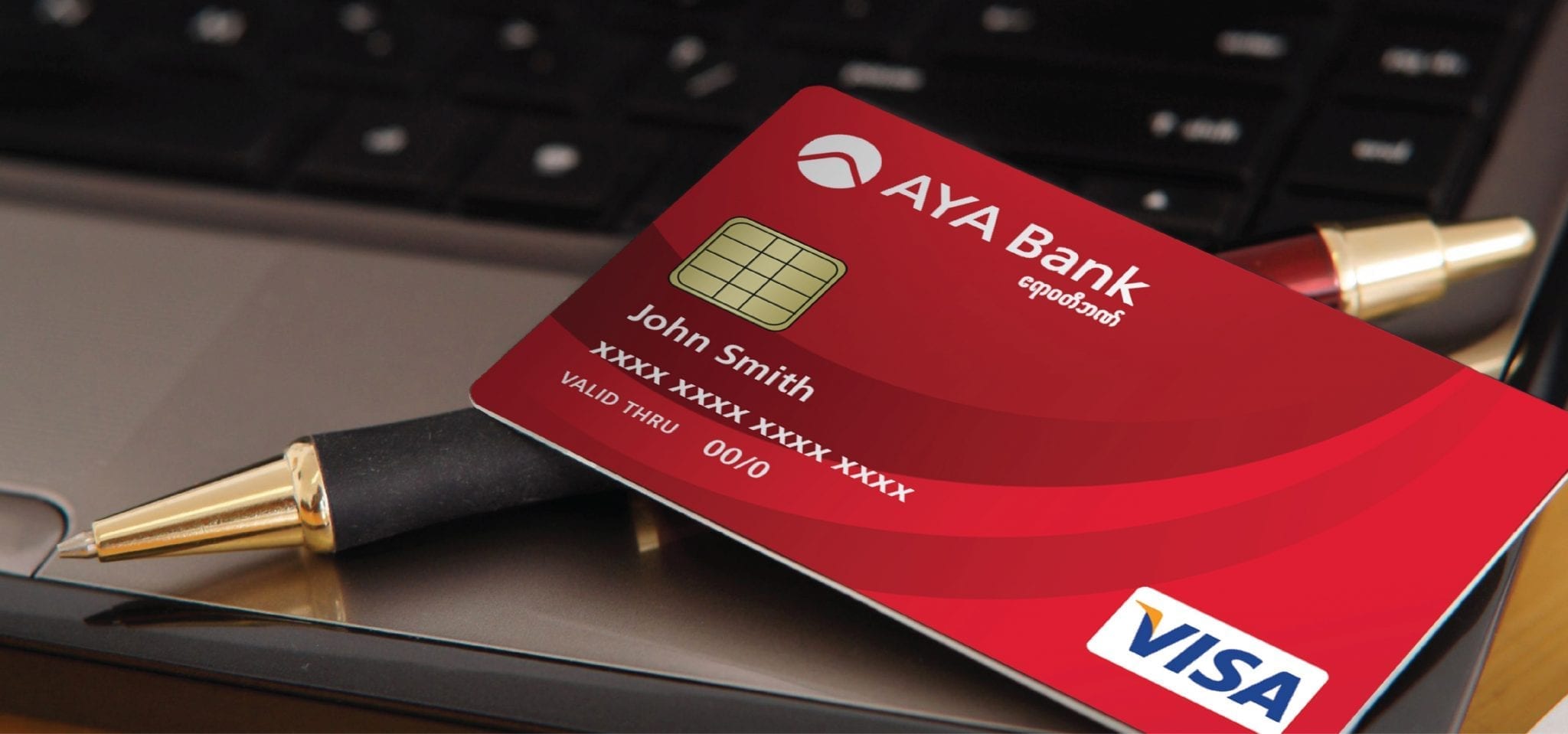
    AYA Bank (Ayeyarwady Bank) has selected the Misys FusionBanking suite to support a transformative project which will overhaul its core banking system, digitalise operations and improve overall efficiency throughout the organisation.

    U Zaw Zaw, Chairman, AYA Bank said, “It’s thrilling to see more of our vision for AYA Bank come to life in Myanmar. In addition to providing existing customers with a seamless, best-in-class experience, this transformation will drive rapid business and economic growth in Myanmar by increasing banking penetration and the availability of reliable, secure banking services to the nation’s large underbanked population. With Misys, this transformation will mean we can deliver excellence and pursue growth in our rapidly changing country while continuing to lead from the front. These financial services not only support the Myanmar government’s national goals of inclusive economic growth, but also connect Myanmar to global commerce.”AYA Bank has always been at the forefront in providing modern retail banking services and products and in just seven years the bank has grown to become one of the top three private banks in Myanmar. Using the Misys platform, the bank will consolidate and streamline workflow as well as digitalising all manual and non-digital processes to better service its customers across retail and corporate banking.

    The modern digital Misys platform will help improve the services and products available, as well as protecting customer information and data integrity. AYA Bank’s customers will enjoy faster access to more information and will have the option to perform a wider range of transactions at the click of a button through new online and mobile banking solutions. This in turn will enable the bank to improve customer engagement and accelerate customer acquisition through functions such as digital on-boarding.

    “As Myanmar’s banks modernise to keep pace with the disruption that’s driving the economy forward, digitalisation can be a catalyst for much broader change across the nation,” said Nadeem Syed, CEO, Misys. “With fierce competition brewing in Myanmar’s financial services sector, we are confident that we can help AYA Bank leapfrog developed market banking challenges to modernise faster and more efficiently. This will help to have a significant impact in including more people into Myanmar’s financial system and making a cashless society a reality for all.”

    This transformation will also enable AYA Bank to offer internal stakeholders a better service. This includes improving process efficiency and minimising operational risk, providing accurate and reliable reporting, supporting decision-making and improving the bank’s speed-to-market in launching new products and services in branches across the country.

    The Misys partnership-driven approach and commitment to remain closely engaged with AYA Bank will also be beneficial over the longer term as AYA Bank uses the integrated FusionBanking solution suite to anticipate future needs, deliver growth and plan regional expansion that stretches beyond Myanmar’s borders.

    Expansion of the Misys footprint in Myanmar is testament to the fast transformation taking place in the region as banks strive to modernise and keep one step ahead of the technological advancements changing their customers’ lives. Big Byte International, a Misys InFusion partner, has been instrumental in supporting the Misys journey in Myanmar and Asia Pacific, and is now investing in creating regulatory framework tools for Myanmar using the Misys FusionFabric architecture, in addition to building a team of local domain experts to support Misys in the region.

  • Indonesia’s Salim Group Re-enters Banking with Local Takeover

    Indonesia’s Salim Group Re-enters Banking with Local Takeover

    Indonesia’s largest conglomerate, Salim Group, has acquired a majority stake in a local bank, marking its first return to the banking business since the 1998 Asian financial crisis.

    Through various affiliated entities, the group bought at least 51% of Bank Ina Perdana by subscribing to new shares issued by the Indonesia-listed lender. The acquisition value is estimated at 570 billion rupiah ($42 million). The bank has 22 branches in Java and had 2.3 trillion rupiah in assets as of December 2016.

    Salim took over Bank Central Asia in the 1970s and developed it into the country’s largest private lender on the back of deregulation policies under then-President Suharto, who had close ties with group founder Sudono Salim.

    But after the bank’s ownership was transferred to the government in the wake of the Asian financial crisis, the group focused on rebuilding its other operations, mainly through its core food company, Indofood Sukses Makmur. It has interests in the retail, automotive, telecommunications, infrastructure and other sectors across Indonesia and the Philippines.

    In recent years, the smartphone boom has created a new wave of demand for financial services such as electronic payments and peer-to-peer lending. Salim decided that operating its own bank and building a financial backbone would be crucial for running an end-to-end digital business, which it has been developing since 2013.

    “It makes sense for us to refocus on banking because the transactions carried out by the banks are becoming quite big,” said a Salim executive.The conglomerate may have targeted a smaller player because it wanted to venture into digital banking without spending a fortune.

    Developing digital services at large banks entails the risk of having reduce the number of employees and branches, according to a person familiar with Salim’s strategy. The group remains one of the biggest customers of Bank Central Asia, currently owned by another local conglomerate.

    Anthoni Salim, the group’s CEO, owns a small stake in Bank Central Asia but is not involved in its management. Salim will begin testing new services internally for its 500,000 employees during the second half of 2017.

    The trial will involve Bank Ina and various Salim Group companies, including Indomaret, a convenience store chain with 14,000 outlets nationwide. The trial will use fingerprint-recognition technology being developed by a joint venture between Salim and Tokyo-based startup Liquid.

    In one test case, Salim employees will open a bank account at Bank Ina and pay for goods at Indomaret using a fingerprint reader linked to their accounts.

    The group is also eyeing peer-to-peer money transfers and loans using Indomaret stores as a bank branch. Edy Kuntardjo, Bank Ina’s president, said the bank expects to roll out some of these services in 2018, subject to regulatory approval. Bank Ina is currently revamping its core banking system with the aim of improving processing transactions carried out at Indomaret stores.

    Not alone

    Salim’s return to banking follows a broader trend in which Indonesia’s biggest groups are moving back into the sector after recovering from the financial crisis. Lippo Group, which has focused on property and retailing since losing its flagship Lippo Bank in the financial crisis, acquired Bank Nationalnobu, a small local player, in 2010.

    “We must have inward creative disruption so that we can be transformed into a new area of growth, which is the digital economy,” James Riady, Lippo’s CEO, told  in November.

    Sinarmas Group, a paper and palm oil conglomerate, acquired a local bank in 2005 and has since renamed it Bank Sinarmas. The bank will reportedly funnel the bulk of its capital spending this year toward developing digital services.

    Industry observers will be watching closely to see how traditional family-owned businesses work with local and foreign startups, which have established a lead in emerging financial technology. Lippo is an investor in Grab, a Singapore-based ride-hailing app, and the two companies are co-developing an e-payment service.