Category: Finance

Retail News Asia is committed to providing both local and global retailers with the latest Finance news throughout the Asian market. This on a daily base.

  • Indonesia Bourse Poised To Rebound On Monday

    Indonesia Bourse Poised To Rebound On Monday

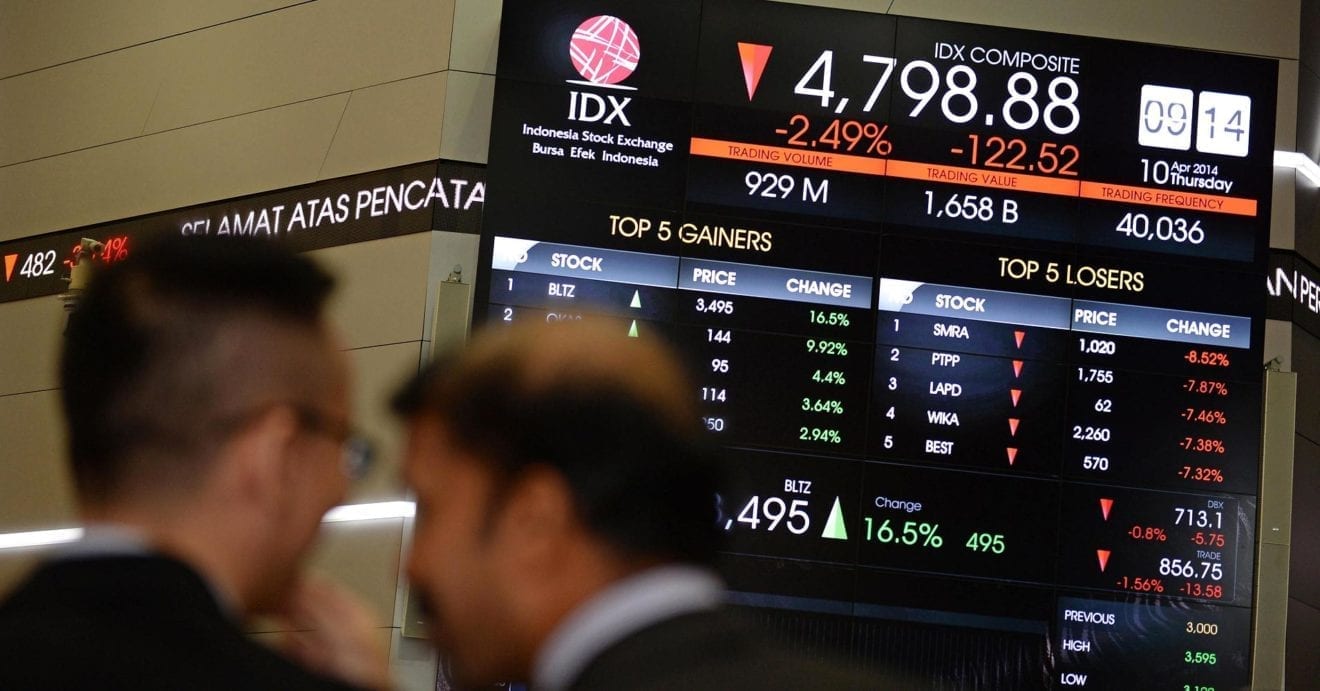
    The Indonesia stock market headed south again on Friday, one session after it had ended the two-day slide in which it had fallen more than 85 points or 1.3 percent. The Jakarta Composite Index now rests just beneath the 5,815-point plateau although it is expected to bounce higher again on Monday.

    The global forecast for the Asian markets is upbeat after better than expected jobs data from the United States, although those numbers may fan concerns over the outlook for inflation rates. The European markets were mixed and the U.S. bourses were higher, and the Asian markets figure to follow the latter lead.

    The JCI finished modestly lower on Friday following losses from the financials, resource stocks and food companies.

    For the day, the index shed 34.87 points or 0.59 percent to finish at 5,814.79 after trading between 5,810.36 and 5,863.59. Volume was 5.91 billion shares worth 6.4 trillion rupiah. There were 239 decliners and 102 gainers, with 101 stocks finishing unchanged.

    Among the actives, Bumi Resources retreated 2.92 percent, while Vale Indonesia added 0.27 percent, Jasa Marga plunged 3.21 percent, Lotte Chemical Titan dropped 2.38 percent, Tiga Pilar Sejahtera tumbled 1.88 percent, XL Axiata sank 0.31 percent, Bank MNC Internasional and Bank Pan Indonesia were unchanged, Bank Danamon Indonesia skidded 1.64 percent and Bank Mandiri dipped 0.56 percent.

    The lead from Wall Street is positive after Friday’s jobs report as the markets regained some ground after heavy losses in the previous session.

    The Dow climbed 94.30 points or 0.4 percent to 21,414.34, while the NASDAQ added 63.61 points or 0.1 percent to 6,153.08 and the S&P gained 15.43 points or 0.6 percent to 2,425.18. For the week, the Dow rose 0.3 percent, the NASDAQ added 0.2 percent and the S&P was up 0.1 percent.

    The rebound followed a Labor Department report showing stronger than expected job growth in June. The report said non-farm payroll employment jumped by 222,000 jobs in June following an upwardly revised increase of 152,000 jobs in May.

    The Federal Reserve is scheduled to make its next decision on interest rates following a two-day meeting later this month.
  • Bank Mandiri to expand in Malaysia as first ‘ASEAN bank’

    Bank Mandiri to expand in Malaysia as first ‘ASEAN bank’

    Bank Mandiri will expand operations in Malaysia by using its newly awarded status as a cross-regional lender, Indonesia’s largest state-owned bank said Thursday.

    Mandiri said it is the first bank in the region to be designated a qualified ASEAN bank — a concept developed by Association of Southeast Asian Nations members as part of an effort to create an open, integrated financial market providing services to companies investing and trading in the region.

    To obtain QAB status, banks must meet certain conditions, such as in capital adequacy, and pass screening under bilateral agreements between monetary authorities. Indonesia and Malaysia agreed in 2016 to grant QAB status to three banks from each other’s countries.

    Such Malaysian banks as CIMB Group Holdings and Malayan Banking already have major operations in Indonesia, while Indonesian banks have been seeking opportunities to grow outside the home market. “We highly appreciate the Malaysian banking authorities that support the presence of banks from Indonesia,” said Muliaman Hadad, chairman of Indonesia’s Financial Services Authority. “Indonesia has also treated Malaysian banks as their own. This is a step forward that can strengthen relations between Indonesia and Malaysia.”

    Malaysia will become the first overseas market for Mandiri to operate a full-fledged banking business in, the lender said. It plans to invest 300 million ringgit ($70 million) to upgrade a remittance office in Kuala Lumpur to a full branch and roll out wholesale and retail banking services.

    Mandiri is also exploring expansion into Myanmar and the Philippines, it said in a news release.

  • Credit growth expected to rise 16.33% in 2017

    Credit growth expected to rise 16.33% in 2017

    The total loans of the banking system are expected to grow by 16.33 per cent in 2017 against December last year, lower than the Government’s limit of 18 per cent.

    The State Bank of Viet Nam released the information this week after conducting a survey on business performance trends of credit institutions in the second half of this year.

    The survey also shows that credit institutions forecast the total capital mobilisation of the banking system to rise 16.02 per cent in 2017, of which dong contributes to a rise of 16.59 per cent and foreign currency 1.14 per cent.

    The General Statistics Office (GSO) has reported that credit growth in the first half of this year was 7.54 per cent, the highest in the past six years. The new record, considerably higher than the previous record of 6.28 per cent set in 2015, reflects the market’s significantly improved capacity to absorb capital, the GSO said.

    Loans in the period were mainly focused on prioritised and large projects as instructed by the Government, accounting for roughly 50 per cent of total outstanding loans. Agriculture and rural industries, and small- and medium-sized firms received around 19 per cent and 22 per cent of the total outstanding loans, respectively.

    Lending interest rates were 6-9 per cent per year for short-term loans, and 9-11 per cent per year for medium- and long-term loans. For customers with transparent finances, short-term lending rates ranged from 4-5 per cent per year.

    The banking system’s capital mobilisation in H1 has risen by 5.89 per cent, and deposit interest rates have been relatively stable. Interest rates for dong deposits were 4.5-5.4 per cent per year for short term, 5.4-6.5 per cent per year for medium term, and 6.4-7.2 per cent per year for long-term deposits.

    The Government has targeted credit growth of 18 per cent for 2017, but at the National Assembly meeting recently, some deputies suggested that this limit be raised so as to support economic growth.

    Analysts at Bao Viet Securities (BVS) also recently forecast that the central bank may consider raising credit growth targets for several banks to aid economic growth.

    The Government has been under intense pressure to loosen its monetary policy as the country is determined to meet its GDP growth target of 6.7 per cent for 2017. However, the fiscal policy has been struggling with disbursement of public investment, the BVS analysts said in a report. By end of May, disbursement of public investments had touched VND88 trillion, equal to only 30.6 per cent of the entire year’s estimates.

    The BVS analysts said when fiscal policy does not support growth well, pressure will intensify on monetary policy. Increasing credit growth targets of several banks may be an option worth considering, the analysts said.

  • Indonesia’s Credit Growth in May Fueled by Abundant 3rd Party Fund Placement

    Indonesia’s Credit Growth in May Fueled by Abundant 3rd Party Fund Placement

    Indonesias banking credits grew 8.71 percent in May 2017, up 0.37 percent from 8.34 percent in the same month last year, according to the Financial Service Authority (OJK). However, the May 2017 credit growth fell 0.76 percent from 9.47 percent a month earlier.

    Although the banking credits in May 2017 grew at a slower pace than in April 2017, OJK believes the credit growth until May 2017 was still relevant to the business plans of banks which have set the target of credit growth for 2017 at 9-12 percent.

    “Compared to last year, it (the credit growth) is better,” Chief of OJKs Board of Commissioners Muliaman Hadad said at the Indonesia Stock Exchange (BEI) Building here on Tuesday.

    The May 2017 credit growth was fueled by abundant third party fund placement which grew by 11.18 percent year-on-year, he said. The amount of credits which were extended to the electricity sector grew 31.05 percent, the construction sector 24 percent, the fisheries sector 11.2 percent and the agricultural sector 10.8 percent.

    Muliaman noted that the expansion of four state-owned banks businesses contributed significantly to the credit growth.  The amount of credits extended by the four state banks, Bank Mandiri, Bank Rakyat Indonesia (BRI), Bank Negara Indonesia (BNI) and Bank Tabungan Negara (BTN), until May 2017 reached 14.81 percent, with third party fund placement growing 16.77 percent.

    However, the banking credit growth did not spread evenly as the amount of credits channeled by private banks grew 4-5 percent. The ratio of non-performing loans remained at 3.07 percent until May 2017.

  • Indonesian banks urged to update their IT systems

    Indonesian banks urged to update their IT systems

    Indonesian banks have been urged to update their system of information technology so that they could protect themselves from possible cyber attacks that have become more and more massive.

    Bank Indonesia Governor Agus Martowardojo said here on Monday hackers or virus attackers continued to innovate and find loopholes in the IT system and so banking industry and other financial sectors must update their security standard.

    His statement came in the midst of increasing alertness following global virus attack by so-called “”Petya” after global system of IT routed by “Ransomware Wannacry”.

    “All who use technology applications must use the latest version. The latest version usually has been given features to prevent possible cyber attacks,” Martowardojo said.

    “We must not be offguard. We must be prepared because there will certsinly be other innovations that could disrupt the system,” he said.

    The general chairman of the State-owned Banks Association, Maryono, said that until Monday there had been no report coming from four state-owned banks – three of them controlling banking markets -being attacked by Peyya virus.

    “Usually if one bank is hit and so will the others but so far we have received no teport about it,” he said.

    The chief of PT. Bank Central Asia Tbk. which is the countrys largest private bank said Petya did not disrupt the banking system. Howevet cyber attack has been rife to give a warning for banks to improve their IT security system.

    “We will keep safeguarding it. Thank God there has been no problem so far,” BCA president director Jahja Setiaatmadja said.

    The ministry of informatics and communication has earlier called on the people and heads of institutions to take anticipatory measures against global Ransonware Petya cyber attack by preparing backup and updating their IT security system.

    Indonesias financial industry including capital market is worth more than Rp16,000 trillion and so security system in the industry is a very important pillar to maintain trust and sustainability of the industry which also serves as a source of development funding.

    Petya was first known after infecting the server in Russias biggest oil company and disrupted the operation of a bank in Ukraine and paralyzed computers in multinational shipping and advertising companies.

    Petya-infected computer will show a message telling that the system has been blocked and its owner must pay a tansom of US$300 in the form of Bitcoin.

  • Indonesia, Swiss to exchange information on finance

    Indonesia, Swiss to exchange information on finance

    The governments of Indonesia and Switzerland have declared the readiness of both countries to implement the Automatic Exchange of Information (AEOI).

    The signing of the joint declaration was undertaken by Director General of Taxes, Ken Dwijugiasteadi, and Swiss Ambassador to Indonesia, Yvonne Baumann, witnessed by the Minister of Finance of the Republic of Indonesia and Members of the Board of Commissioners of the Financial Services Authority here on Tuesday.

    Finance Minister Sri Mulyani stated that it was important for Indonesia to be able to implement AEOI with Switzerland as it was one of the largest financial centers in the world.

    “Financial information obtained from Switzerland and nearly 100 other countries will be used as a tax database to test the compliance rate of taxpayers. It is expected to encourage their awareness to fulfill tax obligations voluntary, especially in reporting their earnings and financial assets abroad which have not been reported,” Sri Mulyani explained.

    Through the joint declaration, Indonesia and Switzerland agreed to exchange financial account information automatically in accordance with the Common Reporting Standard (CRS) starting from 2018, with the first exchange in 2019, protected by data security assurance according to international standards.

    Both jurisdictions also stated that they will share information on the development of CRS implementation in each countrys domestic legislation and affirm the commitment to continue strengthening cooperation in the financial sector.

    The joint declaration is required by Switzerland to enable the Multilateral Competent Authority Agreement (MCAA) to implement AEOl to obtain the Swiss Parliament approval by the end of 2017.

    On May 8, 2017, the Indonesian Government adopted a Government Regulation In lieu of Law No. 1/ 2017 on Access to Financial Information for Tax Interests.

    It regulates the authority of the Directorate General of Taxation to receive and obtain financial information from financial institutions throughout Indonesia and the authority of the Minister of Finance to execute financial information exchange with authorities for other countries or jurisdictions.

  • Bank Indonesia to issue commercial paper regulation July-end

    Bank Indonesia to issue commercial paper regulation July-end

    Bank Indonesia (BI), Indonesias central bank, will issue a regulation related to the issuance of commercial paper (CP) within two weeks or by the end of July 2017.

    This is following the need by various non-bank corporations to publish the paper as short-term funding for working capital.

    The Head of BIs Finance Market Development Department, Nanang Hendarsyah, said here, Tuesday, that the regulation would regulate CP issuance and trading.

    For technical rules, BI will issue a derivative regulation that will manage the supporting institutions, such as rating agencies and public accounting firms.

    Once the supporting institutions are ready, Nanang remarked, BI would issue a technical regulation for non-bank corporations as issuing institutions.

    “Technical regulations for supporting institutions will be issued in September 2017, while for issuing agencies they will be issued in December 2017,” Nanang revealed.

    The commercial paper issuance is expected to increase this year. The number of non-bank corporations in Indonesia is over 500, and the demand for short-term funds through money market instruments is enormous.

    Previously, BI had also issued a regulation on issuance and trading of instruments for Negotiable Certificate Deposit (NCD).

    Although it is same as commercial paper, as a one-year short-term instrument, NCD is issued by a banking corporation.

    Banks can buy commercial paper in money markets. In addition to banks, investors who can absorb commercial paper include securities companies, individuals, investment managers, pension funds and insurance, through mutual fund products and foreign investors.

  • Commonwealth Bank of Australia sells HCM City branch to VIB

    Commonwealth Bank of Australia sells HCM City branch to VIB

    The Vietnam International Bank (VIB) and Commonwealth Bank of Australia (CBA) announced on Monday that CBA’s HCM City branch would be sold to VIB.

    The sale was approved by the State Bank of Viet Nam last week, the two sides said.

    They however refused to disclose the value of the transaction.

    VIB has a network of 160 branches and more than 400 ATMs across Viet Nam.

    CBA said its HCM City branch has around 20,000 customers.

    “This decision signifies our commitment to the Vietnamese market as we strengthen our partnership with VIB,” Steve Ellis, general manager of CBA in Viet Nam, said.

    “It demonstrates the confidence CBA has in VIB to continue to provide high-quality service to our customers.”

    CBA said it would retain the representative office in Hà Nội, which it had opened in 1995, to liaise with Government agencies, financial institutions and corporations.

    Han Ngoc Vu, chief executive officer, VIB, said: “We value our partnership with CBA and have always looked to strengthen our partnership to bring the capabilities of CBA’s HCM City branch together with VIB’s.”

    He added that the two banks will be working closely with customers in the coming weeks to ensure a smooth transition of their banking relationship to VIB.

    The two banks expect the sale to be completed in the third quarter of this year.

    CBA had opened the branch in 2008.

    It has a 20 per cent share in VIB, which it had bought in 2009-10.

  • Prepare for a mobile payment revolution among Chinese travelling shoppers

    Prepare for a mobile payment revolution among Chinese travelling shoppers

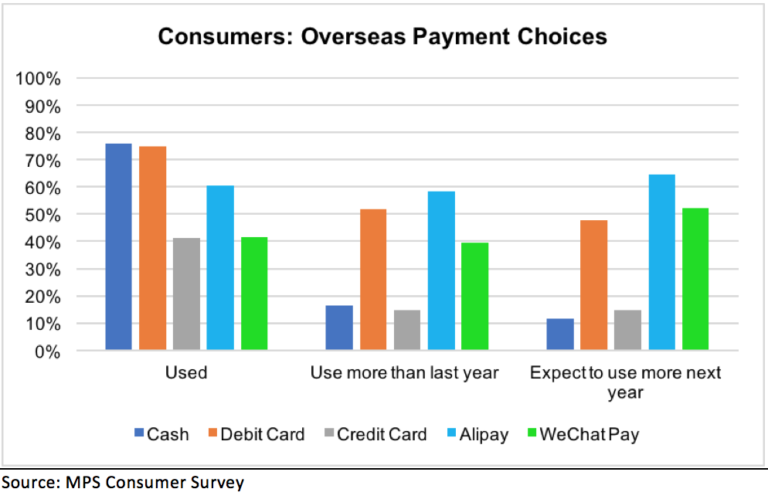
    Mobile payments will soon overtake cash and credit cards as the preferred payment choice for Chinese travellers shopping abroad, according to a new survey.

    Mobile payments specialist Cancan and financial research authority Kapronasia have published a global study, 2017 Mobile Payment Survey: Chinese Consumers Abroad, covering the impact of Asian mobile payment solutions at point-of-sale worldwide. Over 1,000  Chinese consumers and more than 60 C-level decision-makers from global merchant companies were surveyed.

    Among the key findings, the study found that Mainland Chinese consumers expect to spend more with mobile payments such as Alipay and WeChat Pay this year and next year than in 2016 when travelling abroad.

    Most Chinese travellers spent in the range of either US$393–US$786 or US$1,179–US$1,572 for retail purchases on their most recent overseas trip, the report found, while 5.7% spent more than US$6,288.

    Some 67% of respondents reported that they use mobile payments overseas. When consumers were asked about their primary method of payment while overseas, mobile payments represented about 41% of overseas consumption.

    Nearly half of the consumers surveyed made between 10-30% of their overseas shopping purchases with QR code-based mobile payment methods; one third of consumers paid over 50% of their purchases in China with mobile.

    chinese travellers mobile payments survey - Retail in Asia

    Fashion and cosmetics/skincare are among the categories consumers were most likely to purchase with mobile payment.

    The survey found that transaction convenience and the ability to track purchases in real time were the primary reasons for using mobile payments. Not needing to carry cash and credit cards was also appreciated. “You can easily spend days in China without opening your wallet, and consumers expect that too when they are shopping overseas,” the report said.

    The main reasons for not using mobile payments were merchants not offering the facility, as well as consumers’ ignorance that it was possible to use mobile payments when merchants do offer it.

    Alipay, WeChat Pay and Apple Pay are the most popular mobile payment methods. Over 75% of the surveyed merchants accepted Alipay. Over one third of merchants who do accept mobile payments indicated that it contributed to at least 3% or more of their global sales, with some experiencing a share as high as 15-25%.

    Although customer demand is primarily driving merchant adoption of mobile payment (over 80% of respondents agreed that they were reacting to customer demand), retailers also appreciate the speed of transaction and many desire to be seen to be “ahead of the game”.

    Cancan Managing Director Candice Koo: “Global merchants can profit from the mobile payments revolution storming out of the Far East, but they need to focus on the Chinese consumer”.

    “If the overseas market continues to mirror China’s mobile payment growth and development, this will likely change over time. Loyalty and points programmes in mainland China were slow to take off but are now informing an increasing number of merchant’s digital strategy, many of whom all have domestic WeChat official platforms.”

    Cancan and Kapronasia concluded that as well as there being continued growth in mobile spending, there will also be a change in what consumers buy using mobile payments.

    “Although they started out being used for smaller value purchases, mobile payments are increasingly being used for higher value and luxury items,” the report said. “The average transaction value on Alipay went from US$82 in 2015 to nearly US$100 in 2016, an increase of +22%.

    “The implications for overseas merchants are pretty clear: mobile payments have become a way of life for many Chinese and Asians and their habits are extending overseas.”

  • Singapore and Denmark sign fintech pact

    Singapore and Denmark sign fintech pact

    The Monetary Authority of Singapore (MAS) and the Danish Financial Supervisory Authority (Danish FSA) yesterday signed a FinTech Co-operation Agreement which aims to help FinTech companies in Singapore and Denmark to expand into each other’s markets.

    The agreement will enable both regulators to refer FinTech companies to their counterparts. MAS and the Danish FSA have also committed to exploring joint innovation projects together, and to share information on emerging market trends and their impact on regulation.The agreement was signed at the sidelines of the Money 20/20 Europe conference in Copenhagen. Singapore will also host the inaugural Money 20/20 Asia conference in March next year.

    Sopnendu Mohanty, Chief FinTech Officer, MAS, said: “Singapore and Denmark are important gateways to their surrounding regions. This cooperation agreement signifies the commitment of MAS and Danish FSA to promoting innovation in financial services and growing the FinTech landscape. We look forward to closer interactions between our respective FinTech ecosystems and more opportunities for our businesses to grow, expand and serve customers in each other’s markets.”

    Thomas Brenøe, Deputy Director General, Danish FSA, said: “The FSA is committed to encourage innovation in the financial sector. We are currently establishing a FinTech Lab to support the development of fintechs and provide assistance for these to set up business in Denmark. Financial innovation is not confined to national borders, and we are therefore delighted to enter into this agreement with MAS. This agreement will ensure cooperation between the Danish FSA and MAS and will foster opportunity for businesses in Denmark and Singapore to grow.” Brian Mikkelsen, Danish Minister of Industry, Business and Financial Affairs added: “I am very happy that Denmark and Singapore have been able to join forces in this agreement. I am sure that this will help many FinTech companies and create an even better growth environment for these companies in both Singapore and Denmark.

  • Visa Thailand Grand Sale goes digital as the flagship inbound program gets a mobile revamp

    Visa Thailand Grand Sale goes digital as the flagship inbound program gets a mobile revamp

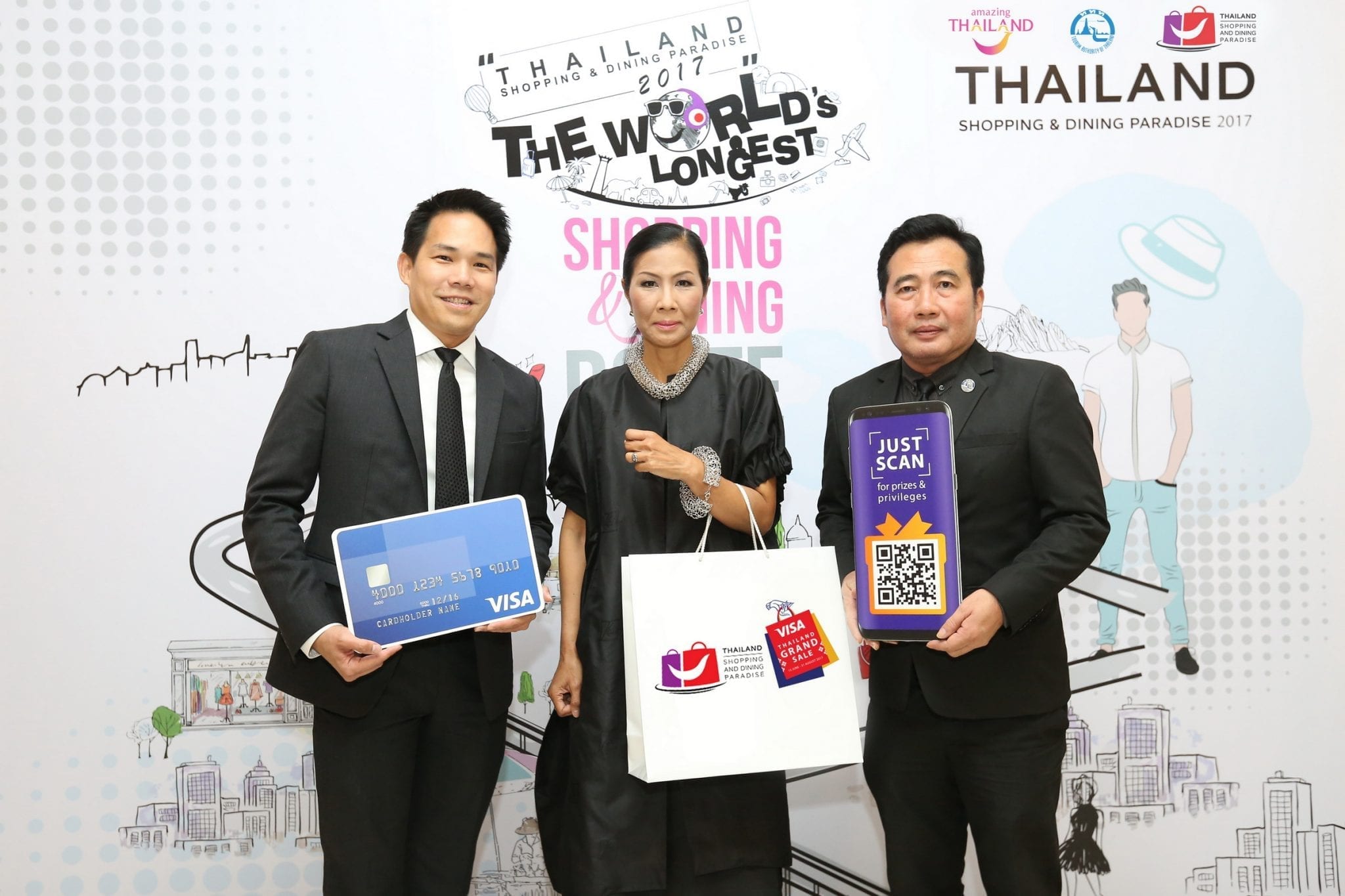
    Thailand Minister of Tourism and Sports Ms. Kobkarn Wattanavrangkul (center), Mr. Noppadon Pakprot (right), Deputy Governor for Tourism Products and Business, Tourism Authority of Thailand (TAT), and Mr. Suripong Tantiyanon (left), Visa Country Manager, Thailand launch Visa Thailand Grand Sale 2017.

    This year the entire customer journey will be made available for the first time on mobile. Visa cardholders can simply sign up by scanning a QR code at more than 7,000 merchant locations nationwide. To claim the offers, cardholders simply present the code or screen capture with merchants.

    Customers with internationally issued Visa cards who registered upon arrival at the airport will receive a welcome pack consisting of a complimentary SIM card with WIFI access, Grab ride worth THB 100, and a complimentary drink at Coffee World.

    More than 50 leading retailers in Bangkok, Pattaya, Chiang Mai and Phuket take part in Visa Thailand Grand Sale, which runs from 15 June to 31 August 2017. In Bangkok, Visa Thailand

    Grand Sale is present in three shopping and dining clusters: Downtown Bangkok from Siam to Asoke; Along the Chaophraya River at River City and Asiatique; and outer Bangkok on Bangna and Ramintra.

    Offers extend to popular online shopping websites: Lazada Thailand and Sephora.

    Suripong Tantiyanon, Visa Country Manager, Thailand said: “Having served millions of visitors to Thailand over the past 20 years, this platform has been revamped to meet the changing travel needs and behaviours. This year it has been renamed “Visa Thailand Grand Sale” from “Amazing Thailand Grand Sale” in partnership with TAT’s Thailand Shopping and Dining Paradise program.”

    For every THB 1,000 spent with Visa during the campaign, cardholders will receive a ticket to enter a lucky draw. There are ten prizes, each including two return air tickets and a maximum of seven-night stay at one of the program’s destinations. Five prizes are for international Visa cardholders and the other five are for participants with Thailand-issued Visa cards.

  • Global Blue links with EuroPass,WeChat to boost Chinese tourist spend in Europe

    Global Blue links with EuroPass,WeChat to boost Chinese tourist spend in Europe

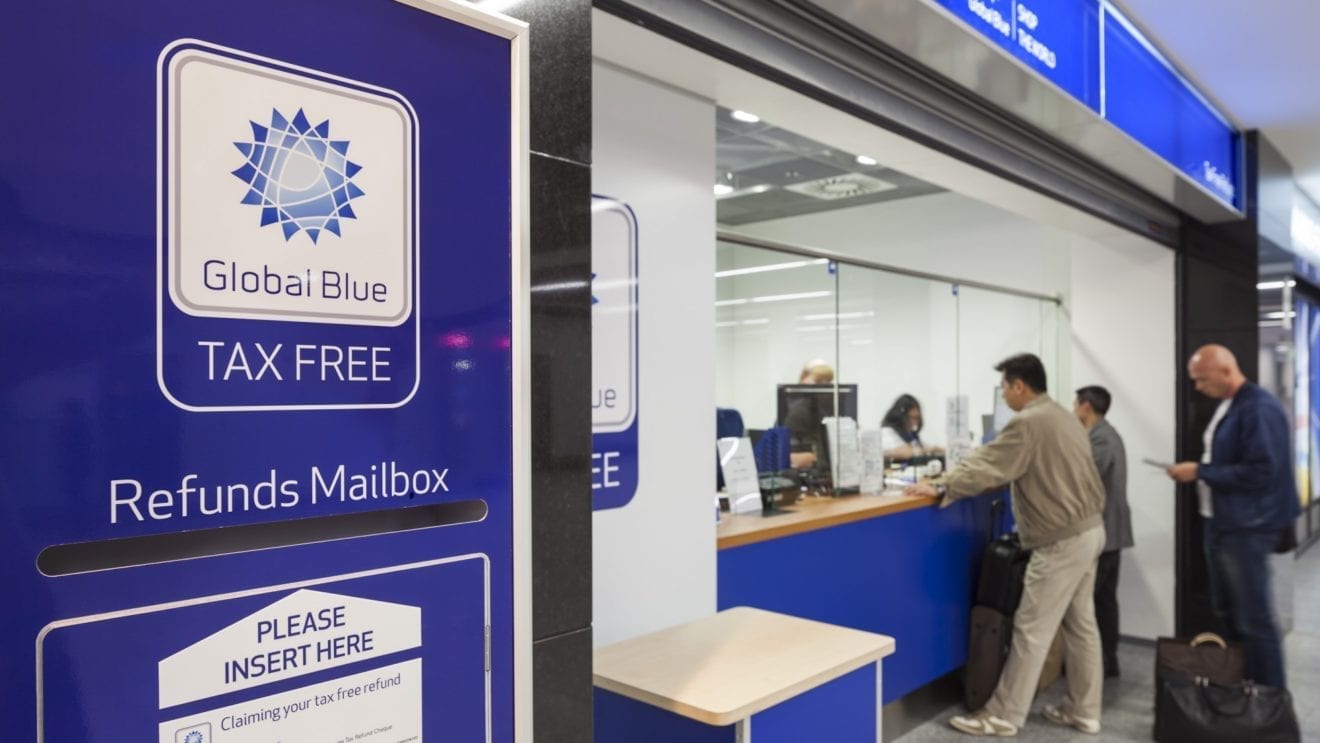
    Global Blue has inked a deal to make it easier for Chinese tourists to claim tax refunds on goods they buy in UK and European stores by linking up with major mobile payments specialist EuroPass. And the deal has a major WeChat social media element too.

    Chinese shoppers now have more options for claiming back the VAT when they shop in Europe

    Anything that makes it easier for Chinese shoppers to spend has to be good news with the consumer group particularly important for fashion and luxury stores in key European cities.

    London in particular has seen a Chinese surge of late. According to the Global Blue tax-free spend figures last month, with 21% of the total tax free sales, Chinese shoppers made up the biggest share of tax-free spend in the UK and they also showed the biggest growth in spend since last year.

    The company, which handles sales tax refunds, said this week it has acquired a stake in EuroPass, the European WeChat payment specialist. It has signed an exclusive contract to introduce retailers to the firm’s mobile payment solution to directly deliver tax refunds to Chinese shoppers.

    EuroPass has developed a mobile payment solution for WeChat, the social network that’s hugely popular in China with over 938 million active users. The solution allows Chinese travellers to use their apps to pay for transactions in Europe.

    Global Blue said the deal will help it to further develop its offering to Chinese travelling shoppers and enable it to offer affiliated merchants access to WeChat’s payment ecosystem in Europe.

    Aside from payments, EuroPass also offers a WeChat mobile ticketing solution and a European marketplace, helping drive WeChat customers to European merchants.

    Global Blue’s affiliated merchants will now be able to accept WeChat Pay in their stores, as well as other payment systems as, in recent months, the company has made major investments in this area with  new refund solutions with Alipay and UnionPay.

    As Global Blue’s exclusive tax-free partner, in the future EuroPass will also allow tax refunds from transactions to be paid directly to travellers’ AliPay and WeChat Pay wallets.

    CEO Jacques Stern said: “Chinese Globe Shoppers are vital to the retail industry worldwide. WeChat is the number one social network in China and an increasingly important player in the global payments space, so it is a natural platform for us to focus on.”

  • Ocean Bank finds new foreign owner

    Ocean Bank finds new foreign owner

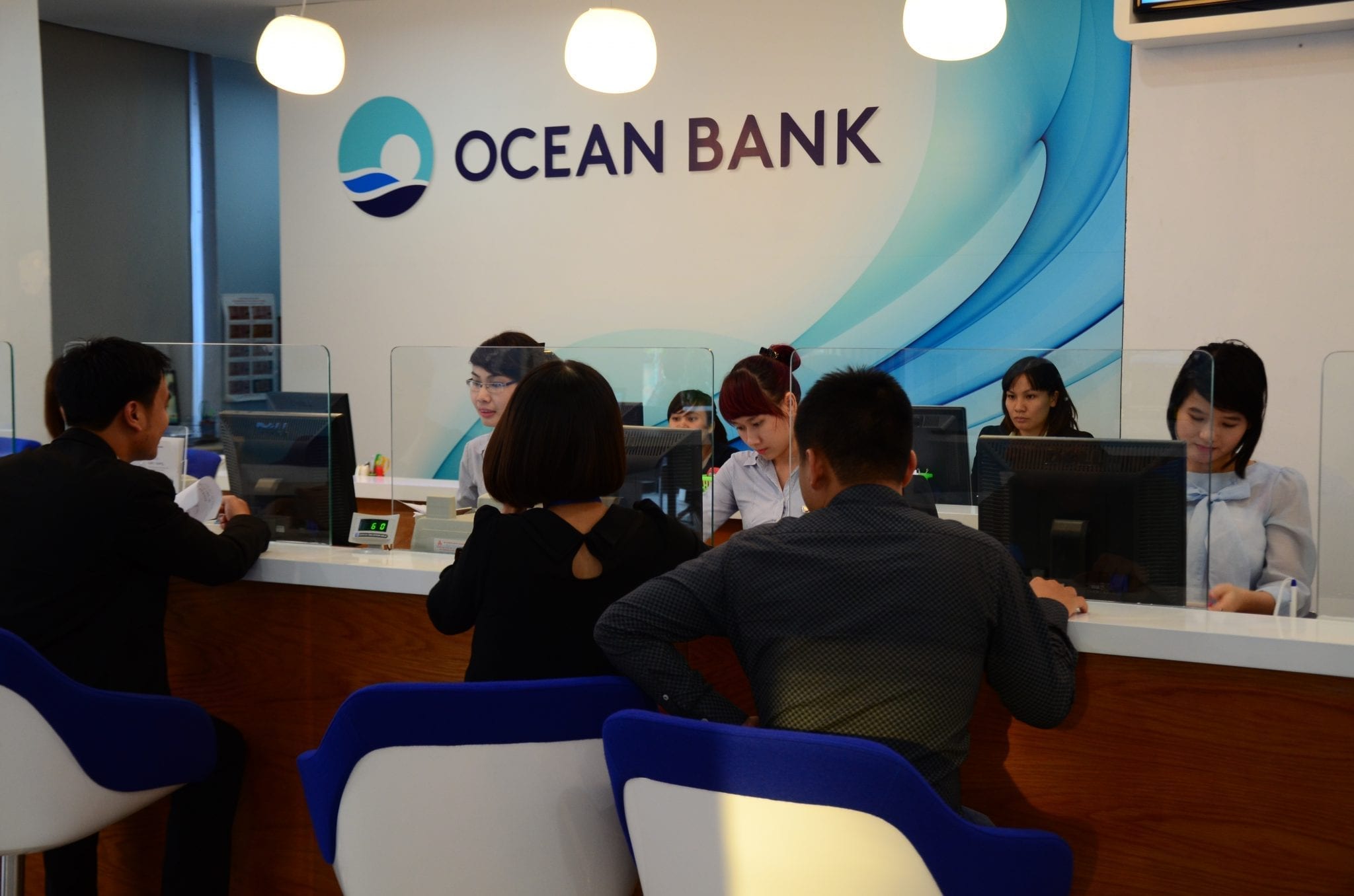
    Although the buyers identity was undisclosed, the private source confirmed that the two sides are finishing the paper works.

    One Member Limited Liability Global Petroleum Bank (GPBank ), another zero VND bank, may be sold to a consortium of a foreign financial institution and an investment and real estate development company.

    The last zero VND bank, Vietnam Construction Bank (CBBank), is said to be implementing its restructuring plan before merging with a domestic bank.

    Besides, DongA Joint Stock Commercial Bank (DongA Bank) is said to be merging with Ho Chi Minh City Housing Development Bank (HDBank).

    At a press conference at the beginning of 2017, Nguyen Van Hung, deputy chief inspector of the State Bank of Vietnam’s Inspection and Supervision Agency, said that there would be solutions to address the five weak commercial banks, including three banks acquired by SBV for zero VND (CBBank, Ocean Bank, GPBank), DongA Bank, and Saigon Joint Stock Commercial Bank (Sacombank).

    “Although these banks’ operating activities have been improved to avoid the collapse of the whole banking system, they need a complete overhaul,” Hung said.

    Between the end of 2015 and October 2016, the bad debts of the three zero VND commercial banks declined by about 8 per cent. Of the total, the bad debts of Ocean Bank and GPBank significantly decreased. GPBank and CBBank’s outstanding loan balance for enterprises and individuals decreased dramatically. In addition, CBBank’s deposits even increased between the end of 2015 and November 2016 by nearly 14 per cent.

    At the 2017 conference on implementing plans for Ocean Bank, Do Thanh Son, chairman of Ocean Bank, said that in 2015 and 2016 the bank continuously reported profit, which partially covered its losses accumulated in the past.

    In 2017, Ocean Bank targets to receive more than VND30 trillion ($1.2 billion) in deposits and to report an outstanding loan balance of nearly VND18 trillion ($720 million).

    In February 2017, Ha Van Tham, former chairman of Ocean Bank, and 47 other former leaders and employees of the bank were tried for charges including breaching the regulations on loans of credit institutions, abusing their positions and power while on duty, and intentionally acting against the state’s laws on economic management, causing serious financial loss in the period before 2014.

    The Ocean Bank case is one of the six biggest economic crimes that the Central Anti-Corruption Steering Committee was asked to bring to trial. In the trial, Tham admitted to misconduct and said his actions were caused by a need to complete his quota and avoid being dismissed. He asked the court to reduce the legal responsibilities of his accomplices because they were forced to adapt to the difficult circumstances at the time.

    According to the indictment of the People’s Procuracy, Ha Van Tham, as Ocean Bank’s chairman at the time, directed his employees to approve Pham Cong Danh’s borrowings. Pham Cong Danh was the former chairman of Vietnam Construction Joint Stock Commercial Bank. He took up significant loans from Ocean Bank through Trung Dung Company without meeting the bank’s prescribed requirements and did not submit collateral. By lending to Danh, Ha Van Tham violated lending procedures, causing a loss of VND350 billion ($14 million) for Ocean Bank.

    Besides, Nguyen Xuan Son, who was the bank’s general director and the representative of Vietnam National Oil and Gas Group (PetroVietnam) capital contribution to the bank, had worked with Tham to illegally pay interest outside deposit contracts to customers, which caused a loss of nearly VND69 billion ($2.8 million) to the bank.

    A wide range of employees involved committed extremely serious violations in lending, mobilising deposits, and paying customers higher interest rates than the ceiling regulated by the central bank.

    In total, through their rampage of violations, Ha Van Tham and his employees caused a loss of nearly VND2 trillion ($80 million) to the bank, affecting the central bank’s monetary market management policy and hindering the implementation of the state’s monetary policy.

  • Visa, Validus to provide virtual card solutions for SMEs

    Visa, Validus to provide virtual card solutions for SMEs

    Visa has teamed up with FinTech platform Validus to provide SMEs with virtual card solutions designed to help scale their businesses. The partnership seeks to unlock capital for SMEs to reinvest in their products and services.

    The solution has already been adopted by GroXers Inc Pte Ltd, a food and beverage distributor in Singapore.

    Under this partnership, Validus is working with Visa to facilitate immediate cash flow to SMEs with unpaid invoices in their payment cycles. By clearing invoices for SMEs using a Visa virtual commercial card, Validus helps SMEs expand faster and have a faster turnover for their products and services.

    The food & beverage (F&B) businesses, have to deal with a large number of buyers ranging from “Small businesses often face challenges such as access to capital to fund their business growth and this makes them vulnerable. Similarly, suppliers for these businesses may be challenged to provide adequate credit, as they do not have the skills to underwrite higher credit lines,” commented Vikram Kshettry, head of B2B Partnerships and Small Business Asia Pacific at Visa.
    “It is essential that businesses are able to access credit from specialist lenders to invest in their businesses, and for suppliers to be paid on time. The presence of such lenders, who can respond faster to business needs, is key to Singapore’s continued SME growth.”

    GroXers Inc, a leading enterprise run by well-known Singaporean entrepreneur, Nichol Ng, stated that the solution has freed up their cash flows considerably.

    “We have been looking for a solution that bridges the gap between our cash flow and account receivables and this is our biggest untapped asset. It is interesting to see how this solution has enabled us to receive our money faster and more seamlessl,” Ng aid.

    “At GroXers Inc, 100% of our receivables from B2B retailers are now on credit card payment. We genuinely feel that in today’s economy, we should free our time and cash flow to focus on growing our business.”

    Validus and Visa will look to increase their commitment to supporting SMEs in Singapore across a range of industries. This includes businesses that specialize in the distribution, services and manufacturing sectors.

  • China’s AliPay, UnionPay & WeChat Pay join LATAM Fintech’s payments revolution

    China’s AliPay, UnionPay & WeChat Pay join LATAM Fintech’s payments revolution

    The fintech dLocal that specializes in cross-border payments for emerging markets, has integrated AliPay, UnionPay and WeChat Pay – China’s three major digital payments providers – into its platform. The addition for Uruguay-based dLocal with a US presence is touted as enabling global merchants to reach some “300 million Chinese consumers.”

    Collectively these three providers captured the vast bulk of the Chinese market for online payments (over 70%), which translated into $2.9 trillion (trn) of such payments in 2016.

    According to the market research firm Analysys, for the first quarter of 2017 Alipay, which was founded by Alibaba Group in 2004 and its founder Jack Ma, accounted for around 54% share of mobile transaction value while WeChat Pay garnered a 40% share.

    For the Uruguayan-based dLocal, which has largely been focused on the Latin American region and other emerging markets, it expands the company’s services to Asia. It is couched as enabling the firm to “offer a broader portfolio of payments and country coverage to global merchants” who want to reach some 2 billion (bn) emerging consumers in markets where payment methods are different of those in Europe and the US.

    Chinese Cross-Border E-Commerce

    Cross-border ecommerce in China reached an estimated RMB 259bn (c.$40bn) in 2015, equivalent to over 6% of China’s total consumer e-commerce. And, the growth rate has been put at more than 50% annually according industry figures and as highlighted recently by Chenan Xia, a principal at McKinsey in Hong Kong.

    Lower prices, higher quality items, larger disposable incomes and the search for non-fake goods are among a factors contributing to the rise in online cross-border purchases, creating a huge opportunity for ecommerce and marketplace businesses.

    China’s major e-commerce site, Alibaba’s Tmall, for example, has moved into the market with a cross-border site (Tmall Global), whilst smaller consumer rivals and start-ups have got in on the act.

    US e-commerce behemoth Amazon has also become increasingly active in China, having opened its offshore shopping sites of late to Chinese consumers and offering users of Amazon.cn, its Chinese site, a selection foreign products described in the local language and with Chinese specifications.

    On the flip side, Tmall Global has attracted major foreign retailers like US-based Costco and South Korea’s Lotte Mart, to its cross-border site.

    “China is the global Mecca for ecommerce and we are unlocking the doors for cross-border purchases in this market by bringing all the pertinent payment options into one solution,” said Sebastián Kanovich, CEO of dLocal, who is described as a pioneer in emerging markets payments.

    Chinese Payment Providers

    As regards the background and timeline of discussions between dLocal and AliPay, WeChat Pay and UnionPay, last year dLocal had implemented bank transfers for China, However, as Kanovich pointed out “the conversion was quite low” as these are not the dominant forms of payment for ecommerce purchases in China.

    The first item in dLocal’s 2017 Product Roadmap was to secure the top three payment methods – AliPay, WeChat Pay and UnionPay – so that they could start processing local debit and credit cards, as well as accept payments through the hugely popular e-wallets.

    “From start to go-live – contract and integration – it has taken six months. For credit and debit card acceptance, the integration was pretty straight forward as it was completely API-based,” revealed Kanovich.

    He added: “To process payments through the AliPay and WeChat Pay e-wallets, we had to develop QR-code technology, which is how AliPay and WeChat Pay operate. This was a new capability we had to develop, because none of the payment option providers in the markets we’re in are utilizing QR codes.”

    The user experience for a payment via QR code works as follows. During the checkout process, when the user indicated that they want to pay with AliPay or WeChat Pay e-wallets, dLocal generates and displays a unique QR code to the shopper which they scans to be redirected to pay with AliPay or WeChat Pay.