Category: Finance

Retail News Asia is committed to providing both local and global retailers with the latest Finance news throughout the Asian market. This on a daily base.

  • Tencent Holdings targets Malaysia for local payments

    Tencent Holdings targets Malaysia for local payments

    Tencent Holdings has applied for a licence in Malaysia to offer local payment services via its WeChat Pay, in what would be a first for the platform beyond Mainland China and Hong Kong.

    If approved, users in Malaysia will be able to link their bank accounts to the service and pay for goods and services in ringgit.

    Tencent has chosen Malaysia as a test bed because of its large Chinese community, says WeChat Pay global director Grace Yin.

    The company has more than 600 million monthly users of its QQ Wallet and WeChat Pay, which is embedded in social-media app WeChat, which has 938 million active users. Rival Alipay says it has more than 450 million active users.

    WeChat Pay and Alipay dominate China’s mobile banking market, which had RMB18.8 trillion (US$2.76 trillion) worth of transactions in the first three months of this year, according to consultancy Analysys.

    Silicon Valley startup Stripe this week said it has partnered with the two companies to allow its merchants worldwide to accept payments from Chinese consumers.

    WeChat Pay can be used at more than 130,000 shops in 13 foreign markets, including Japan, and supports 10 currencies. Yin says to expand overseas, WeChat Pay needs extra layers of regulatory approval, as well as having to explain the system to local businesses.

    Mandarin advertisements

    Meanwhile, seeing Thailand as central to its expansion across Southeast Asia, Tencent is putting an early focus on advertising Thai brands to Chinese tourists in Mandarin.

    Tencent Thailand MD Krittee Manoleehagul says Thailand is the third market to offer service this after Hong Kong and Italy.

  • Singapore ready to exchange financial data with Indonesia

    Singapore ready to exchange financial data with Indonesia

    Indonesias finance minister Sri Mulyani said here on Thursday that Singapore was ready to provide information about the financial data of Indonesian citizens as part of the implementation of Automatic Exchange of Information (AEOI) program for tax purposes.

    “Singapore has stated that Indonesia has been considered as being eligible and included in their Multilateral Competent Authority Agreement (MCAA), meaning the AEOI agreement can automatically be carried out according to its timeline,” she said.

    Mulyani confirmed that Singapore would not only exchange information with Indonesia but also with other countries that have signed MCAA in connection with AEOI in the Netherlands in June 2017.

    In order to prepare for the information exchange, Indonesia will conduct improvement with regard to primary legislation issuance, information technology, data security, and business process renewal to match with the Common Reporting Standard.

    “We will continue to meet it and later in September, the OECD will review its aspects. If Indonesia is considered to have met the requirements set in the OECD global forum, it means we have met the requirements to implement AEOI with Singapore,” she asserted.

    On the sidelines of the Indonesia-IMF joint conference on Wednesday, Sri Mulyani met Singapores minister of law and finance, Indranee Rajah, to discuss a number of issues.

    Besides the implementation of AEOI, they also discussed revision of double taxation agreement for Singapore investors and Singapores offer as an international banking hub for Indonesias infrastructure projects.

    According to the Indonesian ministry of finances website, Singapore has confirmed its readiness to carry out AEOI with Indonesia to maintain equality in role and function and share responsibility along with other financial centers.

    Singapore has included Indonesia in the list of its partners that have participated in MCAA.

    The commitment is a form of agreement to provide standardization and efficiency scheme to facilitate for AEOI. Hence, bilateral agreement need not always be done.

    The reciprocal exchange of information will be started after the two jurisdictions introduce the regulations needed to implement CRS and to keep confidentiality and protect exchanged data.

    Confidentiality and protection of financial data being exchanged are international prerequisites set by Global Forum on Transparency and Exchange of Information for tax purposes.

  • Personal consumer credit becoming lucrative business

    Personal consumer credit becoming lucrative business

    FE Credit is leading the consumer finance market with $1.4 billion worth of loans provided in 2016, accounting for 48 percent of market share.  Its rivals, Home Credit, HD Saison and Prudential, hold 15.7 percent, 12.2 percent and 8.1 percent, respectively, according to StoxPlus. The other well-known names in the market are Mirae Asset Finance, JACCS and Toyota finance.

    The consumer finance market has become bustling thanks to high demand from borrowers and readiness by commercial banks and finance companies. Since customers are in both large cities and rural areas, it is easy for finance institutions to expand the market and disperse risks.

    Lending to fund personal consumption is lucrative, which accounts for 42.5 percent, followed by lending to fund household goods (28 percent), and transport means (19.6 percent).

    Regarding the growth rate, lending to fund transport purchases and house upgrading witnessed the highest growth rate of 42 percent each in 2016.

    Business Monitor International (BMI) predicted that the consumer finance market would perform well in 2016-2019, as personal income has growth rate of 13.2 percent per annum.

    Also according to BMI, consumer finance targets people of working age, expected to reach 56.2 million by 2020. The figure was 54.4 million in 2015.

    The consumer finance assets were reported as making up 12.4 percent of total assets in 2016.

    By the end of the year, the finance consumer value had reached VND598.5 trillion, an increase of 30 percent over 2015. This included VND453.1 trillion worth of loans provided without mortgaged asset requirement.

    Consumer finance in Vietnam in 2016 made up 9.8 percent of GDP. Meanwhile, the figure was 320 basic points higher in regional countries.

    Regarding credit types, the cash is predicted to decrease from 89 percent in 2016 to 81 percent of total outstanding loans by 2019 as the market share will fall into credit cards.

    Regarding the market structure, consumer finance is undertaken by retail banks and finance companies. Commercial banks tend to set up subsidiaries specializing in consumer finance or to take over existing companies.

    MB Bank in March 2016 took over Song Da Finance Company (SDFC) and renamed it MCredit. Later, in November 2016, after joining hands with Shinsei Financial from Japan, MCredit once again changed its name to MB Shinsei with 51 percent of capital contribution from MB Bank.

    In recent years, Vietnam has not granted licenses to companies providing only consumer finance services, which was a barrier to market admission.

  • Australian dollar soars

    Australian dollar soars

    The Australian dollar has surged against its US counterpart which has fallen ahead of key Congressional testimony by Federal Reserve chair Janet Yellen, after a Donald Trump Jnr e-mail came to light.

    At 0635 AEST on Wednesday, the Australian dollar was worth 76.34 US cents, up from 76.18 US cents on Tuesday.

    BK Asset Management FX managing director Kathy Lien said the US dollar had reversed it gains, and had fallen particularly against the yen and the euro, though not sterling.

    The dollar fell to a more than one-week low against a basket of major currencies on Tuesday, after US president Donald Trump’s eldest son released an email chain citing Russian support for his father before last year’s US election.

    The greenback’s movements, and therefore its stance against the Aussie dollar, over the next few likely will depend on the tone of Federal Reserve chair Janet Yellen’s congressional testimony.

    “The (US) dollar will rise if she emphasises the need for continued gradual removal of policy accommodation and will crash hard if she is noncommittal about additional tightening,” Lien said in a Wednesday morning note.

    FX Techs’ Niall O’Connor says it is likely the local currency will reverse its course.

    “AUD/USD is impulsively reversing from the important .7725/50 area, as the momentum setup suggests a shift is due,” he said in a morning note.

  • ANZ consumers prefer computers over smartphones

    ANZ consumers prefer computers over smartphones

    Consumers from Australia and New Zealand significantly prefer making purchases via desktop, despite browsing traffic continuing to move towards smartphones, according to the latest research from Adobe.

    In its latest report, the software multinational aggregated anonymous data from approximately 100 billion visits to 3,000+ websites across the region during the 2016 calendar year and found that while ANZ consumers are among those leading the shift from desktops (52.5 per cent share of browser traffic) to smartphones (37.7 per cent share of browser traffic), desktop conversion rates (2.9 per cent) were three times that of smartphones (0.8 per cent).

    Comparing data from Australia and New Zealand, Southeast Asia, India, Japan, Hong Kong, South Korea and the United States, the report found that the top 20 per cent of websites in ANZ, are widening the gap compared with average websites, seeing a 5.8 per cent desktop conversion rate versus the average of 2.9 per cent.  Along with Japan (5.8 per cent), ANZ’s best are achieving higher desktop rates than the United States (5.4 per cent).

    Becky Tasker, activity is shifting towards smartphones, consumers in Australia and New Zealand still prefer senior manager, Adobe Digital Insights, said showed that while browsing to make their final purchase via desktop.

    “Smartphone traffic and conversion rates are rising, but ANZ’s best marketers recognise that the desktop is still likely to be the final destination, even in a cohesive multi-device experience,” said Tasker.

    Adobe also said there has been evolution in the way consumers are engaging with the technology. While tech websites maintain one of the highest visit rates, the sector has also seen the time consumers spend during these visits decreasing – the customer journey now consists of interactions that are more numerous, but shorter.

    “With the customer journey now involving an increasing number of interactions across a range of devices, we need to keep pace with changing customer expectations,” said Danielle Uskovic, head of digital & social, Lenovo Asia Pacific.

  • iPay88 spreads its wings

    iPay88 spreads its wings

    IPAY88 Sdn Bhd, an NTT Data company, a fully homegrown Malaysian payment gateway provider is targeting the global e-commerce market while it continues to expand in SEA.

    Co-founder and executive director Chan Kok Long says, “iPay88’s proven payment solutions are well recognised and trusted regionally. As e-commerce grows in the SEA region, we are determined to be the sought-after payment gateway for these countries.”

    Since its inception in 2006, iPay88 has grown to be a technological and online payment solutions leader in online payments in Malaysia as well in the Asean region.

    The company’s payment gateway systems support over 70% of all e-commerce businesses in Malaysia. To date, iPay88 has a footprint in almost all Southeast Asian countries including Cambodia, Indonesia, Thailand, Vietnam, Philippines and Singapore.

    iPay88’s first international footprint was set in Indonesia in 2006, followed by the Philippines in 2014.

    Today, iPay88 is one of the leading payment gateway providers in Indonesia as well as the Philippines.

    Market expansion to a region as diverse as Asean and the Asia Pacific is not easy as each country’s online payment environment is unique and business environment varies.

    The opening of Indonesia and Philippines markets were important milestones for iPay88, as Chan says, “Our successful ventures in these two markets (Indonesia and the Philippines) have acted as a blueprint for us to continue exploring the other Southeast Asian markets.”

    “In the next two years, our growth in Malaysia is expected to be the largest ever in terms online transactions and sales volume. However, our growth in Indonesia and the Philippines will eventually outrank Malaysia in terms of numbers of transactions and sales volumes as these countries have a larger population and growing appetite for e-commerce.”

    According to Chan, the next few years will also see tremendous e-commerce growth in Thailand, Vietnam and Myanmar where smartphone penetration is one of the highest in the world.

    These countries have a big population and research shows that the younger generation (gen Y) prefer to make online purchases.

    Their governments are also seeing the potential in e-commerce and encouraging the growth of its e-commerce sector.

    Next step – global expansion

    “Apart from our strong presence in Southeast Asia, we have since expanded our footprint to other parts of Asia including Hong Kong and Bangladesh,” says Chan.

    Chan details that although Bangladesh is a late entrant in the e-commerce sector, the company has observed that it has recorded tremendous growth within a short time.

    “The e-commerce industry in Bangladesh, like other developing countries, has a ‘latecomer advantage’. However, it is encountering similar issues that we have encountered and addressed in SEA. Currently the sector is facing challenges such as delivery channels for its customers, affordability, erratic internet connections and online fraudulence. We believe, in no time will be the next major driver of economic development in Bangladesh.”

    Since iPay88 has just ventured into Bangladesh, no transactions have been recorded yet.

    Besides Bangladesh, iPay88 is also actively looking into opportunities in the Middle East. The company hopes to build a strong presence in Apec by the end of 2018.

    Malaysia continues to lead in revenue contribution

    iPay88 expects its revenue contribution from international markets to increase in accordance to its expansion plans. Chan says he is confident that by the end of this year iPay88 expects to double the sales volume from international markets compared to last year.

    “We are looking at a local:international revenue ratio of 80:20 by the end of 2018,” says Chan.

    iPay88’s Q1 and Q2 revenue in 2017 was contributed mainly by Malaysia.

    While Malaysia still leads in terms of revenue growth, in terms of sales volume, we are seeing a 34% growth in Indonesia for Q1 and Q2 of 2017 as compared to the same period in 2016. The number of transactions in Indonesia also grew by 97% in the same period.

    Meanwhile, the sales volume in the Philippines, surged by 64% and the number of transactions recorded a growth of 44%.

    “Doing business online offers a lower cost of operations from many aspects – the biggest advantage of doing business online is having the capability to span across geographical borders, meaning that you can reach out to possibly more lucrative overseas market easily,” he explains.

    “While these countries grow their e-commerce sector, iPay88 plans to be right there ever ready to aid them with our state-of-the-art and trusted payment platform to ensure fast and secure online payments,” he says.

  • BNI`s profit grows 46.7 percent in first half

    BNI`s profit grows 46.7 percent in first half

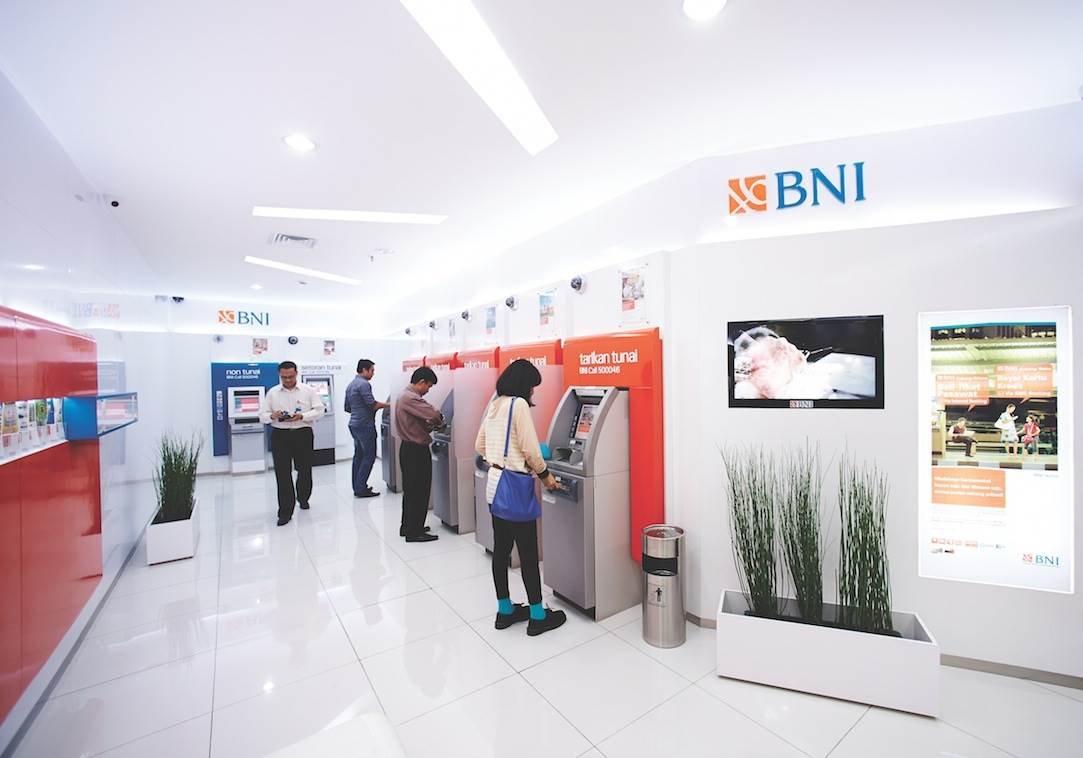
    State lender Bank Negara Indonesia (BNI) saw its net profit in the first half of 2017 jumping 48.7 percent to Rp6.41 trillion, fueled by the distribution of credits.

    “Our credits grew 15.4 percent year-on-year to Rp412.1 trillion, contributing Rp15.40 trillion or 10.7 percent to the net interest income,” BNI Consumer Director Anggoro Eko Cahyo said in a press conference here, Wednesday.

    Most of the credits were channeled towards business banking, particularly corporations and state-owned companies, as well as small- and medium-business undertakings, he remarked.

    The credits channeled towards business banking totaled Rp296.1 trillion, accounting for 71.6 percent of the total credit portfolio in the first half of 2017, he added.

    “The distribution of credits to corporations was also fueled by many infrastructure and agricultural projects,” he affirmed.

    The infrastructure projects included toll roads built by state-owned construction companies in Java, he mentioned.

    He explained that the credits extended to the consumer sector reached Rp67.05 trillion, accounting for 16.3 percent of the total portfolio. The credits extended to overseas debtors in foreign currency stood at Rp25.92 trillion, accounting for 6.3 percent of the banks total credits.

    “The amount of credits channeled by the banks subsidiaries reached Rp23.09 trillion or 5.6 percent of the banks total credits,” he revealed.

    He stated the bank also recorded a 17.9 percent rise in non-interest income to Rp4.65 trillion, fueled by fee-based income which grew 17.9 percent.

  • Stripe launches in Hong Kong to lift e-commerce

    Stripe launches in Hong Kong to lift e-commerce

    Online payment solution provider Stripe has launched services in Hong Kong, and announced the formation of new global partnerships with Alipay and WeChat Pay.

    The launch will provide Hong Kong online businesses with access to Stripe’s entire portfolio, including online marketplace platform Stripe Connect, fraud blocking platform Radar and analytics platform Sigma.

    With the local launch, Stripe is rolling out US dollar settlements in Hong Kong to allow businesses to accept payments in US dollars without currency conversion into US dollar denominated bank accounts.

    The partnerships with Alipay and WeChat Pay will meanwhile allow Stripe customers around the world to accept Alipay and WeChat Pay on their websites by simply activating support for the platforms from their online dashboards.

    The Alipay integration will also support recurring payments for subscription-based services. Alipay one-time payments are available to businesses worldwide, but recurring payments and WeChat payments are initially launching in private beta.

    Stripe has been testing services in Hong Kong for a year prior to the launch, and has already attracted two-thirds of venture-backed startups in the market as customers. These include online fashion company Grana, fashion and lifestyle company HBX, as well as travel technology startups Tink Labs and Klook.

    Besides Alipay and WeChat Pay, Stripe supports all major credit and debit cards, bitcoin and mobile payment technologies including Apple Pay and Android Pay.

    “Hong Kong has long been a launchpad for thousands of globally-minded Asian entrepreneurs and a gateway to Asia for businesses around the world,” Stripe president and co-founder John Collison said.

    He noted that despite Hong Kong’s large proportion of connected consumers only around 4% of consumer spending happens online, but a new wave of internet-first retail businesses are emerging to change this, and Stripe intends to help support these companies.

    “Whether in the Eastern or Western hemisphere, we’re focused on arming more businesses with the tools and infrastructure they need to thrive in the modern economy,” Collison said.

    US-based Stripe launched in 2011, and has attracted around $450 million in funding to date from investors includeing Sequoia Capital, Visa, American Express, Peter Thiel and Elon Musk.

  • Qatar National Bank injects Rp 2.18t into QNB Indonesia

    Qatar National Bank injects Rp 2.18t into QNB Indonesia

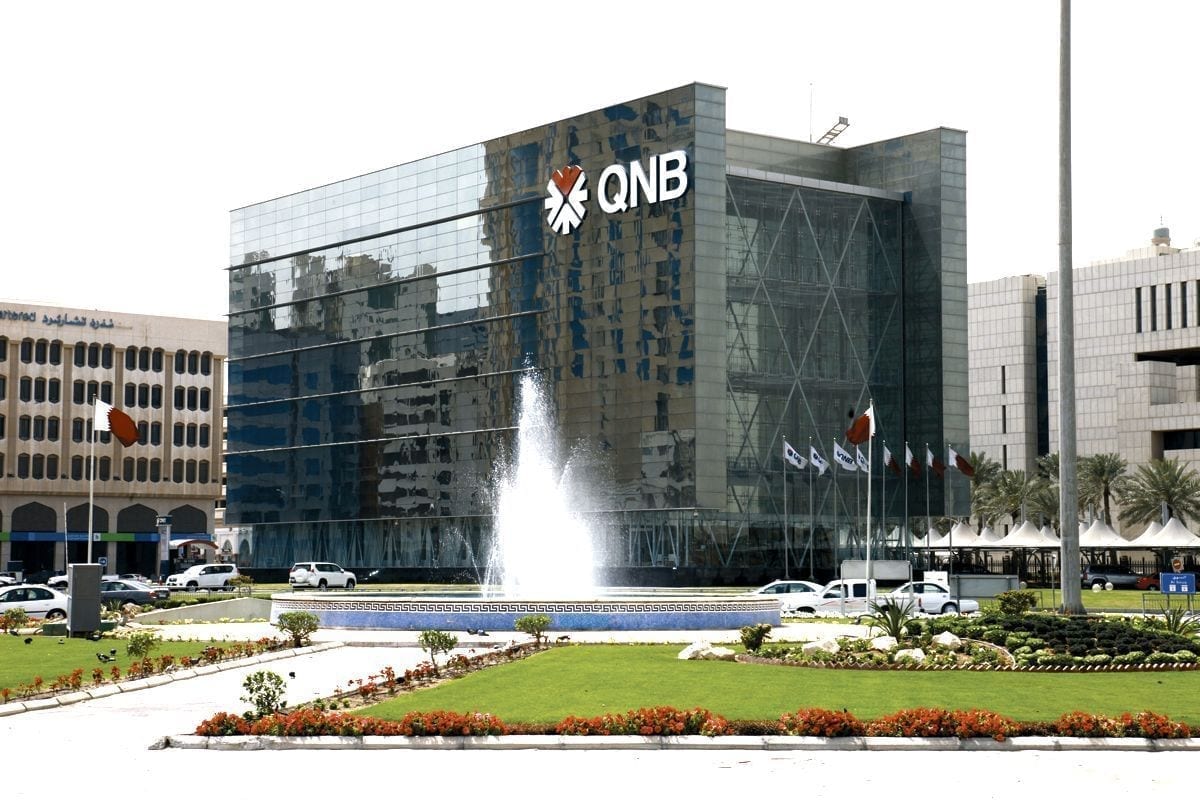
    The Qatar National Bank QPSC (QNB Group) as the controlling shareholder of Bank QNB Indonesia has injected Rp 2.18 trillion (US$162.72 million) into the bank as capital paid in advance as well as acting as standby buyer in the rights issue of Bank QNB Indonesia.

    The additional capital is the realization of QNB Group’s commitment to maintain the bank’s strong capital structure as well as maintain the bank’s business growth stability, the QNB Group said in a statement.

    From the total funds of Rp 2.18 trillion, Rp 2.06 trillion will be used to purchase HMETD offered during a rights issue and the remaining funds will be used for next year’s rights issue.

    Funds from the rights issue, after issuance costs, will be used by QNB Indonesia to increase productive assets, particularly in the form of loan disbursements.

    With the commencement of the rights issue and additional capital payments from QNB Group, the bank’s capital adequacy ratio (CAR) will be 16 percent, well above the Financial Service Authority’s (OJK) minimum requirement.

    On Monday, QNB Indonesia held an extraordinary shareholders meeting at the bank’s head office in Jakarta. The meeting approved Heba Ali Ghaith Al-Tamimi and Stephen Holden as commissioners and Adhiputra Tanoyo as director. The resignation of Grant Eric Lowen as a commissioner was also approved. (dea/bbn)

  • Central Bank of Vietnam cuts rates by 0.25-0.5 per cent

    Central Bank of Vietnam cuts rates by 0.25-0.5 per cent

    The State Bank of Viet Nam (SBV) has cut several interest rates for the first time since 2014 in order to support business and boost economic growth.

    According to the central bank’s statement, 0.25 percentage points have been shaved off the annual refinancing interest rate, rediscount interest rate, overnight interest rate applied to electronic inter-bank payments, and the rate of loans to offset capital shortage in clearing payments between the SBV and domestic banks. The new rates go into effect today.

    Specifically, the refinancing rate has been reduced from 6.5 per cent per year to 6.25; the rediscount rate from 4.5 per cent per year to 4.25; and other rates from 7.5 per cent to 7.25 annually.

    The maximum annual short-term interest rate for loans in Viet Nam dong to meet customer demand for capital in some sectors has also been cut by 0.5 percentage points.

    Businesses operating in agricultural, export and auxiliary industries; small and medium-sized enterprises (SMEs); and high-tech firms will now enjoy a short-term lending rate of 6.5 per cent per year, instead of 7 per cent.

    The maximum rate applied to loans supplied by the People’s Credit Fund and other micro-financial institutions has been lowered from 8 to 7.5 per cent.

    These adjustments are expected to help increase bank liquidity for loans, stabilise interest rates, the foreign exchange rate and the foreign currency market, thereby contributing to controling inflation and achieving sustainable economic growth.

    Move welcomed

    Many experts welcomed this move, saying the adjustment is a good sign for the economy and enterprises, especially given that business and production is facing many difficulties, including shortage of capical and high interest costs.

    The rate cut will help reduce costs for commercial banks seeking loans from the central bank, boosting lending to enterprises at lower interest rates, they said.

    Tran Hoang Ngan, a member of the National Assembly’s Economic Committee, said this decision would consolidate the confidence of the market as it proves that the bank system’s liquidity has stabilised after the bad debts resolution.

    Tran Du Lich, a member of the National Monetary and Financial Policy Advisory Council, said the cut was modest, proving a cautious decision and not signaling monetary policy loosening.

    Financial expert Phan Minh Ngoc said that with lower interest, credit growth might be speeded up in the coming months, but because the SBV still keeps the ceiling credit growth target at 18 per cent, commercial banks approaching the cap must be choosier in selecting customers.

    “Thus, the adjustment basically is not an action to loosen monetary policy, but to help restructure the loans of commercial banks,” Ngoc said, adding that it was unlikely to raise inflation

    The central bank will be able to maintain the new interest rates as long as inflation is controlled at low level. But if the US Fed continues raising its interest rates, which would put pressure on the VND/US$ exchange rate, SBV might have to amend its policy, the expert predicted

    Following moves

    The Bank for Investment and Development of Viet Nam (BIDV) today also announced that the bank would apply a maximum annual interest rate of 6 per cent for short-term dong loans to prioritised enterprises in accordance with the SBV’s decision.

    Start-ups, environmental firms and the bank’s regular customers for at least three years will be able to enjoy the preferential rate, too. Firms and households affected by floods in the central provinces will be offered a maximum rate of 5.5 per cent, according to the bank’s press release.

    In another development, VPBank has become the first private commercial bank to reduce its short-term interest rates by 0.5-1 percentage points for SMEs. The preferential rates will depend on the production sector of the borrowers, the length of the credit relations they established, as well as their record of debt payment.

    Vo Tan Hoang Van, general director of the Sai Gon Commercial Bank (SCB), told Phap Luat Tp Ho Chi Minh (HCM City Law) that in the next two weeks, SCB would lower interest rates by 0.5 percentage points for new credit contracts serving production in prioritised sectors or being signed by SMEs.

    Some other banks also plan a cut in lending interest rates, but say the cut rates must be calculated based on liquidity conditions and taking account other measures to save costs and improve business performance, the newspaper reported.

    Nguyen Van Duc, deputy director of the Dat Lanh Real Estate Company, said that the cut of 0.5 percentage points was not so big but it would have a positive impact on the market and business profits, especially for large firms with heavy loans, he said.

    Ly Thanh Sinh, general director of the Minh Long Hung Garment and Embroidery Joint Stock Company, said that beside reducing interest rates, it was important for SMEs to access capital to buy machines and production equipment.

    Curently, annual short-term interest rates range from 6.8-9 per cent for regular businesses, and 6-7 per cent for prioritised ones; while medium and long-term rates hover around 9-11 per cent for the former and 9-10 per cent for the latter.

  • IDX datafeed disruption has no effect on investor confidence

    IDX datafeed disruption has no effect on investor confidence

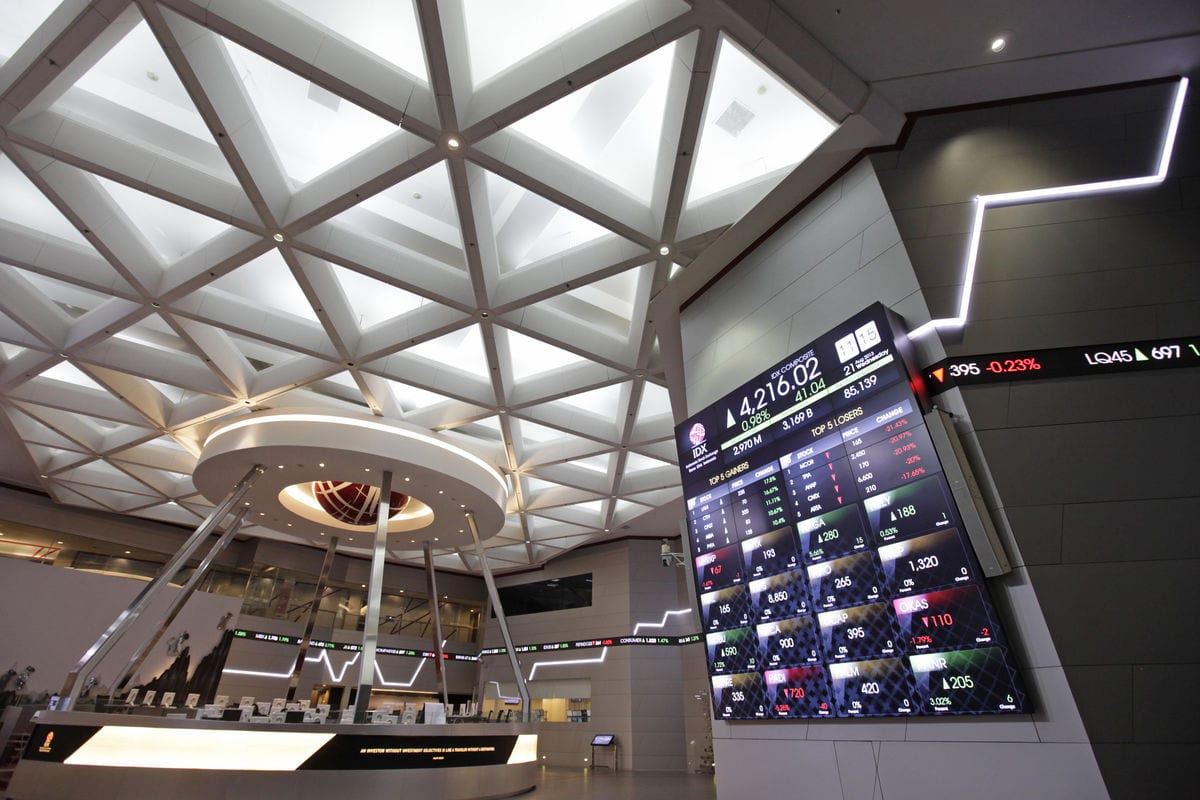
    The Indonesian Stock Exchange (IDX)s Datafeed disruption on Monday morning was claimed to have no effect on investors confidence.

    “We measured our Key Performance Indicator, and the result was still good,” IDX General Director Tito Sulistio stated here on Monday.

    To date, the disruption had been fixed, and IDXs information system has returned to normal; however, Sulistio added that IDX would continue to develop its information technology to upgrade their trade availability system in order to avoid and minimize disruption.

    He explained that the system had a maximum availability of 99.999 percent, and IDX already had 99.975 percent, which will be upgraded to 99.98 percent.

    “Every 0.05 percent hike may need US$20-25 million,” he remarked.

    At the same time, IDX is trying to upgrade its trade infrastructure system from Tier-2 to Tier-3.

    “Hopefully, we will be moving to the new Tier-3 system on August 30,” noted Sulistio.

    Separately interviewed, IDX Director of Information Technology and Risk Management Sulistyo Budi revealed that the disruption was caused by uneven distribution of information from Datafeed application.

    “During investors trading, information for public has to be provided. When it is not available, we have to suspend the trade in order to check the problem. Once it is resolved, activities return to normal,” he stated.

    Despite the IDXs claims, Indosurya Mandiri Securities analyst William Surya Wijaya explained that the bourse could anticipate more technical systems disruption that might affect investments plan from the stakeholders.

    “This could be a lesson for the stock market players, so that they should also anticipate systems disruption,” he explained.

    Wijaya was optimistic that the investors confidence in Indonesian market was still high as the domestic economy remained conducive, despite being overshadowed by some negative sentiment, especially current geopolitical situation.

  • Stripe strikes global partnerships with China’s Alipay, WeChat Pay

    Stripe strikes global partnerships with China’s Alipay, WeChat Pay

    Silicon Valley startup Stripe has partnered with digital payment providers Alipay and WeChat Pay to enable merchants using its platform globally to accept payments from hundreds of millions of Chinese consumers.

    Starting Sunday, the partnerships will allow online merchants using Stripe to integrate the ability for Chinese users to pay with Alipay and WeChat Pay on their websites, the company said.

    Stripe hopes the integration will help boost its revenues by allowing clients to tap China’s vast consumer market, where credit cards account for only a fraction of online spending, the company said.

    Alipay is the flagship payment service of Ant Financial, the financial affiliate of major Chinese ecommerce company Alibaba Group and has over 520 million users. WeChat Pay has more than 600 million users and is the payment app of entertainment and social network firm Tencent Holdings.

    “If you are an internet business this unlocks a new vast customer base,” John Collison, Stripe’s president and co-founder, said in an interview. In turn, Chinese consumers will have expanded choice as to which international online merchants they can purchase products and services from, he added.

    Founded by brothers John and Patrick Collison in 2010, Stripe provides technology that enables merchants in 25 countries to accept payments online. It charges a fee on each payments transactions processed through its platform.

    “If we can help a business double their sales, then it doubles our revenue from that business,” Collison said.

    The partnership coincides with the company’s launch in Hong Kong.

    One of the most valuable venture-backed financial technology companies globally, Stripe has risen in popularity among software developers and online merchants because of its ease of use.

    It is among the cohort of young fintech companies seeking to reinvent the payments landscape by taking better advantage of digital technologies to offer more user-friendly financial services and products.

    It had previously partnered with Alipay to enable only the U.S. merchants on its platform to integrate the Chinese payment service. The new global partnership builds on that experience.

    “Demand for services from Chinese consumers is at all-time high,” Souheil Badran, president of Alipay for North America, said in an interview. The new partnerships will connect them to hundreds of thousands of Stripe-powered businesses around the world, he added.

  • Ant Financial aims for ‘cashless’ cities in China

    Ant Financial aims for ‘cashless’ cities in China

    Alibaba’s financial arm Ant Financial is looking to create more “cashless” cities across China, with the latest agreement inked with Tianjin municipality in North China.

    The city-wide “cashless” campaign pushed by the e-commerce giant is the fourth installment to hit China, following similar initiatives in Hangzhou — where Alibaba is based — followed by Wuhan and Fuzhou.

    As with the other “cashless” cities, Tianjin residents will soon be able to pay for an array services and goods using their mobiles when paying bus fares and medical bills, as well as school tuition and social security.

    It will be officially rolled out by the end of 2017, as reported by the China Economic Times.

    However, going “cashless” does not mean money will become obsolete. It will simply allow customers to decide on the way of payment, Jing Xiaodong, the company’s CEO, said

    Tianjin was chosen, said Jiang, as it has a good foundation for Internet Plus to make it the first cashless city in the north.

    With a resident population of 155 million, sone 69 million are real-name registered Alipay users, according to China Economic Times. The city ranks 10th nationwide by mobile payment activities.

    Ant Financial was a leading sponsor of a cashless alliance set up in April. The company earlier vowed to make mobile payment accessible in the whole country in the coming five years.

    2017 has proven a busy year for Alibaba. Last week, the world’s largest e-commerce platform operator said it plans to enter Macau with a bevy of products and services. Last month, the group acquired an 18% stake in Lianhua Supermarket. Before that, the Chinese giant said it had invested US$1 billion in Southeast Asian online retailer Lazada Group, increasing its stake to more than 80%.

    Looking ahead, said that in fiscal 2018 sales may increase by up to 49 per cent, 10 percentage points higher than estimates.

  • Hong Kongs’s TNG Wallet launches Merchant Dollars

    Hong Kongs’s TNG Wallet launches Merchant Dollars

    Hong Kong digital wallet provider TNG Wallet has launched Merchant Dollar, a new service allowing merchants to issue designated dollars under their own brands.

    Merchant Dollar will allow TNG Wallet users to purchase multiple types of branded Merchant Dollars in advance to be able to make purchases in designated stores without the need for cash, credit cards or coupons. Merchants will also be able to offer consumers special offers to entice them to purchase Merchant Dollars.

    To promote the launch of the new offering, TNG has teamed up with Crostini to launch an offering allowing every purchase of Crostini Dollars over HK$100 to gain a 10% bonus per Hong Kong dollar spent.

    “TNG Wallet is pleased to have Crostini under our merchant umbrella. With the launch of Merchant Dollar, our merchant partners can enjoy improved business cash flows and wider options in marketing to promote customer loyalty. The advantages of Merchant Dollar opens up a win-win-win business playing field,” TNG Wallet founder and CEO Alex Kong said.

    “Nowadays electronic payment is a significant trend within the financial technology field. With increasingly mature e-wallet functions, the introduction of merchant dollar creates a new payment method, which is expected to lead the paperless payment to a brand new stage.”

    He said TNG Wallet is in active negotiations to introduce Merchant Dollars from other merchants.

  • DBS Indonesia’s net profit surges 75% in Q1

    DBS Indonesia’s net profit surges 75% in Q1

    PT Bank DBS Indonesia, a subsidiary of Singapore-based DBS Bank, has reported a 75 percent year-on-year (yoy) increase in its net profit during the first quarter of 2017 to Rp 263 billion.

    The net profit increase was supported by a 16 percent yoy increase in revenue, which reached Rp 1 trillion in the first quarter this year. Its net interest income rose 23 percent to Rp 740 billion.

    “The positive performance reflects our strong commitment in the corporate and consumer banking segment,” Bank DBS Indonesia director of strategy and planning Rudy Tandjung said in a press statement on Saturday.

    Focusing on corporate banking and small and medium enterprises (SME) banking segments, the lender booked increases in the return on assets (ROA) ratio and the return on equity (ROE) ratio to 2.16 percent and 13.45 percent, respectively.

    Rudy said the bank was on its way to transforming itself into a digital bank this year. “We are focusing in our […] agenda on becoming a digital bank. We started the transformation from the inside, by changing the mindset and behavior of our employees and also redefining their respective roles,” he said.

    In the first quarter of this year, DBS Indonesia issued a negotiable certificate of deposit (NCD) with a 7.1 percent annual interest rate. DBS Indonesia had also released a new bancassurance product in its Wealth Management portfolio during the same period, Rudy said.