Category: Finance

Retail News Asia is committed to providing both local and global retailers with the latest Finance news throughout the Asian market. This on a daily base.

  • Banks apply free on-net money withdrawal, account transfer

    Banks apply free on-net money withdrawal, account transfer

    Despite being allowed to charge on-net fees for automatic telling machine (ATM) transactions, some commercial banks have recently applied the exemption to on-net money withdrawal and account transfer to attract new customers and develop the retail banking segment.

    Platinum debit cards, while Viet Capital Bank and SCB have exempt money withdrawal fee for international and domestic debit cards.

    The exemption of money withdrawal fee at all ATMs nationwide is also being offered by other banks such as TPBank and BaoVietbank.

    Talking about the move, Viet Capital Bank said free money withdrawal via ATM will encourage people to make non-cash payments. This policy is being implemented with great support from banks.

    A representative from another bank said State Bank of Việt Nam approved commercial banks to charge on-net fees for ATM transaction since March 2013 to offset the cost of purchasing machines and periodic maintenance, however, some banks are now willing to offset the losses to increase customers.

    According to the representative, the bank having cardholders still has to pay VNĐ3,300 to their partner for each external money withdrawal. Therefore, ATM operations of the bank have never been profitable.

    Industry insiders admitted that ATM card service companies often incur losses because an ATM costs tens of thousands of US dollars besides large annual maintenance fees. In addition, the cost of renting sites to install ATMs is becoming more and more expensive. Interest from non-term deposits of ATM cardholders therefore is not enough to offset the costs.

    To offset the costs, the money withdrawal fee charged at other banks averages VNĐ1,000-3,000 per transaction and the fee for inter-bank money transfer is VNĐ11,000.

    According to banking experts, the fee exemption policy at some banks is within the banks’ retail banking development plan, and is also a way for banks develop individual customers as well as products and services for the customers.

    This is also the premise based on which banks can promote other products and services, such as Mobile Banking and Internet Banking, they said.

    The country currently has more than 17,000 ATMs nationwide.

  • Maybank Indonesia Patmi up 16.3% in 1H

    Maybank Indonesia Patmi up 16.3% in 1H

    Malayan Banking Bhd’s (Maybank) Indonesian unit PT Bank Maybank Indonesia Tbk (Maybank Indonesia) posted a 16.3% year-on-year (y-o-y) rise in profit after tax and minority interests (Patmi) to 998.5 billion rupiah (RM320.7 million) for the first six months ended June 30, 2017 (1HFY17), from 858.4 billion rupiah, on an overall improvement in its core banking business.

    In a statement yesterday, Maybank said Maybank Indonesia’s net interest income rose 7% y-o-y to 3.8 trillion rupiah in 1HFY17, from 3.6 trillion rupiah, mainly due to the bank’s discipline in loan pricing and active funding management.

    The net interest margin improved to 5.3% in June 2017, compared with 5% in June 2016, while fee-based income grew 9.1% to 1.5 trillion rupiah from 1.3 trillion rupiah.

    “I am pleased the bank continued to show encouraging improvement for the first semester despite the challenging macroeconomic environment,” Maybank group president and chief executive officer Datuk Abdul Farid Alias said. He is also Maybank Indonesia’s president commissioner.

    Maybank Indonesia’s global banking loans grew 18.9% to 27.3 trillion rupiah in June this year, as a number of key deals were successfully realised.

    Its community financial services (CFS) non-retail loans, which comprise micro, small and medium enterprises, and business banking, grew by 2% to 50.1 trillion rupiah. However, due to a slowdown in consumer spending, CFS retail loans declined 6.4% to 42.5 trillion rupiah, the banking group added.

    Maybank Indonesia’s asset quality was also maintained, with the consolidated non-performing loan (NPL) level remaining at 3.6% (gross) and 2.4% (net) as of June 2017, compared to a year earlier. Provision expenses declined by 15.7% to 835.8 billion rupiah in June 2017, from 991.1 billion rupiah in June 2016.

    The loan-to-deposit ratio (bank only) stood at a “healthy” 86.7%, while the loan-to-funding ratio (bank only) was at 85.9%. Total customer deposits grew 5%, from 114.1 trillion rupiah in 1HFY16 to 119.8 trillion rupiah in 1HFY17, with the current account and savings account ratio reaching 37.4%.

    Maybank said its Indonesian unit’s continuous focus on transactional banking and electronic channels, which include its Internet-based mobile banking facility Maybank M2U, also “contributed greatly” to the improved liquidity position.

    Syariah banking also continued to perform in 1HFY17, said Maybank, with net profit growing 95.9% to 384.9 billion rupiah in June 2017, from 196.4 billion rupiah in June 2016.

    “Total syariah financing rose 49%, reaching 16.2 trillion rupiah in June 2017, compared with 10.8 trillion rupiah in June 2016, while deposits jumped 41.4% to 13.5 trillion rupiah from 9.6 trillion rupiah,” Maybank said.

    Meanwhile, Maybank Finance reported a 20.4% rise in profit before tax to 174.9 billion rupiah in June 2017, from 145.2 billion rupiah in June 2016, with a 21.9% rise in consumer financing (stand-alone) to 6.7 trillion rupiah from 5.5 trillion rupiah. In terms of asset quality, gross and net NPLs stood at 0.4% and 0.3% respectively.

    “Our strong first-semester results clearly reflect the steady improvement in our core business performance as strong fundamentals, rigorous risk management practices, as well as a disciplined approach towards pricing and growth are well in place,” said Maybank Indonesia president director Taswin Zakaria.

    The bank is confident of seeing sustainable profit growth in the remainder of 2017, he added.

  • BDO JCB Platinum Credit Card Launch

    BDO JCB Platinum Credit Card Launch

    CB International Co., Ltd. (JCBI), the international operations subsidiary of JCB Co., Ltd., (referred to below as “JCB”) announced the launch of the first JCB Platinum Credit Card in the Philippines issued by BDO Unibank, Inc. (BDO), the largest bank in the country.

    The new high-end credit card was formally unveiled at an exclusive gathering attended by BDO and JCBI executives, and members of the press at UMU Restaurant, Dusit Thani Manila.

    “The BDO JCB Platinum Credit Card offers a full suite of premier services, exclusive privileges and benefits custom-made for the discerning lifestyle and sophisticated taste of our elite cardholders. A must-have for travellers, especially those who frequently visit Japan,” says Ms. Ma. Nannette R. Regala, BDO Senior Vice President and Consumer Lending Group Marketing Head.

    BDO worked closely with various well-known Japanese brands and establishments to create a platinum-grade program tailored fit to the needs and wants of the card’s target clientele. While JCB, Japan’s only international payment brand, leveraged on long established partnerships to provide a wide range of exclusive offers especially in Japan as well as overseas for JCB Cardholders to further strengthen the value proposition of BDO JCB Platinum Credit Card.

    According to Mr. Yuichiro Kadowaki, Senior Vice President of JCBI, “Combining BDO’s expertise in customer relationships and dynamic local operations with JCB’s global acceptance network, we can expect a synergistic effect that will offer both BDO and JCB the opportunity to further expand the credit card market in the Philippines. With over 55 years of experience in the credit card industry, as well as growing business and customer networking in Asia, we at JCB are striving to deliver even higher quality services to our cardholders in the Philippines.”

    Apart from exclusive services in Japan, BDO JCB Platinum Credit Cardholders can also take advantage of the following privileges:

    – Complimentary access to select VIP airport lounges
    – Special rates for Airport Meeting Service
    – Up to Php20M Travel Insurance Coverage
    – 24/365 Platinum Concierge Desk for restaurant and golf course reservations, sightseeing, entertainment and support for credit card-related emergencies.

  • Mastercard to expand QR payments program

    Mastercard to expand QR payments program

    Mastercard has detailed plans to expand its QR-based payment programs, starting this month.

    The company will broaden its solutions to offer QR codes that can be scanned by either consumers or merchants under a common set of global specifications.

    Mastercard worked with EMVCo and other industry players to create a new global QR standard. These standards aim to ensure consistency in QR codes both generated and captured on a consumer’s mobile phone.

    The use of QR codes in certain markets aims to complement the extensive investment in contactless payments to provide merchants of all sizes with a fast, secure and inexpensive way to accept payments.

    Launched in 2016, Masterpass QR provides people with any type of mobile phone the ability to safely make in-person purchases without a plastic card. A consumer scans a QR code displayed at the merchant’s checkout on their smartphone or by entering a text code into their feature phone.

    The company’s consumer-presented solution will allow the merchant to scan a QR code from a smartphone and process the payment through the Mastercard network. It will leverage M/Chip technology to provide a secure way to pay based on EMV infrastructure.

    “Today’s news builds on the momentum of our QR work in India and Africa,” said Ajay Bhalla, president of global enterprise risk and security, Mastercard. “We look forward to the adoption of the EMVCo global QR standards. In the meantime, we’ll continue to work with our customers and partners to make every device a secure way to pay and be paid.”

    IDC Financial Insights lists NFC and QR codes as payment technologies that will power m-payments, complementing non-NFC based mobile wallets and other peer-to-peer transfers or direct funds transfers.

    The analyst predicts mPayments will accelerate in 2017 exceeding US$1 trillion in 2017. IDC also predicts that APAC will not follow the same growth path for mPayments as that of North America and Europe. Taiwan, Malaysia, China and Thailand will lead the region in terms of mobile payments while the Philippines, Vietnam, Indonesia and India will showcase the best examples in mobile money.

  • AEON Offers Premium Privileges with “AEON SHOP PLUS 2017” Campaign

    AEON Offers Premium Privileges with “AEON SHOP PLUS 2017” Campaign

    Mr. Kiyoyasu Asanuma (middle), Managing Director of AEON Thana Sinsap (Thailand) Public Company Limited, has launched The campaign “AEON SHOP PLUS 2017” offers AEON Gold & Classic Credit Card holders with every 30,000 baht of  purchases will receive an ESPRIT Fleece Comfy blanket and Cosy towel worth 2,980 baht. Registration for the campaign by sending an SMS with “SP” followed by 16-digits of AEON credit card numbers without spaces and then send to 4589123 or free register online via www.aeon.co.th from today until August 31st, 2017.

  • Consumer credit grows rapidly as retailers thrive

    Consumer credit grows rapidly as retailers thrive

    The appearance of big foreign retail chains like CircleK, Shop&Go, FamilyMart and Aeon and the strong rise of Vietnamese chains Vinamart, Co-op and The Gioi Di Dong have fostered the development of consumer credit in Vietnam, according to the State Bank of Vietnam. StoxPlus’ 2016 report on Vietnam’s consumer credit showed that the credit market has seen amazing leaps in recent years.

    The outstanding loans of Vietnam consumer finance soared from $7.3 billion in 2012 to $26.55 billion in 2016. Though it still accounts for a small proportion (9.8 percent by the end of 2016), consumer finance has been growing very quickly.

    Nguyen Tu Anh, deputy director of SBV’s Monetary Policy Department, confirmed that consumer credit has been developing strongly thanks to many favorable conditions.

    Vietnam has 92 million people with 70 percent of the population aged 15-64, while its GDP growth rate has been stable at over 6 percent in recent years.

    Anh cited research by economist Nguyen Thi Hien and her co-workers that shows the consumer credit market’s rapid development since 2011. The growth rate was 30 percent per annum in 2011-2014 and 59 percent in 2015.

    The total outstanding consumer loans granted to customers in 2015 was VND583 trillion, equivalent to 20.5 percent of the consumption value of individuals and households.

    If not counting housing loans as per international practice, consumer outstanding loans in 2015 would total VND272.241 trillion (equivalent to 6.62 percent of GDP). The figure is higher than that of China (6 percent) and Japan, but much lower than other developed countries, including the US (17 percent), Europe (14 percent), and Korea over (20 percent).

    The constant increase of consumption has led to higher demand for consumer loans. Meanwhile, the stable and high economic growth rate helps consolidate people’s belief in their income in the future, thus encouraging them to borrow money.

    Vietnam is in a so-called golden population period with a high percentage of young consumers.

    As the growth rate of lending to fund production and business has slowed down for several reasons, banks tend to increase consumer credit to offset the slowdown.

    FE Credit is leading the consumer finance market with $1.4 billion worth of loans provided in 2016, accounting for 48 percent of market share.

    Its rivals, Home Credit, HD Saison and Prudential, hold 15.7 percent, 12.2 percent and 8.1 percent, respectively, according to StoxPlus.

  • BTPN targets Indonesia’s growing m-banking userbase

    BTPN targets Indonesia’s growing m-banking userbase

    Respondents to the Pwc 2017 Indonesia Banking Survey reveal that 52% of Indonesian banks see technology as the main driver of bank transformation over the next 3-5 years. Respondents say that e-banking is their top investment priority.

    Surveyed banks also affirm that while branches continue to be the preferred channel for banking, customers are clearly moving towards mobile and internet channels. According to PwC, in this regard foreign banks enjoy greater traction with customers via their mobile and internet channels.

    Seeing this trend, PT Bank Tabungan Pensiunan Nasional Tbk. (BTPN) has embarked on a digital transformation strategy of its own, including enhancing how it targets and engage Indonesia’s growing mass affluent customers with its Jenius digital/mobile banking app solution.

    According to BTPN, Jenius is a hybrid implementation that is digital at the core but leverages the bank’s physical outlets in a targeted way. Jenius has already seen strong take up, overachieving on BTPN’s original app download goals. It also has significant potential to grow given the penetration of smartphones in the region and the large underbanked population.

    Peterjan van Nieuwenhuizen, Head of Digital Banking at BTPN said, “BTPN is committed to pioneering banking to suit customer lifestyles. We have built a system [Jenius] that enables our customers to complete basic banking processes without going to the branch. With an expanding middle class and growing mobile internet use here, we saw the significant opportunity this creates for financial services. Our philosophy is ‘do good, do well’ and we want to embody that in all aspects of the bank. Our customers look to us for innovation and fast, efficient services.”

    Powering Jenius is Finastra’s FusionBanking Essence Digital platform, which according to Finastra removes complex banking processes, enabling the bank to create highly personalized and easy digital experiences for its customers. Fast and secure sign-up and authentication make banking on the move simple.

    In addition to meeting customer demand for multi-channel digital banking experiences, FusionBanking Essence Digital enables BTPN’s Jenius to attract better-priced funding and more deposits from a new market segment as well as to bring products to market faster. Modern software architecture has enabled the bank to quickly transform digital solutions into powerful sales engines and increase revenue opportunities. It will also enable it to continue evolving alongside the broadening digital landscape in Indonesia.

  • BCA Wins Gallup Great Workplace Award for Second Time

    BCA Wins Gallup Great Workplace Award for Second Time

    Qualified and trained human capitals is an important aspect for Bank Central Asia, also known as BCA, in maintaining competitive advantage and in supporting business strategy.

    BCA constantly strives to improve human capital through a range of effective development programs and quality staff recruitment. On that commitment, BCA has again been chosen to be the only company from Indonesia to be awarded the Gallup Great Workplace Award.

    The award was presented by Head of Consulting Gallup, South-East Asia Taek Lee to BCA’s Vice President Director Armand Hartono at Hotel Indonesia Kempinski, Jakarta. Also present at the award ceremony was BCA Director Lianawaty Suwono and Head of Human Capital Management Division of BCA Hendra Tanumihardja.

    “Convenience, safety, and reliability are BCA’s top priorities when providing financial services to all BCA customers. We are determined to continue to be a leader in the national banking industry that contributes greatly to the Indonesian economy. BCA recognizes that the priorities and all of these business strategies rely on the support of qualified employees. To that end, BCA will continue to improve the competence of human capitals through coaching, training, and learning, “Armand said on Saturday (7/22).

    The company provides continuous training and development programs, instills performance-based work culture, and actively provides career development opportunities for 25,073 employees by 2016.

    These development programs are balanced with BCA’s efforts to build work-life balances to improve employee productivity and effectiveness. The Gallup Great Workplace Award received by BCA today is an appreciation of BCA’s commitment.

    The Gallup Great Workplace Award is an award initiated by Gallup’s strategic consulting firm. This award is an appreciation of the companies that succeeded in building a positive and productive work environment, helping the company achieve the best performance.

    It is also a differentiator between the Gallup Great Workplace Award with other awards, namely this award sees the relationship between engagement with the achievement of business companies/organizations.

    “The Gallup Great Workplace Award appreciates the company’s commitment to building workplaces that give employees energy and enthusiasm to work every day. We recognize that high engagement not only produces stronger business results, but also improves the welfare of every employee and their family. Employee wellbeing is the company’s essential contribution, “said Taek Lee, Head of Consulting Gallup, South-East Asia.

    Of companies worldwide meeting the criteria, only about 8 percent of companies are awarded the Gallup Great Workplace Award.

    This year, The Gallup Great Workplace Award is followed by companies from more than 30 industries, most of which come from the banking and insurance industries.

    In 2017 alone only 37 companies that get this predicate. Globally, the level of engagement among award winners is 70 percent and the ratio of between employees engaged with actively disengaged is 14:1.

    To achieve this award, companies follow the Employee Engagement Survey with employees of at least 50 employees with an 80 percent response rate. Companies earning an average grade of at least 4.4 out of 5, are eligible to be nominated for this award.

    Since its inception in 2007, BCA became the first indigenous Indonesian company to achieve GGWA in 2015 and maintain that achievement in 2017. BCA managed to get a response rate of 97 percent in Team Engagement Survey which is higher than the minimum response rate of 80 percent.

    BCA also managed to get the Team Engagement Survey score of 4.66, which is also higher than the minimum requirement of 4.4. In addition, the various Team Engagement programs conducted by the company helped boost business performance which is also one of the indicators of BCA’s victory.

    Various efforts were made by BCA to maintain a positive work environment. BCA will continue to refine human resource development programs in line with the development of the business environment and the needs of BCA.

    BCA will closely monitor the needs of human resources and continue recruitment and development efforts to prepare future generations of leaders as part of effective succession planning. BCA also consistently develops and introduces employee value proposition which is BCA’s values that emphasizes the principle of continuous improvement and friendly environment.

    “Investment in technology and infrastructure ensures BCA is able to provide reliable services through multi-channel network sharing while improving efficiency in various aspects of the business. Human capital investments are primarily in professional development and training programs, encouraging staff to work effectively and enabling BCA to provide customer service of the highest quality, “said Armand.

  • Asia stocks hit 9-1/2-year high, markets await BOJ, ECB meetings

    Asia stocks hit 9-1/2-year high, markets await BOJ, ECB meetings

    Shares scaled near-decade peak on Thursday, bolstered by a surge in global stocks to a record high on strong U.S. corporate earnings.

    Asian shares scaled near-decade peak on Thursday, bolstered by a surge in global stocks to a record high on strong U.S. corporate earnings, while investors awaited the Japanese and European central bank meetings for clues on their policy outlooks.

    MSCI’s broadest index of Asia-Pacific shares outside Japan added 0.15 percent, hovering near its highest level since December 2007.

    Japan’s Nikkei gained 0.1 percent. Australian stocks rose 0.3 percent and South Korea’s KOSPI advanced 0.15 percent.

    The MSCI World index rose for its tenth straight session on Thursday and set a record high for the sixth consecutive day, lifted by all-time closing highs on Wall Street on strong earnings reports.

    “In the U.S., the earnings season seems to be surprising a little bit on the upside,” said Bruce McCain, chief investment strategist at Key Private Bank in Cleveland.

    “What we have seen recently in the economic reports suggests it should be even better overseas… So we have come to the point where things look pretty good in the U.S. and it looks even better in prospect overseas, so what’s not to like about equities,” he said.

    The yen was marginally stronger at 111.83 to the dollar early on Thursday.

    The Bank of Japan ends its two-day policy meeting on Thursday and is expected to paint a brighter picture of the economy but cut its inflation forecasts again. It is set to keep policy unchanged and reinforce that it will lag well behind major global central banks in scaling back its massive stimulus programme.

    The euro was up about 0.1 percent at $1.1528 early on Thursday, after scaling a 14-month high this week following seemingly hawkish comments by European Central Bank President Mario Draghi.

    At Thursday’s meeting, the central bank may drop a reference to its readiness to increase the size or duration of its asset-purchase programme before announcing in the autumn how and when it will start winding down its bond buying.

    “The euro has surged enormously on the back of hopes that the ECB is going to start the process of shutting the door on loose monetary policy,” Naeem Aslam, chief market analyst at ThinkMarkets UK, wrote in a note.

    “The ECB needs to be clear about its forward guidance and it should reinforce that in a subtle manner. Coming out of the gates too aggressively would create shock waves in the market.”

    The dollar index, which tracks the greenback against a basket of trade-weighted peers, was steady at 94.762.

    The Australian dollar revisited Wednesday’s two-year high early on Thursday, still heady from the minutes of the last Reserve Bank of Australia meeting, released Tuesday, which showed the central bank had turned more upbeat on the economic outlook.

    The Canadian dollar was flat on Thursday at C$1.2601 to the dollar. On Wednesday, it touched a 14-month high on record domestic factory sales and higher oil prices.

    Oil prices, which hit a two-week peak on Wednesday on a bigger-than-expected weekly draw in crude and gasoline inventories in the U.S., were marginally lower early on Thursday.

    U.S. crude fell less than 0.1 percent to $47.10 a barrel, after jumping 1.6 percent overnight.

    Gold rose about 0.1 percent to $1,241.06 an ounce on Thursday.

  • Singaporean bank gets go-ahead to open up in Vietnam

    Singaporean bank gets go-ahead to open up in Vietnam

    United Overseas Bank is the first Singaporean institute to be given a license to start up shop in Vietnam. The State Bank of Vietnam has granted a license for Singapore’s United Overseas Bank Ltd (UOB) to open a fully-fledged foreign-owned bank in Vietnam, according to a statement released on Thursday.

    UOB is one of Asia’s leading financial institutions with a network of 500 offices spanning 18 countries and territories, including one in Ho Chi Minh City.

    The bank is considering opening a branch in Hanoi to gain access to fast-developing areas in the north such as Hai Phong, Quang Ninh and Hai Duong.

    Since 2013, UOB has channeled more than $3 billion in foreign direct investment from Asia into Vietnam.

    UOB will be the ninth wholly foreign-owned bank operating in Vietnam, after ANZ, Hong Leong, HSBC, ShinHan, Standard Chartered, CIMB, Public Bank Berhad and Woori Bank.

    Singapore is a major business partner, but does not yet have a fully-owned bank in Vietnam, while other countries, even with smaller investments, have already established banks, according to the Ministry of Planning and Investment.

    By 2020, Vietnam will have to open up its banking sector under commitments made to the World Trade Organization.

  • Modalku launches mobile app for lenders

    Modalku launches mobile app for lenders

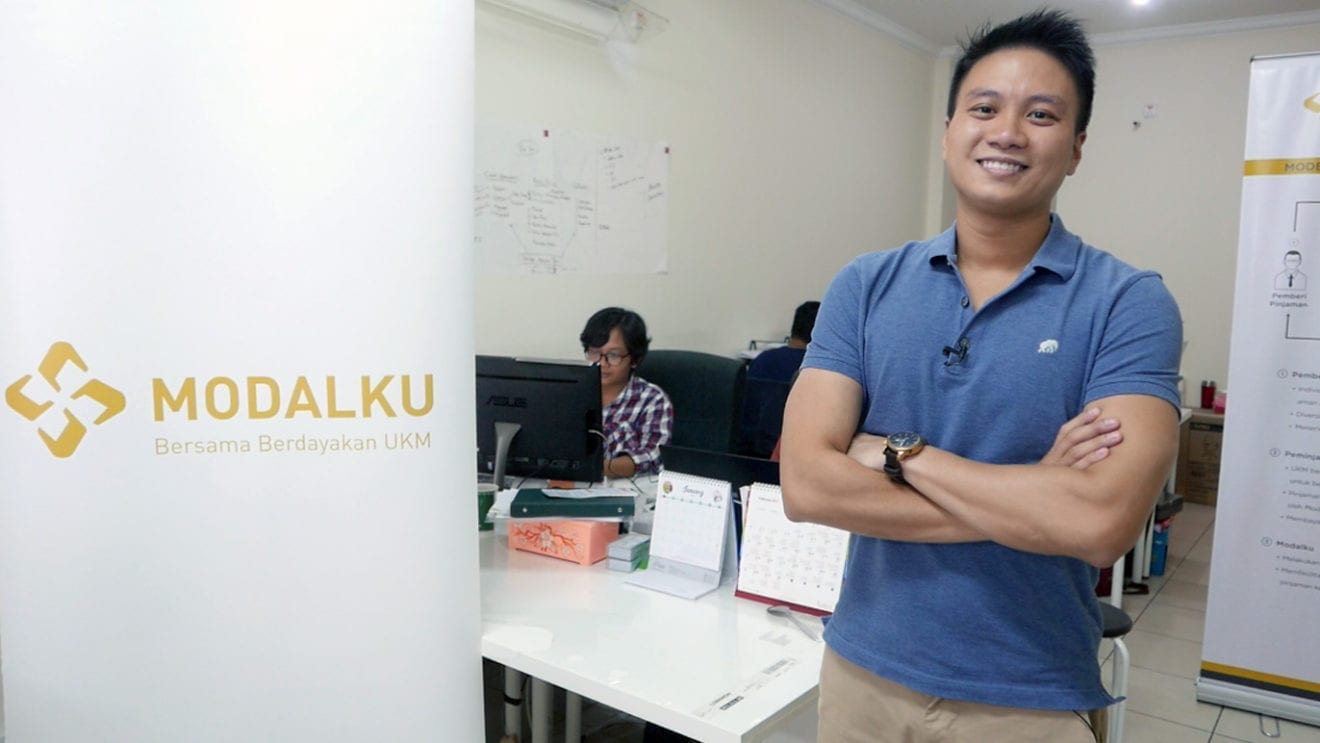
    Modaluku, a peer-to-peer (P2P) lending platform in Indonesia, has announced the launch of its mobile app for alternative investment.

    The app, named Modalku, offers more ease and practicality for lenders. All activities, beginning from sign-up to crowdfunding for alternative investments, can be done via smartphone anytime and anywhere. The app is available on iOS App Store and Google Play Store.

    Activated Modalku lenders can start crowdfunding for alternative investments straight away. The app has an ‘Auto Allocation’ feature, where lenders can crowdfund Small and Medium-sized Enterprise (SME) loans according to their personal preferences, based on criteria like return rates, loan duration, and allocation per loan.

    The Auto Allocation feature was designed with active lenders in mind. With it, the app generates hassle-free passive income without lenders having to manually allocate their funds every time an attractive alternative investment opportunity is available. The feature also maximises portfolio diversification and minimizes risk.

    New users can apply and sign up to become lenders with a semi-automated process. For example: the app will autofill address details from postal codes for easier application. Additional features, such as notifications for every SME loan ready for crowdfunding and low balance reminders, ensure that lenders will not miss an investment opportunity.

    As proof of Modalku’s commitment to consumer protection, the app incorporates state-of-the-art data security measures, including fingerprint login, advanced encryption, and auto-logout.

    “Modalku offers a win-win relationship for our users, both SME borrowers and lenders seeking alternative investment opportunities. In a diversified portfolio, P2P lending has proven to be an excellent investment alternative. Lenders can start from funding Rp1 million [US$75] for each SME loan, earning monthly repayments and good risk-adjusted returns. Our new app will give lenders greater access to peer-to-peer lending as an alternative investment option” said Modalku co-founder and CEO Reynold Wijaya.

    Financial Services Authority (OJK) Regulation, Licensing and Supervision of Financial Technology director Hendrikus Passagi added, “We warmly welcome the launch of Modalku’s mobile app as we believe the technology will support financial inclusion in Indonesia, along with the development of a cashless society.

    “Data from the Indonesian Internet Service Providers Association (APJII) shows that nearly 73% of Indonesian internet traffic happens on mobile devices and tablets. The app can increase the broader public’s interest in funding Special Needs Business (Puberku), such as Indonesian SMEs.

    David Ng, one of Modalku’s lenders added “I have gained attractive returns from my alternative investments in Modalku. Their products provide good risk-adjusted returns (through diversification), with a concept that is easy to understand. The Modalku app makes managing my portfolio even easier. I have activated the Auto Allocation feature to automate my alternative investments; all activities can practically be done via smartphone.”

    Modalku’s P2P lending business model connects SME borrowers with lenders through a digital marketplace. By financing SME loans, registered lenders gain an alternative investment with higher returns compared to term deposit and bonds.

    Modalku is the largest P2P lending platform in Indonesia, with loan disbursement totalling over Rp215 billion into 400 SME loans.

    This app follows the release of their Modalku Dana Usaha app, launched in January 2017 for SME borrowers.

    Modalku Dana Usaha is the first app to provide working capital loans in Indonesia, providing a quick, safe, and user-friendly process.

  • 2 in 3 Singapore consumers use m-payments

    2 in 3 Singapore consumers use m-payments

    Two in three Singaporeans have adopted mobile payments, according to recent research into consumer payment attitudes commissioned by Visa.

    The survey was conducted by Toluna on 500 Singaporeans to assess their attitudes toward cash and card usage, mobile banking, contactless payments and online shopping.

    According to the survey, on-demand services are accelerating the growth of mobile payments, with close to two-thirds of respondents using such services. Such services include on-demand transportation, meal and groceries delivery.

    Seventy-one percent of respondents cited convenience and efficiency as the top benefits for using such services while 35% of them stated that they enjoy shopping in the comfort of their own home.

    Expectations of such services have also shifted in response to higher adoption. According to the survey, a majority of the respondents expect their transportation (e.g. taxi or a car) to arrive within 10 minutes from the time they book the service, meal deliveries to arrive within 30 minutes upon ordering, and groceries to be delivered within 45 minutes.

    Peer-to-peer payments

    Singaporeans are also starting to embrace peer-to-peer (P2P) payments. The survey showed that seven in 10 respondents are aware of such options and one in four respondents are already using P2P services to split a bill after a meal. Benefits of using peer-to-peer payments were fuelled by merchant awareness and convenience.

    “Increased connectivity, coupled with the wider payment methods and form factors have transformed consumers’ experience in every aspect including payment. Based on VisaNet data, seven in 10 Visa cardholders are already making device-initiated payments and more than one in five Visa cardholders are active using in-app payments, fuelled by use of transportation booking apps,” Visa Country Manager for Singapore and Brunei Ooi Huey Tyng said.

    “The payment experience is becoming invisible and we believe this trend will continue with the introduction of more innovative players and services.”

  • Visa signs MOU as the payments partner of Phuket Smart City

    Visa signs MOU as the payments partner of Phuket Smart City

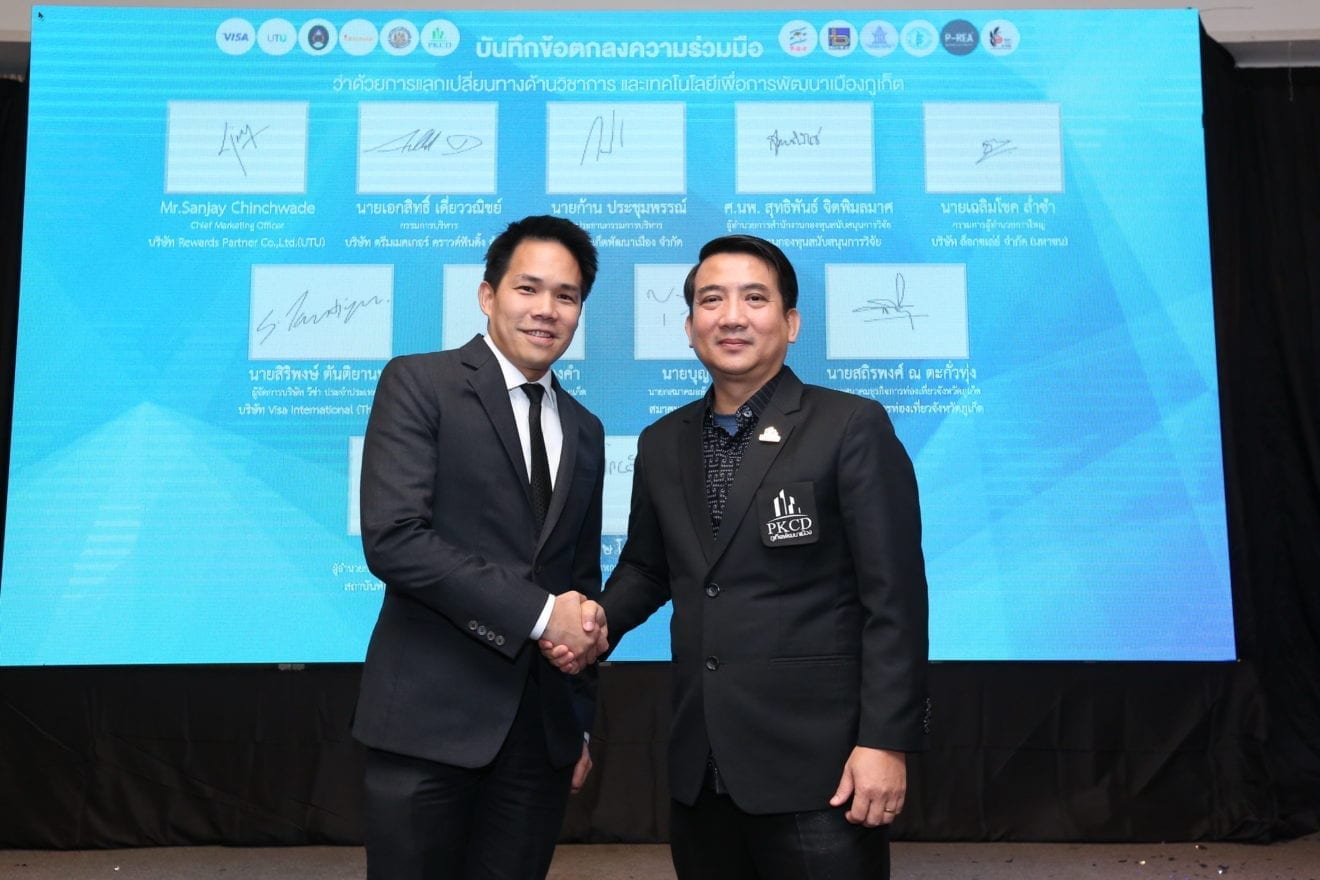
    Mr. Suripong Tantiyanon (left), Visa Country Manager, Thailand signed MOU with Mr. Karn Prachumpan (right), Co-Founder and Board of Committee, Phuket City Development Co., Ltd (PKCD) as the official partner of Phuket Smart City to develop payment solutions for both residents and tourists on the island-province.

    Phuket City Development was founded by local businesses in September 2016, with initial investment from 25 prominent Phuket families. The province is among the first in Thailand to embrace the Smart City concept. It aims to transform Phuket into a fully integrated digital economy, assisting business owners, managers, start-up entrepreneurs and residents in the transition.

    Mr. Suripong Tantiyanon, Visa Country Manager, Thailand: “Globally, Visa is speeding up the implementation of electronic payments by working closely with public and private sectors. Visa is aligning with like-minded partners around the world to help bring this vision to life. We are using our position as a global leader in innovation and technology to create solutions for businesses to connect to their consumers. The singing of MOU agreement with Phuket City Development is another milestone that help bring the country closer to a cashless Digital Thailand.”

  • Mandiri aims to tap Singapore asset pool uncovered in tax hunt

    Mandiri aims to tap Singapore asset pool uncovered in tax hunt

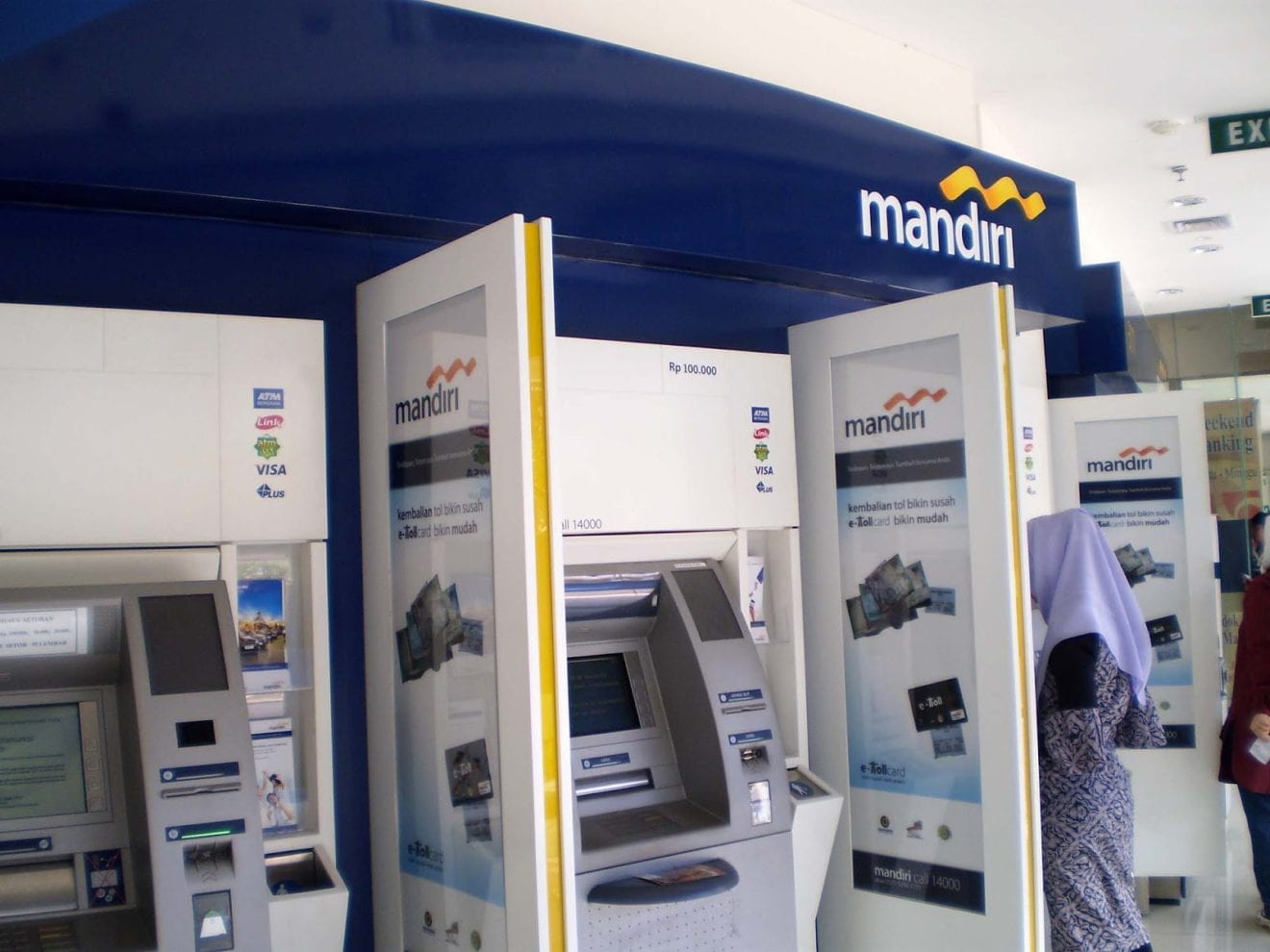
    Bank Mandiri, Indonesia’s largest state-owned lender, on Wednesday said it is seeking to establish a private banking business in Singapore. The move comes amid a global crackdown on tax evasion that has exposed vast Indonesian wealth parked in the city-state.

    Indonesia’s nine-month tax amnesty program, in which the government allowed citizens to report previously hidden domestic or overseas holdings and pay a small penalty, turned up some 4,900 trillion rupiah ($367.5 billion) in declared assets. In a news conference on Wednesday, Mandiri President Kartika Wirjoatmodjo said around 700 trillion rupiah in declared cash and securities are still parked in overseas banks — mostly in Singapore.

    “It’s quite a sizable portion,” Wirjoatmodjo said. “We want to capture this market by giving them services in Singapore. We already have a complete range of products.”

    Indonesia has also pledged to join the Automatic Exchange of Information, a framework developed up by the Organization for Economic Cooperation and Development in which financial regulators will share information about foreign taxpayer accounts. “There will be no more space to place money that cannot be traced by tax authorities,” Wirjoatmodjo said, “so there will be a level playing field.” He explained that wealthy Indonesians have shunned state-owned banks like Mandiri to avoid scrutiny by authorities.

    At the moment, Mandiri can only serve corporate clients in Singapore. In order for the bank to serve wealthy individuals, it needs to be designated a “Qualified ASEAN Bank” by the Monetary Authority of Singapore under a bilateral agreement with Indonesia’s Financial Services Authority, according to Wirjoatmodjo. QAB status, a concept developed by Association of Southeast Asian Nations members, enables banks to operate as local lenders in ASEAN markets.

    Earlier in July, Mandiri became the first bank to obtain the QAB designation in Malaysia. Talks between Singapore and Indonesia, however, have not been officially announced.

    Mandiri is hardly the only bank targeting previously hidden assets. Oversea-Chinese Banking Corp., Singapore’s second-largest bank by assets, in May launched private banking operations in Indonesia to cater to high-net-worth Indonesians with assets of more than $1 million.

  • Vietnam fastest growing stock market in region

    Vietnam fastest growing stock market in region

    The Vietnamese stock market has surpassed its counterparts in the Philippines, Indonesia and Thailand to become the fastest-growing market in the region in the first six months of the year.

    In late May, Thang, an investor in Hanoi, decided to re-activate his securities trading account after five years of closure.

    The crisis which broke out 10 years ago plunged the VN Index from 1,180 points to 200 points and swept away VND3 billion worth of Thang’s assets.

    But Thang decided to return to the stock market as it is now very promising.

    The VN Index has increased by 17 percent over the beginning of the year, nearly hitting the 780 point threshold, the highest peak since 2008.

    The index increase in the first six months was even higher than the increase for all of last year.

    In 2016, the average trading volume was reported at VND3 trillion per trading session and there were only a few of sessions with trading value of VND5 trillion. “The market is thriving not because of supporting information or any big deals and agreements, but because of strong cash flow into the market,” an expert said.

    Meanwhile, in the first six months of 2017, the sessions with trading value of VND5-5.5 trillion were of everyday occurrence. There were sessions with trading value of VND7.5 trillion.

    It was not by chance the cash flowed strongly to the stock market in the first months of 2017.

    The appearance of goods commodities has made the market more attractive. Vietnam Airlines (HVN), Vinatex (VGT), Masan Consumer (MCH), VIB and FPT Telecom (FOX) have appeared on UpCom right on the first days of the year.

    In February, Vietjet (VJC) made its debut, followed by Petrolimex (PLX), a petroleum distributor and Kido Food (KDF), the largest ice cream manufacturer.

    These are all well-known names in the Vietnamese market and all of them are leading in their business fields.

    Analysts believe that stocks are more attractive investment channels than gold and dollars. The VN Index has increased by 17 percent, while the prices of many shares have increased by tens of percent, or 3-5 times in the last several months.

    Securities companies have also made big contributions to the strong cash flow when providing capital to investors to buy on margin.

    The financial leverage helped investors loosen their purse strings. Securities companies prepared for the ‘game’ last year with hundreds of billions of dong worth of bonds issued.

    The 10 top securities companies alone can provide $2 billion in capital to investors to buy on margin.