Category: Finance

Retail News Asia is committed to providing both local and global retailers with the latest Finance news throughout the Asian market. This on a daily base.

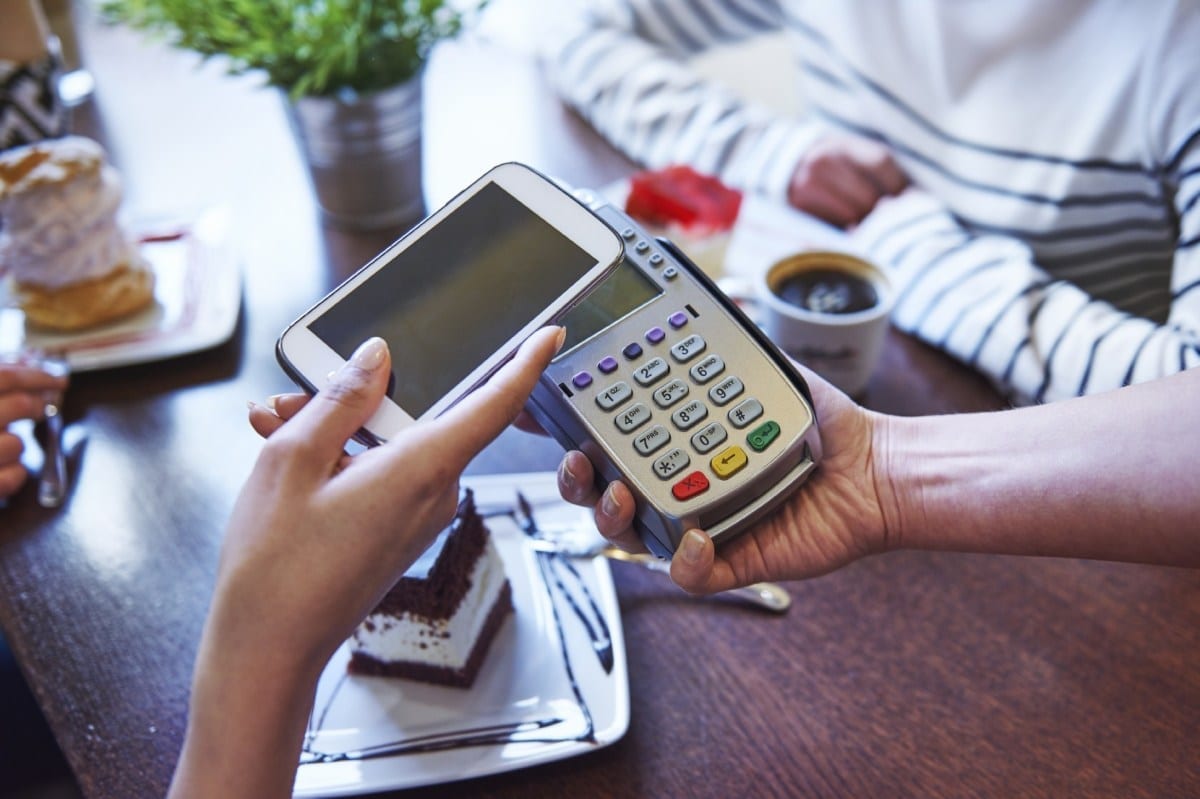
  • LG’s mobile payment service ‘LG Pay’ to be launched in June in Korea

    LG’s mobile payment service ‘LG Pay’ to be launched in June in Korea

    LG Electronics announced that it will launch its own mobile payment service dubbed ‘LG Pay’ across Korea, which will allow users to use their mobile phone as a credit card.

    During the World IT Show 2017 exhibition currently under way in Seoul, the South Korean tech giant showcased LG Pay, which adopted the Wireless Magnetic Communication technology. Samsung Pay is equipped with the Magnetic Secure Transmission technology.

    Users can register multiple credit cards into an LG Pay-enabled mobile phone and they choose one of pre-registered credit cards to pay. The payment service is supported by four credit card companies – Shinhan, KB, BC and Lotte – from June and by all of other Korean credit card companies from September, the company said.

    The service is based on wireless magnetic communication (WMC) technology, in which a credit card reader deciphers magnetic signals generated by a mobile phone. Nearly 90 percent of credit card readers support this magnetic payment system, making the service available at virtually all merchants.

    To use this service, users need an antenna-embedded smartphone to enable magnetic communication. The LG G6, the company’s latest smartphone model released early this year, is the only model that is equipped with this antenna. The company aims to expand its mobile payment service through its future smartphone models.

    LG said the service will be launched next month in South Korea and will be connected to the country’s eight major credit card companies.

  • Rupiah Weakens with Asian Currencies

    Rupiah Weakens with Asian Currencies

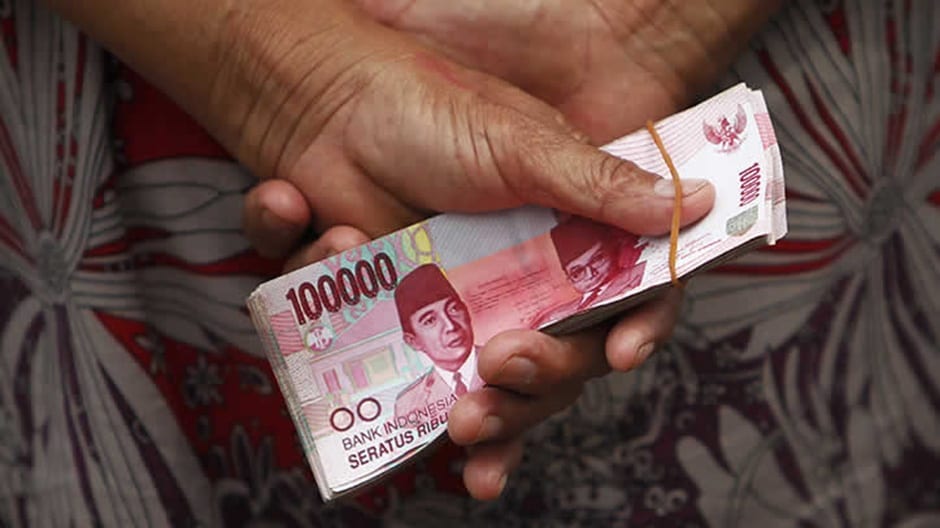
    The rupiah exchange rate at the Jakarta Interbank Spot Dollar Rate this morning fell by 8.0bps to trade for Rp13,332 per US dollar. The rupiah is corrected along with most Asian currencies.

    “Rupiah weakens along with Asian currencies depreciation against the US dollar,” Samuel Sekuritas economist Rangga Cipta said in Jakarta, May 18.

    However, Rangga said the rupiah correction is relatively limited as the Indonesian state bonds (SUN) yields improve amid prospects of inflation ahead of the Ramadan, raising expectations that of a possible credit ratings upgrade by Standard & Poor’s (S&P).

    “Increasing optimism in the bond market and expectation of commodity price improvement can secure the rupiah from plunging too deep,” he said.

    Binaartha Sekuritas analyst Reza Priyambada said the rupiah and other Asian currencies weaken because of an increasing interest among market players to invest in safe havens.

    Reza hopes that Indonesia’s well-guarded economic fundamentals and the government’s infrastructure projects will be responded well by the market, allowing the rupiah to rebound.

  • Bank Indonesia is seeking to integrate electronic payment

    Bank Indonesia is seeking to integrate electronic payment

    Bank Indonesia (BI) is seeking to integrate electronic payment system of various banks and issuers on toll roads during the Eid al-Fitr homecoming in June.

    BI Transformation Center Executive Director Onny Widjanarko said that the central bank has done the trial on the electronic payment integration on the toll road between Surabaya and Sidoarjo. The next trial will be implemented in Cikopo-Palimanan (Cipali) toll booths.

    Onny added that the central bank has options to integrate electronic payment system on toll roads during homecoming. The use of hybrid cards is one of the options.

    The option will be taken if the integration of technical infrastructure for toll payments could not be realized in time before the homecoming season. However, Onny said that BI would need to consult with industry working group and another regulator i.e. the Public Works and Public Housing Ministry.

    “We had wanted to implement the integrated payment systems during lebaran (Eid) but we are still discussing it in the working group whether select toll gates could adopt hybrid cards but we have to consult with the government,” he said.

    Santoso, the director of private lender Bank Centra Asia (BCA), the issuer of BCA Flazz cards in Cipali, said the bank would allow other banks to join its toll road payment system.

    “In Cipali and Gresik, BCA has encouraged [other] banks to integrate their payment systems. Meanwhile, other toll roads which are operated by Bank Mandiri must first be discussed because Mandiri has a special partnership with other state-owned lenders and state-owned toll operator Jasa Marga,” Santoso.

  • Samsung Pay arrives in Hong Kong

    Samsung Pay arrives in Hong Kong

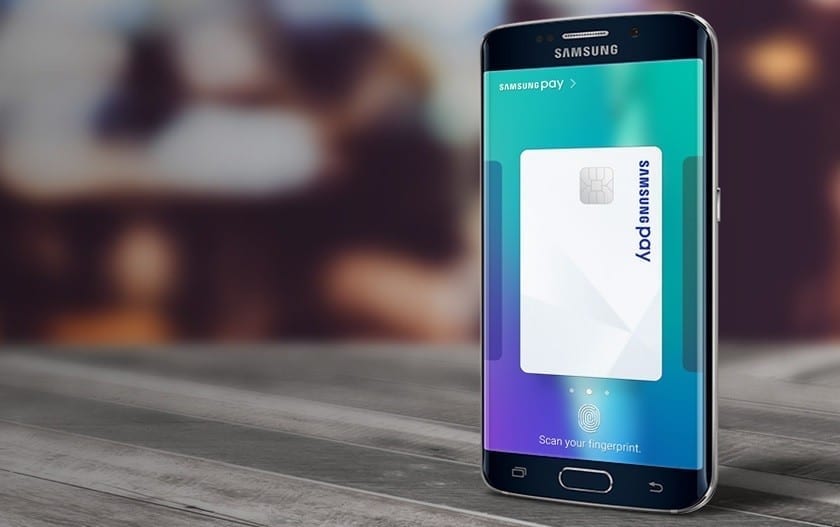
    Samsung Pay has finally landed in Hong Kong. The Korean technology giant launched an early access program in the Hong Kong market last month, but officially launched the mobile payment system to the general public last Thursday.

    Samsung Pay can be used almost anywhere a point-of-sale (POS) terminal is available and supports payments via both near field communication (NFC) and Samsung’s proprietary magnetic secure transmission (MST) technologies.

    According the maker of the Galaxy smartphone, MST sends a magnetic signal from the supported Samsung device to the payment terminal’s card reader (to emulate swiping a physical card), allowing Samsung Pay to work almost anywhere cards are accepted.

    “We are happy to have received overwhelming, positive responses from users of Samsung Pay’s Early Access Program,” said Yiyin Zhao, vice president and head of information technology and mobile communication business for Samsung Electronics Hong Kong.

    “We look forward to building a complete digital wallet solution in Hong Kong, which will allow users to not only pay conveniently, but also use membership cards and many more.”

    Several major banks in Hong Kong, including Citi and DBS, are set to offer incentives to encourage customers to pay for items using credit cards via Samsung smartphones, The incentives include discounted food, drink and toiletries, as well as free mobile phones.

    The perks come as the South Korean company enters the Hong Kong mobile e-pay market relatively late. Apply Pay launched its mobile payments service in July last year, while Google launched Android Pay in October. Several of the mainland’s technology giants, including Tencent Holdings and Alibaba Group Holding’s financial arm Ant Financial Services Group, have also launched WeChat Wallet and Alipay, respectively, in the city.

    Samsung Pay is available on Galaxy S8+, Galaxy S8, Galaxy S7 edge, Galaxy S7, Galaxy S6 edge+ and Galaxy Note5.

  • BI predicts surplus of balance of payment in 2017

    BI predicts surplus of balance of payment in 2017

    Indonesias balance of payment will still enjoy a surplus this year but it will decline to US$3-4 billion from US$12 billion last year, Bank Indonesia Governor Agus Martowardojo has predicted.

    The drop will be the result of declining capital and financial account, along with the conclusion of the tax amnesty program on March 31, 2017, reducing the inflow of repatriation fund to the financial market, he said here on Monday night.

    “Last year we saw the boost came from the tax amnesty program which has an impact on capital account,” he said.

    The projected surplus of the balance of payment at the end of this year will remain the same as the surplus of the balance of payment in the January-March 2017 period which was mostly fueled by capital and financial account at US$7.9 billion, he said.

    The balance of payment reflects transactions between the Indonesian population and foreign nationals. The balance of payment includes current account (including goods, services and income) and capital and financial account.

    Agus said the declining surplus of the balance of payment is also caused by a deficit of the countrys current account which is projected to reach 1.8-1.9 percent of the national gross domestic product (GDP). The figure is the same as the deficit of the current account in 2016.

    Despite the deficit, the current account is still under control. The improving export performance this year is expected to help improve the current account, he said.

    In the first quarter of 2017, the current account saw a deficit of US$2.4 billion, accounting for 1 percent of the GDP. The rising deficit of the current account was mostly fueled by the rising deficit of trade balance from oil and gas which reached US$2.1 billion and primary income which saw a deficit of US$7.4 billion.

  • Fiserv Clients recognized for mobile banking and biometric innovations

    Fiserv Clients recognized for mobile banking and biometric innovations

    Fiserv, a leading global provider of financial services technology solutions, announced today that its clients Bangkok Bank and Gesa Credit Union were recognized for their innovative use of technology by Retail Banker International (RBI) at the Retail Banking Conference and Awards 2017.

    Thailand’s Bangkok Bank won Best Mobile Banking Strategy for delivering ‘everyday, everywhere’ banking to its customers with Mobiliti Edge from Fiserv. Gesa Credit Union, located in Richland, Washington, won Retail Banking Security Innovation of the Year for pioneering the use of biometrics in their branches with Verifast™: Palm Authentication from Fiserv.

    The Retail Banking Awards by RBI highlight the achievements of retail banking organizations throughout the past year. Award winners are highly regarded within the industry as top performers representing an exceptional level of achievement.

    “These awards are a testament to the vision of Bangkok Bank and Gesa Credit Union, both of which are powerful examples of financial institutions that are using technology innovation to deliver experiences that fit seamlessly into people’s everyday lives,” said Andrew Steadman, vice president, Product Management and Marketing, International Group, Fiserv.

    Further details of the winning entries include:

    Best Mobile Banking Strategy Award – Winner, Bangkok Bank

    With fast-growing smartphone adoption in Thailand and the rising demand from customers for on-the-go banking tools to complement their mobile lifestyles, Bangkok Bank has been continually adding new functionality to its mobile banking proposition, Bualuang mBanking. With Bualuang mBanking, which is built on the Mobiliti Edge mobile banking and payments platform from Fiserv, Bangkok Bank customers have the ability to access financial services via a mobile phone, tablet or the Apple Watch. Additionally, the bank added mobile peer-to-peer (P2P) payments and advanced push notifications and alerts that can be received directly through the app.

    Almost one year after launching the P2P service and other enhancements of the user experience, the average payment transaction volume per month increased by 350 percent and revenue increased by 300 percent.

    Retail Banking Security Innovation of the Year – Winner, Gesa Credit Union

    Gesa Credit Union piloted the use of Verifast: Palm Authentication, a fast, secure and convenient biometric authentication solution based on near-infrared scanning of an individual’s palm vein patterns. Gesa reduced the time to authenticate a member in the branch by 93 percent, speeding up the teller line while enhancing security and improving the customer experience. On a 1-to-5-point scale with 5 being the best, about 99.9 percent of Gesa members using the solution rated the palm vein technology a 5 on both the registration process and use.

    In a world that is moving faster than ever before, Fiserv helps clients deliver solutions that are in step with the way people live and work today – financial services at the speed of life.

  • Money market changes course unexpectedly

    Money market changes course unexpectedly

    The money market has been seeing unexpected happenings in the last two weeks. Until two weeks ago, the liquidity of the banking system had been in a state of tension because lending was higher than mobilized capital. According to the National Finance Supervision Council, while lending increased by 5.2 percent, mobilized capital increased by 3.7 percent only in the first four months of the year.

    However, the money market has unexpectedly reversed with liquidity considerably improved. The interest rate performance in the interbank market last week was different from the weeks before when it decreased sharply from 4.7-4.9 percent to 3.9-4.1 percent for overnight loans (O/N).

    In OMO (Open Market Operations), no commercial bank registered to borrow capital from the State Bank on May 19, which was the first time since the beginning of the year. The average balance in OMO, which was always over VND35 trillion, has dropped to VND4 trillion.

    A BVSC report shows that the banking system’s liquidity has returned to a surplus state.

    Where’s the cash flow coming from?

    In theory, the sudden reverse in the two markets would occurs only if the State Bank (SBV) pumps capital into the market, and the quickest way for SBV to support liquidity is pumping capital through OMO.

    However, the scenario did not occur as the outstanding balance of the banks on OMO is on the decrease and is nearing zero next week.

    In the second scenario, SBV might have bought a big volume of foreign currencies from the market. This could be the foreign direct investment (FDI) flow, foreign portfolio investment (FPI), or foreign currency capital from domestic commercial banks.

    However, analysts don’t think this could happen because it was nearly impossible for foreign investors to disburse more than $1 billion within one week.

    Meanwhile, the foreign currency buy price quoted by SBV is now at VND22,675 per dollar, far lower than the prices in transactions made at commercial banks, at VND22,700 per dollar.

    The third scenario is the most likely one at this moment. SBV might have refinanced commercial banks through VAMC special bond discounts. And the VAMC special bond discount rate must be lower than the interest rate on OMO.

    With the total VAMC bond balance of up to VND280 trillion, the discount of VND35-40 trillion, or 13 percent, will not be a concern for the system.

    If the third scenario is true, many questions will be raised. How much has SBV pumped into the market, to which banks and at what interest rates? Will SBV continue pumping more capital? Which criteria do banks need to have to be refinanced?

  • Transaction app Alipay launches first non-yuan version in Hong Kong

    Transaction app Alipay launches first non-yuan version in Hong Kong

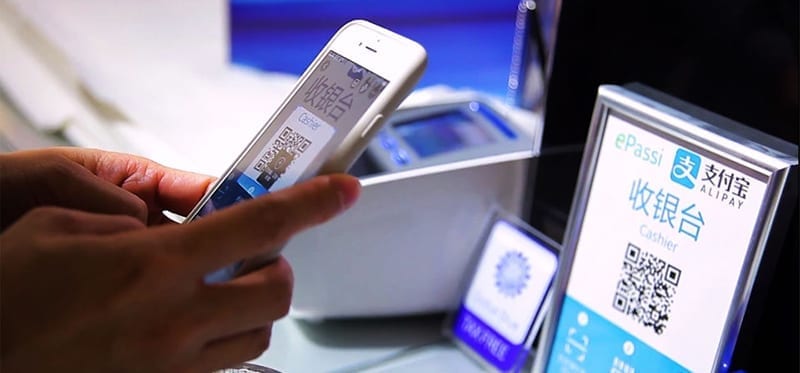
    Chinese online and mobile payment platform Alipay on Wednesday launched in Hong Kong its first app to handle transactions not denominated in the yuan currency, moving closer to its ambition of widening currency payment options.

    Payments through AlipayHK, which handles mobile payments in Hong Kong dollars, will be accepted at more than 2,000 stores in the city from Thursday, said Ant Financial Services Group, an Alibaba Group affiliate that runs the platform. “Introducing local currency mobile payments to Hong Kong is an important step forward in Ant Financial’s mission to bring our services to more users in more markets,” said Douglas Feagin, the company’s president of global business.

    The effort will help the company, which competes against Tencent Holding’s WeChat Pay, to extend its reach in offline commerce beyond mainland China. Alipay now has more than 450 million active users and payments through it are accepted at more than 2 million brick-and-mortar merchants across China, the company says.

    Its standard app is already supported in more than 120,000 retail stores in 70 overseas markets via local partners, including the United States, but transactions are executed in yuan.

    As many as 8,000 retailers in Hong Kong already accept Alipay’s yuan-based app, and the new app will soon extend to them, said Alipay Hong Kong’s general manager, Venetia Lee.

  • OCBC Bank Launches Cashless QR Code Payments

    OCBC Bank Launches Cashless QR Code Payments

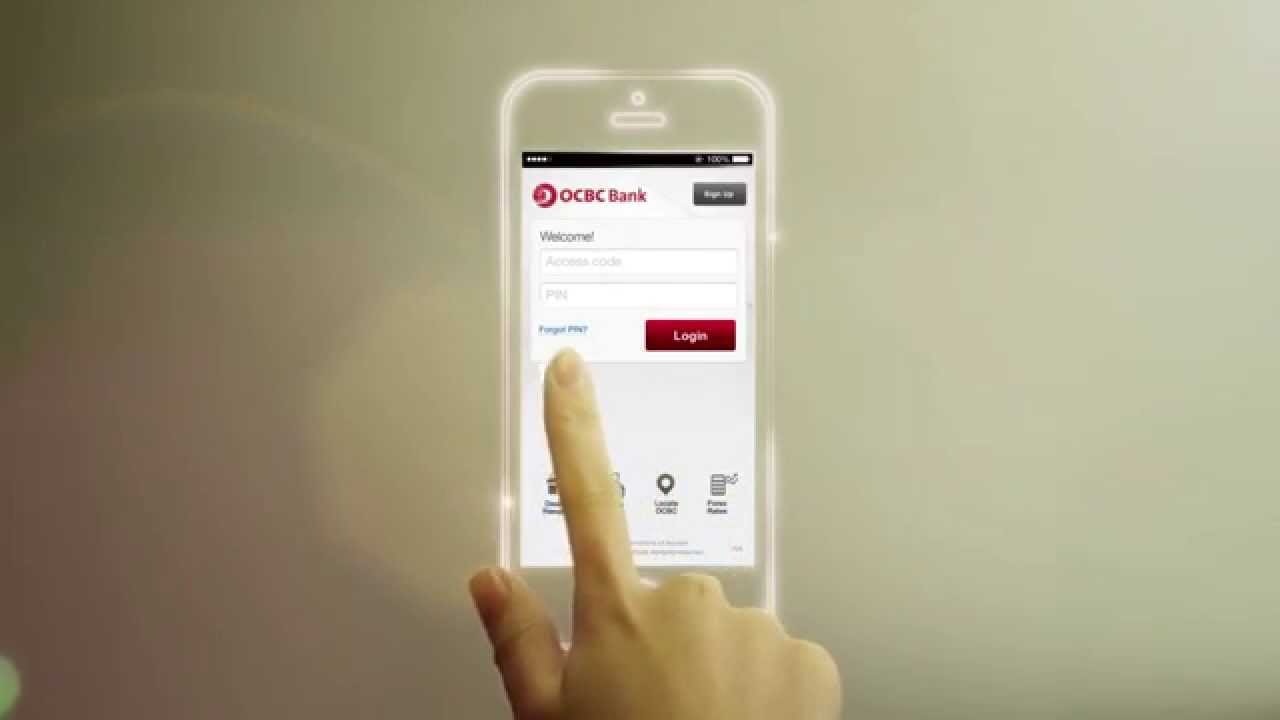
    OCBC Bank has launched its first standalone mobile payments app which makes QR code cashless payments available at close to 2,500 NETS terminals. The new standalone OCBC Pay Anyone app brings together all OCBC Pay Anyone services and enhancements – peer-to-peer e-payments, QR code payments and access to OCBC Pay Anyone integrated with Apple iPhone’s Siri and iMessage – into a fast and easy one-stop access to e-payments. With the app, customers can simply scan QR codes at participating merchants’ NETS terminals to pay for their purchases directly from their OCBC Bank account. Payments through OCBC Pay Anyone have increased exponentially with a tenfold increase in the amounts paid and almost fourfold increase in average monthly transactions since last year.

    The OCBC Pay Anyone app is available for download on the Apple and Google Play mobile app stores. From 1 June 2017, an OCBC Bank customer can pay for purchases at more than 1,000 merchants (from Robinsons to Zara, Marks & Spencer, Gap, Paradise Classic restaurants, Caltex stations and Gardens by the Bay) by scanning the QR codes on the NETS terminal or printed receipt using the OCBC Pay Anyone app. After authenticating the transaction securely with a fingerprint, the payment is immediately deducted from the customer’s OCBC Bank account and paid to the merchant through NETS. This is unlike mobile wallets which require additional steps to top up the mobile wallet using a bank account. By the end of the year, customers will be able to make QR code payments at more than 50,000 NETS terminals island wide.

    Mr Pranav Seth, OCBC Bank’s Head of E-Business, Business Transformation and Fintech and Innovation Group, said: “It’s a war on cash! OCBC Pay Anyone has been a favourite payment service among our customers, who have embraced the movement away from cash and increasingly adopted paying other individuals using just phone numbers. OCBC Pay Anyone payment volumes have increased 10 times since May last year. Now, we want to bring the same convenience to paying for your regular shopping and meals using QR codes, so we decided to consolidate all of our OCBC Pay Anyone payment services into a standalone mobile app to bring greater convenience to our customers.

    “The launch of QR code cashless payment adds to the suite of OCBC Pay Anyone e-payment services. I believe the pick-up of QR code cashless payments will be strong given the increasing acceptance rate of cashless payments in general over the years. We will continue to push the boundaries in mobile payments and move the needle in becoming a cashless society. We are excited about the new and varied cashless payment options that we will roll out on the OCBC Pay Anyone app.”

    OCBC Bank customers get a $10 rebate for first-time QR code payments

    From 1 June to 30 June, all OCBC Bank customers can enjoy one $10 rebate when they make their first QR code payment using the OCBC Pay Anyone app at Robinsons, Marks & Spencer, Paradise Classic restaurants or Caltex stations.

    Customers simply need to download the OCBC Pay Anyone app, perform the one-time setup and make a purchase of any amount by scanning the QR code on a NETS terminal at Robinsons, Marks & Spencer, Paradise Classic restaurants or Caltex stations. The $10 cash rebate will be credited to the customer’s account in July

    Making a QR code payment with OCBC Pay Anyone

    Once the OCBC Pay Anyone app has been downloaded, customers need to perform a one-time setup to enable payments via the app.

    –       To perform the one-time setup:

    –       Click “Get Started” and tick the box to agree to the app’s terms and conditions

    –       Key in online banking access code and PIN

    –       Enter the one-time password sent to your mobile device and click “submit”

    –       A message will be displayed indicating the successful setup

    –       Click “Next” to proceed with QR code payments

    QR code payments are available on Apple iPhone devices running iOS8 and above, and Samsung devices running on Android 4.4 Kit Kat with the fingerprint recognition feature.

    To make a payment at a participating merchant, customers simply open the OCBC Pay Anyone app, scan the QR code on the merchant’s NETS point-of-sale terminal or on the printed NETS terminal receipt and authenticate the transaction using their fingerprint. The app will prompt the customer to choose the OCBC Bank account to pay from. Once the bank account has been selected, customers click “pay now” to complete the transaction.

    1. Scan the QR code on the NETS point-of-sale terminal or on the printed NETS receipt. Authenticate transaction with fingerprint.
    2. Select OCBC Bank account to pay from, and click ‘Pay Now’.
    3. A successful transaction message will be shown once payment is complete.

    Evolution of OCBC Pay Anyone

    Launched in 2014, OCBC Pay Anyone is the only mobile payment service offered in Singapore that lets customers send money directly to any bank account in Singapore using just the recipient’s mobile number, email address or Facebook account – without having to perform transaction signing using a security token or to add the recipient as a “payee”.

    In September 2016, the daily transfer limit on OCBC Pay Anyone was increased from $100 to $1,000, bringing greater convenience to customers and allowing payments for bigger-ticket items. The average transaction amounts since then grew three-fold. In October 2016, OCBC Bank further enhanced OCBC Pay Anyone by enabling transactions using Apple’s Siri voice command feature and directly within iMessage.

    The number of e-payments performed grew fourfold, and the amounts paid grew tenfold, from a year ago. Seventy per cent of OCBC Pay Anyone users are aged between 16 and 29. OCBC Bank’s market penetration among youths and young adults continues to deepen, with one in every two members of this segment an OCBC Bank customer. The growing popularity of OCBC Pay Anyone requires OCBC Bank to continue innovating so that this e-payment service can deliver beyond the demands of its customers.

    QR code payments are the next phase of mobile contactless payments that OCBC Bank has embraced. The new OCBC Pay Anyone app will no doubt make payments even more convenient and accessible for customers.

  • Central Bank of Vietnam maintains flexible forex regime

    Central Bank of Vietnam maintains flexible forex regime

    According to the National Finance Supervision Committee, the deficit is likely to be 3.5% of exports. The trade deficit with China rose from US$3.7 billion in 2013 to US$28 billion last year. The US Federal Reserve (FED) is expected to increase the interest rate in June and continue to do so through 2019 to take the rate to 3 per cent.

    Analysts said this is causing downward pressure on the value of the đồng against the dollar.

    In mid-May, the US Dollar Index (DXY) rose significantly to 99.60.

    The State Bank of Vietnam (SBV) recently increased the đồng reference rate by VND9 after the greenback appreciated strongly to avoid possible shocks.

    SBV Governor Le Minh Hung said the international markets remain volatile due to the UK vote to leave the EU, US President Donald Trump’s policies and the US rate hikes.

    The volatility has had an impact on the đồng exchange rate and made it harder for the Government to keep things smooth on the forex front. Since the beginning of the year, the central bank has been very cautious. As a result, the đồng has only lost 1.1% against the dollar.

    The National Financial Supervisory Committee (NFSC) officials said the central bank is flexible and keeps a close eye on the exchange rate, regulating it on a daily basis.

    Analysts said Vietnam should not pay too much attention to the US interest rate hikes since they do not always affect the đồng.

    They pointed to the rate hike in March when the dollar actually declined against the đồng.

    One of the reasons for this is that foreign direct investment has been pouring into the country.

    In the first four months of the year, US$10.95 billion flowed in, representing a year-on-year increase of 40.5%.

    Though the big trade deficit with China is a factor in the đồng’s value, the Chinese Government is unlikely to depreciate the renminbi.

    This is because its policy is to develop the economy based on the domestic market in future instead of exports as the case used to be.

    Hung said since the Government would continue to pursue its de-dollarisation policy, the central bank would remain flexible with its exchange rate regulations to ensure exporters, importers, the Government and enterprises borrowing overseas and repaying foreign loans all benefit.

    Many analysts estimate the greenback will rise 2-3% against the đồng this year, saying the economy can easily absorb this.

    Foreign retailers crowd VN market

    Koji Takayanagi, president of Japan’s second largest convenience store chain FamilyMart, said the company is reviewing its loss-making operations in Indonesia, Thailand and Vietnam.

    “If we can get them to rally we will, but we cannot continue to pour in resources,” he told Reuters.

    The Japanese franchise has forecast operating profit to more than double to 1 trillion yen (US$8.79 billion) in four years from 412 billion yen in the current fiscal year.

    But while the business is profitable in China and Taiwan, it is not doing well elsewhere.

    FamilyMart came to Vietnam in 2010 and expected to open 300 stores in collaboration with local distributor Phu Thai Group, according to online newspaper VnExpress.

    But the partnership ended in 2013, with the distributor taking over 42 stores and turning them into B’s Mart in collaboration with Thailand’s Beri Jucker Plc.

    The brand made a comeback in July 2013 and now has 130 stores in HCM City, the nearby resort town of Vung Tau and Binh Duong Province, and aims to expand to 150 by the end of this year.

    Last December, Parkson, owned by Malaysian conglomerate Lion Group, closed its second store in Hanoi after eight years of operations, citing unsatisfactory results.

    The move marks the closure of the last store in Hanoi and third in Vietnam. In May 2016, Parkson Paragon in HCM City’s upscale Phu My Hung urban area closed after five years of operations, and in January 2015, Parkson Landmark 72 in Hanoi closed.

    The management had stuck a notice on the door of the latter store that it would only close for a few days “to take inventory”, but never opened again.

    Parkson’s recent results in the third quarter of 2016-17 showed its business in Vietnam remained mired in difficulties because the retail market was getting “more and more cramped”.

    Market observers offered explanations for the failure of some foreign retailers in Vietnam, with the decisive factor being the growing presence of giant global retailers, which is making competition in the sector fiercer.

    According to a report from the Ministry of Industry and Trade earlier this year, foreign enterprises now hold a 17% market share in the shopping centre and supermarket segment, 70% in convenience stores, 15% in minimarts and around 50% in online, TV and phone shopping.

    The percentages may not be too high but the looming presence of foreign retailers can be seen in many major cities.

    For instance, Thailand’s Central Group has bought the entire stake of France’s Casino Group in Big C Vietnam, while another Thai conglomerate, TCC Holding, has acquired Metro Cash and Carry Vietnam.

    Other foreign groups such as the Republic of Korea’s Lotte and Japan’s Aeon have been steadily expanding, and have plans to double or triple the number of stores in Vietnam in the coming years.

    In terms of growth, Vietnam’s retail market is among the top five in Southeast Asia and 11th globally, according to A.T. Kearney’s 2016 Global Retail Development Index.

    The trade ministry said retail sales of goods and services rose 10.2% to VND3,530 trillion (US$156.7 billion) last year.

    It has projected the market to hit US$179 billion by 2020.

    There is indeed a lot room for the retail sector to grow in Vietnam, where more than half the population of nearly 92 million is young and incomes are rising very fast, it said.

    Business-to-customer transactions are expected to double in value from the US$2.2 billion recorded in 2013.

    The ministry also expects the country to have 1,200-1,300 supermarket outlets by 2020, up 650 from 2011. The number of trade centres and malls are projected to increase to 180 and 175, respectively.

    Thời Báo Kinh Doanh newspaper (Business Times newspaper) quoted Akiihiko Maeda, CEO of Japan’s  Ministop 24-hour convenience store chain in Vietnam as saying competition is now the biggest challenge for his company.

    Ministop would need five to six years to break even, he said.

    But to achieve that, it would have to increase the number of stores by 80-100 a year and reach around 300.

    Analysts pointed out that this means Ministop — and other foreign retailers – would have to bring in lots of money.

    Where do domestic retailers stand?

    The swift expansion of foreign firms has also piled pressure on local retailers. Domestic goods suppliers are feeling the pinch as foreign retailers are developing their own brands for selling through their stores.

    Local retailers, at least many of them, cannot take on their foreign rivals, analysts fear.

    To compete, they need good management in all areas from brand building, ensuring product quality and marketing to human resources, training and establishing distribution networks, they said.

    But most are too weak and need to be immediately restructured, they said.

    Technology is also a problem for many Vietnamese retailers in a sector that is highly technology-intensive, they said.
  • Everex debuts mobile blockchain microcredit platform

    Everex debuts mobile blockchain microcredit platform

    Everex, a developer of applications based on the Ethereum blockchain, is expanding its operations towards global, blockchain-enabled mobile microcredit and fiat remittance services.

    In a blog post announcing the new service, the company stated that it seeks to connect two billion un- and underbanked individuals to the global financial system, by allowing them to access affordable instant micro-credit and global fiat transaction services from mobile devices.

    Everex mobile fiat transactions are based on the company’s already existing Cryptocash service and its mobile Ethereum wallet. Cryptocash is an Ethereum ERC20 token family, pegged to fiat currencies and tradable on the Everex Wallet, as well as on third-party applications and exchanges.

    With the new product launch, Cryptocash will be redeemable against its fiat counterpart at ATMs, currency exchangers, and mobile service providers worldwide, allowing users to instantaneously transfer fiat money anywhere at extremely low costs.

    The Everex remittance system was already tested last year, allowing hundreds of migrant workers to transfer an aggregate amount of 850,000 baht ($25,000) from Myanmar back home to Thailand.

    The new service will also allow users to request micro-loans in any currency from their mobile phones. The credit scores, necessary to assess interest rates, loan periods and risk, will be automatically generated on the spot, based on user behavior, social data, and spending patterns, which Everex collects through the company’s mobile wallet application.

    “Generating credit scores on the basis of mobile data will allow us to serve the microfinancing needs of many un- and underbanked individuals which, due to the often deficient documentation and track records in the developing world, had until now no access to affordable credit, ” Everex CEO and co-founder Alexi Lane said.

    The seed capital to launch Everex’s micro-lending operation will be raised in an Initial Coin Offering (ICO) this summer. The company will use profits, not directly reinvested in growth, to buy its tokens (EVX) back from the market – insuring that the company’s success is shared with token holders.

  • UOB UnionPay Card Relaunched with 2% Cash Rebate

    UOB UnionPay Card Relaunched with 2% Cash Rebate

    UOB and UnionPay International (UPI) have revamped its UOB UnionPay Card as a simple, no-frills card. The UOB UnionPay Card offers a 2% cash rebate on local and overseas spend1, with no minimum spending restrictions, enabling customers to reap cash rebates of up to S$600 for the first year.

    Sporting a brand new design and UnionPay’s contactless payment feature QuickPass, the UOB UnionPay Card enables Cardholders to pay for their purchases via quick tap-and-go at participating point-of-sales (POS) counters. Cardholders can take advantage of this convenient feature at local merchants such as BHG, BreadTalk, M1 and Shaw Theatres, along with overseas merchants such as 7-Eleven in Macau, SaSa in Hong Kong and Watsons in South Korea.

    “The UOB UnionPay Card is perfect for those who want fuss-free rewards. It simplifies money management, and makes life easier for everyone with a simple cash rebate system. With the QuickPass contactless payment feature, Cardholders can also make payment quickly and easily by tapping their cards at participating contactless payment terminals, saving them time that can be spent on more important moments in life. This card also represents our commitment to bringing products that are tailored to the needs of local consumers, and underscores our desire to continually enhance our products and services to serve them better,” said Wenhui Yang, General Manager for Southeast Asia, UnionPay International.

    Ms Choo Wan Sim, Head of Cards and Payments Singapore, UOB said: “UOB was the first and remains the only Singapore bank to offer a UnionPay credit card. In 2008, we launched our first card in recognition of the increasing travel and trade between our two markets. Since then, our cardmembers have been using the card to make purchases in China through UnionPay’s extensive acceptance network. In the last two years, we have seen a 20 per cent increase in the number of customers making purchases in China, not just for big ticket items but also for daily essentials such as groceries. UOB UnionPay cardmembers will now be rewarded with cash rebates on the purchases they make overseas and in Singapore.”

    In addition to receiving 2% cash rebate, new sign-ups for the UOB UnionPay Card can enjoy: 

    3-year annual fee waiver

    New customers who sign up for the UOB UnionPay Card can enjoy a 3-year waiver of the annual card membership fee from the date of application.

    More cash rebates until 30 September 2017

    The first 2,000 customers who sign up for the card and whose card is approved between 26 May 2017 and 31 August 2017 can also enjoy two times the rebate i.e. 4% on all spend until 30 September 20171.

    UOB UnionPay Cardholders will also be able to enjoy global offers for shopping, dining, travel and entertainment, including duty free offers at over 100 international airports around the world. UnionPay Cardholders can download the UnionPay International application via Apple App Store or Google Play Store and enjoy discounts of up to 30% at Bath & Body Works, Kate Spade, Michael Kors, TUMI and Victoria’s Secret, along with other attractive U Plan offers at Matsumoto Kiyoshi in Japan, Macy’s in the USA and King Power in Thailand among others.

    In addition, the UOB UnionPay Card, a Platinum Card, entitles Cardholders to the privileges in U Collection, with global concierge services, airport VIP services and an exclusive range of dining privileges specially curated for premium Cardholders. The UOB UnionPay Card is available for sign up from 26 May 2017. To sign up online, visit uob.com.sg/unionpay

  • Vietnam state investment arm SCIC partners Thai Kasikornbank

    Vietnam state investment arm SCIC partners Thai Kasikornbank

    Vietnam’s government investment arm SCIC, the state investor in the country’s biggest firm Vinamilk, has inked a deal with Thai Kasikorn Bank to unlock more investment opportunities in Vietnam. SCIC, or the State Capital Investment Corporation, said the collaboration will help woo foreign investors into the country as well as improve its investment climate through the exchange of expertise.

    Thailand has accounted for significant investments into Vietnam, notably in the retail sector. TCC Holding and Central Group put a war chest to acquire retail assets in Vietnam over the past two years to secure top positions in this $118 billion market. SCIC last year sold 5.4 per cent of Vinamilk to Thai beverage firm F&N in a $500 million deal. F&N had been already a major shareholder at the dairy company with an 11 per cent interest.

    Thai brewer Singha also played big with a $1.1 billion infusion into Masan Group’s units. Thai investors are also beefing up their direct investments. Direct investment and M&A capital from Thailand in Q1, 2017 were valued at $168 million, a surge of 20 times compared to the same period in 2016. Vietnam has been seen as a magnate for foreign investors thanks to its stable economic annual growth of some 6.5 per cent, blended with a rising middle class and improving infrastructure.

    The total new committed FDI and M&A capital into the country in the first four month of this year reached $10.6 billion, in which share purchases accounted for $1.36 billion, according to the General Statistics Office. The SCIC represents the State ownership in shares of major local businesses, including Vinamilk, Hau Giang Pharmaceutical, Vietnam Construction and Import-Export JSC, tech firm FPT, insurer Bao Viet and Traphaco. In March, the sovereign wealth fund had also signed a similar agreement with Singapore property developer Keppel Land to promote investment opportunity in Vietnam.

  • Techcombank to mobilize $220mn from shareholders

    Techcombank to mobilize $220mn from shareholders

    The content of its plan to does not, in general, differ from the previous version submitted to the annual general meeting (AGM), but the offering period is expected to be extended to all of 2017, from only the second and third quarters.

    500 million shares are to be issued at a minimum price of VND10,000 ($0.44) per share. If the deal is successful, Techcombank’s charter capital will increase from VND8.8 trillion ($387.69 million) to VND13.8 trillion ($607.96 million).

    This is the largest capital increase Techcombank has made since 2008. From 2008 to 2012 its charter capital increased regularly, from VND4.7 trillion ($207.07 million) to VND8.8 trillion ($387.69 million).

    All proceeds from the share offer are expected to be invested in the VND916 billion ($40.35 million) expansion of its head office and fixed assets. It will also spend VND1.6 trillion ($70.5 million) on technology and equipment.

    The bank will also increase its capital for credit activities and investment in government bonds, to some VND2.4 trillion ($105.76 million).

    Techcombank’s pre-tax profit was VND1.3 trillion ($57.29 million) in the first quarter of this year, up 130 per cent year-on-year and representing 26.3 per cent of the 2017 plan.

  • Big money flowing into Vietnam stock market

    Big money flowing into Vietnam stock market

    The liquidity has improved considerably with trading value of VND4.5 trillion in each trading session. One month ago, Nguyen Huu, an investor, decided to buy Sacombank shares (STB). “If I make a bank deposit, I would get an interest rate of a maximum 7 percent for six months. Meanwhile, with the investment in STB, I expect profit at 15-20 percent at minimum,” he said.

    Huu bought STB when the share price was at VND9,500 per share. And if he had sold the shares some days later, he would have made a profit of 10 percent.

    According to Nguyen Duc Hung Linh from the Saigon Securities Incorporated (SSI), the cash flow to the stock market mostly comed from big investors who prepare in financial capability and have big targets.

    The VN Index has for the first time in the last nine years has regained the 700 point threshold, while the trading value has reached VND4.5 trillion per daily trading session and foreign investors’ portfolio value has reached the highest peak.

    On May 15 morning, the stock market witnessed a record morning trading session with VND3.1 trillion worth of shares were traded. Investors were excited when seeing 56 shares hitting the ceiling price level.

    On May 16, the trading volume increased to VND3.659 trillion, an increase of 18 percent, the highest trading volume in the history of the Vietnamese market.

    “There is so much money from new sources and new investors who are more hot-headed than old investors,” the representative of a closed-end fund said.

    Nguyen Tri Hieu, a renowned banking expert, at a workshop on the stock market held some days ago, commented that this was good news for Vietnam, but investors have been advised to be cautious.

    “The index has been escalating rapidly. If the trend continues, I think the VN Index would reach the 740 point threshold or even higher,” Hieu said.

    Tong Minh Tuan from VCB Securities commented that the most important thing is that the stock market has more good commodities this year to offer.

    “Foreign funds are very excited and they have taken action. I think the market would be even more busy towards the end of the year,” Tuan said.

    Other analysts also commented that they were optimistic about the market in 2017-2018, because there would be more good shares on the market once the state divests from several profitable companies.