Category: Finance

Retail News Asia is committed to providing both local and global retailers with the latest Finance news throughout the Asian market. This on a daily base.

  • Hong Kong stocks extend sell-off as banking giant HSBC tumbles to 7-year low

    Hong Kong stocks extend sell-off as banking giant HSBC tumbles to 7-year low

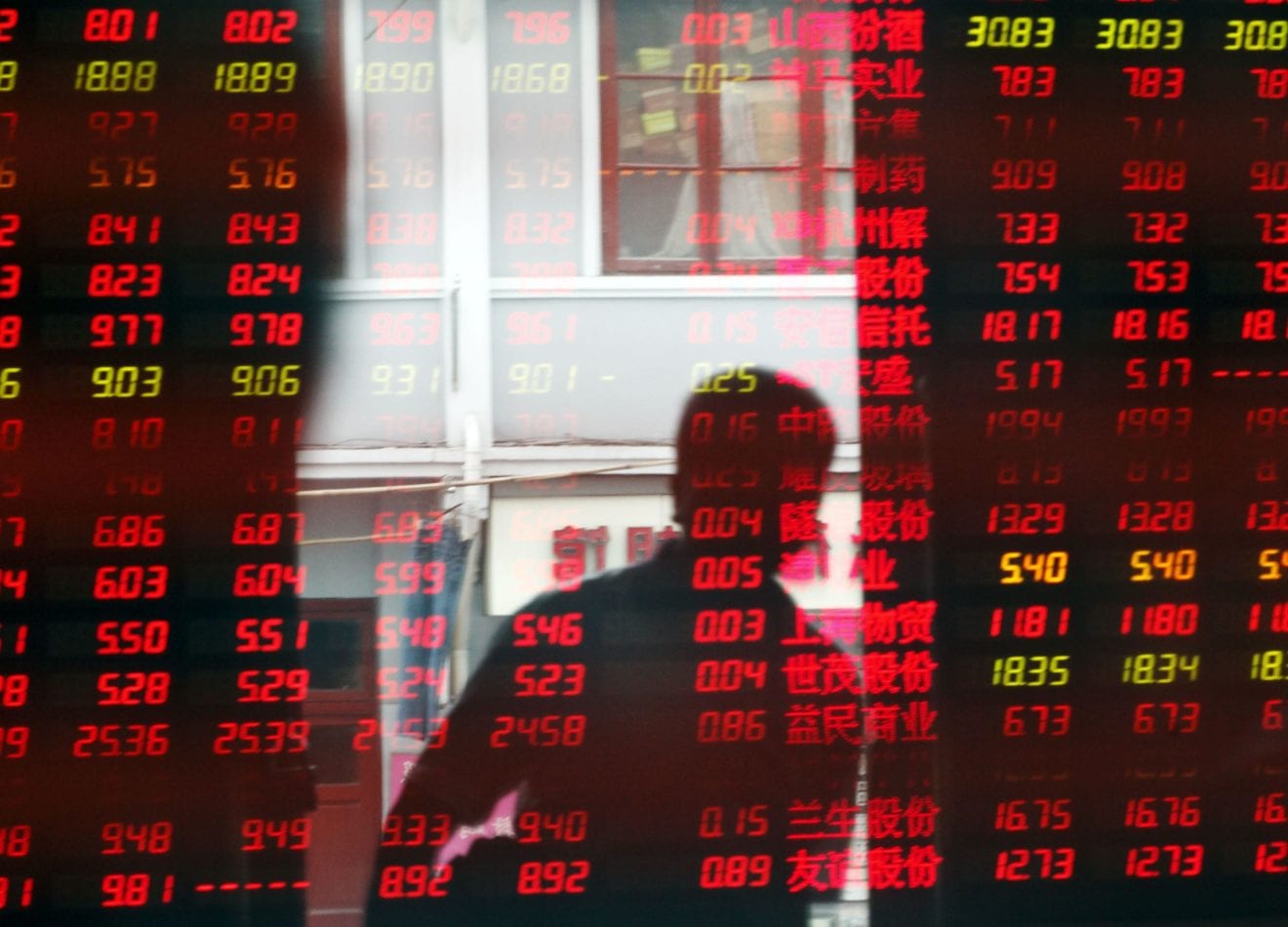
    Hong Kong stocks closed at their lowest level since mid-2012 on Friday, extending steep declines from the previous day in a holiday shortened week, as index heavyweight HSBC tumbled to a seven-year low after the company decided to scrap a pay freeze plan aimed at cutting costs due to staff protests.

    The Hang Seng Index was down 1.2 per cent or 226.22 points at 18,319.58, the lowest close since June 2012. The index fell 3.9 per cent on Thursday after returning from the three-day Lunar New Year break, posting the worst loss to start a Chinese new year since 1994.

    For the week, it was down 5 per cent.

    So far this year, the Hang Seng Index has plunged more than 16 per cent, already more than doubling the annual loss of 7.2 per cent it rang up in 2015.

    The Hang Seng China Enterprises Index, or the H-shares index, settled 2 per cent lower at 7,505.37.

    Sino-British banking giant HSBC Holdings, one of the most-widely held stocks by Hong Kong retail investors, tumbled 2.7 per cent to HK$48.1, the worst level it has seen since April 2009.

    HSBC’s chief executive Stuart Gulliver wrote Thursday in a memo that the company would drop a pay freeze announced recently to cut costs, following feedback from its employees.

    Gulliver said the company would use the cash from the 2016 bonus pool to fund the pay rises, while also expressing his concerns for the bank’s revenue outlook in 2016 due to uncertainty around the global growth outlook and the interest rate environment.

    Among other market movers, Asian life insurer AIA Insurance fell 2.4 per cent to HK$37.25, and Chinese online major Tencent Holdings dropped 1.9 per cent to HK$133.3.

    Ben Kwong Man-bun, executive director and head of research of KGI Asia, said the Hong Kong market lacked clear direction and was taking its cue from hobbled overseas markets.

    “The global equity market is still under selling pressure. It’s because of the fearful sentiment of investors. They prefer to hold cash rather than assets,” Kwong said.

    The broader weakness in regional markets also added to the selling pressure on Hong Kong stocks. Japan’s Nikkei Average finished below 15,000 for the first time in 16 months, down 4.8 per cent at 14,952.6, as the yen, a traditional safe-haven currency, soared against the US dollar.

    On Thursday, global stocks entered a bear market, as the MSCI All-Country World Index, a gauge of global stock markets, had fallen more than 20 per cent from its most recent high in May 2015. US and European equities both took a hard hit, spurred by heavy selling in the banking sector on worries negative interest rates and low economic growth could hurt banks’ earnings.

    Going forward, analysts said stock markets still face a battery of threats ranging from slow growth, interest rate uncertainty, emerging market turmoil and heightened bad loan risks.

    “The global economy is really weak. Even after they did quantitative easing, it seems the central banks have failed to stop the slowdown,” Kwong said.

    However, Macau casino stocks bucked the weak trend, after Wynn Macau reported its operating revenues dropped by a less-than-expected 37 per cent in the fourth quarter of fiscal 2015. Shares of Wynn Macau jumped 3.6 per cent to HK$7.77, rival Galaxy Entertainment climbed 3.1 per cent to HK$23.25, and Sands China advanced 2 per cent to HK$24.75.

    Offshore oil producer CNOOC also recovered 0.4 per cent to HK$7.48 after crude futures bounced back in international markets.

    Chinese stock markets were still closed for the holiday on Friday and will reopen on Monday.

    However, some analysts expressed concerns A-shares may catch up with the global stock rout and fall sharply when they start trading next week.

    “It’s concerning,” said Li Tao, an analyst for Citic Securities. “The external markets were quite volatile during the Chinese new year break, particularly in the US, where stocks continued falling. The depressed state of the global economy may have a negative impact on the A-shares market.”

  • HSBC setting up local subsidiary to handle retail and wealth business

    HSBC setting up local subsidiary to handle retail and wealth business

    HSBC’s Singapore branch is spinning off its retail banking and wealth management division into a local subsidiary.

    This locally incorporated unit, which will be operational from May 9, will oversee the running of all operations of the retail banking and wealth management business here.

    All other lines of business of HSBC in Singapore, which include commercial banking, private banking and global banking and markets, will continue to operate under the existing Singapore branch.

    Mr Guy Harvey-Samuel, HSBC’s chief executive officer for Singapore, said the move reflects the success of the bank’s retail business here.

    “More importantly, this move demonstrates HSBC’s strong and long-term commitment to the Singapore market,” he added.

    “Singapore is a top-seven priority country for the HSBC Group globally and we will continue to invest in our business here. We are excited about new opportunities to further expand our presence.”

    The move to locally incorporate the retail banking and wealth management business follows an announcement by the Monetary Authority of Singapore (MAS) in April last year that HSBC is considered one of seven domestic systemically important banks in Singapore.

    Such banks could have a significant impact on the Singapore financial system’s stability and the proper functioning of the broader economy.

    All banks here have to undergo an annual assessment of their systemic importance.

    Banks with a significant retail presence are required to locally incorporate their retail operations.

    In line with this, HSBC’s new subsidiary will be subject to additional MAS regulatory requirements aimed at strengthening the resilience of the banking system and boosting protection of retail customers.

    The subsidiary will hold a full bank licence with qualifying full bank privileges. These privileges include being able to open more branches than other foreign banks.

    Qualifying full banks are also allowed to conduct the full range of banking businesses permitted under the Banking Act, including taking retail deposits.

    Once the new subsidiary is up and running, it will be business as usual, HSBC said.

    Mr Matthew Colebrook, the head of retail banking and wealth management for HSBC in Singapore, added: “Our customers remain central to HSBC and we will ensure that the transfer of customer accounts to the subsidiary is a seamless and largely behind-the-scenes process.

    “More broadly, HSBC aims to be a primary bank for affluent and aspirant Singaporeans and those with international needs.”

  • HSBC to locally incorporate its Singapore retail operations in May

    HSBC to locally incorporate its Singapore retail operations in May

    In order to follow new MAS regulations.

    HSBC will transfer its local retail banking and wealth management business, which is currently under the HSBC Singapore Branch, to a locally incorporated subsidiary, HSBC Bank (Singapore) Limited.

    The transfer of HSBC’s retail banking and wealth management business is expected to take effect on 9 May 2016, subject to the receipt of regulatory and court approvals.

    The move comes after Monetary Authority of Singapore tagged HSBC as one of seven domestic systemically important banks (D-SIBS). Under a new regulatory framework announced in April 2015, all D-SIBS should locally incorporate their retail operations to allow the MAS to set targeted and appropriate policy measures specifically for the systemically important banks.

    The other D-SIBS are DBS, OCBC, UOB, Citibank, Malayan Banking and Standard Chartered.

  • Hong Kong stocks fall in worst start to CNY since 1994

    Hong Kong stocks fall in worst start to CNY since 1994

    Hong Kong stocks fell in their worst start to a lunar new year since 1994 as a global equity rout deepened amid concern over the strength of the world economy.
    The Hang Seng Index slumped 3.9 percent at the close in Hong Kong as markets reopened following a three-day trading closure, during which the MSCI All-Country World Index dropped 2.1 percent. The last time the gauge fell so much on the first day of the lunar new year, investors were worried about the health of former Chinese leader Deng Xiaoping. Lenovo Group Ltd. led declines while energy companies dropped after crude slumped 11 percent during the holidays. Jeweler Chow Sang Sang Holdings International Ltd. slid after riots in the Mong Kok district.

    Hong Kong’s benchmark equity gauge tumbled 12 percent this year through Friday amid concern that capital outflows, a slumping property market and China’s economic slowdown will hurt earnings. Tuesday’s violence in the shopping district of Mong Kok threatens to deter mainland visitors and worsen a drop in retail sales, according to UOB Kay Hian (Hong Kong) Ltd.

    “You can’t avoid a drop because everywhere has come down so much during this time and the same concerns are still there – oil price, global recession,” said Steven Leung, an executive director for institutional sales at UOB Kay Hian. “The image of Hong Kong as a metropolitan city has been hurt quite seriously” by the rioting, he said.

    PetroChina Co. tumbled 5.1 percent, while Cnooc Ltd., China’s largest offshore oil company, dropped 5.3 percent. HSBC Holdings Plc slid 5.4 percent to a six-year low. The Hang Seng China Enterprises Index retreated 4.9 percent, its biggest loss since August. Mainland financial markets remain closed for holidays until Monday. Plunges in crude and concerns over the perceived creditworthiness of European banks has fueled uncertainty over the strength of the world economy this week. Oil fell below USD27 a barrel in New York, compared with $31.72 a barrel at the close on Feb. 4. Kyle Bass, the hedge fund manager who successfully bet against mortgages during the subprime crisis, said China’s banking system may see losses of more than four times those suffered by U.S. banks during the last crisis.

    “The general tone of other markets has been quite soft,” said Tony Hann, who helps oversee about $270 million as head of equities at Blackfriars Asset Management in London. “It’s difficult to be optimistic” about Hong Kong, he said. The Hang Seng Index’s price-to-book ratio fell below one last month for the first time since the Asian financial crisis roiled regional markets and popped a domestic property bubble in 1998. All but one stock on the 50-member gauge are down this year.
    Chow Sang Sang dropped 0.9 percent, while Luk Fook Holdings (International) Ltd., a jeweler that gets more than half its revenue in the city, declined 4.7 percent.

    Police fired warning shots in Mong Kok, the city’s most densely populated area, early Tuesday after an effort by officials to clear illegal food stalls morphed into a riot. The clashes were more violent than anything seen during the “Umbrella Movement” of 2014.

    “This time the situation was quite different from Occupy Central: there was no peace and a lot of people were injured,” UOB Kay Hian’s Leung said. “Overall it shouldn’t have a very big impact but, of course, it will weigh on related sectors like retail, tourism.” Still, weaker global growth may reduce the likelihood of future interest-rate increases in the U.S., which raise borrowing costs in Hong Kong due to a currency peg, Leung said.

  • Singapore stocks end down 1.57 pct

    Singapore stocks end down 1.57 pct

    Singapore shares closed 1.57 percent lower on Wednesday, as investors were catching up with the fall in the U.S. stock market earlier this week amid a global sell-off.

    Trading resumed on Wednesday after the Lunar New Year break. Investors looked to U.S. Federal Reserve Chair Janet Yellen’s congressional testimony later on Wednesday for fresh cues on the policy outlook, which may provide some relief for markets.

    While Yellen is expected to defend the Federal Reserve’s first rate hike in a decade last year and likely insist that further increases remain on track, any signs of a departure from such a stance in the wake of global growth concerns could provide risk assets such as equities with a breather.

    Singapore’s benchmark Straits Times Index fell 41.11 points to 2,582.10 points. Trading volume was 802 million shares worth 1.2 billion Singapore dollars. Decliners outnumbered advancers 288 to 85, while 550 stocks did not move.

    United Engineers Limited fell 1.5 percent to 1.94 Singapore dollars. The engineering and property group said it was looking to dispose its indirectly-owned unit MultiFineline Electronix.

    The buyer is Shenzhen-listed stamping and sheet metal manufacturer, Suzhou Dongshan Precision Manufacturing. United Engineers will expect to realize an attributable net disposal gain of about 115.2 million Singapore dollars, and receive net proceeds of about 505.3 million Singapore dollars.

    Zhongmin Baihui Retail Group dived 25.7 percent to 1.30 Singapore dollars. The Singapore Exchange said it was reviewing trading in the counter, noting that a “small group of individuals” was responsible for more than 90 percent of the buy volume of the Chinese department store operator’s shares in the year to February 4 and that these individuals appear to be connected to one another. The bourse operator last Friday urged investors to exercise caution on trading shares of Zhongmin Baihui.

    Among the top gainers, Jardine Matheson rose 0.6 percent to 54.02 U.S. dollars, whereas UOB became one of the top losers by falling 1.7 percent to 17.56 Singapore dollars. (1 U.S. dollar equals to 1.39 Singapore dollars)

  • SGX flags potential trading fraud in Zhongmin Baihui Retail Group

    SGX flags potential trading fraud in Zhongmin Baihui Retail Group

    Over 90% of trading volume came from a small group of investors.

    Singapore Exchange (SGX) urged investors and potential investors to exercise caution when dealing in the shares of Zhongmin Baihui Retail Group Limited (ZMBH).

    The SGX said that the share price of ZMBH remained steady from 26 October 2015 to 4 February 2016, despite a decline in the broad market. In particular, despite the STI falling 11.25% between 4 January 2016 and 4 February 2016 (relevant period), ZMBH’s share price remained relatively stable.

    SGX’s review of the trades in ZMBH shares during the relevant period showed that a small group of individuals was responsible for over 90% of the on-market buy volume of ZMBH shares. This group of individuals appears to be connected to each other.

    SGX is currently reviewing the trades in ZMBH shares and will take the necessary actions.

  • Parkson Retail Asia profit down 71.6% in Q2

    Parkson Retail Asia profit down 71.6% in Q2

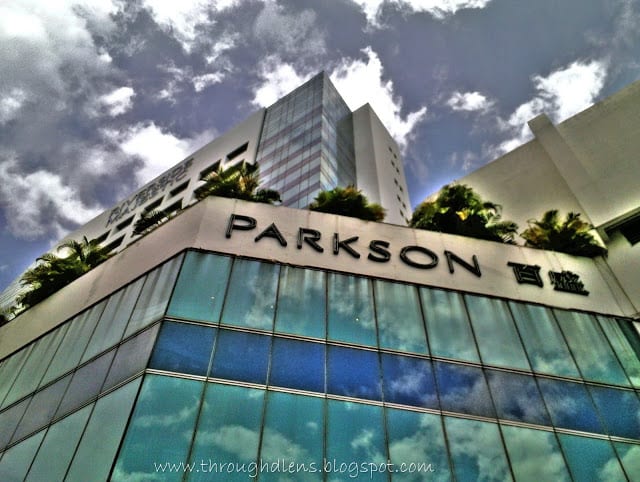
    Department store operator Parkson Retail Asia has posted a second quarter net profit of $2.9 million, down 71.6 per cent from the same period a year ago.

    Revenue in the three months to Dec 31 fell 12 per cent to $103.5 million, driven by a 7.3 per cent fall in same store sales growth in Malaysia and 5.2 per cent fall in same store sales growth in Myanmar.

    Some new stores were also in their first year of operations, which is an initial loss-making period, the group said.

    Earnings per share stood at 0.43 cents, down from 1.51 cents a year ago.

    Net asset value per share was 27 cents as at Dec 31, up from 22 cents as at June 30 last year.

    “The Malaysia operations for the next reporting quarter may encounter muted consumer sentiment, however, this drag will be buffered by progressive normalisation of sales post-GST (Goods and Services Tax ),” the group said in a statement to shareholders after market close on Feb 3.

    It said that it expects Vietnam’s retail environment to improve in the second half, while demand from Indonesia’s middle class will remain robust.

    “The Myanmar operations may be affected by the possible closure of FMI Centre, where the store is located, for re-development. However, the landlord has not confirm on the timing for the redevelopment,” the group added.

  • Alibaba Beats, Changyou Beats on Earnings

    Alibaba Beats, Changyou Beats on Earnings

    Markets experienced another volatile week, gaining and losing on alternate days ahead of the Lunar New Year holidays next week. The Shanghai Composite Index declined on Monday after the official purchasing managers index suffered its sixth consecutive monthly fall. The benchmark index increased on Tuesday, moving up 2.3% after the People’s Bank of China moved to raise liquidity in the financial system.

    The Shanghai Composite Index moved lower on Wednesday as investors turned cautious and oil prices declined heavily. The benchmark index increased 1.5% on Thursday closing at its highest level since Jan 25.

    Alibaba Group Holding Ltd. reported third-quarter fiscal 2016 (ended Dec 30, 2015) earnings of 73 cents per share, which exceeded the Zacks Consensus Estimate of 70 cents. Changyou.com Ltd. reported adjusted fourth-quarter 2015 earnings of 73 cents per share, which exceeded the Zacks Consensus Estimate of 54 cents.

    Last Week’s Developments

    Last Friday, the Shanghai Composite Index surged 3.1%, reducing its monthly loss to 23%. Despite the day’s gains, the decline for the month was the worst since Oct 2008. Stocks moved up for the first time in four days following speculation that the worst selloff in over a month was excessive in nature. Industrial and financial stocks led gains.

    Additionally, China’s central bank announced it will undertake open market operations on every working day around the Lunar New Year holiday. The number of these operations will be increased from their normal biweekly pace to increase liquidity in the banking system ahead of the holiday. This statement also boosted stocks.

    The CSI 300 added 3.2%. A gauge of brokerages and banks increased 3.2%. A measure of industrial shares increased 3.6%, the highest among the 10 industrial sectors. The Hang Seng increased for a third day, moving up 2.5%. The Hang Seng China Enterprises Index increased 2.7%. The H-share index increased after the Bank of Japan lowered interest rates into the negative zone in order to stimulate its flagging economy.

    Markets and the Economy This Week

    The Shanghai Composite Index declined 1.8% on Monday, increasing January’s selloff. The official purchasing managers index declined to 49.4, the sixth consecutive monthly fall. This is the lowest level experienced in three years. Additionally, the country’s most established companies issued warnings about a fall in earnings.

    Among other economic reports, official non-manufacturing PMI fell from 54.4 in December to 53.5 in January. In contrast, Caixin China Manufacturing PMI increased from 48.2 to 48.4 in January.

    The CSI 300 declined 1.5%. A sub index of energy stocks declined 2.8%, emerging as the largest decliner among the 10 industry groups. PetroChina Co. lktglost 2.8% after stating that falling crude and gas prices would hurt full year earnings.  The Hang Seng declined for the first time in four days, falling 0.5%. The Hang Seng China Enterprises Index moved down 1.2%.

    The benchmark index increased on Tuesday, moving up 2.3% after the People’s Bank of China moved to raise liquidity in the financial system. The central bank injected 100 billion yuan ($15 billion) into the country’s banks via reverse repurchase agreements ahead of the new year holidays.

    Tech and industrial stocks led gains. A measure of tech stocks rose to its highest level in seven days. The CSI 300 advanced 2.1%. All of its sub-indexes increased while measures of tech and industrial stocks increased by a minimum of 2.7%.  The Hang Seng declined 0.8% The Hang Seng China Enterprises Index moved down 1.1%.

    The Shanghai Composite Index lost 0.4% on Wednesday as investors turned cautious and oil prices declined heavily. A measure of energy stocks declined 1.6% as oil prices moved to around $30 a barrel following the steepest two day decline in seven years. PetroChina declined by 1.4% in Shanghai and lost 4.2% in Hong Kong.

    Positive economic data provided little comfort to investors. The Caixin China Services PMI increased to 52.4 in January from 50.2 in December. This was the highest level witnessed since July. A measure of energy stocks declined 1.6% due to the drop in oil prices.

    A sub-index of property stocks increased 0.4% on the Shanghai exchange. This was primarily due to the central bank’s decision to reduce down payments on mortgages for first time home buyers. The CSI 300 declined 0.4%. The Hang Seng fell for a third successive day, declining 2.3%. The Hang Seng China Enterprises Index sank, losing 2.5 percent, to its lowest point in more than a year.

    The benchmark index increased 1.5% on Thursday closing at its highest level since Jan 25. Commodity stocks surged and the People’s Bank of China intensified its efforts to reduce shortage of cash before markets close for the new year holidays. A gauge of energy stocks moved up from record low levels following the longest rally in crude futures in nearly two weeks.

    The central bank pumped 80 billion yuan ($12 billion) into the monetary system utilizing reverse repurchase agreements lasting 14 days. This open market operation is part of the monetary authority’s efforts to control rising borrowing costs even as capital outflows and demand for funds rise.  Meanwhile the People’s Bank of China increased yuan fixing by the highest extent in two months.

    The CSI 300 added 1.2%. A sub-index of material stocks within the CSI 300 gained 2.8%, the highest among its industry groups. PetroChina gained 0.6% during the session. The Hang Seng China Enterprises Index rebounded, moving up 1.5%.

    Stocks in the News

    Alibaba Group Holding Limited reported third-quarter fiscal 2016 (ended Dec 30, 2015) earnings of 73 cents per share, which exceeded the Zacks Consensus Estimate of 70 cents. The adjusted figure excludes one-time items but includes stock-based compensation expense.

    Alibaba reported revenues of RMB34.54 billion (US$5.3 billion), up 55.8% sequentially and 31.9% year over year, driven by strong mobile revenues. Also, revenues surpassed the Zacks Consensus Estimate of $5.08 billion.

    Total China retail marketplaces GMV came in at RMB964.0 billion (US$149.0 billion), up 23% year over year. China retail marketplaces had 407 million annual active buyers in the 12-month period ended Dec 31, 2015, representing a 22% year-over-year growth.

    Mobile GMV was RMB651.0 billion (US$101.0 billion), a 99% year-over-year surge. Mobile GMV accounted for 68% of total China retail marketplaces GMV as against 62% last quarter and 42% in the previous year. Mobile MAUs grew to 393 million, improving 48% year over year, driven by increased promotion of mobile apps.

    Changyou.com Ltd. reported adjusted fourth-quarter 2015 earnings of 73 cents per share, which exceeded the Zacks Consensus Estimate of 54 cents. This was also a significant improvement over earnings of 21 cents per share reported in the same period last year. However, this was lower than the adjusted earnings of $1.55 cents reported in the third quarter of 2015.

    Changyou.com reported revenues of $162 million, down 14% from third quarter 2015. Additionally, revenues declined 25% compared to the same period last year. Revenues from online games came in at $127 million, falling 31% on a year-over-year basis.

    For fiscal year 2015, Changyou.com reported revenues of $762 million, an improvement over 2014’s figure of $755 million. Revenues from online games came in at $637 million, declining from $652 million reported in 2014. .

    TAL Education Group reported adjusted third-quarter 2015 earnings of 12 cents per share, in line with the Zacks Consensus Estimate. This is marginally lower than the 13 cents reported in the year-ago period. However, this is significantly lower than the adjusted earnings of 72 cents reported in the second quarter of 2015.

    TAL Education Group reported revenues of $142.2 million, representing a 43.1% increase over the same period last year. However, revenues declined significantly from the $173 million reported in second quarter 2015.

    For the nine months ended Nov 2015, TAL Education reported revenues of $ 444.9 million, which represents a 43.2% improvement on a yearly basis. During this period, total student enrollments increased by 53.4% on a yearly basis.

    JD.com, Inc. has inked an agreement with DHL per which they will collaborate across a number of cross border supply chain activities. These initiatives will utilize each company’s unique capabilities, of ecommerce and logistics and widen their existing relationship.

    Earlier, in July last year the two companies had revealed that DHL was becoming the preferred logistics service provider for delivery of certain orders made on the Chinese ecommerce giant’s U.S. Mall. The agreement related to deliveries would pertain to those products delivered to China as well as across that country.

    DHL will be the preferred logistics provider for JD.com’s International Business Group per the terms of the new agreement. This unit concentrates on consumers placing orders from outside China. Further, JD.com will now be a strategic customer per the Fast Growing Enterprises initiative of DHL. This will provide the ecommerce company access to a number of logistics solutions from all of DHL’s business units.

    CNOOC Ltd. said it has started production at two offshore projects. These are the Weizhou 12-2 oilfield joint development project and the Weizhou 11-4 North oilfield Phase II project. Both of these projects are located in South China Sea’s Beibu Gulf Basin.

    With an average water depth of around 36 meters, the Weizhou 12-2 project has three oilfields. Production facilities include three wellhead platforms, including 18 wells on all of which production has started. Total production has touched a daily rate of 16,000 barrels, achieving the peak production of its overall developing plan.

    The Weizhou 11-4 North Project’s average water depth is around 40 meters. It has two wellhead platforms and 15 producing wells. At present, one well is producing oil at a daily rate of 500 barrels and is projected to touch peak production of 8,000 bpd by end 2016.

    Performance of Most Actively Traded US-Listed Chinese Stocks                              

    The table given below shows the price movements of 10 Chinese companies with the highest three-month average trading volume on U.S. exchanges. Price movements over the last five days and during the last six months have been included.

    Ticker Last 5 Day’s Performance 6-Month Performance
    BABA -9.2% -19.6%
    JD -7.2% -30%
    VIPS -6.4% -41.3%
    CTRP -5% +1.6%
    SFUN -5.3% -19.2%
    BIDU -5.5% -10.1%
    YOKU -0.1% +41.3%
    JMEI -8% -67.9%
    QIHU -0.8% +12.4%
    TSL +1.2% +4.6%


  • S-Reits are safe havens amid uncertainty

    S-Reits are safe havens amid uncertainty

    Amid the economic uncertainty caused by falling oil prices and slowing growth in China, Singapore-listed real estate investment trusts (S-Reits) are safe havens, DBS Group Research said yesterday.

    S-Reits have outperformed the local benchmark Straits Times Index and real estate developers so far this year, DBS analysts Derek Tan and Mervin Song wrote in a report.

    Like many sectors, S-Reits have fallen in value, but not as sharply as most others. S-Reit unit prices are down by about 3 per cent overall since the start of the year, while the STI has plunged by a much more dramatic 11 per cent.

    These trusts are likely to continue putting in a “firm” performance in the near term, the analysts wrote, especially as increasing expectations of a delay in further interest rate hikes by the United States Federal Reserve will have a positive impact on share prices in general.

    The Fed lifted interest rates in December for the first time since 2006, and the DBS forecasters expect the central bank to raise rates four times throughout this year.

    But the Fed has indicated that it has grown cautious after its December move, as the slump in oil prices has made it harder for it to meet its inflation targets, implying that the next rate hike could be delayed.

    The longer the Fed takes to raise rates, the better for Reits as it will keep their borrowing costs low.

    “While higher interest rates are a potential risk in the medium term, we remain comforted by S-Reits’ conservative capital strategies… which will mitigate the impact of higher refinancing costs when it occurs,” the DBS analysts said.

    On average, locally listed Reits have a gearing of 34 per cent, which is “manageable”, they noted.

    S-Reits are trading at attractive valuations, which make it a good time for investors to jump in and lock in some yields, they added, saying that S-Reits are trading at 0.9 time price to book and offer investors a yield of 7.1 per cent.

    “We believe current valuations are attractive re-entry levels and believe that large caps are likely to benefit as investors turn yield-hungry in a tepid growth environment,” they said.

    Their favourite S-Reits are “those with the opportunity to surprise on the upside through acquisitions or portfolio-specific catalysts”, the DBS analysts added.

    Their top picks are Ascendas Reit, Mapletree Greater China Commercial Trust, Mapletree Commercial Trust, Frasers Centrepoint Trust and CapitaLand Retail China Trust.

  • How South Korea is hurting European shares

    How South Korea is hurting European shares

    Seoul hosts largest and most liquid market in the world for options on single stocks. What links a European benchmark equity index, the Hong Kong dollar and a group of blue-chip Chinese stocks? Apart from the early-year pain shared by investors in all three, Seoul may not be the first answer that springs to mind. But it appears South Korea’s outsized derivatives market, dominated by retail investors, has a lot to answer for.

    Korea hosts the largest and most liquid market in the world for options on single stocks — bigger than the US, even, according to bankers — and retail interest in derivatives does not stop there. In what looks like the latest example of a “butterfly effect” in global markets, last year Korean investors bought record amounts of so-called “autocallables” — a structured product offering an attractive yield. About $40bn are outstanding.

    Markets Insight

    This year stock market losses have forced the sellers of those deals to hedge their exposure — that has damped volatility for Euro Stoxx-linked products, pressured the tightly-pegged Hong Kong dollar and crushed the Hang Seng China Enterprises Index. On Wednesday for example, the sliding oil price prompted a weakening of stocks across Asia. While in mainland China benchmark indices closed 0.4 per cent lower, the HSCEI — consisting of many of the same stocks — dropped 2.5 per cent.

    Autocallables contain features that have blown up previous products, from “target redemption forwards” — once dubbed kill-you-later-accumulators — to “knock-in-knock-out”, or Kiko, deals. Asian investors have reason to know: the former blew a $2bn hole in the balance sheet of Citic, China’s foremost conglomerate in 2008. And Kikos caused such problems for Korean companies that had wrongly hedged the South Korean won that regulators in 2009 had to stress test banks to gauge the depth of the issue.

    Since these autocallables are two- or three-year deals, and most were sold last year, the final reckoning over who has lost what is some way off. The area of interest for now is their effect on other markets.

    The products in essence sell volatility. They work by offering investors a “worst of” basket of two or three reference securities — typically indices. The sales pitch is that investors get a yield on top of their capital if the reference securities stay within a specified range. If they rally above it, investors are “knocked out” and get their money back with a bonus. If it falls below a specified point — usually between 40 and 50 per cent of the level, when the product was sold — they are “knocked in” and lose some capital.

    Holders can be made whole if the index recovers all lost ground before the autocallable ends — hence it being difficult to gauge losses at this point. However, the nearer an index falls to that strike price, the more product sellers have to hedge, which they do via selling futures. This is what is weighing on the HSCEI, which was a popular inclusion in the first half of last year because of China’s soaring markets. But it is now down 46 per cent from its May 2015 peak — putting it right in the zone where issuer hedging will be at its highest.

    Hong Kong indices are even more popular in Korean products because of the 32-year unchanged link between the Hong Kong dollar and its US counterpart. So imagine the fear among Korean sellers of autocallables last month on seeing the Hong Kong currency suddenly spike higher after Chinese authorities quashed speculative shorts in the offshore renminbi market. The result was additional weakening pressure on the Hong Kong dollar as Korean groups rushed to hedge.

    “The bottom line remains that investors should be aware of this additional market dynamic that could drive Hong Kong dollar volatility, forwards and swaps higher,” says William Chan, head of Asia-Pacific equity derivatives research at Bank of America Merrill Lynch.

    Before the financial crisis, most autocallables would have referenced South Korea’s benchmark Kospi Composite. But as the autocallables market grew and volatility in Korea stayed low, issuers had to look elsewhere. The Euro Stoxx 600 is down about 20 per cent from last year’s peak. In the current febrile environment, that could be enough to see Korean issuers wanting to hedge early — reportedly suppressing volatility in two- and three-year options.

    Korea’s derivatives habit does not yet look big enough to cause systemic stresses. But as an example of the unexpected and little-explored links between markets, it should be watched closely.

  • HSBC Singapore plans to transfer retail, wealth business to local subsidiary

    HSBC Singapore plans to transfer retail, wealth business to local subsidiary

    The Hongkong and Shanghai Banking Corporation (HSBC) Singapore is planning to transfer its retail banking and wealth management (RBWM) division to a locally incorporated subsidiary named HSBC Bank (Singapore).

    Expected to become operational from 9 May this year, the subsidiary will be responsible for managing all the accounts, assets and security arrangements associated with the RBWM unit.

    The transfer of operations is subject to regulatory and court approvals.

    HSBC Bank (Singapore) will possess a full bank license with qualifying full bank privileges, which will allow the subsidiary to open more branches than other foreign banks, straitstimes reported.

    The move follows an announcement by the Monetary Authority of Singapore (MAS) in April last year that HSBC is considered one of seven domestic systemically important banks in Singapore, according to media sources.

    According to MAS, banks with a significant retail presence must locally incorporate their retail operations, a move that could help the Singapore financial system to function properly.

    HSBC Singapore CEO Guy Harvey-Samuel was quoted by Channel NewsAsia as saying: “The transfer of our retail banking and wealth management business in Singapore to a locally incorporated subsidiary reflects the success, scale of growth and significance of our retail business in this market.”

    HSBC’s other activities including commercial banking, private banking and global banking will continue to operate under the existing Singapore branch.

    “Singapore is a top-seven priority country for the HSBC Group globally and we will continue to invest in our business here. We are excited about new opportunities to further expand our presence,” Harvey-Samuel was quoted by straitstimes.

  • Citi’s exec sees clear focus on target clients

    Citi’s exec sees clear focus on target clients

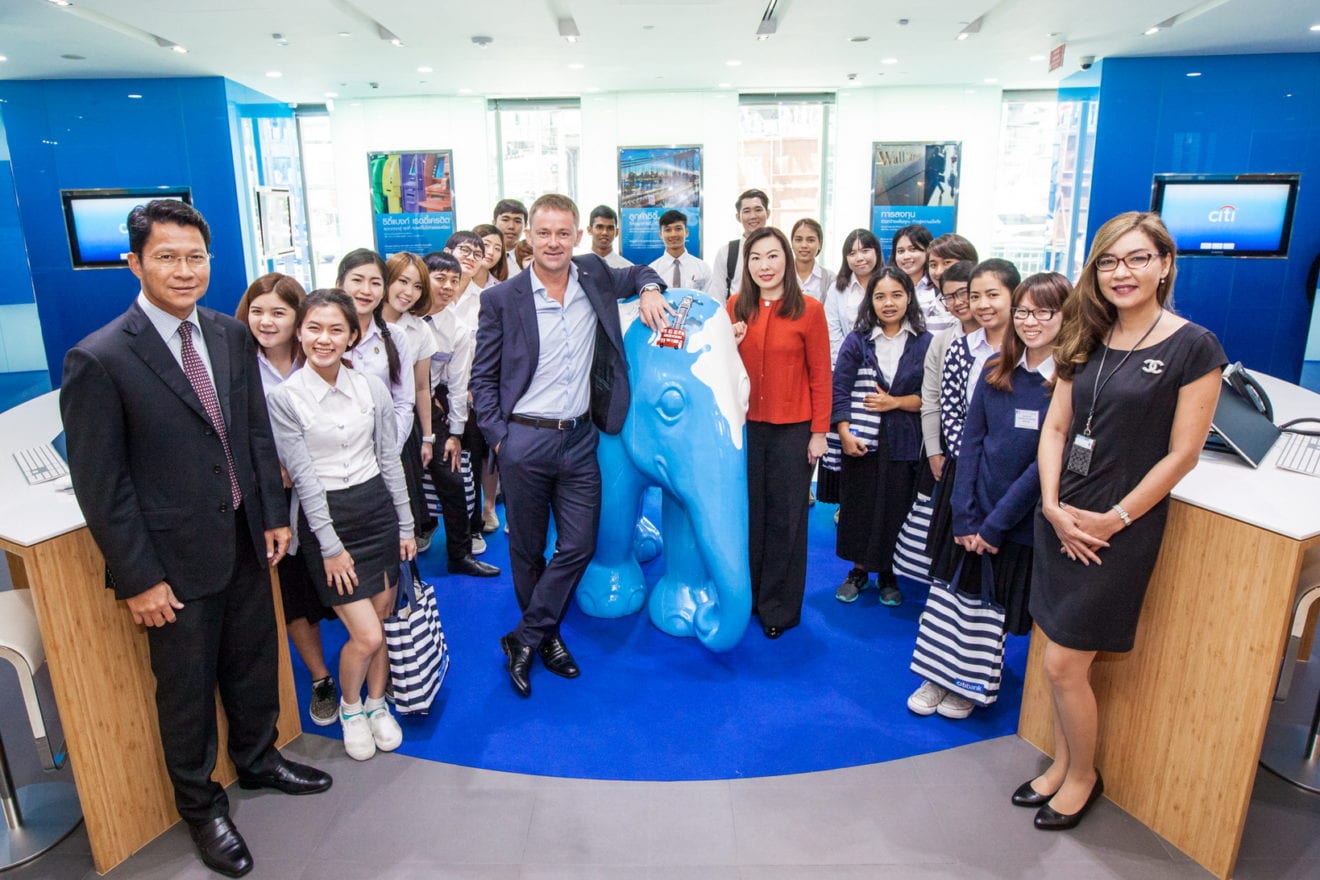
    Vira-anong Phutrakul was promoted to the post of consumer business manager in November, making her the first local executive to lead Citi Thailand’s consumer-banking business, overseeing functions including credit cards and loans, retail-banking wealth management, e-business and consumer lending.

    The bank has set itself a challenging growth target of 10-15 per cent in terms of customer numbers and revenue, given the prevailing economic conditions, she said.

    To achieve the high growth target, the strategy this year is to make Citi Thailand the bank for its main target segment, that is, people with a family, those doing business overseas and/or who are globally minded, she explained.

    In Thailand, Citi has a customer base of almost 1 million accounts, comprising credit-card holders, personal borrowers and wealth-management customers.

    Wealth-management clients have total assets under management of around US$1 billion (Bt35.7 billion).

    The executive said individual investment provided the main potential growth area for Citi Thailand, as credit cards were the mode of transaction payment for this type of business.

    As a global bank, Citi has the strength to serve globally minded consumers and the Bank of Thailand last year allowed individuals to invest in offshore markets, she said.

    The bank will be the first commercial bank in the Kingdom to offer an offshore-investment service to retail investors, with the facility set to become available this quarter.

    Citi Thailand will also launch a new mobile-banking service for retail customers, through which they can buy offshore mutual funds.

    “We and six fund managers globally will announce the service in the next two weeks, which will be offered to Citigold customers who have assets under management of Bt3 million,” she said.

    The bank has seen a growing trend of retail customers allocating investment to the offshore market, Vira-anong said, adding that the trend of borderless investment should be an opportunity for wealth-management at Citi this year.

    Wealth-management business is forecast to grow by 10-15 per cent after launching the offshore mutual-fund service.

    The bank will also upgrade all benefits offered via its existing products this year, in order to gain market share and ensure that growth in both credit cards and personal loans outpaces the industry, even though double-digit expansion in these areas might not be possible, she explained.

    The loan portfolio at Citi Thailand stood at around $2 billion at the end of last year.

    Meanwhile, Phatra Securities yesterday announced wealth-management services for “mass affluent” customers with the launch of Phatra Edge.

    “Over the last 15 years, Phatra has offered its expertise in wealth management for high-net-worth individuals and therefore has a good understanding of their needs,” said Kulnan Tsanthaiwo, managing director of the company’s Private Client Group.

    “The number of ‘mass affluent’ individuals [with at least Bt2 million in investable assets] in Thailand is growing continuously, and these persons tend to place great importance on financial planning,” she said, adding that these clients need to optimise their money by investing.

    “White-collar workers, employees paying income tax of 20 per cent or more, and people who invest in LTF/RMF [long-term equity fund/retirement mutual fund] products need help and advice with their investments, and Phatra Edge offers a complete range of features and services to help our clients achieve their life goals,” the managing director said.

  • Custodian Banks Officially Become DPP Members

    Custodian Banks Officially Become DPP Members

    The Financial Services Authority (OJK), the Indonesian Securities Investor Protection Fund (P3IEI/SIPF) and relevant stakeholders had established the Investor Protection Fund (DPP). The goal is to improve the security of investing in Indonesia’s capital market.

    The Indonesia Stock Exchange (IDX) announced that custodian banks listed in the IDX have been DPP members since January 1, 2016. Thus the number of DPP members now reaches 133 custodians.

    “One hundred and twelve of them are securities brokers (PPE), which administrate customers’ securities accounts, and 21 are custodian banks,” SIPF president director Yoyo Isharsaya said on Thursday, February 4.

    DPP protects investors’ assets deposited at brokers or at a custodian bank. The protected assets are securities that are collectively entrusted to a custodian and recorded in a securities account in a central securities depository (LPP).

    The DPP also protects investors’ funds that are deposited to a fund custodian by opening an account.

    With custodian banks becoming DPP members, the value of investors’ assets are protected by the DPP increased to by 295.27 percent from Rp765.25 trillion per December 31, 2015 to Rp3024.78 trillion per January 1, 2016.

    Investors whose assets are protected by the DPP are those who entrusted their assets and a securities account at the custodian, opened securities sub-accounts at the LPP by a custodian, and have a single investor identification issued by the Central Securities Depository.

  • Maybank Singapore in ongoing talks with MAS over incorporation here

    Maybank Singapore in ongoing talks with MAS over incorporation here

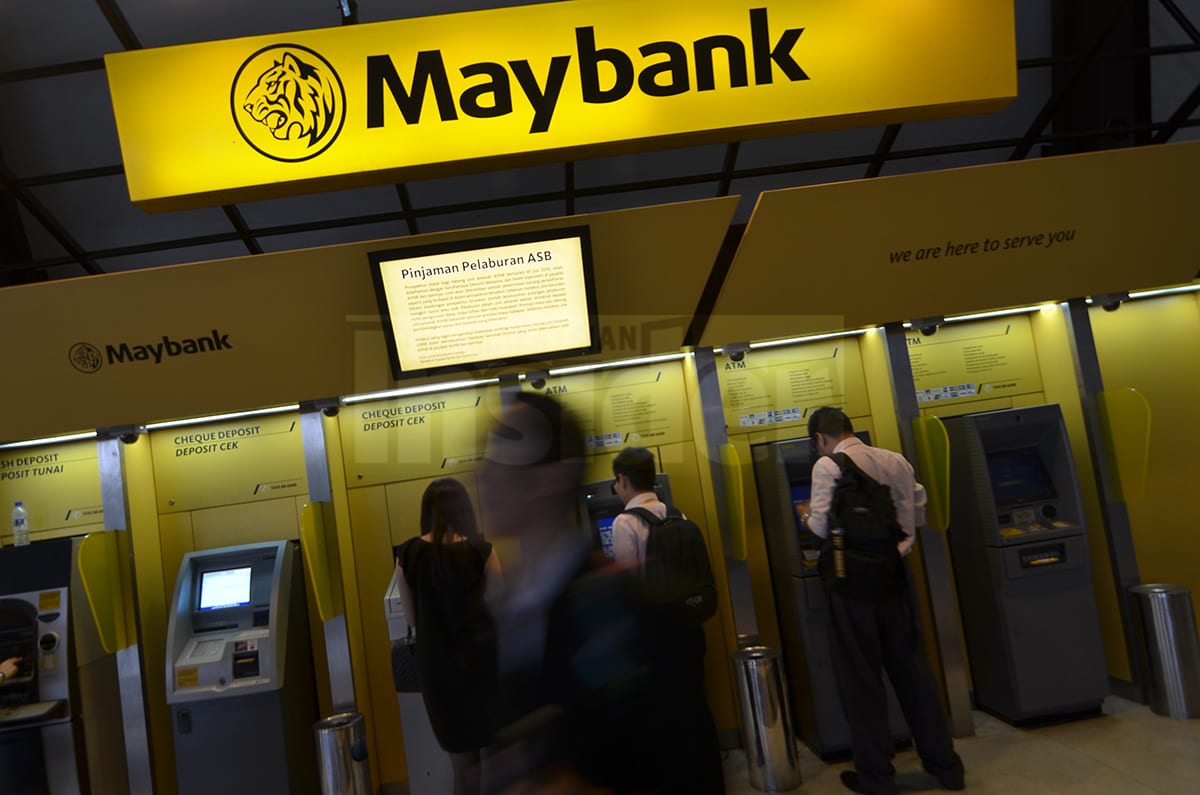
    Maybank Singapore on Thursday said it has had ongoing consultations with the Monetary Authority of Singapore (MAS) on the incorporation of its operations in Singapore, and “reaffirm our commitment to this”.

    It did not offer a date for the incorporation of its retail business here, and remains the only one of seven domestic systemically important banks (D-SIB) in Singapore that have not incorporate the business, or confirmed a timeline for this.

    A framework unveiled by the MAS in May 2015 listed seven banks – DBS, OCBC, UOB, Citibank, Standard Chartered, Maybank and HSBC – as lenders that are effectively deemed “too big to fail” in Singapore, mainly because of their significant retail presence here. These banks will face additional supervisory measures, and this includes locally incorporating their retail operations.

    This means the local deposits are ringfenced from the group’s operations, and it provides protection against a potential loss of Singapore-based consumers’ money when the overall group runs into trouble.

    HSBC has announced that it expects to incorporate its retail operations this year. All but Maybank and HSBC have ringfenced their retail business here.

    “Maybank sees Singapore as a key market, and an important gateway to the rest of the region. The local incorporation signifies a further deepening of Maybank’s roots in Singapore, cementing its unwavering commitment to the local community after 55 years in the country,” Maybank Singapore said.

    “Singapore is an important part of the bank’s strategy to continue growing its international business and we look forward to forging even closer ties with our customers in Singapore and the region.”

    Relating to banks that have to locally incorporate their retail operations, MAS has said that “where appropriate, MAS will provide such D-SIBs with an adequate transition period to comply with this requirement”.

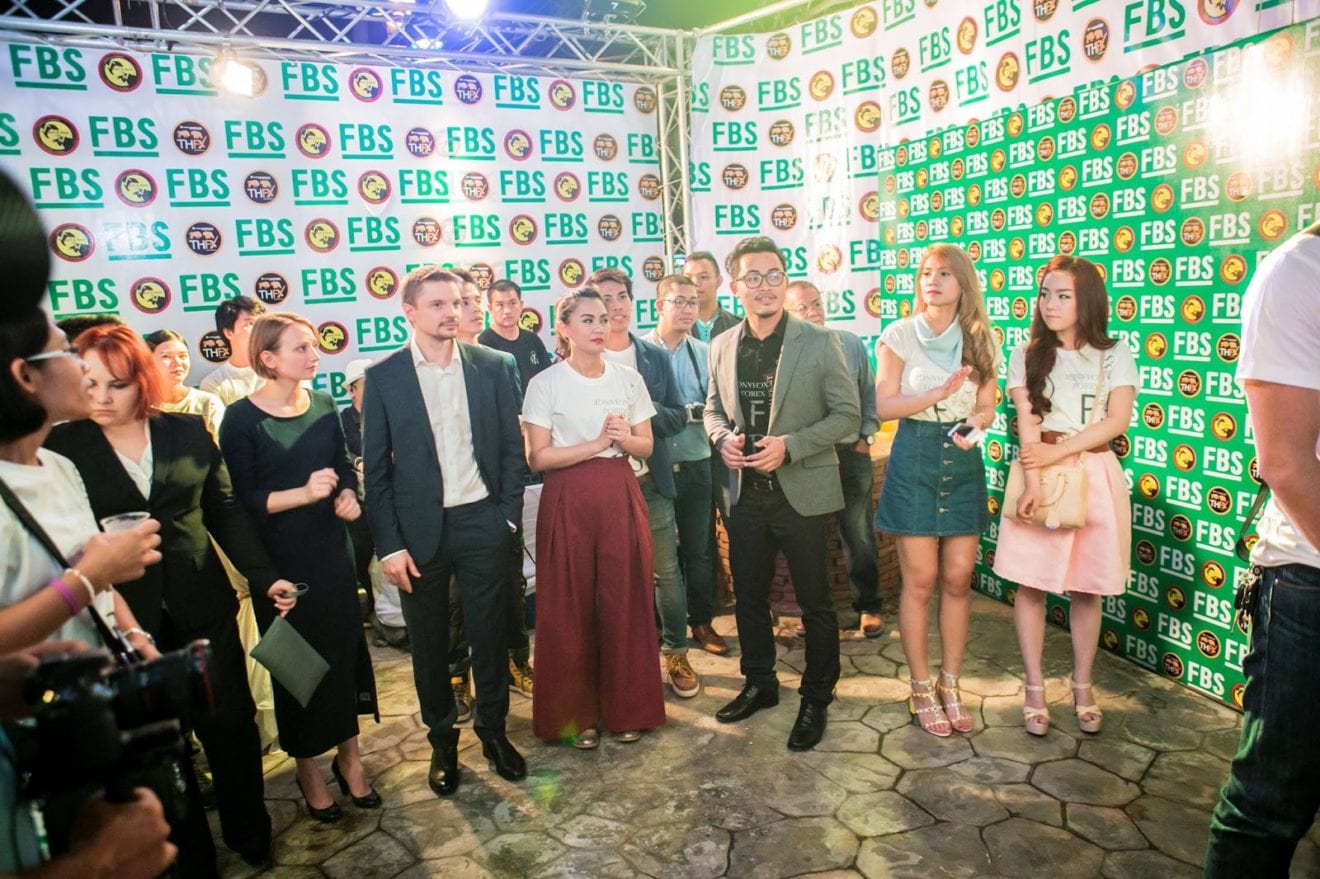
  • Retail forex broker FBS opens third office in Thailand

    Retail forex broker FBS opens third office in Thailand

    The retail forex broker FBS announced the opening of its third office in Thailand. It is the second office of the company in the country’s capital Bangkok. The first one was opened in July 2015. Since October 2015 the broker also has an office in the city of Chiang Mai.

    FBS is present in more than 120 countries and has 13 international offices.

    Besides the usual business activities with current and new clients and partners, FBS is planning workshops for beginner and professional traders, hosted by Forex experts. It reminds its customers that it provides 24/5 customer support and consultation in Thai language.

    FBS was established in 2009. It is regulated by the international Financial Services Commission (IFSC) in Belize and the Russian self-regulation organisation Centre for Regulation in OTC Financial Instruments and Technologies (CRFIN).

    FBS offers trading in the major currency pairs, metals and CFDs. The minimum deposit is $1 and the leverage is up to 1:2000. The broker also offers spreads from 0 pips.