Category: Finance

Retail News Asia is committed to providing both local and global retailers with the latest Finance news throughout the Asian market. This on a daily base.

  • Bank Mega, official Barcelona bank in Indonesia

    Bank Mega, official Barcelona bank in Indonesia

    FC Barcelona and Bank Mega signed a Regional Partnership Agreement last December to officially confirm the latter as FCB’s Official Bank in Indonesia. The representatives of the Club at the signing ceremony included Manel Arroyo, Vice Chairman, Francesco Calvo, Chief Revenue Officer and Xavier Asensi Brufau, Managing Director – Asia Pacific, while Bank Mega was represented by Kostaman Thayib, President Director and Dodit Wiweko Probojakti, Managing Director of Cards and Loan.

    The agreement makes Bank Mega Barça’s first ever banking partner in Indonesia. Holders of Mega Barça cards will have various advantages, such as the chance to win tickets for Barça games at Camp Nou, extra rewards for purchases at FCB’s official Asian online store, the chance to win exclusive FCB gifts and more. Savings Account customers that meet specific requirements will also receive special FCB souvenirs. The program will be launched in the first quarter of 2016.

    About Bank Mega

    Bank Mega is one of the largest card issuers in Indonesia under CT Corpora holding company. Bank Mega has a network of 345 branches across Indonesia.

    The bank strengthens the synergy of companies under the management of PT CT Corpora, such as Carrefour and Metro, as well as improving credit card services, a factor that distinguishes Bank Mega from the competition.

    “Bank Mega is the perfect bank to be the Official FC Barcelona Bank in Indonesia” said Manel Arroyo. “We are delighted to form this partnership and reach our massive fan base in Indonesia and show our appreciation to the fans through various partnership programs. Bank Mega is one of the top three credit card issuers in Indonesia, and it has strong synergy with retail companies under CT Corpora. We are confident that this partnership will be beneficial to Barça fans. We look forward to a long and mutually beneficial relationship with Bank Mega.”

    “This partnership is based on Bank Mega and FC Barcelona’s intention to provide benefits for the over 26 million Barça fans in Indonesia” added Kostaman Thayib, President Director of Bank Mega. “This partnership brings co-branded products that could enhance the fans’ identity as part of the Barça family and provide different benefits with exclusive programs from Bank Mega’s various products and services, including co-brand payment cards. Ultimately, the fans will have the money-can’t-buy opportunity to meet Barça players in person.”

    Mr Thayib also mentioned that the partnership will launch co-branded Mega – Barça cards, which will be specially designed for FC Barcelona fans in Indonesia.


  • Singapore risks fading into investment backwater as market cap shrinks

    Singapore risks fading into investment backwater as market cap shrinks

    Fresh off its worst year for listings in at least two decades, the Singapore stock market now faces the threat of fading into an irrelevant backwater for global investors as large privatisations, small floats and a broad-based equities slump continue to erode its market value and appeal, market watchers warn.

    With the number of initial public offerings (IPOs) here falling in 2015 to its lowest annual level since the Singapore Exchange (SGX) opened its doors in late 1999, the local share market has been left in the dust by regional rival Hong Kong as of late, while its neighbours in South-east Asia have begun to nip at its heels.

    One crucial and worrying sign is that the sharp slide in Singapore’s total market capitalisation in 2015 reflects evaporating liquidity, decreasing depth and a sore lack of interest in raising funds here as attention turns to markets with brighter prospects, analysts and asset managers say, adding that this trend could well turn into a vicious cycle.

    The total market value of stocks listed on the Singapore Exchange added up to about US$463.46 billion at the close of trading on Dec 31, 2015, going by a Bloomberg gauge based on actively traded primary securities and stripping out exchange traded funds and ADRs (American depositary receipts).

    This number would make the entire Singapore market cap smaller than that of Nasdaq-listed Apple, which weighed in at around US$586.86 billion at the end of last week. It also marks the Singapore market cap’s lowest level since hitting US$464.41 billion at the end of 2011.

    Singapore’s market cap shrank a sharp US$107.18 billion or 18.8 per cent from a year ago, according to Bloomberg data. The bulk of the drop was due to a broad-based equities slump that also put a dent in other bourses across Asia. The Straits Times Index fell 14 per cent in 2015 to finish the year at 2,882.73 points, down from 3,365.15 at the end of the previous year.

    But another significant factor is a handful of big delistings that has occurred alongside a persistent dearth of sizeable initial public offerings (IPOs), analysts say.

    “Privatisations of many large companies in the last few years, especially in the property sector, have shrunk the investable pool of stocks in Singapore,” said Kum Soek Ching, head of Southeast Asia research at Credit Suisse Private Banking Asia Pacific.

    “The absence of large and meaningful IPOs in recent years have also not been supportive to the total market cap of Singapore … With less market participants, a smaller-cap market can suffer from liquidity issue during periods of stress.”

    Large delistings in 2015 included that of conglomerate Keppel Corp’s property arm Keppel Land in July. KepLand had a market value of S$6.56 billion, based on 1.55 billion shares outstanding and the takeover price of S$4.38 per share that KepCorp paid.

    Engineering firm UE E&C, which was worth S$337.5 million based on an offer price of S$1.25 for 270 million shares, was taken over by a private equity firm and delisted in March. Bookstore chain Popular Holdings also delisted in May. It had had a market value of around S$255.07 million, based on offer price of S$0.32 and about 797.09 million shares outstanding.

    The declining total market cap points to an increasing lack of interest from companies in tapping equity capital markets here.

    Against the market values of the delistings last year, there was just S$339.18 million in total IPO fund- raisings in 2015. All but one of the 13 public floats here last year were Catalist listings, and the average IPO size worked out to around a puny S$26 million.

    The number of IPOs and the total IPO funds raised last year were the smallest in at least two decades, going by newspaper reports. Up until 2015, the SGX had not seen fewer than 20 public floats a year. In the depths of the global financial crisis, the year 2008 had 22 IPOs raising US$931 million while 2009 had 23 floats that raised about S$3.21 billion, according to media reports then. Even in 1998, with the Asian financial crisis, SGX managed to rake in 20 IPOs that raised about S$406 million.

    Several Singapore-based companies are also eschewing a local listing for an overseas float. Aircraft leasing firm BOC Aviation said last year that it wanted to list in Hong Kong. A Singapore medical company that develops treatments for Alzheimer’s also said recently that it was gunning for a Nasdaq IPO, according to media reports.

    The recent trend of substantial privatisations and tiny IPOs could continue to reduce Singapore’s market cap this year, which market watchers say does not bode well for local stocks’ investment appeal.

    “Investors, especially foreign institutions, like liquid markets, and market liquidity correlates with market size. Institutional investors take a silo approach and allocate to illiquid private equity and liquid listed equity, where they seek and expect liquidity,” said Bryan Goh, chief investment officer at wealth manager Bordier.

    Dealmakers have already hinted that they expect 2016 to be characterised by Catalist IPOs, and a couple of large delistings are already on the cards. French shipping firm CMA CGM is trying to privatise Neptune Orient Lines (NOL), which had a market cap of S$3.2 billion at end-2015. Singapore Airlines is also trying to delist Tiger Airways, which had a market cap of around S$1.03 billion as at Dec 31.

    Ms Kum added that the size of a market’s total capitalisation would determine its weighting in indices such as the MSCI that institutional investors use as benchmarks. “A market with a small weighting may become irrelevant for institutional investors, unless it has a very compelling story.

    “With a lower index weighting, the Singapore market risks losing its relevance and importance to institutional investors. Private investors may also increasingly need to avail themselves of more investable options in overseas markets, in order to preserve or grow their wealth, creating a vicious cycle in diminishing the market size and relevance.”

    According to Bloomberg data, Hong Kong had a total market cap of US$4.105 trillion at end-2015, nearly nine times that of Singapore. It also eclipsed Singapore in terms of IPO fund-raising last year, raising more than 160 times the total figure in the Republic. Japan’s market cap is nearly 11 times that of Singapore and the US is nearly 51 times as large.

    To makes matters gloomier, other countries in South-east Asia, which have so far remained smaller than Singapore in terms of total market value, are beginning to catch up.

    The gap between Singapore’s and Malaysia’s market cap was US$117.98 billion in 2014; that shrank 27 per cent to US$86.35 billion in 2015. For Indonesia, the gap with Singapore narrowed 24 per cent from US$148.68 billion to US$113.34 billion, while the gap between Singapore and Thailand was reduced by 16 per cent from US$154.85 billion to US$130.53 billion over the same timeframe.

    IG market strategist Bernard Aw noted: “We are always in competition with other bourses, and failing to increase or retain investors’ interest is akin to a kiss of death. This is why Singapore is trying to attract investors’ interest back via initiatives such as the introduction of new equity indices which are sector-specific.”

    However, some market watchers said there were still things to like about the Singapore stock market.

    “Singapore does not necessarily lose its shine as an investment destination as a result of its market cap declining or being relatively smaller than that of other global financial hubs,” said Andrew Wood, head of Asia country risk at BMI Research.

    “It is really the quality of the firms listed in that market as well, the maturity of the financial markets framework, along with other factors such as the political risk and macroeconomic risk environment in that country. Singapore scores very well for the last three criteria.”

    Though he cautioned that Singapore “could lose out if it is seen as a less attractive environment for IPOs, and a shrinking market cap could speak to a relatively shallower capital market”, Mr Wood said Singapore could still remain attractive for investors due to its regulatory environment and its macroeconomic and political stability.

    Hugh Young, Asia managing director of Aberdeen Asset Management, also remained optimistic. Though he noted that “the reality is that for many of the world’s largest investors, Singapore is a backwater given its size and relative lack of liquidity”, he said market size should not matter for “true investors looking for great investments”.

    “Of course for the more thorough investor, small markets and small companies can be a profitable hunting ground as they can be overlooked and neglected … All in all, it’s not something I would overly worry about although for many it can be a matter of pride – ‘we’re better because we’re bigger’. Size is not everything.”

  • Singapore consumer confidence in Dec above long-term average

    Singapore consumer confidence in Dec above long-term average

    Although currently weak in personal finances, consumers in Singapore have expressed confidence over the next five years. This has led December’s level of consumer confidence to rise to levels above the long-term average, according to the results of the ANZ-Roy Morgan Singapore Consumer Confidence survey released on Wednesday.

    The ANZ-Roy Morgan Singapore Consumer Confidence for December rose to 126.5, above the long-term average of 123.7. This month’s index is also higher than last December’s 121.8.

    In terms of personal finances, a smaller proportion of respondents think they are better off financially, with 29 per cent (or down by 2 percentage points) saying their families are “better off” than a year ago. At the same time, 8 per cent (down 2 percentage points) said they are “worse off” financially.

    Respondents are still doubtful about near-term prospects, with an unchanged proportion, or 32 per cent, saying that their family will be “better off” financially in a year’s time. Eight per cent (up one percentage point) expect to be worse off.

    On economic conditions in Singapore going forward, exactly half of respondents (down 2 percentage points) expect Singapore to have “good times” financially over the next 12 months, compared to 11 per cent (unchanged) who expect “bad times”.

    Over the longer term, half (up 2 percentage points) of respondents expect Singapore to have “good times” financially during the next five years and 11 per cent (down 3 points) expect to fare badly.

    Shopping sentiment is still strong. Twenty-three per cent (up 4 points) of respondents say now is a good time to buy major household items, while 13 per cent (down a point) think it’s not worth it.


  • DBS Indonesia upbeat, eyes higher loan growth in 2016

    DBS Indonesia upbeat, eyes higher loan growth in 2016

    Private lender Bank DBS Indonesia, part of Singapore’s DBS Group Holdings, expects higher loan growth this year compared to 2015 as it predicts an improvement in the country’s economy.

    DBS Indonesia president director Paulus Sutisna said the bank projected that its loans would grow by 12 percent in 2016, higher than the 10 percent booked as of last year.

    According to its financial report, the bank booked loans of Rp 43.4 trillion (US$3.11 billion) as of September, an increase of 9.87 percent year-on-year (yoy) from Rp 39.5 trillion in the same period of 2015.

    “We are more optimistic about this year because the government is holding early auctions and procurements for its spending on infrastructure projects. Such acceleration will help the country’s economic growth,” Paulus said after an event on Wednesday.

    Paulus said acceleration in government spending would boost the real sector, which in turn would increase demand for bank loans, adding that “our growth will depend on the performance of our clients”.

    Given Indonesia’s large population the bank will focus on sectors related to the mass segment such as retail and consumer goods and some types of manufacturing and infrastructure-supporting industries.

    “We’ll still focus on some commodities, such as palm oil, as well as automotive, chemical and pharmaceutical industries,” he said.

    Paulus said the bank was also planning to enlarge its consumer and retail banking as well as small and medium enterprise (SME) portfolios as it still depended mainly on the corporate segment.

    “Corporate banking is dominant now as our retail business is still under 20 percent of our total lending. We hope to divide evenly our consumer and retail banking, SME and corporate portfolios by one-third each, perhaps in the next five to seven years,” he said.

    The government has forecast that Indonesia’s economic growth will reach 5.3 percent in 2016. The country’s GDP growth stood at 4.73 percent for July to September, a slight increase from the 4.67 percent growth posted in the second quarter and 4.72 percent in the first three months of the year.

    Despite the optimism, Paulus said the bank would remain cautious about various challenges in the global economy that still lingered, such as falls in commodity prices and currency volatility, as they would have an impact on Indonesia.

    Challenges in the global and domestic economy also affected DBS Indonesia’s income as it saw losses of Rp 178.9 billion as of September 2015, compared to net profits of Rp 366 billion in the same period last year. However, the bank’s unaudited financial report in November shows that it already started to post net profits of Rp 23.79 billion.

    Paulus said the bank would also invest in internet banking, which was essential to support a bigger consumer portfolio in the future, especially in fee-based income.

    As part of its efforts to grow fee-based income, the bank has enhanced its existing partnership with life insurer Asuransi Jiwa Manulife Indonesia, part of Canada’s Manulife Financial, through the launch of a new single-premium, unit-linked product MiWealth Protection.

    The new product is designed for DBS customers who wish to grow their wealth in order to be financially secure and enjoy their life in retirement. DBS Indonesia consumer banking group director Wawan Salum said the bank expected 20 percent growth in the number of wealth-management customers this year.

  • Canada’s Manulife seeks to revive Singapore REIT IPO this year -exec

    Canada’s Manulife seeks to revive Singapore REIT IPO this year -exec

    Canada’s Manulife Financial Corp is looking to revive a plan to list a real estate investment trust in Singapore this year after an initial public offering (IPO) was shelved last year due to poor market conditions.

    “We’d very much like to bring it back,” Chief Financial Officer Stephen Roder told reporters at the launch of a 15-year life bancassurance partnership with Singapore’s DBS Group Holdings Ltd on Tuesday. He did not give an exact time frame or expected size of any IPO.

    Manulife shelved a nearly $400 million real estate investment trust IPO in Singapore in the third quarter last year citing deteriorating global markets.

    That left BHG Retail REIT as Singapore’s sole REIT IPO last year after several other deals were pulled due to uncertain financial markets and concerns over the impact of a potential U.S. interest rate hike.

    On Tuesday, Manulife and DBS also said they would co-invest up to S$100 million ($70.24 million) over the next 15 years in digital technology and innovation.

    ($1 = 1.4237 Singapore dollars)

  • Gaisanos,Korea’s Woori Bank team up on banking

    Gaisanos,Korea’s Woori Bank team up on banking

    THE GAISANO family has taken in Woori Bank of South Korea as a strategic partner in thrift bank subsidiary Wealth Development Bank Corp. to brace for stiffer competition in the banking system.

    Cebu-based Vicsal Development Corp. (Vicsal), the parent firm of Wealth Development, announced an “investment agreement” with Woori Bank, creating a “strategic alliance” between the foreign bank and one of the country’s leading thrift banks.

    The joint venture combines the global and technical resources of Woori Bank and Viscal. However, the press statement did not disclose how much economic interest the South Korean partner would get in this venture.

    “It is a strategic initiative in response to the liberalization of the country’s banking sector,” WealthBank chair Edward Gaisano said.

    Gaisano added that the deal was expected to increase the net worth of the thrift bank by threefold, strengthen its balance sheet as well as deepen its market reach and product offerings.

    WealthBank claims to be one of the country’s fastest growing independent thrift banks, expanding from just one branch in 2002 to 16 across the country today. The bank has close to P7 billion in assets.

    Under the partnership, WealthBank plans to ride on the world-class facilities and expertise of Woori Bank. It also targets to serve 1.2 million Korean tourists who visit the Philippines yearly as well as the 100,000-strong Korean expatriate community in the country.

    The partnership also seeks to allow WealthBank to cater to overseas Filipino workers in South Korea, as well as local and Korean small and medium enterprises.

    Woori Bank is the oldest and one of the largest banks in Korea. It has the largest Korean bank overseas network with a footprint in 18 countries.

    “This partnership with Woori Bank will unlock the huge potential of WealthBank with the expected synergy. We are excited about the joint venture as it further underscores our commitment to growth through collaboration with world-class companies,” Gaisano said.

    Vicsal has recently strengthened its strategic alliances through joint ventures with other leading global companies such as Ayala Land, Megaworld Corp. and Hong Kong Land.

    Retail unit, Metro Retail Stores Group Inc. (MRSGI) recently debuted on the Philippine Stock Exchange.

    Aside from banking and retailing, Vicsal is also into real estate development through the Taft Property Venture Development Corp. and in financial management through AB Capital. Vicsal is also the majority owner of Filipino Fund Inc., a closed-end mutual fund listed on the local bourse.

  • Gaisano bank takes in Korean partner

    Gaisano bank takes in Korean partner

    The Gaisano family has enlisted Woori Bank of South Korea as a strategic partner in thrift bank subsidiary Wealth Development Bank Corp. to boost the banking unit amid a competitive local banking landscape.

    Cebu-based Vicsal Development Corp. (Vicsal), parent firm of Wealth Development, announced the forging of an investment agreement with Woori Bank, creating a strategic alliance between the South Korean bank and one of the country’s leading thrift banks.

    The joint venture combines the global and technical resources of Woori Bank and Viscal. However, the statement did not disclose how much economic interest the South Korean partner would get in this venture.

    “It is a strategic initiative in response to the liberalization of the country’s banking sector,” WealthBank chair Edward Gaisano said.

    Gaisano said the deal was expected to increase the net worth of the thrift bank by threefold, strengthen its balance sheet and deepen its market reach and product offerings.

    WealthBank claims to be one of the country’s fastest growing independent thrift banks, expanding from just one branch in 2002 to 16 across the country today. The bank has close to P7 billion in assets.

    Under the partnership, WealthBank plans to ride on the world-class facilities and expertise of Woori Bank. It also targets to serve 1.2 million Korean tourists who visit the Philippines yearly and the 100,000-strong Korean expatriate community in the country.

    The partnership also seeks to allow WealthBank to cater to overseas Filipino workers in South Korea, as well as local and Korean small and medium enterprises.

    “This partnership with Woori Bank will unlock the huge potential of WealthBank. We are excited about the joint venture as it further underscores our commitment to growth through collaboration with world-class companies,” Gaisano said.

    Vicsal recently strengthened its strategic alliances through joint ventures with other leading global companies such as Ayala Land, Megaworld Corp. and Hong Kong Land.

    Retail unit, Metro Retail Stores Group Inc. (MRSGI), recently debuted on the Philippine Stock Exchange.

    The Cebu-based Gaisanos trace their roots to an entrepreneurial family with a long retailing heritage dating back to the 1930s. From one of the many branches of the Gaisano family sprang the lineage of Victor, who decided to go on his own and, with wife Sally, opened his first store in Colon, Cebu, in 1982. This marked the beginning of MRSGI, which didn’t use the storied surname as part of a deliberate strategy to carve its distinct identity and avoid mix-up with similar businesses operated by relatives.

    Aside from banking and retailing, Vicsal is also into real estate development through the Taft Property Venture Development Corp. and in financial management through AB Capital. Vicsal is also the majority owner of Filipino Fund Inc., a closed-end mutual fund listed on the local bourse.

    Viscal and its various businesses are now run by the second generation Gaisanos: Margaret, Jack, Edward and Frank.

  • 4 Quick Things to Learn from Singapore Press Holdings Limited’s Annual Report

    4 Quick Things to Learn from Singapore Press Holdings Limited’s Annual Report

    Reading the annual report of a company is a great way to learn more about it.

    I had recently read through the latest annual report from Singapore Press Holdings Limited, a leading media organization in Singapore. There are several important things I had picked out from the report which may be of interest to investors. Here are four of them:

    1. A multi-faceted media organization

    SPH houses multiple media formats under its umbrella. The best known are probably newspapers like The Straits Times and Lianhe Zaobao. Additionally, SPH owns more than 100 magazine titles and online sites such as AsiaOne, hardwarezone.com, ShareInvestor, and Stomp.

    The company’s media segment also includes SPH Buzz, a network of 78 convenience stores, and radio stations like Kiss92 and ONE FM 91.3.

    Elsewhere, SPH has a 20% stake in MediaCorp TV Holdings and a 40% stake in MediaCorp Press Limited.

    2. SPH REIT is the key to its property segment

    “SPH REIT comprises Paragon, a premier upscale retail mall and medical suite/office property in Orchard Road and The Clementi Mall, a mid-market suburban mall in the centre of Clementi town. The Seletar Mall, located in Sengkang, is SPH’s latest retail development. This property is a potential asset to be injected into SPH REIT.”

    SPH owns more than 70% of SPH REIT. At the moment, the real estate investment trust (REIT) has only two properties in its portfolio. The new Seletar Mall, which enjoys 100% occupancy, might be injected into SPH REIT in the future.

    3. Newspaper circulation remains high

    “SPH’s total newspaper circulation, covering both print and digital editions, averaged 1,113,879 copies per day, a year-on-year increase of 4.3 per cent. This was achieved by reaching out to more readers on their mobile devices while continuing to excel in print.

    ST [Straits Times] and The Sunday Times registered a year-on-year growth of 4.9 per cent to 481,700 daily average circulation copies, with its paid digital edition ending the year at 177,400 copies, a growth of 18.6 per cent.”

    Circulation of newspapers, including digital formats, remains robust. For Straits Times and the Sunday Times, the majority of circulation growth had come from its digital edition which grew by 18.6%. The digital edition now makes up close to 37% of its circulation.

    As SPH transitions its traditional media platforms into digital formats, digital circulation and readership data will be important things for investors to watch.

    4. All eyes are on new digital formats

    “The Straits Times, Lianhe Zaobao, Lianhe Wanbao, together with news aggregator website AsiaOne and bilingual interactive web portal omy.sg, developed and launched Apple Watch applications.

    BT [Business Times] now caters to an increasingly mobile readership and has boosted the value of its All-in-One subscription bundle.

    Berita Harian (BH), the Group’s Malay-language newspaper, implemented several initiatives to streamline its operations and develop new revenue streams. In July 2015, the newspaper launched a new version of its mobile apps and e-newsletter.

    Mobile is an integral platform for publishers to deliver content to its users.”

    SPH is also exploring new formats for delivery of content on smart wearable devices, like with the Apple Watch. An overarching theme for the company’s digital efforts may be mobile, where most of the online traffic may be coming from.


  • China stocks plunge 7%, activate circuit breaker for the second time

    China stocks plunge 7%, activate circuit breaker for the second time

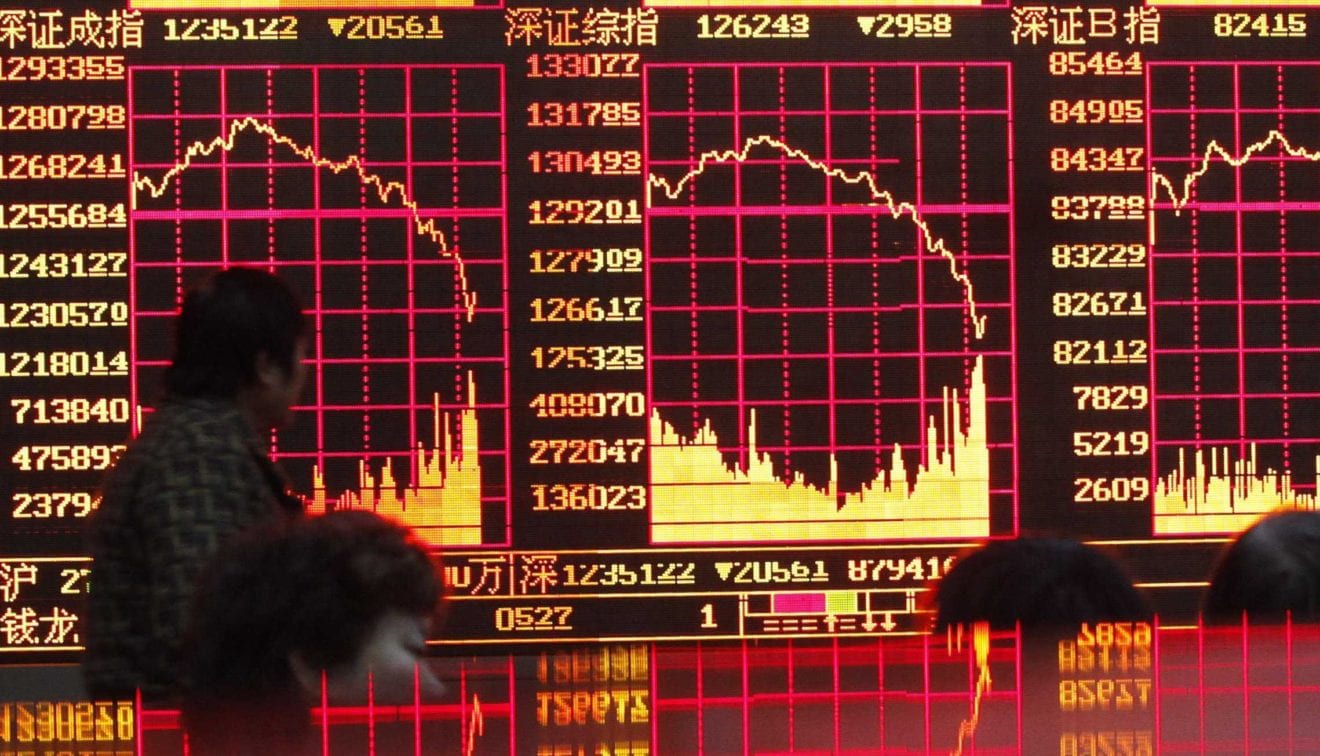
    Trading in China’s stock markets has been halted for the rest of the day, after a 7 per cent plunge in the blue-chip CSI300 index in the afternoon trading session triggered a circuit breaker mechanism which came into effect on Monday (Jan 4).

    Earlier in the session, trading in both the country’s equity indexes and equity index futures had been halted for a brief 15 minutes, following a 5 per cent decline in the benchmark index.

    The rapid activation of the second trading halt just after 1.30 pm local time indicated “a rise in market volatility” following the first trade suspension.

    “There was uncertainty in the markets. Investors were worried that maybe they might not be able to sell stocks after markets were halted,” Jackson Wong, associate director at Huarong international Securities, said in a telephone interview. “So when markets resumed trade, we saw an acceleration in selling.”

    The fact that retail investors account for nearly 70 per cent of China’s stock-market trading volume also contributed to the rapid selloff.

    “Retail investors are by nature more risk averse than institutional investors.. It isn’t hard to understand why markets legged down hard to the 7 per cent final breaker limit when markets reopened after the first circuit breaker was triggered and halted the market for 15 minutes, as this 15 minutes give a big window of opportunity for investors, mostly retail, to get new sell orders queued into the market,” Gavin Parry, managing director of Hong Kong-based Parry International Trading, said in an email interview.

    For most of Monday’s session, Chinese shares were on the back foot, following a dismal reading from the latest Caixin manufacturing purchasing mangers’ index (PMI) and ahead of the imminent expiration of a share sales ban on listed companies’ major shareholders, according to IG’s market strategist Bernard Aw.

    In addition, the move by authorities to cut the yuan’s value against the greenback on Monday, making it weaker than 6.5 for the first time in more than four-and-a-half years, added to the risk-off sentiment.

    The Shanghai Composite ended down 6.9 per cent, while the smaller Shenzhen Composite nosedived 8.2 per cent. In Hong Kong, the benchmark Hang Seng index was pulled down nearly 3 per cent.

    Mr Aw expects China’s stock markets to remain on a downward spiral on Tuesday. “I’m quite sure that there will be downward pressure tomorrow,” he said. “Circuit breakers only help to stall the pace of declines, but they do not stop the direction of movements.”

    For CMB International’s Strategist Daniel So, China’s A-shares will likely see downward pressure in early trading on Tuesday, but may “turn north by (the) market close” on the back of support from some investors who believe that now is “a good opportunity for bottom fishing amidst panic selling”.

    CIRCUIT BREAKER: BOON OR BANE?

    The idea of a circuit breaker mechanism was first raised by the Shanghai Stock Exchange last September and officially confirmed on Dec 4, 2015.

    Under the mechanism, a move of 5 per cent in either direction from the CSI300 index’s previous close will trigger a 15-minute trade suspension across the country’s stock indexes if the move occurs before 2.45 pm local time. After that, a 5 per cent move will prompt a trade suspension until the market closes at 3.00 pm.

    Moves of 7 per cent in the index will spark a trading halt for the rest of the day.

    The introduction of a circuit breaker seems to have sparked more unease among Chinese investors, despite its good intentions of limiting market volatility, according to Huarong’s Mr Wong.

    “Investors are just getting used to the new mechanism. After they get used to the idea, it may not be as bad,” the Hong Kong-based analyst said. “But to be honest, 5 to 7 per cent swings is very normal for China’s markets so while the stock market circuit breaker is introduced with good intentions, it might not be a good idea given the experiences of Chinese investors.”

    On the other hand, IG’s Mr Aw believes that investors should look beyond the short-term repercussions as the new mechanism will bring China’s markets more in line with international standards.

    The circuit breaker system will also “complement” the current 10 per cent daily limit rule which is usually limited to only “a handful of stocks”, he noted.

    Under current rules, individual stocks and index futures in China are allowed to rise or fall a daily maximum of 10 per cent from the previous closing level. Trading of a stock stops when it hits the daily maximum allowable limit.

  • Strong growth recorded by Bank NTT in assets

    Strong growth recorded by Bank NTT in assets

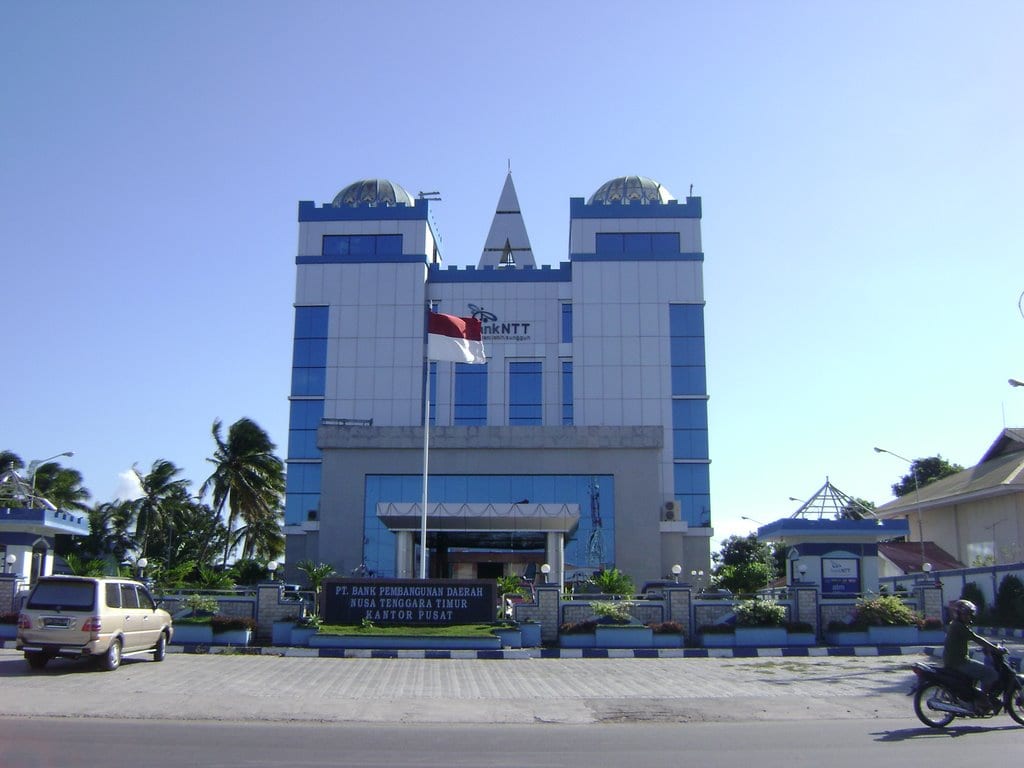
    Regional lender, PT Bank NTT, in East Nusa Tenggara, recorded a strong growth of 44.03 percent year-on-year in assets to Rp11.9 trillion in 2015.

    “The bank has recorded a steady growth until the close of 2015,” Daniel Tagu Dedo, the president director of the lender, which is owned by the regional administration, said.

    Daniel said the bank also recorded good growth of 20.29 percent in drawing third party funds to Rp7.54 trillion by the end of 2015 from Rp6.27 trillion a year earlier, and a 20.29 percent growth in in credit expansion.

    The banks outstanding credit was recorded at Rp6.61 trillion by the end of 2015, up from Rp5.5 trillion a year earlier.

    Its profit grew 34.01 percent to Rp380 billion from Rp244 billion and its core capital totaled Rp1.23 trillion including paid up capital at Rp973 billion.

    The capital put the bank in the category of Buku II, allowing it to offer internet banking service or selling other products such as insurance product.

    The bank has received citations in recognition of its good performance in 2015 from various organization and agencies including banking agency.

    “The bank would not boast about the citations, but the recognition would serve to spur the management to work the harder,” he said.

    In 2015, BNK NTT won Infobank Award with the notation of excellent for 15 consecutive years for category of banks with assets of around Rp10 trillion, and Annual Report Award (ARA) 2014 for category of listed state companies, as the third best.

    The awards were received in Jakarta in September 2015.

    The award ceremony was organized by the Financial Service Authority (OJK), the Indonesian Stock Exchange,Bank Indonesia, The ministry for state enterprises, the National Committee for Governance Policy, the Association of Indonesian Accountants and the Taxation Directorate General.

    In the same year, the bank also received the award of Anugerah Perbankan Indonesia (APBI) IV 2015 in a ceremony held by the Economic Review Magazine and Institute of National Banking (Perbanas) for the category of bank with core capital of Rp1 trillion up to Rp5 trillion.

    The award was presented on November 5, 2015.

    Another award, Lintas Artha Award, was received by the bank later that month.

  • Seoul shares edge up on pharmaceutical, retail gains

    Seoul shares edge up on pharmaceutical, retail gains

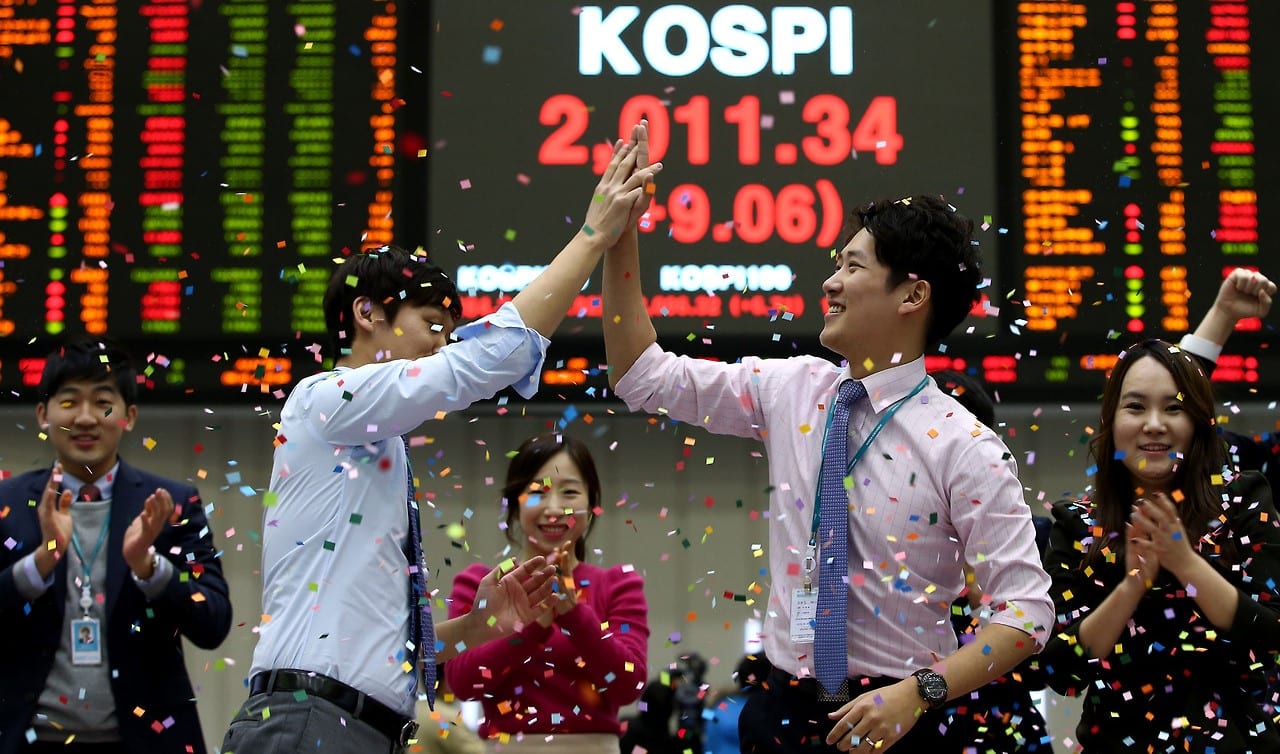
    South Korean stocks rose marginally high on Tuesday, propped up by rallies in pharmaceutical and retail companies. The local currency lost against the greenback.

    The benchmark Korea Composite Stock Price Index (KOSPI) added 2.25 points, or 0.11 percent, to end at 1,966.31. Trade volume was thin at 394.49 million shares worth 3.76 trillion won (US$3.21 billion), with winners beating losers 461 to 368.

    The market started lower and moved in and out of positive terrain. Propping up the market are individual investors who picked up about 265 billion won worth of shares, while institutions and foreign investors remained net sellers.

    “The mood remained subdued in the KOSPI market as investors locked in taking profits from gains prompted ahead of the ex-dividend date when shares lose the right to receive dividends,” said Kim Hyung-rae, a KDB Daewoo Securities analyst.

    Large-cap shares ended mixed, with pharmaceutical companies leading the upward move.

    No. 1 drug maker Hanmi Pharm jumped 14.46 percent to 736,000 won, while Green Cross gained 4.91 percent to 181,500 won. Furniture maker Hansem surged 6.73 percent to 238,000 won.

    Banking and steel issues weighed on the market. The Industrial Bank of Korea shed 5.26 percent to 12,600 won, while steelmaker POSCO fell 3.69 percent to 169,500 won.

    Telecom giant SK Telecom plunged 6.52 percent to 215,000 won following media reports over the SK Group chairman’s planned divorce with his long-estranged wife, which prompted uncertainty over its corporate governance.

    The local currency ended at 1,169.6 won against the greenback, down 4.2 won from Monday’s close.


  • SEC seals China Bank-Plantersbank merger

    SEC seals China Bank-Plantersbank merger

    The Securities and Exchange Commission (SEC) has approved the merger of China Bank Savings Inc. (CBSI) and Planters Development Bank (PDB), with China Bank becoming the surviving corporation.

    Both CBSI and PDB are subsidiaries of retail tycoon Henry Sy’s China Banking Corporation (China Bank), after PDB, established in 1072 by businessman Jesus Tambunting, became part of China Bank in 2014.

    “As a result of the merger, CBSI and PDB shall become a single corporation, with CBSI as the surviving corporation,” China Bank said in a disclosure to the Philippine Stock Exchange on Monday.

    As of end-2015, China Bank is operating a total of 517 branches, including 165 CBSI and Plantersbank branches.

    Aside from the CBSI-Plantersbank merger, the SEC has also approved the appointment of some executives effective January 1, 2016.

    The executives include Carlos M. Borromeo as senior vice president, chief financial officer, and head of financial statement segment; as well as lawyer Marissa B. Espino as co-vice president, chief compliance officer, and head of compliance office.

    Maria Cristina C. Hernandez was also approved as co-vice president, head of treasury financial institution, under financial capital markets and investment segment.

    In 2015, China Bank opened a total of 47 branches. For 2016, plans are up for opening 66 more branches—50 for China Bank and 16 for the consolidated CBSI network.

    In the first nine months of 2015, China Bank’s net income rose by 8 percent to P3.64 billion, on track with its targets to grow profits by 10 percent by end-2015.

    Established in 1920, China Bank is an affiliate bank of richest man in the Philippines, Henry Sy. It mainly caters to the small and medium enterprises (SME) market through subsidiaries CBS and Plantersbank. It also offers banking services to other markets—corporate, commercial, and retail.

  • Deutsche Bank sells China’s Hua Xia Bank stake for up to $4 billion

    Deutsche Bank sells China’s Hua Xia Bank stake for up to $4 billion

    Deutsche Bank has agreed to sell its 20 percent stake in China’s Hua Xia Bank to insurer PICC Property and Casualty Co for up to 25.7 billion yuan ($4 billion) as it seeks to raise cash and reduce its balance sheet exposure.

    “As we execute on Deutsche Bank’s strategic agenda, now is the right time for us to sell this investment,” Chief Executive John Cryan said in a statement on Monday.

    Deutsche Bank has announced plans to slash 15,000 jobs, shed businesses employing some 20,000 staff and suspend dividends for two years as it seeks to bolster its finances.

    The stake in Hua Xia will generate between 23.0 billion and 25.7 billion yuan ($3.6-4.0 billion), or 3.2 billion to 3.7 billion euros at current exchange rates, depending on Hua Xia’s share price ahead of the sale’s completion.

    At the end of September, the stake was in Deutsche Bank’s books at a fair value of 3.038 billion euros.

    When Deutsche Bank first invested in Hua Xia in 2006 to tap into China’s retail banking sector, the Chinese lender’s stock stood below 4 yuan a share, compared with 11.44 yuan at Monday’s close.

    The stake sale will help boost the German bank’s common equity tier 1 capital ratio as of Sept. 30 by about 0.3 to 0.4 percentage points from 11.5 percent, it said.

    PICC said it expected relatively steady investment returns from its stake in Hua Xia, in addition to the benefits of a strategic cooperation.

  • Battle for young customers heats up in HSBC’s Asia stronghold

    Battle for young customers heats up in HSBC’s Asia stronghold

    HONG KONG Banks in Hong Kong are intensifying the battle for young customers key to their future retail profit, offering online perks and mobile banking products in a bid to erode the dominance of HSBC in its Asian stronghold.

    Like peers around the world, banks operating in Hong Kong including Bank of China Ltd (601988.SS) (3988.HK) and Citigroup Inc (C.N) are trying to improve their online banking products to lure tech-savvy students and young professionals as they are about to open their first bank account.

    For HSBC the battle to win the hearts of young Hong Kongers is particularly important as retail banking activity in the Asian financial centre helped drive its overall profit up 2 percent in the first half of this year.

    The London-based bank, which has put China at the centre of its global strategy, is also in the process of deciding whether to move its global headquarters to Hong Kong.

    A survey of 2,500 people conducted in November by specialised research firm RFI, gave Bank of China a bigger market share among bank customers aged 18-24 than HSBC, which dominates in all other categories.

    These customers loathe spending time at bank branches and seek a lender that can allow them to carry out multiple transactions from their smartphone. “I would rate both the online and mobile services offered by Bank of China as good as they allow me to pay my parking tickets instantly, and this is very important to me,” said Chun Hoi Lau, a 23-year-old student at the University of Hong Kong.

    Bank of China, which says the young generation is a key customer segment, allows clients to carry out cross-border payments through an app, uses the popular WeChat social media platform to handle customers’ queries and has introduced a popular virtual securities investment contest for students.

    “We have been developing a comprehensive strategy with a set of products and services delivered through their preferred channels to suit their life styles,” the bank told Reuters.

    BANK FOR LIFE

    The jury however is still out on which lender is making effective inroads among the young, a segment targeted because people often stick with a bank for life once they have made their choice, analysts said.

    In a detailed survey commissioned by HSBC, and conducted by Nielsen last year, the bank said its market share of 18-24 year olds was nearly double that of Bank of China. It said it was aware of the increasing need to offer more online services.

    “We are investing heavily in developing new capabilities to meet customers’ needs,” said Kevin Martin, HSBC’s head of retail banking and wealth management, Asia Pacific.

    HSBC will next year launch more products for smartphones and digital payments as well as new security features, Martin added.

    Citibank is also appealing to younger customers with 19 “smart” branches in Hong Kong that boast the sleek lines of Apple Inc’s retail stores, touch panels, video conferencing facilities and iPads to access a wide range of banking services. Hong Kong spokesman James Griffiths said Citibank was also offering customers discounted fees on stock and forex trading via digital platforms to encourage more transactions.

    The question now for HSBC’s challengers is whether they can convert young people lured by attractive rates or flashy online offerings into lifelong customers.

    “HSBC isn’t that popular among young people,” said John Pang, a 24-year-old civil servant who banks with the lender. “It hasn’t changed a lot in the past 5-10 years, the online interface still looks the same.”


  • Rupiah strengthens to Rp13,774 against dollar

    Rupiah strengthens to Rp13,774 against dollar

    The Indonesian rupiah closed stronger at Rp13,774 per dollar in the Jakarta interbank market on Monday evening, up 143 points from the previous close of Rp13,917 per dollar.

    The rupiah strengthened against the US dollar as uncertainty about the money market eased following the Federal Reserves decision to raise its rate, Chief Researcher of NH Korindo Securities Indonesia, Reza Priyambada, said here on Monday.

    “The euphoria due to the US central banks decision has revived investors demand for assets of risky countries. The fact that Indonesia has regained its investment grade rating is one of the factors prompting investors to reinvest in the country and, accordingly, the rupiah is strengthening,” he said.

    Investors are also optimistic about Indonesias economic outlook in 2016 as a result of aggressive capital expenditure and monetary stimuli aimed at pushing economic growth, he said.

    Economist Leo Rinaldy of Mandiri Sekuritas, meanwhile, said the Federal Reserves plan to raise its rate gradually in 2016 has received positive responses from money market investors.

    He said the investors also believed that Indonesias macroeconomic fundamentals will be better next year.

    However, the domestic economic performance, which is far from expectation, and the Fed rate which may increase at a faster pace to more than 1.25 percent in 2016, may send out signals of a negative sentiment about the rupiahs exchange rate, he said.

    “The Fed rate hike will entail a risk if it does not meet market expectation,” he said.