Category: Finance

Retail News Asia is committed to providing both local and global retailers with the latest Finance news throughout the Asian market. This on a daily base.

  • Blackrock Launches ‘Swiss’ Bitcoin ETP in Europe

    Blackrock Launches ‘Swiss’ Bitcoin ETP in Europe

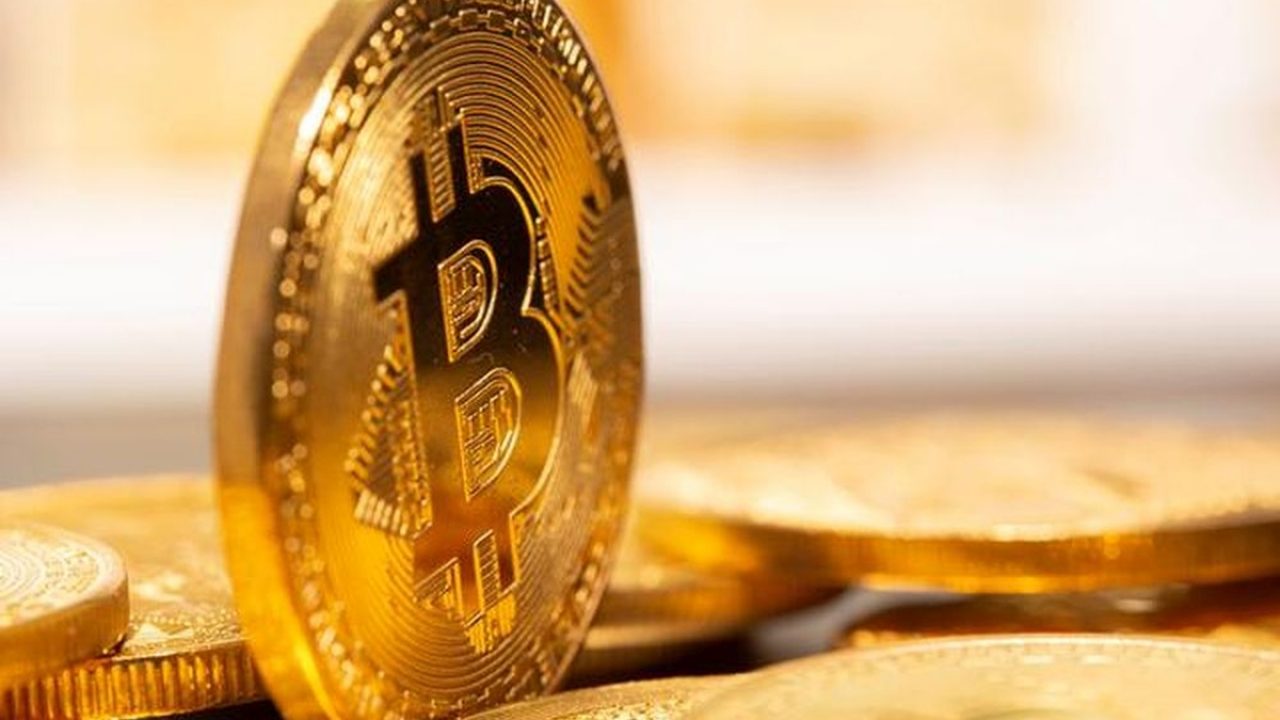
    On Tuesday, Blackrock launched the iShares Bitcoin ETP, providing European investors with access to Bitcoin without the need to directly trade or hold the cryptocurrency.

    The securities are backed by Bitcoin held by Coinbase, which is also responsible for the custody solution and the process controls safeguarding the private keys. For the iShares Bitcoin ETP, the Bitcoins are transferred daily from the trading wallet to segregated offline wallets («cold storage»).

    There’s a lot of Switzerland in the iShares Bitcoin ETP. BlackRock Switzerland played a key role in its development, said Dirk Klee, Country Head for Switzerland.

    The iShares Bitcoin ETP carries a total expense ratio (TER) of 25 basis points, with a temporary reduction to 15 basis points in effect through the end of the year. The underlying Swiss special purpose vehicle (SPV) is exempt from Swiss stamp duty on both purchases and sales.

    Blackrock took its time before launching the iShares Bitcoin ETP. Ultimately, it was the evolution of the cryptocurrency space in recent years—combined with growing client demand—that prompted the firm to move forward.

    «We believe ETPs can play a key role in building a bridge between crypto and traditional finance, due to their efficiency and ease of use,» said Klee. For investors with appropriate governance frameworks and sufficient risk tolerance, a 1% to 2% allocation to Bitcoin in multi-asset portfolios is justifiable, he added.

  • Stocks start week in green

    Stocks start week in green

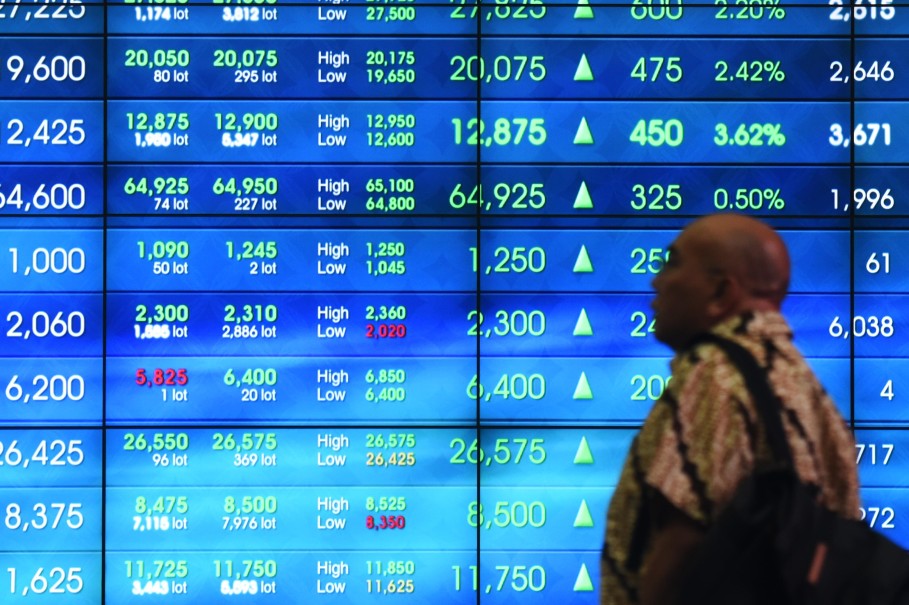
    Vietnam’s benchmark VN-Index rose 0.64% to 1,330.32 points Monday.

    The index closed 8.44 points higher after dropping 2.05 points in the previous session.

    Trading on the Ho Chi Minh Stock Exchange increased by 15% to VND19.583 trillion (US$763.9 million).

    The VN-30 basket, comprising the 30 largest capped stocks, saw 14 tickers gained.

    VIC of private conglomerate Vingroup saw the biggest jump of 7.0%, followed by VHM of property giant Vinhomes with a 6.3% gain and SHB of Saigon Hanoi Commercial Bank, up 5.5%.

    Thirteen blue chips fell, with LPB of Fortune Vietnam Bank dropping by 1.9%.

    BCM of Becamex Investment and Industrial Development went down 1.8% and VIB of Vietnam International Commercial Bank closed 1.7% lower.

    Foreign investors were net seller to the tune of VND720 billion, mainly selling FPT of tech giant FPT Corporation and TPB of private lender TPBank.

    The HNX-Index for stocks on the Hanoi Stock Exchange, home to mid and small caps, rose 0.07%, while the UPCoM-Index for the Unlisted Public Companies Market went down 0.20%.

  • Dollar rises against dong

    Dollar rises against dong

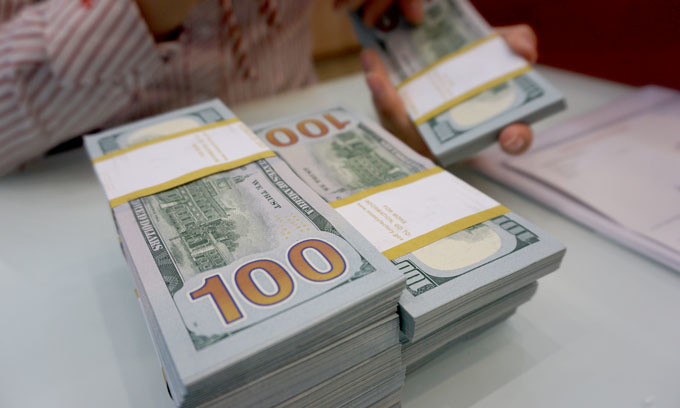
    The U.S. dollar edged up against the Vietnamese dong Tuesday morning while it hit a three-week high against major peers.

    Vietcombank sold the greenback at VND25,820, up 0.04% from Monday. On the black market, the dollar dipped 0.02% to VND25,905. The State Bank of Vietnam’s reference rate surged 0.17% to VND24,874.

    Globally, the dollar hit a three-week high against the yen on Tuesday and was firm across the board after some strong U.S. services data and cautious optimism on the tariff front, Reuters reported.

    President Donald Trump said not all of his threatened levies would be imposed on April 2 and some countries may get breaks, which helped the dollar and the mood on Wall Street overnight by soothing some fears about a possible slowdown in U.S growth.

    The U.S. dollar index notched a fourth straight session of gains to settle at 104.3.

    The dollar was last up at 150.56, having pulled overnight above 150 yen. It rose to a three-week high of 150.92 yen in the Asia morning.

    The dollar also hit its strongest since March 6 at $1.0781 per euro, as a powerful rally in the common currency loses steam.

    It was last trading at $1.0804, while sterling hit a two-week low of $1.2883 before steadying at $1.2935 in Asia trade.

    “It seems like nobody knows what to do with the dollar,” said Brent Donnelly, president at analytics firm Spectra Markets.

    “The view that tariffs are unambiguously bullish U.S dollar has been challenged by the price action in 2025, and so even when we get the information on what tariffs look like next week, it will be hard to know what we are supposed to do.”

  • Your Apple Wallet is about to get much better

    Your Apple Wallet is about to get much better

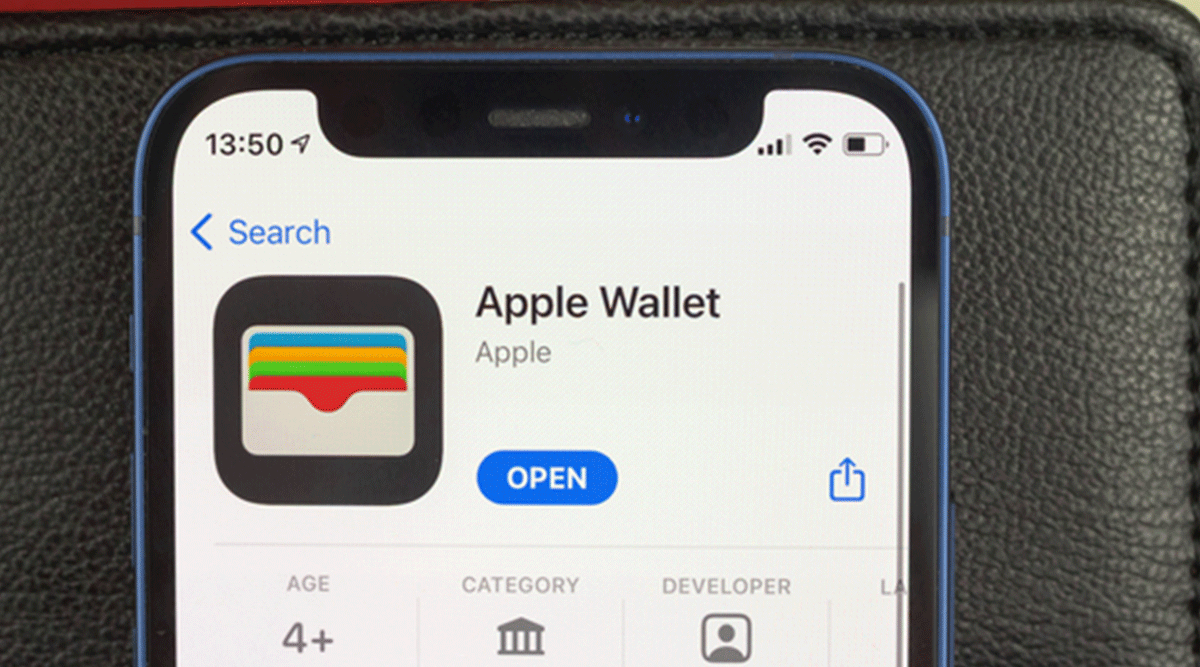
    As we await the stable release of iOS 18.4 in April, the beta versions are already giving us a solid preview of what’s coming. The latest beta release reveals a useful new feature for tracking your spending that is set to land in Apple Wallet.

    In the first iOS 18.4 beta, the Wallet app introduced a menu labeled “Subscriptions & Payments.” Now, with the latest update, it has been rebranded to “Preauthorized Payments,” and as you might guess, this change shifts the focus more toward payments that have been authorized in advance.

    This section in Wallet will now display merchants that you have given the go-ahead to charge your Apple Pay for things like subscriptions, automatic top-ups and regular bills. So, if you use Apple Pay for things like adding money to your transit card or paying for your gym membership, those transactions should show up here.

    Apple seems to have recognized that calling this section “subscriptions” could be a bit misleading, so the new name – preauthorized payments – makes it clearer. However, while the name change is helpful, it doesn’t change the fact that you are still managing recurring payments across different sections rather than having them all in one place.

    Right now, if you want to check your subscriptions, you can do it through the App Store or your iPhone’s Settings, which is a bit faster and easier. Just tap the Apple Account section at the top with your profile picture and you will find the Subscriptions section there.

    Whether you go through the App Store or Settings, the Subscriptions page looks the same. It shows all your active subscriptions and when they are set to renew.

    While this works, I think the new addition to Wallet is a nice step forward in making it easier to track your recurring payments. It gives you a better view of your spending, which has been a key focus of the Wallet app lately.

    Still, I think Apple could make it even easier by bringing everything under one roof. Imagine being able to see exactly how much you are spending each month – whether it is for Apple TV shows, Netflix, or any other subscriptions – all in one place. It would save a lot of time and make managing your money that much simpler.

  • Google Wallet becomes even more useful for people in the US

    Google Wallet becomes even more useful for people in the US

    Google Wallet is already the most important digital wallet for Android users in the United States. The app has evolved a lot in the last couple of years and is no longer just a simple payment option for those who won’t want to use their credit/debit cards.

    Google has slowly added more functionality to the Wallet app, including the option to store loyalty cards, tickets, keys, or even IDs. Although there aren’t too many other features that Google could add, there’s a lot of room for improving the existing ones.

    That said, it appears that Google Wallet has gained a couple of new perks this week. The folks at 9to5 Google report that the app has received a small update that allows users to upgrade some loyalty cards.

    Users in the United States who have loyalty cards safely stored in Google Wallet might see an “Upgrade available” label below the name of some loyalty cards. Thanks to the new feature, Google Wallet can automatically search through the static passes stored in the app and try to bring them up to date.

    This seems to be part of a larger design change that Google announced last year with an update for Play services. At that time, the search giant said that “you’ll now be able to upgrade your passes in Google Wallet.” This means that you won’t have to manually update your loyalty cards every time by going to the Add to Wallet FAB / Loyalty cards.

    In related news, Google Wallet added support for 11 new banks and credit institutions in the United States. These updates typically arrive each month, so it’s not really a surprise. Here is the list of US banks that have just received Google Wallet support:

    • Banco Davivienda, S.A. (FL)
    • Column National Association (CA)
    • First Atlantic Federal Credit Union (NJ)
    • First National Bank of St. Ignace (MI)
    • Genesee Valley Federal Credit Union (NY)
    • GESA Credit Union (WA)
    • Hamlin Bank and Trust Company (PA)
    • Nibbles
    • Northrop Grumman Federal Credit Union
    • The Credit Union For All (IL)
    • Top Tier Federal Credit Union (PA)

    More banks are likely to be added to Google Wallet’s support list next month, so stay tuned for more details if your favorite bank or credit institution isn’t yet supported.

  • Gold prices plummet from peak

    Gold prices plummet from peak

    Vietnam gold bar price fell to VND90.2 million (US$3,524.13) per tael Wednesday morning, down 2.28% from the record high it reached the previous day.

    It reached an all-time high of VND92.3 million per tael on Tuesday morning before plunging to VND90.5 million that afternoon.

    Gold ring price dived to VND89.7 million per tael from Tuesday’s historic peak of VND91.7 million. A tael equals 37.5 grams or 1.2 ounces.

    Globally, gold prices retreated on Wednesday from an all-time high hit in the previous session, as Federal Reserve Chair Jerome Powell’s hawkish comment cemented views of slower rate cuts this year, while investors awaited a key U.S. inflation report.

    Spot gold fell 0.4% to $2,885.53 per ounce. Bullion climbed to a record high of $2,942.70 on Tuesday. U.S. gold futures eased 0.8% to $2,910.70.

    Powell said on Tuesday the economy is in a good place and the Fed isn’t rushing to cut interest rates further, but is prepared to do it if inflation drops or the job market weakens.

    Bullion is considered a hedge against inflation, but higher interest rates dampen the non-yielding asset’s appeal.

    “The bullish trend (in gold) remains intact given the tariff picture uncertainty and the resulting safe-haven flows, which could keep underpinning the precious metal,” said Tim Waterer, chief market analyst at KCM Trade.

  • New Instagram feature to entice TikTok users also compromises privacy

    New Instagram feature to entice TikTok users also compromises privacy

    It is highly likely that within a few hours TikTok will cease operations in the U.S. In an effort to capitalize on this golden opportunity Instagram is adding a new feature to the app to entice TikTok users to switch platforms. However this new feature also compromises your privacy and may be something that you wish to turn off.

    Adam Mosseri — head of Instagram — announced in a video that the app will be rolling out a new feed where you will see reels that your friends have liked or commented on. The idea is that you can quickly start a conversation with your friends about content they’ve watched. While the concept definitely encourages more interaction over Instagram it also means that your history is being shared openly.

    I quite like that I can watch whatever I want on Instagram — mainly cat videos — and not announce it to the world. This new feature is one that I will turn off immediately once it arrives in my country. Meta is only releasing the update in certain regions for now and will expand coverage once the company has studied how it is received by users.

    The whole TikTok debacle has sent multiple platforms racing to replace it. Instagram is already quite similar to TikTok and is trying everything it can to win over people looking for a new short-form video sharing app. However this hasn’t gone exactly to plan as TikTok users are migrating to another Chinese app instead: RedNote.

    While Instagram would have welcomed the influx of new users with open arms, RedNote is not as thrilled. The company is already considering isolating foreign IP addresses from Chinese ones so “American influence” can be minimized. This transition from TikTok to RedNote is also profiting an unsuspecting third app

    Instagram has taken some very welcome steps in recent years to protect user privacy on the platform, especially for minors. This is why I’m hopeful that the new dedicated feed will be optional as well. The app had a similar feature years ago that it discontinued and I wouldn’t be surprised if this new addition eventually meets the same fate.

    Instagram can still play its cards right and snag some former TikTok users as RedNote hands out bans for “inappropriate” content.

  • The time for a new Apple Card issuer might finally be near

    The time for a new Apple Card issuer might finally be near

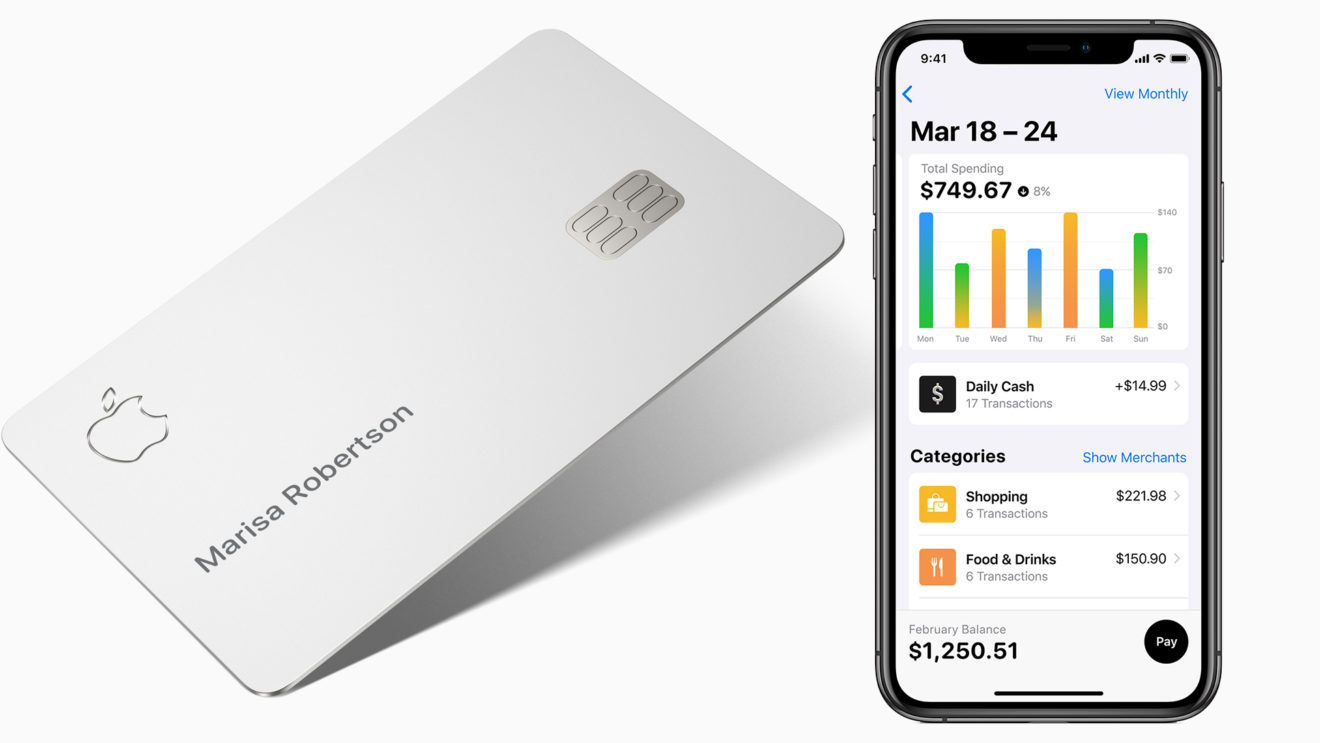
    It’s 2025 and the Apple Card saga is still unfolding. Last year, reports surfaced that talks between Apple and JPMorgan Chase had picked up, possibly signaling a move away from the current issuer, Goldman Sachs. A new player is joining the mix, while Goldman Sachs seems eager to bow out, particularly after the Apple Card missteps led to over $89 million in fines for both Apple and Goldman last year.

    A new report reveals that Apple is discussing with Barclays to take over from Goldman Sachs as its credit card partner, according to two sources familiar with the matter. This comes as the Wall Street giant pulls back from its consumer finance plans. Additionally, according to one of the sources, Synchrony Financial, a credit card issuer, is reportedly in talks with Apple about the potential partnership.

    Multiple financial firms are competing to replace Goldman Sachs, which partnered with Apple to launch the credit card back in 2019, according to the sources. While the appeal of working with Apple, one of the most recognizable names globally, is strong, some lenders have reportedly seen the initial terms of the deal as risky and not profitable. Talks between Apple and Barclays have been underway for months, but it could still take a while before an agreement is finalized.

    As mentioned earlier, JPMorgan Chase has also been in discussions with Apple about the partnership since last year. Although Goldman Sachs’ deal with Apple runs until 2030, Goldman CEO David Solomon recently suggested the collaboration could wrap up earlier. So, it’s no surprise that talks with other potential partners are in full swing.

    A switch in the Apple Card’s issuer could bring a host of new features and perks for cardholders, along with the possibility of a different or more consistent interest rate for Apple Card Savings accounts. Recently, Apple and Goldman Sachs reduced the savings rate again. Ultimately, as a consumer, I’m hoping that whoever Apple partners with next will result in a stronger and more competitive product for us.

  • Warning Signals from the Crypto Valley

    Warning Signals from the Crypto Valley

    As a Crypto-Nation, Switzerland has made headlines for many years. However, the tide may be turning now.

    On January 20, 2025, Donald Trump will move into the White House for the second term. By then, the Crypto Valley will be closely monitoring the US President’s policies. Trump’s plans could cause a major upheaval in Switzerland.

    In addition to introducing massive tariffs and tightening immigration policies, Trump has also announced his intention to overhaul the previously restrictive policy on Bitcoin and other cryptocurrencies, aiming to implement crypto-friendly regulations.

    Among other things, Trump wants to attract mining companies: Bitcoin made in the USA. This will involve massively expanding the energy-producing economy to ensure that enough cheap energy is available at all times.

    At the same time, Trump aims to promote stablecoins and bitcoins and establish a strategic national Bitcoin reserve.

    Trump’s promises have sparked a surge in cryptocurrency prices in recent months. In December, Bitcoin’s price briefly surpassed the magical threshold of $100,000.

    If the US President delivers on his promises, it would be a true game-changer. This would not go unnoticed in Crypto Valley», says a senior manager at a crypto company based in Zug. However, he does not want to be named publicly, as the matter is too sensitive.

    Cryptocurrencies and Switzerland have long been a success story. As early as 2013, Switzerland set up attractive conditions for the industry, ahead of many other nations. With over 1,000 blockchain companies, Switzerland became an international hub, with the canton of Zug at the forefront. The region came to be known as Crypto Valley.

    But the honeymoon is over. A sense of unease is spreading within the industry. Bitcoin pioneer Niklas Nikolajsen, a Danish national who moved to Switzerland in 2011 and now lives in Zug, recently told the Neue Zürcher Zeitung (NZZ) that Switzerland is no longer an attractive location for crypto businesses.

    Once, even a Federal Councilor visited the offices of crypto companies. In this politically favorable environment, the Financial Market Supervisory Authority (FINMA) even granted two crypto companies a banking license. That would be unthinkable today. When the political pressure faded, FINMA lost its nerve», Nikolajsen said.

    One point of contention is the treatment of stablecoins, which are crypto-assets pegged to a currency like the dollar, euro, or Swiss franc. FINMA now requires that all parties involved in stablecoin transactions be identified and has set concrete requirements for stablecoin issuers and the banks that provide backup guarantees. This has caused an outcry within crypto companies.

    Along with the developments in the US, this unease could quickly become toxic. If conditions for the crypto industry are relaxed under Trump while tightening in Switzerland, many companies are likely to leave the country. «No one is planning to move yet, but if Switzerland doesn’t take action soon, the decision will be made quickly», several crypto managers told finews.ch.

    One such move could be for the Swiss National Bank to be mandated to invest in Bitcoin, as proposed by a popular initiative. «If Switzerland only offers what everyone else does, we’re out of the picture. The Swiss market simply doesn’t offer enough», said one manager, putting it bluntly.

  • Stocks rise in first session of the year

    Stocks rise in first session of the year

    Vietnam’s benchmark VN-Index rose 0.23% to 1,269.71 points Thursday in the first session of 2025 while Asian shares began the year slightly lower.

    The index closed 2.93 points higher after dropping 5.24 points in the previous session.

    Trading on the Ho Chi Minh Stock Exchange decreased by 7% to VND10.752 trillion (US$422.4 million).

    The VN-30 basket, comprising the 30 largest capped stocks, saw 12 tickers gained.

    PLX of fuel distributor Petrolimex went up 1.7%, BID of state-owned lender BIDV rose 1.7%, and BVH of insurance company Bao Viet Holdings closed 1.6% higher.

    Eleven blue chips fell. HDB of lender HDBank slid 1.6%, TCB of private lender Techcombank went down 1.2%, and ACB of Asia Commercial Bank saw a 0.8% drop.

    Foreign investors were net seller to the tune of VND98 billion, mainly selling FPT of IT giant FPT Corporation and VCB of state-owned lender Vietcombank.

    The HNX-Index for stocks on the Hanoi Stock Exchange, home to mid and small caps, rose 0.11%, while the UPCoM-Index for the Unlisted Public Companies Market went down 0.04%.

    Globally, Asian stocks began the year on a dour note on Thursday as they struggled for traction after a jittery close to 2024, while the U.S. dollar held steady and investor sentiment stayed cautious ahead of Donald Trump’s return to the White House, Reuters reported.

    While global shares closed out 2024 with a strong yearly gain of nearly 16%, they had clocked a monthly loss of more than 2% in December.

    The same was the case for MSCI’s broadest index of Asia-Pacific shares outside Japan, which slid 1.2% in December though registered a gain of more than 7% for 2024.

    The index was last down 0.58% in the Asian session on Thursday, with volume thinned given a trading holiday in Japan.

    Chinese stocks were battered, with the CSI300 blue-chip index last down 2.65% while the Shanghai Composite Index lost 2.36%. Hong Kong’s Hang Seng Index slid 2.15%.

  • Vietcombank Remittance named best remittance company in Vietnam

    Vietcombank Remittance named best remittance company in Vietnam

    Vietcombank Remittance was honored as “Remittance Company of the Year – Vietnam” for the third consecutive time by Asian Banking & Finance on Dec. 24.

    This achievement affirms the quality of services and the growth of Vietcombank Remittance, recognizing the company’s efforts and demonstrating its position in both the domestic and international remittance markets.

    Vietcombank Remittance is the only remittance company in Vietnam to organize the Client Conference for three consecutive years successfully. This year’s event featured participation from strategic partners in Taiwan, South Korea, the United States, and several other countries, highlighting the company’s role in fostering international cooperation and collaboration.

    The company consistently supports government agencies in developing policies to enhance remittance resources. Vietcombank Remittance actively participates in programs organized by the Overseas Vietnamese Committee of Ho Chi Minh City to promote collaboration among stakeholders and increase the efficiency of remittance flows. The company has also significantly contributed to Ho Chi Minh City People’s Committee’s project on “Optimizing the Effectiveness of Remittance Resources.”

    Vietcombank Remittance is committed to collaborating with the Ho Chi Minh City People’s Committee to implement specific initiatives such as supporting the improvement of policy mechanisms and facilitating convenient conditions for overseas Vietnamese to send money home. It collaborates closely with regulatory agencies to create clear legal frameworks and facilitate the use of technology in remittance operations.

    The company is leading initial efforts to establish the Vietnam Remittance Association to elevate the industry’s position on the international stage. This association is expected to serve as a bridge between the government, businesses, and the overseas Vietnamese community, ensuring policies are geared toward sustainable development.

  • Stocks fail to sustain 2-month high

    Stocks fail to sustain 2-month high

    Vietnam’s benchmark VN-Index fell 0.09% to 1,272.87 points Thursday, after hitting a two-month peak in the previous session.

    The index closed 1.2 points lower after gaining 13.68 points in the previous session.

    Trading on the Ho Chi Minh Stock Exchange decreased dropped 27% to VND18.8 trillion (US$739 million).

    SSB of SeABank dropped 2%, followed by BVH of insurance company Bao Viet Holdings with a 1.9% decline.

    MWG of electronics retail chain Mobile World dropped 1.1% and VRE of retail real estate arm Vincom Retail closed 0.9% lower.

    Eleven blue chips gained, led by six banks.

    VIB of Vietnam International Commercial Bank posted the largest increase at 2.9%, followed by STB of Ho Chi Minh City-based lender Sacombank, up 2.3%.

    Foreign investors were net sellers to the tune of VND365 billion.

    They mainly net sold VCB of state-owned lender Vietcombank and FPT of IT giant FPT Corporation.

    The HNX-Index for stocks on the Hanoi Stock Exchange, home to mid and small caps, rose 0.04%, while the UPCoM-Index for the Unlisted Public Companies Market dropped 0.19%.

    Asia shares eased in holiday-thinned trade on Thursday, paring some of their gains from earlier in the week, while the dollar rose alongside U.S. Treasury yields.

    As the year-end approaches, trading volumes have begun thinning out and the main focus for investors remains that of the Federal Reserve’s rate outlook. Markets in Hong Kong, Australia and New Zealand were closed for a holiday on Thursday.

  • Vietnamese investors turn to Bitcoin as it crosses psychological $100,000 mark

    Vietnamese investors turn to Bitcoin as it crosses psychological $100,000 mark

    As Bitcoin hovers around the US$100,000 mark, many investors are embracing cryptocurrency to diversify their portfolios.

    Lam Vu, inspired by a friend’s success in Bitcoin investments, recently sought his advice. The friend had bought Bitcoin at US$36,000 in June 2021, sold at over US$60,000 four months later to earn a profit of VND33 million (US$1,299). Vu was encouraged to act before Bitcoin’s “big wave” of growth. However, his friend suggested waiting for a potential correction to below US$95,000.

    Ngoc Anh is also exploring Bitcoin. An investor for the past year she is diversifying her portfolio and sees cryptocurrency as a promising option. “I believe Bitcoin will soon become a primary and widely accepted global currency,” she says. She plans to adopt a systematic investment plan (SIP) strategy, investing consistently each month, to average out costs in the long term.

    She says this approach, which she has applied to mutual fund investments over the past two years, will suit her by reducing the stress caused by Bitcoin’s price volatility. She believes Bitcoin will recover from any dips and steadily increase in value over time.

    Bitcoin’s value has surged by 130% this year to around US$100,000, with a market capitalization of US$2 trillion. It is now the seventh largest global asset by market cap, trailing gold and tech giants Apple, Nvidia, Microsoft, Amazon, and Alphabet.

    In an interview with VnExpress, Le Sy Nguyen, Vietnam country manager at the cryptocurrency exchange Bitget, says Bitcoin’s milestone has boosted trading volumes for both Bitcoin and altcoins on the world’s third largest derivatives exchange.

    Nguyen advises investors to proceed cautiously and do thorough research, citing risks such as market volatility, regulatory uncertainty and management challenges. He adds that an SIP is a practical way to accumulate Bitcoin while mitigating volatility. He also advises new investors to focus on consistent investments, avoid emotional trading and regularly monitor market developments.

    Global asset manager BlackRock Investment Institute recommends allocating 1-2% of portfolios to Bitcoin, likening its risk profile to that of the “Magnificent Seven,” which includes major tech stocks like Alphabet, Amazon, Apple, Meta, Microsoft, Nvidia, and Tesla. However, BlackRock warns that allocations exceeding 2% significantly increase risk, noting Bitcoin’s history of steep declines, including losses of 70-80% since its inception in 2009.

    Many investors have faced severe losses during Bitcoin’s downturns. Trung Tin, initially a casual cryptocurrency investor during the pandemic, became addicted to trading as his profits surged. At his peak, he invested over VND1 billion, depleting his savings and borrowing from friends. The November 2021 market crash wiped out his funds.

    Refusing to accept the reality of his losses, the HCMC-based startup owner borrowed more from family, friends, colleagues, and business partners in a desperate attempt to recover his investments. “I dug my own grave when I borrowed money to trade derivatives with 125x leverage,” he laments. “Within two weeks I had to sell my car and land to repay debts. It was a horrifying experience, especially as it happened just weeks before Lunar New Year.” He says to this day he feels anxious whenever cryptocurrency is mentioned.

    According to The Washington Post, therapist Aaron Sternlicht observes that crypto trading can be more addictive than gambling, largely because of its 24/7 market access. While cryptocurrency addiction is not officially recognized as a mental health disorder, researchers at Rutgers University in New Jersey have noted a rise in addicted traders. Excessive trading, driven by the prospect of massive returns, often mirrors gambling behavior.

    A 2024 survey by Coin68 platform involving over 2,700 Vietnamese found that nearly 44% reported losses in cryptocurrency investments. Of the 56% making a profit, those avoiding derivatives and focusing on long-term strategies earned 10% more on average than their counterparts.

    The derivatives market remains a source of significant losses. This trading method allows investors to speculate on cryptocurrency price movements without owning the asset, and incorrect bets often lead to a wipeout. During the recent Bitcoin price peaks hundreds of millions of dollars were lost. Experts strongly advise new investors to avoid derivatives trading.

    Cryptocurrencies remain unregulated in Vietnam, which experts say hampers sustainable growth and transparency. The lack of a clear legal framework, and the resultant absence of adequate protections unlike in traditional financial markets, exposes investors to risks such as fraud and market instability, complicating the development of this asset class.
  • Thailand expects to collect global minimum corporate tax from Jan 2025

    Thailand expects to collect global minimum corporate tax from Jan 2025

    Thailand expects to implement a global minimum corporate tax of 15% on multinational companies from January 2025, its finance minister said on Friday.

    The government will urgently issue a law on the tax collection, Pichai Chunhavajira said on a local television program. Pichai’s comments came after a Reuters report that the cabinet on Wednesday approved draft legislation to collect the global minimum corporate tax.

    Under new rules being shepherded by the Organization for Economic Cooperation and Development (OECD), a minimum 15% tax will be charged on multinationals with an annual global turnover of more than 750 million euros (US$784.58 million), regardless of their location.

    Thailand’s corporate tax is currently set at 20%, but companies receiving incentives from the Thailand Board of Investment can get an exemption of up to 13 years.

    Vietnam’s parliament approved the minimum global tax rate last year.

    Indonesia, Southeast Asia’s largest economy, Malaysia and Singapore have also said they will implement the minimum tax rate in 2025.

  • Gold price gains in Vietnam, drops globally

    Gold price gains in Vietnam, drops globally

    Gold price went up marginally in Vietnam but fell globally as investors took profit Tuesday morning.

    Saigon Jewelry Company gold bar increased by 0.23% to VND87.1 million (US$3,430.49) per tael.

    Gold ring price went up 0.23% to VND85.9 million per tael.

    Globally gold slipped as investors booked profits after prices hit more than one-month high earlier in the day on increased expectations of an interest rate cut by the Federal Reserve next week.

    Spot gold shed 0.5% to $2,704.41 per ounce. It hit the highest since Nov. 6 earlier in the session.

    U.S. gold futures fell 0.5% to $2,744.60.

    “It’s just profit booking because we’ve seen a good rally in gold due to various factors this week, including geopolitical tensions, China resuming gold purchases and the inflation number yesterday being in line with expectation,” said Ajay Kedia, director at Kedia Commodities, Mumbai.