Category: Finance

Retail News Asia is committed to providing both local and global retailers with the latest Finance news throughout the Asian market. This on a daily base.

  • Saxo Bolsters APAC Growth Strategy with New Institutional Business Head

    Saxo Bolsters APAC Growth Strategy with New Institutional Business Head

    Saxo, a leading digital broker, has named Gift Muthita Anankaphannan as their new Regional Head of Institutional Business for Asia-Pacific, in a move to strengthen their foothold in a prime market. Anankaphannan will be based in Singapore, and her role will involve leading the institutional business throughout the Asia-Pacific region while partnering with clients to enhance the offerings of Saxo.

    Anankaphannan’s Wealth of Experience

    Anankaphannan has an impressive career history, having previously served as a Senior Relationship Manager at Saxo. She brings over 16 years of experience spanning both the technology and institutional financial services sectors.

    Before her tenure at Saxo, she spent over a decade at Google, holding senior positions in sales, product strategy, and go-to-market execution, with her work encompassing AI-powered solutions. Anankaphannan kick-started her career in financial services at Bloomberg, where she specialized in equities and equity derivatives. Here, she provided data-driven insights to traders, analysts, and portfolio managers.

    Mahesh Sethuraman, the CEO of Saxo Singapore, praised Anankaphannan’s extensive experience with institutional partners and her deep understanding of Saxo’s FinTech DNA. He cited her excellent ability to foster long-term client relationships and lead high-performance teams.

    Saxo’s Institutional Business Growth

    Institutional clients make up a significant portion of Saxo’s international business, contributing to nearly one-third of the group’s overall income. Over the past year, the number of global institutional end-clients witnessed a 23 percent growth.

    Saxo recently collaborated with Singapore’s Trust Bank to roll out TrustInvest, a unique in-app investment tool that enables users to directly trade US stocks and exchange-traded funds (ETFs) via the Trust Bank app, with investments starting from a minimum of $10.

    Anankaphannan’s main role will be to steer the next stage of Saxo’s institutional growth in the Asia-Pacific. She stated that the region remains a crucial growth market for Saxo, and the company is dedicated to further scaling their institutional offering in the region.

    Questions & Answers

    What is Gift Muthita Anankaphannan’s new role in Saxo?
    She is the new Regional Head of Institutional Business for Asia-Pacific at Saxo.

    What is Anankaphannan’s professional background?
    She has over 16 years of experience in the technology and institutional financial services sectors, having previously worked at companies like Google and Bloomberg.

    What efforts is Saxo making to grow their institutional business?
    Saxo is focusing on enhancing their offerings and has recently launched an in-app investment tool called TrustInvest in collaboration with Trust Bank.

  • Vietnam’s Gold Market Dips Amid Global Uncertainty: A Look into the Future of Precious Metal Prices

    Vietnam’s Gold Market Dips Amid Global Uncertainty: A Look into the Future of Precious Metal Prices

    Gold prices in Vietnam experienced a downward trend on Wednesday, continuing a 0.3% dip from earlier in the trading day. The Saigon Jewelry Company suffered a 0.67% price drop of their gold bars from the morning, bringing the total loss for the day to 1.1%. The new price for a tael of gold now stands at VND148.5 million (US$5,647.56). The price of gold rings also followed suit with a 1.1% decrease, rendering each tael to be VND148.2 million. For context, a tael is equivalent to 37.5 grams or 1.2 ounces.

    Global Gold Market and Geopolitical Factors

    On a global scale, gold prices remained relatively stable on Wednesday as investors awaited new indicators on the U.S. Federal Reserve’s interest rate projections. Renewed U.S. airstrikes on Iran raised fears that energy costs and inflation might experience an upsurge. Spot gold showed a slight increase of 0.4% to $4,123.55 per ounce after declining to its lowest since July 2 earlier in the trading day. U.S. gold futures for August delivery, however, fell by 0.5% to $4,135.

    Simultaneously, oil prices surged by over 3%, with U.S. Treasury yields rising and the dollar reaching its highest value in a week. Investors were keenly waiting for the minutes of the Federal Open Market Committee’s June 16-17 meeting, set to be released later that Wednesday, for hints on the Fed’s rate path under Chair Kevin Warsh.

    While gold is typically viewed as a safeguard against inflation and often sees gains during periods of geopolitical uncertainty, high interest rates usually put pressure on the non-yielding asset. Since the onset of the Iran conflict in late February, the precious metal’s value has dropped by more than a fifth.

    Views from Industry Experts

    Carsten Menke, Head of Next-Generation Research at Julius Baer Group Ltd., emphasized that the primary concern for gold and silver markets currently is whether the U.S. Federal Reserve will increase interest rates. He noted, “We do not expect the Fed to raise rates, as part of the inflationary pressure should turn out to be temporary.”

    Questions & Answers

    **What happened to gold prices in Vietnam on Wednesday?**
    Gold prices fell, with the Saigon Jewelry Company experiencing a 0.67% decrease in their gold bars from the morning, totalling a 1.1% loss for the day.

    **How has the recent geopolitical situation affected global gold prices?**
    The recent U.S. airstrikes on Iran have caused some anxiety in the market, contributing to a relatively stable gold price as investors wait for fresh signals on the U.S. Federal Reserve’s interest rate outlook.

    **What are experts saying about the U.S. Federal Reserve’s potential actions?**
    Industry experts, such as Carsten Menke of Julius Baer Group Ltd., do not expect the U.S. Federal Reserve to raise interest rates, believing that the current inflationary pressure could be temporary.

  • Singapore’s Top Banks Hit Record Highs as DBS, OCBC and UOB Ascend Together

    Singapore’s Top Banks Hit Record Highs as DBS, OCBC and UOB Ascend Together

    In the latest trading session, Singapore’s three major banks, DBS, OCBC, and UOB, all witnessed record high closures. Spearheading gains on the Straits Times Index, OCBC saw a 3.3% rise, closing at S$26.34 (US$20.39). UOB climbed 2.9% to S$41.69, and DBS increased by 2.6%, closing at S$68.64.

    Bank Ratings Solidify Their Stance

    DBS was singled out as a preferred local bank in a recent research note by Citi. The choice was based on the bank’s strong dividend per share visibility and its position as a distinguished Asia wealth proxy. OCBC received a “buy” rating, with Citi concurring that the bank should continue its growth and lessen the return on equity gap with DBS.

    Contrarily, UOB maintained a “neutral” rating. The bank’s wealth and loan-growth trajectories reportedly trail those of its peers, while its earnings forecasts align strictly with market expectations.

    The Straits Times Index ended Tuesday with a 1.57% increase, closing at 5,342.240.

    Record Highs Continue to Rise

    On Wednesday, UOB reached a fifth consecutive record intraday high, increasing by 4.65% to S$43.63 by midday, after touching S$43.79 earlier in the session. DBS and OCBC also experienced growth, with DBS rising 1.5% to S$69.67 and OCBC climbing 2.9% to S$27.10.

    Investment bank Macquarie Capital upgraded DBS and UOB from “neutral” to “outperform.” The target price for DBS was raised from S$52.38 to S$70.86, and UOB’s target price increased from S$36.78 to S$45.16. Macquarie Capital also retained its “outperform” rating on OCBC, boosting its target price from S$24.25 to S$27.76.

    Jayden Vantarakis, head of Asean equity research at Macquarie Capital, suggested that further re-rating is still possible, supported by an improved sector outlook where both net interest income and non-interest income can grow simultaneously, whilst the Singapore dollar remains a preferred currency amidst broad U.S. dollar strength.

    Questions & Answers

    What led to the record high closures of Singapore’s three major banks?
    Dividend per share visibility and Asia wealth proxy positioning were among the reasons for the banks’ record high closures. Also, they are expected to maintain growth, and the Singapore dollar remains strong amidst broad U.S. dollar strength.

    How did Citi rate the three major banks?
    Citi gave DBS a preferred local bank pick with a “buy” rating. OCBC also received a “buy” rating, while UOB retained a “neutral” rating.

    What is the potential for further re-rating according to Macquarie Capital?
    Macquarie Capital suggests that further re-rating is still possible, supported by an improved sector outlook where net interest income and non-interest income are expected to grow simultaneously.

  • US Dollar Takes a Dive Against Vietnamese Dong in Black Market Amid Global Weakness

    US Dollar Takes a Dive Against Vietnamese Dong in Black Market Amid Global Weakness

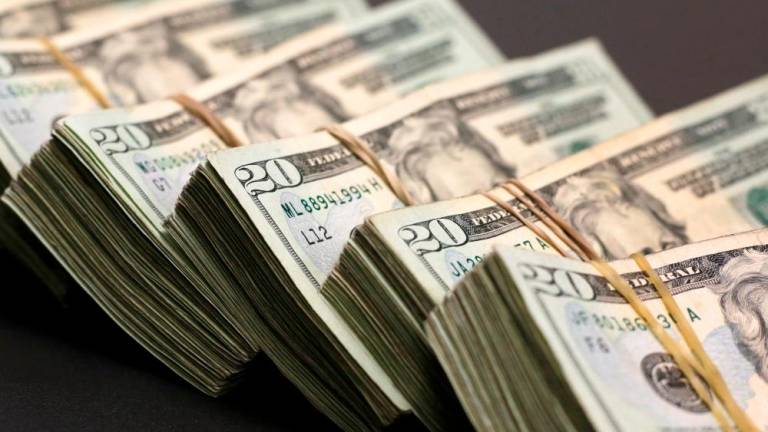
    Over the weekend, the U.S. dollar experienced a dip against the Vietnamese dong on the informal currency exchange market. The dollar was traded 0.34% lower at VND26,560 at unofficial exchange points, while Vietcombank maintained its rate at VND26,463.

    Global Dollar Weakness

    On the global stage, the U.S. dollar was on track for its most significant weekly loss in 12 weeks. This downturn resulted from a lukewarm U.S. employment report, which led to diminished market predictions for an imminent Federal Reserve interest rate increase. This development brought some relief to the Japanese yen.

    The overall weakening of the dollar also boosted the euro, which reached $1.1440, following a nearly two-week high the previous day. The euro ended the week up by 0.5%. Simultaneously, the British pound solidified its position to $1.3352, marking a 1.1% weekly gain, its highest in almost three months.

    Impact on other Currencies

    The increased strength of the dollar also brought relief to the Japanese yen. The yen increased to less than 161 per dollar, a welcome shift after the sudden increase on Thursday, which took the currency from a 40-year low of 162.84 to 161.25. Despite this, market uncertainty surrounding potential intervention risks persisted.

    The dollar’s decline came in response to slowed U.S. job growth in June. Further, the reduced payroll gains for the preceding two months triggered traders to scale back on predictions of a near-term Federal Reserve rate increase.

    Questions & Answers

    What triggered the U.S. dollar’s dip against the Vietnamese dong?
    The dip was triggered by the overall weakening of the U.S. dollar on the global stage, which was a result of a lukewarm U.S. employment report diminishing market predictions for an immediate Federal Reserve interest rate increase.

    How did the global dollar weakness impact the euro and the British pound?
    The weakness of the U.S. dollar led to the strengthening of the euro, reaching $1.1440, and the solidifying of the British pound’s position at $1.3352.

    What caused the shift in the strength of the Japanese yen?
    The shift in the Japanese yen was due to the overall increase in the strength of the U.S. dollar, which took the yen from a 40-year low of 162.84 to less than 161 per dollar.

  • Vietnam’s Gold Prices Soar Amid Global Bullion Rally and Softened US Jobs Data

    Vietnam’s Gold Prices Soar Amid Global Bullion Rally and Softened US Jobs Data

    On Friday morning, gold prices in Vietnam saw a significant rise, in sync with the worldwide increase in gold rates, marking the first weekly gain in the past five weeks. The key driver behind this surge was the gold bar price offered by Saigon Jewelry Company, which saw a leap of 2.02%, equating to VND151.4 million (US$5,756.11) per tael. For context, a tael is equivalent to either 37.5 grams or 1.2 ounces.

    Over the course of the week, local gold rates have climbed by 1.9%, putting them roughly VND18 million per tael above global rates. This trend was mirrored by the price of gold rings, which increased by 2.02%, bringing it to VND151.3 million per tael on Friday.

    Global Gold Prices on the Rise

    On the global stage, Friday saw an increase of more than 1% in gold prices, setting the stage for the first weekly gain in the past five weeks. This shift has been attributed to a recalibration of investor expectations in light of less than anticipated U.S. employment figures, leading to a decrease in anticipations of Federal Reserve interest rate hikes.

    Spot gold saw an increase of 1.4%, taking it to $4,179.94 per ounce, its highest value since June 23. Additionally, U.S. gold futures for August delivery saw a rise of 1.6%, bringing it to $4,193.20.

    According to Kelvin Wong, a senior market analyst at OANDA, despite this uptick in gold prices, there has not been a complete revocation of rate hike pricing. He predicts that by the end of the year, there may still be another phase of potential gold weakness, with prices possibly reaching the $3,500/oz level.

    Central Banks Resume Gold Purchases

    The World Gold Council has reported that there has been a resumption of gold purchases by central banks. As per the most recent data, official gold reserves saw a net increase of 41 tons in May.

    Questions & Answers

    What factors led to the rise in gold prices in Vietnam?
    The rise in gold prices in Vietnam was driven by the gold bar price offered by the Saigon Jewelry Company and the increase in the global gold rate.

    What is the anticipated impact of the U.S. employment figures on gold rates?
    The less than expected U.S. employment figures have led to a reduction in expectations of Federal Reserve interest rate hikes, contributing to the rise in gold prices.

    What is the projected future trend for gold prices as per the senior market analyst at OANDA?
    Despite the recent increase in gold prices, Kelvin Wong predicts a potential phase of gold weakness towards the end of the year, with prices potentially reaching the $3,500/oz level.

  • DBS Leads Singapore Banks in $1B Synthetic Securitization Deal: Unveiling a New Era of Corporate Lending

    DBS Leads Singapore Banks in $1B Synthetic Securitization Deal: Unveiling a New Era of Corporate Lending

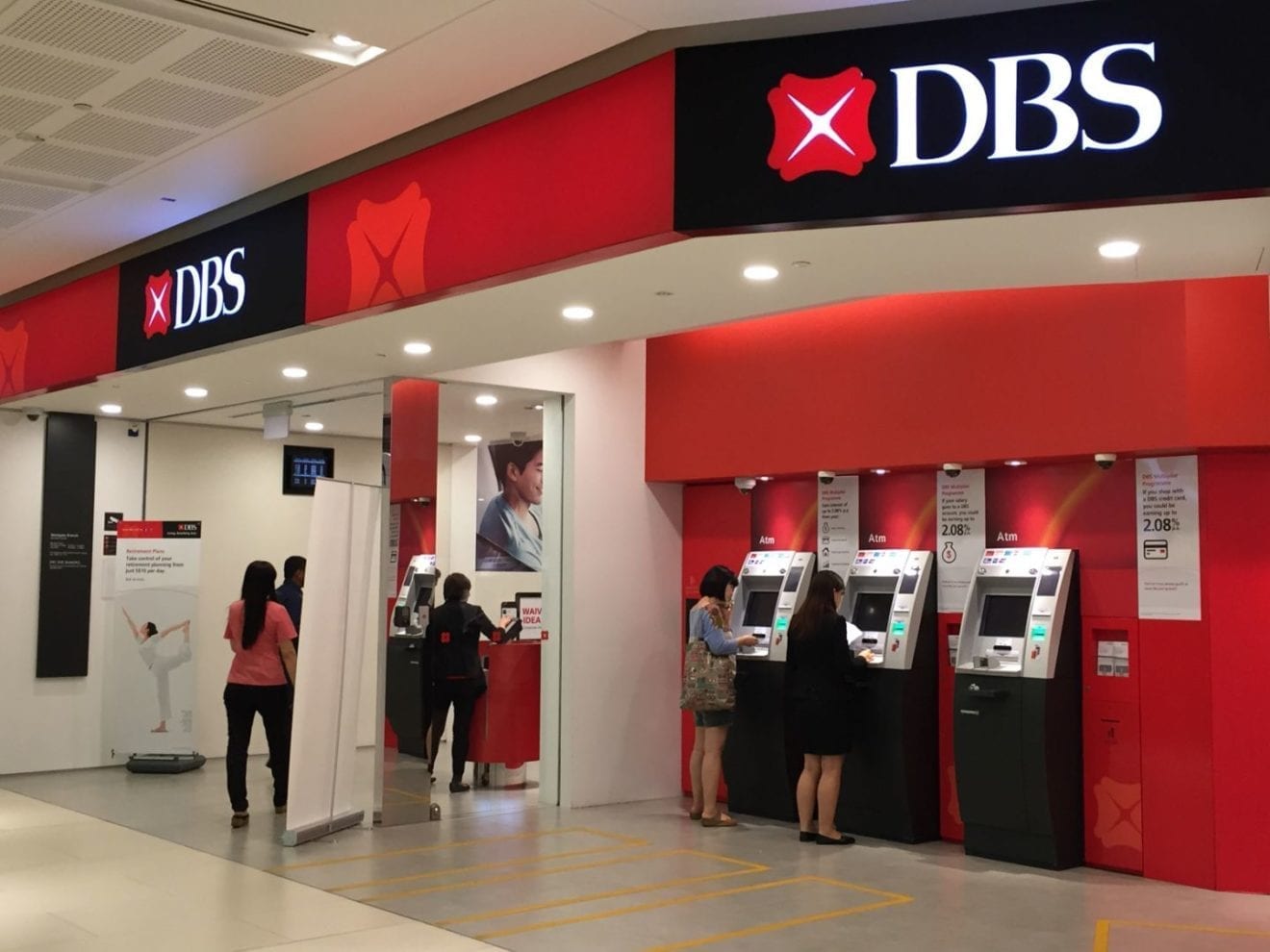
    DBS Group, the largest bank in Southeast Asia in terms of assets, recently completed a pioneering synthetic securitization transaction. This transaction, which is tied to a corporate loan portfolio worth $1 billion, marks the first of its kind to be carried out by a Singaporean bank.

    A New Approach to Risk Management

    The transaction, known in the financial sector as a significant risk transfer transaction, provides an opportunity for investors to shoulder a portion of the loan portfolio’s credit risk. This was confirmed in a statement released by DBS on Tuesday. DBS retains and services the loans, but this new approach reduces the amount of regulatory capital that the bank is required to hold against them.

    This innovative transaction is expected to assist DBS in managing its capital more efficiently. It is also intended to bolster client financing as the bank continues to grow its presence across Southeast Asia.

    According to DBS, the deal also sets a precedent for future transactions of a similar nature. The bank plans to selectively undertake more such transactions in the future.

    Maintaining a Robust Balance Sheet

    Philip Fernandez, the Group Corporate Treasurer at DBS, expressed that this new approach would facilitate the bank in maintaining a strong balance sheet while simultaneously pursuing growth opportunities. DBS also confirmed that its capital ratios are comfortably exceeding regulatory requirements.

    Questions & Answers

    What is a synthetic securitization transaction?
    A synthetic securitization transaction, also known as a significant risk transfer transaction, allows investors to assume part of the credit risk of a loan portfolio.

    How does this transaction benefit DBS?
    The transaction assists the bank in managing capital more efficiently, supports more client financing, and reduces the regulatory capital DBS must hold against the loans.

    What does this transaction mean for the future of DBS?
    The successful completion of this transaction paves the way for DBS to selectively perform more of these transactions in the future. It also indicates the bank’s commitment to maintaining a strong balance sheet while seeking out growth opportunities.

  • Swiss Banking Giant Sygnum Expands Reach in Europe with New Micar Licence

    Swiss Banking Giant Sygnum Expands Reach in Europe with New Micar Licence

    Swiss digital asset banking conglomerate, Sygnum, is amplifying its expansion efforts throughout Europe following the procurement of a Markets in Crypto-Assets (MiCA) license for its Liechtenstein-based subsidiary. This approval paves the way for the firm to engage directly with clients across the European Union and European Economic Area, marking a significant development in its global expansion agenda.

    The granting of the license arrives as the EU’s MiCA transition phase winds down, permitting Sygnum Europe to operate under the bloc’s standardized cryptocurrency regulatory framework. With its robust banking infrastructure spanning Switzerland, Singapore, and the Middle East, the firm seeks to broaden its client base among wealthy individuals, institutional investors, and financial institutions throughout Europe.

    Banking Platform at the Forefront

    Sygnum differentiates itself from other recently licensed crypto service providers by integrating its MiCA license with a well-grounded banking platform, institutional-quality custody and digital asset investment products, and an immediately deployable Bank-to-Bank infrastructure.

    Simon Schneider, the Chief Executive of Sygnum Europe, emphasized that the blending of traditional and digital finance makes trust Europe’s most precious asset. He further stated that having direct access to the European market would enable the firm to offer its regulated digital asset services to a wider range of clientele.

    Concentration on Private Wealth and Institutions

    Sygnum is primarily targeting Europe’s burgeoning pool of ultra-wealthy individuals open to investing in digital assets. Clients will have the opportunity to trade cryptocurrencies, including Bitcoin, through integrated accounts, all under the protection of regulated institutional custody. They will also have access to products like the Sygnum Crypto Yield Fund.

    Sygnum is also keen on capturing the interest of institutional investors. The firm plans to offer its off-exchange custody platform, Protect, to hedge funds, asset managers, and proprietary trading firms. The platform’s design, which disassociates custody from trading locales, aims to diminish the counterparty risks linked with cryptocurrency exchanges.

    Sygnum also identifies a significant opportunity in catering to Europe’s banking sector. The company highlights that the majority of the continent’s approximately 5,000 banks have not yet integrated digital asset services due to the stringent infrastructure and regulatory prerequisites.

    Through its Bank-to-Bank platform, Sygnum empowers financial institutions to roll out regulated digital asset offerings more swiftly, while cutting down on execution costs and operational intricacy. The company currently offers digital asset capabilities through over 25 partner banks, reaching over a third of Switzerland’s population. By 2027, it expects to be one of Europe’s largest regulated Bank-to-Bank digital asset networks by client reach.

    As part of its European growth strategy, Sygnum continues to invest in artificial intelligence. The bank was the first regulated Swiss bank to carry out live AI-facilitated digital asset transactions using a human-supervised approach that blends AI with human oversight.

    Questions & Answers

    What is the significance of Sygnum acquiring a Markets in Crypto-Assets license?
    Securing the MiCA license enables Sygnum to operate directly with clients across the European Union and European Economic Area, marking a key milestone in its global expansion plans.

    What services will Sygnum provide to its targeted clientele in Europe?
    Sygnum aims to offer its regulated digital asset services, including a well-established banking platform, institutional-quality custody, digital asset investment products, and an immediately deployable Bank-to-Bank infrastructure.

    What strategy does Sygnum plan to implement to capture the interest of institutional investors?
    The firm plans to offer its off-exchange custody platform, Protect, to hedge funds, asset managers, and proprietary trading firms. This platform, designed to separate custody from trading locales, seeks to reduce counterparty risks associated with cryptocurrency exchanges.

  • Vietnam’s Gold Prices Soar Despite Global Market Decline: A Week of Ups and Downs

    Vietnam’s Gold Prices Soar Despite Global Market Decline: A Week of Ups and Downs

    Vietnam’s gold market saw a modest rise in prices on Saturday, ending the week on a slightly high note. The day observed a 0.34% increase in the prices of gold bars from Saigon Jewelry Company, which closed at VND147.2 million (US$5,594.85) per tael. This showed a 0.14% increase over the week.

    Similarly, the prices of gold rings also rose, marking a 0.4% increase to VND147.2 million per tael. For context, a tael is a traditional Asian unit of weight, which is equivalent to 37.5 grams or 1.2 ounces.

    Global Gold Prices

    In contrast to Vietnam, global gold prices experienced a downward trend on Friday. The decline marked the third consecutive weekly fall for the yellow metal. The decrease in prices was influenced by the strengthening of the U.S. dollar and a hawkish stance of the Federal Reserve.

    Spot gold decreased by 0.9%, settling at $4,169.44 per ounce. This was after hitting its lowest level since June 11 at $4,119.78. Also, U.S. gold futures contracted by 1.4% to $4,186.50.

    Senior market analyst at Jefferies-owned Tradu.com, Nikos Tzabouras, commented on the situation. He noted that gold is at risk of sinking further into bear market territory, potentially falling below the $4,000/oz mark. He attributed this to the challenging market environment and the unfavorable effects of prolonged higher Federal Reserve expectations on non-yielding assets, which, however, is beneficial to the dollar.

    With regards to gold price projections, Goldman Sachs revised its forecast, lowering its December prediction to $4,900 per ounce from its earlier estimate of $5,400. The firm reasoned that while its price outlook remains generally positive, it is exercising caution due to potential near-term downside risk and medium-term upside risk.

    Questions & Answers

    What caused the rise in Vietnam’s gold prices?
    The increase in Vietnam’s gold prices is not attributed to a specific cause in the article. However, gold prices can rise due to various factors such as fluctuations in currency values, inflation, and geopolitical instability.

    What is causing the downturn in global gold prices?
    The global decline in gold prices is attributed to the strengthening of the U.S. dollar and the hawkish stance of the Federal Reserve, which has increased expectations for higher interest rates.

    What is Goldman Sachs’ revised forecast for gold prices by December?
    Goldman Sachs has revised its forecast for gold prices by December to $4,900 per ounce, a decrease from its previous estimate of $5,400 per ounce.

  • Allianz GI Sets Eyes on Asias Potential: The Future of Asset Management in Rising Eastern Economies

    Allianz GI Sets Eyes on Asias Potential: The Future of Asset Management in Rising Eastern Economies

    The Asia-Pacific region is becoming a major focus for Allianz Global Investors (Allianz GI) as global growth trends shift eastward. The firm’s CEO, Tobias C. Pross, asserts that Asia remains one of the few regions where structural growth opportunities are still present despite geopolitical challenges and the slowing growth of Western economies.

    Allianz GI’s Growing Presence in Asia

    Allianz GI has been continually expanding its footprint across the Asia-Pacific region, as the firm sees the area’s growth dynamics moving away from conventional Western markets. Pross highlights that whenever growth is discussed in an inflationary context, the Asia-Pacific region stands out prominently.

    The firm has seen a promising start to 2026, reporting approximately €8 billion in net inflows during the first quarter, which has pushed the assets under its management above €600 billion for the first time.

    The company’s recent initiatives include investments in China, Indonesia, and Taiwan, launching new active ETF capabilities, and inaugurating a new office in South Korea. Julie Koo, former Citi executive, has been brought onboard as the Head of Asia Pacific to further strengthen Allianz’s leadership team in the region.

    Investment Opportunities and Market Expansion

    Allianz GI perceives Asia as a long-term source of investment opportunities and client growth, rather than just a distribution market. While some global investors have started to tread cautiously in the China market, Pross affirms that Allianz GI is still dedicated to China, seeing periods of geopolitical uncertainty as opportunities for active managers.

    Allianz GI is also expanding its private markets platform to offer access to infrastructure, private credit, and private equity strategies to a broader range of investors. Pross noted that demand is growing across Asia, as private banks, insurers, and wealthy individuals explore alternative income sources and diversification.

    Furthermore, Allianz GI views artificial intelligence as a significant investment area. The company is developing a global data platform and proprietary large language models to enhance investment research and portfolio management.

    Questions & Answers

    What is Allianz GI’s growth strategy for the Asia-Pacific region?
    Allianz GI aims to expand its presence by investing in key markets such as China, Taiwan, and Indonesia, and by launching new active ETF capabilities. The firm also plans to strengthen its leadership team in the region.

    How does Allianz GI view the China market?
    Despite some investors’ growing caution, Allianz GI remains committed to the China market. The firm believes that periods of geopolitical uncertainty often create opportunities for active managers.

    What role does artificial intelligence play in Allianz GI’s strategy?
    Allianz GI is significantly investing in artificial intelligence. The firm is developing a global data platform and proprietary large language models to enhance its investment research and portfolio management.

  • UOB Private Bank Taps Dennis Hong to Fuel North Asias Wealth Management Expansion

    UOB Private Bank Taps Dennis Hong to Fuel North Asias Wealth Management Expansion

    United Overseas Bank (UOB) Private Bank has announced the appointment of Dennis Hong to the position of Regional Market Head for Greater China and North Asia, commencing in September 2026. This decision aligns with UOB’s ongoing plan to fortify its wealth management sector and tap into the increasing cross-border wealth traffic between Greater China and ASEAN.

    Hong’s Role and Responsibilities

    Hong’s new assignment will see him spearheading the advancement and strategic planning of UOB Private Bank’s operations in Greater China and North Asia. He will be managing principal markets such as China, Hong Kong, Taiwan, and Japan. Hong’s responsibilities will encompass the formulation of market strategies, expansion of client base, enhancement of advisory services, and supervision of regional teams. All these efforts are directed towards fostering client relationships and facilitating consistent business growth.

    Hong enters his new role at UOB Private Bank with a wealth of knowledge and experience in private banking and wealth management. His most recent position saw him guiding an Asia-Pacific private banking division, which emphasized the Greater China and North Asia markets. Hong has demonstrated his skills in building and managing significant teams, creating market propositions, and promoting business growth across major regional markets throughout his career. Hong will be stationed in Singapore, reporting directly to Chew Mun Yew, the Head of UOB Private Bank.

    UOB Private Bank’s Growth Strategy

    UOB Private Bank has confirmed that the Greater China market will continue to be a fundamental component of its regional growth strategy. This approach is particularly relevant as clients are increasingly seeking integrated wealth, investment, and financing solutions across various jurisdictions.

    The bank also intends to bolster its value proposition for high-net-worth (HNW) and ultra-high-net-worth (UHNW) clients, demonstrating its commitment to providing superior financial services and ensuring customer satisfaction.

    Questions & Answers

    What is the role of Dennis Hong at UOB Private Bank?
    Dennis Hong has been appointed as the Regional Market Head, Greater China and North Asia. His responsibilities include leading the growth and strategic development of the bank’s operations in these regions.

    What experience does Dennis Hong bring to his new role at UOB Private Bank?
    Hong has extensive experience in private banking and wealth management. He has previously led an Asia-Pacific private banking franchise with a strong focus on Greater China and North Asia.

    What is UOB Private Bank’s growth strategy for the Greater China market?
    UOB Private Bank has identified the Greater China market as a key pillar of its regional growth strategy. The bank aims to meet the growing demand for integrated wealth, investment, and financing solutions across multiple jurisdictions.

  • Fee-Free ATM Withdrawals in Malaysia: New Initiative Boosts Accessible Banking from July

    Fee-Free ATM Withdrawals in Malaysia: New Initiative Boosts Accessible Banking from July

    Starting July 1st, Malaysians will have the ability to withdraw cash from any bank’s automated teller machines (ATMs) or smart recycler machines (SRMs) across the country without the usual RM1 (US$0.25) interbank fee. This new initiative will grant debit cardholders access to more than 14,000 ATMs and SRMs, regardless of the bank that issued their card. The announcement was made jointly by the Association of Banks in Malaysia, the Association of Islamic Banking and Financial Institutions Malaysia, and the Association of Development Finance Institutions of Malaysia.

    Making Financial Services Accessible

    The aforementioned associations have stated that this change, applicable to ATMs and SRMs run by Malaysian banks, was enacted in cooperation with Payments Network Malaysia (PayNet). The driving force behind this move is an ongoing effort to render financial services more attainable, all-inclusive, and affordable.

    It’s important to note that cash continues to play a crucial role as a necessary payment method for numerous Malaysians in their day-to-day lives. This elimination of the interbank fee is a reflection of the industry’s dedication to providing reliable, convenient, and cost-effective access to cash. Ultimately, it’s a measure aimed at alleviating the financial strain on consumers.

    Questions & Answers

    What is changing for debit cardholders in Malaysia?
    Starting July 1st, Malaysian debit cardholders will no longer be charged the usual interbank fee of RM1 (US$0.25) when withdrawing cash from any bank’s ATMs or SRMs nationwide.

    Who are the organizations behind this move?
    This change has been implemented jointly by the Association of Banks in Malaysia, the Association of Islamic Banking and Financial Institutions Malaysia, the Association of Development Finance Institutions of Malaysia, and Payments Network Malaysia (PayNet).

    Why has this fee waiver been introduced?
    The interbank fee waiver is a part of ongoing efforts to make financial services more accessible, inclusive, and affordable for all Malaysians, and to alleviate the financial burden on consumers.

  • Singapore Boosts Gold Market Role: Invites Foreign Central Banks for Secure Gold Storage Services

    Singapore Boosts Gold Market Role: Invites Foreign Central Banks for Secure Gold Storage Services

    Beginning in October, Singapore will permit foreign central banks and sovereign entities to store their gold reserves within its borders. This move is aimed at reinforcing Singapore’s standing as a regional hub for gold trading and storage. The city-state’s commercial vaulting capacity currently surpasses 2,000 tonnes. This capacity is utilized by a diverse array of market participants including bullion banks, institutional investors, and high-net-worth individuals, as expressed by Deputy Prime Minister Gan Kim Yong on a recent Monday forum.

    Strengthening the Gold Market

    In addition to providing secure storage, Singapore will cater to foreign central banks and sovereign entities desiring to actively manage their gold holdings. The Monetary Authority of Singapore plans to offer gold accounts to a select group of bullion banks based in Singapore. This initiative will enhance their capability to deliver gold-related services and liquidity to these entities.

    Deputy Prime Minister Yong believes that this move will enhance Singapore’s reputation as a safe and reliable jurisdiction where reserve assets can be securely held and actively managed. The city-state will also be able to connect these assets to wider market liquidity during Asian trading hours, further reinforcing its regional dominance.

    Gold Market Innovations

    Several innovative measures have also been announced to strengthen Singapore’s role in the global gold market. One significant measure includes the establishment of an over-the-counter gold clearing system by the Singapore Exchange by the end of 2026. Interbank trading is anticipated to grow from 2027 onwards.

    This revolutionary system aims to enhance trade processing, boost transparency, and support more efficient clearing and settlement. According to Yong, this will instill greater confidence in market participants to transact in Singapore. The new system will accommodate both large bars and kilobars, enabling standardized settlement during Asian trading hours.

    Large bars refer to 400-troy-ounce gold bars or approximately 12.4 kilograms, which are standard for institutional trading and settlement in London. Kilobars, on the other hand, are 1-kilogram bars that are popular in Asian markets and are accepted for delivery in Comex gold futures contracts in the U.S.

    DBS, Deutsche Bank, ICBC Standard Bank, JPMorgan, OCBC, and UOB have been reported as the six banks that will join as clearing members and contribute to the development of Singapore’s gold market.

    Questions & Answers

    What will Singapore allow from October?
    Starting from October, Singapore will allow foreign central banks and sovereign entities to store their gold reserves in the country.

    What benefits will the proposed gold clearing system bring to Singapore’s gold market?
    The proposed over-the-counter gold clearing system will streamline trade processing, enhance transparency, and support more efficient clearing and settlement, thereby bolstering market participant confidence to transact in Singapore.

    Which banks will be joining as clearing members to develop Singapore’s gold market?
    DBS, Deutsche Bank, ICBC Standard Bank, JPMorgan, OCBC, and UOB are set to join as clearing members to help develop Singapore’s gold market.

  • DBS Unveils Singapores First Retail-Ready Tokenised Gold Offering: Buy, Trade, and Hold via One Digital Platform

    DBS Unveils Singapores First Retail-Ready Tokenised Gold Offering: Buy, Trade, and Hold via One Digital Platform

    DBS Bank is set to revolutionize the financial market in Singapore by launching tokenized physical gold for retail customers in the latter half of 2026. With this initiative, DBS Bank takes the lead as the first bank in the nation to empower its customers with the capability to purchase, possess, and transact in tokenized physical gold via a singular digital platform.

    Tokenizing Precious Metal

    The advanced DBS Physical Gold Tokens will be available through the DBS digibank app. With each token backed by an equivalent amount of physical gold that will be securely stored in a dedicated DBS vault located in Singapore. Each token will stand for one gram of gold, providing customers the opportunity to acquire fractional ownership of this valuable metal.

    DBS Bank assures that this offering will facilitate 24/7 trading, almost immediate settlement, and the choice to exchange tokens for physical gold. Moreover, the bank is looking into the possibility of having the tokens listed on the DBS Digital Exchange (DDEx) for accredited and institutional investors.

    This launch coincides with the escalating interest in gold and the tokenization of real-world assets. DBS Bank will oversee the entire procedure internally, including tokenization, custodial services, vaulting, and distribution.

    Li Zhen, Head of Foreign Exchange, Precious Metals, and Digital Assets at DBS, commented on the initiative, stating that the bank’s comprehensive digital asset capabilities will simplify access to and management of physical gold for clients.

    James Tan, Group Head of Investment Product and Advisory, also shared his views on the subject. He mentioned that tokenization would expand access to an asset class that has typically been accessible mainly to wealthy and institutional clients.

    Expanding Digital Asset Services

    The introduction of tokenized gold expands upon DBS Bank’s existing array of gold investment products. Moreover, it is part of the bank’s broader endeavor to delve into digital assets and blockchain-based financial services.

    Questions & Answers

    What is the DBS Physical Gold Tokens initiative?
    This initiative by DBS Bank allows customers to purchase, hold, and trade tokenized physical gold via a single digital platform.

    What features does the tokenized gold offering include?
    The offering will enable 24/7 trading, near-instant settlement and the option to redeem tokens for physical gold. The bank is also exploring a future listing of the tokens on the DBS Digital Exchange for accredited and institutional investors.

    How does this initiative fit into DBS Bank’s broader strategy?
    The tokenized gold offering expands DBS Bank’s existing range of gold investment products and is part of the bank’s broader push into digital assets and blockchain-based financial services.

  • Vietnam’s Gold Prices Tumble to 8-Month Low Amid Rising Dollar and US-Iran Tensions

    Vietnam’s Gold Prices Tumble to 8-Month Low Amid Rising Dollar and US-Iran Tensions

    Gold prices in Vietnam continued on a downward trend on Wednesday morning, reaching the lowest point since October 5. The Saigon Jewelry Company reported that gold bars fell by 2.64%, now valued at VND140 million (US$5,318.74) per tael. In Vietnam, a tael is equivalent to 37.5 grams or 1.2 ounces.

    The price of gold rings also experienced the same decline, priced at VND140 million per tael. So far this year, gold prices in Vietnam have decreased by 8%.

    Global Gold Market Trends

    On a global scale, gold fell by over 1% on Wednesday, plunging to an 11-week low. This drop in value could be attributed to the rising dollar and oil prices, amid renewed tensions between the United States and Iran. These factors fueled concerns about potential inflation and possible interest rate hikes.

    Spot gold suffered a 1.8% loss, falling to $4,187.59 per ounce, the lowest it has been since March 23. Meanwhile, U.S. gold futures for August delivery were down 1.7% at $4,213.40.

    The rise of the dollar has made bullion priced in the greenback more costly for holders of other currencies. Additionally, the 1% increase in oil prices stoked inflation worries, solidifying the expectation that interest rates would remain high for an extended period.

    Ilya Spivak, head of global macro at Tastylive, noted that the shift in Federal Reserve policy expectations, the rise in yields, and the increase in the dollar have all contributed to the decline in gold prices.

    Questions & Answers

    Why have gold prices in Vietnam decreased?
    The decline in gold prices in Vietnam is part of a global trend, influenced by factors such as the rising dollar and oil prices, as well as geopolitical tensions.

    What factors are influencing global gold prices?
    Global gold prices are being affected by policy expectations from the Federal Reserve, rising yields, and the strengthening of the dollar. Inflation worries and anticipated interest rate hikes also play a significant role.

    How is the rise in oil prices related to gold prices?
    The increase in oil prices can stoke inflation concerns. When inflation is expected to rise, interest rates typically follow suit. Higher interest rates can negatively impact gold prices because they increase the opportunity cost of holding non-yielding bullion.

  • Dollar Scales Two-Month High Against Dong amid Federal Reserve Rate Hike Speculations

    Dollar Scales Two-Month High Against Dong amid Federal Reserve Rate Hike Speculations

    On Tuesday morning, the U.S. dollar witnessed a slight increase in value against the Vietnamese dong, maintaining a position close to its two-month peak in comparison to other major currencies. The commercial bank Vietcombank recorded a 0.004% rise in the U.S. currency, selling it at VND26,408. Conversely, the black market saw a 0.04% decrease, with the dollar going for VND26,360.

    Global Performance of the U.S. Dollar

    In the international currency market, the U.S. dollar remained strong and close to a two-month high on Tuesday. The stability of the dollar can be attributed to the uncertainty in the Middle East which has led to a reduced risk appetite among traders. Furthermore, speculations about a potential rate hike by the Federal Reserve later in the year have also played a role.

    Among other major currencies, the euro was valued at $1.1528 while the sterling was valued at $1.3335. Both currencies had experienced a decline of approximately 0.05% in the Asian market after reaching their lowest value in two months during the previous trading session.

    The risk-sensitive currencies such as the Australian dollar and the New Zealand dollar were not spared. The Australian dollar depreciated by 0.1% to $0.7039, while the New Zealand dollar was traded at $0.5804.

    The Japanese yen was also affected, weakening to as much as 160.295. It continued to hover around the 160 level, a mark recognized as the threshold for possible official intervention.

    Performance of the Dollar Index

    The dollar index, reflecting the performance of the U.S. dollar against a basket of currencies such as the yen and the euro, remained nearly unchanged. The index was recorded at 100.03, extremely close to its two-month high of 100.21 from the previous day.

    Questions & Answers

    What was the value of the U.S. dollar against the Vietnamese dong on Tuesday morning?
    The U.S. dollar was valued slightly higher against the Vietnamese dong, selling at VND26,408 in Vietcombank.

    Why has the U.S. dollar held near a two-month high globally?
    The strength of the U.S. dollar can be attributed to the prevailing uncertainty in the Middle East, reducing risk appetite among traders. Additionally, speculations of a Federal Reserve rate hike later in the year have contributed to the dollar’s high standing.

    How did other major currencies perform against the U.S. dollar?
    The euro and sterling both experienced a decline of around 0.05%. The Australian dollar depreciated by 0.1% while the New Zealand dollar traded at $0.5804. The Japanese yen also weakened, hovering around the 160 level.