Category: Food

Retail News Asia is committed to providing both local and global retailers with the latest Food and Food & Beverage news throughout the Asian market. This on a daily base.

  • Malaysia’s Kedai Ayamas Eatery plans 100 more stores

    Malaysia’s Kedai Ayamas Eatery plans 100 more stores

    Kedai Ayamas eatery operator Kara Holdings is looking to establish 100 outlets within four years through its new franchising program, predominantly within peninsular Malaysia. The move into franchising should elevate the company’s finances by 10 per cent this year to about RM40 million (US$9.85 million). Nine franchises have opened so far, with 20 more targeted within the year.

    “As Johor Corp’s wholly owned subsidiary, we complement the KFC business in terms of maximising the use and distribution of poultry products at the farm,” said Kara’s executive director Abd Rahman Md Dawi. “The poultry-relating business has always been a high-demand market for the food and beverage sector in Malaysia.

    “Last year, we registered a revenue of RM35 million [$8.6 million]”, he added. “With the additional franchise business, hopefully, it will amplify our revenue this year, coupled with Kara’s technological adoption of food delivery services such as Foodpanda and Grab-Food.”

    According to Dawi, the company is open to franchisee acquisition of Kara’s 40 corporate outlets. Six of the nine new franchises were acquired from the firm.
    “There are certain criteria that will be considered for us to sell our own shops, but we encourage the newcomers to open a new shop,” he said.

    Kara’s franchising program costs between RM100,000 and RM400,000 ($24,600–98,450), and includes management and operational training sessions.

  • Starbucks Reserve® Roastery Tokyo opened door

    Starbucks Reserve® Roastery Tokyo opened door

    This week, Starbucks celebrates the opening of the Starbucks Reserve® Roastery Tokyo, a four-story tribute to premium coffee quality, innovation and human connection. This will be the fifthRoastery globally, opening to the public on Thursday, February 28, at 7 a.m. JST, reaffirming the company’s 23-year commitment to Japan. The Roastery pays tribute to the important role that Starbucks Japan has played in shaping the foundation of the Company’s international growth. The Roastery introduces customers to more than 100 unique coffee and tea beverages and merchandise, as well as a menu of artisanal Princi Italian fare for the first time in Japan.

    It also celebrates the Japanese culture of connection and craftsmanship through the first AMU Inspiration Lounge –from the Japanese “amu,” meaning “knit together”–to host community gathering events and is planned to become Starbucks first Specialty Coffee Association certified training location in Japan.
    “As the first international market outside of North America, Starbucks Japan has contributed 23 years of innovation for the company globally,” said Kevin Johnson, CEO, Starbucks Coffee Company.

    “The opening of the Tokyo Roastery will further amplify what Starbucks Japan has done across all stores in the market for more than two decades—innovating and delivering the finest quality coffee one person, one cup and one neighborhood at a time.” Takafumi Minaguchi, CEO, Starbucks Japan, added, “The Roastery will amplify and inspire coffee passion across all Starbucks stores, and will serve as a catalyst for a new wave of growth centered on the customer experience and passion for coffee and service. Beginning with the “Make it Yours” campaign that will commence at every store in Japan upon the opening of the Roastery, customers will be invited to experience the first Starbucks coffee roasted exclusively in Tokyo, for Japan, and available in a variety of coffee beverage styles.”

    Collaborative Design Highlights Japan’s Natural Beauty

    Located in Tokyo’s vibrant and creative neighborhood of Nakameguro, the Roastery’s enchanting design was inspired by the famous cherry blossom trees lining the Meguro River.

    The building’s glass walls and terraced floors seamlessly fold into the fabric of the neighborhood, bringing visitors eye-level with the cherry blossoms and the four seasons of the river to reflect the natural beauty and sense of harmony found across Japan.

    The Tokyo Roastery is the only Starbucks Roastery location designed in collaboration with a local architect from the ground up.

    The exterior was brought to life in collaboration with renowned Japanese architect Kengo Kuma. Envisioned by Liz Muller, Starbucks chief design officer and lead designer for all five Roasteries globally, the Roastery highlights the work of local craftsmen and women to create an enchanting destination for coffee exploration and discovery.

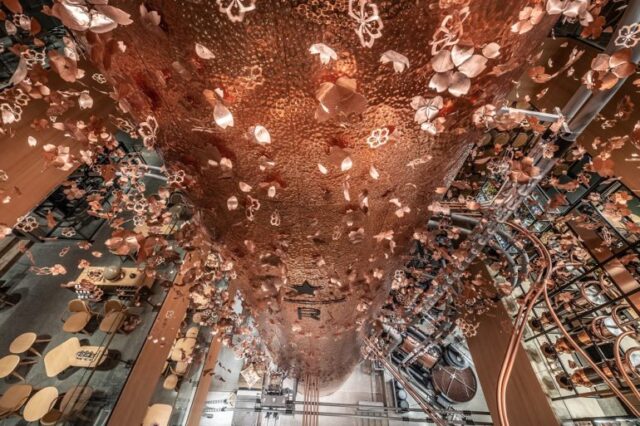
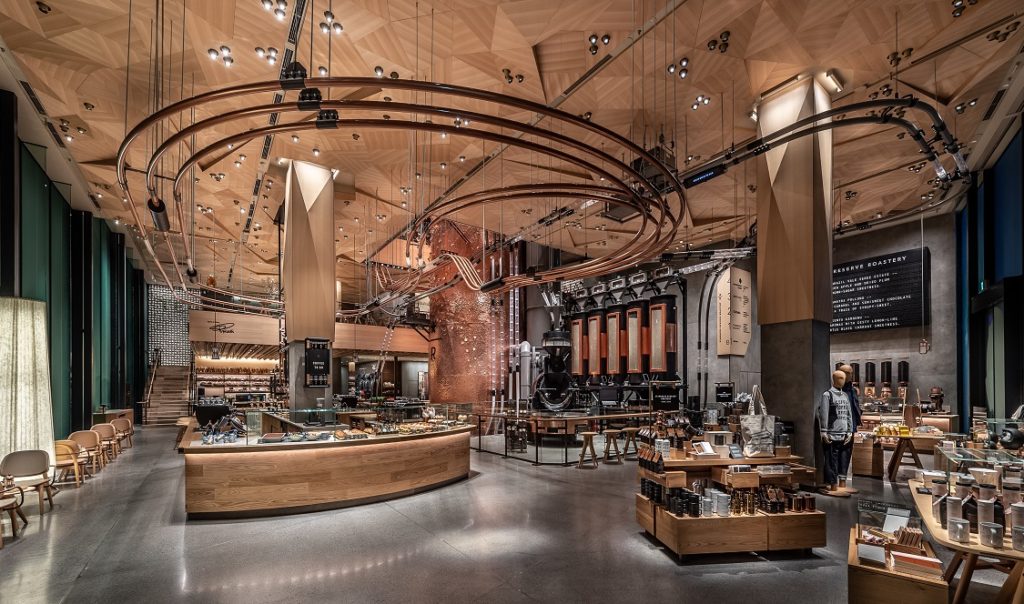
    The Tokyo Roastery merges traditional and modern design to deliver a unique and inspired experience across all four floors. Upon entering the Roastery, customers are greeted by the world’s largest Starbucks Roastery coffee cask, four-stories and over 55 feet of blush-tinted copper adorned with hand-crafted copper cherry blossoms, which changes hues throughout the day in different lights.
    The expansive cask was built using the technique of tsuchime, a tradition of copper beating, where each person involved in the building of the Roastery was offered the chance to hammer a portion to create its texture and pattern. The cask’s unique color is balanced against the light wood which has been carried into the interior to give the store a brightness found throughout traditional Japanese architecture.

    Throughout the Roastery, local craftsmen and women were brought together to incorporate their expertise and traditional craft into the design elements.

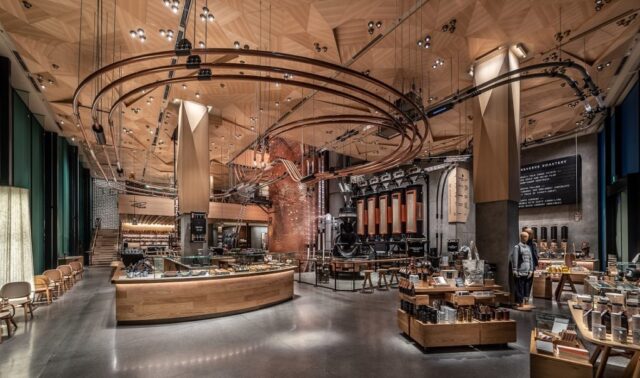
    The wood-tiled ceiling was inspired by the art of origami, providing a stunning visual experience. The light and airy space carries the light wood used on the exterior to the inside, giving the experience an enchanting aura.

    The wood, sourced locally, has been treated throughout with a traditional technique which prevents it from aging, ensuring the brightness is maintained inside and outside in the years to come.

    Enchanting Immersive Coffee, Tea and Mixology Experience

    The coffee journey at the Reserve Roastery Tokyo is an immersive experience and education in coffee, and its process—from green bean to cup—which begins at the Main Bar on the first floor.

    The open floor plan draws customers into the immersive experience, introducing them to the skilled art of roasting, brewing and hand-crafting beverages. The Reserve Roastery serves the freshest cup of coffee and it is here on the first floor that customers can taste Reserve coffee beverages such as Barrel-Aged Cold Brew.

    The Princi bakery serves handcrafted, authentic artisanal Italian fare that is baked fresh in the Roastery throughout the day. For the first time in Japan, customers can enjoy freshly-baked breads, cornetti, focaccias, pizzas, salads and more.

    An airy staircase leads to the second floor, where customers will be transported into the tradition of Japanese tea at the world’s largest Teavana Bar.

    Exclusive tea beverages, such as the Pop’n Tea Sakura Jasmine, featuring a vibrant hibiscus and cherry popsicle atop a floral jasmine tea, will delight customers with their charming appearance, Japanese ingredients and unique flavor combinations, modernizing the tea experience. On the terraced third floor, Starbucks Japan’s first cocktail bar, Arriviamo™, puts innovation, mixology and cocktail craft on full display.

    The two walls of spirits bring together the Arriviamo menu, featuring coffee and tea-inspired cocktails only available at the Tokyo Roastery, including the Nakameguro Espresso Martini made with chestnut liqueur, crème de cacao and espresso, then paired with decadent chocolate  from Nakameguro’s “green bean to bar CHOCOLATE” brand. Wine, beer and classic mixology beverages will also be available.

    Conversations with an Impact

    Starbucks Japan has more than two decades contributing to the communities it serves.

    The fourth floor of the Starbucks Reserve Roastery Tokyo is home to AMU Inspiration Lounge–a dedicated space for the community to gather for hosted social impact conversations. The concept of “AMU,” which means “to knit together” in Japanese, is founded on human connection and passions coming together, something Starbucks has long believed in. For the first time at any Starbucks location in the world, this intimate space will serve as a platform to host change-makers and creative thinkers from across Japan. The first event in April will celebrate the role of women leaders in Japan.

    The Roastery is planned to become Starbucks first certified Specialty Coffee Association (SCA) location offering training for coffee professionals in the near future.“We believe that where passions connect, the future is sparked, and we will offer the Tokyo Roastery as a gathering space to spark new ideas and create an impact,” said Minaguchi.

    “The Roastery signifies our commitment to fostering moments of human connection over a cup of coffee and using these moments to create positive social impact in the communities we serve.”

    With more than 37,000 partners who proudly wear the green apron across Japan’s 47 prefectures and 250 at the Roastery itself, Starbucks Japan will amplify coffee craft and innovation by freshly roasting small-batch coffees from around the world every day in Tokyo and introducing new beverages, concepts and inspiration to all 1,400 stores across Japan. This amplification will begin with Tokyo Roast coffee, a Starbucks Japan-exclusive coffee, available throughout the market on opening day.
  • 7-Eleven Taiwan to sell freshly-baked Domino’s Pizza

    7-Eleven Taiwan to sell freshly-baked Domino’s Pizza

    Taiwan 7-Eleven operator President Chain Store Corp is trialling a dual-branded store with Domino’s Pizza in Taipei’s Xinyi District. In doing so, the Taiwanese retail company has created the first convenience store in the country to offer fresh-cooked pizza with groceries and if successful, it will pave the way for a roll-out in selected stores.

    With Taiwan’s convenience-store market penetration the second highest in the world, sitting between South Korea and Japan, operators are seeking ways to achieve growth by means other than opening new stores.

    The trial store will allow customers to watch the pizza-making process. Pizzas will be priced from US$2.90 to $6.80, depending on serving size.

    President Chain Store is targeting busy working people in what is one of the capital city’s more upmarket neighbourhoods. The company hopes pizza will boost sales of complementary items such as beverages and other meal items.

    President Chain Store’s rival Taiwan familyMart has already partnered with companies to offer financial, catering and laundry services and health foods in its stores.

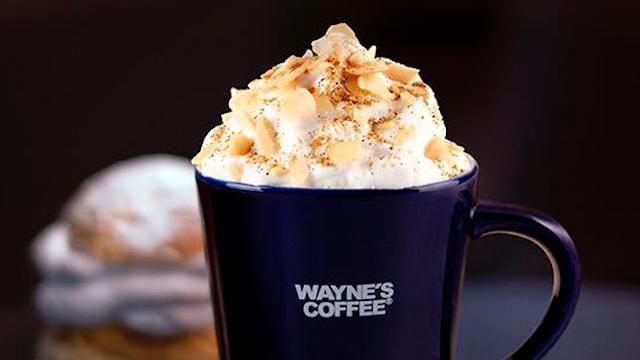
  • Wayne’s Coffee debuts in China

    Wayne’s Coffee debuts in China

    Swedish cafe chain Wayne’s Coffee has opened its first outlet in China. The new store on Shanghai’s Nanjing Xi Lu serves coffee, sandwiches and Swedish pastries to consumers. The move represents a courageous first step in a market dominated by international and local competitors. China is Wayne’s second market in Asia after the brand launched in Vietnam in June last year. It currently operates seven locations in Ho Chi Minh City.

    While the brand has been criticised for lacking a distinctive look and presumed by some observers to be a local Starbucks clone, the brand has in fact been running in Sweden since 1994, where it was the first venue in the country to serve cafe latte. It was also the first to serve the latte in Saudi Arabia when it opened there in 2010.

    Wayne’s more aggressive expansion phase was recognised when the brand won “Franchise chain of the year 2017” in Stockholm. It currently operates more than 140 locations internationally.

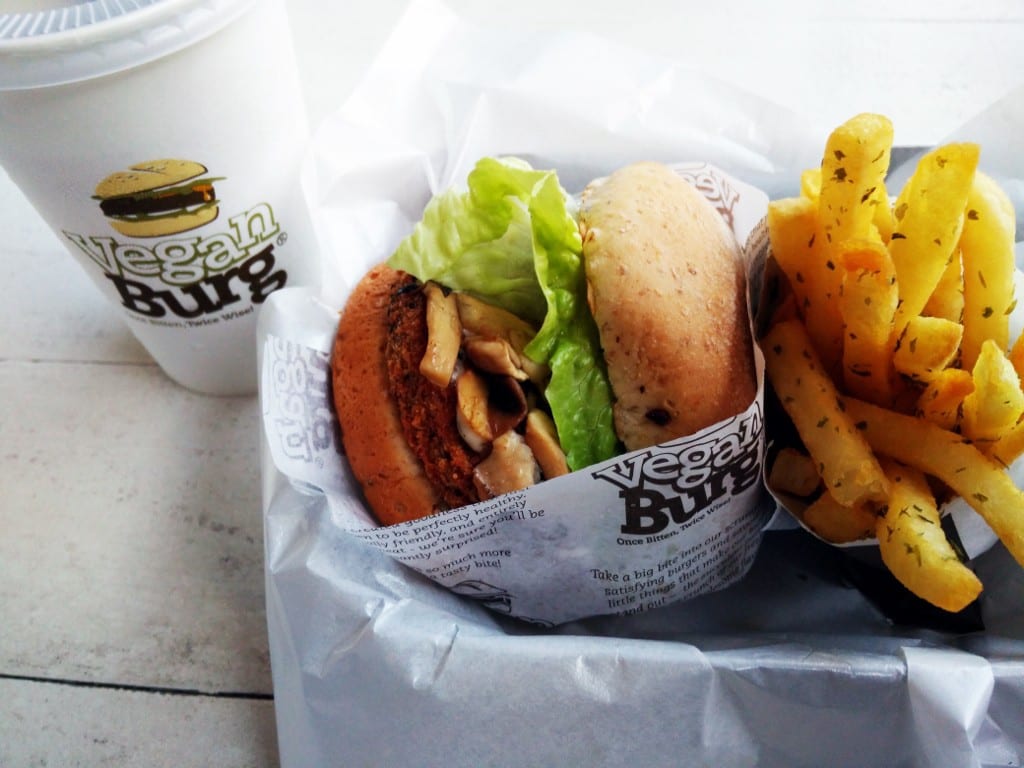
  • Singapore’s VeganBurg plans US expansion with franchising

    Singapore’s VeganBurg plans US expansion with franchising

    Singapore-based burger chain VeganBurg is seeking new franchisees to expand its business in California. The company will hold a franchising conference in Las Vegas next month, expected to be attended by many Californian companies and individuals evaluating franchise concepts. “VeganBurg has developed a passionate following from customers in Singapore and internationally and we have spent the last few years refining operations and investing in what has made VeganBurg a winner — our juicy burgers, fantastic staff, and world-class customer service,” said Alex Tan, VeganBurg CEO and founder.

    “We are interested in meeting enthusiastic and dedicated people who are passionate about the environment and impeccable people support,” he added.

    VeganBurg’s franchisees can be assured of support from pre-opening and training. An operations team will help new partners establish supplies of proprietary ingredients and products, assist with site selection and interior design, initial training and ongoing training support, product research and development, branding and marketing assets, systems, tools and processes.

    Founded in 2010, VeganBurg has been redefining food pop culture and comfort food in Asia and North America with its 100-per-cent plant-based menu.

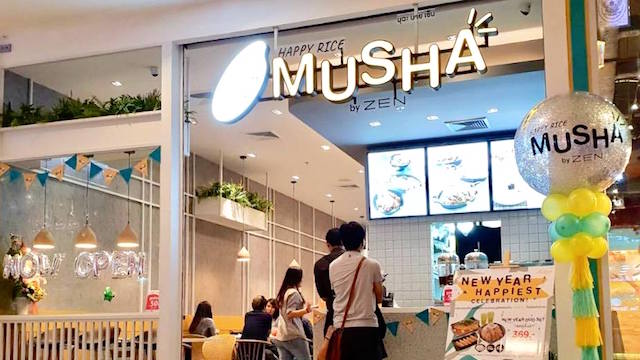
  • Zen Corporation Thailand completes IPO

    Zen Corporation Thailand completes IPO

    Thai restaurant operator Zen Corporation secured THB975 million (US$31.35 million) via an IPO issued last Wednesday. The firm sold all 75 million shares on offer, representing 25 per cent of its registered capital, at THB13 each. Its stock price grew 17.69 per cent over the course of its trading debut, as strong demand pushed the value per share up to THB15.30 on the first day.

    Zen Corporation is known for its various restaurant chains, including its eponymous brand as well as Musha by Zen, Sushi Cyu Carnival Yakiniku, AKA, On the Table Tokyo Cafe, Tetsu and de Tummour.

    The firm also operates food delivery, catering, restaurant management and consultancy services, as well as food retail operations.

  • Taiwan’s extravagant buffet restaurant “Harbour” now open at Iconsiam

    Taiwan’s extravagant buffet restaurant “Harbour” now open at Iconsiam

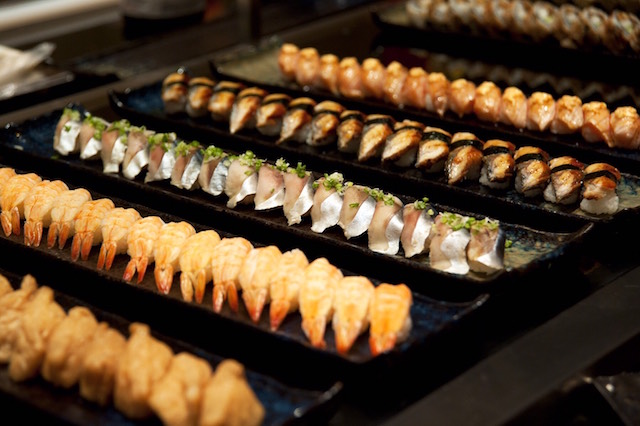
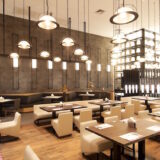
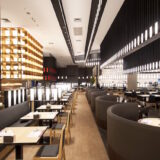
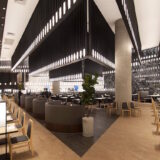
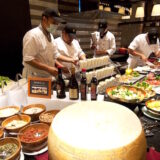
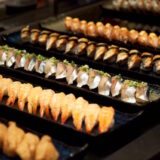
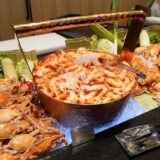
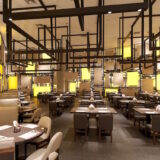
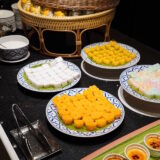
    Taiwan’s extravagant Harbour buffet restaurant has opened its first Thai restaurant at IconSiam. Charoen Pokphand Foods PLC (CPF) and Taiwan’s HiLai Group have jointly brought the famous international buffet restaurant to Thailand. The franchise has routinely seen diners in China and Taiwan waiting a month for a table. The 2000sqm IconSiam outlet is its 10th restaurant worldwide, pending Harbour’s unveiling in major global cities as part of CPF’s strategy to become “Kitchen of the World”.

    “Harbour has enjoyed overwhelming success in Taiwan and China”, said CPF’s COO-food business and co-president Sukhawat Dansermsuk. “We believe that we will be warmly welcomed by Thai consumers thanks to the restaurant’s strengths coupled with Thais’ eating-out lifestyle. And that’ll be the beginning of CPF’s success in the restaurant business.”


    According to Sukhawat, the restaurant was established as a joint venture with HiLai Group with THB130 million (US$4.16 million) in registered capital.

    CP HiLai Harbour CEO Liu Tzu-Ming said the venue is targeting THB240 million ($7.68 million) in first-year revenue and plans to introduce new restaurants at major Thai cities.

    The international buffet restaurant can accommodate 450 diners per round, or about 1000 diners per day.

    View the gallery below for more picture of the restaurant :

  • Jollibee Malaysia plans 100 Stores

    Jollibee Malaysia plans 100 Stores

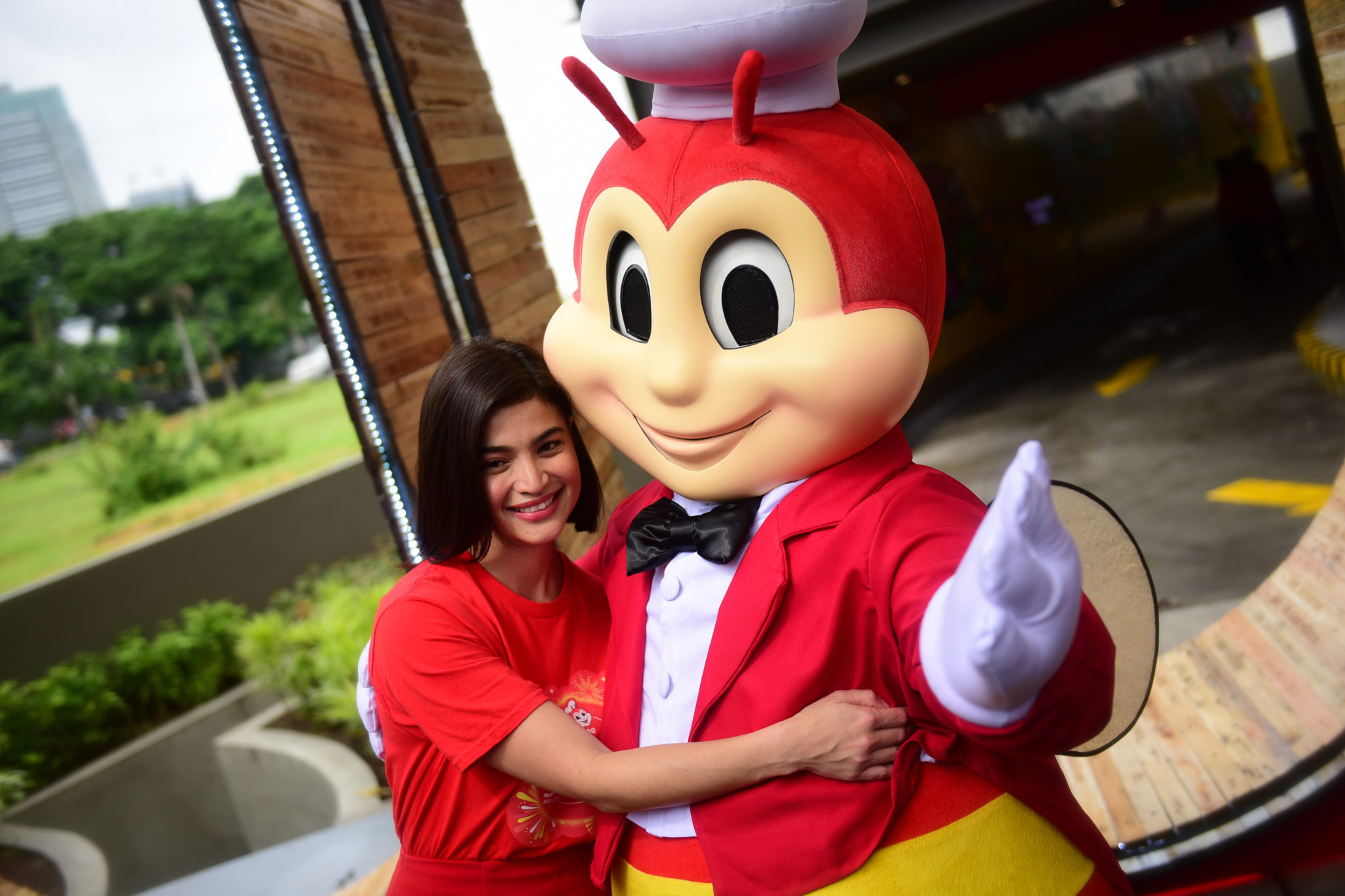
    Philippine restaurant chain Jollibee has announced plans to launch more than 100 Jollibee stores in Malaysia within the next 10 years. According to a report, the openings will include 50 stores in Sabah and Sarawak. President and head of JFC International Business for Europe, the Middle East, Asia and Australia Dennis Flores said that Jollibee would be a “welcome addition to the diversity of the food scene in Kota Kinabalu,” the Sabah state capital.

    “We believe that we can appeal to the diversity as we have seen in other countries where Jollibee has been successful, such as Vietnam, Brunei, Hong Kong and Singapore,” he said at the official inauguration of the Jollibee Malaysia grand store (which has been trading since last year) at Centre Point Sabah this week.

    Chairman and founder of JFC Tony Tan Caktiong said the company was happy with the enthusiastic welcome to the store’s opening from local customers.

    “This has given us an encouragement to reach more Malaysians with our delicious menu and friendly service,” he said.

    Jollibee operates 14 brands in 21 countries with more than 4500 stores worldwide.

  • Godiva sells Asia business to South Korea’s MBK for $1bn

    Godiva sells Asia business to South Korea’s MBK for $1bn

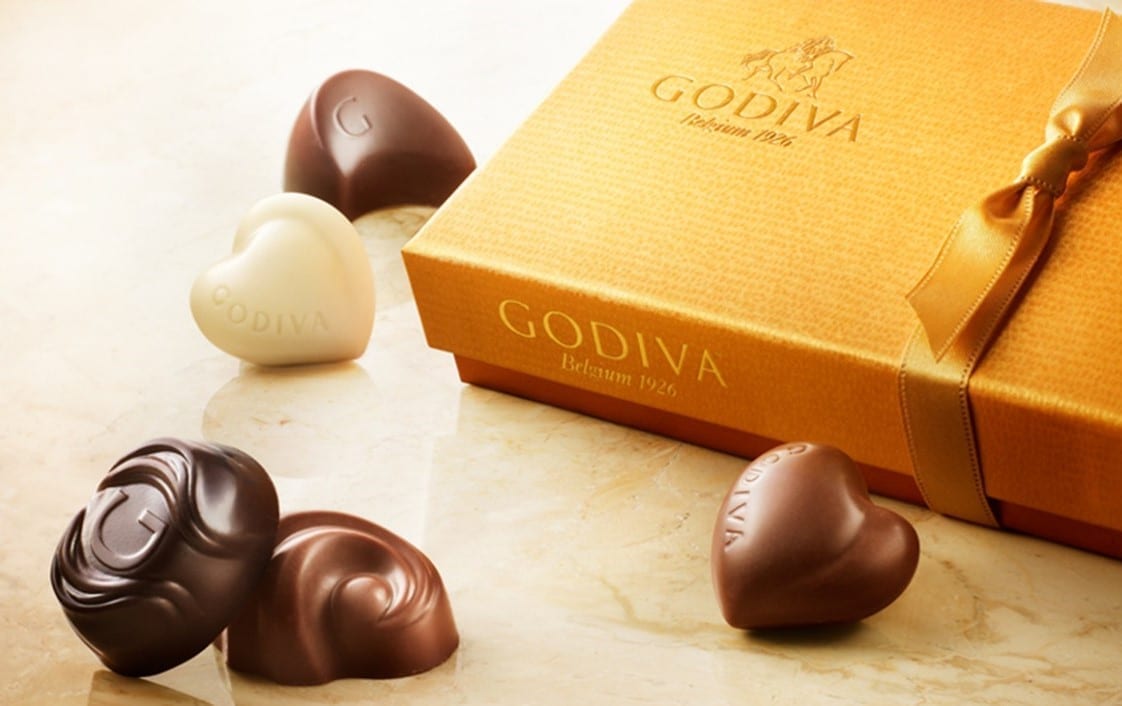
    Belgian chocolatier Godiva has sold select assets to MBK Partners as part of a global strategy to grow the business fivefold. Under the terms of the transaction, MBK will purchase the retail and distribution operations in four of Godiva’s more than 100 markets: Japan, South Korea, Australia and the future rights to develop New Zealand. The transaction, anticipated to close mid year, includes consumer packaged goods (CPG), digital commerce, travel retail (for Japan and South Korea) and more than 300 retail stores, as well as the Godiva production facility in Brussels that supplies product to these markets. All remaining 100-plus markets will continue to be owned and operated by Godiva.

    While the terms of the deal were not disclosed and completion is conditional on the necessary approvals, once settled Godiva Chocolatier will retain exclusive brand ownership in all global markets, granting a perpetual license to MBK Partners. Godiva will continue to source its products from the Belgian facility together with the production facility it owns in the US, and its affiliate facilities in Istanbul, Turkey.

    “Since 2008, we have been very pleased with the performance of Godiva, having nearly doubled its revenue and the number of stores operating globally, and we continue to see tremendous upside for this brand moving forward,” said Murat Ulker, chairman of Godiva’s owner Yildiz Holding.

    “Realising the potential ahead, together with Godiva leadership, we conducted a strategic review to explore new ways for generating the necessary cash flow to fuel the robust growth. This transaction is an ideal solution that provides the momentum to fuel expansion in other high potential areas of our portfolio.”

    “We believe this deal is a win-win for everyone,” added Godiva CEO Annie Young-Scrivner. “It gives us the financial flexibility we need to execute our fivefold growth strategy by accelerating efforts in new and existing markets and supporting the plan of opening of more than 2000 cafes globally, while preserving our Belgian legacy, quality, and craftsmanship that have helped to make our brand iconic.”

    Among Godiva’s various markets, Japan, South Korea, Australia and New Zealand collectively have some of the strongest brand equity and include more than 300 retail stores, making these regions the most compelling areas for monetisation. In Japan, Godiva has almost 90 per cent aided brand awareness and is the number one retail brand in the country, with the highest premium time spent in stores, according to 2017 research by the Nikkei Marketing Journal.

    At the same time, Yildiz sees significant unrealised opportunity for the brand that, when coupled with the infusion of capital, infrastructure and capabilities from MBK Partners, is expected to deliver a strong return on investment.

  • BreadTalk buys out joint venture partner in Thailand

    BreadTalk buys out joint venture partner in Thailand

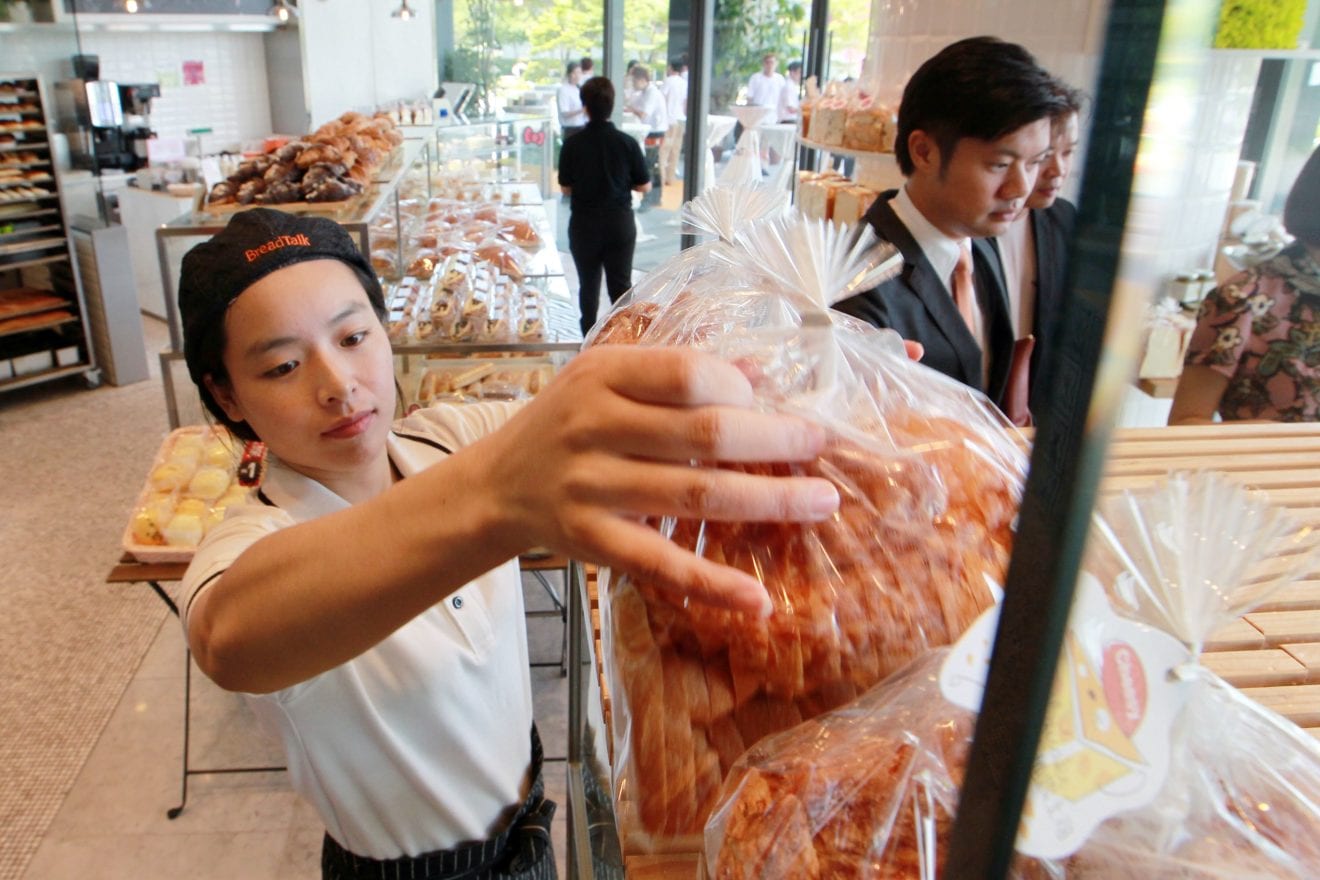
    Minor Group has sold its half share in BreadTalk Thailand to the bakery’s Singapore-listed owner. According to the Straits Times, BreadTalk paid US$5.15 million for the stake, which Minor Group is expected to use to expand its other food and beverage brands in the kingdom, including The Coffee Club.   The BreadTalk Thailand joint venture, called BTM Thailand, was set up in 2014.

    Minor Group’s other brands in Southeast Asia include ThaiExpress, Xin Wang Hong Kong Cafe, Swensens and the Pizza Restaurant Company.

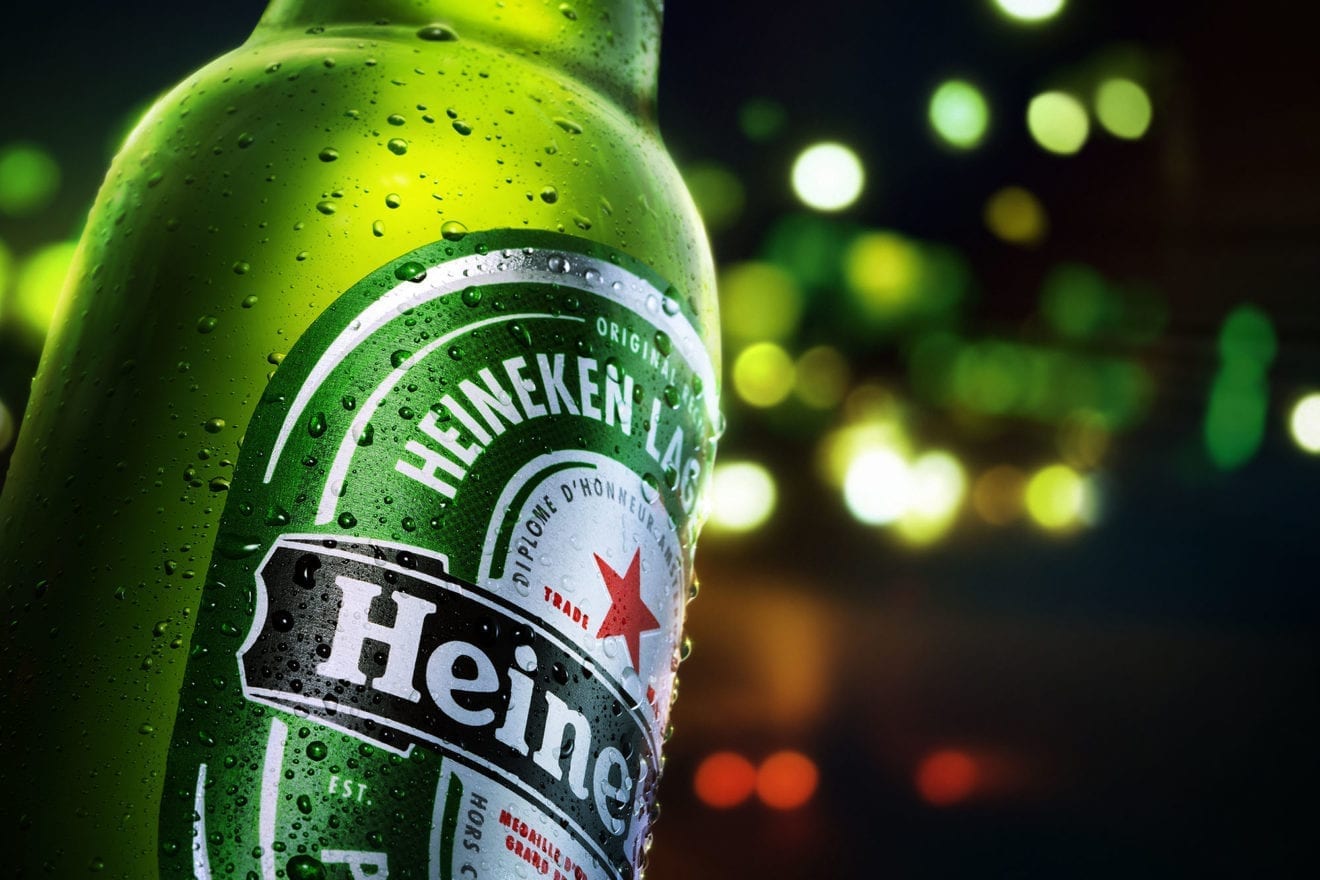
  • Heineken Malaysia 2018 net profit up 4.6%

    Heineken Malaysia 2018 net profit up 4.6%

    Heineken Malaysia Bhd, which posted a 4.6% jump in its net profit for the financial year ended Dec 31, 2018 (FY18), remains cautious about its outlook given the challenging environment due to intense competition, implementation of the sales & service tax (SST), and the continued presence of contraband beer in the market. In line with rising global commodity prices, the group also expects an increase in cost of operations including raw materials and packaging.

    Finance director Szilard Voros said how the group will perform in FY19 also depend on the market, adding that it will benefit if consumers remain optimistic and if efforts to curb illicit trade are stepped up.

    “But we remain cautious because SST was just introduced in September so that also comes with a lag… we also need to see how things settle down after Chinese New Year and see what is the normalised performance and if there’s a growth continuation,” he told reporters at a media and analyst briefing today after announcing the group’s financial results.

    Managing director Roland Bala (pix) said the external environment remains challenging. Amidst slowing global growth rates, currency volatility and uncertainty in the commodity markets, he said the group will need to adopt a cautious approach in cost management.

    “Moving forward, we will continue to invest in our core brands and leverage on our portfolio. As consumer taste profile changes, we will make bets on brands that we believe will have scale,” he added.

    Heineken’s net profit for the fourth quarter ended Dec 31, 2018 grew 6.8% to RM100 million compared with RM93.64 million in the same quarter last year due to higher revenue as well as efficient and effective management of commercial spend and overheads.

    Group revenue grew 12.3% to RM662.28 million as compared to RM589.96 million in the same quarter in 2017 mainly due to increase in sales volume driven by the flagship Tiger brand.

    For the full year period, net profit grew 4.6% to RM282.2 million from RM270.06 million a year ago, while revenue rose 8.3% to RM2.03 billion from RM1.87 billion.

    It has proposed a final dividend of 54 sen per share for the quarter under review, bringing the full-year dividend payout to 94 sen.

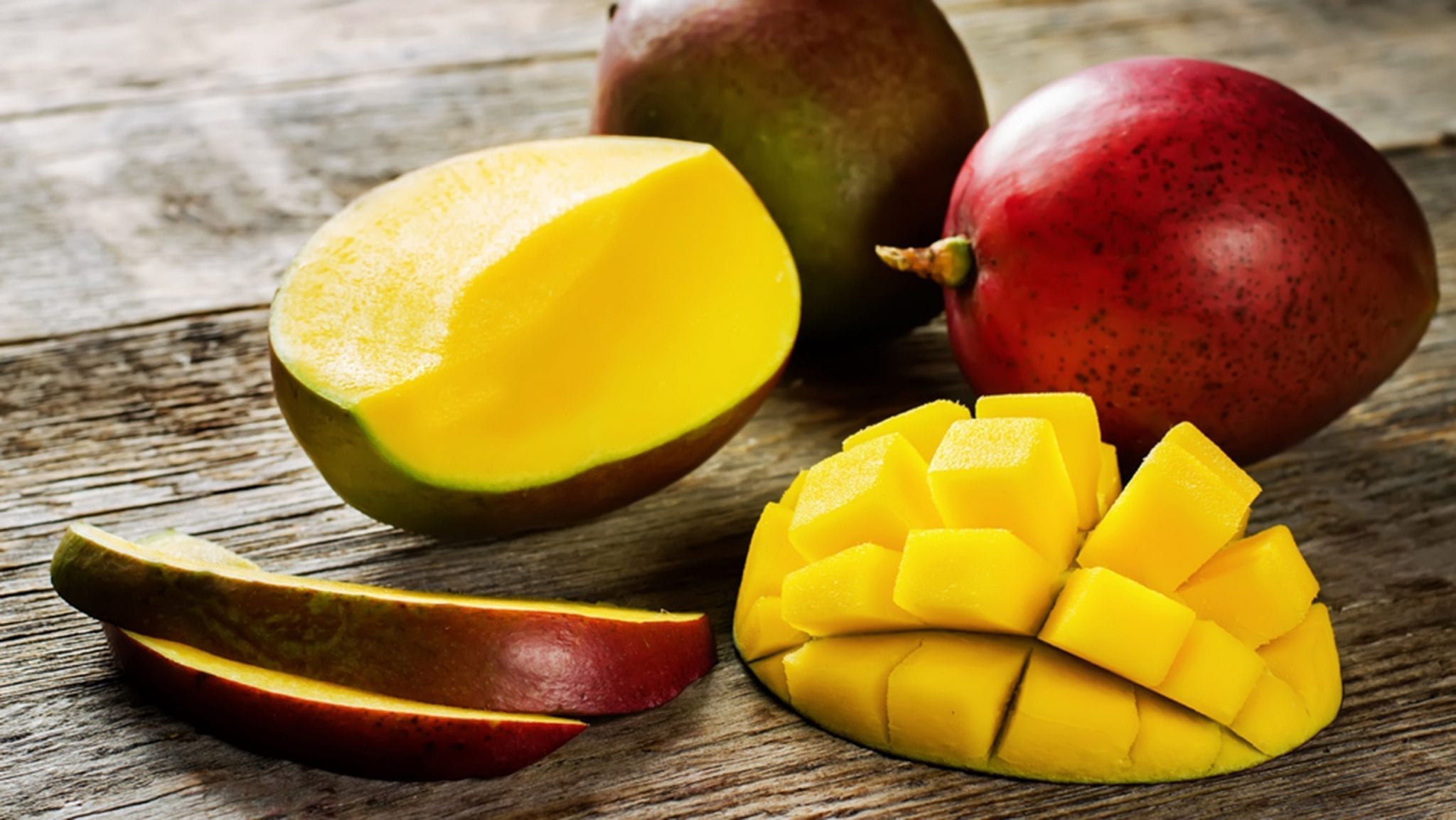
  • US opens doors to Vietnamese mango after years of attempt

    US opens doors to Vietnamese mango after years of attempt

    The US’s Animal and Plant Health Inspection Service has given the green light for the import of mangoes from Vietnam. The license comes exactly 10 years after Vietnam applied for it. To export fresh mangoes to the U.S., farmers and business will need to meet stringent standards. APHIS will inspect each shipment thoroughly before granting phytosanitary certificates.

    Mango is Vietnam’s sixth fresh fruit licensed to be imported into the U.S. after dragon fruit, rambutan, longan, lychee, and star apple fruit.

    Some 96 percent of Vietnam’s mango production is consumed domestically, with the rest exported currently to 40 countries either as fresh fruit or in processed form.

    The main market is China. The other important ones are Europe, South Korea, Japan, Australia, and New Zealand.

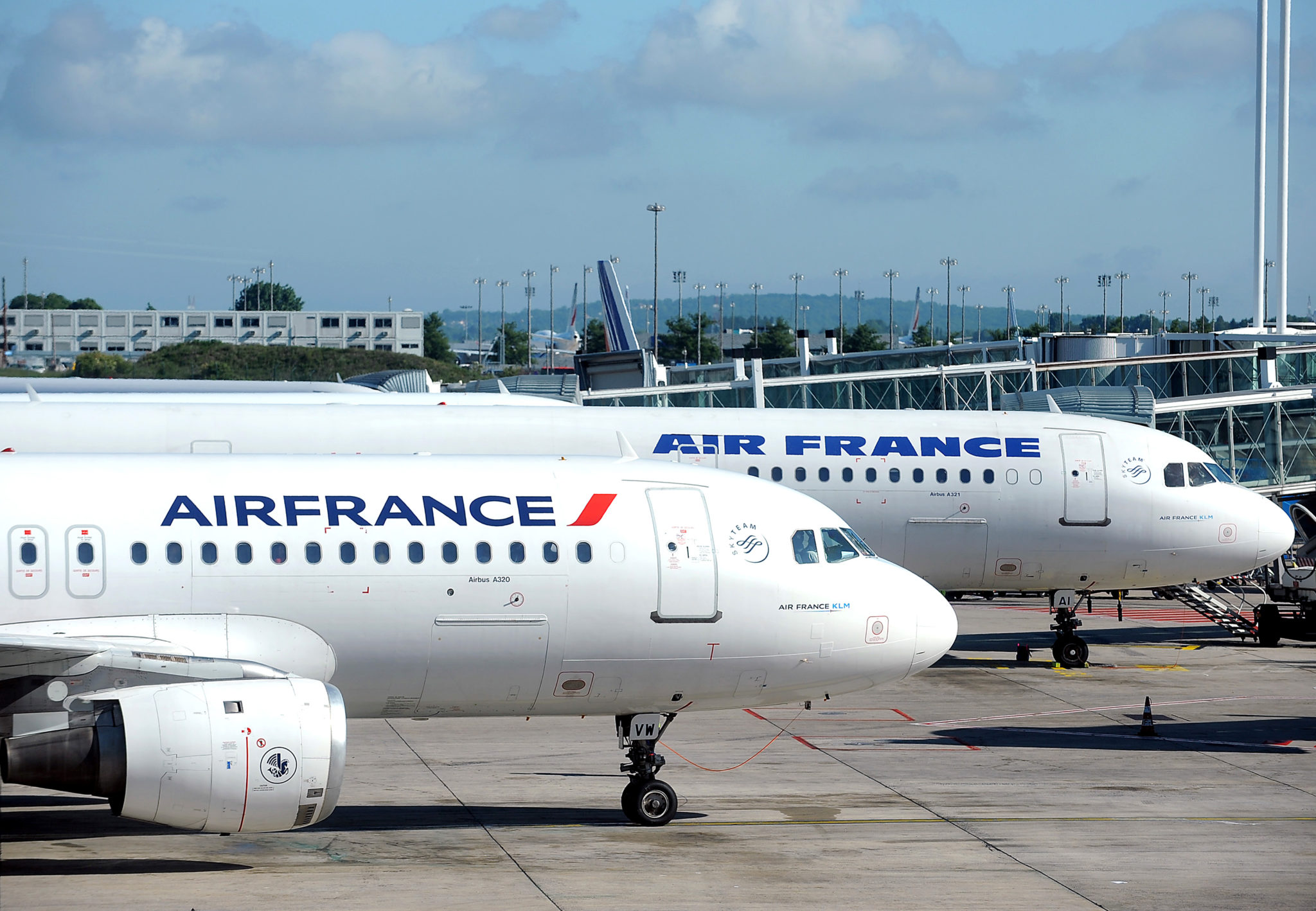
  • Air France-KLM more than doubles profits in 2018 despite strikes

    Air France-KLM more than doubles profits in 2018 despite strikes

    Air France-KLM, which was badly hit last year by strikes and management upheaval, reported on Wednesday that its annual net profits rose by 150% to 409 million euros (US$463 million). “The strong performance of our front-line teams and continued cost control helped partly offset the impact of strikes at Air France in the first half of the year, as well as significant fuel headwinds,“ Benjamin Smith, the company’s new chief executive, said in a statement.

    The Canadian businessman took over in September following Jean-Marc Janaillac’s sudden exit in a bitter dispute over salaries in the group’s French wing.

    Fifteen days of strike cost the company 335 million euros, Air France said.

    On Tuesday, Air France pilots voted by 85% in favour of a new pay deal, concluding a series of long employee-management negotiations.

    Revenue growth last year was up in all business segments, with operating earnings coming in at of 1.3 billion euros, the Franco-Dutch airline group reported.

    The group said it had carried more than 100 million passengers last year, making it the leading European airline for long-haul traffic.

    Transavia, a low-coast subsidiary, carried 15.8 million passengers last year, an increase of 7.1% on 2017.

    Full year 2018 capacity increased by 2.1%, mainly driven by the South American, North Atlantic and Asian networks, with respective growth of 8.6%, 3.0% and 2.1%, Air France-KLM said.

    In 2019, the group will concentrate on “operational efficiency”, financial director Frederic Gagey said.

    “We can make a lot more money compared to last year,“ he said, adding that Air France-KLM would also be looking to renewing its fleet to replace some of its more fuel-guzzling planes.

  • Wing Zone reveals its Manila expansion plan

    Wing Zone reveals its Manila expansion plan

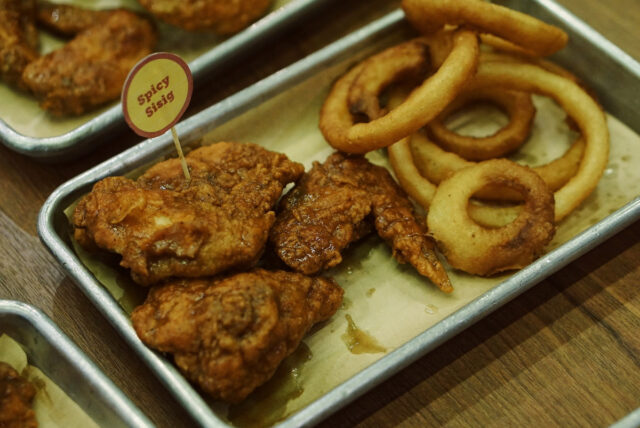
    US-based restaurant chain Wing Zone plans to open five more outlets in Manila by the end of this year ahead of pursuing more Southeast Asian opportunities. As Wing Zone opens new restaurants internationally, the company is exploring more local flavours and also plans to incorporate new menu options available in the US such as Zesty Breaded Wings and Chicken Ribs.

    “We have built a solid international presence and reputation with dedicated franchisees who share our values and understand the commitment to customer service. As we continue to find those qualified franchisees to help in our growth in the US we will be exploring even more partnerships to bring Wing Zone to more cities and countries internationally as well,” said Matt Friedman, co-founder and CEO of Wing Zone.

    Processed with VSCO with a6 preset

    In the US, Wing Zone will open eight new domestic locations in 2019 in North Carolina, South Carolina and Alabama. In Asia, after the Philippines, the chain will also explore other Southeast Asia markets.

    Wing Zone has nearly 100 locations across the US, and overseas including in Panama, Guatemala, Malaysia, Singapore and the Philippines.

  • PepsiCo franchise rights to be acquired in South, West India

    PepsiCo franchise rights to be acquired in South, West India

    PepsiCo India’s bottling partner Varun Beverages Monday said its board has approved plans to acquire franchise rights of the beverages and snacks major in South and West regions. The board has approved the company’s intent to enter into a binding agreement with PepsiCo India Holdings to acquire franchise rights in the two regions for a national bottling, sales and distribution footprint in seven states and five UTs, Varun Beverages Ltd (VBL) said in a regulatory filing.

    According to a report, upon completion of these acquisitions, VBL will be a franchise of PepsiCo beverages business across 27 states and seven Union Territories (UTs), it added.

    “The proposed acquisitions are in line with the company’s strategy to expand into contiguous territories and will help to acquire greater scale, operational productivity and efficiency leading to higher revenues and profitable growth,” it said.

    VBL, however, did not disclose financial details of the proposed acquisitions.

    The company further said its board will meet on February 26 to consider raising of capital through Qualified Institutions Placement (QIP).

    Last year in January, VBL had entered into a pact with PepsiCo to sell and distribute the latter’s entire Tropicana range of juices along with Gatorade and Quaker Value-Added Dairy in North and East India.

    VBL already held manufacturing, sales and distribution rights for Tropicana Slice and Tropicana Frutz in the two regions.

    PepsiCo had then stated that North and East regions together accounted for 80 percent of the juice market in India and VBL’s contiguous reach would help it more than double the distribution reach in these states.