Category: General

Retail News Asia is committed to providing both local and global retailers with the latest General Retail news throughout the Asian market. This on a daily base.

  • Vietnamese can’t wait for official rollout, pay for ChatGPT accounts using VPN

    Vietnamese can’t wait for official rollout, pay for ChatGPT accounts using VPN

    With ChatGPT still not available in Vietnam, service providers are offering to set up accounts for fees of up to VND200,000 (US$8.52).

    Seeing friends chat with the artificial intelligence-based chatbot provided by U.S. startup OpenAI, Hong Nhung, an office clerk in the central city of Da Nang, tried to create an account.

    However, in Vietnam, the only way yet to set up an account is by using a virtual private network (VPN) and getting a foreign phone number.

    Since she was unable to do it by herself, Nhung turned to service providers. “Some people say they will do it for free, some say they will do it for a cup of coffee but others charge VND20,000 to VND200,000,” she said.

    In the end she managed to set up an account for VND20,000.

    Dong Quan, the administrator of a ChatGPT group with more than 20,000 members, said demand increased sharply a week ago.

    There are dozens of posts about selling accounts and how to use the chatbot on the online group every day, and each attracts hundreds of comments, he said.

    The price varies based on the flexibility to change passwords and other benefits, he explained.
    OpenAI’s has said users can start experimenting with $18 in free credit that can be used during their first three months.

    Some sell the same account to many users, even take free accounts shared on online groups and sell them at high prices.

    Quan said his group has received reports of some people paying money but not getting an account and others tricked into clicking on fake links and losing their email accounts.

    Experts suggest people should not pay more than a few tens of thousands of dong for an account or should register with their own email address to get permanent use.

    For service providers, creating an account on OpenAI takes just a couple of minutes, and the cost of messaging is VND3,000.

    According to AI engineer Nguyen Hoang Bao Dai, ChatGPT has become popular globally and in Vietnam because this is the first time people have access to a large AI model.

    ChatGPT not only chats normally like traditional chatbots, but also searches, processes information and responds precisely and instantly. Its ability to keep the chat smooth and easy-to-use interface are other factors.

    Data from Similar Web shows that within two months of its launch, ChatGPT has reached 100 million users.
    According to Sensor Tower, TikTok needed nine months to reach 100 million users, Instagram needed 2.5 years and Google Translate 6.5 years.


  • Gold prices inch down

    Gold prices inch down

    SJC gold price dropped 0.15% to VND67.3 million ($2,865.05) per tael Monday morning. Gold ring price went up 0.46% to VND54.8 million per tael. A tael equals 37.5 grams or 1.2 ounces.

    Reuters reported that global gold prices hit a more than four-week low on Monday, as the U.S. dollar firmed after stronger-than-expected jobs data fanned concerns that the Federal Reserve might keep hiking interest rates.

    Spot gold was little changed at $1,865.88 per ounce, as of 0045 GMT, after hitting its lowest level since January 6 earlier in the session.

    The dollar index was 0.2% higher, making gold less attractive for buyers holding other currencies.

    Data on Friday showed U.S. job growth accelerated sharply last month, with nonfarm payrolls surging by 517,000 jobs – well above an estimated 185,000. The unemployment rate hit more than a 53-1/2-year low of 3.4%.

  • SEC Searching for More Whatsapp Offenders

    SEC Searching for More Whatsapp Offenders

    Last year, the SEC imposed fines worth billions of dollars for violations of record-keeping requirements in banks’ communications with their customers. It seems more firms are being targeted.

    The Securities and Exchange Commission (SEC) has ordered some large hedge funds to review the personal cell phones of certain employees for evidence of trades made through unauthorized channels. Among those targeted are Steve Cohen’s Point72 Asset Management, and Ken Griffin’s Citadel.

    Last year, the SEC imposed heavy fines on banks after months of investigations into a series of corresponding cases. A total of 16 financial companies, including Goldman Sachs, Bank of America, Citigroup, and Morgan Stanley, paid a total of $1.8 billion.

    Credit Suisse and UBS also had to pay $200 million each. Employees at each of the firms were accused of communicating with customers about business matters via chat programs and applications such as Whatsapp.

    If customer contacts were conducted via the private devices of bank employees and not recorded accordingly, there were in violation of the banks’ documentation obligations.

    The hedge funds contacted by the SEC were asked to search the devices of certain employees for evidence of business dealings on unauthorized channels, the sources told «Bloomberg». The SEC is also investigating the practices of brokerage firms, asset managers, and private equity firms.

    Reuters reported last October the SEC was looking to expand its investigation to other financial firms. From the SEC’s perspective, the retention and documentation of communications between institutions and clients serve market integrity.

    By imposing the fines, the authority wants to ensure communications about business matters are handled exclusively through official channels and be tracked accordingly.

  • Apple and Google asked to ban TikTok over national security concerns

    Apple and Google asked to ban TikTok over national security concerns

    Michael Bennet — Colorado senator, also a democrat and a member of Senate Intelligence Committee — wrote a letter to Google and Apple this Thursday, pleading for them to ban TikTok due to concerns over national security.

    The New York Times reports that the letter has been addressed to the chief executives of the companies — so, Tim Cook for Apple and Sundar Pichai for Google — and in it, Michael Bennet basically states that it’s not okay for the Chinese government to have access to this much data or the ability to curate media for a third of US population.

    The senator elaborated further, stating that he sees the current situation as irresponsible. From his point of view, this is an opportunity for Big Tech to step in on the debate and show where they stand.

    TikTok spokesperson Brooke Oberwetter commented on Michael Bennet’s letter, expressing concern over its subjectivity and how it may be misleading. She stated that the report “totally ignored” the company’s plan — called Project Texas — to assure all of its users in data transparency and security integrity.

    TikTok maintains the stance that data is in no way, shape or form, being transferred to the Chinese government. The company submitted a plan back in August, detailing how it intends to prevent China’s access to US data. The social platform is even willing to let the US government oversee its operations in an attempt to prove its claim.

    From a political stance, this is yet another sign of a democrat joining in on a typically republican-led battle. This entire ordeal harkens back to 2020 and Trump’s own efforts to get TikTok banned, along with WeChat — another popular Chinese app.

    Google and Apple have yet to respond to the senator’s letter, but they may have to. After all, this ordeal marks a point at which over 24 states have chimed in to support the movement to have TikTok banned

    Without going too much into detail, the entire thing revolves around a Chinese law loophole, which basically allows the Chinese government to get their hands on data in secret. With the discussion being on the rise, it will be interesting to see if the company manages to prove that it has prevention plans for such a scenario.

  • Gold prices fall

    Gold prices fall

    SJC gold price dropped 0.44% to VND67.5 million ($2,878.46) per tael Friday afternoon.

    Gold ring price fell 0.54% to VND55.2 million per tael. A tael equals 37.5 grams or 1.2 ounces.

    Global gold prices steadied on Friday after a sharp sell-off in the previous session, as traders digested rate-hike remarks from global central banks, but the metal was set for its first weekly drop in seven amid a strong dollar.

    Spot gold was up 0.1% at $1,914.33 per ounce.

    “With gold prices delivering a stellar performance of more than 20% over the past three months, some positioning for softer rate-hike bets could already have been at play and having found the much-needed validation from the recent FOMC meeting,” said Yeap Jun Rong, a market analyst at IG.

    Therefore, it may trigger some near-term profit-taking, “but for gold prices, a greater conviction for sellers could be a break below the $1,895 level, where dip-buyers were seen stepping in this week just before the meeting,” the analyst added.

  • Vietnamese tech workers high and dry amid layoffs in Silicon Valley

    Vietnamese tech workers high and dry amid layoffs in Silicon Valley

    Hoang Tu said his “American Dream” lasted only six months. He was let go from Google two days before the Lunar New Year.

    “This is the worst Tet (Lunar New Year) of my life,” he said.

    The 27-year-old joined Google’s new project development team in Silicon Valley last year after passing a series of rigorous interviews.

    This Tet, which began on January 22 this year, he took time off work to visit his family in Vietnam.

    On January 20, however, he received a shocking email dismissal letter.

    “Before I was fired, I didn’t hear a word from the management team. I didn’t have time to ask my coworkers what was going on because I was too busy with other things during Tet. I didn’t know what to tell my loved ones about this news,” he lamented.

    Since his H-1B visa, a work visa with a cumulative maximum duration of six years, is set to expire in 60 days, he cut short his vacation and came back to the U.S. to complete the paperwork and get ready to start looking for a new job.

    Similar frustrations were felt by former Meta employee Hong Anh, who was in the U.S. with only a few weeks left on her visa when she was let go by the company.

    She said the Vietnamese engineering community in Silicon Valley isn’t as worried about money as it is about finding work in order to keep visas valid.

    “Getting an H-1B visa is really hard now, especially for recent graduates,” she said, adding that she had recently applied for positions at more than twenty companies but hadn’t heard back from any of them.

    Tech workers from Vietnam face tough competition from their counterparts in China, India, and even within the U.S.’s own IT community.

    Anh, an IT professional with three years of experience, said she would accept lower pay at smaller companies in exchange for a sponsorship that would allow her to remain in the country.

    There are no official numbers yet on how many Vietnamese tech workers were laid off during Silicon Valley’s record downsizing, but experts estimate the figure to be in the thousands.

    Meta software engineer Tai Nguyen revealed that even those such as himself who haven’t been laid off are anxious and making plans for the worst.

    He said that in his more than 15 years living in the U.S., this is the worst job cut he has ever seen.

    Those who are already working in the U.S. on an H-1B visa and whose spouses are able to lawfully remain in the country with the help of the sponsorship program are under even more stress, he added.

    “If the sacked H-1B worker doesn’t find a new job within 60 days, the whole family will have to leave the U.S.,” he said.

    The great downsize

    Mass layoffs have hit the tech industry in Silicon Valley recently.

    Both small businesses and multinational conglomerates like Microsoft, Google, MetaAmazon, etc., have announced job cuts.

    Around 150,000 tech workers in the U.S. may have lost their employment in January. Many engineers and skilled workers who entered the U.S. on H-1B visas are anxious they could lose both their jobs and their visas at the same time.

    From October 2020 through September 2021, United States Citizenship and Immigration Services (USCIS) reported that around 407,000 H-1B applications had been approved. Citizens of Asia submitted the vast majority of applications.

    Some 74.1% were of Indian descent, 12.4% were of Chinese descent, and the rest were citizens of other countries.

    Vietnamese tech workers who have been laid off now have three choices.

    Firstly, they need to start by rapidly securing new employment before their H-1B visas expire. In an effort to streamline the application process, they frequently target small and medium-sized companies. If they are not married to anyone, they can “prolong the American dream” by changing their visa status to that of a tourist and continuing to look for work in the U.S. under the B-2 category.

    Then there’s a second option for recent graduates like Hoang Tu.

    While waiting for an opportunity to present itself, he intends to return to school in order to renew his visa and further his education. He will be able to keep studying for over a year thanks to his savings and the severance pay he will receive from the company after being let go. However, he’ll have to apply and get into school first, which is no easy task, and also takes time.

    The third option is going back to Vietnam to look for jobs at home or elsewhere in Southeast Asia, like Singapore.

    If her visa deadline passes and Hong Anh still hasn’t landed the job she wants, she plans to return to Vietnam to take a break before looking for work again.

  • Miniso Group reveals management changes

    Miniso Group reveals management changes

    Lifestyle retailer Miniso Group has unvieled a shift in the management board, with executive VP Steven Saiyin Zhang departing.

    According to Miniso, Zhang has resigned as CFO, executive VP, and executive director, effective immediately, for personal reasons and to spend more time with his family. Zhang will continue to work as a senior consultant for the firm.

    Following his resignation, the board will comprise five members: three independent non-executive directors and two executive directors.

    Miniso said it has also appointed Eason Jingjing Zhang, currently the company’s VP of capital markets, as its new CFO.

    “Steven has designed a detailed succession plan to transition his responsibilities to Eason, who has played a key role in driving Miniso’s success in various capital market transactions and several internal finance management projects, demonstrating a clear understanding of our business and establishing confidence in Miniso among the investor community,” said Guofu Ye, founder, chairman of the board and CEO of Miniso.

    Eason Zhang, who joined Miniso in January 2021 as director of capital markets, has been VP of capital markets since September, overseeing all capital markets matters for the company, including investor relations, strategic investment and acquisitions, corporate strategy, and treasury.

    Prior to that, he began his career in auditing at PricewaterhouseCoopers, after which he worked in different capacities mostly in capital markets in the US, Hong Kong, and China.

    Last year, Miniso strengthen its expansion strategy in Canada when reopened its Vaughan Mills store in the Greater Toronto Area and introduced its new “$2 Plus” concept to the market.

  • Thai AirAsia readies personnel as China travel resumes

    Thai AirAsia readies personnel as China travel resumes

    Budget carrier Thai AirAsia is preparing its pilots and cabin crew for the return of Chinese tourists, previously its largest customer group, as the airline resumes routes across China.

    The airline plans to restart flights to eight Chinese cities, including Chongqing, Guangzhou, Hangzhou, and Wuhan, for which cabin crew are undergoing refresher training courses.

    “In the flight, we should have at least one cabin crew who can speak Mandarin to communicate with passengers,” said cabin crew member, Sakuna Puangpipat.

    She and other staff this week re-trained in smoke and fire drills, evacuation, water landing survival, and protocols for sick passengers and unexpected incidents.

    Captain Damrong Phapipatkul, head of flight operations, said of Thai AirAsia’s 53 jets, 43 are currently flying while the remaining ten will return to service to accommodate Chinese passengers, the number of whom he expects will return to pre-pandemic levels by year-end.

  • Students and professors protest TikTok bans at state schools

    Students and professors protest TikTok bans at state schools

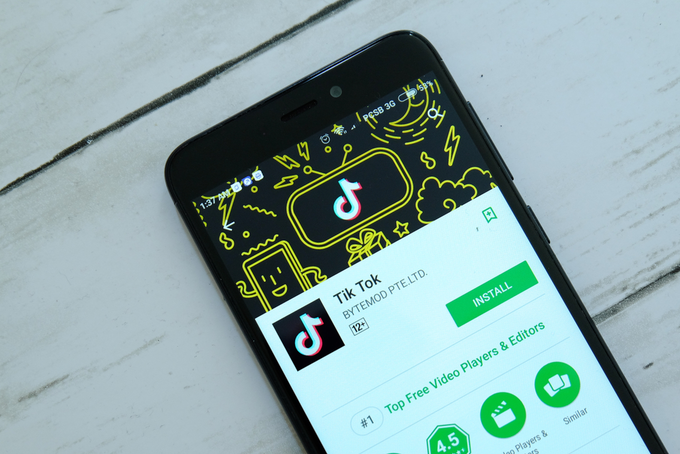
    With over 25 states banning the use of short-form video app TikTok on state-owned devices, it is no surprise that the ban has been extended to public schools in these states. With parent company ByteDance located in China, there have been numerous concerns about the app collecting users’ personal data and even capturing keystrokes to learn passwords and other information.
    Bloomberg reports that the TikTok ban has worked its way to more than a dozen state-run universitie,s including Auburn University, the University of Georgia, Oklahoma State University, and more recently the University of Texas, Austin. Some schools have banned TikTok from being installed on university-owned devices whileotherss won’t allow TikTok to be used on campus networks. Some schools use both methods to ban TikTok.
    After the still popular TikTok app was banned at the University of Texas, Austin, both students and even professors at the school spoke out against restricting the app. Kate Biberdorf, 36, an associate professor of chemistry at the university said, “I use TikTok as an educational tool to make science fun and accessible. To have that tool be taken away by a university, that doesn’t sit right with me. Right now in our community, it feels like our rights are being taken away, and this is another push in the wrong direction.”
    Biberdorf is not only a fan of the app, she is also a content creator known as Kate the Chemist and has 194,400 TikTok followers. Attending the same school, 22-year-old theater-education major Grace Featherston said that people should be allowed to make their own decisions about using an app owned by a company located in China. She said, “It’s the choice of US citizens, whether they want to consume TikTok and whether they want to take that risk.”
    Featherston has 27,000 followers on TikTok who view her videos that discuss Broadway shows, social trends, and current events. Like many TikTok users, even though she is aware of the risks of using the app, it doesn’t bother her enough to make her stop using Tik Tok. That’s because using the app makes her an internet celebrity while delivering entertainment to her.
    Politicians supporting such bans or even a nationwide ban of the app will need to consider the possible blowback from younger voters. Featherston says that she will consider a politician’s position on TikTok before she votes. The demographics of TikTok users match those of the ‘voters under 30’ group that helped the Democrats outperform expectations for the 2022 mid-term election. So all politicians need to handle this situation carefully rather than risk alienating this important block of voters.
    ByteDance defends itself by stating that it doesn’t share data with the Chinese government and has strict controls inside the company that limit the access to user data. Even with these controls, ByteDance said that some employees tracked journalists by violating company rules to access user data belonging to Americans. Still, TikTok was the most installed app worldwide last year with 672 million global downloads.
    Rick McElroy, principal security strategist at tech firm VMware Inc. says that security fears should not be overlooked when it comes to TikTok. McElroy says that the personal data collected by an app like TikTok could be used by a company or even a government to track high-profile individuals and damage their reputations using misinformation campaigns. The aforementioned tracking of journalists is a real-life example.
    Former President Donald Trump tried to force ByteDance to sell TikTok’s U.S. operations to American companies. Eventually, Trump said that he had a deal ‘in concept’ with Walmart and Oracle but the deal never materialized and Trump turned his attention to the 2020 presidential election.
    As of the beginning of this year, TikTok has 1 billion active users in 154 countries. The app records videos in a vertical orientation and such content can run for 10 seconds to as long as 10 minutes.  The app can be downloaded from the App Store for iOS users while Android users can download TikTok from the Google Play Store.
  • Facebook drains users’ cellphone batteries intentionally

    Facebook drains users’ cellphone batteries intentionally

    A long-standing rumor suggests that the Facebook and Facebook Messenger apps drain the battery on cellphones that have the apps installed. If you believe former Facebook employee George Hayward, a data scientist, Facebook can secretly drain the battery on its users’ cellphones on purpose.  There is actually a name for what it is that Facebook is doing, It is called “negative testing” and it allows tech companies to secretly run down the batteries on someone’s phone to test features on an app or to see how an image might load.
    Facebook parent Meta fired Haywar for refusing to participate in negative testing. “I said to the manager, ‘This can harm somebody,’ and she said by harming a few we can help the greater masses. Any data scientist worth his or her salt will know, Don’t hurt people,” he told the Post.
    Meta axed Hayward in November and initially filed a lawsuit against the company in Manhattan Federal Court. The 33-year-old worked for Meta’s Facebook Messenger app, which delivers text, phone calls, and video calls between users. In the suit, Hayward’s attorney, Dan Kaiser, pointed out that draining users’ smartphone batteries puts people at risk, especially “in circumstances where they need to communicate with others, including but not limited to police or other rescue workers.”
    The suit had to be withdrawn because Meta’s terms of employment forced Hayward to argue his case in arbitration. Kaiser says that most people have no idea that Facebook and other social media companies can drain your battery intentionally. Commenting on the practice of negative testing, the lawyer added, “It’s clearly illegal. It’s enraging that my phone, that the battery can be manipulated by anyone.”
    Originally hired in 2019, Hayward was receiving a six-figure annual paycheck from Meta. But when it came to the company’s request to perform the negative testing, Hayward said, “I refused to do this test. It turns out if you tell your boss, ‘No, that’s illegal,’ it doesn’t go over very well.”
    At one point during his employment at Meta, the company handed Hayward an internal training document titled “How to run thoughtful negative tests.” The document included examples of how to run such tests. After reading the document, Hayward said that it appeared to him that Facebook had used negative testing before. He added, “I have never seen a more horrible document in my career.”
  • Taxi firm Vinasun payroll increases again after 6 years

    Taxi firm Vinasun payroll increases again after 6 years

    Vinasun’s payroll increased by 10% last year, the first time since 2016 hires outnumbered layoffs.

    The leading taxi operator said it had 2,013 employees at the end of last year, 136 more than at the beginning of the year.

    General director Ta Long Hy said the figures do not fully reflect its recovery and expansion level because drivers who sign franchising contracts with the company are not counted as full-time employees.

    “In fact, between April and year-end last year, we recruited around 2,700 drivers,” he said.

    In 2016 Vinasun had the largest market share and payroll – 17,200 – in the taxi industry.

    A year later, when it switched to a franchising model and was affected by the boom in ride-hailing apps, the number fell to 7,100. Since then the number of employees kept decreasing.

    Hy said last year Vinasun adopted many new policies to attract drivers, bought 550 new cars, and launched a luxury service.

    “All of our taxis operated in the last two quarters of last year, while a year earlier half of them remained parked.”

    Last year, Vinasun earned revenues of VND1.1 trillion (US$46.6 million), double the 2021 figure and back to pre-pandemic levels, and pre-tax profits of VND187 billion.

    In 2021, it had incurred losses of VND277 billion.

    The Vinasun share has gained 35% since mid-November last year.

  • Pharma firms see profits soar post-Covid

    Pharma firms see profits soar post-Covid

    Many pharmaceutical firms have reported record profits in 2022 thanks to high demand for drugs and other healthcare products post-Covid.

    DHG Pharma reported a profit of VND988 billion (US$42.1 million), a 27% increase from 2021 and 29% higher than the management’s target. It is the highest profit it has reported since it started making its accounts public in 2005.

    OPC and Imexpharm also earned record profits.

    OPC’s profits increased by 16% from 2021 to over VND140 billion, and Imexpharm’s by 24% to VND230 billion.

    High demand for healthcare products following the pandemic was the main reason for the soaring profits.

    A Vietnam Report survey in October-November found that around 90% of businesses that manufacture, distribute and sell pharmaceutical products reported higher revenues and around 80% reported profit growth in the first nine months of 2022.

    Besides, they also benefited from government policies to support drug retailers and modern drugstores.

  • Cebu Pacific aims to boost demand for Manila – Hong Kong travel

    Cebu Pacific aims to boost demand for Manila – Hong Kong travel

    Cebu Pacific (CEB) said on Sunday it will now fly four times daily to Hong Kong, but hopes to boost demand by offering airfare discounts.

    “After Hong Kong eased requirements for inbound travelers in December, the airline operated Manila-Hong Kong flights 32 times weekly until January due to the anticipated high traffic over the resumption of the destination amid the holiday season,” Cebu Pacific Director for Corporate Communications Carmina Reyes-Romero said.

    Cebu Pacific will fly 28 times weekly for February. The budget carrier hopes Filipinos will “take advantage of the easier travel protocols in Hong Kong,” Cebu Pacific said in an e-mailed statement.

    The airline targets to restore 100% of its pre-pandemic network and capacity in March this year.

    The budget carrier currently flies to 34 domestic destinations and is set to restore all its 25 international destinations in the first quarter.

    “Even better, every Juan can fly to Hong Kong for as low as P499 one-way base fare, made possible by a CEB special seat sale which runs from Jan. 27 to 31, 2023,” the airline said.

    The travel period is from June 1 to Aug. 31 this year.

    “Upon check-in, travelers must present a negative result from an antigen test taken within 24 hours or a negative 48-hour RT-PCR result, and a proof of vaccination of primary doses for non-Hong Kong residents aged 12 or above,” Cebu Pacific said.

    It noted that the test results may also be submitted online through Hong Kong’s health and quarantine information declaration website (https://www.chp.gov.hk/hdf/). Travelers are reminded to keep photos of their test results for 90 days.

    Arriving travelers are also encouraged to take a self-arranged antigen test daily until the fifth day from their arrival.

    Cebu Pacific said that the results of the antigen tests may be reported through the Hong Kong government’s electronic monitoring and surveillance system

  • Cebu Pacific looking to restore Clark flights

    Cebu Pacific looking to restore Clark flights

    Cebu Pacific is working to restore more of its flights in other air hubs in the Philippines, such as Clark International Airport, the budget carrier’s president told reporters last week.

    “We will be happy to resume flights at Clark and the other destinations we used to fly in,” Xander Lao, president and chief commercial officer, said. “Actually, when we said we were back at 100 percent operations, it referred to the seats and not actually to our fleet. From a pacing perspective, we are not there yet. For now, it is a matter of connecting the points and going from there.”

    He continued that on whether there is a possibility of moving some of their flights from the Ninoy Aquino International Airport to Clark International Airport, he said they are open to that idea.

    “Honestly, we welcome any capacity growth that comes from the market, but I think it should come down to the airlines on where they would want to designate flights to,” the Cebu Pacific president remarked. “We think Clark on its own has a lot of potential as it has around 20 million people in its catchment area, but Clark from Manila is very far as it is around 100 kilometers apart. It will be hard to convince businessmen or some passengers to travel that far to an airport.”

    Lao said that it is very good that the government is trying to improve the airport infrastructure in the Philippines, and said that they are excited about its various developments.

  • The Google app and account switcher get Material You makeovers

    The Google app and account switcher get Material You makeovers

    If you happen to have more than one Google account you’re probably familiar with the Google account switcher page. From the page, you can switch between all of your Google accounts. For example, you can have multiple Gmail accounts if you have more than one Google account. To switch between them you tap the profile picture or your avatar (it might just show the first letter of your name) on the right side of the search bar at the top of the screen and that will allow the account switcher to appear.

    From the account switcher, you can switch which Google account you want to use to view. Keep in mind that switching the account will change what you see on all Google apps from Gmail, to the Google app, Messages, Calendar, and more. With multiple Google account you can have one for your personal life and one for work.

    Google has released a Material You makeover for the account switcher page that takes the rectangular box found inside the page and changes it to a rounded design. Android Police in Google apps such as Search, Maps, Calendar, Photos, Drive, and Docs have spotted the new look. Not everyone has the updated account switcher yet as this writer has yet to find it on a Pixel 6 Pro running Android 13 QPR2 Beta 2.1. The change to the account switcher page is purely cosmetic since it doesn’t add any new features or capabilities.
    Speaking of changes, Google has also changed the iconic Google app using Material You theming. With the update, when you select a tab from the bottom bar, that choice (be it Discover, Search, or Collections) will be found inside a small blue pill-shaped enclosure. In Search, you’ll see the carousel of filters near the top of the screen (matching the aforementioned pill shaped enclosure on the bottom) with a more traditional search field on top.
    9to5 Google says that the changes appear on beta version 14.4 of the Google app. Material You is the design language used by Google. In describing what it means, Google has said that “Material You explores a more humanistic approach to design. One that celebrates the tension between design sensibility and personal preference, and does not shy away from emotion. Without compromising the functional foundations of our apps, Material You seeks to create designs that are personal for every style, accessible for every need, alive and adaptive for every screen.”