Category: General

Retail News Asia is committed to providing both local and global retailers with the latest General Retail news throughout the Asian market. This on a daily base.

  • Steel giants report huge losses in Q4

    Steel giants report huge losses in Q4

    A drop in prices and consumption put major steel businesses Hoa Phat, Nam Kim and VNSteel in the red in the fourth quarter of 2022, dragging their annual results to the lowest level in many years.

    Hoa Phat, which accounts for nearly 35% of Vietnam’s construction steel market, reported a nearly VND2 trillion (US$85 million) loss in the fourth quarter of 2022, after earning a profit of VND7.419 trillion in the same period of 2021. Losses in two consecutive quarters of Q3 and Q4 dragged the company’s profits down by around 75% compared to the first half of the year, to more than VND8.4 trillion.

    Vietnam Steel Corporation (VNSteel), accounting for 11.2% of the construction steel market, reported VND410.5 billion loss in the fourth quarter and a VND822.4 billion loss for the whole year, which was the company’s first loss since 2014 and its biggest loss since it started issuing financial statements in 2011.

    Nam Kim Steel, the leading coated steel manufacturer in Vietnam, lost VND356.3 billion in the fourth quarter, which resulted in a loss of VND67 billion for 2022, after more than 10 years of making huge profits, including VND2.225 trillion in profits in 2021.

    The steel market was gloomy last year.

    A Vietnam Steel Association report shows that steel production dropped nearly 12% from the previous year to 29.3 million tons, while steel consumption dropped more than 7% to 27.3 million tons.

    “For Vietnam’s steel industry, 2022 was a challenging year with falling consumption and complicated developments in material costs,” the report said. “Many businesses encountered difficulties and suffered losses.”

    Domestic steel prices have been falling since August 2022, hitting a two-year low of VND14 million a ton in the fourth quarter.

    The industry depends largely on public investment and the property market, the latter of which has been in a slump for months.

    VNDirect Securities Corp. projected that the industry will continue to face difficulties this year amid a low demand for construction and high manufacturing costs.

    The sector may see some upturn in the export market with China reopening and its real estate market recovering, the corporation said.


  • AirAsia X Resumes Flights Between KL and Osaka, Japan

    AirAsia X Resumes Flights Between KL and Osaka, Japan

    AirAsia X (AAX) has resumed flights between Kuala Lumpur and Kansai Airport (KIX) in Osaka, Japan.

    The thrice weekly flights to Osaka are expected to carry more than 116,000 travelers between Malaysia and Japan monthly and deliver a welcome boost to both countries’ tourism and business sectors.

    “Following the resumption of services from Kuala Lumpur to Tokyo (Haneda) and Sapporo late last year, we have carried close to 30,000 guests between Malaysia and Japan post-pandemic,” said AirAsia X Malaysia CEO Benyamin Ismail. “We had a strong passenger load factor for our inaugural flight of more than 95% and we are confident that this route will be very well received despite the competitive landscape. As travel demand rebounds, we will continue to expand our services to exciting destinations in Asia from our regional hubs in Kuala Lumpur and Bangkok.”

    As a group, AAX flies to three destinations in Japan namely Tokyo, Osaka and Sapporo from Kuala Lumpur operated by AirAsia X Malaysia (D7) and from Bangkok (Suvarnabhumi) operated by AirAsia X Thailand (XJ).

    AirAsia X operates flights with Airbus A330 aircraft in a two-class configuration.

  • Google News app on tablets to get a Material You redesign

    Google News app on tablets to get a Material You redesign

    Material You has been the de facto design language for Android since its unveiling back in 2021. Since then, Google has been hard at work updating all their apps to fit the new design, including those used in tablets, but there was one app that was partly overlooked, Google News.
    Back in May, with Google News version 3.53, the Material You design philosophy began to be implemented by making the bottom navigation bar taller, giving it a slight hue, and adding a pill-shaped indicator for whatever tab you’re now viewing. This revamp was still in the early stages at the time, as the Material You features did not yet adhere to the Android theme colors.
    However, now with version 5.71, the story begins to change. This version brings that same redesign of the Google News app in tablet view. As before, a navigation rail with Material Design 3 (MD3) components was added, even if only available in landscape orientation.
    The new look was documented with screenshots via the Google News Telegram group, as seen below:
    In this redesign, the page content is now separated from the header and navigation rail by staying enclosed in its own section with rounded corners on top. The shape of the search bar was also modified slightly, but the navigation rail is visible on tablets and phones if used in landscape orientation.
    The navigation rail seems to be a common theme for Google when it comes to implementing Material You. It has already used a similar design in Google TV and Google Drive, and if the trend continues it is sure to make its way into other Google apps as well.
    I happen to like the navigation rail, as I believe it makes the design cleaner and less cluttered. The ability to expand it to view more content per category highlights its flexibility and adaptability to any app it may get implemented on.
  • Google widens its testing of WhatsApp-like feature for its Messages platform

    Google widens its testing of WhatsApp-like feature for its Messages platform

    Android users, you can’t complain about how messaging on the platform is behind the times if you’re using one of the messaging apps offered by your carrier. If you want features like end-to-end encryption, read receipts, typing indicators, and no character limit (vs. 160 limit with SMS), Android users need to be using the Google Messages app which can be downloaded from the Google Play Store.
    It sounds a lot like Apple’s Messages app, right? And here’s the thing. When are Android users using RCS Chat to message fellow RCS Chat users, what color their text bubbles are? Did you say blue? And what do you think happens in a group chat when an iOS user joins the convo? All of these features disappear. Sound familiar?
    Last October Google started beta testing a feature already employed by some of the better third-party messaging apps. Replacing delivery indicators such as Sent, Delivered, and Read (which are all self-explanatory), Google turned to the tried and true checkmark system. One single checkmark in a circle indicates that a message has been sent. Two checkmarks in a circle icons side-by-side reveal that a message has been delivered. And if those two side-by-side checkmarks in a circle icons appear filled out, it means that the message has been read.
    Android Police notes that Google has extended the beta test to more Android devices and this writer discovered the checkmarks on a Pixel 6 Pro running Android 13 QPR2 Beta 2.1. To see if this feature is available for your phone, simply engage in a chat with one of your Android-using pals (make sure that they are using the Google Messages app) and check to see how the read receipts are being handled on your device. The use of a checkmark system as a delivery indicator can be seen in third-party messaging apps such as WhatsApp, Messenger, and Signal.
    Google, as you might know, has been asking Apple to support RCS in the hope that both Android and iOS users can live in peace and harmony. As expected, Apple has not agreed to Google’s request.
  • YouTube Music partially down on the web and all mobile devices

    YouTube Music partially down on the web and all mobile devices

    YouTube Music is experiencing a partial outage affecting the home page and loading many listeners’ playlists and library. The issue was discovered around 1:50PM PST today and is happening across all devices, including the web.
    The official Team YouTube account tweeted the issue after reports of the outage started flooding in. When opening the app, the Library and Explore tabs appear empty, as if nothing was ever added to them.
    Additionally, artists pages and albums fail to load and cover art appears to be missing. The issue was also reported and is being documented via the YouTube Music Help page where Team YouTube has confirmed that the Music team is actively working to resolve the issue.
    One workaround that the team has offered is to access your playlists from youtube.com, which is working at the moment without issues.
  • Abbott faces US criminal probe over baby formula

    Abbott faces US criminal probe over baby formula

    Abbott Laboratories is under investigation by the U.S. Department of Justice, the company confirmed Friday, almost a year after it shut down a Michigan baby-formula plant after illnesses were reported.

    Abbott did not specify what aspect of the company is under Justice Department scrutiny.

    “DOJ has informed us of its investigation and we’re cooperating fully,” an Abbott spokesperson said in a statement to NBC News.

    The Wall Street Journal reported earlier Friday that the Justice Department was investigating conduct at Abbott’s plant in Sturgis, Michigan, citing people familiar with the matter who it did not name. NBC News has not independently confirmed the nature of the investigation. The Department of Justice did not immediately respond to a request for comment from NBC News.

    Abbott voluntarily shut down production at its Sturgis infant formula manufacturing plant on Feb. 17, 2022, after infants who consumed formula made at the plant became sick.

    The shutdown contributed to a nationwide infant formula shortage.

    Four infants, two of whom died, were sickened by a rare bacteria after consuming powdered formula made at Abbott’s Michigan factory.

    Federal investigators could not definitively determine the source or sources of the bacteria, Cronobacter sakazakii, which can cause severe illness.

    The company signed a consent decree with the federal government in May that laid out what it would do before re-opening its plant.

    The Food and Drug Administration said when the proposed consent decree was announced that “the government alleges that powdered infant formula products manufactured at Abbott Nutrition’s Sturgis facility were adulterated because they were made under insanitary conditions and in violation of current good manufacturing practice requirements.”

    Production at the Michigan factory, which makes three of the country’s most popular brands — Similac, Alimentum and EleCare — resumed in June.

    Abbott Labs previously said that it “continue[s] to enhance our manufacturing and quality processes to ensure that our products remain free of Cronobacter Sakazakii” and had “already begun implementing corrective actions and enhancements at the facility.”

    The company also said the lack of a genetic match between sick infants and the formula confirmed its own internal testing showing there was no link, and it said it has not found the bacteria in any of its distributed products. baby

    formula


  • Nearly 35,000 PayPal user accounts were hacked due to reused passwords

    Nearly 35,000 PayPal user accounts were hacked due to reused passwords

    Nearly 35,000 PayPal user accounts have been breached by so-called “credential stuffing”. PayPal managed to stop the two-day intrusion and reset the affected users’ passwords.

    In fact, PayPal’s own servers weren’t hacked. The reason for the hack was the so-called “credential stuffing”, a technique the hackers used to gain access to the user accounts. This type of attack is when a hacker uses previously leaked login info – and if the user has reused it for their PayPal account, the hacker can get access.

    The intrusion reportedly lasted two days, between December 6 and December 8, 2022, and it affected 34,942 user accounts. It is possible that the hackers were able to access a significant amount of personal information for the affected users, including full names, birth dates, postal addresses, social security numbers, and individual tax identification numbers. On top of that, hackers had access to transaction histories, connected credit and debit card details, and PayPal invoicing data.

    However, PayPal was able to stop the attack and reset the passwords for the users so the hackers would lose access. The popular online payments platform reassures that no unauthorized transactions were attempted. The affected users also get two free years of credit monitoring from Equifax.

    All in all, this could have become a very bad situation if the hackers were trying to make transactions from the affected users’ accounts. Fortunately, this didn’t happen. The entire situation shows that not reusing the same password across platforms (especially PayPal or other payment platforms) is of primary importance.

    Basically, PayPal wasn’t hacked; so if the users had not reused passwords, they wouldn’t have been hacked either. So, better not to reuse passwords. If you’re having trouble remembering all your passwords, you can use a service like 1Password or other password managers. Also, you can benefit from PayPal’s two-factor authentication for an even tighter security of your account.

  • Messenger rolls out default end-to-end encrypted chats to more people

    Messenger rolls out default end-to-end encrypted chats to more people

    End-to-end encrypted chats isn’t a new feature for Messenger. Six years ago, the feature was introduced via Secret Conversations, but default end-to-end encrypted chats has been a beta feature for very long time (and it still is). However, Meta has decided that now would be a good time to enroll more Messenger users into the beta program.

    In a new announcement released this week, Meta revealed that it has started to expand testing default end-to-end encryption for Messenger gradually. The feature should become available for more people over the next few months. According to Meta, people who will receive the beta feature will be notified in individual chat threads.

    As far as the method of choosing who’s going to get their chats upgraded with an extra layer of protection, Meta says that it’s been designed to be random “so that there isn’t a negative impact on our infrastructure and people’s chat experience.”

    But that’s not the only thing messenger users will get in the coming months. Along with default end-to-end encrypted chats, Meta announced the introduction of some new features, like chat themes, custom emojis and reactions and a few more, which will be available into Meta’s end-to-end encrypted experience.

    Group profile photos is another new feature that will allow Messenger users to pick group profile photos for different chats. The link previews feature has been redesigned for end-to-end encrypted chats to let users see where a link is taking them before they actually click on it.

    The new Active Status feature lets Messenger users see when you’re active. Thankfully, the feature can be turned off, which comes in handy if you don’t want to be disturbed. Finally, Bubbles (a circle with a friend’s picture) allows Messenger users to read and reply to messages while Messenger users to read and reply to messages while they’re using other apps. It needs to be enabled to make the bubble appear whenever you receive new messages. Sadly, Bubbles is only available on Android for the time being.

  • Screenshot reveals a new feature is coming to the Google Messages app

    Screenshot reveals a new feature is coming to the Google Messages app

    Some of the better third-party messaging apps, like WhatsApp, allow you to create a profile that includes a picture or avatar. On WhatsApp you can check out the profile created by one of your contacts by tapping the magnifying glass icon found on the upper right of the display and typing in his or her name in the search bar when that name appears on the top of your chat page, press on it. You will see that person’s WhatsApp profile.
    It would appear that Google is going to allow Android users employing the Google Messages app to create their own profiles. The page was discovered by going to settings and searching for profiles. We need to point out that Android Police says that Esper’s Mishaal Rahman actually discovered the Profile page, so we should give credit where credit is due. The page, currently, is not functional though.
    The tipster says that if implemented by Google, Google Messages users can create a profile with a photo, name, and email address. Based on the screenshot, it appears that users will be able to decide who can view their profiles. We’d expect the options to include one setting that would allow anyone who sends you a message to view your profile if you send back a response. Another setting would allow only your contacts to see your profile, and the third and most restrictive option would allow only you to view your profile.
    Other controls would allow you to receive a notification when one of your contacts makes a change to his/her profile, and one that would send you a notification when a new contact is found.
    Currently, we have no idea when or if Google plans to launch this feature. It’s probably a good idea since most people are not going to remember every person they’ve ever engaged in an online chat. A quick look at a user’s profile might restore their memories.
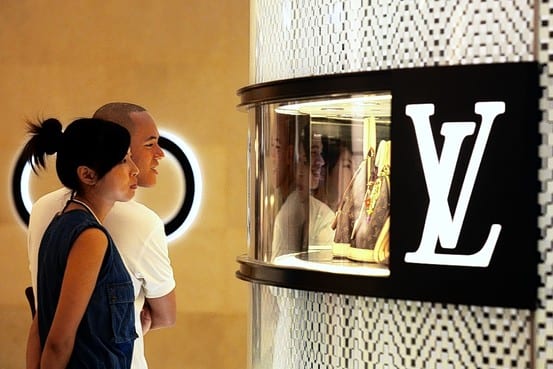
  • Luxury giants bank on Chinese return as Western shoppers sober up

    Luxury giants bank on Chinese return as Western shoppers sober up

    The focus of the luxury industry is shifting back to China, with hopes that its high-end spenders will once again splurge on designer goods during Lunar New Year festivities as Beijing relaxes Covid curbs after three long years.

    Quarterly results from LVMH and Europe’s other luxury goods companies will offer glimpses of the toll of last year’s Covid-related disruptions in China, even as the companies roll out pricey new collections tied to the Year of the Rabbit.

    They are expected to see a deceleration in sales growth over the quarter as the post-pandemic splurge on designer fashions begins to ease in the United States and Europe.

    Consensus estimates cited by UBS are for fourth-quarter sales growth of 7 per cent at LVMH, which releases full-year results on Thursday, and for a sales decline of 2 per cent at Kering, which reports results on February 15. Hermes, which reports fourth-quarter results on February 17, is expected to show sales growth of 17 per cent, a decline from 24 per cent in the third quarter.

    The industry’s showing in China will highlight the hit from lockdowns and its subsequent exit from a zero-Covid policy, which has spurred a surge of infections in the world’s second-largest economy. Luxury spending by Chinese nationals had dipped from 33 per cent of the global personal luxury goods market in 2019 to as little as 17 per cent last year, according to estimates from consultancy Bain.

    “We do believe they will come back to the luxury sector in a heavy way, to catch up on what they couldn’t do in 2022,” said Caroline Reyl, head of Premium Brands at Pictet Asset Management, referring to Chinese consumers.

    End-of-year trading updates last week from Britain’s Burberry and Cartier-owner Richemont gave investors a peek at the knock.

    Richemont missed market estimates after sales in China plunged by a quarter. Customer traffic at its stores dwindled and staff at times were not available. Many stores reduced hours or closed temporarily. Burberry’s like-for-like sales growth slowed sharply to 1 per cent in the quarter to the end of December after a 23 per cent fall in mainland China.

    But Burberry said it was optimistic consumers in China would start spending again and Richemont saw a rebound there before the holiday, adding to rising expectations for the months ahead.

    China is forecast to become the luxury industry’s biggest market by 2025. The luxury sector is among the largest expected winners from China’s loosening of restrictions that kept shoppers out of stores for months, with shares at LVMH, Europe’s most valuable listed company worth about US$433.1 billion and Hermes recently hitting historic highs.

    At Paris fashion shows, which run through the end of this week, Chinese buyers, a staple at such events before the pandemic hit, still haven’t returned in droves.

    Although the Chinese are expected to initially resume travelling within Asia, Europe is a region that particularly stands to benefit from a return of Chinese tourists. Reyl told Reuters she believes Chinese shoppers may begin to return to Europe in a noticeable way at the end of the second quarter or during the second half of this year.

    In the United States, some Americans are cutting back discretionary spending due to decades-high inflation. Credit card data from Citigroup showed that luxury spending in the United States in December was down 10 per cent year-on-year and, compared to 2019, turned negative, down 2 per cent, largely due to weaker business in department stores and online platforms.

    However, travelling Americans likely continued boosting the fortunes of luxury labels in Europe, with US nationals leading a recovery in tax-free shopping in Europe, according to December data from Global Blue.

  • AirAsia lops 23% off fares

    AirAsia lops 23% off fares

    AirAsia welcomed the new year with a 23% off sale for all flights on bookings made by 15 January 2023.

    While the booking period runs from 9 to 15 January, the travel dates are open from 1 February to 27 September 2023.

    The deal is valid on flights to all destinations in the group network (airline codes AK, FD, D7 and XJ). It excludes flights with the airline code QZ.airasia

    It includes trips to Kuala Lumpur, Langkawi, Kota Kinabalu, Singapore, Bangkok, Taipei, Tokyo, New Delhi, Gold Coast Auckland and more.

    To secure the discount, click on the ‘flights’ icon on the homepage of the AirAsia Super App or via the airline group’s booking website.

  • Whatsapp has new feature to undo send messages

    Whatsapp has new feature to undo send messages

    For many phone owners, the person they message the most is themselves. No, it has nothing to do with egotistical behavior and has everything to do with using common sense. Sometimes when you need to jot down a note you’re caught without paper or a pen. While an app like Google Keep is ideal for these situations, some would rather send a message to themselves.
    But if WhatsApp is their preferred messaging app, this could not be done unless the user opened a group chat and included himself as one of the group members, and then sent a message to this group. Who wants to go through all that just to remind yourself that the dog walker is on vacation, or to save a story or video that you just viewed online? The Meta-owned app has fixed this by disseminating an update that allows WhatsApp subscribers to send messages to themselves.
    A WhatsApp user can now select themself to be the lone recipient of a message he or she is going to send via the app. After typing the message you want to send yourself, the app puts up a notification that points out that the message you send is protected by end-to-end encryption. Unless you have multiple personalities, this doesn’t matter. But it does mean that WhatsApp or any other person that isn’t you, can not read or listen to the message.
    Meta had this feature beta tested by iPhone users and is rolling it out now for all users. It has been made available on Android and does work on this writer’s Pixel 6 Pro running Android 13 QPR2 Beta 2.1.
    WhatsApp has added more than just the ability to message yourself. Following the update, you can undo the “Delete for me” feature to bring back a message that you’ve accidentally erased from your WhatsApp account. To see how this works, you can just send a test message to yourself (which you can do now) and long-press on the test message. Tap the trash can icon on the top of the screen and you will see a pop-up. Select Delete for me and a bar at the bottom of the screen will appear that says “Message deleted for me” with the word UNDO on the right side of the bar. Tap it to undo the deletion and the message will return.
    You also can now control who will be able to see when you’re online. From the WhatsApp app tap the three-dot menu icon on the top right of the screen and go to Settings > Privacy > Last seen and online. You can tap Nobody on the top quarter of the display so that no one can see when you were last on WhatsApp. Underneath you can choose who can see when you’re online. The options are Everybody and Same as last seen. Select the latter option and if you have Nobody picked for last seen, no one will be able to see if you’re online.
    When you are about to message one of your WhatsApp contacts, under that person’s name, it will show the last time he or she was seen on the app. So if you’re a private person you might want to follow the directions in the above paragraph so that no one knows when you were on WhatsApp last and whether you are on now. On the other hand, you might want your contacts to know when you are available to have a conversation on the platform.
    Another new feature will allow users to search for a past chat by the date it took place. This helps if you can’t find a specific chat but you know the date when it occurred.
  • Vietnam Airlines reports $430M loss on fuel price

    Vietnam Airlines reports $430M loss on fuel price

    Vietnam Airlines reported a loss of VND10.09 trillion ($430.3 million) last year and blamed it on rises in fuel prices and exchange rate volatility.

    Its revenues were worth around VND71 trillion, equivalent to 70% of revenues in 2019 before the Covid-19 pandemic hit but higher than the combined figures of 2020 and 2021.

    As of last year the carrier had accumulated losses of VND34.2 trillion.

    Yet it remains optimistic about 2023 since global markets have been recovering since late 2022 and said it would take measures to address the losses issues.

  • Steelmaker Hoa Phat reports bigger losses in Q4

    Steelmaker Hoa Phat reports bigger losses in Q4

    Hoa Phat Group, Vietnam’s biggest construction steel firm, posted net losses of nearly VND2 trillion ($84.7 million) in Q4 last year, higher than the losses of roughly VND1.8 trillion in Q3.

    The company’s losses in Q3 was its first quarterly loss in 13 years.

    Hoa Phat made revenues of VND26 trillion in the fourth quarter, seeing a year-on-year fall of 42%, bringing the total revenues last year to VND142 trillion, down 5%, due to weaker demand for various steel products.

    Its after-tax profits were over VND8.4 trillion in 2022, down 76% against 2021.

    The firm supplied the local market with 7.2 million tons of steel products, including 4.3 million tons of construction steel, last year, posting a year-on-year drop of 7%, and holding a market share of nearly 35%.

  • Update to Instagram gives teen users a feature they requested

    Update to Instagram gives teen users a feature they requested

    Meta announced today that it is adding new features to its Instagram app that are designed to give users a break from receiving notifications and to help them manage their feeds to avoid viewing content that they don’t want to see. Quiet mode, which launches today, will prevent you from receiving notifications when enabled. When someone sends you a Direct Message, an auto-reply will be sent and your activity status will be updated to alert others that you have Quiet mode turned on.
    Quiet mode can be customized to fit the user’s schedule. Meta says that teens have been requesting a feature like Quiet mode that will allow them to focus on schoolwork at night without having to be disrupted by notifications. And here’s the thing. Once Quiet mode is disabled, Instagram will catch you up by sending you a summary of all the notifications you missed while on Quiet mode.
    While Quiet mode will be available to all users, Instagram will prompt teens to use the feature when they are using the app late at night. Quiet mode will be available starting today to Instagram users in the U.S., U.K., Ireland, Canada, Australia, and New Zealand. Meta says that it hopes to bring the feature to other countries soon.
    As we noted, Meta also wants to allow Instagram users to tell them which content they do not want to see on their feeds or recommended to them. In Explore, you can hide more than one post that you’re not interested in at one time. And when you tell Instagram that you’re not interested in a particular Explore post, you won’t see similar content in the future in Reels, Search, or wherever Instagram makes recommendations.
    To tag an Explore image as something that you’re not interested in, press on the image, tap the three-dot menu icon on the upper right next to the follow button, and tap on Not interested on the pop-up at the bottom of the screen. On videos shown in the vertical format, the three dot menu icon is the last element located along the right side of the display.
    Instagram users can already hide DMs and comments that contain certain words. You can now stop receiving recommended posts that include certain words in a post’s caption or hashtag. To create such a list, open the Instagram app and tap the profile picture in the bottom right corner. That takes you to your account page. Tap the hamburger menu icon in the upper right. Go to Settings > Privacy > Hidden Words > Manage custom words and phrases. You can add multiple words, phrases, and even emojis.
    Lastly, Instagram recently added a feature allowing parents to view their teen’s Instagram settings. If a teen changes a setting on the Instagram app, a parent will receive a notification. Parents can also find out which Instagram accounts have been blocked by their teens.
    Meta suggests that parents “Visit Family Center for conversation starters and to learn more about the available parental supervision tools, including how to set time limits, schedule breaks, be notified when teens share a report, and more. These updates are part of our ongoing work to ensure people have experiences that work for them, and that they have more control over the time they spend online and the types of content they see.”
    According to a published report, among U.S. and British teens that had suicidal thoughts, 6% in the states and 13% in England traced these feelings back to an issue they had with content read on Instagram. While ideally those teens should stop using the app, that might be easier said than done. Hopefully, the new features will help teens cope while using Instagram.