Category: General

Retail News Asia is committed to providing both local and global retailers with the latest General Retail news throughout the Asian market. This on a daily base.

  • Cebu Pacific receives first of 10 expected Airbus NEO deliveries for 2023

    Cebu Pacific receives first of 10 expected Airbus NEO deliveries for 2023

    Cebu Pacific (CEB) received on Jan 1 the first of the 10 expected brand new airbus NEO (New Engine Option) deliveries for the year: three A320neo, four A321neo and four A33neo. It is also the airline’s ninth Airbus 320neo.

    The aircraft used sustainable aviation fuel (SAF) from the Airbus Hamburg facility in Germany to the Ninoy Aquino International Airport (NAIA) in Manila.

    “This SAF-powered aircraft delivery supports our sustainability strategy in shifting to a more fuel-efficient NEO fleet by 2028. We will continue prioritizing our sustainability journey as we maintain our position as the greenest airline in Asia,” said Alex Reyes, chief strategy officer at Cebu Pacific.

    SAF is a drop-in fuel, which can be an interchangeable replacement for fossil fuels. It does not require any adaptations to the aircraft or engines and has no negative impact on performance or maintenance. Using SAF results in an up to 80 percent reduction in carbon emissions across the SAF lifecycle.

    CEB is the first low-cost carrier in Southeast Asia to incorporate SAF into its operations when it delivered its third A330neo in May 2022.

    CEB’S sustainability goal aligns with global aviation’s commitment to achieving net zero carbon emissions by 2050. The airline has made various investments that enable it to become fuel-efficient in its operations to keep fares affordable for passengers.

    Besides fleet modernization, the airline’s major pillars on its sustainable journey are resource optimization, which includes pushing for fuel efficiency best practices and utilizing SAF by launching green routes by 2025.

    CEB’s fleet is composed of 21 A320ceo, nine A320neo, seven A321ceo, 10 A321neo, four  A330ceo, four A330neo, 14 ATR 72-600, six ATR 72-500 and two ATR Freighters.

  • Aldi opens new store in Prospect

    Aldi opens new store in Prospect

    Aldi says its newest store, which opens in Prospect, NSW, this week will feature new innovations for the banner aimed at enhancing the customer experience.

    The store is fitted with large wooden produce bays in a modern interior store design featuring newly designed registers at manned checkouts and registers and self-checkouts.

    To cut emissions, the store has incorporated natural refrigerant technology and LED lighting and the company promises that any unsold food items will be distributed to local rescue organizations.

    “We offer a supermarket experience that is like no other in Australia and we are proud to call ourselves ‘Good Different’,” said Viktor Jakupec, regional MD of Aldi Australia.

    “It’s our differences such as having never offered single-use plastic bags, using a coin deposit system for our trolleys and our tight product range that allow us to bring value to our customers every day.”

    The new store is located at 106 Main North Road, Prospect.

  • Apple adds a new useful parking feature to the Maps app

    Apple adds a new useful parking feature to the Maps app

    Apple Maps has come a long way since the app was first released in September 2012. At first, Maps was an unmitigated disaster with some roadways and even countries unlabeled or missing their names. A few places were incorrectly identified and Apple uncharacteristically released an apology with Tim Cook telling iPhone users to use Google Maps or other mapping and navigation apps until Apple Maps was fixed. A company-wide shakeup ensued resulting in the dismissal of longtime software chief Scott Forstall.
    Apple went back to the drawing board and started collecting its own data so that it could build a new mapping and navigation platform from the ground up. And today, Apple Maps is a solid mapping and navigation platform that Apple continues to work on. Apple has teamed up with digital parking marketplace SpotHero to deliver information to Apple Maps users on 8,000 parking locations across the U.S. and Canada.
    For example, let’s say that you’ve got tickets to see the New York Knicks or the Rangers play at Madison Square Garden and you want to reserve a parking spot; go to Apple Maps and look up Madison Square Garden in New York City. On the listing, tap the three-dot “More” button on the right side. A pop-up menu will appear with Parking as the first option at the top of the list. Tap it and you’ll be taken to the appropriate SpotHero page without ever having to leave Apple Maps.

    Besides appearing on the iOS Apple Maps app, the partnership with SpotHero will also allow Mac users to reserve parking spots. This added feature is another step in the right direction for Apple Maps which still has to battle Google Maps on the iPhone for iOS for navigation app supremacy.

  • Elon Musk announces upcoming UI overhaul and new Twitter features

    Elon Musk announces upcoming UI overhaul and new Twitter features

    Elon Musk has announced via Twitter that the social network will get a new look and features. Some of the features he teased include swiping to move between timelines, a bookmark button on Tweet details, and long-form tweets.

    Since Elon Musk took over Twitter as owner and CEO, it has become the standard to look to his direct feed for feature announcements and changes in the platform’s terms of use. Such was the case with his controversial move last year to block links that directed users to competing social media platforms, which was later reversed but prompted calls for Musk to step down as CEO of Twitter.

    While his latest announcement is far from being controversial, it is worth noting as it announces key changes to the platform that its users should be aware of. According to Musk, a new feature will be rolling out later this week which will enable users to move between recommended vs followed tweets in their timelines.

    Although unclear as to what this will look like, since there was no preview provided for it, one can guess it will work similarly to how pinned timelines currently work on mobile devices. It is also unclear whether this new feature will be exclusive to the Twitter mobile apps or if the web client will see something similar as well.

    Musk also confirmed that there is a larger UI overhaul on the way and that this new feature is just the start. Another change coming to the UI is the addition of a Bookmark button in the Tweet details view, which, as per Musk, will serve as the defacto “silent like” on tweets and will be rolling out a week later. Bookmarking tweets has been available for some time, but it requires a couple of extra clicks.

    Finally, the long-promised feature to be able to compose long-form tweets is truly on its way. Musk also confirmed that this will be added in early February, though no additional details were shared on what the feature will entail.

  • Priceline says its loyalty program has hit 8 million members

    Priceline says its loyalty program has hit 8 million members

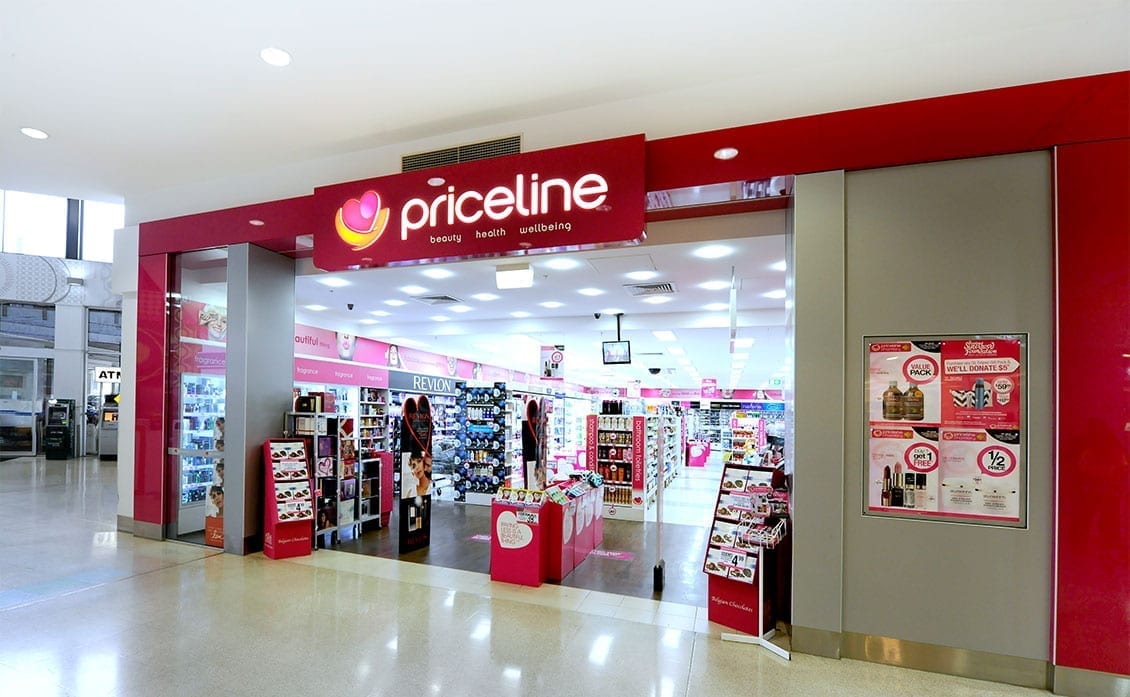
    Priceline Pharmacy will receive commissions from the sale of insurance products to the 3.9 million members of its customer loyalty program.

    The loyalty program, Sister Club, is one of Australia’s largest, providing rewards for money spent in Priceline’s health, beauty and pharmacy stores. Its intended clientele are women and it is promoted by Priceline owner Australian Pharmaceutical Industries as a ”key marketing differentiator”.

    Under a five-year deal with global insurer ACE, travel, accident-protection and health insurance products will be promoted to Sister Club members via electronic and direct mail.

    Priceline would receive commissions on sales, said Robin Moore, ACE corporate communications manager for Australia and New Zealand. ACE will manage telesales, customer service and claims.

    A similar deal struck in 2011 with life insurer AIA ended this year. API declined to say how much revenue that agreement had delivered.

    A spokesman said API was confident that the insurance offering, Priceline Protects, ”enhances … our members’ experience”.

    Under the deal, ACE has no authority to sell or use Sister Club data for any other purpose than insurance products.

    ”It is important to note that members can opt out of receiving offers regarding Priceline Protects at any time,” the spokesman said.

    Australian Privacy Commissioner Timothy Pilgrim said that when people signed up to a customer loyalty program they should read the privacy policy to find out how the business would use their information, who else would see it and how it would be stored.

    ”Businesses that are covered by the Privacy Act are required to comply with several principles when handling personal information, including information collected for a loyalty card scheme,” he said. ”For example, companies are required to have a publicly available statement or privacy policy that tells people how they handle personal information.

    ”There are also rules about when businesses can share your personal information with others.”

  • The Biggest Sports Brands in the Asian Market

    The Biggest Sports Brands in the Asian Market

    Sports are popular globally. People from all over the world are fans of one sport or the other. However, some sports are more popular in one continent but don’t receive much attention in others. For instance, American Football is more prevalent in North America, while Cricket is very popular in Asia. If you wager on sports events on bet365投注, you will have noticed this trend. Nonetheless, football or soccer seems to be the most popular sport globally, making football brands more popular. 

    This article looks at the biggest sports brands in the Asian market. Let’s dig in!

    Manchester United

    First, it is critical to note that football is the most popular sport in Asia. Therefore, football brands are bigger than other sports brands. That said, Manchester United is the most popular football brand in Asia. 

    The Red Devils are undoubtedly the biggest football brand in Asia. The club enjoys a massive following, especially in East Asia countries like China, South Korea, Malaysia, Indonesia, and Singapore. 

    Their popularity can be attributed to Asian players like Shinji Kagawa and Ji-Sung Park. Moreover, club superstars like Wayne Rooney, David Beckham, and Cristiano Ronaldo have also helped to make the club popular in the Asian market. 

    Barcelona

    Barcelona also enjoys a massive following in the Asian market. The Catalan club is loved thanks to its attractive style of play and star-studded squads globally. Star players like Lionel Messi, Ronaldinho, and Samuel Etoo regularly feature in Pro Evolution Soccer covers. 

    Additionally, Barcelona partners with Konami, the Japan-based developer of PES. The Spanish giants also had a shirt sponsorship deal with Qatar Airways and are now sponsored by Rakuten, a Japanese company. All these factors have helped make Barcelona a big brand in Barcelona. 

    Chelsea

    The Blues enjoy a massive global following, including in Asia. Their rise to the top recently has contributed to the club’s fame in Asia. For instance, the Jose Mourinho era saw the club establish itself as a formidable title contender in England and Europe at large. 

    Besides, their popularity in the Asian region is also because of their shirt sponsorship deal with Samsung, a tech giant from South Korea. Other Asian sponsors Chelsea has worked with include Yokohama Tyres of Japan and Three of Hong Kong. 

    Real Madrid 

    Real Madrid is also a massive brand in Asia. The club enjoys tremendous followership in Japan, China, and the Middle East. Moreover, Madrid also has a long partnership deal with Fly Emirates.

    Even though Madrid has not had many Asian players, it remains one of the most popular in the region. You can attribute the popularity to their unmatched success in the field.   


  • Bangalore Rising as an Investment Destination for Non-Residents

    Bangalore Rising as an Investment Destination for Non-Residents

    Bangalore continues to be the most prominent non-resident Indian (NRI), investor as Indian real estate continues to grow.

    Bangalore is a preferred destination for NRI real property investment due to its lucrative prospects, abundance of property managers, consultants, and NRI’s emotional attachment home. You won’t find it in any other Indian location.

    Many property types have high appreciation rates. NRIs have many options when it comes to purchasing a home due to the high appreciation rates of Whitefield and Sarjapur. You can include residential flats, villas, and studio apartments as well as commercial buildings and many other types of assets. You can keep track of all your assets, including real estate, using the Prillionaires personal finance software. They can choose the type of project they want to invest in, depending on their schedule and money.

    NRI Investment in Bangalore Properties

    1. Cosmopolitan Lifestyle

    This city attracts NRIs because of its vibrant lifestyle. They also invest in real property in Bangalore. People of all races, religions, and ethnicities settle in different areas. Communication seems to be easier because of the city’s setting. NRIs choose a city that offers a diverse lifestyle.

    It helps them to relax. All services are included in a resident’s busy schedule.

    Communicating with NRIs who speak little English can prove difficult for those with limited English proficiency.

    2. Prevalence of Luxury Housing Segment

    There are not many cities in India that cater to the luxury housing market. Bangalore has a higher per-capita income than most Indian cities. This shows that Bangalore’s residents have a higher purchasing power than those in other parts.

    Developers and builders can easily set up luxury homes in this city. Buyers are encouraged to explore the options before buying a house.

    3. Attractive prices

    As the rupee continues to fall in value against the US dollar, property in Bangalore is readily available at affordable rates. This encourages NRIs to invest in real estate. The Foreign Exchange Management Act (or FEMA), which was simplified by the RBI to attract foreign investment has also stifled a booming sector. The Act allows Indians who are residing abroad to purchase residential and commercial property, except for agricultural land.


    4. Tax Benefits

    NRI investments in real estate have extraordinary tax benefits. NRIs can own an unlimited number of properties. Therefore, they are able to rent, sell, lease, and invest in real property. You can invest in multiple properties and get positive returns through long- and short-term capital gains, rental income, and leasing income.

    Property Laws Of Bangalore Real Estate

    Regulations govern the sale and purchase of real estate properties. These are usually land parcels or buildings. Because of their fixed nature, immovable properties can’t be moved or replaced.

    The Transfer of Property Act of 1882 regulates the sale and purchase of real property in India. The 1882 statute does not cover the idea of an apartment and its undivided land or communal spaces.

    KAOA has taken a critical step to make a comparison between the acquisition of an apartment, and its proportional undivided portion, with the acquisition of movable properties under the Transfer of Property Act.

    The buyer can be the sole owner of the unit if they have a valid title and a proportionate undivided interest.

    Bangalore, Asia’s fastest-growing city, has experienced a significant increase in NRI investment, driven both by passion and financial reasons. It is also a popular place to live, and it is the country’s IT powerhouse. Similar to the housing markets in Pune, Hyderabad, and Chennai, Bangalore has seen rapid expansion.

    The Real Estate (Regulation and Development) Act (RERA), looser investment regulations, the rupee’s depreciation relative to the dollar, attractive developer incentives, and a greater online and offline presence of developers have all contributed to the growth of the trend. These initiatives have made it easier for homebuyers to access information and allowed NRIs to invest in their home country.


  • WhatsApp’s newest feature helps users avoid internet shutdowns

    WhatsApp’s newest feature helps users avoid internet shutdowns

    WhatsApp starts the new year with a minor update introducing proxy support, a feature that should help some users avoid internet shutdowns. The new feature is available for WhatsApp users worldwide, regardless of their phone (iOS or Android).

    According to WhatsApp, all the proxies that will be available to choose from will connect through servers set up by volunteers and organizations. The messaging app has also published a guide to help those who want to volunteer for such a task, which is pretty easy to follow if you’re tech-savvy.

    If you want to benefit from the feature, here is how you can connect to a proxy if you have an Android or an iOS device.

    Connect to a proxy on Android

    • Make sure you are using the most current version of WhatsApp.
    • In the Chats tab, tap More options / Settings.
    • Tap Storage and Data > Proxy.
    • Tap Use Proxy.
    • Tap Set Proxy and enter the proxy address.
    • Tap Save.
    • A check mark will show if the connection is successful.

    Connect to a proxy on iPhone

    • Make sure you are using the most current version of WhatsApp.
    • Go to WhatsApp Settings.
    • Tap Storage and Data / Proxy.
    • Tap Use Proxy.
    • Enter the proxy address and tap Save to connect.
    • A check mark will show if the connection is successful.

    As per WhatsApp’s official statement, the level of privacy and security that the app provides should remain just as high when connecting via proxy, so we shouldn’t be worried about privy eyes. End-to-end encryption will remain active even when connecting the app through other servers via proxies, so messages should not be visible to anyone in between (i.e. proxy servers, WhatsApp, or Meta).

    To take advantage of proxy support, check out the new feature in the settings menu, but first make sure you have the latest version of the app installed.

  • Bed Bath & Beyond in crisis as turnaround plan fails

    Bed Bath & Beyond in crisis as turnaround plan fails

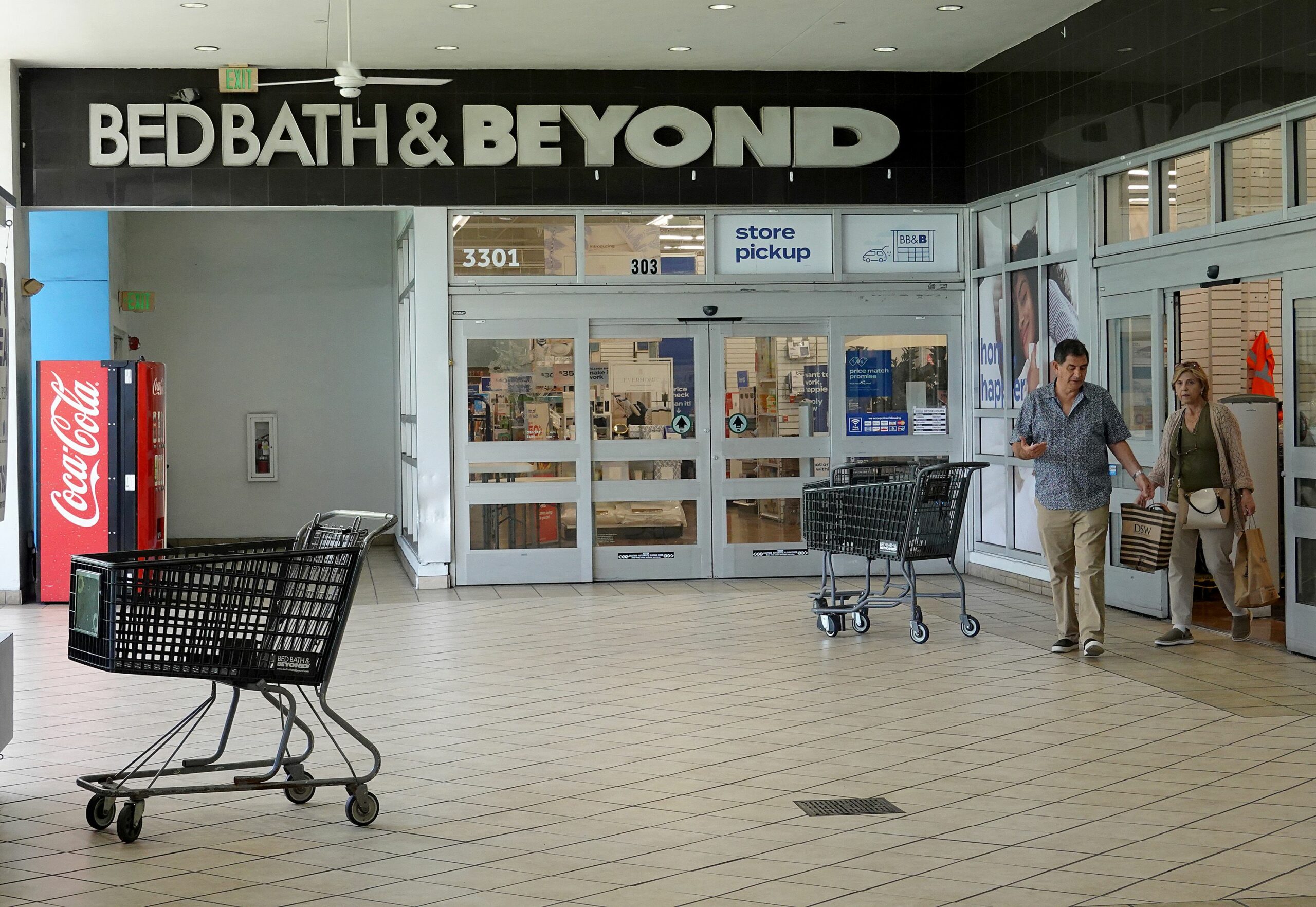
    US home goods retailer Bed Bath & Beyond is likely to file for bankruptcy protection as there is “substantial doubt about the company’s ability to continue” after sales floundered over Christmas-New Year.

    In a business update, the company said a turnaround plan initiated at the start of the third quarter with a refocus on merchandising and inventory control while strengthening its financial position had failed to deliver anticipated results.

    However, based on preliminary results for the quarter ending November 26, sales fell 33 per cent to US$1.259 billion reflecting lower customer traffic and reduced levels of inventory availability. A net loss of approximately $385.8 million was also registered.

    Sue Gove, president & CEO at Bed Bath & Beyond, said: “Despite more productive merchandise plans and improved execution, our financial performance was negatively impacted by inventory constraints as we partnered with our suppliers to navigate both micro- and macro-economic challenges.”

    She added the company subsequently leveraged the liquidity gained from the holiday season to immediately pursue higher-in-stock levels to support key vendors.

    “We continue to manage our financial position amidst a changing landscape and work with expert advisors as we consider all paths and strategic alternatives to accomplish our short- and long-term goals,” said Gove.

    Neil Saunders, MD at GlobalData, said the business has “burnt through” most of its liquidity and will need to raise further funds to continue operating.

    “Despite a desperate attempt to shore up finances and improve the customer experience, sales continue to slump and losses continue to mount. Put bluntly, the business is moving at rapid speed in the wrong direction with bankruptcy the most likely destination.”

    The company informed investors that it continues to consider all “strategic alternatives” including restructuring or refinancing its debt, selling assets, seeking additional equity capital and obtaining relief under the US Bankruptcy Code, though the measures may not be successful.

    According to Reuters, the company has interest payments on roughly $1.5 billion of bonds which are due February 1. It will likely be skipped to conserve cash triggering a 30-day grace period before the entity defaults.

  • Macau casinos pledge to invest $15 bn

    Macau casinos pledge to invest $15 bn

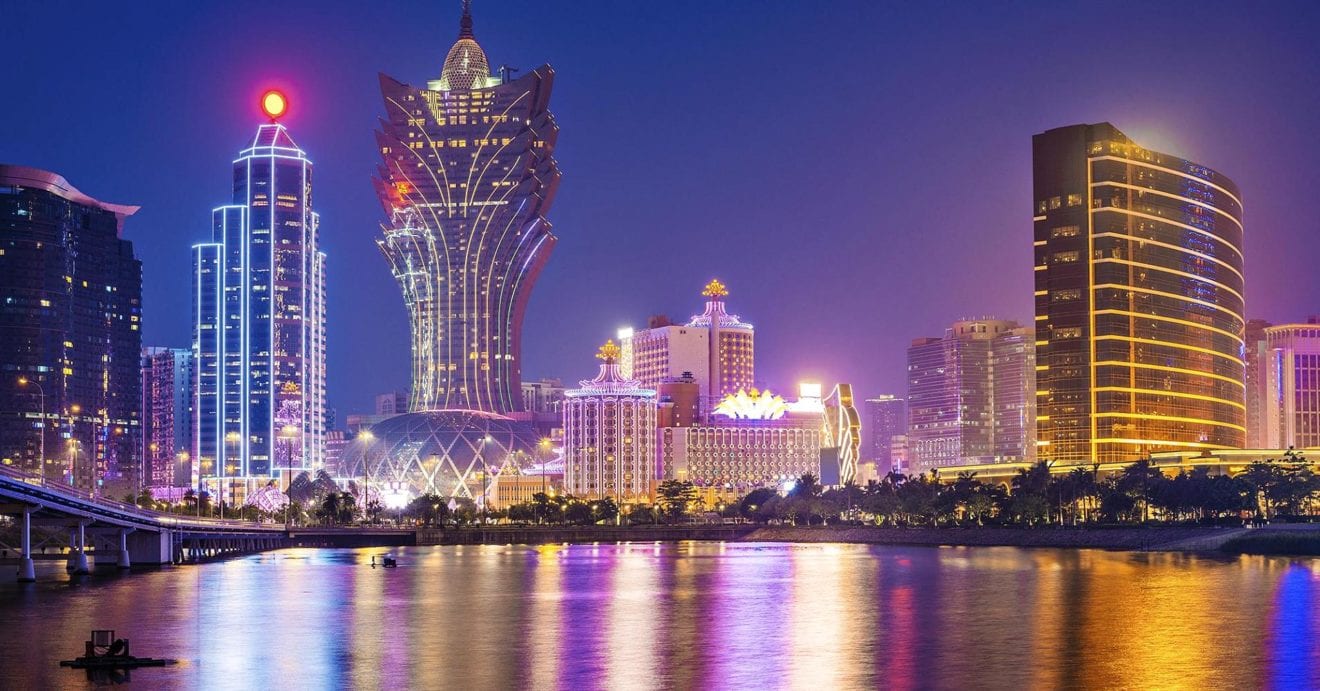
    As casinos in Macau begin new licenses to operate in the world’s biggest gambling hub on January 1, the stakes are high on whether they will be able to successfully deliver on a government mandate to diversify away from their cash-cow: gambling.

    For the last 20 years, Sands China, Wynn Macau, MGM China, Galaxy Entertainment, Melco Resorts and SJM Holdings, have raked in billions of dollars from their casinos in the Chinese special administrative region, turning the once sleepy fishing village into a glitzy boomtown.

    But their 10-year, shortened contracts come at a time when Covid-19 restrictions have decimated Macau’s gambling revenues, with 2022 the worst annual performance on record. Industry net debt is surging and operators face a new era of government oversight and control over their operations.

    The recent easing of coronavirus restrictions in mainland China and Macau in December has also resulted in a wave of infections across the city, including many staff.

    Casinos have committed to investing a total of $15 billion in the coming decade, 90 percent of which must be spent on non-gaming.

    But operators will find it hard to monetize their non-gaming ventures given their poor track record since 2001, when the former Portuguese colony first liberalized the industry, executives and analysts said.

    Non-gaming revenues, which averaged around 5 percent of overall gaming revenues pre-Covid, must grow to more than 30 percent in the next decade, said Ben Lee, founder of Macau gaming consultancy IGamiX.

    “For the past 20 years, none of the operators have managed to establish any significant progress in non-gaming.”

    “Contrary to the vaunted Las Vegas model, non-gaming in Asia does not carry the same profit margin as spending behaviour is quite different over here,” Lee said, while adding that Galaxy, Melco and Sands were likely to fare better at diversifying based on their track record and management team.

    Macau’s visitors have traditionally been male gamblers aged 30 and older, but more young families and women have started visiting in recent years.

    Macau, a densely packed territory located on China’s southern coast, is the only place in the country where gambling in casinos is legal.

    In December, following the formal awarding of their contracts, casinos unveiled non-gaming plans including indoor waterparks, health and wellness centres, art exhibitions and a large garden attraction by Sands, similar to Singapore’s Gardens by the Bay.

    Macau’s current non-gaming attractions have focused on retail and dining, with some entertainment offerings such as Melco’s nightclubs, Galaxy’s cinema, Sands’ themed Venetian and Parisian properties and its exhibition arena.

    But it pales in comparison to Las Vegas, which boasts daily entertainment and draws an international crowd. More than 90 per cent of Macau’s visitors are from greater China, prompting the government to require operators to attract foreign tourists as part of their new contracts.

    New rules also stipulate that companies must routinely submit to the government the progress of their investment projects, the value of their investments and the execution period.

    Increased regulatory oversight comes as Macau casinos face much higher debt levels versus 2019. Net debt increased four-fold to $23 billion in 2022 and it may only peak by end 2023 at $24 billion, Morgan Stanley said in a December note.

    Compounding casinos’ challenges, Macau lacks connectivity with international markets, has dilapidated infrastructure and a shortage of skilled labour, as well as reputational damage over its Covid management, executives said.

    Macau has few direct flights from potential markets outside China, while transport within the city is limited to move large groups of people around, said David Green, head of Macau gaming consultancy Newpage.

    “There is no indication that I have seen that the government is, or intends to address these weaknesses. Given the serial mismanagement of public works…it leaves concessionaires with a less than optimal host attraction proposition.”

    A lack of land also hinders further development, while competition to hold conferences and exhibitions is rife from cities like Hong Kong and Singapore and within China itself.

    Alidad Tash, who worked as a senior executive in Macau’s casinos since 2006 and now runs consultancy 2nt8, said the biggest challenge for operators was that mainland Chinese already have access to conventions, restaurants, shows and shopping in their own cities.

    “What they come to Macau primarily for is the one thing that is not legally allowed within China: gambling.”

  • Garment exports soar in early part of 2022

    Garment exports soar in early part of 2022

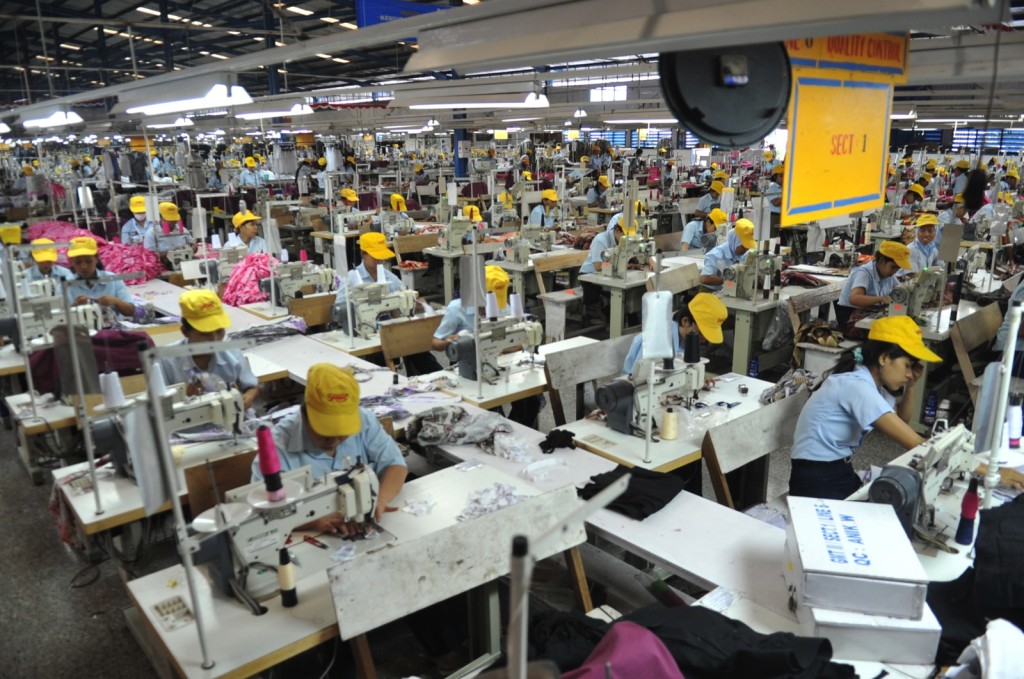
    Vietnamese garment and textile producers were overwhelmed with export orders in the first half of 2022, but things unraveled in spectacular fashion after mid-year as the global economy slumped.

    “2022 was an unprecedented year,” Le Tien Truong, chairman of the Vietnam National Textile and Garment Group (Vinatex), said, referring to the export market. “In the past 25 years I have never seen the market change so suddenly, in just one month.”

    Textile and garment exports were worth $22.3 billion in the first half of 2022, seeing a year-on-year rise of nearly 18% and a trade surplus for the industry of $8.9 billion, up 32%.

    After nearly two years of social distancing, consumers in many countries appeared to have an “overbuying” mentality, which resulted people buying more than usual.

    Fearing slow delivery due to supply chain bottlenecks during the Covid pandemic, distributors increased orders to meet the high demand in recovering economies.

    But the “overbuying” did not last long because of geopolitical instability, the conflict between Russia and Ukraine and other factors, such as surging inflation in many countries worldwide. People, especially in Vietnam’s export markets such as the U.S. and the European Union, spent less on non-essential products such as garments.

    By the end of June many garment firms’ inventories increased by 50% to reach levels not seen even during the pandemic. The market showed signs of slowing in August, and began to decline in September.

    The fourth quarter is usually the peak production season, but in 2022 the market plummeted as orders tumbled.

    The director of a garment company with 1,200 employees in HCMC’s Binh Chanh District said there were lots of orders in the first half of the year and workers had to work overtime, but the situation reversed in the second half.

    “We were forced to reduce seasonal workers, and stop some production lines because there were no orders,” he said.

    Workers were furloughed, he said. The gloomy market with few orders and lower prices resulted in a large amount of inventory. Instead of bulk orders like in the first half, buyers placed smaller orders with tight delivery schedules.

    To provide jobs for workers and avoid mass layoffs, garment and textile producers had to accept small orders, reduce selling prices and diversify export markets.

    Production slowed down in the last quarter, but due to the high growth in the previous three quarters, the textile and garment industry still reached the export target of $44 billion, up 10% against 2021.

    The U.S. was still the largest importer of Vietnamese garments and textiles for the year with orders of more than $18 billion, followed by South Korea with $4.2 billion, and Japan and China with around $4 billion each.

    The market situation changed suddenly in the middle of the year, but Vinatex managed to realize its consolidated profit target of VND1.090 trillion ($45.4 million) in 2022.

    However, there are difficulties ahead for the industry. “Demand for garments in 2023 will still be weak, at least the first quarter will not be positive,” Truong said.

    Vu Duc Giang, chairman of the Vietnam Textile and Apparel Association, said orders from the end of 2022 to the first quarter of 2023 decreased by 25-27% due to weakened global demand. Many businesses are currently receiving orders equivalent to 70-80% of their production capacity.

    Businesses could shift production to lower value items and accept smaller orders, he said. Nguyen Huu Tuan, human resources director of Thanh Cong Textile and Garment Co., said to safeguard the jobs of more than 5,000 workers and retain customers, it is accepting orders at low prices, sometimes even below breakeven.

    The garment and textile industry foresees one of two export scenarios in 2023: Exports could fetch $47-48 billion if the market recovers in the second half of the year, but otherwise it has to settle for $45-46 billion.

  • Gold prices drop

    Gold prices drop

    SJC gold price dropped 0.15% to VND67.2 million per tael Thursday morning.

    Gold ring price gained 0.28% to VND54.35 million per tael. A tael equals 37.5 grams or 1.2 ounces.

    Global spot gold was up 0.1% at $1,856.11 per ounce, aided by a softer dollar, while market participants braced for U.S. jobs data that could influence the Federal Reserve’s policy trajectory.

    “Gold has had a good start to the year, helped by a weaker dollar and expectations that the Fed might slow its pace of rate hikes. Recession risks and central bank buying should also support bullion this year,” said Brian Lan, managing director at Singapore-based dealer GoldSilver Central.

    “If the jobs data reflects that the rate hikes have taken a toll on the economy, then dollar might weaken further and benefit gold.”

    Bullion is seen as a hedge against inflation and economic uncertainties, but higher interest rates tend to weigh on non-yielding gold.

  • Gold prices rise

    Gold prices rise

    SJC gold prices gained 0.3% to VND67.2 million per tael Tuesday afternoon.

    Gold ring prices shot up 0.8% to VND54.3 million per tael. A tael equals 37.5 grams or 1.2 ounces.

    Global spot gold was up 1.2% at $1,846.08 per ounce jumped more than 1% to a six-month high on Tuesday on technical trading, while investors looked forward to minutes from the U.S. Federal Reserve’s latest policy meeting for more cues on its rate-hike path, Reuters reported.

    “We’re seeing a slight bid for gold. But, with liquidity very low this time of the year, it appears to be technical buying as opposed to fundamentally driven,” said Matt Simpson, a senior market analyst at City Index.

    Minutes from the Fed’s December policy meeting are due on Wednesday. The Fed raised rates by 50 basis points in December after four consecutive increases of 75 basis points each.

    “I doubt the minutes will pack as much of a punch as the Fed’s December meet had, but traders will look for confirmation of the lower terminal Fed rate expressed in the median dot plot and that could support gold,” Simpson added.

    Gold is considered a hedge against inflation and economic uncertainties, but higher interest rates increase the opportunity cost of holding gold as it pays no interest.

  • Google testing new look for Android YouTube app

    Google testing new look for Android YouTube app

    Some Android users employing the YouTube app might have noticed that a change has been made to the progress bar on the video player when in Dark mode. This is the line under the video that appears when watching streaming content in portrait orientation. The bar moves to the right as a video plays and also shows how much of a video has loaded. Typically, the progress bar is red although some Android users, including this writer, now see a white or gray progress bar instead.
    With the white/gray progress bar showing, you will no longer see the part of the line that shows how much of a particular video has been loaded on the app. Touching the line to move ahead or to go back (an activity known as scrubbing) will bring back the red color as will tapping on the video to get back the controls. When the progress bar returns to the original red color, it will once again show how much of the currently selected video has been loaded.
    When watching in landscape orientation, you don’t see the progress bar unless you tap the screen, and then it will appear for a second. The progress bar in landscape is in red and hasn’t been changed-at least not yet. And we need to point out again that the change to the color of the progress bar in portrait is seen only when you are watching YouTube in Dark mode. In Light mode, the progress bar is red so it can stand out. It makes sense that a white/gray progress bar would be more easily seen with a dark background.

    If your YouTube app doesn’t exhibit this change, don’t fret. This could be the usual A/B test that Google is famous for running. For what it’s worth, the Pixel 6 Pro used by yours truly does have the white/gray progress bar but it is running Android 13 QPR2 Beta 1.

  • FTX Founder Expected to Plead Not Guilty

    FTX Founder Expected to Plead Not Guilty

    FTX founder Sam Bankman-Fried is reportedly expected to enter a not-guilty plea in a scheduled US court hearing, marking the latest development in the crypto exchange’s unraveling.

    A court hearing has been scheduled for FTX founder Sam Bankman-Fried in the afternoon of January 3 before US district judge Lewis Kaplan in Manhattan. Bankman-Fried is expected to enter a not-guilty plea.

    The fallen crypto exchange’s former chief executive faces two wire fraud charges and six conspiracy charges, including money laundering and compliance finance violations, which total a maximum of 115 years of imprisonment if convicted.

    While Bankman-Fried has repeatedly admitted to human errors while leading FTX, he has insisted that he is not criminally liable.

    Bankman-Fried faces a case strengthened in December by the guilty pleas of Alameda CEO Caroline Ellison and ex-FTX chief technology officer Gary Wang over multiple criminal charges while agreeing to cooperate with prosecutors.

    Meanwhile, Bankman-Fried has been free on a $250 million bond following his extradition last month from the Bahamas, the headquarters of FTX.

    Separately, legal proceedings are also underway in the Bahamas where the local government said it was temporarily holding FTX assets to deliver to customers and creditors.