Category: General

Retail News Asia is committed to providing both local and global retailers with the latest General Retail news throughout the Asian market. This on a daily base.

  • Shinsegae Vietnam prepares for launch

    Shinsegae Vietnam prepares for launch

    South Korean retailer Shinsegae Group will launch in Vietnam by the end of 2015.

    Shinsegae Vietnam subsidiary E-mart will roll out discount stores in the fast-growing retail economy after five years of research and planning.

    Shinsegae has secured at least two sites in Ho Chi Minh City, the first in an undisclosed part of the city where it will build a flagship discount store on a 20,000sqm site, the second near Tan Son Nhat international airport.

    The Korean company has worked closely with Vietnamese government officials and last week in a public ceremony announced a charity initiative to donate 10,000 motorcycle helmets annually to children in Ho Chi Minh City after signing a Memorandum of Understanding.

    The Korea Herald reports that the corporate social responsibility program is an E-mart marketing strategy “to enhance its corporate image with government officials and Vietnamese consumers”.

    “E-mart has been preparing for this project, which will become an important momentum that signals the beginning of its business in Vietnam,” said Choi Gwang-ho, general director of E-mart Vietnam.

    “We will focus on maximising the corporate brand image to stabilise our business here by persistently carrying out campaigns in which the Vietnam government and other civil organizations can participate,” Choi said.

    With a population of more than 90 million, rising disposable incomes and a retail industry dominated by traditional markets, retailers like Shinsegae see enormous potential if they establish a foothold in the market now, despite the near certainty of losses while initial customer numbers grow.

    The Korea Herald reported E-mart will be keen not to repeat its “bitter Chinese experience” in Vietnam. In December the company closed four stores in Tianjin leaving it with just 10, 17 fewer than at its peak in 1997. Since 2014, it has posted accumulated losses in China nearing US$50 million.


  • UK designs brighten Shanghai store windows

    UK designs brighten Shanghai store windows

    UK architects have partnered with local and international retailers to create temporary installations in Shanghai store windows.

    For the third year running, the Royal Institute of British Architects (RIBA) London has created original and thought provoking temporary architectural installations around the city’s upmarket Xintiandi shopping and entertainment district.

    The cross-over art exhibition is a partnership between RIBA London, Shanghai Xintiandi and the Culture and Education Section of the British Consulate-General.

    Among the installations:

    • Arup Associates with Pizza Express created an outdoor installation that celebrates the art of pizza making – motion of stretching the pizza dough for Pizza Express’s 50th Anniversary.

    Pizza Express RIBA 415

    • Draisci Studio with Barcodes – have designed faceted blocks that smile and seem to come alive with eyewear on.

    Drasci Studio + Barcodes RIBA 415

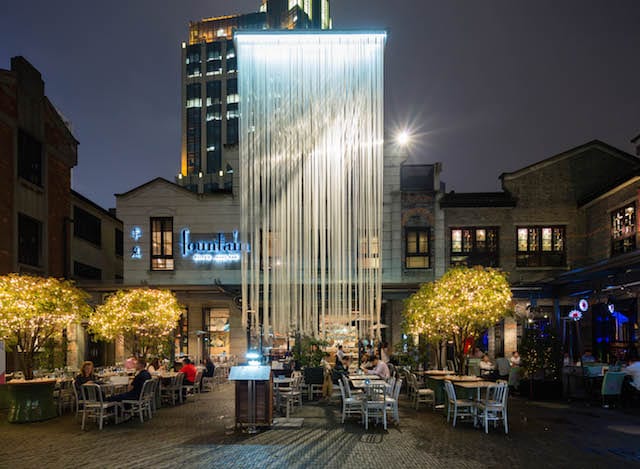
    • CTHM X INDJ with the support of BuroHappold Engineering and the lighting department at WSP with Fountain have created an ethereal river of light that seemingly floats, flows and falls from the upper windows of a restaurant.

    Fountain RIBA 415

    • Mobile Studio with Giftique created a design which draws upon the meteorological qualities of the season and will coincide with the launch of a new green tea.

    Mobile Studio+ Giftique RIBA 415

    • Squire and Partners with Maria Luisa used distorted hand crafted marble sculptures inspired by the artistic process of creation and decay.

    Maria Luisa RIBA 415

    • Opensystems with NN have designed Dice, a sculptural installation which resembles  primitive crystalline formations and marks the entrance of the store.

    Open systems +NN RIBA 415

    • Urban Systems with PH7 created installation referencing material systems in nature, fabricated using low-cost and 3D-printing technologies, using a biodegradable plastic made from renewable resources.

    Urban system PH7 RIBA 415

    • Amin Taha Architects with Rubis Spa flooded the spa podium lobby to chest height, capturing the blue mountain lakes of Switzerland where Rubis SPA was born.

    RubisSpa RIBA 415

    • RCKa with Tayohya created a cathedral like entrance to the busy home wear store, redesigning the space with an optical illusion using the brands own knitted vinyl products.

    Tayohya RIBA 415

    RIBA president Stephen Hodder said the Shanghai Windows project offers members a unique opportunity to gain invaluable experience working in China, to work with Chinese and global household name clients and demonstrate their skills to a design-savvy Chinese audience.

    “Our exhibition will be seen by over 1 million visitors, helping to demonstrate why British architects are renowned around the world for their creativity, ambition and flair.”

    Carrie Liu, GM of commercial in China Xintiandi said the project will enhance the unique shopping experience at Shanghai Xintiandi and create a platform for crossover communication, further inspiring creative talent in Shanghai.

    Also launched, and running throughout the Xintiandi district, the ‘Through the Shop Window’ photography exhibition uses some of the RIBA Collection’s rich archive to tell the story of the evolution of British shopping trends over the last century.

    RIBA Shanghai Windows runs until runs until May 31.

  • Orchard Rd night trial extended

    Orchard Rd night trial extended

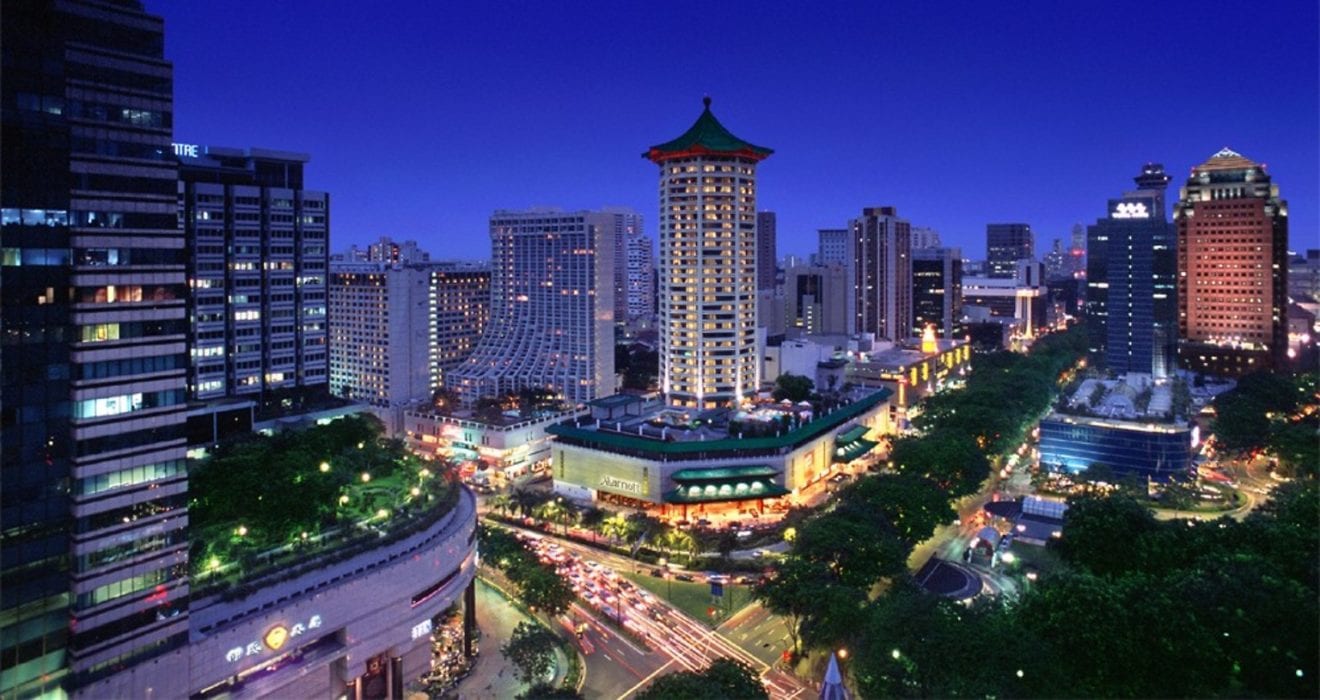
    The trial of banning cars from a key section of Singapore’s Orchard Rd shopping strip is finding favour with shoppers and tourists alike.

    Orchard Rd is closed at night from the Scotts Paterson Junction to Bideford Junction on the first Saturday night of each month between 6pm and 11pm.

    The Orchard Rd night pedestrian trial will be extended for at least another six months.

    The Orchard Road Business Association reports that a majority of shoppers surveyed approved of the open street initiative and support its continuation.

    The pilot running between October 2014 and March attracted 50,000 visitors each time closure. Although some retailers report they did not see the increased pedestrian count translate into additional sales, they too appear supportive of the project.

    The ORBA and the Singapore Tourism Board are funding the majority of street closures and say they plan to work with malls to extend trading hours.

    They are also looking for events to sponsor to further boost crowds during the closures.

  • Alibaba thinks small

    Alibaba thinks small

    Smaller orders and microloans to retailers have boosted Alibaba’s business-to-business eCommerce trade.

    The Chinese internet giant’s sales on its 1688.com site are up significantly as suppliers are offering customers more flexible ways to place small and customised orders through Alibaba’s Tao Factory program, which also allows retailers to apply for loan finance to make purchases.

    The program, which is geared toward retailers who also sell through Alibaba’s Taobao.com and Tmall.com retail eCommerce sites, includes a system through which suppliers automatically replenish a retailer’s inventory of particular products when they fall below specified levels.

    Alibaba has declined to say if a similar program will be made available to international buyers on Alibaba.com, the company’s global wholesale marketplace that connects Chinese manufacturers with retailers and wholesalers around the world.

    Tao Factory also is set up to let buyers and suppliers share information about production capabilities and consumer demand, enabling retailers and suppliers to match special orders with production schedules.

    Through the program, small as well as large factories are receiving more sales, according to AliResearch, a research affiliate of Alibaba. In 2014, the total transaction volume on 1688.com was US$22.7 billion. Figures for the previous year were not immediately available.

    Factories involved in the program are flexible regarding order volume and can turn around orders quickly, Alibaba says. For example, retailers can place orders just one week ahead of their expected arrival date.

    This is especially useful for retailers looking to offer big discounts on high-traffic online shopping days such as Singles’ Day, the high profile shopping holiday that occurs every November 11. Some called last year’s Singles’ Day China’s “Black Tuesday” because the huge sales surge makes retailers profitable for the year. Alibaba reported that consumers purchased $9.3 billion worth of goods on Singles’ Day last year, just on Alibaba sites like Taobao and Tmall, up 60 per cent from the $5.8 billion of a year earlier.

    The minimum order size through Tao Factory is just 30 units, a number which allows retailers to test demand before ordering hundreds of items, minimising the risk of overstocking a product and eliminating storage costs, says Alibaba.

    Outside of the Tao Factory program, most factories require a minimum order of 5000 items, according to AliResearch.

    To promote the advantages to retailers of purchasing through the Tao Factory program, manufacturers and other suppliers selling through 1688.com have begun advertising how quickly they can manufacture products. Some have lowered the minimum quantity of items retailers must order, allowing retailers to maximise their sales opportunity and minimise the risk of overstocking unpopular goods, Alibaba says.

    Launched in December 2013, Tao Factory is named after Alibaba’s retail marketplace, Taobao.com, which is China’s largest retail e-marketplace.

    Tao Factory includes 11,500 factories and 19,624 production lines, many of them located in southern China’s Pearl River Delta region, particularly in the manufacturing hub city of Dongguan. These manufacturers can see their retailer customers’ inventory levels on Taobao.com and Tmall.com, Alibaba’s two retail online shopping portals.

    Once a customer’s stock falls to or below a previously identified minimum, Tao Factory recognises that change in its order processing system and starts working to fill an order for more products for the customer. By connecting retailers’ inventory levels to the factory that manufactures their products, Tao Factory frees up retailers from having to call the factory, talk to a manager and order more items, Alibaba says. Alibaba guarantees that a customer’s entire stock will be manufactured in one week or less.

    Chao Yi, director of the Tao Factory program, says factories that benefit the most from Alibaba’s initiative have between 50 and 100 employees. Guangzhou Qianku Clothing Co, for example, receives more than 1 million yuan (US$162,721) in orders through Tao Factory per month, he says.

    For companies looking to place orders through Tao Factory, Alibaba offers microloans, and gives these smaller business owners several months to pay back the cost of their first few orders. The maximum loan size is 1 million yuan (US$162,721), and there is no minimum.
  • Ex-Yahoo exec joins JD.com

    Ex-Yahoo exec joins JD.com

    JD.com, China’s largest online direct sales company, has appointed former Yahoo! executive Chen Zhang as senior VP.

    Zhang will head research & development for JD Mall, reporting to Haoyu Shen, JD Mall’s CEO.

    Zhang has been recruited to oversee JD Mall’s R&D staff, focusing on research that will enhance the company’s mobile applications, cloud computing and big data infrastructure. Daxue Li, who heads JD.com’s R&D team, will leave the company to pursue personal interests after a transitionary period but continue as an advisor to JD.com.

    At Yahoo, Zhang established and led the company’s Beijing Global Research & Development Center. In this role, he specialised in research related to personalisation, advertising, mobile and cloud computing technologies. During his 18 years at Yahoo, he held a number of other senior roles, and led the development of the hugely successful Yahoo Messenger product.

    “Chen is one of the most experienced executives in his field, not just in China, but globally,” said CEO Shen.

    “His breadth of experience has relevance right across our business, and we are confident he will have an immediate and lasting impact on our growth.”

    Zhang said he believes JD.com is one of the most innovative companies in the industry, led by a team that truly understands how technology can drive strategic success.

    JD.com, Inc. is a leading online direct sales company in China, with seven fulfillment centers and 123 warehouses in 40 cities and 3210 delivery and pick-up stations across China.

  • Lend Lease wins Singapore bid

    Lend Lease wins Singapore bid

    Lend Lease has won a joint venture bid to buy a strategically significant plot of land in suburban Singapore on which it will build a mixed use development.

    The Australian property developer, which already has extensive interests in Singapore and neighbouring Malaysia, was the highest bidder in the government auction of a site at Paya Lebar Central. It owns 30 per cent of the JV with the balance owned by an unidentified international investment partner.

    According to a statement, the joint venture will pay S$1.672 billion (US$1.222 billion) for the site which has capacity for a development of about 165,000 sqm, including office, retail and residential / serviced apartment use. The site has direct connections to the Paya Lebar Mass Rapid Transit (MRT) Interchange that serves both the Circle and East-West lines.

    The award of the site is subject to the issue of the tender acceptance letter by the Urban Redevelopment Authority, who manages the Government land sales process.

    Lend Lease says the development will be funded by a combination of non-recourse, project level debt and equity.

    Lend Lease Group CEO and MD Steve McCann said the site offered a great opportunity for the company to continue its success in the region, leveraging Lend Lease’s global capabilities to develop large scale urban regeneration projects in major cities around the world.

    “It further cements Lend Lease’s position in the Singapore market and leverages its leading integrated property capabilities encompassing development, construction, investment management and asset and property management platforms.”

  • M&S outperforms

    M&S outperforms

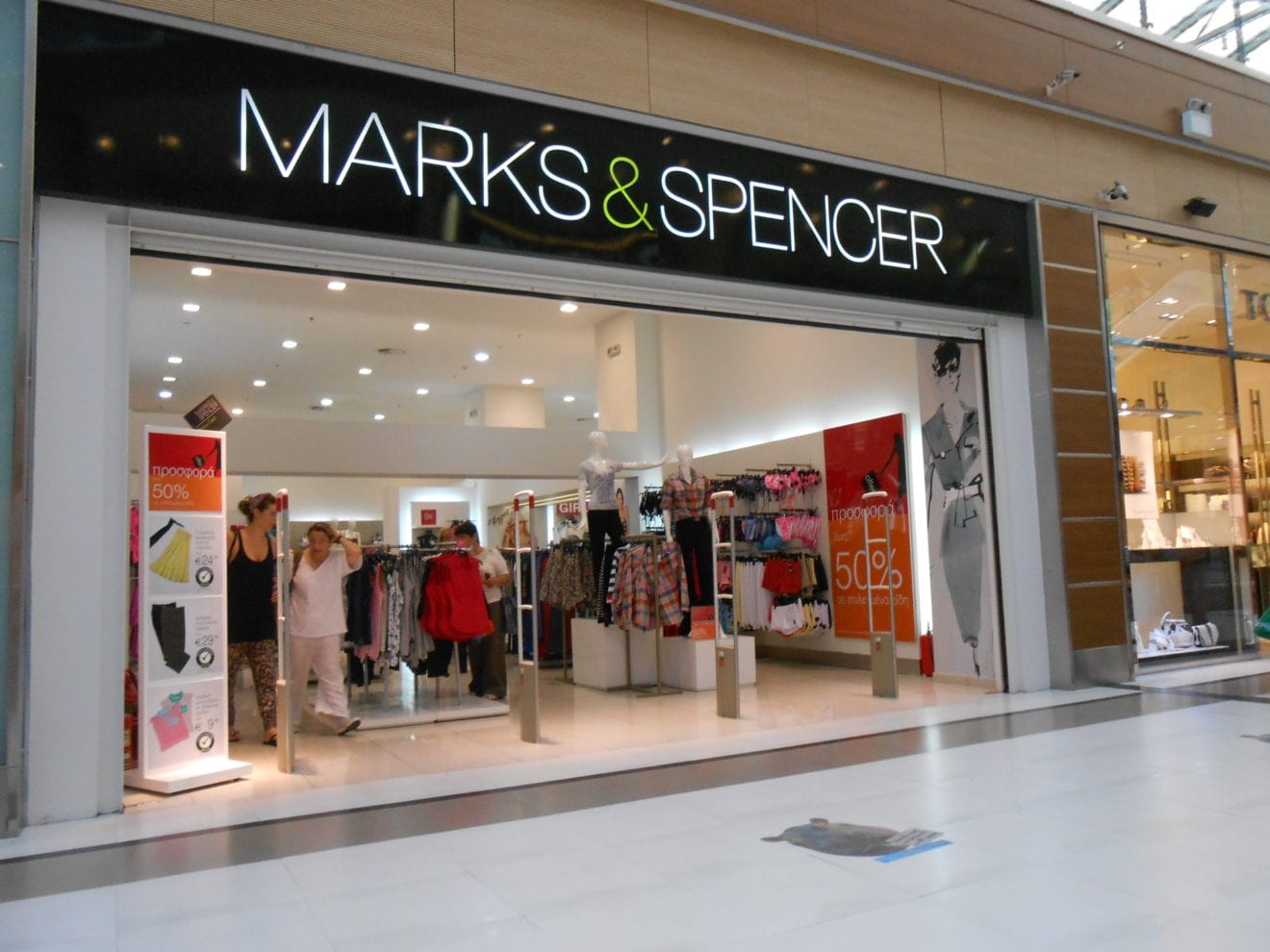
    M&S says its food sales grew in both total and like-for-like terms in the March quarter as it repositioned its offer.

    Its food division grew at a rate ahead of the total market, despite a “difficult and deflationary quarter for the food market”.

    CEO Mark Bolland said the company made “strong progress” during the quarter.

    “We continued to deliver on general merchandise gross margin and are pleased that we have achieved this whilst also improving general merchandise sales. M&S.com has returned to growth, as planned, with further improvement in customer metrics.”

    The company will release financials for the quarter – and the year – on May 20. But it says food sales rose 3.7 per cent overall and 0.7 per cent on a like for like basis. General merchandise sales rose 1.3 per cent, or 0.7 per cent like for like.

    Clothing sales were up 1.2 per cent and 0.6 per cent like for like. International sales at actual currency were down 6.3 per cent and total group sales were up 1.6 per cent.

    “Customers turned to us for special times of the year as well as everyday quality they can trust. We had a record Valentine’s Day and launched over 350 new products over the quarter. We continue to invest in price in order to stay competitive while protecting the gross margin,” said Bolland.

    Outside the UK, results were mixed. “Macro-economic issues particularly in our Russia, Ukraine and Turkey franchise partnership, coupled with further weakening in the Euro, have significantly impacted International second half profit,” the company’s statement said. But key priority markets such as India “continue to perform well”.

  • DAISO Japan under investigation, say Taipei prosecutors

    DAISO Japan under investigation, say Taipei prosecutors

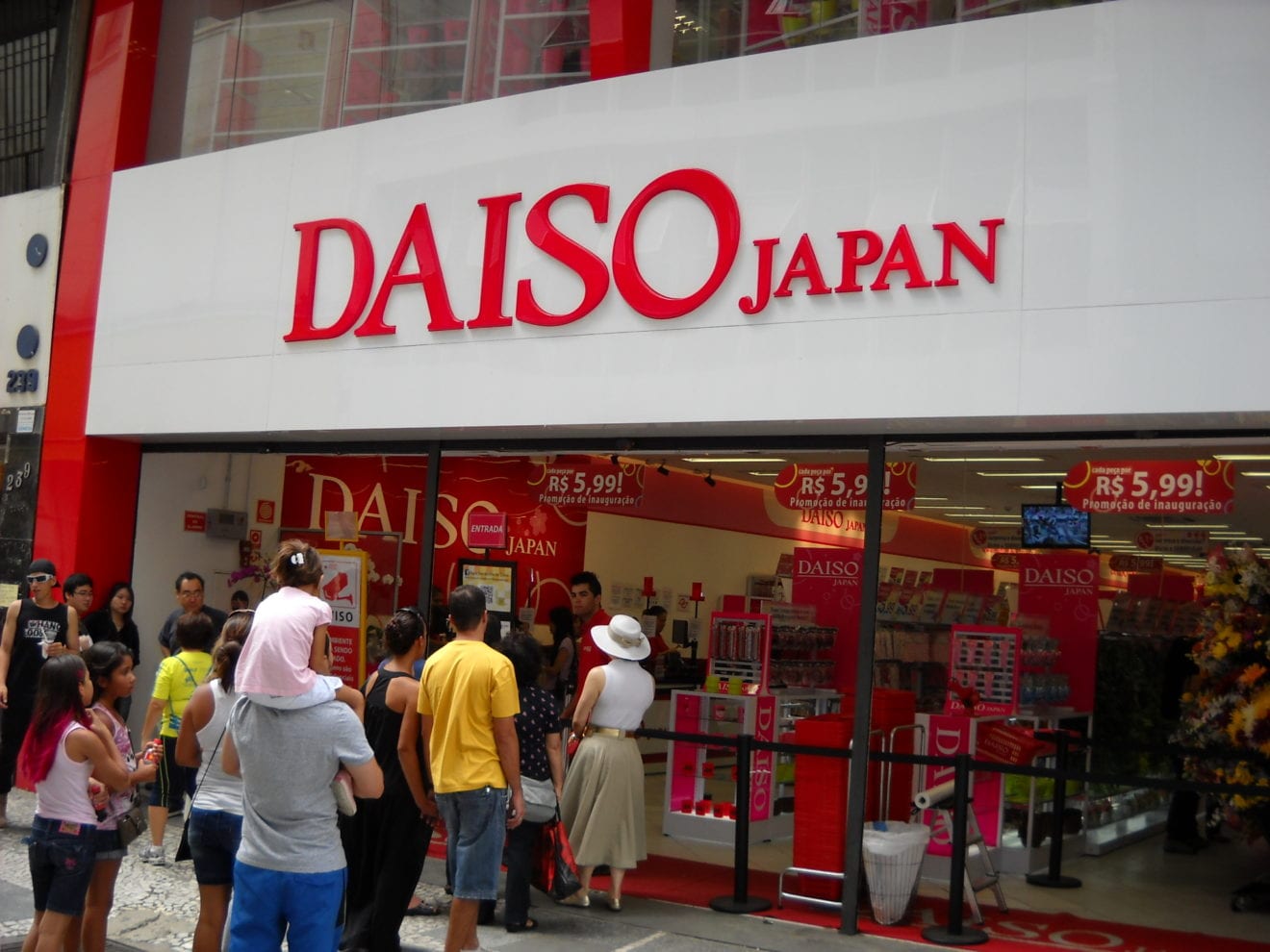
    Well-known Japanese store, DAISO Japan (大創), was raided by investigators yesterday for failing to report its mislabeled Japanese food products back to the government, according to the Taipei District Prosecutors Office.

    Taipei City’s Health Bureau sent officials to investigate DAISO Japan headquarters yesterday, after Taoyuan’s Health Burearu discovered restricted products in the city’s Luchu District (桃園市蘆竹區) warehouses on Saturday.

    Taipei officials report having uncovered 28 products at the headquarters, among which 13 are said to come from nuclear-stricken areas and 15 are of unknown origin.

    Investigation teams found 13 products that came from nuclear-stricken prefectures in the Luchu District warehouses. DAISO Japan had silently pulled restricted products from shelves, but never reported back to the government, officials said.

    Taipei Department of Health official Wang Ming-li (王明理) said they are inspecting DAISO Japan’s headquarters and chain stores. Penalty fines will be discussed once its import declarations are finalized.

    No High-level Residue Detected in Japanese Food Products: AEC

    Atomic Energy Council (AEC, 原能會) Deputy Minister Huang Tsing-tung (黃慶東) said at the Legislative Yuan yesterday that among the 451 food products that passed radiation residue tests, he also promised not a single imported product was detected to have exceeded radiation standards.

    “200 becquerels (BQ) was the highest detected radiation residue level, but none of the products since 2011 had exceeded the international standard 370 BQ” Huang said, emphasizing that most detected products had relatively low residue levels and were harmless to human beings.

    Lift Ban on Nuclear-stricken Products?

    Minister for Health and Welfare (MHW, 衛福部) Chiang Been-huang (蔣丙煌) said that Japan had proposed Taiwan lift restrictions on products from at least four of the radiation-stricken areas from the Fukushima nuclear disaster. This proposal is under further discussion, Chiang said.

    The lifting of restrictions on food products from the five nuclear-stricken areas in Japan could be discussed, said DPP Legislator Chao Tien-lin (趙天麟) during a meeting of the Legislative Yuan’s Social Welfare and Environmental Hygiene Committee (立法院衛環委員會).

    Apart from the continual restriction on nuclear-stricken prefectures, the plan to require Japan to provide product origin and radiation testing results is undergoing debate, but Chao points out this plan could hinder trade with Japan.

    Chao proposed that Japan should only provide the necessary documents of products from the five disaster-stricken areas. Importing products from nuclear-stricken areas could be discussed by referring to international practices.

    While high-risk areas should still be prioritized and bad suppliers will always exist, Taiwan should not damage friendship ties with Japan by insisting on trade obstacles, Chao stressed.


  • McDonald’s joins Wal-Mart, Gap, other cos. in raising wages

    McDonald’s joins Wal-Mart, Gap, other cos. in raising wages

    McDonald’s said Wednesday it is raising pay for workers at restaurants that the company owns. Here’s a look at all the big companies that recently have announced they are boosting hourly wages for their employees:

    In February Wal-Mart Stores Inc., the largest private employer in the U.S., said it will boost its minimum pay to $9 an hour in April and to $10 by February 2016. That means 500,000 employees will get a raise.

    TJX Cos., the parent of discount store operator TJ Maxx and Marshall’s, said in February that it will pay all of its U.S. workers at least $9 an hour starting in June.

    Health insurer Aetna Inc. said in January that it will pay a minimum of $16 an hour starting in April. That’s more than twice the federal minimum wage of $7.25, and Aetna said about 5,700 employees will get a raise.

    Home furnishings retailer Ikea said in June that it would increase its raise wages 17 percent on average, bringing its hourly wage to $10.76 on average. Ikea said it will peg its salaries to the cost of living in different locations, and its move means higher wages for about 5,500 hourly store workers.

    Retailer Gap Inc. said in February 2014 that it will set the minimum wage for workers at $9 an hour this year and $10 an hour in 2015.

    McDonald’s Corp. said starting wages will be $1 above the local minimum wage, and its average hourly wage at those stores will be more than $10 an hour, up from $9 an hour. The move applies to about 90,000 workers at about 1,400 restaurants owned by McDonald’s. It has about 14,300 U.S. locations, the vast majority of which are franchised.

  • Amazon launches button for instant product ordering

    Amazon launches button for instant product ordering

    Online retailer Amazon.com Inc has launched a hardware that allows its Prime members to order a product by pushing a button.

    The ‘Dash button’, which is connected with the Amazon app through Wi-Fi, is brand specific and the company has tied up with household names such as Tide, Huggies and Gillette.

    The ‘Dash button’ comes with an adhesive and a hook and can be hung or hooked anywhere in the home.

    The offer, limited to three Dash buttons per customer, is only open to members who receive an email from the company with an invitation to receive a free Dash Button.

    Reuters had reported in September that Amazon would boost staffing at its secretive Silicon Valley-based hardware unit as it tests Internet-connected “smart” home gadgets.

  • Big Cyber to open 20 “makers” stores in China by year end

    Big Cyber to open 20 “makers” stores in China by year end

    A retail subsidiary of Hon Hai Precision Industry Co., the world’s largest contract electronics manufacturer, plans to open 20 stores in China for technology innovators known as “makers”, by the end of the year, a company executive said on Sunday. According to Wang Jung-ching, general manager of Big Cyber, a new retail brand under Hon Hai’s Cybermart consumer electronics chain in China, his firm will open new stores in Beijing and Guangzhou in April and May after already opening a first store in Shanghai.

  • Chilean vending machines model takes off

    Chilean vending machines model takes off

    In Chile, vending machines inside local stores are offering cash-strapped shoppers affordable staple items – without denting retailers’ profits.

    Trend monitoring website Springwise.com reports some 73 per cent of the population of Latin America lives on less than US$4 per day, but the prices of food and necessities in struggling areas rarely reflects this.

    Often, shops in areas such as Santiago in Chile offer products at prices up to 40 per cent higher than better off areas. Hoping to end this inequality, Algramo distributes vending machines containing staples such as beans, lentils, rice and sugar around Santiago. It installs the affordable alternatives in local stores and splits the profits with the shopkeepers.

    Algramo enable locals to purchase goods in bulk in reusable containers, lowering the price and encouraging a more eco-friendly retail model. Rather than setting itself up as a competitor to neighbourhood shops — which are an integral, social part of Chilean life — Algramo work with the shopkeepers to improve the economic climate of the area.

    The company developed their own vending machines, including one which dispenses washing powder and one which dispenses a variety of staple foods. All the machines can be installed easily and operated by customers.

    So far, Algramo has installed more than 300 machines in Chile and now plans to expand into Colombia.


  • SSI Group profit soars

    SSI Group profit soars

    The Philippines’ largest specialty store retail business, SSI Group, has reported a massive 63 per cent jump in its annual profit.

    SSI Group says its 2014 surplus was 998.7 million Pesos (US$66.9 million), up from 613.7 million P ($41 million) in 2013.

    The company’s brand portfolio includes Marks and Spencer, Gucci, Burberry, Hermès, Prada, Salvatore Ferragamo, Lacoste, Michael Kors, Kate Spade, Gap, Bershka, Aeropostale, Samsonite, Nine West and Payless Shoe Source.

    SSI Group says its performance is the result of an aggressive store rollout program, strong gross profit margins and the depth and breadth of its brand portfolio. It expanded its store network by 126 outlets last year.

    The group’s annual sales rose 19 per cent to P15.2 billion, and in the last quarter by 26 per cent to P5.2 billion.

    In a statement, SSI Group president Anton T Huang described the outlook for 2015 as positive.

    “2014 was a landmark year for SSI as we executed our largest store expansion program to date. We continue to leverage on a brand portfolio that resonates with consumers, on the availability of prime retail space, and on evolving consumption patterns and consumer tastes.

    “We expect that these factors will continue to drive our performance in 2015,” he said.

    The company now operates 723 specialty stores with a combined floor space of 134,000 sqm and represents 106 brands in the Philippines.

    It also operates 90 FamilyMart convenience stores.

  • Tesco China drags down partner

    Tesco China drags down partner

    Tesco China has been blamed for dragging China Resources Enterprise into the red.

    CRE, which operates the Vanguard hypermarket chain in China, has reported its first annual loss in more than 20 years and blames the start-up costs for its venture with embattled Tesco for the red ink.

    CRE has effectively taken control of Tesco China when the latter effectively admitted defeat in Asia’s largest grocery market, unable to penetrate the domination of local brands and store networks.

    Now CRE has warned that it may take three to five years to turn the ailing Tesco business around.

    “Looking ahead, the group’s top priority in 2015 is to improve operational efficiency and reduce losses,” chairman Chen Lang said a statement.

    He warned profitability would remain volatile, with increased competition from eCommerce businesses and the Chinese government’s crackdown on gift-giving and graft affecting sales.

    CRE reported a net loss of HK$161 million (US$20.75 million) in 2014 – a massive turnaround from the HK$1.91 billion ($246.3 million) profit of 2013.

    Revenue from the 3000 supermarkets and hypermarkets CRE runs, rose 15.3 per cent to

    HK$168.86 billion ($21.8 billion).

    The Chinese retailer will be hoping its eCommerce venture, to be launched later this year, will help restore profitability, along with a change in focus of its store development program to smaller new stores, speciality stores and convenience stores rather than hypermarkets.

  • Kathmandu slows down Aussie expansion

    Kathmandu slows down Aussie expansion

    Outdoor clothing retailer Kathmandu is putting the brakes on its store expansion in Australia after racking up a first half loss.

    Disappointing sales at Christmas and in January as well as heavy discounting on excess winter stock were blamed by the retailer for pushing it into the red with a NZD1.8 million (USD1.4m) loss.

    The gloom looks likely to continue, with sales during the seven weeks to mid-March down 2 percent on a year ago.