Retail News CRM

Category: General

Retail News Asia is committed to providing both local and global retailers with the latest General Retail news throughout the Asian market. This on a daily base.

  • Mattel appoints new chairman and interim CEO

    Mattel appoints new chairman and interim CEO

    Mattel recently announced the appointment of Christopher A. Sinclair as the company’s new chairman and interim Chief Executive Officer.

    inclair, who has served as a member of Mattel’s Board of Directors since 1996 and as Independent Lead Director since 2011, has extensive experience in leading global, multi-brand, consumer-focused companies.

    He was Chairman and CEO of Caribiner International Inc. from 1999-2000, President and CEO of Quality Food Inc. from 1996-1998, and prior to that served in senior roles at PepsiCo, including as Chairman and CEO of Pepsi-Cola Company, and President and CEO of PepsiCo Foods & Beverages International and Pepsi-Cola International.

    “I look forward to engaging with the entire Mattel community as we work to deepen our connections with children and parents through expanded product innovation and improved retail execution. We will be working during the coming months to revitalize the business and to identify the right leadership for Mattel as it enters its next phase of growth and value creation,” Sinclair said in a statement.

  • MasterPass comes to China

    MasterPass comes to China

    MasterCard and BOC Services, the acquiring subsidiary of Bank of China, recently signed an agreement to making MasterPass available to Chinese merchants.

    A MasterPass wallet allows mobile shoppers to quickly and easily check out on any device, by simply clicking the “Buy with MasterPass” button.

    They can also securely store MasterCard and other branded credit, debit and prepaid card information, along with shipping addresses, so that they can be easily accessed when paying for purchases.

    This service is currently accepted by over 70,000 merchants in sixteen countries including China, as well as Australia, Canada, Czech Republic, France, Italy, New Zealand, Poland, Romania, Russia, Singapore, South Africa, Taiwan, United Arab Emirates, United Kingdom and the United States.

    In China, merchants including Ctrip.com, Osell.com, and Ceair.com will be among the first business implementing the service.

    Zhuang Dawei, General Manager, BOC Services Shanghai Branch, said the goal is optimize shoppers’ payment experience, and in the process, create more business opportunities for merchants.

    “Every digital device now has the potential to become a commerce device and Chinese consumers’ demands and spending habits are changing, too. This is bringing new challenges to the foundation of business – payment. This new cooperation will enable more Chinese merchants to utilize the powerful technology of MasterPass, creating more cross-border business opportunities,” added Dennis Chang, General Manager, China, MasterCard.

  • PH opens mammoth casino-resort, seeking high-rollers

    PH opens mammoth casino-resort, seeking high-rollers

    The new casino is an imposing structure on Manila Bay with 6 gleaming golden towers surrounding a giant egg-shaped dome, and industry and government leaders hope it will attract cashed-up tourists from other parts of Asia

    Tourist and casino players arrive at the grand opening of the City of Dreams mega-casino in Manila on February 2, 2015. Photo by Jay Directo/AFP

    Manila aims to rival Macau and Las Vegas in terms of gaming revenues, and the “City of Dreams” is the latest in a string of casinos that have opened in recent years.

    The new casino is an imposing structure on Manila Bay with 6 gleaming golden towers surrounding a giant egg-shaped dome, and industry and government leaders hope it will attract cashed-up tourists from other parts of Asia.

    The casino is a joint venture between the country’s richest man Henry Sy, Australian billionaire James Packer and Lawrence Ho, son of Macau casinomogul Stanley Ho.

    “The goal is to find the best (sites) in Asia … The Philippines is one of the fastest growing economies anywhere in the world. We’ve seen the market really pick up,” Ho told reporters.

    Australian billionaire James Packer (right) and Melco crown co-chairman and with his co-chairman Lawrence Ho (center) during a press conference on the opening of the City of Dreams mega-casino in Manila on February 2, 2015. Photo by Ted Aljibe/AFP

    Ho also acknowledged the huge cost of building the resort. The Philippine government requires a minimum $1 billion investment for new casinos built in the area.

    Packer said jokingly that the resort was inspired by Hollywood movies “Casino” and “Oceans Eleven,” and Robert de Niro, Martin Scorsese, and Leonardo DiCaprio have appeared on giant billboards and TV commercials to promote the casino.

    The 6.2-hectare complex is the second of 4 mega resorts to open on reclaimed portions of the bay, just a few hundred meters from the city’s slum communities.

    The City of Dreams’ golden dome, called the “Fortune Egg,” houses two exclusive nightclubs, including Pangaea, where Picasso copies hang beside pictures of safari animals on walls covered in fake snakeskin.

  • Changi retail again tops $2 billion

    Changi retail again tops $2 billion

    Singapore’s Changi Airport says sales at retail outlets across its terminals topped S$2 billion in 2014, despite a slump in passenger numbers inbound from China.

    It’s the second year in a row the $2 billion barrier was breached – Its 2013 growth represented a nine per cent increase on 2012, but the percentage growth was not revealed this year, suggesting a stable result.

    The strength of the airport’s retail business – in part a consequence of the airport’s careful positioning as a transit hub, delivering a captive market of thousands of potential shoppers every day – underlines its decision to invest in the massive Jewel retail experience in partnership with CapitaMalls. The complex – already under construction and scheduled for completion by end of 2018 – will have five storeys above ground and five basement storeys, covering a total gross floor area of about 134,000sqm.

    Last year, Changi hosted 54.1 million passenger movements, the highest number yet, representing an average of 148,219 every day, the most in its 33-year history.

    What’ significant about Changi’s 2014 figures is that the retail sales held up despite a significant downturn in spending by Chinese passengers. China has been a key market for retailers in the airport, but fewer visited, or transited, in Singapore last year and those who did were coming from less affluent population centres, thus with more restricted budgets. It’s the same challenge retailers in the high streets and malls of Hong Kong and Singapore bemoaned all last year.

    Changi Airport Group (CAG) said that – just like in 2013 – the biggest customer groups by nationality were China, Singapore, Indonesia, India and Australia.

    The most-purchased retail categories were, perhaps predictably, cosmetics and perfumes, chocolates and candy, electronics, luxury goods, liquor and tobacco.

  • New Horizons eyes ASEAN

    New Horizons eyes ASEAN

    New Horizons, the world’s largest independent computer training company is planning expansion into ASEAN.

    The company, which offers a broad range of technical and desktop application training and certification courses, has signed an exclusive franchise consultancy agreement with VF Franchise Consulting with the aim of expanding to Thailand, the Philippines and Vietnam.

    Scott McDaniel, director of international development of New Horizons, says that with successful training centers already open in Singapore and Malaysia, New Horizons’ expansion into the remaining countries of the Association of Southeast Asian Nation (ASEAN) will service the existing high demand for professional IT training and certification.

    “We are happy to partner with VF Franchise Consulting to bring our world-class IT training and certification centers to the rest of ASEAN.”

    Headquartered in the US, New Horizons has been embarking upon an aggressive international expansion campaign that has seen it grow successfully in over 60 countries and over 300 locations.

    “Through our extensive research, further expansion into ASEAN is desirable due to the significant growth of the IT sector in Thailand, the Philippines and Vietnam,” McDaniel said.

    New Horizons Computer Learning Centers is one of the most successful franchises in the training industry. Over the last 30 years, the company has successfully trained over 30 million people. New Horizons offers instant recognition for franchisees as the clear market leader in IT training.

    Added Sean T. Ngo, CEO of VF Franchise Consulting: “New Horizons offers global recognition for franchisees as the clear market leader in IT training. The brand’s huge brand name and international success in the IT training industry gives its franchisees the ultimate competitive advantage.”

  • Tokyo, Taipei: 2015’s Asian retail hotspots

    Tokyo, Taipei: 2015’s Asian retail hotspots

    Asia Pacific retail rent growth will continue in 2015 – but at a slower pace, according to the latest research from CBRE Asia.

    Rental growth is projected to ease to 2.4 per cent region wide, compared with 5.4 per cent in 2014.

    The hottest markets: Tokyo, where rentals are expected to rise by about 10 per cent, followed by Taiwan’s Taipei, Sydney and Melbourne which will post more modest growth, according to CBRE.

    Prime rental growth in China will be less than five per cent in 2015, with key city retail markets performing differently. “Growth will being driven by Beijing and Shanghai but dragged by Shenzhen and Guangzhou.”

    In the report – titled 2015 Outlook: Key Retail Trends – CBRE expects new retail supply in Asia Pacific to reach 89 million sqft this year, a significant jump from the 53 million sqft in 2014. “However, much of this new supply will be in decentralised locations. A lack of high quality stock in prime locations -in cities such as Tokyo, Beijing and Shanghai – will lead to rental growth. Increasing competition among retailers and rising operational costs will see retailers focus on leasing prime space in key growth markets in 2015.”

    “The market will become more challenging for landlords in 2015 as they will have to deal with more budget conscious retailers entering into lengthier negotiation processes,” explained Sebastian Skiff, executive director, retail services, CBRE Asia.

    “Occupiers, meanwhile, will benefit from being more patient and taking time to formulate a proper strategy. In light of increasing vacancy pressure, increasing competition and the rise of e-commerce, landlords should have the willingness to embrace ‘retail-tainment’, and have the ability to proactively collaborate with tenants to ensure stronger retailer retention and consumer engagement.”

    Skiff says landlords who invest more resources into conducting consumer surveys, market research and benchmarking exercises in order to better understand consumers’ and retailers’ requirements will be among the more successful this year.”

    In other trends:

    • Chinese tourists should not be overlooked despite last year’s slowed spending. CBRE says Driven by the growing number of arrivals from mainland Chinese visitors, retail sales growth is expected to increase across the region, particularly in Tokyo, Seoul and Taipei. China and New Zealand markets are slowing whilst Hong Kong and Singapore will see a marginal rebound.
    • Despite retail sales volume growth, leasing sentiment will be dampened due to high operational costs, increasing competition and retailers’ more cautious attitude. Activity level in Asia is likely to stay flat but the Pacific will be more upbeat, as both Australia and New Zealand will continue to attract new entrants from overseas.
    • Leasing demand will be driven by mass market food and beverage and fashion retailers. Leveraging on the huge pipeline of new supply in suburban areas, mass market fashion brands will continue to expand in China’s tier 3 and tier 4 cities, while fast fashion retailers will target Taiwan, Australia, and Southeast Asia. Luxury brands will focus more on consolidation and reviewing their portfolio strategy – expansionary demand will be limited, but focused on developed markets, particularly in Japan and within Australia where luxury brands have a strong focus for growth.
    • Vacancy pressures in suburban areas will continue to intensify, especially in mainland China as many of their shopping centers are developed by inexperienced developers. Singapore will also experience supply pressure.
    • Prime retail prices will diverge in 2015 with Greater China experiencing the biggest downward pressure on price growth. The retail capital value growth in APAC will slow notably, dropping from 6.5 per cent in 2014 to 1.6 per cent in 2015.

    “CBRE sees that demographic growth, urbanisation and increasing household incomes will continue to support continuous growth in the region, with all markets projecting that retail sales volume will increase,” said Jonathan Hsu, director, research, CBRE Asia Pacific.

    “Japan will continue to be a top performer due to the fast growing tourism market and the weaker yen spurring tourist spending. Retail sales growth in Japan is expected to rebound as the market recovers from the consumption tax hike in April 2014,” said Hsu.

    “We expect consumption to also grow steadily after the government delayed the second phase of the sales tax increase.

    “Elsewhere, the market will be quite challenging – in China due to the anti-corruption campaign continuing to affect the sector, with luxury retailers taking a more cautious approach to expanding in this market. In the lower tier cities, or suburban areas, there will be a strong downward pressure in rents due to the huge supply pipeline, weaker sentiment from retailers, and lack of experienced mall management.”

  • A seriously repellent flagship concept

    A seriously repellent flagship concept

    Could this be the most bizarre retail concept yet? An entire retail store devoted to natural mosquito repellents, located in the world’s busiest airports?

    But it makes a lot of sense…

    MosquitNo is a Dutch business has pioneered a natural means of protecting humans from mosquitos, a major vector of tropical diseases throughout Asia and in other regions with warmer climates.

    MosquitNo has just signed space in Hong Kong for its regional headquarters. From there it will commence a roll-out of standalone stores in 60 per cent of the world’s international airports. It plans 10 flagship stores within five years, and aims to open in every airport which has 5 million or more passenger movements annually.

    “This new venture will enhance growth of our business and enable us to present our full assortment to consumers,” MosquitNo said in a statement.

    “As anti-mosquito products are amongst the top 10 most forgotten products when traveling we will help the consumer at large to help them protect themselves.”

    MosquitNo is more than just a cream or spray. The company has created a whole range of merchandise to support the brand – and thus ensure it can actually stock a small retail store.

    To date, there has been no indication of typical store size, but the brand has adopted vivid green livery for its marketing and promotional materials, cosmetics and even a clothing range.

    MosquitNo’s website says the company was launched in 2009. “Our product range has become a distinctive concept with a new look at products that offer protection against mosquitoes and other insects – this is applicable for our polo and placemats.” For regulatory reasons it cannot make claims for its bracelets and adhesive ‘spotzzz’.

    “Protecting our skin from biting mosquitoes previously meant using sticky lubricants including the toxic substance Deet. MosquitNo thought ‘this can be done with more fun and functionality’. Our concept and products are a new way of trendy, fashionable and comfortable protection against mosquitoes and other insects.” Ten per cent of its net profits are donated to Unicef.

    In Hong Kong, it will open a warehouse to supply Asian stores and a growing online business.

  • Thailand’s RSTA plans to double Ratchaprasong area’s trading value

    Thailand’s RSTA plans to double Ratchaprasong area’s trading value

    Retail, wholesale and hotel operators around Ratchaprasong intersection plan to allocate a combined THB60 billion (USD1.8 million) to make the area an important retail destination in Asean over the next three years.

  • Japan retail sales underwhelm

    Japan retail sales underwhelm

    Japan’s retail sales rose a marginal 0.2 per cent in December – the sixth consecutive monthly year-on-year increase.

    Analysts had expected a stronger one per cent increase, despite challenging economic circumstances largely due to the nation’s declining and ageing population.

    Department stores were the weakest link, with data from the Japan Department Stores Association showing a same-store sales fall of 1.7 per cent year-on-year – the ninth consecutive fall. The fall would have been greater if not for a cushioning effect from increased shopping by Chinese tourists.

    However, contributing to December’s figure was one less Sunday in the month, compared with December 2013, and the association noted that severe severe snowstorms hit northern regions during the month impacting on store footfalls.

    Food and beverage sales in December rose 1.4 per cent, compared with November’s 2.7 per cent. Apparel sales rose 3.1 per cent, down on November’s 4.2 per cent.

    December’s total retail sales of 13.52 trillion Yen marked the highest monthly total since March last year, when shoppers splurged in advance of an April sales tax rise.

    The preliminary data from Japan’s Ministry of Economy, Trade and Industry showed full year figures were more encouraging: an overall increase of 1.7 per cent, compared with a one per cent rise in 2013.

  • Lower Australian dollar means clothing price rise “inevitable”, suppliers say

    Lower Australian dollar means clothing price rise “inevitable”, suppliers say

    Clothing prices are expected to rise across the board for the first time in five years as suppliers and retailers raise prices after a 17 percent slump in the Australian dollar.

    Suppliers have warned retailers that prices for fashion clothing, underwear and basic apparel will rise significantly in the second half of calendar 2015, as currency hedges roll off and new-season stock comes into stores.

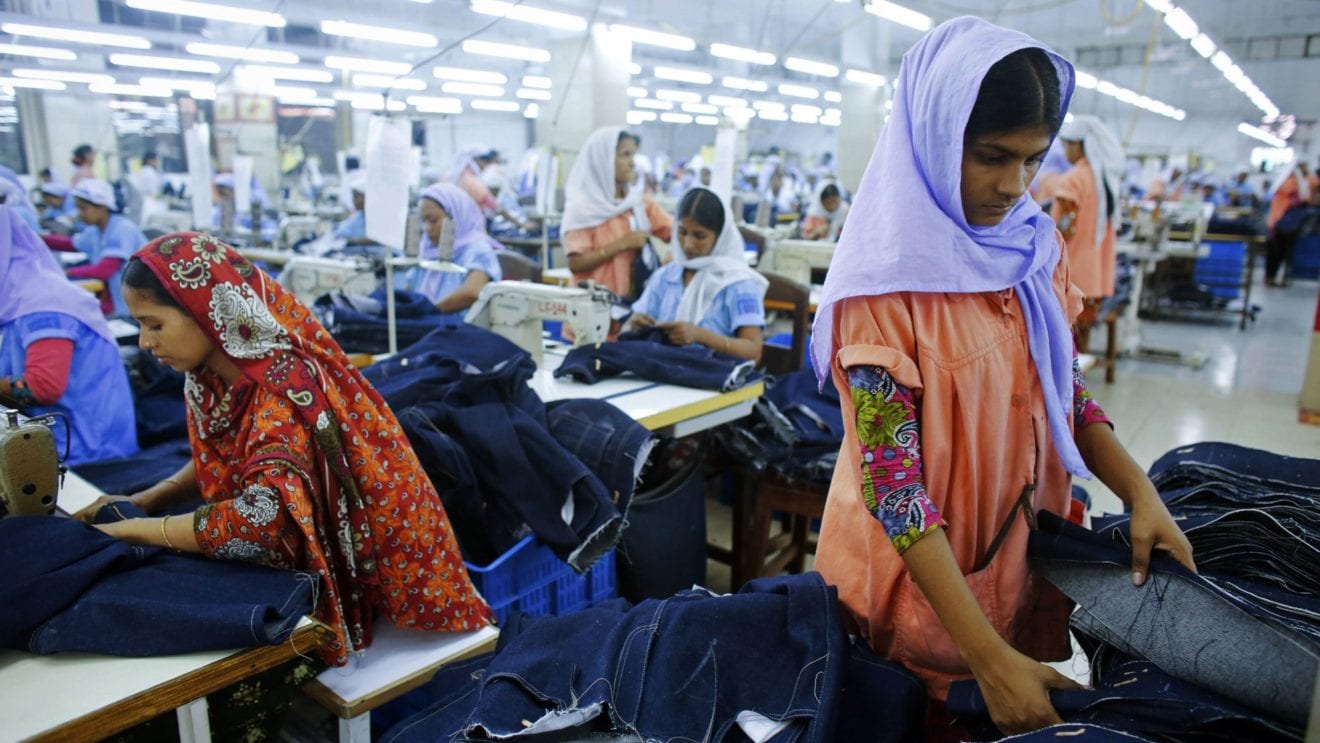
    The Australian dollar has fallen 17 percent against the US dollar since June and 10 percent over the past 12 months, pushing up the cost of clothing sourced from China, Bangladesh, Sri Lanka, Thailand and Vietnam.

  • Asia Pacific Travel Retail Association launches seminars

    A new schedule of Responsible Retail Training seminars, enhancements to the Duty Free & Travel Retail Database, topical research studies and advocacy support are among the immediate priorities for the Asia Pacific Travel Retail Association (APTRA) this year.

    A wide-ranging research program, conducted for APTRA by M1nd-set, has kicked off this year with a study of the shopping behaviour of Chinese travellers on domestic and international journeys, including their motivations for shopping and not shopping, their product preferences as well as the customer segmentation on selected routes.

    The headline results of this study, which is sponsored by Diageo, will be presented at the TFWA China’s Century Conference, organised in partnership with APTRA, in Shanghai on March 12.

    Future research topics will include the behaviour & attitudes of Asia Pacific (AsPac) travellers (China, Korea, Japan, Thailand, Indonesia, Philippines, Vietnam) in the region; a focus on Russian travellers in Asia Pacific; the behaviour & attitudes of non-AsPac passengers in the region; in-flight shopping – perceptions & the impact of promotions; behaviour & attitudes of AsPac vs non-AsPac passengers in Asia Pacific; evaluation of future in-flight shopping & concepts.

    The Responsible Retail Training Program, which has already been adopted by several major retailers, will be extended to other retailers in the region in order to ensure that there are consistently high standards across the duty free & travel retail spectrum in the Asia Pacific region.

    The APTRA Seminars, aimed at bringing useful insights on successful travel retailing to member companies and at offering networking opportunities to facilitate growth of the industry, will be organised at various locations throughout the year.

    The popular APTRA Duty Free & Travel Retail Database will be populated with the contact details of even more airports, airlines, ferry companies, retailers, distributors and suppliers to facilitate easy access to the right person in the right market.

    Key to the success of duty free & travel retail in the Asia Pacific region is an open dialogue

    between stakeholders and regulatory authorities and in 2015 APTRA will continue its support of this ideal through advocacy.

    APTRA president Jaya Singh said: “These research, training, advocacy and database initiatives are fundamental to the missions of the association, namely safeguarding the interests of all stakeholders and driving industry growth. In the last year we saw our membership grow by 20 per cent and revenues grow by almost 40 per cent as more and more companies recognise the benefits they gain from the work accomplished and the need for a strong regional association.”

    APTRA is the trade association for the duty free and travel retail industry in the Asia Pacific region, serving all members and the industry to help grow the business and protect it when challenges arise. For more information about the work of APTRA visit www.aptra.asia.


  • Korean d-store sales slide

    Korean d-store sales slide

    South Korea’s department store industry is still struggling to arrest falling sales as consumers tighten spending and turn to online.

    New figures released by the trade ministry Tuesday show sales at top department and discount stores in December fell at a sharper rate than initially expected – by 0.9 per cent compared with the earlier projected 0.3 per cent.

    That makes the fourth successive month that combined sales from stores managed by Hyundai Department Store, Lotte Shopping and Shinsegae Co have declined.

    However, the new data still reflects a significant improvement from the 6.5 per cent drop in November.

    The ministry blamed the slump on falling in-store clothing purchases due to consumers preferring to shop online. Rising sales of food and beverages cushioned the effect of apparel’s fall.

    Discount store sales fell 3.8 per cent in December year-on-year, compared to 4.7 per cent in November.

  • Asia drives skin giant’s growth

    Asia drives skin giant’s growth

    After weeks of retail giants blaming Hong Kong for falling sales, global skincare brand L’Occitane says the city was one of its fastest growing markets in the first nine months of the financial year.

    In a filing with the Hong Kong Stock Exchange, L’Occitane, registered in Luxembourg, reported a 9.8 per cent global sales increase for the nine months to December 31.

    Sales in core Asian markets outperformed all other: In Hong Kong and Macau on a constant currency basis they rose 15.8 per cent, in Japan, by 19.5 per cent and in China by 13.4 per cent.

    The group’s net sales were euro 882.3 million, the 9.8 per cent rise dwarfing the 0.3 per cent improvement for the concurrent period a year earlier.

    Local currency growth was 10.8 per cent.

    L’Occitane said its online retail channel continued to outperform with a 33 per cent year-on-year growth at constant exchange rates during the first nine months.

    Overall Same Store Sales Growth was 5.9 per cent.

    Russia, China and Japan were among countries with strong same store sales growth for the nine months.

    L’Occitane has been investing heavily in store refurbishments and openings during the last two years. It added 75 stores to its global network during the last nine months and upgraded or relocated 86.

    It added 19 stores in China, where it now has 144, four in Hong Kong to expand to 35, three in Japan, (now 107) and one in Taiwan (now 54).

  • PE investor sells Indonesian d-store stake

    PE investor sells Indonesian d-store stake

    UK-based CVC Capital Partners has sold a 12 per cent stake in Indonesian retail giant PT Matahari.

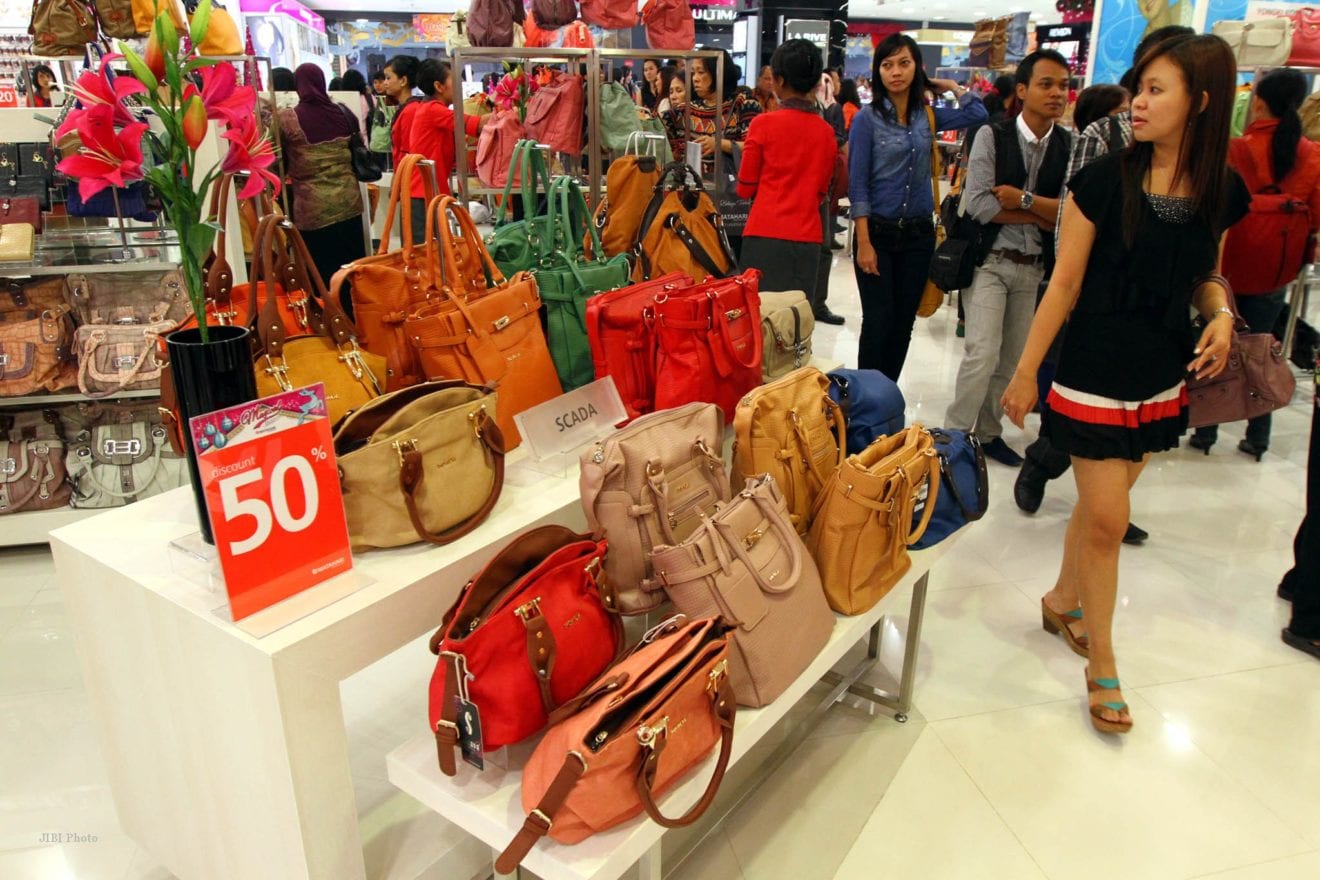
    Matahari owns hypermarkets and department stores across the nation – and is actively expanding its footprint as Indonesia’s middle class expands.

    CVC has declined to comment on the transactions, which came to light through regulatory filings.

    The company now has just two per cent of Matahari’s shares, suggesting they, too, will be offloaded in the near future.

    The timing of the transactions has surprised some analysts who have a ‘buy’ rating on the retailer’s stock, suggesting CVC might have extracted more value had it sold later.

    The shares were sold in two blocks – the first for £195 million for eight per cent of the stockholding to mainly institutional investors.

    The second stake, of four per cent, was sold to an unidentified private investor.

    Matahari was founded in 1982. It recently opened its 108th hypermarket and has more planned for the 2015 calendar year.

  • EBay to cut 2,400 jobs, spin off or sell enterprise unit

    EBay to cut 2,400 jobs, spin off or sell enterprise unit

    EBay plans to cut 2,400 jobs, or 7 percent of its staff, in the first quarter to simplify its structure and boost profit ahead of a planned separation of its business.

    The job cuts will fall across its marketplaces, PayPal and enterprise businesses.

    They come as the e-commerce company reported on Wednesday that its fourth-quarter net income rose 10 percent on continued strength of its PayPal payments business, which it expects to spin off in the second half of the year.